
Getting around Singapore


Singapore has one of the most efficient transport systems in the world. Public transport is reliable, clean and relatively cheap.
Most tourist spots are easily accessible by public transport, whether you're heading to the Marina Bay area, the historic Chinatown or the fun-filled Sentosa Island.
In practice, most travelers get around by a combination of:
- MRT subway
- city buses
- taxis or Grab app and others
A big advantage is the unified fare system - you can pay for the metro and buses with your own contactless card.
Book your hotel in Singapore in advance
What transport to use in Singapore?
We've visited Singapore several times, both for multi-day stays and just when transferring between flights at Singapore SIN airport.
Quick decision - we travelled
| Situation | best transport |
|---|---|
| airport → downtown | metro |
| Marina Bay → Chinatown | metro / on foot |
| Marina Bay → Sentosa | bus |
| downtown → Sentosa | Metro |
| night transport | Grab/taxi |
👉 Where to choose a hotel in the city? Check out my tips in the article Accommodation in Singapore.
Is public transport worth it?
Singapore is a big city and you'll probably need to take some form of public transport at least between the airport and the city centre.
Is it worth travelling by metro or bus?
✅ Yes, if:
- you want to travel cheaply
- you are visiting several neighbourhoods
- you don't want to deal with traffic jams (the metro has an extensive line system that covers the whole city)
❌ More likely not, if:
- you are travelling with several people between the airport and the city centre
- you are only in the city centre
💡 Alternative:
For shorter distances, there may be a cheap taxi or Grab app.
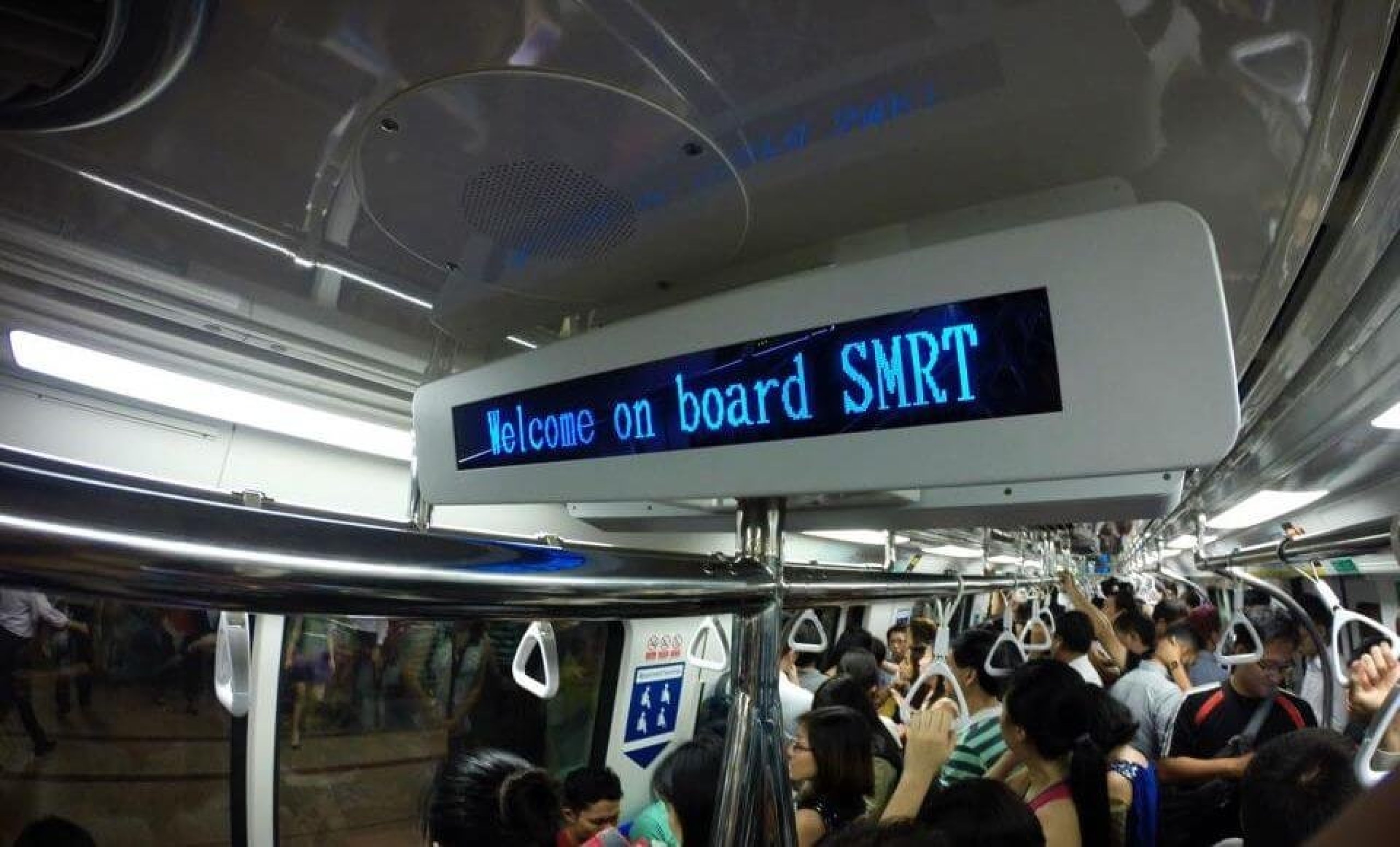
How public transport works (step by step)
Here's a quick guide for first-timers in Singapore who just want to know the basics.
It is true that public transport in the city is very simple and intuitive.
1️⃣ Swipe your card when you enter the subway or bus
2️⃣ Travel to your destination stop
3️⃣ Re-attach the card on exit
The price is automatically calculated according to the distance.
You don't need to do anything else. Google Maps solves your transport search.
How much does public transport cost in Singapore?
In general, fares are relatively low compared to other services.
On the metro and buses, you always pay per distance travelled.
Typical prices are as follows:
- Short distance around the centre - approx. 1,30 sgd to 1,50 sgd
- Longer distance (e.g. Changi Airport) - approx. 2,20 sgd
The system calculates the fare for the total distance travelled in 2 hours. During this time, you can change up to 5 times between metro and buses (no matter which carrier) or between buses or metro with each other.
You have to make the transfer within 15 minutes or the new fare will be calculated.
To find out the exact fare, visit lta.gov.sg/fare-calculator.
Multi-day tickets - Singapore Tourist Pass
If you'll be travelling around Singapore a lot, it may be worth getting a multi-day pass.
You can buy a Singapore Tourist Pass at the ticket office at several major stations in the city centre or at Changi Airport.
You pay a 10 sgd deposit, which you get back if you return the card at any point of sale (see list).
Prices are as follows:
- 1 day - 17 sgd
- 2 days - 24 sgd
- 3 days - 29 sgd
- 4 days - 37 sgd
- 5 days - 45 sgd
- Current price list: thesingaporetouristpass.com.sg/type-of-passes
Fares are always valid for a given calendar day or until the end of the day's operation (which may extend beyond midnight).
Is a full-day v multi-day fare worth it?
On our stays, the average fare around Singapore was around 1,90 sgd. It's not realistic to spend more than that - you'd have to go to the outskirts of the city where there are only housing estates.
- ❌ 1day = more than 8 rides per day, rather unrealistic for the average tourist
- ❌ 2-day = more than 6 rides per day, we rode a maximum of 5 times a day, but more likely 3-4 times
- ❌ 3-day = more than 5 rides per day, for us this ticket would still not be worthwhile
- ❓ 4-day and 5-day = more than 4 rides per day, if you travel a lot every day, it may already make sense
In general, I personally wouldn't find the Singapore Tourist Pass worthwhile even with a 4 day stay. Plus you have to deal with buying and then returning the physical card - the Singapore Tourist Pass is not available via the mobile app.
- 👉 If you're wondering how much regular travel, food or accommodation costs, check out our Singapore Tourist Pass price guide.
How to pay fares in Singapore
The easiest way is to use a contactless payment card. However, you can also pay with an EZ-Link card if you don't want to use your own card to pay.
Contactless card
The easiest way, and the one we've used.
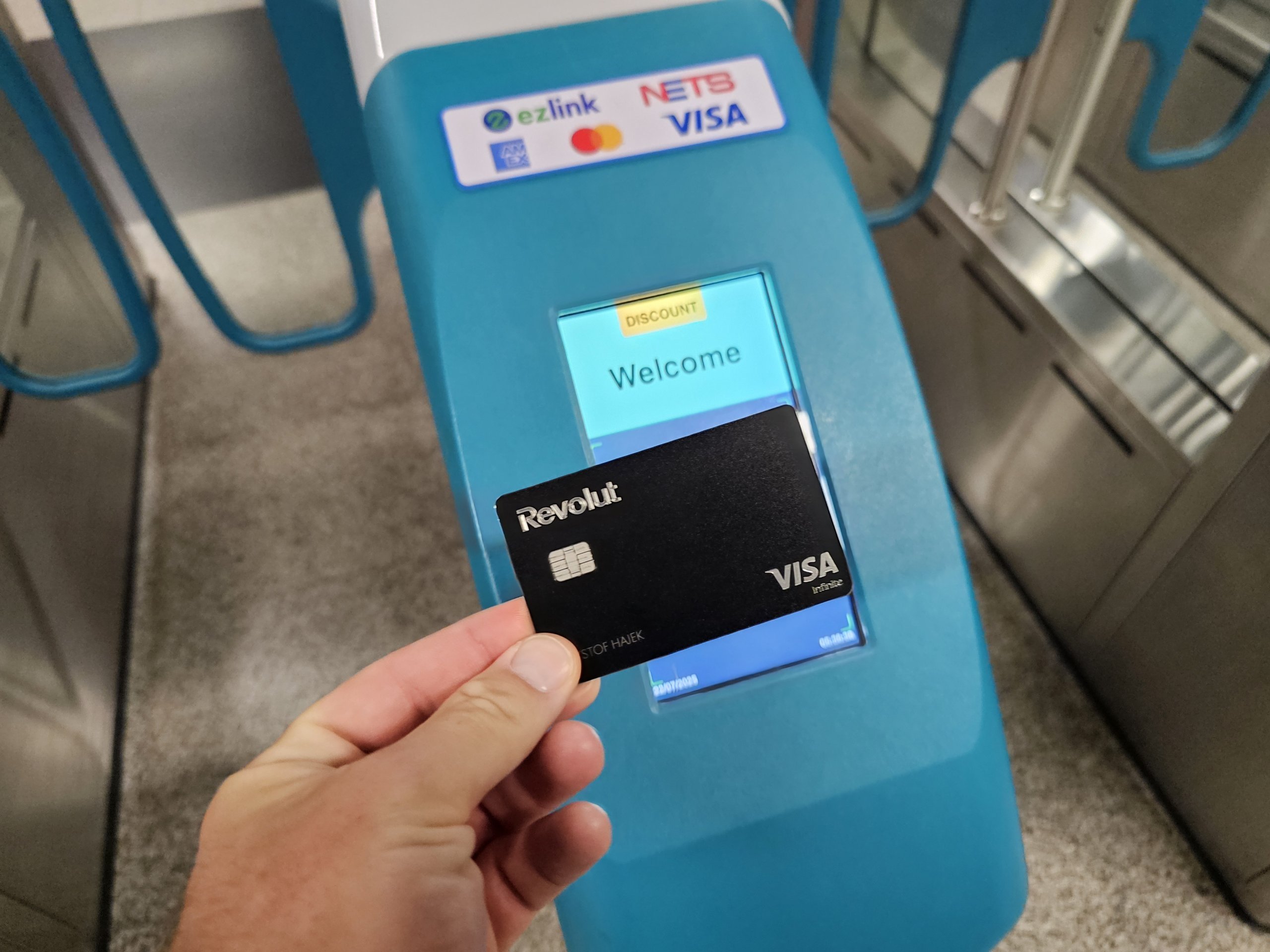
- Metro MRT = attach to turnstile when entering and exiting the station; no turnstiles when transferring between metro lines
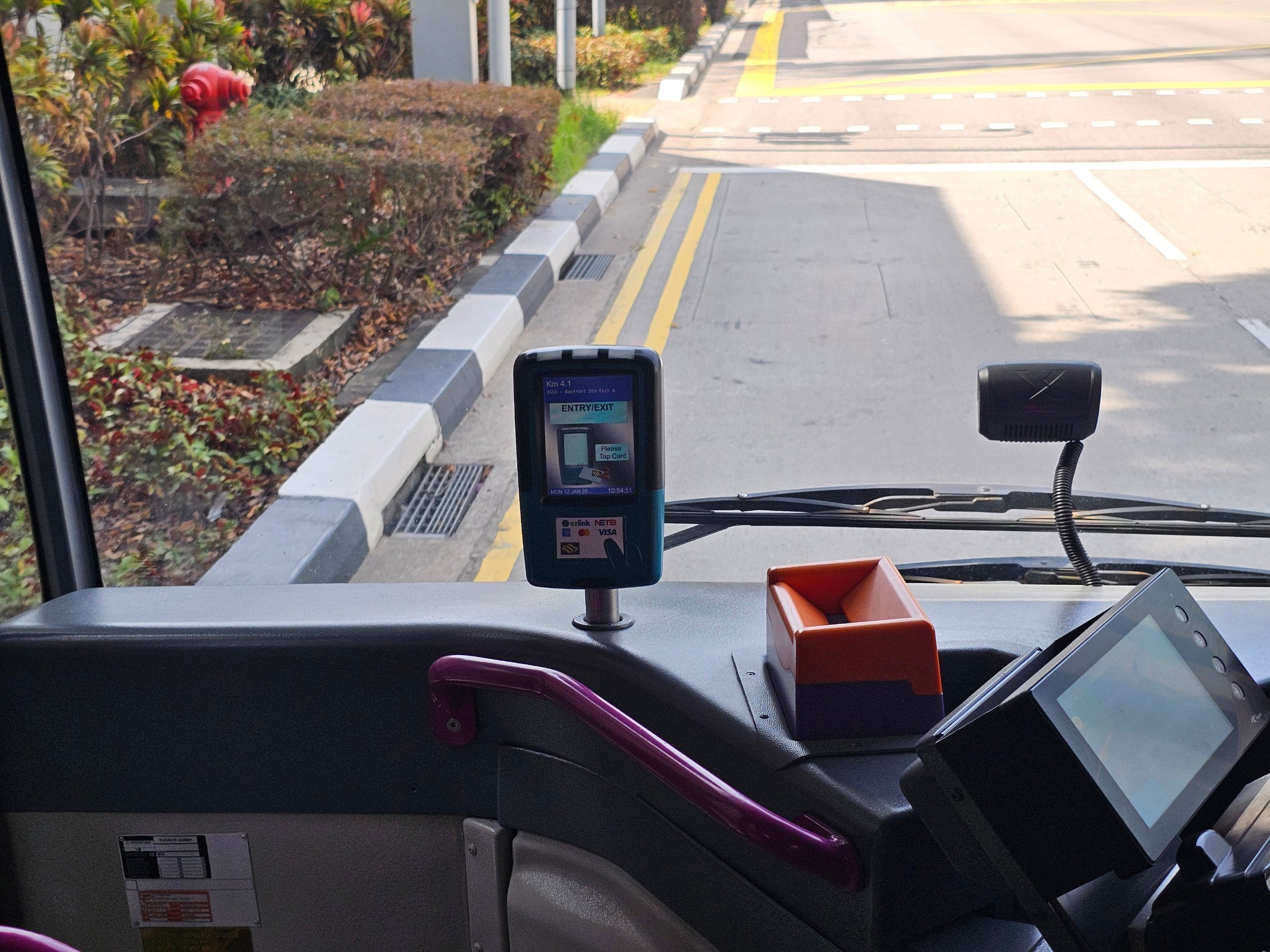
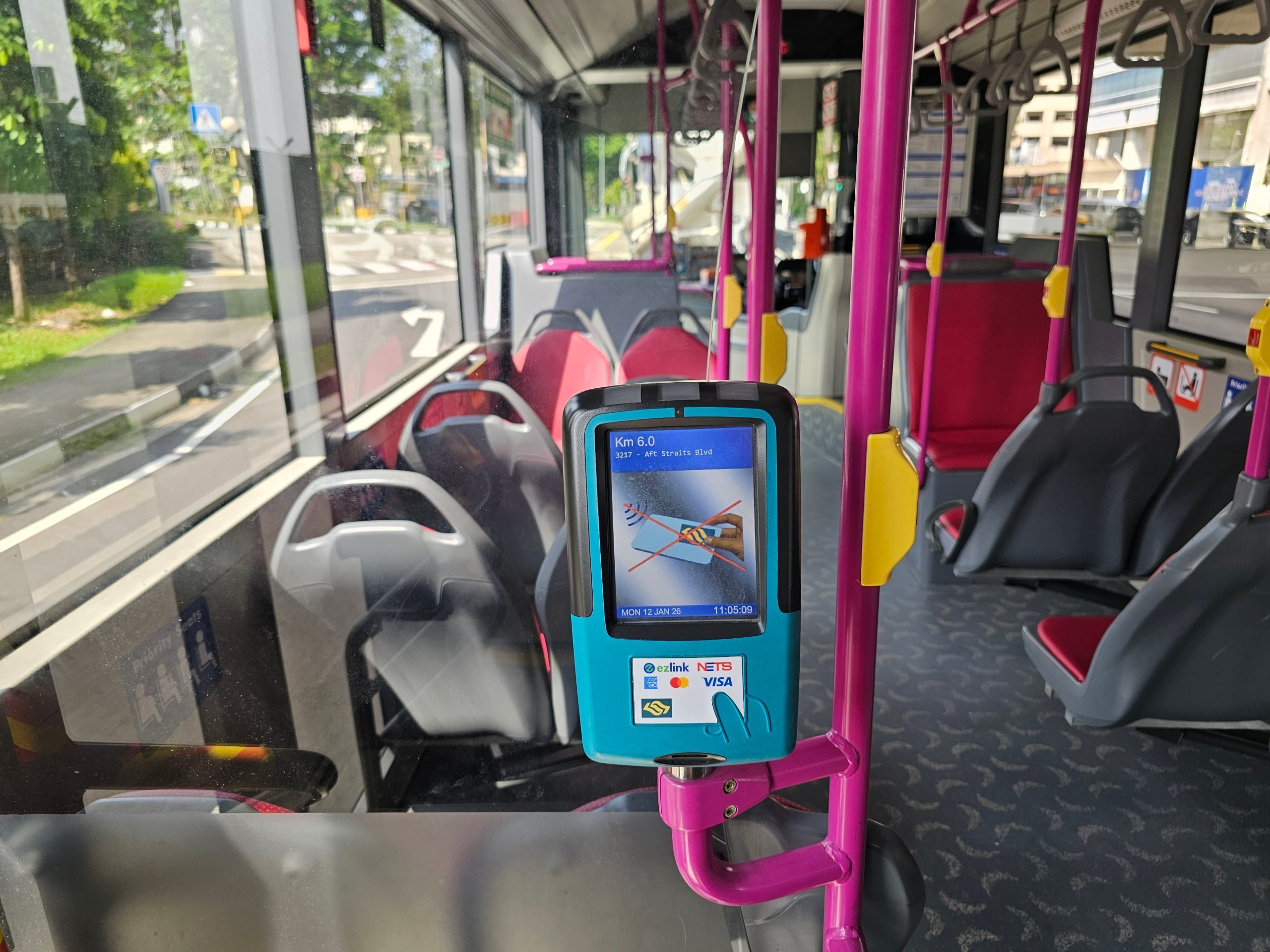
- Buses = you beep at the validator on boarding and alighting
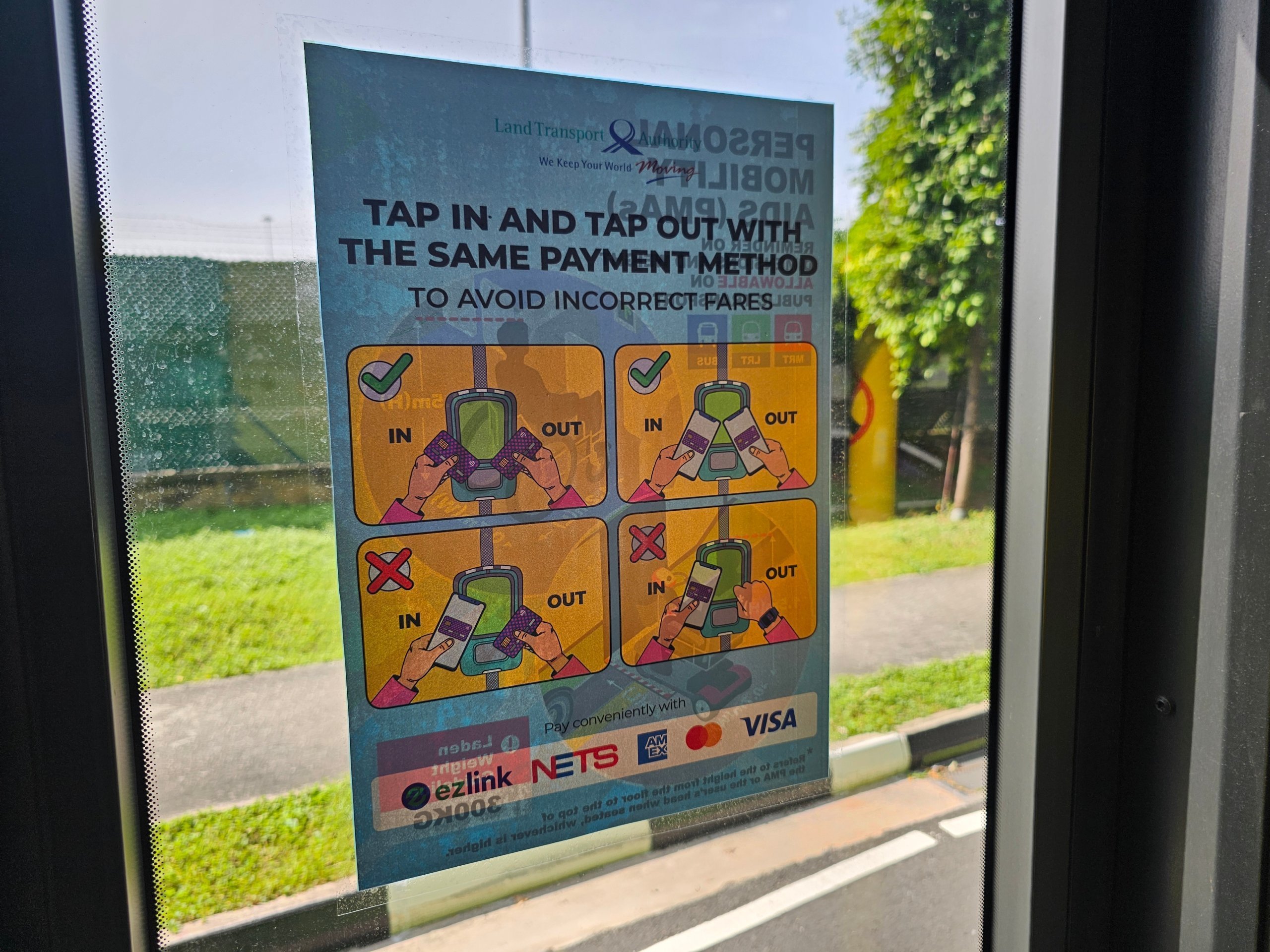
So the system works here tap in, tap out.
There is a daily administration fee when paying with a foreign credit card 0,60 sgd. Even so, it is still more convenient than the Singapore Tourist Pass unless you travel really a lot.
- ✅ The easiest way, you don't have to deal with tickets at all
- ✅ The cheapest way if you don't travel more than 5-8 trips a day
- ❌ No daily limit = if you travel really a lot, the Singapore Tourist Pass is more likely to be worth it (but this rarely happens)
We used the Revolut card in Singapore without any problems - both in physical form and on mobile.
EZ-Link
The chip card works as an alternative to your own contactless card if you don't want to use it.
The EZ-Link card can be purchased at ticket counters in major subway stations or from machines at Changi Airport.
The fare is the same as paying with your own contactless card, but there are a few drawbacks:
- ❌ Initial price 10 sgd = 5 sgd card price (non-refundable amount) + 5 sgd stored value for payment
- To be worthwhile against the daily fee 0,60 sgd for using a contactless card, you would need to be in Singapore for more than 8 days
- ❌ You top up the card with your own chosen amount, so you may run out of money (it's non-refundable)
- ❌ EZ-Link does not count towards the daily limit either
EZ-Link can be topped up at vending machines at metro stations or via the SimplyGo mobile app.
Cash payment
You can only pay in cash on buses. However, a higher fare is charged than when paying with a contactless card.
Mobile apps
There is currently no mobile app for paying fares in Singapore.
Search for transport
While in Singapore, I used the following websites and apps to search for transport:
- Google Maps - works reliably here (but may not work well for planning cross-border transport to Johor Bahru)
- MyTransport.SG on Google Play / App Store - additionally shows the exact location of all buses
MRT Metro
The Metro MRT (Mass Rapid Transit) is the fastest and most widely used transport around Singapore.
The network connects major parts of the city:
- Marina Bay
- Chinatown
- Orchard Road
- Singapore Changi Airport
- Sentosa Island Cable Car
- Little India
- and more
Trains run very frequently (usually every 2-4 minutes).
➡️ For a detailed guide to lines, prices and a map, see the article Metro in Singapore.
Buses
The bus network in Singapore is very extensive and supplements the metro in areas not served by the MRT.
The buses are air-conditioned, have electronic displays and the stops often show exact arrival times.
Overall, the bus system in Singapore is very reliable, safe and clear.
Transport companies
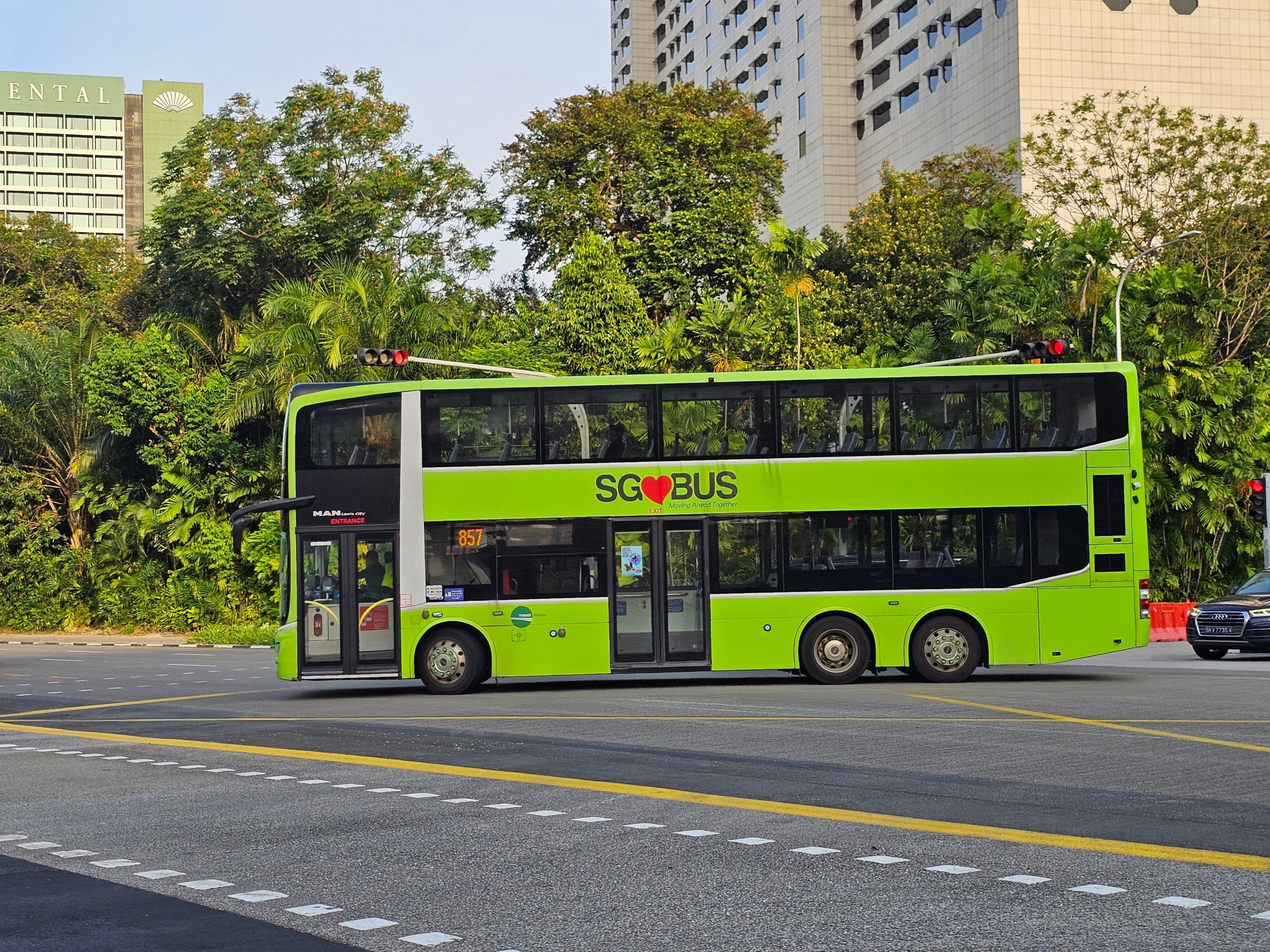
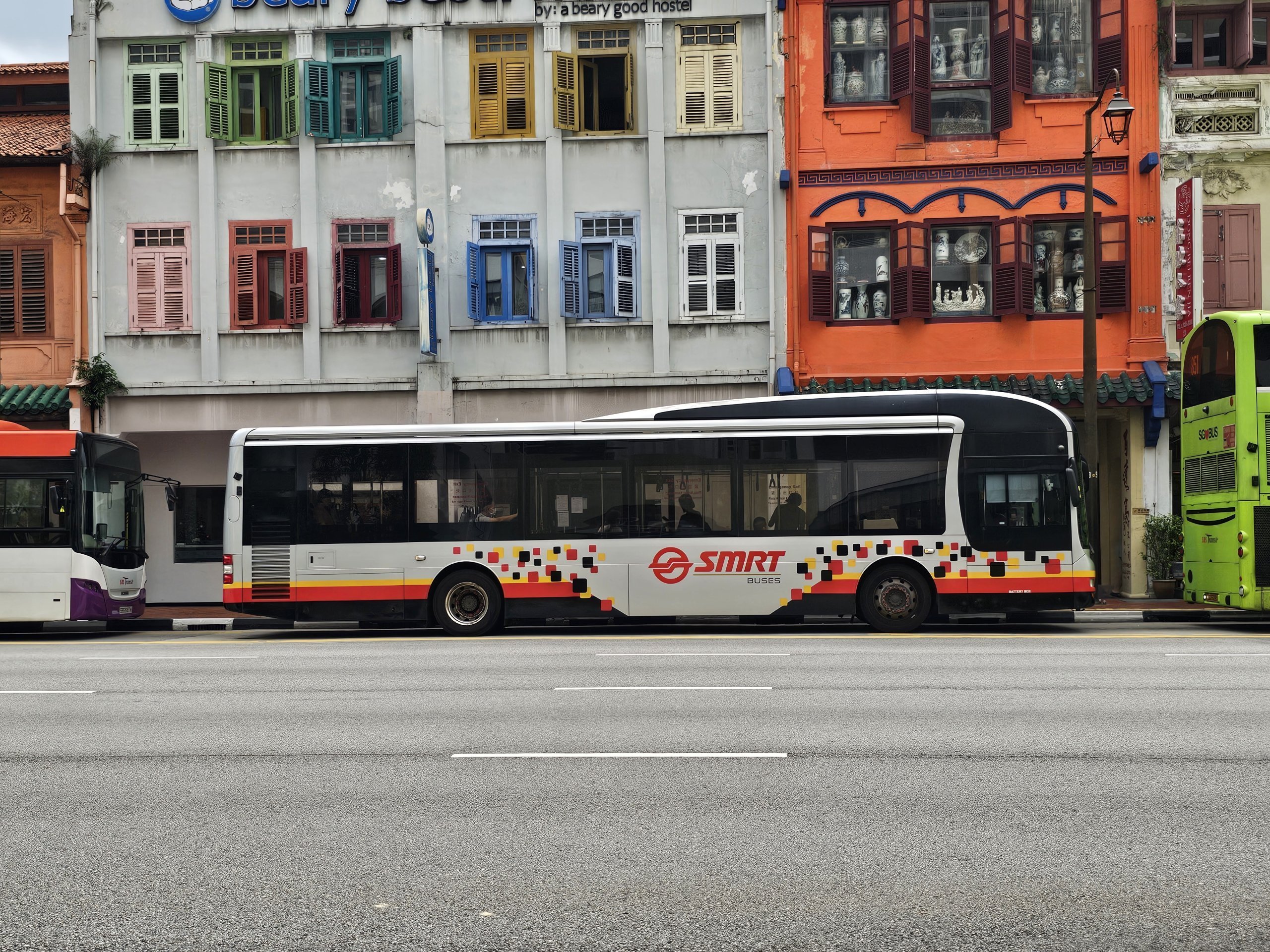
Two companies operate bus services:
- SBS Transit - sbstransit.com.sg
- SMRT Buses - smrt.com.sg
- Tower Transit - towertransit.sg
- Go-Ahead Singapore - go-aheadsingapore.com
There is virtually no difference for passengers - they use similar fares and payment system. All companies appear in Google Maps and MyTransportSG searches.
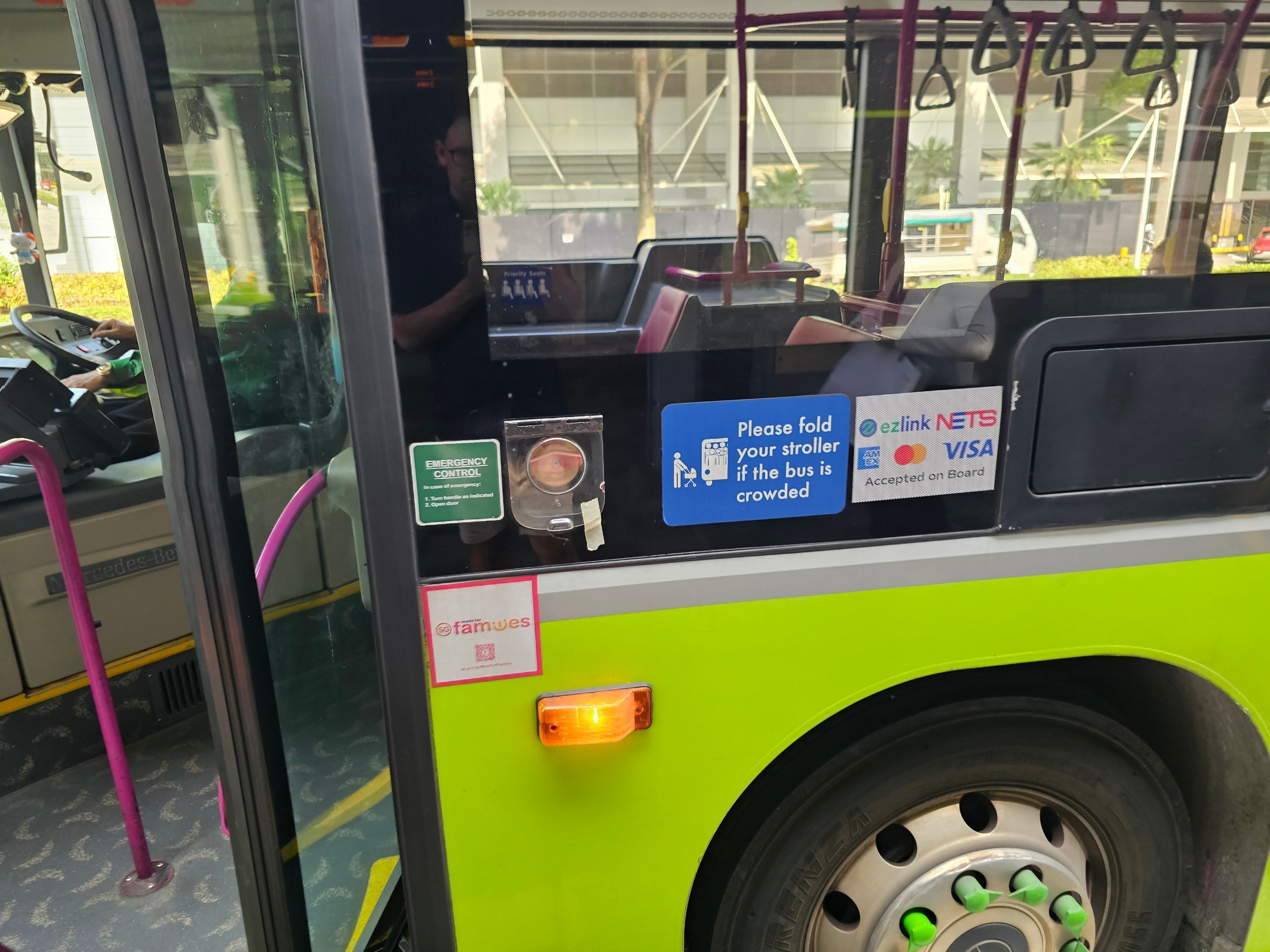
How to pay bus fares
Payment works in the same way as on the metro.
Just insert your card when you board and again when you get off.
You can use:
- your own contactless payment card
- Apple Pay / Google Pay
- EZ-Link transport card
Singapore bus map
Before my trip, I searched several times for an official map of all bus routes in Singapore.
While a complete map of all routes is not available, the busrouter.sg website has maps of each route including all stops.
Are the buses reliable?
Yes. In many places, buses have dedicated lanes so they don't queue as much.
However, there are a lot of traffic lights in Singapore, so the ride is significantly slower than the subway.
Bus stops and drop-offs
Buses stop at a signal.
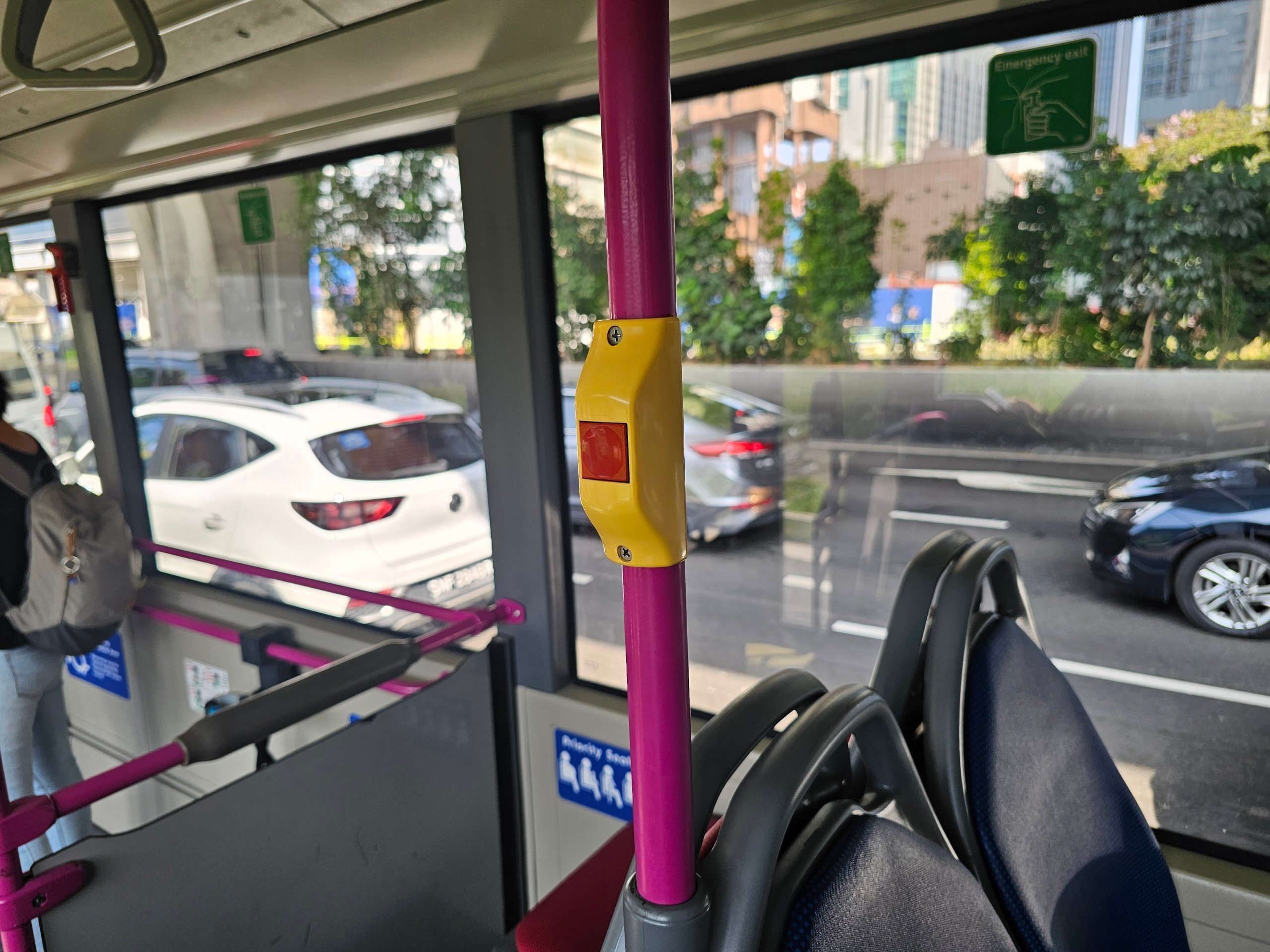
If you want to get off, you have to press the stop button. If you don't, the bus may pass the stop.
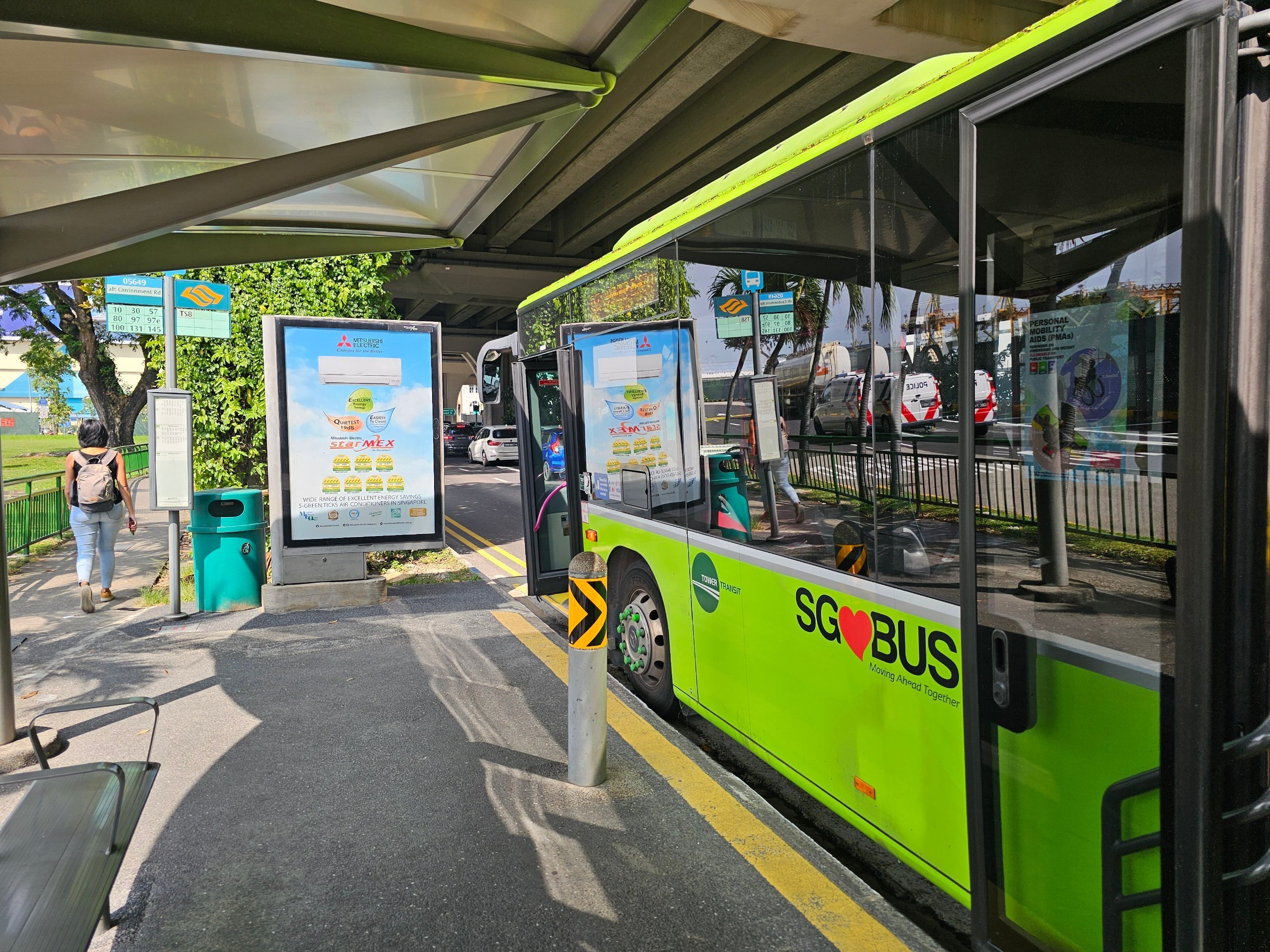
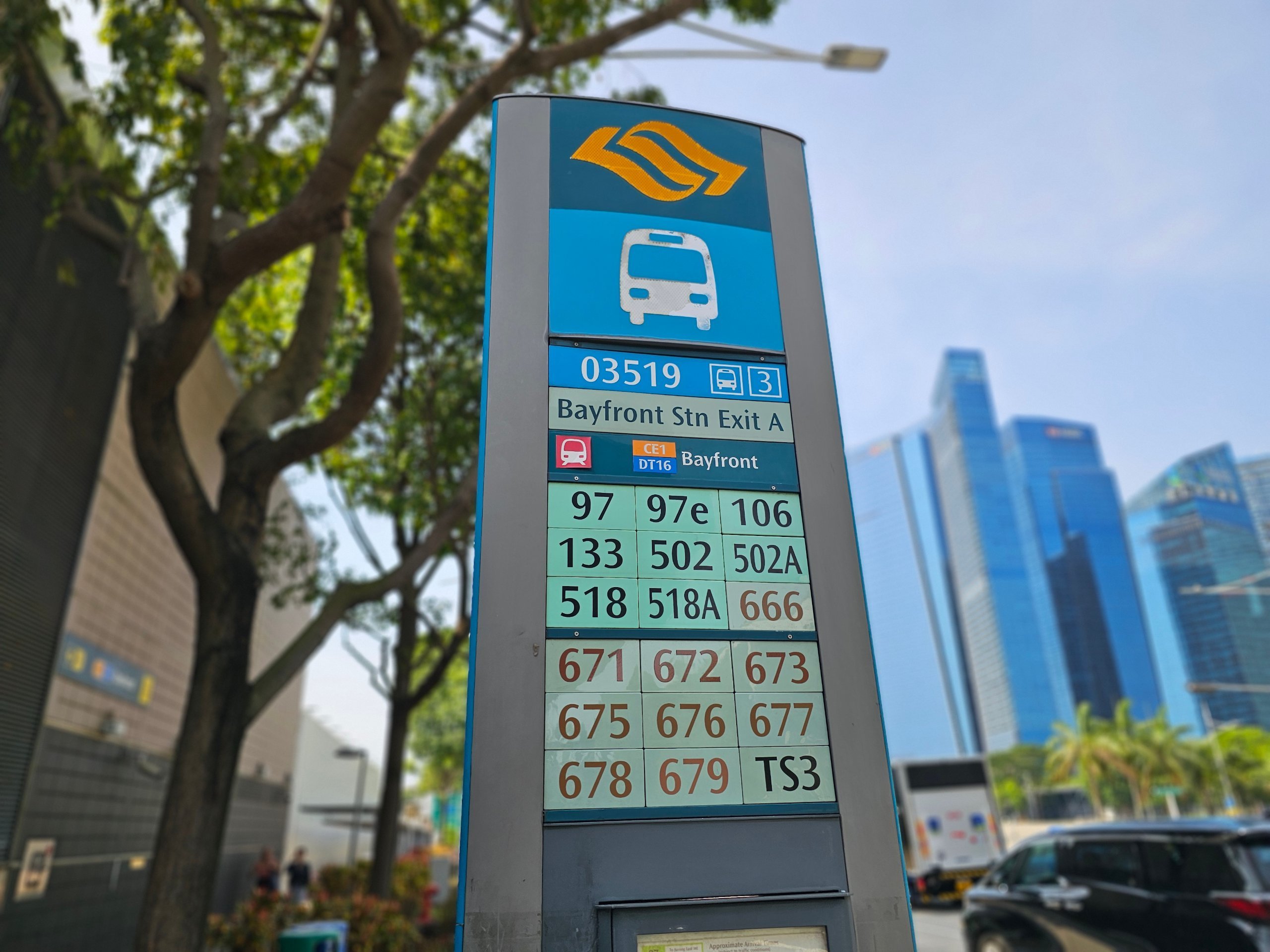
You will always find all the lines that stop at the bus stops clearly marked and sometimes the current arrival time.
On the busrouter.sg map you can find out in advance which specific lines leave from a given stop + maps of their routes.
Taxis in Singapore
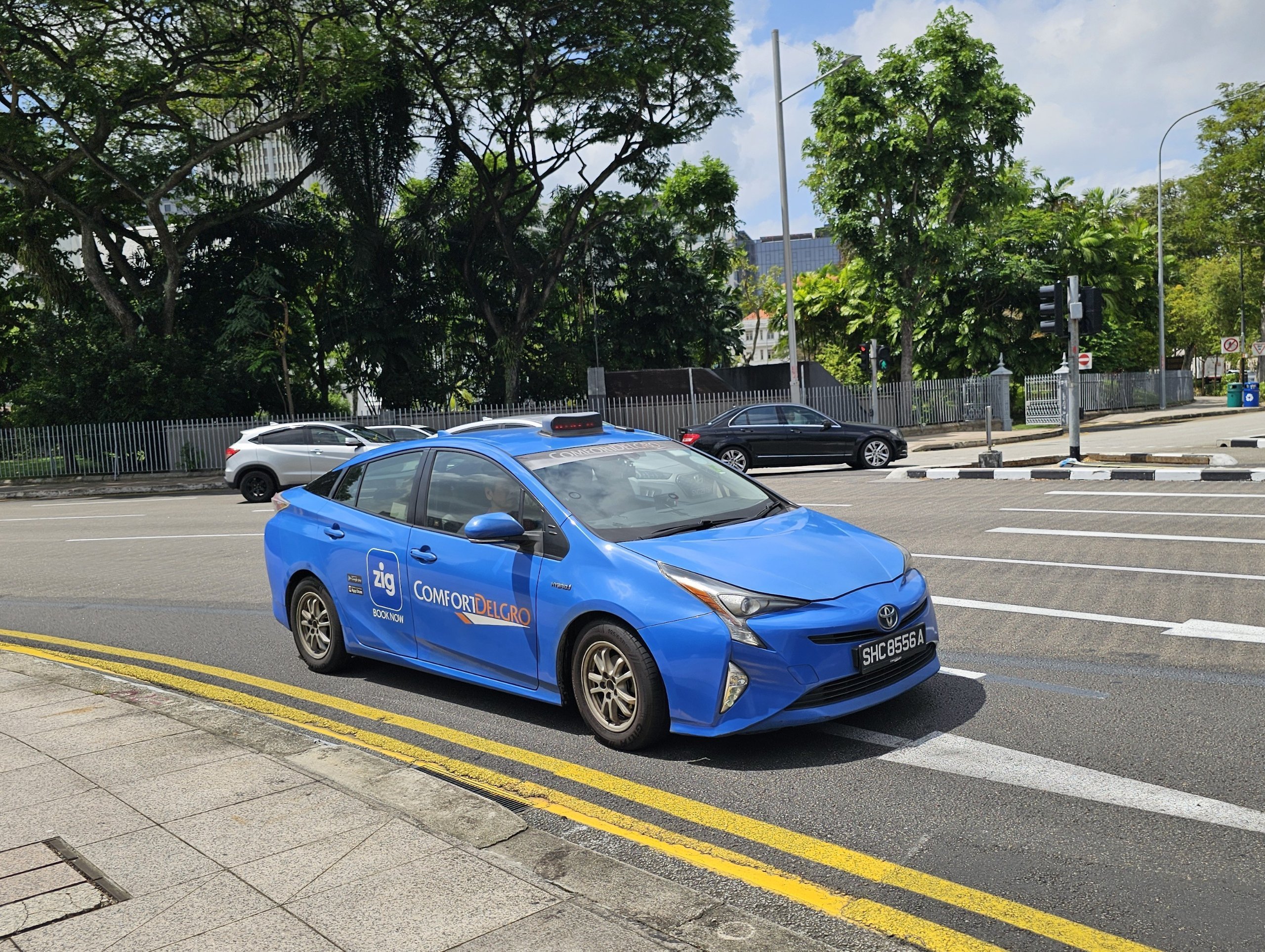
Taxis and mobile apps are regulated by the government and operate very reliably.
Prices are not too high and if you are travelling with bulky luggage, in the evening or between places where there is no direct metro line, a taxi may be worthwhile.
However, even when travelling with more people, public transport is almost always better value for money.
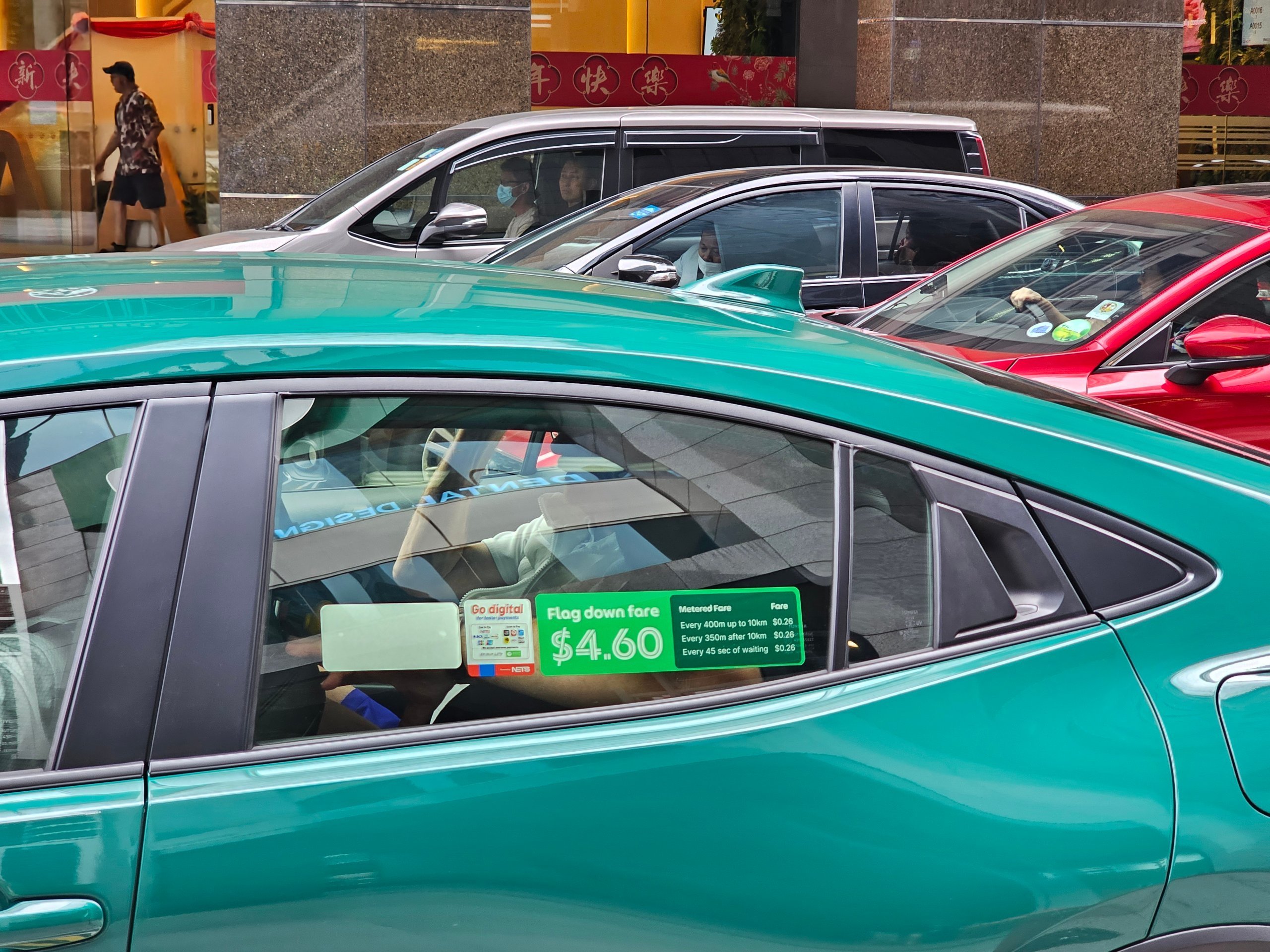
Basic fare:
| Item | price |
|---|---|
| boarding tariff | 3-4 sgd |
| short ride around the centre | 8-15 sgd |
| airport → downtown | 20-30 sgd |
Taxis can stop on the street or use the taxi stand.
You can always pay by card or cash.
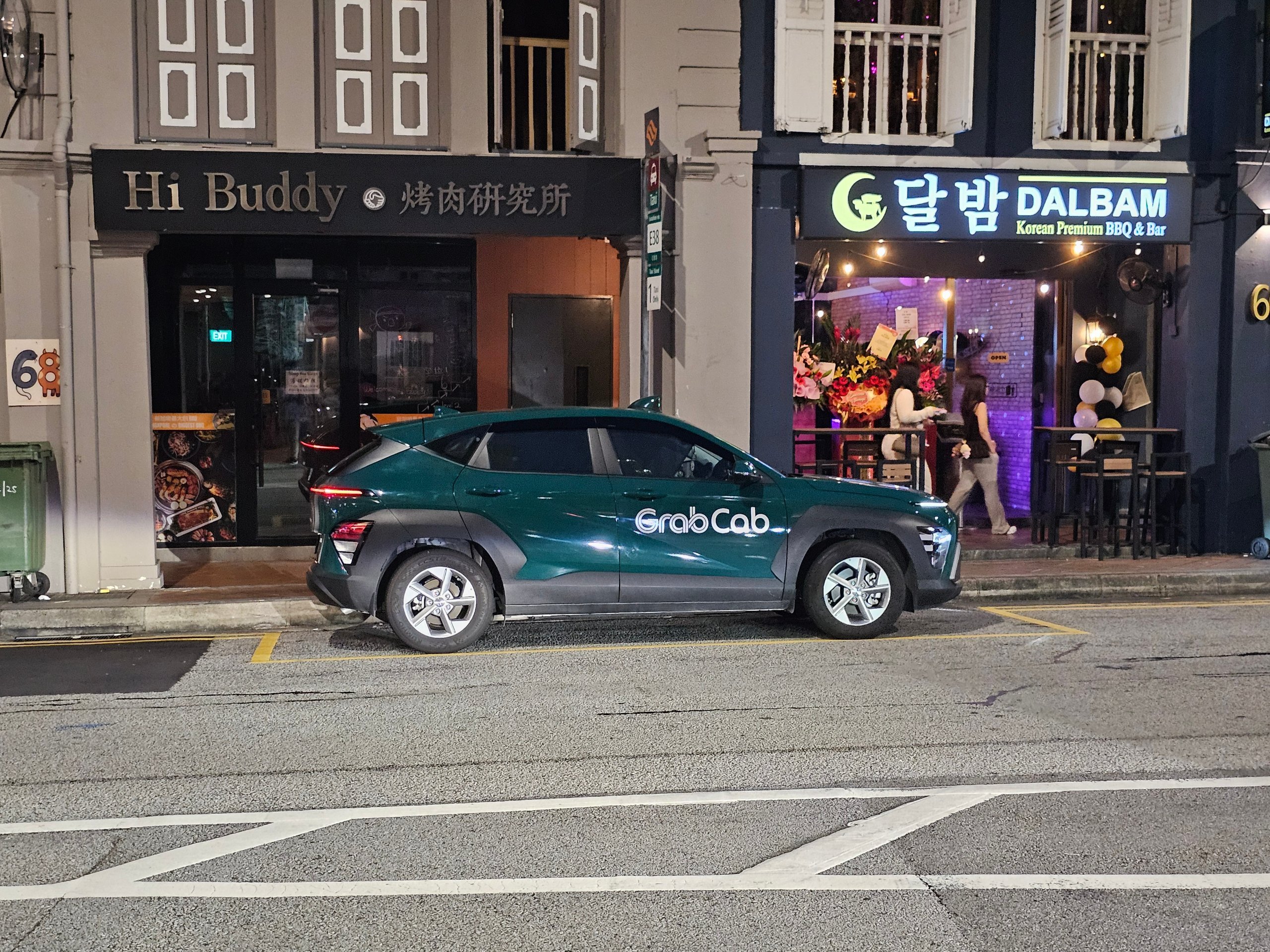
Mobile app for ride sharing
Singapore has great mobile apps that often offer a much lower price than traditional taxis.
They work very reliably and you usually won't wait more than 10 minutes for a car, even at night.
Prices are usually 10% to 20% lower than taxis.
These apps are the most common in Singapore:
| apps | Note |
|---|---|
| Grab - Google Play / App Store | Largest platform, great accessibility |
| Gojek - Google Play / App Store | Often cheaper, good availability |
| TADA - Google Play / App Store | Smaller competitor, often cheaper |
| CDG Zig - Google Play / App Store | Official app of the largest taxi carrier |
| Ryde - Google Play / App Store | Local service, poorer availability |
During our stay, we used Grab, which we've long been used to from our travels in Asia (though for example, we've been using the cheaper Bolt almost exclusively in Thailand, but it doesn't yet operate in Singapore).
👉 Tip: Read my experience with mobile apps for taxis also from Bangkok, Phuket, Koh Samui, Jakarta, Bandar Seri Begawan or Kuala Lumpur.
Transportation from the airport to downtown
Singapore's main airport, Changi Airport, is located in the east of the city and is accessible by metro, bus and taxis, Grab or other apps.
I describe everything in detail from my own experience in the article How to get from Singapore SIN Airport.
| Type | Price | Travel time |
|---|---|---|
| Metro | 2,20 sgd | 40 minutes |
| Taxi/Grab | 20 sgd to 25 sgd | 20 minutes |
| Bus | 2,20 sgd | 60 minutes |
👉 Most travellers can arrive in Singapore without a visa. See our Singapore visa guide for details.
Is Singapore walkable?
Yes - the centre of Singapore is very pedestrian friendly.
Many areas are connected:
- air-conditioned passages
- underground corridors
- pedestrian promenades
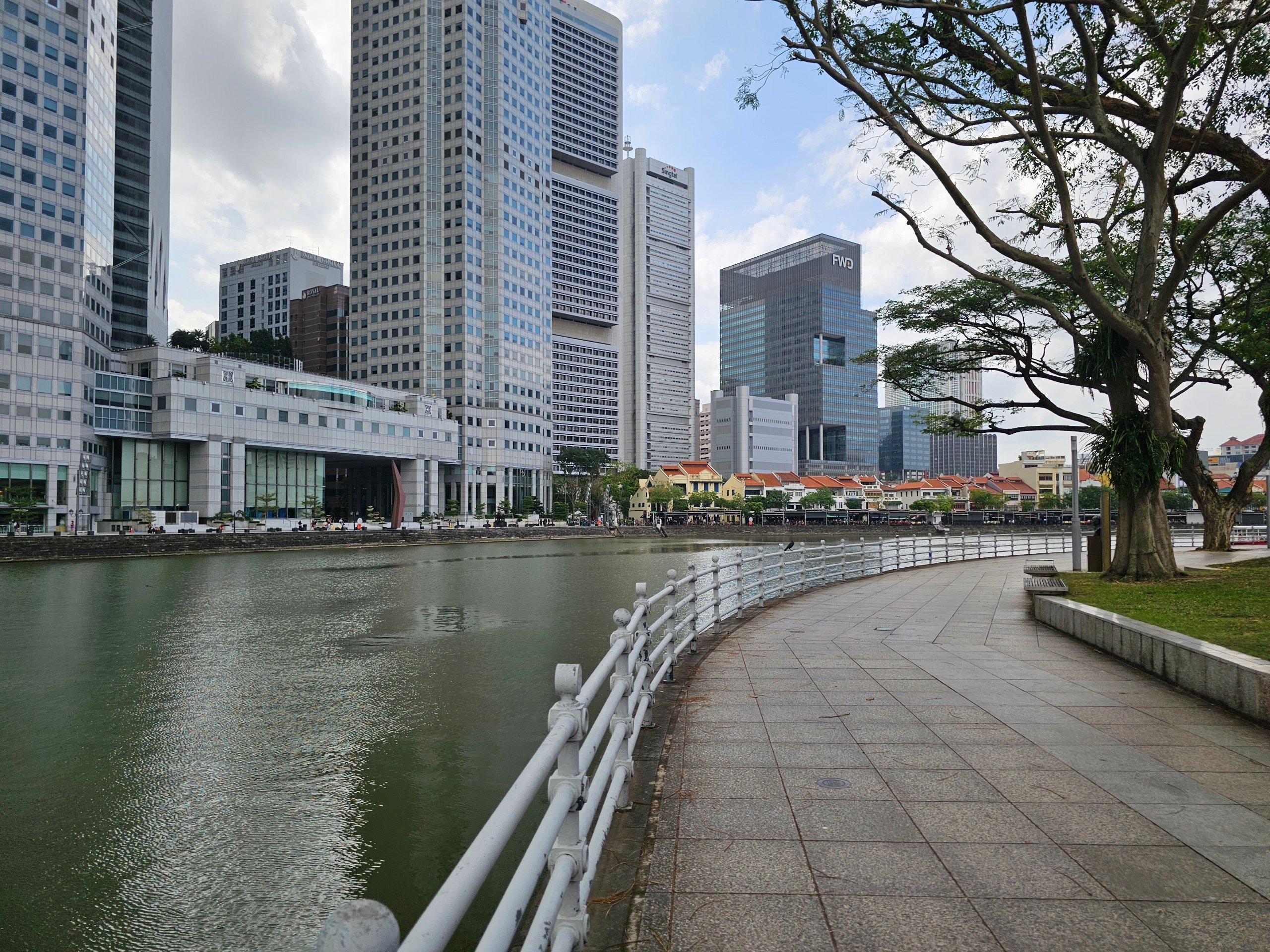
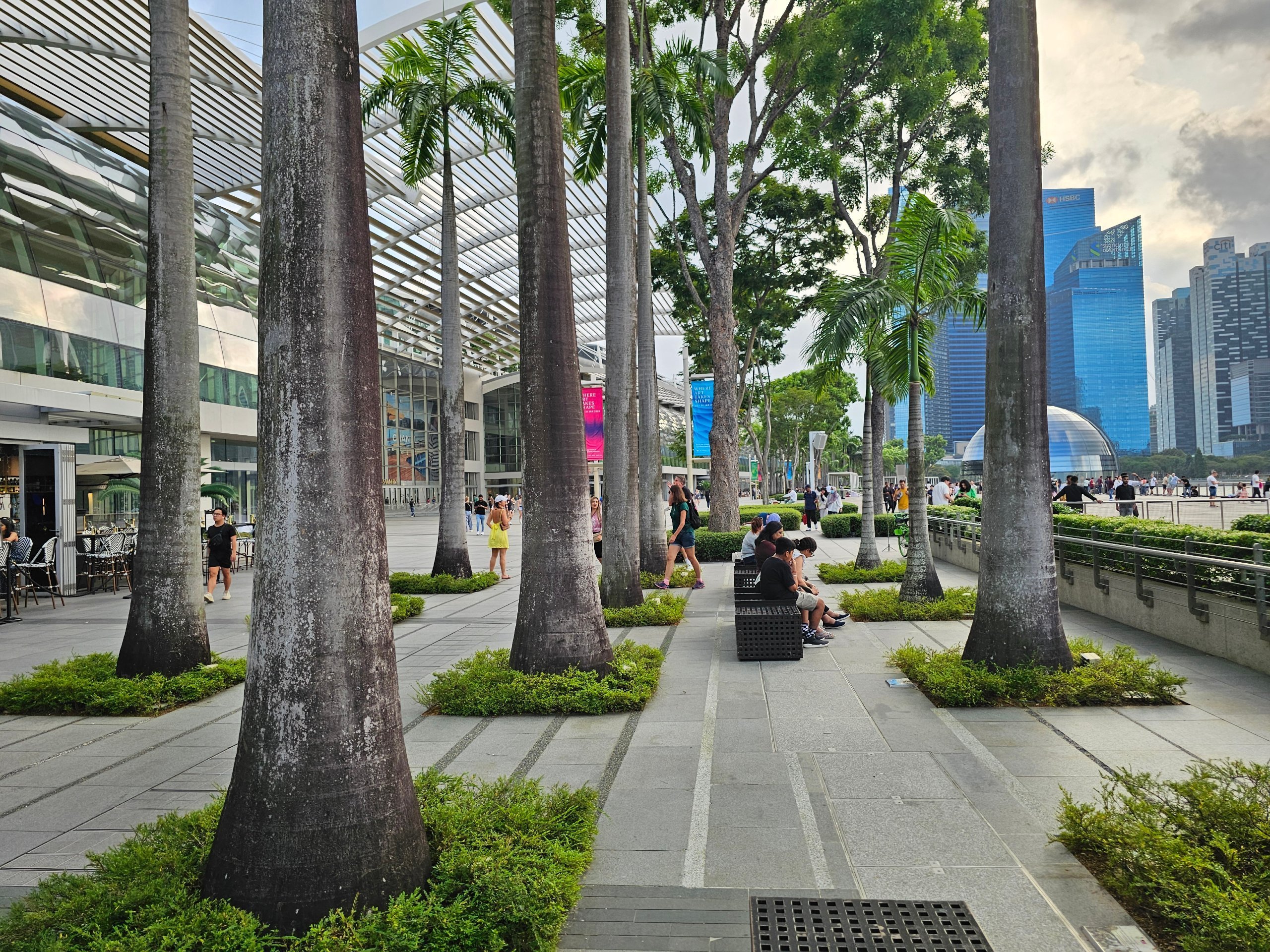
For example, it is easy to walk between Marina Bay and Gardens by the Bay. We walked all over Downtown and Chinatown.
In fact, in my opinion, Singapore is the most pedestrian-friendly city in Southeast Asia - infinitely more convenient than, for example, similarly developed and nearby Kuala Lumpur.
Book a hotel in central Singapore
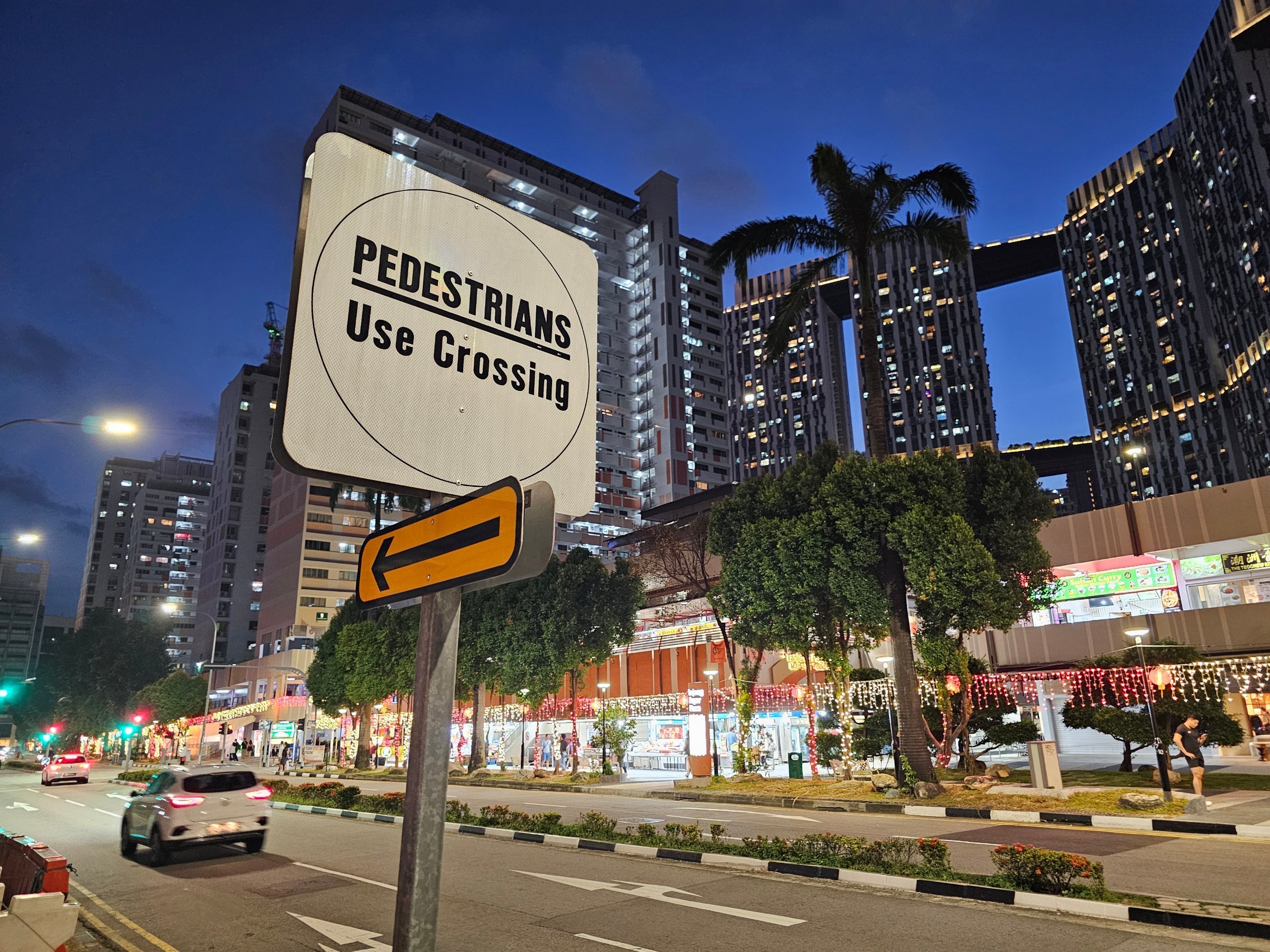
❗ In Singapore, it is illegal to cross the street outside crosswalks under threat of heavy fines of up to hundreds of Singapore dollars. However, in reality, we saw quite a number of pedestrians crossing the streets outside the traffic lights.
Rush hour traffic
The biggest traffic peaks are:
- Morning 7:30-9:30 a.m.
- Afternoon 16:30-19:00
The metro tends to be very full at these times, but still quite usable.
These are also the times when cars are at their peak, so if you're planning on taking a taxi - for example, to Singapore Airport - make sure you leave a bigger reserve.
Shared bikes
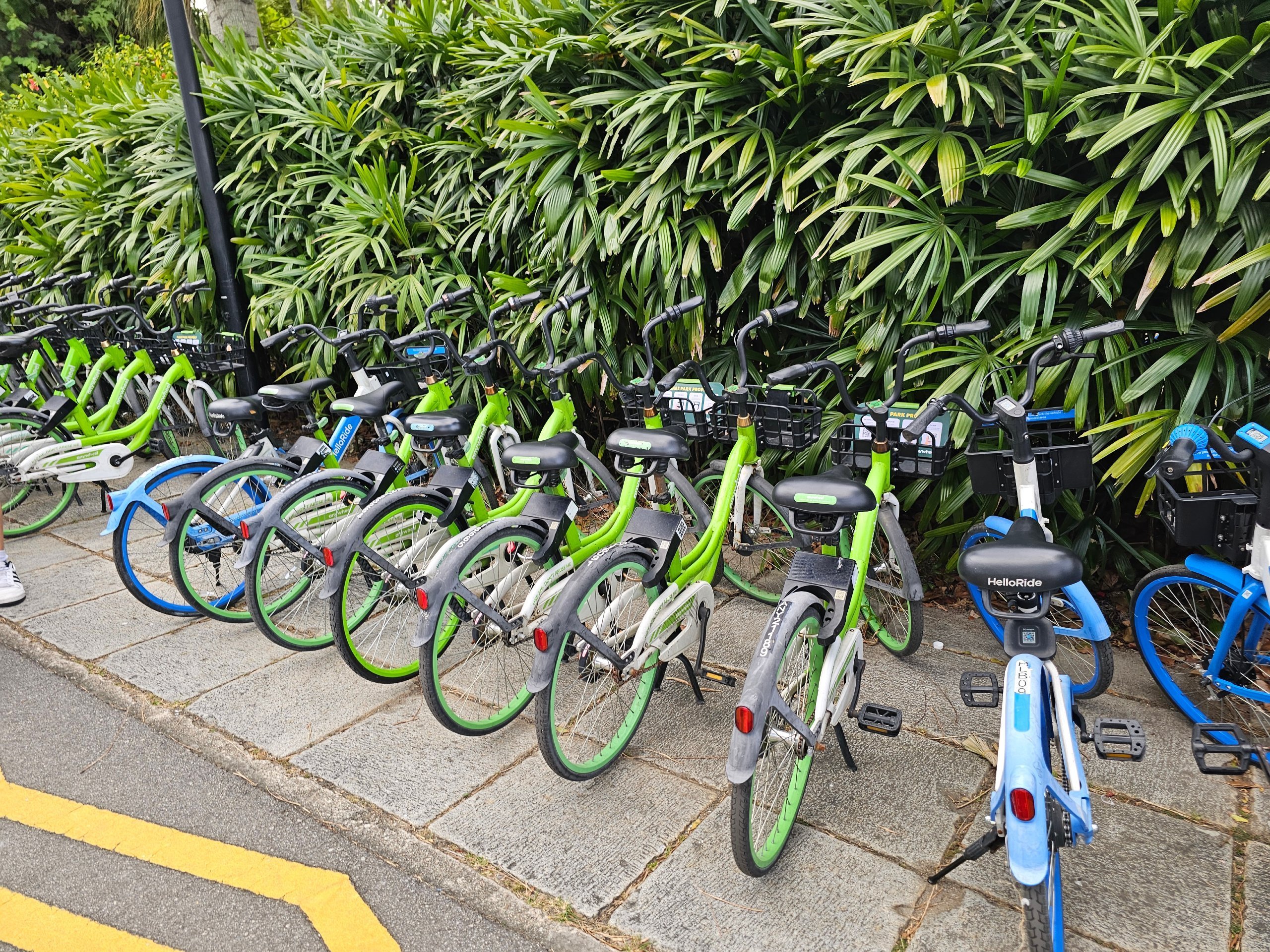
Shared bikes exist in Singapore, but they are not as widespread as in Europe.
The biggest service is Anywheel. To use this service, you need to download a mobile app:
Price of bikes
Typical price:
- 1-2 sgd for 30 minutes.
Where bikes pay off
Bicycles are particularly suitable for recreational riding:
- along Marina Bay
- in East Coast Park
- on bike paths outside the city centre
For regular traffic, the MRT is usually faster.
In addition, the availability of bike share stations is quite sparse, so you often have to find somewhere to park your bike.
Practical tips
1️⃣ Don't ride on the metro
Eating and drinking is prohibited on the MRT.
2️⃣ Stand on the left on escalators
Walk on the right.
3️⃣ Attach your card when exiting
Otherwise the system will charge the maximum fare. It is also important to use the same card when exiting as when boarding. Logical, but a lot of tourists get confused.
My experience
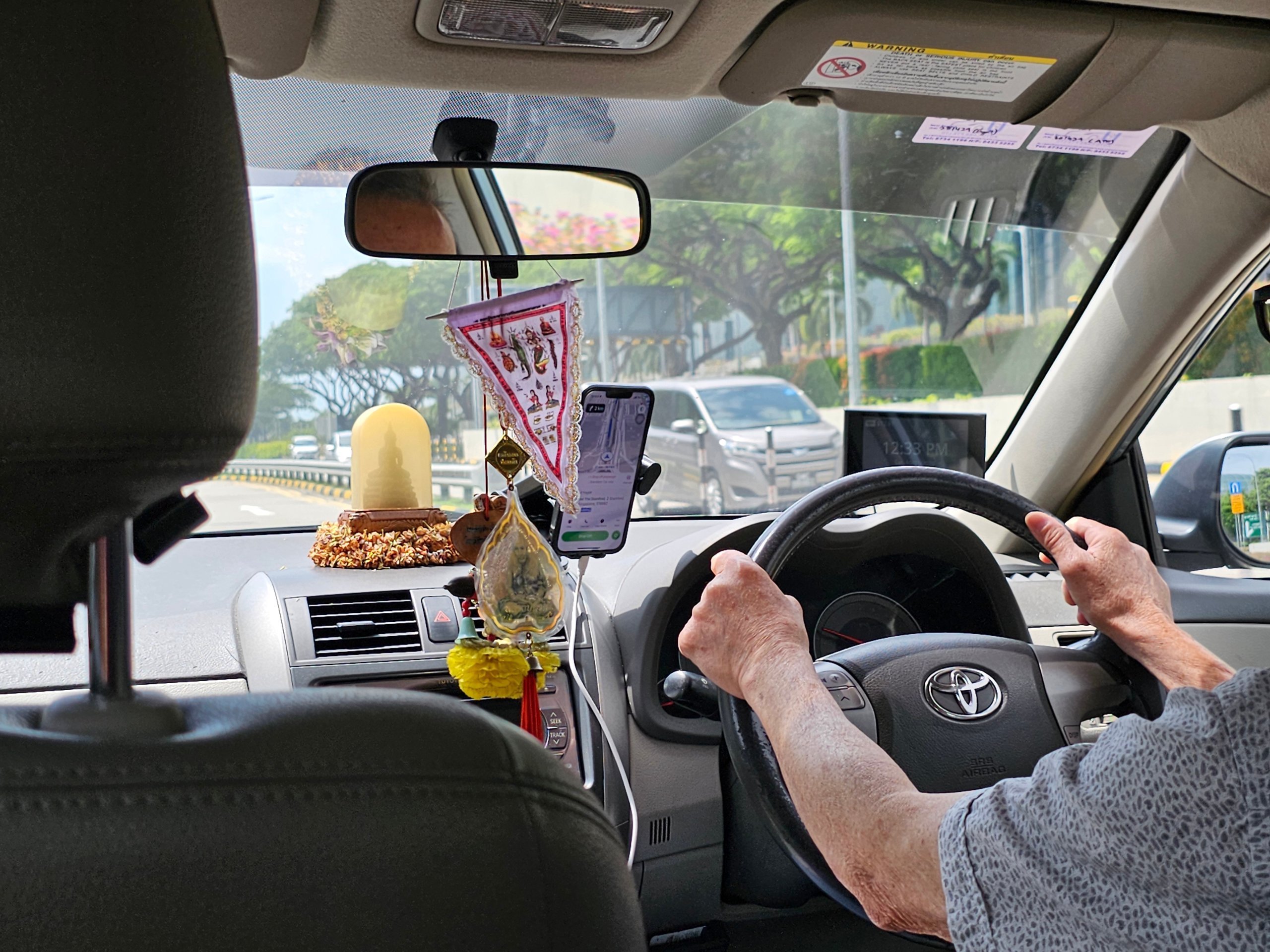
Most of the time we used a combination of metro MRT + Grab.
The metro is fast and very clear. Grab is especially useful in the evening or for short transfers between neighborhoods where we would have to transfer between subway lines.
I've personally only used the buses about 2 times for short rides around downtown.
Singapore has very good, modern, clean and safe public transport and is one of the best in the world in this regard - at least from my perspective.
Most common routes in Singapore
Below are the most common transfers between Singapore's tourist districts, including specific metro or bus lines.
| Route | Lines | Time |
|---|---|---|
| Marina Bay → Sentosa | Bus 97 + monorail | 40 minutes |
| Marina Bay → Chinatown | Metro (Blue Line) | 8 minutes |
| Chinatown → Downtown (Merlionú | on foot | 20 minutes |
| Marina Bay → Gardens by the Bay | on foot | 10 minutes |
| Marina Bay → Orchard Road | Metro (Brown or Red Line) | 15 minutes |
| Orchard Road → Botanical Gardens | Metro (red line) + subway (blue line) | 15 minutes |
| Airport → city centre | Metro (Green Line) | 40 minutes |
Any questions left?
If you have any questions or comments about the article...