Vietnam from Vienna with a return to Budapest (luggage included)
381 €


Bangkok is huge, and distances look shorter on the map than they actually are. We found that a combination of the underground, boats and taxis worked best for us.
Most long journeys can be covered by the metro or a taxi / Grab / Bolt; for attractions along the river, it’s often worth taking a boat and then finishing the journey by taxi.
I only tried the bus a few times, and that was just to see how it worked. Not because I actually used the buses.
My recommendations:
Below, I go into more detail about all modes of transport, including prices, buying tickets, the differences between boat operators and common mistakes.
Are you flying into the city or travelling on to another destination in Thailand? Read my other articles:
Where to stay so you don’t spend your holiday in a taxi? For a first visit, I’d choose a hotel near a BTS or MRT station. If you want to travel by boat frequently, the area around Saphan Taksin station and Sathorn pier is ideally located. You can find specific neighbourhoods and our experiences in the article ‘Where to stay in Bangkok’.
Compare hotels near the metro and the river
The metro lines are the main arteries of Bangkok’s public transport system. Even so, they are unlikely to be enough on their own, as the Bangkok metro is relatively new, is still expanding and does not yet serve many important locations. Furthermore, the metro network is (quite logically) designed primarily to meet the needs of locals rather than the main tourist routes.
What’s more, the Bangkok Metro is operated by four different companies, which do not recognise each other’s tickets, so you’ll need to buy a new ticket every time you change lines.
We’ve put together comprehensive information on travelling by metro for you in a separate chapter:
A taxi is usually the best option for getting from the station to your hotel, for a group, or when returning late at night.
On the streets, you’ll see traditional taxis in various colours; the colour does not determine the fare. Look for the ‘Taxi Meter’ sign and make sure the driver switches on the meter before you get in.
The base fare for a standard passenger taxi is 35 thb for the first kilometre; for larger vehicles 40 thb. Subsequent sections cost more depending on the distance travelled:
At speeds of up to 6 km/h, an additional 3 thb per minute is charged. A 5 km journey therefore costs approximately 61 thb according to the taximeter, excluding any time spent waiting in traffic; the actual price may be significantly higher. An additional toll is payable on toll roads, the amount of which depends on the route.
An airport surcharge of 50 thb is levied when boarding a taxi at the official taxi ranks at Suvarnabhumi and Don Mueang airports. It is not automatically added when travelling to the airport from the city. I describe the prices and procedure at the taxi ranks in detail in the guides for BKK and DMK.
Generally speaking, you will rarely pay more than 250 baht for a taxi journey within the wider centre of Bangkok. The vast majority of journeys fall within the rangeof100 thb to 150 thb.

You’re usually most likely to get a fair fare from a taxi that’s been flagged down in the street.
With taxis parked outside major tourist attractions, on Khao San Road or outside hotels, the driver may offer a fixed price. This is usually unfavourable for tourists.
Say ‘meter, please’ before you get in.
If the driver refuses, say thank you and try another taxi or use a ride-hailing app. Don’t assume that every taxi will use the meter; particularly in busy areas, it’s worth walking a street further. Also avoid offers of ‘cheap rides’ that involve a stop at a shop.
In my experience, however, it’s often quite difficult to find a taxi driver who’s willing to switch on the meter, especially around tourist attractions.
At night in the Sukhumvit or Silom districts, I’ve never once managed to get a taxi with the meter running.
In that case, I always opt for Grab or Bolt, even if it means a longer wait.
Wave at a passing taxi from a spot where it can stop safely. You’ll usually come across plenty of them, but in heavy rain, during rush hour and at night, it may take longer to find one.
Before getting in, show the driver the pin on the map and, ideally, the name of the hotel written in Thai. The English address alone is often not enough.
For long journeys, check whether you want to take the toll motorway and pay the toll, or avoid it.
If you hail a taxi on the street, make sure you have cash to hand and keep smaller notes handy.
If you want to pay by card or see the price in advance, use the Grab and Bolt apps to compare the available car types, the final price and the payment methods before booking. Offers and surcharges vary depending on location and time.
Grab and Bolt may be more expensive than a metered taxi, but with fixed-price offers at tourist attractions, the apps can work out cheaper.
They’re also handy in the rain, when travelling with luggage, or early in the morning when you want to be in control of your pick-up. Grab states that card payments are accepted; with Bolt, check that your chosen payment method is supported when placing your order. For night-time and pre-booked journeys, always check the total price.
Official taxis are a common form of transport. To be on the safe side, check the car’s signage before setting off and the meter once you’ve got in; in the app, compare the number plate and the driver’s name.
Tipping is not expected. If you are satisfied, you can round up to the nearest 10 thb; however, if the amount is higher than the meter reading, ask the driver to explain whether this is a toll charge.
Yes, it’s a good idea to have both apps on your phone. For every journey, though, I’d compare their price and estimated arrival time with the option of hailing a taxi in the street.
A metered taxi is often cheaper; the apps are more convenient if you want to pay by card, show the driver your destination straight away, or avoid haggling over the fare.
Be careful which type of journey you select:
Can I pay by card?
Yes, with Grab. Bolt also supports card payments, but the available payment methods may vary depending on the specific journey.
Select your card before booking and check the registration number when you get in. If you’ve set your fare to be paid via the app, don’t pay the driver again in cash.
Motorway tolls may be charged separately; Bolt in Thailand states that these are paid to the driver separately. It is therefore a good idea to carry some small change with you.
My advice: For a standard journey, try a metered taxi first. Open the Grab or Bolt app if drivers are only offering you an exorbitant fixed price, if you need to pay by card, or if you’re travelling early in the morning. If you’re travelling with several people and luggage, check the car size before booking.
However, I usually end up using the mobile apps anyway, as it’s simply more convenient for me to pay by card.
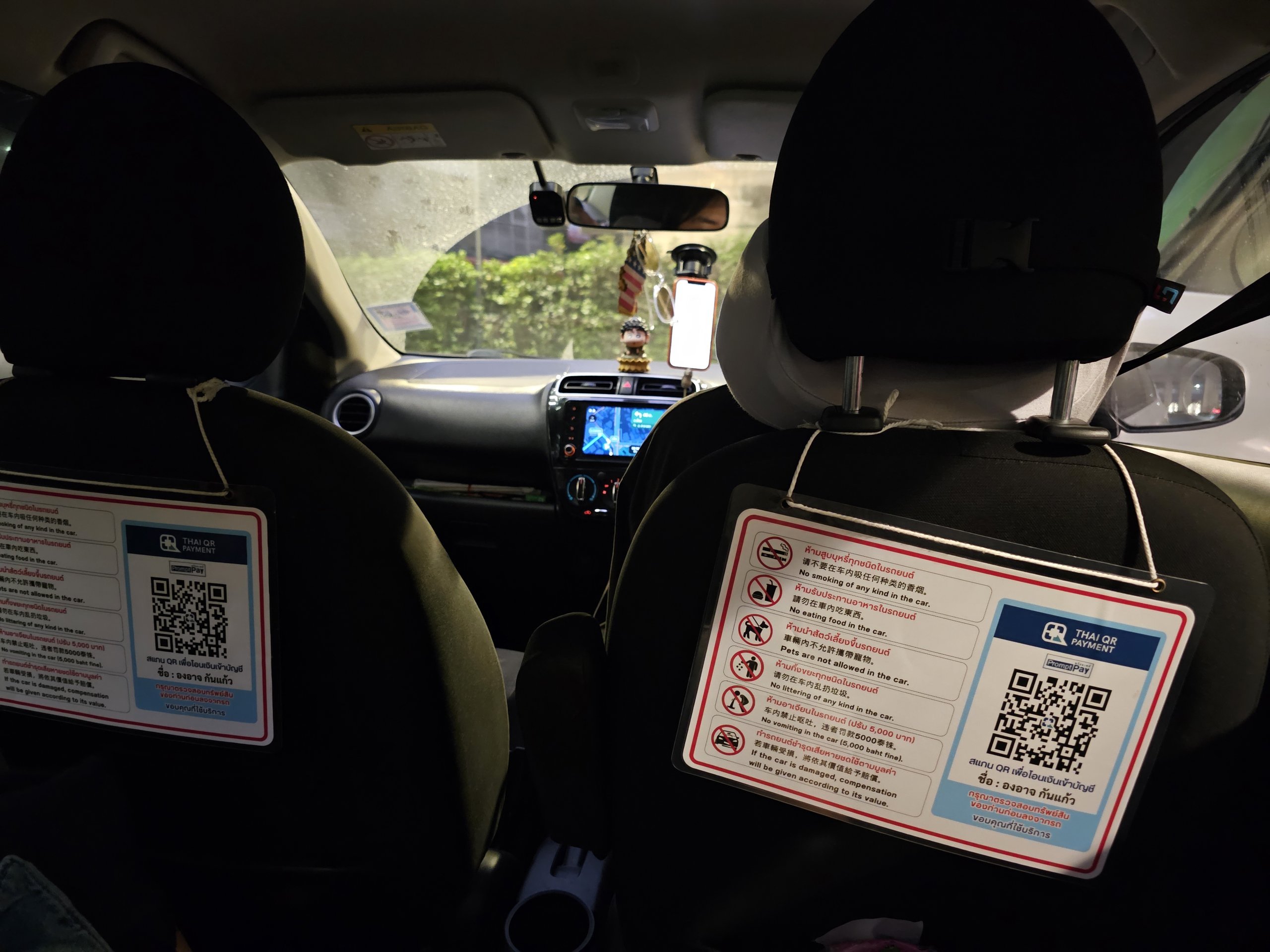
In my experience, Bolt works out cheaper in the vast majority of cases, but it has slightly poorer availability of cars.
Especially in the evening, we’ve had to wait around 15–20 minutes for a car.
However, I always check Grab as well, because on several occasions it’s been cheaper or the driver has confirmed the journey much sooner.
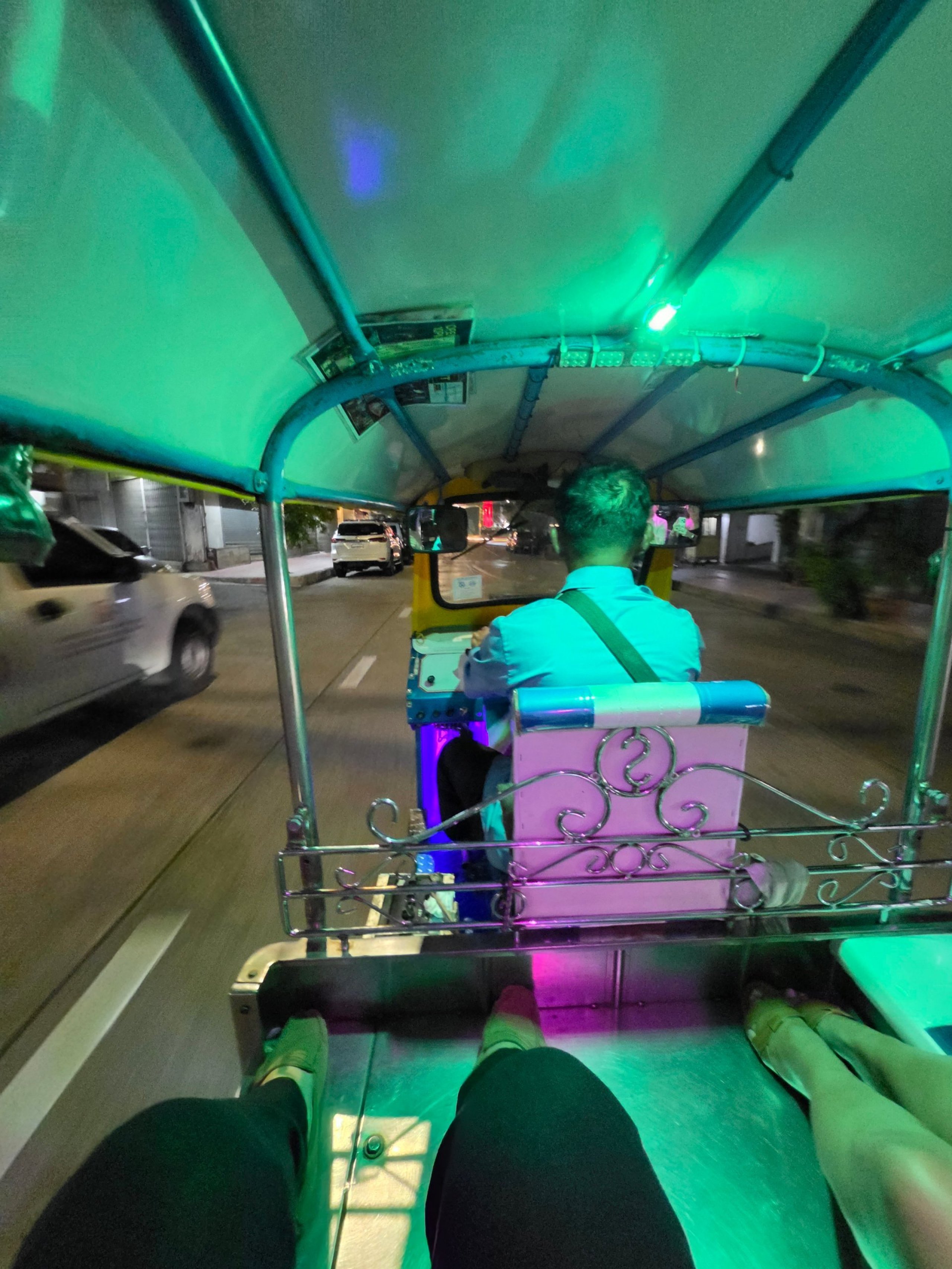
A tuk-tuk, often spelled tuk-tuk, is a motorised three-wheeler with a canopy and a rear seat for two passengers. Tuk-tuks are extremely common in Bangkok and are used not only by tourists but also by locals.
For me, it’s an experience best enjoyed on a single short journey, rather than a comfortable means of getting about on a daily basis. You’ll see the city up close, whilst being exposed to the heat and traffic without air conditioning.
Tuk-tuks don’t have meters. Before getting in, agree on the final price for the whole vehicle, the route and any stops. Near tourist attractions, they can be more expensive than an air-conditioned taxi, although locals do use them too.
A suspiciously cheap offer is often linked to a stop at a shop; read more in the article on safety and scams in Bangkok.
The usual price for a tuk-tuk for a journey of around 15 minutes is 200 thb for tourists, and I’ve rarely managed to haggle for a better price.
We would therefore recommend travelling by tuk-tuk just once for the experience, bearing in mind that you’ll need to haggle over the price and that it will most likely still be more expensive than a ride in a much more comfortable taxi.


You can often recognise a motorbike taxi by the drivers wearing orange vests. They’re handy for short journeys from the station to the narrow streets where cars get stuck, and they usually carry just one passenger.
Agree on the fare before getting in and insist on a helmet. If you have luggage, small children or simply don’t want to travel in heavy traffic, opt for a car.
Bangkok is a city built on water, so boat transport is a natural part of the public transport system. Most of the water transport takes place on the Chao Phraya River, which winds its way through the historic part of Bangkok, though regular boat services also run along several side canals.
Various companies, routes and types of boat can be found on the same river, often at the same jetty. The colour of the flag indicates the service, not a universal ticket.
| What you’ll see | Who and what it is | When to choose it |
|---|---|---|
| Orange, yellow, yellow-green or red flag | Chao Phraya Express Boat: regular river services with varying numbers of stops. | Cheap transport along the river. |
| Blue flag | Chao Phraya Tourist Boat: a tourist service with its own ticket and day pass. | Sights, easy boarding and views. |
| Thai Smile Boat electric boat | A separate operator, formerly MINE Smart Ferry; operates its own City, Urban and Metro routes. | When its specific stops and departure times are convenient. |
| Short ferry crossing across the river | Various local operators. | To the opposite bank only. |
| Hotel or shopping shuttle boat | Service to a specific hotel or town centre. | Only if you’re heading to that particular destination. |
What I would choose:
I look up ferry connections via Google Maps. It doesn’t always work entirely reliably, but at least it finds me the piers for regular public transport ferry services.
Choose a hotel with a river view
First, find out the jetty and the direction (northbound / southbound).
Then check whether your carrier and your route actually stop there.
At large piers, such as Sathorn, there are usually separate queues and ticket offices. Show the staff the name of your destination pier; a photograph of the boat or simply the colour on the map is not enough.
Buy your ticket for the specific service at its ticket office, or follow the conductor’s instructions on board.
It is best to carry some small change; card payments are not yet accepted.
Keep your paper ticket until you alight. Always check the flag and stops against the current timetable on the pier: services change more frequently than the old articles and maps on the internet.

These are the classic public transport boats that carry both locals and visitors. These are my favourite boats because they are the most traditional and the most authentic.
On most routes, the fare is for the entire journey, so it doesn’t matter whether you’re travelling one stop or several; the exception is the longer section of the yellow-green line to Pak Kret.
There are three boat routes in operation, of which only one runs all day and at weekends; the other two are only used to provide extra service during peak times on weekdays.
The routes are identified by the colours of the flags at the stern. The colours of the flags for each route are always displayed on the jetty where that route stops.

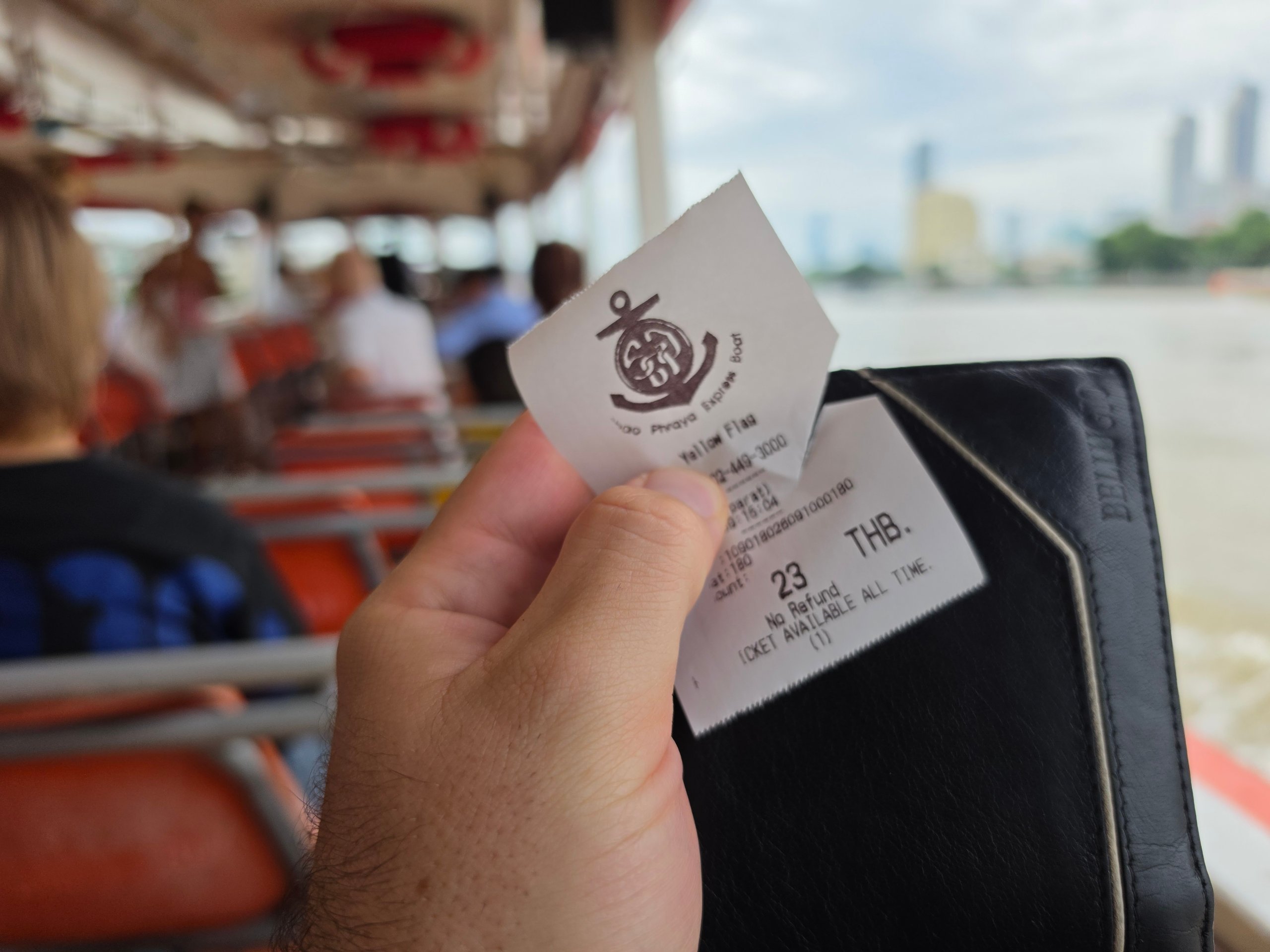
Practical tip: for a trip to the Old Town, find a boat that ’s currently running and stops at your destination; don’t base your plans on the orange flag.
Some routes do not operate at all during the day or at weekends, and even a boat going in the right direction may not stop at every jetty. Check the Chao Phraya Express Boat website for specific timetables, stops and route maps, and use ViaBus to track the location of the boats.
A boat may be quicker than a taxi along the riverfront, but at the jetty and whilst boarding, do leave space for those getting off. During peak times, you’ll have to stand. For your first visit, I’d recommend setting off with plenty of time to spare rather than relying on a rough estimate from the map.


It shares the river and some piers with the Chao Phraya Express Boat, but its tickets are sold separately.
A single journey currently costs around 30 thb; at some piers you can buy a ticket from a booth, whilst at others you’ll need to buy it on board. There is also a Thai Go Day Pass for this operator’s network, though it is not valid on all Bangkok boats.
The names of the three routes can be confusing: the Metro Line is a river boat, not the city metro. The blue colour used to mark this route on the Thai Smile Boat map does not mean it is a tourist boat with a blue flag.
Look for stops and timetables under the name Thai Smile Boat (older sources refer to it as MINE Smart Ferry). Before travelling, check the operator’s latest information as the service on these routes has changed.
The Blue Boat is the best option for a first trip along the river. It runs between Sathorn and Phra Arthit, calling at tourist stops including ICONSIAM, Ratchawong (Chinatown), Wat Arun and Tha Chang (the Grand Palace); some evening services continue on to Asiatique.
It usually departs approximately every 30 minutes; please check the actual last departure time for your chosen direction.
A single trip costs around 40 thb, whilst an all-day ticket costs approximately 150 thb. You can also buy this online via the GetYourGuide website.
A day ticket starts to make sense if you’re making several separate journeys. It’s only valid on this blue tourist route.
At the ticket office before boarding, ask whether you need a single-journey or a day ticket; the current stops and timetable are published by Chao Phraya Tourist Boat.
Buy an all-day ticket for the blue boat

In many places across Bangkok, short ferry services operate across the Chao Phraya River, travelling from one bank to the opposite bank. The vast majority of these cost 5 thb a single fare, and payment is usually made at the jetty before boarding, though sometimes it is paid to the crew on board.
These ferries generally run from 6.00 am to 9.00 pm, with some operating until 11.00 pm, at intervals of roughly every 5 to 15 minutes.
The large, luxury shopping centre Iconsiam, as well as many riverside hotels, operate their own free ferries; see the full ferry map below.

The river is also criss-crossed by a huge number of small, fast boats with long bows. You’ll see them everywhere at all hours of the day. These are tourist boats which, for a fee of around 1 500 thb to 2 000 thb per hour for 2 to 4 people, will take you on a trip along the river.
These boat trips can be arranged either at the main jetties or at tourist agency stalls in the city centre.

Evening cruises with dinner form a separate category. These are excursions, not simply a journey from one jetty to another; choose based on the departure jetty, time, menu and reviews.
Don’t book them for a simple evening trip around the city. If you want to include a cruise as part of your evening plans, take a look, for example, at the highly rated two-hour cruise from Asiatique; when choosing your seat on the boat, check whether you’re booking an outdoor or indoor deck.
View evening cruises on the Chao Phraya
If you want to combine the metro with boat travel, the Centre Point Plus Hotel Silom is within walking distance of the BTS Saphan Taksin station and Sathorn pier.
The Eastin Grand Hotel Sathorn is also a practical choice if you want to avoid a long walk to the metro, as it’s directly connected to the BTS Surasak station.
If you’d like a view directly over the Chao Phraya, we stayed at the Royal Orchid Sheraton.
You can find a more detailed comparison of neighbourhoods and our experiences from other stays in the article‘Where to stay in Bangkok’.
River boats on the Chao Phraya run north to south. The following canals offer different routes and are not included in the standard river ticket.
A fast and very cheap boat service connects the area around Wat Saket / Golden Mount and the Panfa Leelard jetties with Pratunam, the northern edge of Siam, and on to the eastern districts around Phetchaburi and Bang Kapi. Part of the route runs along the neighbouring Khlong Maha Nak.
At Pratunam, you change between the Golden Mount Line and the NIDA Line. If you are travelling further, tell the ticket clerk your destination pier when paying: your ticket may be valid for the entire journey, including the change, so make sure you keep it.
Fares are based on distance; following the latest adjustments, they range from around 15 to25 thb. The conductor collects payment on board, so please have cash ready.
On weekdays, services run roughly from early morning until the evening; at weekends, services finish earlier and boats tend to run less frequently. The exact time of the last departure depends on the departure pier and the direction of travel.
Be prepared for a quick boarding process, a low boat railing and the occasional splash of water from the canal. If you’re travelling with a pushchair, a heavy suitcase or have limited mobility, I’d recommend taking a taxi or the underground. However, this route is well worth it for the experience and the speed it offers when navigating congested streets.


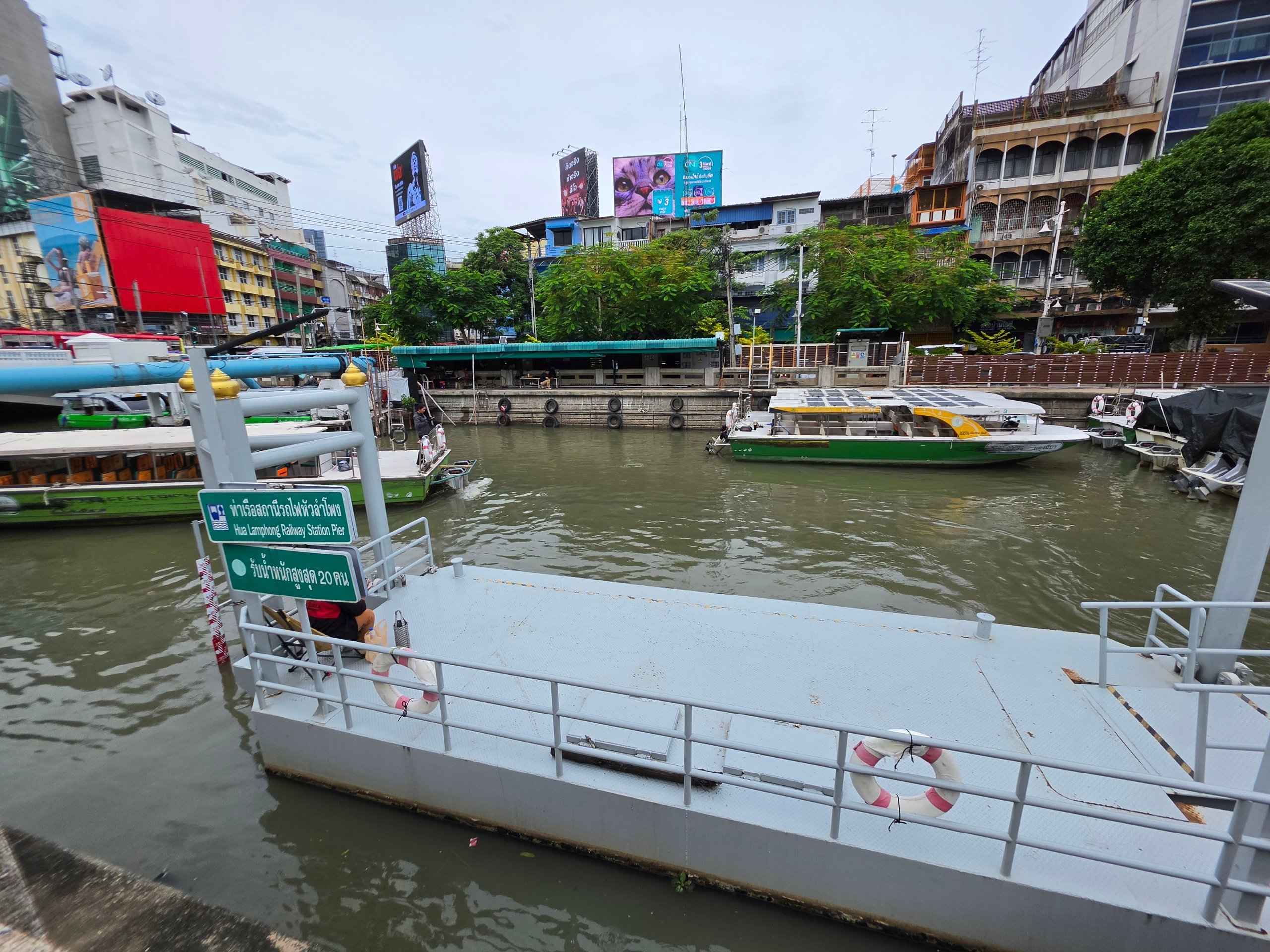
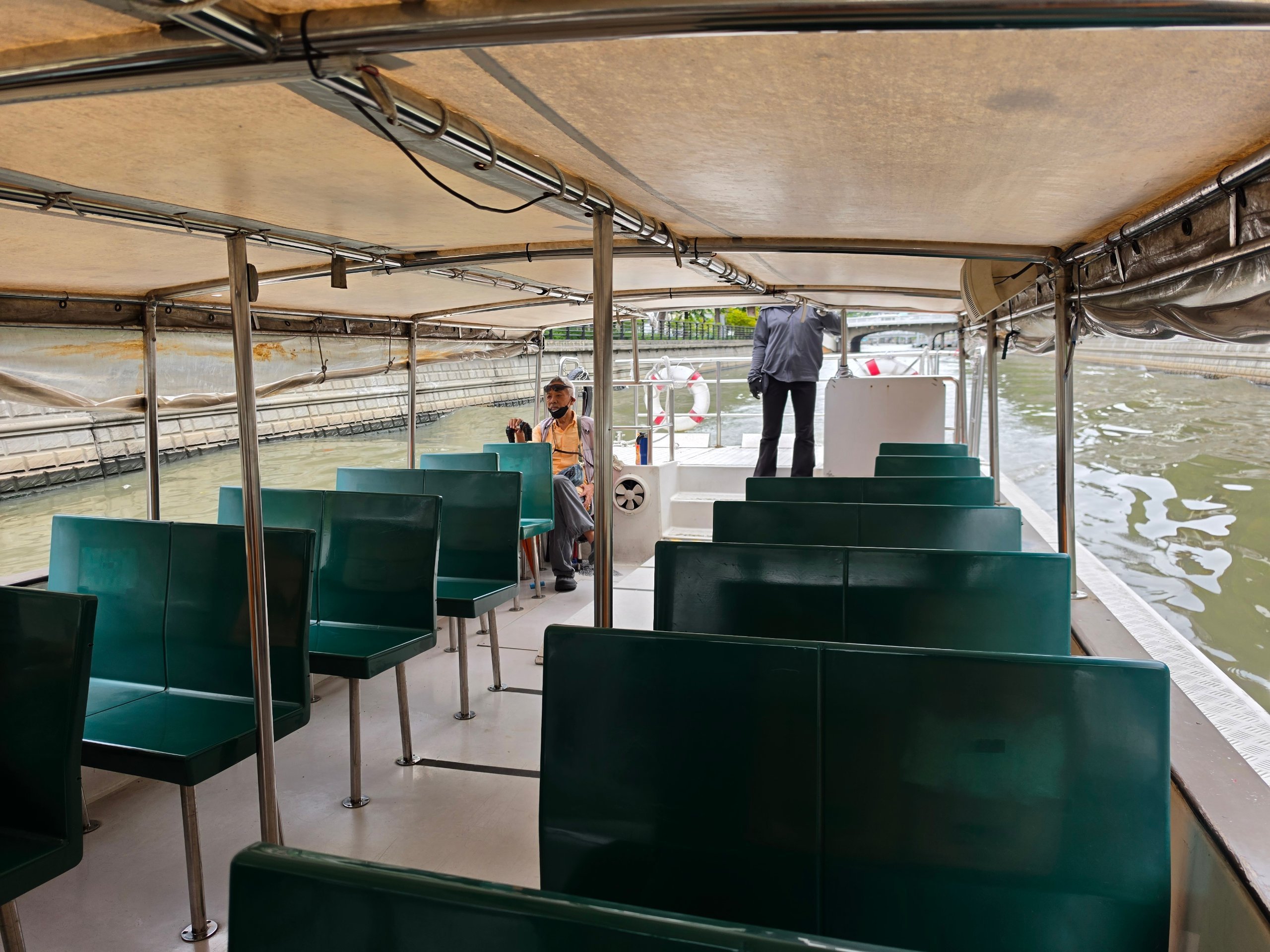
It sails from Hua Lamphong past the temples to Thewarat Market. From there, you can walk to Thewes jetty and continue along the Chao Phraya.
We experienced the boat trip ourselves – and the fact that it was free – during our last visit in October 2026.
The service runs from6.00 am to 9.00 am and from 4.00 pm to 7.00 pm; on weekdays approximately every 20 minutes, less frequently at weekends.
However, timetables have changed, so I wouldn’t rely on this service to depart exactly on the dot; I’d check at the pier before setting off.
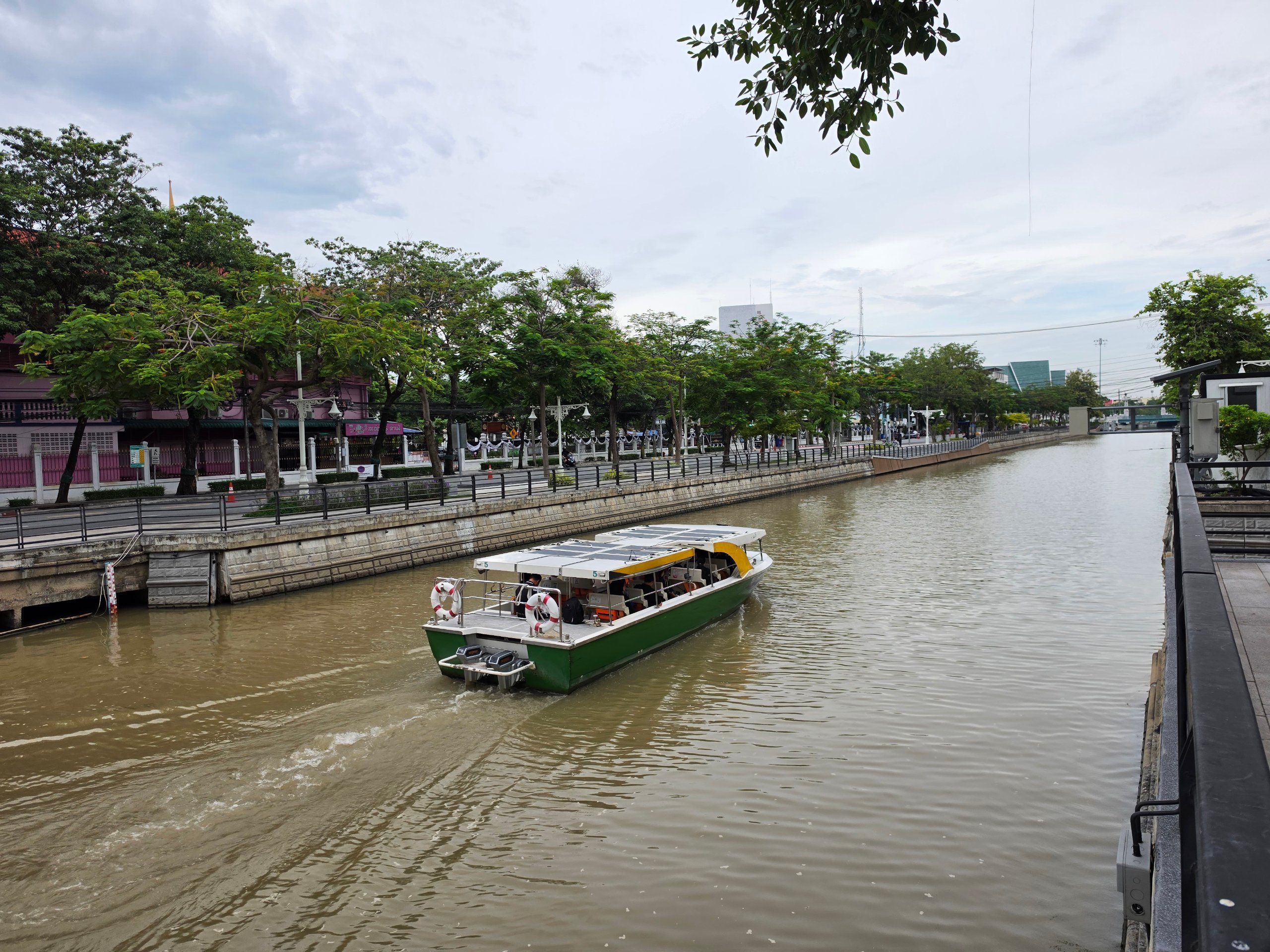
Do not confuse this electric service with the newer, smaller electric water taxis heading towards Bang Lamphu, which may have different booking procedures and fares.
I looked up the services using Google Maps and it worked quite reliably.
Buses are the cheapest form of transport in Bangkok, but unfortunately also the least straightforward. Partly because individual routes are operated by several different transport operators, there are no bus maps, no detailed timetables and certainly no standardised fares.
Bangkok’s buses fall into two basic categories:
Although travelling by bus isn’t much slower than by taxi, it is significantly less comfortable. Non-air-conditioned buses have hard benches, whilst air-conditioned ones tend to be overcrowded.


All buses are clearly marked with the route number and destination. However, older, non-air-conditioned buses in particular often have signs only in Thai. As there are no maps and the information on Google Maps isn’t always up to date, simply finding out which route you need to take can be quite difficult.
Stops are always marked with the name and numbers of the routes that stop there. Most of them also feature a symbolic diagram showing where the routes continue in the immediate vicinity, which is a very helpful guide. Some larger stops also display the exact arrival time of the next service on electronic displays.
The most useful tool for travelling by bus is the Viabus mobile app (Google Play / App Store), although, naturally, you’ll need a mobile data connection to use it.
It shows all stops (for buses, boats and the underground).
If you tap on the nearest stop based on your location, a list of routes that stop there will appear. Then, simply click on the route number and its full route will be shown on the map. What’s more, the current location of all buses is displayed, so you can easily check approximately how long it will take for the next bus to arrive.


Tickets are always purchased on board the bus from the conductor. Get on and wait for the conductor to come round to you. On older, non-air-conditioned buses, the fare is a flat rate regardless of where you’re travelling to. Prices vary from company to company, but generally you’ll pay between 8 thb and 12 thb.
On more modern, air-conditioned buses, the fare is usually calculated based on the number of stops travelled. Again, wait for the conductor and tell them where you’re going. Fares range from 15 thb to 25 thb.
There are no day passes or time-based tickets, and tickets can only be purchased from the conductor.
Services run at intervals of between 5 and 20 minutes, depending on the specific route and traffic conditions. Travelling by bus is definitely not the best option if you’re in a hurry. Most services start running around 5.30 am and finish between 10.00 pm and 11.00 pm, though a few routes run all night.
I even used a regular train whilst travelling around Bangkok.
When I arrived on the long-distance night train from Chiang Mai at Krung Thep Aphiwat main station, I wanted to continue towards the city centre.
Although the blue MRT line stops at the main station, it takes a wide detour to reach the city centre.
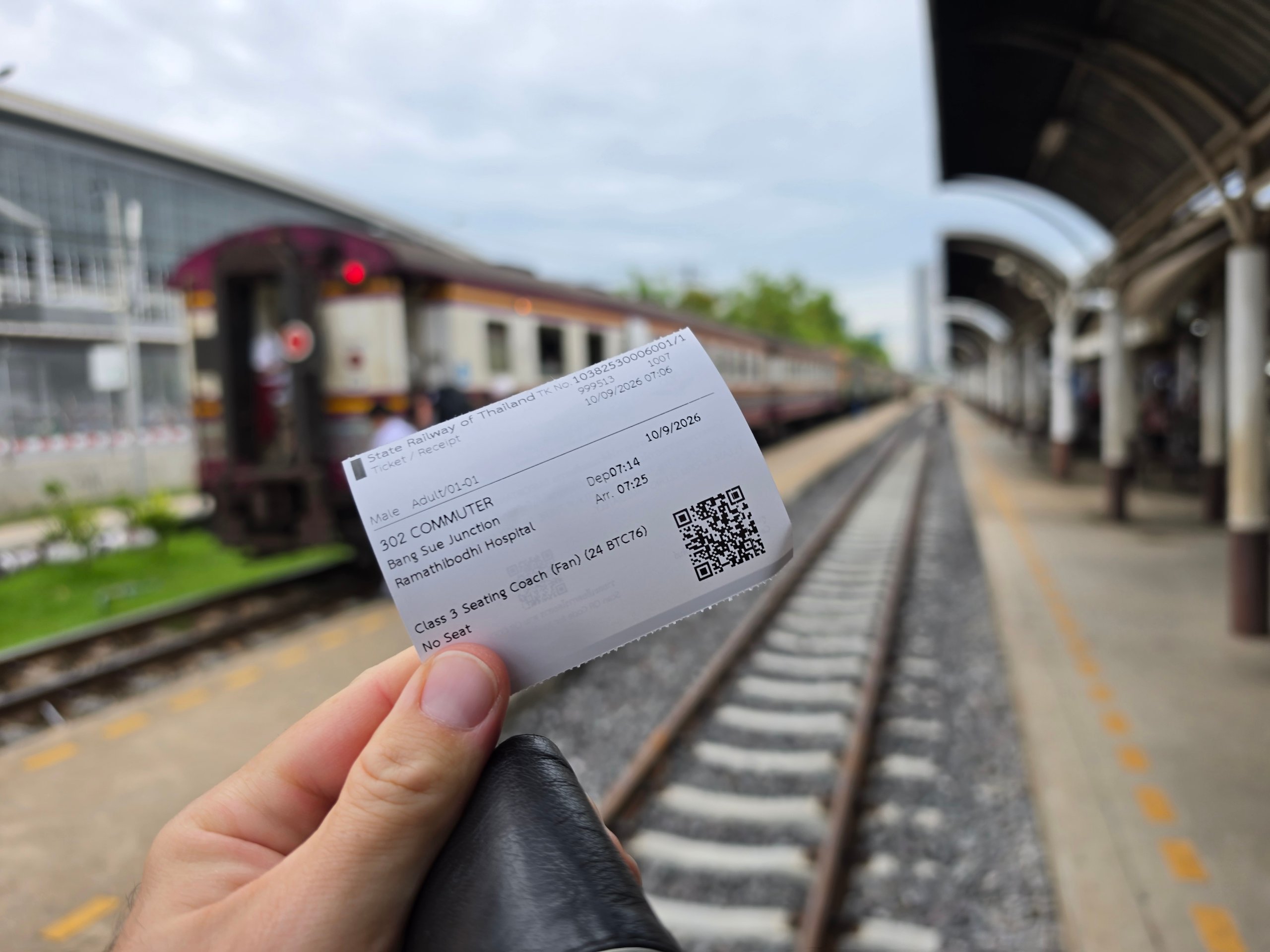
From the modern station, you simply need to walk next door to ‘Bang Sue Junction’ station, from where the old, non-air-conditioned commuter trains continue to the former central station, Hua Lamphong.
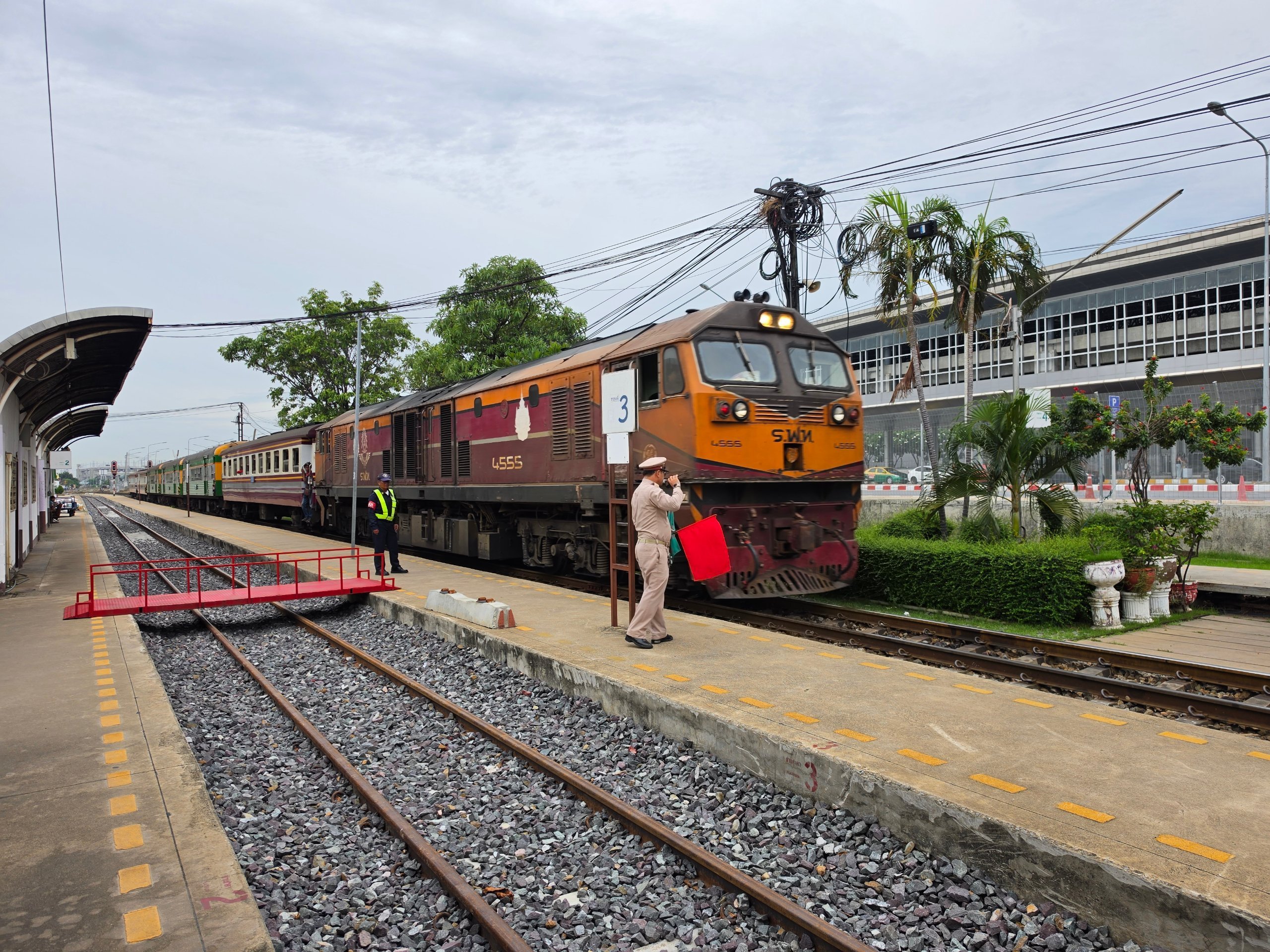
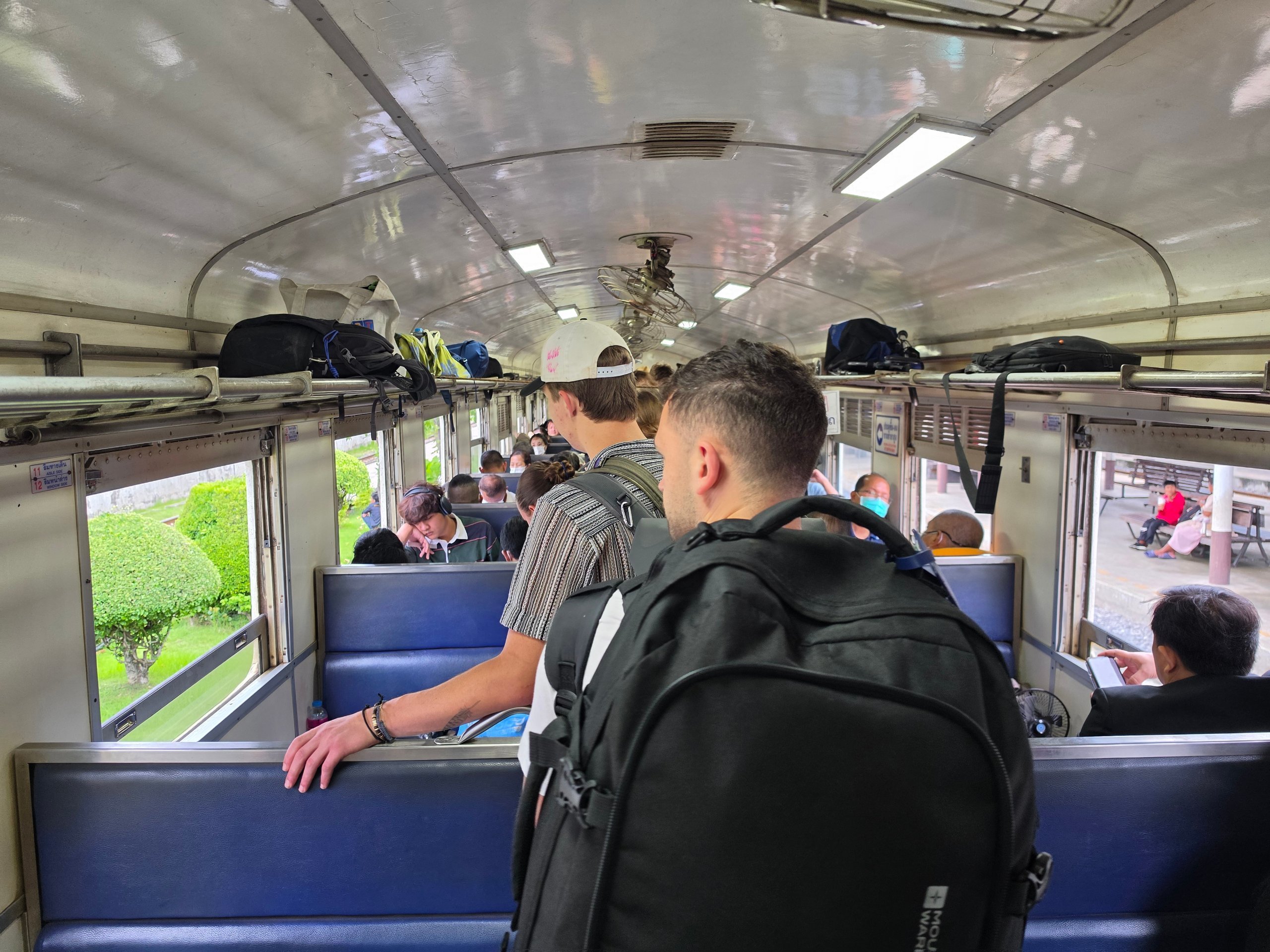
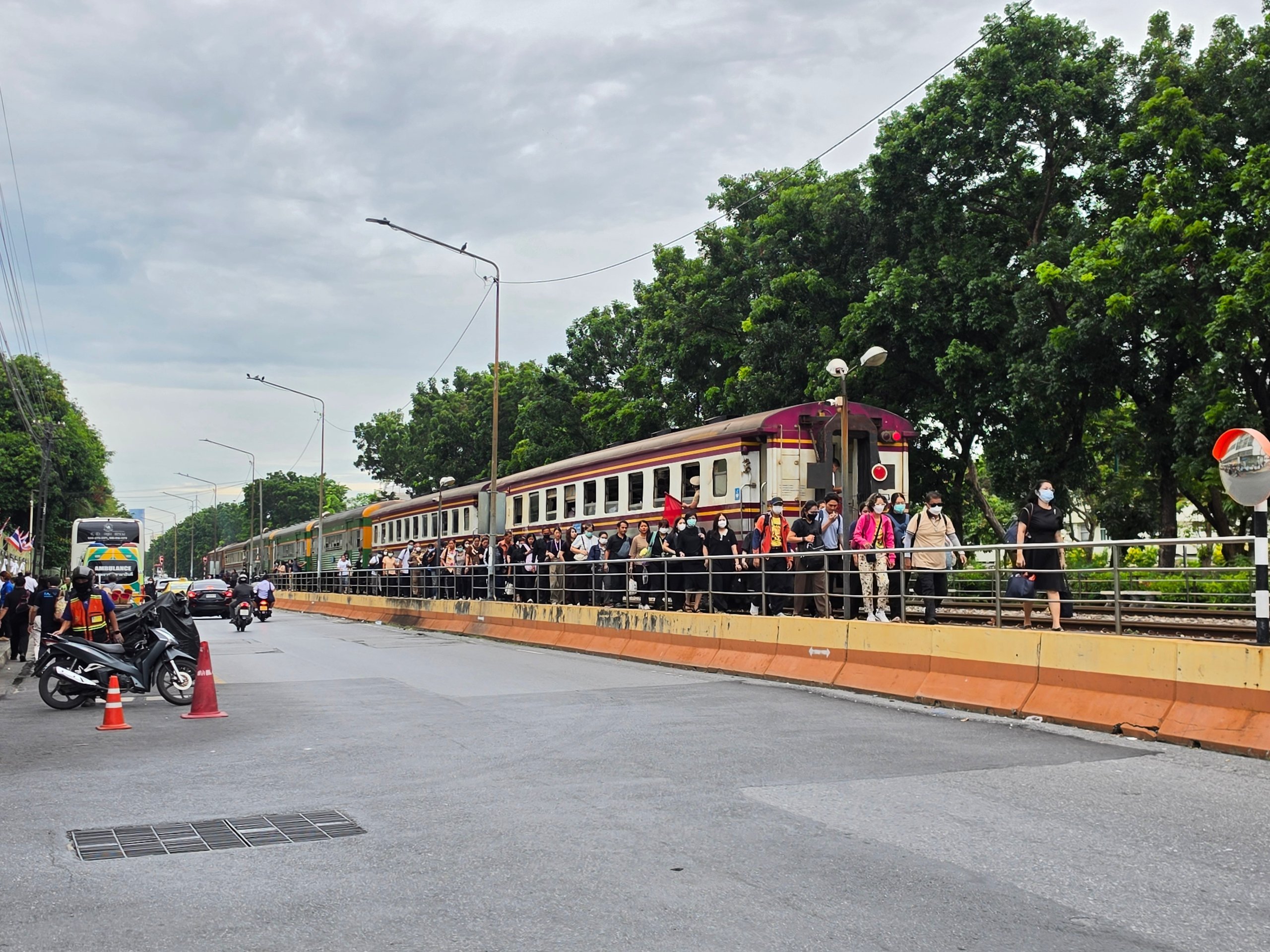
From here, you can easily walk to places such as Chinatown or Talat Noi.
You must always buy a ticket for this train at the ticket office at the station, and payment can only be made in cash.
Fares are nominal and range from 2 thb to 5 thb.
I usually found the connections easily and reliably using Google Maps.
It depends on whether you’re arriving at Suvarnabhumi (BKK) or Don Mueang (DMK), how much luggage you have and where you’re staying.
Both airports have different train connections and different bus stops.
I compare all the options separately in the following articles:
Taxis and pre-booked cars also operate at night. The metro runs until around midnight.
Some bus routes run all night, but they’re mainly intended for locals, and as a tourist you’re unlikely to be able to find your way around them.
You can take a boat to Tha Chang Pier to reach the Grand Palace; the Sanam Chai MRT station is also a convenient way to get to Wat Pho.
A blue tourist boat will take you directly to Wat Arun, or you can travel to Tha Tien and take a short ferry crossing. Before choosing a cheaper river service, always check its specific stops.
To get to Khao San, take a taxi or a boat to Phra Arthit and walk the rest of the way.
To get to Chinatown, it’s best to take the MRT to Wat Mangkon or a boat to Ratchawong.
To get to Chatuchak Market, take the BTS to Mo Chit or the MRT to Chatuchak Park / Kamphaeng Phet. Our metro map will show you which station is best for you.
No. The different transport systems and operators have different fares.
Single tickets or day passes are only valid on selected routes within a particular network. Always ask which specific boat or routes the ticket is valid for before you buy it.
It works quite well, but you can’t rely on this service 100 per cent.
It’s good for planning journeys by the underground and, to some extent, by boat. Many bus routes aren’t shown on Google Maps.
Yes, small notes are the safest way to pay for taxis hailed in the street, ferries, canal boats and some buses.
At present, you can only pay by card or via an app on the blue MRT metro line, on the train line to and from the airport, and via Grab and Bolt.
💬 Have any ferry routes changed, or have you found a better connection? Share your experience in the comments below the article – you’ll be helping other travellers.
If you have any questions or comments about the article...