Agadir from Bratislava in December
56 €



In my mind, I’d always thought of Rhodes as a typical beach destination, full of resorts, long, straight beaches and a large number of resorts.
I actually set off just to confirm this impression, write a practical guide and, of course, add a few new airports to my statistics. That wouldn’t be me 😅
I’d seen Lindos in photos, but apart from that, I wasn’t expecting anything else from Rhodes.
After a week on the island, I left with a slightly different opinion. Not because Rhodes isn’t full of holiday resorts. It certainly is.
But because I discovered that, alongside the touristy side of Rhodes, there’s another side that’s completely different.
Book your hotel in Rhodes in advance
My first impression of Rhodes actually confirmed all my expectations.
The east coast is full of hotels, resorts and long beaches.
Here you’ll find the most famous seaside resorts such as Faliraki, Kolymbia, Lindos, Pefki and Kiotari. If you’re looking for a classic summer holiday by the sea, you’ll probably be satisfied.
I don’t usually prefer this sort of coastline, but I actually quite liked it here too.
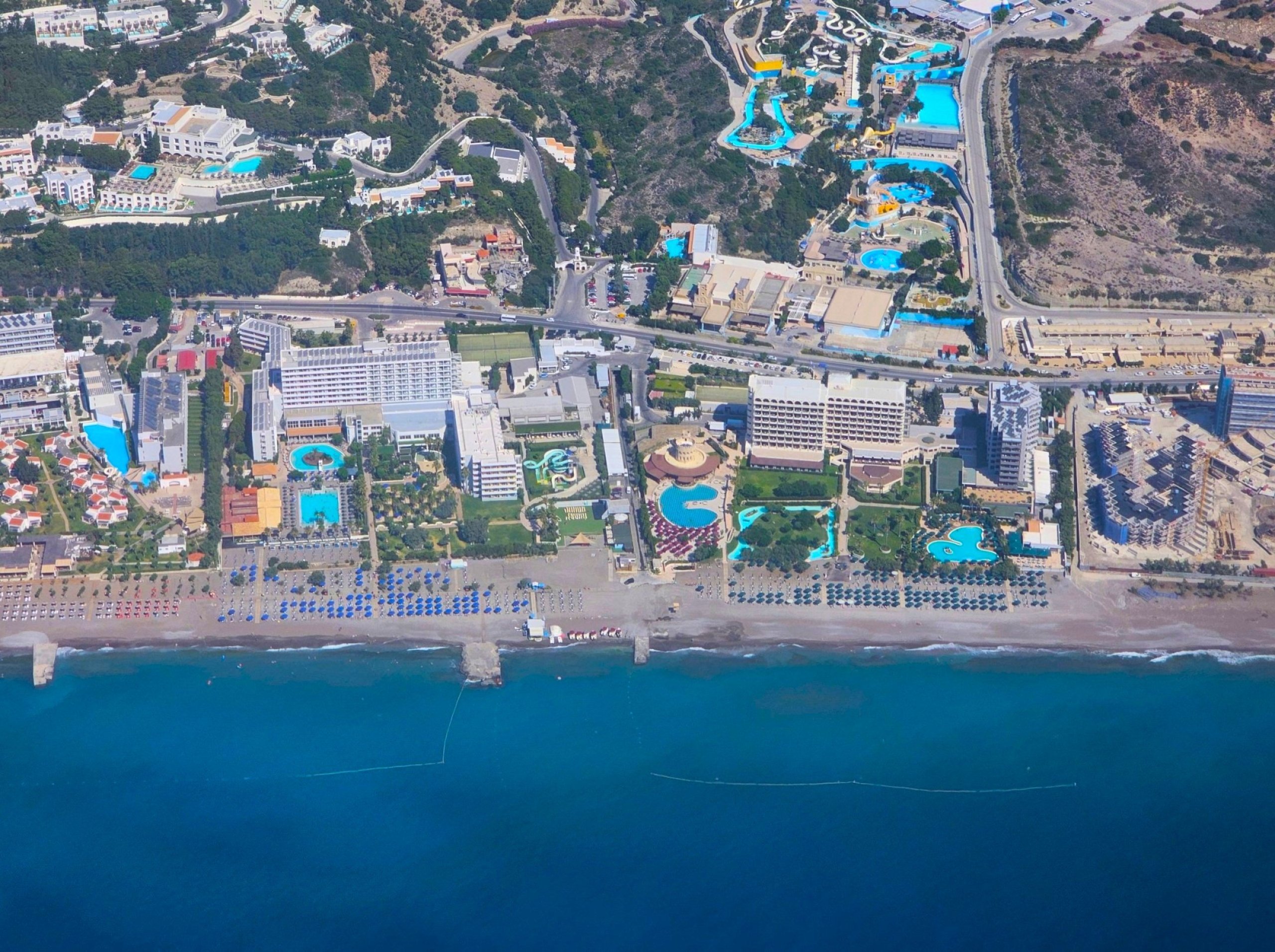
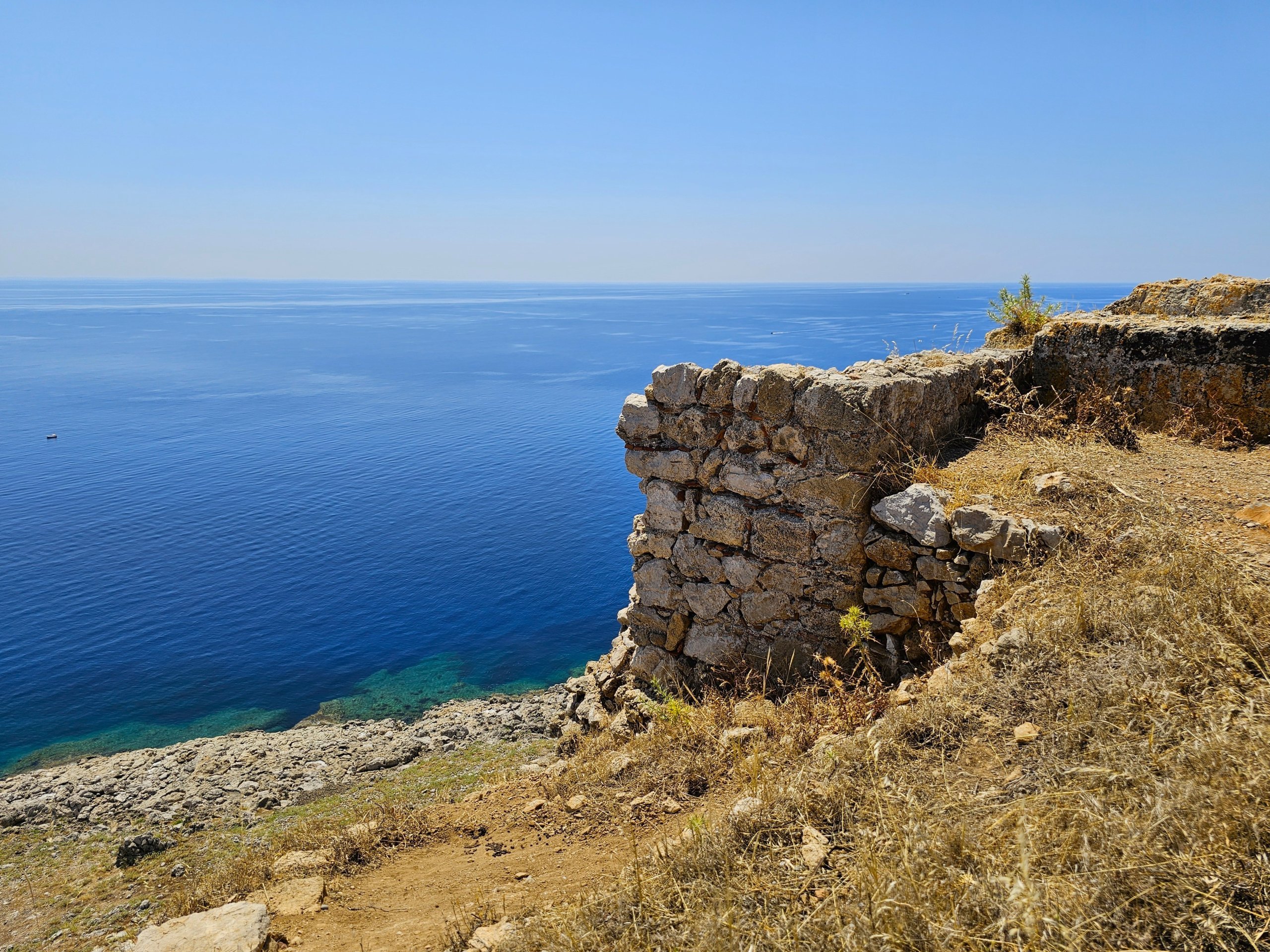
Between the individual resorts, there are beautiful views, the ruins of medieval castles and interesting coves.
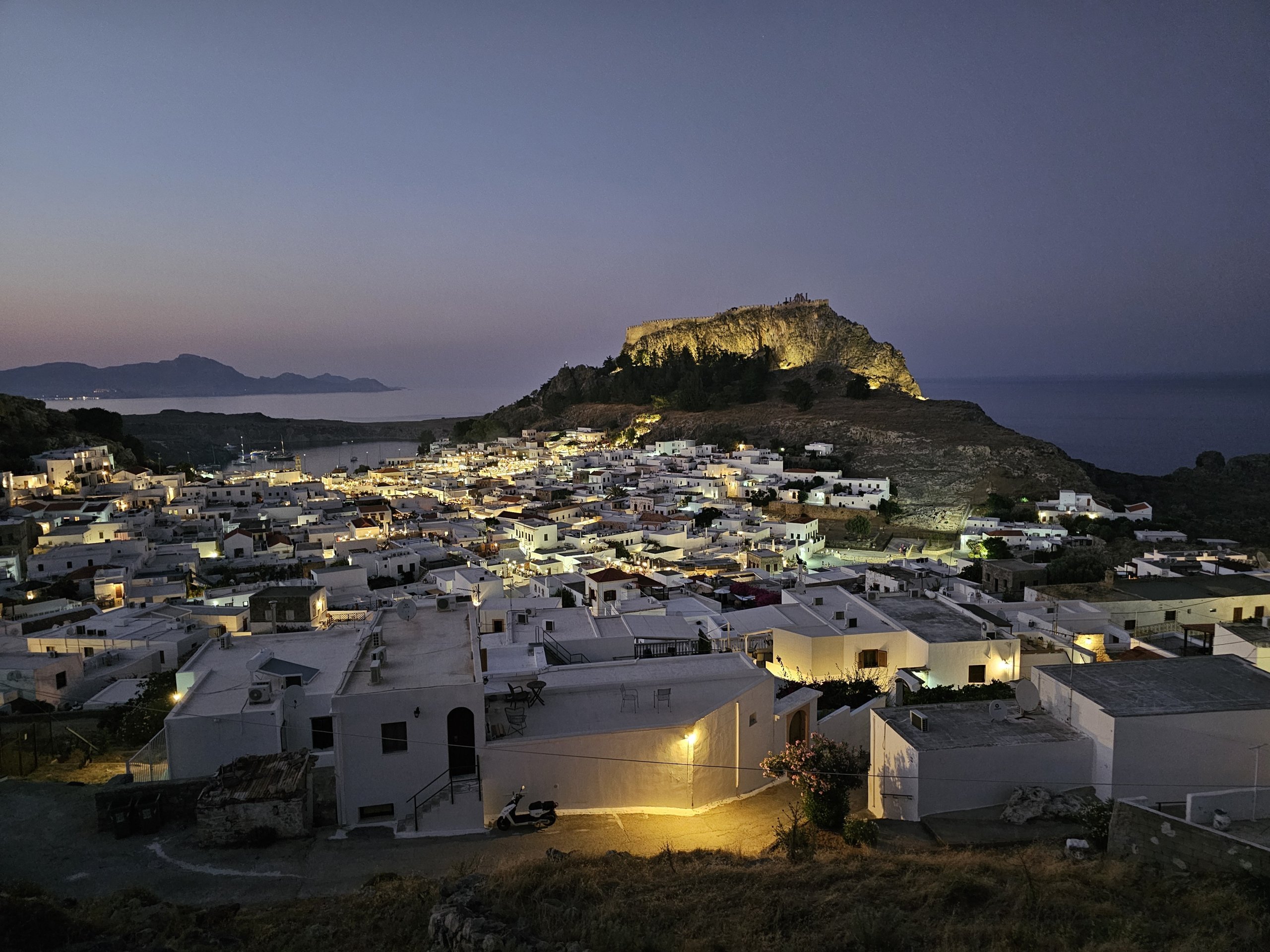
I was also pleasantly surprised by Lindos, one of Greece’s most famous towns. Yes, there are plenty of tourists here. Perhaps too many during the day. In the evening, however, most of the day-trippers leave and the white-washed streets take on a completely different atmosphere.
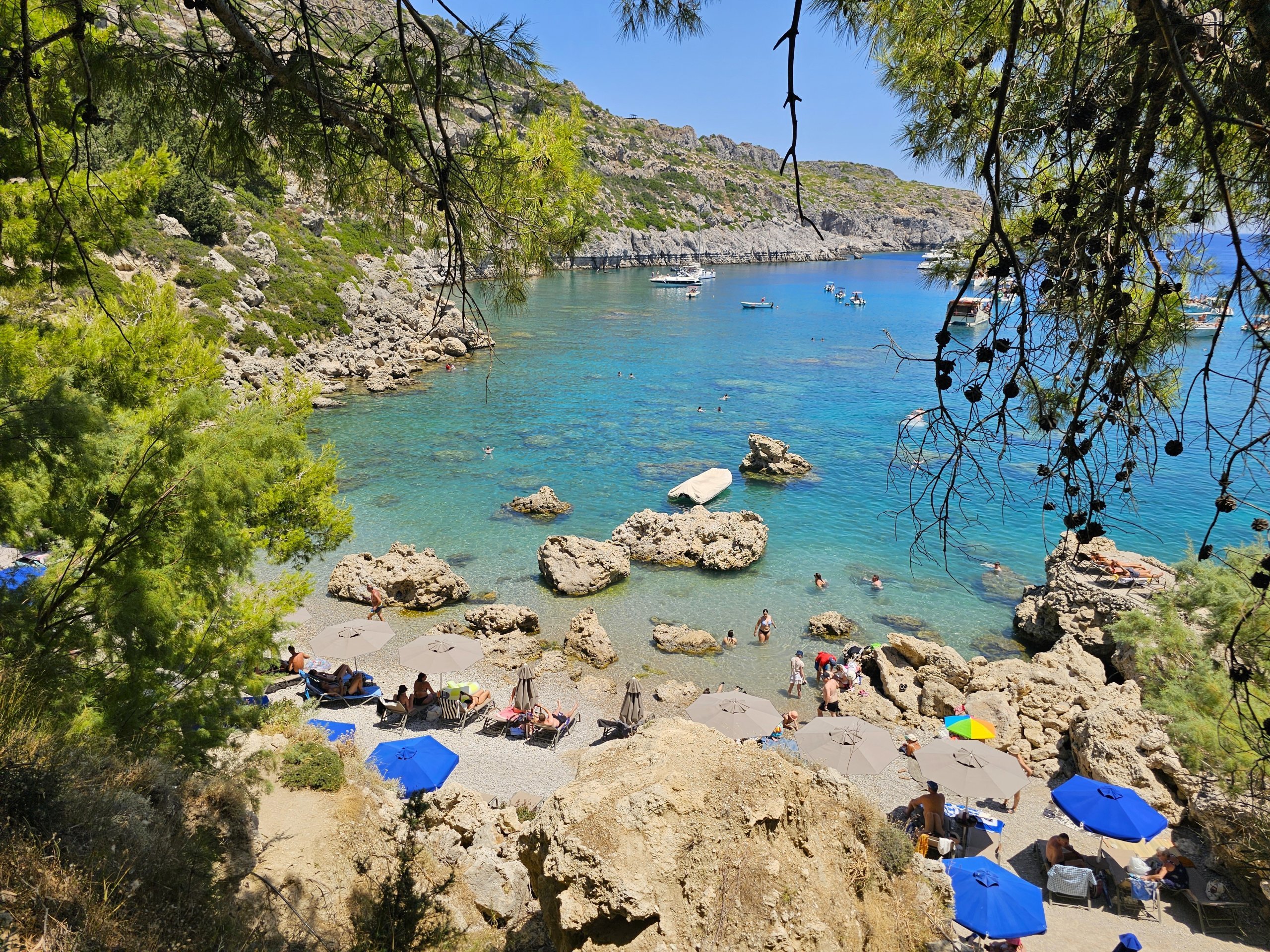
It was much the same in Anthony Quinn Bay.
During the day, I felt as though the whole island had turned up here at once. By evening, however, the crowd had thinned out considerably and suddenly it was much easier to understand why it’s one of the most photographed spots on Rhodes.
The further south I went, the more the atmosphere changed.
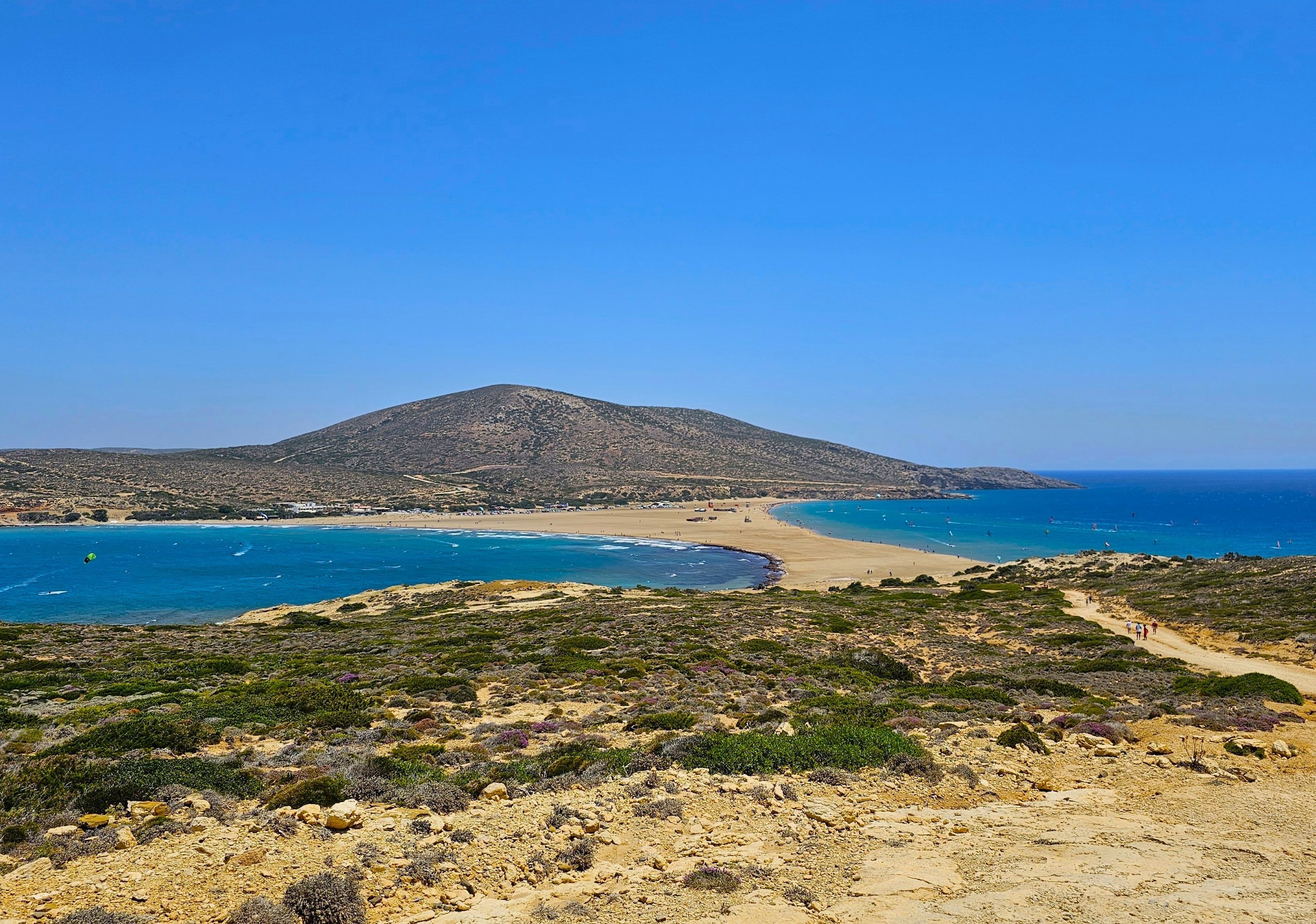
Prasonisi offered the greatest contrast.
The place where two seas meet at the very southern tip of the island feels almost like the end of the world. One moment you’re standing on a wide sandy isthmus, with the wind whistling past you and dozens of kitesurfers on the water; the next, you’re climbing up onto a small peninsula overlooking the endless sea.
There were plenty of tourists there.
Yet Prasonisi struck me as completely different from the main holiday resorts. Perhaps it was precisely because of that sense of remoteness and the fact that there’s really nothing beyond it.
If I had to decide where I’d go back to on Rhodes, the answer would be simple.
To the west of the island.
Not many tourists venture there. The west coast is completely different, you see.
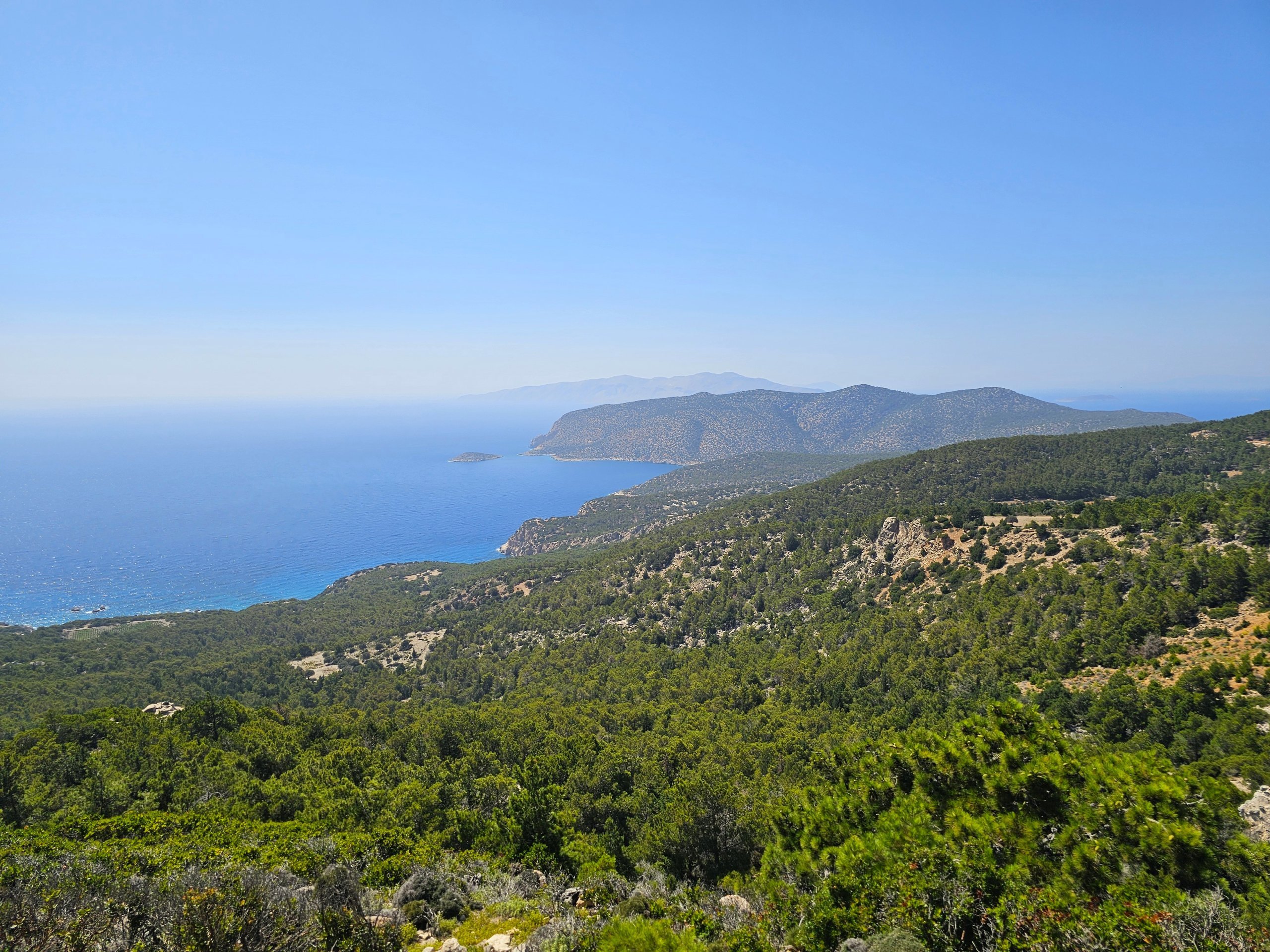
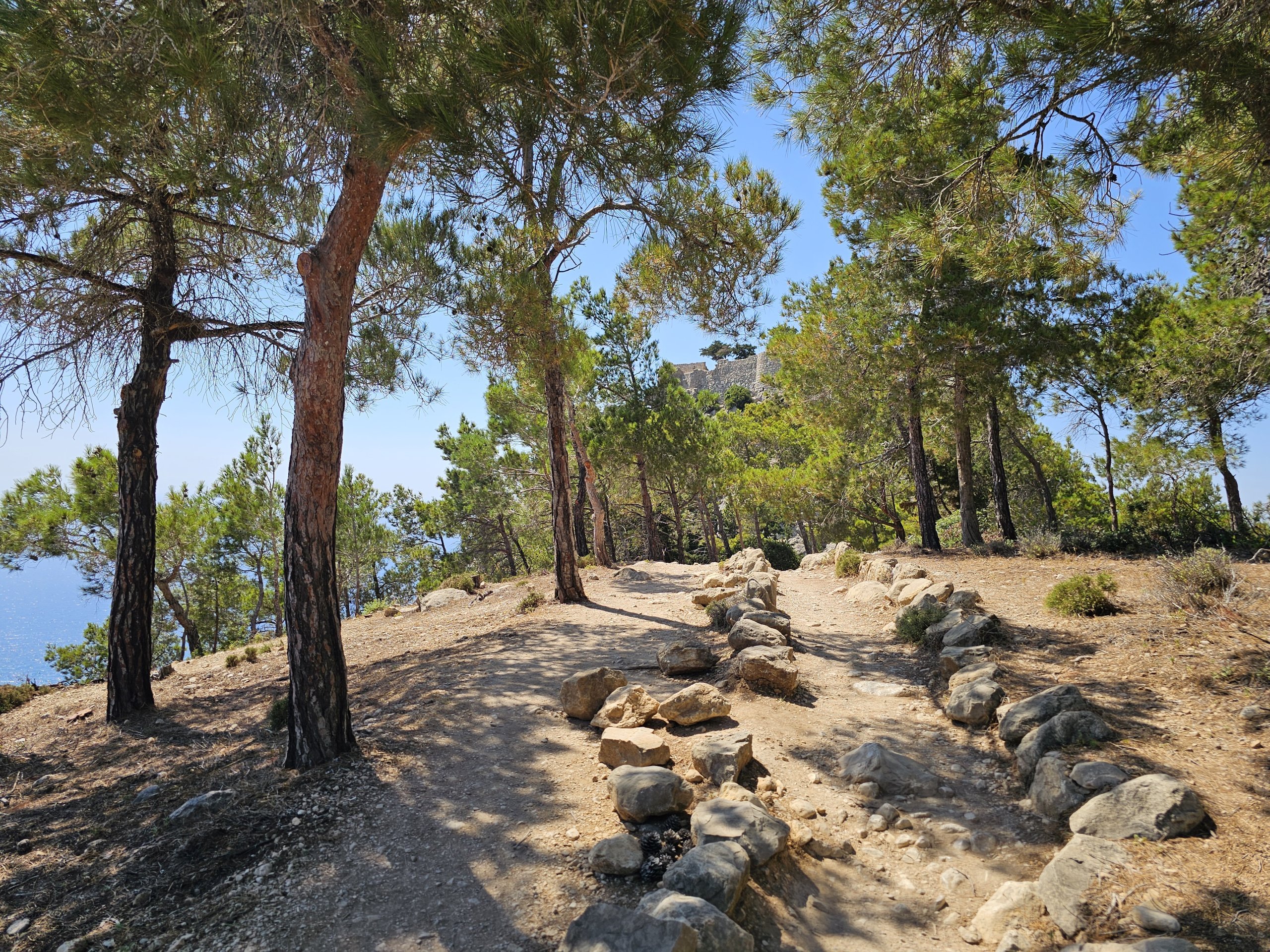
The road winds its way through pine forests; the mountains become more numerous, whilst the beaches and hotel complexes become fewer.
The air smells completely different to that on the coast – of pine trees, resin and a hint of seawater.
In places, western Rhodes reminded me of the most beautiful views on my favourite Canary Island, El Hierro.
I think I liked the little town of Embobas (the locals also call it ‘Empona’) best of all.
This small mountain town at the foot of Rhodes’ highest peak has neither a famous beach nor an iconic landmark. Yet I grew to like it more than most of the better-known holiday resorts.
In the evening, you sit in a local taverna, surrounded mainly by Greeks, and the prices seem almost like something from another era compared to the tourist centres on the coast.
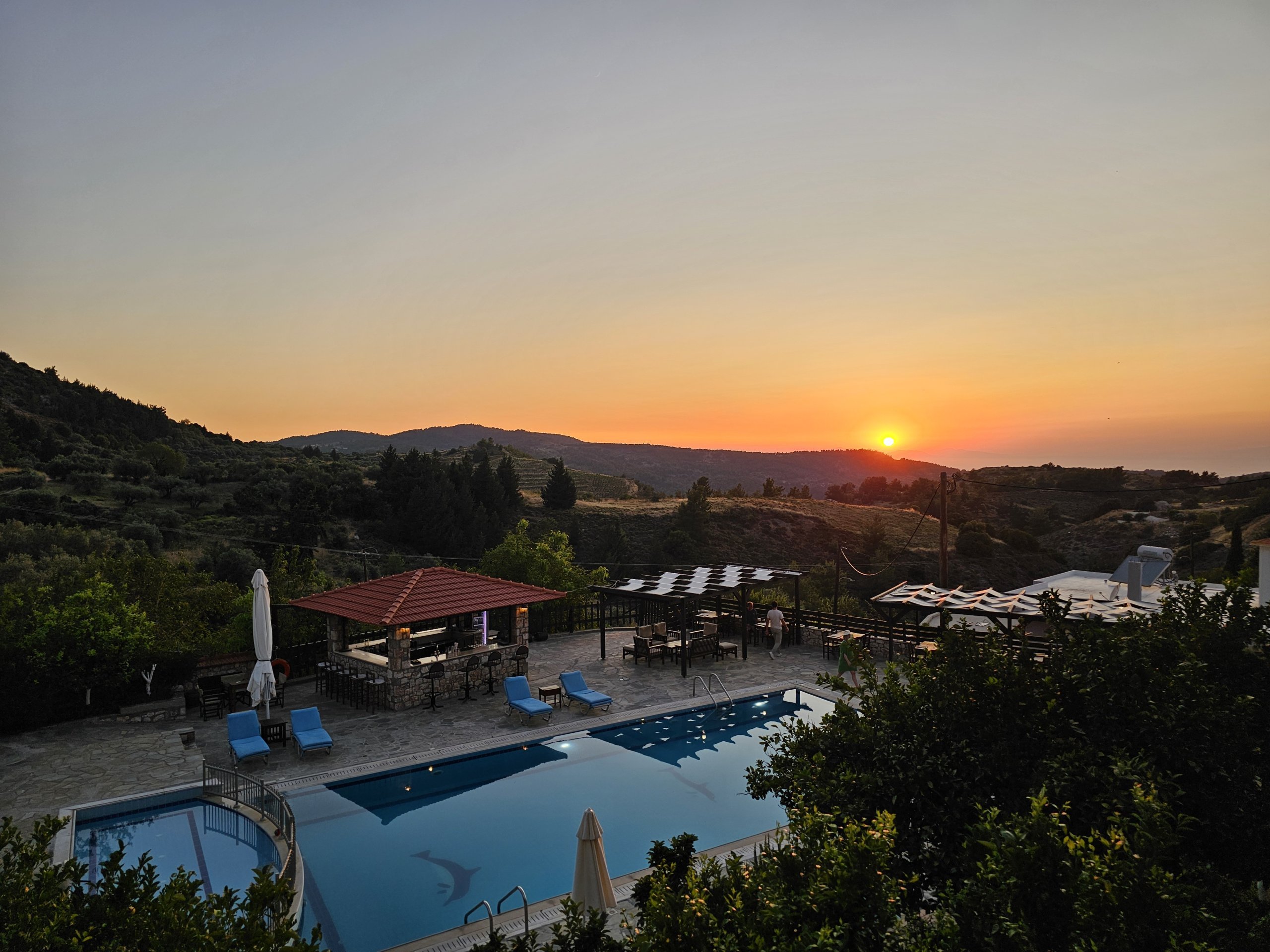
I stayed in Empona for several nights so that I could also fit in a day trip to the nearby island of Chalki. But I’ll be writing about that in a separate article:
It was here that I finally felt I was getting to know the real Rhodes.
Not as a tourist destination, but as a normal place where people actually live.
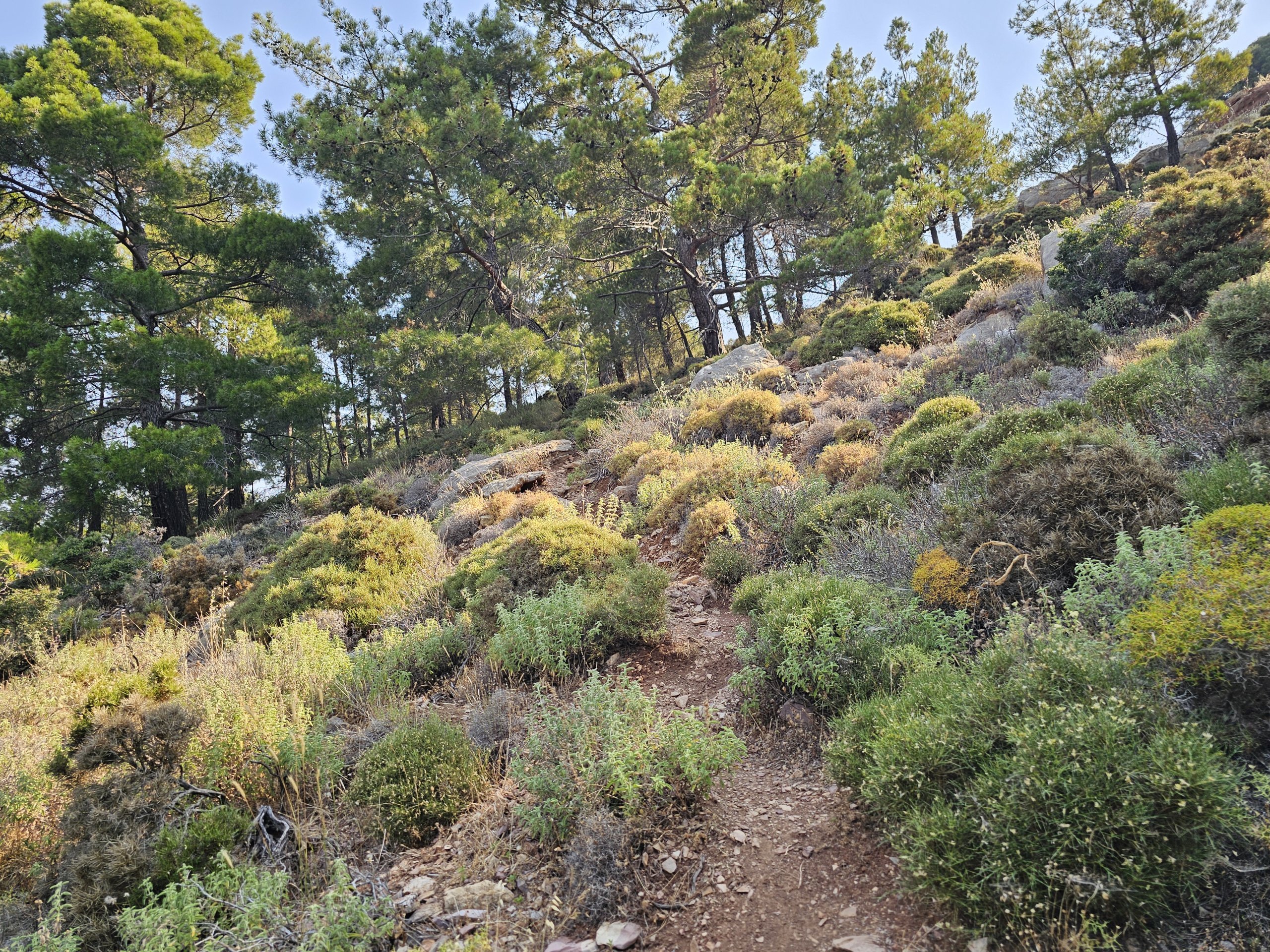
I got a similar impression from the local walking trails as well.
They’re neither spectacular nor as famous as those in Madeira.
Yet I enjoyed them perhaps even more. Although they’re marked on maps and in the terrain, because so few people walk along them, they often get lost amongst the rocks and thickets, and you have to actively search for your route.
I really enjoyed this!
💬 Do you know of any similar places where the marked hiking trails are so little used? Please share your tips in the comments – thanks!

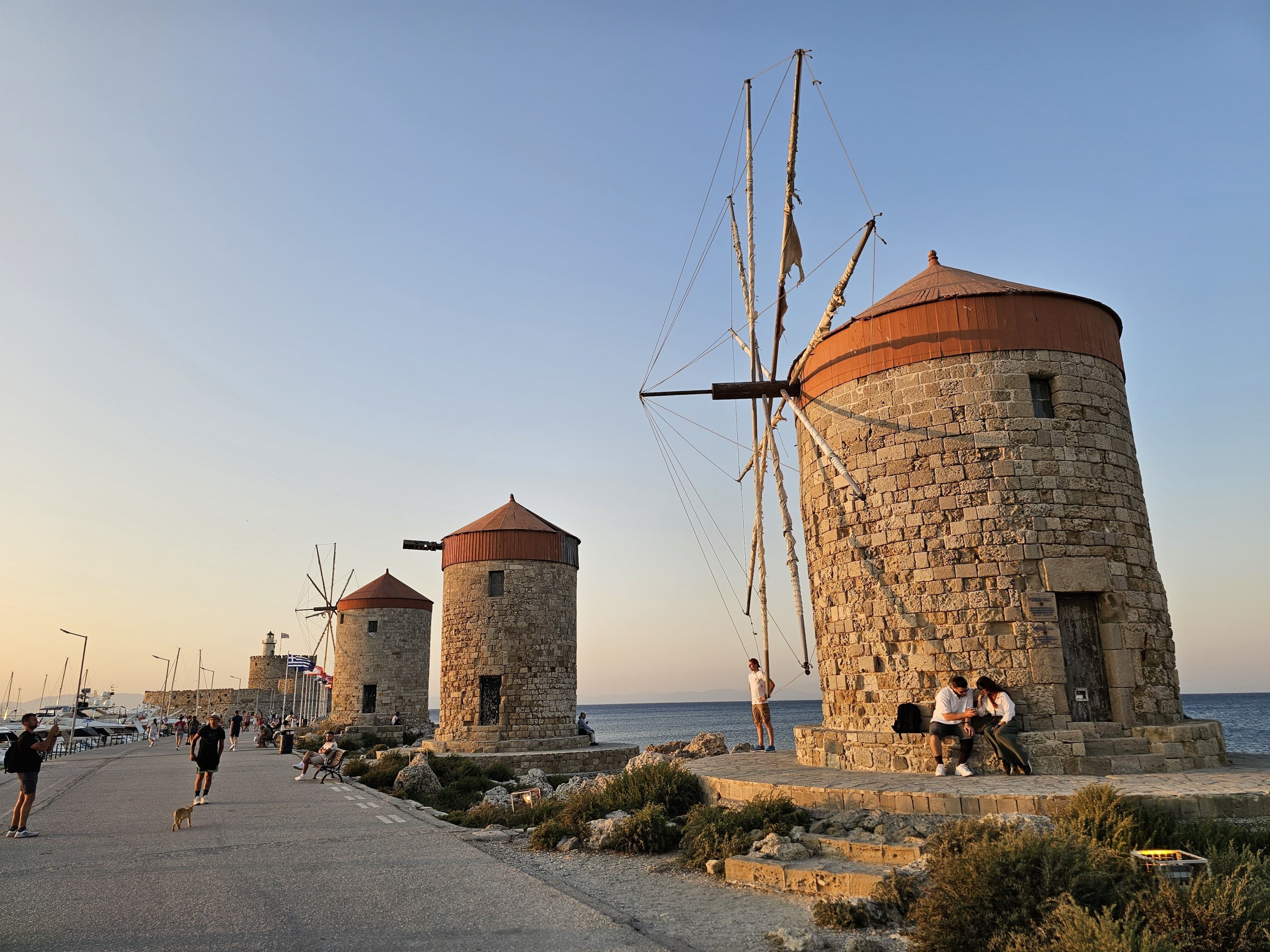
I must admit that I saw the capital city of Rhodes merely as a necessary logistical stopover after arriving late at night and before my morning flight from the local RHO airport.
In the end, I enjoyed it more than I’d expected.
Admittedly, the historic centre is certainly not one of the most beautiful in Europe, but it’s ideal for a few evenings. You’ll find plenty of restaurants, a pleasant atmosphere and some interesting sights.
Rhodes is a versatile island, perfect for a first holiday in Greece, for example.
If you’re looking to spend a week or two at a resort with a swimming pool, a beach and an all-inclusive package, you’ll feel right at home in Rhodes.
There’s a huge choice of hotels – from simple apartments costing just a few tens of euros to large five-star resorts. The highest concentration of hotels can be found on the east coast around Faliraki, Kolymbia, Lindos and Kiotari.
This is precisely why Rhodes has long been one of the most popular Greek islands on offer from European travel agencies.
Unlike many other beach destinations, the island isn’t just about swimming.
In the space of a week, you can combine beaches, historic towns, mountain villages, hiking trails and coastal views.
Renting a car is the best option. It allows you to easily reach the less-visited west of the island, the mountains around Embonas or Monolithos Castle.
If you don’t want to drive, that’s no problem. The bus network works surprisingly well, with services not only between the main resorts but also to Lindos, the Valley of the Butterflies, the Seven Springs and as far as Prasonisi.
I describe in more detail how to travel around the island by bus in the article ‘Transport on Rhodes’.
If you’re looking for sleepy white villages, few tourists and the atmosphere of a traditional Greek island, you’ll probably find places like Leros, Skyros or certain parts of the vast and diverse island of Crete more to your liking.
After all, Rhodes is a large and highly developed tourist destination.
That doesn’t mean, however, that there are no authentic places to be found. N
can be found mainly inland and in the west of the island.
What’s more, from here you can take day trips to much more traditional islands, such as Symi, Chalki or Kastellorizo.
Where do the ferries go and how much do they cost? Find out in detail in this article.
💡 My verdict after a week in Rhodes?
It’s best suited to travellers who want a bit of everything.
A week lazing by the pool? It works.
Tour the island by car and see something different every day? That might work even better.
It’s precisely this combination of beaches, sights, nature and easy accessibility that makes Rhodes one of the most versatile Greek islands for a first visit.
If you have any questions or comments about the article...