
From New York to Los Angeles: across the whole of the USA from Prague with SAS
351 €



At first glance, transport in Istanbul seems chaotic, but in reality it works quite well.
The system isn’t as seamlessly integrated as in Western European cities. Fares are actually quite expensive, but thanks to several cable car, metro and tram lines, you can get around Istanbul quite efficiently even without using taxis.
Before you start looking into the individual routes, I recommend reading the chapter ‘Where to stay in Istanbul’ – it’s the location of your hotel that will largely determine whether you’ll be taking the ferry twice a day with a view of the Bosphorus, or wasting your time on buses.
Book a hotel in the centre of Istanbul
In my opinion, this is the most practical summary:
In Istanbul, you can pay your fare in three different ways:
The prices are as follows.
| Istanbulkart | Personal contactless card | |
|---|---|---|
| Istanbul Metro IETT buses Trams Funiculars Historic trams |
42 try | 60 try |
| Metrobuses | 30 try to 63 try | 60 try up to 120 try |
| Ferries | approx. 53 try – 60 try | 110 try |
| Marmara train | approx. 35 try – 75 try | cannot be used |
| Metro to IST Airport | 39 try | cannot be used |
For ferries, fares are calculated differently for each route. However, I usually paid around 56 try when using the IstanbulKart (on busy routes between Europe and Asia).
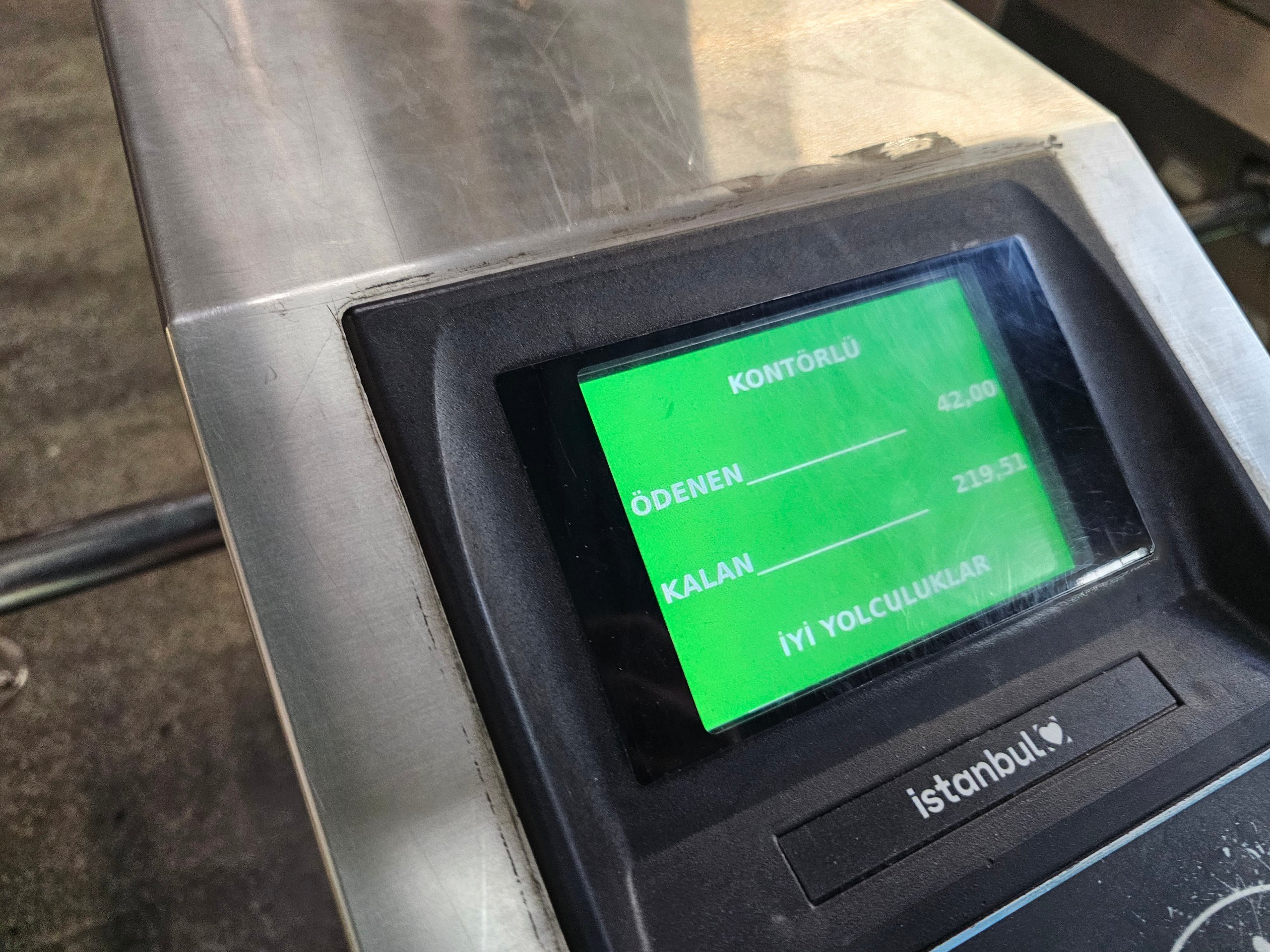
For a long time in Istanbul, the rule was that when changing lines, you always paid less for the next journey.
This is no longer the case, and you will always pay the amounts listed above for each individual journey.
This also applies when changing between different metro or tram lines – you simply pay 42 lira (or 60 lira if paying with your own contactless card) every time you board a vehicle, or even more on ferries.
The IstanbulKart is a rechargeable card onto which you can load any amount of credit and then use to pay for all public transport by tapping it at the turnstile.
👉 In brief:
❗Important – you cannot use your own contactless card on the following modes of transport:
In these cases, you’ll have to buy an IstanbulKart anyway.
The card currently costs 165 try.
In addition, you must always add the fee for topping up the card yourself (some machines do not allow cash top-ups), which depends on how much you top up onto your Istanbulkart.
The usual fee is between 15 try and 30 try.
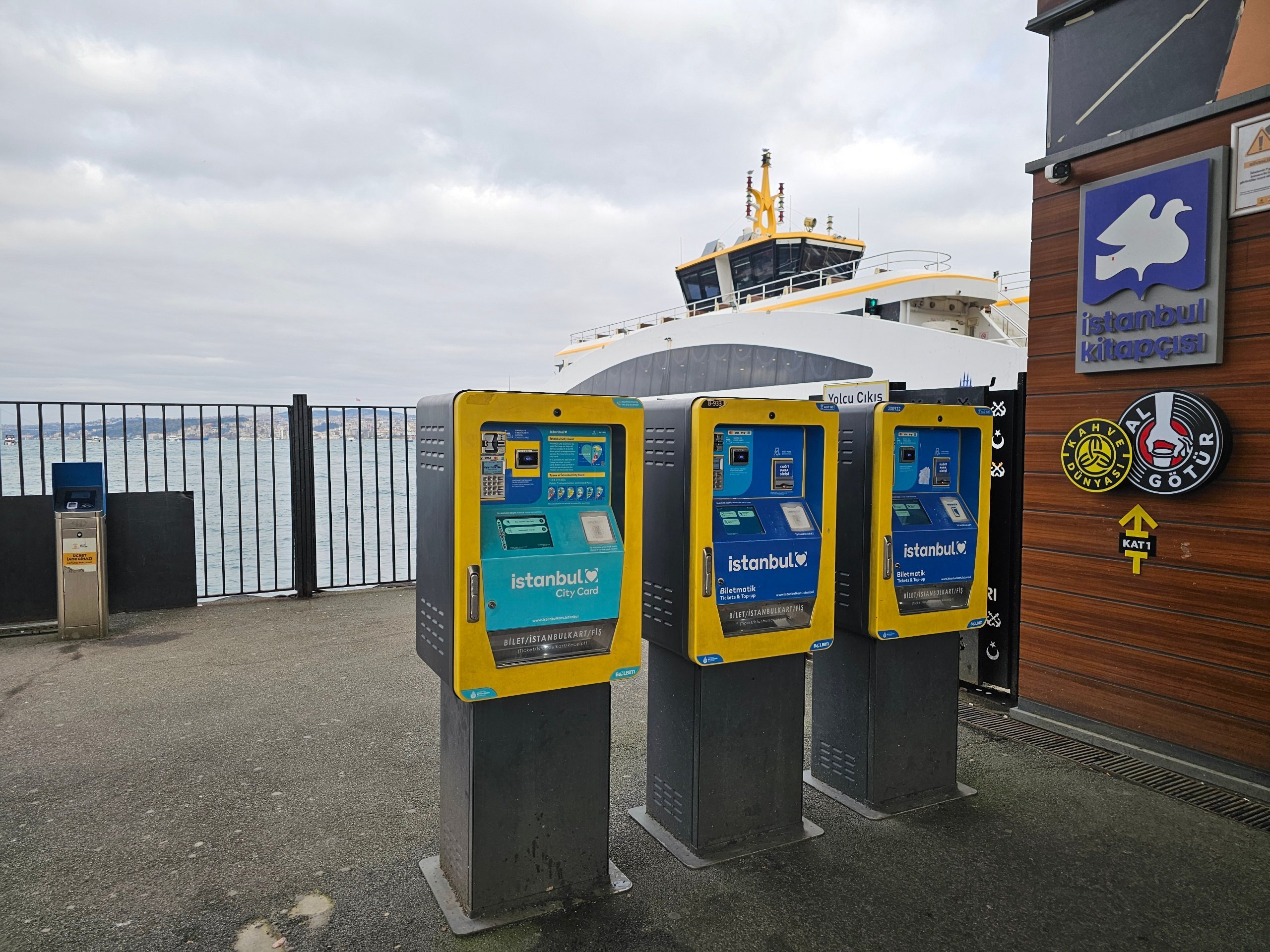
You can buy this card from the blue ticket machines (some have a yellow frame, others are plain blue):
Although there is also an Istanbulkart mobile app, it is only available for Turkish mobile numbers.
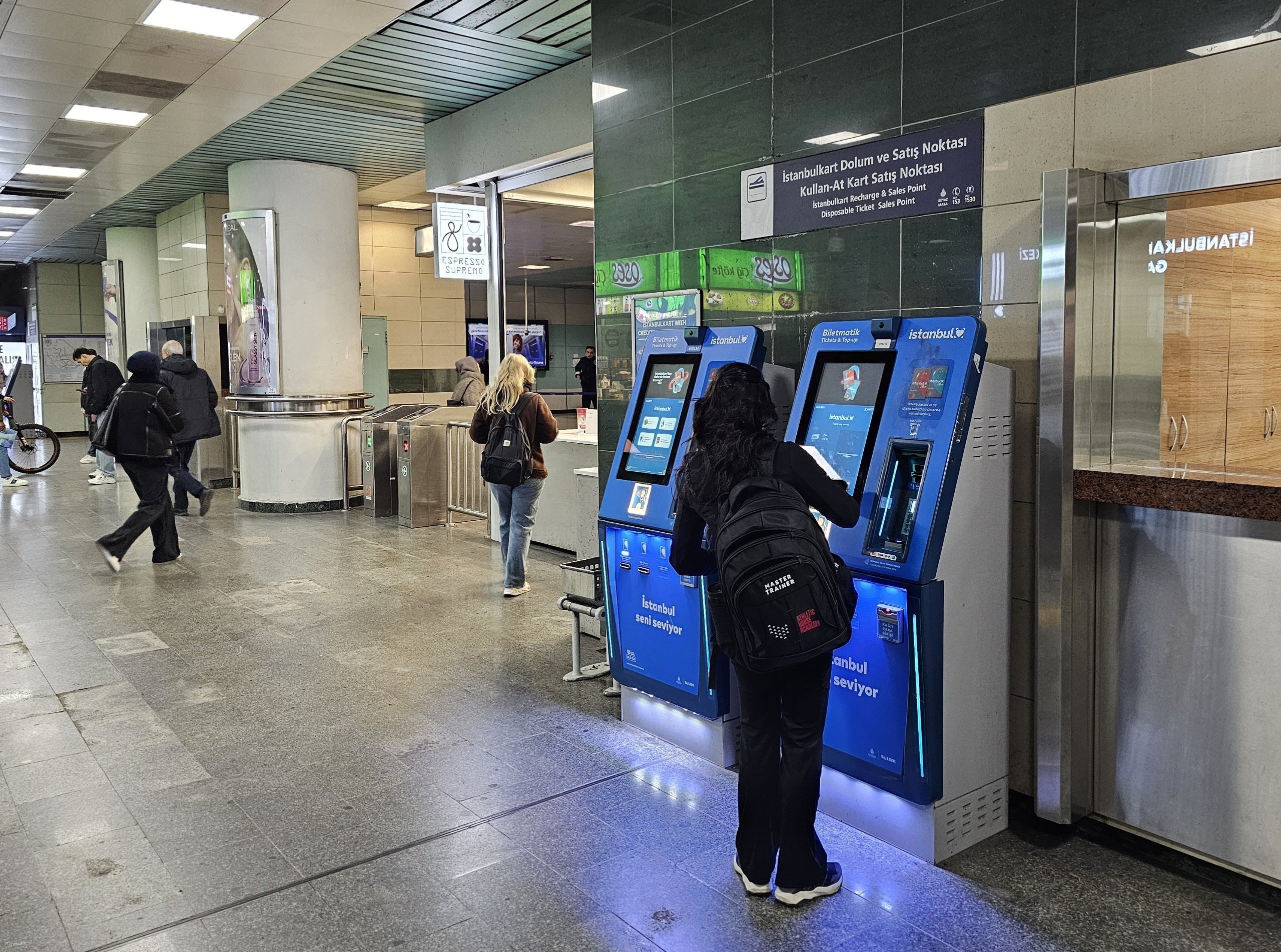
You can top up your card at a different type of machine (some newer machines can now issue tickets and top up cards at the same time), though these machines are always grouped together.
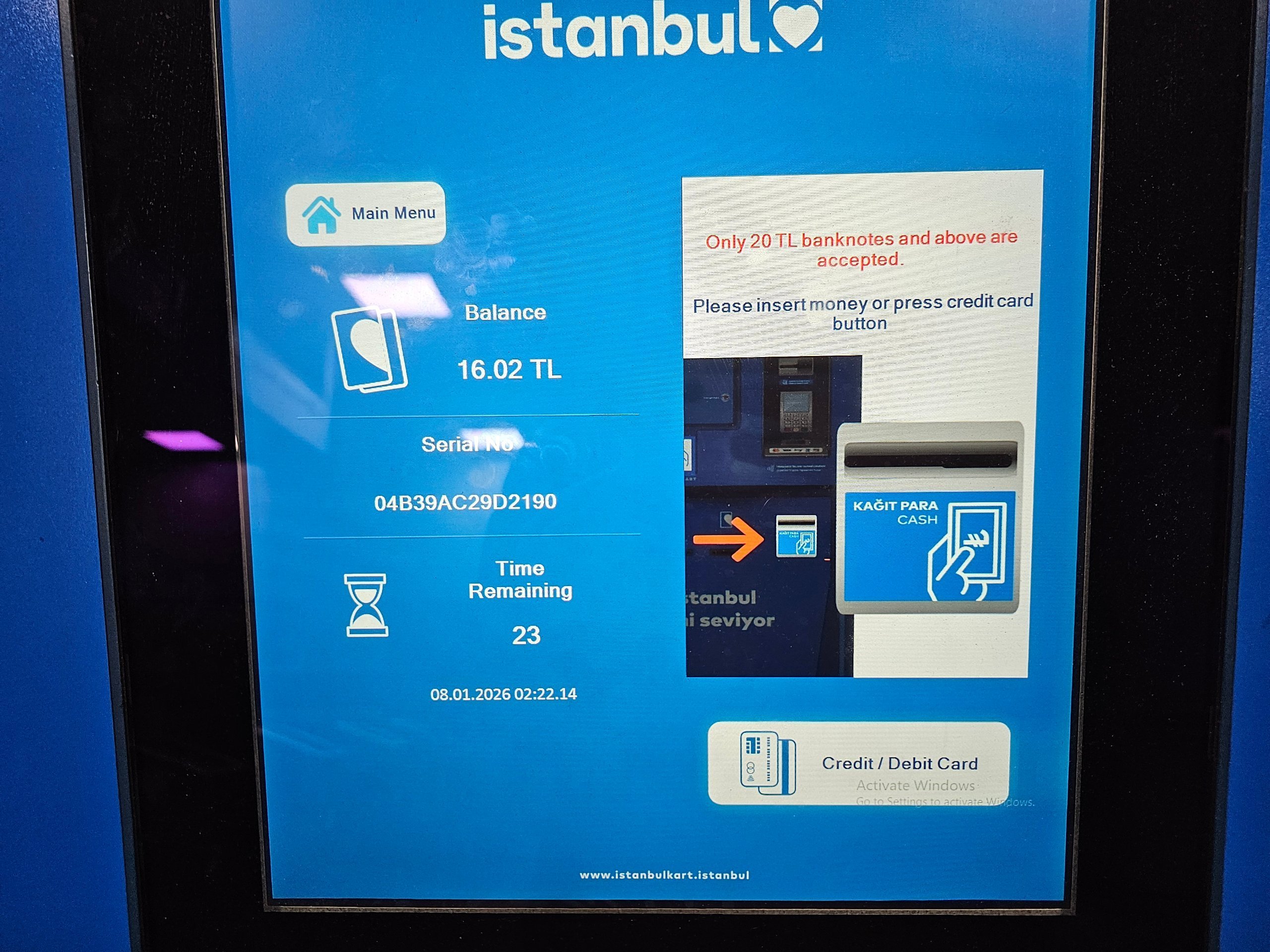
If you pay for the top-up using your own card, the aforementioned fee will be added.
Conversely, if you pay for the top-up in cash, the machine does not give change. The difference in price is added to your IstanbulKart credit.
During a single calendar month, you can top up an anonymous card up to a maximum value of 2 750 try. If you exceed this amount, you must purchase a new card.
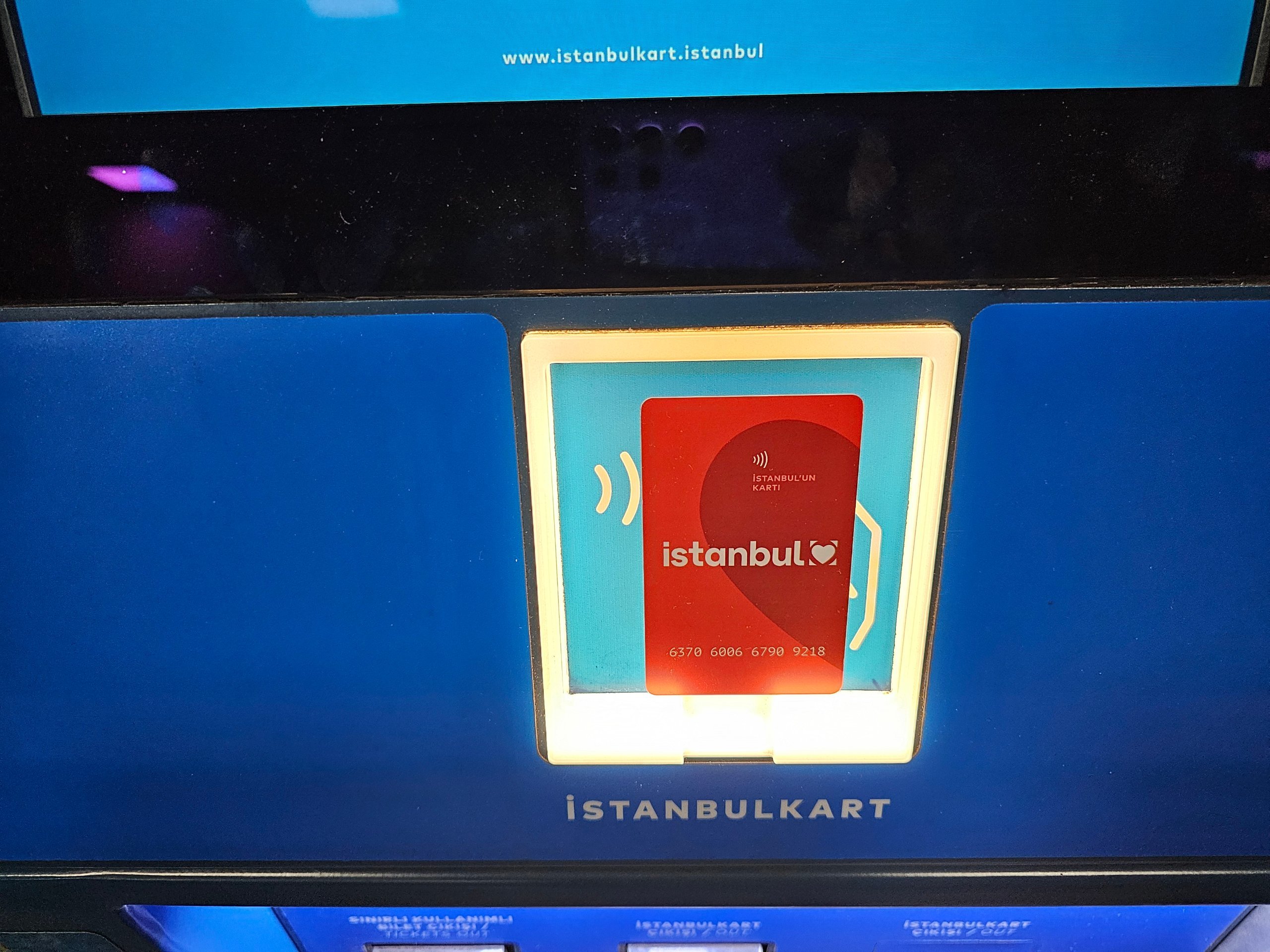
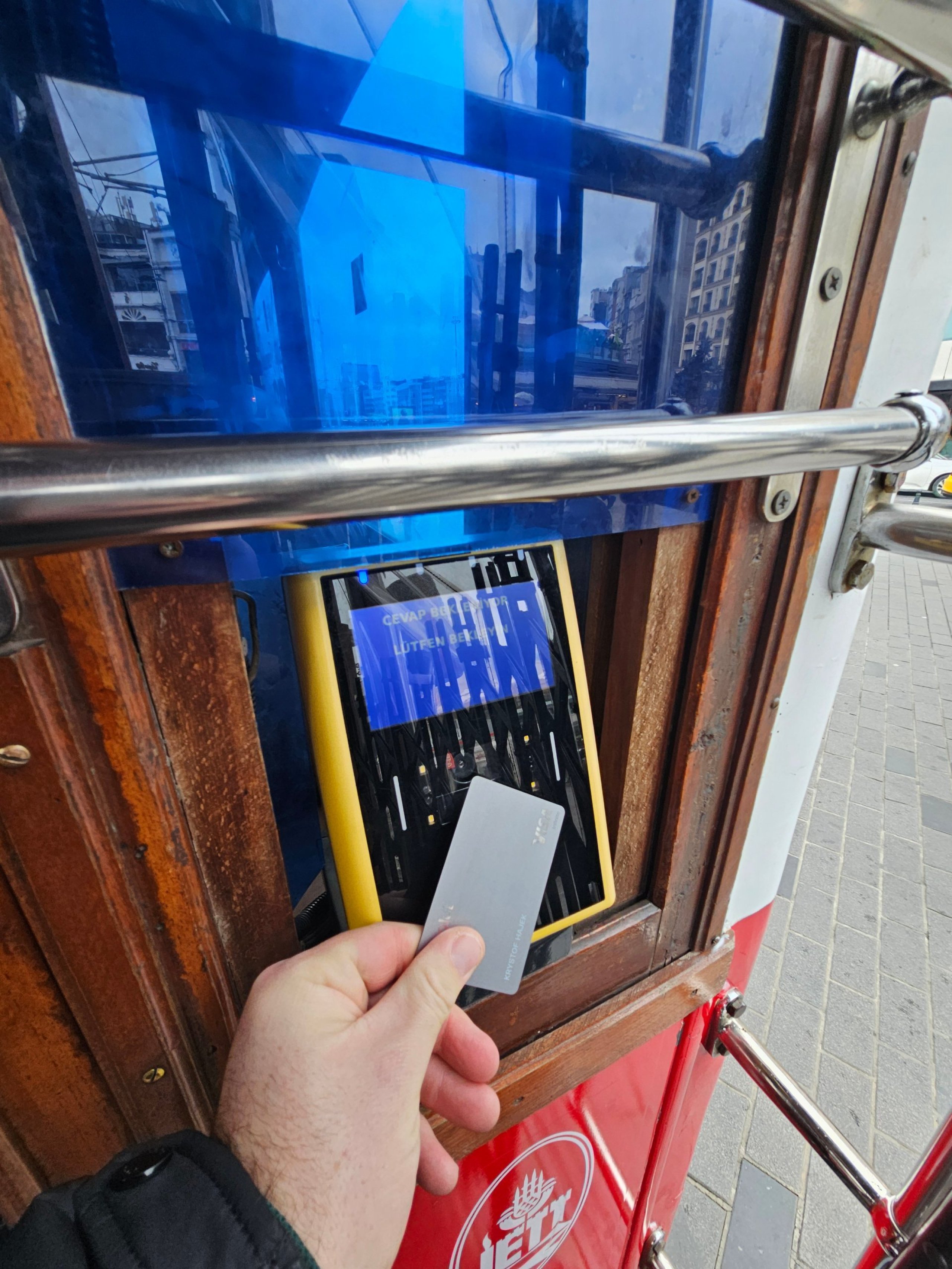
The IstanbulKart works in the same way as your contactless bank card.
Simply tap it when boarding a vehicle. You do not need to tap it again when alighting (except on Marmara trains).
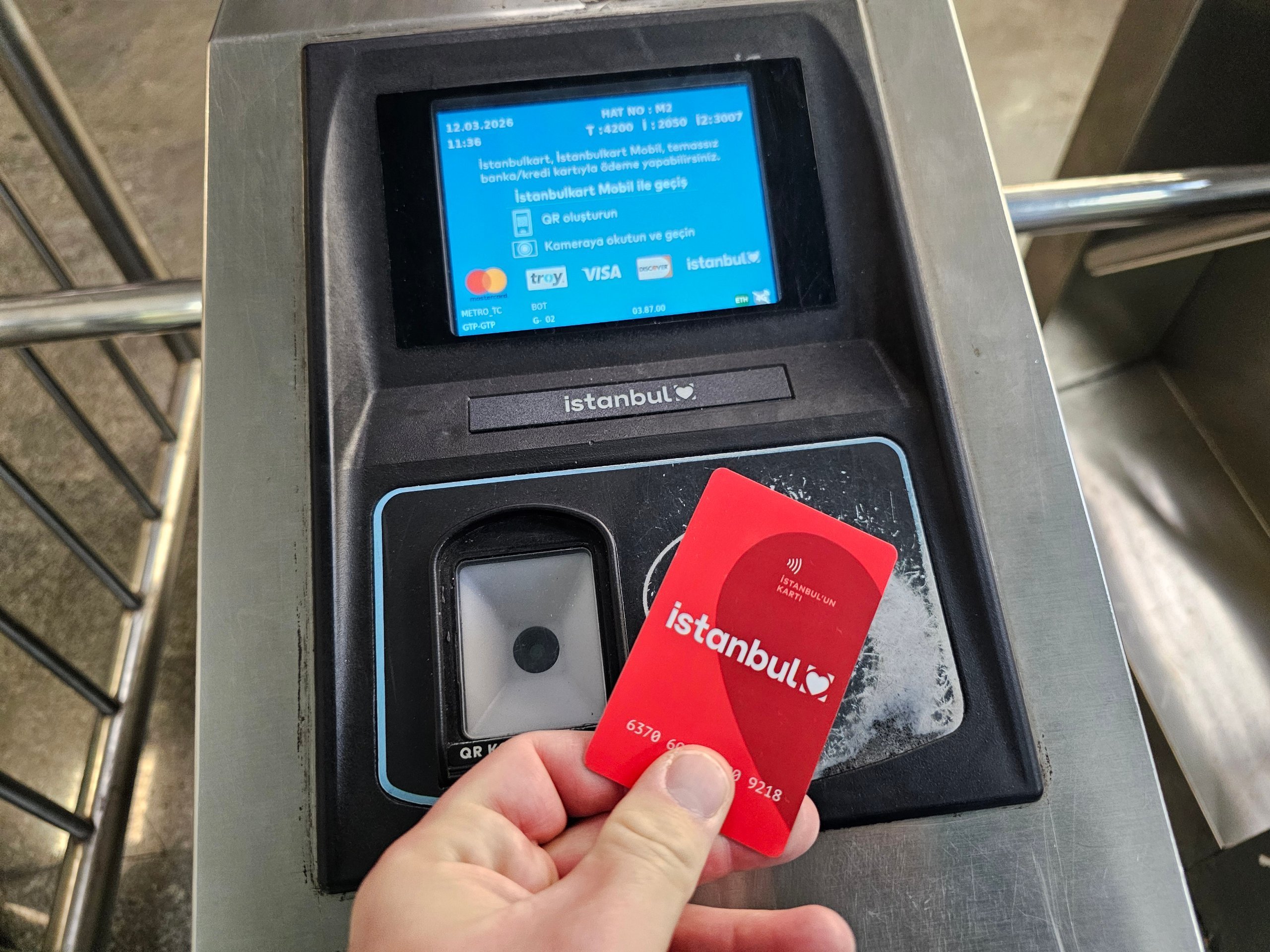
Yes, in practice, an anonymous Istanbulkart can be used by more than one person by tapping the card on the reader repeatedly.
This is very convenient for couples or families. Istanbul Metro also states that children under 6 travel free of charge.
Put simply: the payment process works exactly the same as with the IstanbulKart.
Just tap it against the turnstile or card reader and off you go.
At present, card payments cannot be used on routes operated by the Turkish State Railways (TCDD), namely the following routes:
Make sure you have it to hand.
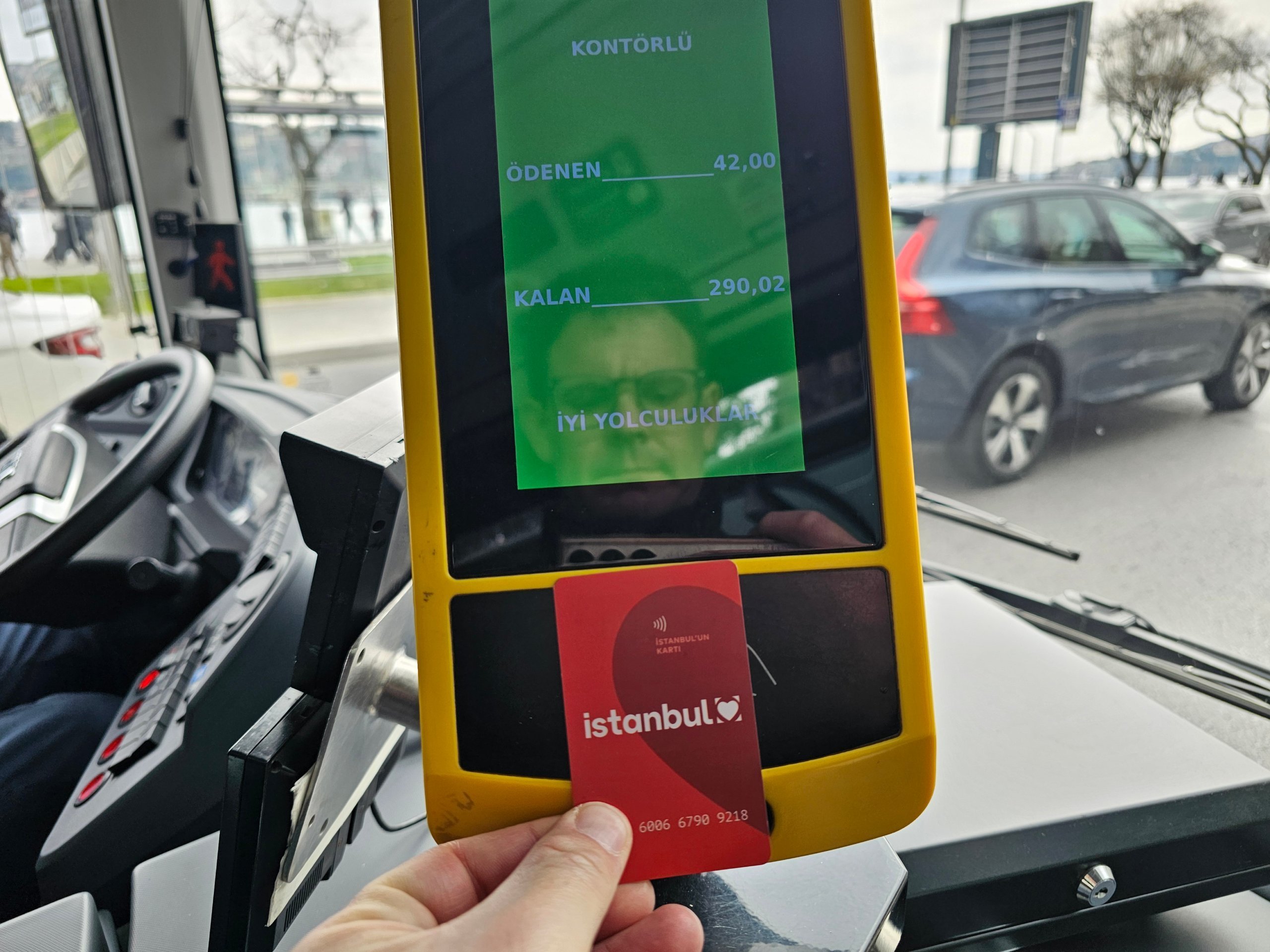
I’ve usually been able to pay by mobile (NFC) without any problems, but on two occasions it simply didn’t work and I had to dig out my physical card from my wallet.
After that, the payment went through without any problems.
Get a Revolut card with a bonus
The official websites of individual metro, tram and bus operators do not have working search engines.
Throughout my stay in Istanbul, I managed just fine with Google Maps, which works quite reliably here.
If you want to use public transport to get around Istanbul, you’ll definitely find the local metro useful.
Although the metro isn’t the ideal way to travel between the main tourist attractions – as it has very few stops in the historic centre – it’s excellent for travelling between the city centre and the outlying areas of Istanbul.
As this mode of transport is the most popular, I’ve described my personal experiences in a separate chapter entitled ‘The Metro in Istanbul’.
Ferries aren’t just a means of transport. They’re part of the experience. And that’s exactly why I consider them one of the best things to do in Istanbul, even on a completely ordinary day.
Şehir Hatları’s official website features timetables, route maps and price lists for city ferries, as well as separate information for sightseeing cruises on the Bosphorus.
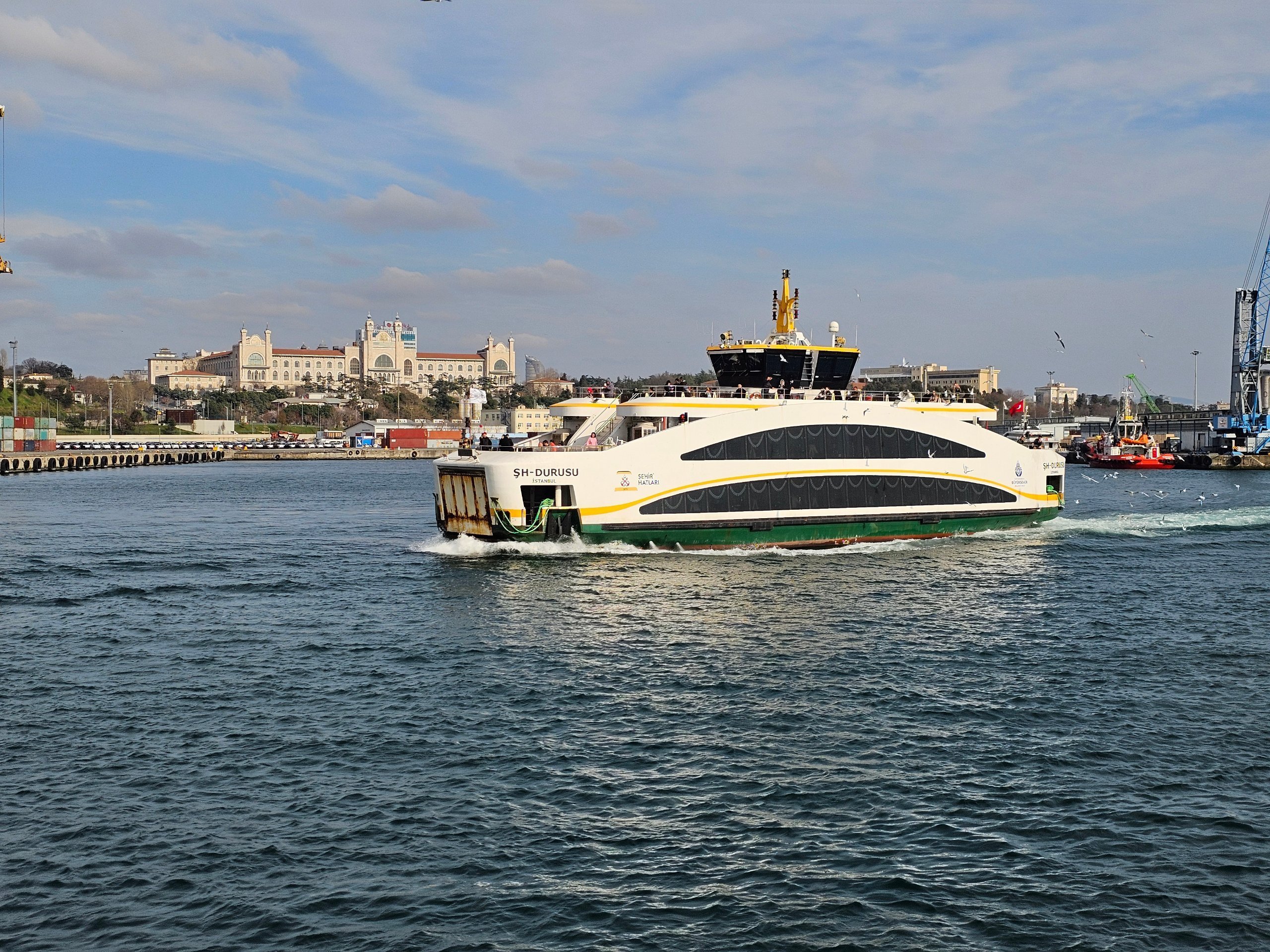
I consider the following crossings to be the most useful:
These routes usually run every 20 to 30 minutes.
Find a hotel with a view of the Bosphorus
This is exactly the sort of area where information on the internet quickly becomes out of date.
Prices change very frequently, so we’d be grateful if you could share your latest experiences in the comments below this article. Thanks!
Şehir Hatları’s official fare table today shows that standard city ferries have different prices depending on the route, and the fares are significantly higher than those mentioned in older articles – for example, Üsküdar – Eminönü 53,20 try and Karaköy – Kadıköy 59,28 try.
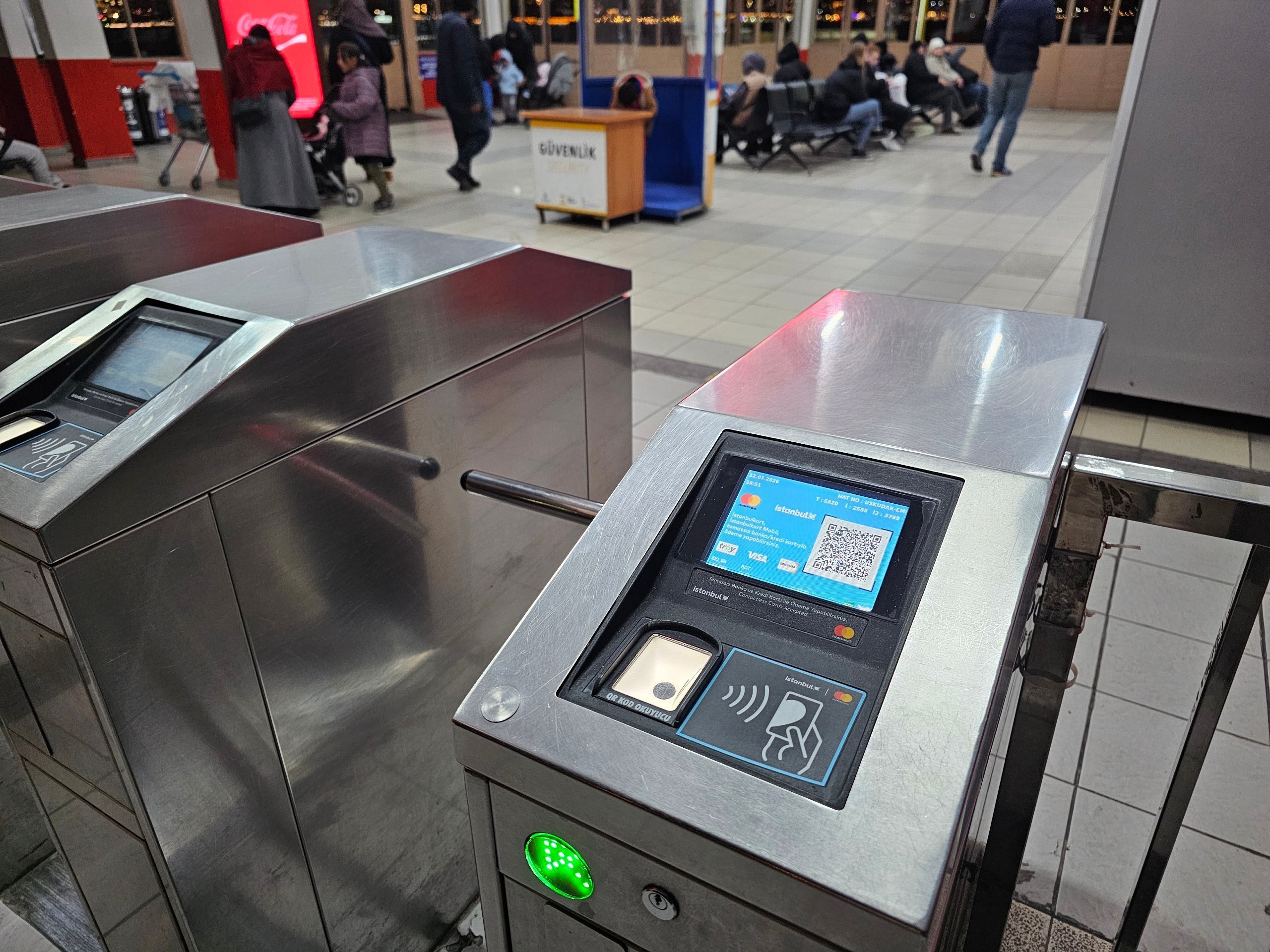
This applies when paying with an IstanbulKart.
If you pay for the ferries using your own contactless card, the price is always the same and amounts to 110 try.
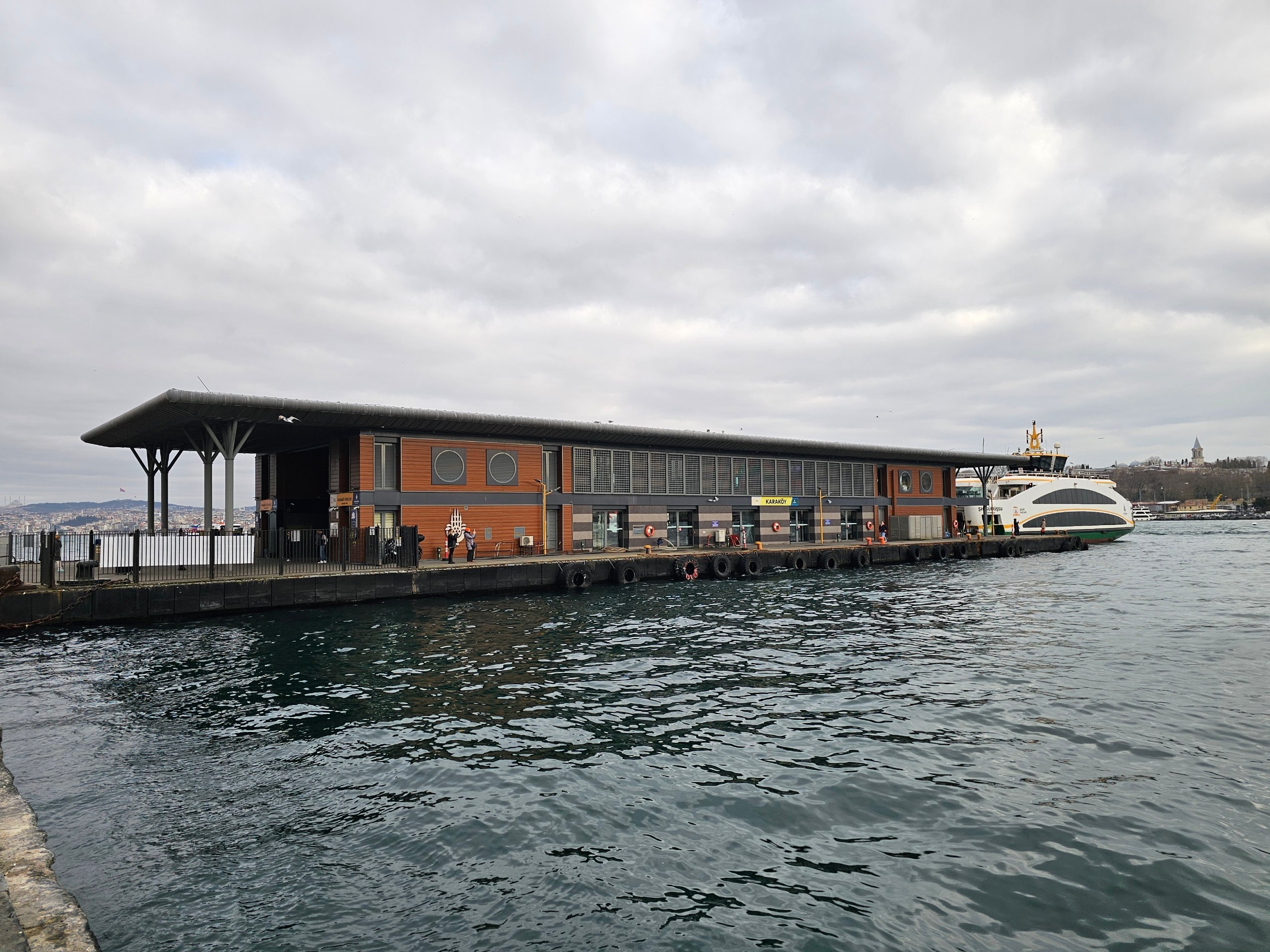
At every ferry terminal, you’ll find machines for purchasing and topping up your IstanbulKart.
Actually, almost always:
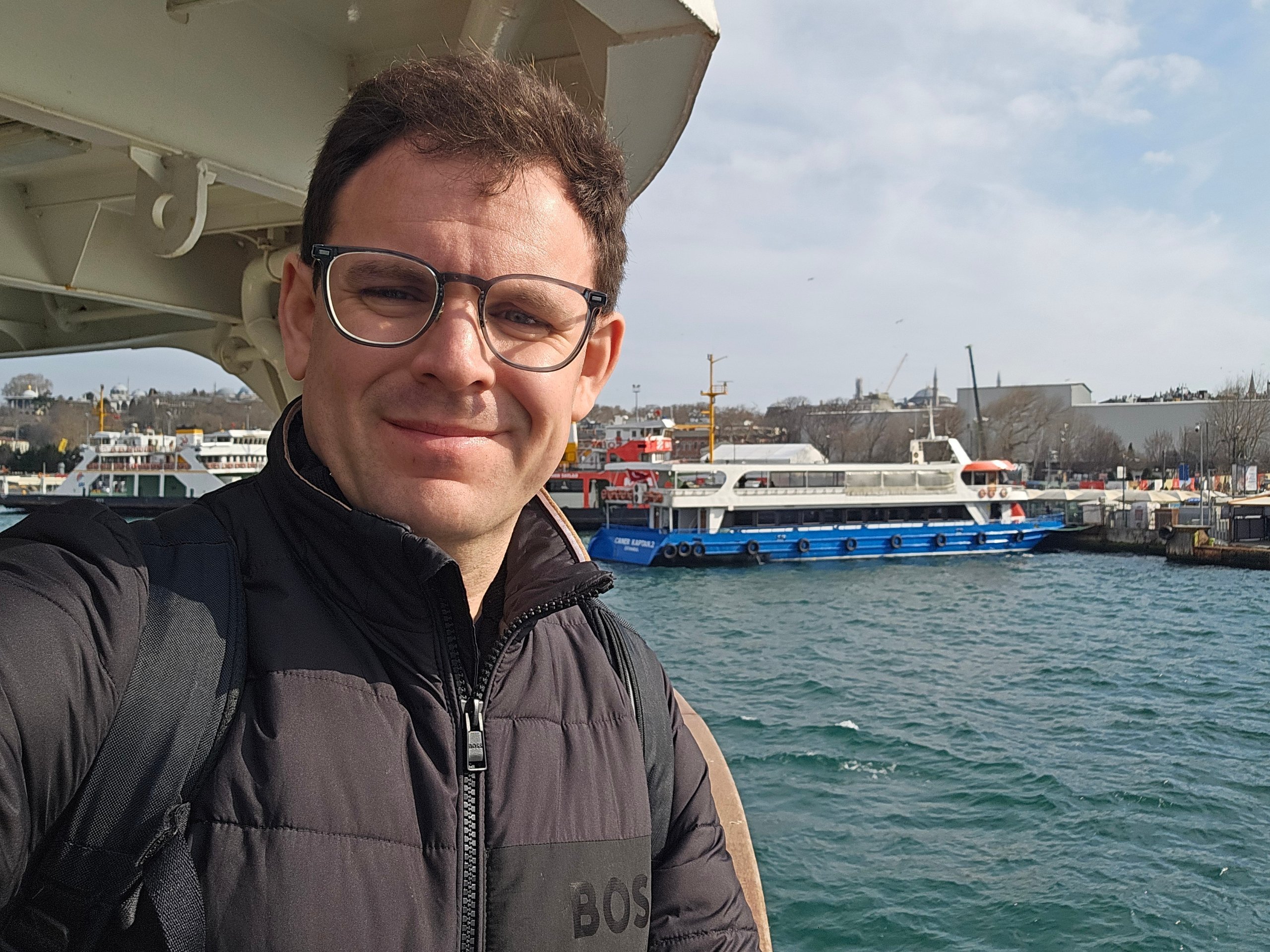
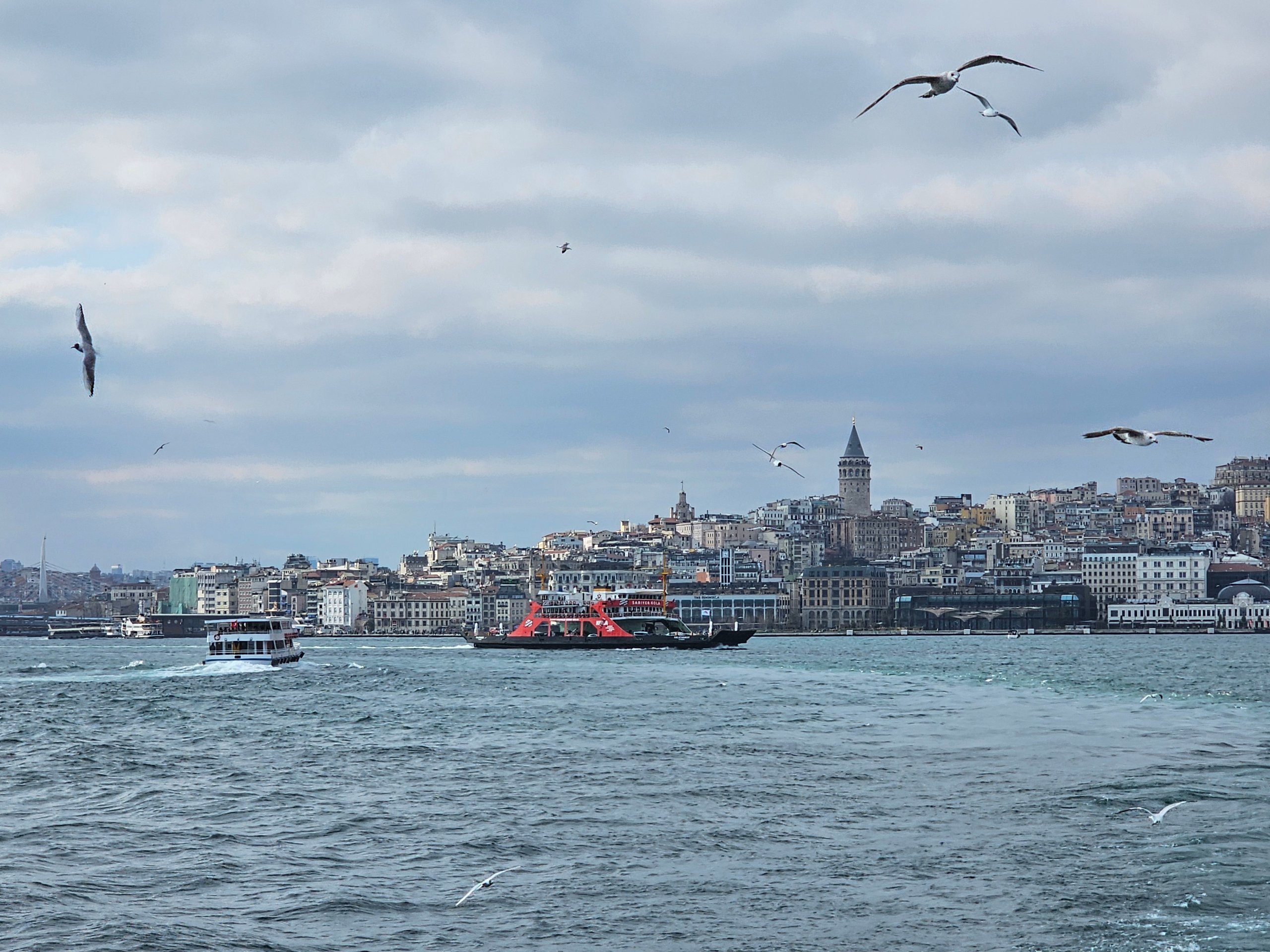
Most ferries run from around 6.00 am to 9.30 pmat intervals of 15–20 minutes, but this depends on the specific route.
Timetables vary depending on whether it is summer or winter; further information on timetables can be found on this page – sehirhatlari.istanbul.
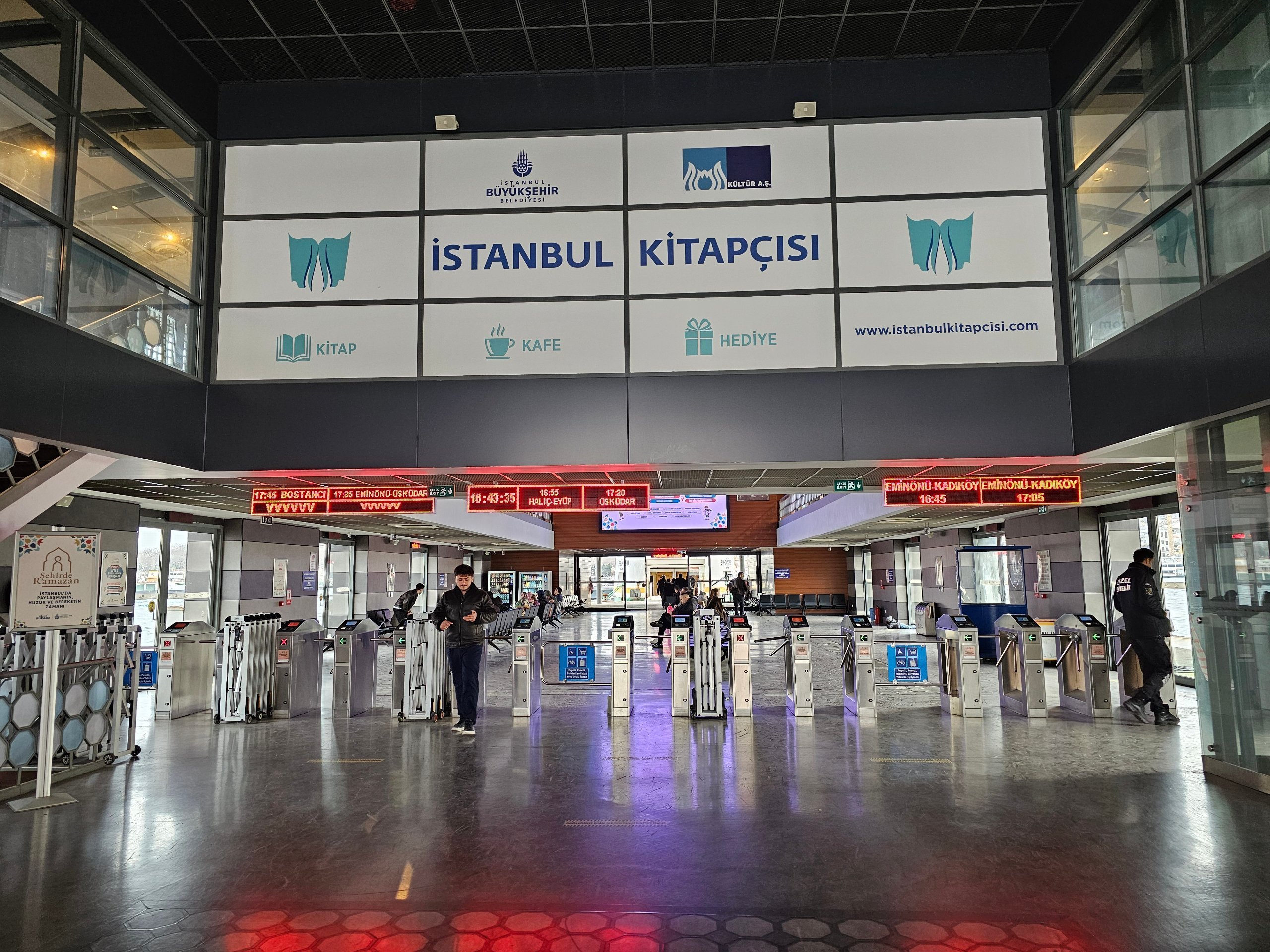
The ferries are generally spacious and always have an indoor, covered and heated deck, often with power sockets or USB ports.
There is usually a bistro and free toilets available.
Most boats also have an outdoor deck, which is a great attraction in fine weather.
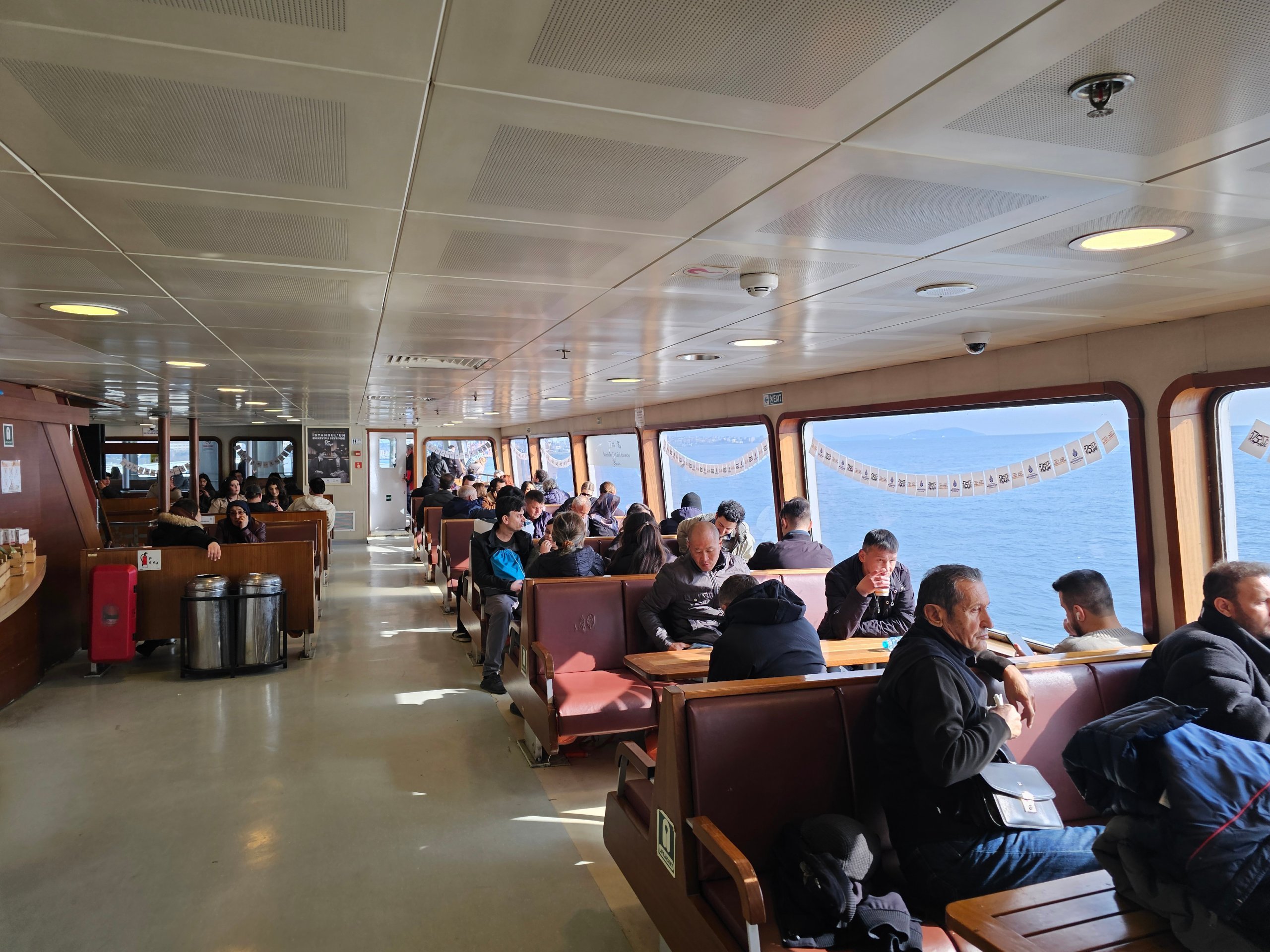
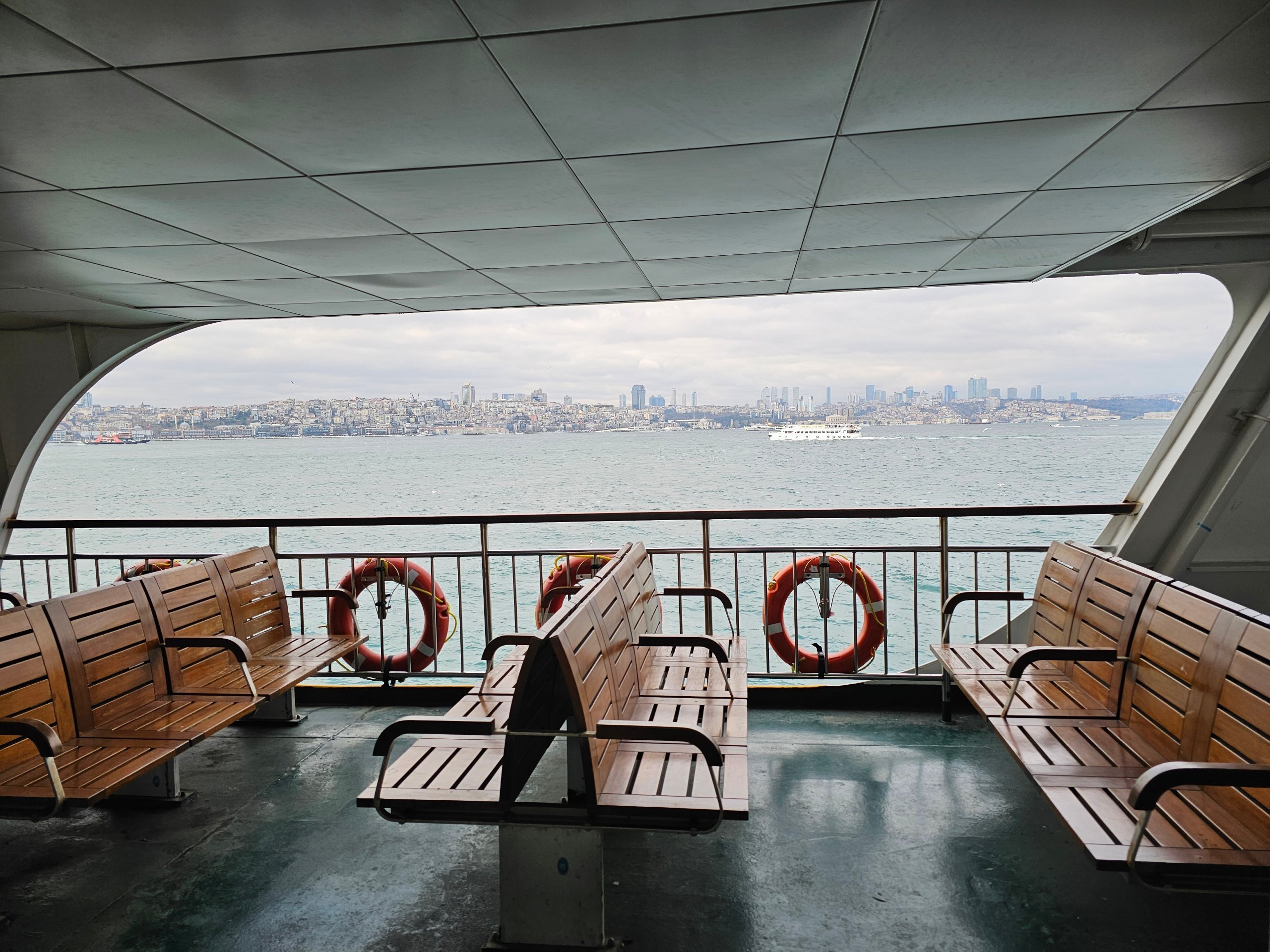
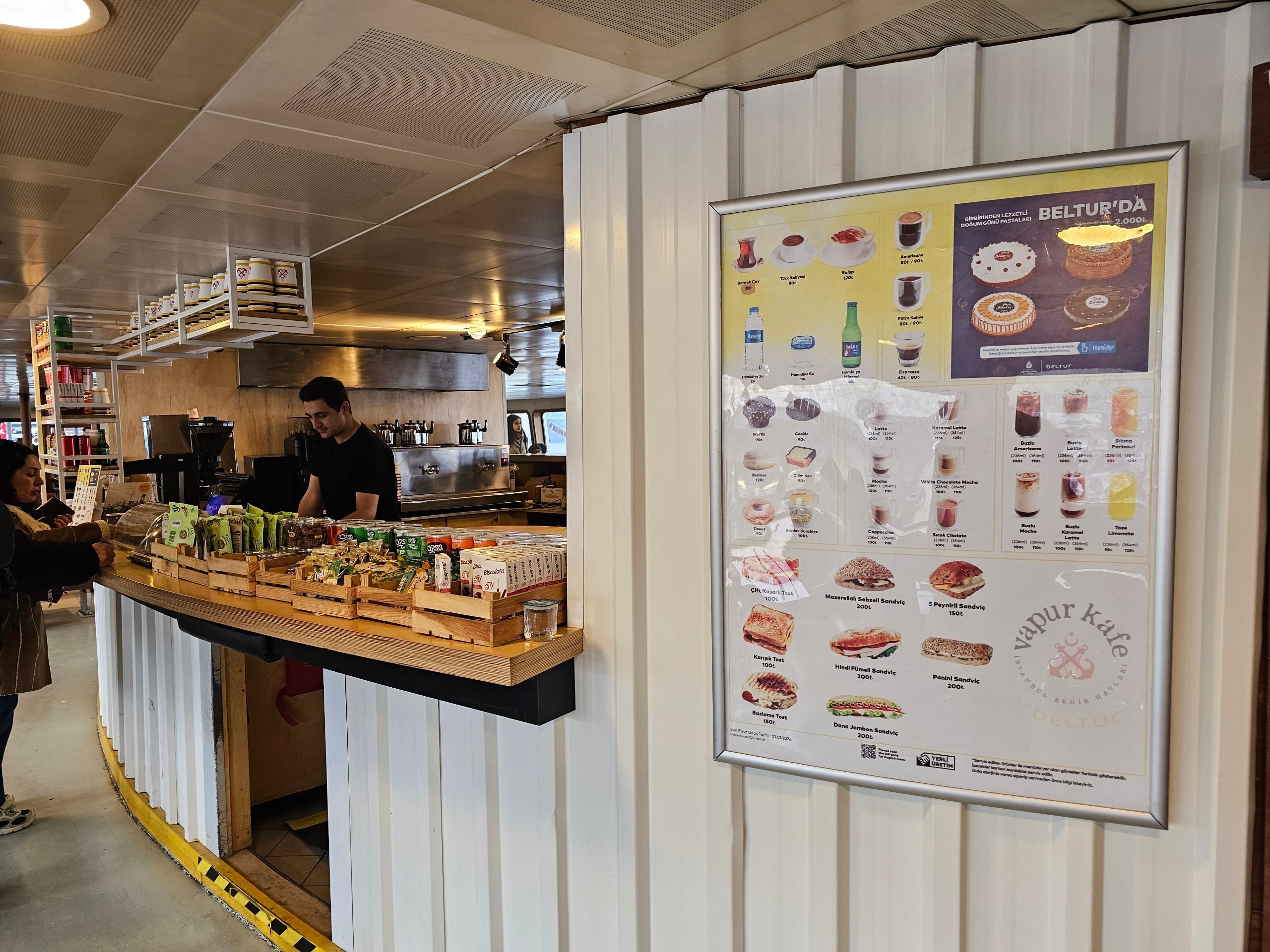
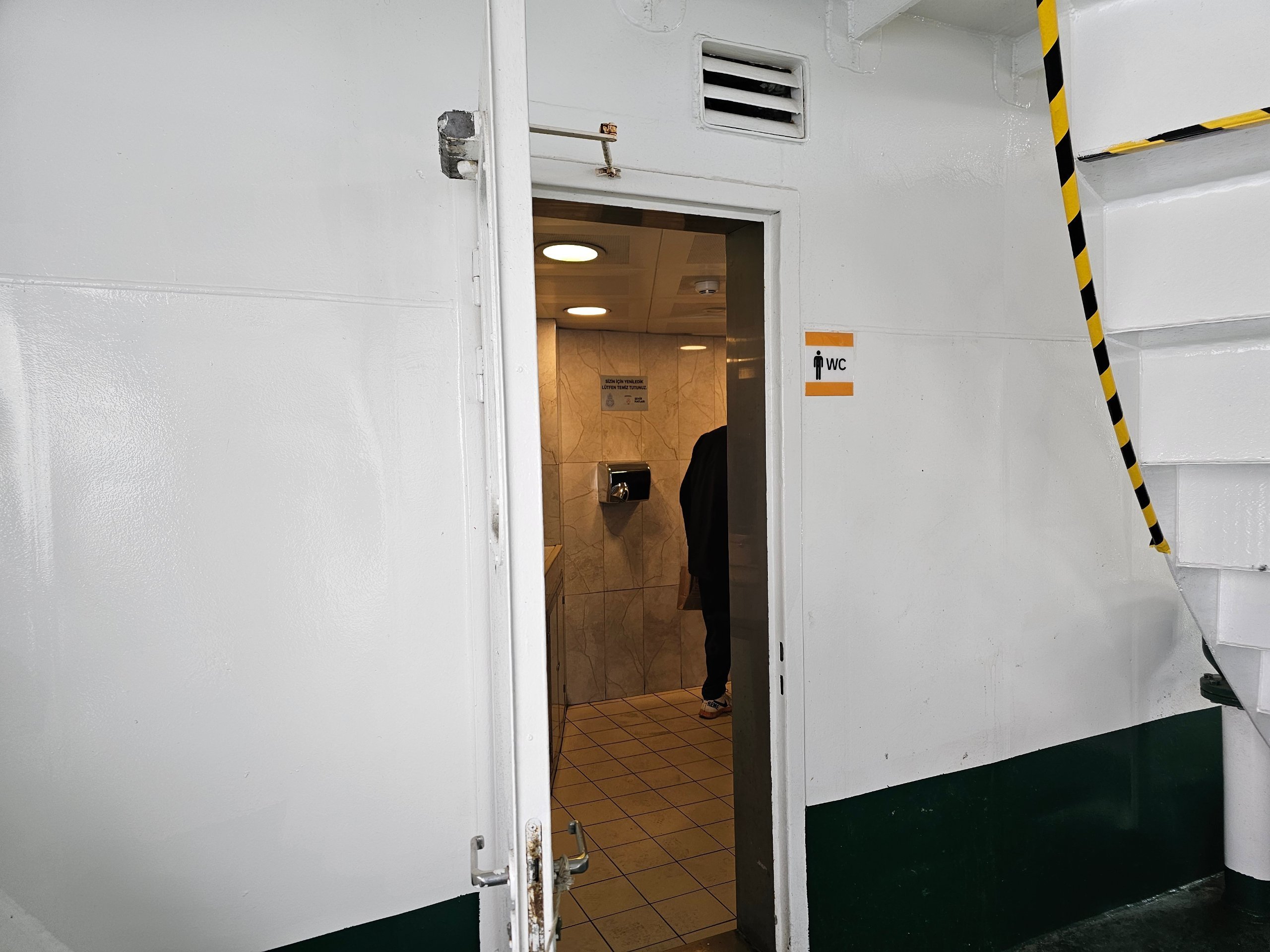
If there’s one route that most tourists use most often, it’s the T1.
The T1 connects key locations in the historic centre, and I personally used it several times during my stay.
The T1 tram will take you to places such as:
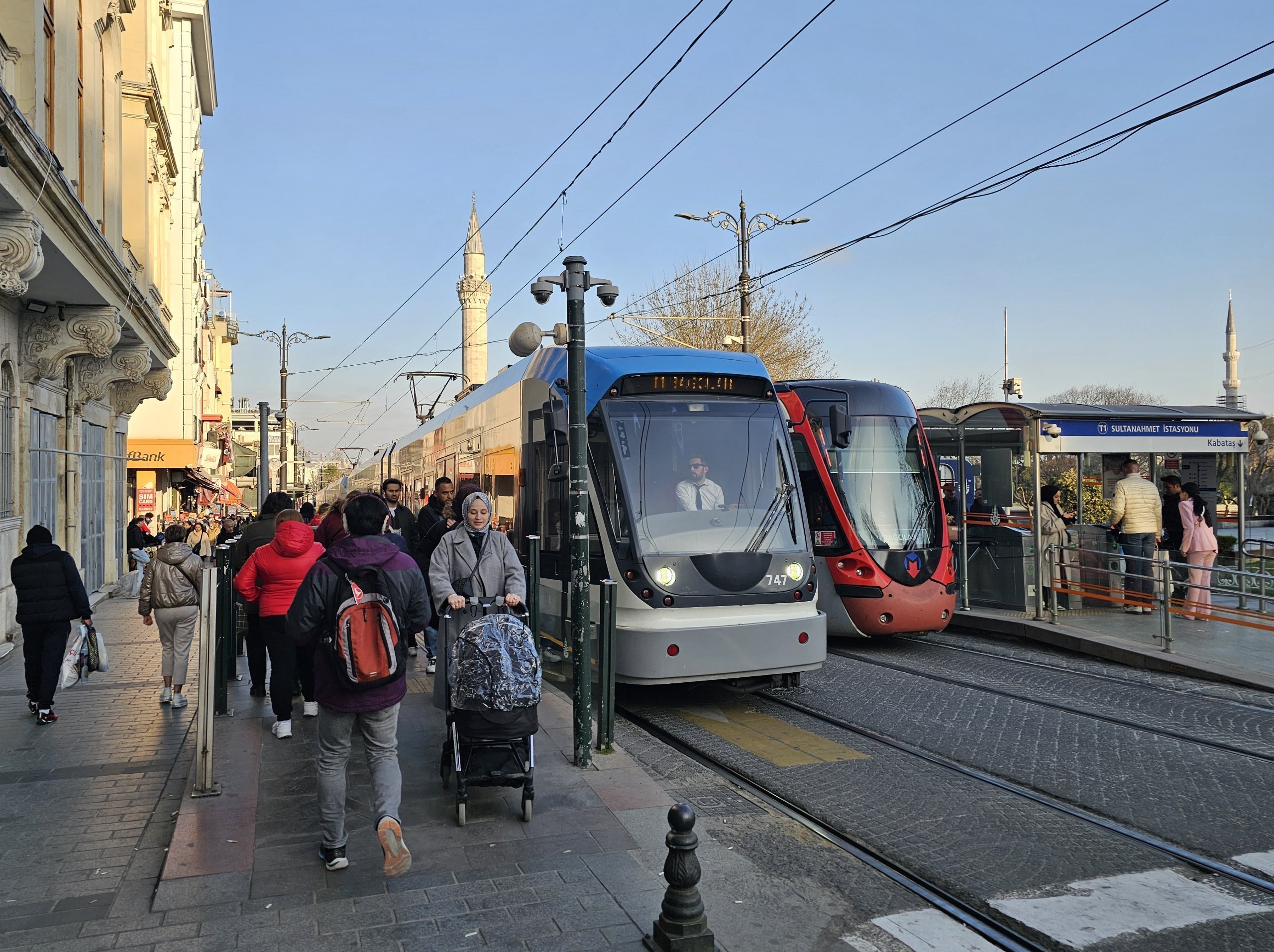
The T1 is exactly the sort of route where you’ll quickly realise just how crowded Istanbul can get. If you can, avoid the busiest times and don’t plan on travelling comfortably with a large suitcase on the tram.
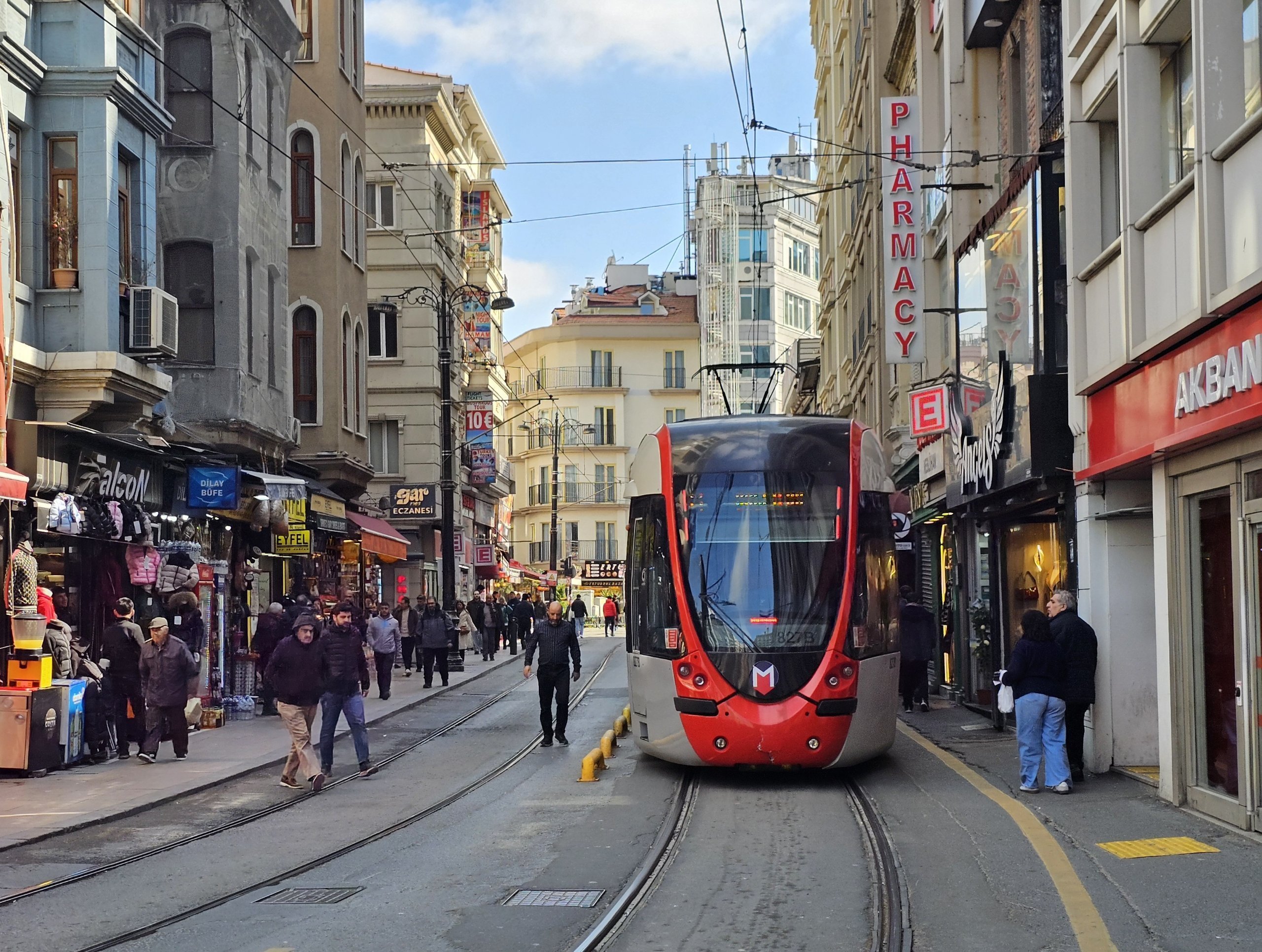
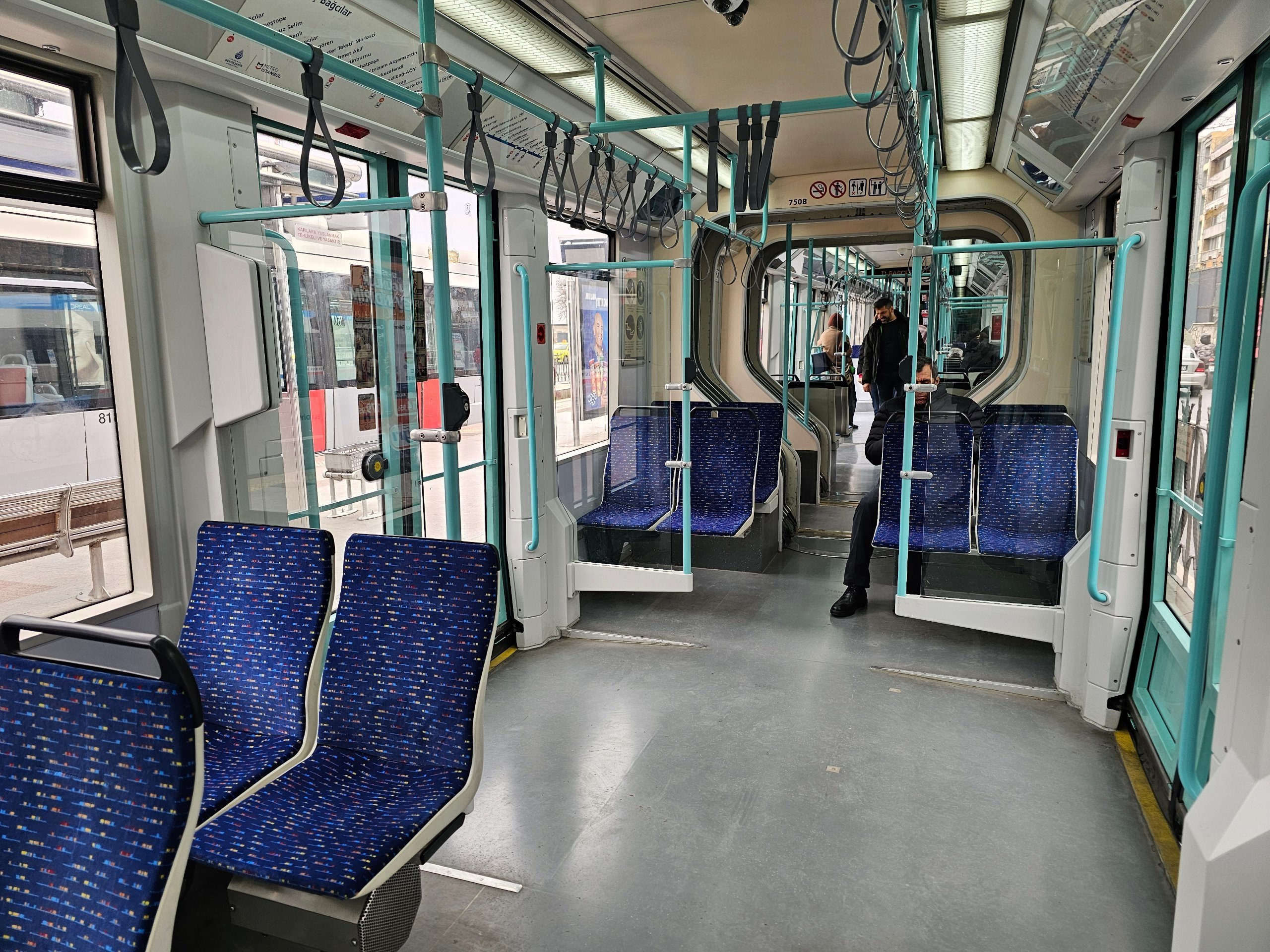
Other tram routes that might be worth considering:
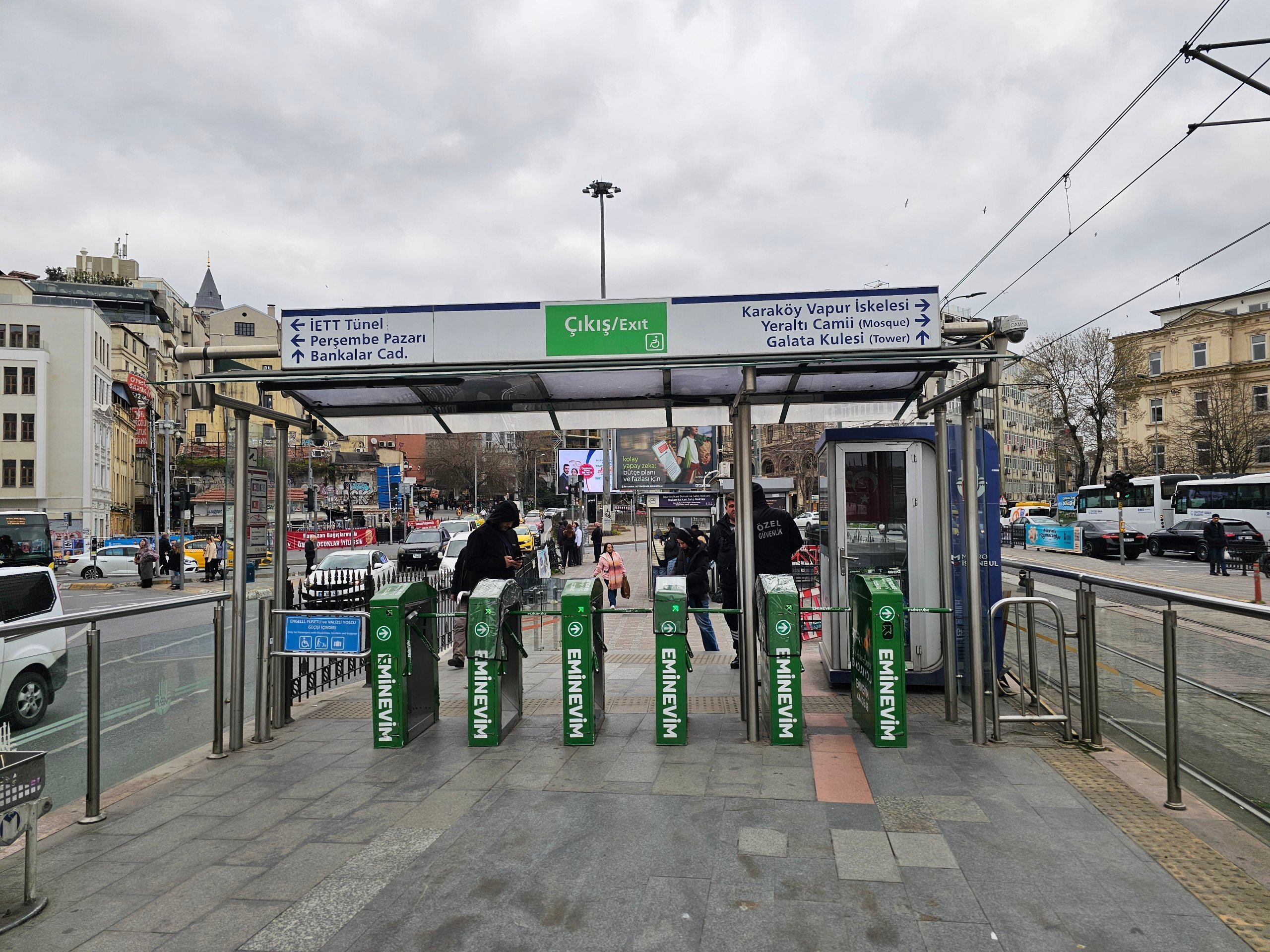
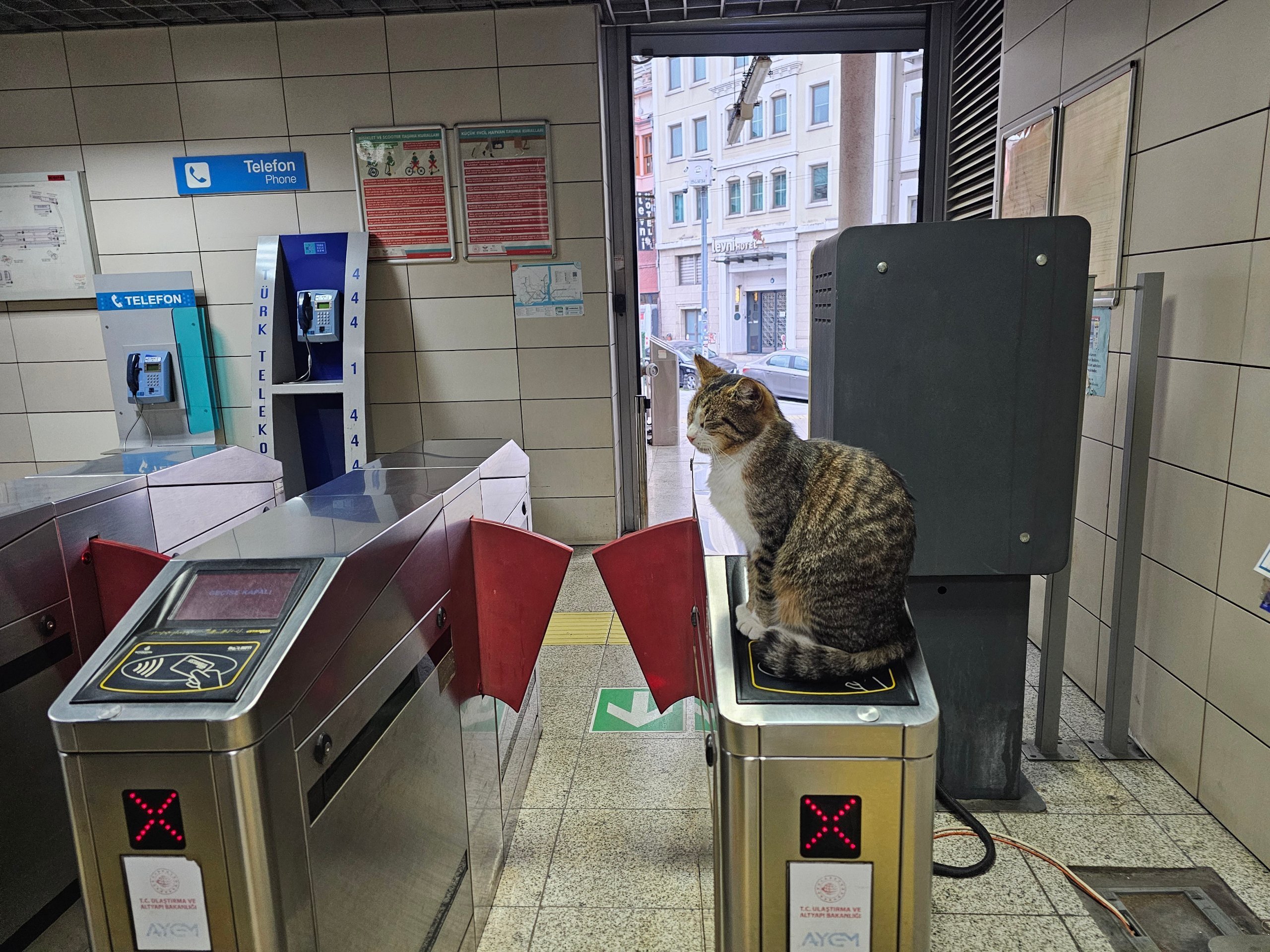
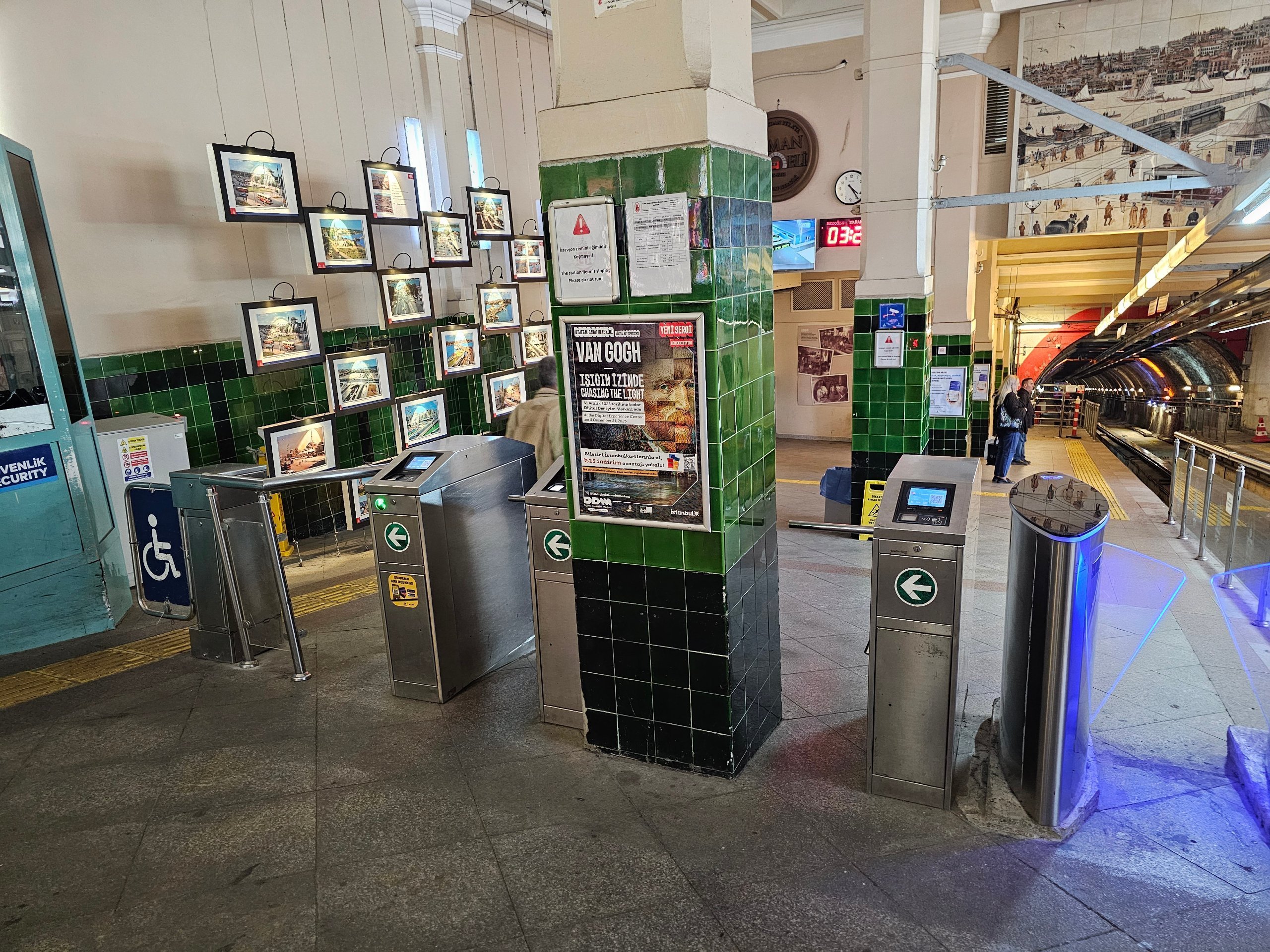
You always pass through the turnstiles to reach the platform, where you tap your Istanbulkart or your own contactless card.
When leaving the platform, you do not need to ‘tap’ your card again.
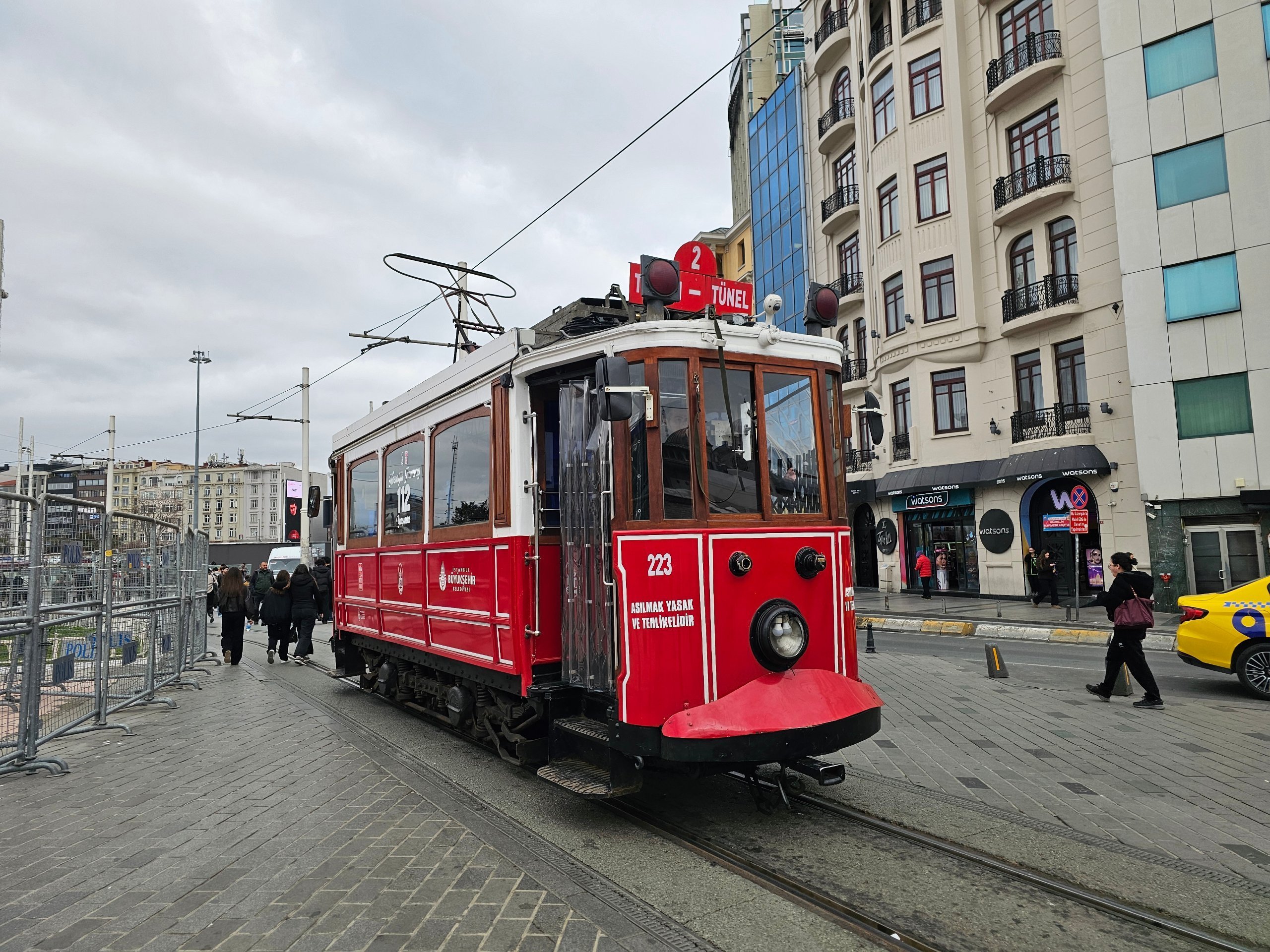
More of an attraction than a practical means of transport, the two historic tram lines are not connected in any way to the rest of the tram network.
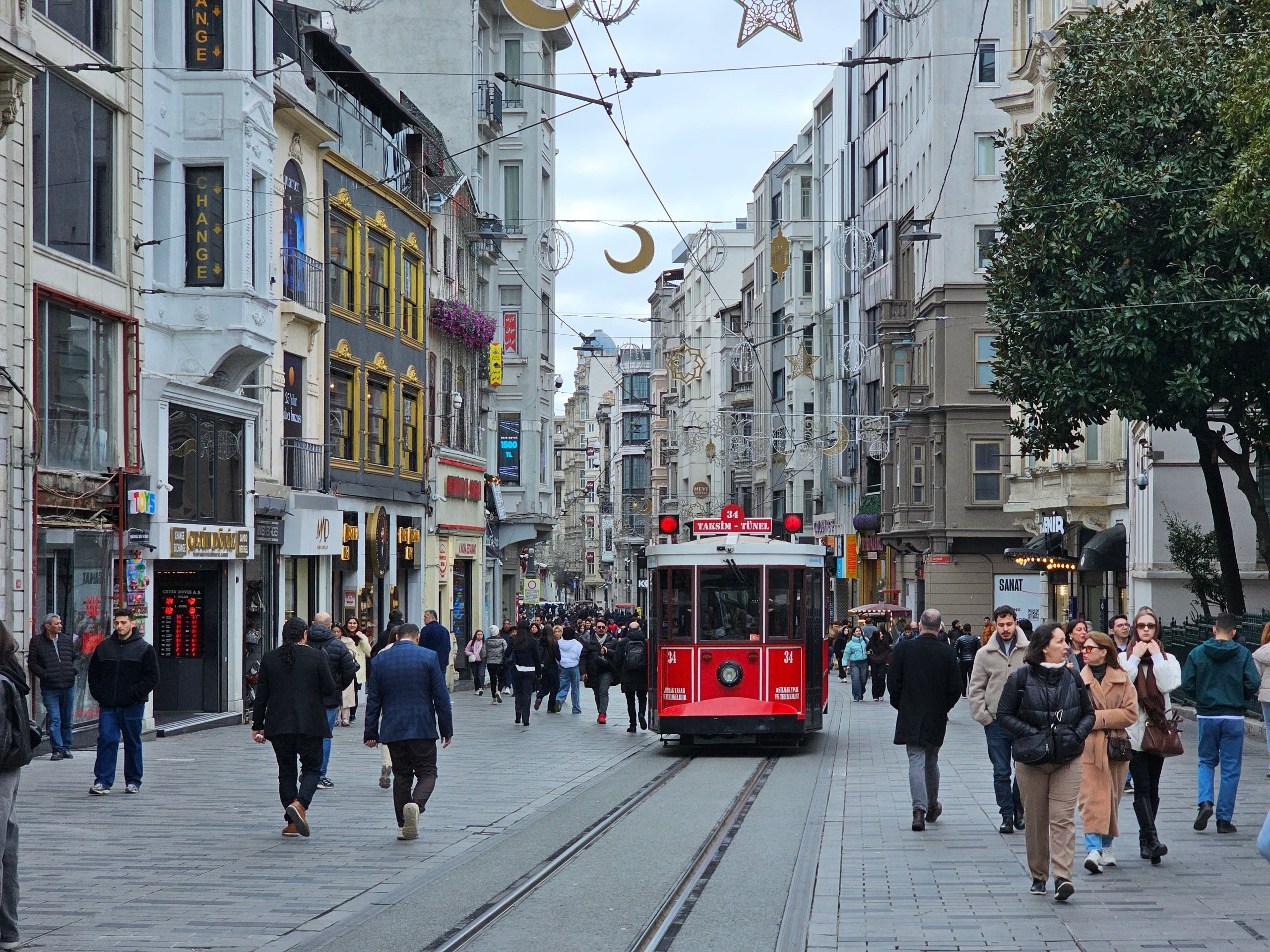
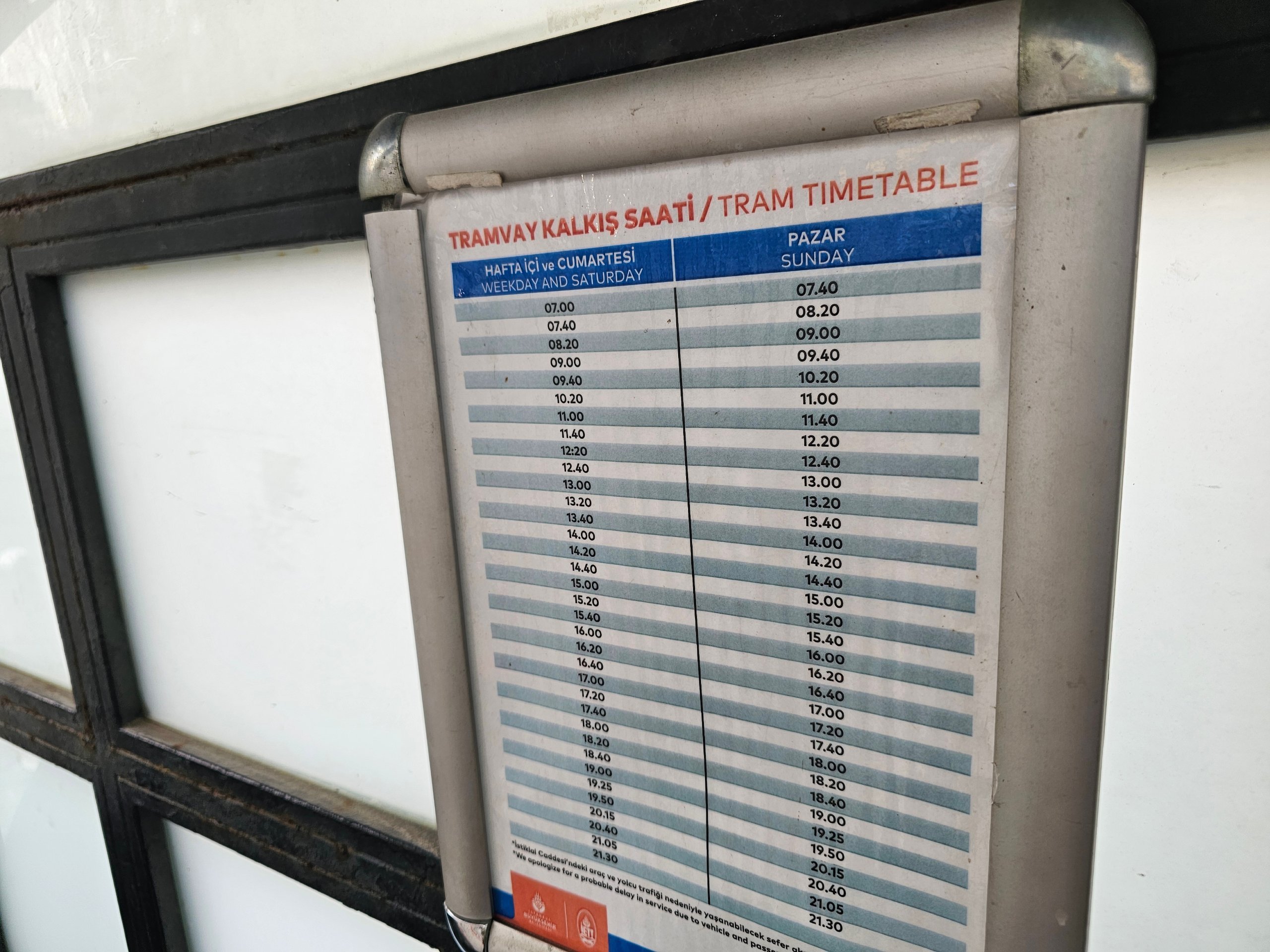
Both routes are very short, and the journey takes only around 10 minutes.
Standard fares apply on both of these historic routes.
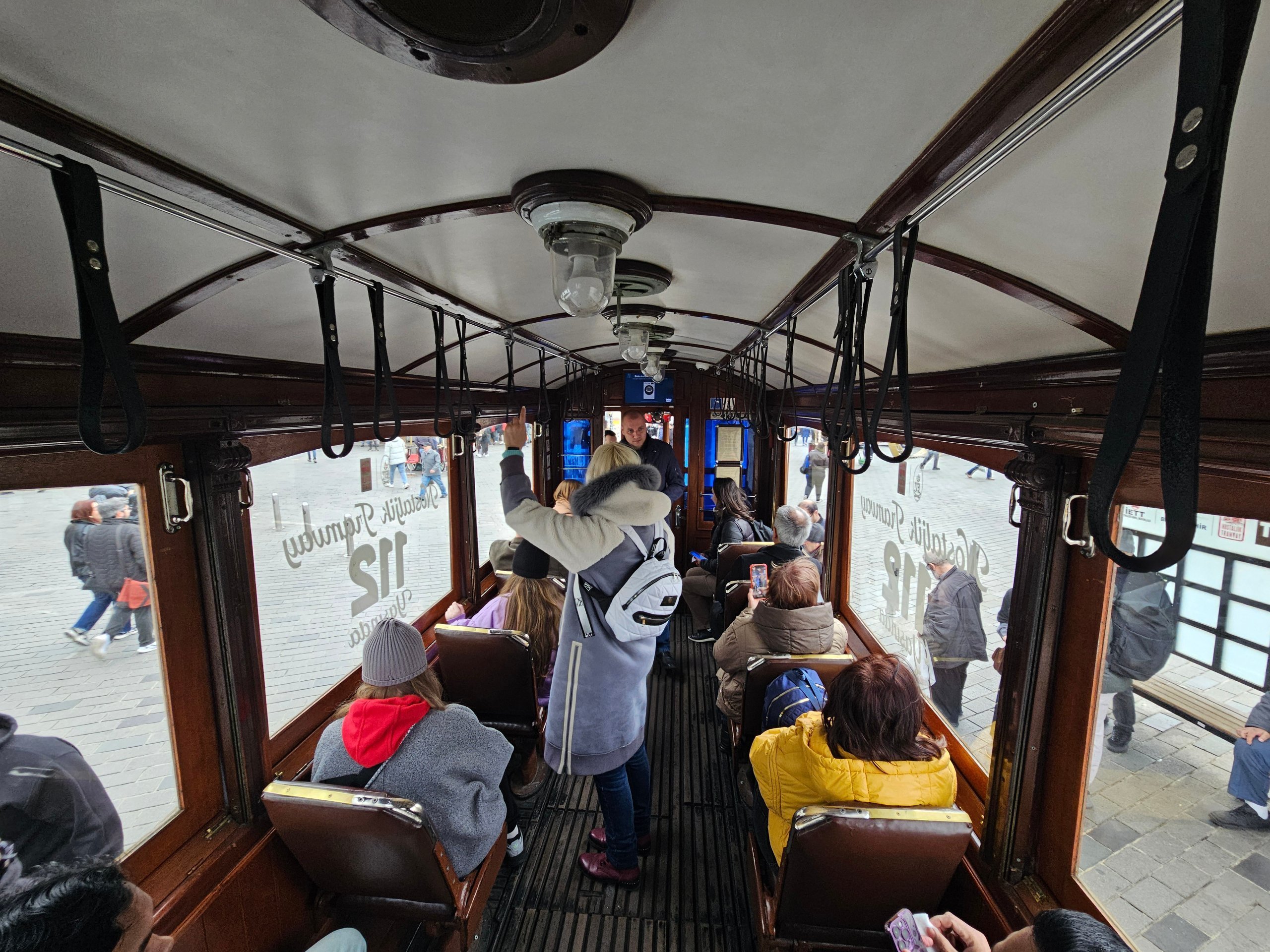
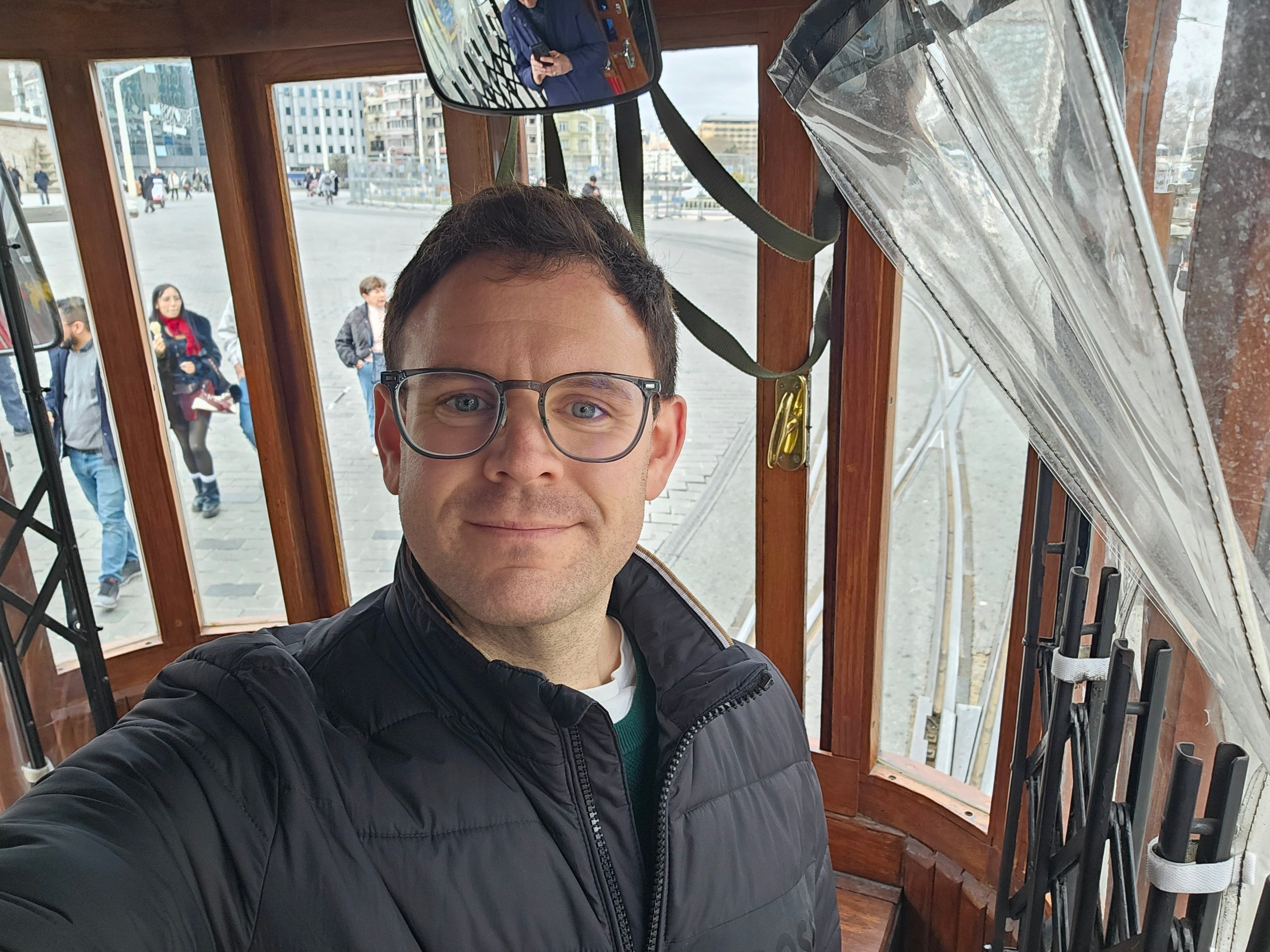
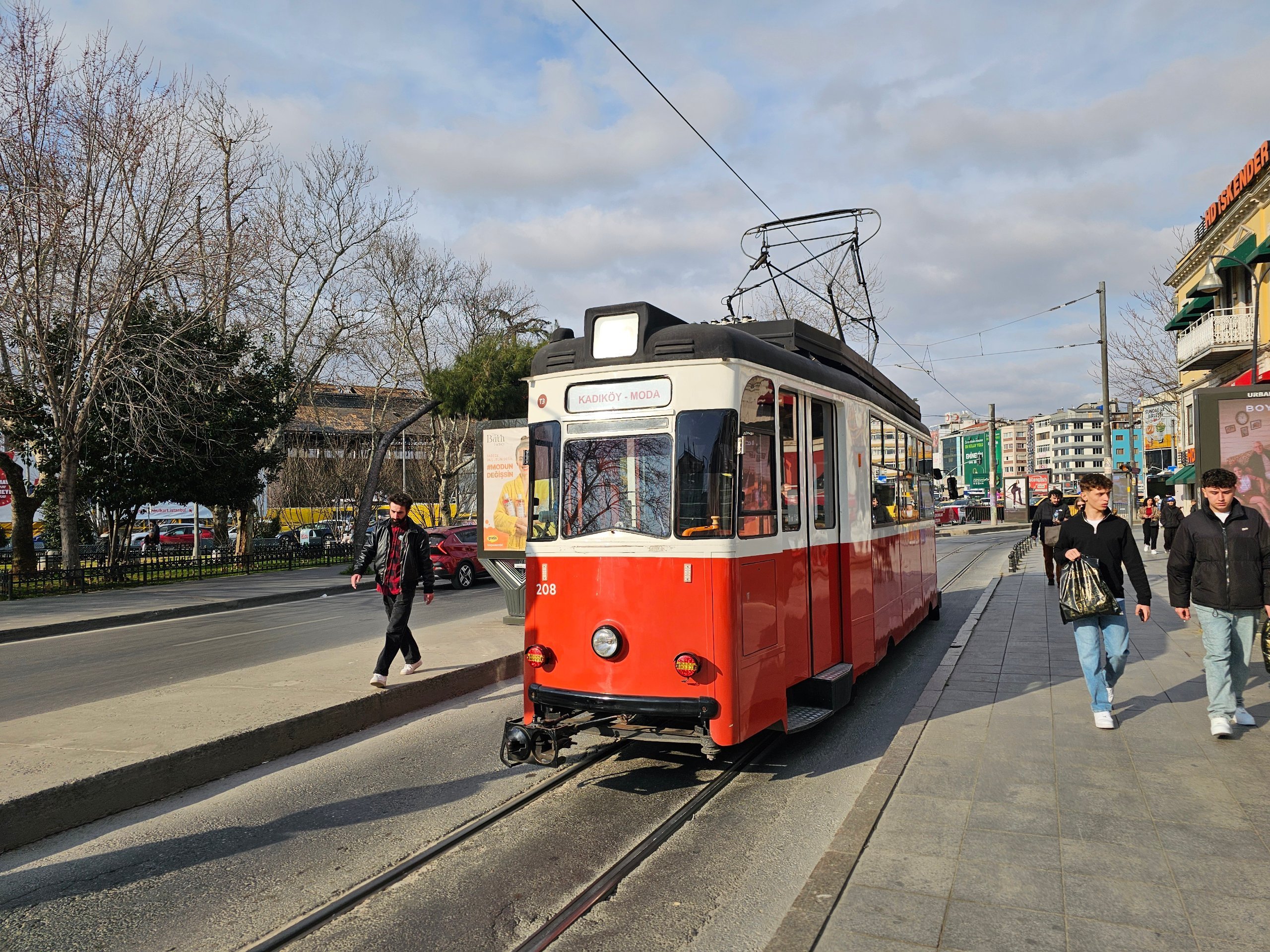
Marmaray is primarily a commuter train linking the outskirts of Istanbul with the city centre.
For tourists, the most interesting part is the central section, which runs through a deep tunnel beneath the Bosphorus Strait.
It’s ideal if you’re travelling from the historic Sultanahmet district ( Sirkeci station) to Üsküdar, which offers the best views of the Maiden’s Tower.
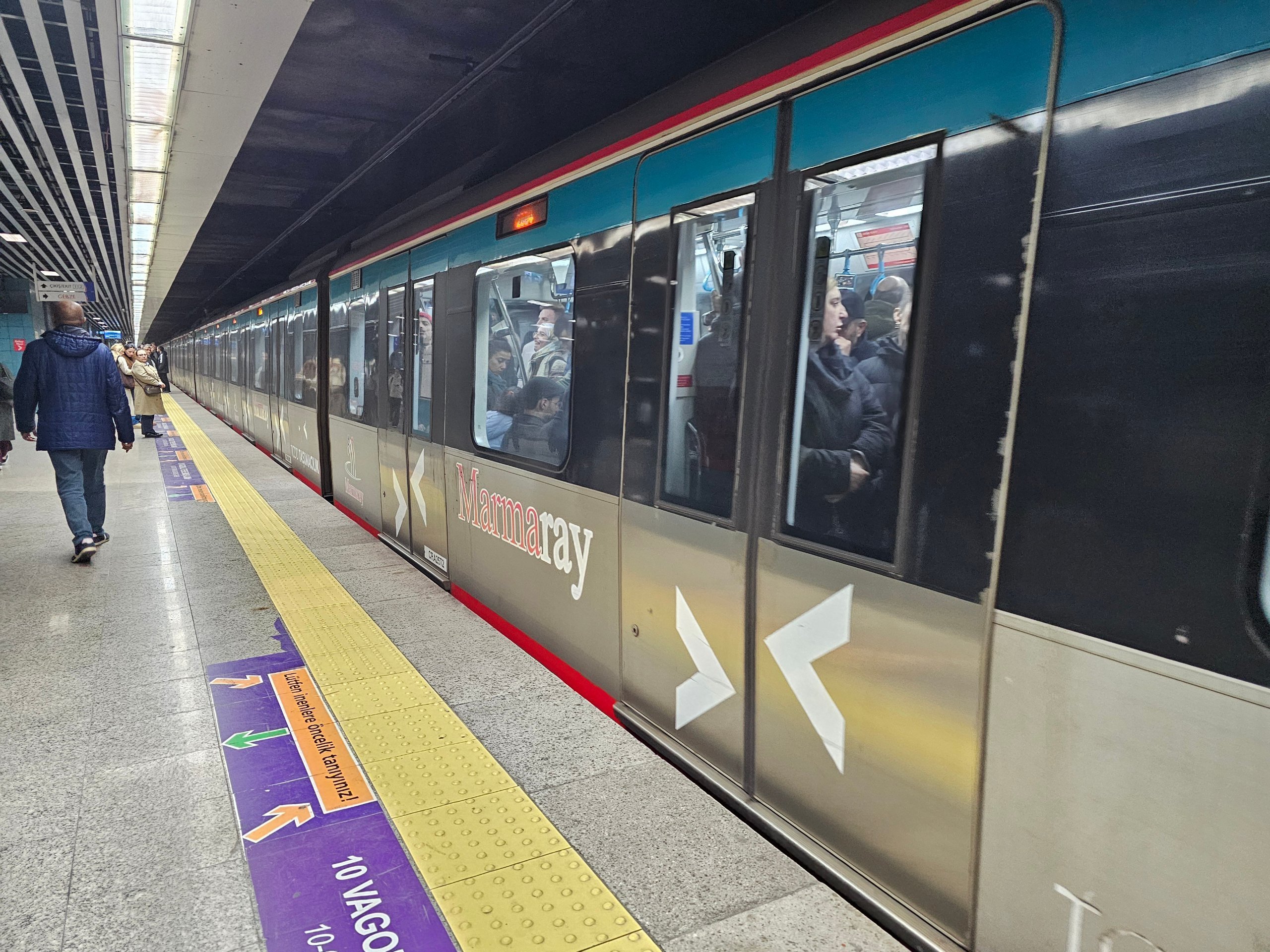
You can only pay for the Marmaray using an IstanbulKart. Direct contactless payment is not available.
The way it works is that when you enter the platform, the maximum possible amount (around 70 try) is deducted from your card.
After exiting the station, look for the small silver (sometimes red) ‘Refund machine’ validators; tap your IstanbulKart on them again and the actual fare will be calculated (usually around 35 try for the short journey from Sirkeci to Üsküdar).
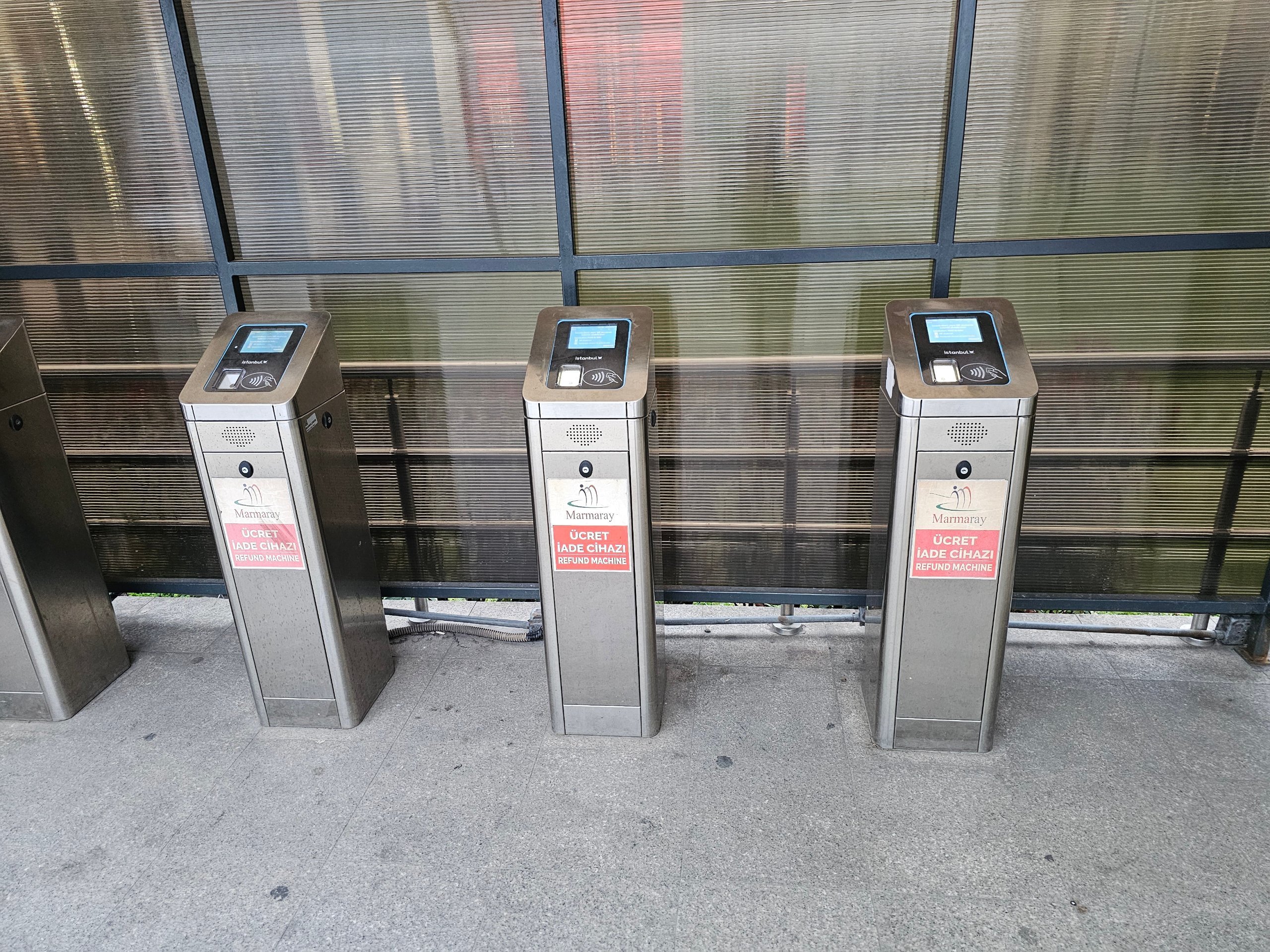
Marmara trains run about as frequently as the metro – at intervals of approximately 4–8 minutes – and operate from around 6.00 am to 11.30 pm.
This is one of the things that visitors often underestimate, and then end up walking up steep hills for no reason.
Istanbul’s cable cars are not a historical attraction, but a modern means of transport that makes it easier to get around the very hilly European side of Istanbul.
Bear in mind that almost all the cable cars run the entire route through a tunnel, so you won’t see anything from them.
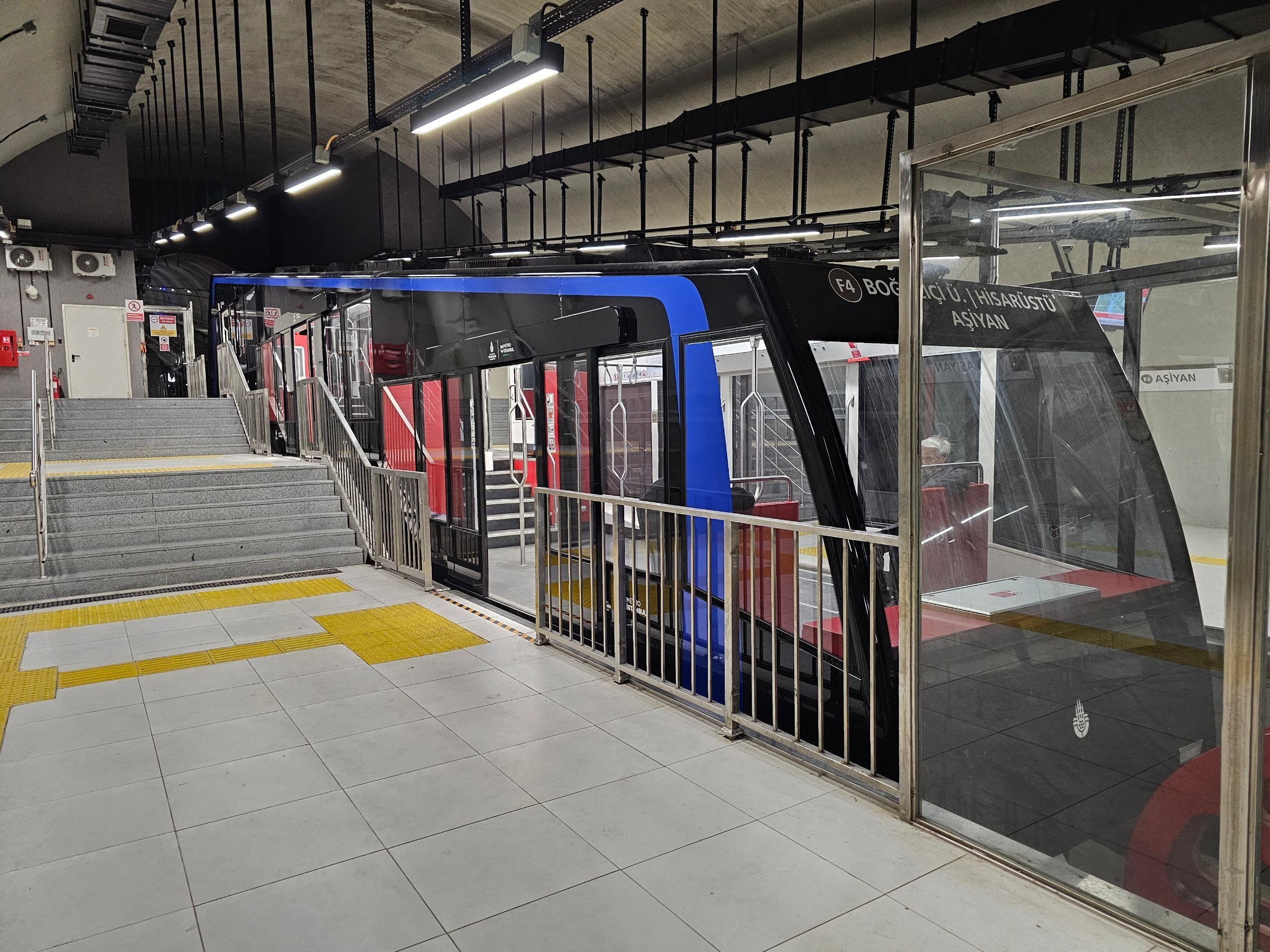
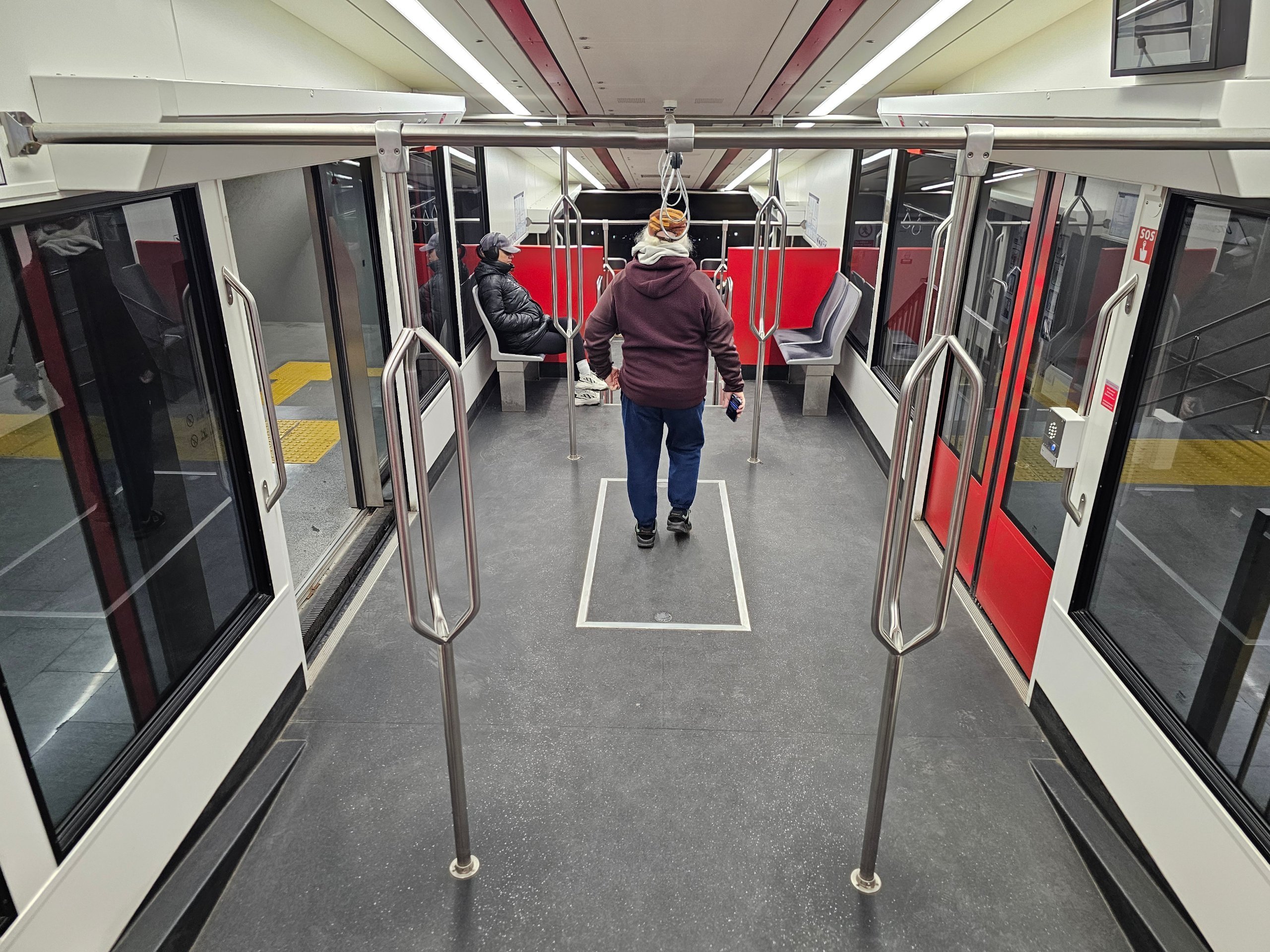
A very convenient connection from the Bosphorus up to Taksim. If you’re travelling between the T1 tram and Taksim, it’s much more comfortable than walking up.
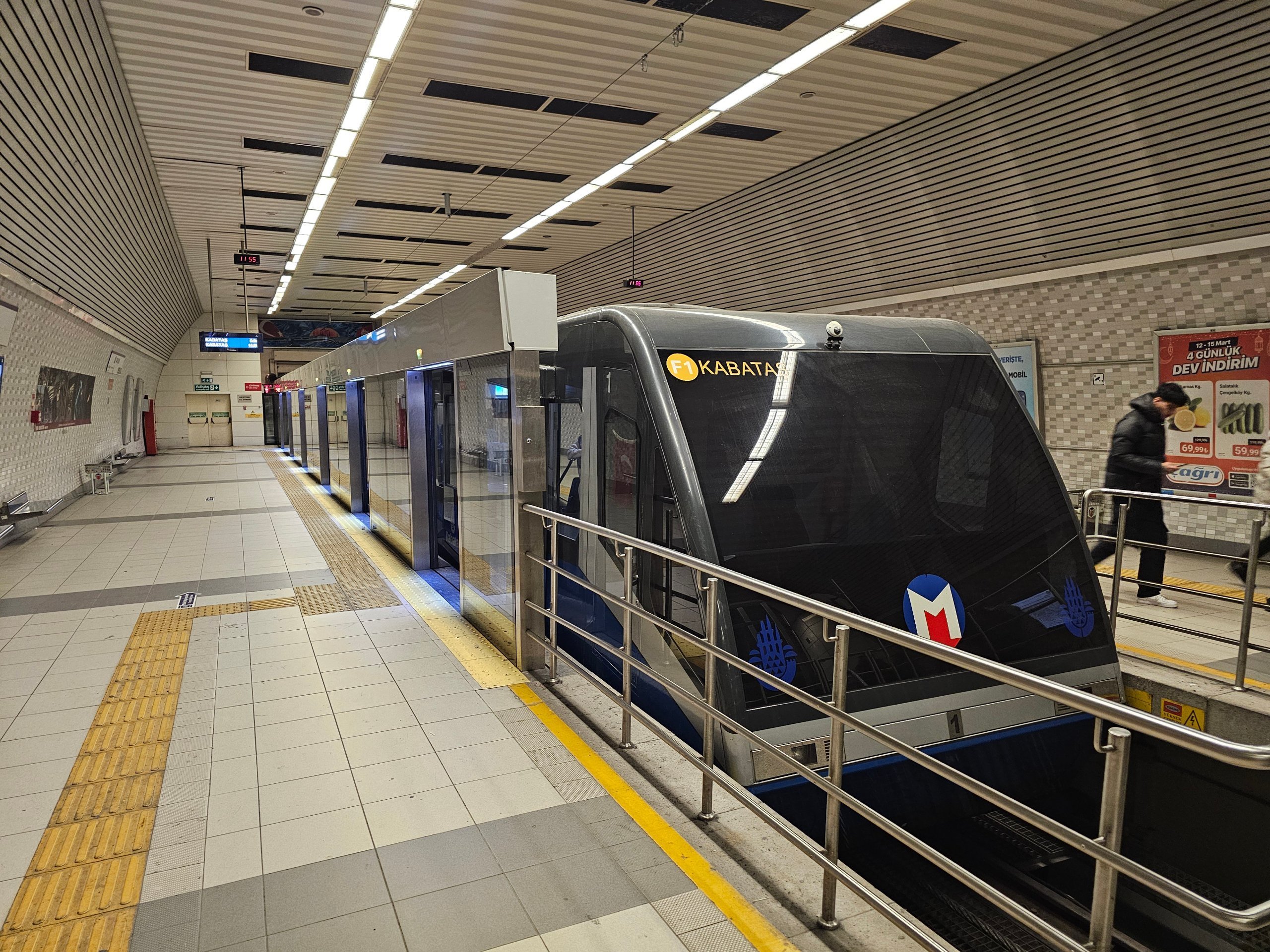
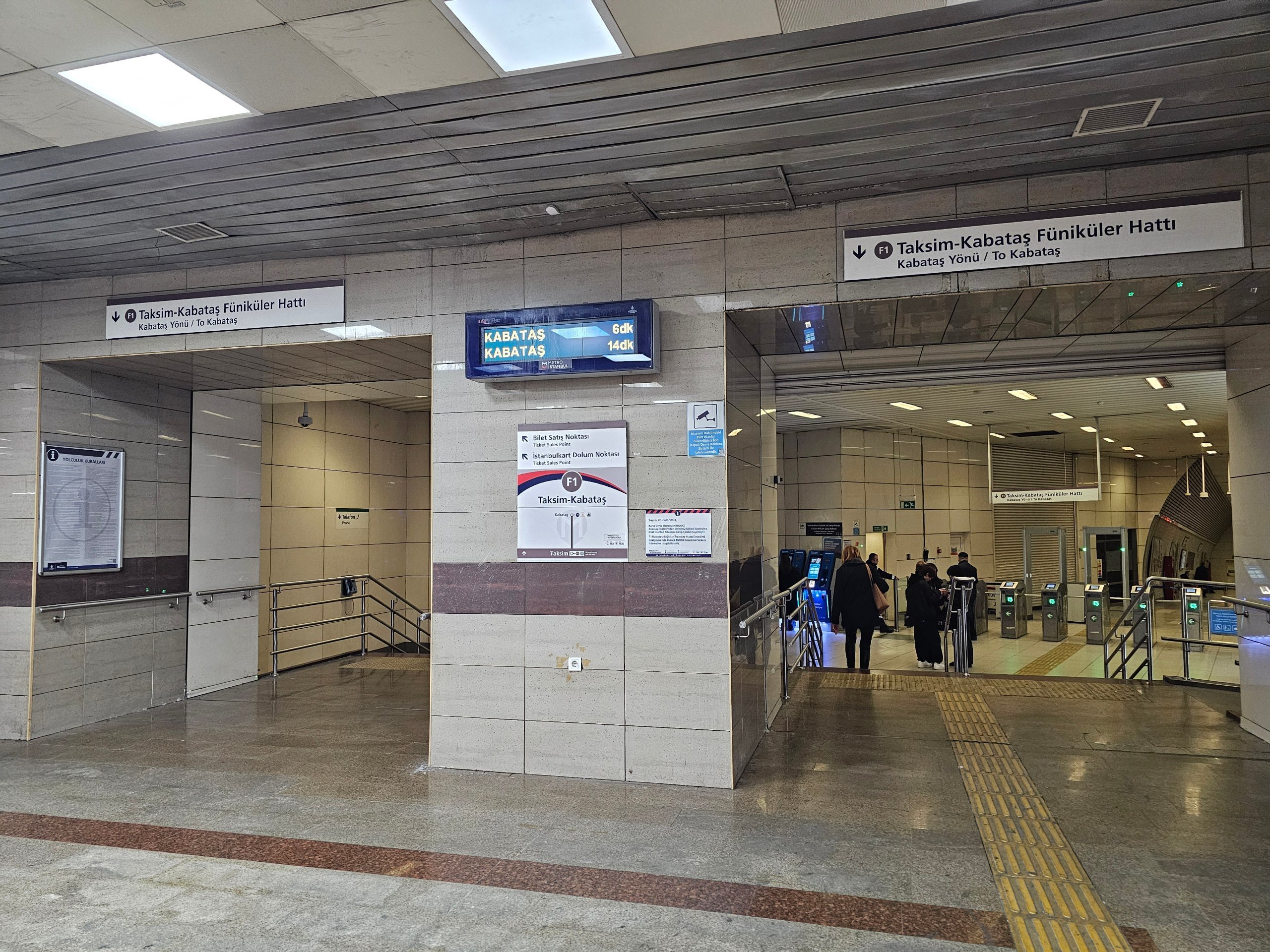
A historic tunnel and, at the same time, a very useful link between the waterfront and the upper part of Beyoğlu (such as the Galata Tower).
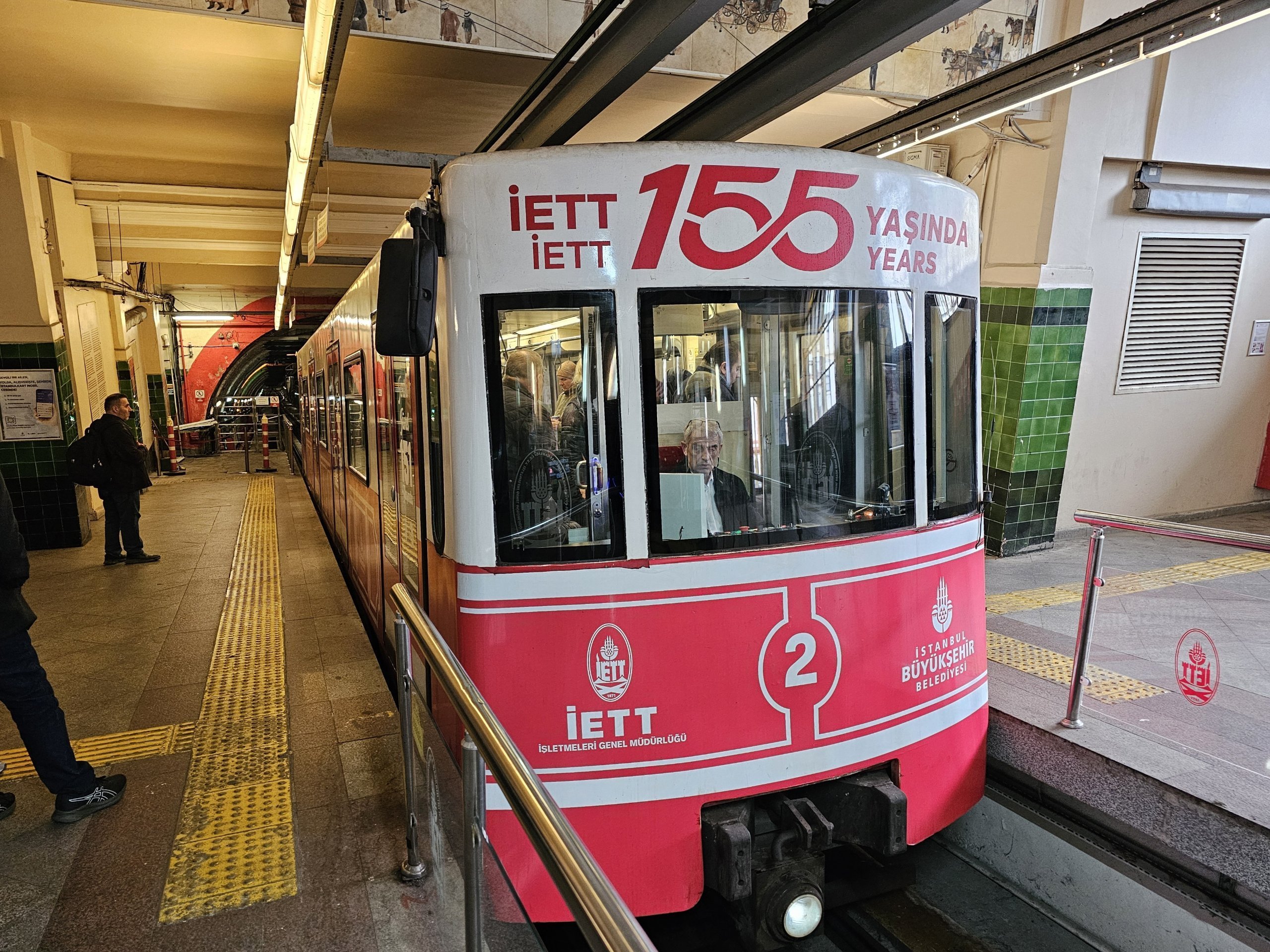
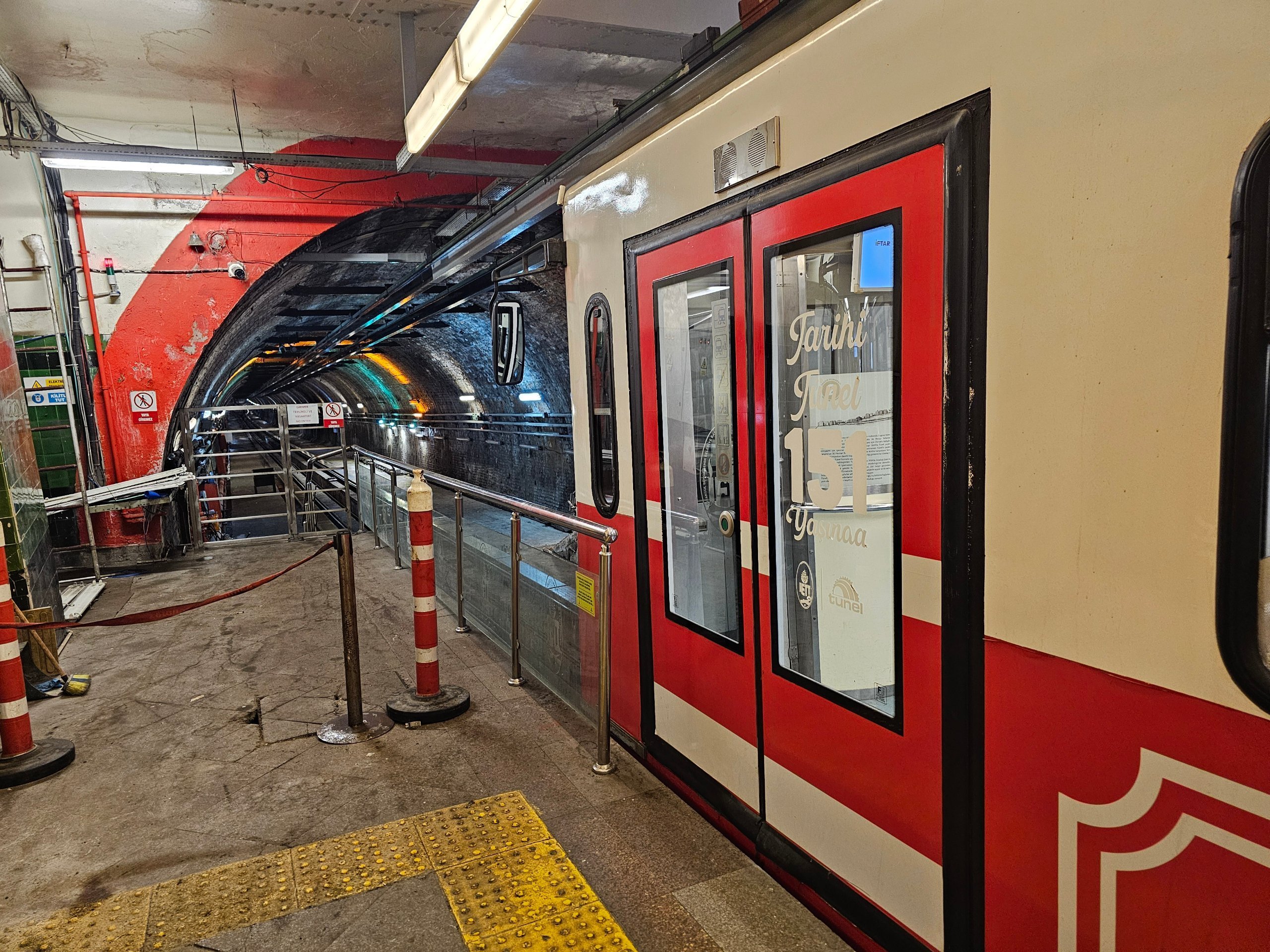
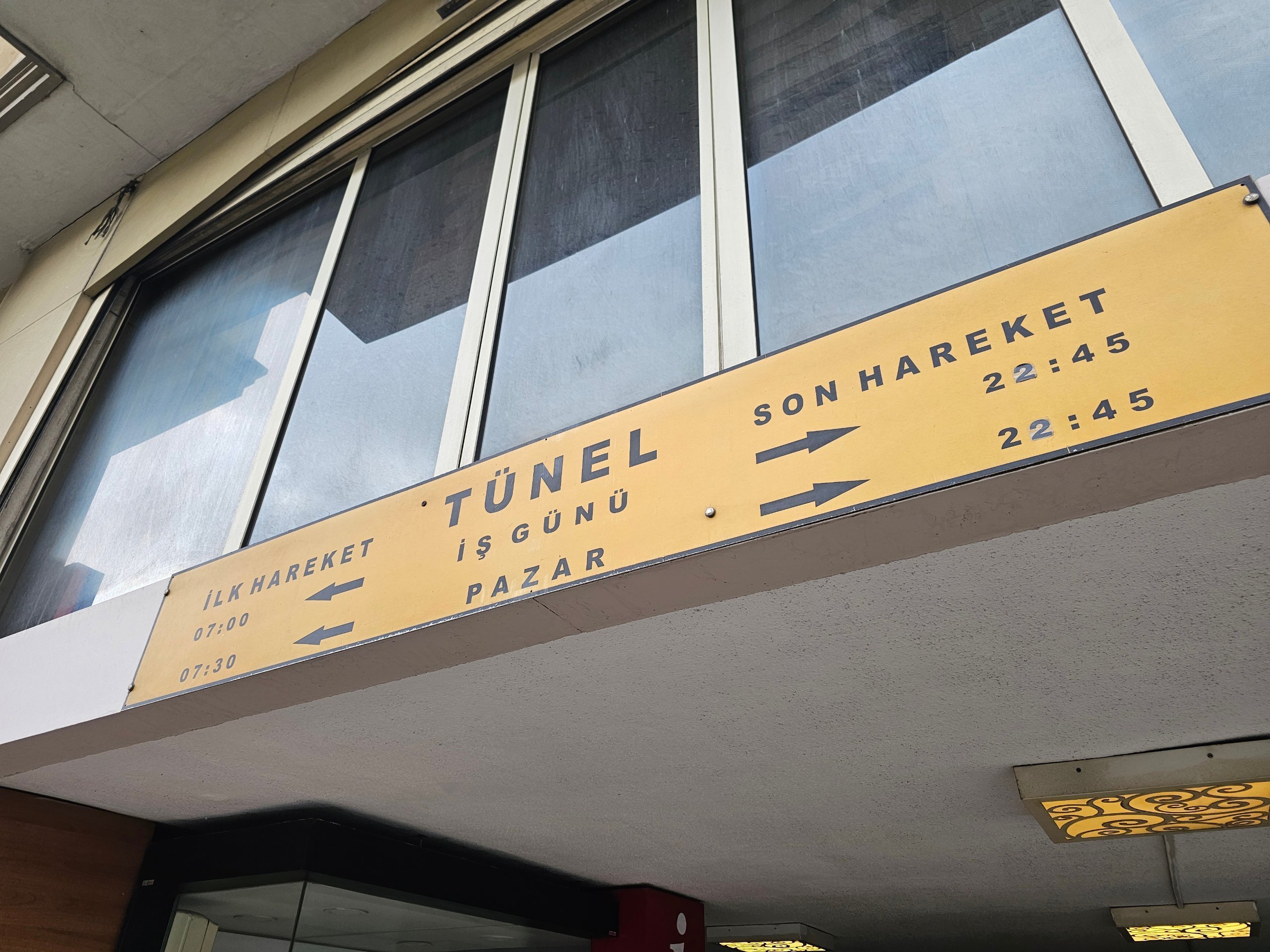
This isn’t just about transport, but also about the view. If you’re heading to Pierre Loti, the funicular makes more sense than the walk up.
The only suspended cable car.
There are other cable cars in Istanbul outside the tourist areas.
A standard fare applies on all of them, just as it does on the metro, trams and buses, and you can always pay using your own contactless card or an Istanbulkart.
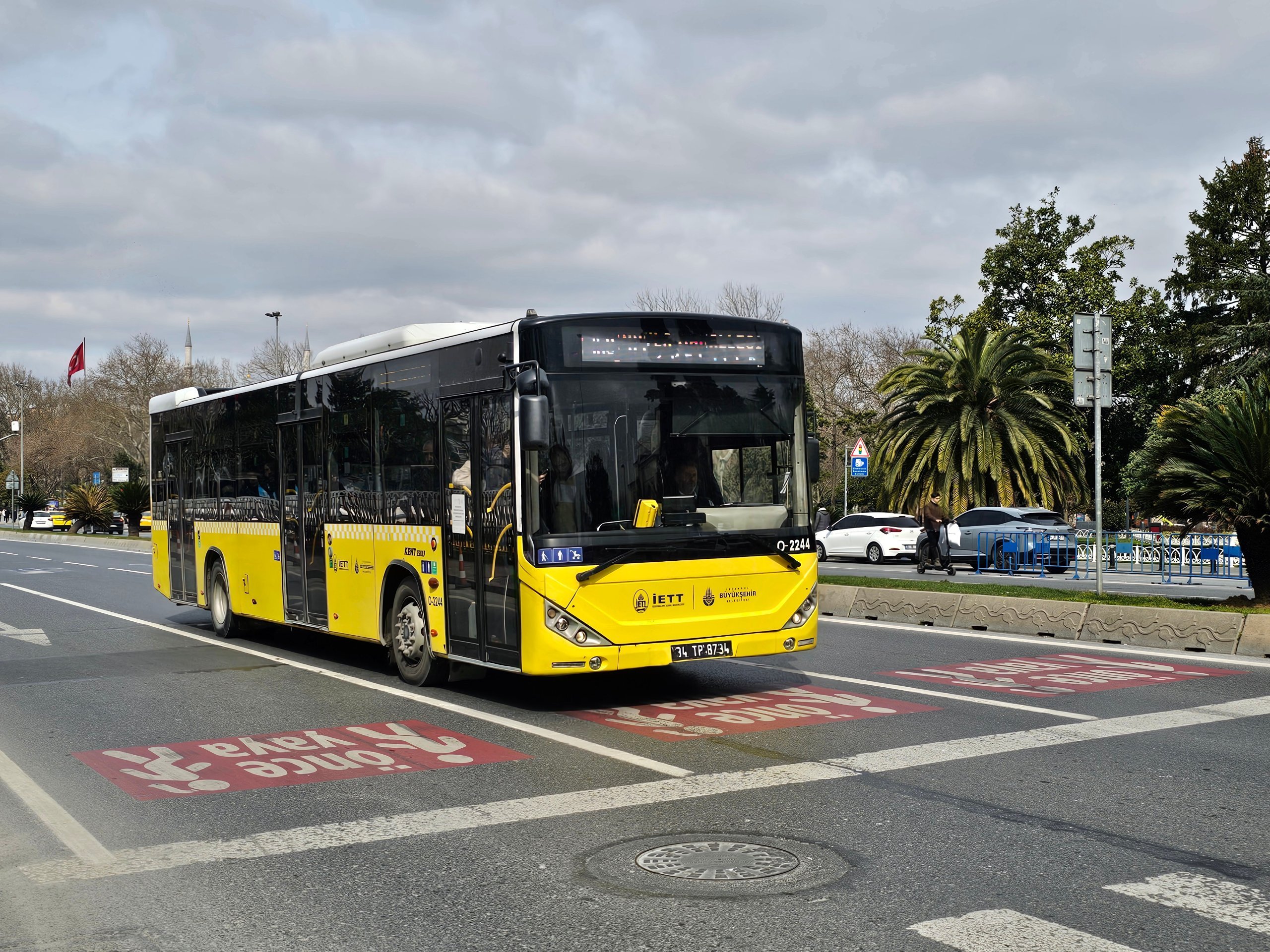
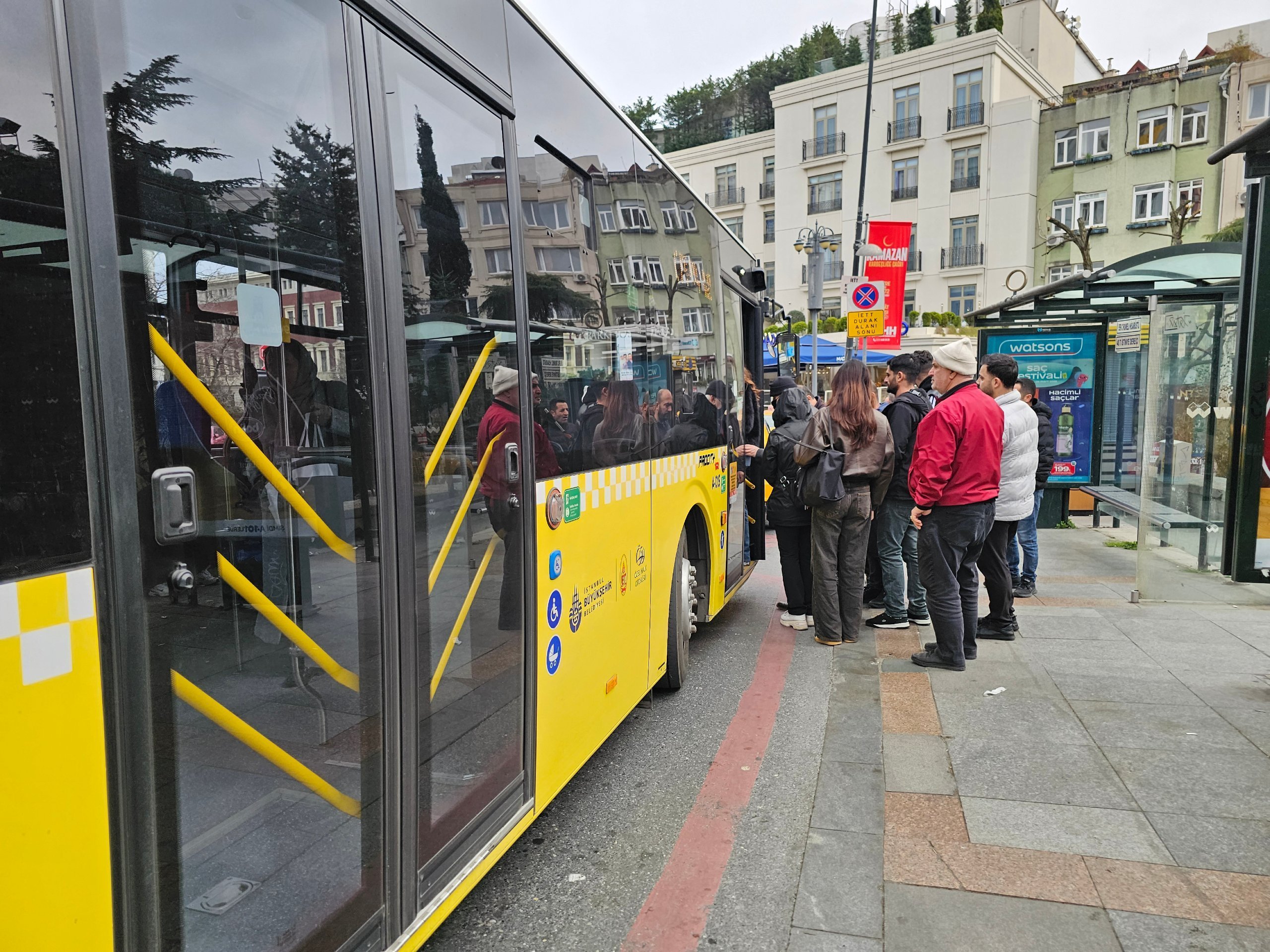
Istanbul is criss-crossed by a huge number of yellow buses, which will take you practically anywhere.
IETT is the official operator of a large part of the bus network and provides timetable information and fares on its website. The network is vast and covers virtually the whole city.
In reality, I used the buses less than the metro or trams. The reason is simple – they mostly run off the main tourist routes.
You’ll find buses useful for getting around the city centre, or if your hotel is further from the centre and isn’t served by the metro.
There are two types of bus in Istanbul:
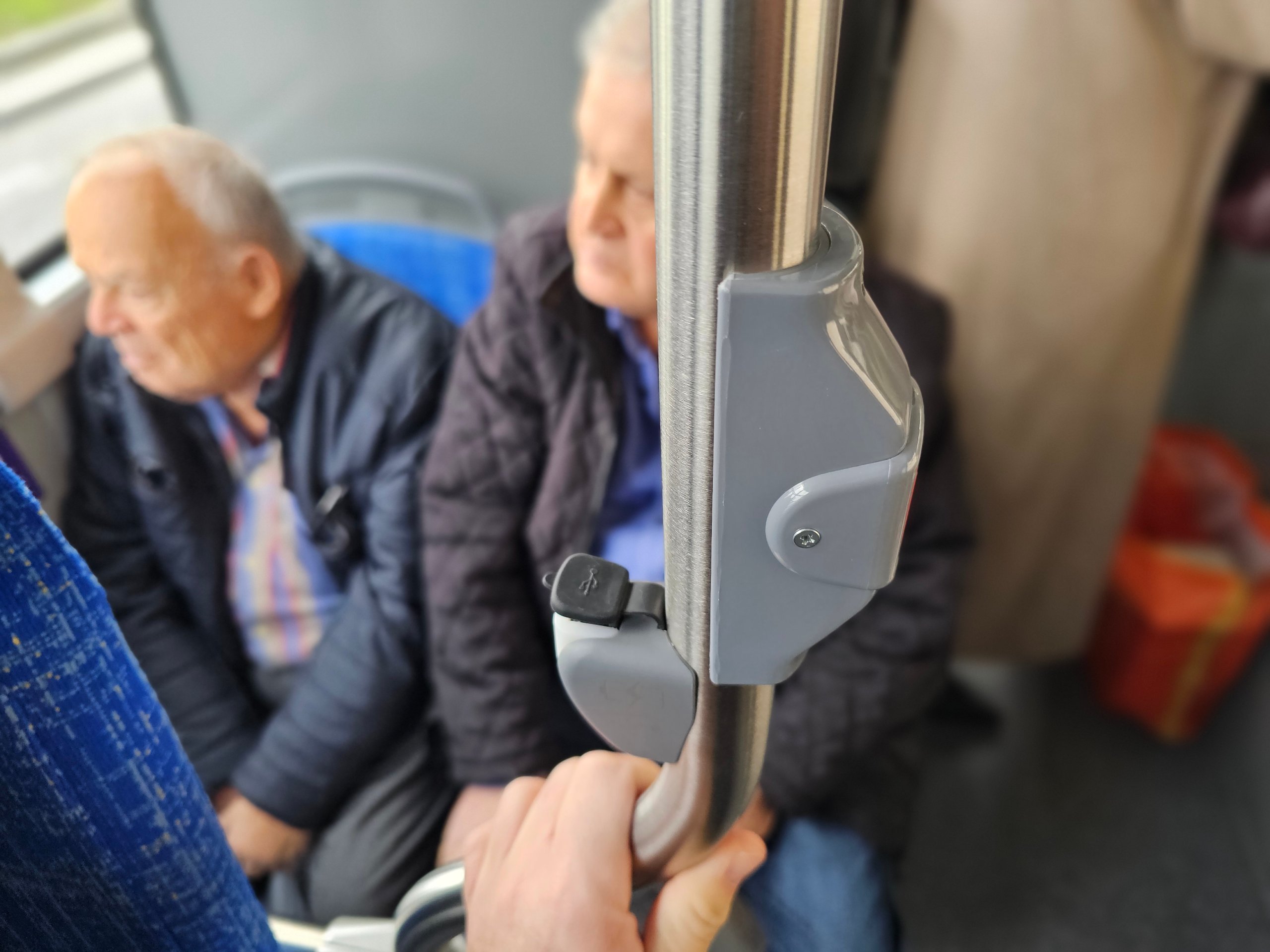
The buses are modern, clean and often have USB chargers on board.
You must always press the ‘stop’ button before getting off.
It depends on whether you’re travelling on a regular bus route or a Metrobus.
You must always board via the front doors only.
There is a ticket validator next to the driver; simply tap your Istanbulkart or your own contactless card against it.
You do not need to ‘tap’ your card when getting off.
Fare:
To get to the stop, you walk through the turnstiles, just like on the trams.
However, unlike on trams or the metro, you must tap your card on the turnstile both when boarding and alighting.
This is because the fare is calculated based on the specific distance travelled:
Official website:iett.istanbul.
I’ve tried taxis in Istanbul on several occasions and, as far as I’m concerned, there’s a simple rule: yes, but be choosy.
Taxis are fine for short night-time journeys, in the rain or when travelling with luggage. For everyday daytime journeys across the city, however, I often found them slower than rail transport.
The biggest problem isn’t so much the fares, but the traffic jams and, occasionally, the reluctance to switch on the meter.
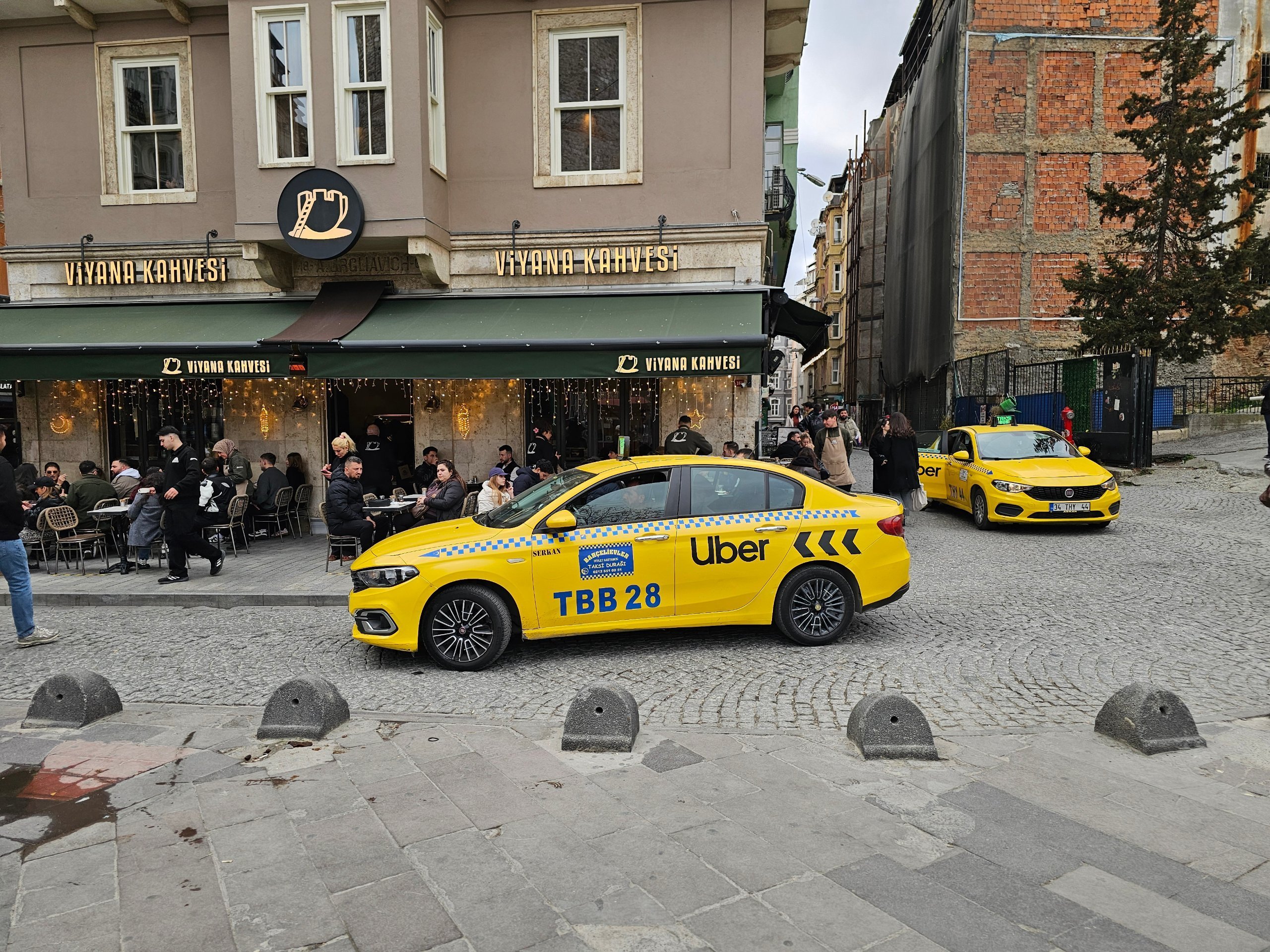
Yes, but you need to be careful. I would always make sure the driver has actually turned on the meter, and I’d keep the sat-nav on my mobile running during the journey.
This is exactly what worked best for me in preventing unnecessary detours or arguments over the fare.
You’ll mainly see yellow taxis on the streets. Alongside them, there are also more expensive options – turquoise and black. For the average tourist, there’s not much point in choosing them.
Fares for official taxis change frequently and are quite high by Turkish standards.
For example, converted into euros, a journey from Taksim to IST Airport will cost around 60 eur.
Yes, usually, but some taxi drivers only accept cash. The BiTaksi or Uber mobile apps are a sure way to pay by card.
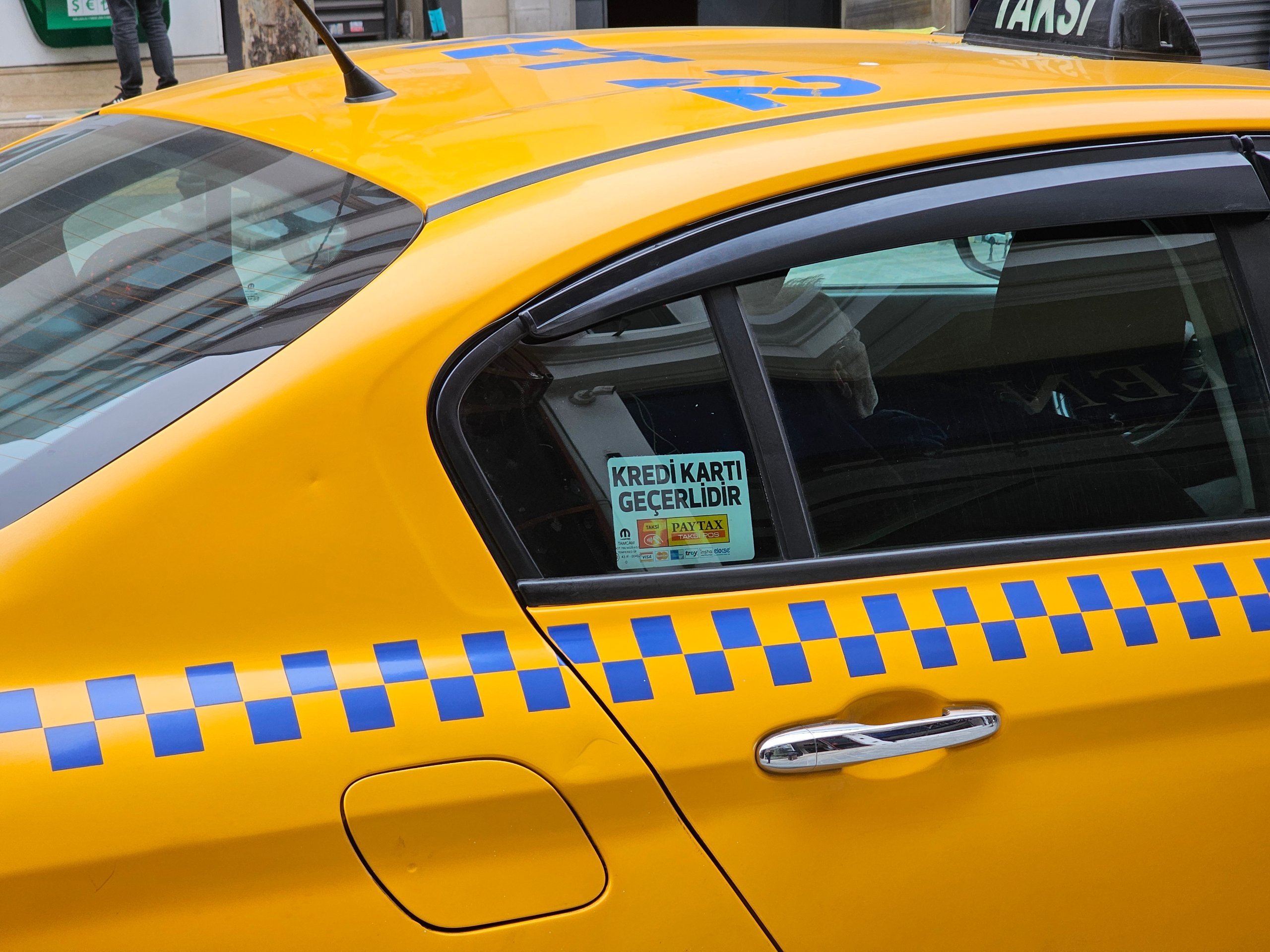
For me, BiTaksi makes more sense than hailing a taxi on the street. The reason isn’t just card payments, but mainly a clearer overview of the route and less scope for unnecessary haggling.
You can download BiTaksi from Google Play or the App Store.
Uber acts more as an intermediary, and often a standard yellow taxi turns up anyway.
You need a mobile data connection to use ride-sharing apps.
Get a Turkish eSIM at airalo.com
Yes, but not everywhere, and it’s not always easy.
In my experience, this is a common misconception. On the map, some journeys look short, but in reality you’ll encounter hills, uneven pavements, steps and, in places, rather tricky terrain.
That’s precisely why I wouldn’t consider Istanbul a city that can be explored entirely on foot.
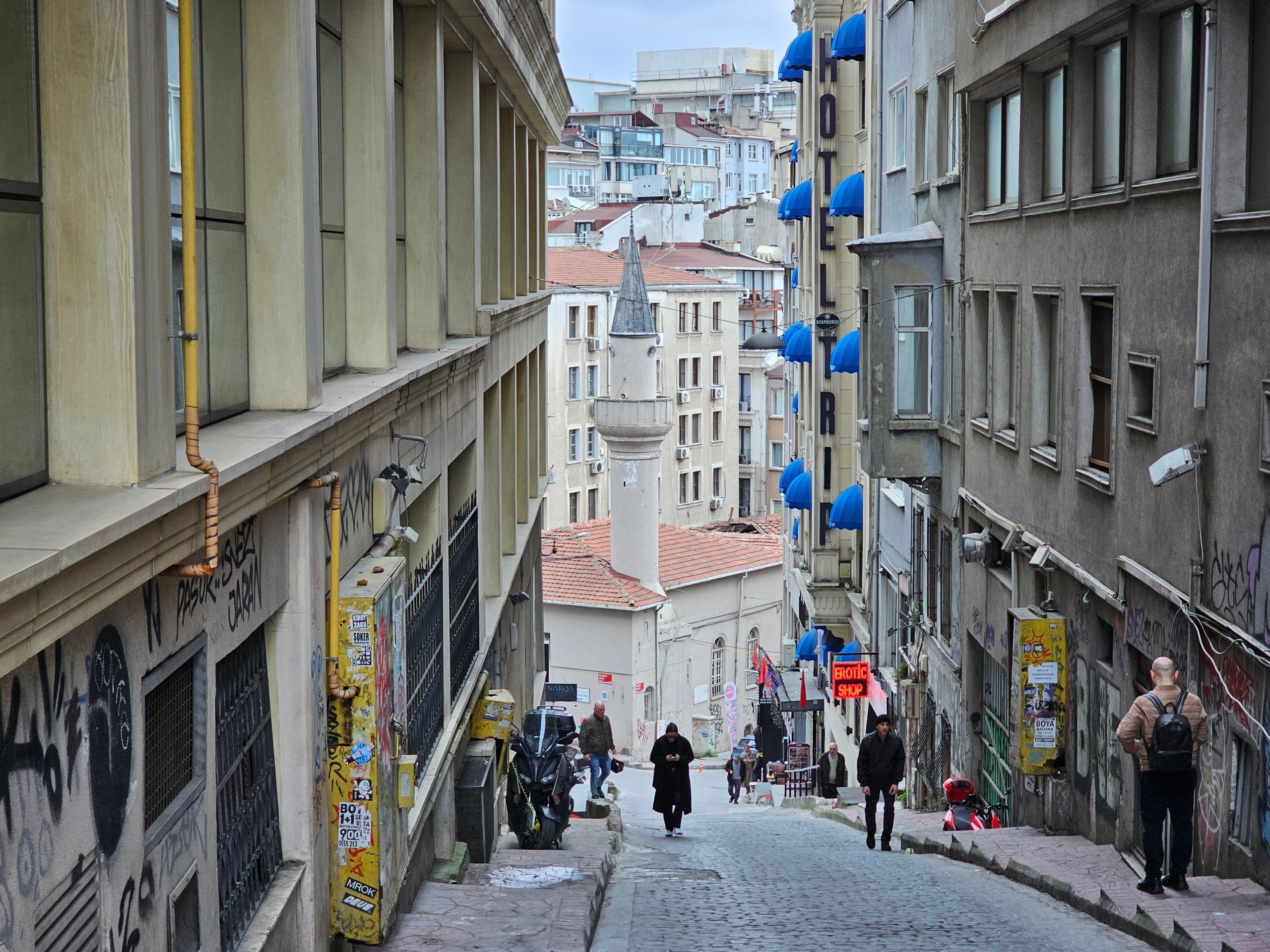
If I were to summarise my own experience in a few points, my ‘transport system’ would look like this:
This is exactly the combination that I found most practical and which, in my opinion, works well for most visitors who are in Istanbul for the first time.
Check out my tips for hotels in Istanbul too.
1️⃣ Relying solely on taxis
It looks convenient on the map, but in reality you might end up stuck in a traffic jam for longer than it takes to travel on the metro.
2️⃣ Underestimating the hills and distances
It often doesn’t look far, but the journey can be much more challenging than you expect.
3️⃣ Not getting an Istanbulkart on your first day
Without it, transport is unnecessarily more expensive if you’re in Istanbul for at least two full days
4️⃣ Not using the ferries
Yet ferries are actually one of the easiest and most pleasant ways to get around the city.
5️⃣ Don’t make the bus your first choice
For many tourist routes, there’s a simpler alternative.
If you have any questions or comments about the article...

Perhaps I missed it, but there was no mention of the Metrobuses – they have a dedicated lane on the roads and run as frequently as every 2 minutes. We travelled from the European side to the city centre and it was quite quick. I think it was route 34. It goes all the way to Asia across the bridge.
Thanks, I’ll amend the text.