Istanbul has an extensive metro system, but compared to other cities, tourists don't use it that much.
I personally have only used the metro when going from IST airport, then to SAW airport and only once when crossing the city. And that was just to see how the metro works, not because I actually needed it.
Choose a hotel in Istanbul by location
How much does the metro cost in Istanbul
The metro in Istanbul is charged per 1 ride. If you transfer between lines, you almost always have to pay again.
Discounted transfer fares have been abolished.
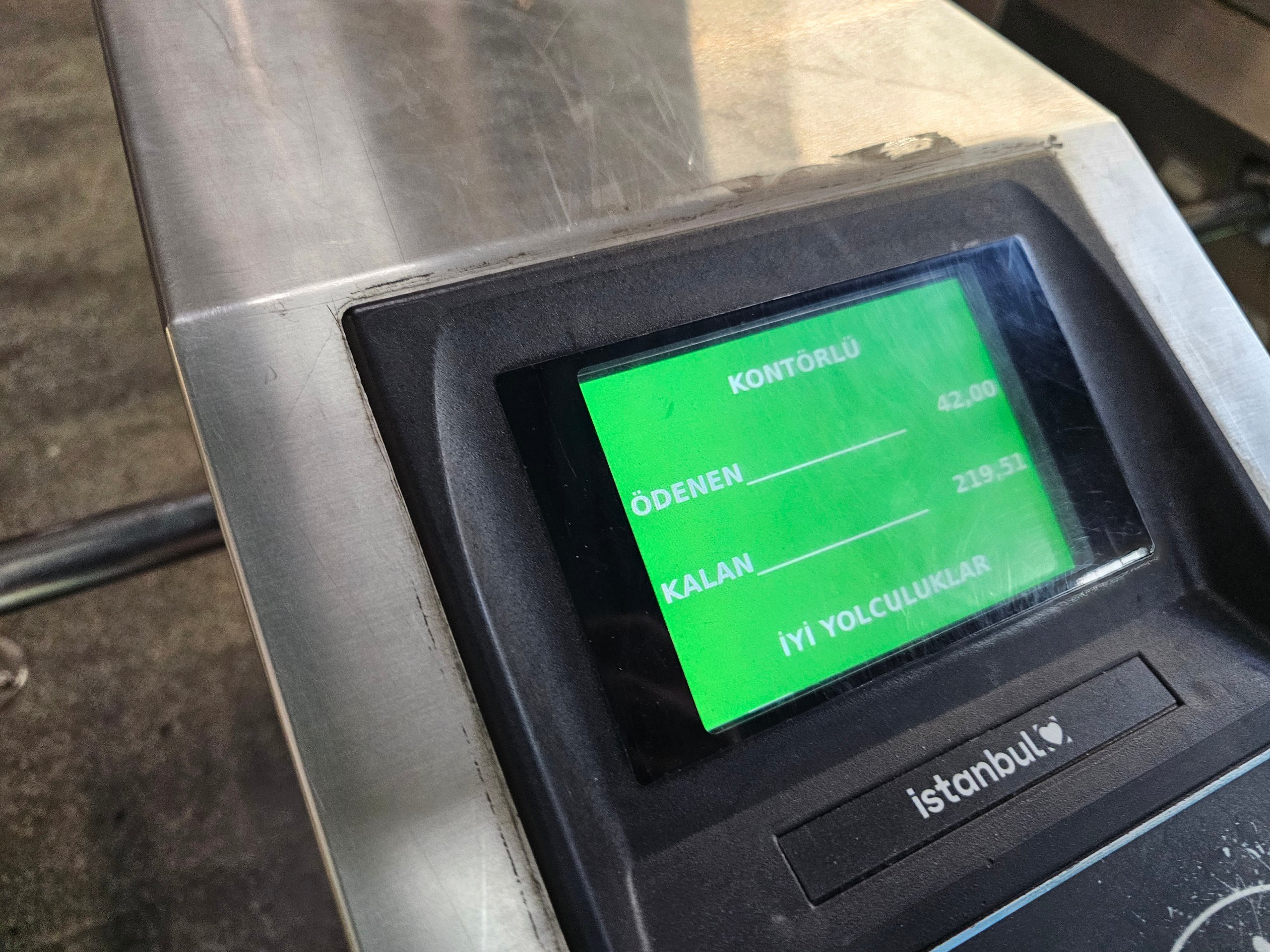
- 42 try - Payment with IstanbulKart
- 👉 What is an Istanbulkart, how much does it cost and is it worth it? Read our article Transport in Istanbul
- 60 try - paying with your own bank contactless card
- ❗ On the M11 line towards IST Airport you cannot pay with a bank card, only with an Istanbulkart
💬 Exact prices change frequently. If you have current prices, please let us know in the comments below this article. You're helping us keep the site up to date, thanks!
Balance on the Istanbulkart How do you pay for the metro?
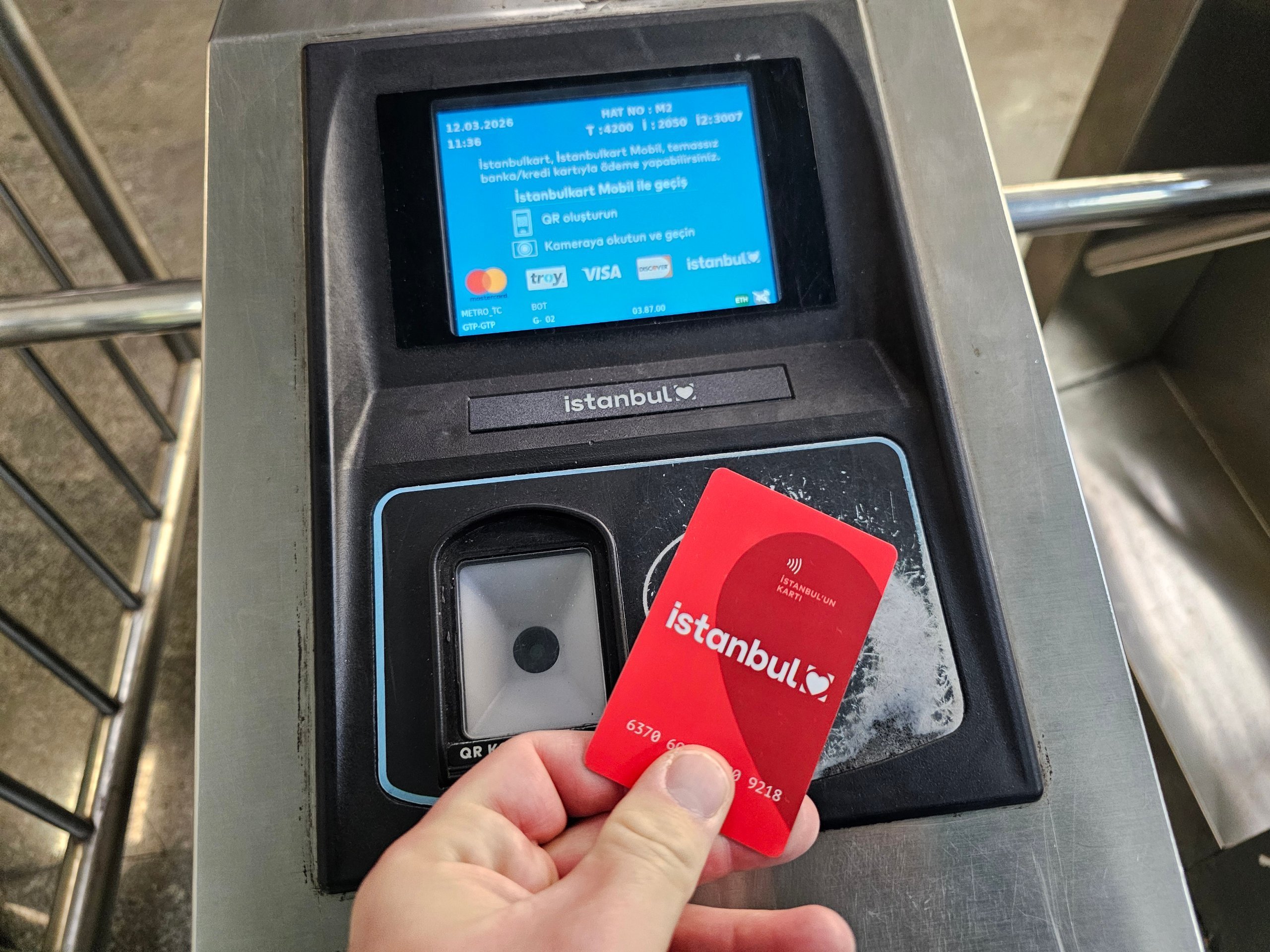
Always for each ride, either with your own contactless card that you attach to the reader at the turnstile (only when you enter the station) or the cheaper IstanbulKart in the same way.
However, it costs 165 try to get an IstanbulKart, so it pays off after about 9 metro/tram/bus rides, or even earlier if you also travel by ferry.
Day and multi-day tickets are also available, but they are so expensive that they are not worth it for almost anyone.
I describe in detail how to use the IstanbulKart and your own bank card in the chapter Transport in Istanbul.
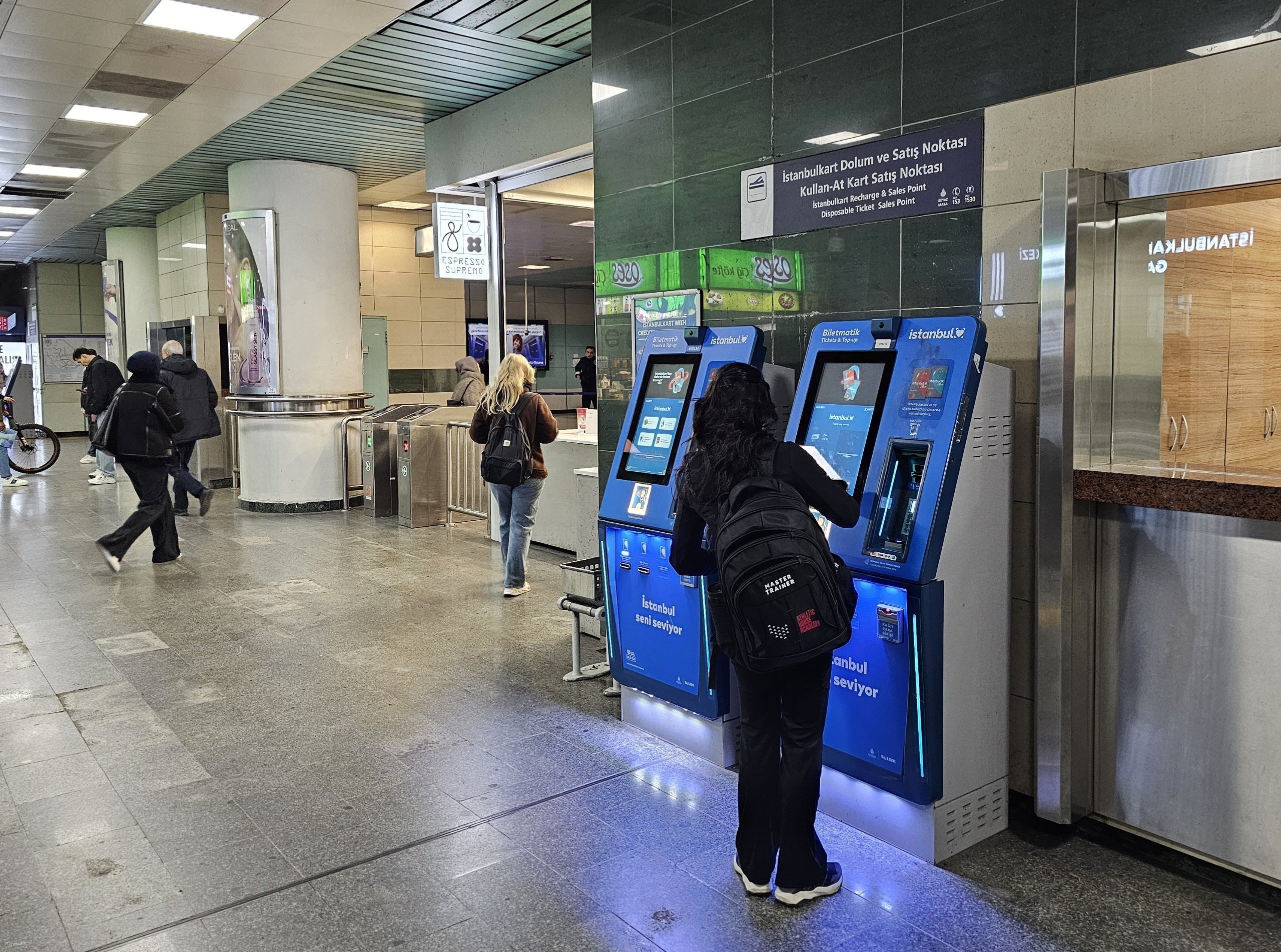
Istanbulkart ticket machines How do transfers work?
Previously, there was a system of discounted fares for transfers.
You paid full price for the 1st ride, less for the 2nd ride and even less for the 3rd ride.
Although you will still see this information on paper leaflets in stations, from about 2023 there is no discounted transfer fare.
You will always pay the full fare of 42 lira for each ride (or 60 lira if you pay with your own card).
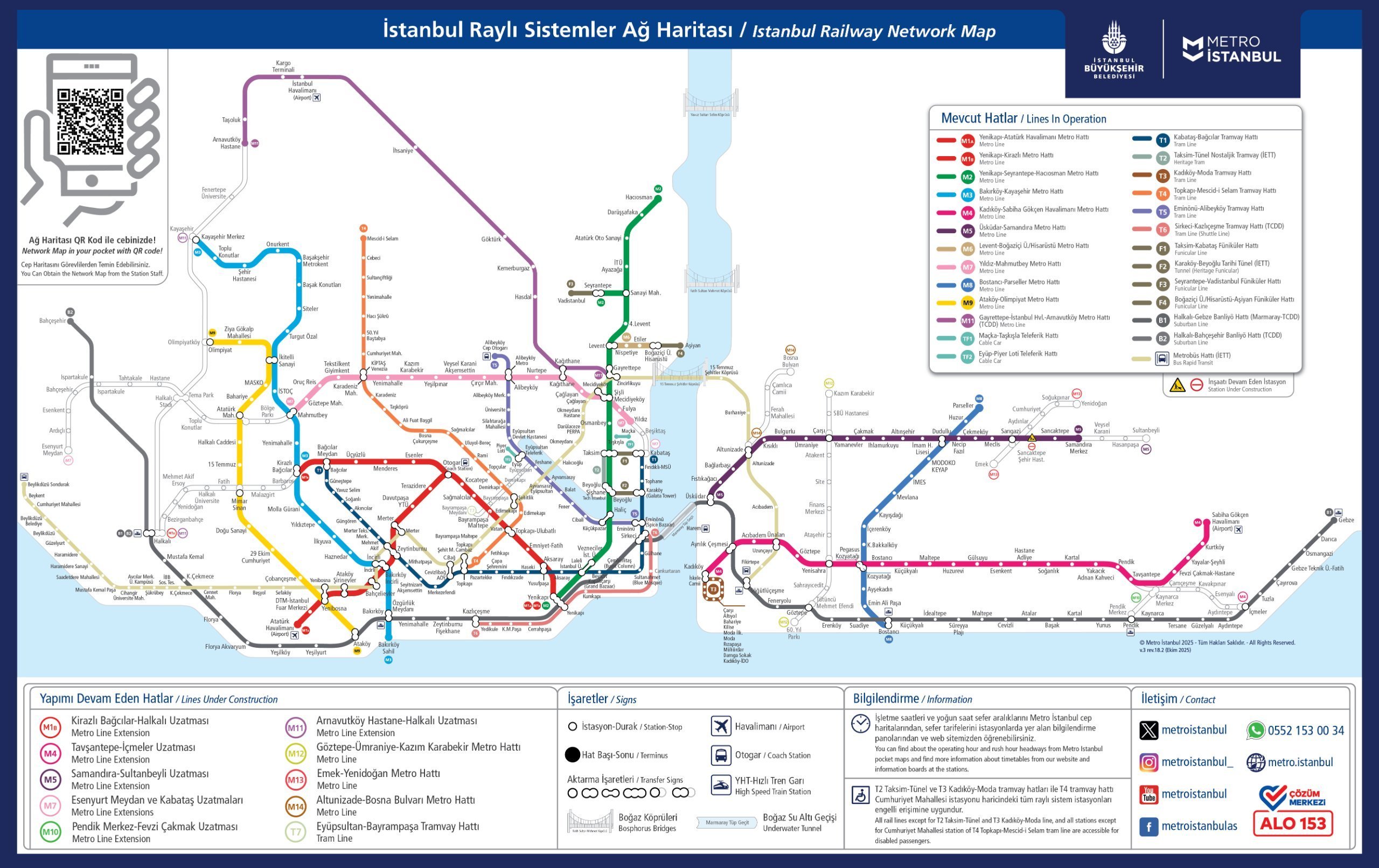
Istanbul metro map
The individual lines are not very interconnected and function more like a shuttle from the suburbs to the centre.
The official Istanbul metro map also shows the tram and Marmaray train lines, which is the only rail transport under the Bosphorus Strait.
Istanbul metro lines
There are currently ten metro lines in Istanbul, covering both the European and Asian parts of the city. You can download a map of metro lines at metro.istanbul.
- M1 - runs from Yenikapi + Aksaray (western edge of the historic centre) to the main long-distance bus station Otogar
- also runs to the former main Atatürk airport, which no longer serves passengers
- M2 - main tourist line. It connects Yenikapi (western edge of the historic centre) with the historic centre of Beyoglu (past Galata Tower) and Taksim Square, then continues north, where at Gayrettepe station you change to the M11 line towards IST Airport
- M3 - the line only connects the western suburbs and does not go to the centre at all
- M4 - connects SAW airport with Kadiköy harbour
- M5 - connects the eastern suburbs with Üsküdar
- M6 - a short line connecting to the M1 in the direction of the university and the F4 cable car, which goes to the Bosphorus and Rumeli Fortress
- M7 - connects to the M1 line at Gayrettepe station and goes to the western suburbs. In the future it will run via Besiktas to the Bosphorus port of Kabatas
- M8 - connects only the suburbs on the Asian side and does not go to the centre at all
- M9 - only connects the western suburbs and does not go to the centre at all
- M11 - runs from IST airport to Gayrettepe station where you change to the M1 towards the centre and in the future to the M7 towards Bosphorus (Kabatas)
Book a hotel in central Istanbul
Realistically, I only used the lines the whole time:
- M8 and M11 to get to both airports.
- M2 as a connection from IST airport to the centre of Taksim
Otherwise, I moved around the city mainly by T1 tram, on foot, cable car or ferries, about which I write more in the chapter Transport in Istanbul.
How the metro works in Istanbul
The metro is not the primary means of transport for sightseeing, but for longer journeys from the outskirts of cities.
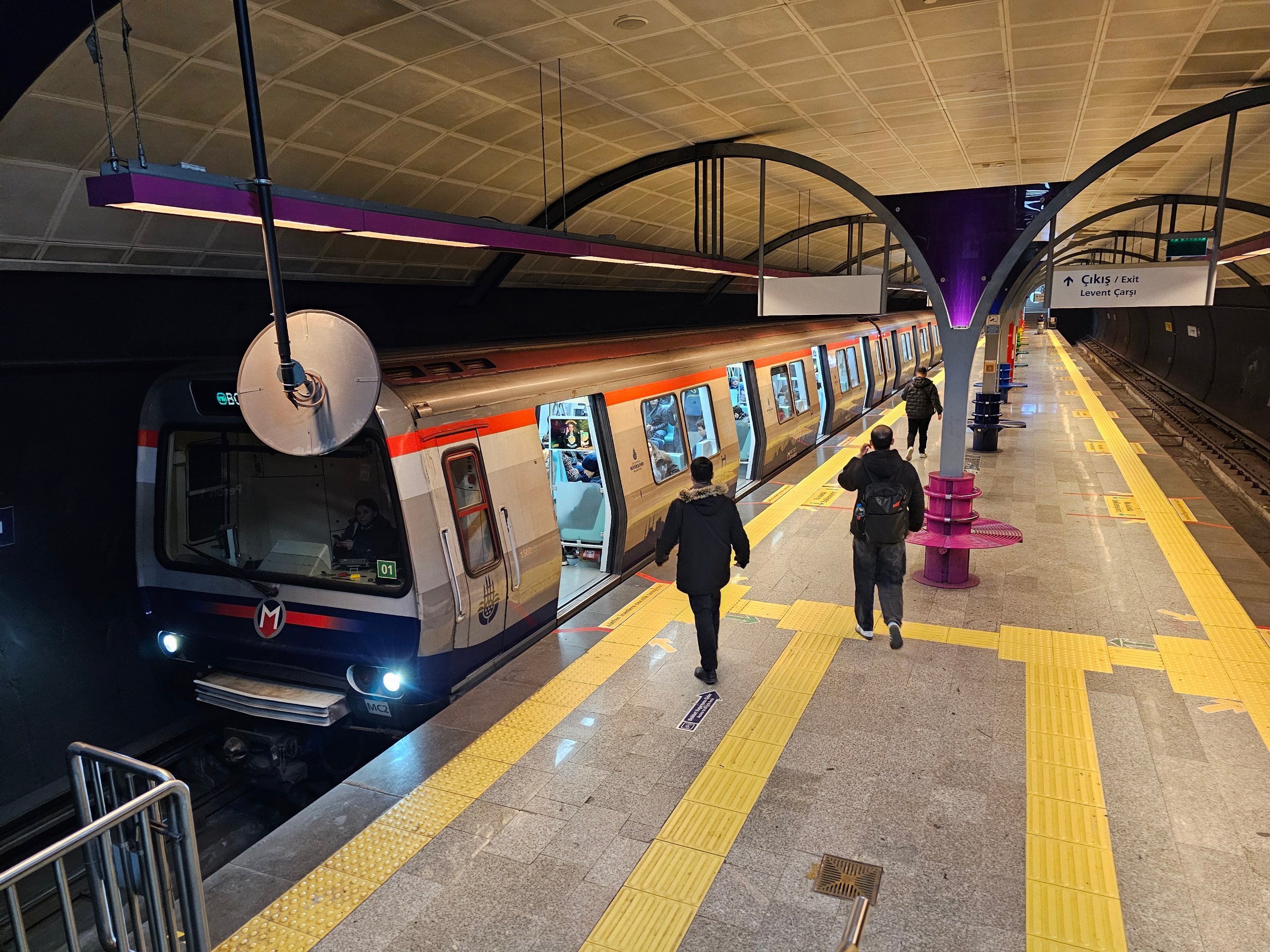
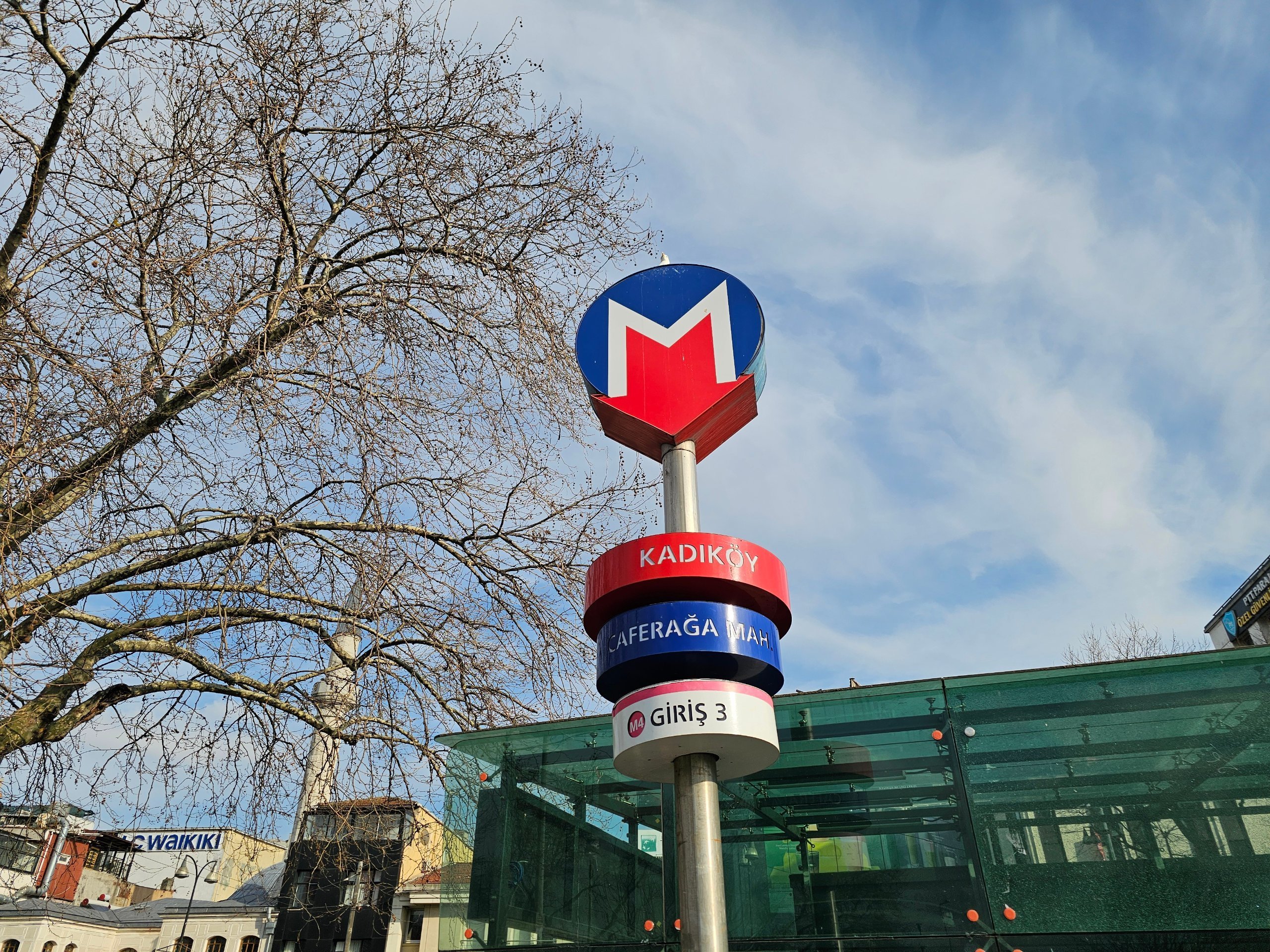
Metro station designation However, it has the standard parameters of developed cities:
- modern, clean, uncluttered.
- works on Istanbulkart or payment with your own contactless card
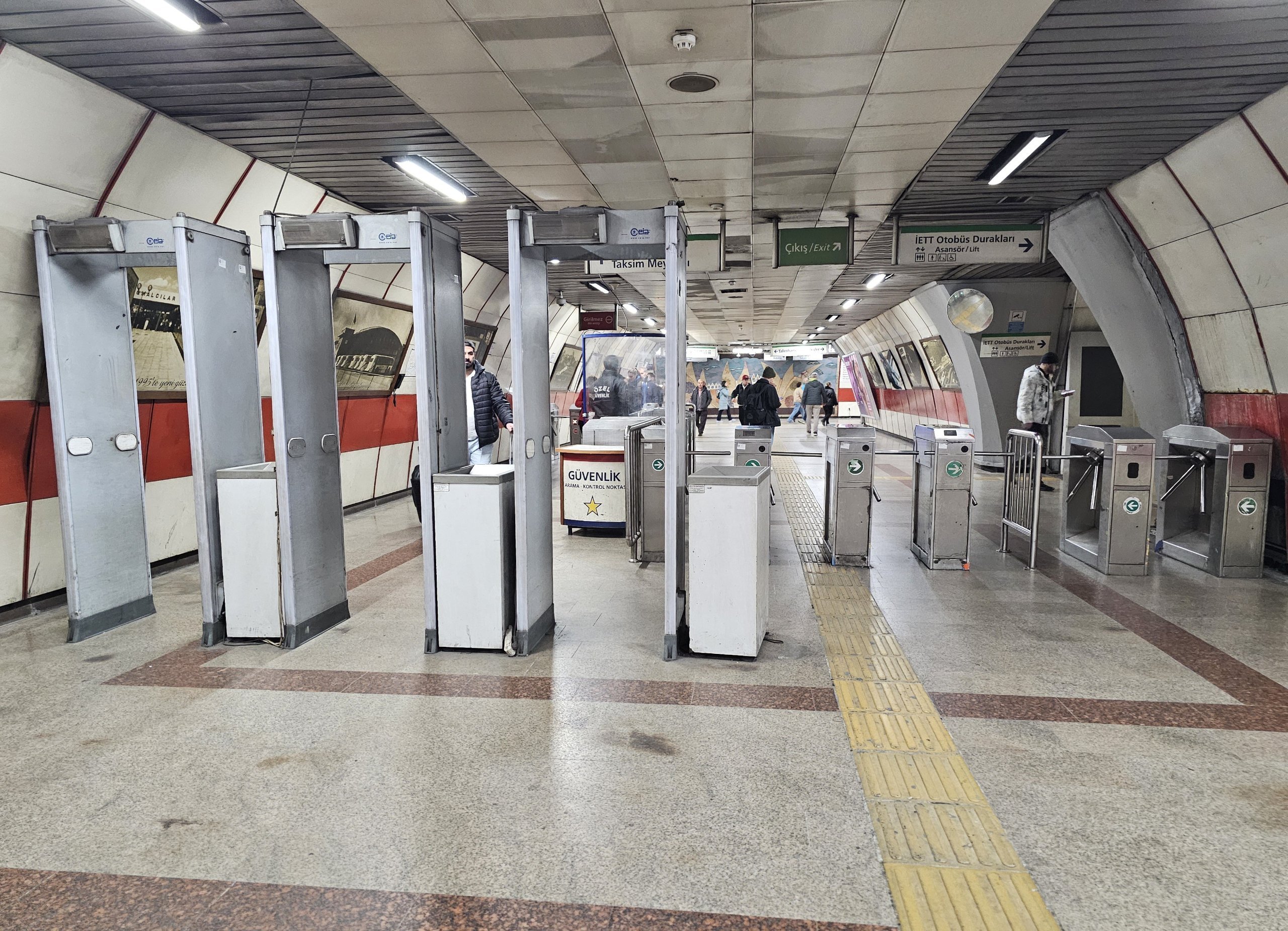
- you always go through a security frame to enter the station, but it's more of a formality. However, if you have bulky luggage, a police officer can search it for you
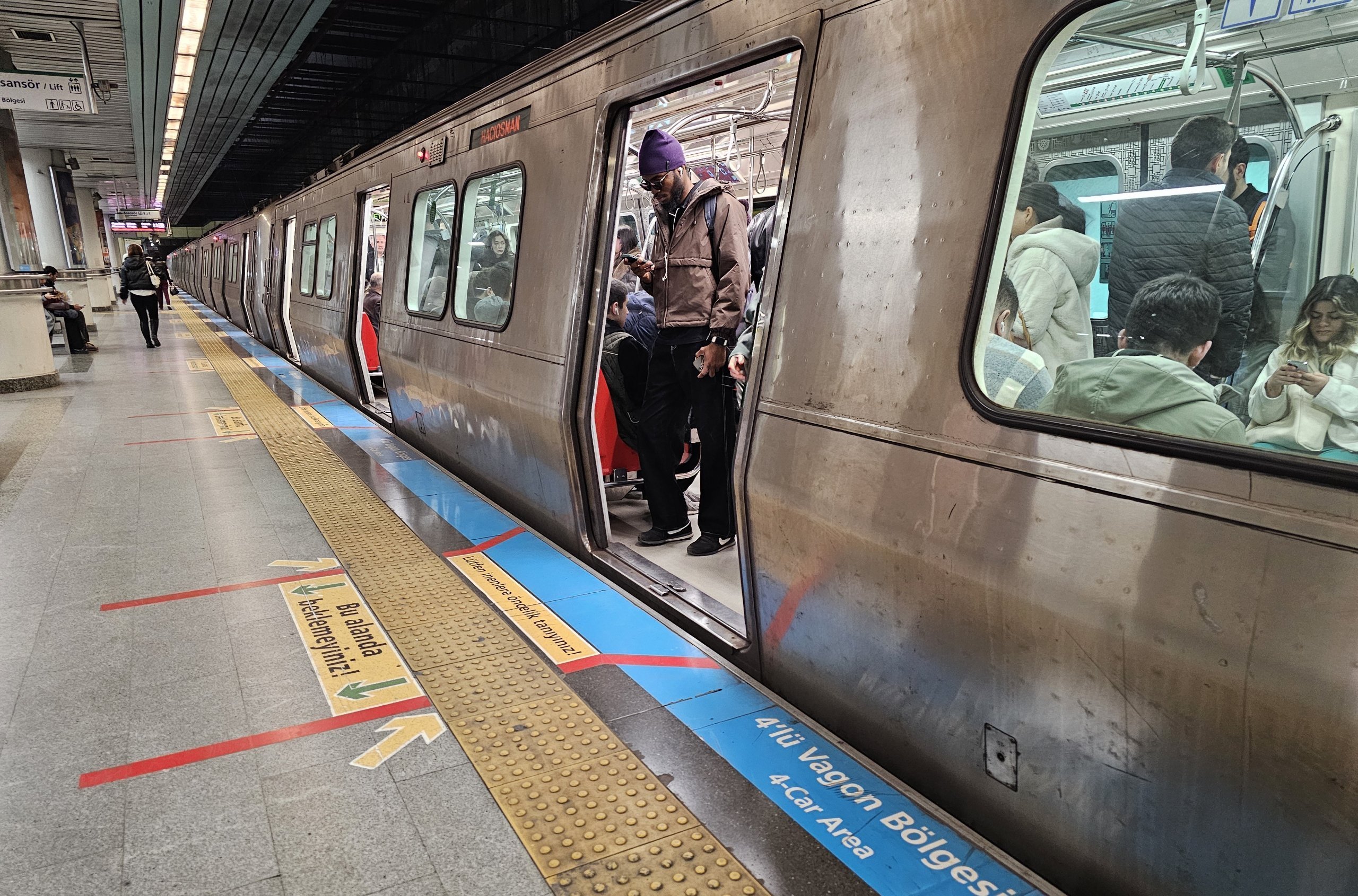
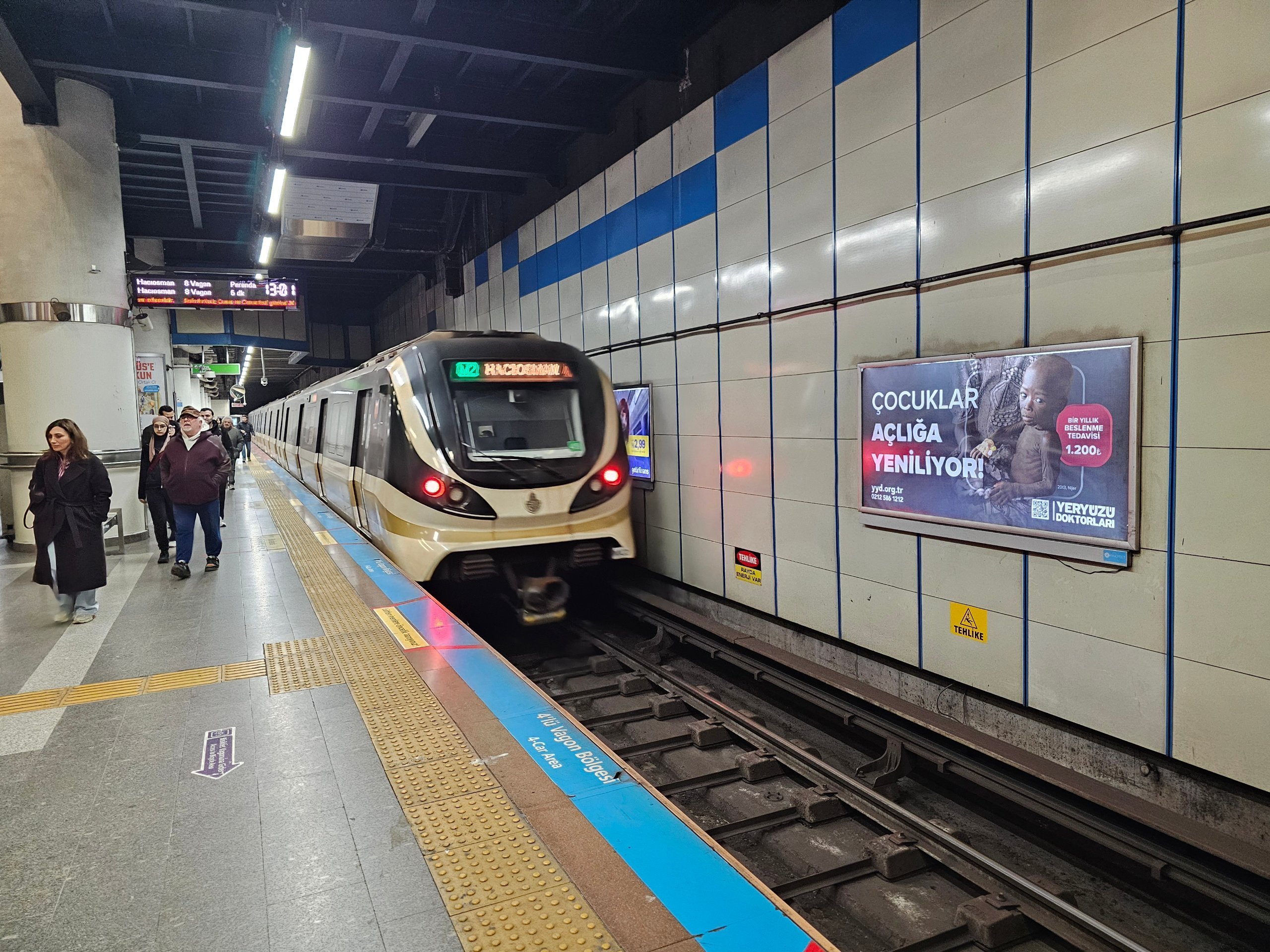
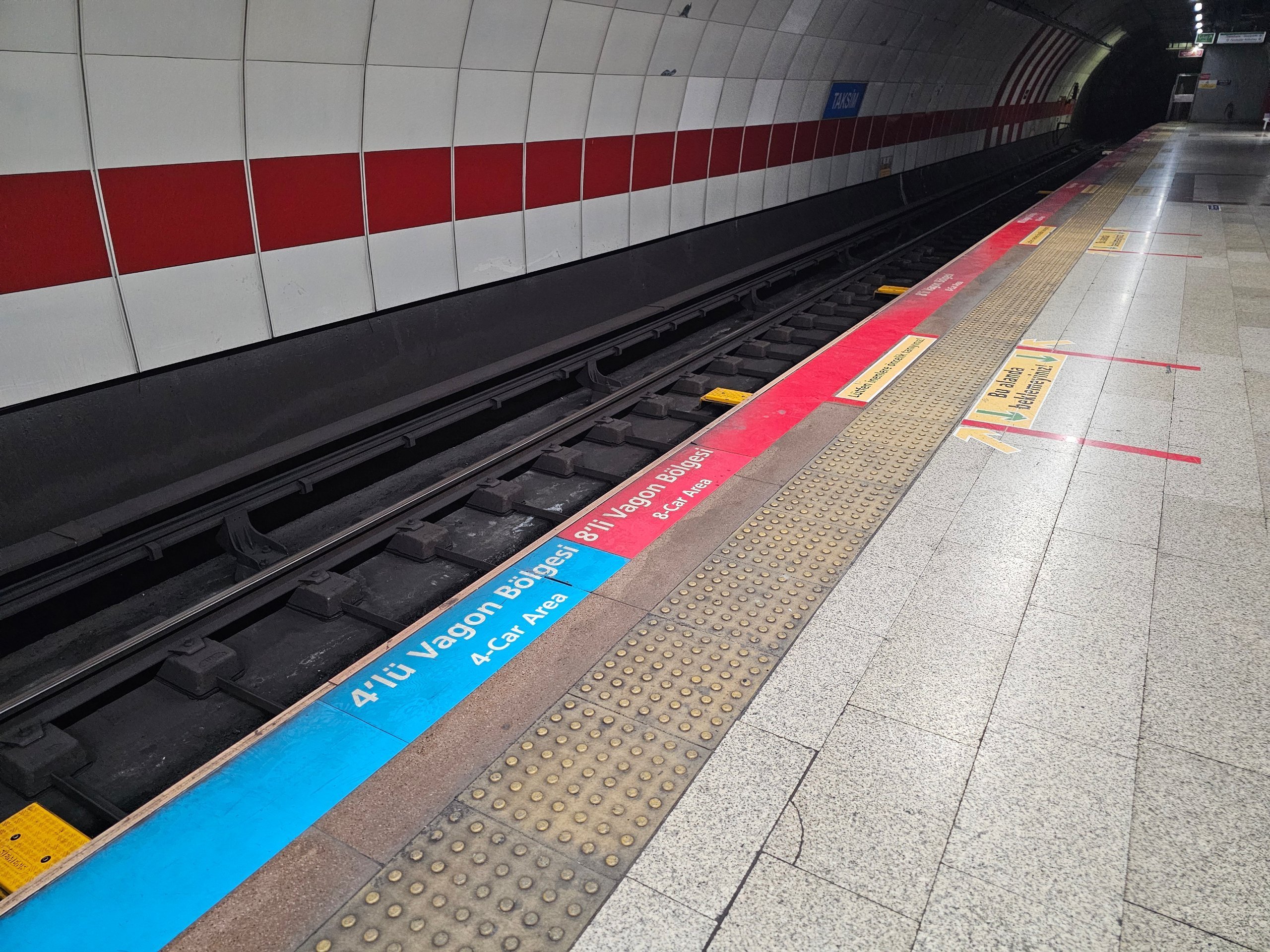
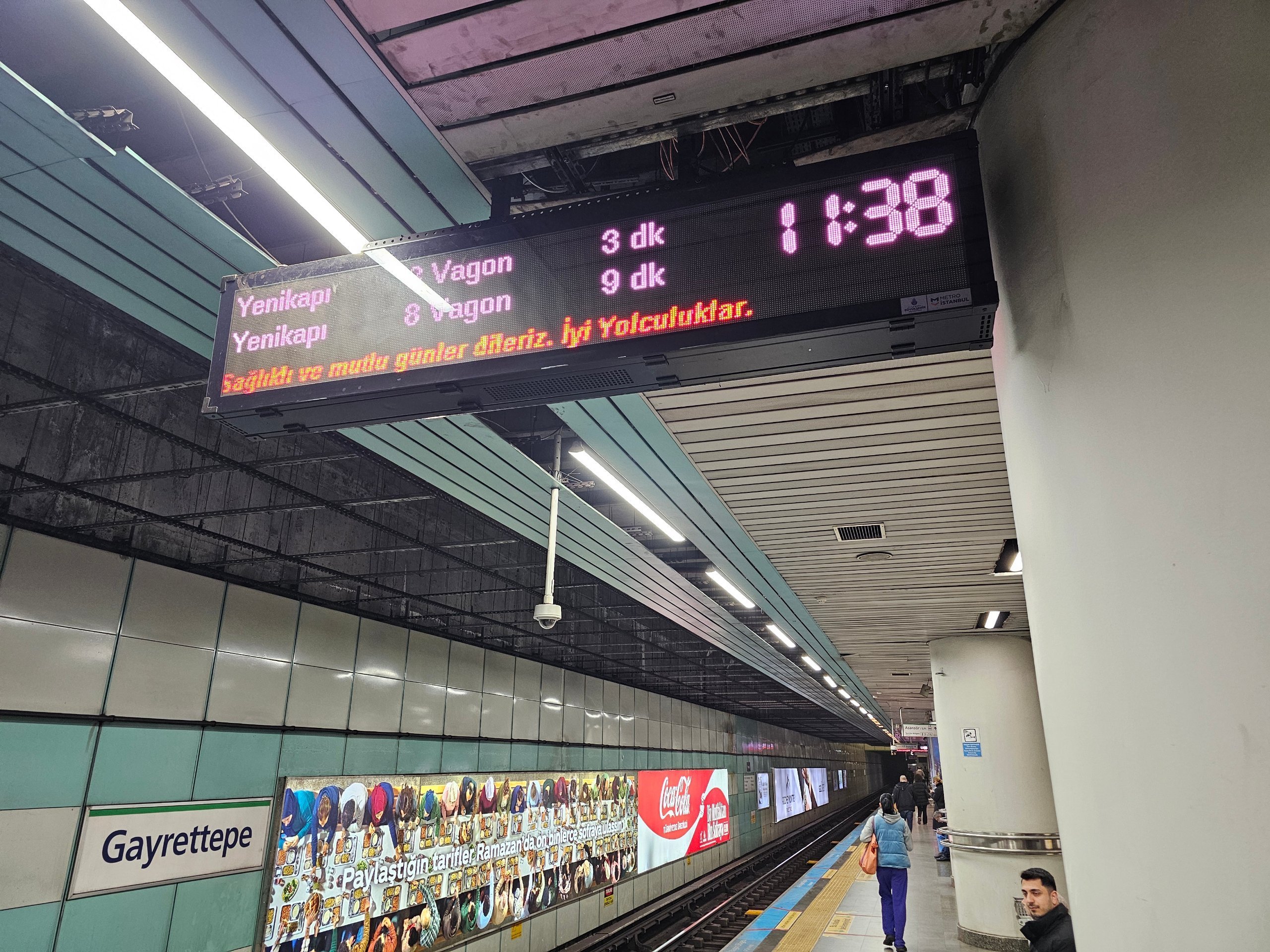
- the information board shows whether a 4-car or 8-car train is arriving
- if it is a 4-car train, it will stop in the middle of the platform (where the blue paint is on the ground)
- if with 8 carriages, it fills the whole platform (i.e. also where the colour red is)
Security frames at the entrance to each metro station The boundary between a 4-car and an 8-car metro set How often does the metro run and operate 24/7?
Main lines like M1 or M2 run with a frequency of 3-7 minutes.
But on some routes, such as the M11 to IST Airport, the frequency is 20 minutes.
The metro in Istanbul does not run 24/7.
The first trains leave the termini before 6:00 am and the last trains usually leave around midnight.
Metro arrival information What do the metro stations look like?
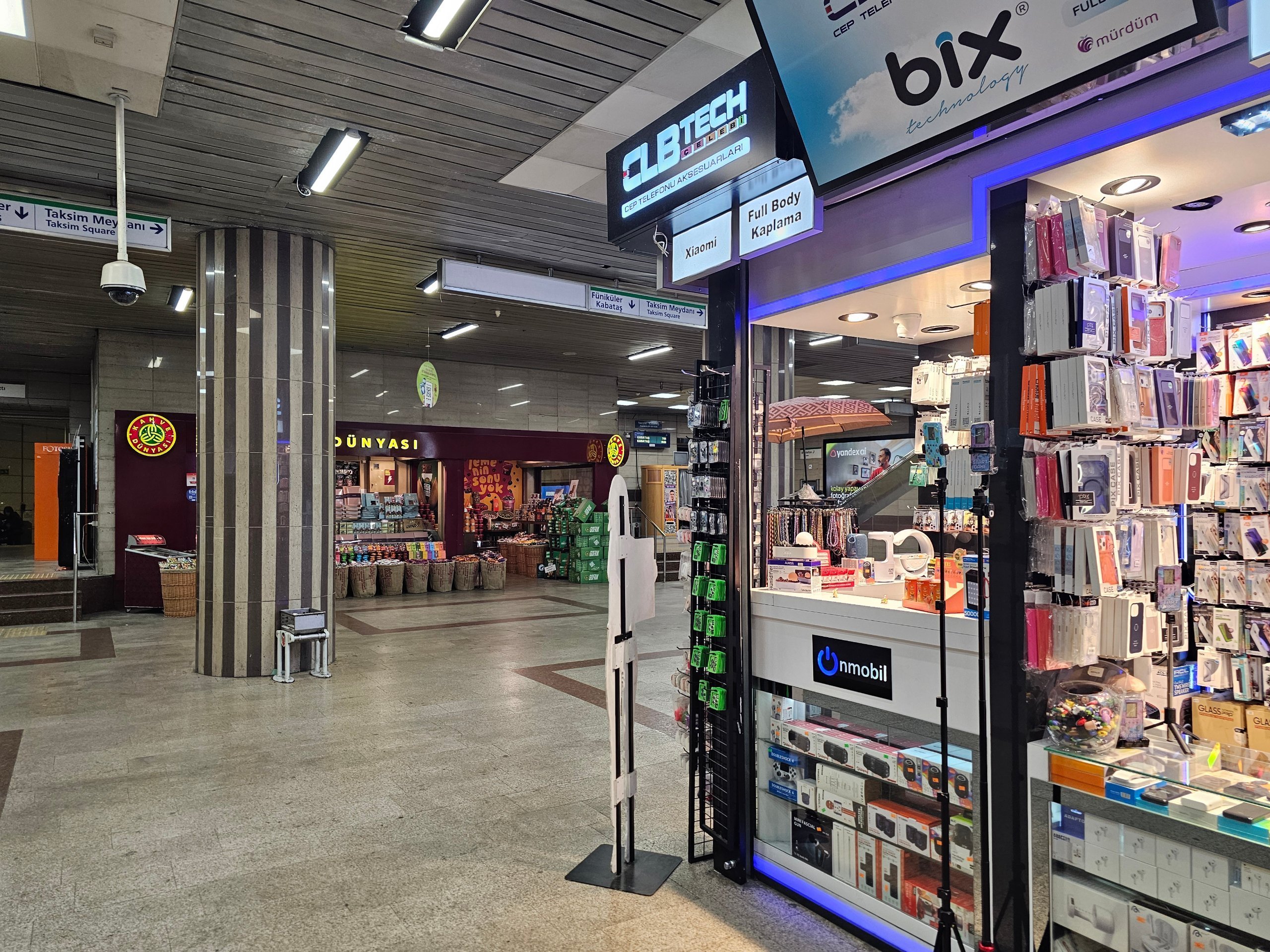
Even if you don't use the metro in Istanbul, metro stations act as very practical hubs around the city. You will usually find:
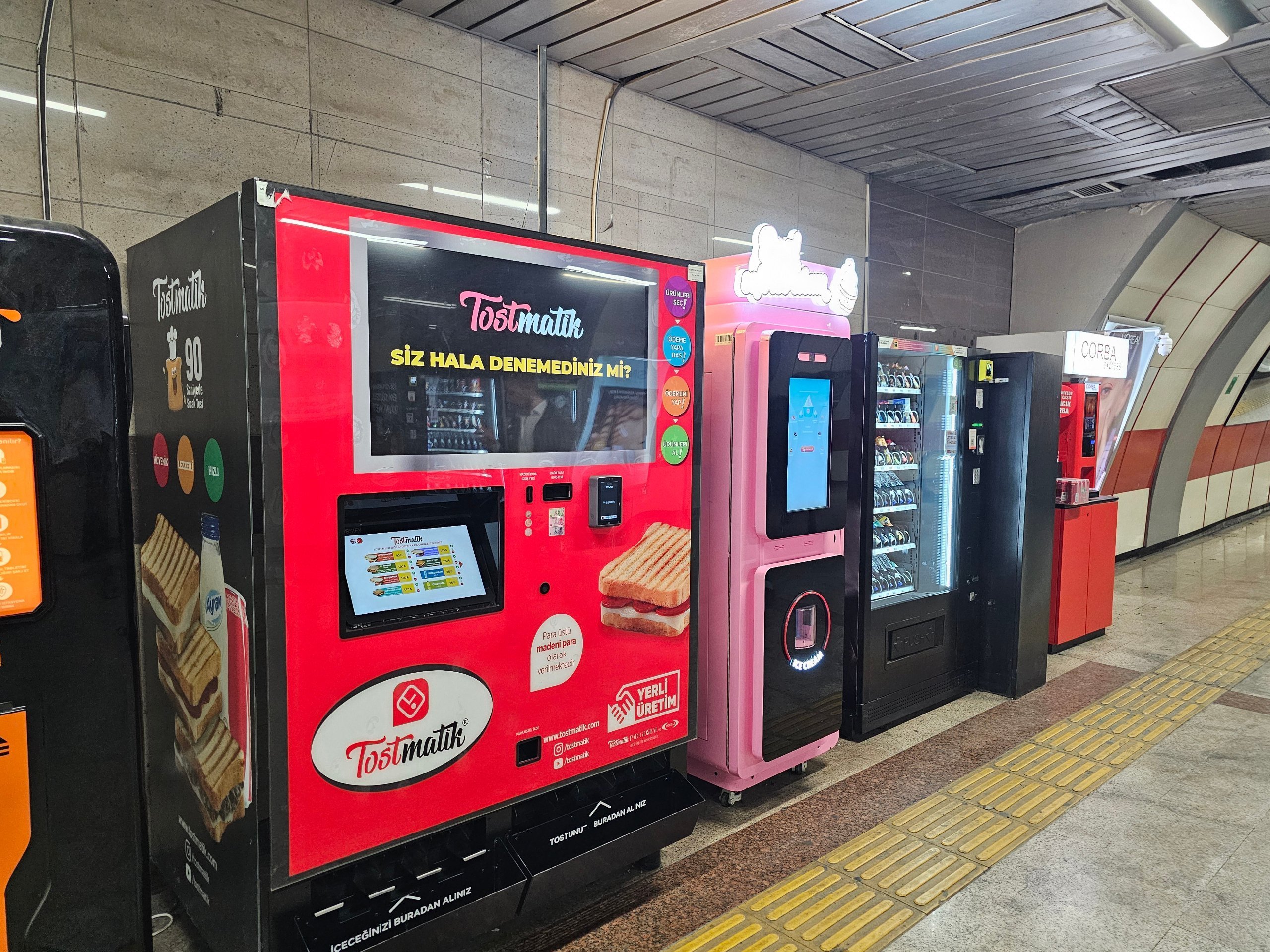
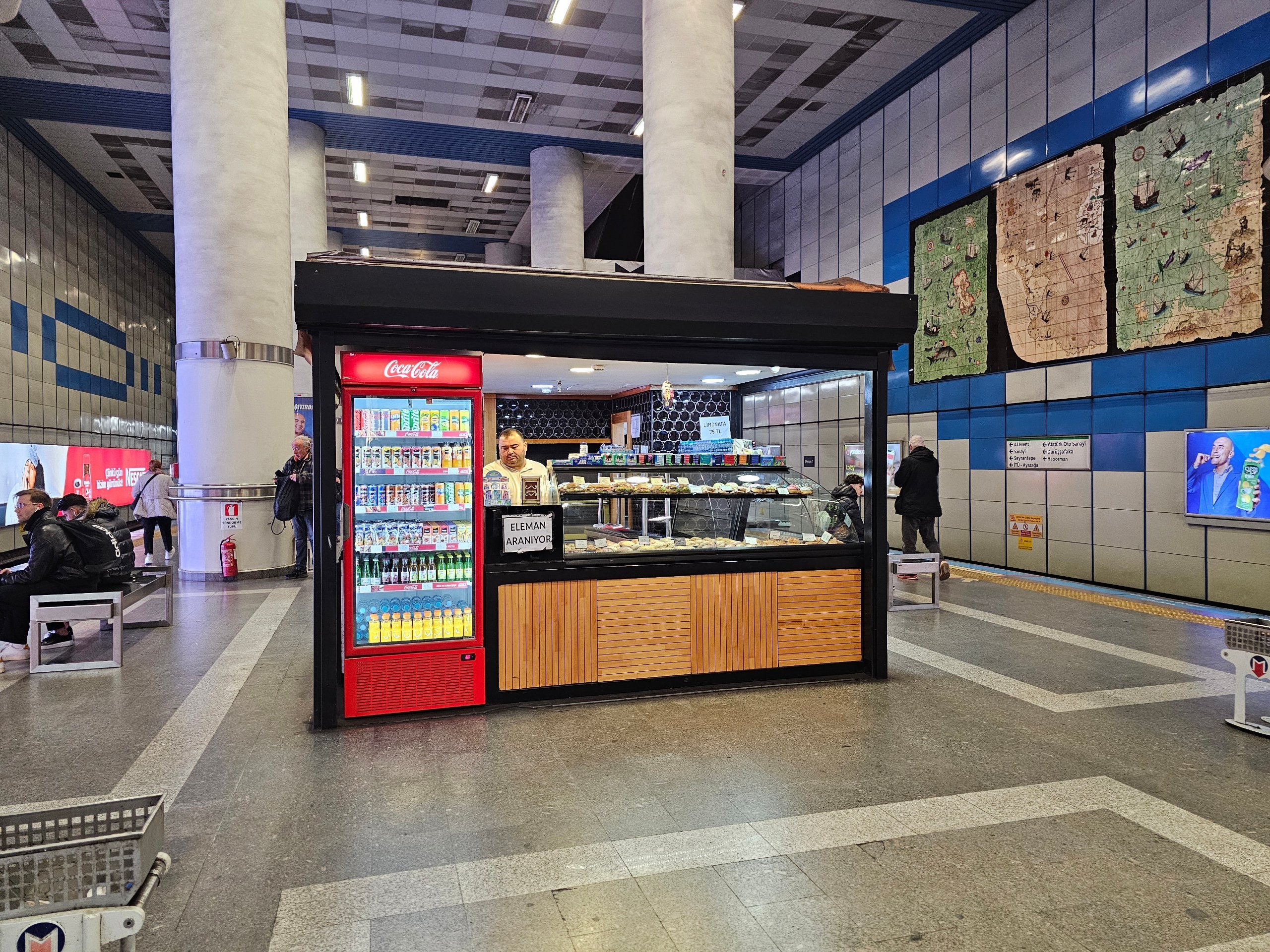
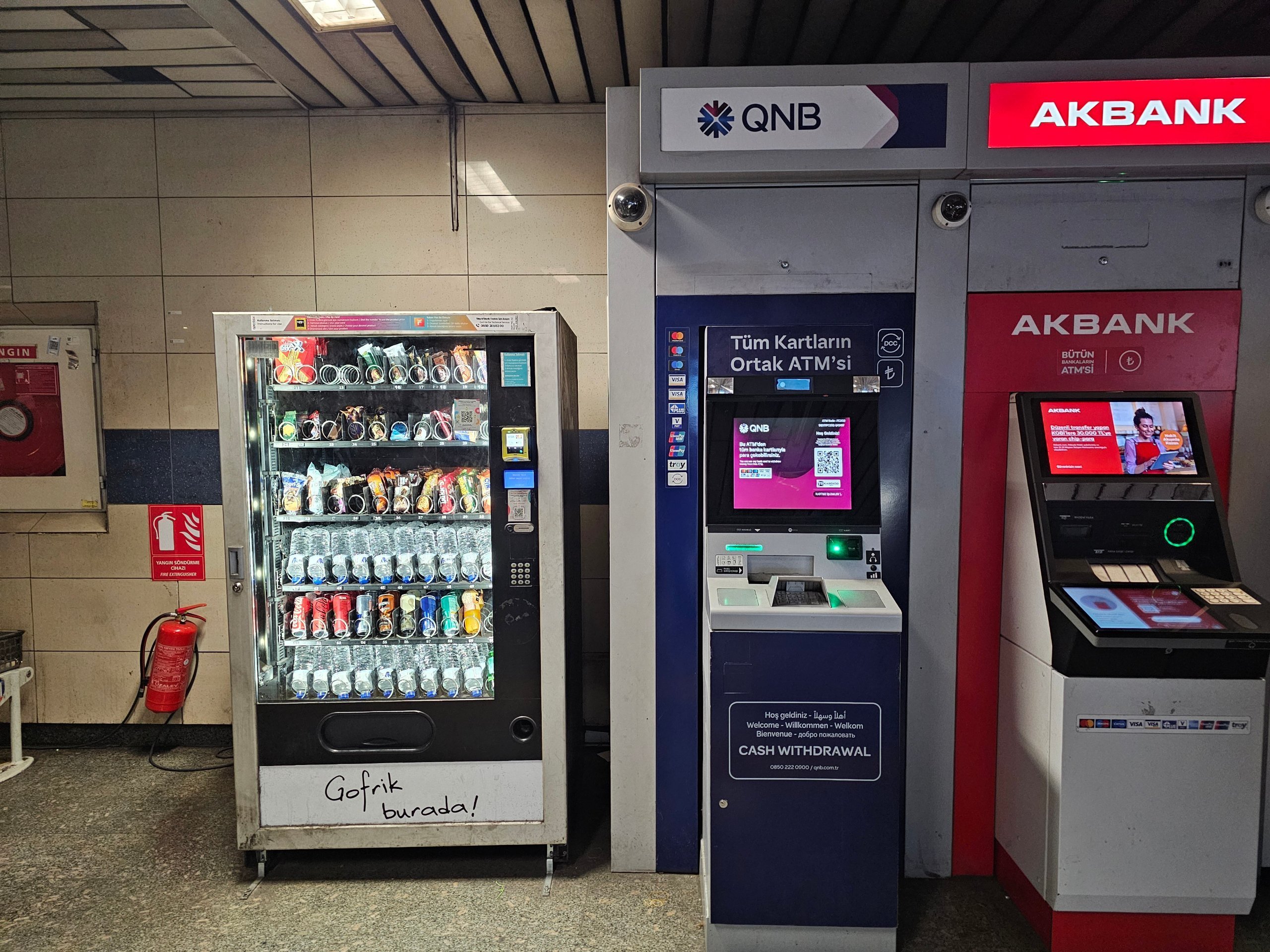
- cafes, snack stands and drink/sweets vending machines - often right on the platform, but also in the "public" area in front of the turnstiles, where you don't need a ticket
- ATMs
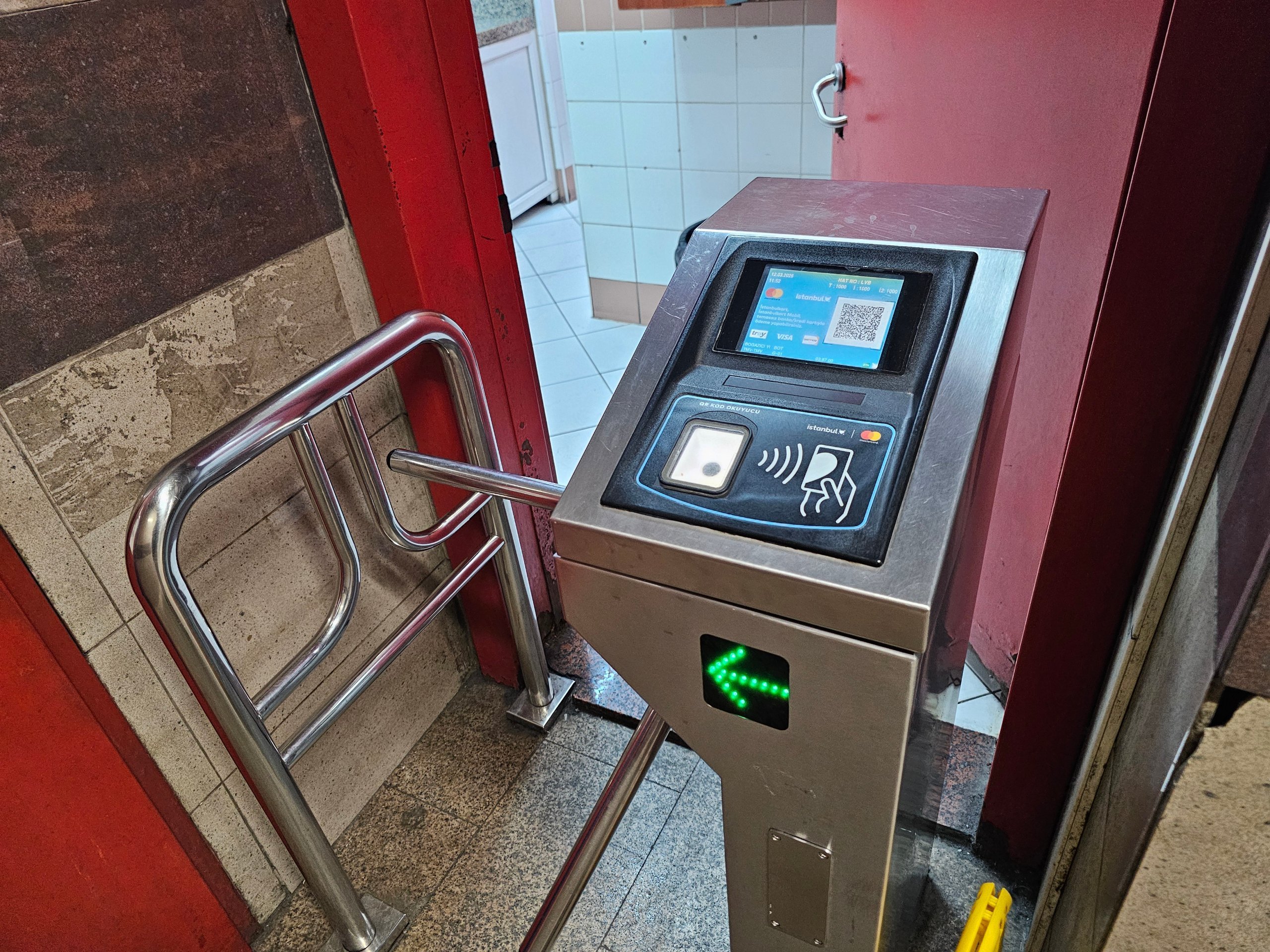
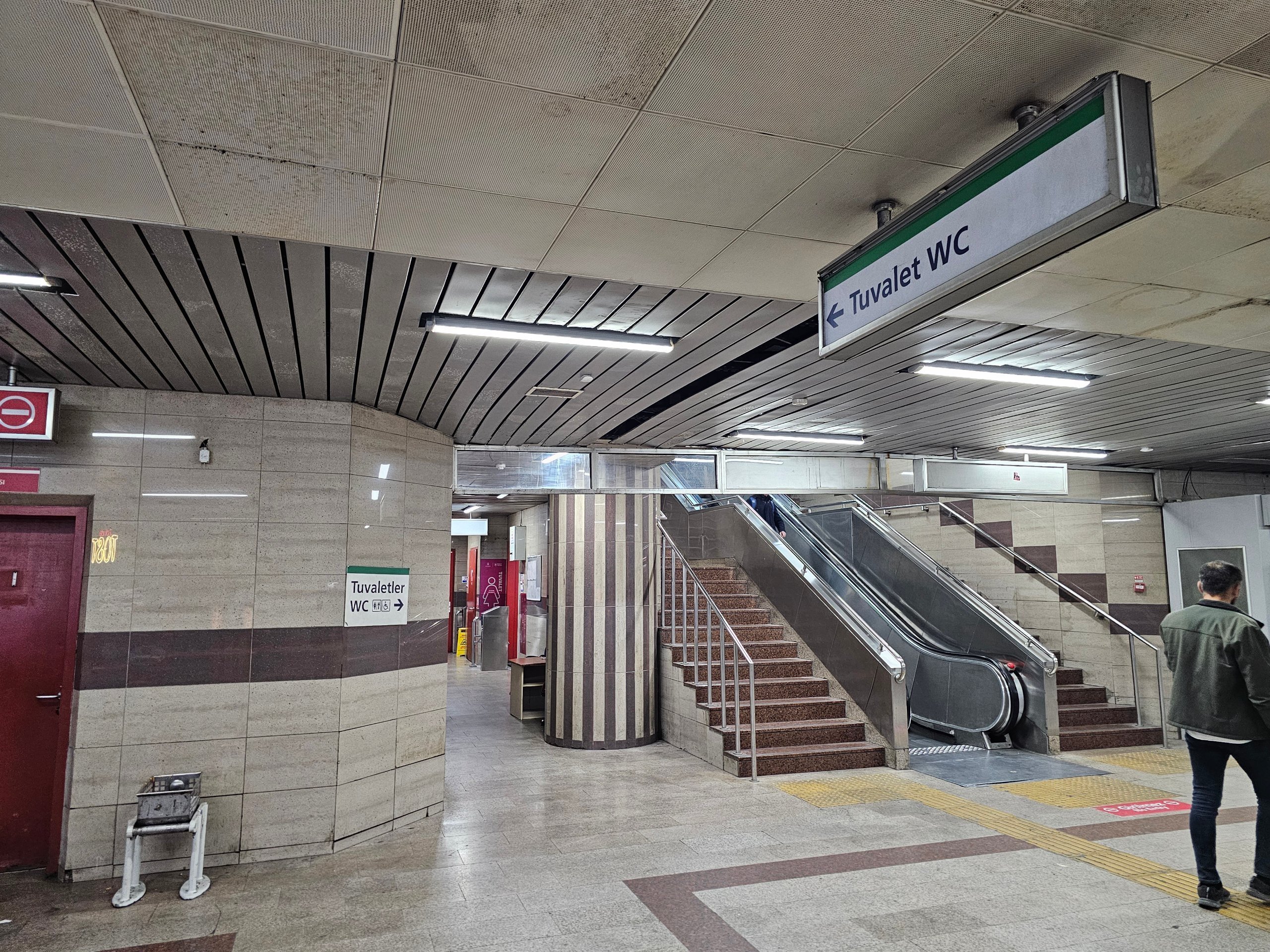
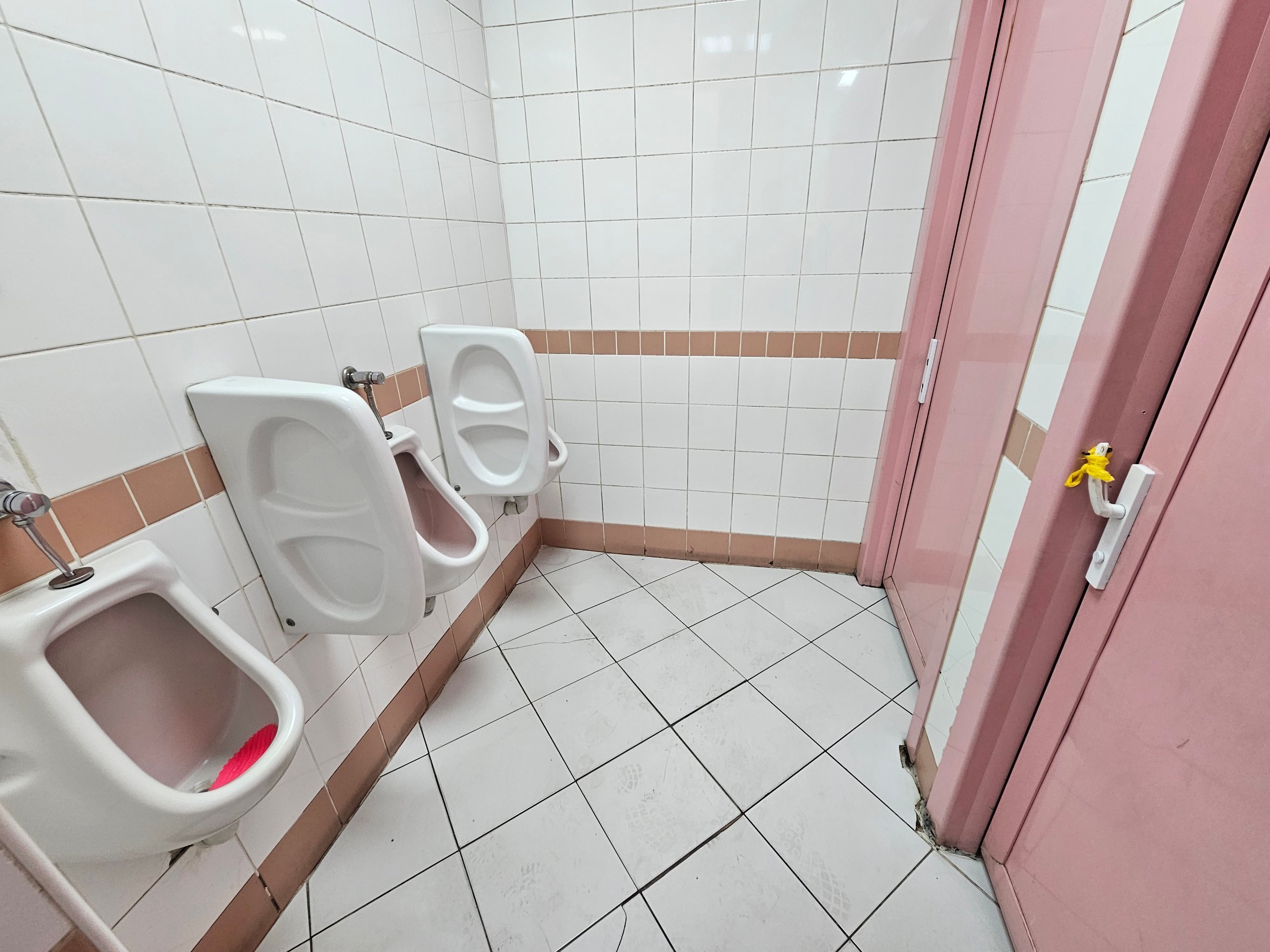
- toilets - usually clean and well-maintained, sometimes in the zone behind the turnstiles, but sometimes in the zone you can get to without a ticket
- you pay for the toilet 10 try and you can always pay at the turnstile with your own contactless card or Istanbulkart - the price is always the same
- always IstanbulKart machines - buy a new card or top up an old card
Food and drink vending machines in metro stations Refreshments and café on the metro platform ATMs and vending machines with drinks and snacks in metro stations Public toilet in the metro station Public toilet in the metro station Public toilet in the metro station