All of Japan from Prague with Korean Air this winter
663 €


The MTR is the quickest and most straightforward way to get around Hong Kong.
It takes you to most of the attractions, and the extensive network extends as far as the distant suburbs near the border with China.
The easiest way is to tap your own contactless Visa or Mastercard card on entry and again on exit. The Octopus card works in the same way. On popular tourist routes, you’ll pay approximately 5 hkd – 13 hkd per journey. The Airport Express to the airport costs 120 hkd from Hong Kong station.
Ideally, choose accommodation that is within walking distance of the MTR. Then you’re all set, and getting around Hong Kong will be a breeze. Our section on Where to stay in Hong Kong will also help you.
Hotels near MTR stations in Hong Kong
The Hong Kong metro is operated by the MTR Corporation. You can find their clear and informative official website at:mtr.com.hk.
Buses, trams, ferries and detailed instructions on how to use the Octopus card are described in the chapter on Transport in Hong Kong.
The MTR network comprises a total of 175 km of track and 9 lines. The transport system is one of the best in Asia.
You can find the official metro map on the website:mtr.com.hk/system_map.

To give you a better overview of station locations on real Google Maps, we have also created our own MTR map.
The MTR operates a total of 9 metro lines, categorised by colour and name.
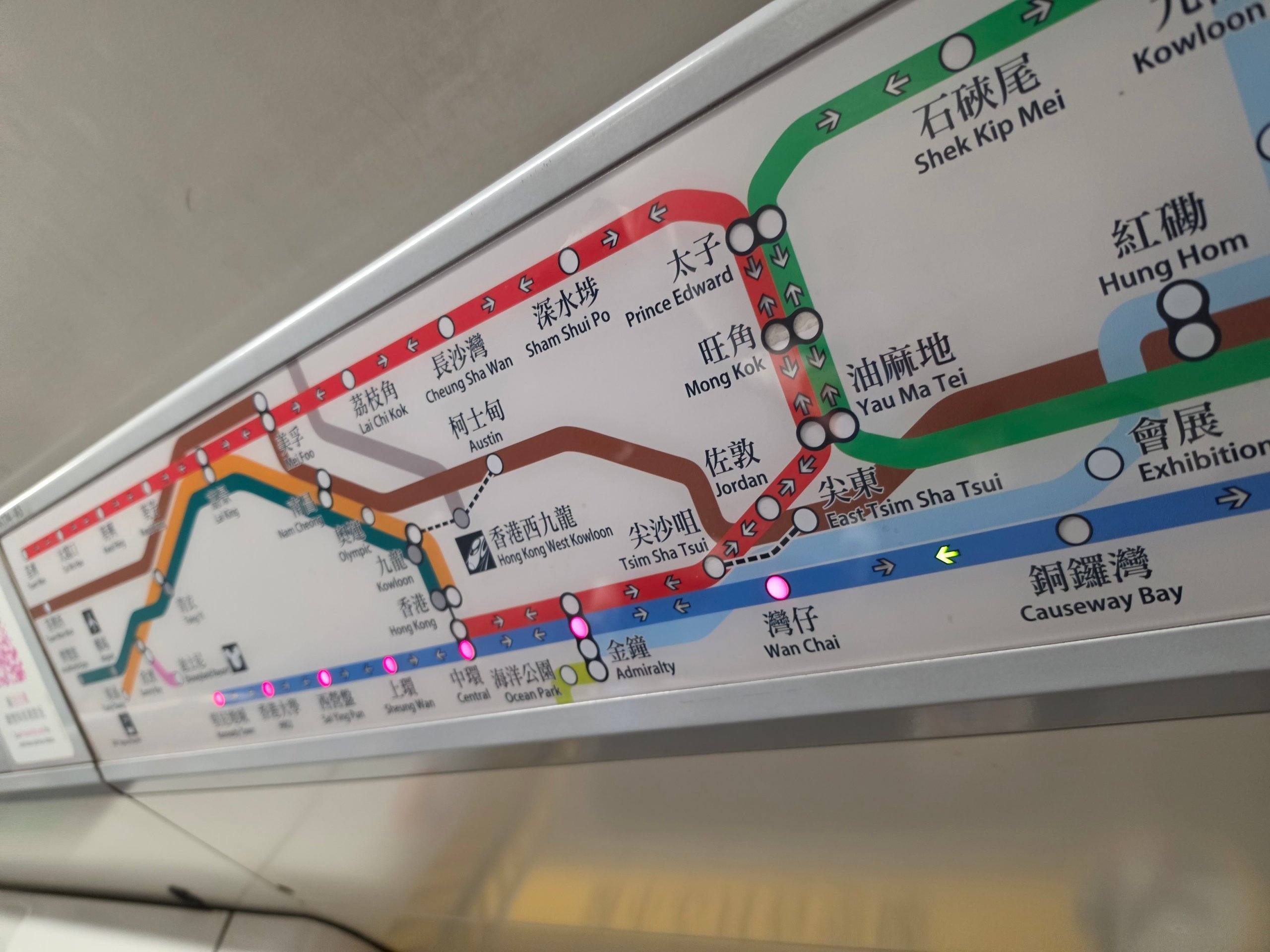
Fares are always calculated based on the distance travelled or the number of stations passed through. Transfers are not counted, as you do not pass through any ticket barriers whilst changing lines.
To give you an idea, a single journey costs:
A single-journey ticket from a ticket machine is usually more expensive. For example, a journey from Central to Tsim Sha Tsui costs 12,50 hkd10,60 hkd instead of . You can find the exact price and journey time for other stations using the MTR journey planner.
Changing lines within the fare-paying area of the station does not count as a new journey. However, when walking between Tsim Sha Tsui and East Tsim Sha Tsui, you must exit through the turnstiles; we explain the rules below.
The Airport Express takes about 24 minutes to travel from the airport to Hong Kong station. A single journey costs, with an Octopus card or contactless card 120 hkd; to Kowloon Station 105 hkd.
When transferring between the Airport Express and the regular MTR, the connecting MTR journey may be free. Use the same card and transfer within 1 hour
There are also cheaper buses and a combination of bus and standard MTR service from the airport. You can find prices and instructions in the separate guide ‘Transport from Hong Kong Airport’.
When entering, hold your card or phone against the turnstile reader. When exiting, use the same physical card or device. A card on your phone and its plastic counterpart are counted as two different payment methods. Each passenger needs their own card or ticket.
Contactless Visa, Mastercard and UnionPay cards are accepted on the MTR and Airport Express, as are supported mobile phones and smartwatches. Debit cards are not accepted for UnionPay. Look for a turnstile marked with the contactless payment card symbol; the Octopus reader is different.
You don’t need to buy anything or top up. You’ll pay the same adult fare for a standard journey as you would with an Octopus card. Child fares and certain MTR discounts do not apply to standard bank cards.
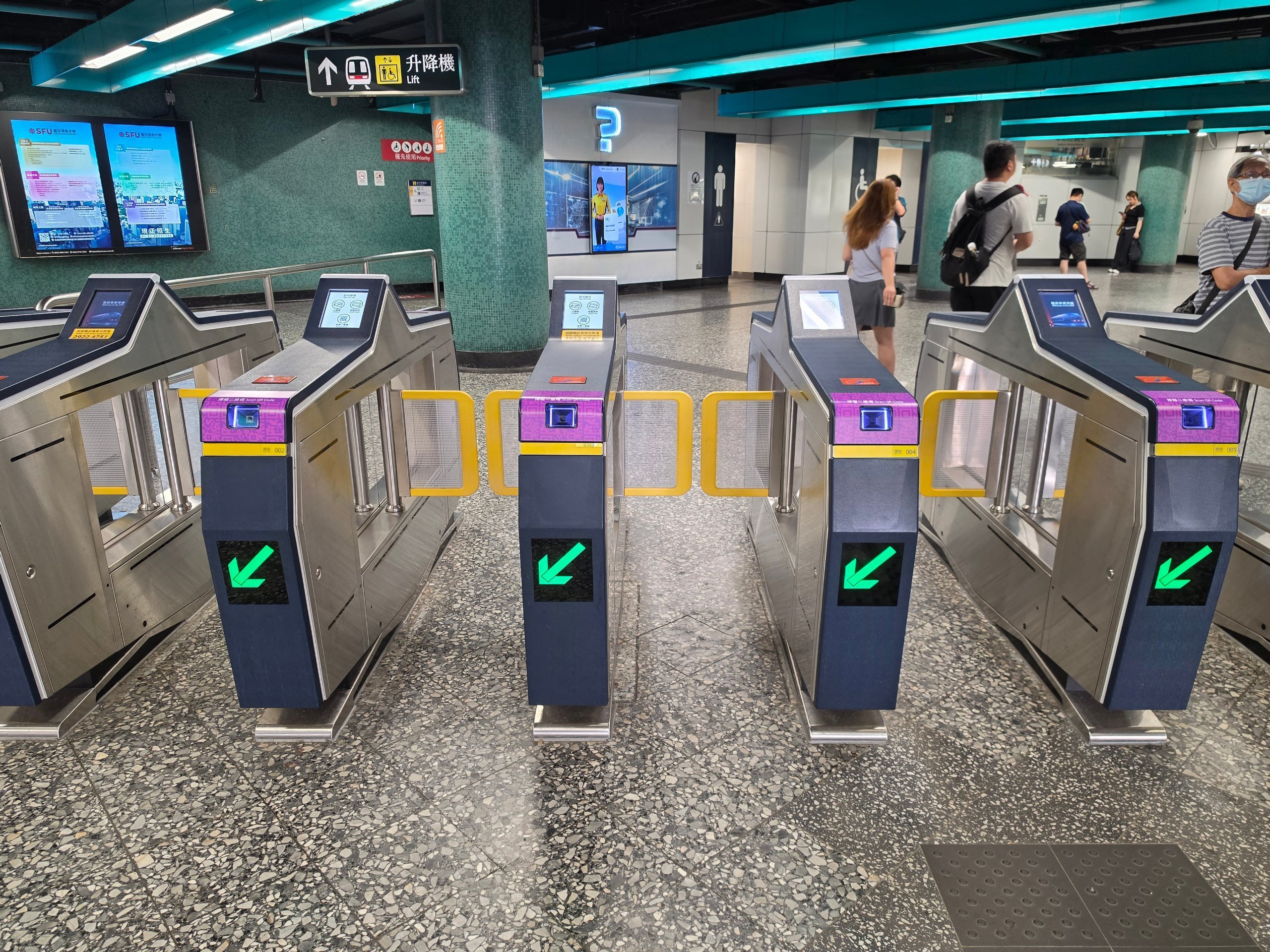
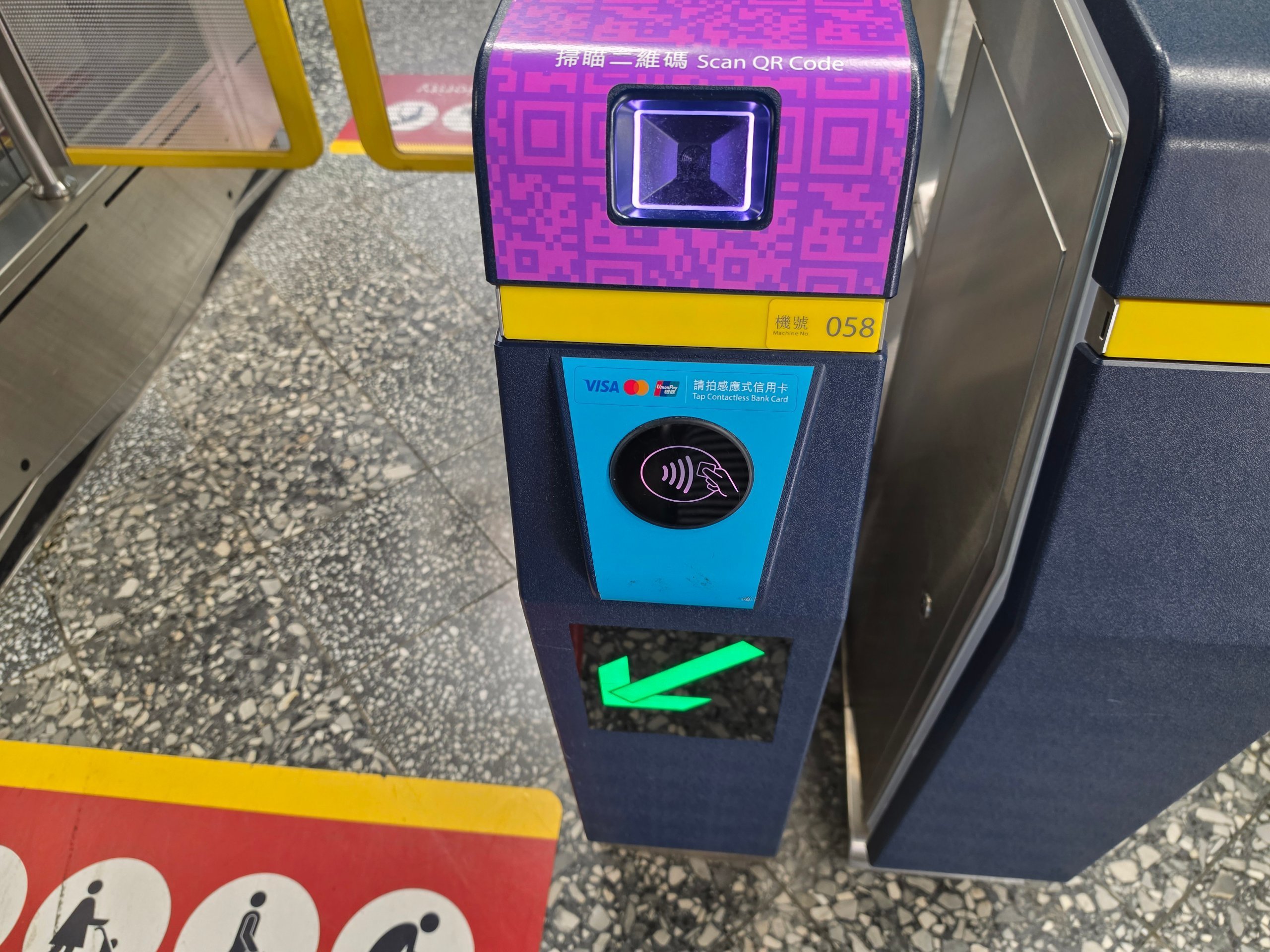
The Octopus is a rechargeable card that you tap on entry and exit. On the MTR, it is not automatically 5 per cent cheaper than a bank card.
Its main advantages lie in combining different modes of transport, certain transfer discounts, and for journeys on the Light Rail or MTR buses, where you cannot use a standard bank card.
You can find out where to buy an Octopus card, how much it costs and how to top it up in the chapter ‘Transport in Hong Kong: Octopus or a payment card?’.
At an MTR ticket machine, select your destination station and buy a single-journey ticket. This is handy if you don’t want to use your own card or an Octopus card. For children aged 3–11, you can buy a discounted child’s ticket; a standard bank card would charge the adult fare.
The MTR also offers an electronic single-journey ticket via the MTR Mobile app. You can scan this at a turnstile marked for QR codes. A bank card used at the turnstile is not a single-journey ticket: simply tap it and the fare will be deducted automatically.

The MTR Tourist Day Pass costs 75 hkd for an adult and 35 hkd for children aged 3 to 11. It is valid for 24 hours from the first journey. You can buy it at selected MTR ticket counters or online; it is intended for tourists staying in Hong Kong for less than 14 days.
It is only worth it if the total cost of your standard journeys over 24 hours would exceed 75 hkd. For example, a return journey from Hong Kong to Tung Chung costs 48,60 hkd. Even with a return journey from Central to Tsim Sha Tsui costing 21,20 hkd , you’ll pay just 69,80 hkd.
The pass is valid on standard MTR lines, Light Rail and buses operated by MTR.
It is not valid on the Airport Express, Citybus or KMB city buses, trams or ferries. You cannot use it for journeys to Lo Wu and Lok Ma Chau stations on the Chinese border, or for first-class travel on the East Rail Line. You can find the terms and conditions on the MTR website.


Most transfers take place inside the station. You can switch from one line to another without leaving the paid area or tapping your card again. At some stations, the connecting train departs from the opposite end of the same platform.
Please note: Tsim Sha Tsui ↔ East Tsim Sha Tsui – you must walk between the stations and pass through the ticket barriers on the way.
With an Octopus card, a change made within 30 minutes under certain conditions counts as a single journey. With a standard bank card or a single-journey ticket, you’ll pay for two separate journeys. The MTR route planner may also suggest a route that avoids this change.
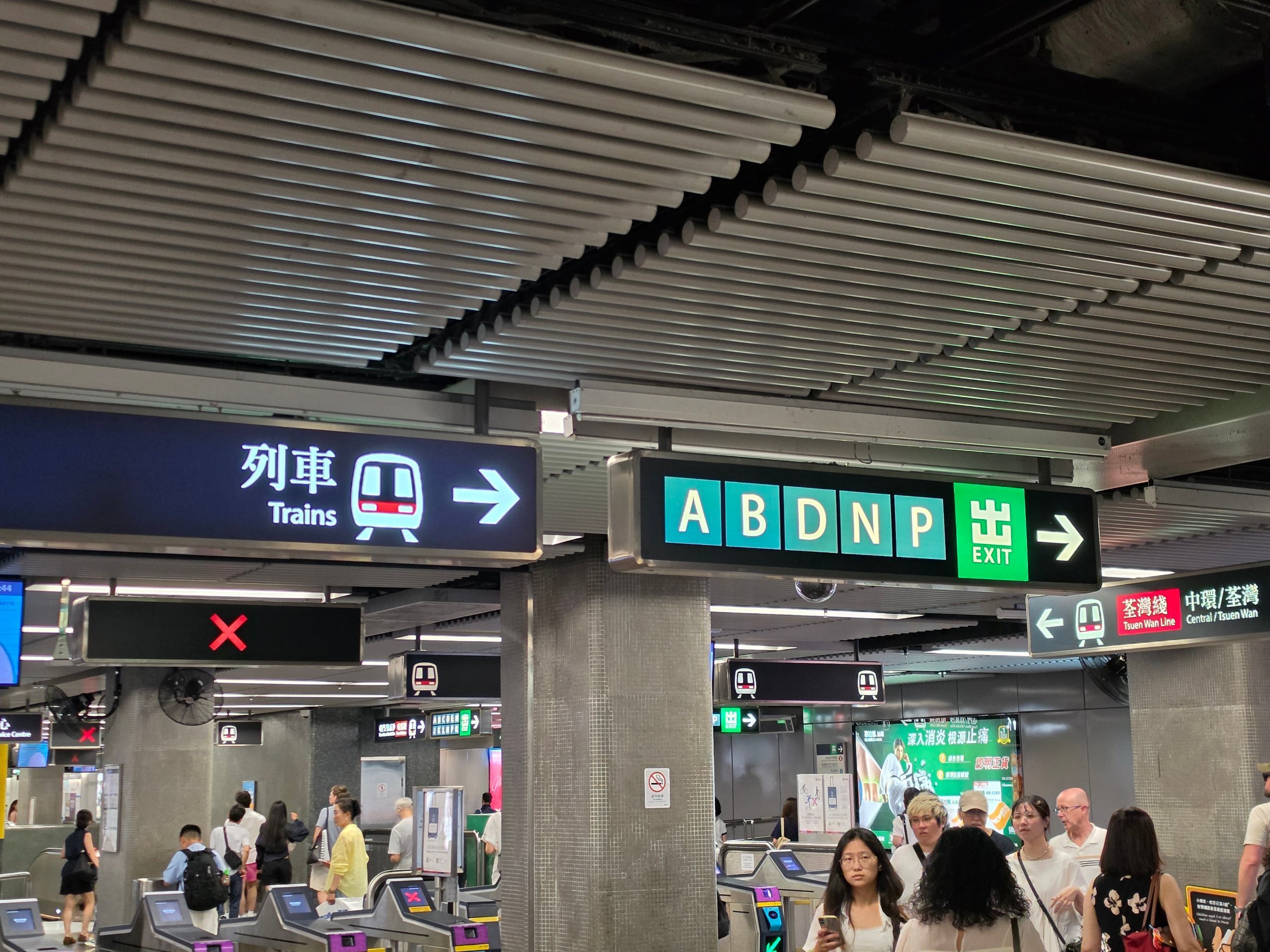
Stations and their exits tend to be quite large. When using a map or sat-nav, look out not only for the station name but also for the letter or number of the exit. This will help you exit closer to your destination.
If you’re heading to Ocean Park, you can buy your ticket in advance on GetYourGuide. The MTR will take you right to the entrance, so you don’t need to worry about the tourist bus.
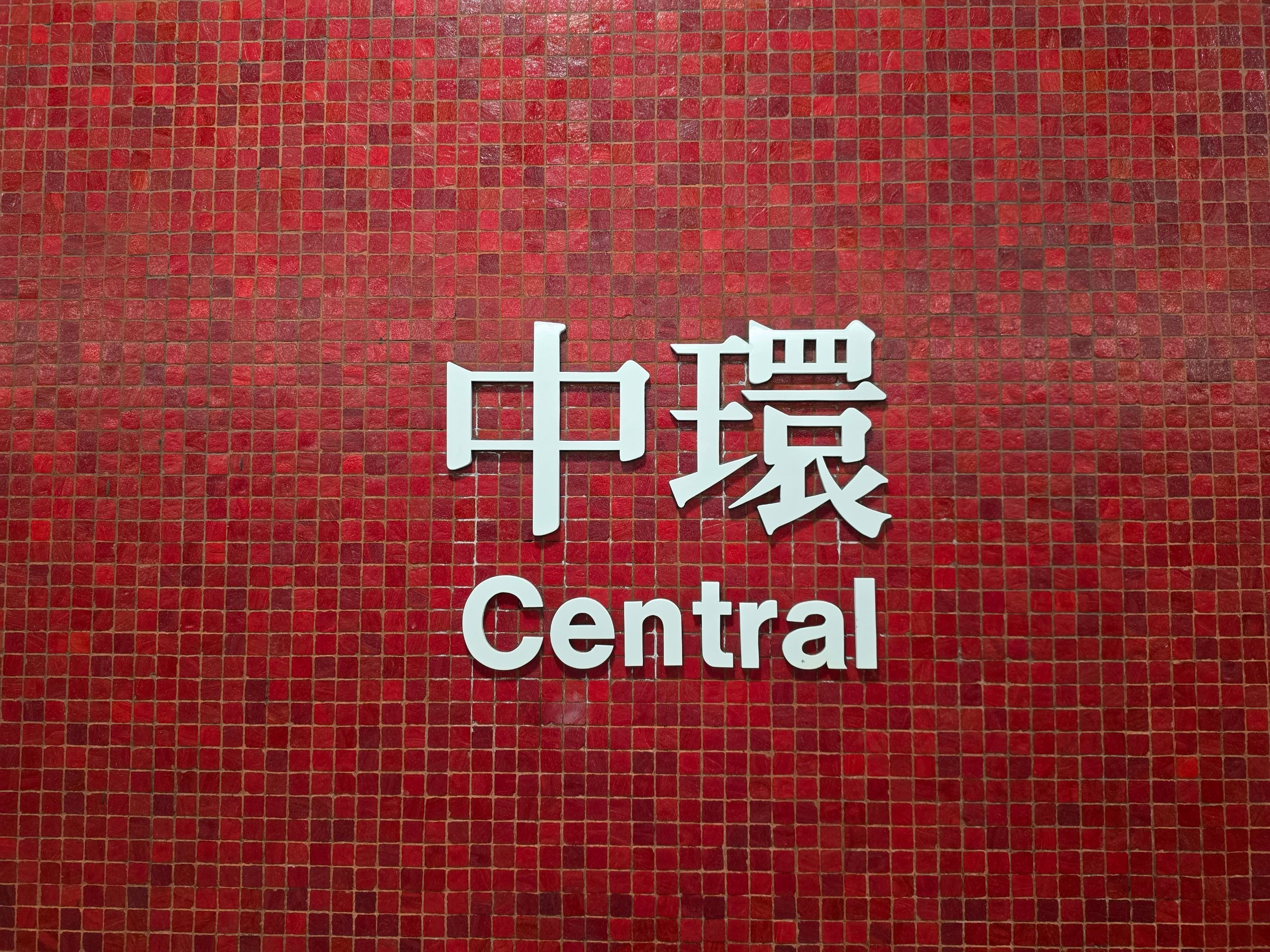
When choosing a hotel, check the actual walking distance to the station entrance. The difference between two nearby stations could mean an extra change or a long walk through an underground passageway.
We discuss how prices and the atmosphere differ between neighbourhoods in the chapter ‘Where to stay in Hong Kong’.
None of the underground lines run non-stop.
The first metro trains depart from their terminus stations at around 5.30 am, and the last trains set off at around 12.30 am, arriving in the city centre at around 1.00 am before continuing on to the other terminus.
Services on the central lines run every 2 to 5 minutes, depending on the time of day.
Less busy lines run approximately every 7 minutes.

The stations are very clearly signposted and well-equipped.
At every station, you’ll find convenience shops selling snacks and Octopus Cards (usually 7-Eleven or Circle K), cafés, florists and shops selling small electronic items.
Free toilets are also available at every station, and in the vast majority of cases, there are ATMs as well.
At the exits, there are large maps of the surrounding area with exits marked by letters.


The platforms are always separated from the tracks by a glass wall with automatic gates, which open automatically when a train arrives.
Interchange stations are often very well designed, with the connecting service departing from the opposite end of the same platform.


Metro entrances are always marked with a large red MTR logo.

If you have any questions or comments about the article...