From Vienna to the Algarve in Portugal in January
61 €



How easy is it to speak English in the Vatican? What is the culture like in the Vatican and how does a normal tourist visit work?
View the best hotels near Vatican City
The Vatican has no official language. Unlike the Holy See, which uses Latin, Italian is used for everyday communication. The Swiss Guard receives commands in German.
English is commonly spoken at the post office or at the ticket office.
The Vatican's economy is uniquely non-commercial, being based on contributions from Catholics around the world (the so-called Peter's money), the sale of postage stamps, commemorative coins and other souvenirs, admission to museums and the sale of publications.
The Vatican is used to tourists and visitors, and they count on it. Just beware that short pants, miniskirts or sleeveless shirts are not allowed in church buildings.
This is not just a theoretical regulation, it is followed in practice as well.
It can easily happen that after you have stood in line for two hours, you will not be allowed into the Basilica at all because of inappropriate clothing.
Travellers of all faiths and religions can enter the Vatican without restriction.
The first Vatican palace was built in the 6th century. The first Papal State was formed in the middle of the 8th century by the so-called Donation of Pippin as a territory on the Apennine Peninsula under the direct temporal rule of the Bishop of Rome (Pope).
After the church was sacked by the Saracens in the mid-9th century, Pope Leo IV ordered the church to be walled in and called the whole area Leon Hill, later Vatican Hill (after the Etruscan hill on which it is located).
The Vatican became the main seat of the popes in 1378, when the papacy returned here from exile in Avignon.
In 1860 most of the papal territory was annexed to the Kingdom of Italy, and the city of Rome was not annexed until 1870. The Papal State, however, sought to retain diplomatic relations and its status as a subject of international law, and most states never denied it this status.
Vatican City and some extraterritorial territories were returned to papal administration by treaties with Italy in 1929 - the so-called Lateran Treaties.
Italy had offered this settlement to the Vatican as early as the 19th century, but the popes were still hoping for the restoration of the Papal States and were therefore reluctant to agree to such deals for a long time. The relationship between the Vatican and Italy is then further regulated by the Concordat of 1984.
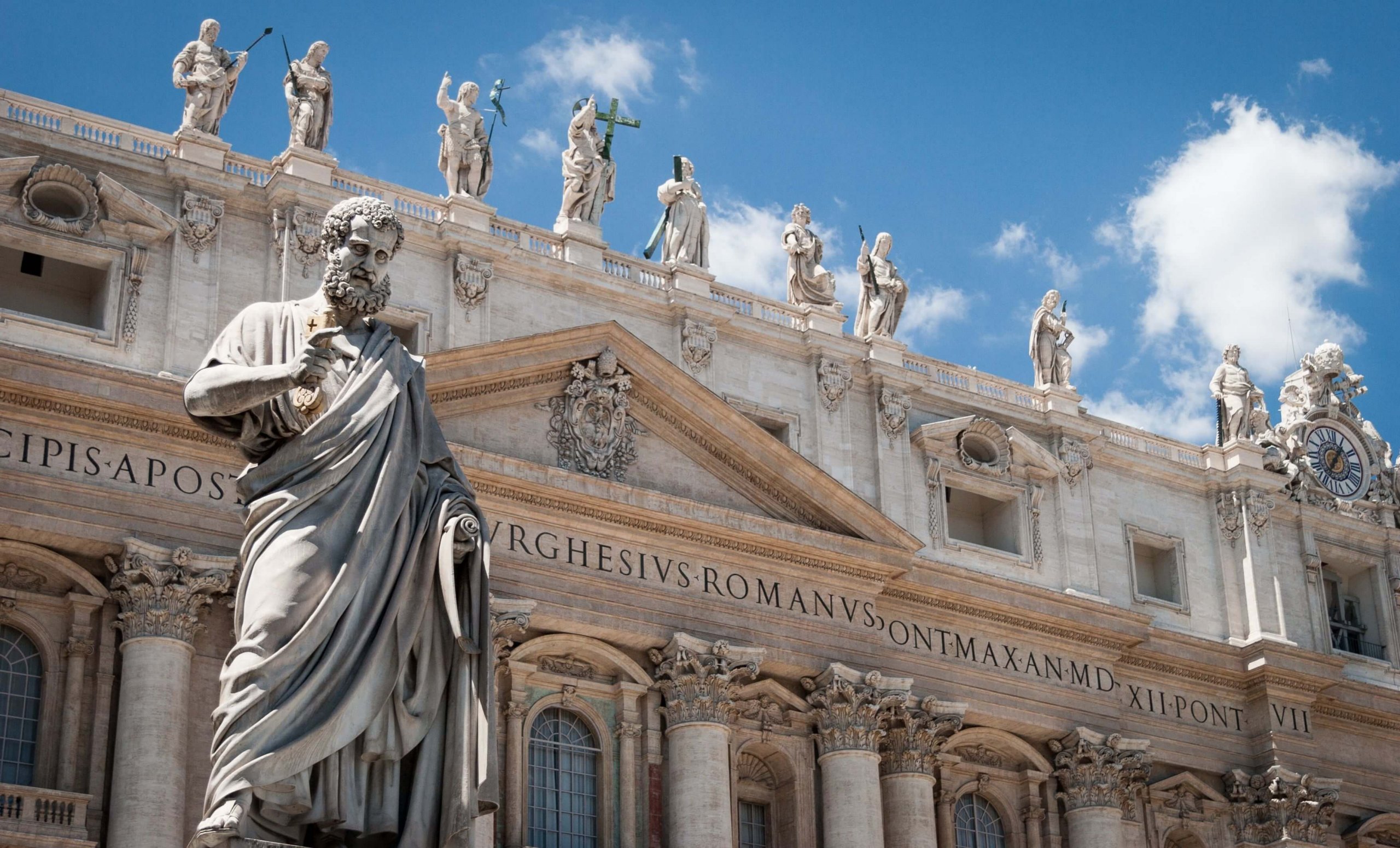
The Vatican City has a population of about 800, of whom only about half reside permanently in the city-state itself.
Approximately 450 of the total population have Vatican citizenship.
The cardinals, of whom there are about 130, are counted among the Vatican's residents only during their time in Rome.
One of the symbols of the Vatican City is the Swiss Guard, a military unit of the Holy See whose responsibility is the personal safety of the Pope and those residing in the city-state.
The Pontifical Swiss Guard was created by a 1506 treaty with the Catholic cantons of the Swiss Confederation.
All recruits must be of the Catholic faith, unmarried men of Swiss nationality who have completed basic military service in the Swiss army, between 19 and 30 years of age, and at least 174 centimetres tall.
Members of the Guard are equipped with firearms, traditionally also halberds, and trained as bodyguards. Each member takes his oath in his mother tongue - that is, German, Italian or French.
The Vatican City is situated on the west bank of the Tiber River, and its medieval walls separate it from the rest of the Roman flag.
Its proper territory includes St Peter's Square with St Peter's Basilica, the Apostolic Palace, adjacent buildings and the Vatican Gardens.
If you have any questions or comments about the article...