
Ángel de la Independencia


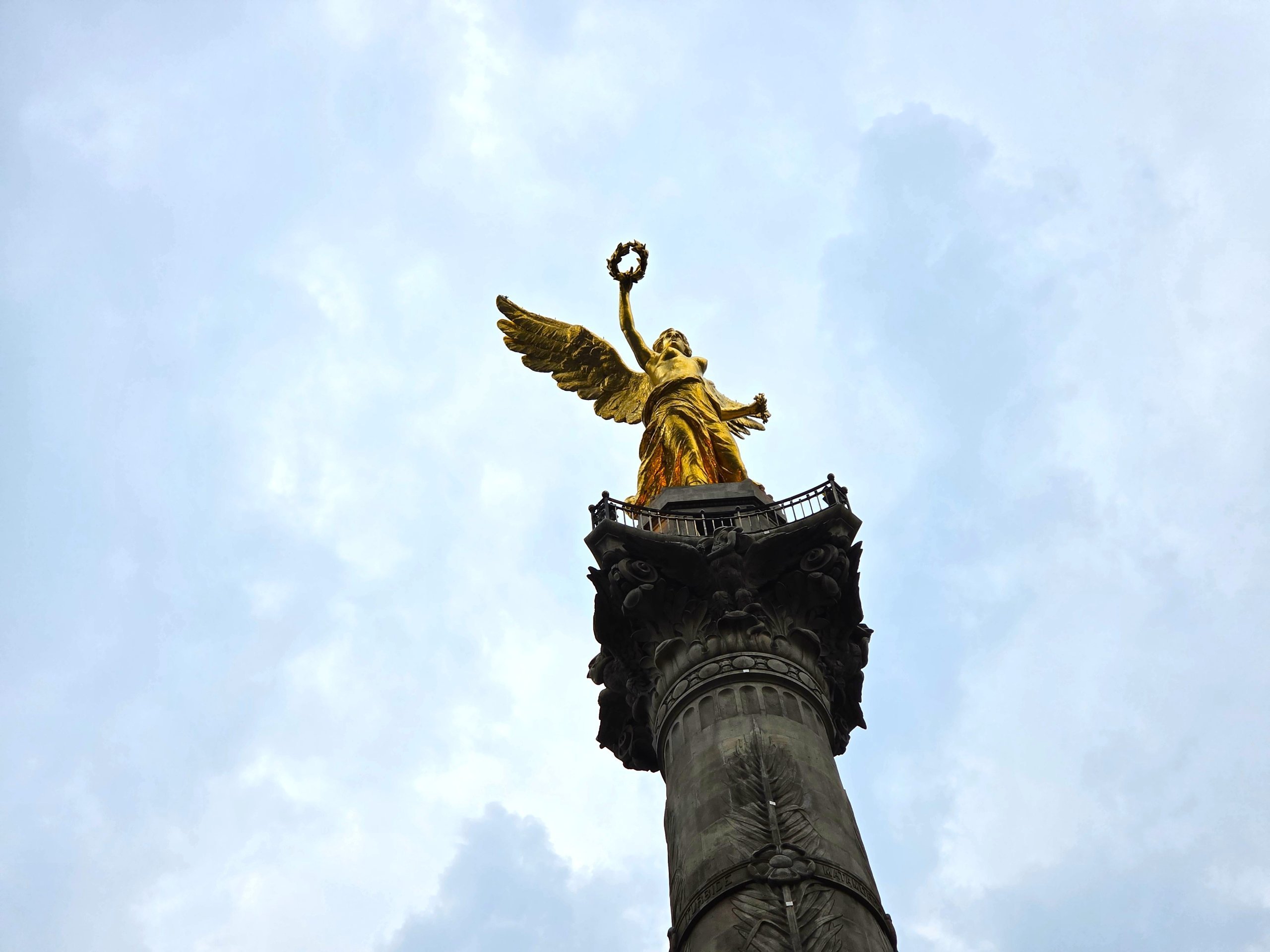
The golden angel atop a tall column is one of Mexico City’s most famous symbols.
If you have ever seen a photograph of the Paseo de la Reforma boulevard, it is very likely that the Angel of Independence was featured in it.
It’s not the sort of attraction you’d plan a half-day around in the city. But if you’re out and about in the Reforma district, do stop by for a moment.
Check hotel prices in the centre of Mexico City
| Is it worth a visit? | Yes |
| Length of stay | 10–20 minutes |
| Admission | Free |
| Location | Paseo de la Reforma |
| Our tip | Best combined with a stroll along Reforma |
Why is the Angel of Independence so significant?
The monument was erected in 1910 to mark the centenary of the start of the Mexican War of Independence.
At the top stands a gilded statue of Nike, the goddess of victory, holding a laurel wreath in her right hand and a broken chain in her left, symbolising the end of Spanish rule.
Today, the Angel of Independence is much more than just a historical monument.
Mexicans gather here to celebrate sporting victories, hold demonstrations and mark important national events.
For Mexico City, it has a similar significance to that of the Eiffel Tower for Paris or the Colosseum for Rome.
Can you climb to the top?
No.
The monument is accessible from the outside. It is situated in the middle of a large roundabout, and there are steps leading directly to the monument from two sides.
Although there are 200 steps inside the 36-metre-high column leading to the gallery, this is not open to the public.
What to see around
Discover all the places to see in Mexico City.


Any questions left?
If you have any questions or comments about the article...