
Winter in Gdańsk: Saturday to Monday from Prague
40 €



What’s the best way to get around Macau? Are there any underground trains or city buses in Macau?
What are the best value tickets? Where can you buy them? And where can you find official information? Read about it in this chapter.
The best way to get around the Sé Peninsula, where the historic centre is located, is on foot. Some streets are very narrow, and you might think they’re one-way, but there’s room for two-way traffic and even a pavement.
In Macau, they drive on the left, so you must always watch out for oncoming traffic.
The peninsula is quite hilly, the streets in the old town are winding, and it’s quite easy to get lost.
Unlike other major Asian cities, however, Macau is pedestrian-friendly. There are pavements everywhere, and pedestrian crossings and footbridges are also ubiquitous.
Buses are the main form of transport in Macau.
Public bus services are operated by two companies: Transmac andTCM. In practice, however, it makes no difference which company you travel with, and in reality you won’t even notice the difference apart from the different colours of the buses.
Ticket prices and the fare system are the same for both operators, and both companies stop at the same bus stops.
You’ll mainly find your way around by the route numbers.
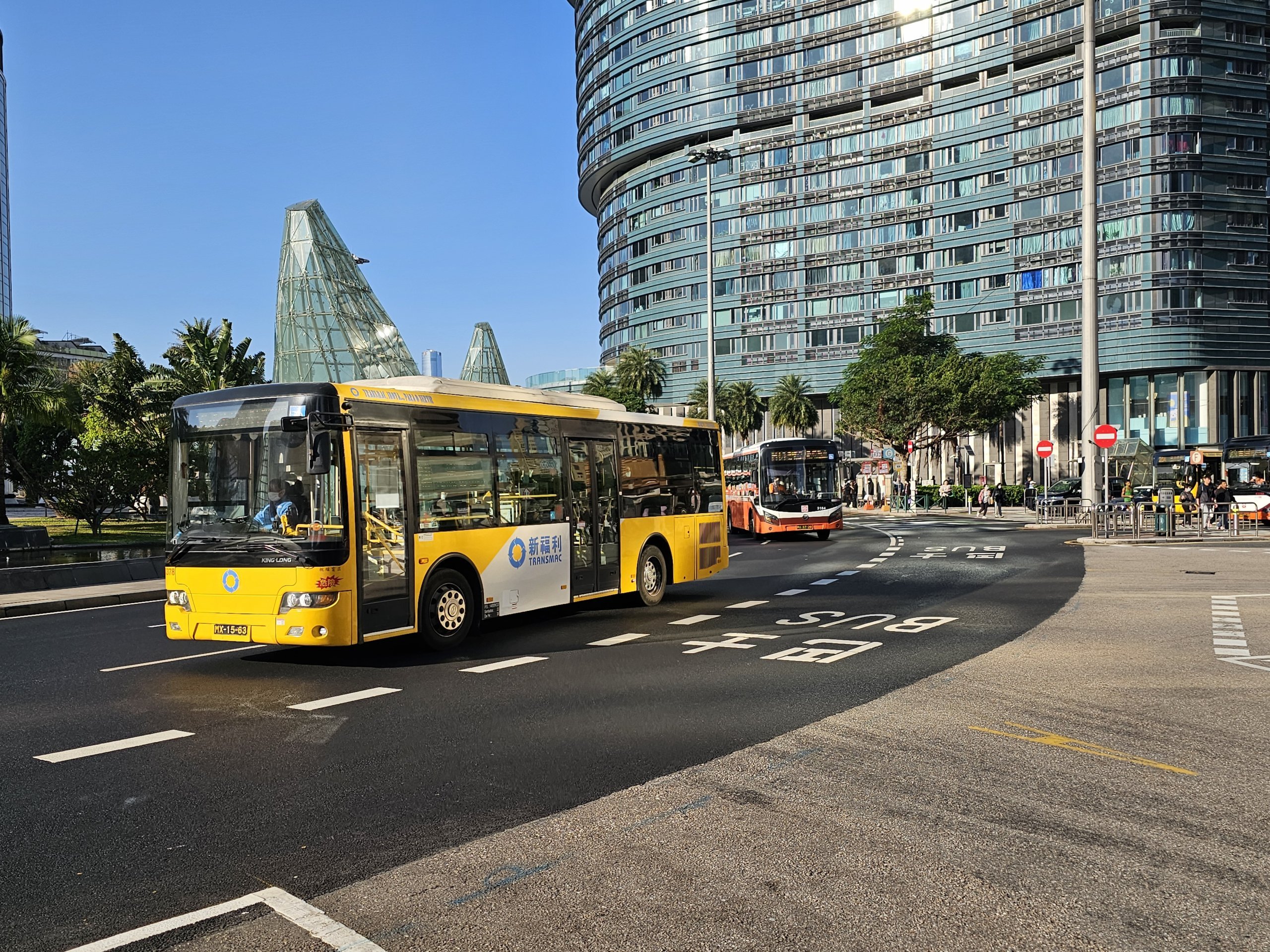
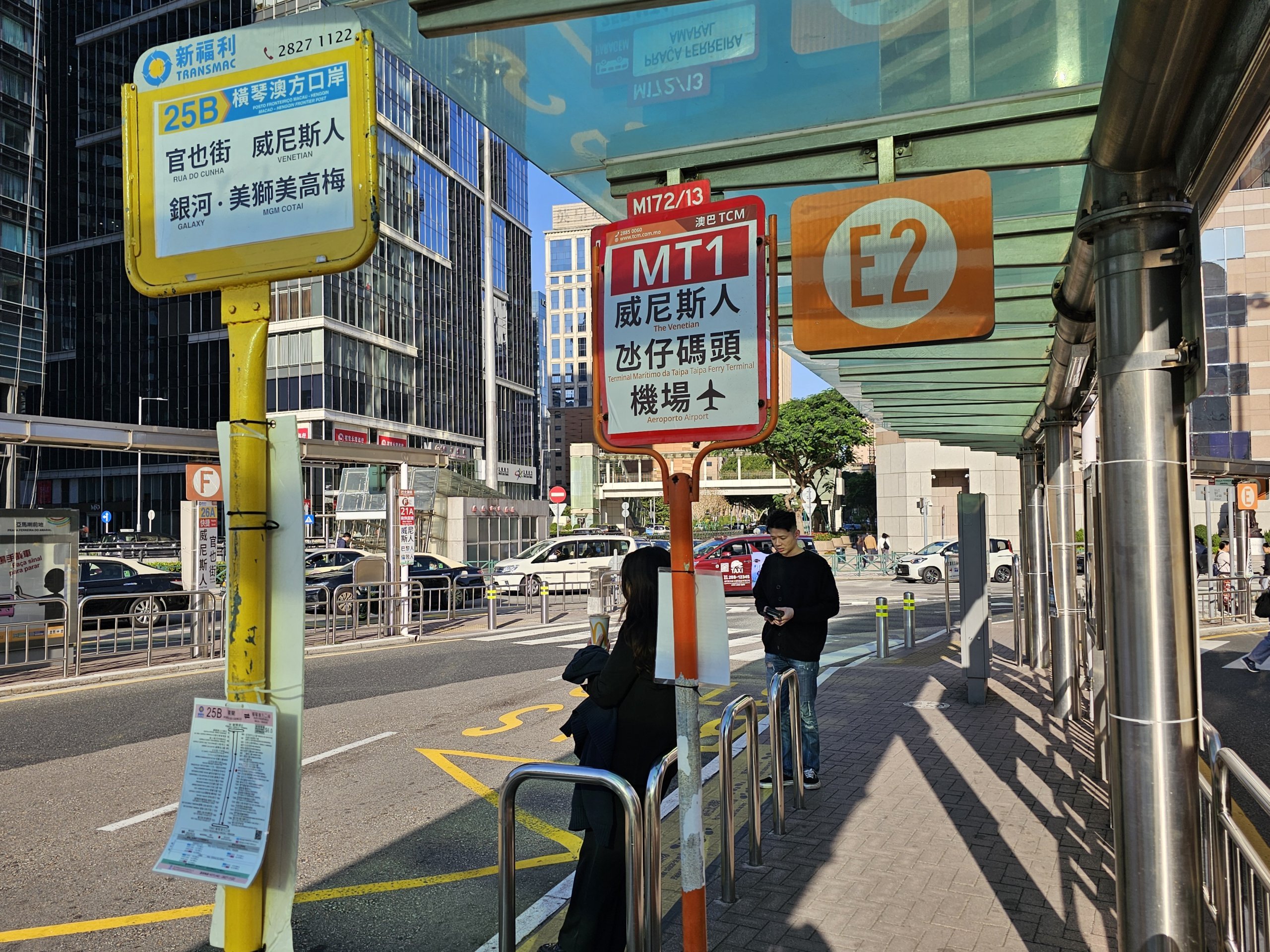
The fare system in Macau is very straightforward if you pay in cash, but a little confusing if you pay using the Macau Pass.
Each journey on all routes costs 6 mop.
It doesn’t matter whether you’re travelling one stop or crossing the whole of Macau from north to south. You pay for each individual journey and, as you don’t receive a physical ticket, you’ll have to pay again even if you’re just changing buses.
You must pay the exact fare (or more, but the driver cannot give you change) into the fare box located by the front door.
It is also common to pay in Hong Kong dollars at a rate of 1:1.
You can pay for all city buses in Macau using an Octopus card purchased in Hong Kong.
I explain where to buy one, how much it costs and whether it’s worth it in my guide to Hong Kong.
The Macau Pass is a very convenient way to pay for travel if you don’t have a Hong Kong Octopus card.
Another major advantage is that if you don’t spend the money loaded onto it on travel fares, you can also use the Macau Pass to pay in almost all shops, just like a standard payment card.
Fares with the Macau Pass are cheaper than when paying in cash.
Although you may read on various online forums that fares with the Macau Pass are just as expensive and cost 6 mop, in reality the Macau government subsidises fares if you use the Macau Pass.
In practice, therefore, you will pay the following amounts:
If you take more than three buses within a 90-minute period, the third journey will always be free when paying with a Macau Pass.
When boarding the bus, tap your Macau Pass on the blue reader by the driver. You do not need to tap the card on the reader again when alighting. This means the system operates on a tap-on only system is in operation here.
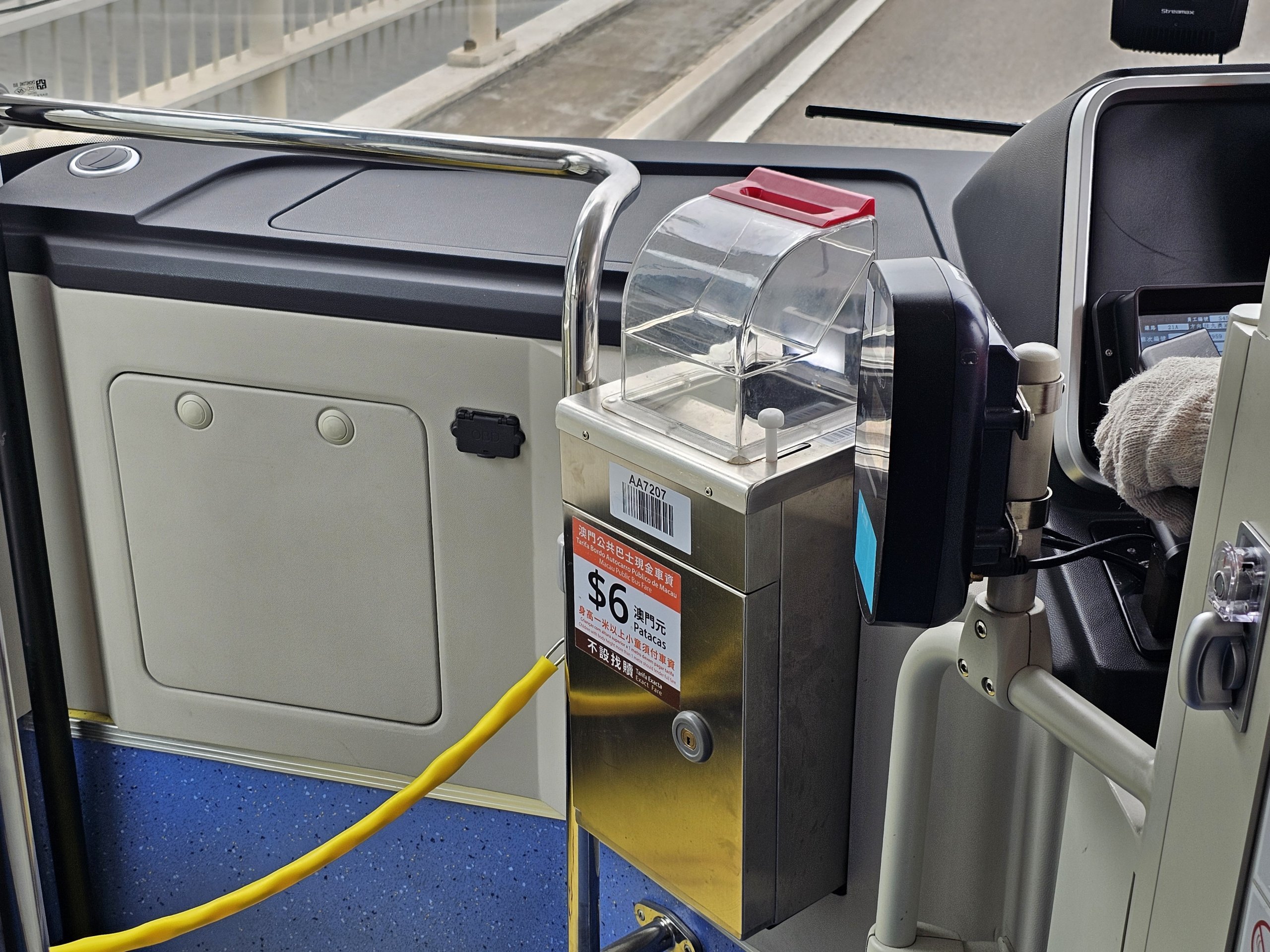
The Macau Pass costs 130 mop , whilst 30 mop is a refundable deposit 100 mop can then be used for everyday payments. However, you can load a larger amount onto the card at the time of purchase and top it up as and when you wish.
You can purchase the card or top it up repeatedly at any convenience store or supermarket such as 7-Eleven or Circle K. You can also buy the Macau Pass at the airport (on the departures level) or at the convenience store in the arrivals hall of the HZMB border crossing (after passing through passport control).
You can only pay for the Macau Pass in cash. Payment can be made in Macanese patacas or Hong Kong dollars.
Official website:macaupass.com.
Most bus routes run every 10 to 20 minutes, and exact departure times are only displayed at the terminus stops.
There are electronic displays at bus stops showing current arrivals. However, these are not shown in minutes; instead, the information tells you how many stops away the bus is from your current location.
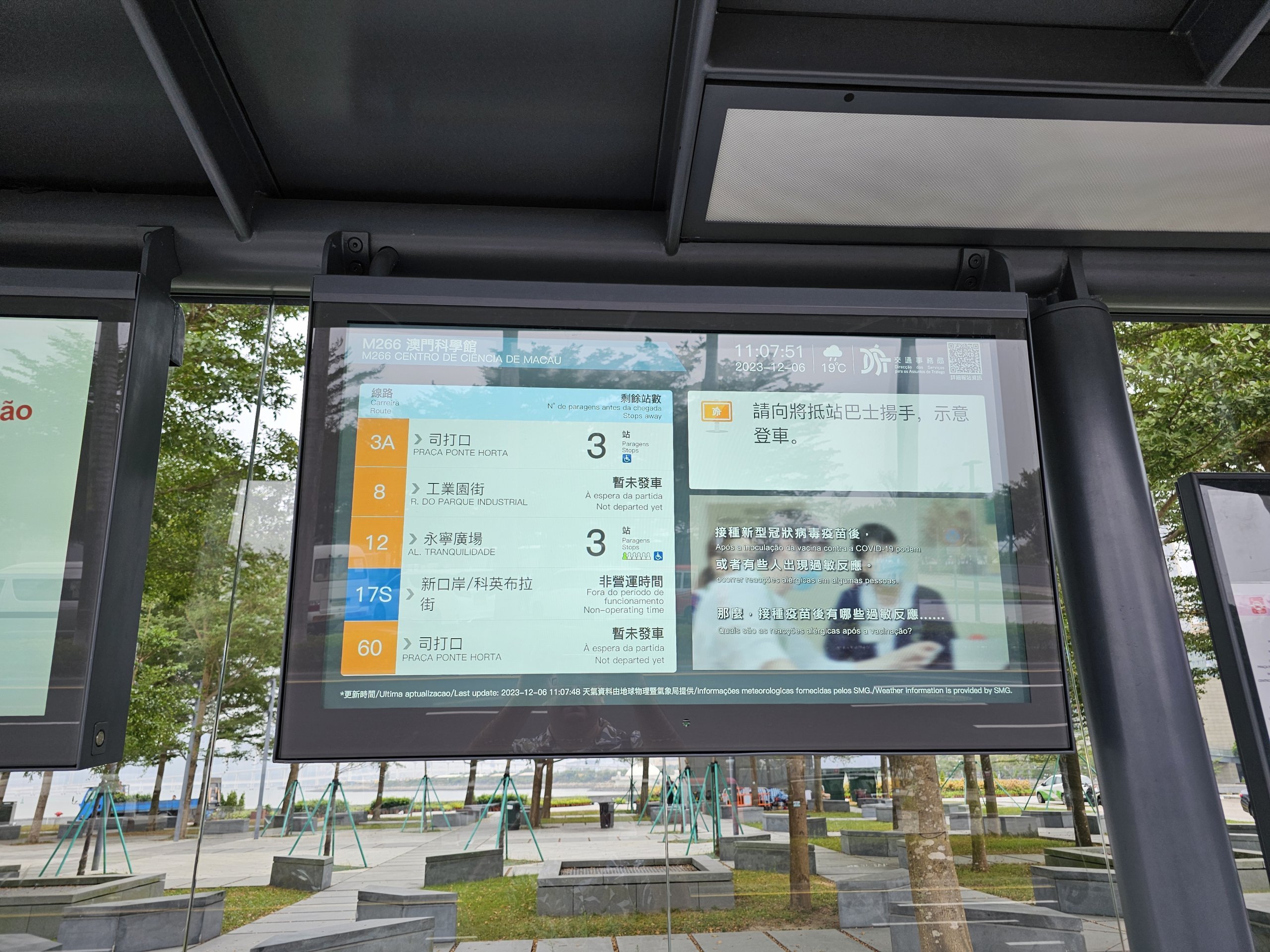
A list of stops for each route operated by both companies, along with approximate timetables, can be found on the website:dsat.gov.mo/bus_route. There are no comprehensive maps showing all bus routes in Macau together.
Regular services run from approximately 5.45 am to 11.30 pm. At night, however, several special night services marked with the letter ‘N’ run through the streets of Macau at 20–30-minute intervals. You can therefore reach the main areas of Macau by public transport 24 hours a day, 7 days a week.
All bus stops are equipped with information on the route numbers that pass through them and a list of stops on each route.
The information is always provided in Chinese and Portuguese and, in most cases, in English as well.
All bus stops in Macau are request stops. If you are standing at a stop, wave to the approaching bus. If you wish to alight, press the red ‘Stop’ button well in advance of the stop.
Well-known mobile apps such as Uber, Lyft and Grab do not operate in Macau.
However, this isn’t a major problem, as the streets of Macau are criss-crossed by thousands of official black-and-white taxis, which are available virtually everywhere at any time of the day or night.
You can pay for a taxi in cash (either Macau patacas or Hong Kong dollars) or using the Macau Pass, which you can buy at 7-Eleven shops. Standard payment cards cannot be used in taxis.
Taxi fares are as follows:
Fraud and dishonest behaviour on the part of taxi drivers in Macau are rare. However, be prepared for the fact that taxi drivers often speak only Chinese, so it is a good idea to have your destination ready on a map or written down on a piece of paper in Chinese.
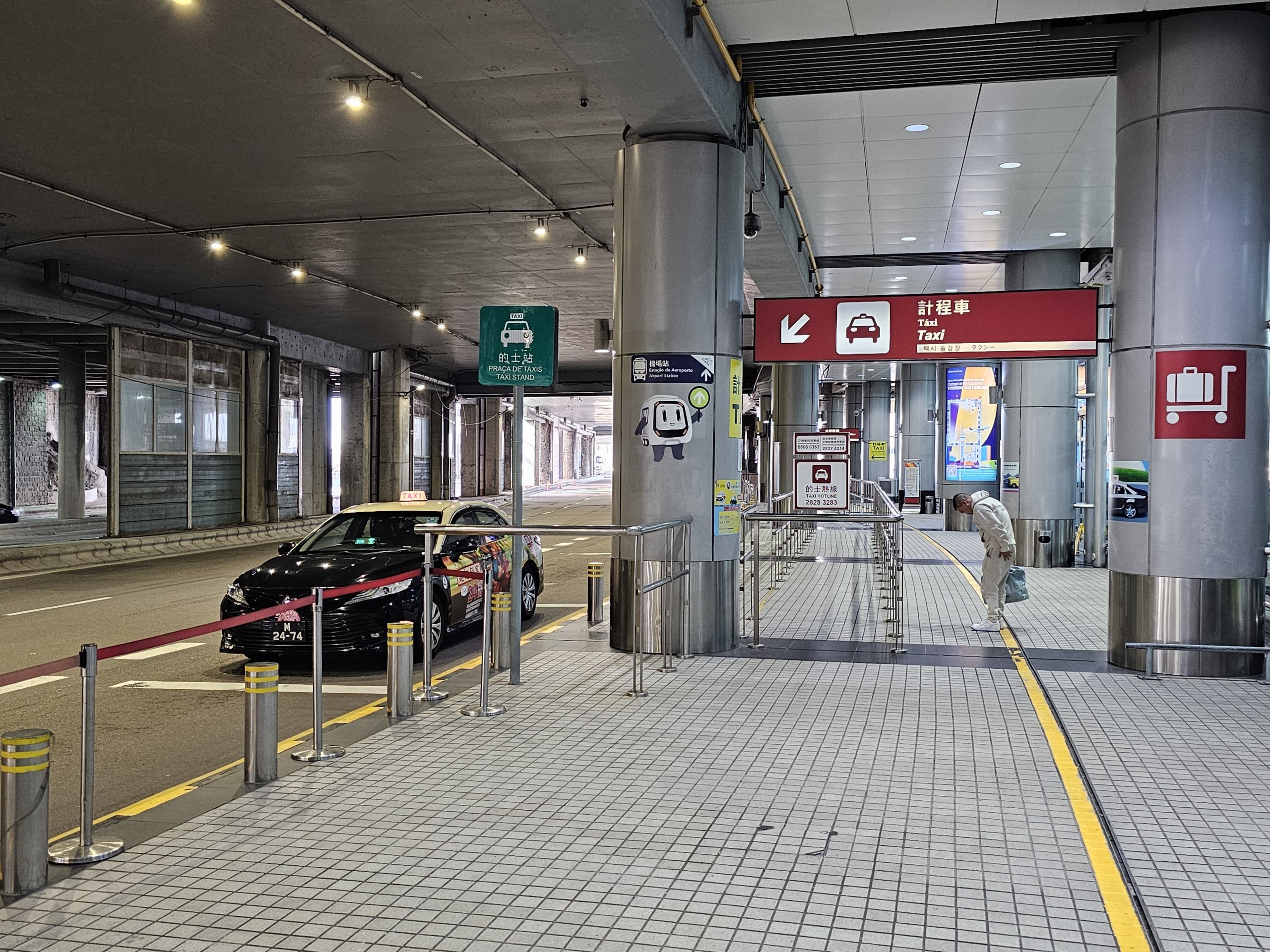
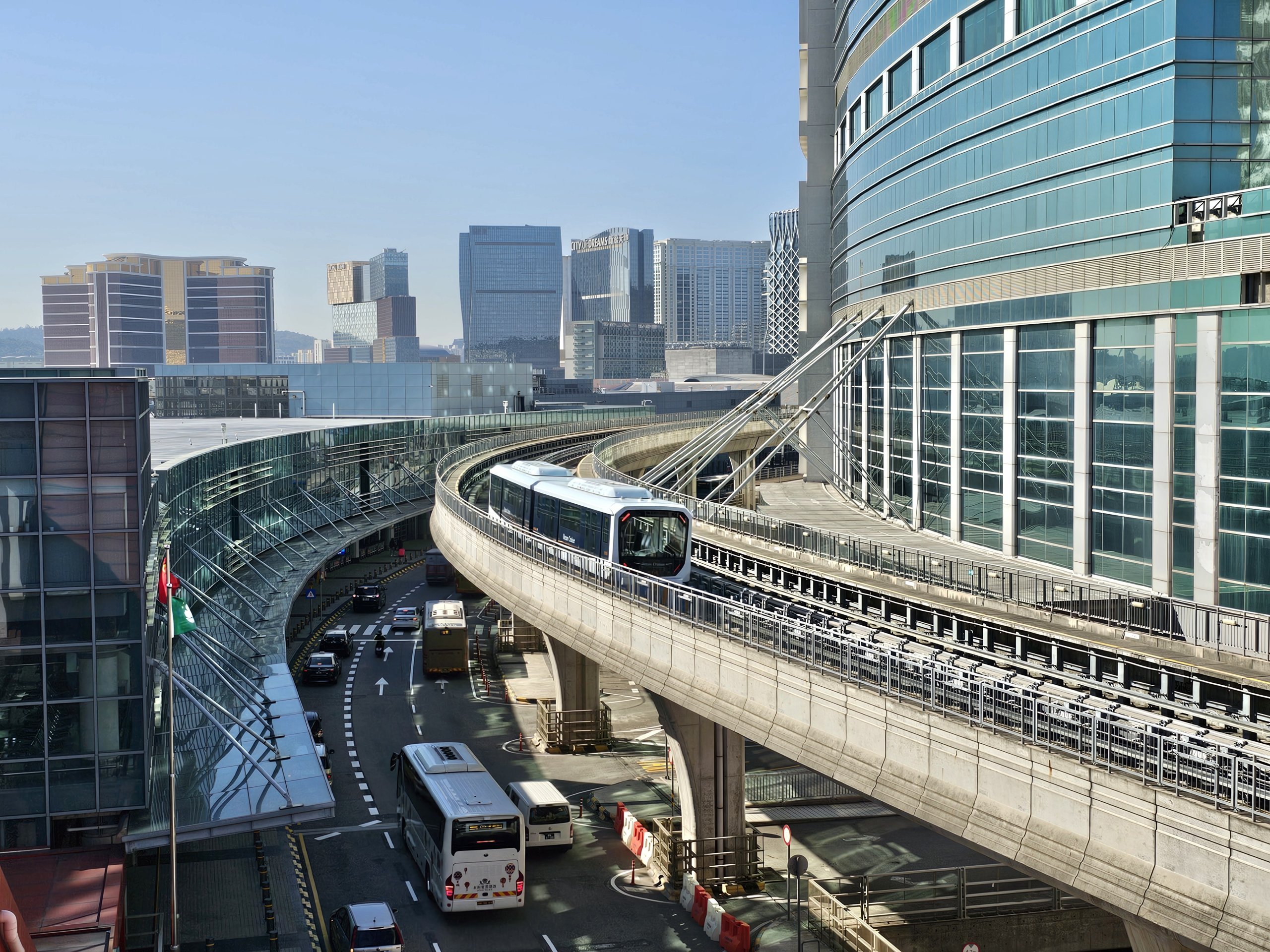
An automated monorail runs from the Barra area in the south-west of the Macau Peninsula to Taipa Island, to the central part of the Cotai Strip, and, via a detour, also to the airport and Taipa Ferry Terminal.
This line is also often referred to as the ‘light metro’.
The automated train is not used very much, as it runs through areas away from tourist attractions, with the exception of the casinos on the Cotai Strip. However, the stations are considerably further from the casinos than the bus stops.
Furthermore, the Macau Pass is not valid on the monorail, and you must pay the fare separately for each journey.
You can pay at ticket machines or at the ticket office at each station. You will be given a token, which you tap on the reader at the turnstile when boarding. When alighting, insert the token into the turnstile.
Official website:mlm.com.mo.
If you have any questions or comments about the article...

You can pay for the bus using a China T-Union Octopus card from Hong Kong