
There in the morning, back in the evening: Bergamo from Prague for a day trip
49 €



Kyoto's public transport network is dense and includes a subway, several bus carriers, tourist buses and several rail carriers.
You will mostly use the buses to get to all the sights. However, expect long journey times and often very crowded cars.
The metro also provides fast connections, but unlike the buses, it serves more locals and doesn't go to many of the sights at all.
The fastest way to get to the Arashiyama area is by train.
If you're coming to Kyoto for the first time, you'll quickly discover one thing: the sights are scattered all over the city.
You'll rarely visit more places on foot without using transport.
In our experience, this combination works best:
If you're planning multiple moves during the day, a full-day Subway & Bus Pass is often worth it.
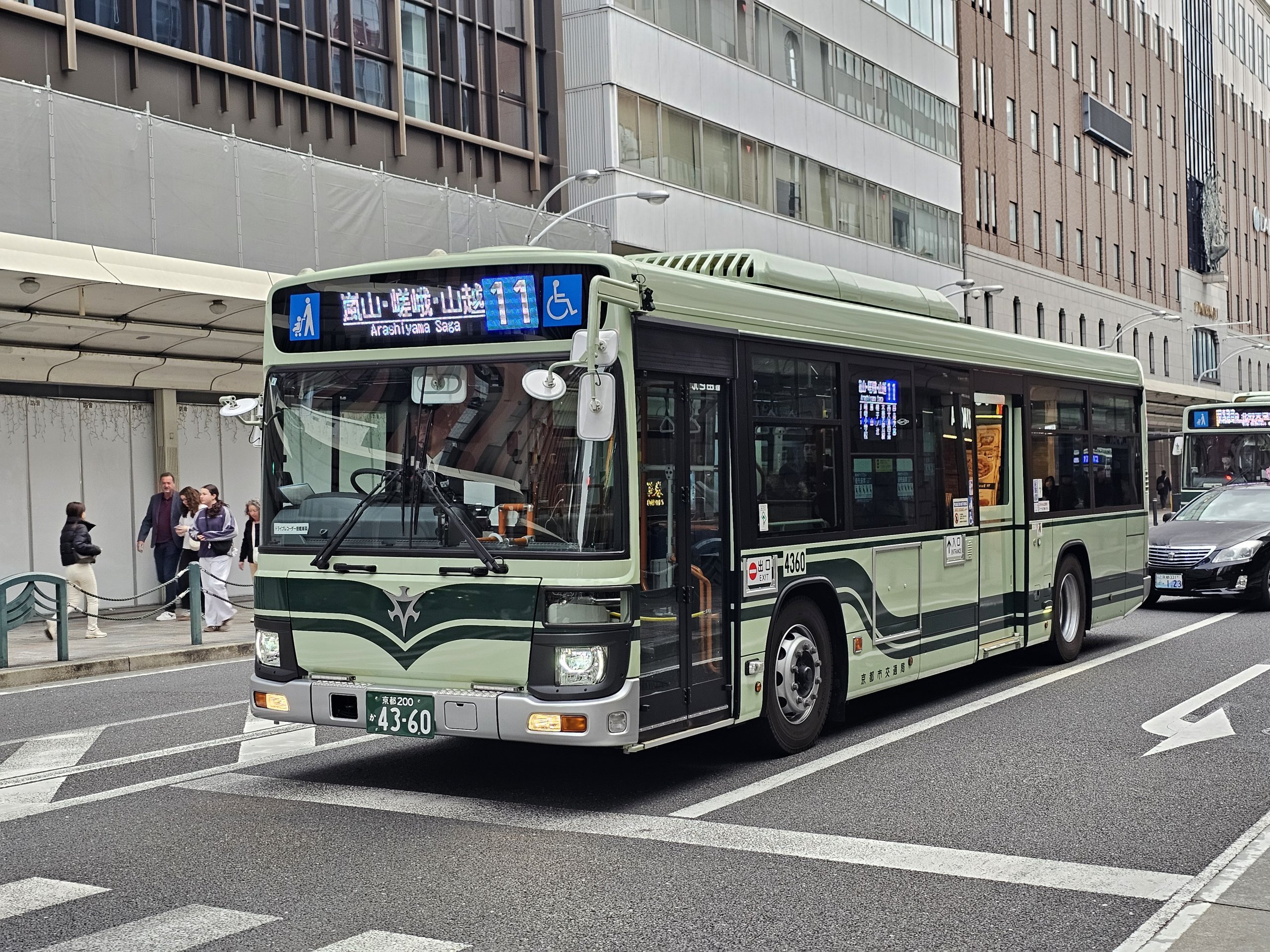
The fare system varies from one transport company to another and, especially in the case of transfers or day passes, it is quite difficult to know which routes are valid and which are not.
In Kyoto, there are two basic types of day pass + one popular pass for the entire Kansai area.
| Price | Validity | |
|---|---|---|
| Subway & Bus 1 Day | 1 100 jpy |
Kyoto Subway |
| Subway 1 Day | 800 jpy | Kyoto Subway |
| Kansai Railway Pass | 5 600 jpy - 2 days 7 000 jpy - 3 days |
Kyoto Subway Osaka Metro Private railways (Kansai region) ** Trams and some cable cars |
* For these carriers, the all-day ticket is only valid on some lines:
** Kansai Railway Pass within Kyoto is not valid on all rail carriers:
A full day ticket on both subway lines and all bus lines in Kyoto is the best value for getting around the city.
✅ It is worth it if you take more than 4 subway or bus rides in 1 day, but you can easily do that if you visit 2-3 sights that are further apart.
Moreover, the single fare is never transferable, so you pay a separate ticket for each bus ride.
For detailed information, visit the official website at city.kyoto.lg.jp.
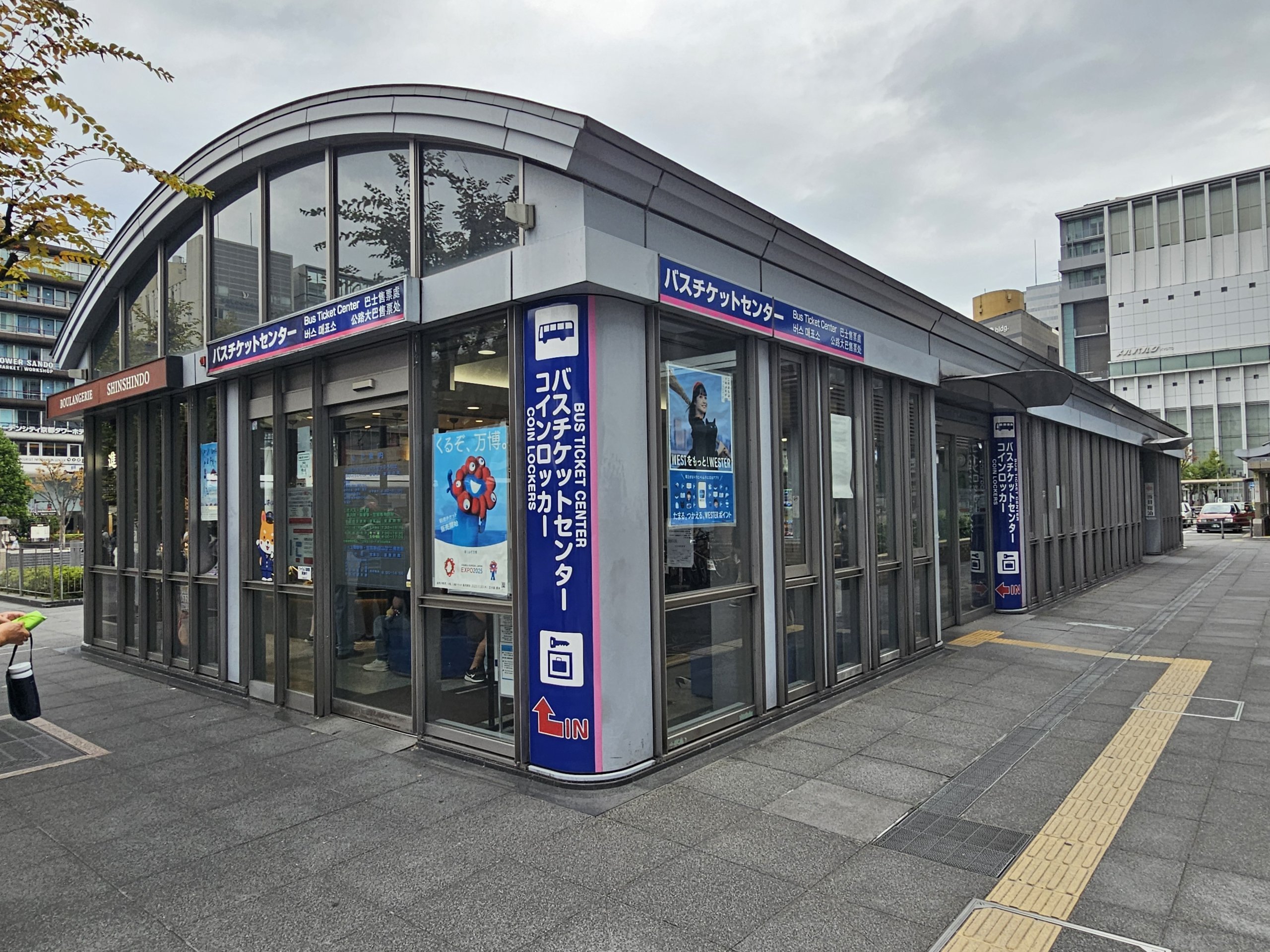
A day pass for the subway only is not very convenient for tourists, as the subway only takes you to a limited number of sights.
A regular single metro ticket costs around 260 jpy for a city trip, so a day ticket is worth it for 3 or more metro rides and at most one bus ride (single costs 230 jpy).
Check the official website city.kyoto.lg.jp for details.
Valid for the whole of the wider Kansai area, including Osaka, Kyoto, Nara or Kobe, the Railway Pass is more suited to rail enthusiasts.
To make it worthwhile, you would need to make 2 round trips each day on the long route (for example, Osaka - Nara / Kobe / Kyoto) or 1 round trip on the long route and several shorter trips (at least 4-5).
| 5 600 jpy | 7 000 jpy |
|---|---|
| 2 days | 3 days |
The ticket is valid for the calendar days and not for 48 or 72 hours.
For Kyoto itself, it usually doesn't make sense.
The easiest way is to use Google Maps, which works very well in Kyoto.
They show:
However, Google doesn't address ticket compatibility, so sometimes it will offer you a route where you have to buy new tickets every time you change.
Frequent misunderstandings arise especially when using the Subway Bus 1-Day Pass, which is not valid on rail lines (such as JR or Randen when going to Arashiyama, Hankyu, or Keihan).
A useful leaflet with examples of the most common connections can be found on the subway and city bus websites: city.kyoto.lg.jp/pdf.
💡 Tip from my own experience
You'll probably be using navigation all day. The easiest solution is an eSIM with mobile data.
A card with no foreign payment fees is also handy when travelling - personally, I've been using Revolut for years, where I also pay for a premium membership to get unlimited access to airport lounges. Also sign up for a Revolut card with a bonus.
These routes are some of the most common movements for tourists. I tried them all on my own.
If you plan to use trains or shinkansen a lot, accommodation near the main station is very practical.
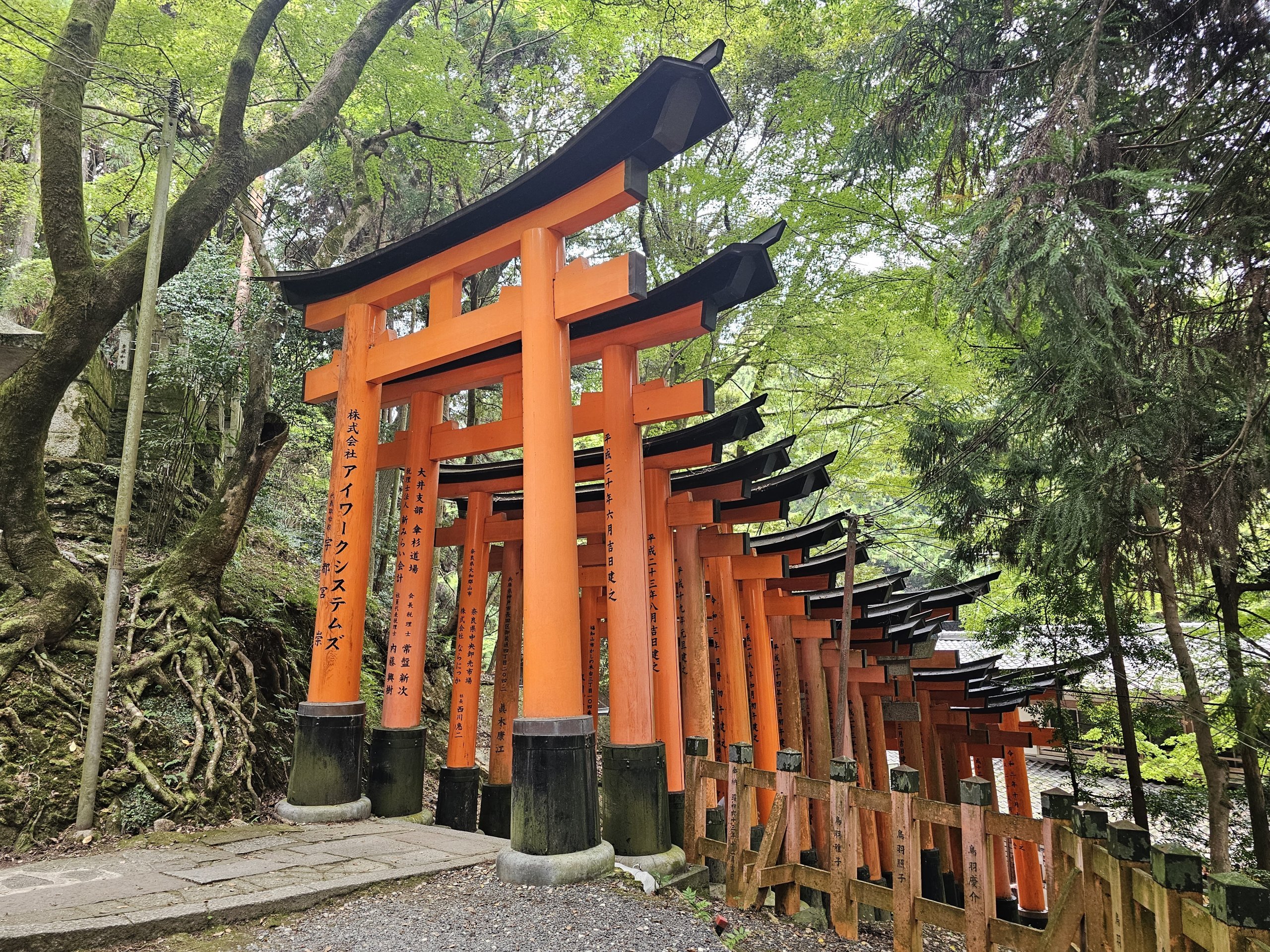
The first time we took the line 5 bus, the second time we took the train. Expect crowds, but you definitely have a better chance of fitting in on the train.
Inari station is right at the entrance to the shrine, while the bus is about 10 minutes walk away.
The fastest train is the JR Sagano Line.
Saga-Arashiyama Station is about a 10-minute walk from the bamboo forest.
I wouldn't recommend taking the bus here at all, even if you want to save money with a day pass. In fact, the bus ride time is usually 60 minutes.
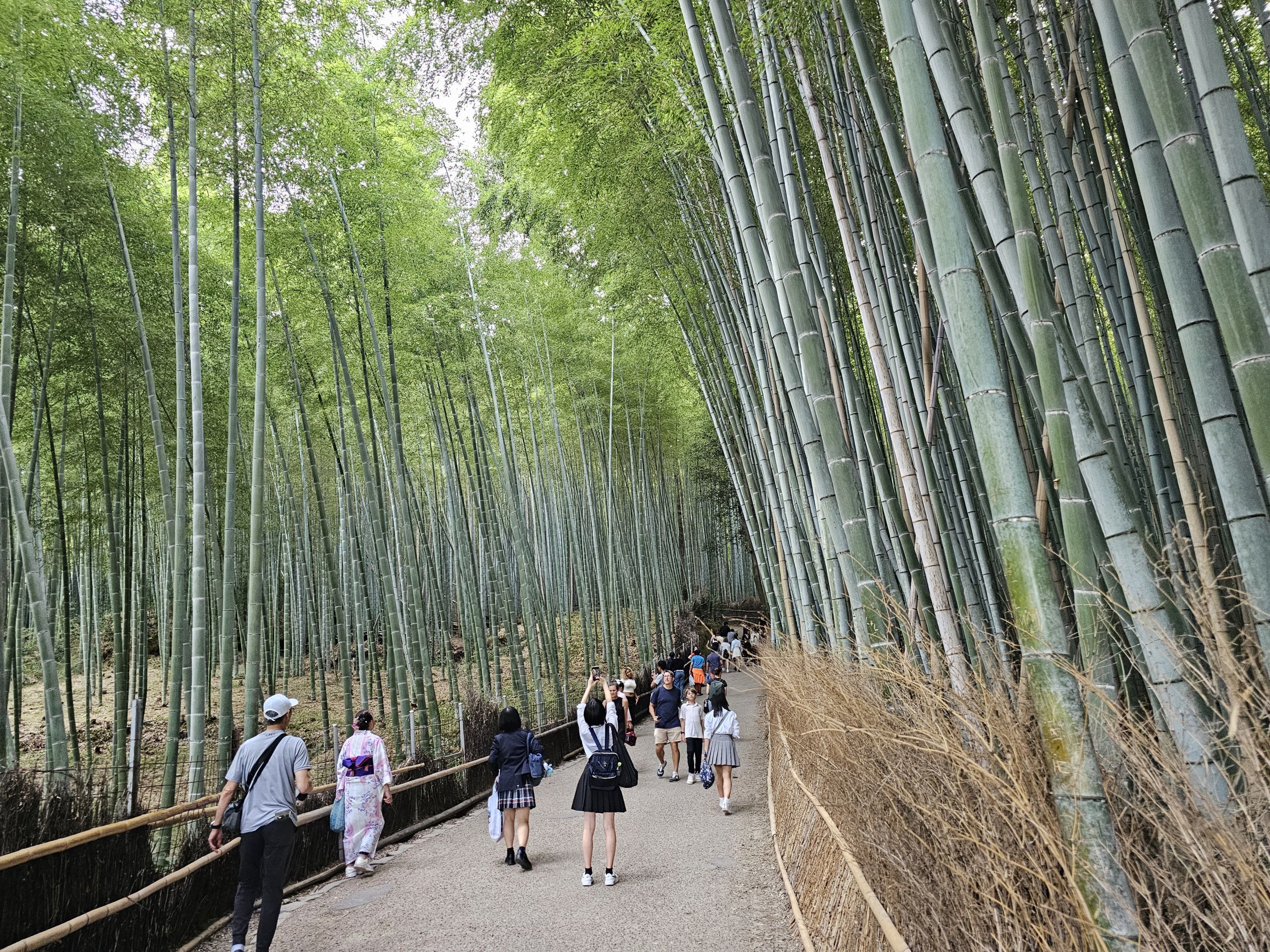
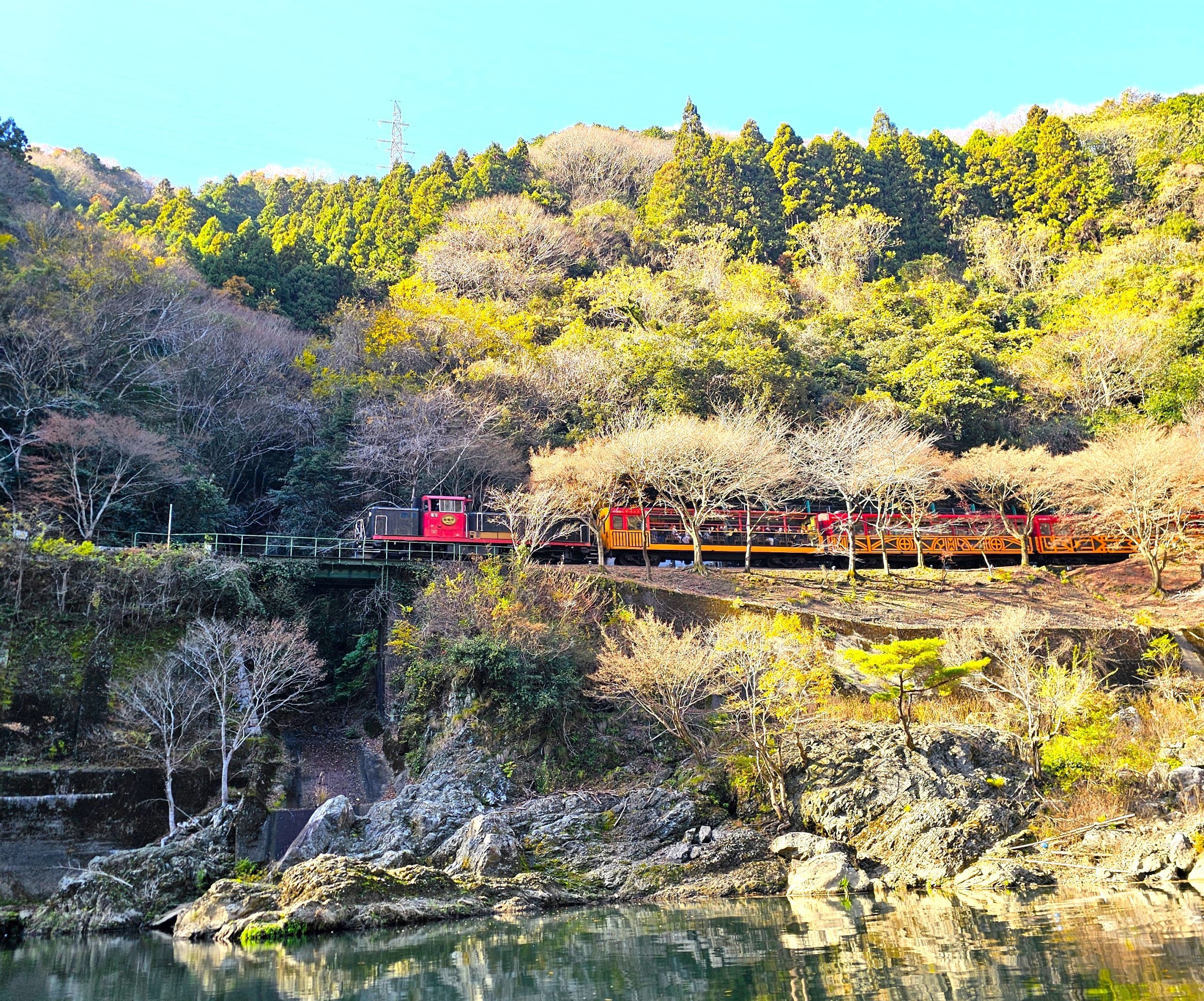
The easiest bus is the 205 or 206 line.
Taking the Karasuma Kitaoji metro and then the bus is only about 5 minutes faster.
The downside is often very long queues.
Taxis can often be faster when travelling with more people.
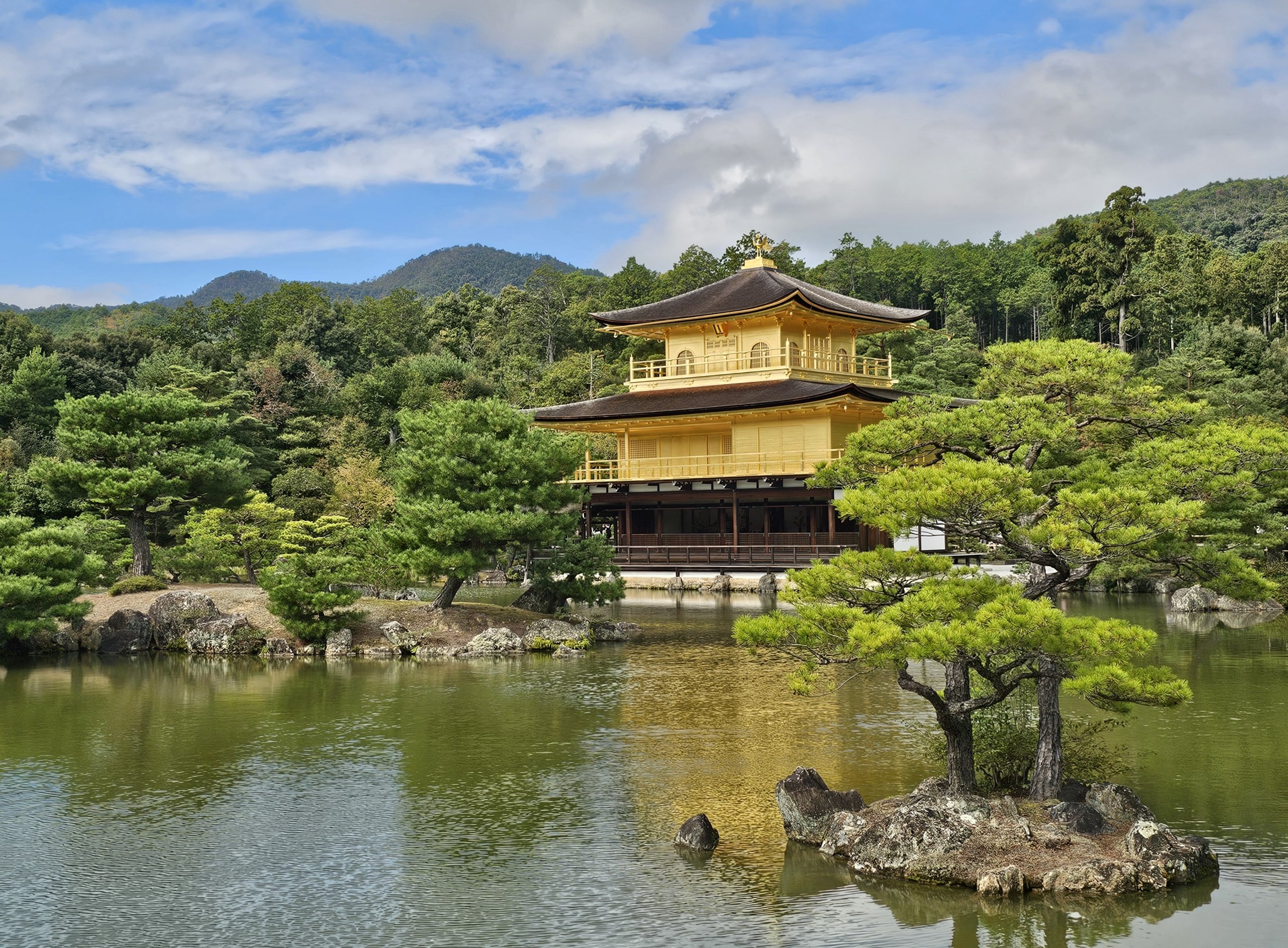
The fastest is the direct bus line 206 (205 in the opposite direction):
Alternatively metro bus with transfer or taxi.
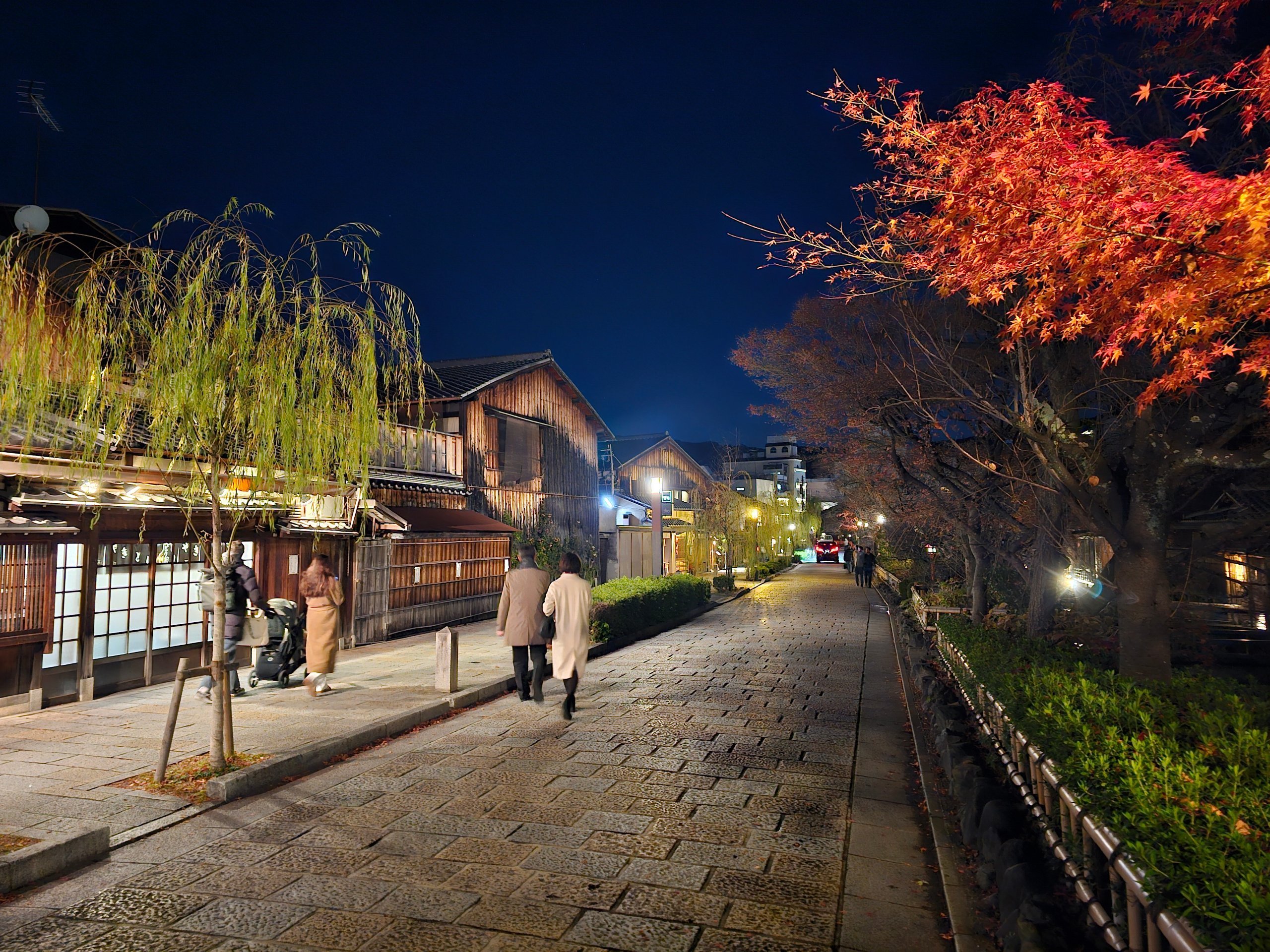
Here are 2 basic variants:
Direct bus line 63 takes over 75 minutes.
Kyoto's basic transport network is 2 metro lines, supplemented by many private and state-run (JR) suburban railways.
These railways can often be used to get around the city, however single tickets and some day tickets are not compatible with each other.
See the Kyoto Metro chapter for details.
Buses are the most important means of transport for tourists as they run to all the sights.
Travelling by bus is especially convenient with Subway & Bus 1 Day Pass.
However, take into account that:
If you take a bus from the centre to the outskirts (for example, to the Arashiyama area or Kinkakuji Temple), the journey will take about 45 minutes.
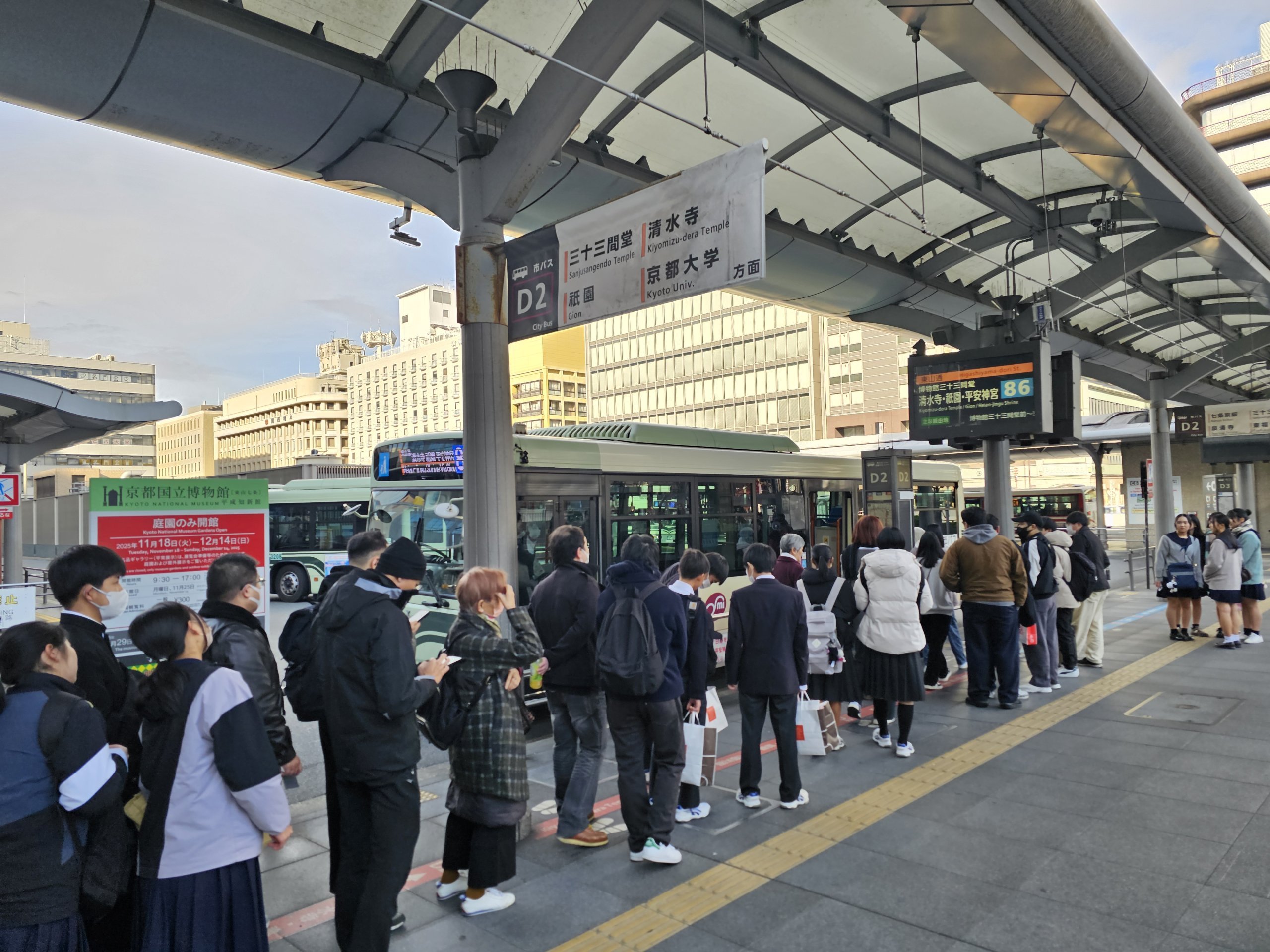
On routes to tourist attractions (especially to/from the Gion and Higashiyama districts), there are often long queues of 40-60 minutes at bus stops.
This is the most practical "don't write about it, but it will save the day" part.
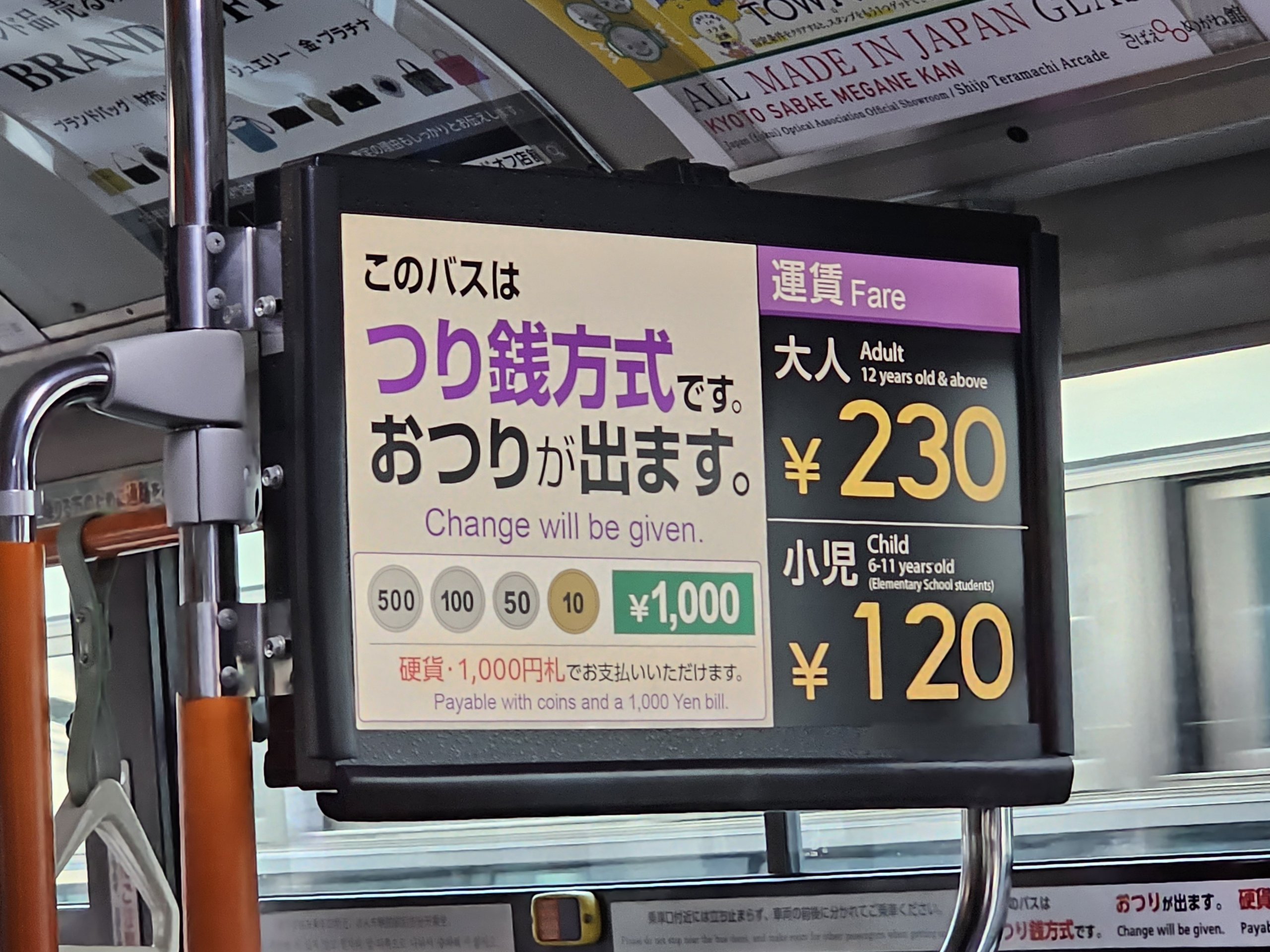
There is a flat fare for all bus carriers throughout Kyoto 230 jpy.
On the outlying parts of lines 16, 17, 18, 19, 32, 34, 52, 54, 90, 95 (Kyoto Bus), 33 (Kyoto City Bus) and all lines of Keihan Bus, the fare is based on distance travelled.
The system is simple:
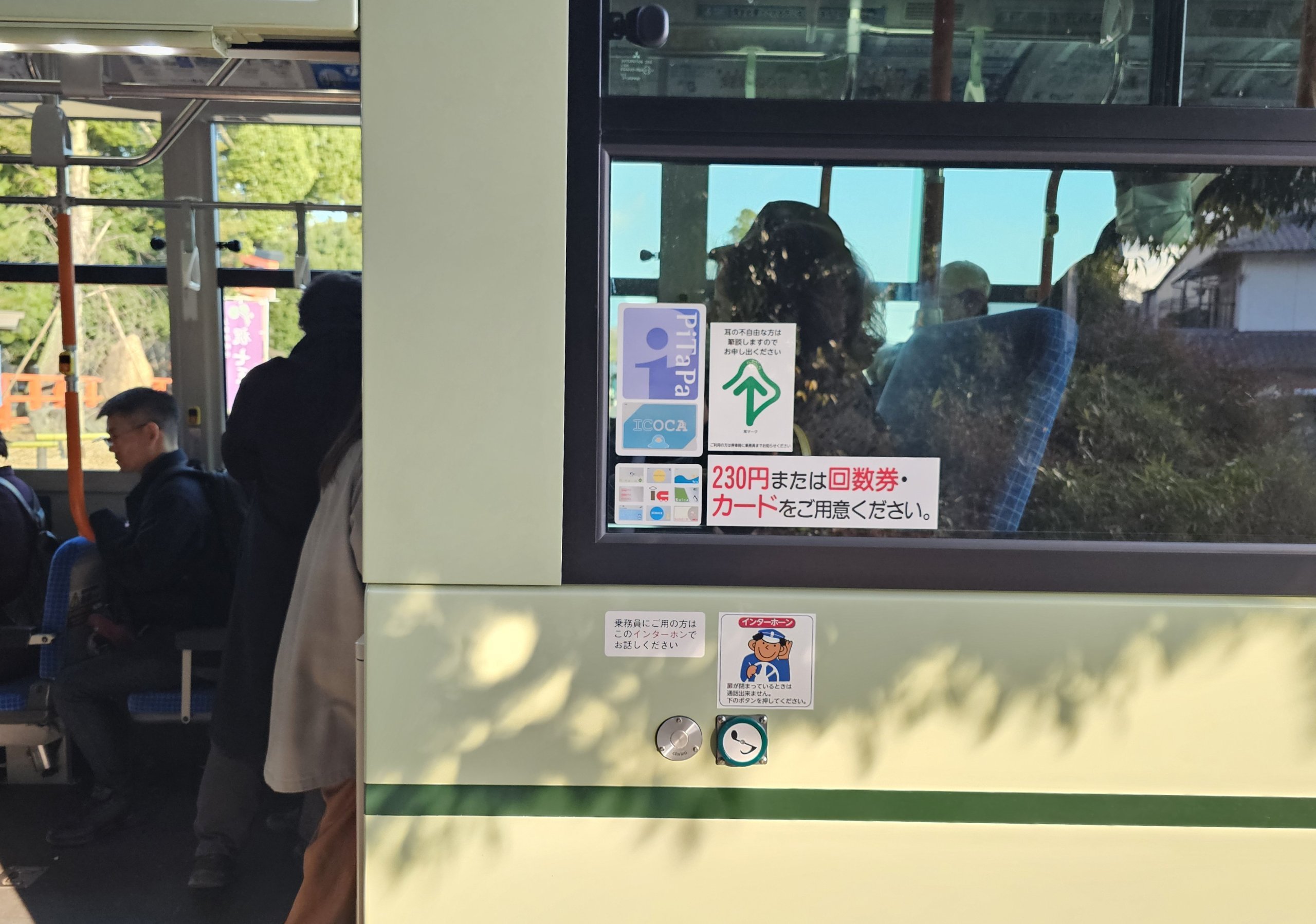
If you're on a line with a segment fare (the minimum number of lines that go beyond Kyoto), take a ticket at the door and then pay the appropriate amount at the driver's desk, or attach a transport card (Icoca, Suica, etc.) to the reader when boarding and alighting.
Payment:
You can pay with the maximum banknote 1 000 jpy, which you can change in the driver's currency exchange.
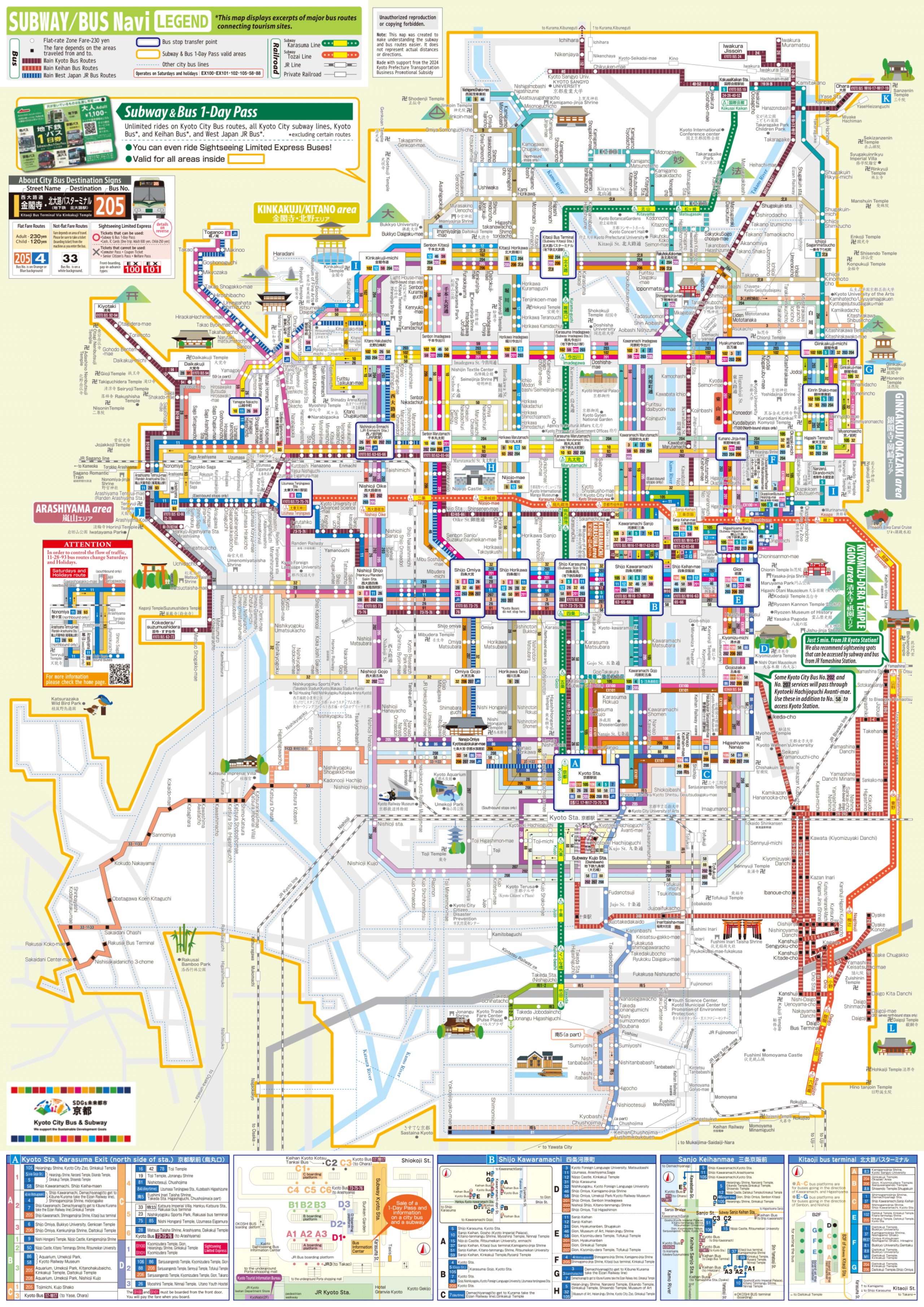
On the Kyoto bus route map, you'll notice stops included in the flat fare are marked with a white circle and stops included in the section fare are marked with a black square.
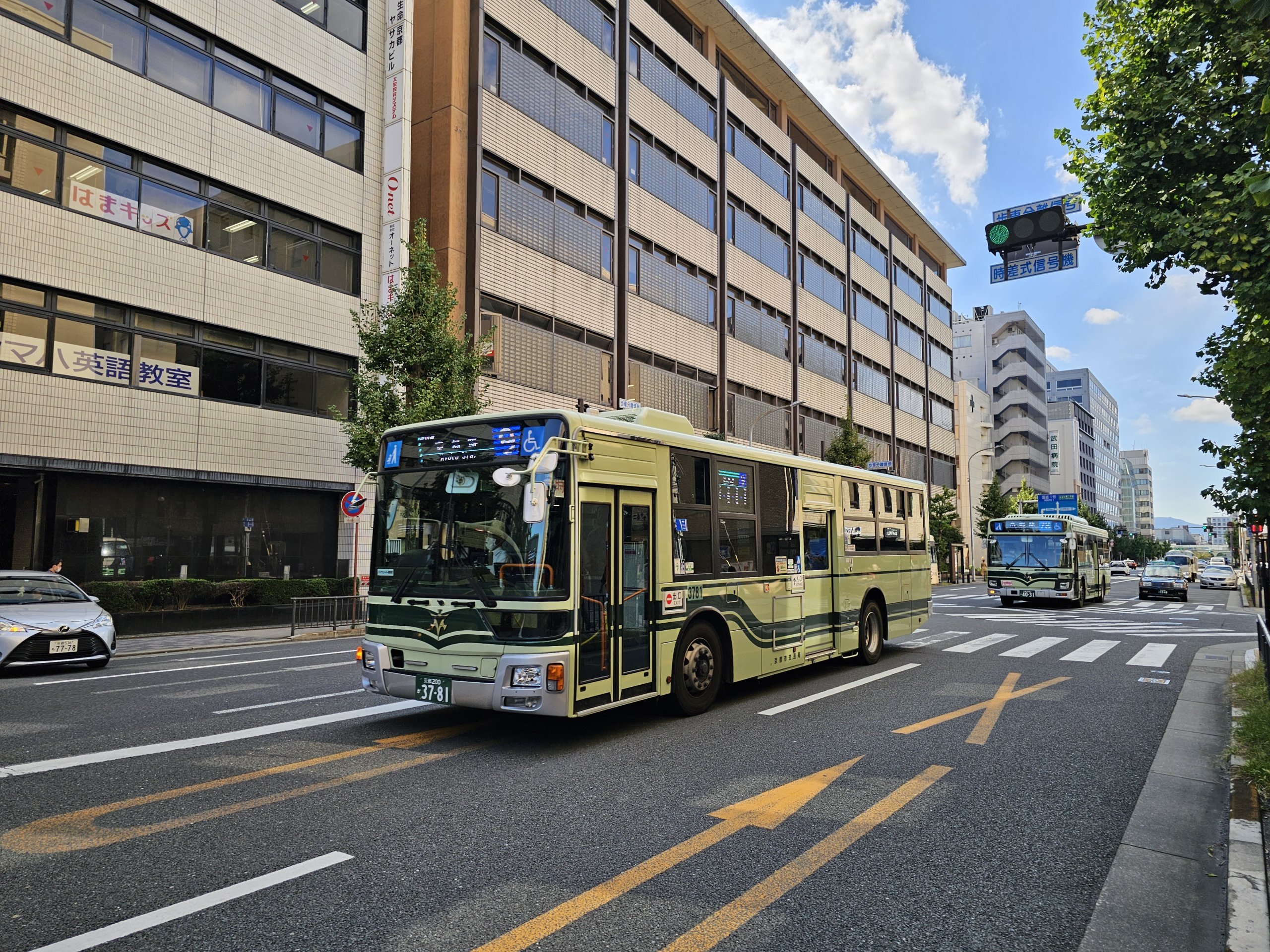
Kyoto's largest carrier operates green buses on many routes throughout the city.
All of its routes operate only within the flat fare zone for 230 jpy except for route 33 in the direction of Katsura Station.
Official website: city.kyoto.lg.jp
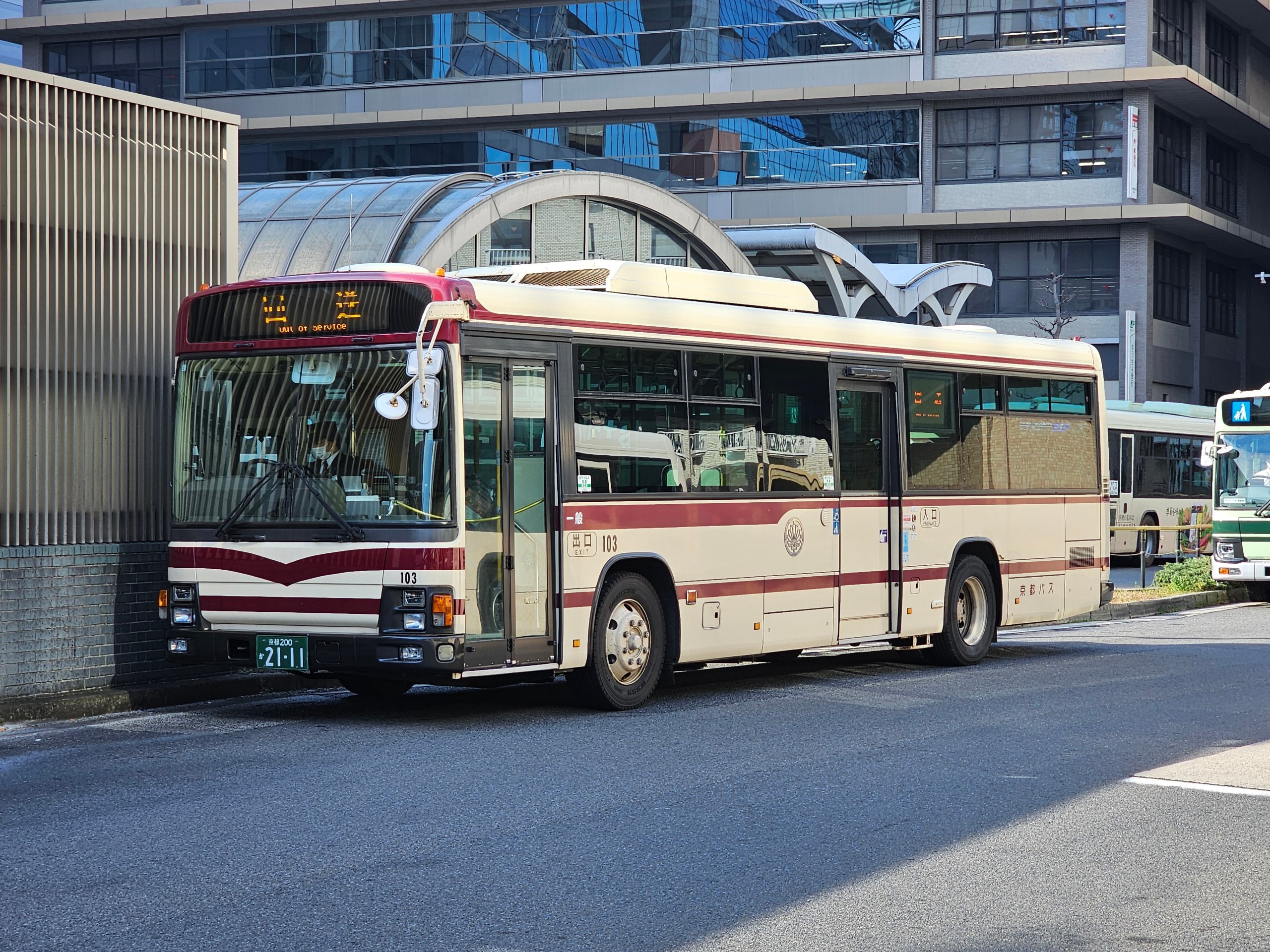
Cream buses with a red stripe run from Kyoto Station to areas such as Arashiyama or vice versa to the northeast towards Iwakura and Ohara.
Most routes heading to tourist areas are included in the 230 yen flat fare zone.
Official website: kyotobus.jp
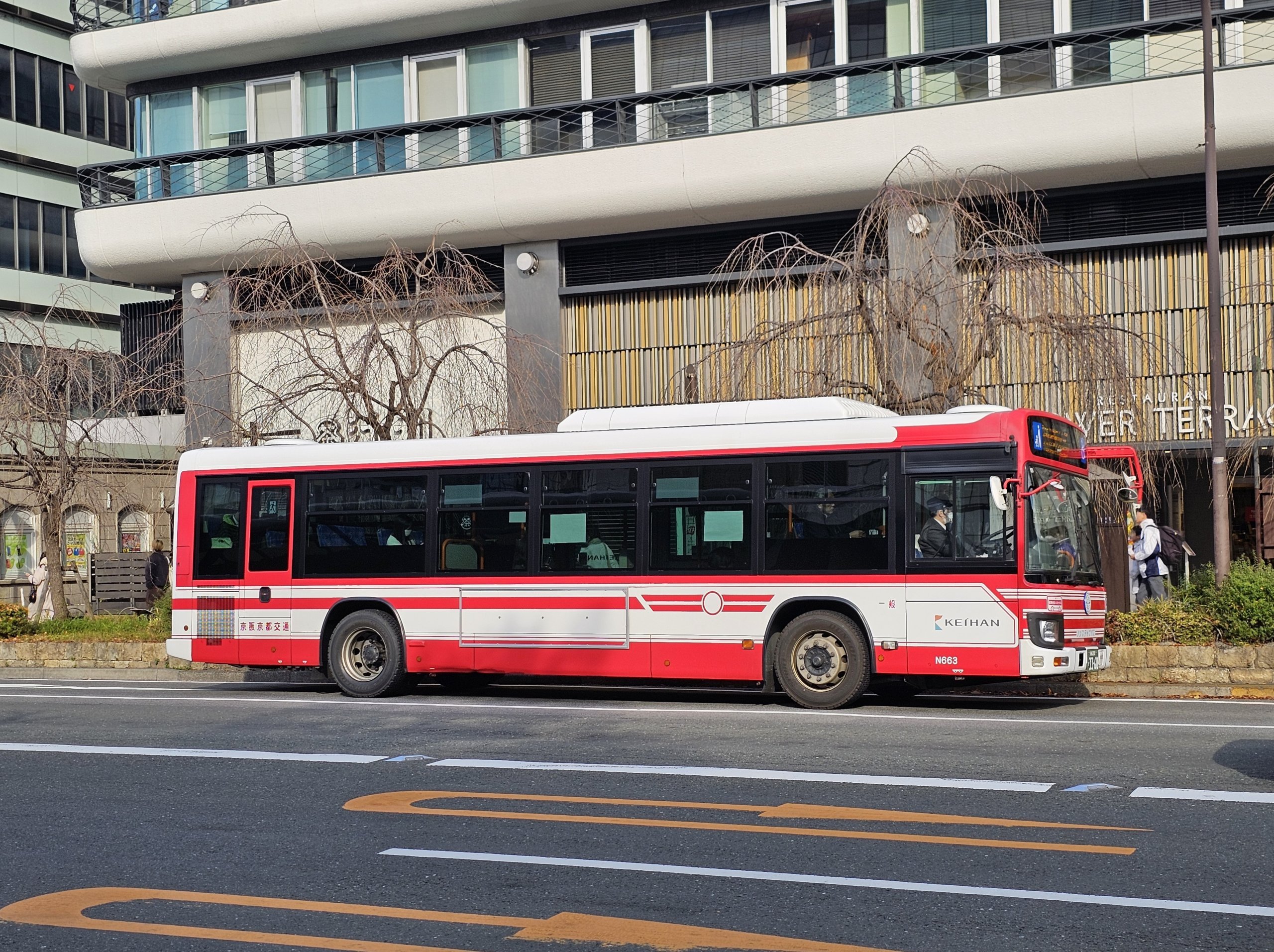
Red and white buses operate in the area on the southwestern edge of the city.
Fares on all routes are based on the number of stops travelled and range from 230 jpy to 390 jpy.
Official website: keihan.co.jp/buses
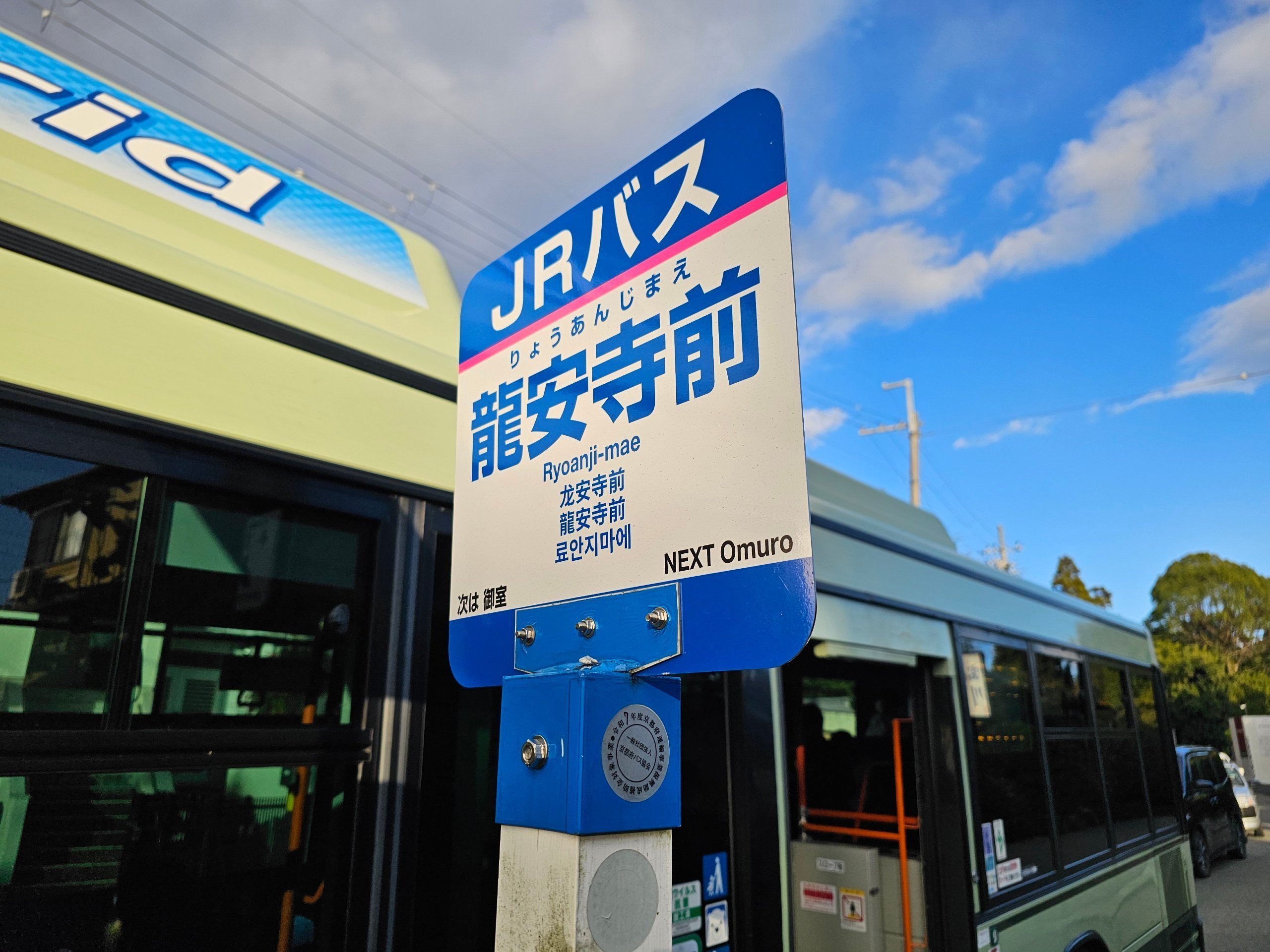
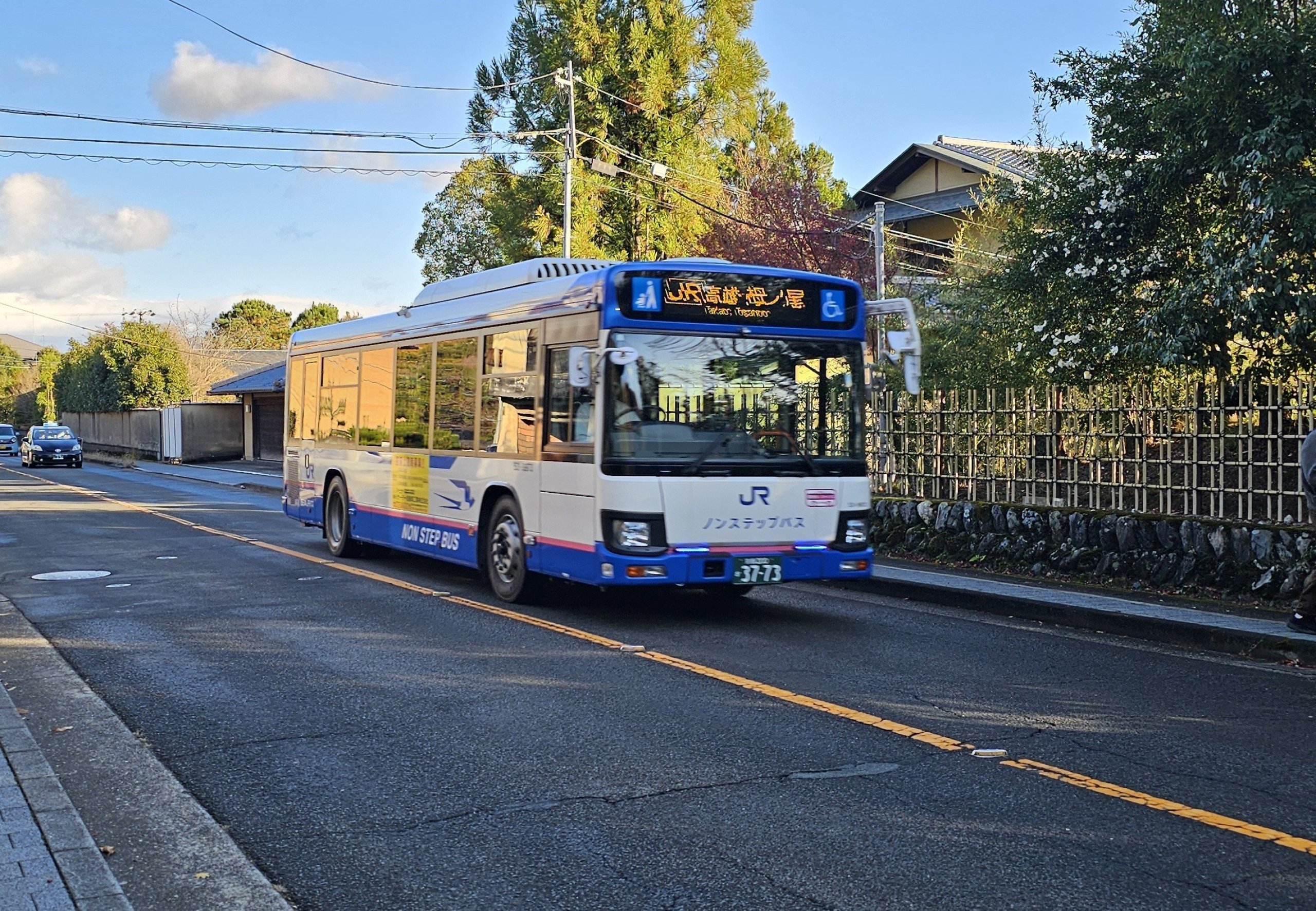
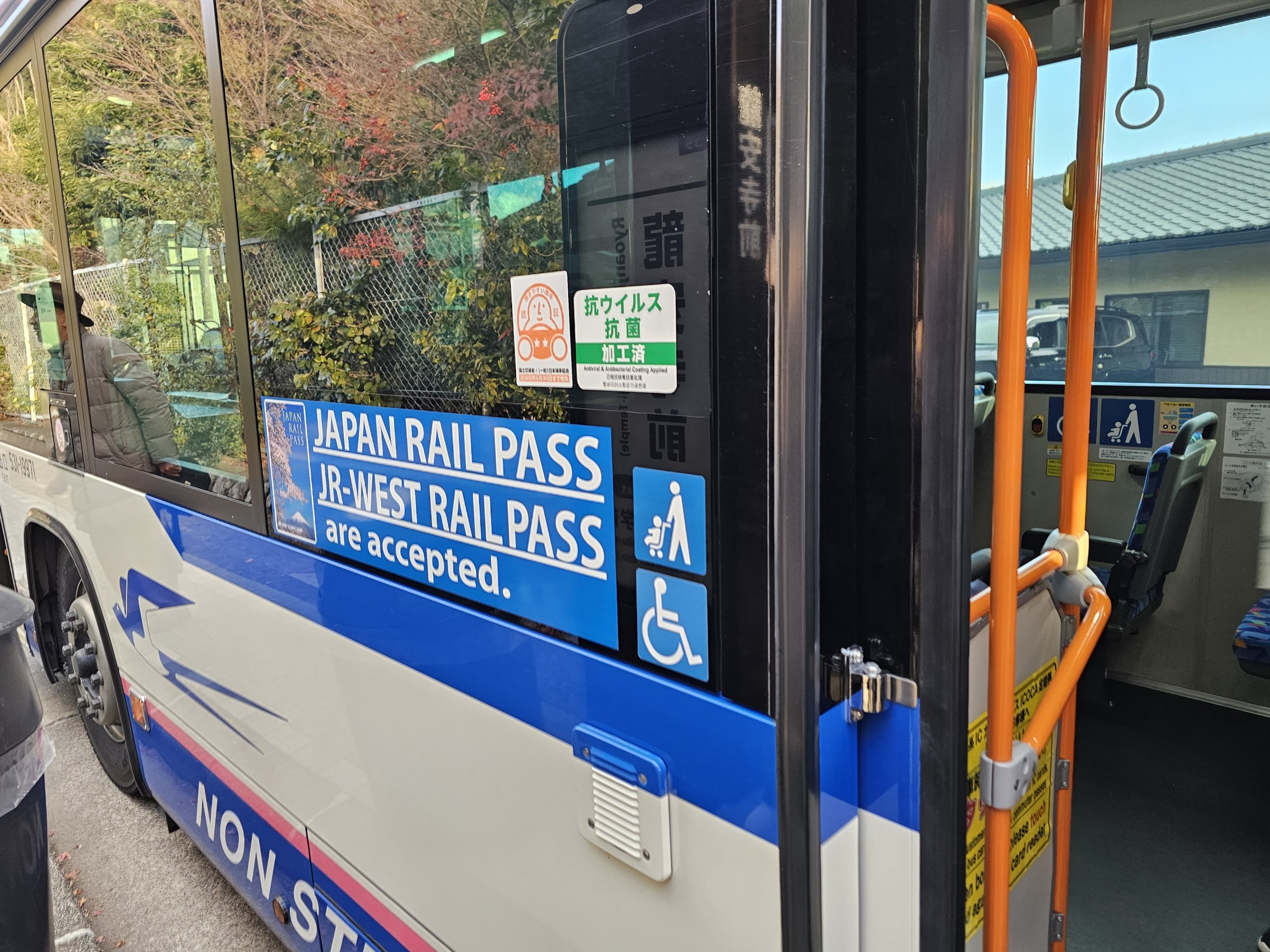
The bus arm of the railway company JR-WEST operates two routes in Kyoto. Both have flat fares 230 jpy.
On both lines you can use the JR Pass or the regional variant of the JR-WEST Pass.
Official website: nishinihonjrbus.j-server.com.
Taxis are very common in Kyoto and surprisingly often reasonably expensive.
You can flag down a taxi on the street or at taxi stands, which are located at subway stations, tourist sights, or in front of large hotels.
Fares vary from taxi company to taxi company:
A trip across the centre usually costs around 2 500 jpy.
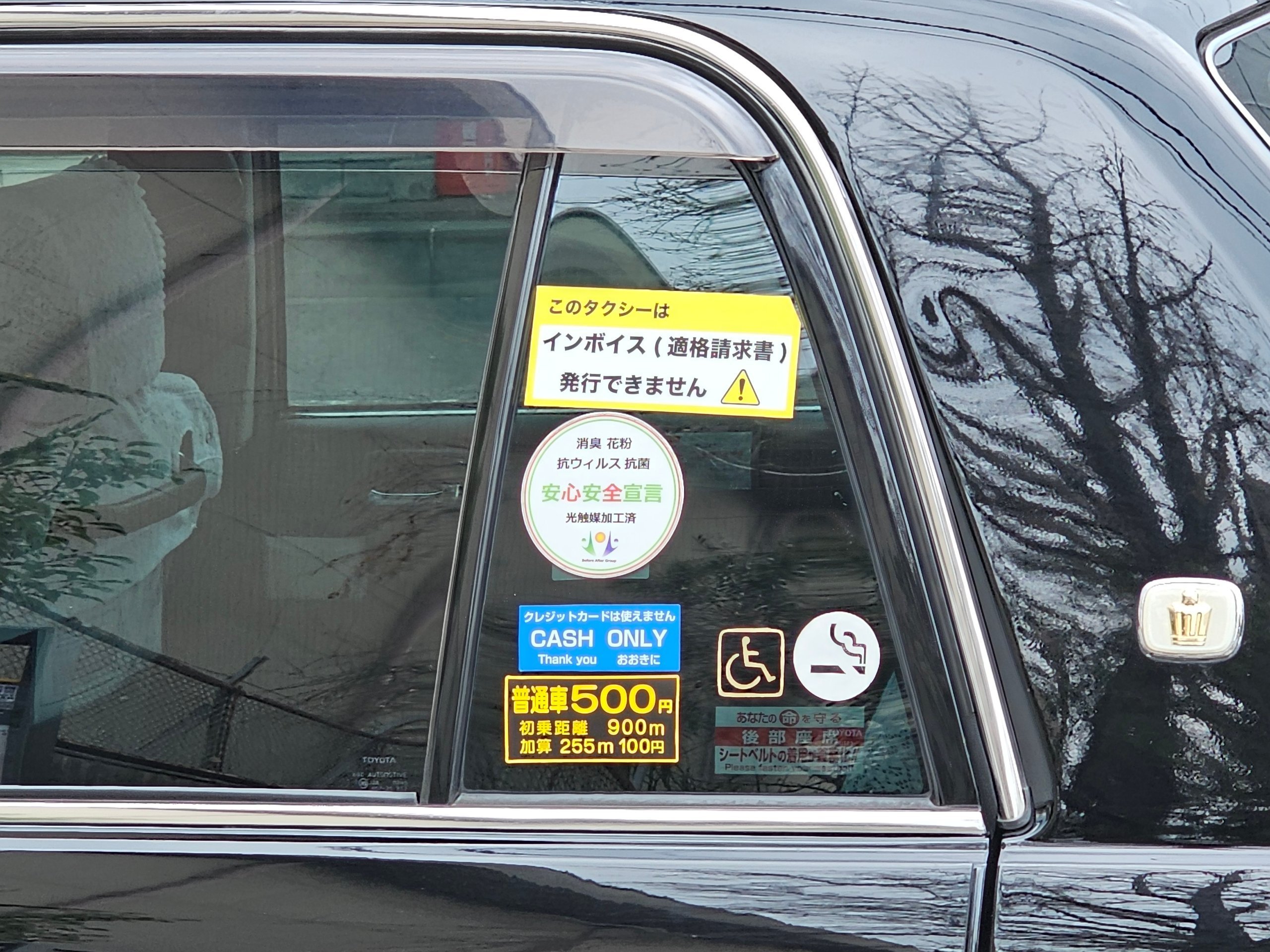
Taxis can usually be paid for in cash and many taxis also accept regular Visa, Mastercad or American Express cards or Japanese transport cards (Icoca, Suica and others). However, card payment is not always the rule.
Taxis are good for example:
Always use the taximeter. Common fares are as follows:
Usually, you will pay around 2 000 jpy.
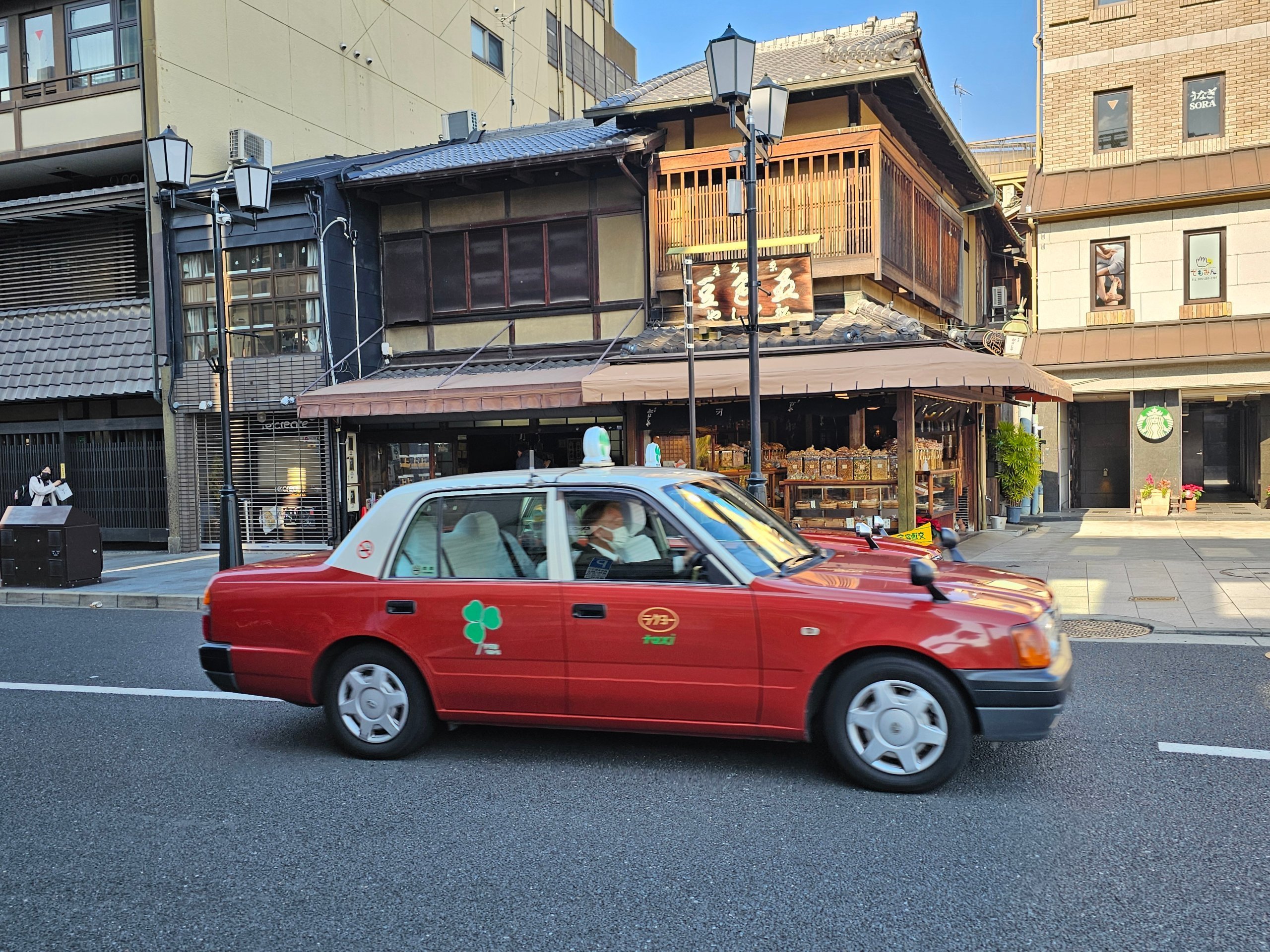
Tipping is not common in Kyoto when taking a taxi.
However, you can round the amount up to the nearest ten. If you have to pay 1,900 yen, it's okay to leave the taxi driver 2,000 yen.
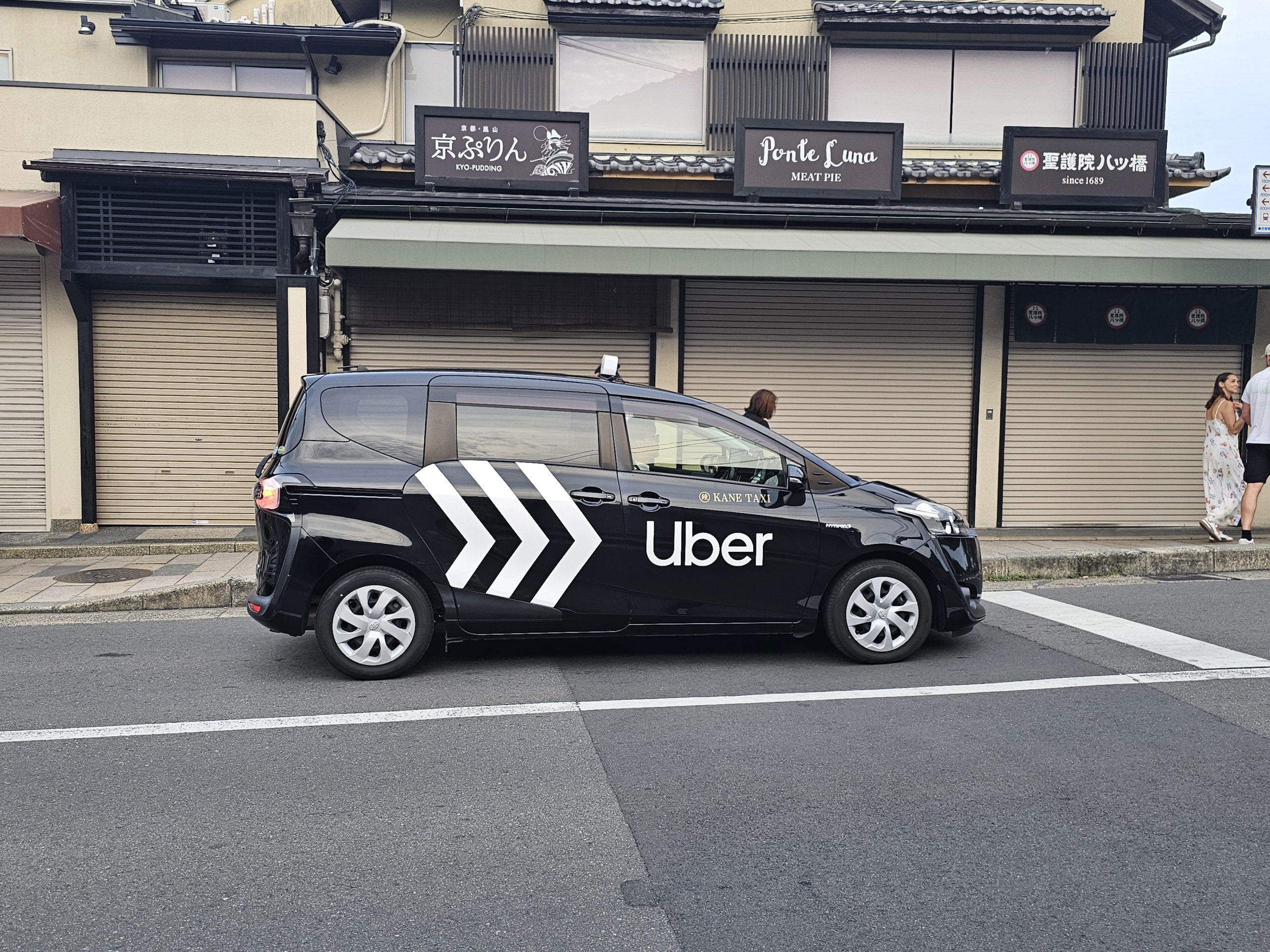
While there are mobile apps like Uber and DiDi in Kyoto, the prices are always the same as regular taxis and are only calculated based on the actual ride (according to the taximeter).
The advantage, however, is that you can always pay by card when using the apps.
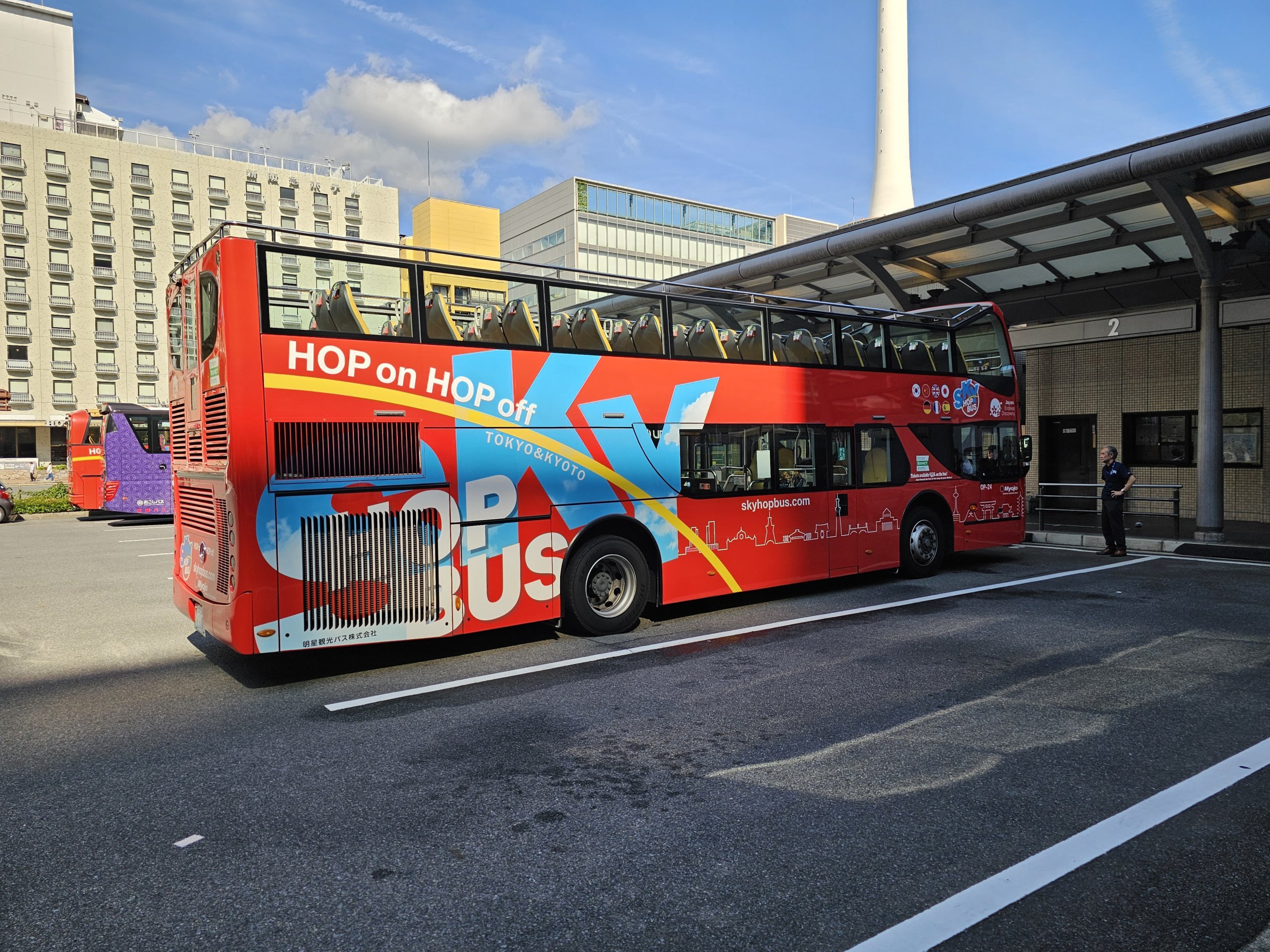
There are two companies operating tourist sightseeing buses in Kyoto, on which none of the above tickets apply.
These buses are expensive, but they don't have the queues that form on regular buses.
K'Loop operates on three different routes. However, the frequency is 80 minutes, so a bit of time planning is required to use these buses.
For example, buses run to the following sights: Fushimi Inari-Taisha, Nijo Castle, Kinkakuji, Toji Temple, Ginkakuji, Gion.
Tickets are sold in the following variations:
For details, visit kloop.jp.
The company formally operates 3 lines, but in reality they all run on one route. The only difference is the number of stops.
All routes always depart from Kyoto Station.
Buses run to the following sights: Nijo Castle, Kinkakuji, Kyoto Imperial Palace, Ginkakuji, Gion.
Due to the high prices and the limited number of attractions that the buses go to, we do not recommend this mode of transportation.
Tickets are only sold in full-day or 2-day options and you cannot buy a single ticket for just 1 ride.
Tickets can be purchased on the bus (cash and credit card payments are accepted) or online at skyhopbus.com/kyoto.
If you only have 1 day in Kyoto, it may be practical to join an organised tour.
Many of them combine:
Best Kyoto Tours - GetYourGuide.com
The metro is fast, but it only gets you to a limited number of sights. Most tourists combine the metro with buses.
Yes, especially in tourist areas like Gion or Higashiyama.
In high season, there can also be long lines for the bus.
Yes, but the sights are quite far apart.
For example, there are good walking areas:
If you have any questions or comments about the article...

Now we drove from Enmachi and 205 on JR pass is no longer working. Only the JR bus that goes to the university.