Fly to Asia from Budapest with China Eastern Airlines this autumn and winter
520 €



On Koh Samui is driven on the left as in the whole of Thailand.
Personally, I was worried about renting a car. Many people warned me that renting a car anywhere in Thailand is complete nonsense: heavy traffic, impossible to park, narrow streets full of scooters.
In short - on Koh Samui, renting a scooter is the only sensible option. This is the information I've heard from most travelers who have already visited Koh Samui.
I, however, don't have much experience with scooters, and we were traveling in two. I'm used to driving a car in foreign countries, so I booked a car in advance through one of the many international rental companies.
And the reality?
I've experienced much worse places to drive a car. If you don't want to rent a scooter and depend on very expensive taxis/Grab/Bolt, a car is the best option.
Compare car rental prices on Koh Samui
The first 10-15 minutes are special. Not because of traffic, but because of driving on the left.
But then you get used to it surprisingly quickly.
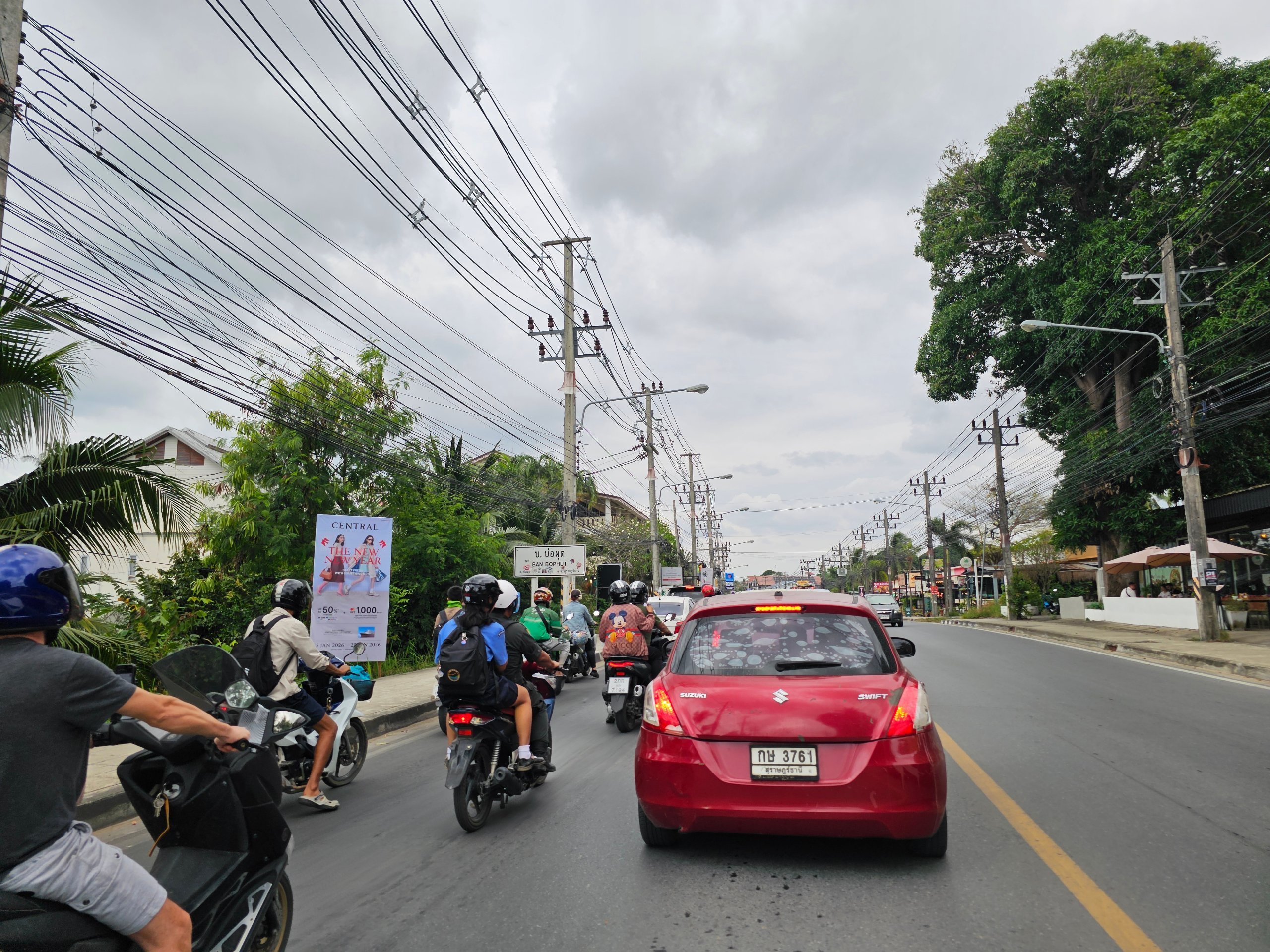
The traffic itself isn't nearly as crazy as it's often described. Yes, there are a lot of scooters, but:
I was surprised to find that Koh Samui is actually quite law abiding. For example, drivers (including scooter drivers) usually use their turn signals when turning, which is quite uncommon elsewhere in Asia.
Yes, the chaos on the roads is definitely much more than in, say, Europe or Australia. But at the same time, there aren't many aggressive drivers here.
What negative things do you have to prepare for?
👉 If you've ever driven in, say, Italy or Greece, you can handle Samui without any problems.
✅ Yes, if:
❌ More likely not if:
💡 Alternative:
A scooter is cheaper and more flexible, but also significantly riskier. If you are unsure, a car is a safer option. Alternatively, Grab/Bolt apps are available everywhere, but Koh Samui is the most expensive place in Southeast Asia in this regard.
I booked my car in advance online and I recommend you do too.
👉 The easiest way is to use a comparison engine:
You can find several rental companies locally, but they are quite small and if you book a car on the spot, there might not be any available.
When to book:
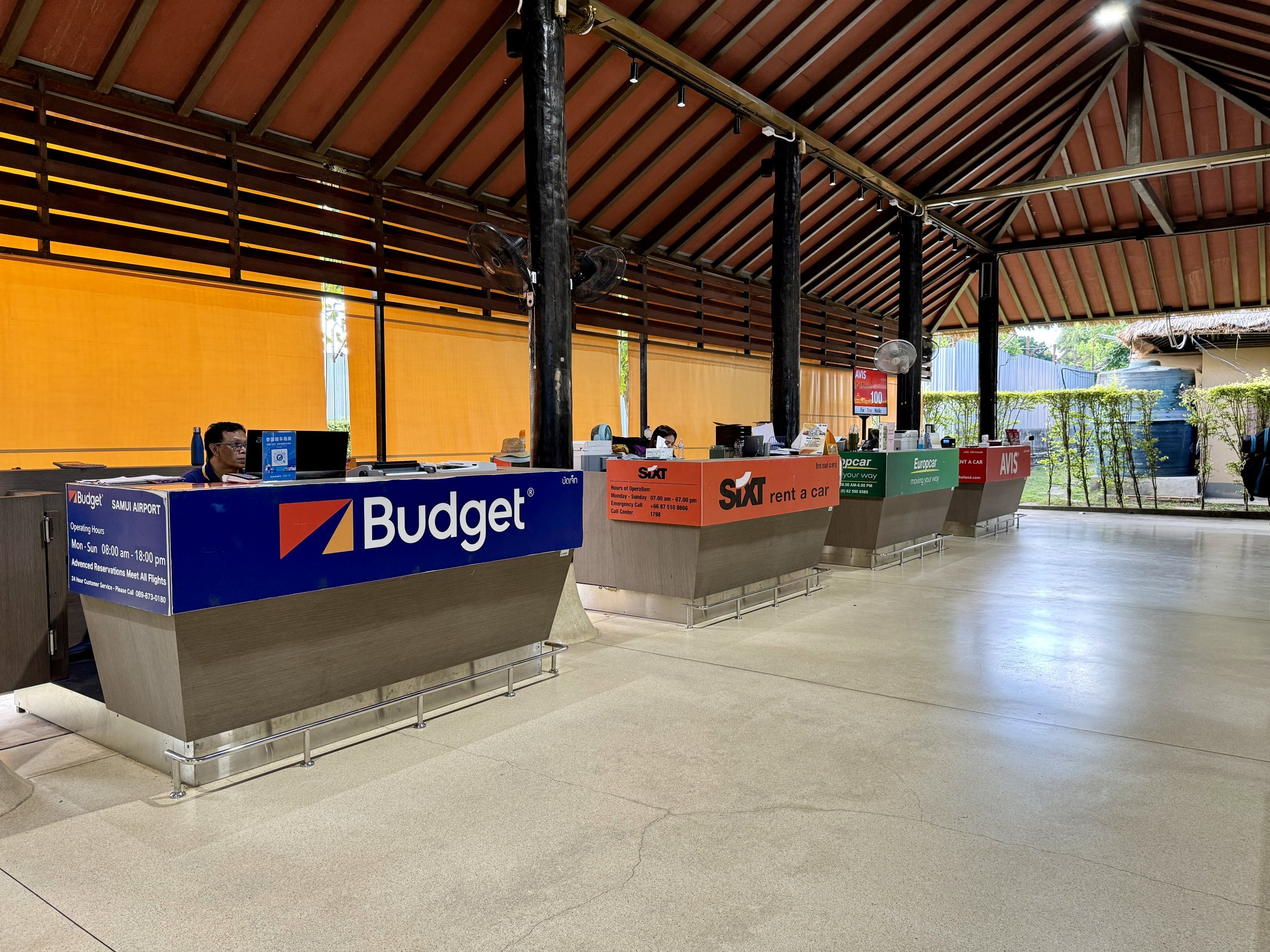
I was honestly surprised at how cheap it is, even with big international rental companies like Europcar, Hertz or Avis.
We booked a car through Sixt and had a universally positive experience. The car is new, picking it up at the airport was no problem, and returning it early in the morning outside opening hours was no problem either (you drop the key in the box at the counter).
With two people, this will often work out similar or even cheaper than a constant taxi.
We rented a car for 6 days and I paid a deposit of 3 000 thb.
If you rent a more powerful scooter, you'll pay around 400 thb to 500 thb per day, but the convenience and safety clearly speak for the car.
Find out current car rental prices
This is one thing I wouldn't underestimate.
Is this your first time renting a car? Read our general article on renting a car.
1️⃣ Insurance
I always take full insurance. Either the more expensive one directly through the rental company (I don't have to deal with anything afterwards) or the cheaper external one.
On Samui, tourist accidents happen daily - mainly due to scooters and narrow streets (scratches)
2️⃣ Car documentation
Take a full picture of the car when you pick it up.
Scratches are common and no one really addresses them.
3️⃣ Credit card
International rental companies usually require one.
However, on Koh Samui a debit card is often accepted, albeit with a much higher deposit.
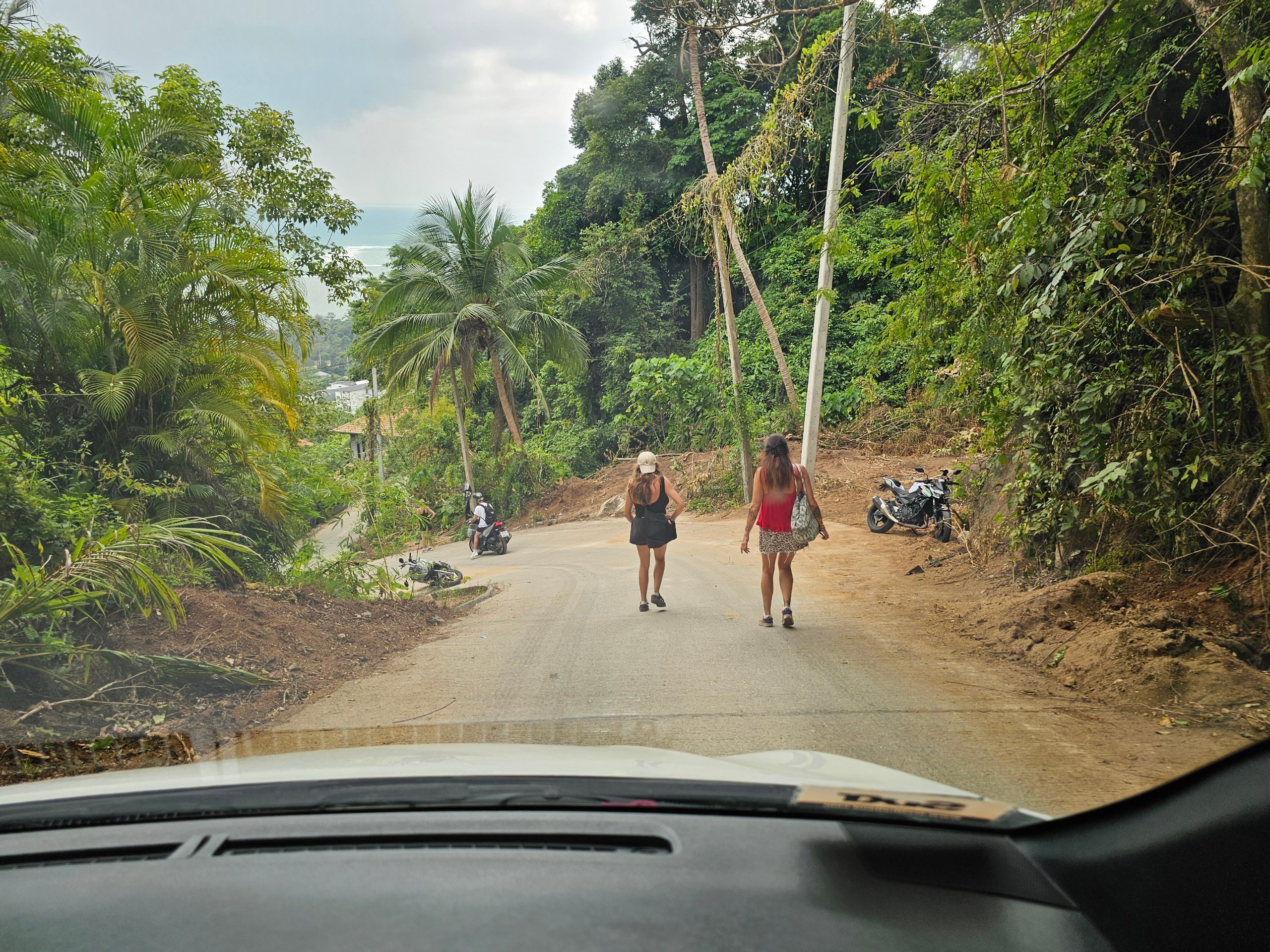
4️⃣ Rain and hills
Roads in the mountains (e.g. to viewpoints or waterfalls) are steep.
In the rain, they slide more than you'd expect.
Officially you need one.
Reality:
Parking is a topic I dealt with a lot before the trip, because this is where I expected the biggest problem. It was actually a little easier than I anticipated.
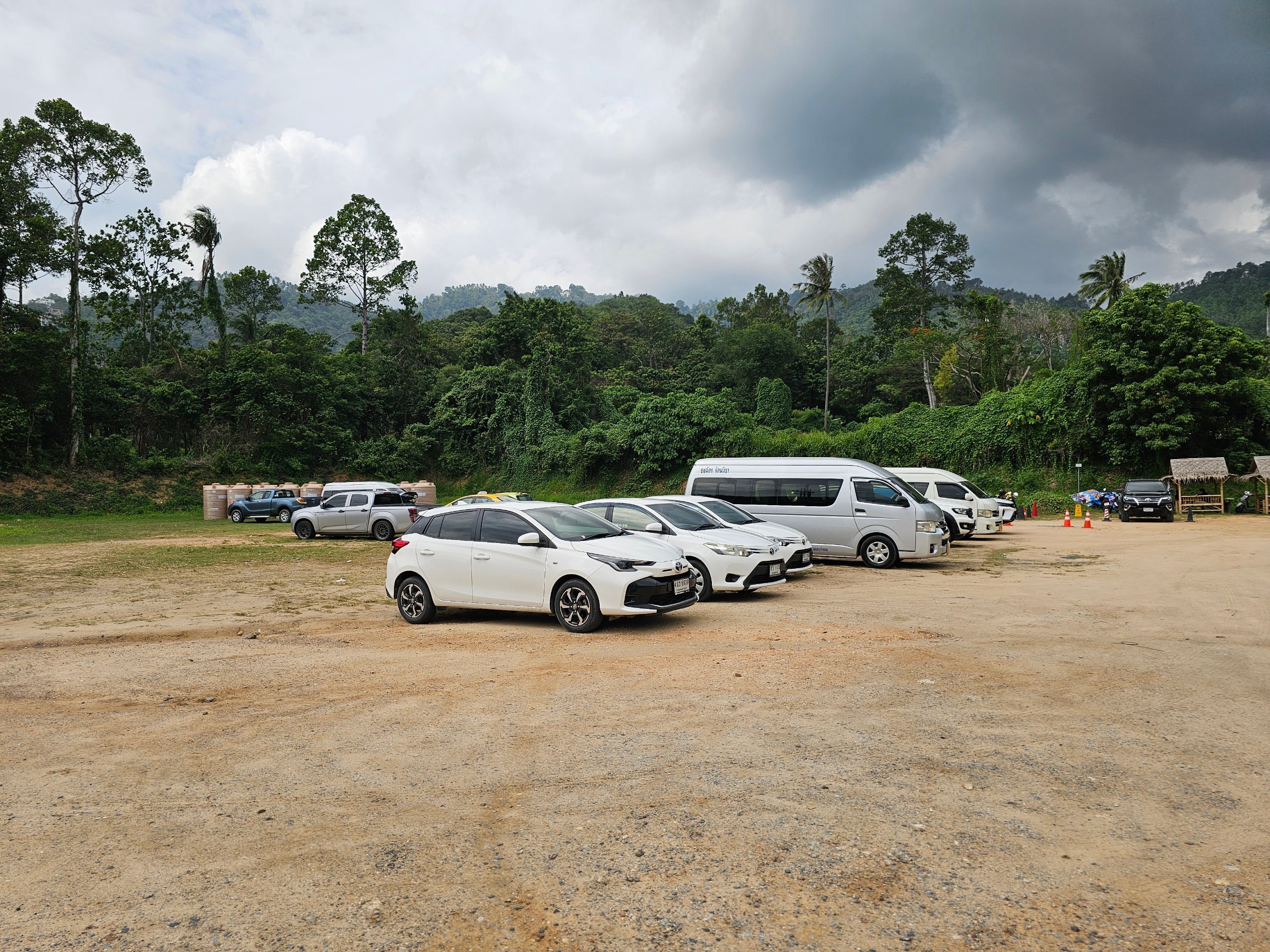
In most places outside the busiest centre of Chaweng, parking is not a major issue.
At beaches, temples, cafes or smaller attractions, you can usually park either directly on the roadside or in a small improvised parking lot.
It is relatively easy to park for example:
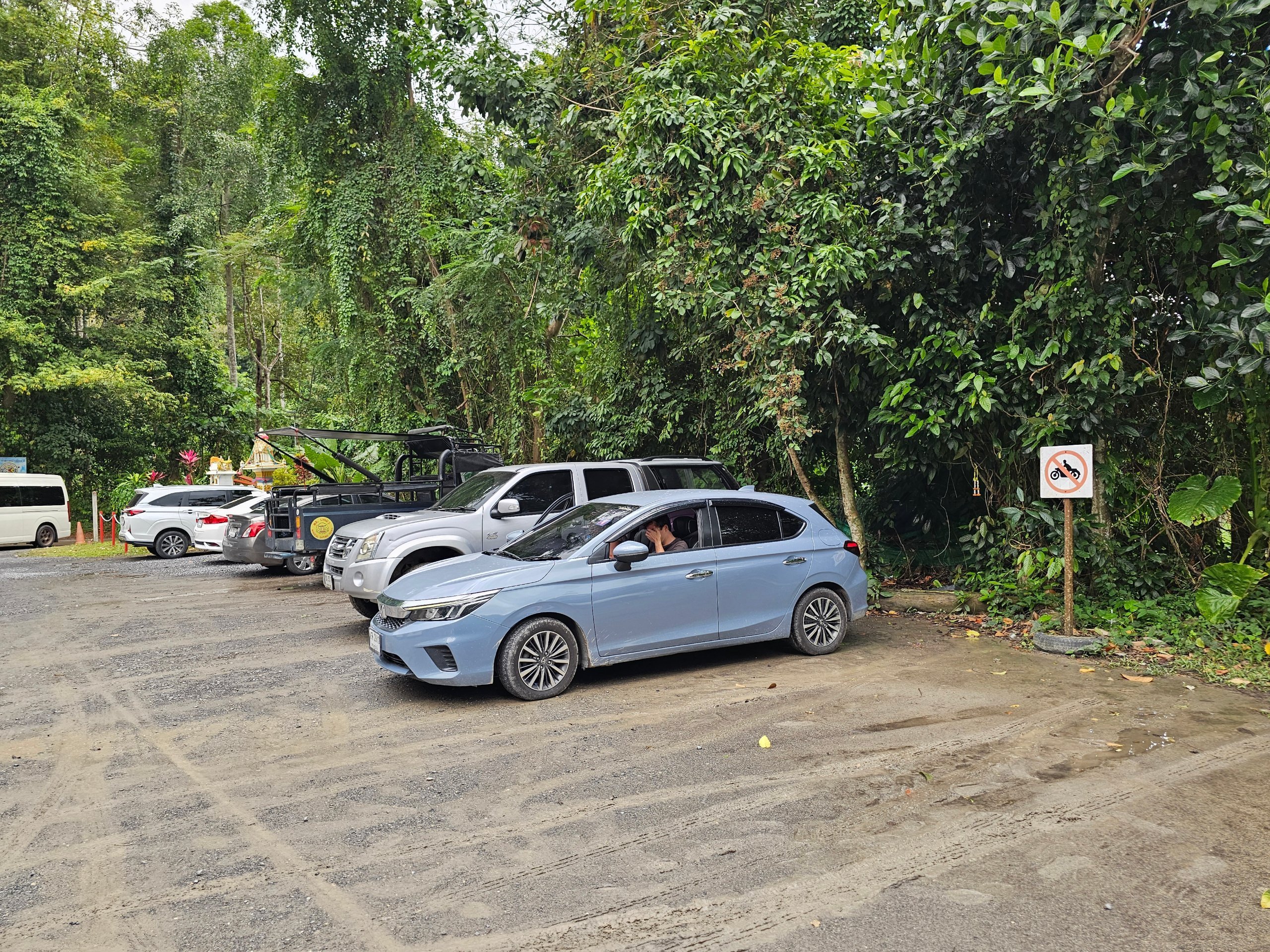
The most difficult situation is in the following areas:
From there, it's a good idea to expect to spend some time looking for a spot or park a little further away and walk the rest of the way.
We describe where and how to park at each place in the chapter What to see on Koh Samui.
It is common to park on Koh Samui:
Always check that:
Compared to European resorts, parking on Koh Samui is very cheap.
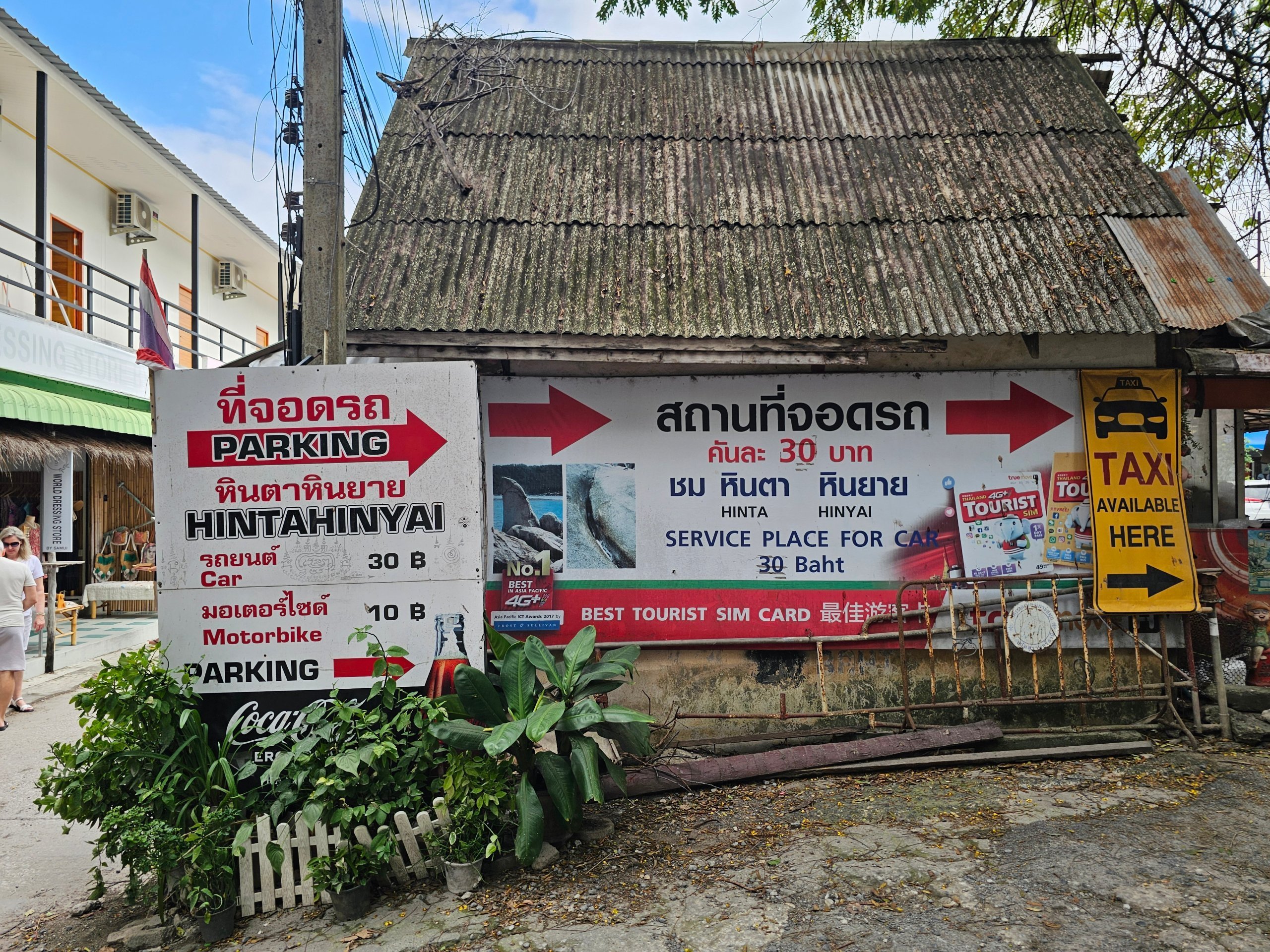
If there was one thing I was unnecessarily worried about, it was parking.
Yes, it's sometimes not entirely convenient in Chaweng, but it's certainly not true that parking makes a car unusable in Samui.
Book a car rental in Koh Samui
The quality of Koh Samui's main roads is generally good.
The main ring road around the island is essential, as it takes you to most of the important tourist areas.
Roads up the hills, to some viewpoints or resorts inland, tend to be considerably steeper than the normal coastal routes.
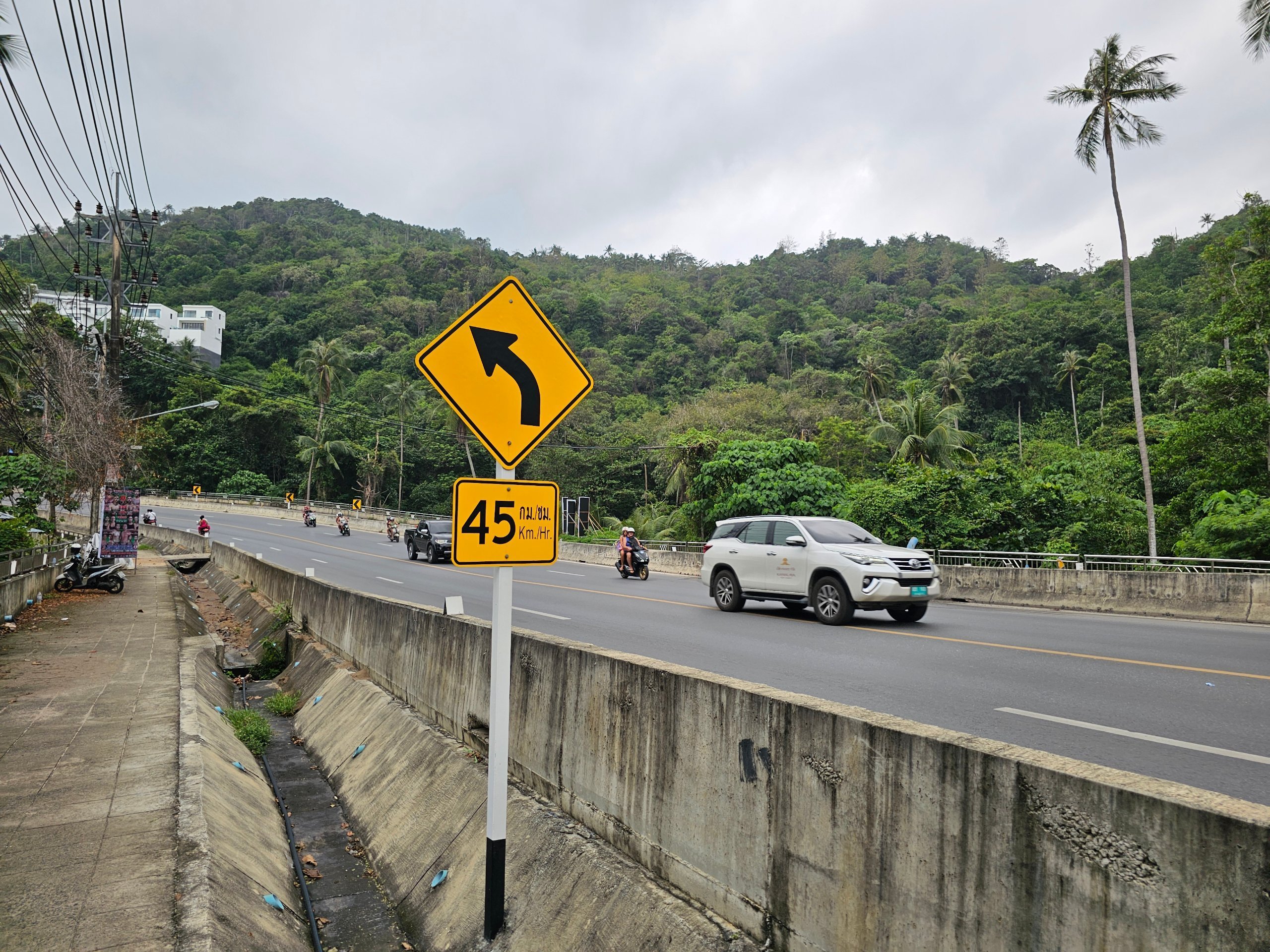
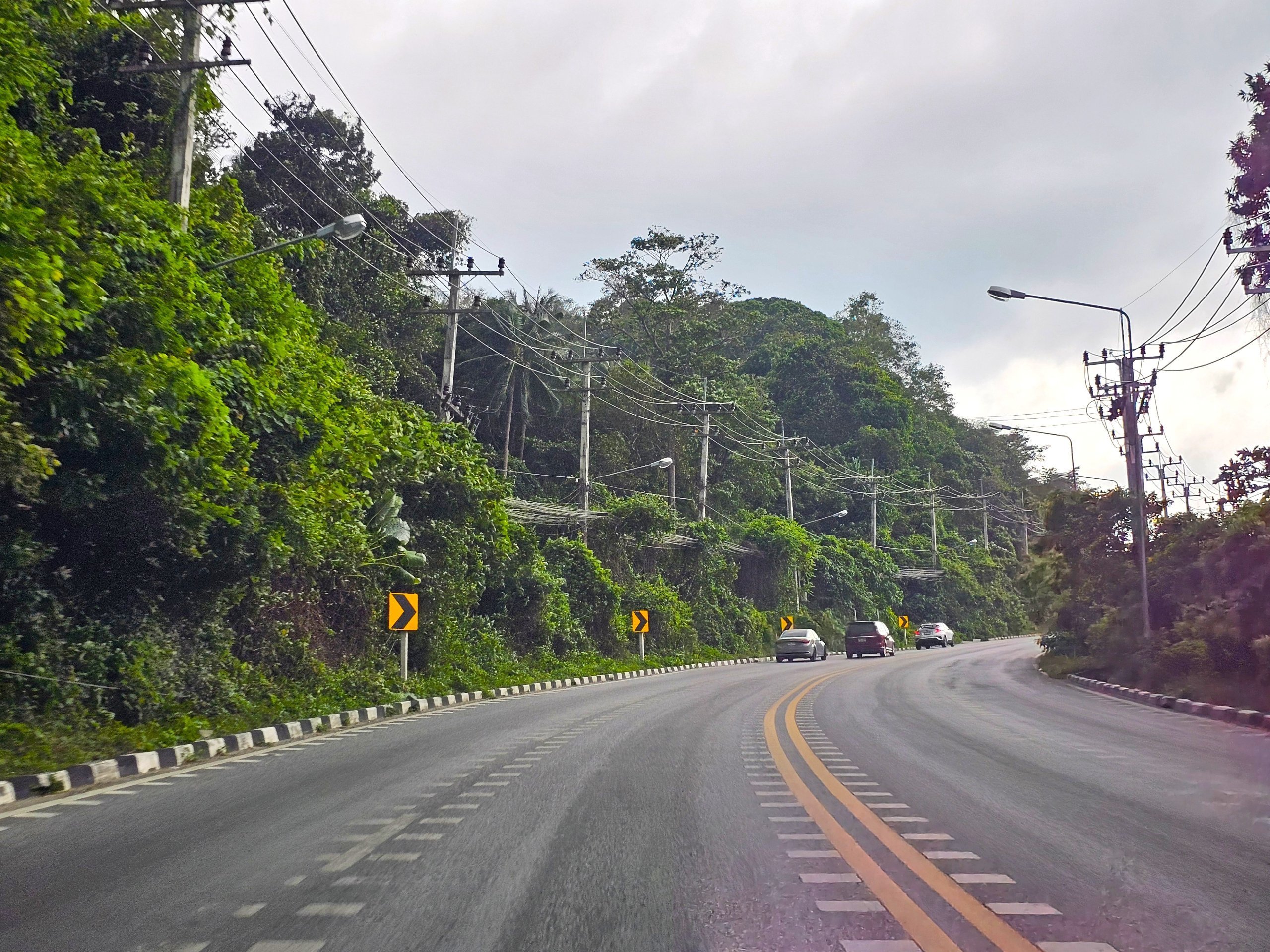
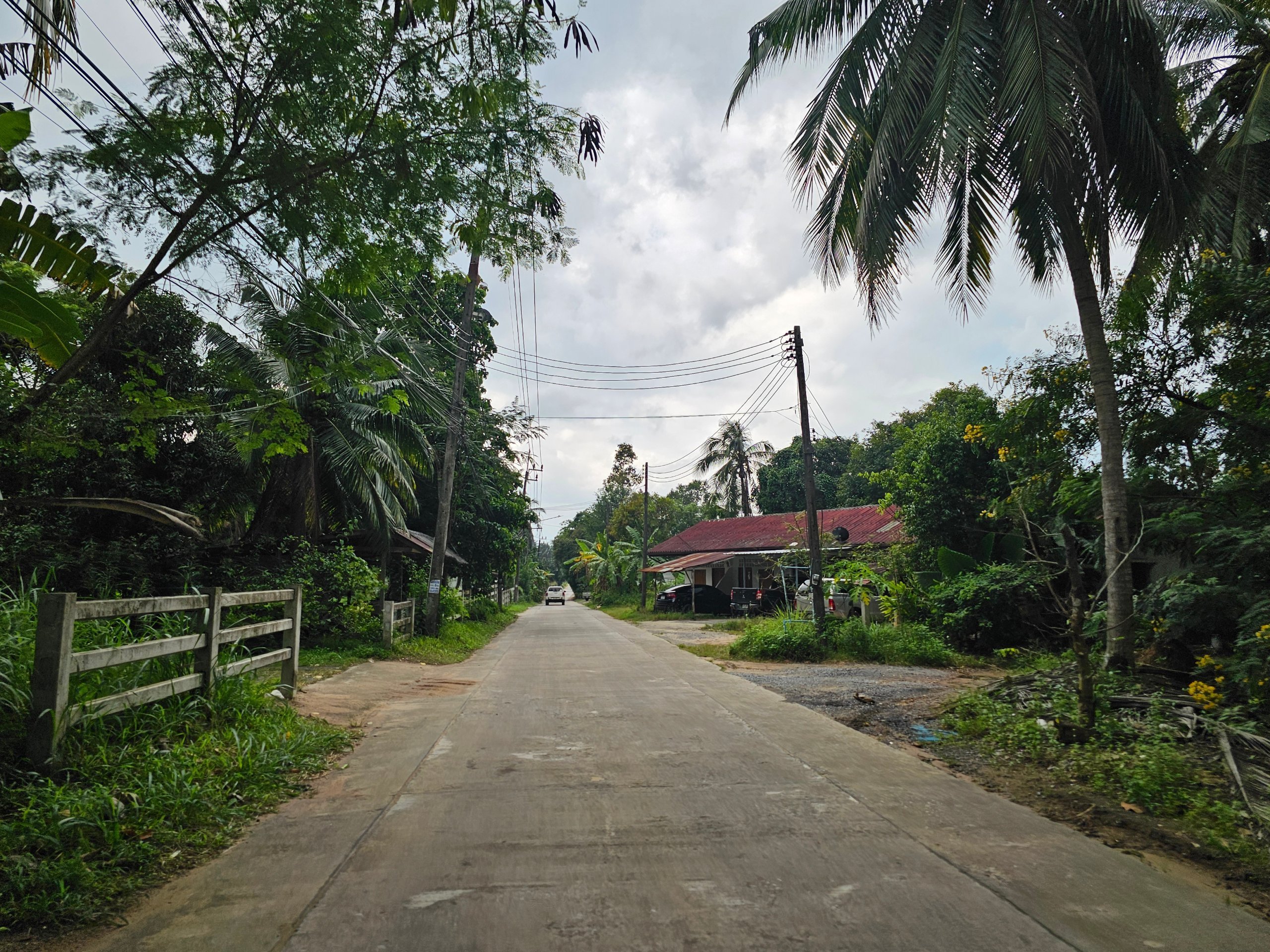
Touristy directions are usually signposted in a sensible way and often in English.
However, on some of the smaller turn-offs, mobile phone navigation works better than signposting.
That's why I recommend having working data or offline maps at all times.
This is the part that tends to be the most important for most people - and rightly so.
Traffic on Samui is not extremely fast, but it is less legible than in Europe, Australia or America.
The biggest factor is the scooters, which:
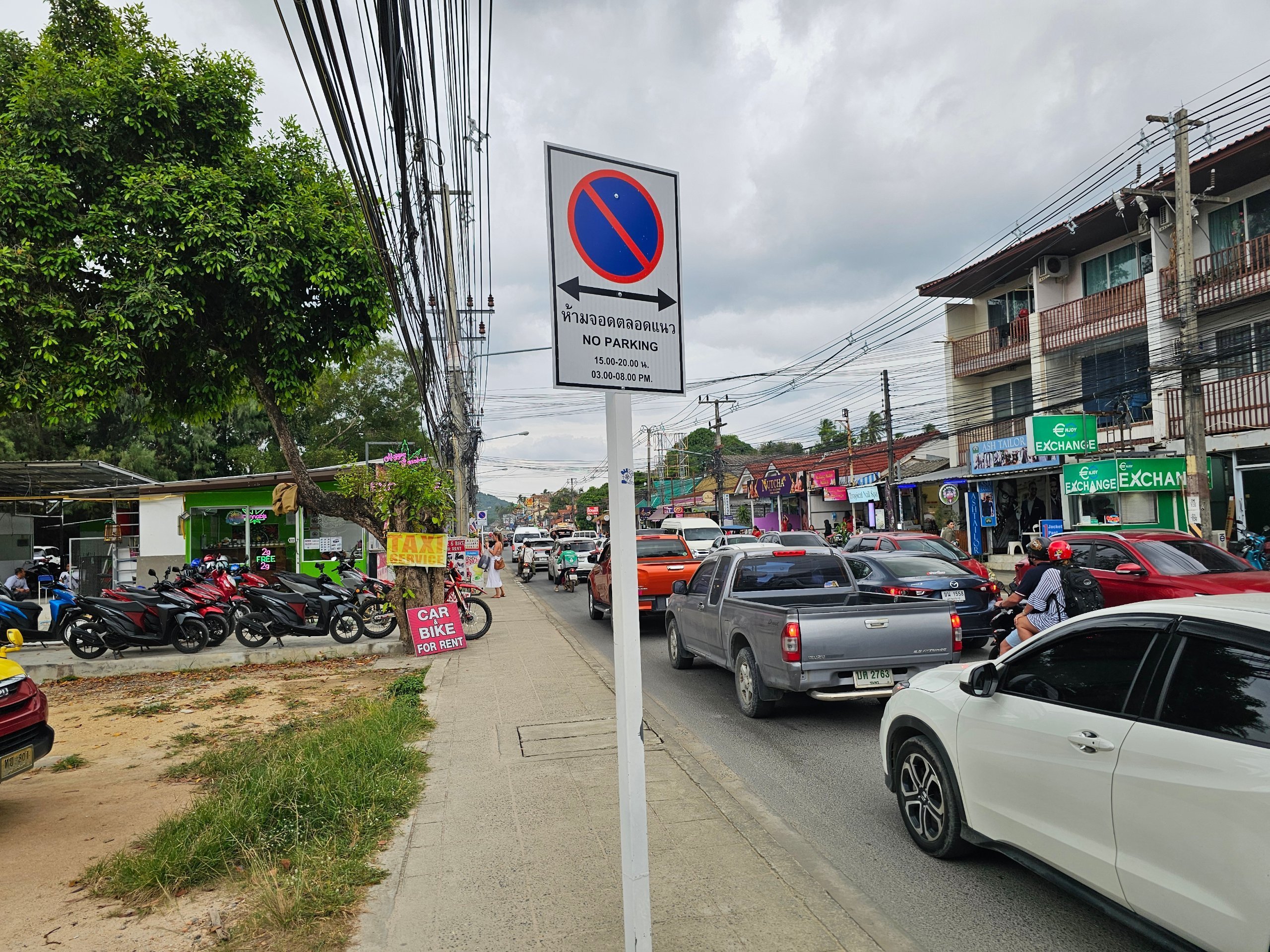
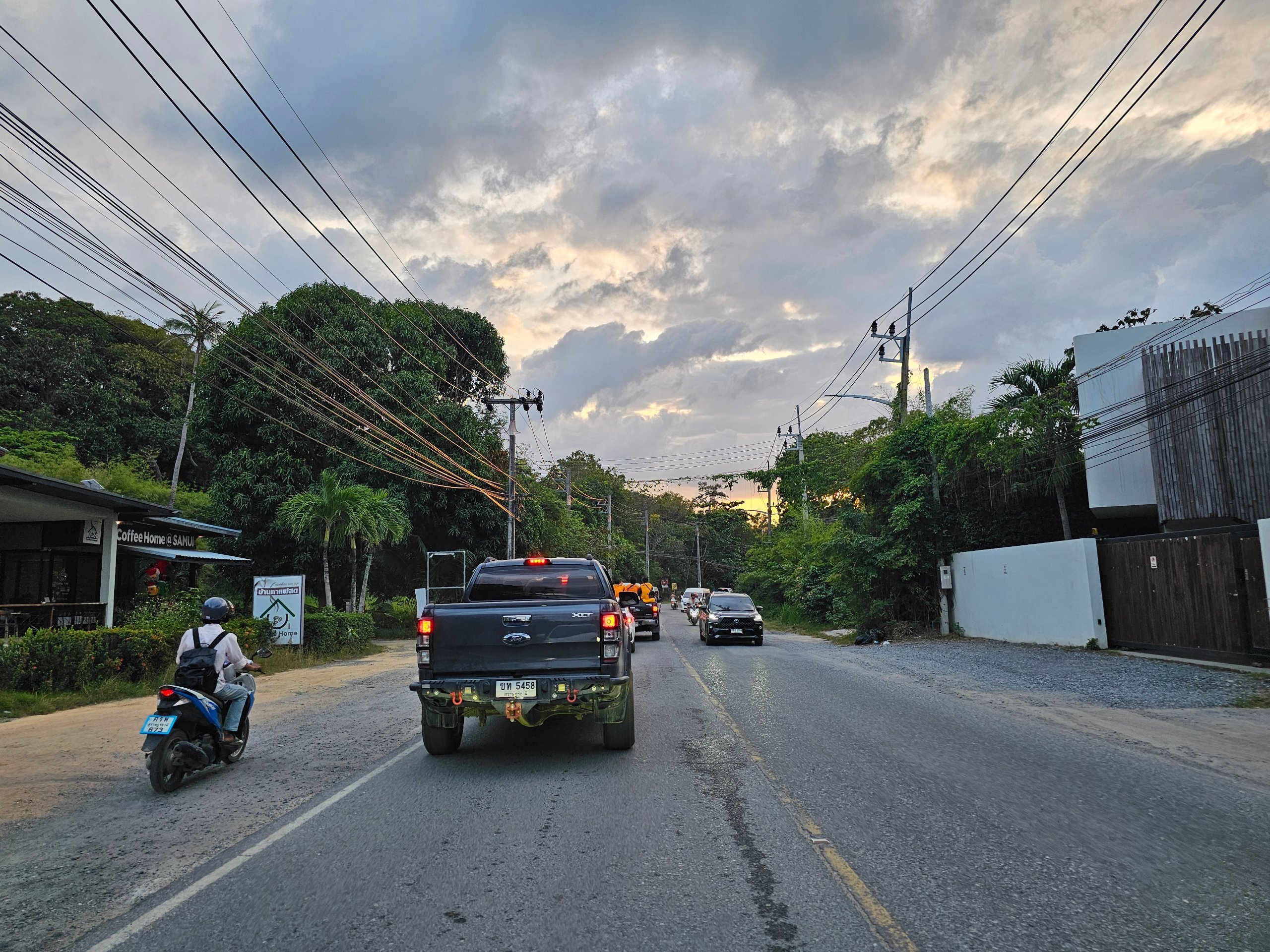
Add to that:
On the other hand, most of the time the speed is not high and the traffic is more chaotic than aggressive. And less chaotic than I expected.
As long as you allow more distance and don't rush anywhere, the driving is manageable even for a casual tourist.
Petrol on Koh Samui is quite expensive. But the island is small and the daily raids tend to be rather short.
Prices vary continuously but are usually around this range:
In Thailand, prices are quoted as standard per litre.
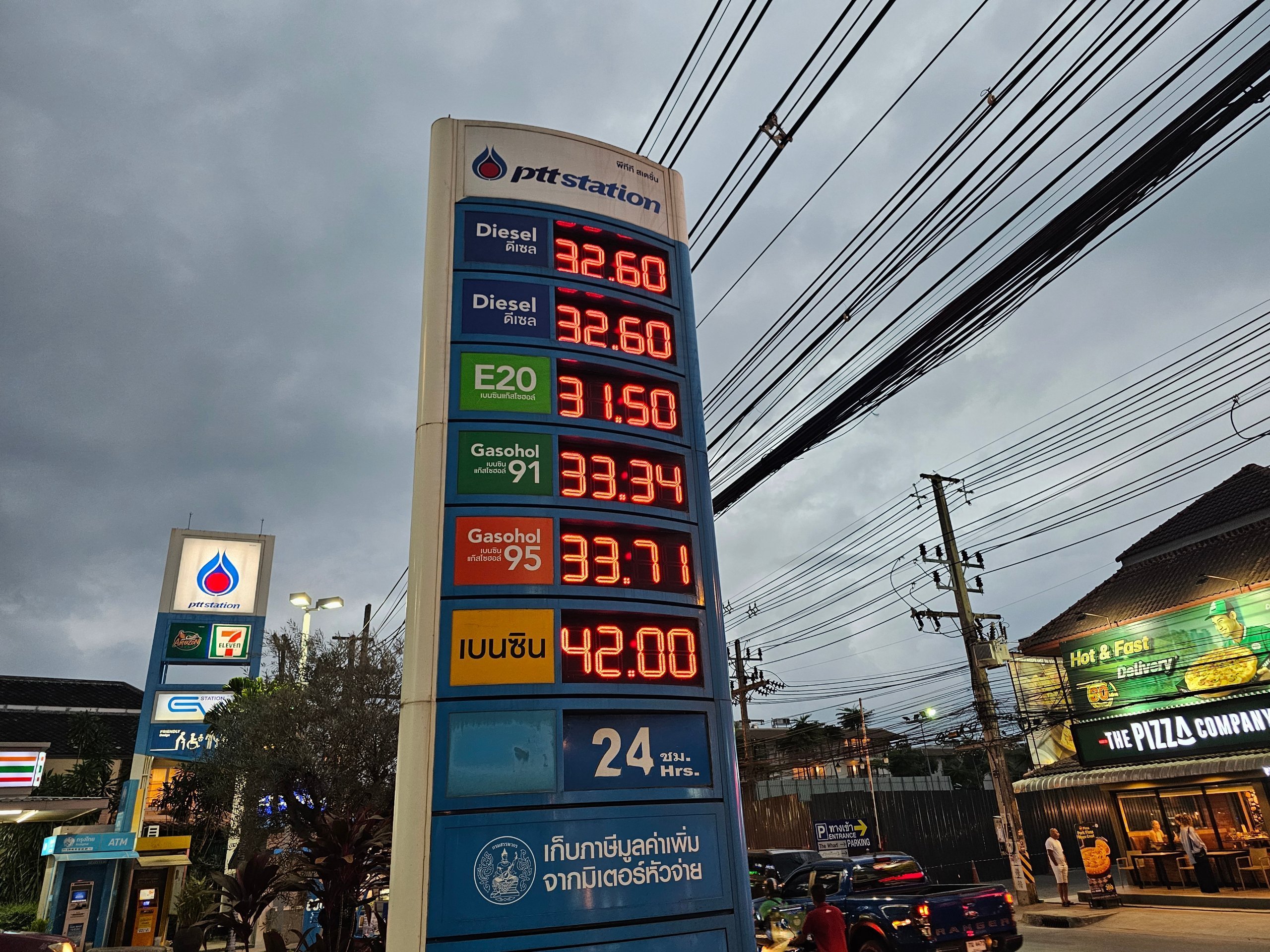
There are three types of petrol stations on Koh Samui:
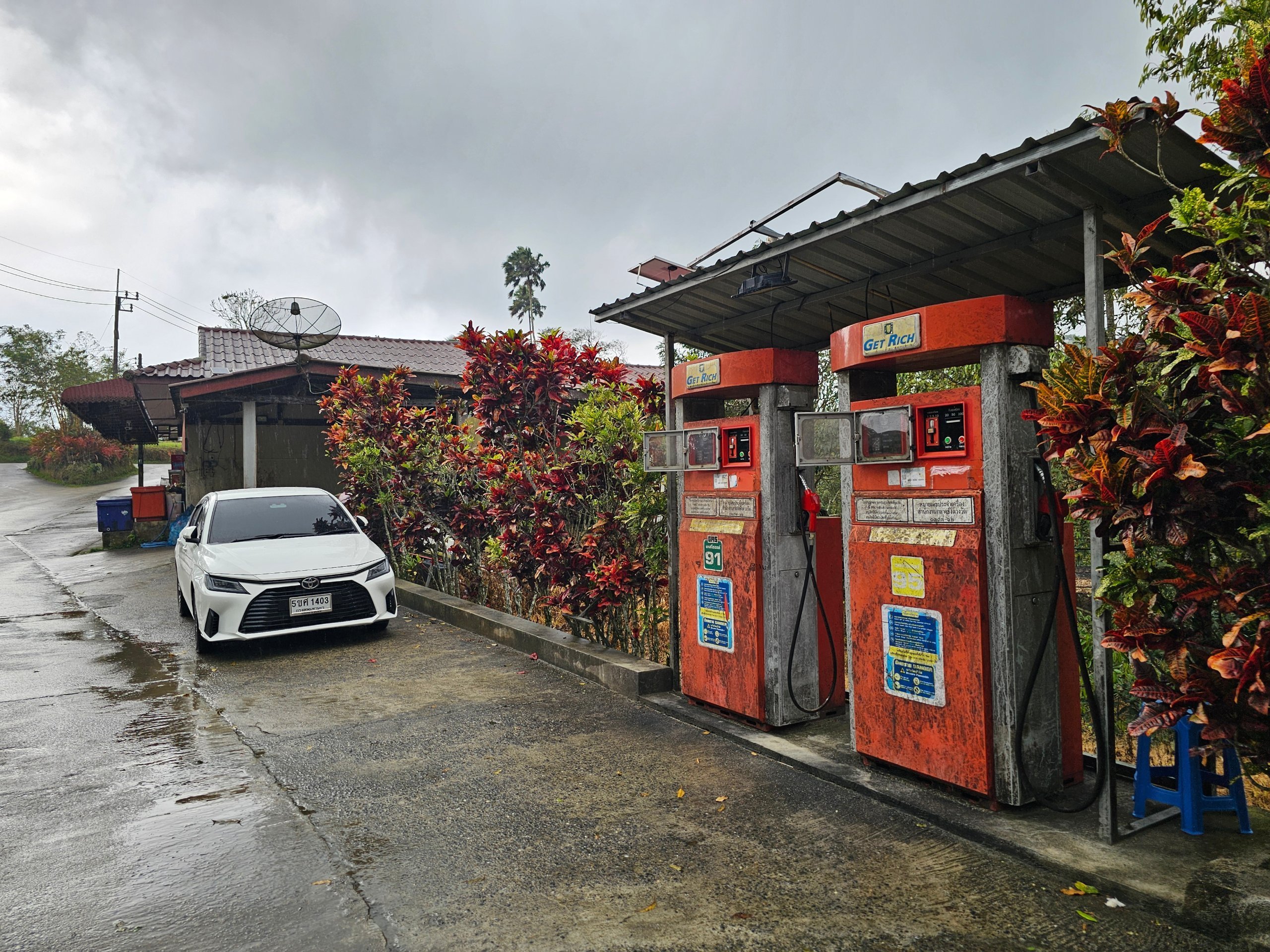
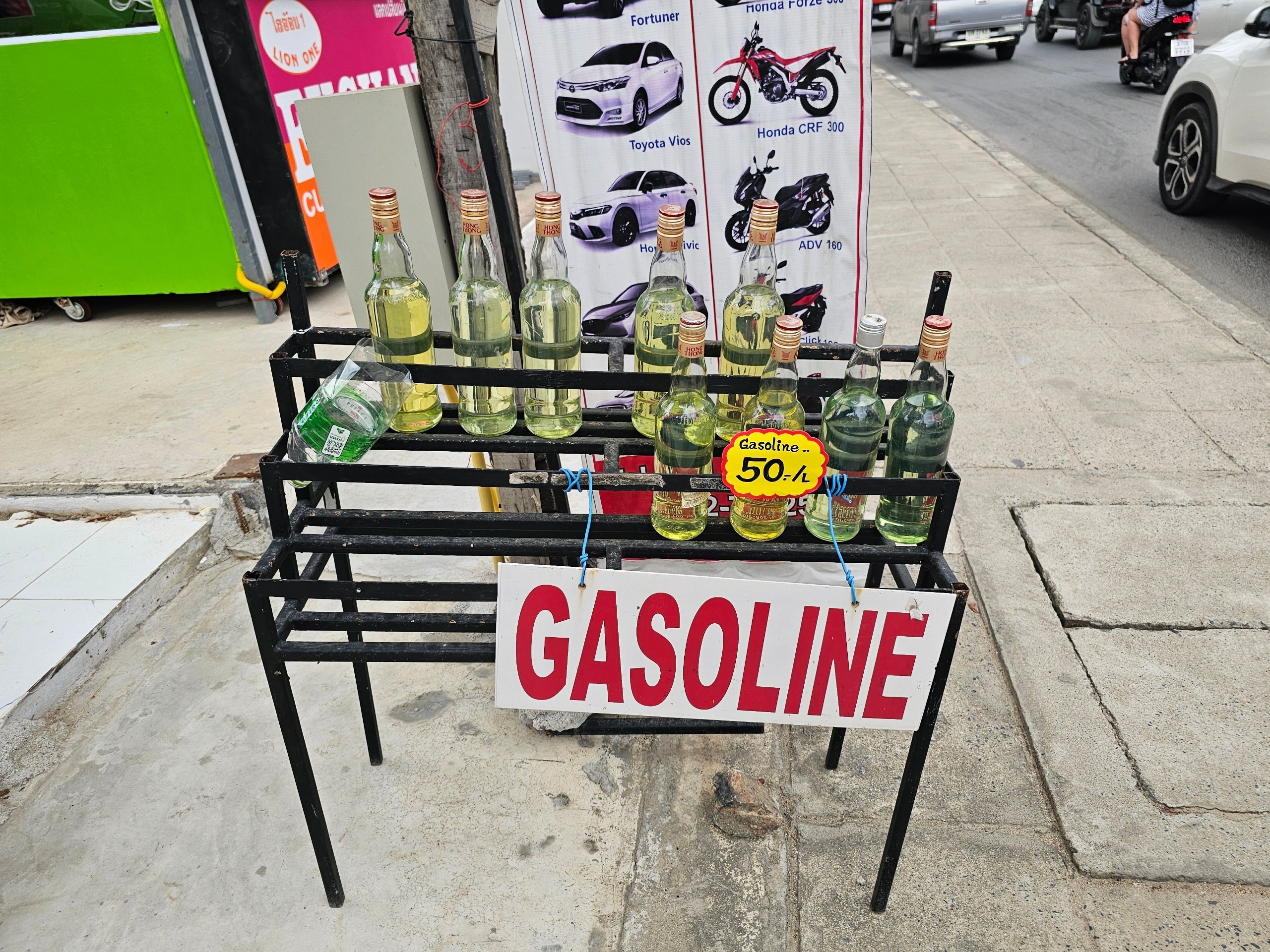
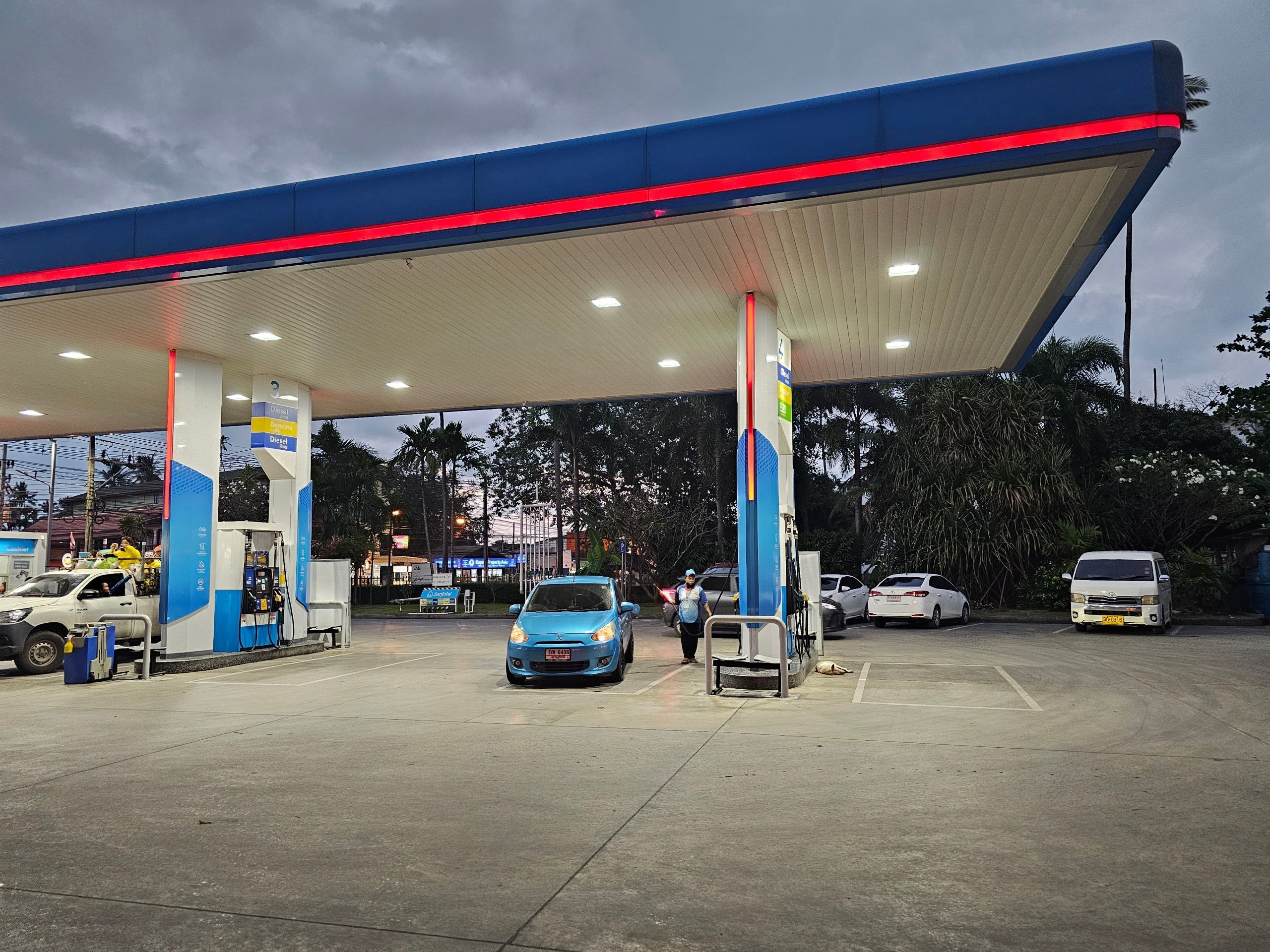
Large modern petrol stations work easily:
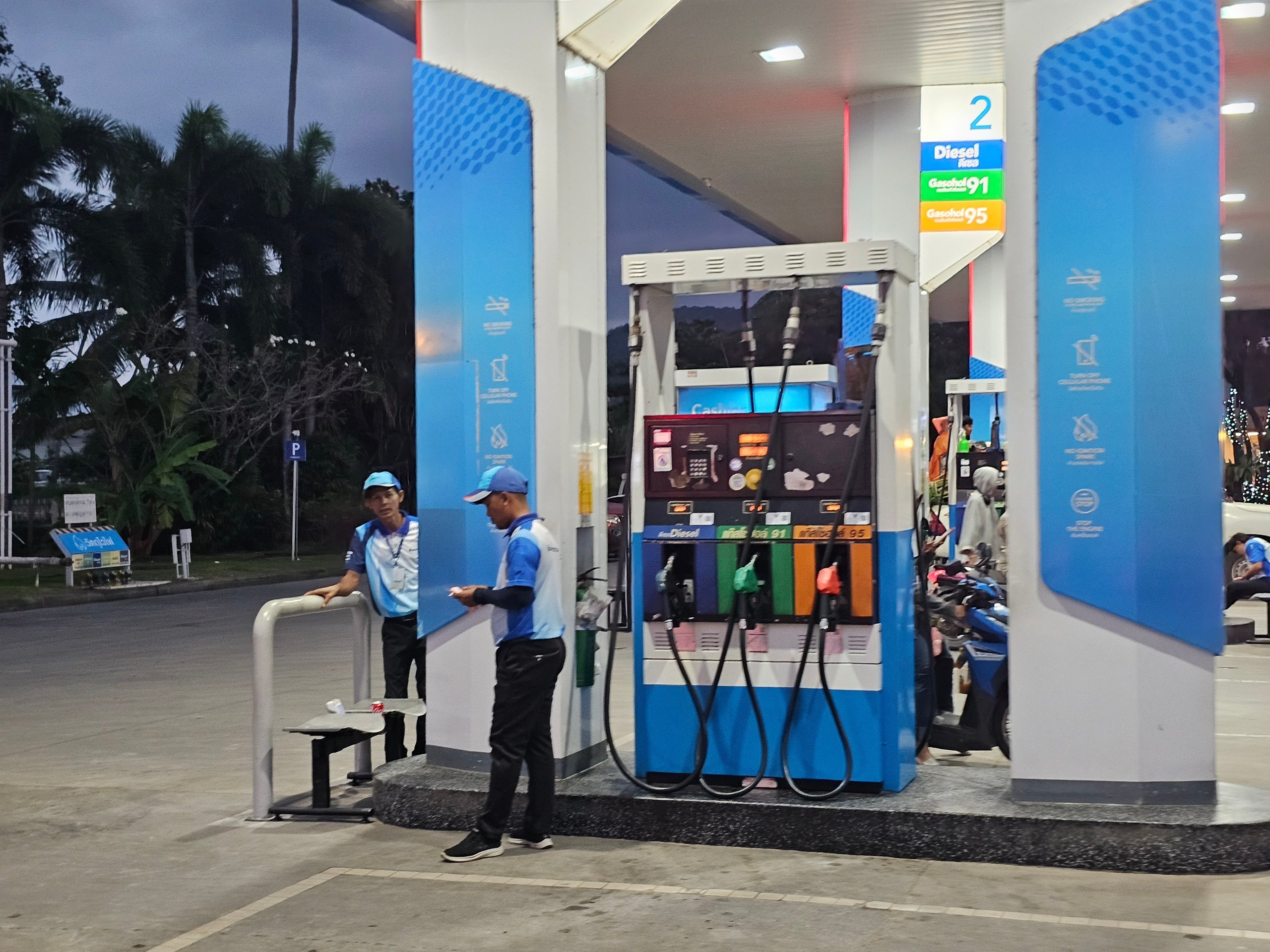
Unlike in some European countries, it is therefore not common for you to do everything yourself. At larger stations the system is very simple and hassle-free for the tourist.
Driving on Koh Samui is on the left.
Speed limits in Thailand are normally given in kilometres per hour.
In practice, most people on Samui drive slower than the limits would allow, as the traffic and scooter density often does not allow it anyway.
In general, expect:
Speeds are rarely checked and dealt with.
The police mainly deal with helmets on scooter riders.
Formally, there are rules, but in practice you need to drive defensively and not rely on every road user to react exactly according to the rules.
At roundabouts and obscure junctions there is a simple rule: it is better to slow down, look around twice and leave a margin.
In general, the right-hand right of way applies here.
On a roundabout, cars already on the roundabout have the right of way.
Wearing seat belts is compulsory and talking on the phone while driving without hands-free is prohibited.
Alcohol is only permitted up to a limit of 0.05%.
If you have any questions or comments about the article...