Autumn in Calabria from Bratislava
30 €



What’s it like travelling by night train in Thailand? I tried the sleeper train from Chiang Mai to Bangkok, and here are my experiences.
I bought a second-class ticket. I was travelling alone and didn’t want to be cooped up in a more expensive first-class compartment. I deliberately chose the option favoured by most passengers – an open carriage with upper and lower berths separated from the aisle by a curtain.
It was my first night on a train in Asia, but certainly not my last. Another similar journey awaits me in Vietnam, between Hanoi and Da Nang.
I travelled in September 2026.
Long story short: I didn’t get much sleep, but it was still brilliant and I’d happily do it again.
It was more down to being unaccustomed to this sort of journey than any lack of comfort.
The train is a really comfortable option for those who want to save money on a night in a hotel, experience something a bit different, or are travelling with large suitcases and therefore want to save a bit on their flight ticket.
Mainly for the experience. I fly more than enough and I like to try new things when I’m travelling.
What’s more, you save a bit of money, although probably not as much as it might seem at first glance.
On the Chiang Mai–Bangkok route in particular, the train really isn’t a necessity: there are several flights an hour throughout the day.
But it’s an interesting experience and, looking back, I certainly don’t regret it.

Buying train tickets in Thailand is incredibly simple.
I used the official Thai Railways website,dticket.railway.co.th, to buy my ticket.
However, I’ve come across comments on various forums suggesting that the official website doesn’t work in some countries and that card payments sometimes fail.
In that case, I’d use the search engine 12go.asia, which I’ve tried and tested 100 times, and through which you can also buy train and bus tickets across Asia.
You just need to factor in a few baht for an administration fee. If the official Dticket website works for you, there’s no reason to use 12go.
I received my ticket by email straight away.
There’s no need to print anything or exchange it for a paper ticket at the ticket office. You simply show the QR code to the conductor on the train and that’s it.
Prices aren’t dynamic, so you’ll pay the same whether you book 20 days in advance or just 1 day in advance.
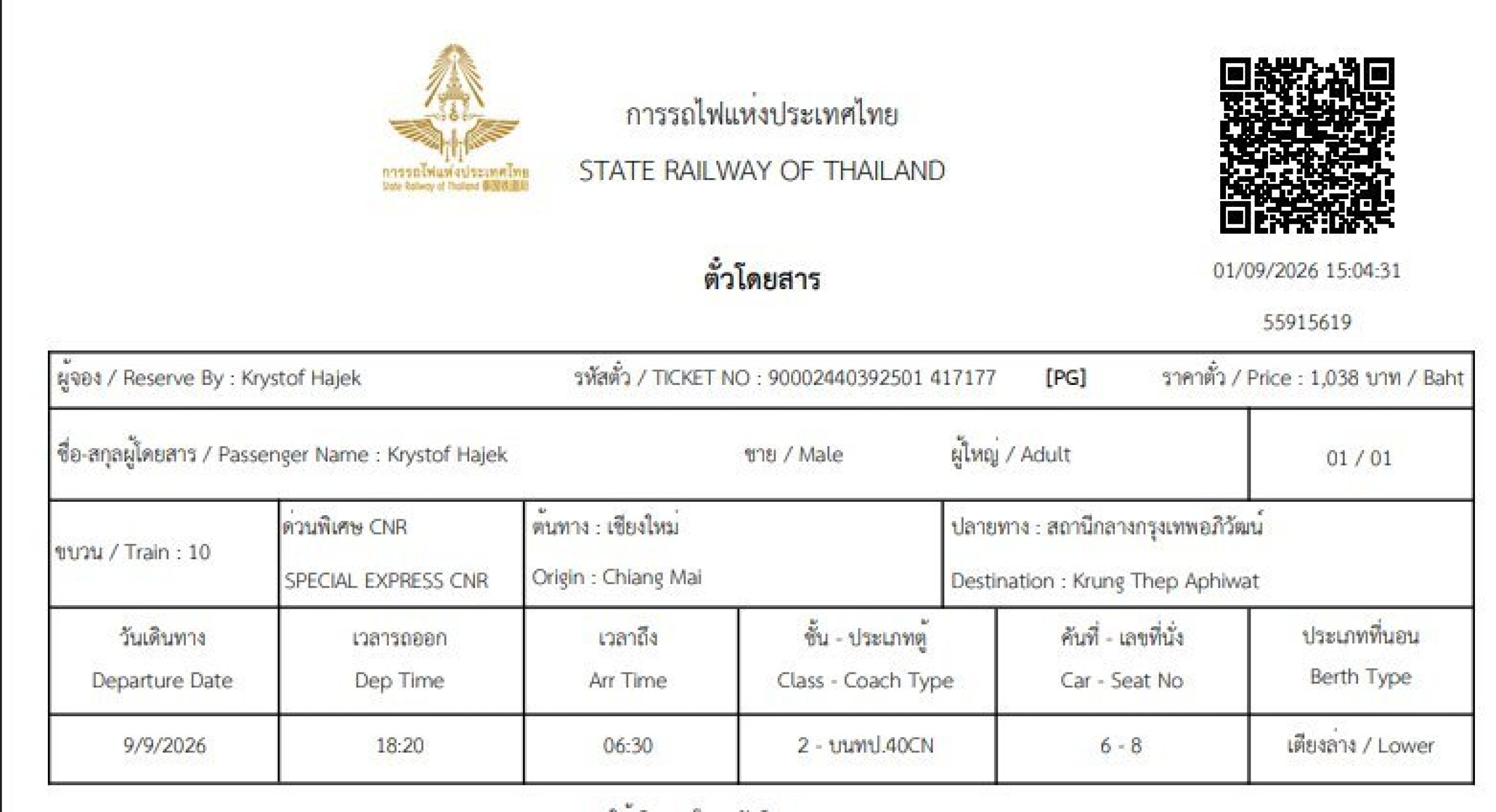
I paid 1 038 thb for the bottom bunk.
Generally speaking, trains in Thailand can be booked around 90 days before departure.
This confused me a bit. There is no station called ‘Bangkok’ on the Thai Railways website.
The local station is listed there as ‘Krung Thep Aphiwat’.
The difference between a lower and an upper berth is only about 100 thb.
I’d originally wanted to travel about an hour earlier on a standard older train, which is roughly 150 thb cheaper, but it was completely sold out.
I had to make do with the new train set, which is always labelled ‘CNR’.
Booking in advance is well worth it, though.
On busy routes, trains tend to sell out at the last minute.
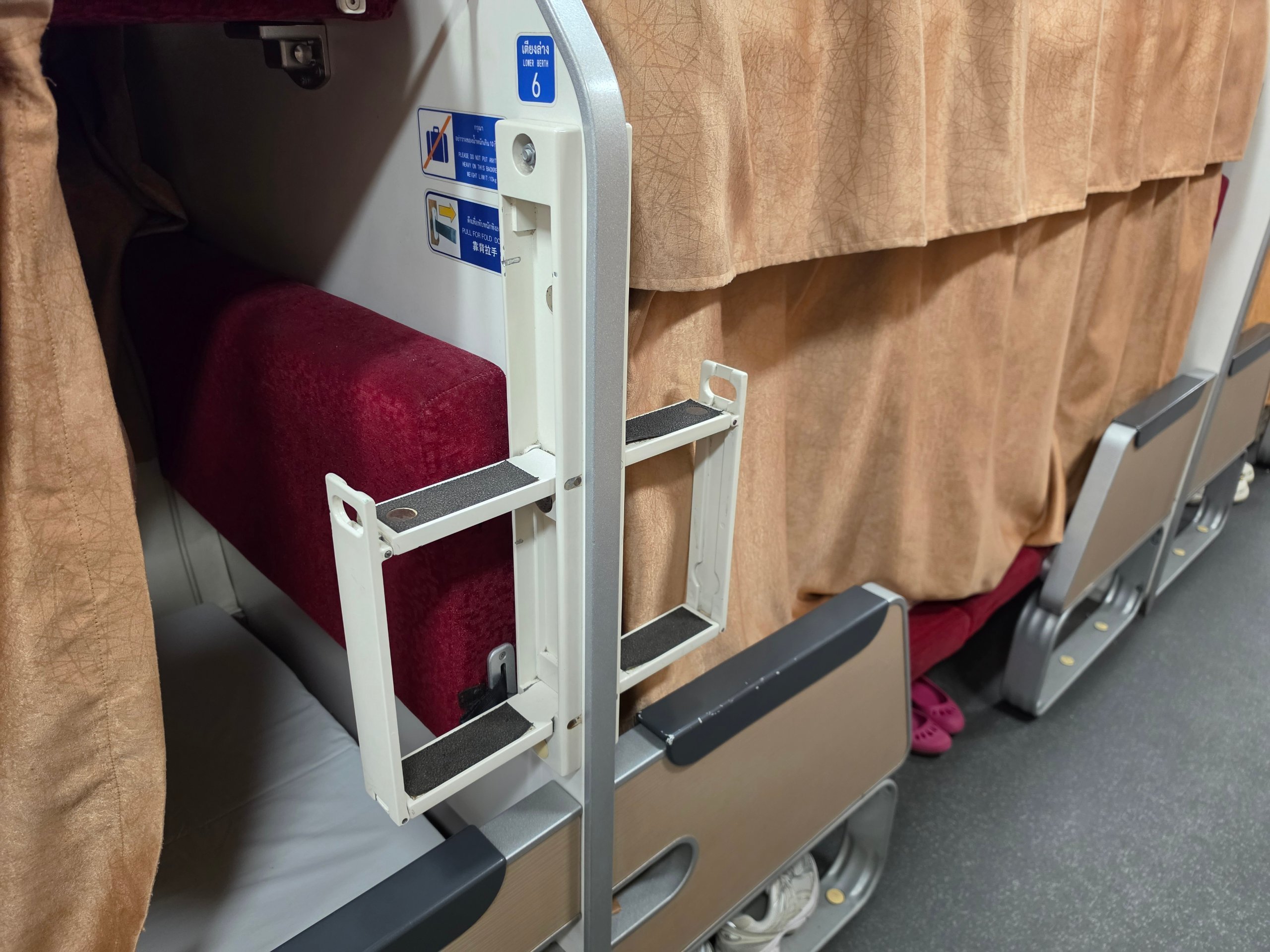
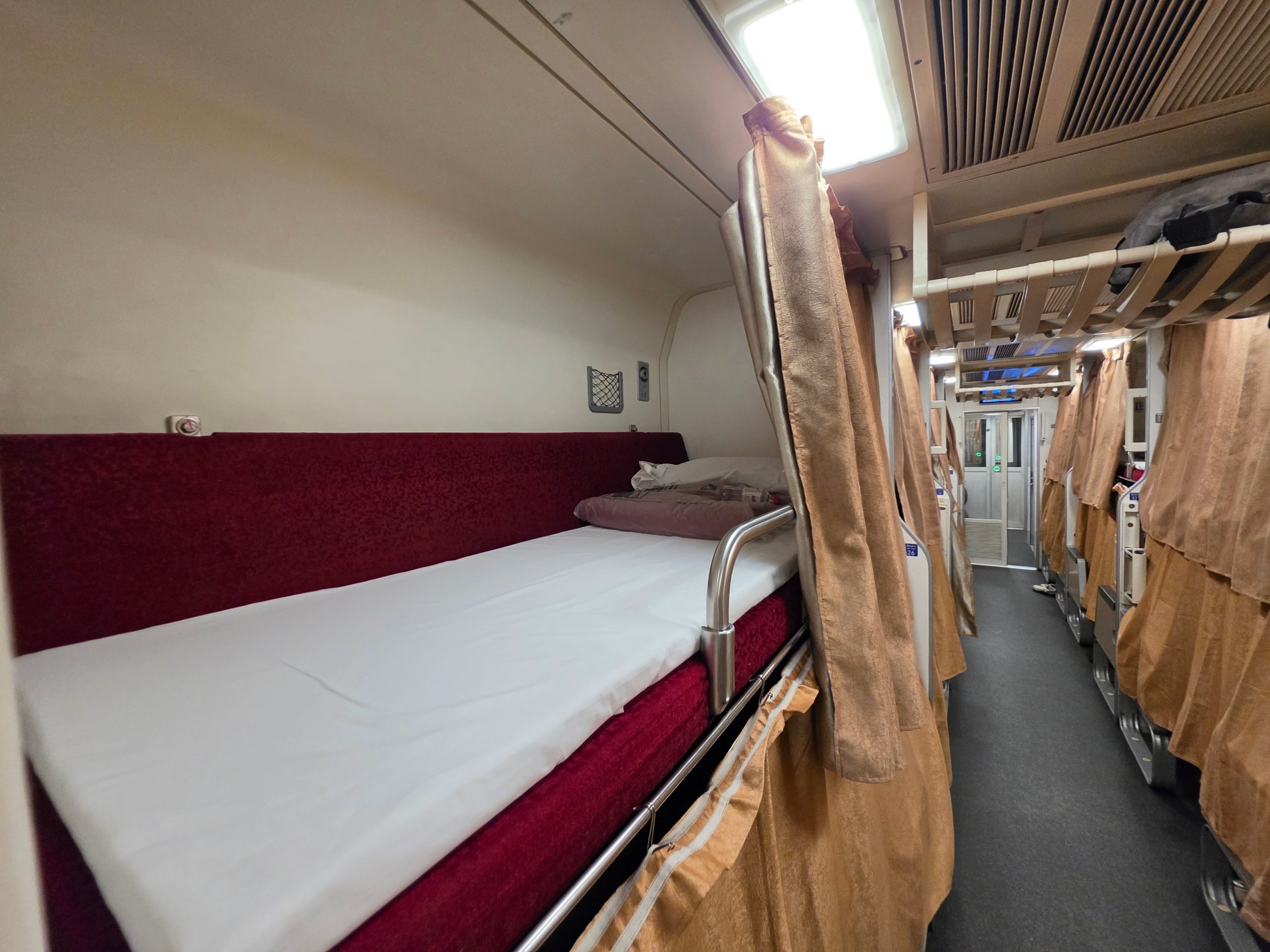
The lower berths are always the first to sell out, whilst the upper ones are the last. This is because the lower berths have several advantages:
To be perfectly honest:
The overnight train journey was one of the main reasons I went to Thailand.
Originally, I’d planned to travel on the Hat Yai–Bangkok route, but a week before my trip all the lower berths were booked up, which I really didn’t fancy.
The second option was the international night train from Vientiane in Laos to Bangkok, but on that one, only seating carriages were available.
It was only the Chiang Mai–Bangkok service that had enough free seats.
If your train is fully booked, I recommend checking thedticket.railway.co.thor12gowebsites again a few days before departure.
Occasionally, Thai Railways will add a new carriage and release another batch of tickets for sale.
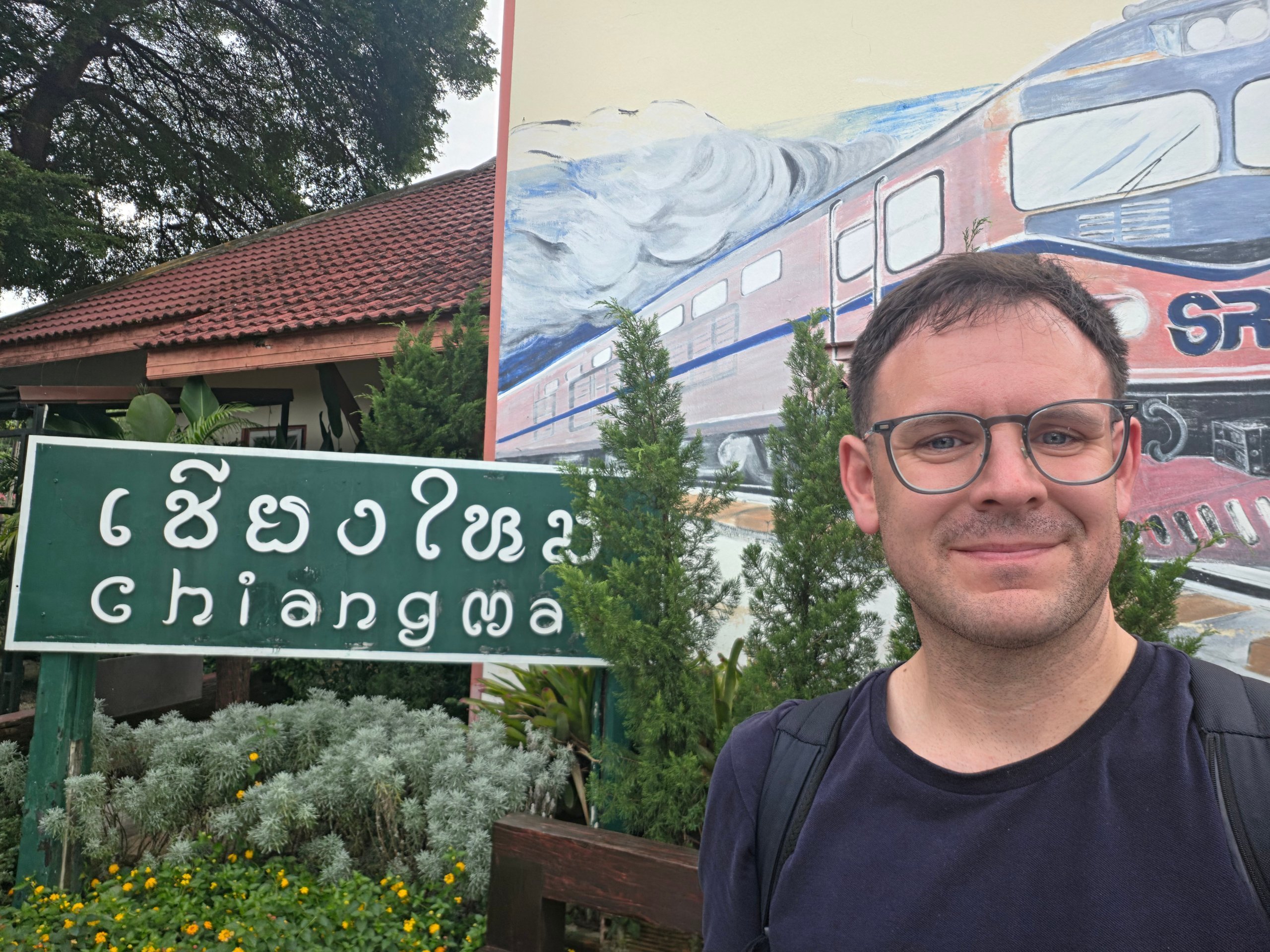
I walk from the city centre to the railway station. It takes about 20 minutes; the weather is pleasant and at least I’ll get some exercise before the 12-hour journey.
Outside the station, for the first time in ages, I feel that pure thrill of travel. The excitement of something new and a new experience.
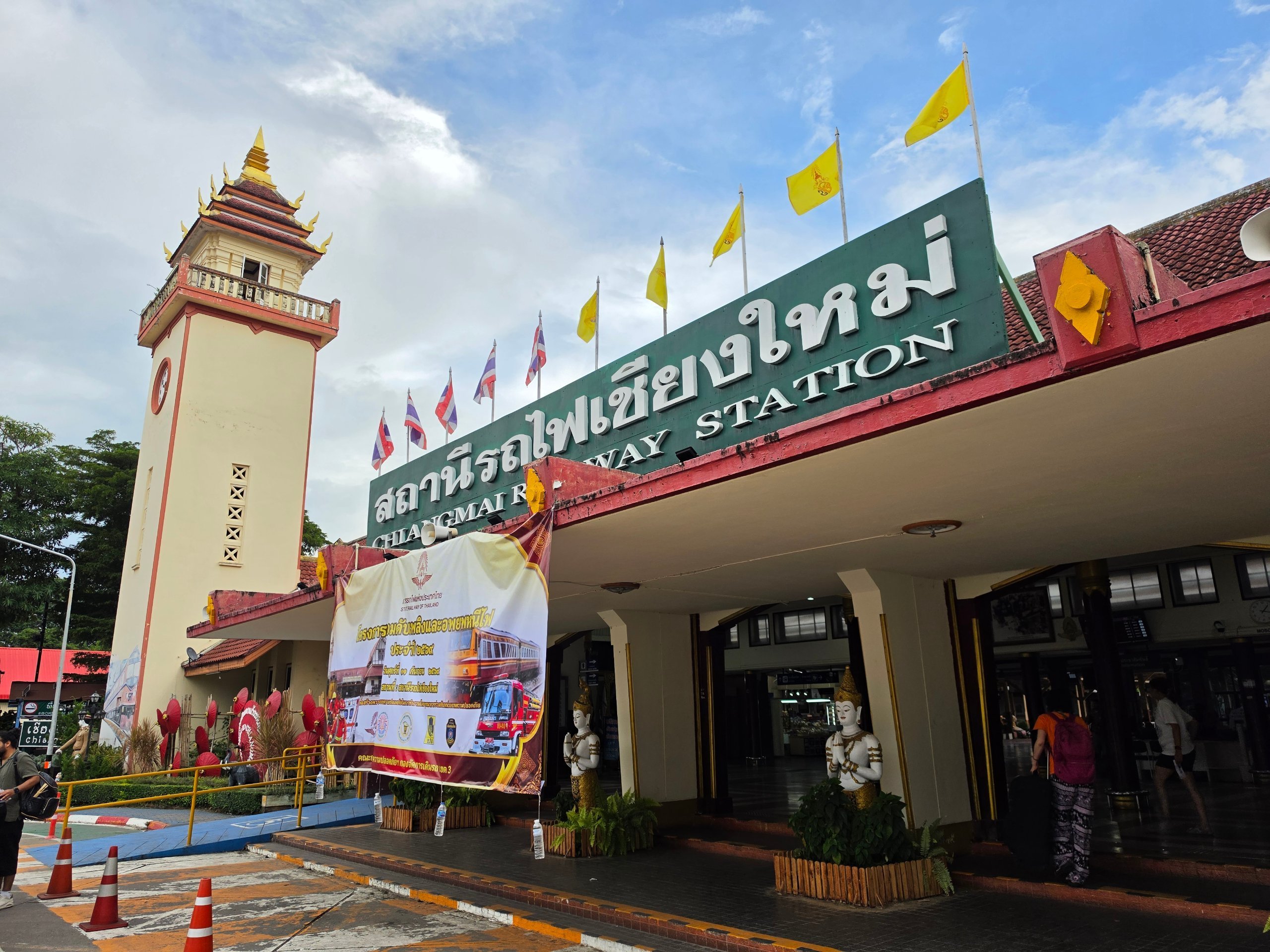
At the ticket office, just to be on the safe side, I ask whether the QR code on my mobile really is all I need. It is.
Chiang Mai railway station is small but quite well-equipped:
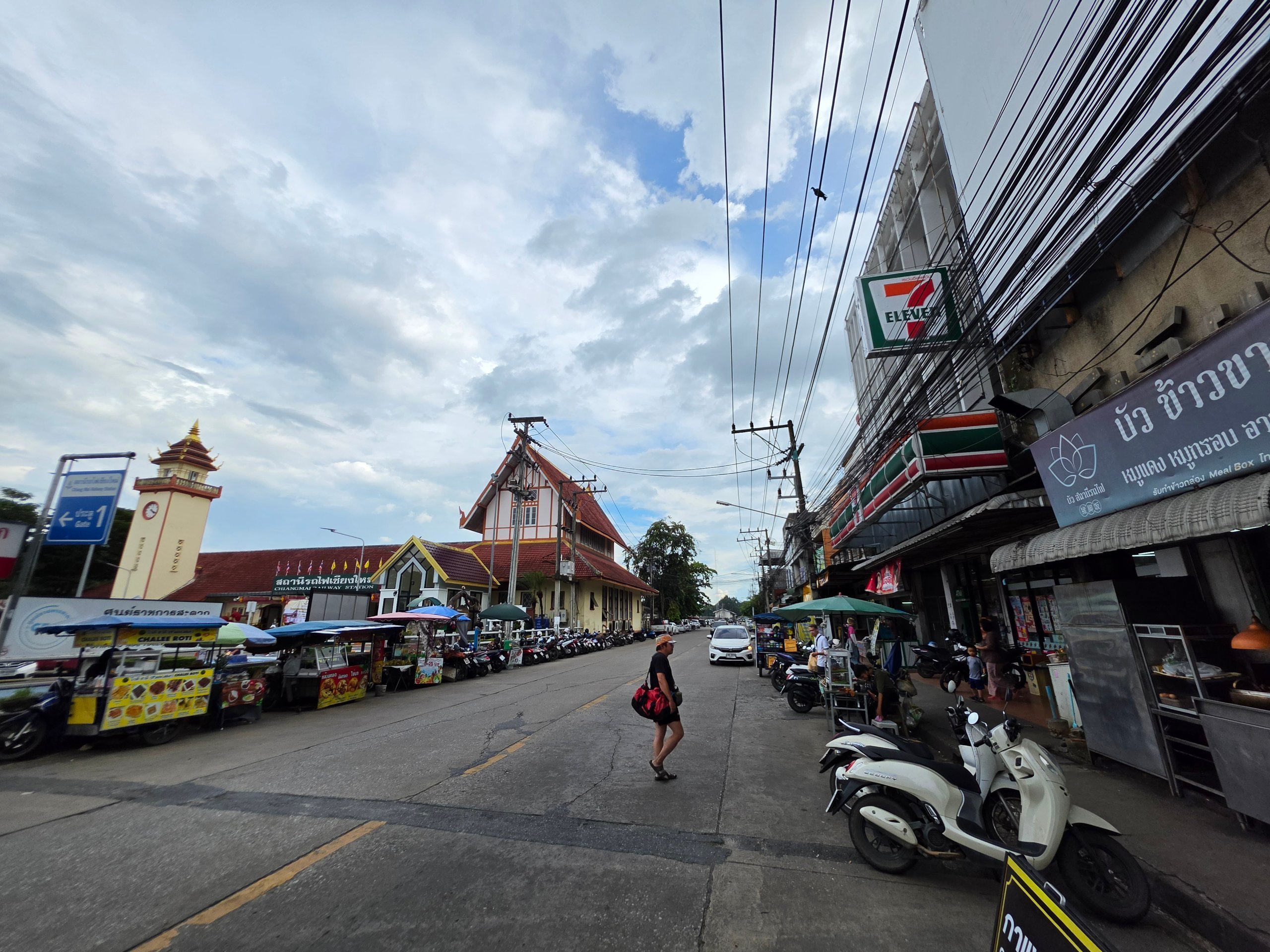
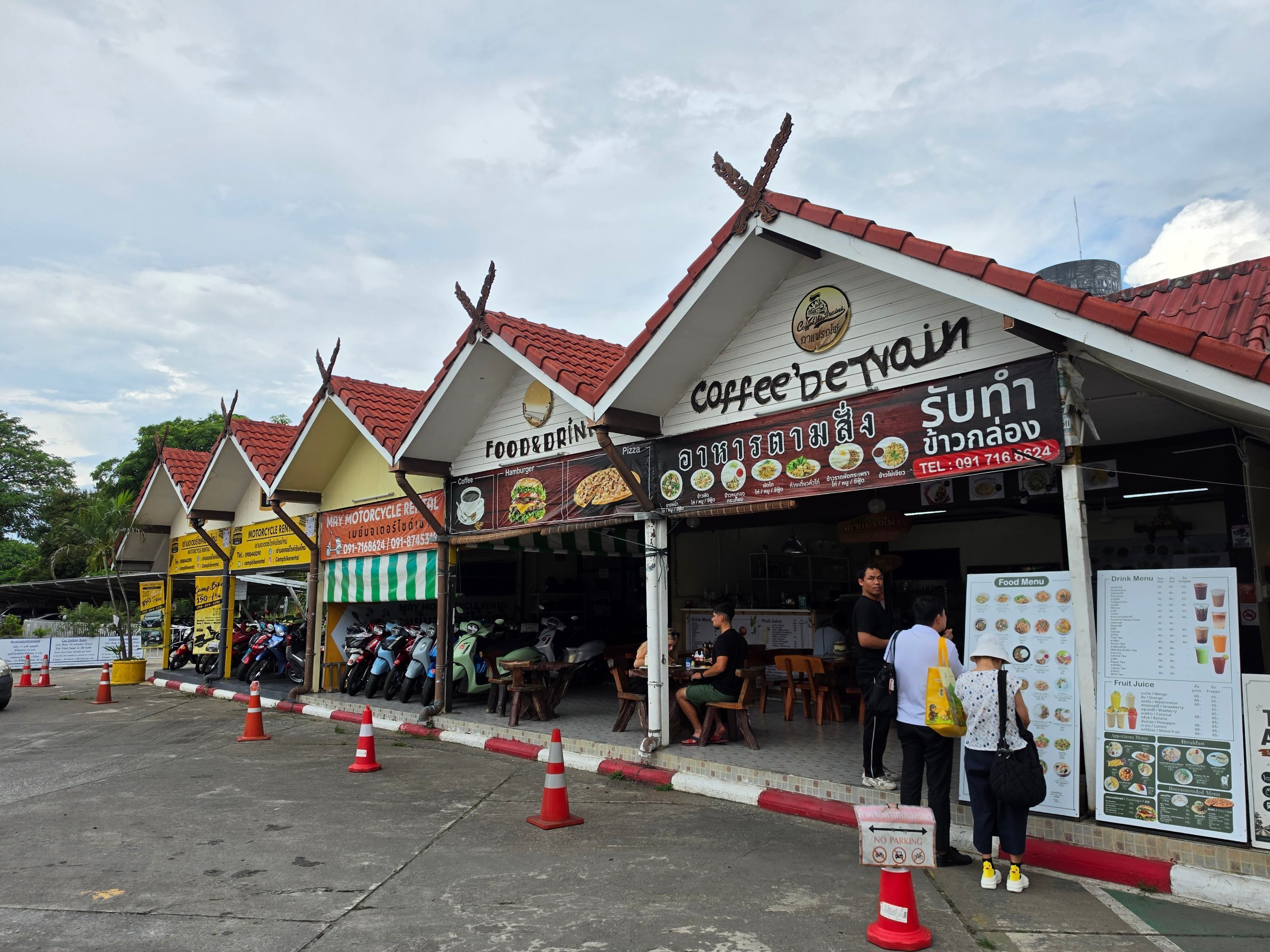
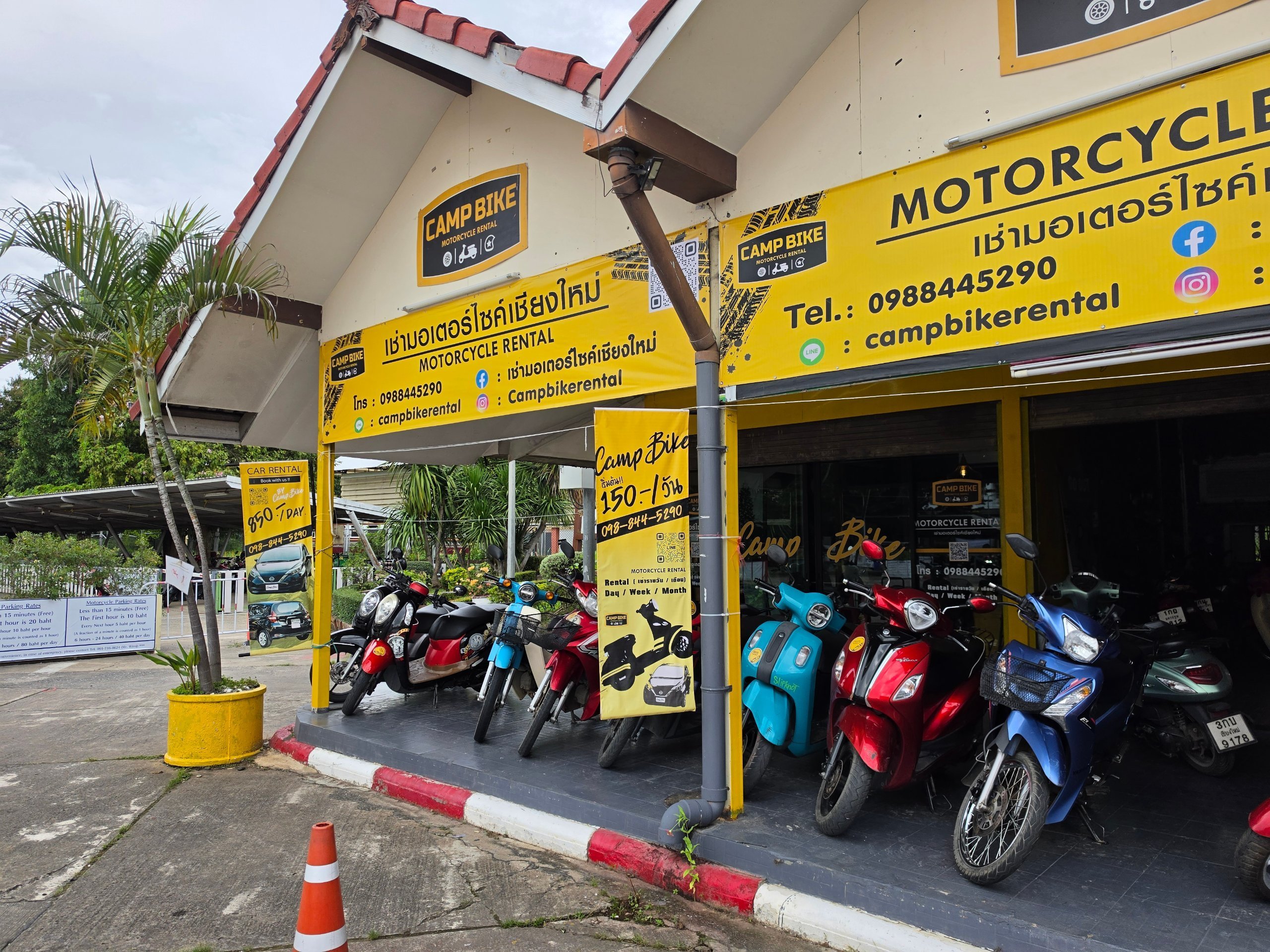
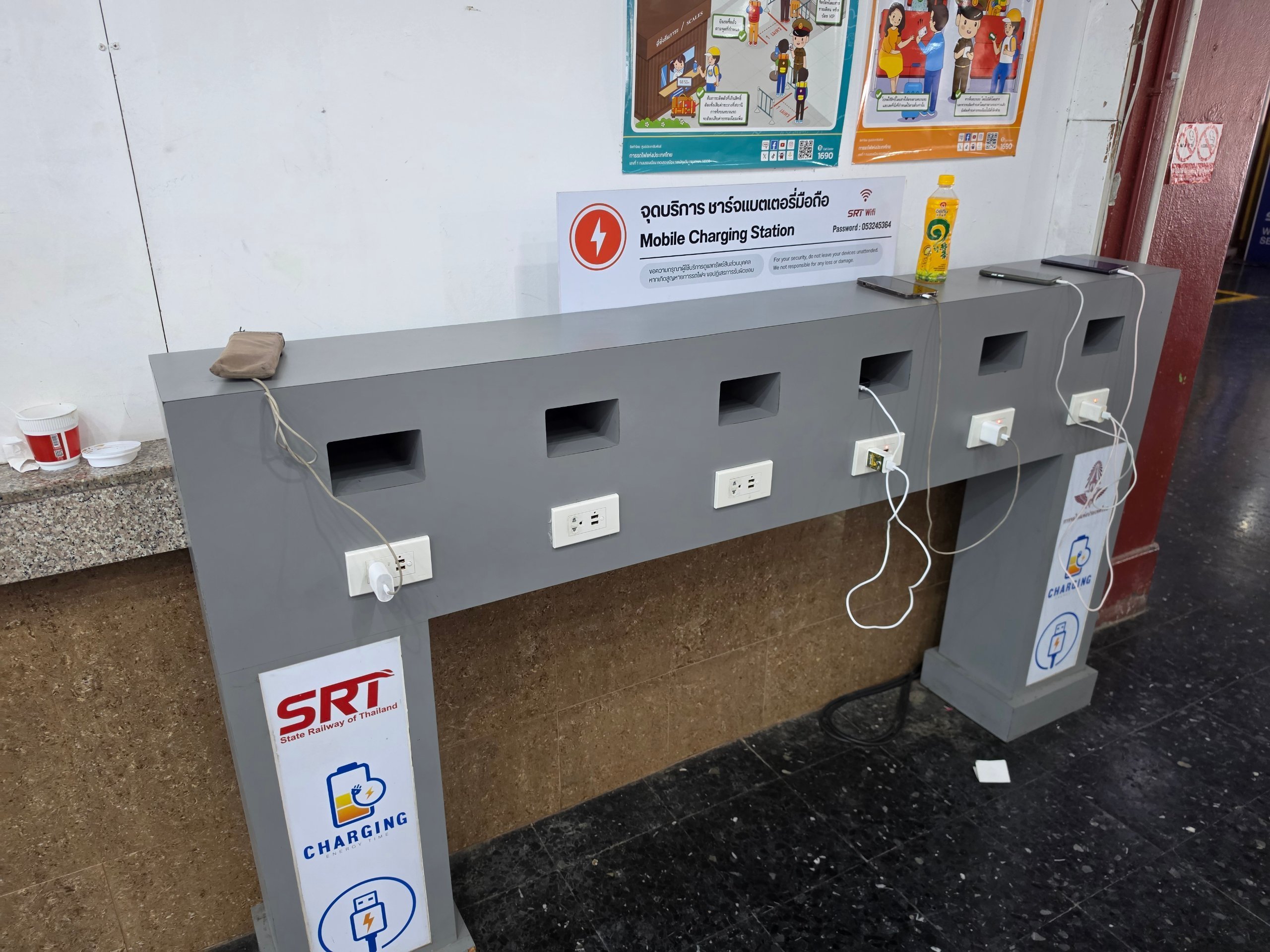
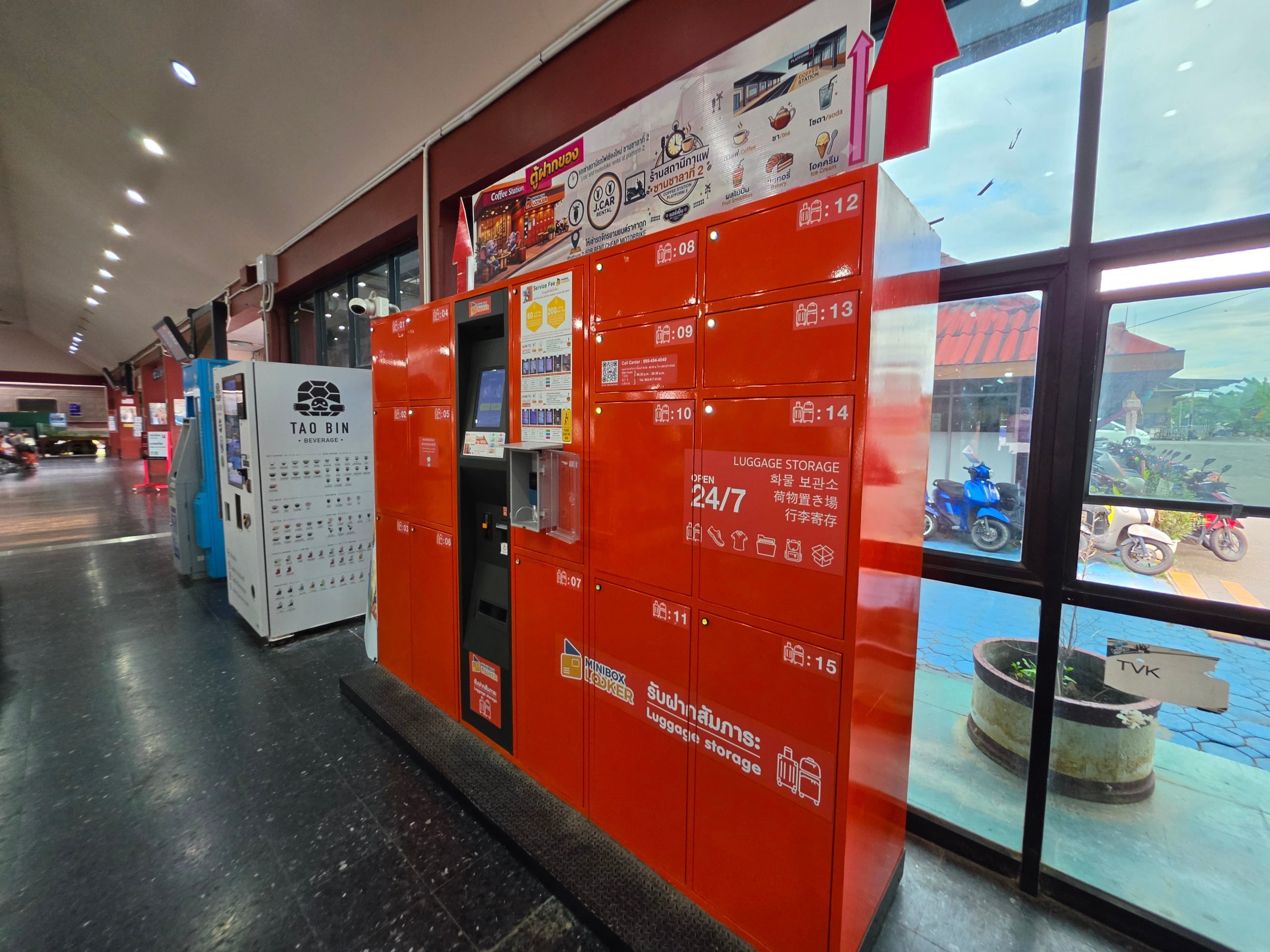
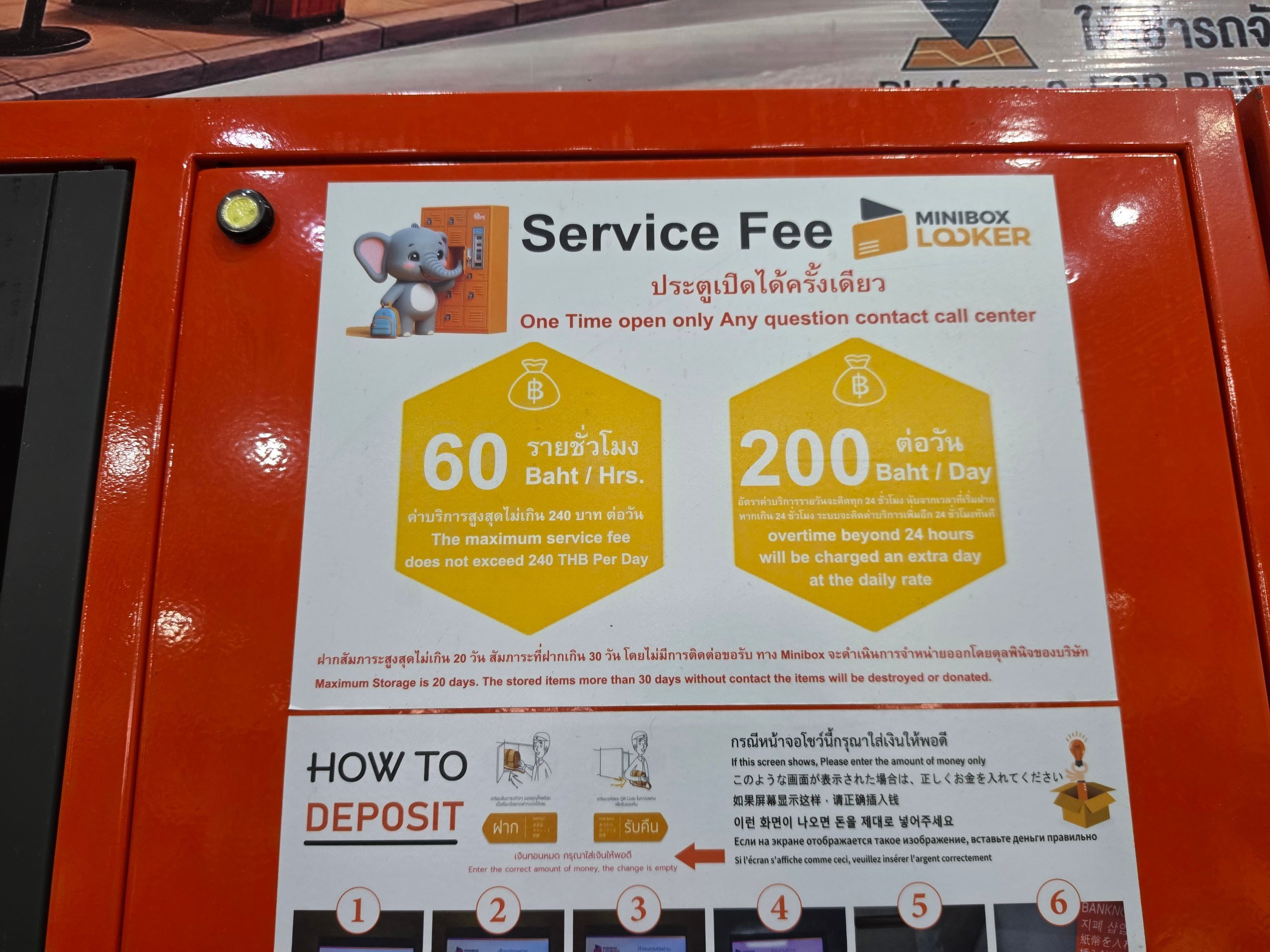
I buy some water and a bit of fruit and veg at the 7-Eleven for the evening, in case I get hungry.
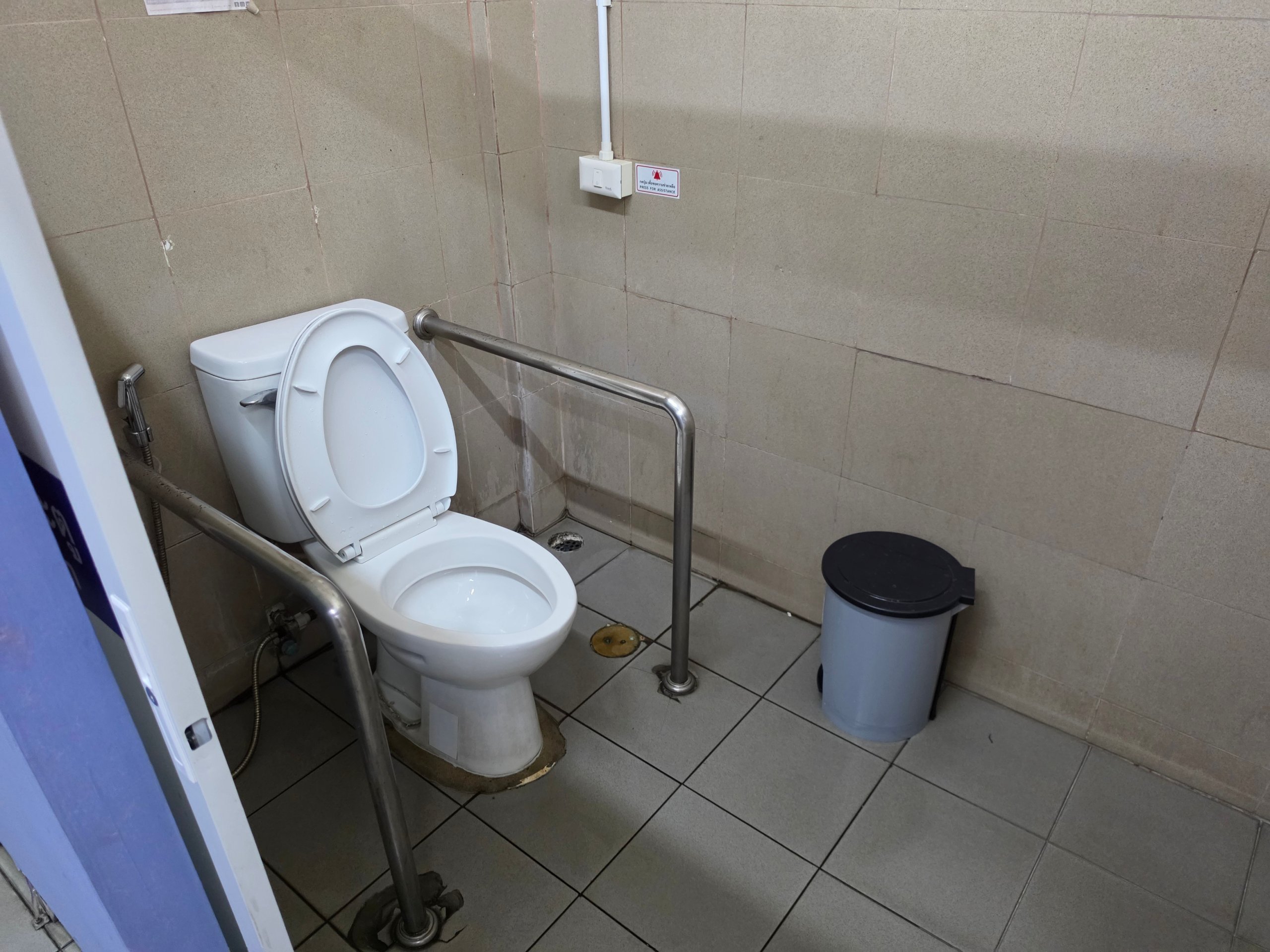
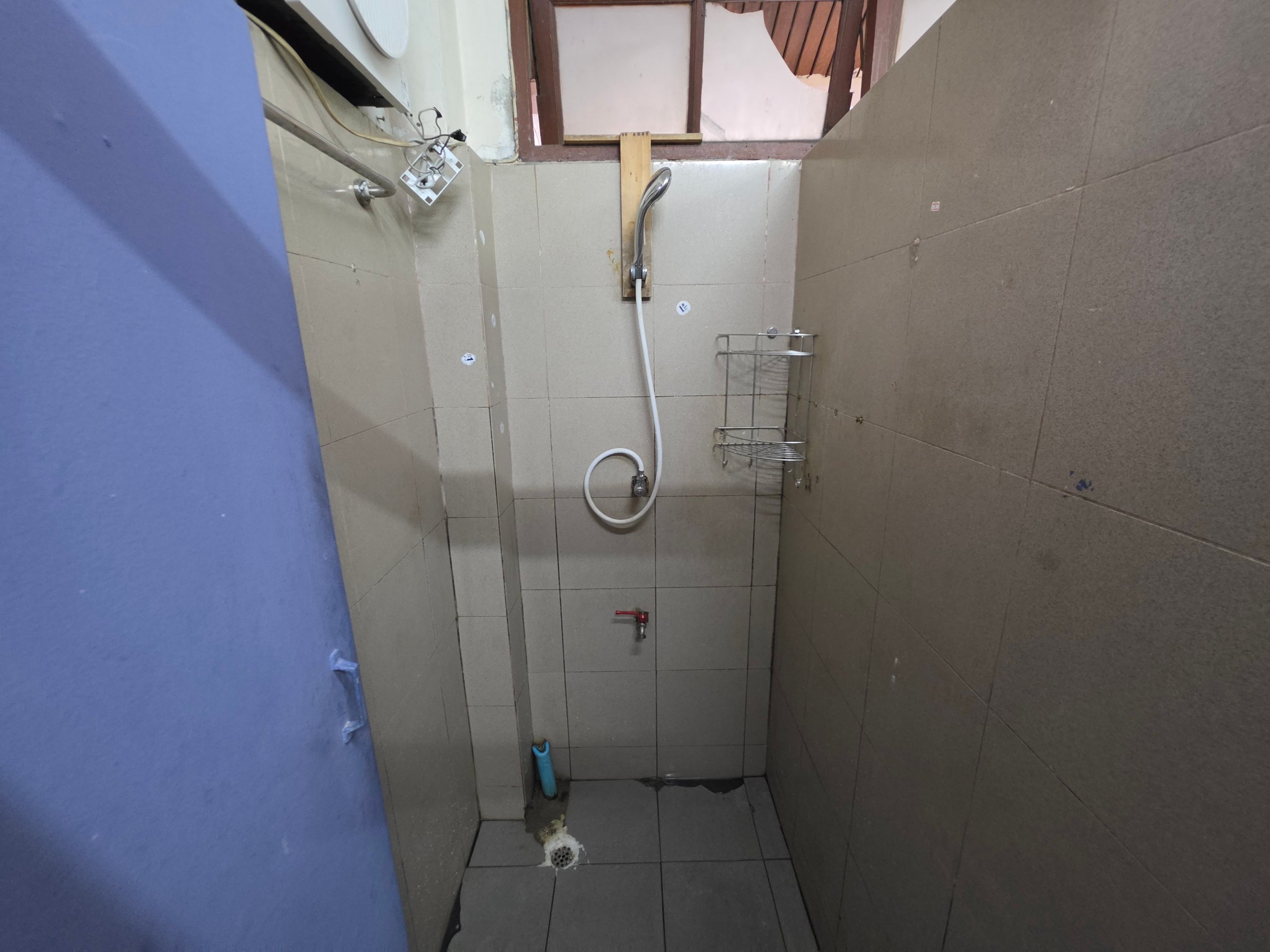
Straight after that, I go to try out the toilets. The urinal costs 3 thb, whilst a standard cubicle or shower costs 10 thb. Cash only.
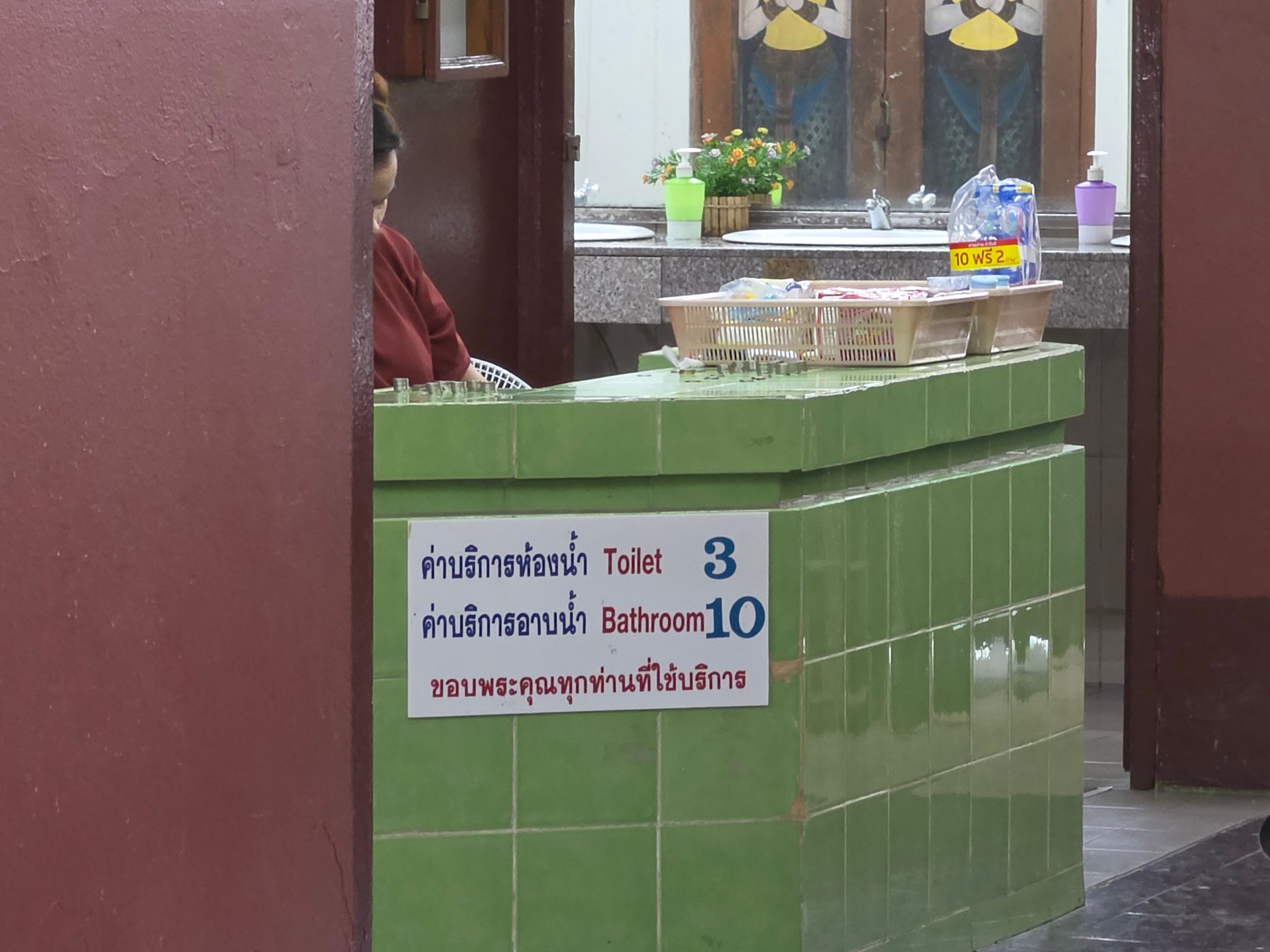
At first glance, it looks a bit of a mess, but in reality the toilets are quite clean.
I don’t end up using the shower, though, as I realise I don’t have a towel. Never mind – even that looks quite clean.
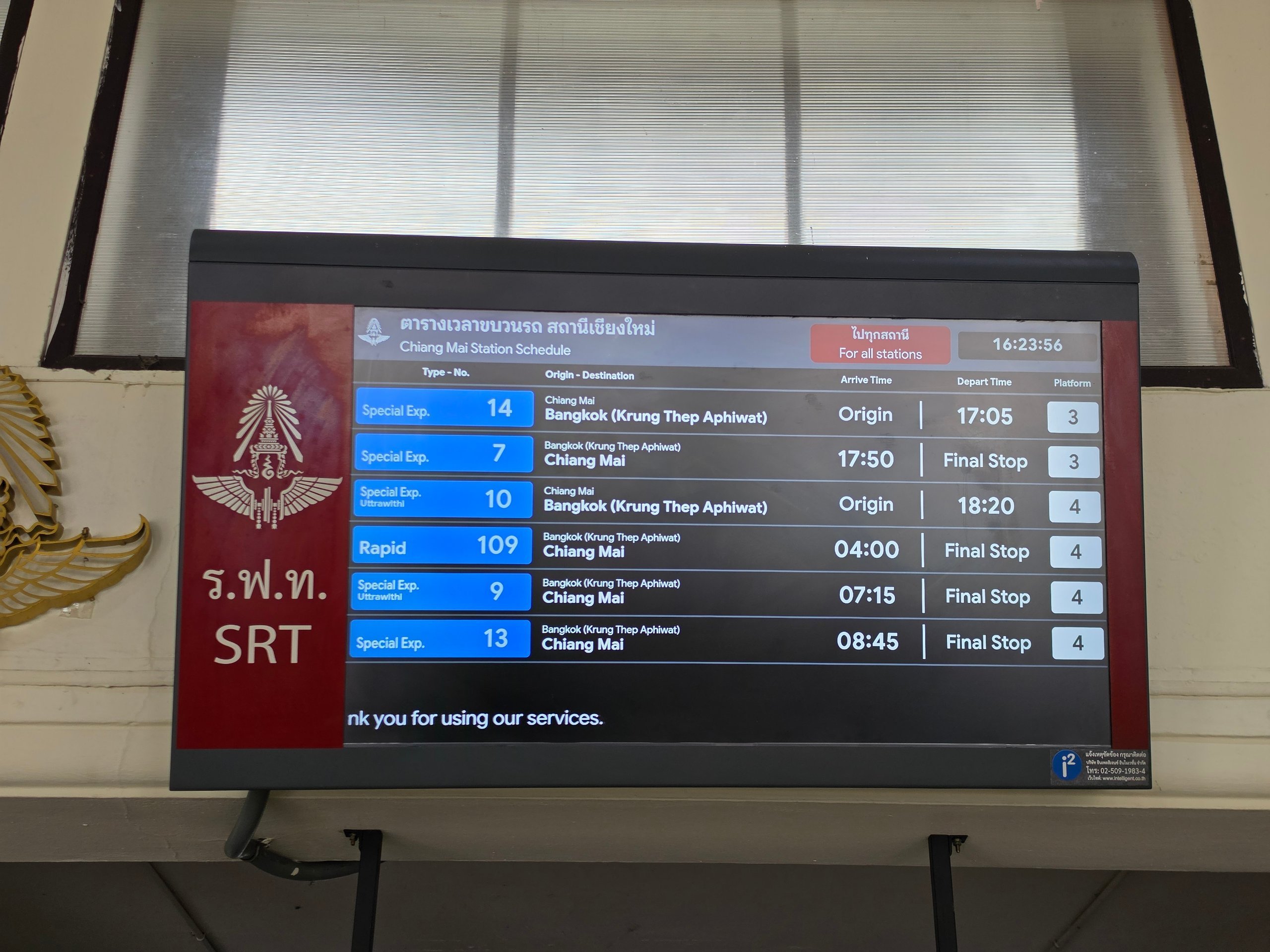
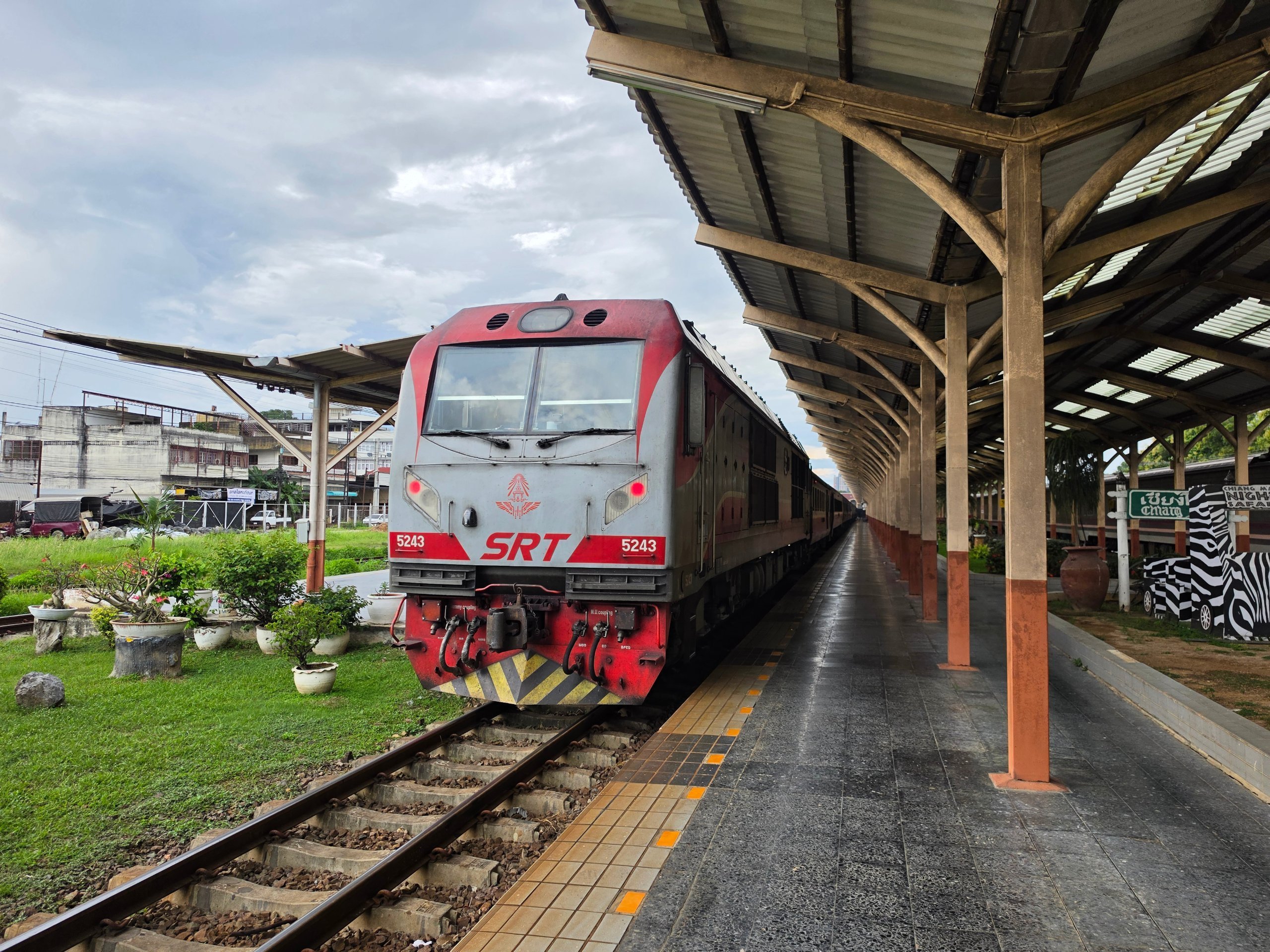
On the platform, I take a look at the trains that have pulled in.
The one on the right leaves for Bangkok 70 minutes earlier. It’s an older train, which is the one I originally wanted, but the berths were already completely sold out.
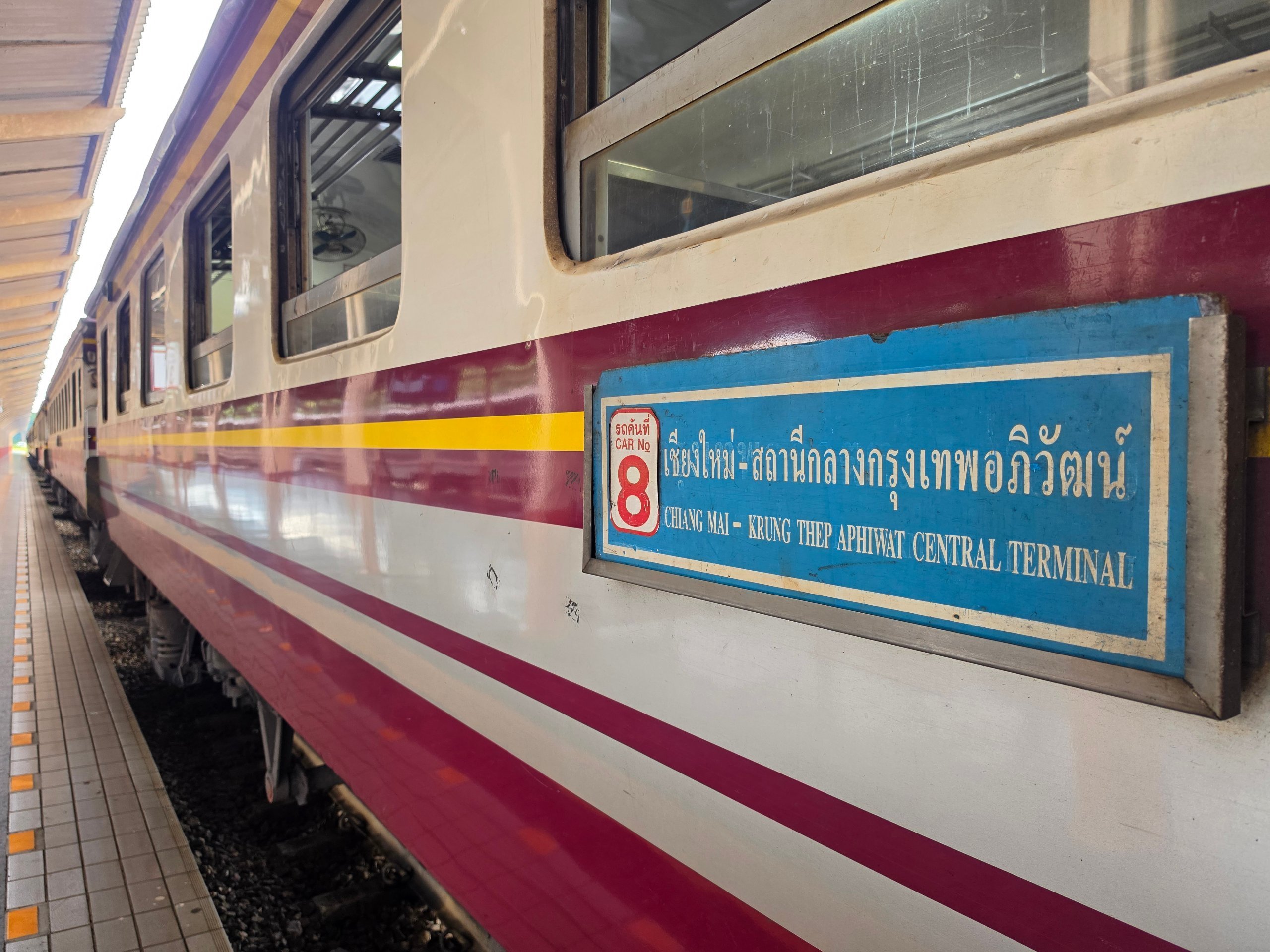
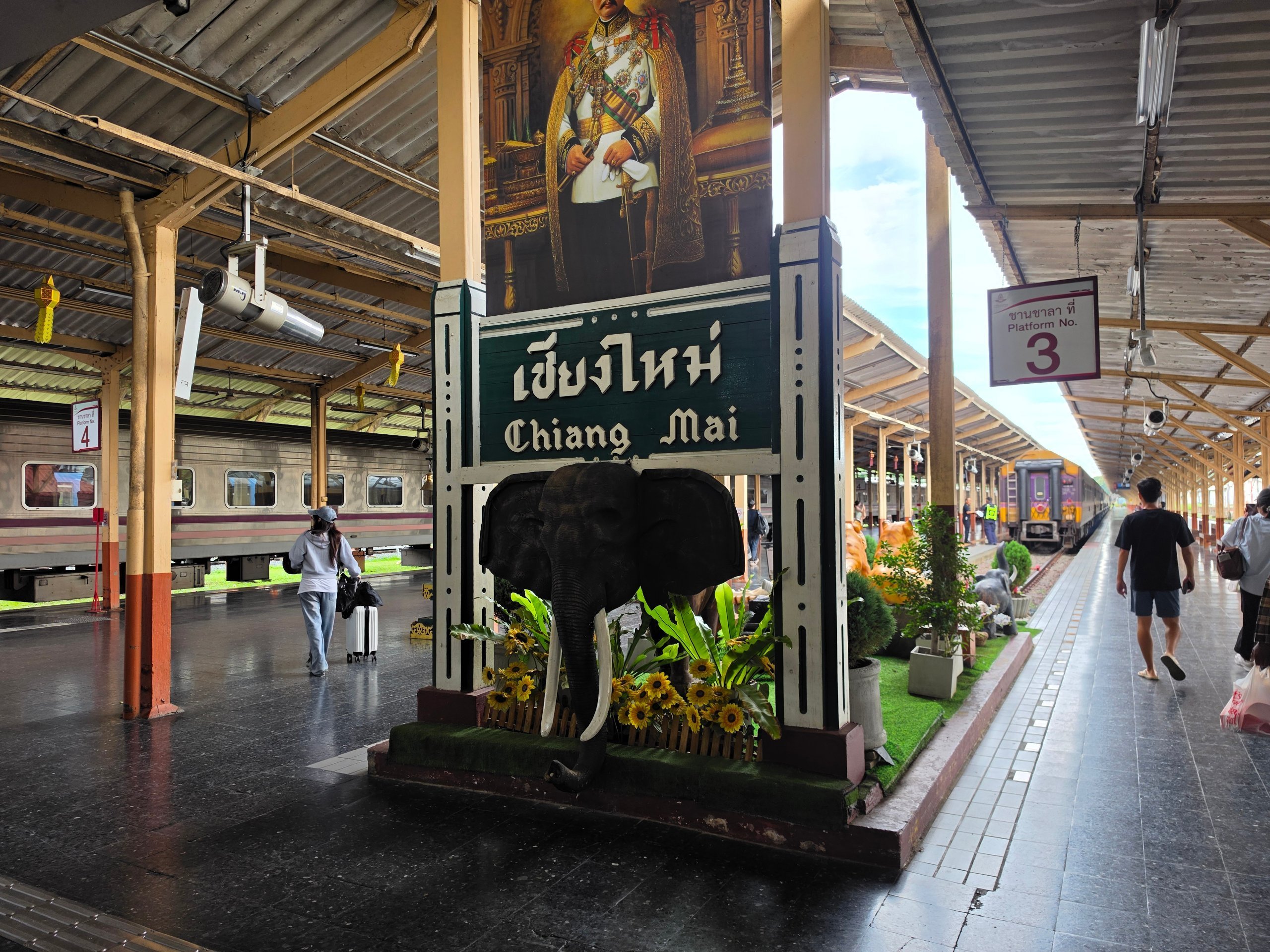
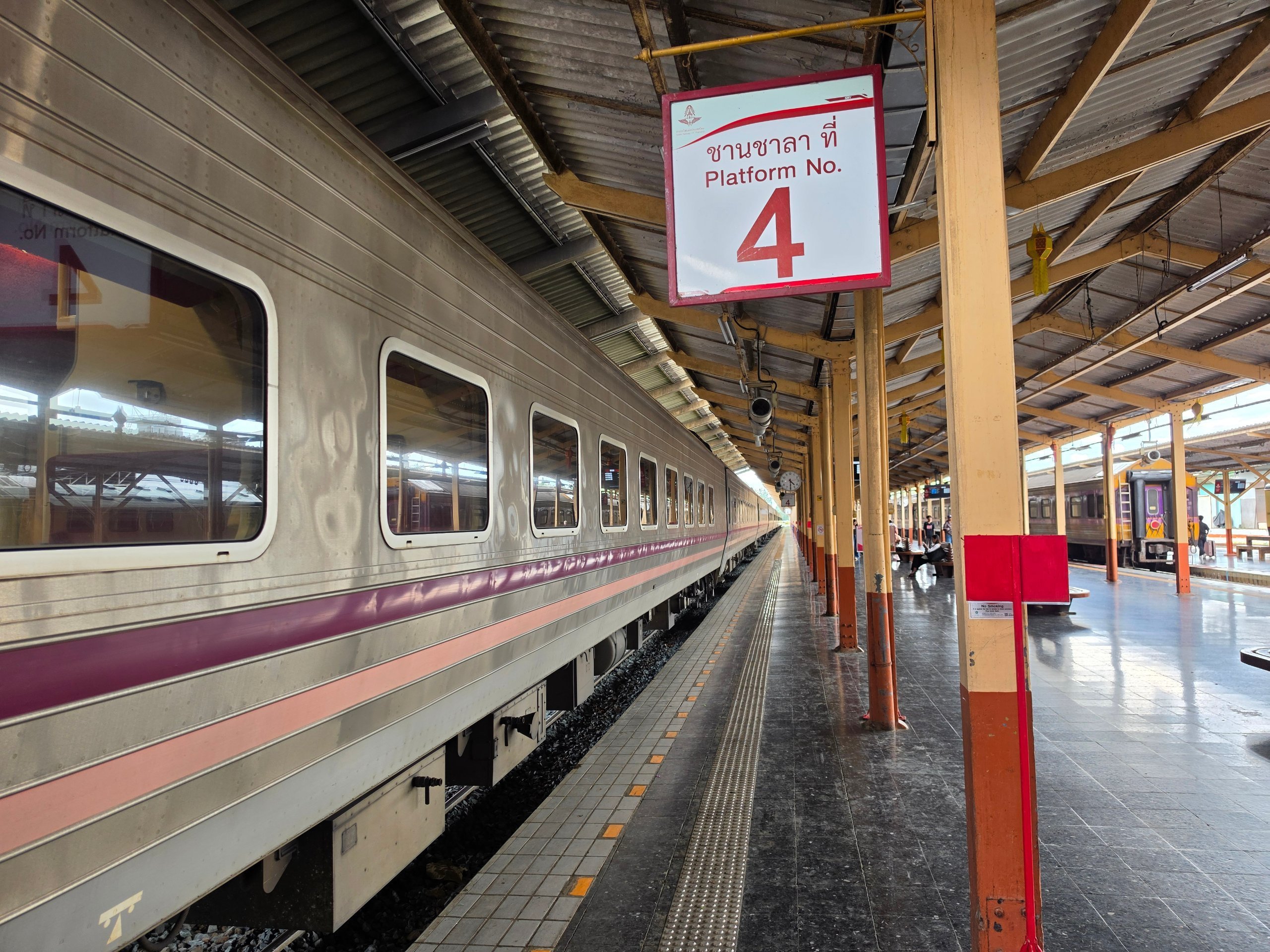
The one on the left is mine. From the outside, it looks nice, clean and modern.
Inside, both trains are more or less similar, at least from what I’ve seen in the photos.
We can board the train about 50 minutes before departure, which is great.
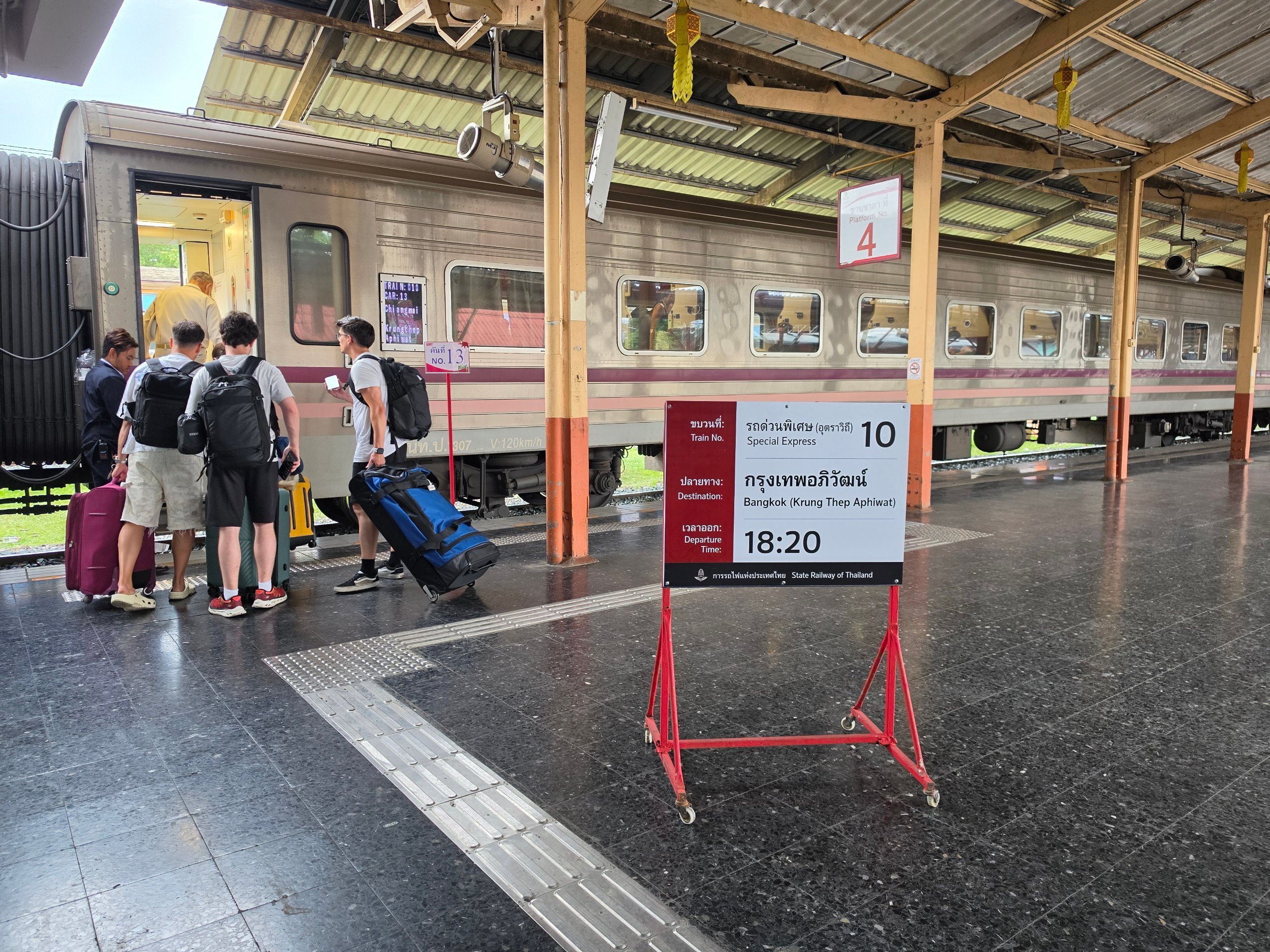
Before that, the train crew carry out their necessary pre-departure checks:
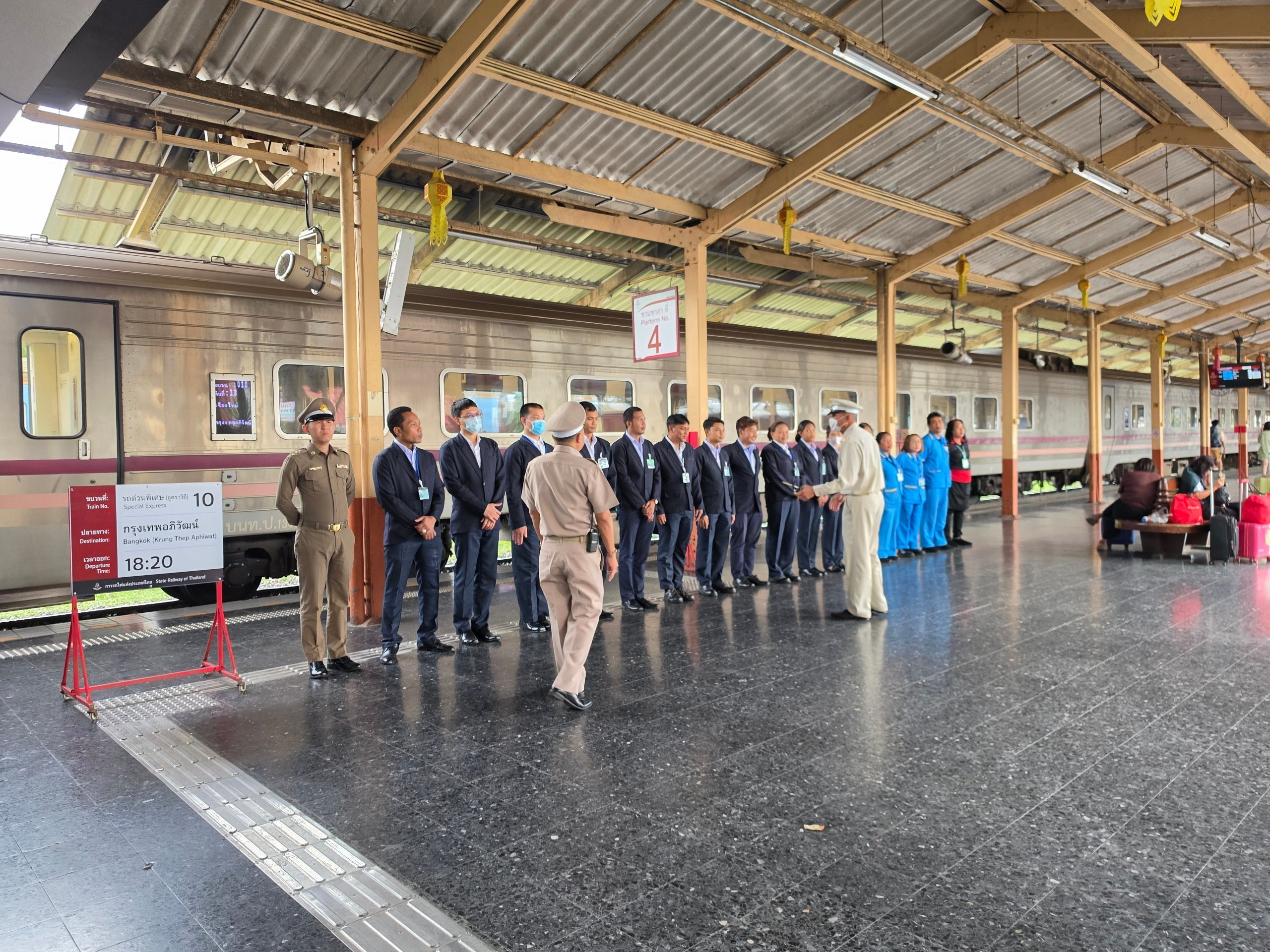
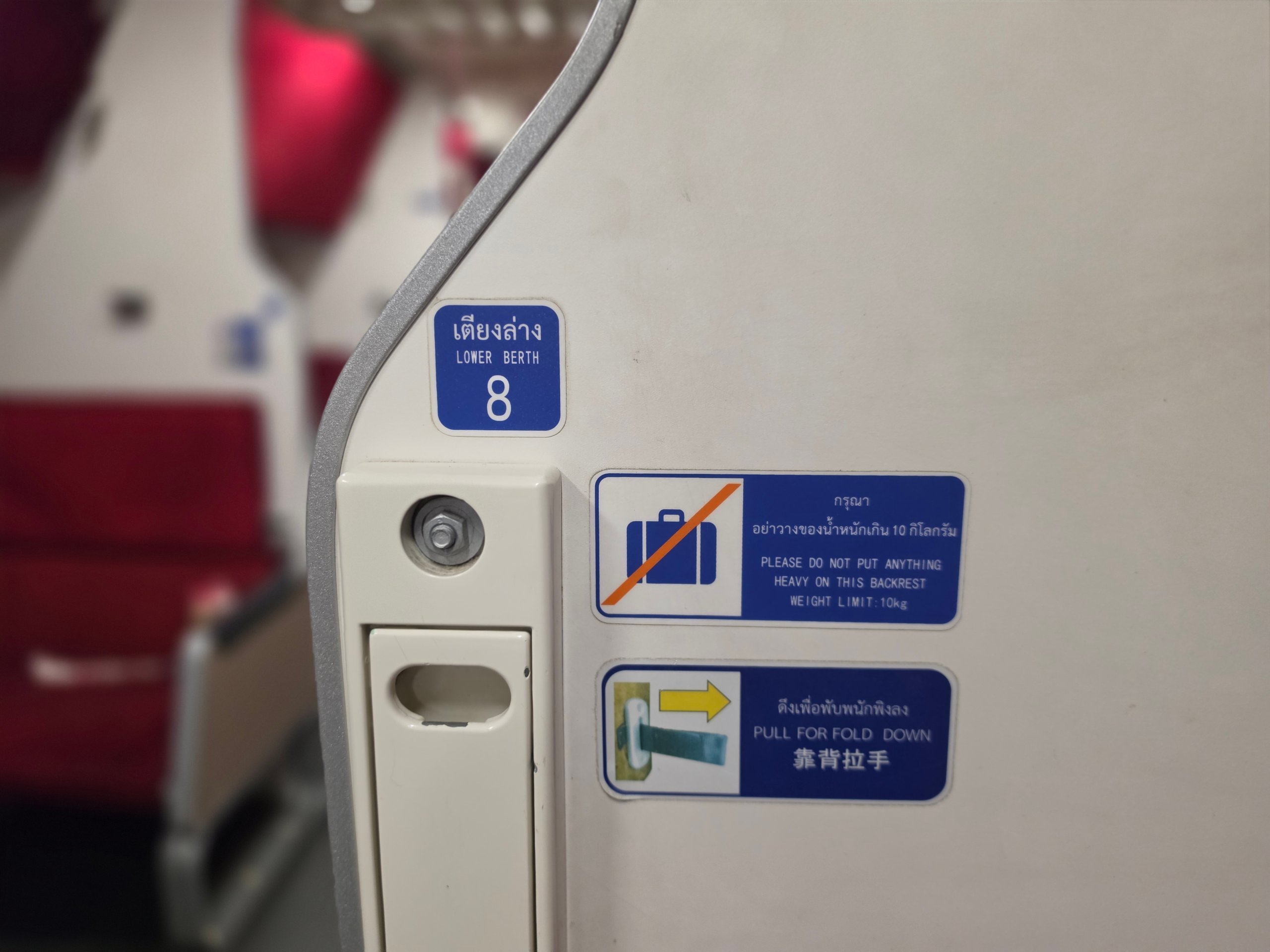
I settle into my seat, number 8, and go to explore the train whilst it’s still empty.
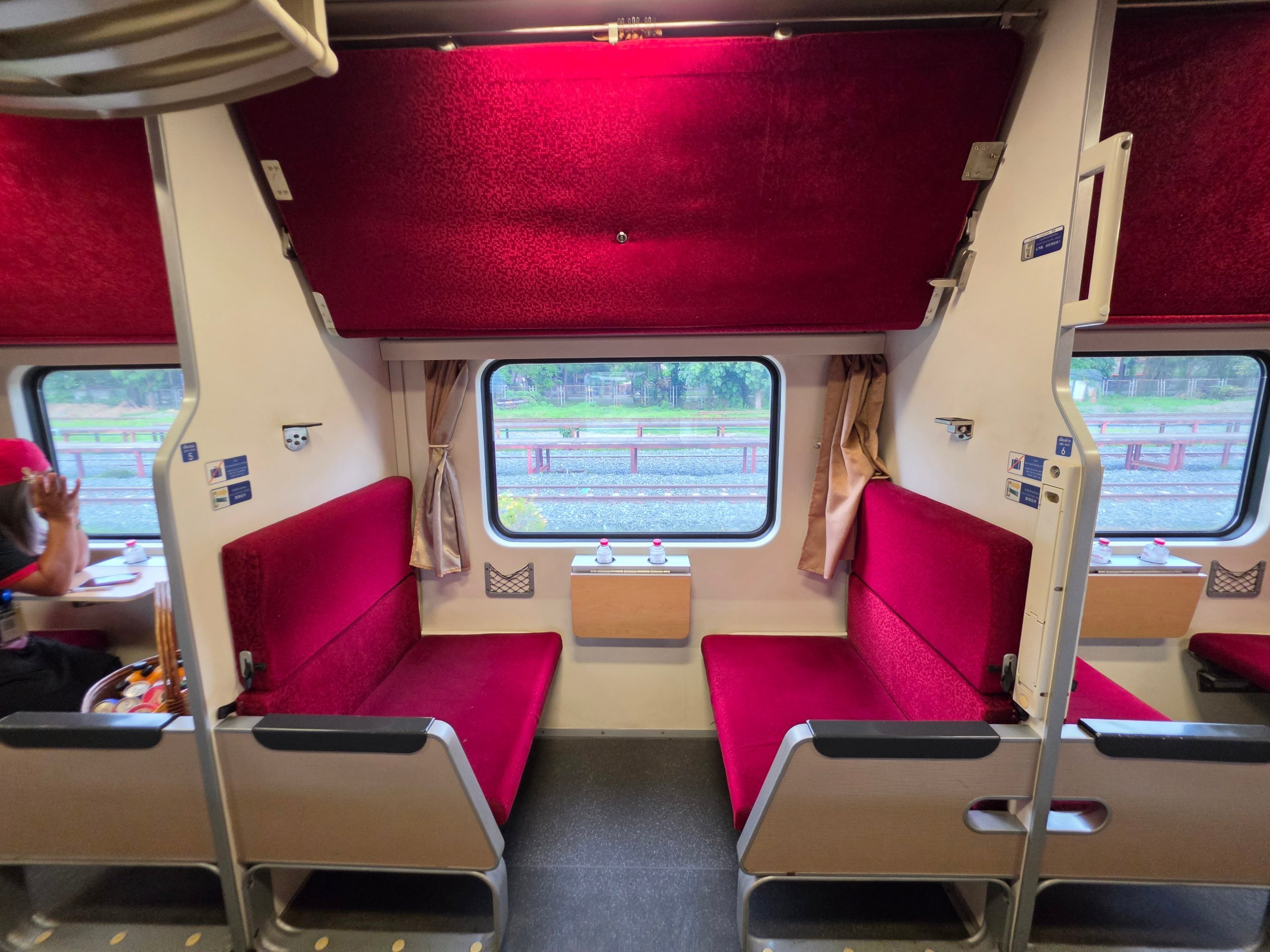
At first glance, the train looks very clean, and my concerns quickly fade. This should be quite a comfortable journey.
All the seats are still folded down. This is how it works:
That’s one of the reasons I prefer the lower berth. If I can’t sleep, I can simply sit up relatively comfortably.
Each carriage has a member of staff assigned to it who looks after refreshments and cleanliness.
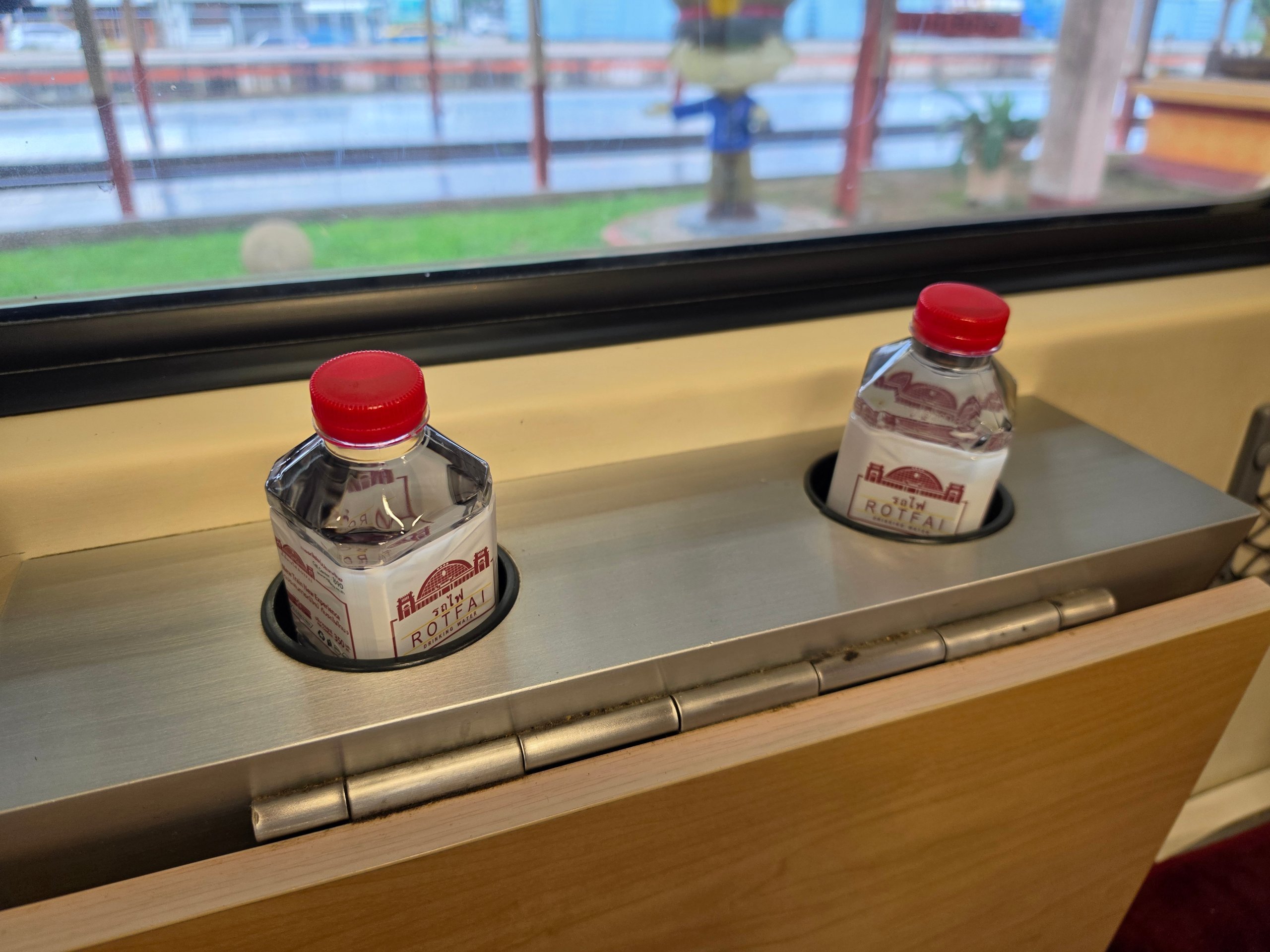
My seat has a small table, and everyone is given free water.
There’s also a universal charger hidden behind a curtain next to every seat.
Luggage goes under the seat.
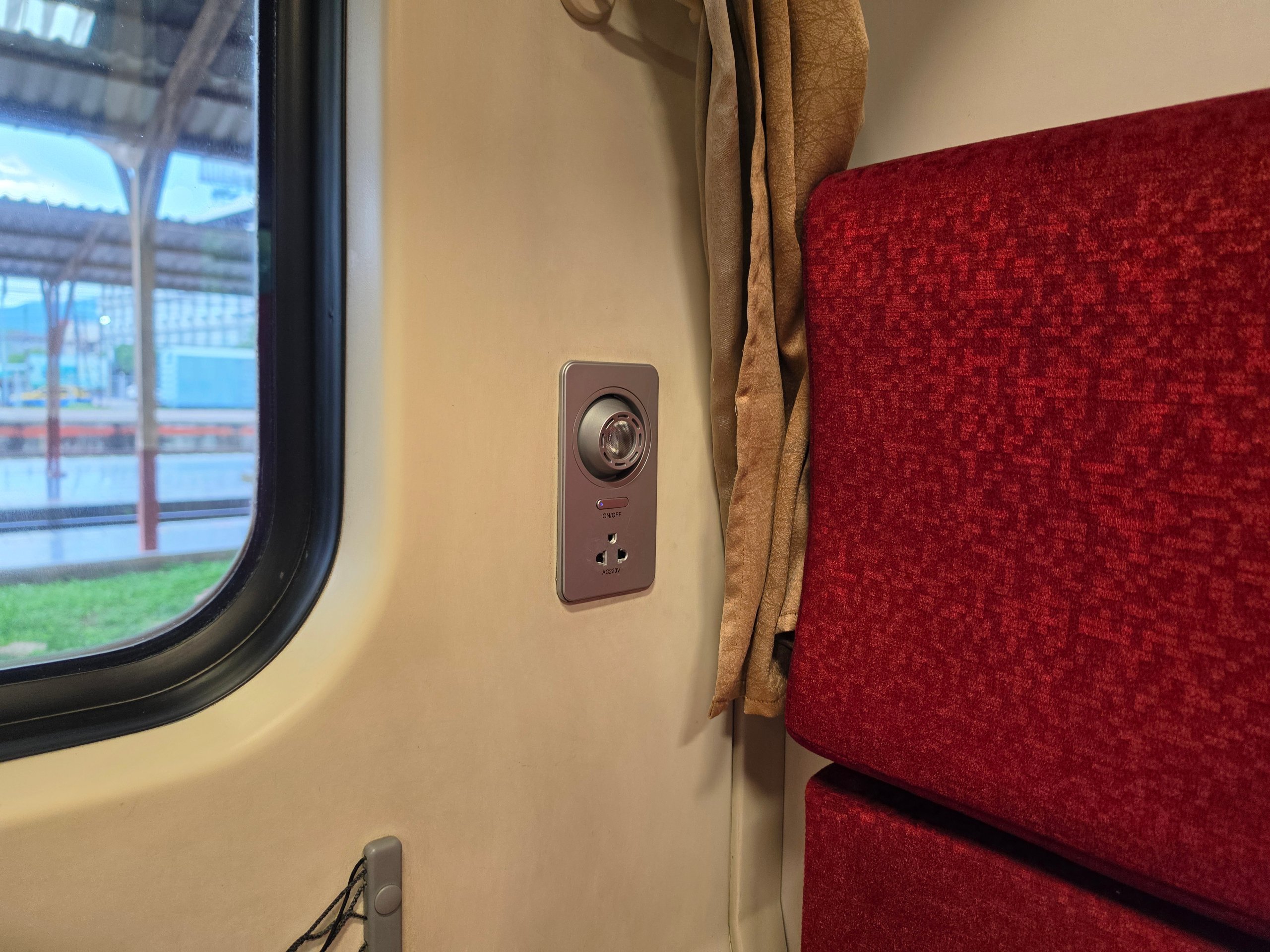
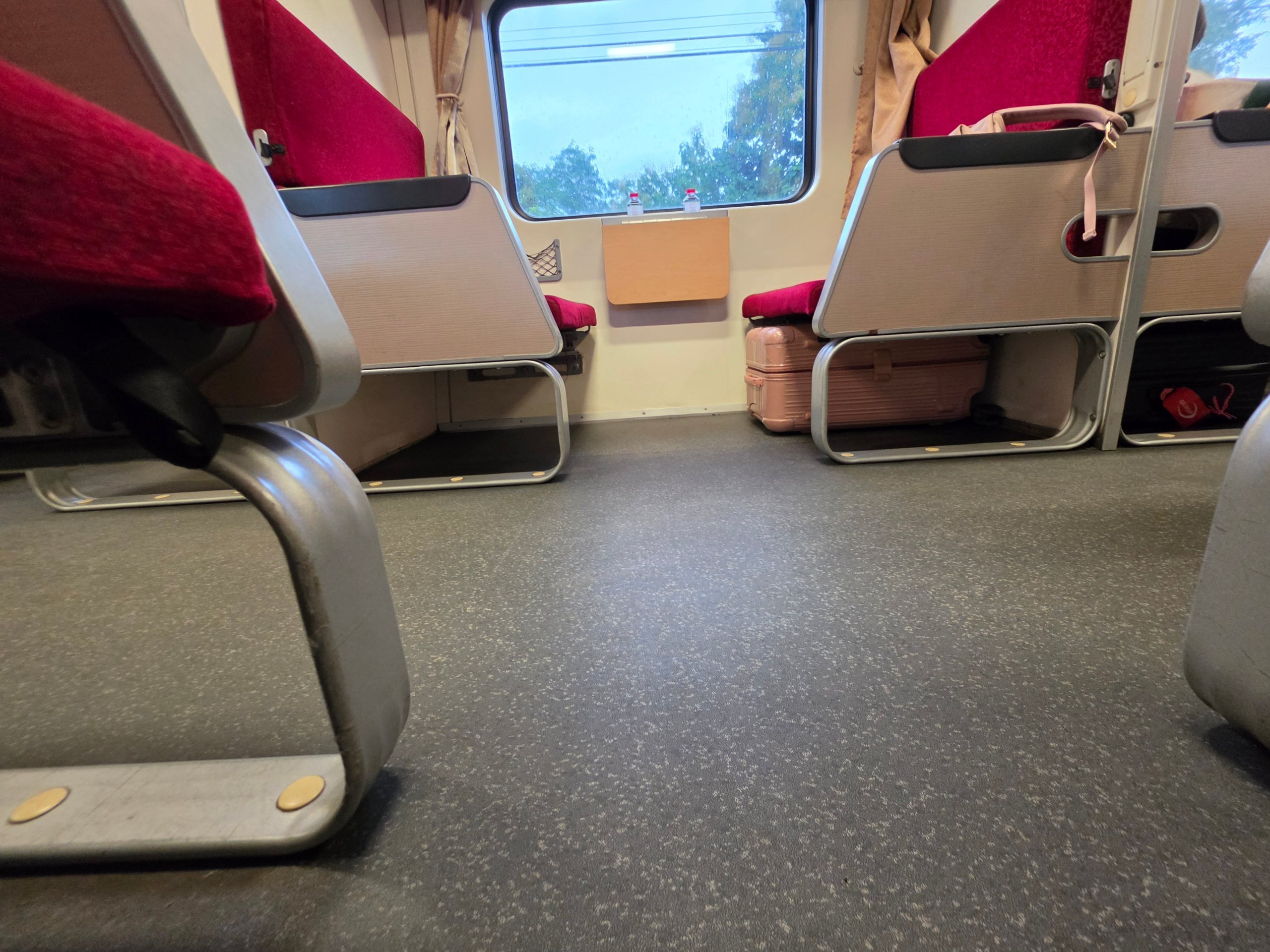
Before we set off, the steward asks me if I’d like some dinner.
Food isn’t included in the ticket price.
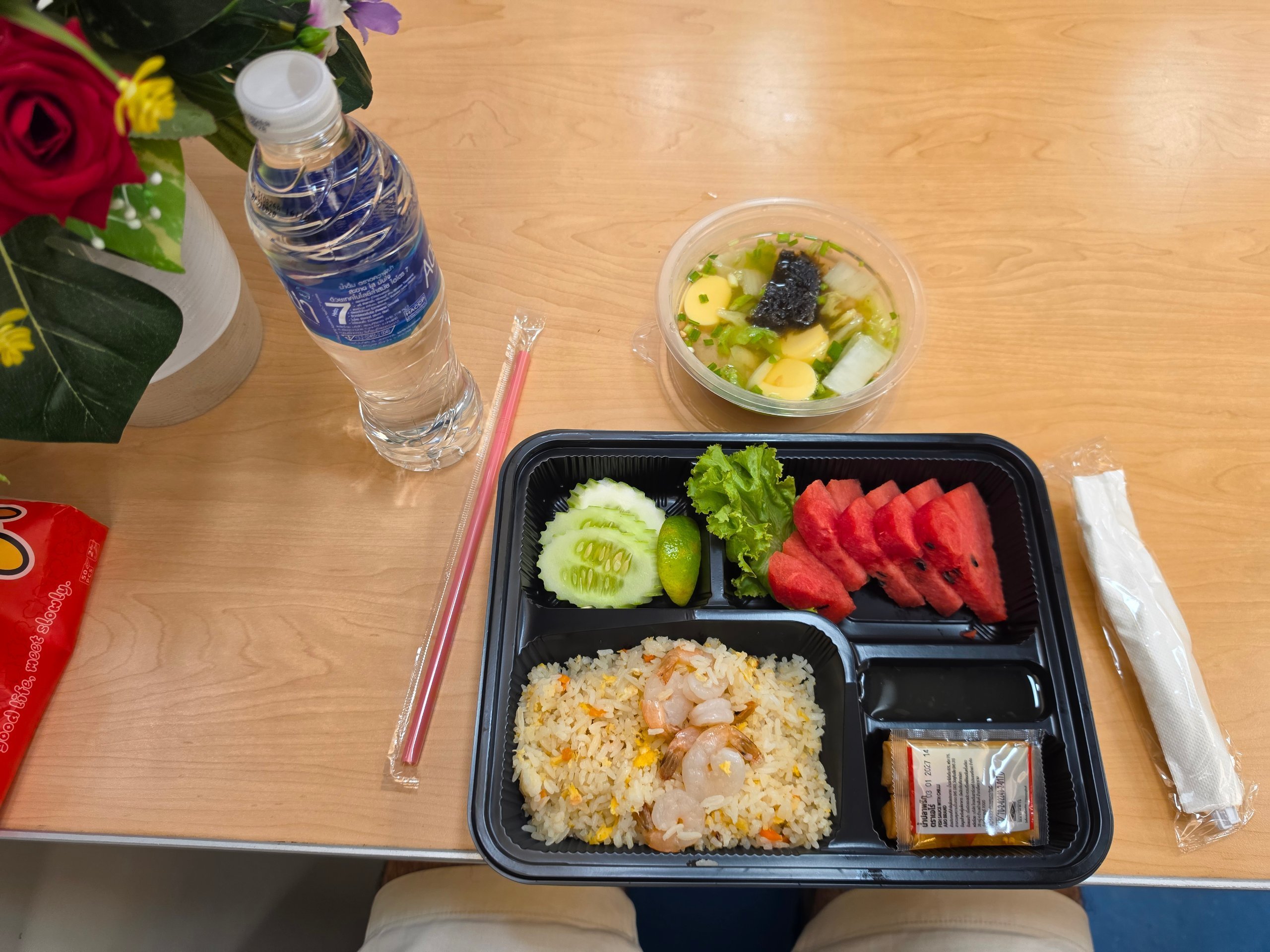
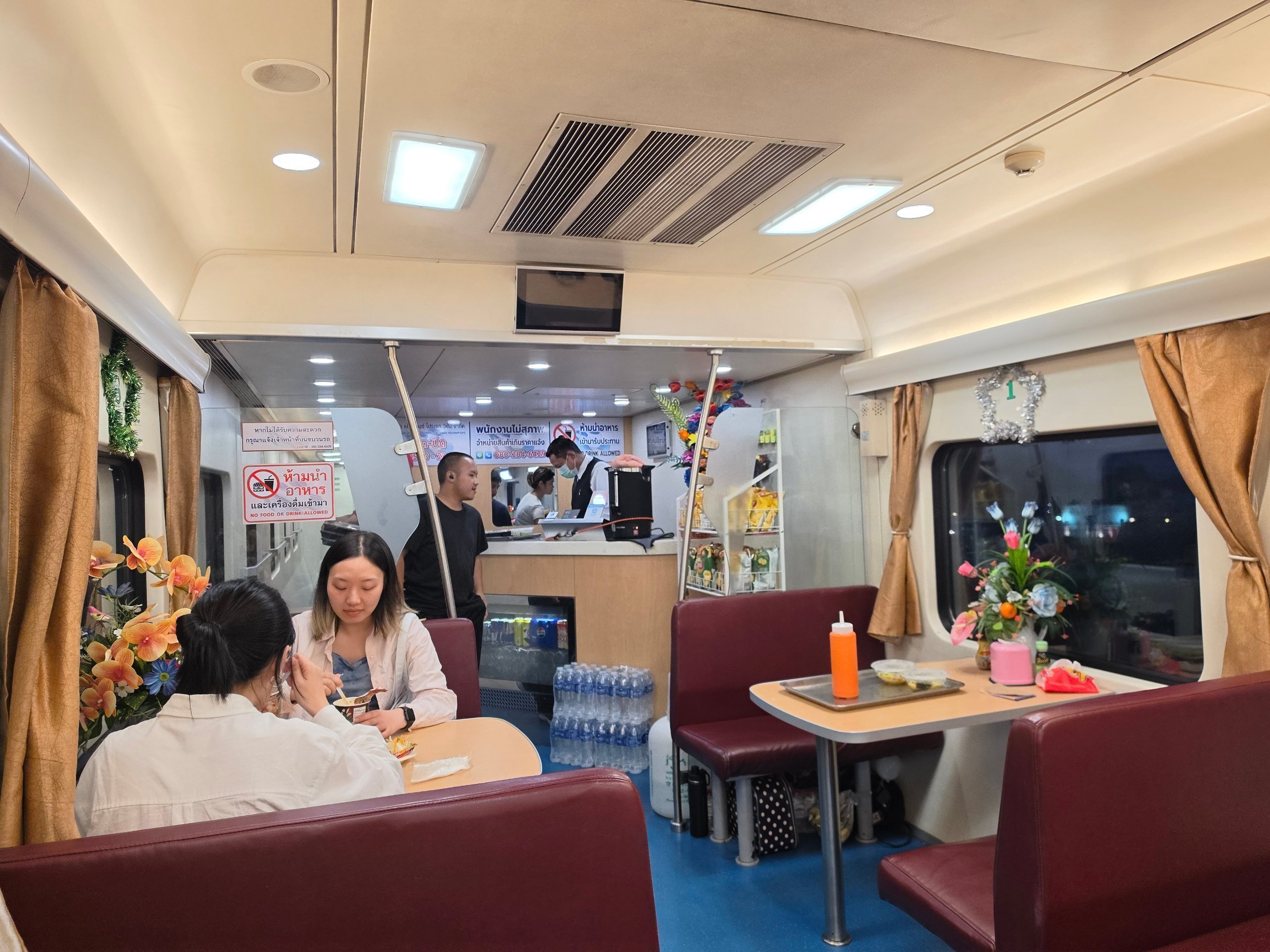
Of course I do. You can choose whether to have your meal brought to your seat or to eat in the dining car.
It’s always open from 5.00 am to 11.00 pm, but if you want to eat in the dining car, you’ll need to choose a specific time so that all passengers who wish to do so can have a turn.
I’ll go for 7.30 pm.
I spend a moment enjoying the last of the daylight before heading to the dining car.
The prices are quite high by Thai standards, I’d say.
A main course costs 190 thb, whilst various crisps, soft drinks and the like cost around 50 thb.
Breakfasts cost 180 thb, which I think is really a lot.
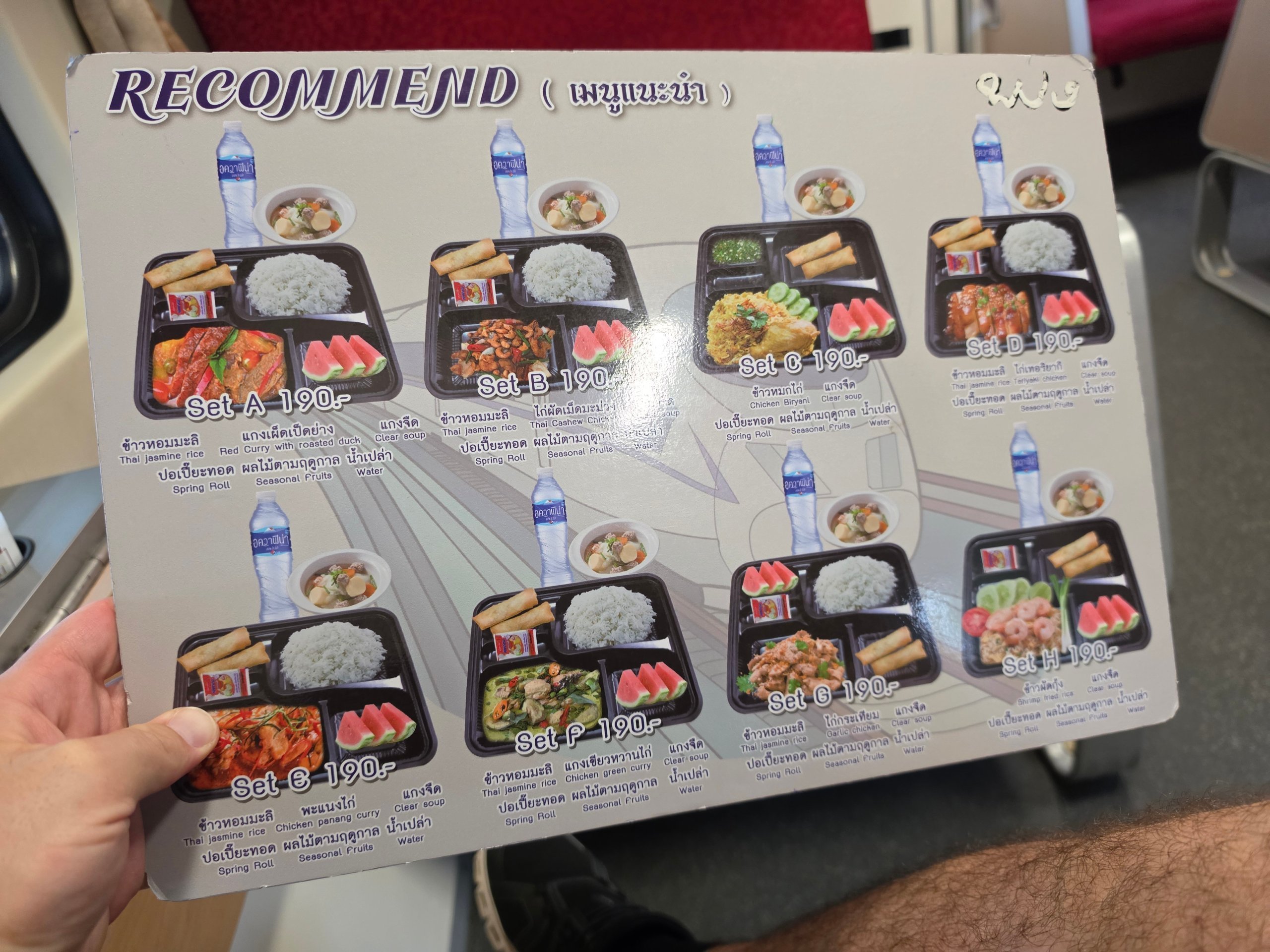
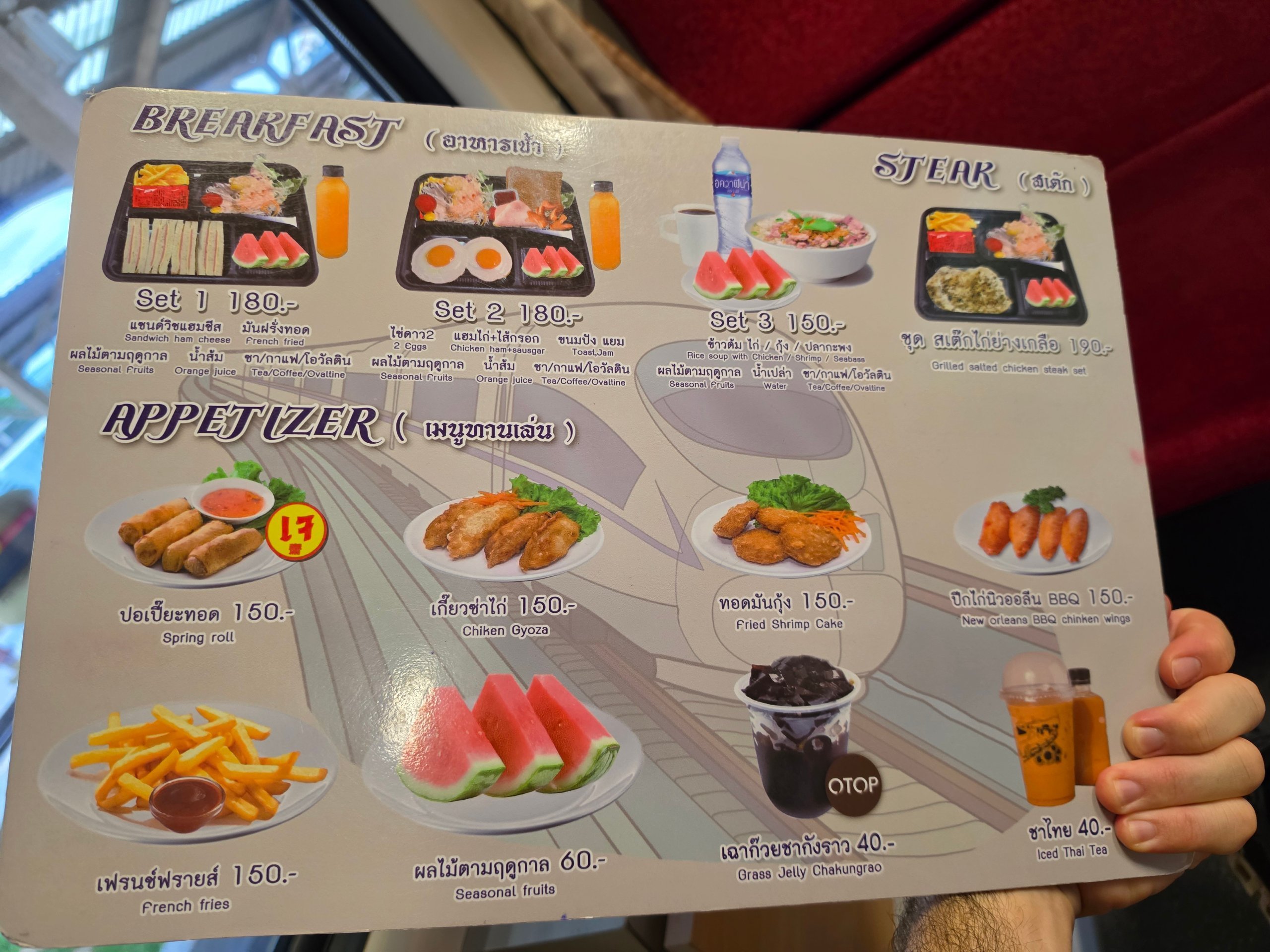
It’s great that you can pay in the dining car with either cash or a card without any problems.
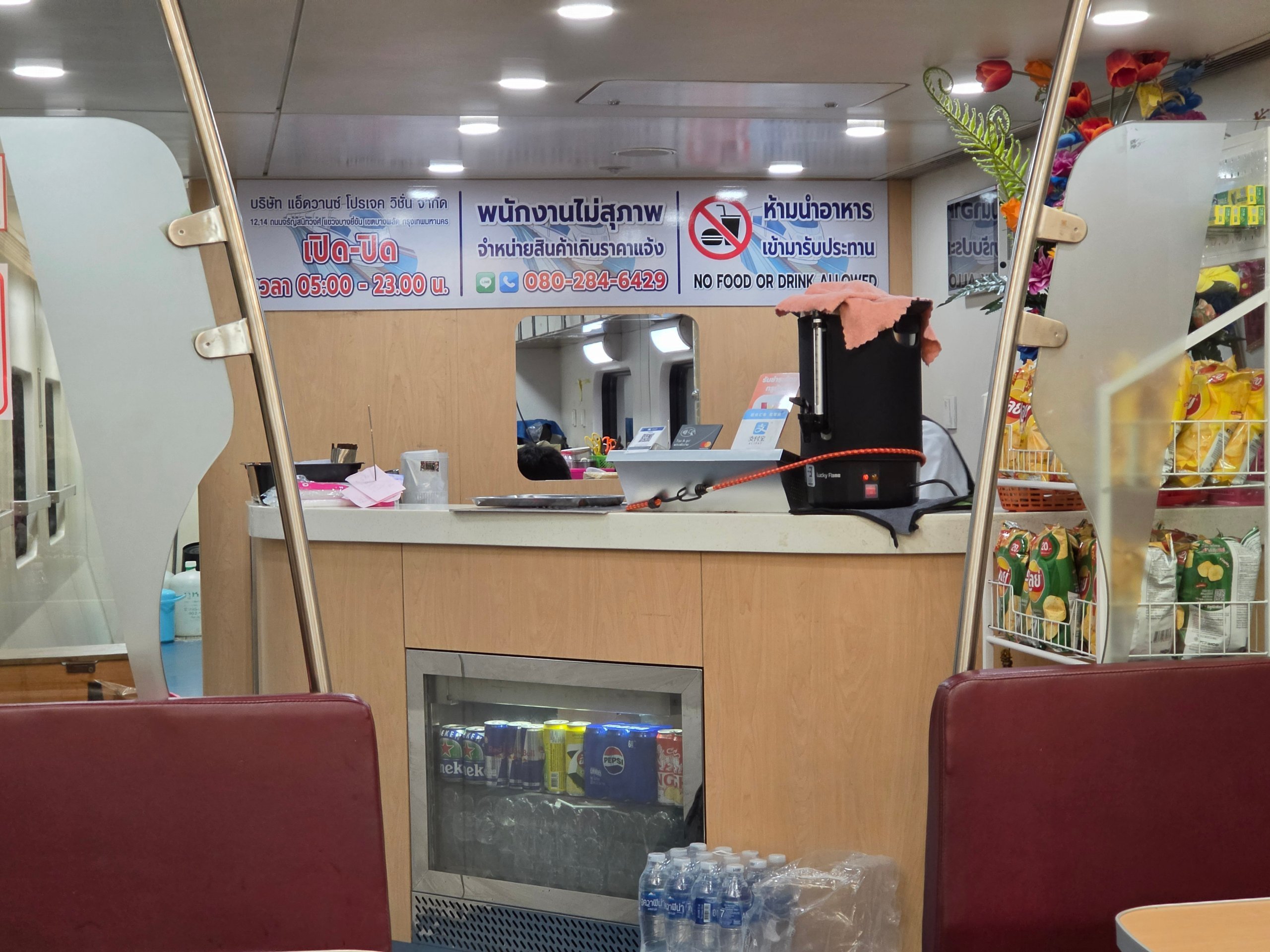
I go for the rice with prawns. It comes with soup, melon and two spring rolls with an absolutely brilliant sweet-and-sour dressing.
It’s not a huge portion, but it tastes really good!
That’s quite a crucial question, and I was a bit worried about it before the trip.
In the end, though, they were absolutely fine.
Each carriage in the new CNR 3 trainsets has three toilets:
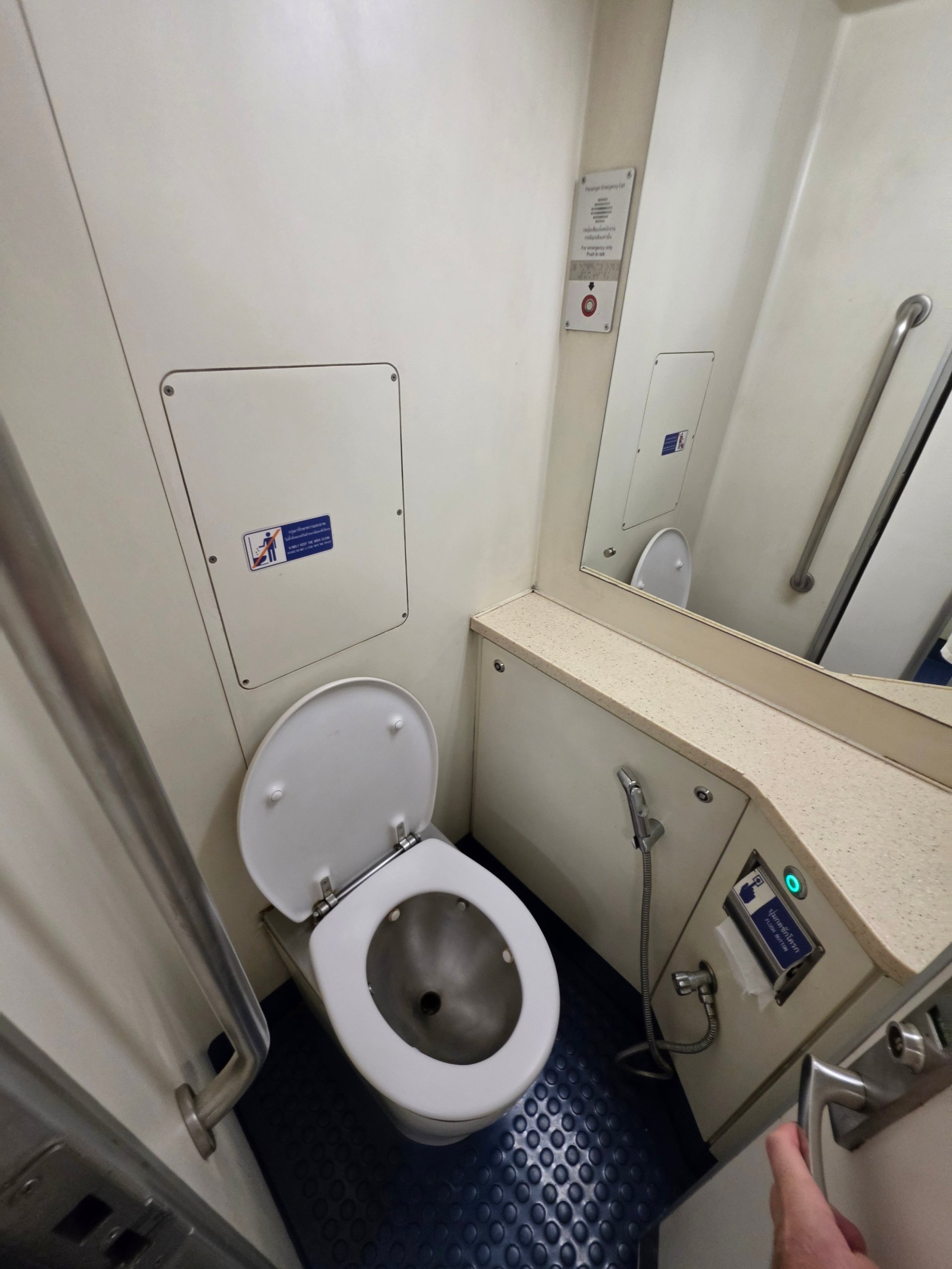
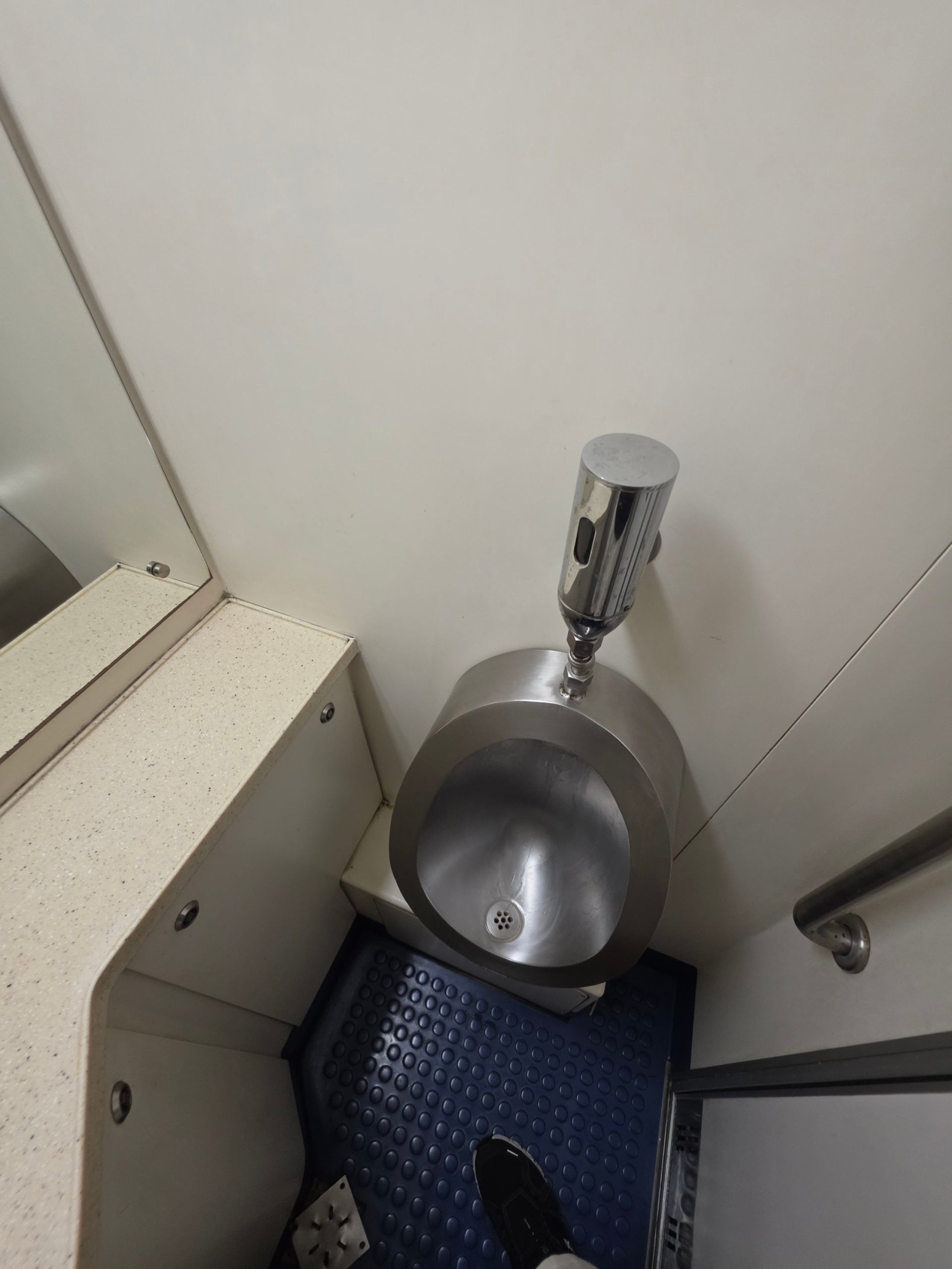
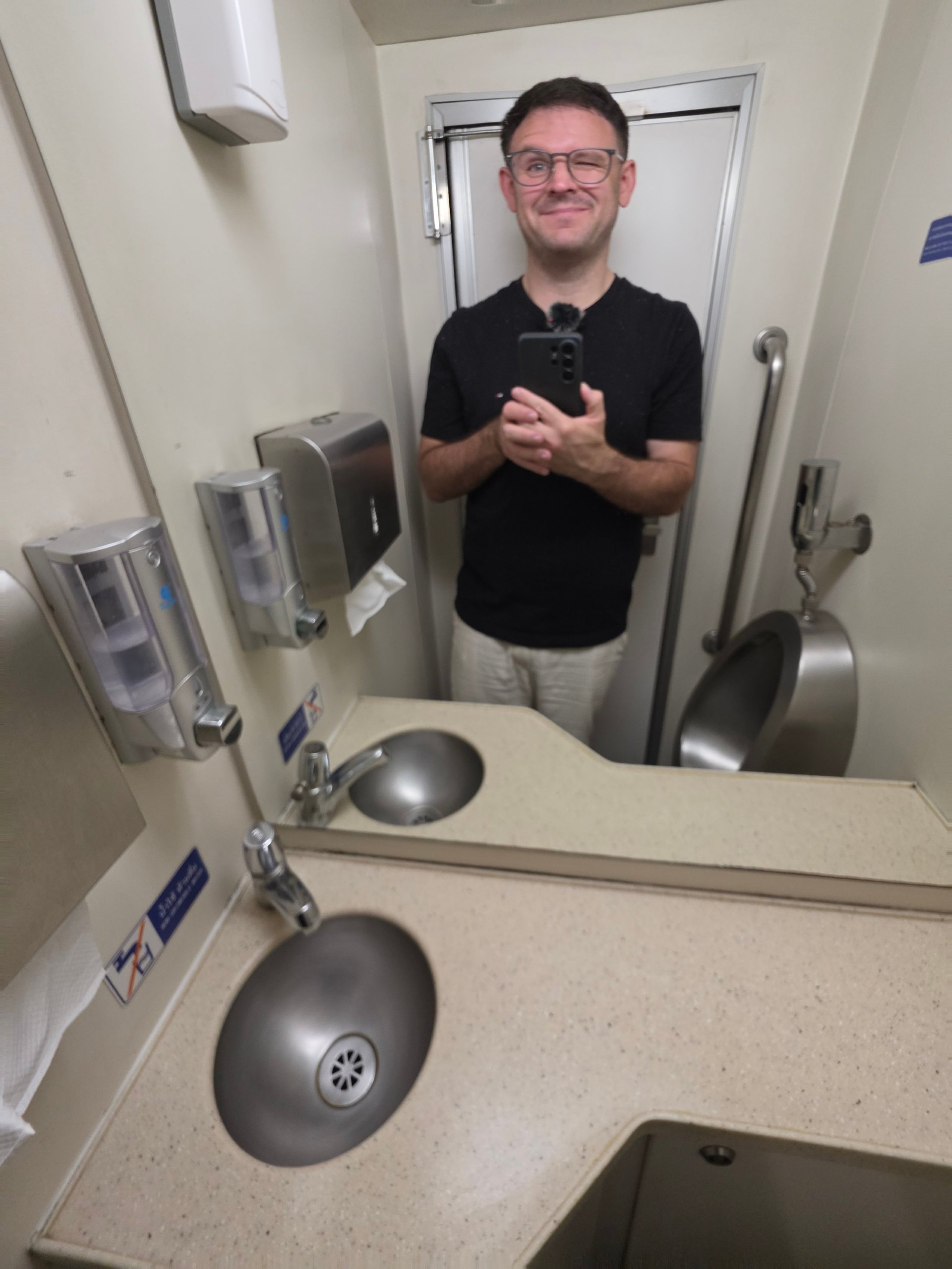
There is a washbasin inside each cubicle, and there are also two additional washbasins freely accessible in the corridor outside the toilets.
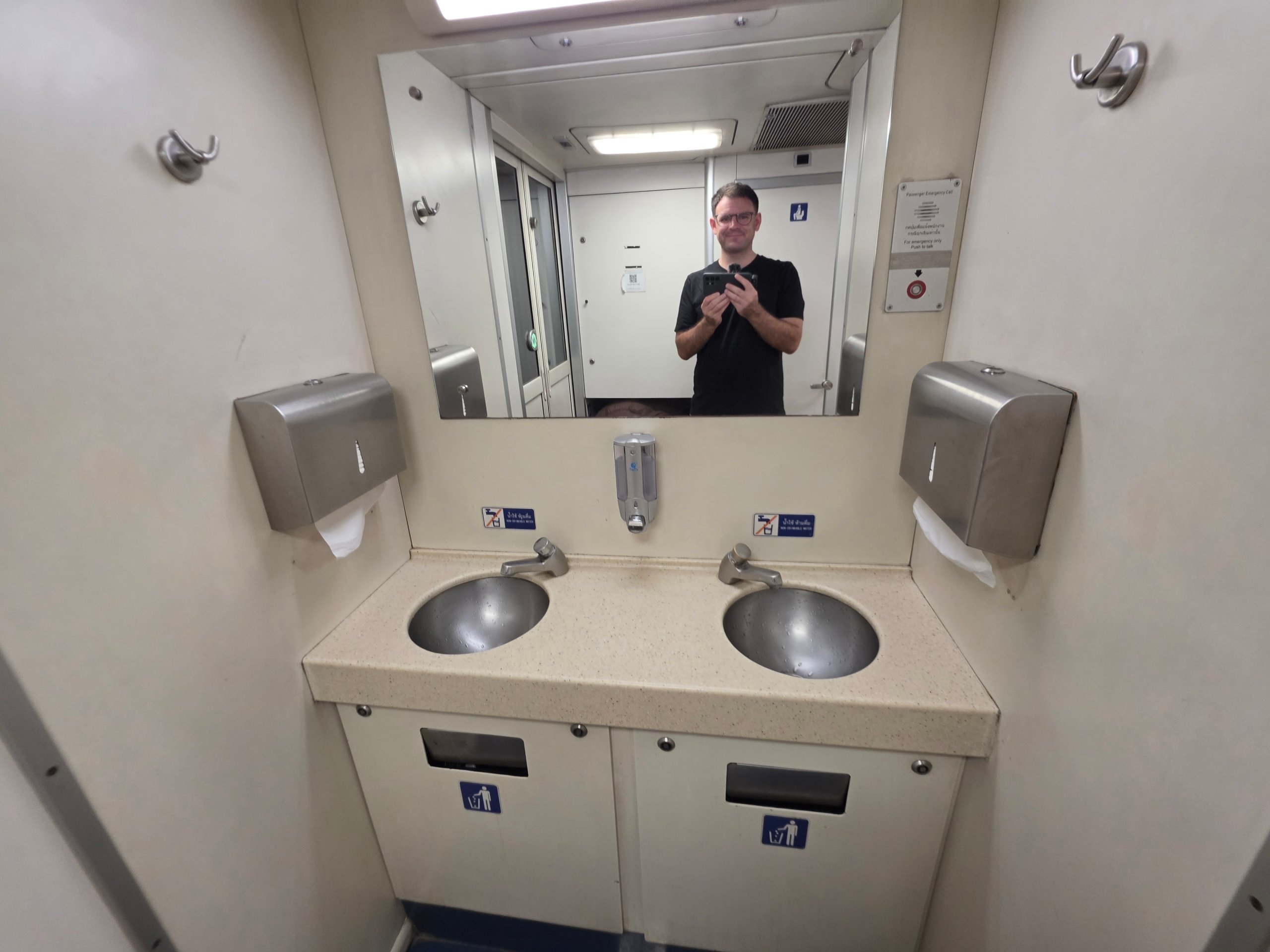
Everything is in working order and spotlessly clean throughout the journey.
It’s just that… the cubicles are REALLY very, very small, and anyone who is overweight will have a serious problem using the facilities here.
There are no showers on the train, not even in 1st class.
💬 Has anyone travelled on the older trains? What are the toilets like on those?
Immediately after dinner, the conductor comes round and makes up the beds.
Exact times vary, but generally speaking, the following rules apply on Thai Railways (though they aren’t 100% guaranteed):
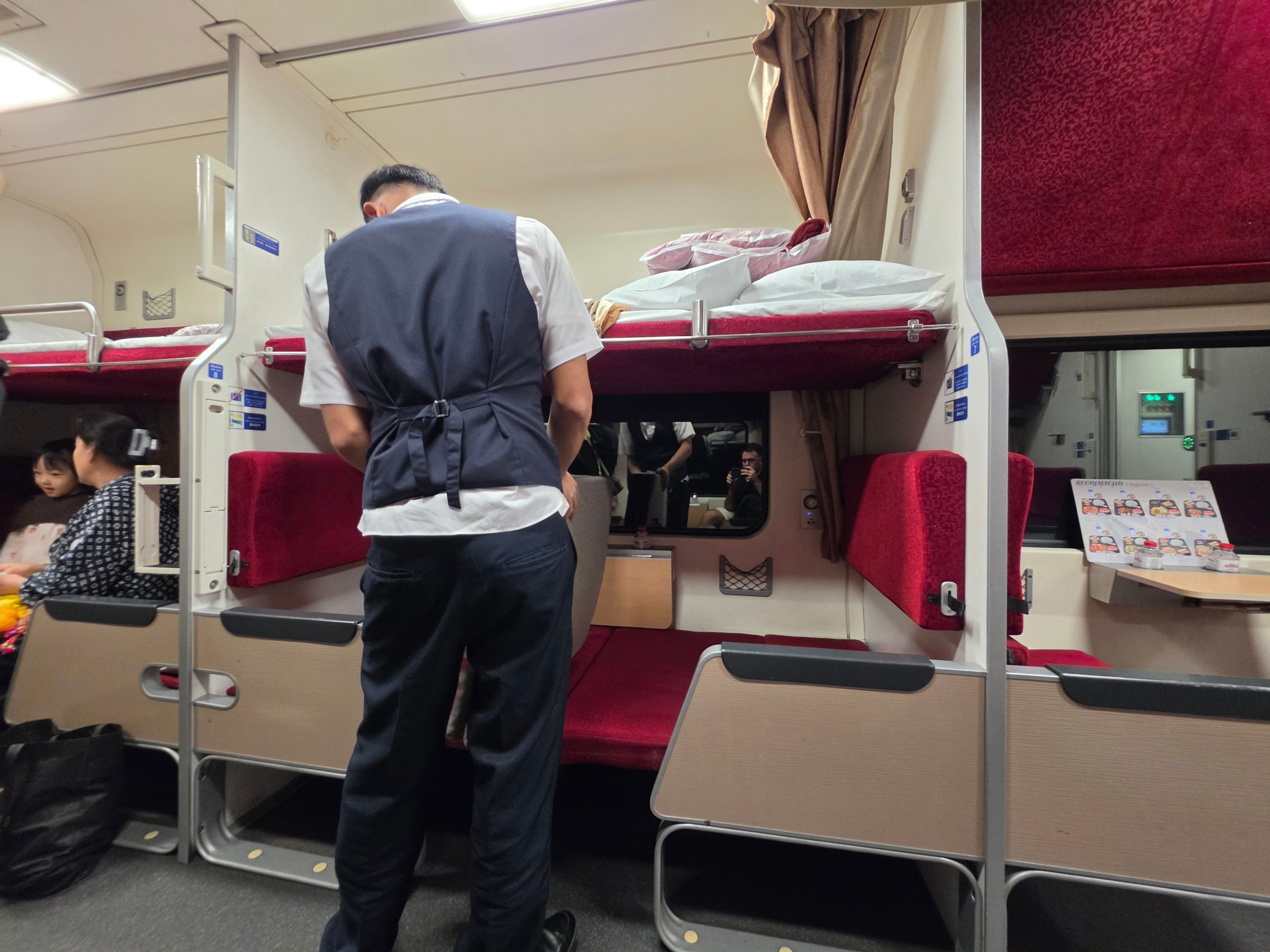
Of course, bed linen, a pillow (quite small) and a very cosy blanket are also provided.
Everything looks really clean and freshly laundered; I have absolutely no problem sleeping in it.
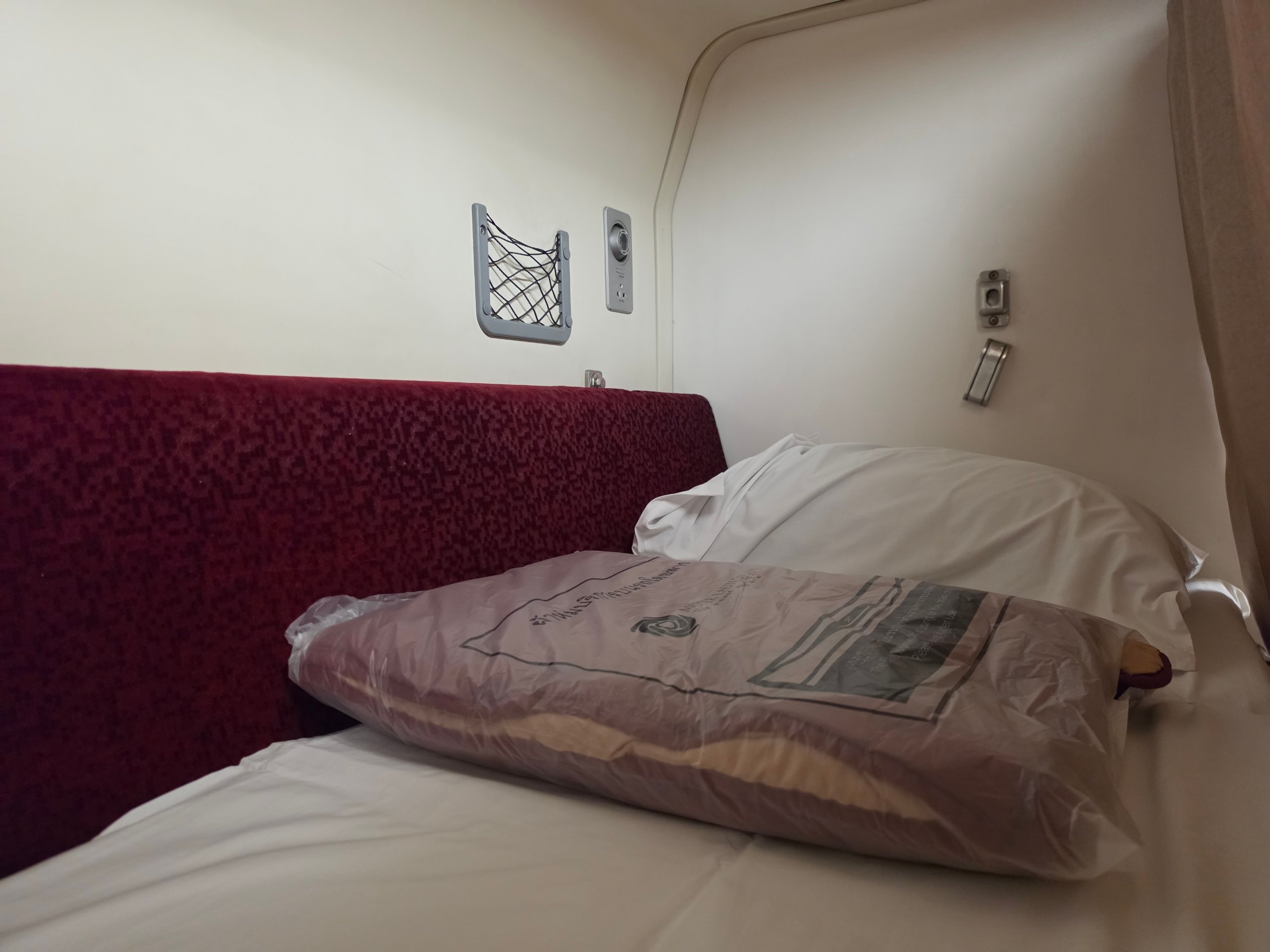
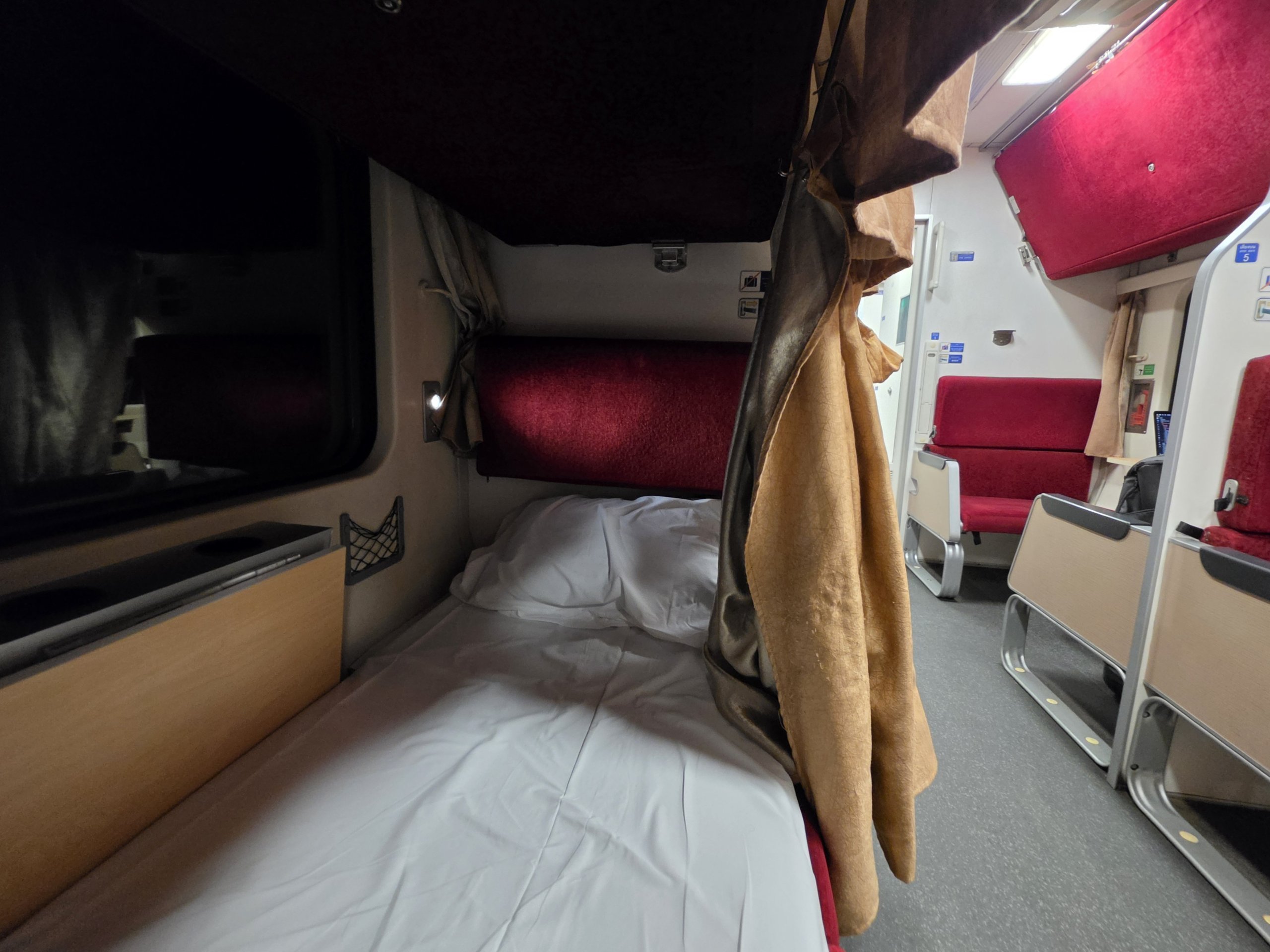
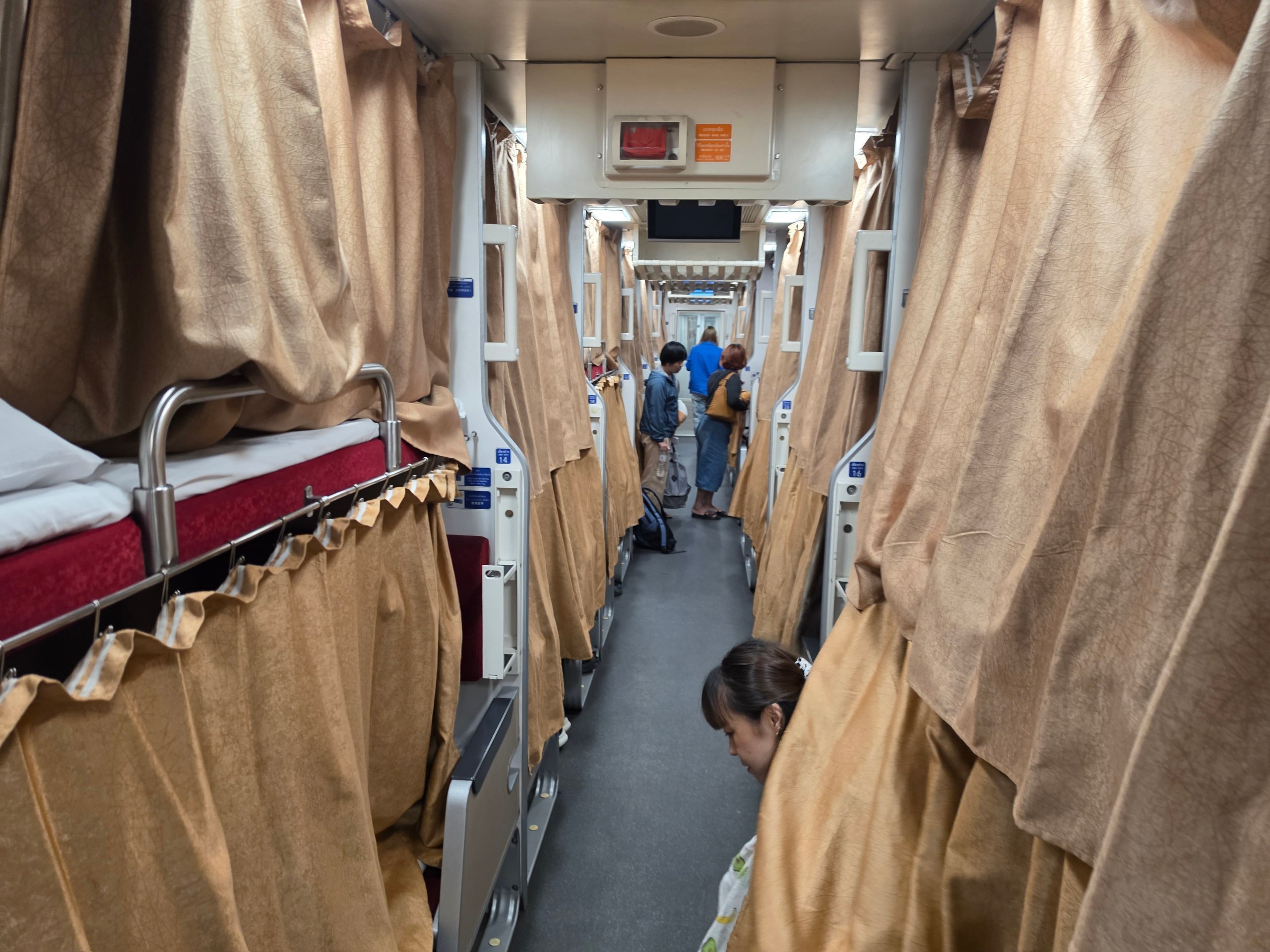
Each bed has a curtain, but it certainly doesn’t block out the light 100 per cent. Unfortunately, the lights inside the coach always remain on at full brightness throughout the night, on every route.
I’m 175 cm tall and fit comfortably in the bunk, but I think people over 180 cm will find it a bit of a squeeze.
That said, the bed is really comfortable and wide.
Overall, it’s a comfortable bed to lie on.
To be honest, I didn’t get much sleep. About4.5 hours in total, but it was quite fitful.
However, I think it was just down to not being used to this sort of travelling, the adrenaline, the excitement of the journey...
Otherwise, I found the bunk really comfortable and I’d say that anyone who’s used to it will sleep there without any problems.
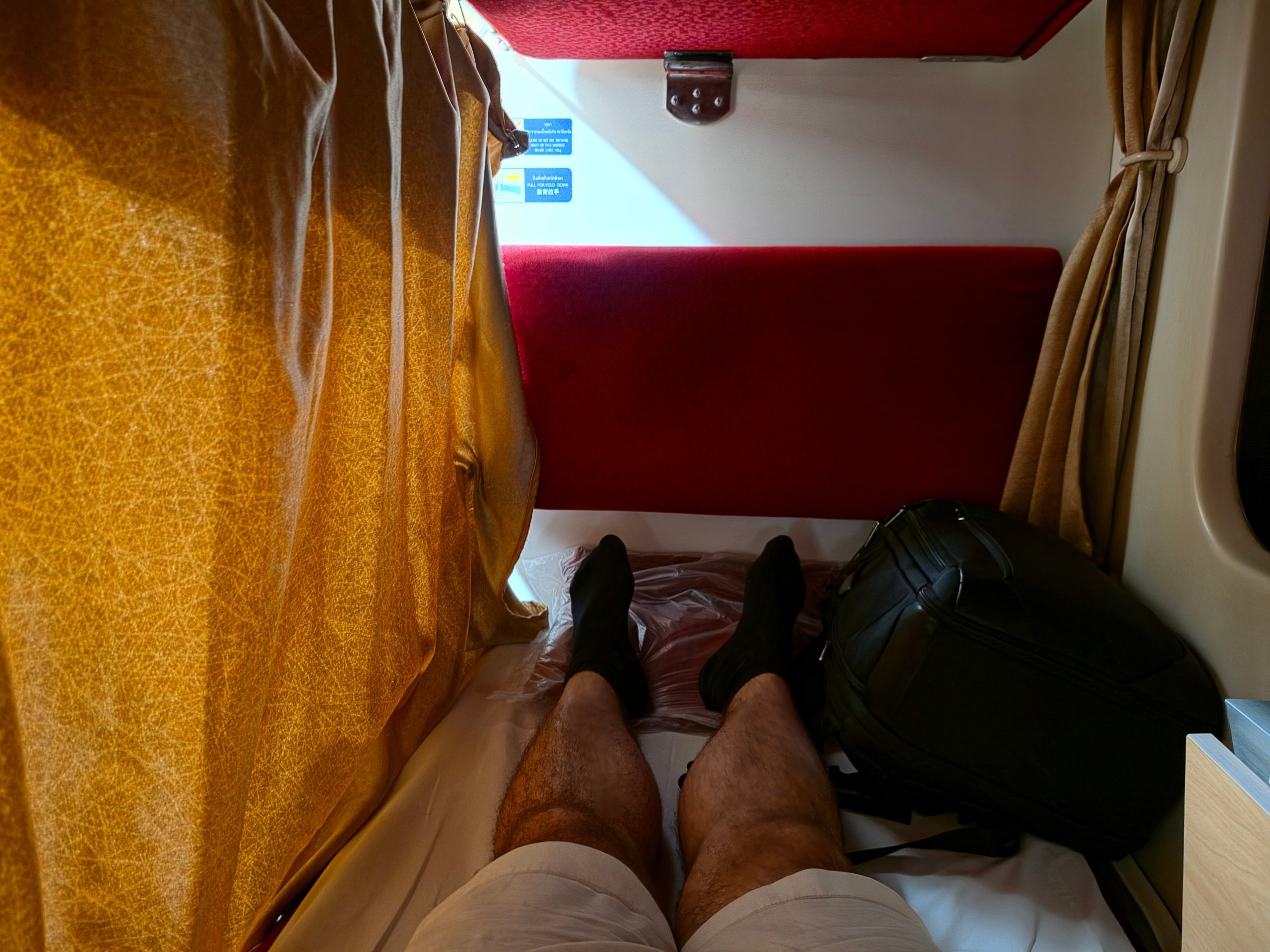
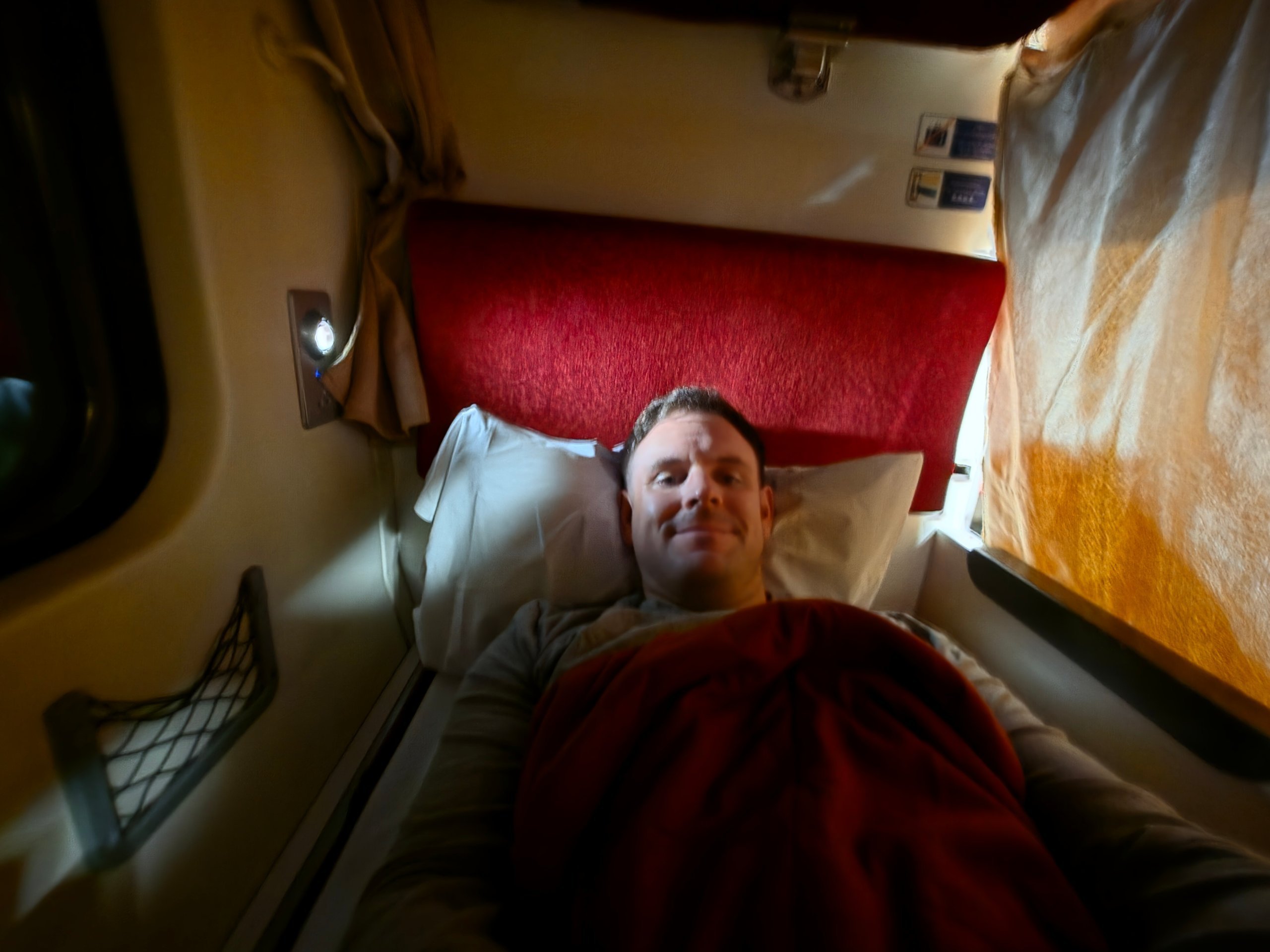
Overall, quite good. The curtain doesn’t quite go ‘from one end to the other’, but I had no trouble changing into my pyjamas on the bed without anyone seeing me.
If I were you, I wouldn’t underestimate the importance of preparation if you really want to get a good night’s sleep.
The wake-up call is about an hour before arrival.
I’m not going to the dining car for breakfast. I’m not hungry at all, and anyway, I’m planning to add some new places to our article on food and drink in Bangkok.
View hotels in Bangkok on the map
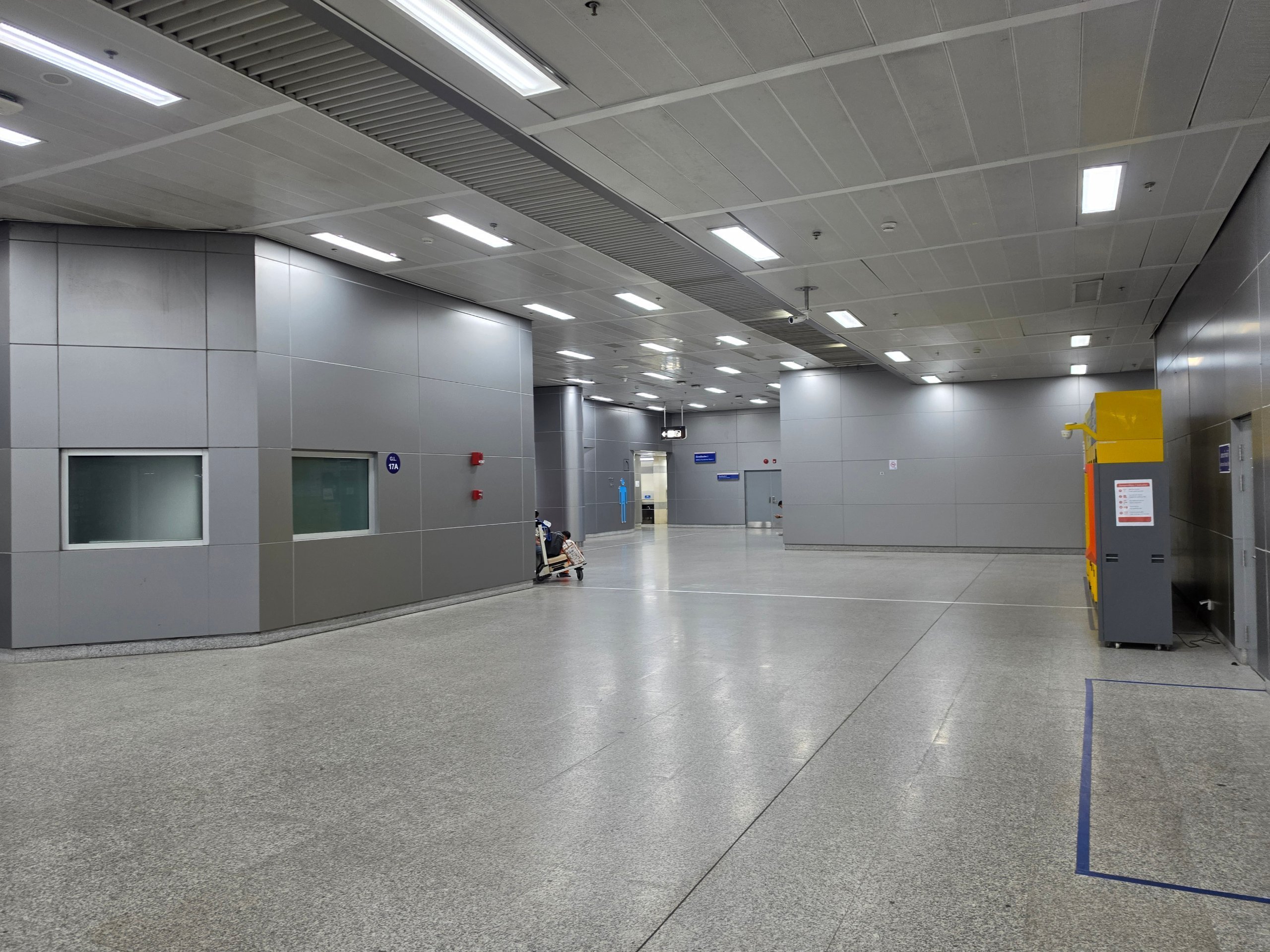
The modern station is absolutely huge. Empty. You could easily walk for kilometres here.
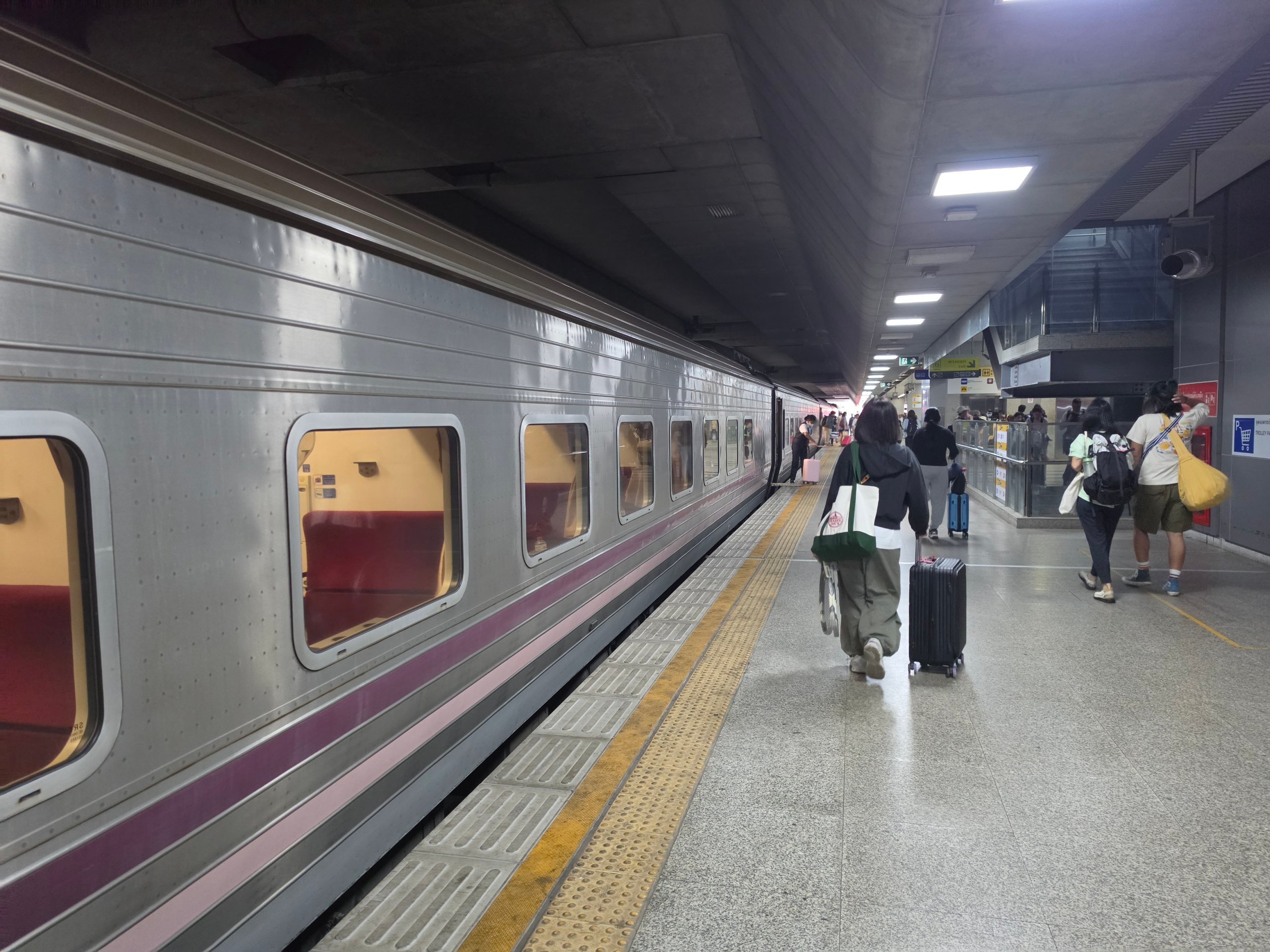
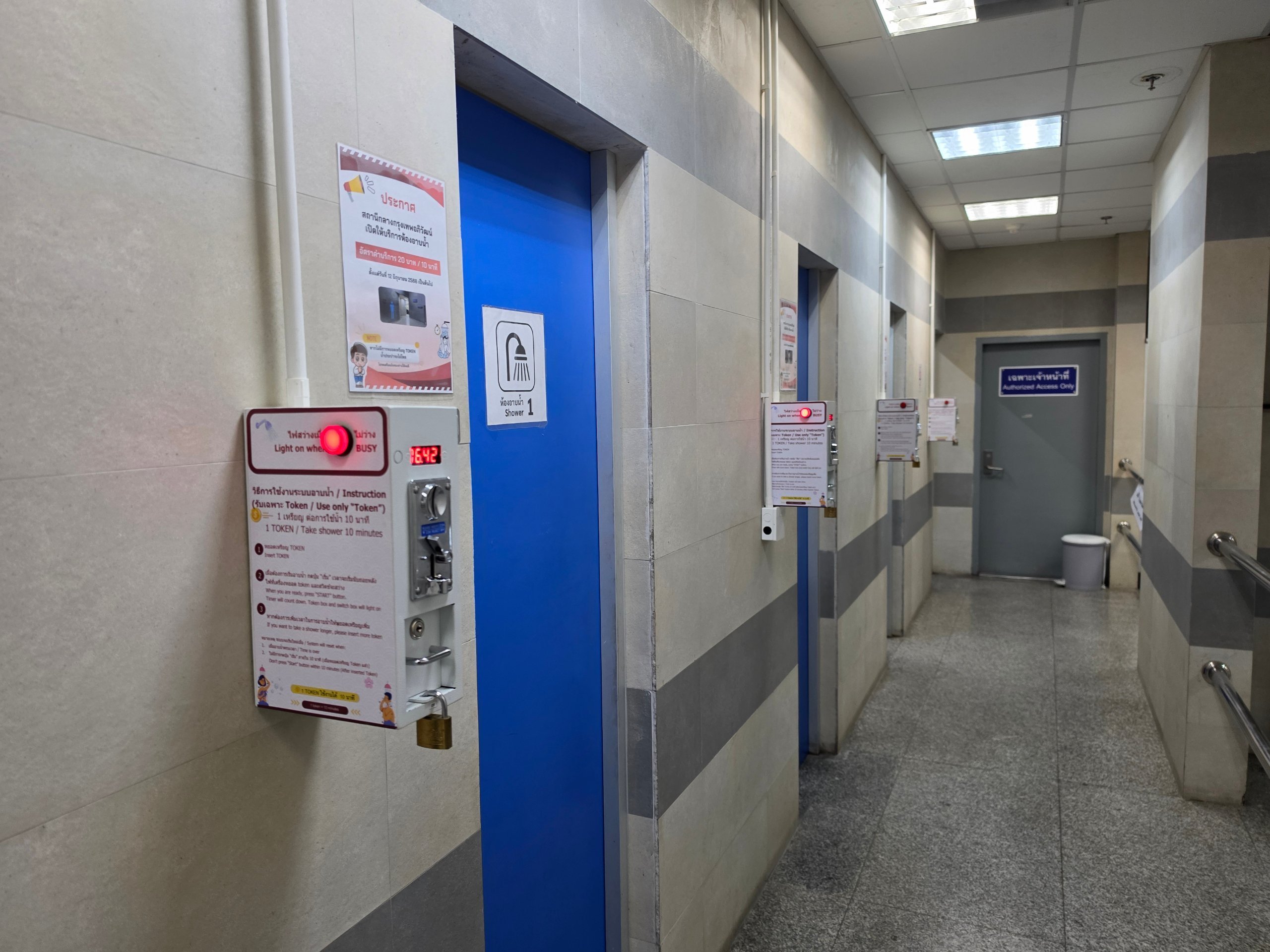
You’ll find a few shops and restaurants here, and there are also showers at the far north-western end, by Exit 5.
You have to exchange your money for tokens at the machine – 1 token costs 10 thb, which gives you 10 minutes in the shower.
I was really looking forward to a shower after a whole day and night.
But it really wasn’t up to scratch here. Dirt everywhere, wet, and once again no towels or even paper towels. There’s nothing for it; I’ll just have to hold out until the evening in the airport lounge.
From the modern station across the road, I change to a rickety suburban train, which takes me just two stops, and then I walk for about 20 minutes to the Marble Temple.
You can find my other tips in articles such as these:
You can fly from Chiang Mai to Bangkok (and from other Thai cities served by night trains) in an hour.
Several times an hour.
And flight fares are often even cheaper than train tickets.
However:
On the other hand, if I were to compare a similar category of accommodation to sleeping on the train, I’d pay very little. A few hundred baht at most.
So in reality, travelling by train doesn’t really save you much money unless you have, say, two large pieces of luggage.
But it’s simply a different experience, and in this case, for me, the journey itself was the destination.
And I’d certainly like to try out other train journeys too, not just in Thailand.
If you have any questions or comments about the article...