Autumn in Calabria from Bratislava
30 €



Just as in Portugal, they drive on the right here too.
Travelling around Pico by car is practically the only way to explore the whole island, even off the main road. Furthermore, buses along the coastal road only run 2–4 times a day.
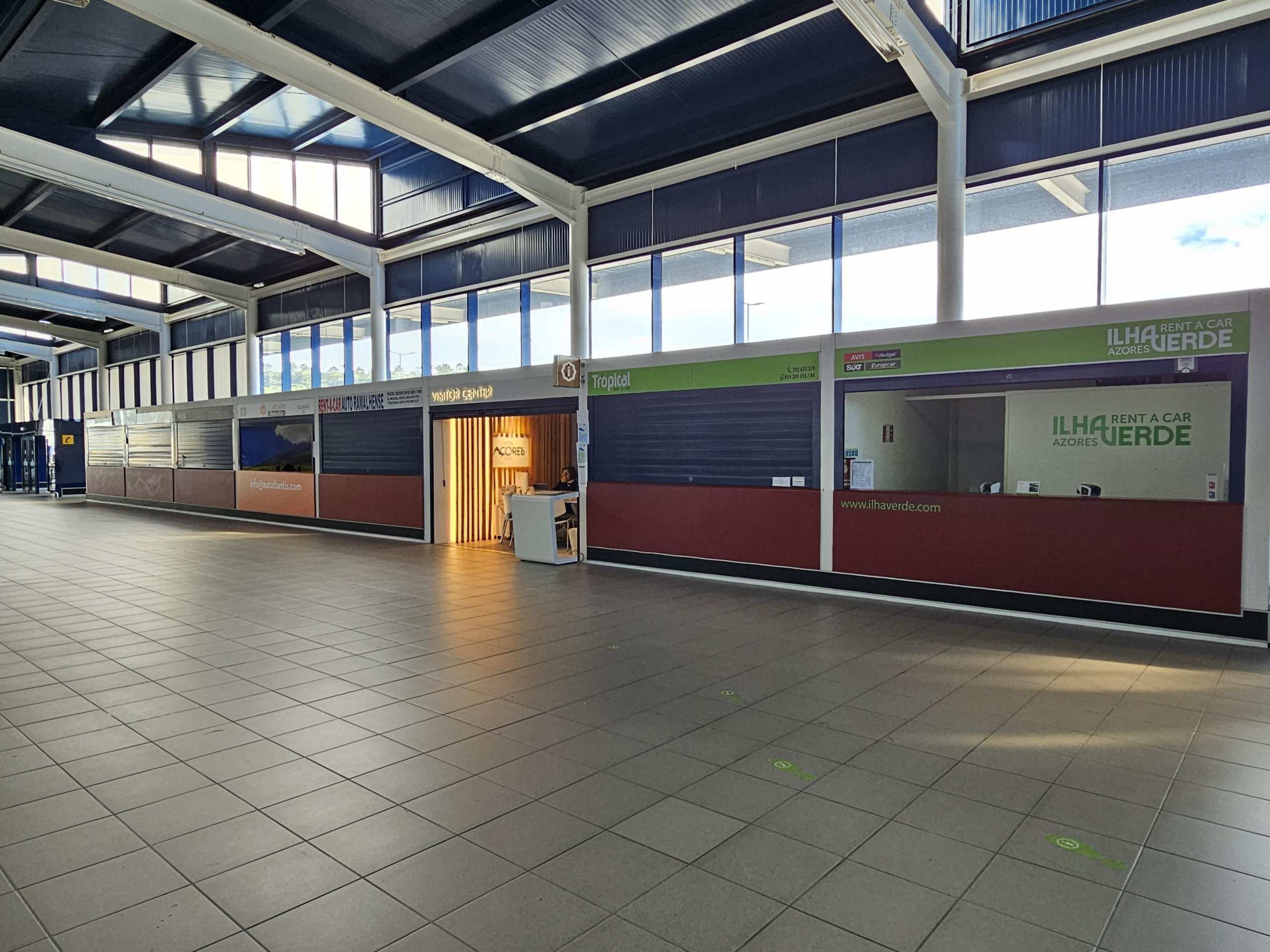
There are several local car hire companies on Pico, such as Ilha Verde and Autatlantis, as well as larger international firms. Hiring a car here works just like in any other civilised country.
However, there is one specific issue: a shortage of cars.Book your car at least 2–3 months in advance, particularly between May and September. Otherwise, you run the risk of only very expensive large cars or vans being available for booking.
Book a car at Pico PIX Airport
We’ve had a particularly good experience with Ilha Verde car hire.
Car hire prices are relatively reasonable if you book at least three months in advance.
In Pico, you can hire a car directly at Pico PIX Airport or in the town of Madlena, where most car hire companies have their headquarters.
Prices also vary depending on the season.
Prices for larger SUVs are up to three times higher than for the smallest cars.
As is the case elsewhere in the world, the longer you hire a car in Pico, the lower the daily rate you’ll get.
It’s also worth booking your car at least 2–4 months in advance. Conversely, if you book more than 7 months in advance, fewer offers will be displayed, so it’s worth waiting.
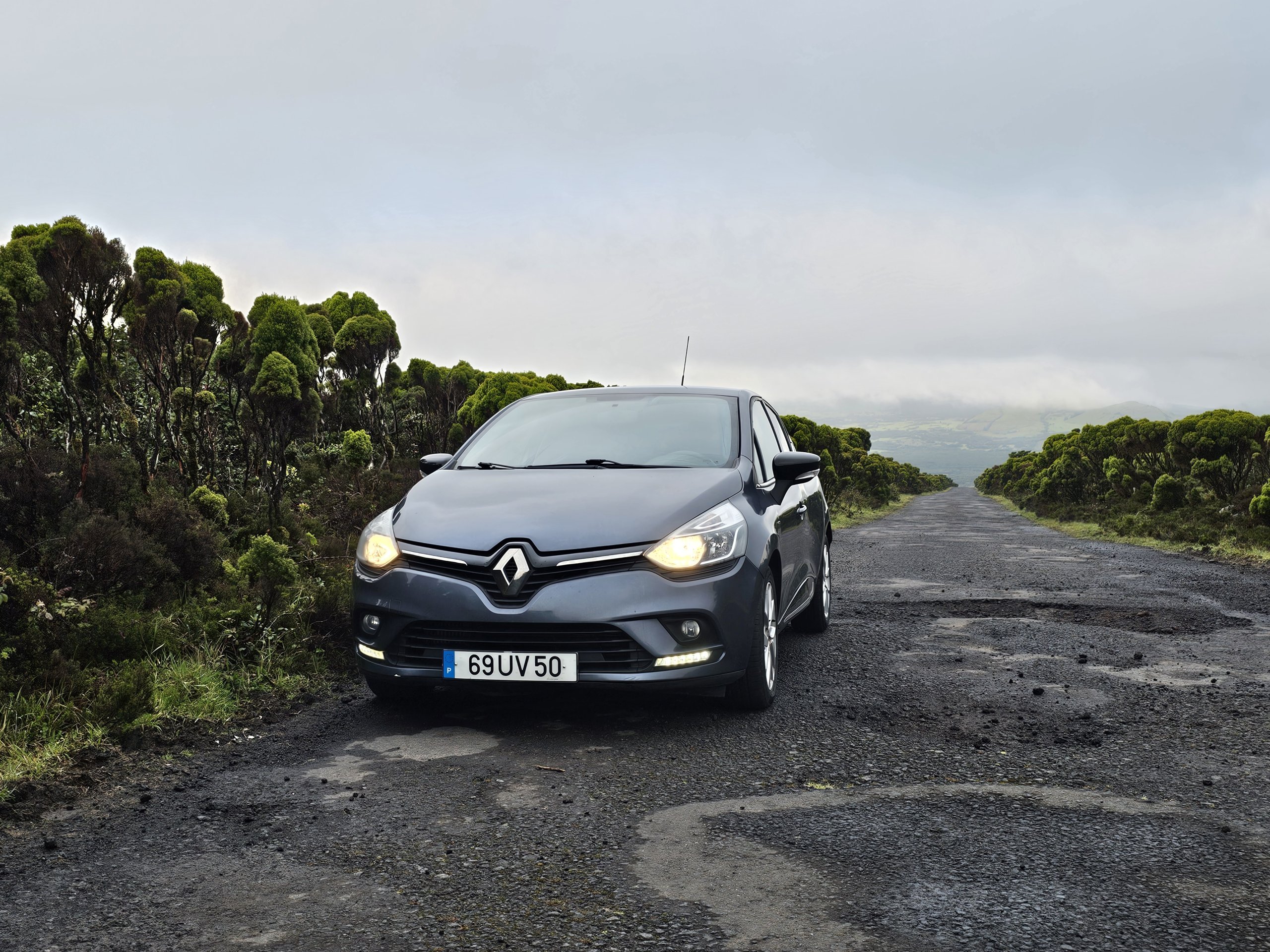
Pico is part of the European Union, so there is no need to apply for an international driving licence. Car hire companieswill also accept a national driving licence from any EU country.
If you hold a driving licence from a country outside the EU, Norway, Switzerland or Iceland, please ensure you have an international driving permit in addition to your driving licence.
Car hire companies usually requirea credit card to hire a car; they will often hire to you on a debit card as well, but either on less favourable terms or with a very high deposit, often exceeding1 200 eur (e.g. Ilha Verde).
Petrol is quite expensive on Pico. European units of measurement are used here, so all prices are quotedper litre.
Petrol prices range from 1,65 eur to 1,85 eurper litre.
You’ll find petrol stations exclusively along the main ring road at several locations. The nearest petrol station to the airport is in the town of Bandeiras.
Larger petrol stations are usually manned during the day. This means that you drive up to the petrol pump, fill up with as much as you need yourself, and then go inside the shop to pay the total amount.
Outside opening hours, or at smaller petrol stations, the service is entirely self-service. First, select on the screen the maximum amount you wish to pay for petrol, or choose the ‘full tank’ option. Insert your payment card and go and fill up.
Once you’ve finished filling up, the relevant amount will be automatically deducted from your card.
The quality of the roads on Pico is among the worst of all the Azores islands.
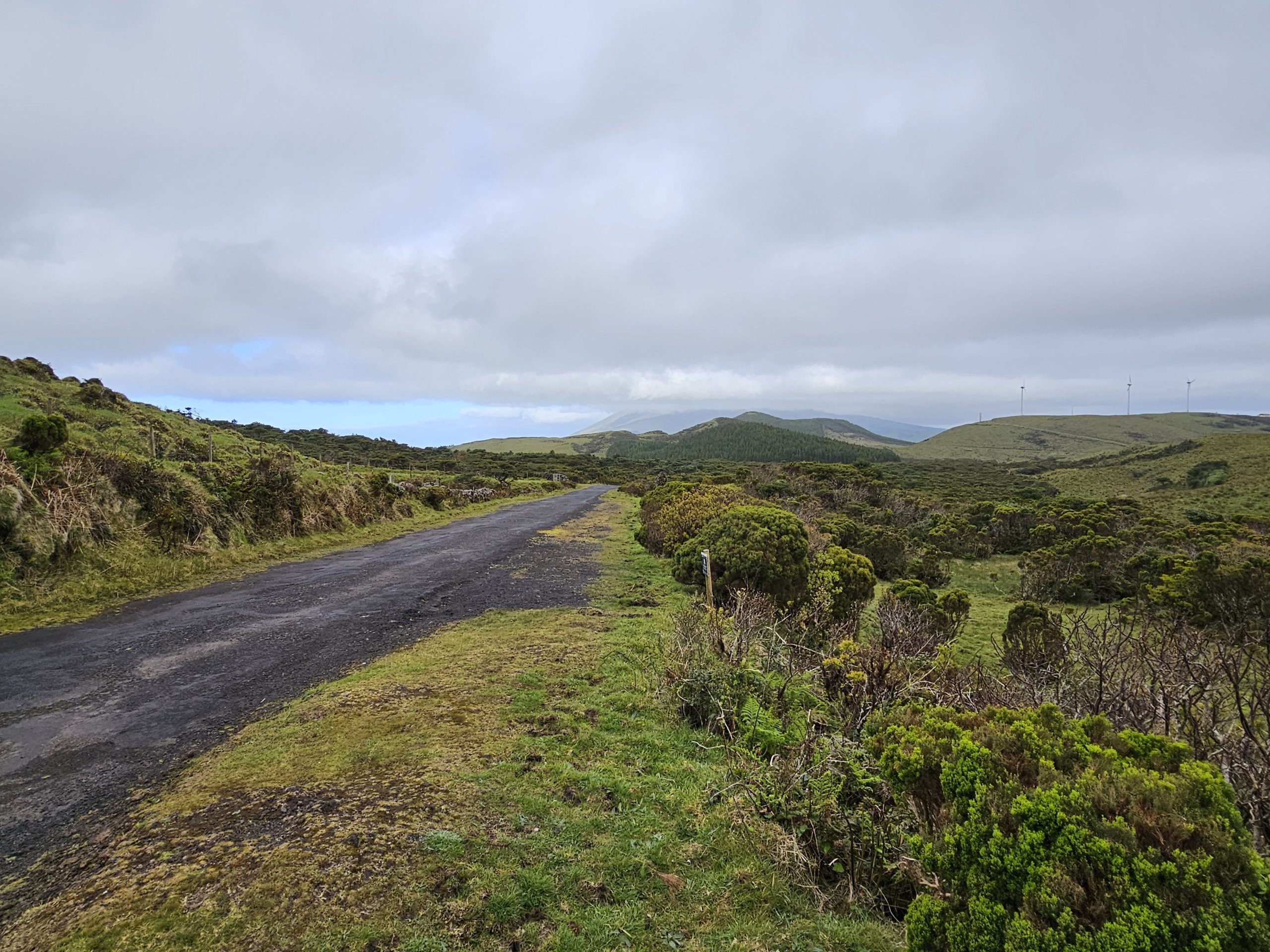
The main road round the island has been repaired and is well signposted, but most of the secondary roads (outside the larger towns) are in rather poor condition.
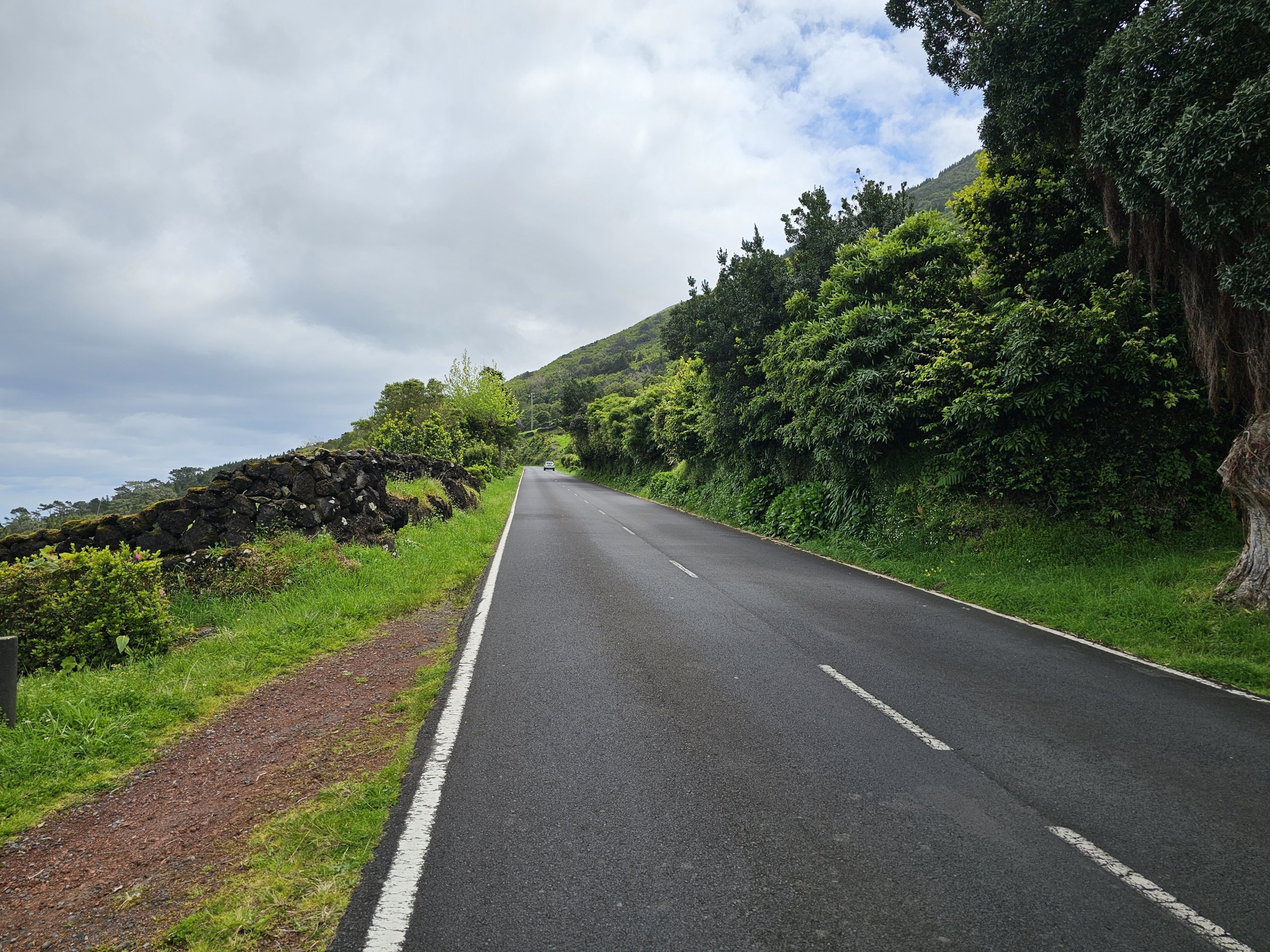
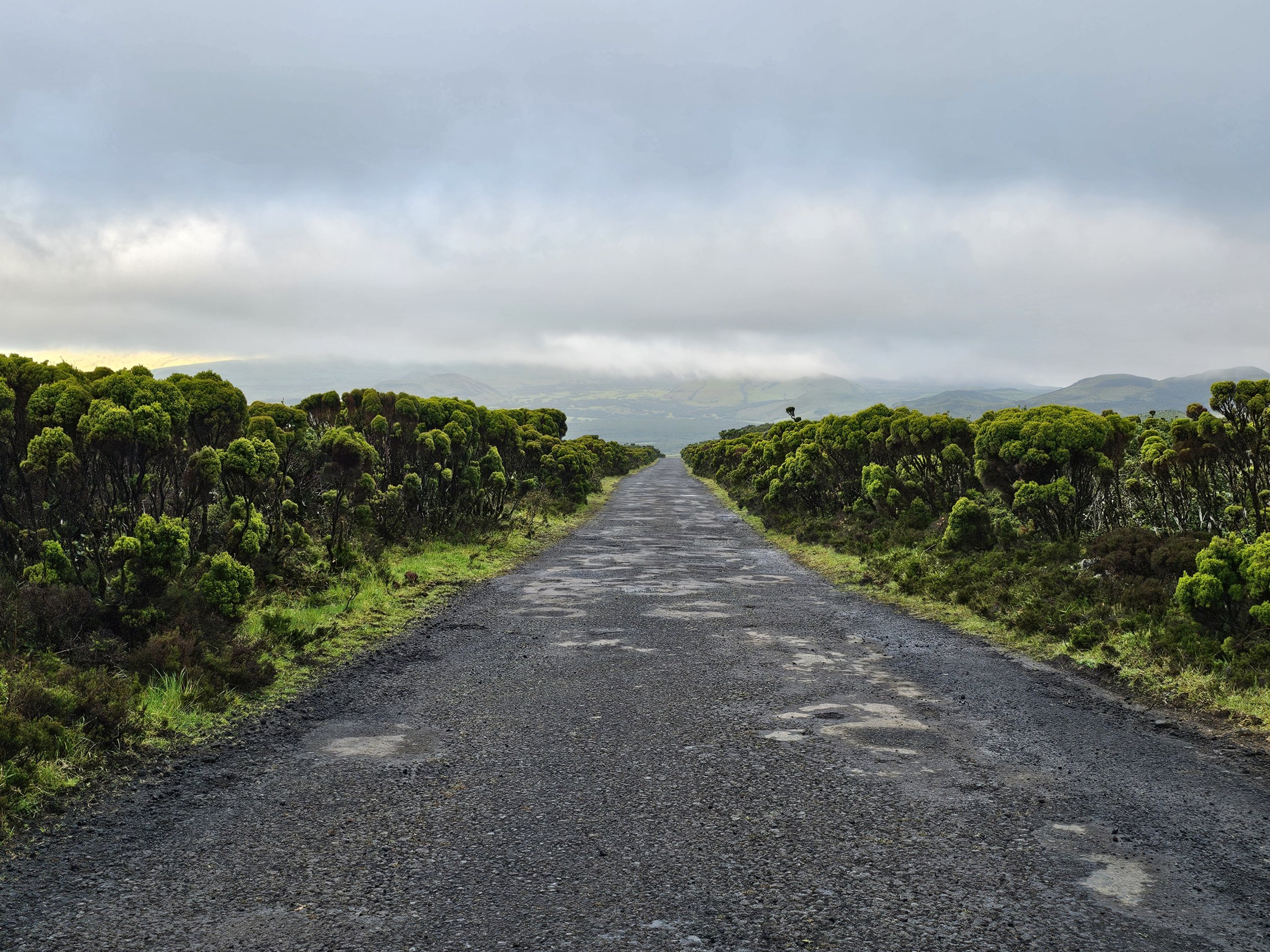
Inland, the main road linking the towns of Lajes do Pico and São Roque do Pico is in very good condition, as is the longest stretch of straight road in the entire Azores – the Estrada Longitudinal.
The absolutely straight stretch of this road, without a single bend, is over 9 km long.
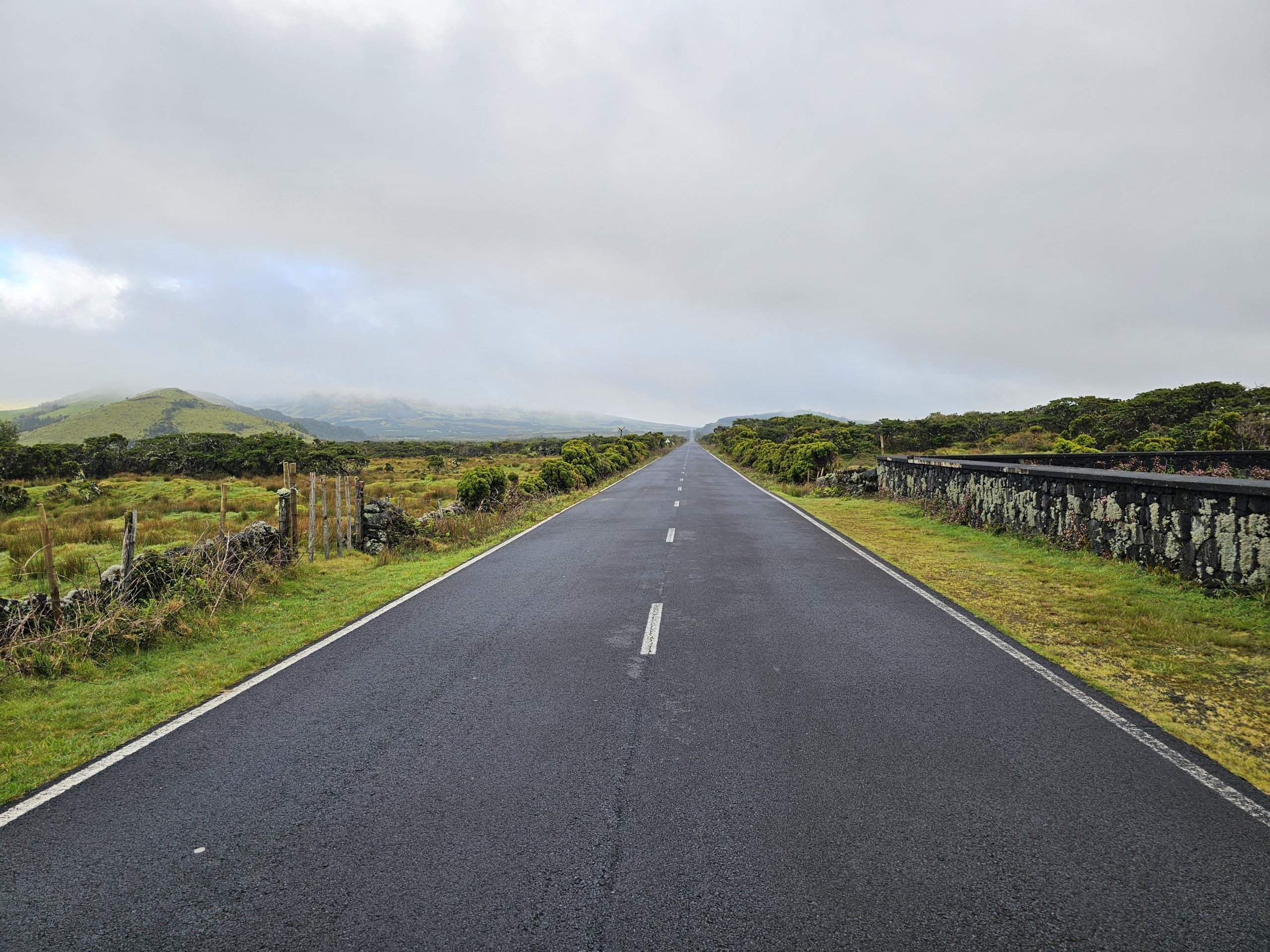
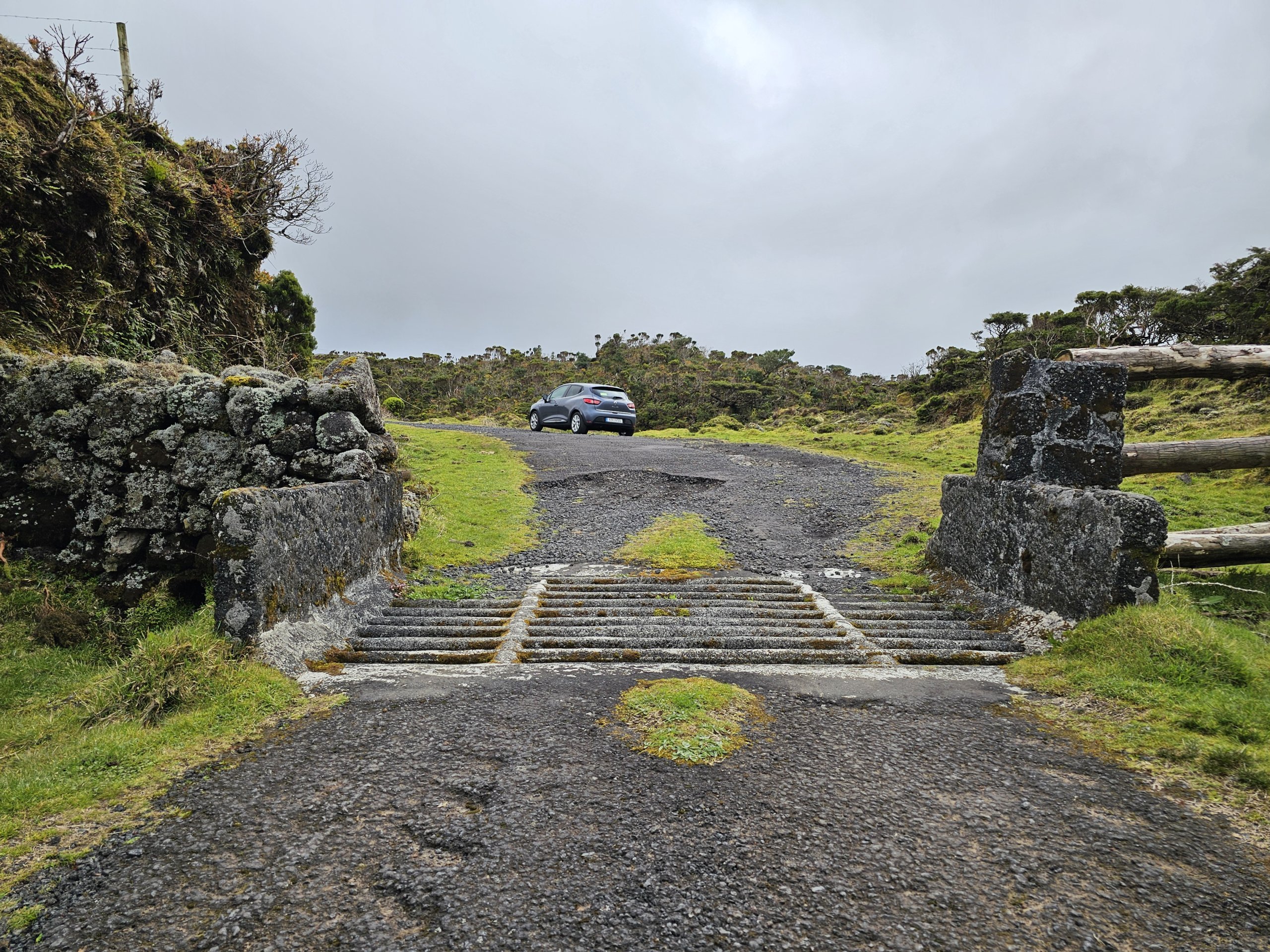
By contrast, the secondary roads inland are in an absolutely dreadful state. The Estrada Transversal (Caminho das Lagoas) is still passable for all types of car, but here you must watch out for large potholes and a complete lack of road markings.
The roads in the west of the island are generally passable for all types of car, provided you drive with caution, but the mountainous side roads in the east and south can surprise you with potholes so large that you won’t be able to get through them without a 4x4.
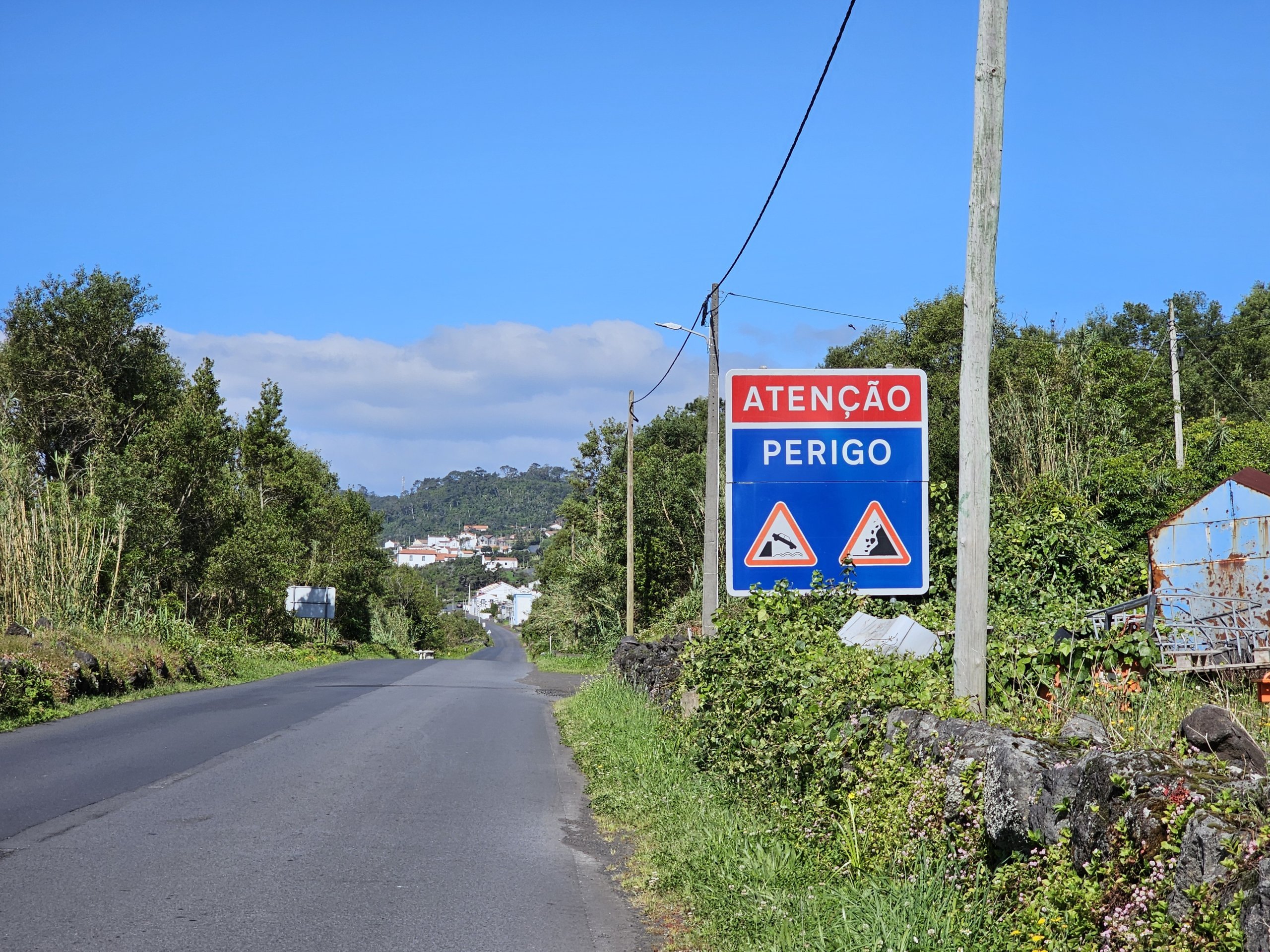
All road signs are in the European format, and additional signs are written in Portuguese only. What do the most common phrases on the signs mean?
On the island of Pico, they drive on the right.
Drivers are generally considerate, and it is quite common for them to give way to cars joining the main road from side roads.
You needn’t worry about reckless driving or aggressive overtaking, provided you drive more cautiously than the locals.
Speeds are measuredin kilometres per hour, and the maximum permitted limits are as follows:
At junctions not controlled by traffic lights or road signs, the right-of-way rule applies.
Roundabouts are common, and vehicles already on the roundabout always have right of way. You should indicate before entering a roundabout in the same way as you would when approaching a normal junction, i.e.:
Once you are driving round the roundabout, you must always indicate right just before leaving it.
The use of seatbelts is compulsory and using a mobile phone whilst driving is strictly prohibited. Wearing earphones is also not permitted.
In Portugal, the legal blood alcohol limit for driving is 0.05%.
Traffic density on Pico is low, particularly away from the main ring road around the island. However, you shouldn’t expect traffic jams even on this road.
Road signs along the main roads comply with Portuguese standards, but secondary roads are maintained by the forestry commission and feature completely different signage.
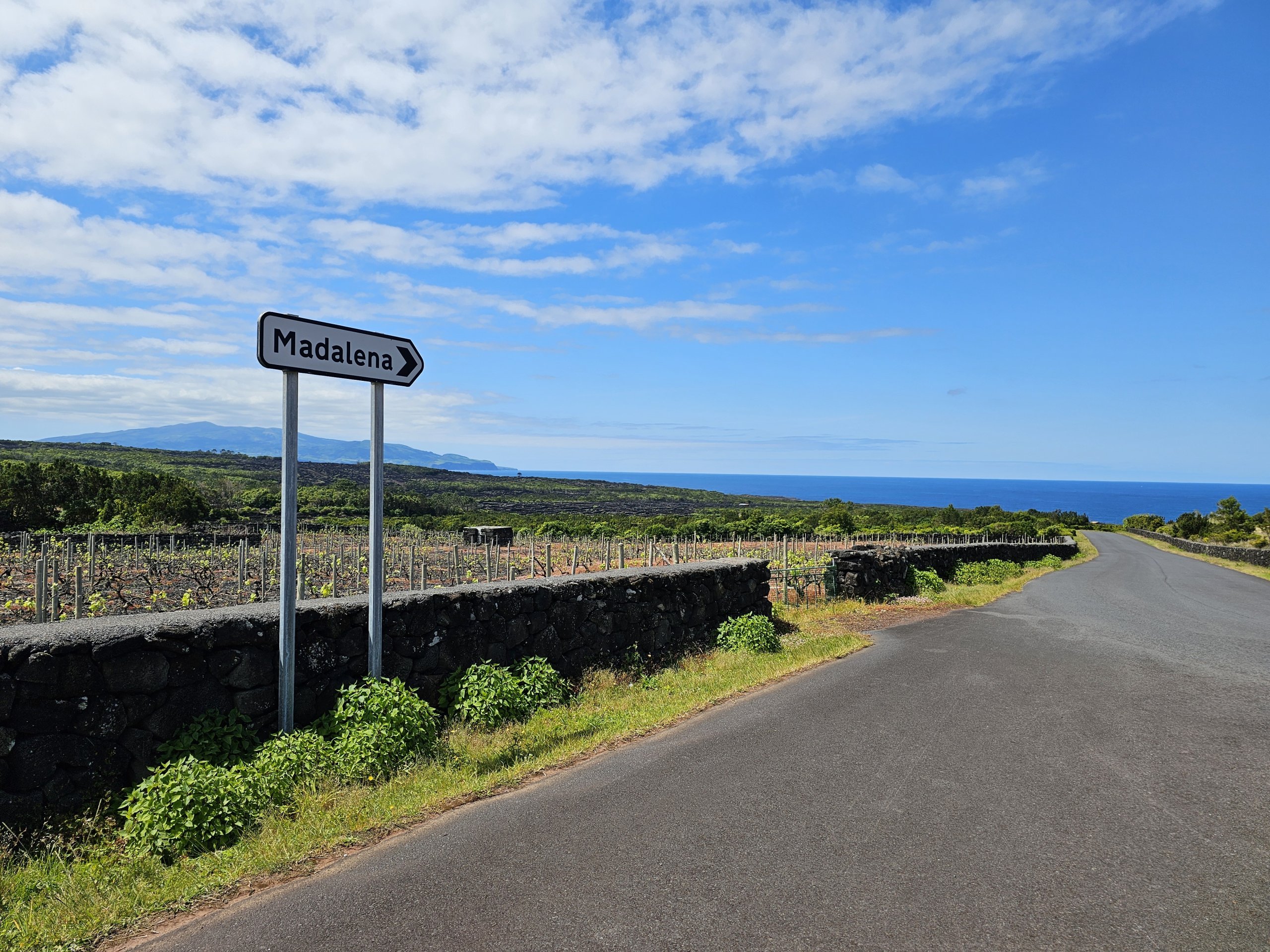
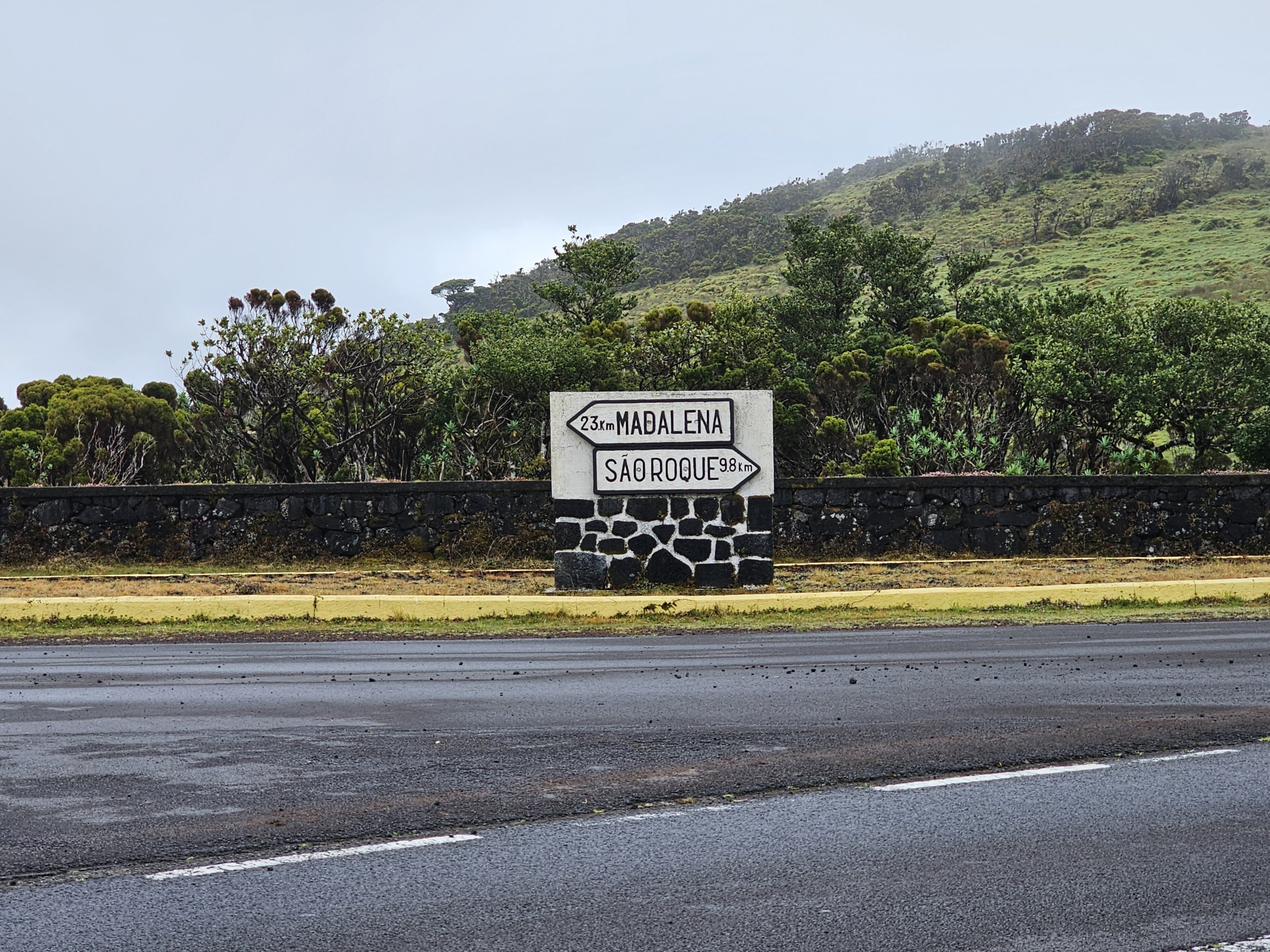
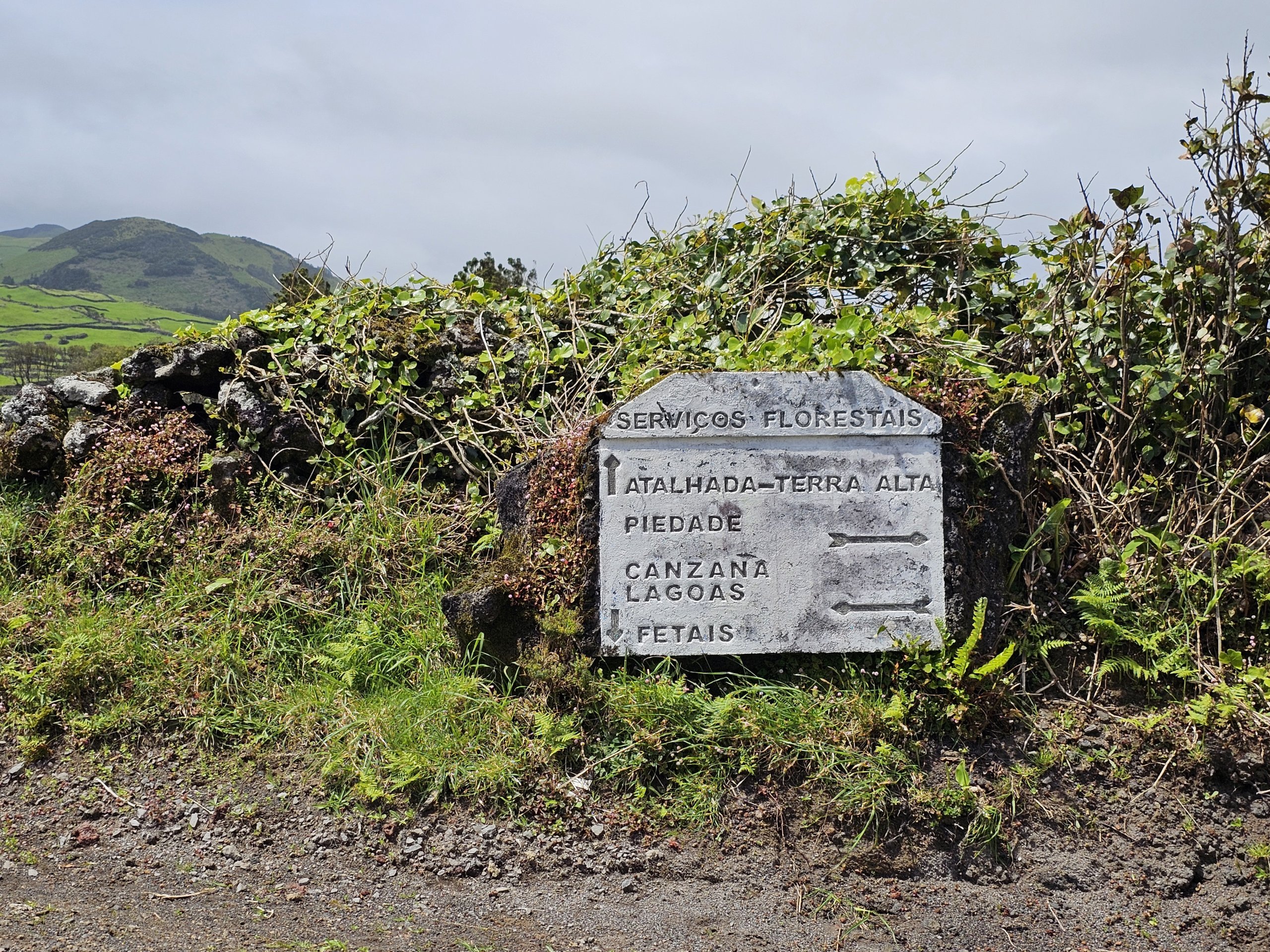
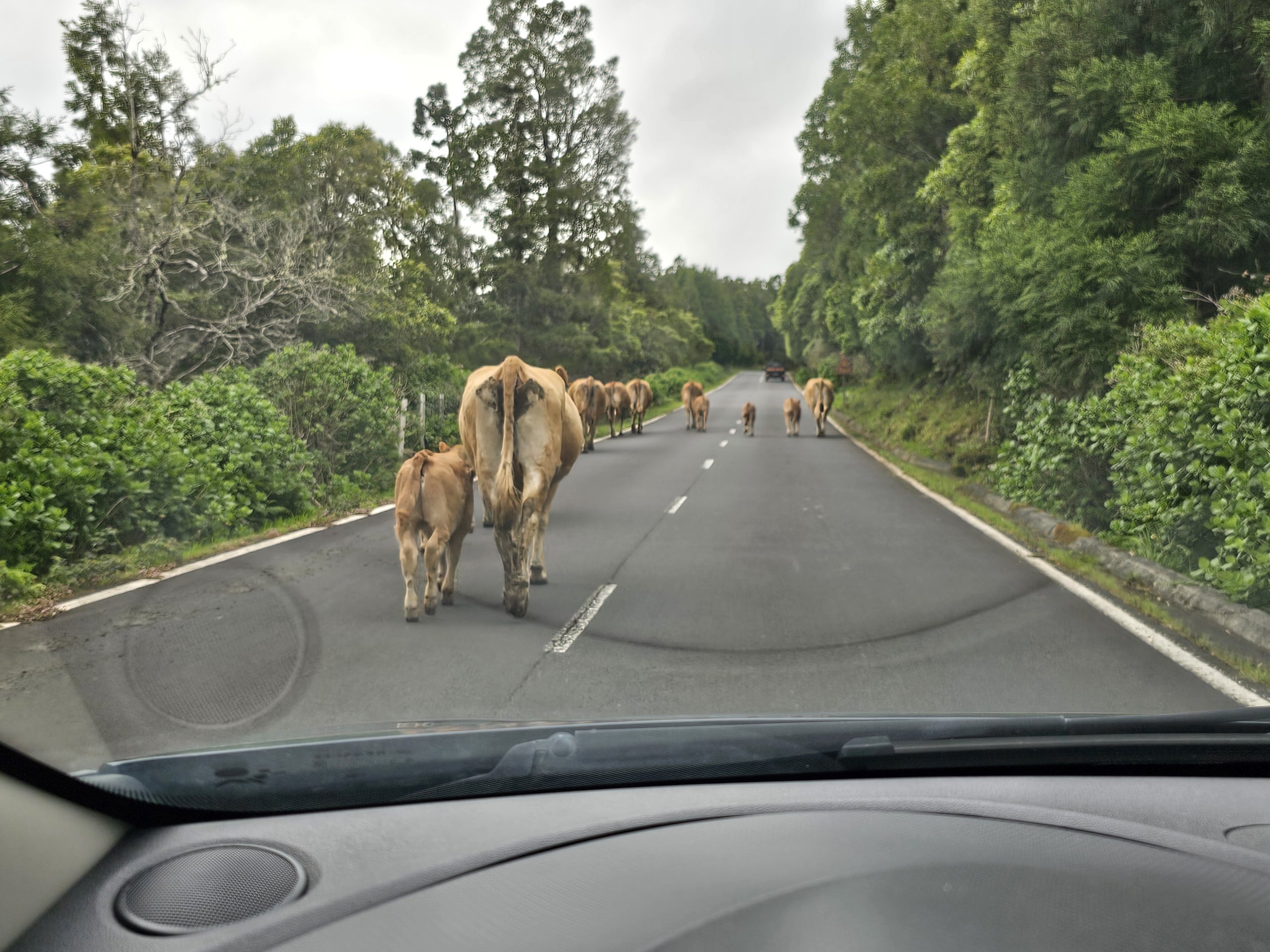
Away from the main ring road, you should also expect to encounter livestock on the road. Sometimes you’ll come across just a single stray cow, and at other times an entire herd being herded across the road in an organised manner by farmers.
Follow their instructions and drive past the herd at a very low speed.
Parking on Pico is absolutely hassle-free. In towns, you’ll always find free public car parks, which are also common at viewpoints along the roads.
If you have any questions or comments about the article...