A week’s skiing trip to the Italian Alps from Prague
40 €



What is there to do on the island of Flores? What activities are worth travelling to the westernmost Azores island for?
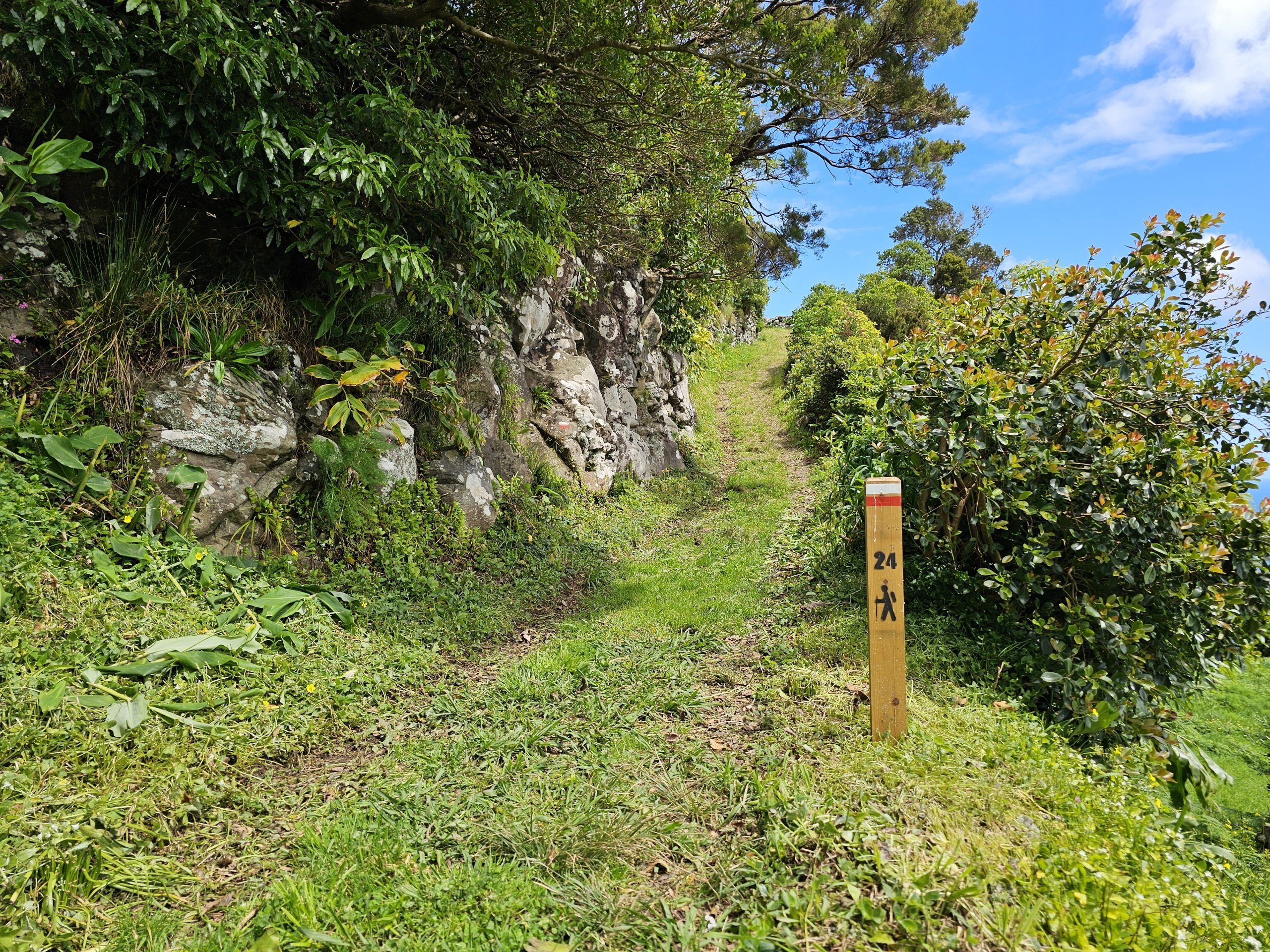
Flores is a paradise for tourists and walking enthusiasts. The island has an excellent network of signposted walking trails, as well as plenty of unmarked, well-trodden paths winding through the pastures.
On foot, you can set off on easy, short walks from car parks to the nearest natural attractions (usually a 10–60-minute walk), as well as on long-distance, full-day treks; it is even possible to undertake a multi-day hike covering three-quarters of the island.
Book flights to Flores Airport (FLW)
The hiking trails are known as "trilhos".
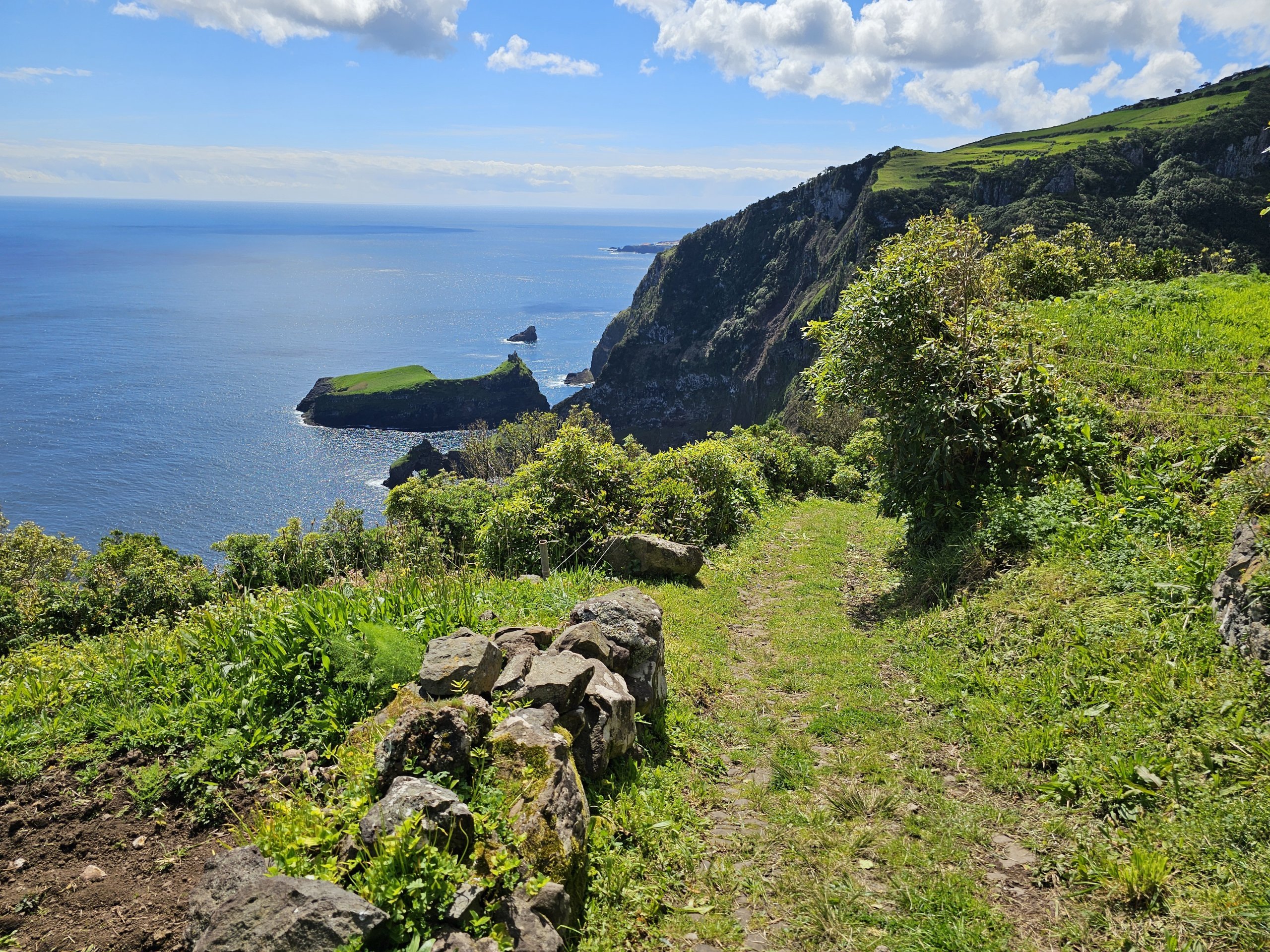
During your wanderings around Flores, you’ll find yourself walking through vast pastures enclosed by lava-stone walls, along the edges of steep cliffs, up and down steep slopes, and through picturesque villages.
The main routes are very well signposted and maintained. In places, however, you should expect some very steep sections. Climbing equipment or skills are not required on any part of the routes, but a good level of fitness is definitely essential.
After rain, parts of the trails can also be muddy and very slippery!
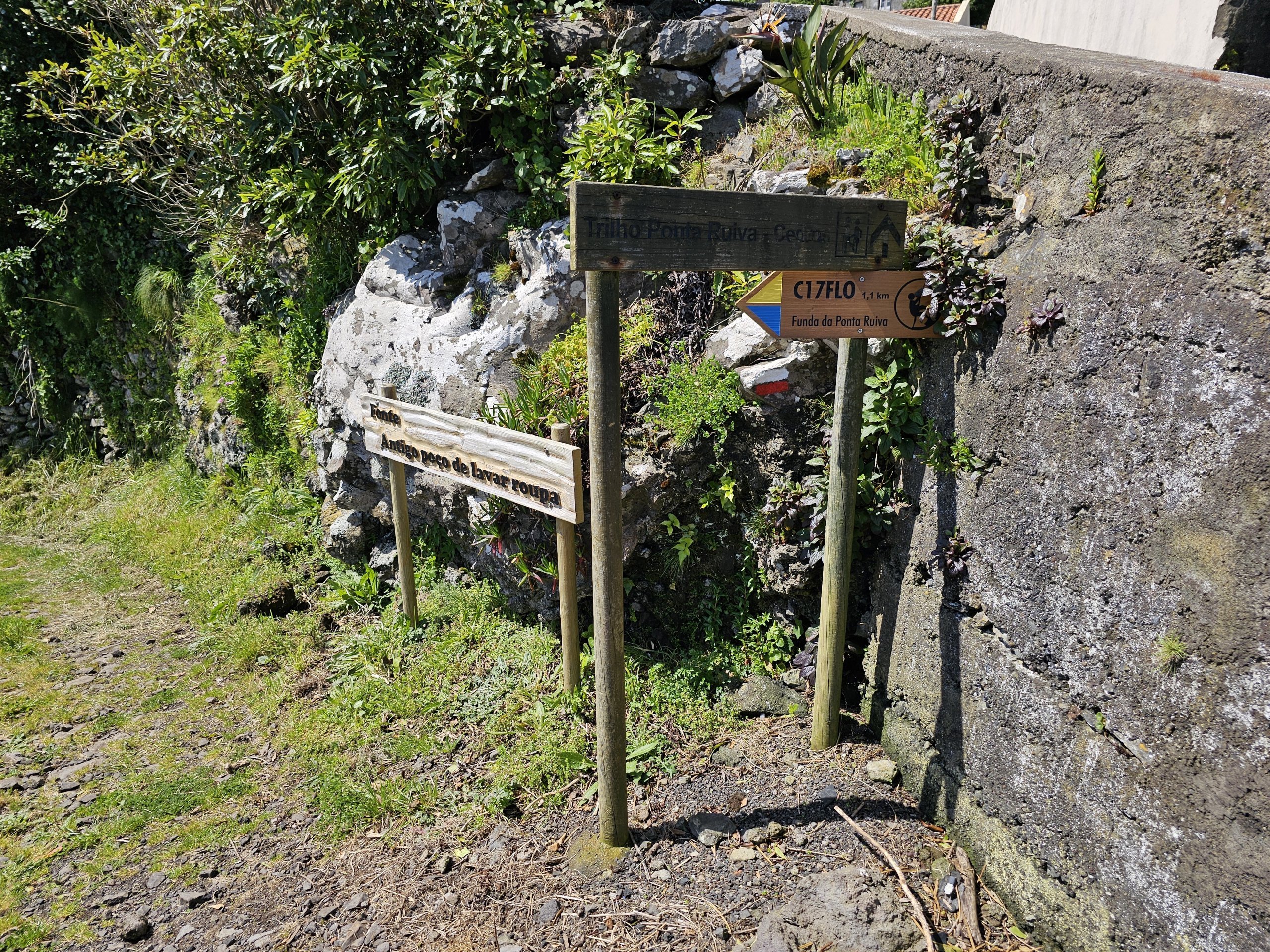
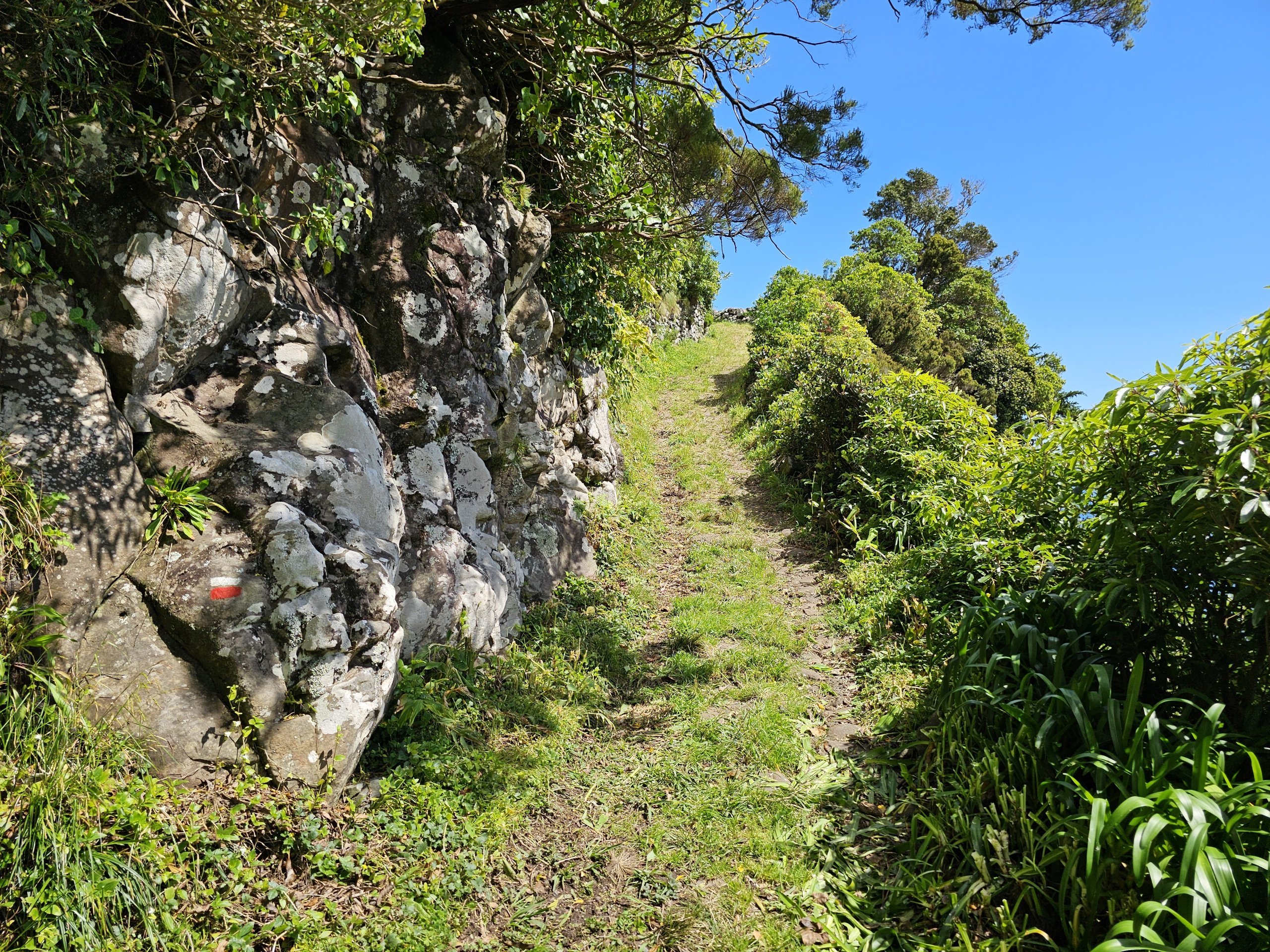
Where do the walking routes start and finish, and how challenging are they?
The most beautiful route runs along the wild and deserted west coast. From Fajã Grande, it first follows the coastline and then gradually climbs up the cliffs to heights of over 500 metres, including some very steep sections.
It then descends gently along the edge of the cliffs and across green pastures to the town of Ponta Delgada.
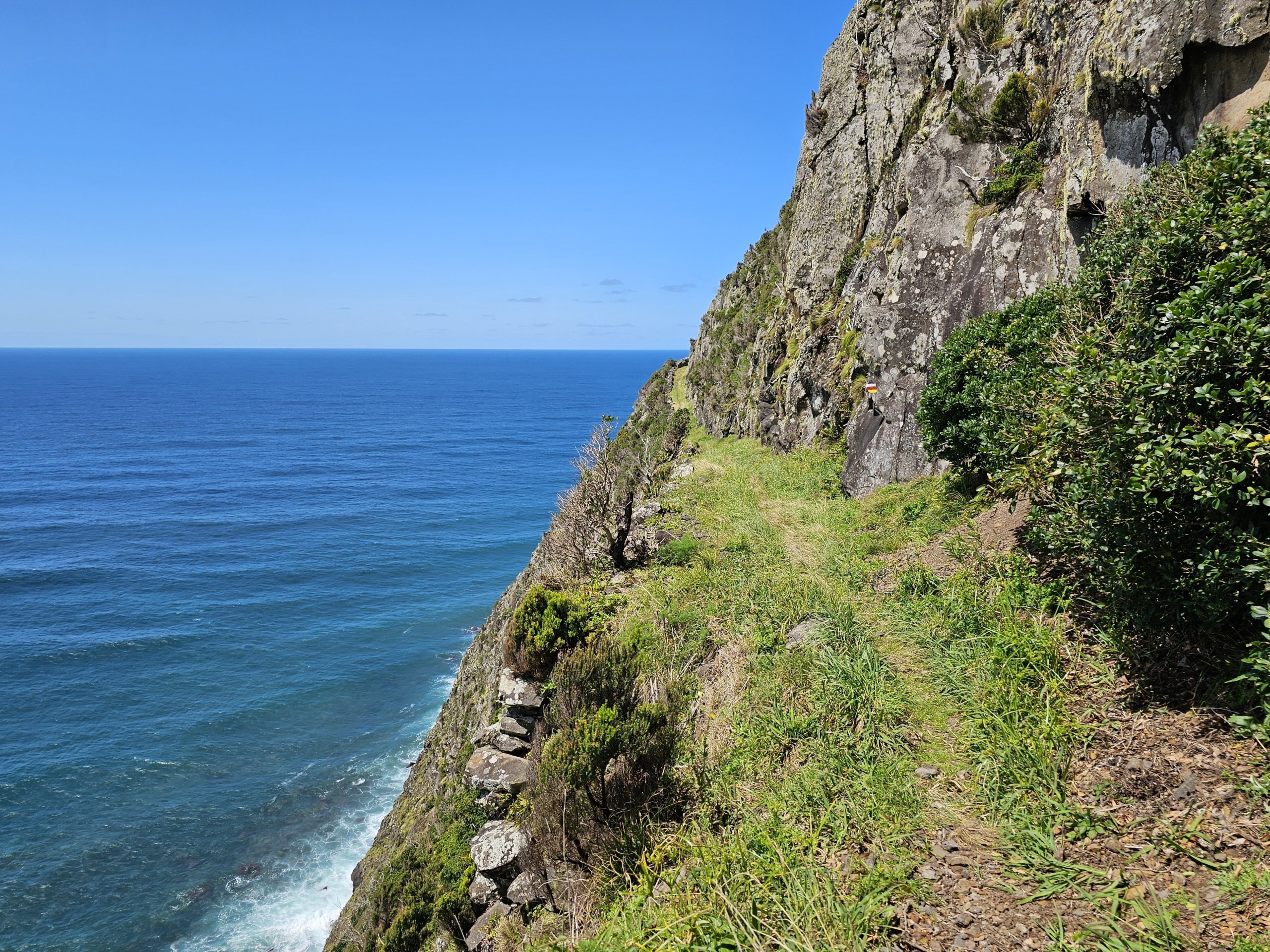
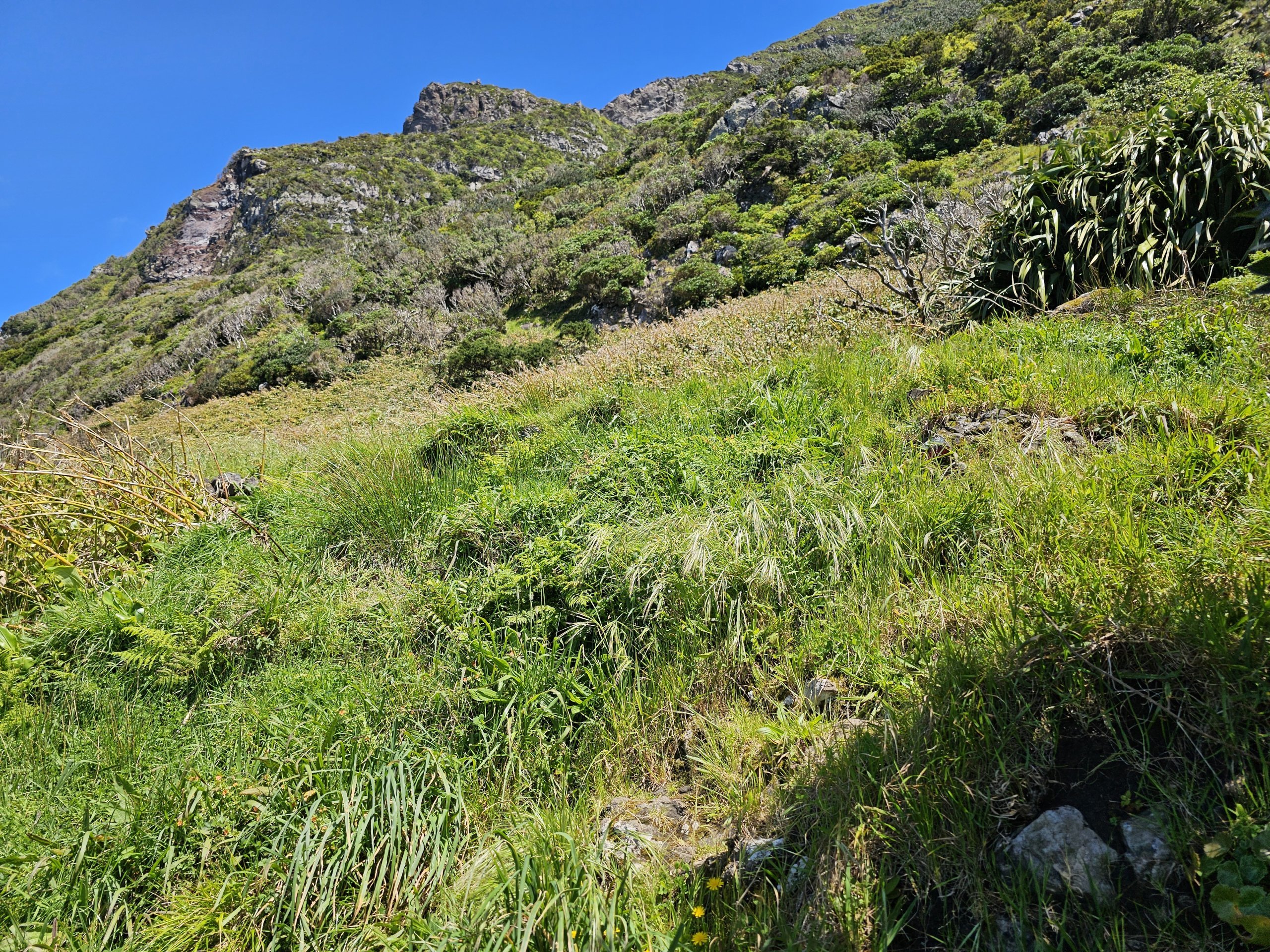
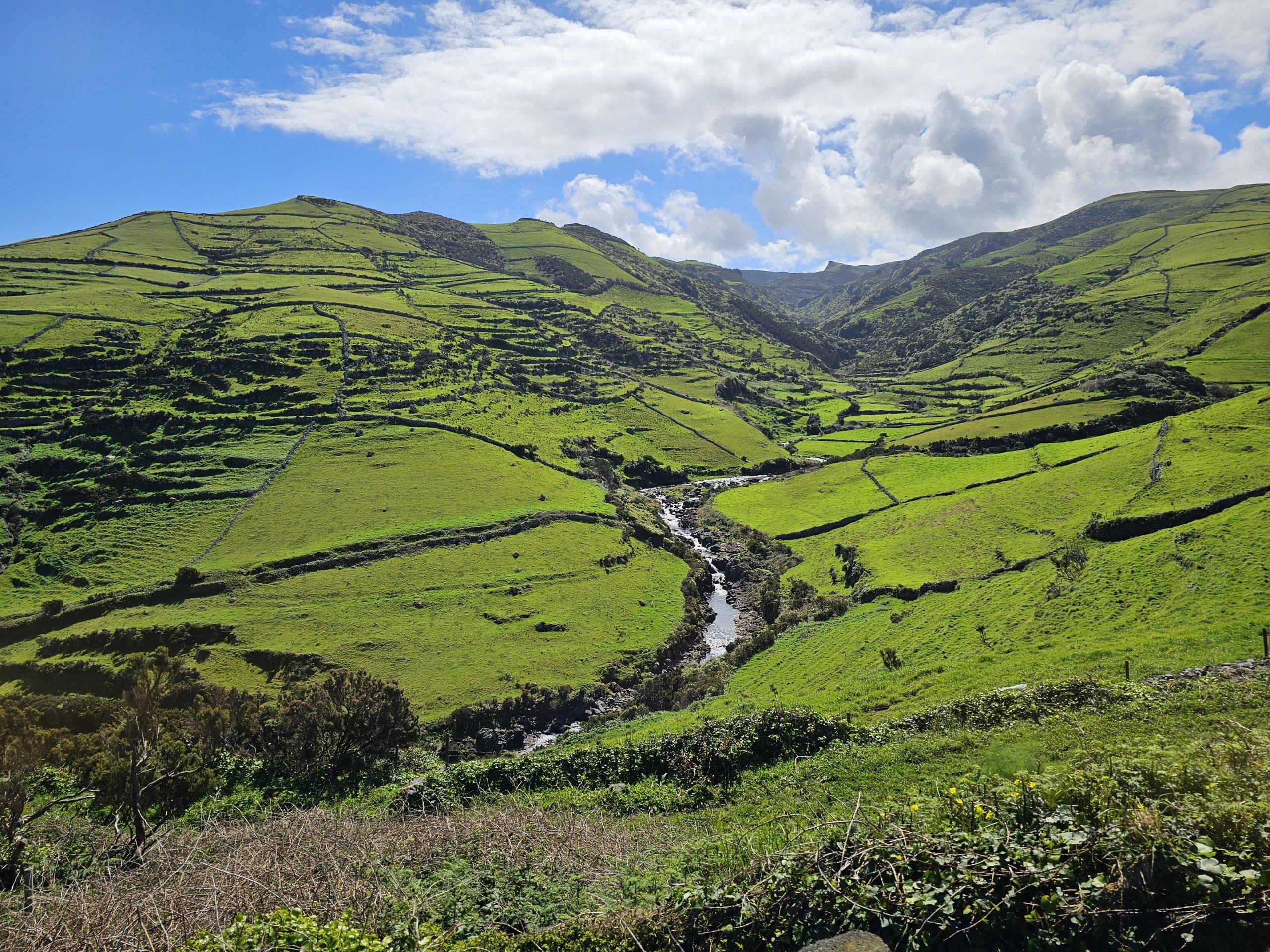
If you’re travelling by car on Flores, you’ll have no choice but to drive the whole way back, or to cover only part of the route and return via the same route.
If travelling by bus, this route can only be completed if you are staying in Santa Cruz das Flores, from where you can travel to Ponta Delgada in the morning and return from Faja Grande at 3.00 pm, changing at Lajes, back to Santa Cruz. Buses run only from Monday to Friday; see the ‘Transport’ section for more details.
This beautiful route takes you mainly through pastures and meadows, and through the small villages of Fajãzinha and Mosteiro. The route also passes the famous Cascata da Ribeira do Ferreiro waterfalls.
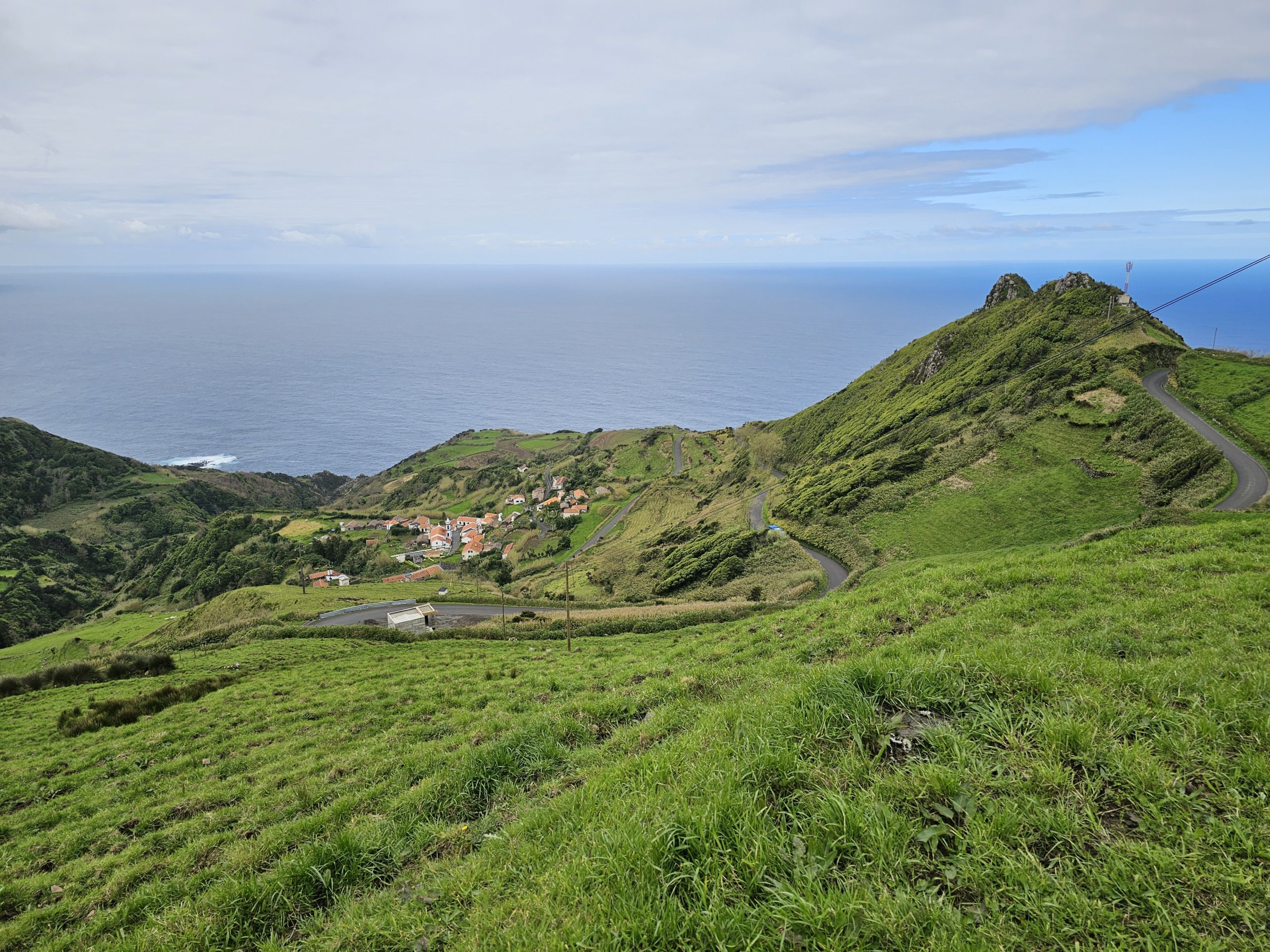
You can, of course, break the route down into shorter sections, which is particularly useful if you’re travelling by car. For example, the section between the villages of Lajedo and Mosteiro is ideal for a 2.5-hour, fairly gentle walk.
If travelling by bus, this route is particularly feasible if you are staying in Faja Grande, from where you can reach Lajedo in the morning and afternoon. Buses run only from Monday to Friday; see the ‘Transport’ section for more details.
A very challenging but beautiful route takes you from Fajã Grande up to an altitude of over 500 metres to the central plateau and the Negra and Comprida lagoons.
The first part of the route in particular, from Fajã Grande to the plateau, involves an extreme, zigzagging ascent up an almost vertical cliff face. Despite this, the route does not include any sections requiring rock climbing.
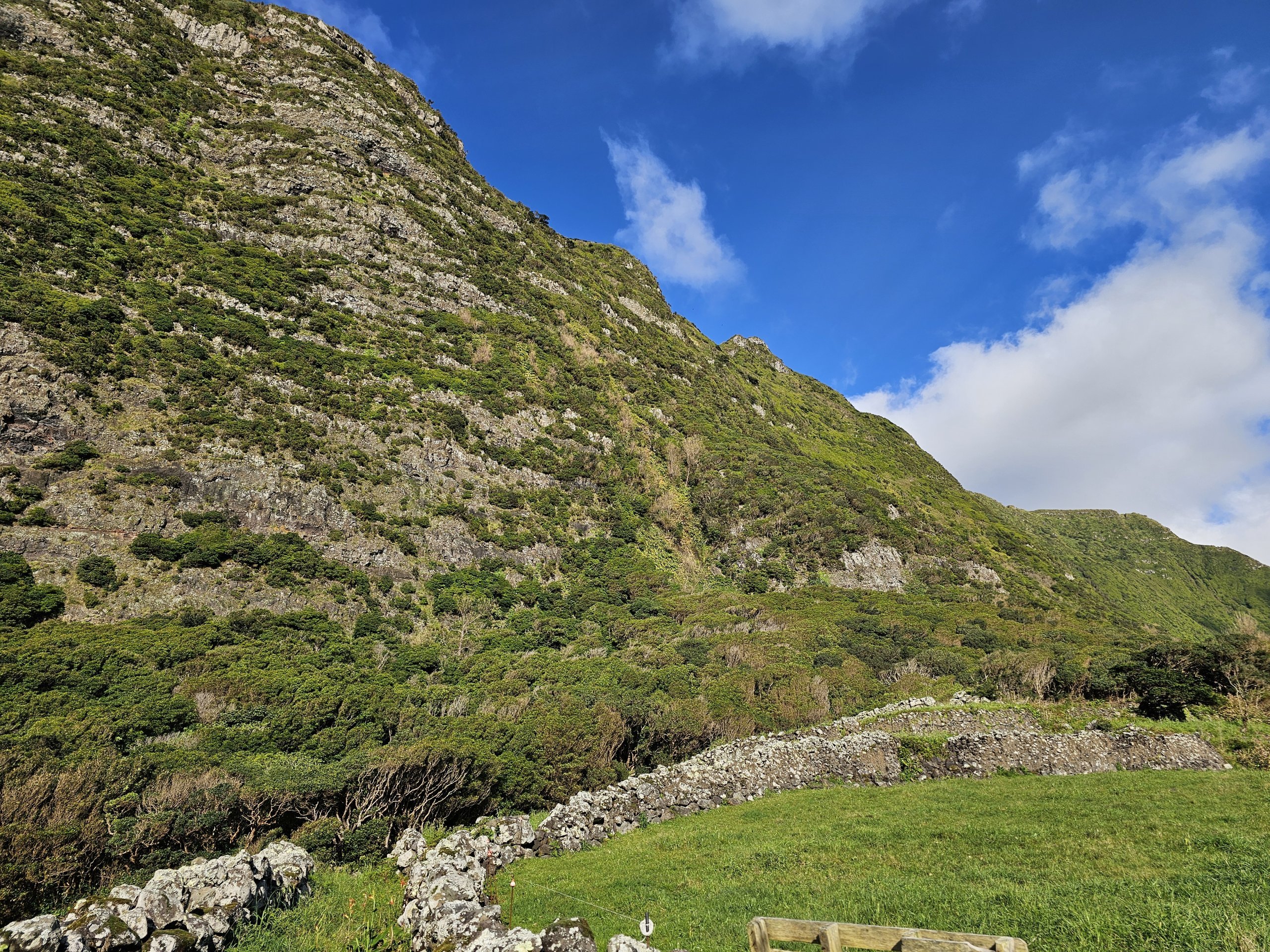
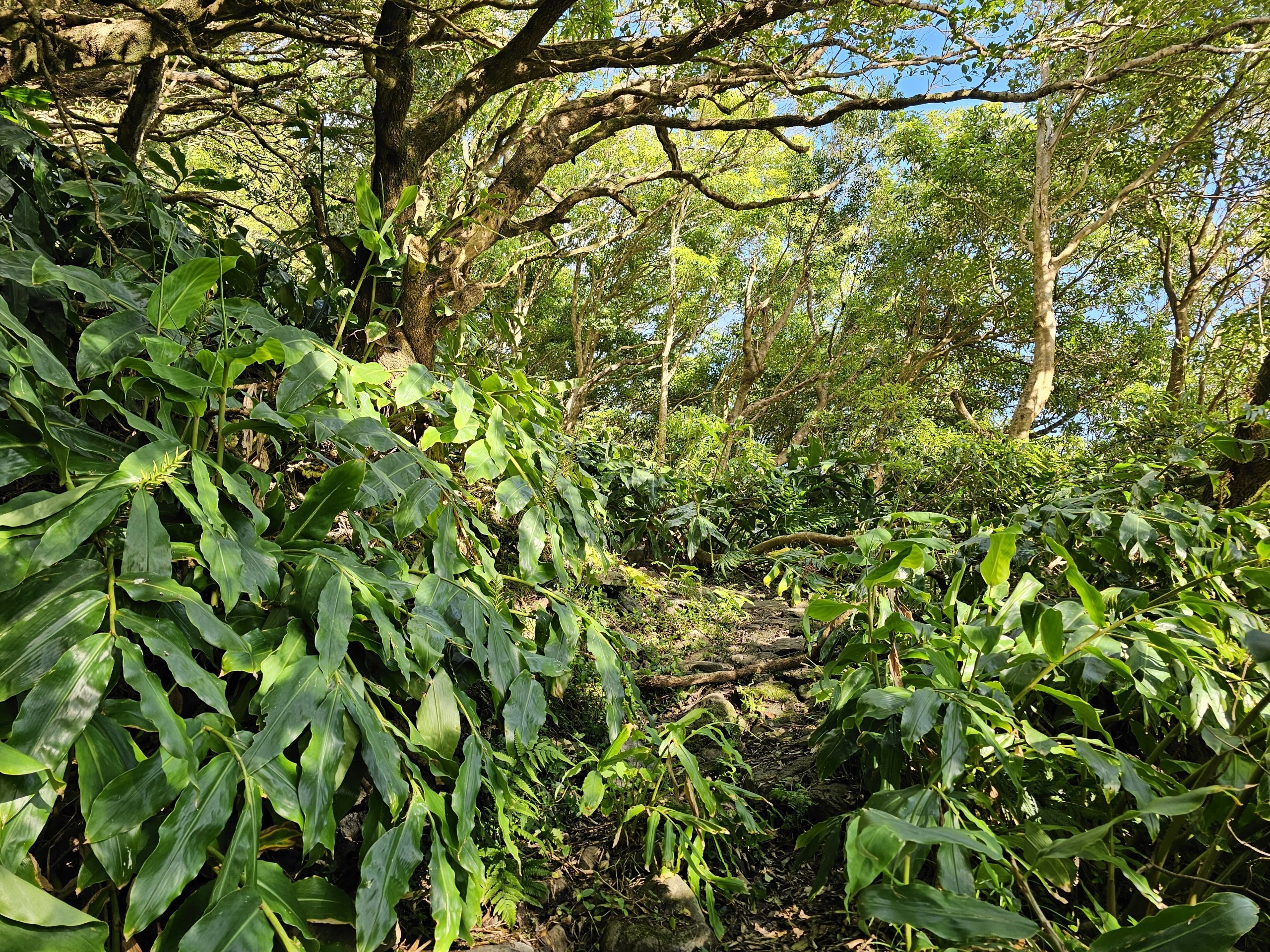
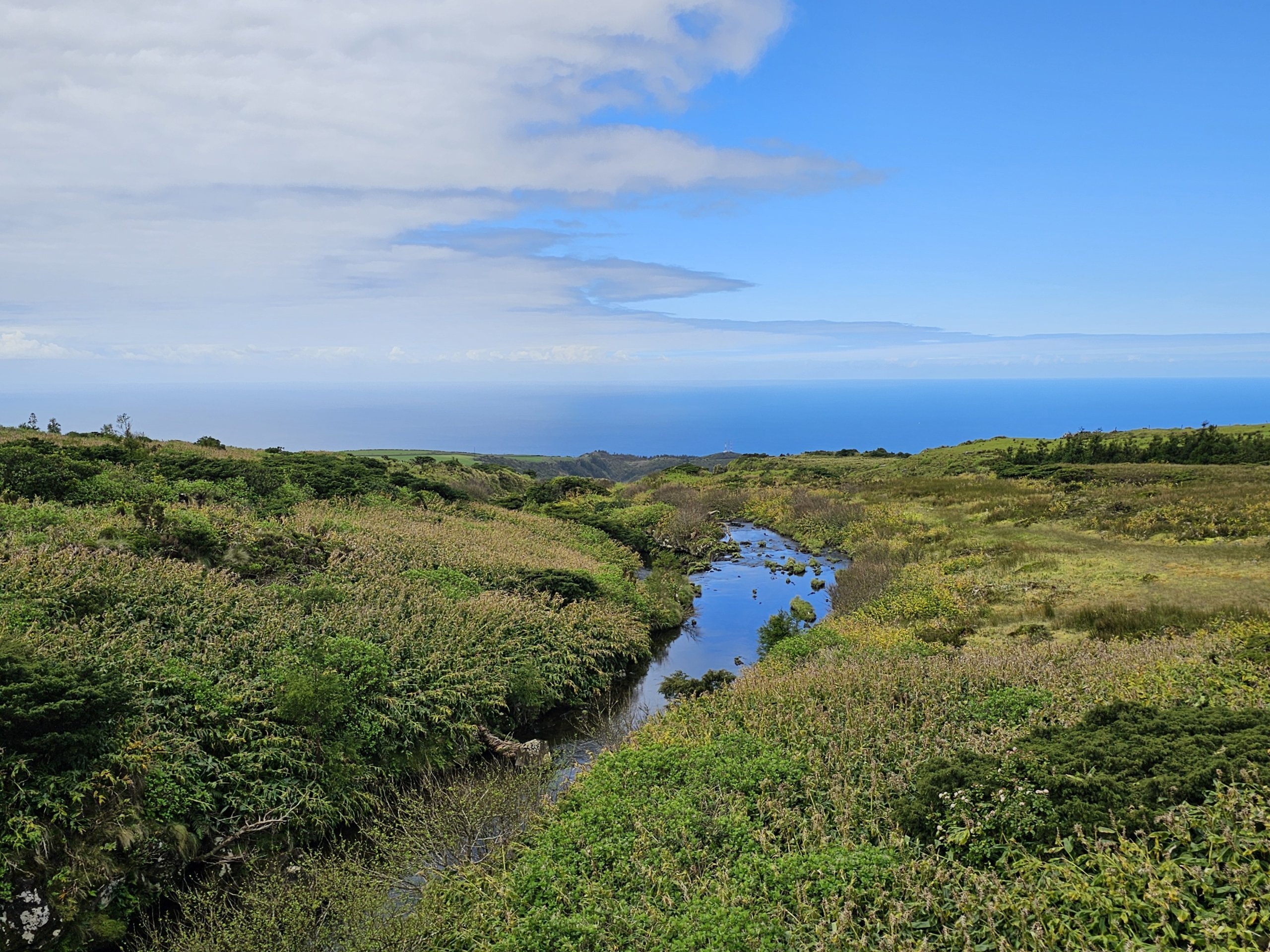
Whether travelling by car or by bus, you must always return via the same route. There is no bus stop at the end of the route by the lagoons.
The shortest marked trail, Fajã de Lopo Vaz, runs along the isolated southern coast in areas characterised by a subtropical microclimate.
The trail winds its way along a vast cliff down to a stony beach and a tiny settlement with small fields known asFajã de Lopo Vaz. Although the descent and subsequent climb are quite steep, the short distance means that even less fit walkers can manage the route at a leisurely pace.
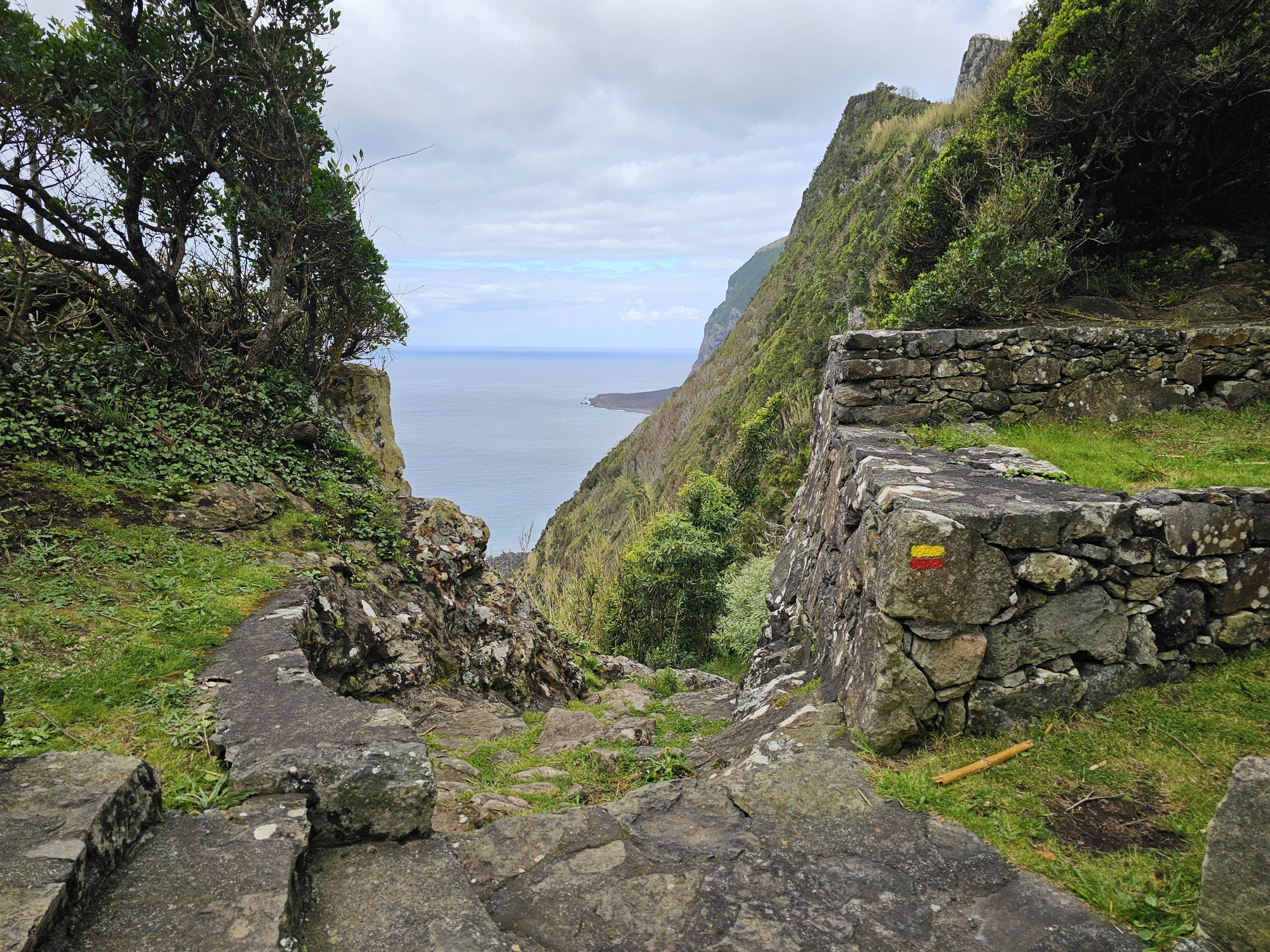
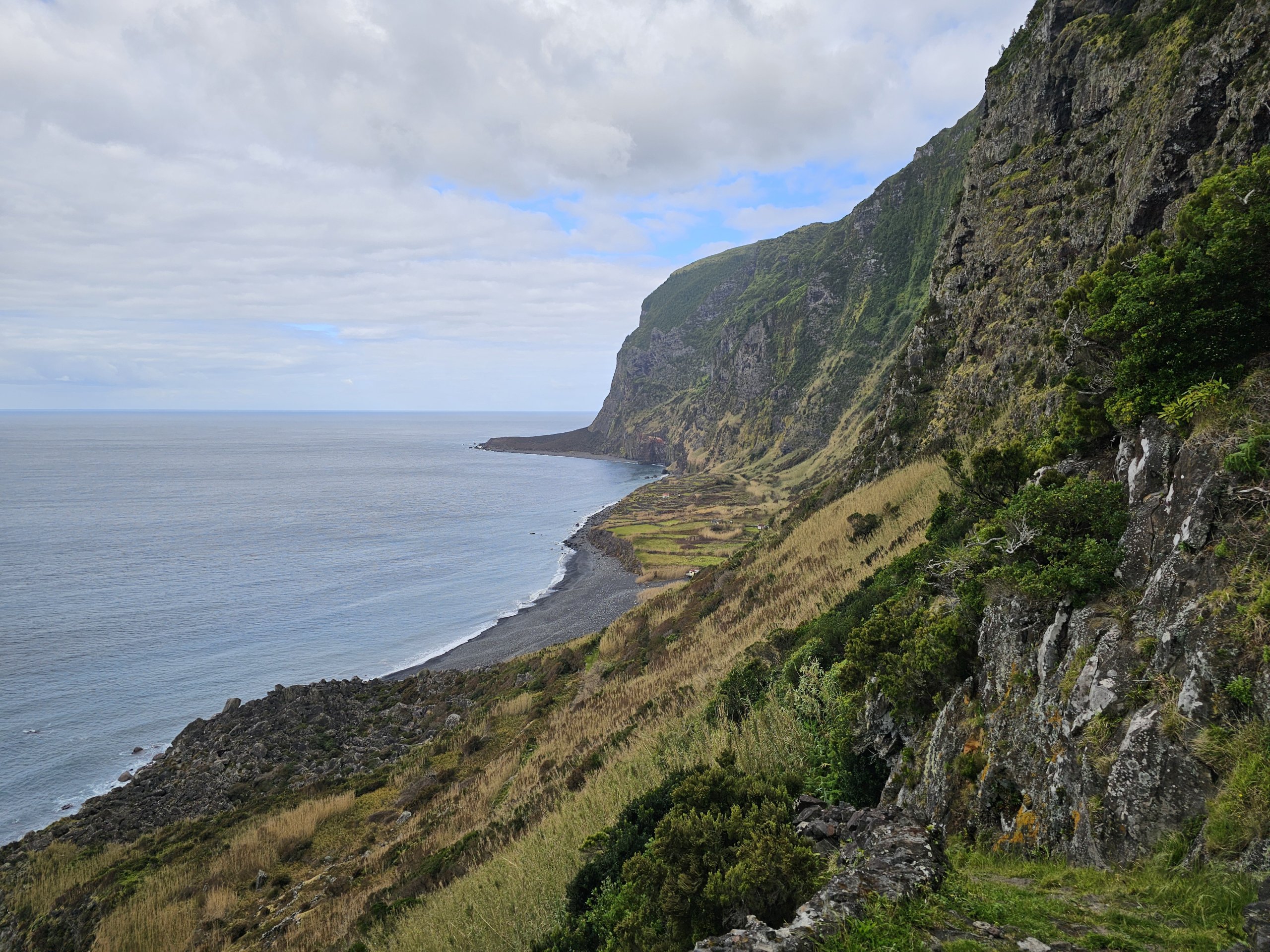
The start of the route is approximately 2 km from the centre of Lajes, which you can reach on weekdays by bus from both Santa Cruz and Faja Grande.
The so-called Grand Route of Flores is a challenging 45 km-long route combining sections of the PR2FLO, PR1FLO and another signposted section without its own specific designation between the towns of Ponta Delgada and Santa Cruz das Flores. We’ll describe this route here.
The route between Ponta Delgada and Santa Cruz is stunning. It winds through gorges and valleys, offering views of the incredibly rugged north-eastern coastline. Long stretches of the route also take you through beautifully green and peaceful pastures teeming with cows and sheep.
The route is nicely broken up by the villages of Ponta Ruiva and Cedros, which can serve as alternative starting points for shorter round-trip excursions.
This route therefore has something to offer both lovers of shorter walks and those who enjoy long, challenging treks.
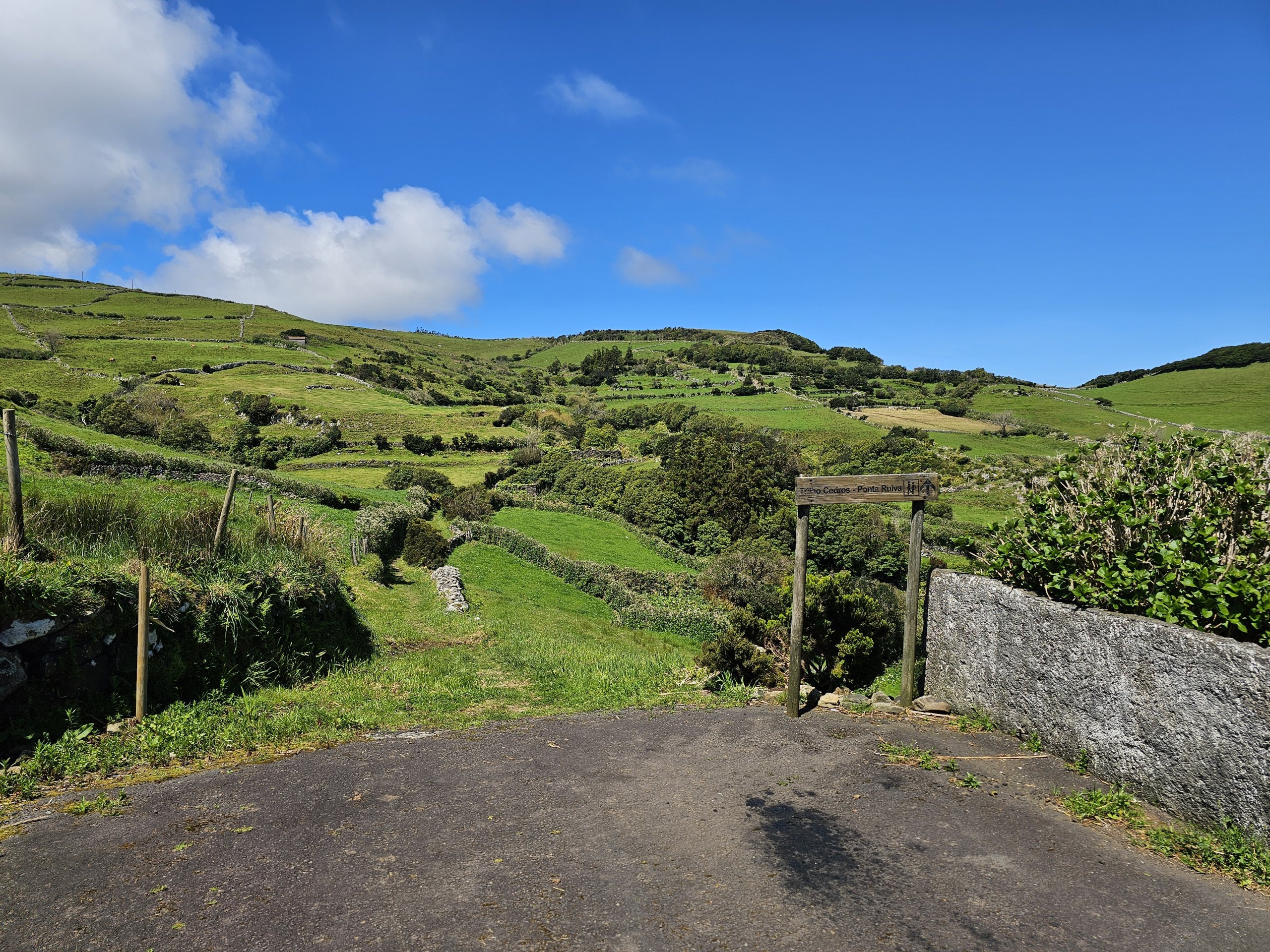
A bus runs twice a day on weekdays between Santa Cruz das Flores and Ponta Delgada (three times a day on Mondays, Wednesdays and Fridays), stopping at the villages of Cedros and Ponta Ruiva.
On the island of Flores, you are free to set off along any well-trodden path, provided it does not cross a fenced pasture. We have marked the most popular unmarked trails on the map below.
Of particular interest is the route along the coast between the villages of Faja Grande and Fajazinha, which allows for a longer circular walk, as you can return via a section of the signposted PR2FLO trail.
You can see where all the signposted trails on the island run on the map we have put together.
The map is current as of 2025.
Official information from the Azores Tourism Organisation can be found on the website:trails.visitazores.com/flores.
People often ask whether they might encounter dangerous wildlife whilst walking around the island.
There are no large predators, venomous snakes or poisonous insects on the island. Thanks to extensive farming, Flores is free of any large wildlife.
Whilst wandering around the island, you’ll come across cows at virtually every turn. In the vast majority of cases, the cows are in fenced-off pastures. Herders occasionally move their herds between pastures along the very same tourist trails.
If you come across a herd of cows, step to one side and don’t move about too much. The cows may give you a curious look, but they’ll give you a wide berth.
Breeding bulls are usually tethered with a chain as well.
There are no stray dogs on the island of Flores.
Although almost every household has a dog, they are usually kept behind a fence in the garden.
Shepherds occasionally use smaller herding and cattle-driving dog breeds, but these do not interact with people in any way – unless, of course, you try to climb over the fence and endanger the herd of cows. The dogs are trained to pay no attention to the outside world beyond their territory – that is, the fenced-off pasture.
Flores is an extremely rugged and hilly island, which means you’ll come across a breathtaking view at literally every turn.
The viewpoints along the roads are often marked with a brown sign reading ‘ "Miradouro"’, complete with a small terrace and a place to park your car.
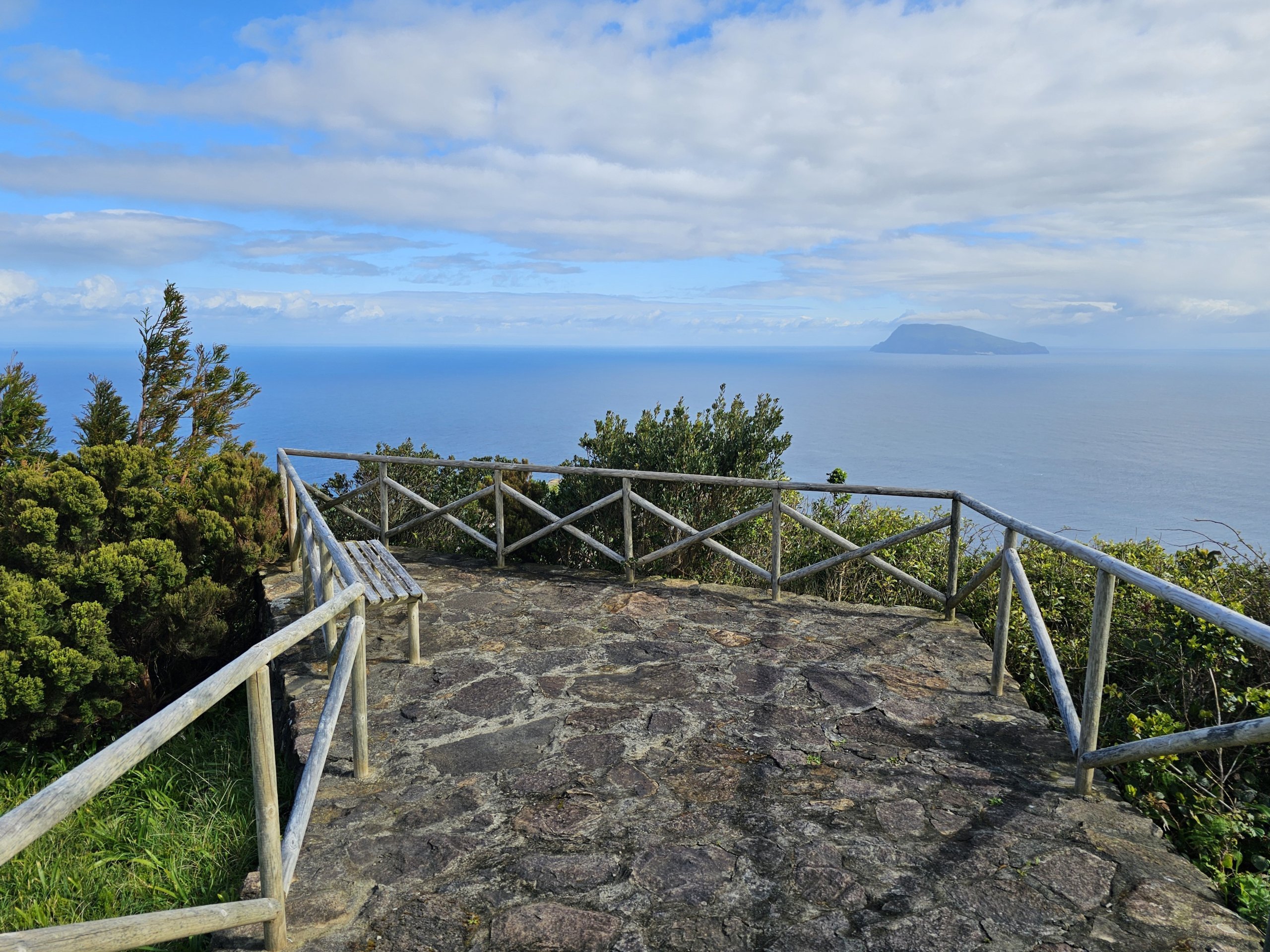
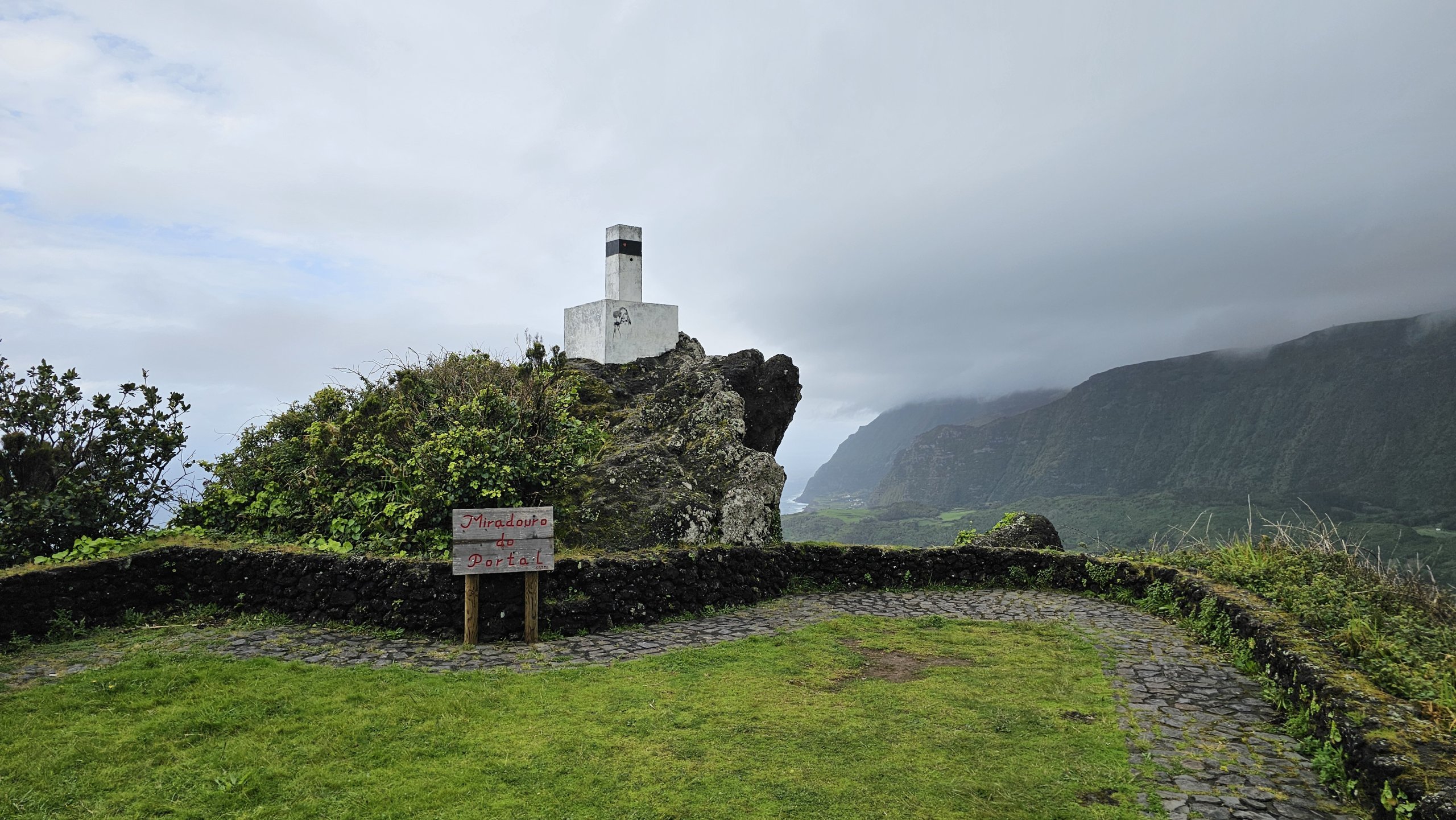
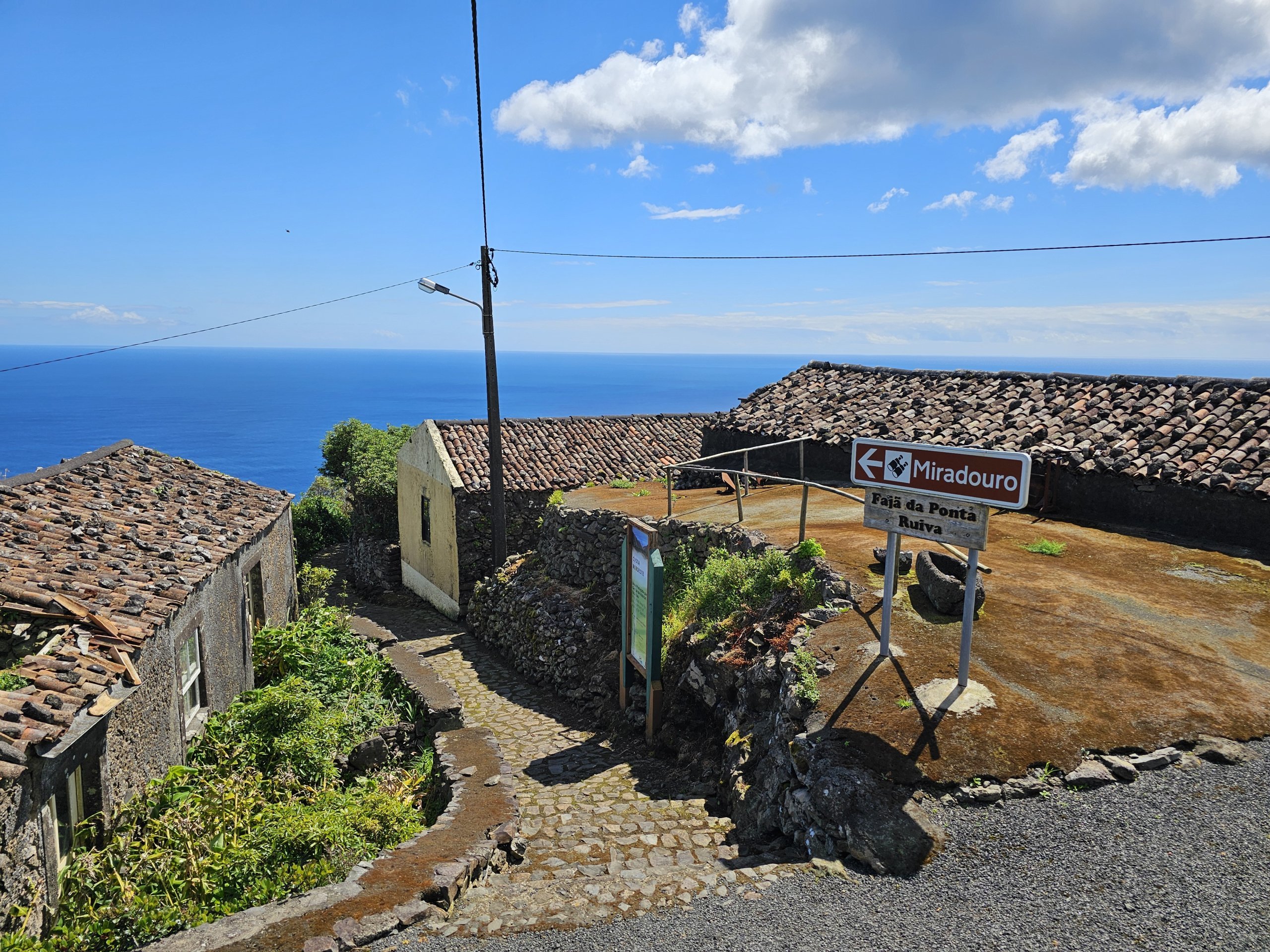
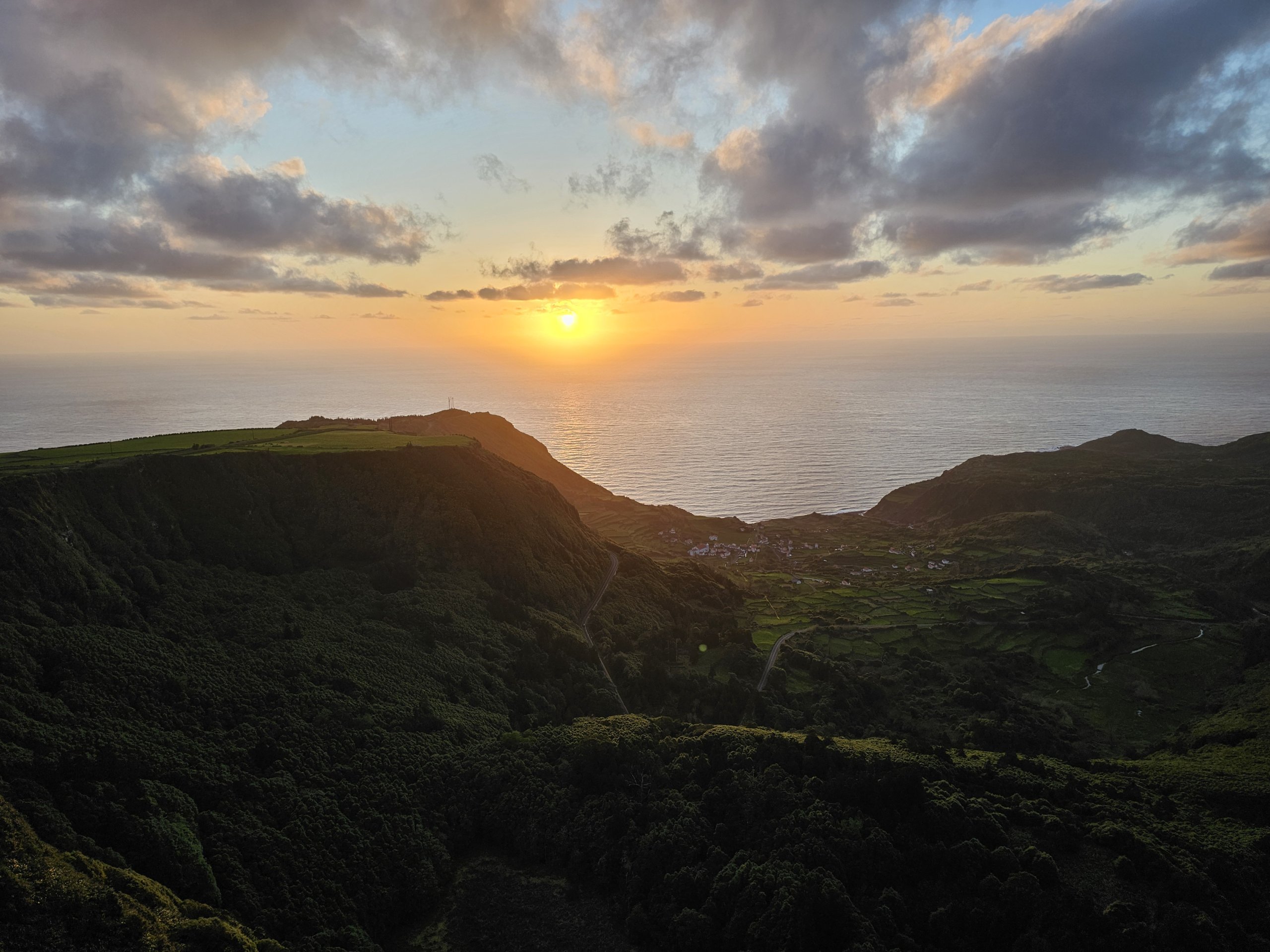
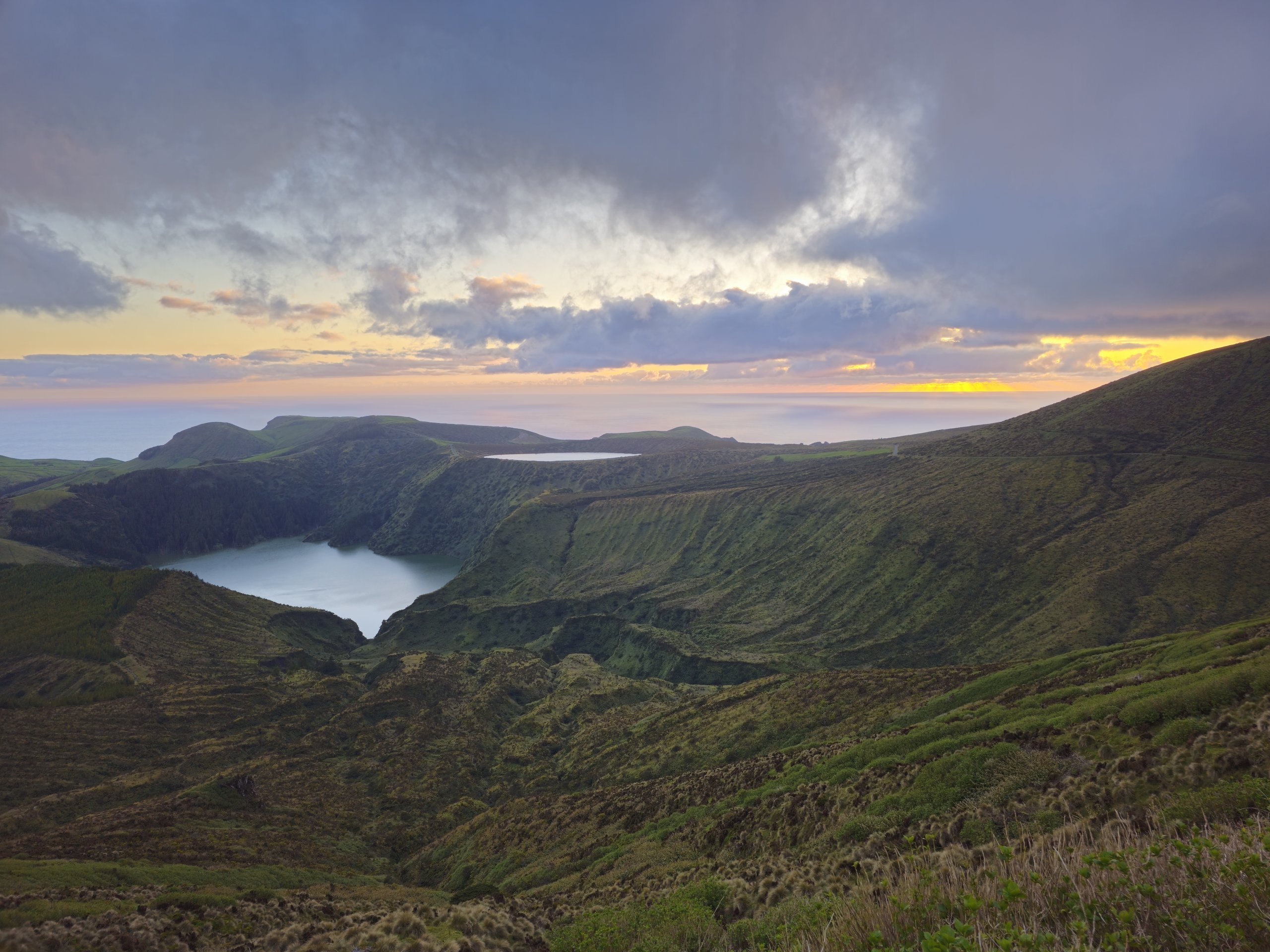
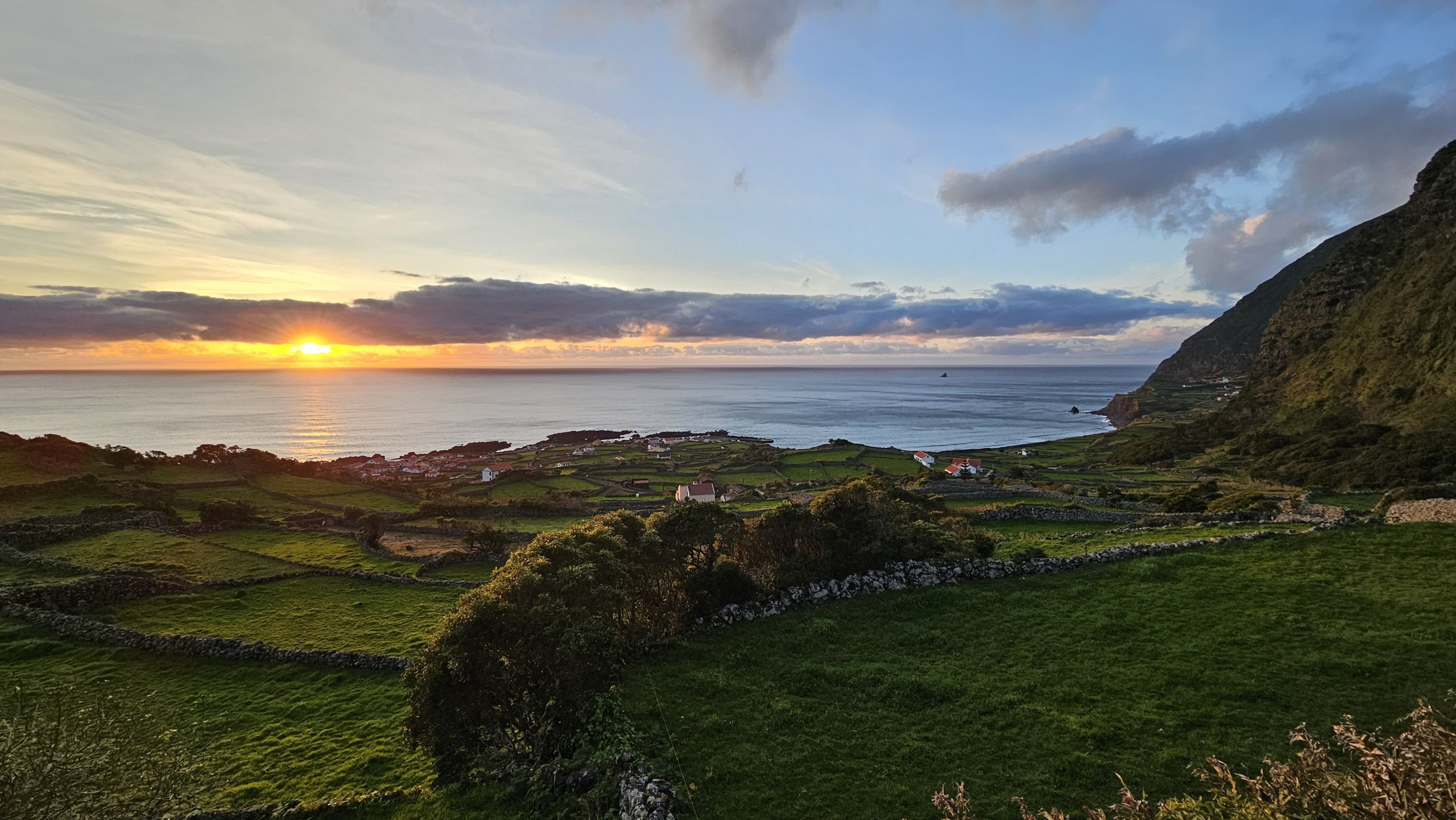
We describe what we consider to be the most beautiful viewpoints in the ‘What to See’ section. However, during our stay we often sought out spots with the most beautiful views of the sunset, so here are our tips for the 3 best places to watch the sunset.
Discover the coast of Flores from the water’s eye view, where you’ll see large sea caves that can only be reached by boat.
Several companies organise boat trips around the island, all of which set sail from the largest town, Santa Cruz das Flores.
These cruises are organised by several companies. They are usually divided into two types:
We recommend booking your cruise in advance on the website of the largest of the agencies:
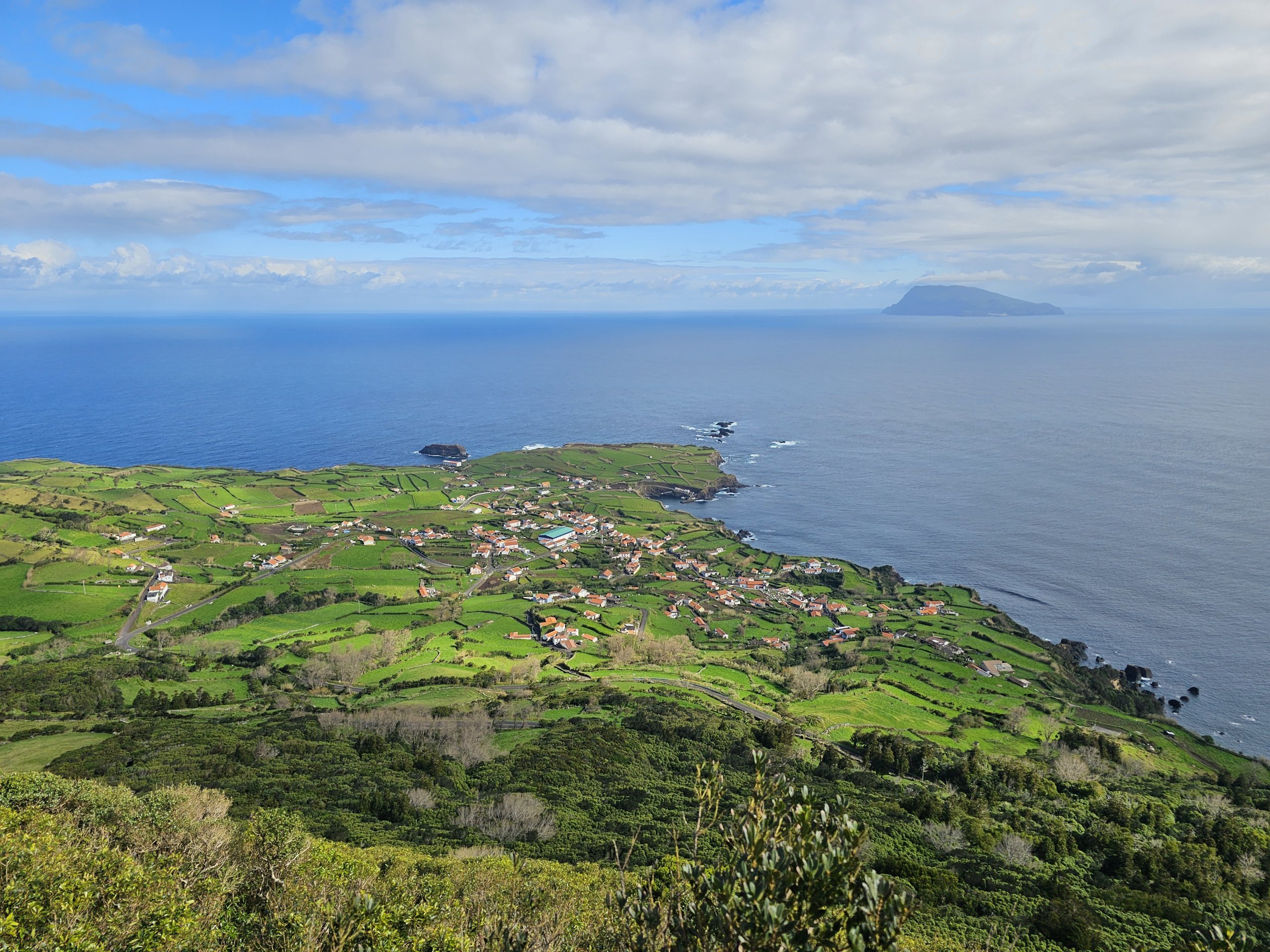
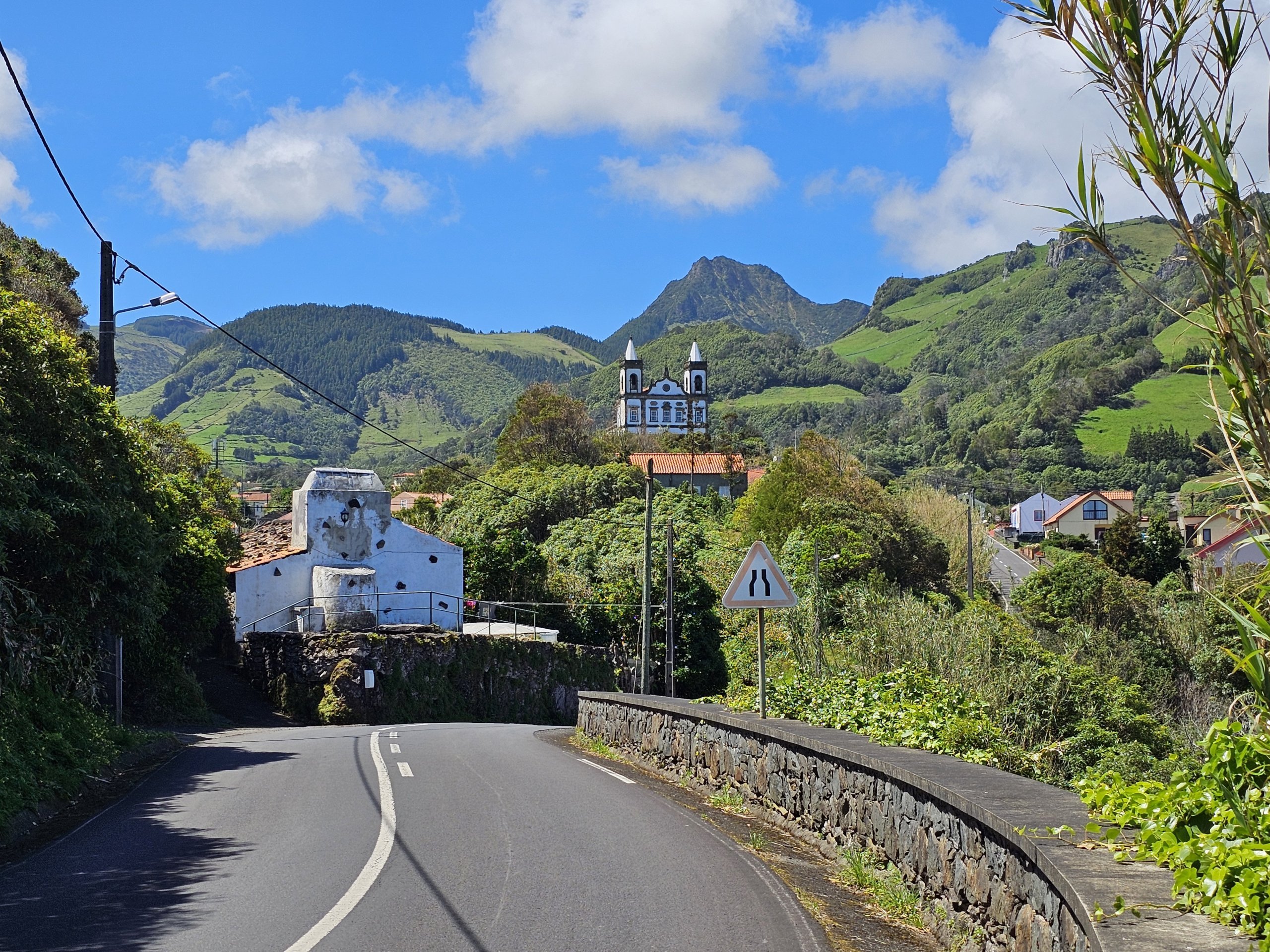
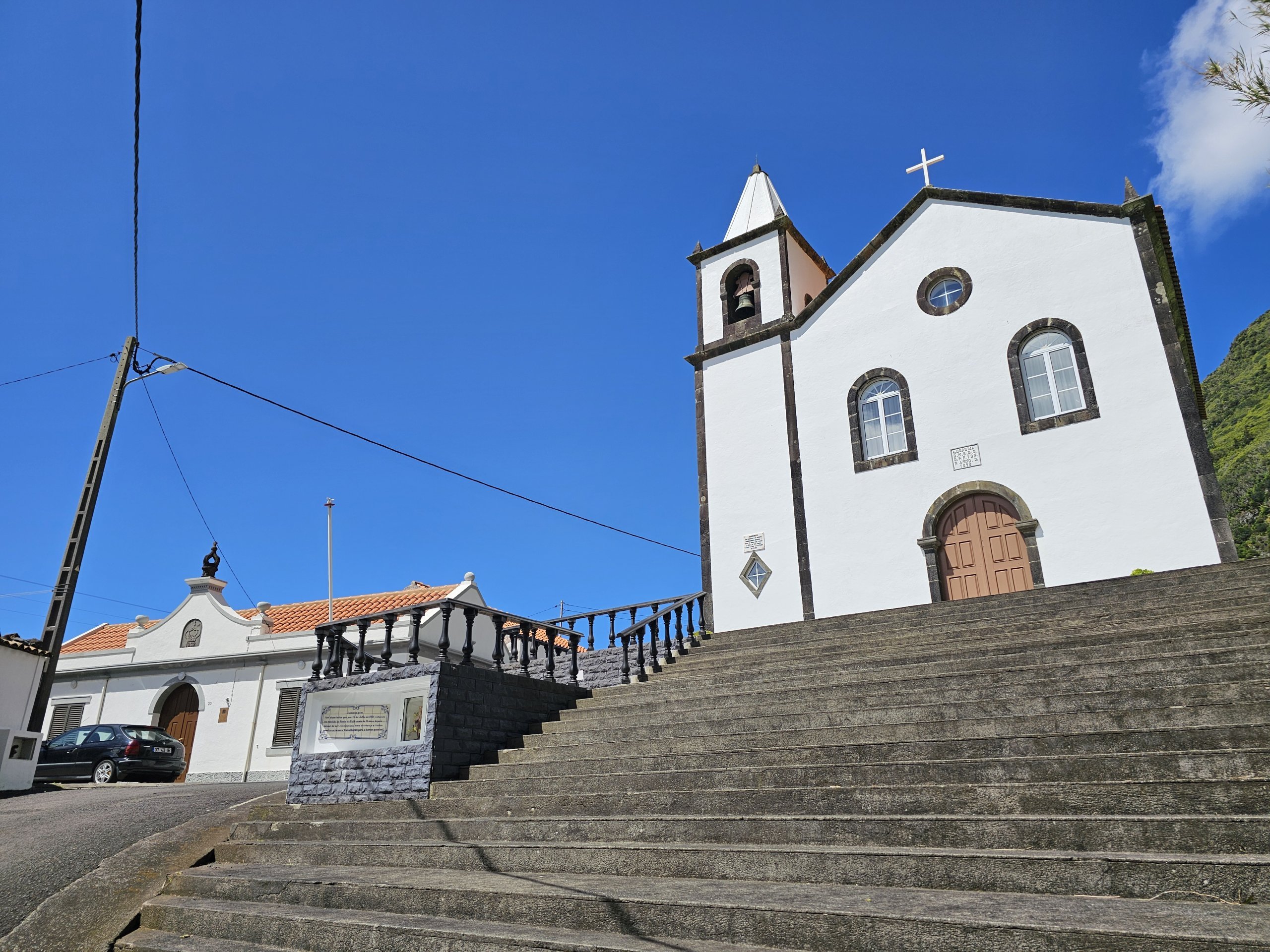
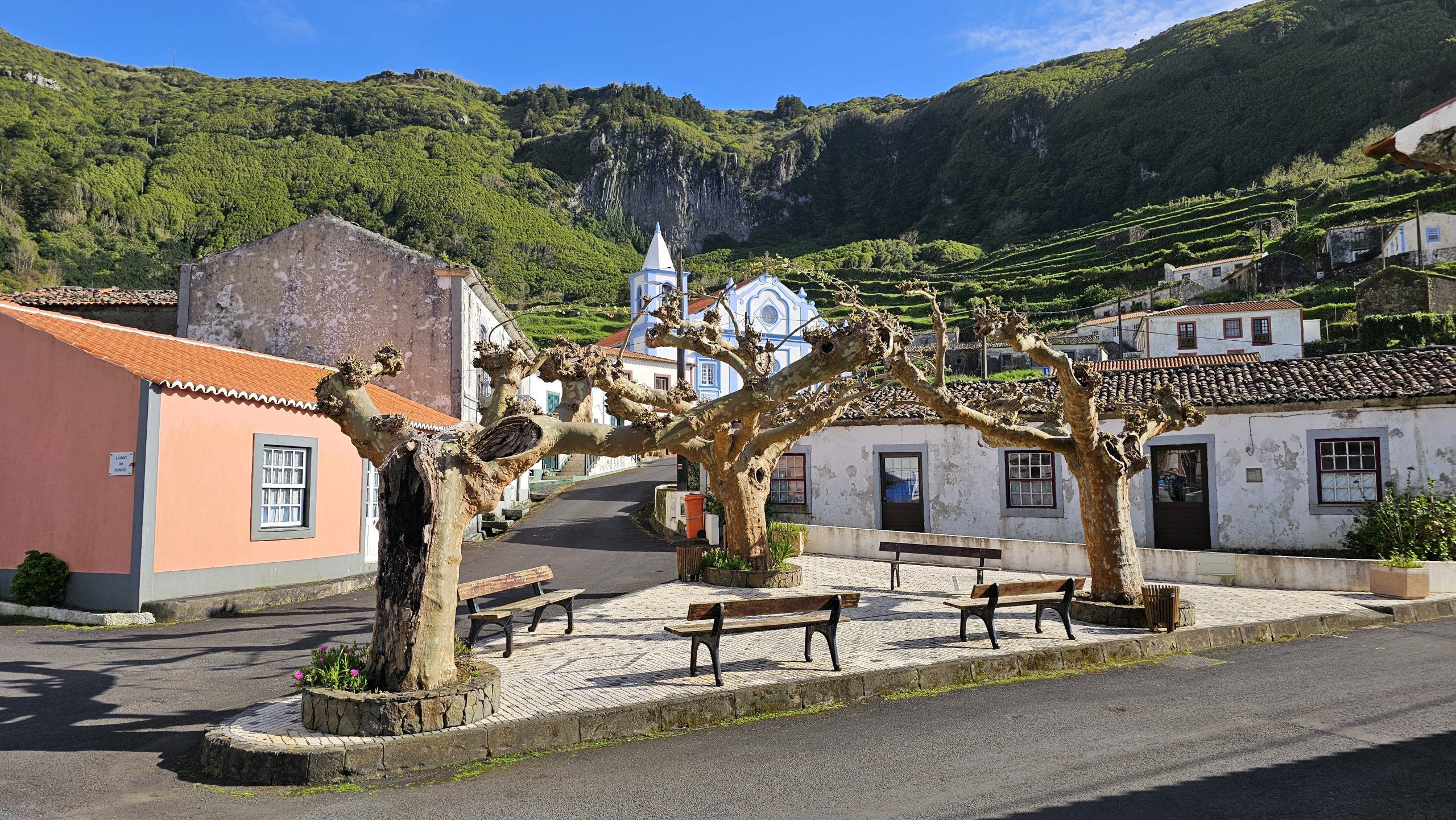
The entire island is home to only around 3,500 people, and the largest town, Santa Cruz das Flores, has just under 1,300 inhabitants. All the other villages and towns offer a wonderful glimpse into typical rural life in the Azores.
The villages are beautifully maintained and exude a sense of peace and tranquillity.
Stop off at the various villages whilst travelling by car, take a stroll through them and enjoy the relaxed atmosphere.
A popular day trip from Flores takes you to the neighbouring islet of Corvo, some 20 km away – the smallest of all the Azores islands, with a huge volcanic caldera and a friendly atmosphere.
You can find detailed information about the whole island in our guide to Corvo.
You’ll usually travel to Corvo from Flores as part of an organised trip run by a number of travel agencies.
The trip takes around 6 hours in total; some agencies also include a stop at the caves, extending the trip to 7–8 hours.
Prices range from 40 eur to 55 eur, depending on whether the price includes a minibus journey from Corvo harbour to the caldera (7 km one way with an elevation gain of over 500 metres) or not.
If the minibus journey to the caldera is not included in the price, you can pay for it yourself on the spot for around 10 eur, although it may be difficult to find an available vehicle – see our article on Transport to Corvo.
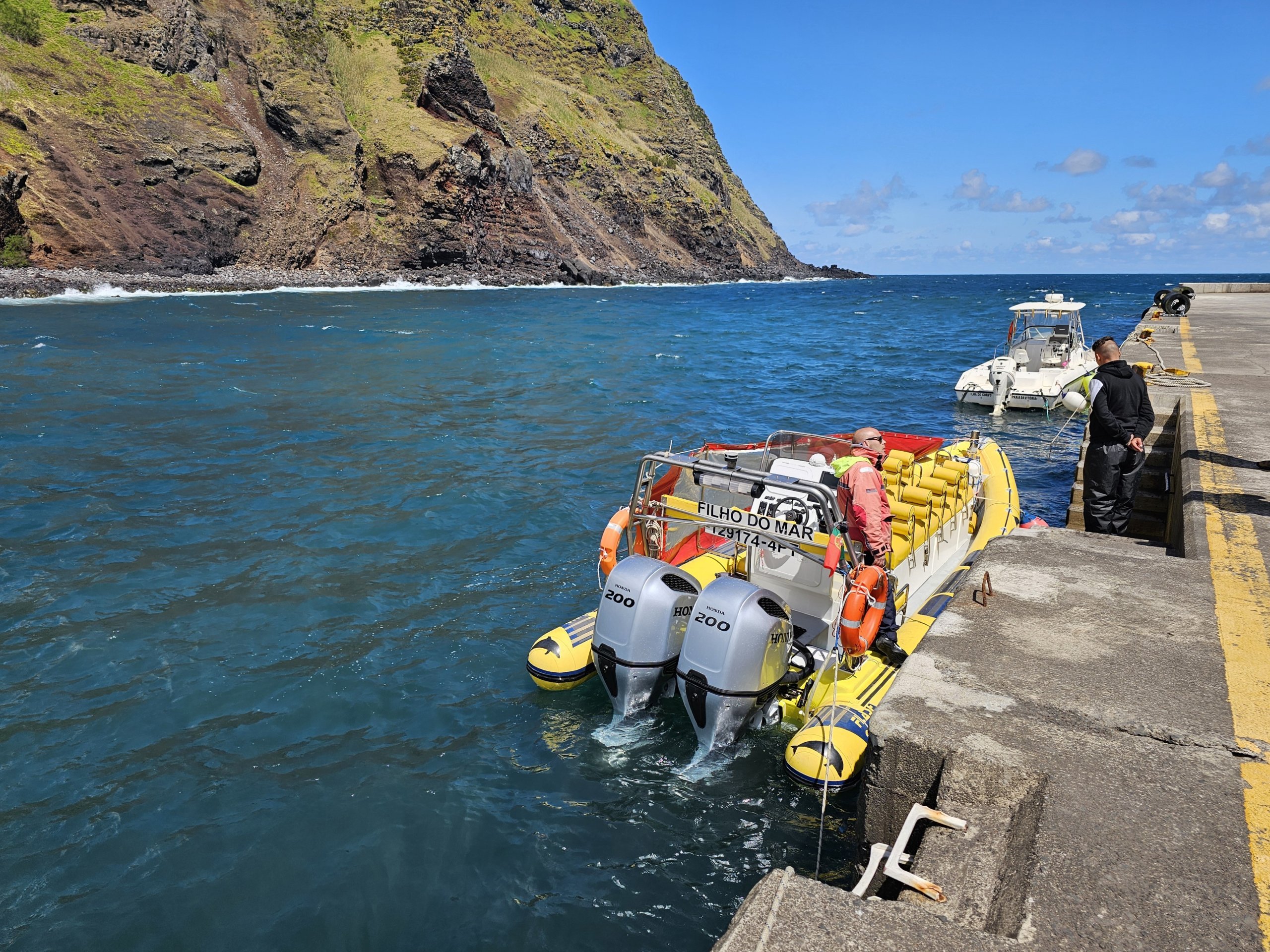
There is also a regular ferry service operated by Atlanticoline between the islands of Flores and Corvo. You can book tickets online via the website:atlanticoline.pt/en/booking.
The ferry runs only on Tuesdays and Saturdays during the winter, on Tuesdays, Thursdays and Saturdays in May and September, and every day except Wednesdays during the summer.
Whenever the ferry is running, the timetable allows for a day trip, as the ferry always sails in the morning and afternoon.
The crossing takes around 40 minutes, and when travelling from the island of Flores, you’ll have around 6.5 hours of free time on Corvo.
A return ticket costs 20 eur.
There are also direct flights to Corvo from Flores, but only three times a week, so they do not allow for a day trip. In summer, however, it is possible to fly there (the flight departs around midday) and return by ferry at around 5.00 pm.
A one-way ticket costs around 25 eur.
If you have any questions or comments about the article...