
From Bucharest to Phuket with Air China, including checked-in luggage
542 €


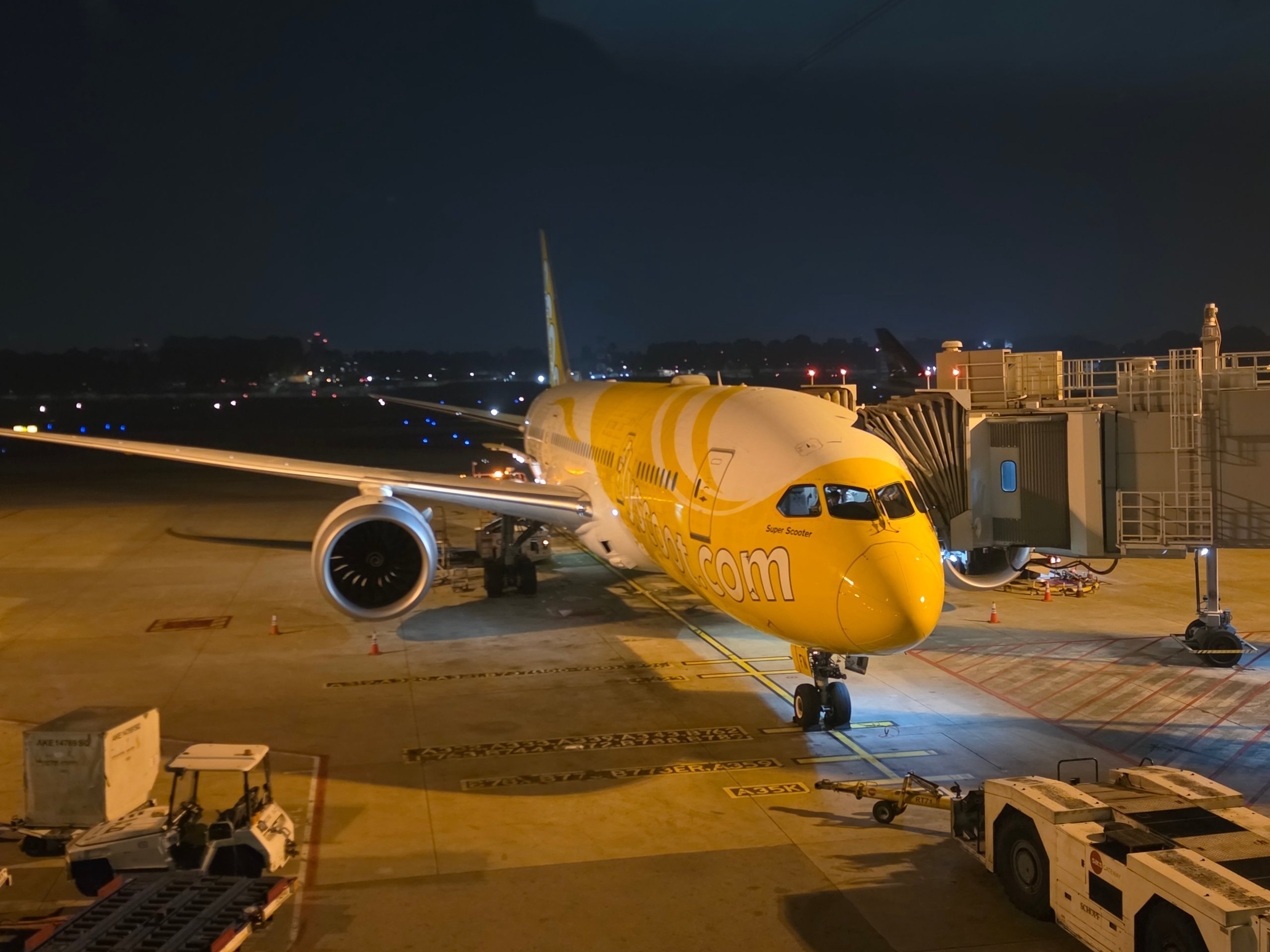
I tried a long-haul flight with the low-cost airline Scoot from Asia to Europe. The 12-hour journey from Singapore to Vienna turned out to be much better than I’d originally expected.
And what’s more, for 239 eur. I probably wouldn’t have complained even if the flight had been pure torture 🙂
To start with, here’s a handy table summarising my flight with Scoot.
| My journey | |
|---|---|
| Ticket purchased | Phu Quoc–Singapore–Vienna |
| Ticket price | 239 eur one-way |
| Aircraft and class | Boeing 787-8, Economy |
| Flight time | 11 hours 55 minutes |
| Departure | 2.45 am local time |
| Occupancy | Almost 100% |
| Connection in Singapore | Over 10 hours; I went into town |
| Extra meal | 19 eur |
Why did I only have a one-way ticket? Because for my trip to Asia, I took VietJetAir’s inaugural flight from Prague to Hanoi.
If you’re also interested in Vietnam, I’ve written a few articles from there:
But back to the scooter...
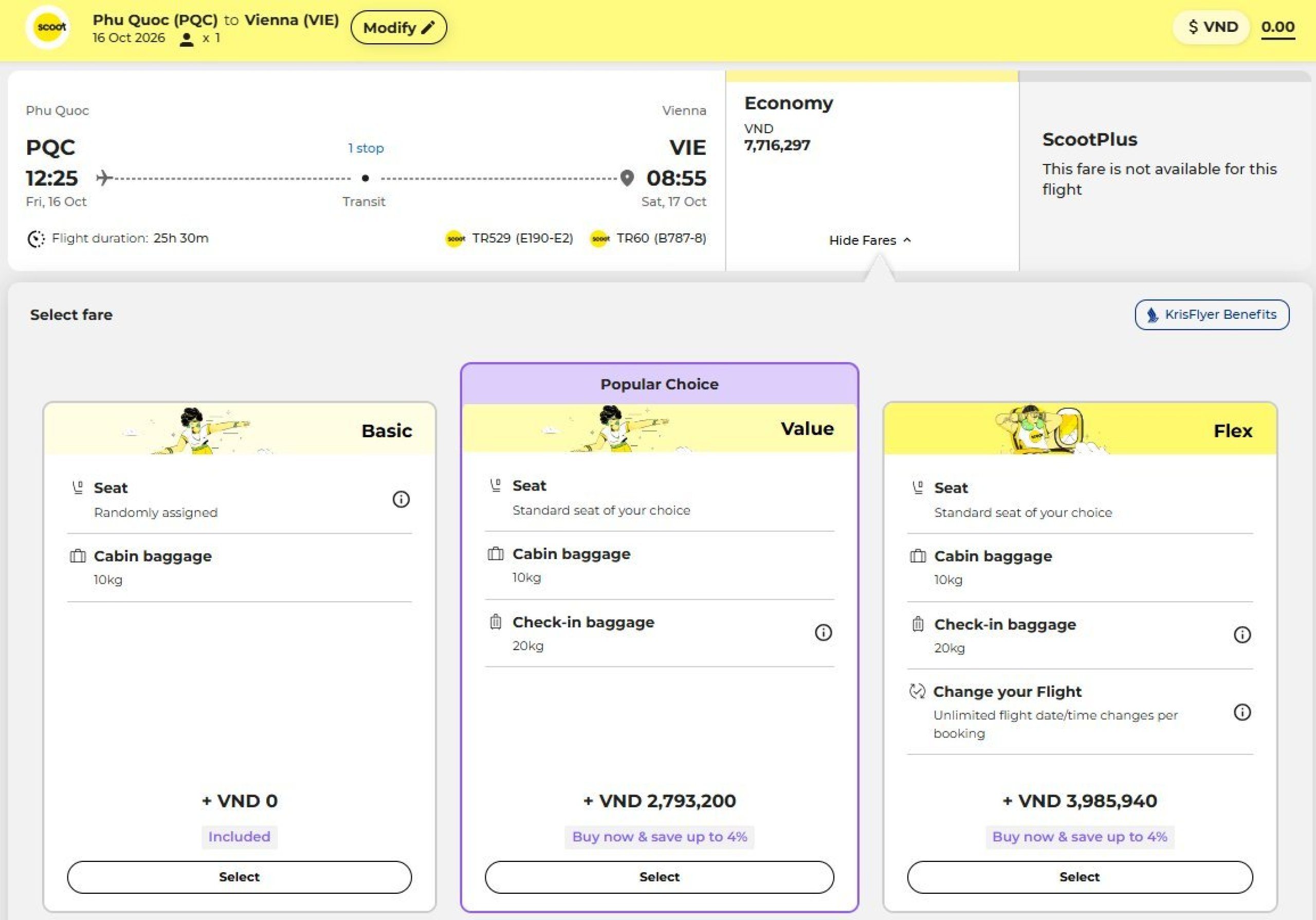
For a one-way ticket from Phu Quoc to Vienna via Singapore, I paid 239 eur. I booked the flight directly via the flyscoot.com website.
This price includes only the flight, one standard piece of hand luggage and one small piece of hand luggage. Nothing else.
I paid extra for the following services on the Singapore–Vienna leg only:
Any checked-in luggage would cost me 69 eur.
If I were to compare the price with a traditional airline such as Emirates, Qatar Airways or Saudia, I’d end up with a total of 327 eur (I’m not including seat selection, as almost all airlines charge for that).
Still a very fair price.
You can also buy a so-called ‘snooze kit’ for 15 eur. This includes a blanket, an eye mask and an inflatable neck pillow (which comes in handy on Scoot, believe me!)
I had a 10-hour layover in Singapore, so naturally I headed into town. On the way there I tried the bus (not recommended); on the way back, I took the MRT as usual. I go into more detail in the article ‘Transport from Singapore Airport’.
On my last visit, we didn’t manage to explore Orchard Road and the Little India district, so I made sure to do so this time.
However, as the weather was absolutely dreadful, I returned to the airport a little earlier and spent the rest of my time at the iconic Jewel shopping centre with its waterfall.
View hotels near Singapore Airport

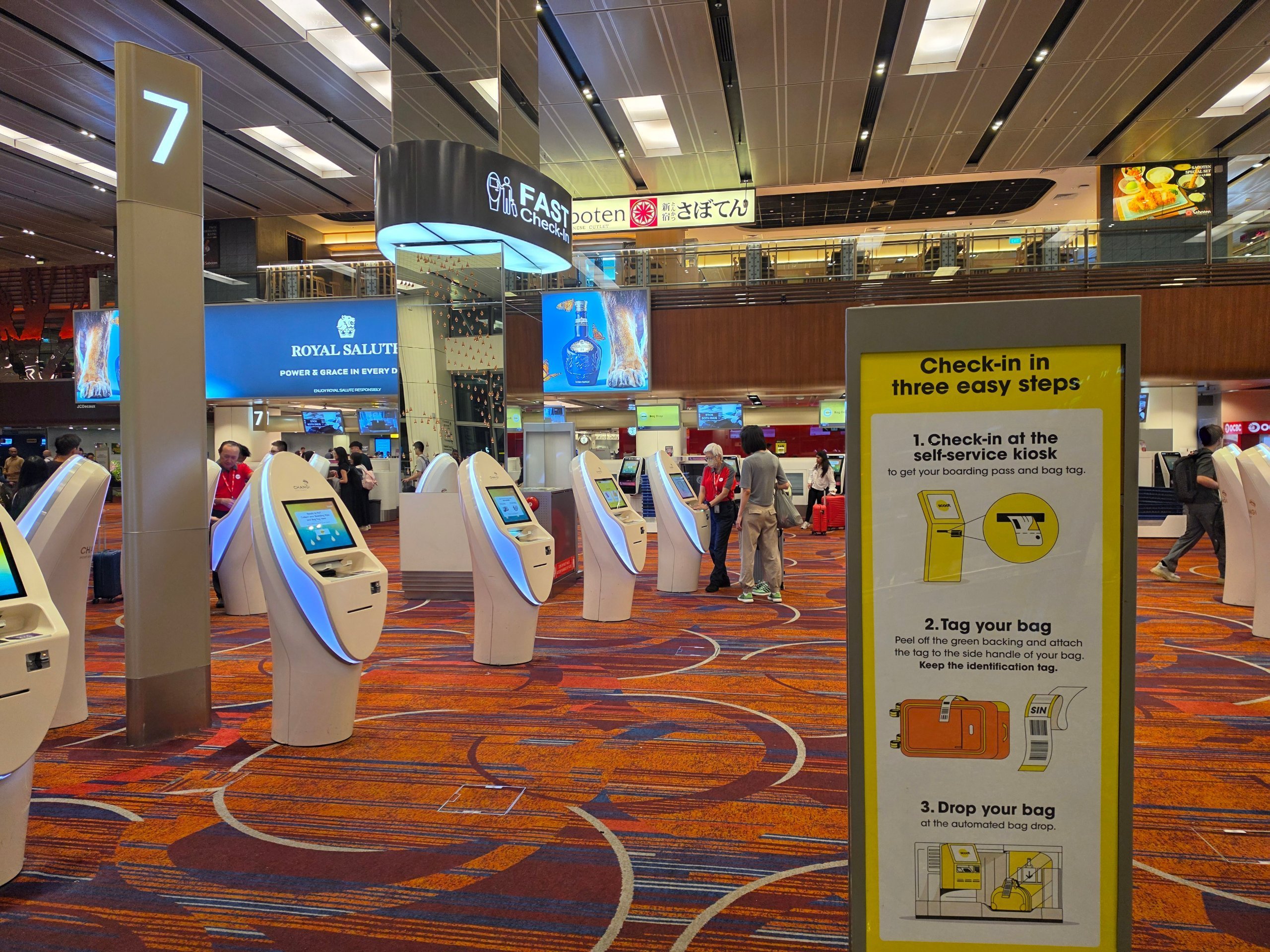
Check-in in Singapore takes place at self-service kiosks, but as I already had my boarding pass from Phu Quoc, I was able to proceed straight through to passport control.
Then a bit of shopping, followed by a shower in the lounge, which I was able to access thanks to my Revolut Ultra plan – I’ve written more about that in this article.
I like Singapore Airport, but there’s one thing about it that I really can’t stand.
Security checks right at the gate.
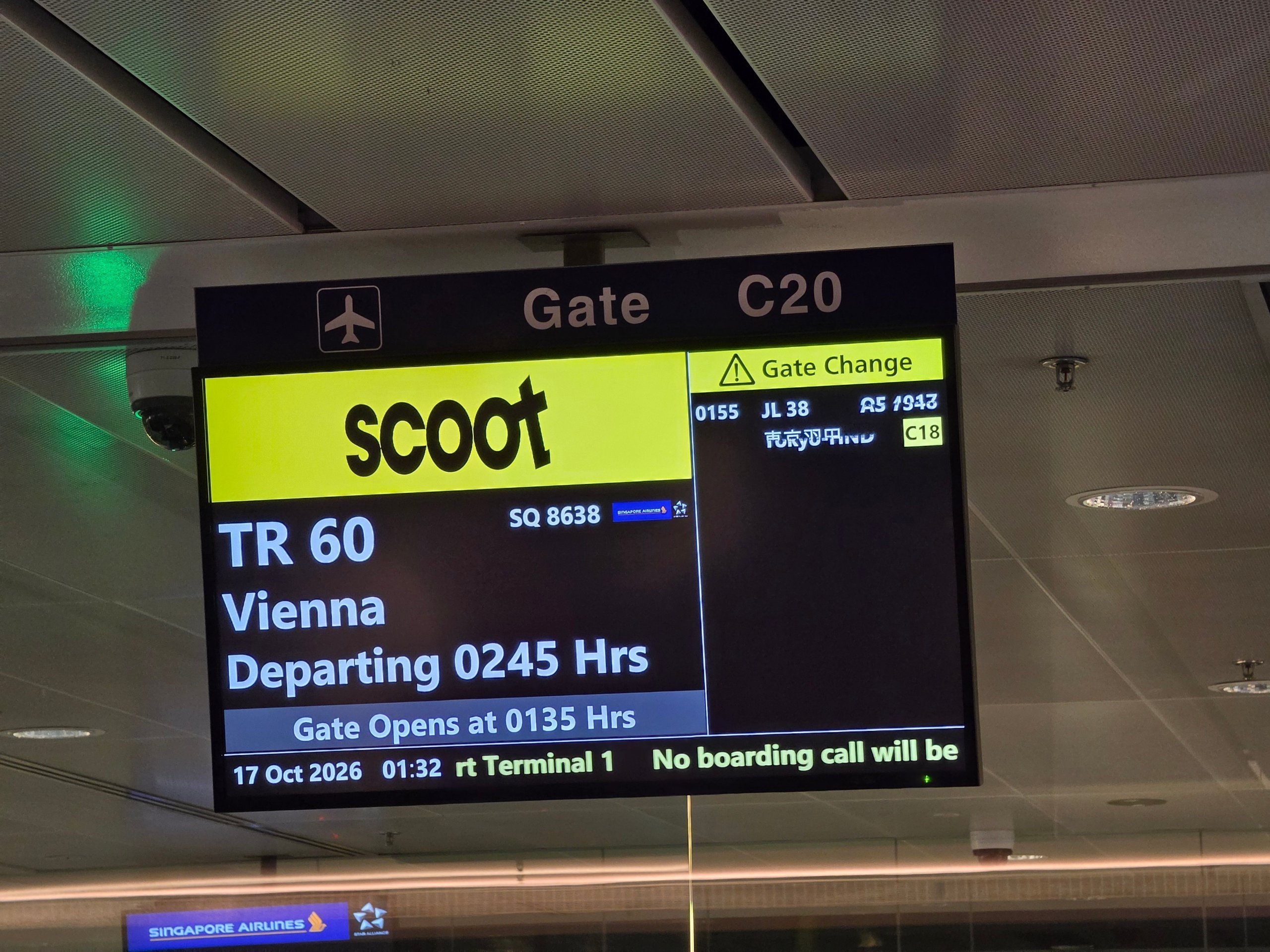
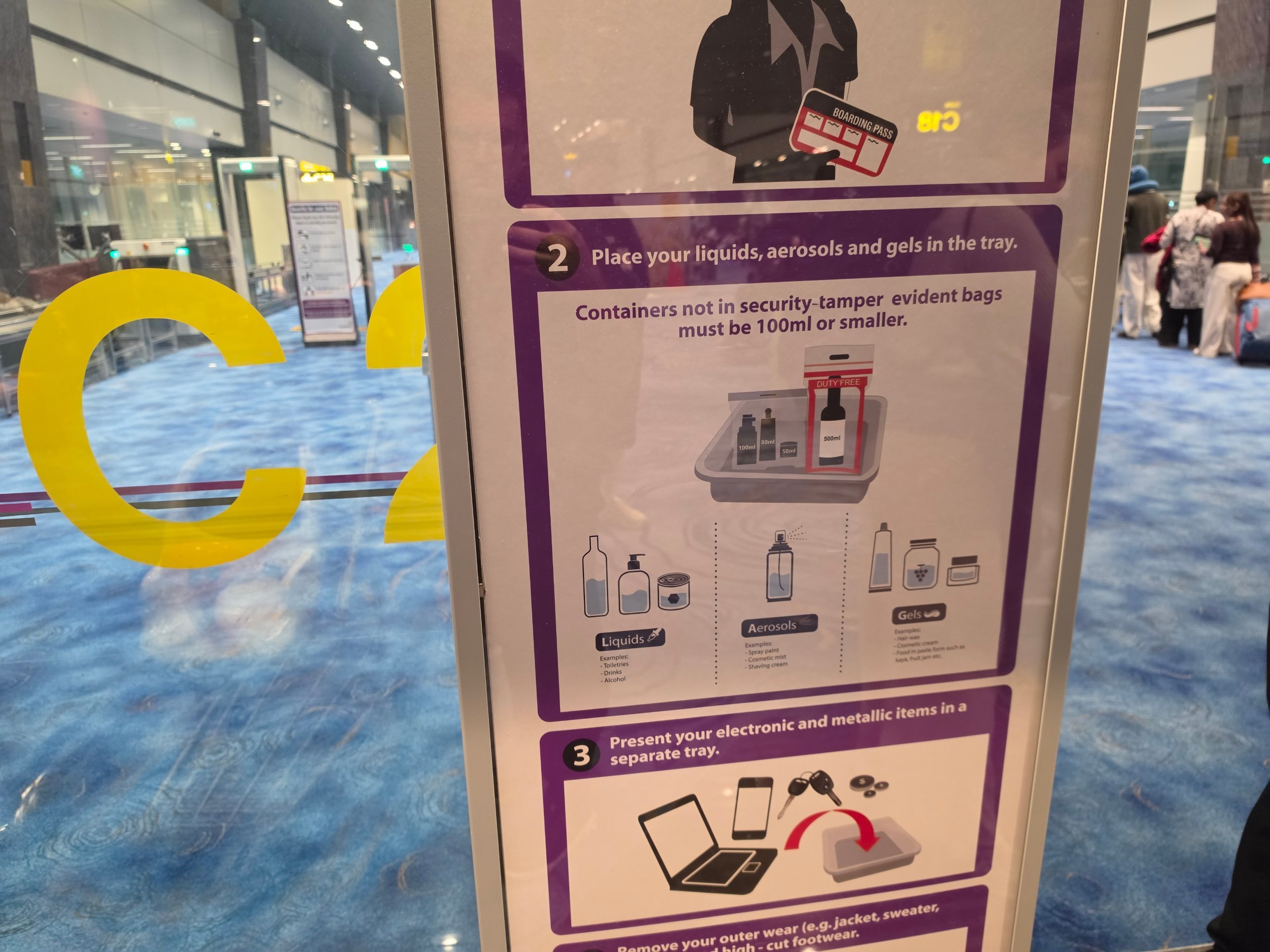
The 100 ml rule for liquids still applies here, so you can’t even take a drink through security.
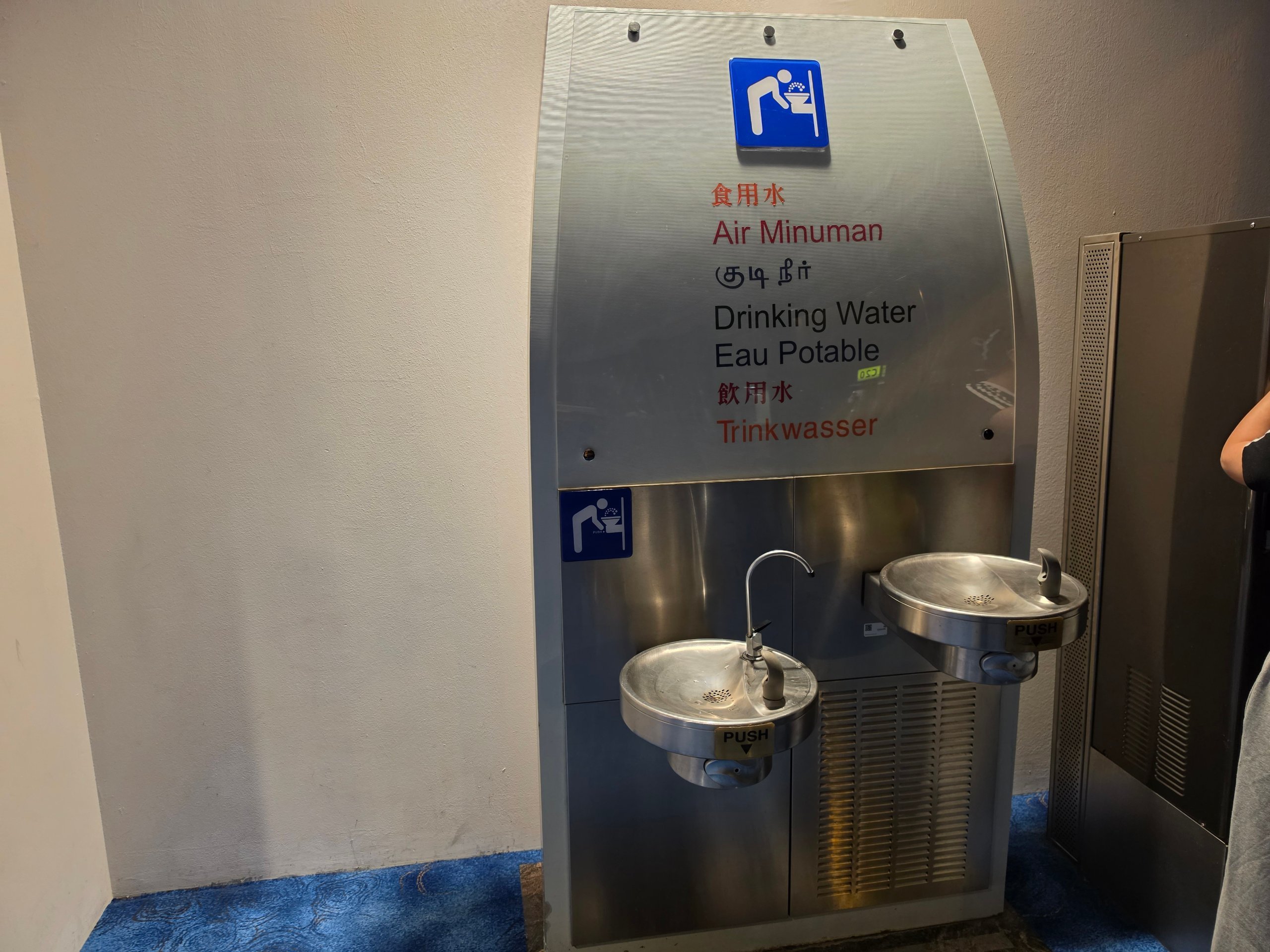
Fortunately, there are at least drinking fountains in the departure gate area beyond security. But you won’t find anything else there. Not even toilets.
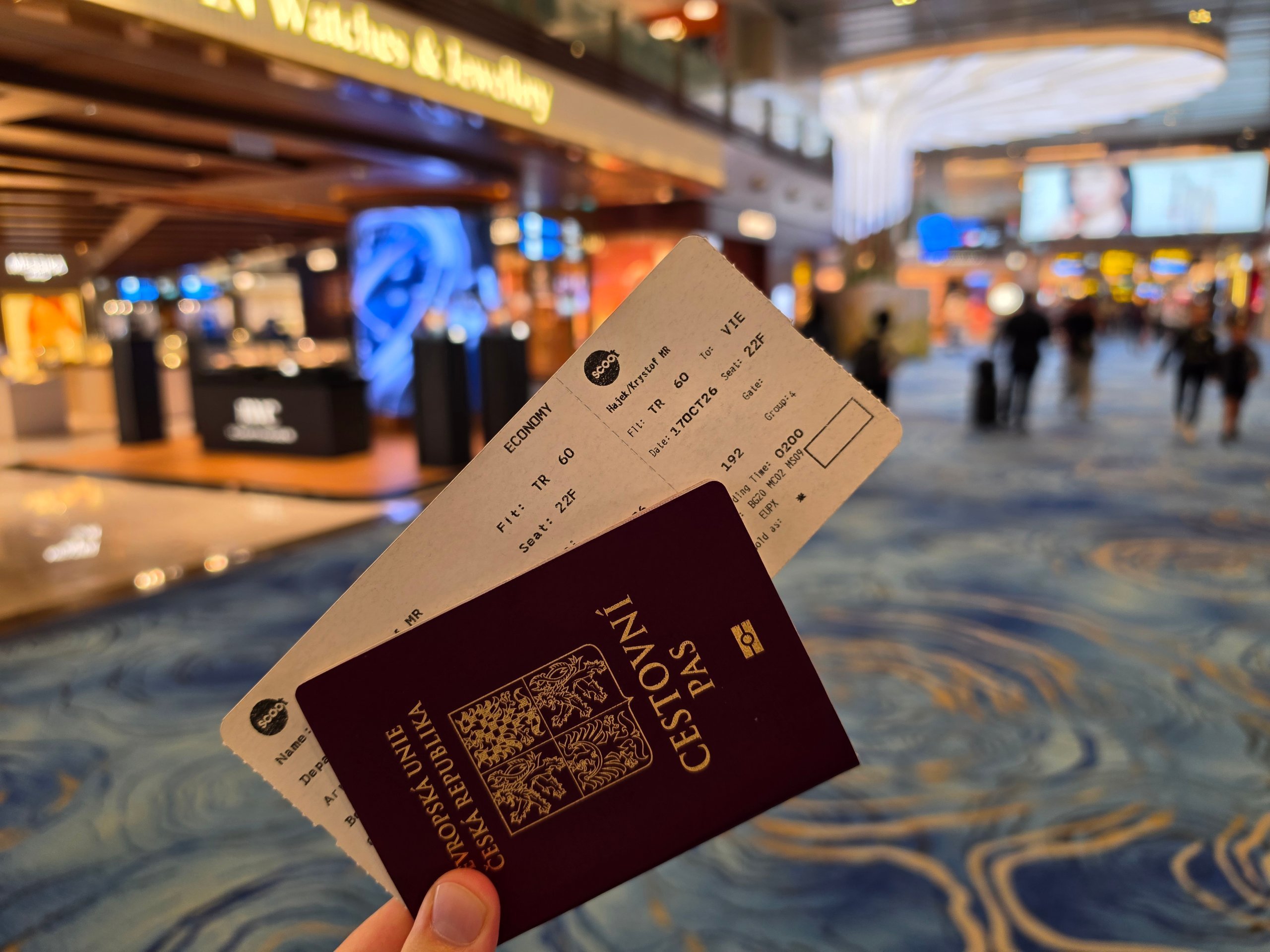
Boarding itself took place strictly according to the groups indicated on the boarding pass.
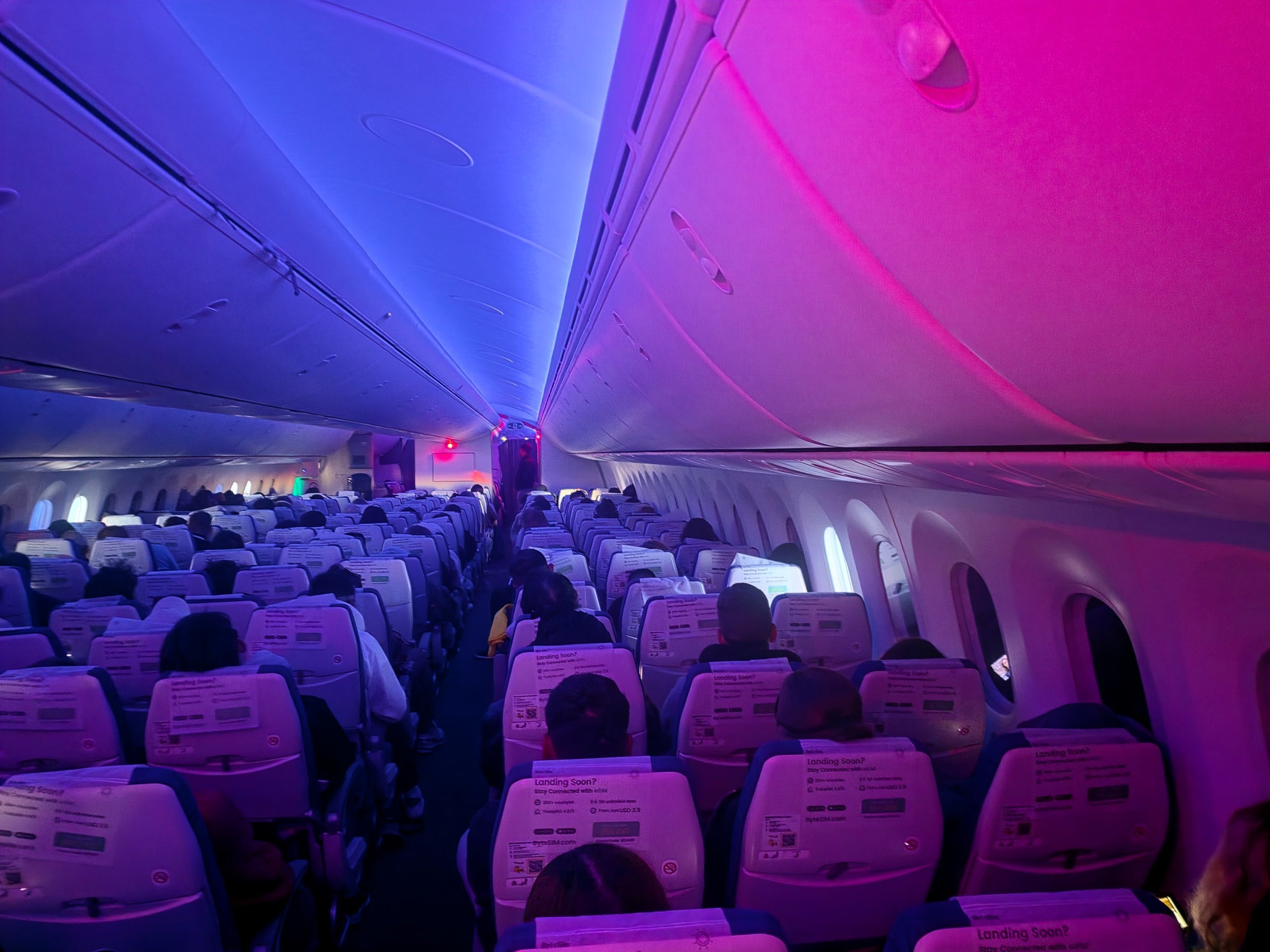
At first glance, the cabin does look a bit like a low-cost airline’s.
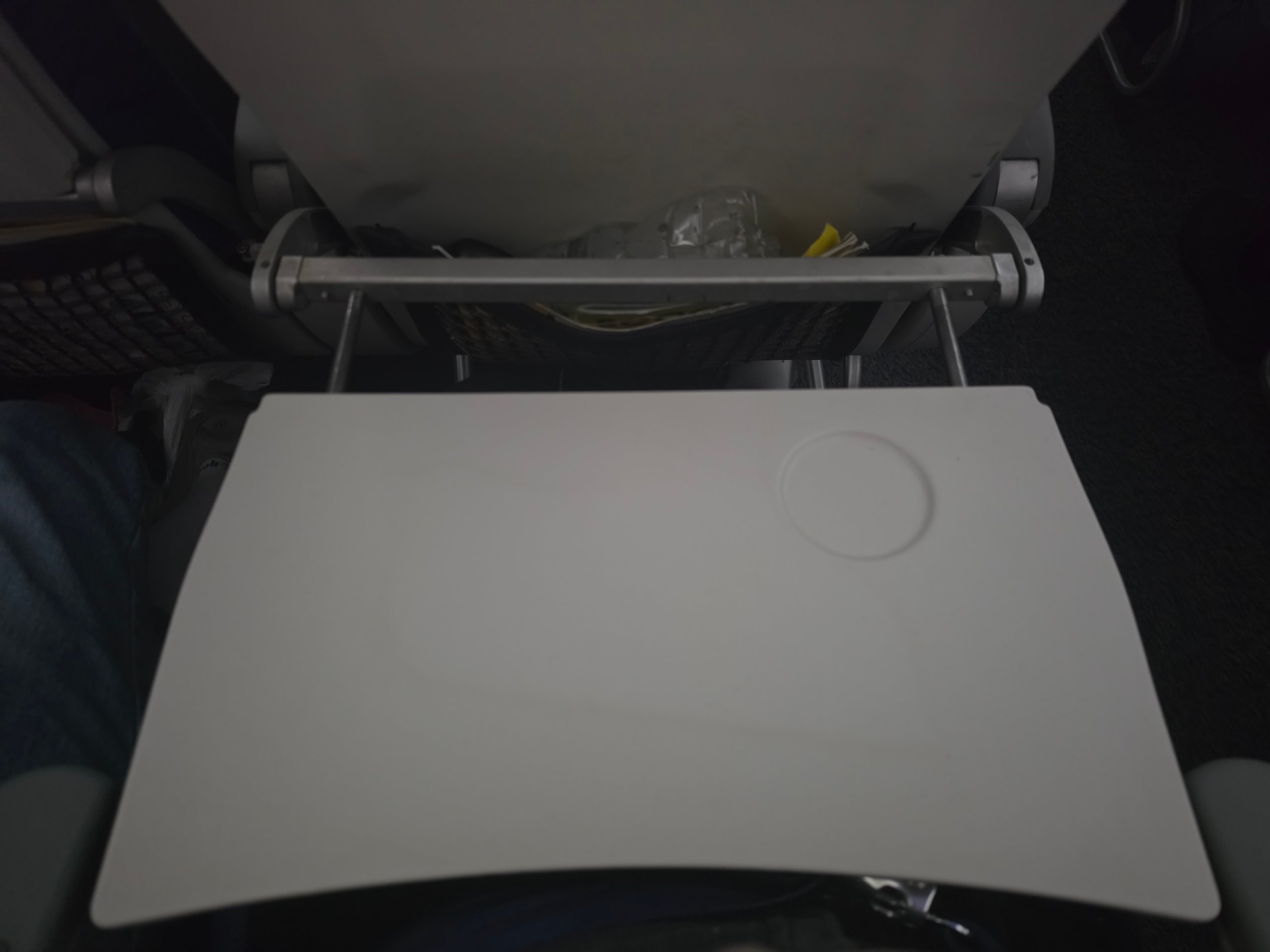
There’s plenty of space – I’m not walking past the Premium Economy section (the ScootPlus cabin is right at the front on the left) – but what strikes me most at first glance is that the seats don’t have headrests.
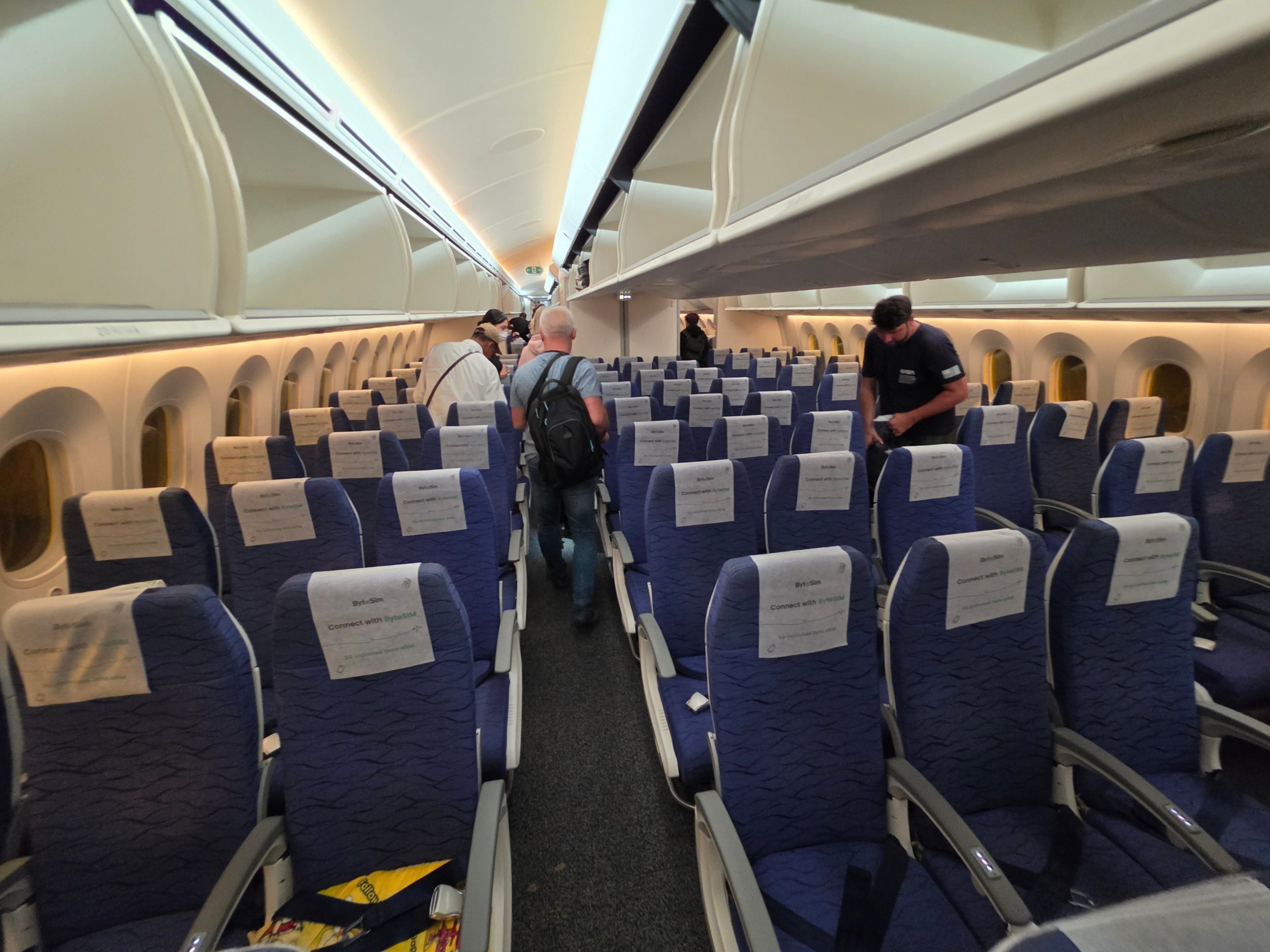
I even had one on Air Arabia during my journey from Prague to Bangkok, which many travellers consider to be a lesser low-cost carrier.
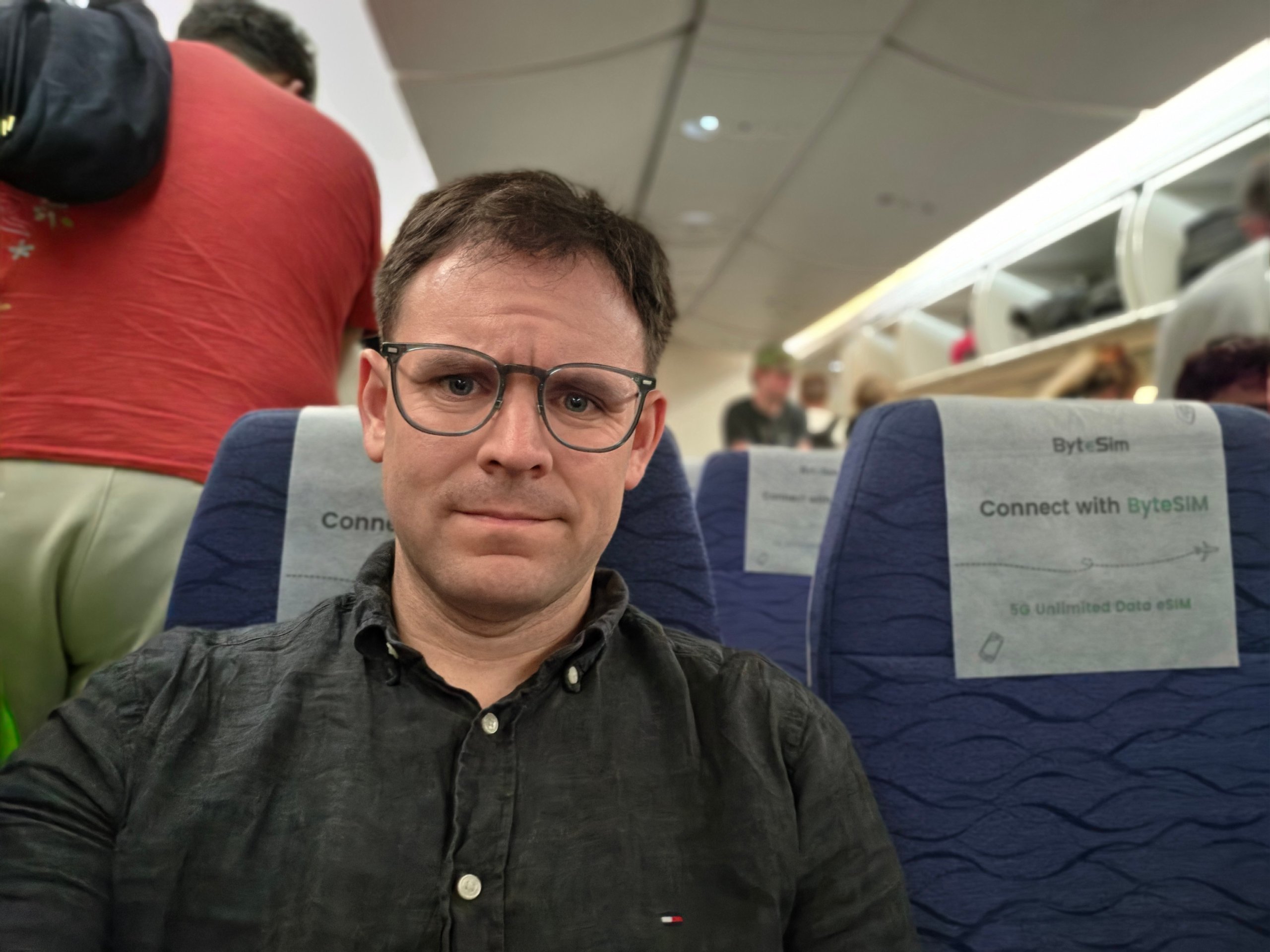
Once I’m seated, however, I reconsider my initial impression. There really is plenty of space here!
I’ve checked various aviation websites to see if my impression is accurate, and it really is. Scoot has exactly the same amount of legroom on its Boeing 787s as traditional airlines such as Qatar Airways or Etihad Airways.
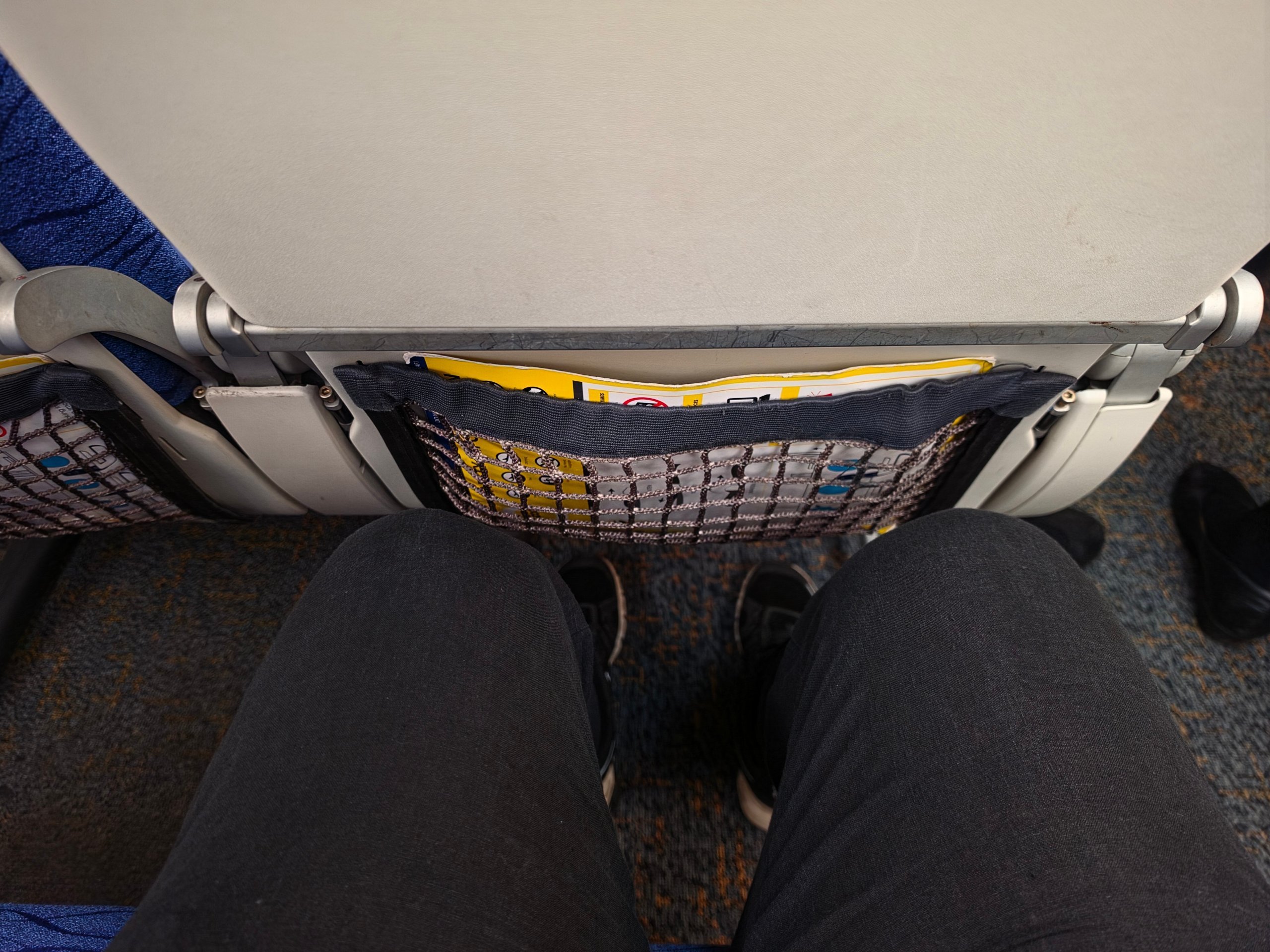
This is really great – I can stretch my legs out completely comfortably and there’s no restriction on width either: Scoot has a standard 3-3-3 configuration.
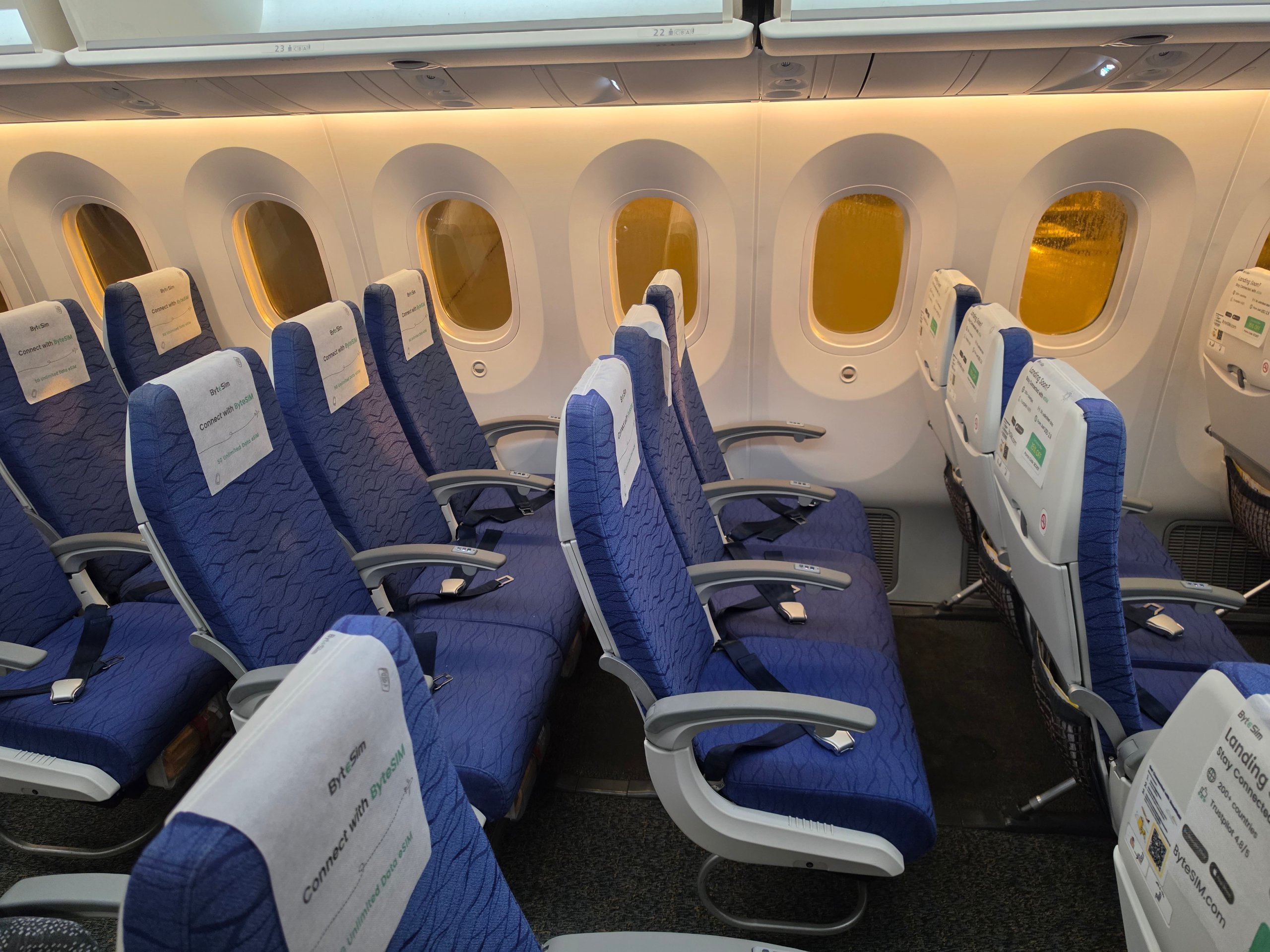
The specific seat dimensions in Scoot Economy are as follows:
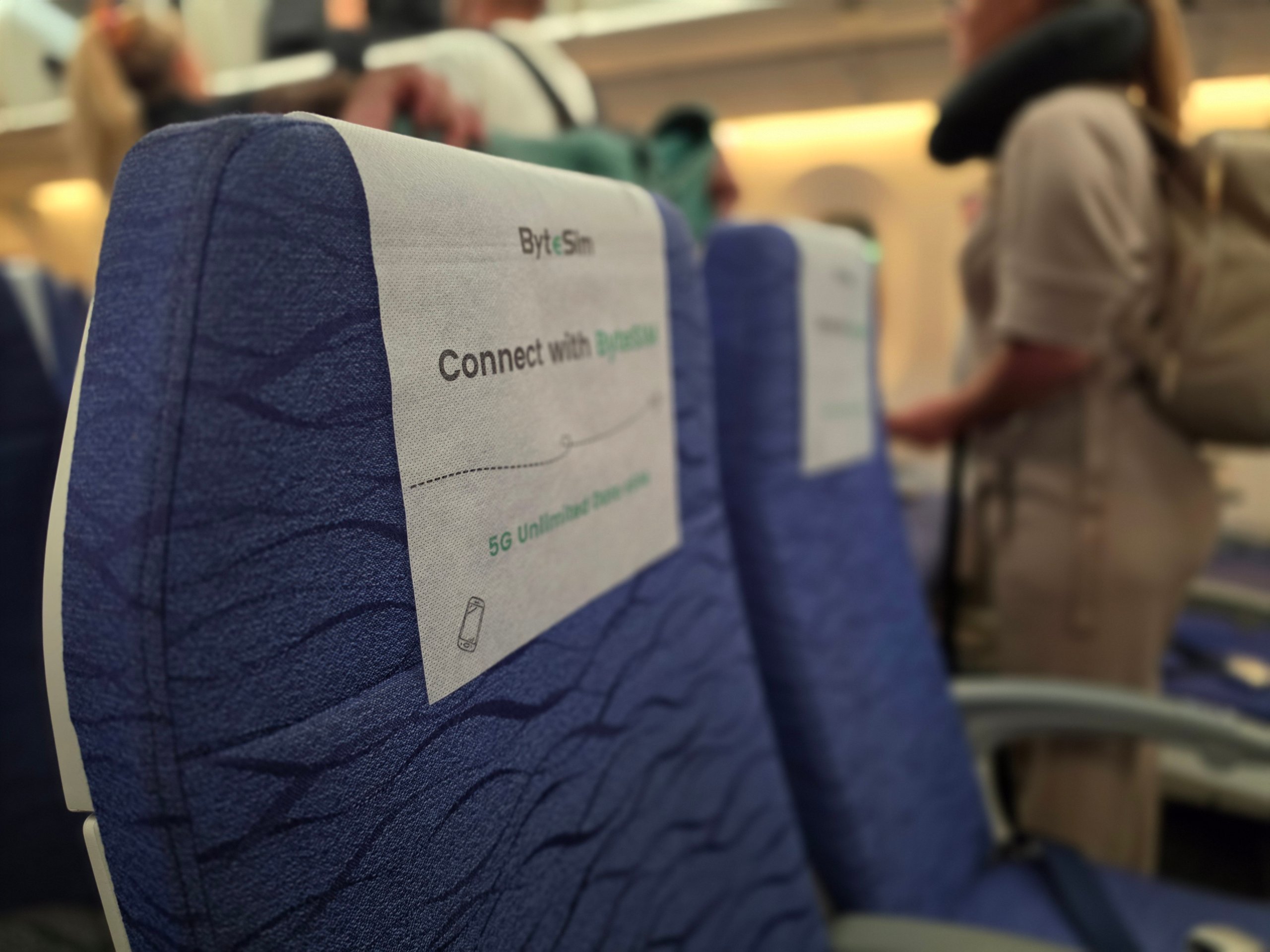
The only (but quite significant) problem I have is the lack of a headrest. I simply need to rest my head. And this time I’ve booked an aisle seat, so I can’t even lean against the wall.
So here’s a tip for you: take a neck pillow with you!
The first service comes straight after the start.
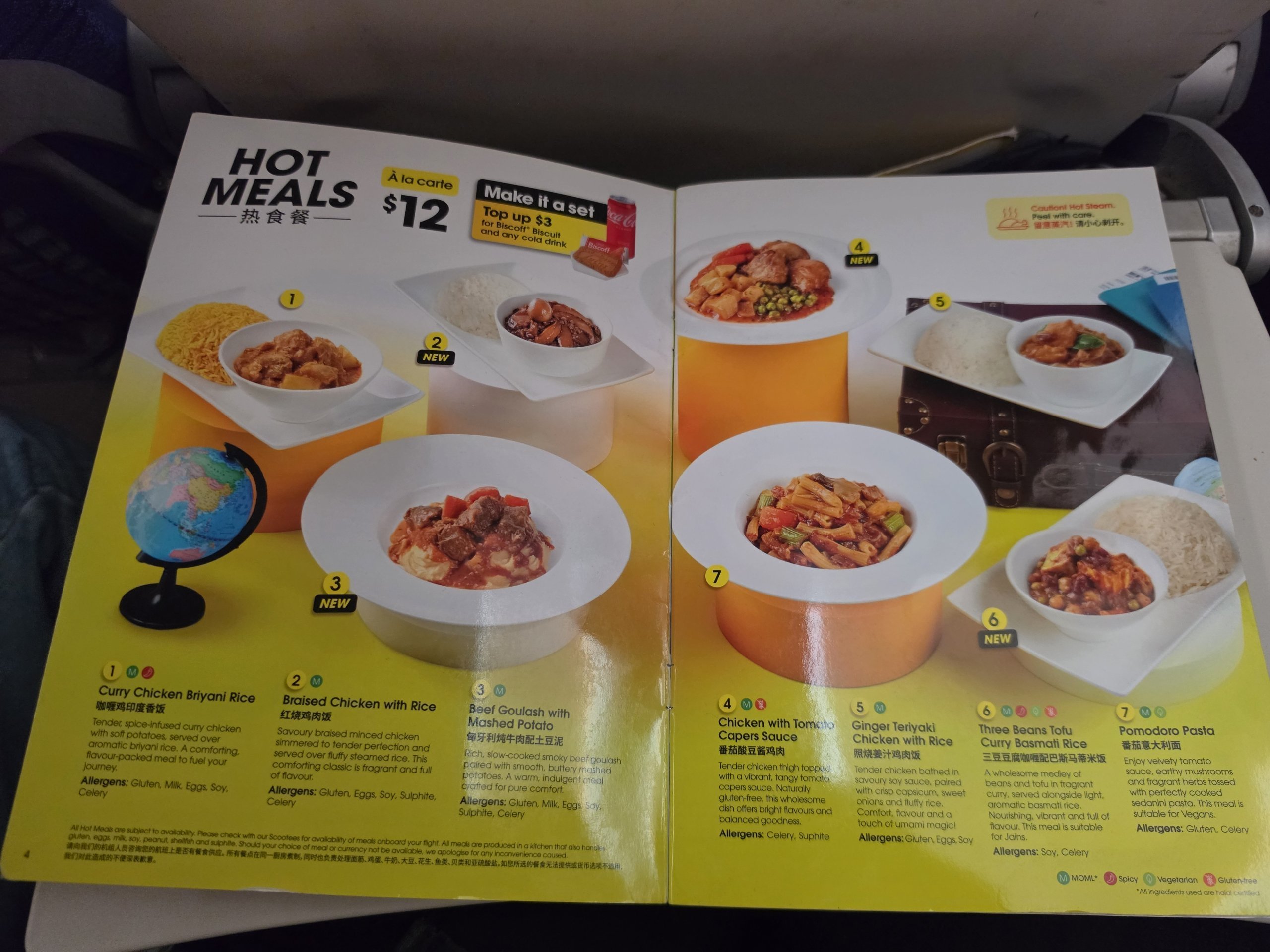
You can pre-order your meal when you book your ticket, or simply pay for it on board.
The steward asks me whether I want both meals (main course and dessert) that I’ve purchased now, or both two hours before landing, or one now and one before landing.
I wasn’t expecting this option on a low-cost flight and I certainly commend it.
As we’re taking off at 2.45 am, I’m skipping the meal altogether and will wait about 9.5 hours for the next service.
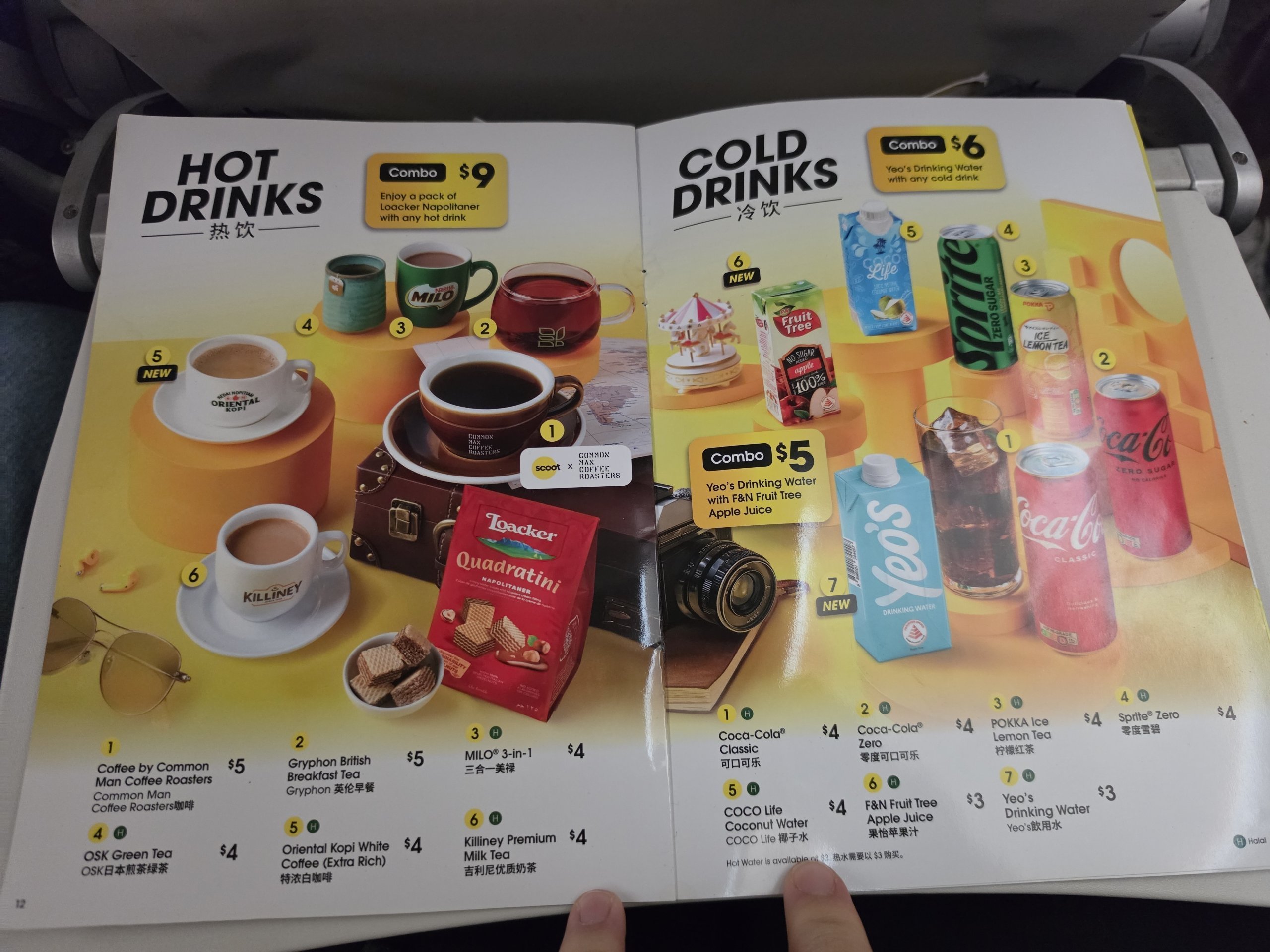
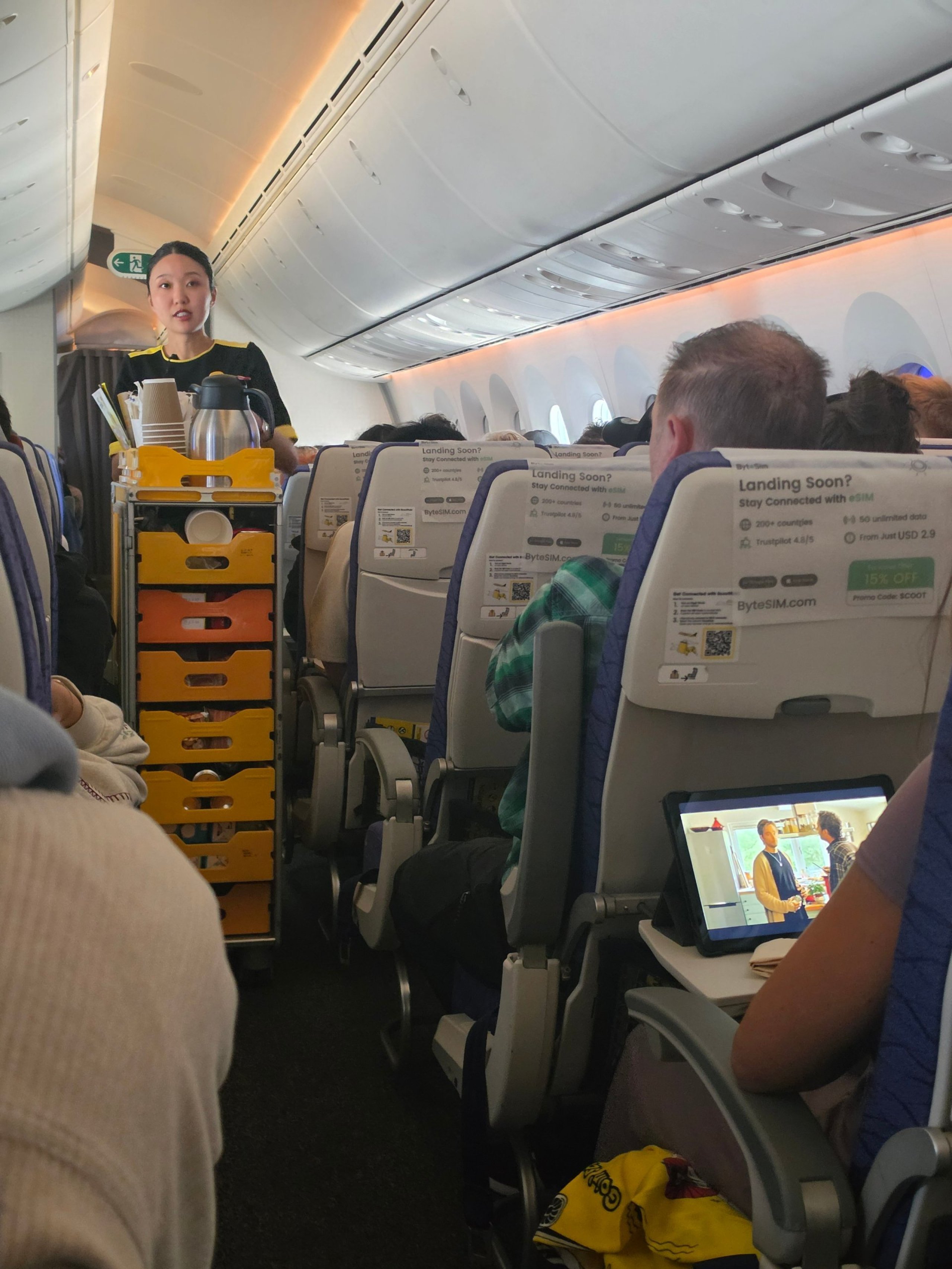
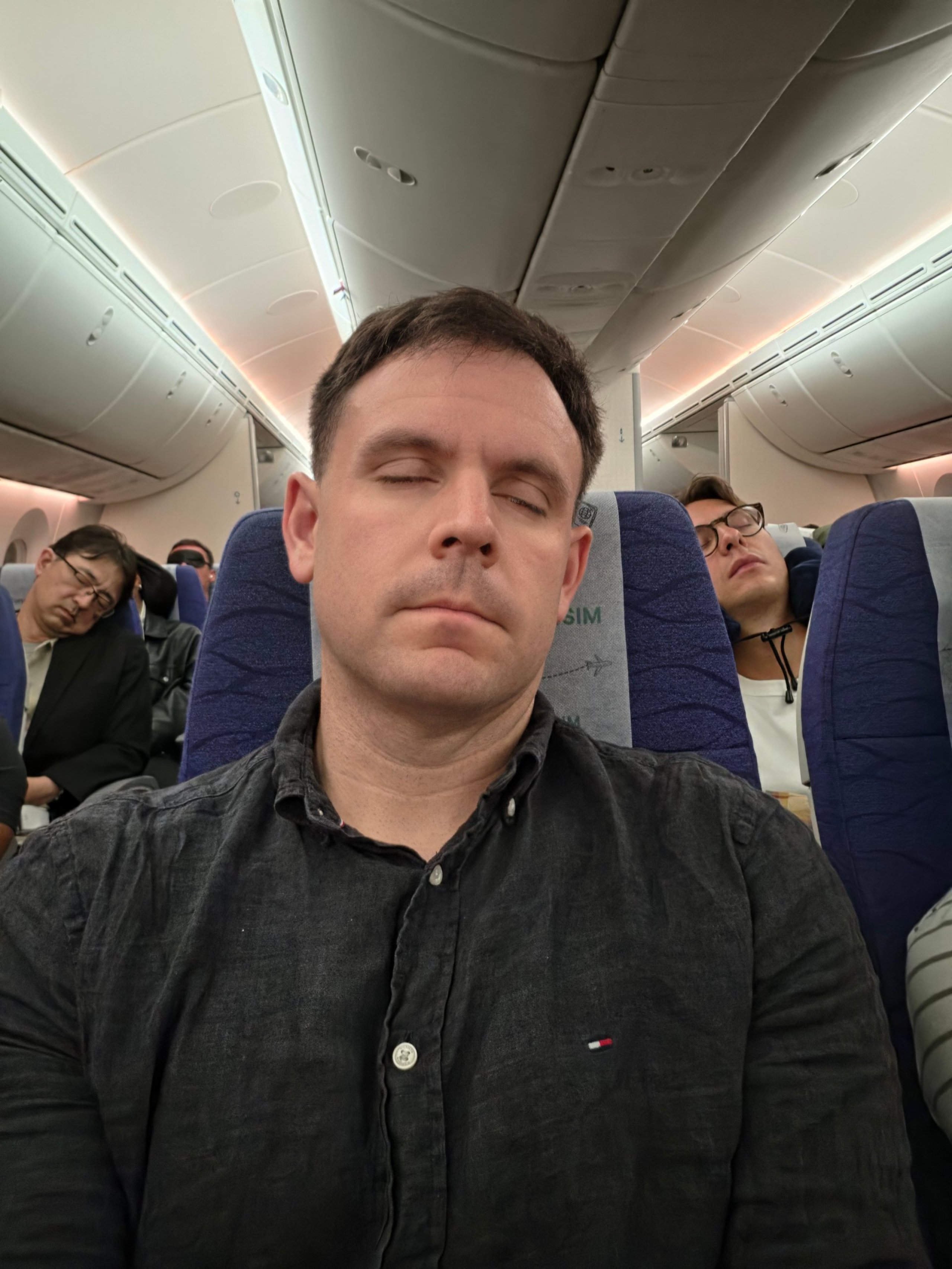
Fortunately, I’d got so tired during the day in Singapore that, despite the lack of a headrest, I managed to sleep for a solid 6.5 hours.
That doesn’t often happen to me, even when travelling in business class.
So, actually, I can’t really have any subjective complaints about the seat on Scoot 😀
Scoot’s seats aren’t fitted with screens, and Scoot doesn’t offer any films streamed via Wi-Fi to your mobile devices (unlike Air Arabia, for example).
I knew this in advance, so I’d downloaded plenty of videos and podcasts onto my mobile.
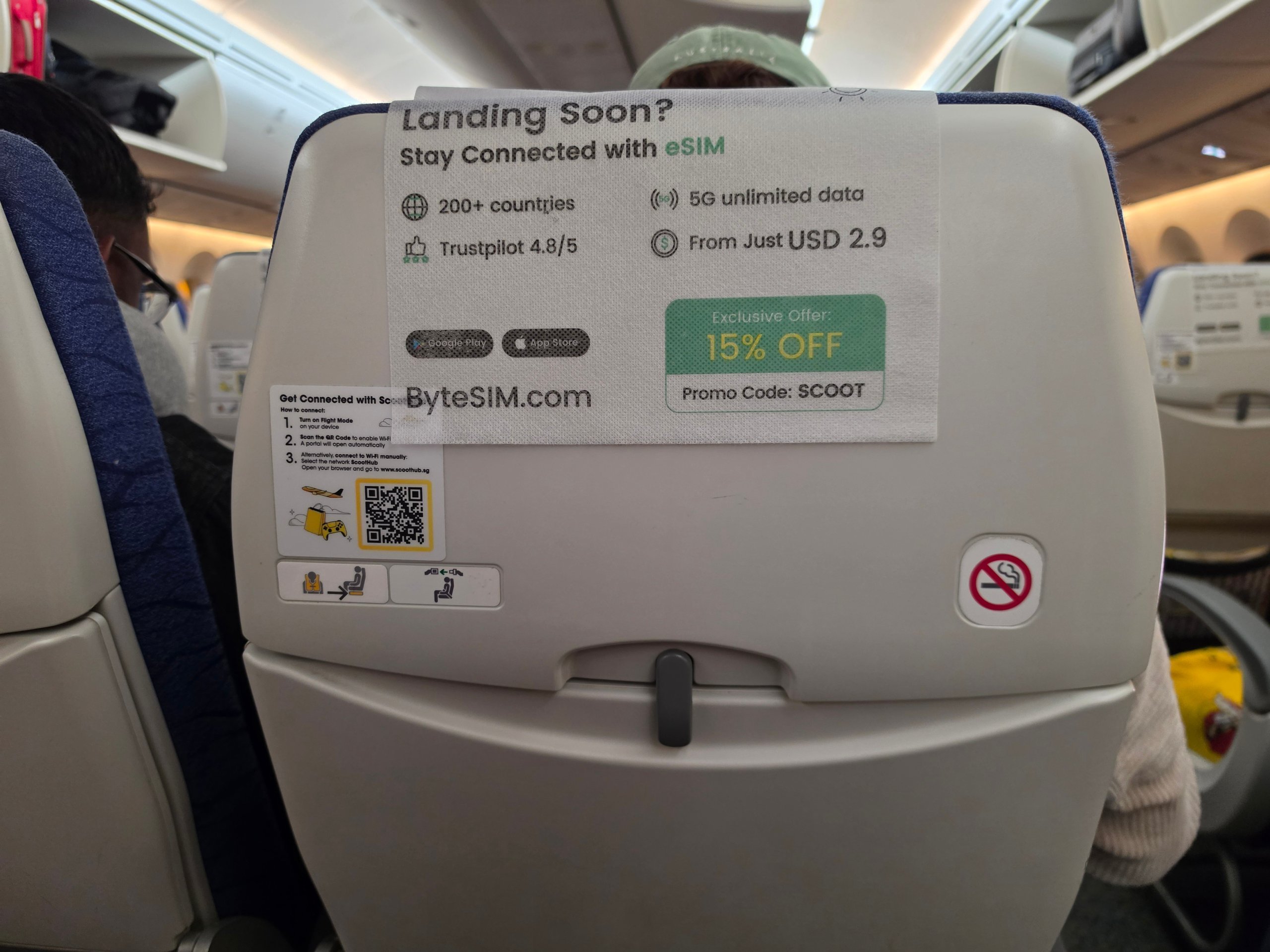
Wi-Fi during the flight is a paid service; on the long-haul route from Singapore to Vienna, a ‘ 14 eur ’ costs 200 MB. I didn’t try the internet, so I can’t comment on it.
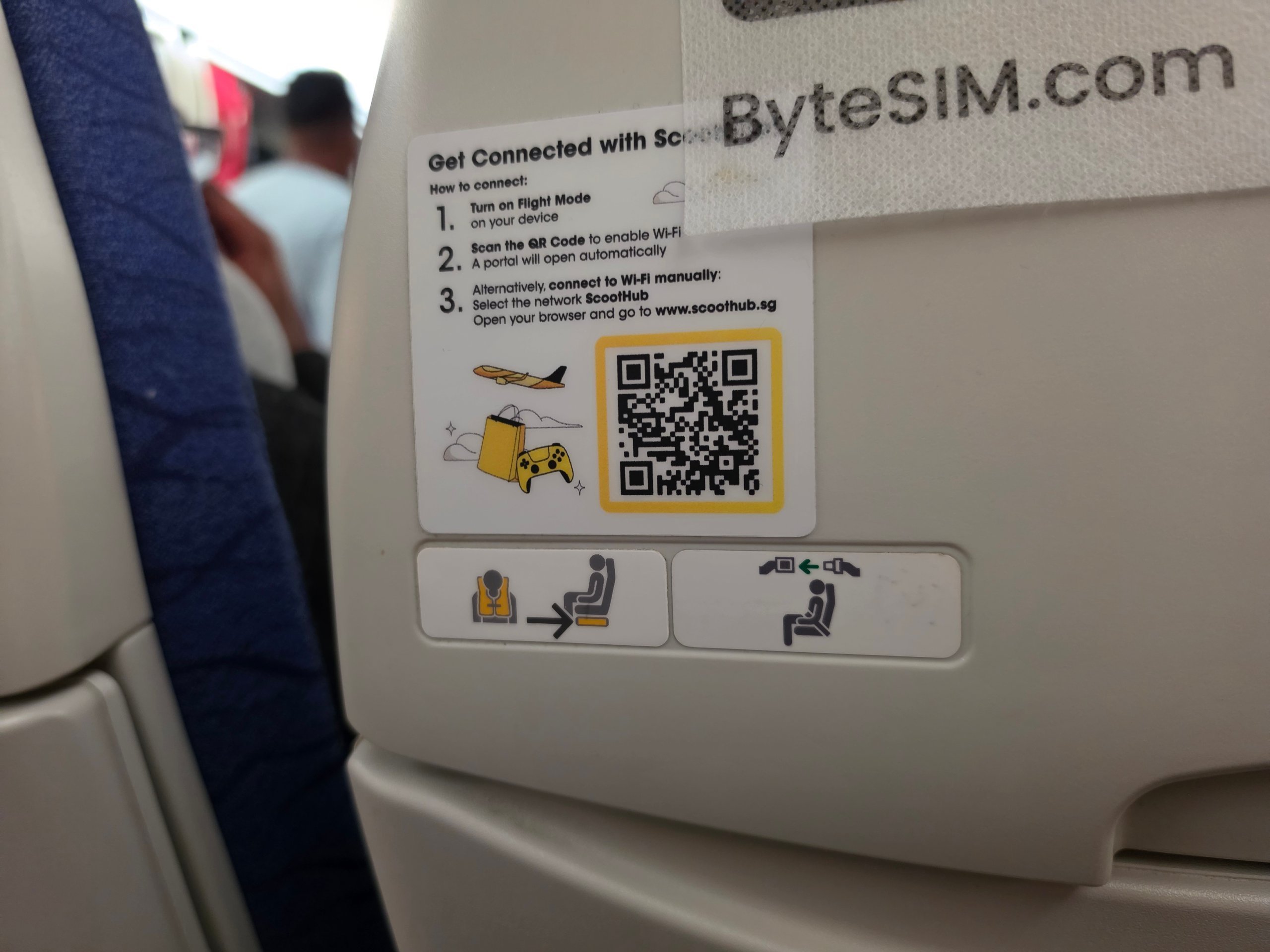
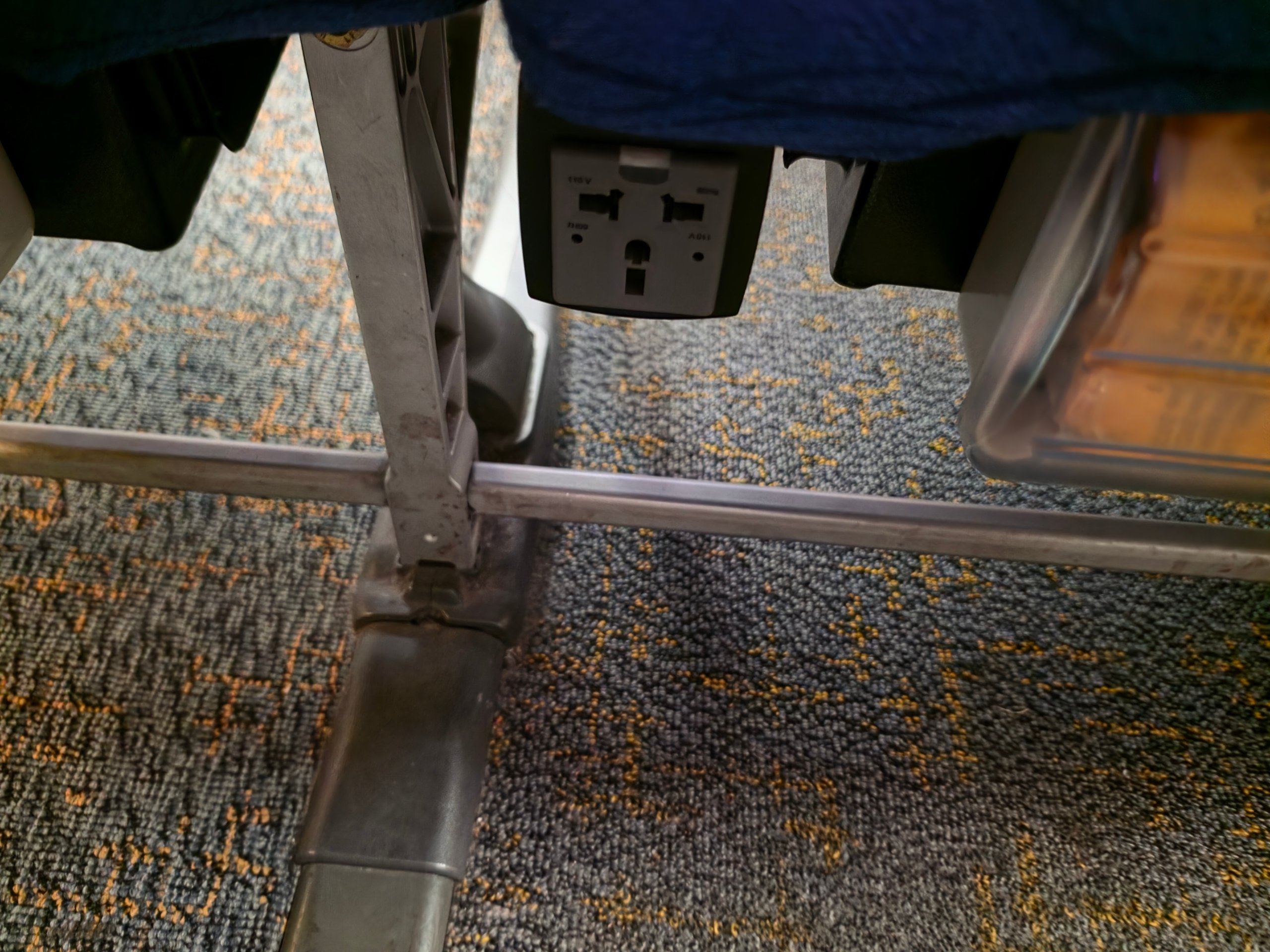
What I found a bit odd were the paid-for power sockets for charging electronic devices in Scoot Economy’s standard class.
The fee for using a power socket on a long-haul flight is around 8 eur and is paid directly to the cabin crew (card payments are also accepted).
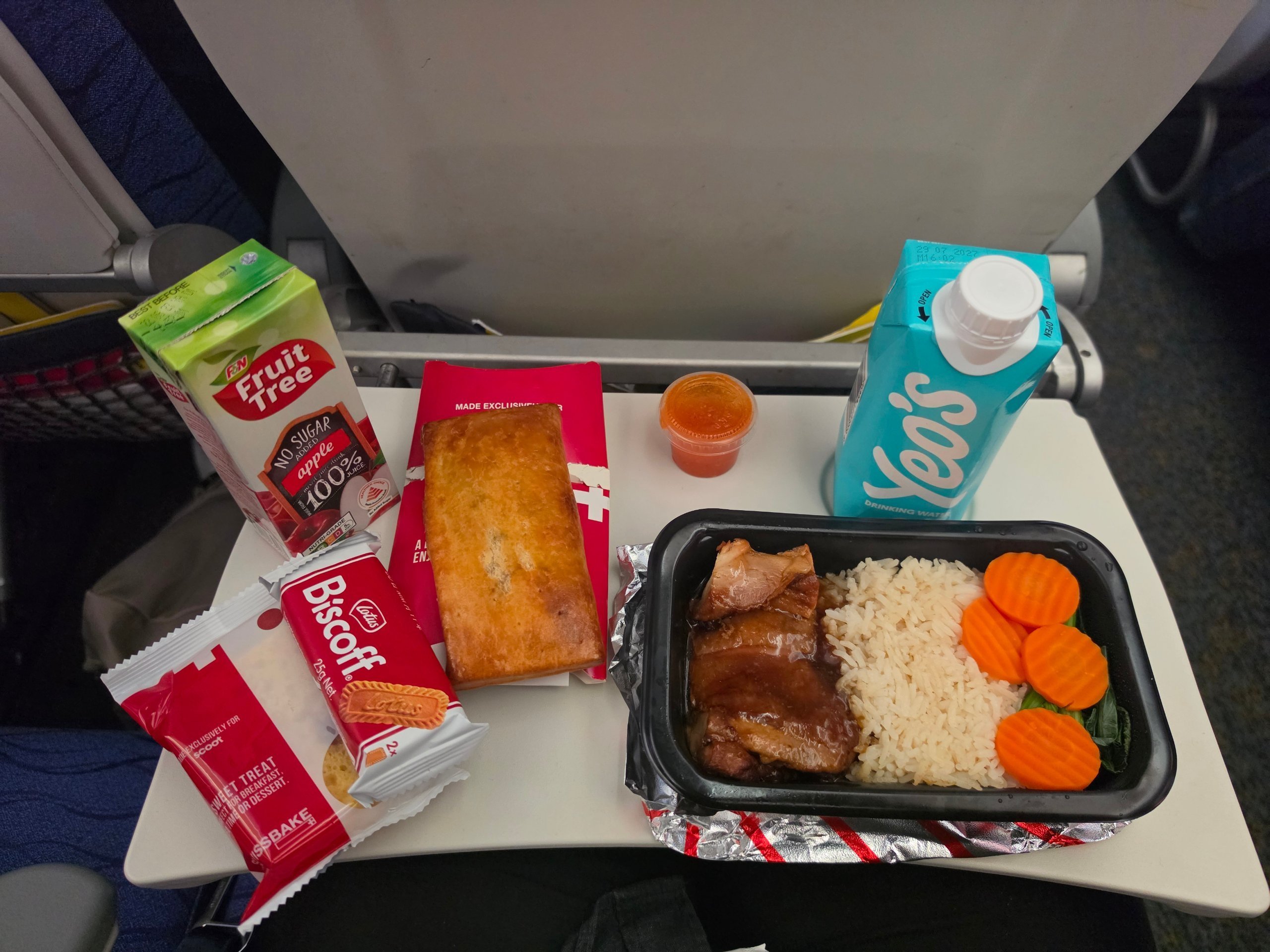
I receive my pre-ordered meals about 2 hours before landing in Vienna.
The chicken with rice and vegetables is absolutely delicious – I really enjoyed it!
It also comes with a free small Biscoff biscuit and a 250 ml bottle of water.
I also get a dessert straight away – a sweet, cinnamon-flavoured pastry filled with some sort of apple filling. That’s really good too. And I get some apple juice to go with it.
So, to sum up: it wasn’t much for a 12-hour flight, but you always have the option of buying extra food from the cabin crew.
Or you could bring some biscuits with you. Scoot officially prohibits the consumption of your own food on board, but in reality, there’s no way anyone can enforce this rule.
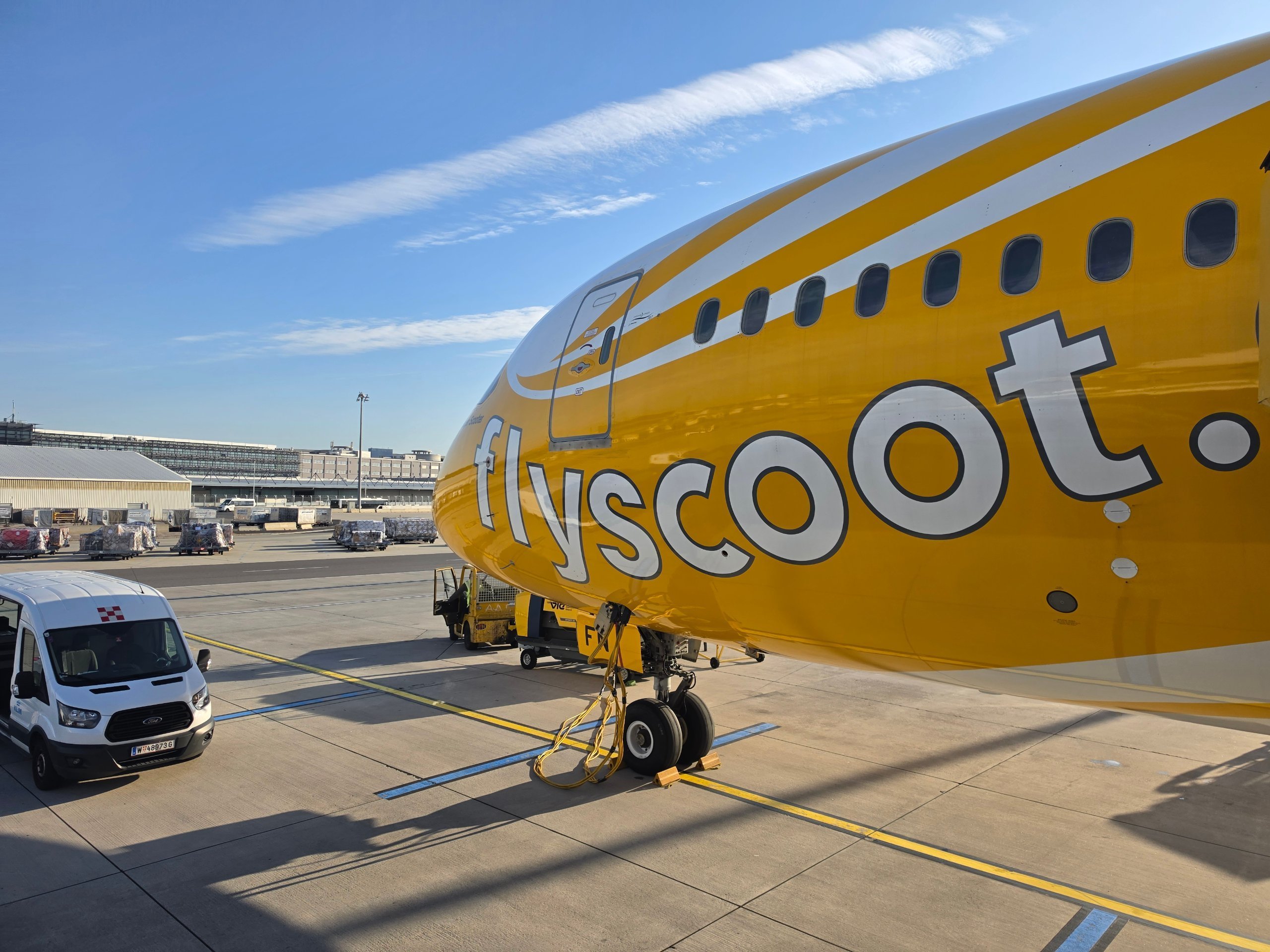
Upon arrival in Vienna, we were in for a rather unpleasant surprise.
I thought I’d have a bit of time to settle in and change into some warm clothes inside the terminal, but I was wrong.
We disembarked straight onto the tarmac and took a bus to the terminal.
Clearly, this isn’t Scoot’s fault, but rather down to Vienna Airport’s insufficient capacity: right now, several long-haul flights from Asia are being processed by bus all around us.
How I hate Vienna Airport! I find it overcrowded, cramped, impractical… Prague is Prague (though I suppose I’m a bit of a biased patriot in that regard).
I do admit, though, that Vienna Airport obviously has much better transport links to the city centre.
I simply hopped on the S-Bahn commuter train and was at the main station in the city centre in 20 minutes. In the article ‘Transport from Vienna Airport’, I also describe all the other options, prices and so on.
In short: yes, provided it offers a good price.
I was really satisfied.
I knew what I was getting into. I knew that the in-flight service would be limited, but I was pleasantly surprised by the crew’s behaviour, the legroom and the ability to recline the seat.
The food was brilliant.
So, personally, my approach is that if Scoot offers, say, a pricethat’s 100 eur lowerthan that of regular airlines – after factoring in all the charges that would otherwise be included in the fare with traditional airlines – I’ll go with Scoot.
It’s a quick connection from Vienna to South-East Asia; Singapore Airport is brilliant for transfers, and even if you have a long lay-over, there’s always plenty to keep you entertained.
By the way, we often post special deals with Scoot on our homepage, so sign up for our flight deal alerts and fly to Asia for a really low price!
Based on my own experience of the Singapore–Vienna flight, I’d make sure to check the following things before travelling:
Flying is my biggest hobby, and I write articles about many other flights.
In my opinion, these were my most interesting trips:
If you have any questions or comments about the article...
The perfect opportunity to update the SIN guide. 🙂
It should have been updated a couple of months ago, or have I missed something? :) I just need to add the places I’ve visited recently – I’ll do that today.

It’s probably fine in a pinch, but for everyday travel I’d prefer a deal with a full-service airline. It works out cheaper and is more comfortable.
I flew with Scoot and it wasn’t a nightmare at all; I certainly couldn’t find a traditional airline for the same price. In fact, I appreciated that they didn’t wake me up for a meal.
If it works out cheaper with a full-service airline, then of course I’d prefer a deal with a full-service airline. But if Scoot is cheaper, I’ve no problem with it.
I used to turn my nose up at it a bit too, but in the end, the headrest really is the biggest issue. Which, as it turns out, isn’t really that big a problem after all :D

Hi. Thanks for the review. It reminded me of my first trip to Thailand from Berlin TXL with Scoot. Back then, it was a mistake and I got a return ticket to Phuket for 269 USD :-D. Otherwise, I don’t understand the sentence “Plenty of space, no premium economy, but most importantly…”. Every 787 has premium economy at the front. Unless, of course, you’re not counting it as business class, which it isn’t officially anyway :) BTW, on flights from Europe, Scoot-Plus offers the best value for money in terms of comfort.
I didn’t understand that either. ScootPlus is Premium Economy; the airline markets it as ‘Prem Eco’ and even search engines sell it as ‘Prem Eco’. Originally, this product was called ScootBiz and was intended to be marketed as business class. But then Scoot realised that didn’t make sense, and since 2019 it has officially been Premium Economy.
Yeah, I’ve corrected it. I meant how it struck me whilst boarding. I didn’t walk past Premium Economy / ScootPlus (that’s right at the very front and I didn’t get a chance to have a look at it).