
Bali from Budapest with China Eastern Airlines at the end of November and beginning of December
517 €


Following my recent experience travelling by night train from Chiang Mai to Bangkok in Thailand, I thought it would be a good idea to try a sleeper train in Vietnam as well.
It wasn’t exactly that.
I bought a second-class ticket in a sleeper carriage from Hanoi to Da Nang.
I travelled in October 2026 on train number SE3.
I was expecting something like an open carriage with individual berths, similar to those in Thailand.
Instead, I was given an enclosed compartment for four with absolutely no privacy. This really wasn’t great.
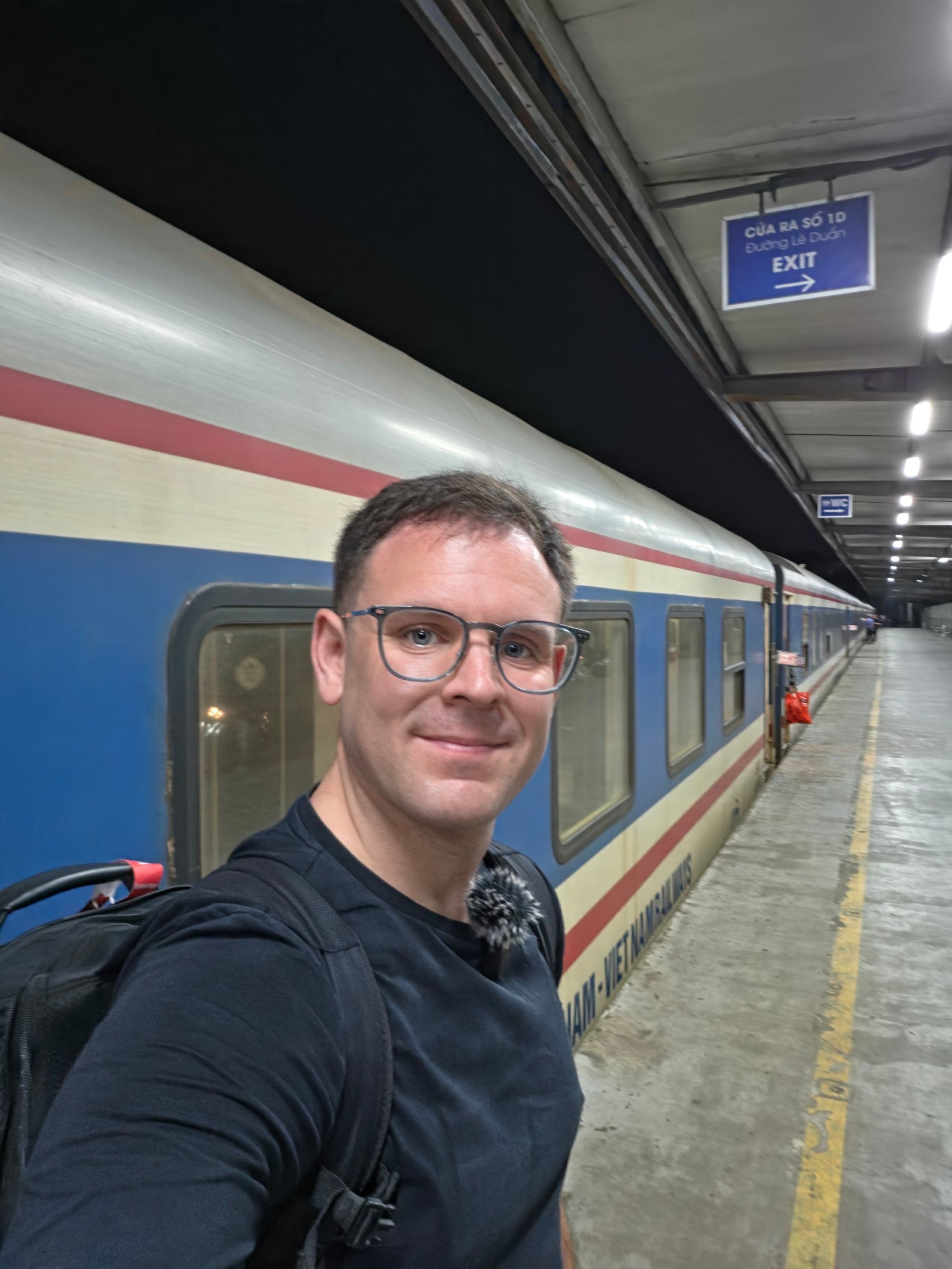
Actually, really just to see what it’s like to travel by train.
I was heading to Vietnam primarily to review VietJetAir’s first direct flight from Prague to Hanoi.
So I planned my trip so that I’d really get to know Hanoi properly and go on a night-time train journey.
From a practical point of view, I don’t think the train journey from Hanoi to Da Nang makes any sense at all:
And actually, the argument about saving a night’s stay in a hotel doesn’t really hold water for me either. Although you’re travelling whilst you sleep, you won’t arrive in Da Nang in the morning. You’ll arrive just before midday, which you could also achieve with a morning flight. And accommodation in Vietnam can be very cheap. You can easily find a room with an en-suite bathroom for 12 eur.
Buying train tickets in Vietnam is very straightforward.
I used the official website of the Vietnamese Railways,dsvn.vn, to make my purchase.
The English version of the website worked without any problems, and payment with my international card went smoothly too (I use Revolut).
If the Vietnam Railways website doesn’t work for you, I recommend the tried-and-tested search engine 12go.asia, through which you can also buy train and bus tickets across Asia.
I received a link to the ticket via email, which you can then download as a PDF to your phone.
There’s no need to print anything or exchange it for a paper ticket at the ticket office.
When boarding the train (in my case, already inside the station building), you simply show the QR code. There were no ticket checks on the train during the journey.
Download your ticket in advance so that you can access the QR code even without an internet connection.
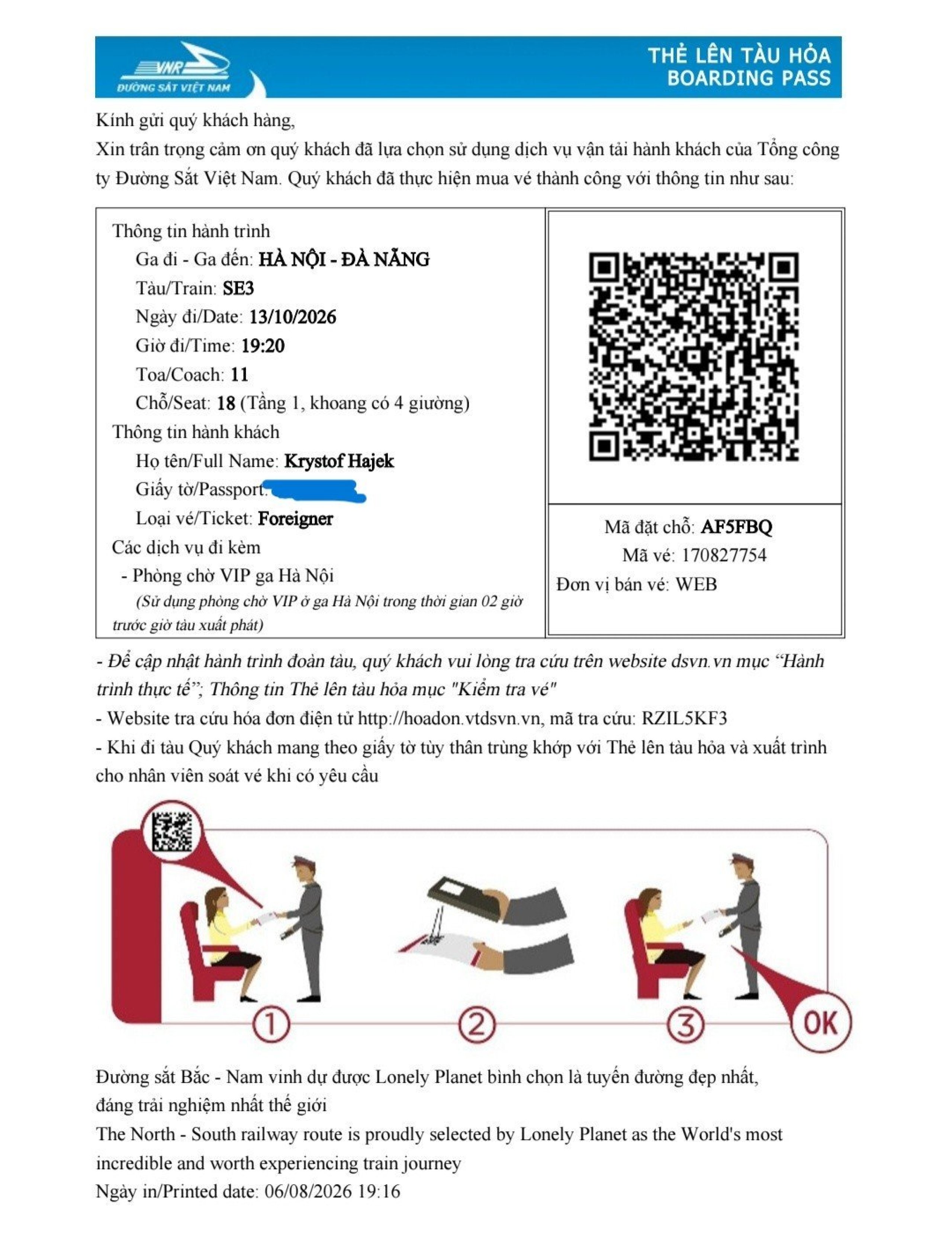
Prices are not dynamic, so you’ll pay the same whether you book 20 days in advance or just 1 day in advance.
I paid 1428000 vnd for the bottom bunk.
Advance booking varies depending on the service and the length of the journey. For long-distance trains, tickets often go on sale around 60–90 days before departure, but tickets for individual sections may become available later. If you want a specific lower berth, I’d book it as soon as it becomes available.
An evening departure always has its pros and cons.
You have the whole day to explore the city. But at the same time… after a whole day of exploring the city, I personally always need a shower.
Especially before a 16-hour train journey.

Unlike stations in Thailand, Hanoi’s main station isn’t equipped with showers.
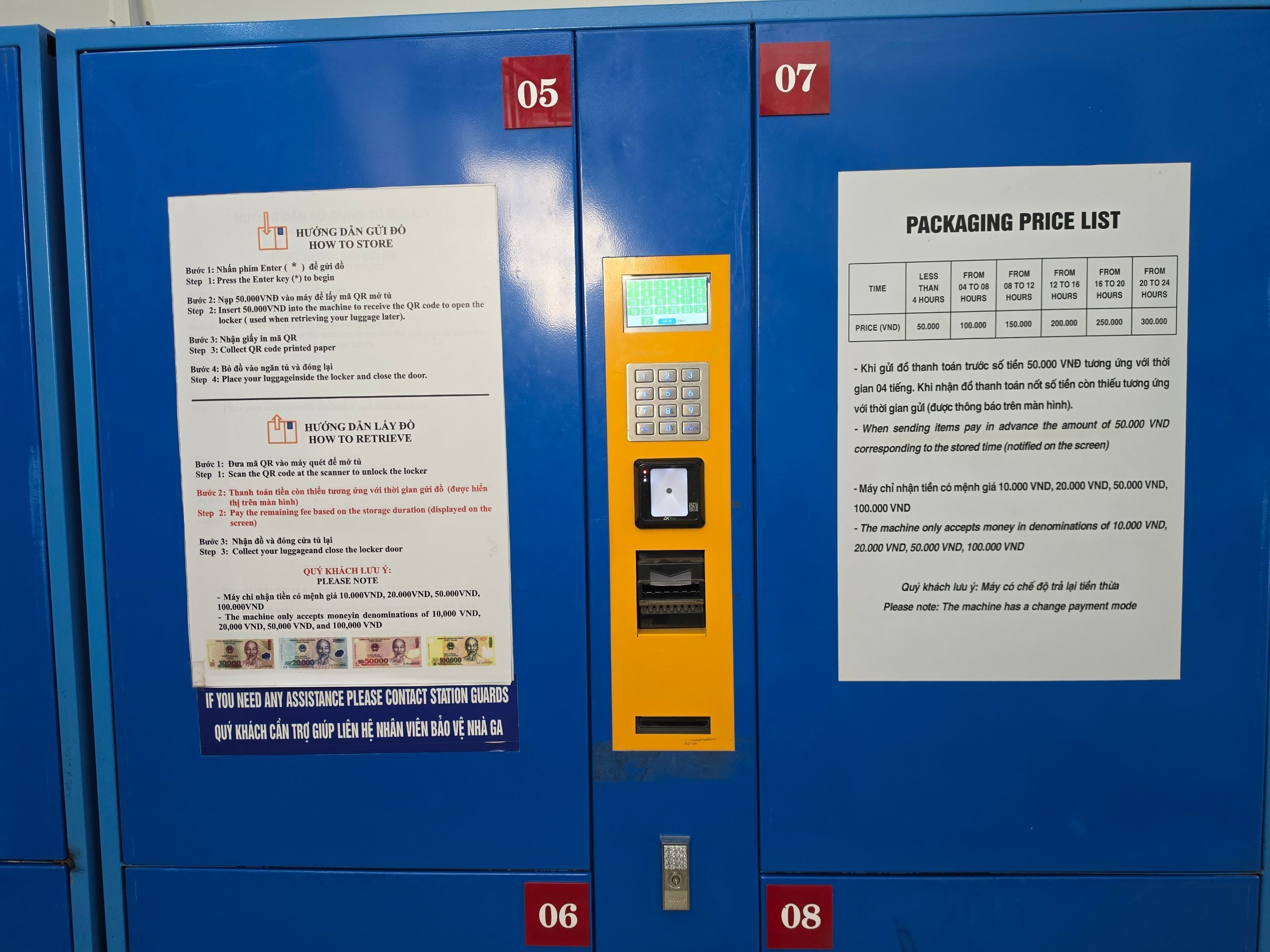
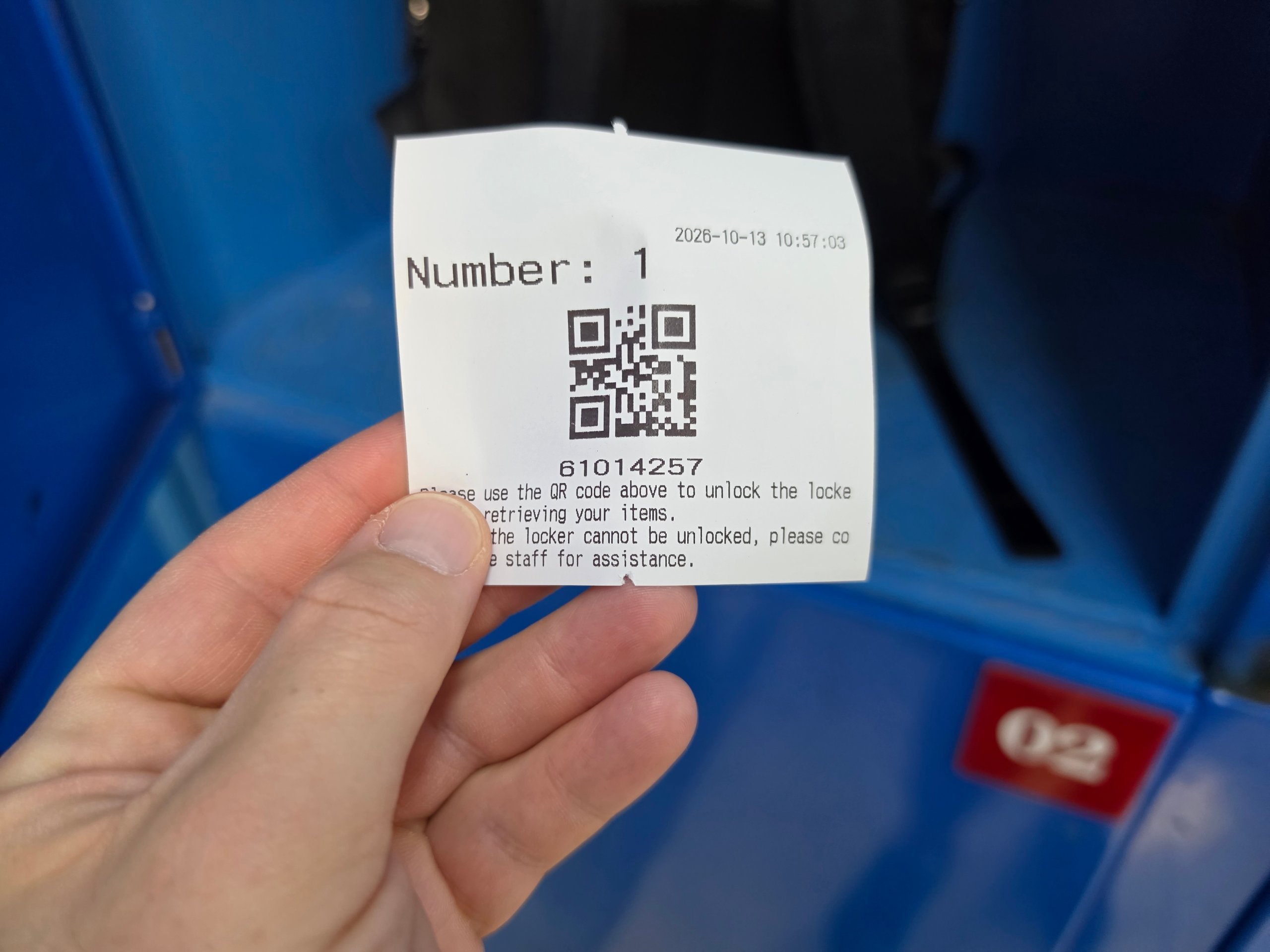
I used the luggage lockers here for 50 000 vnd for 4 hours (cash only!), and there are also some fairly clean toilets available free of charge.
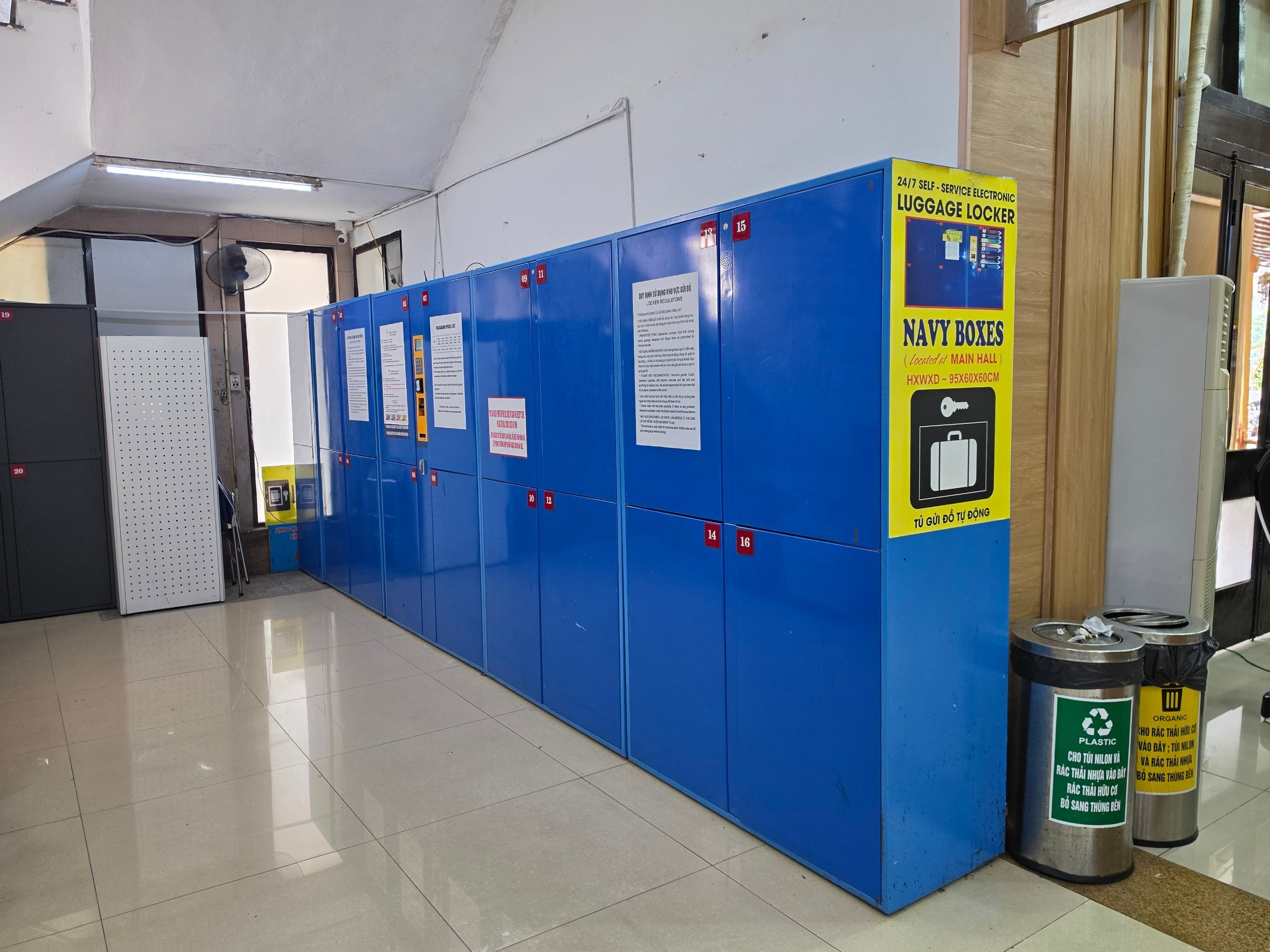
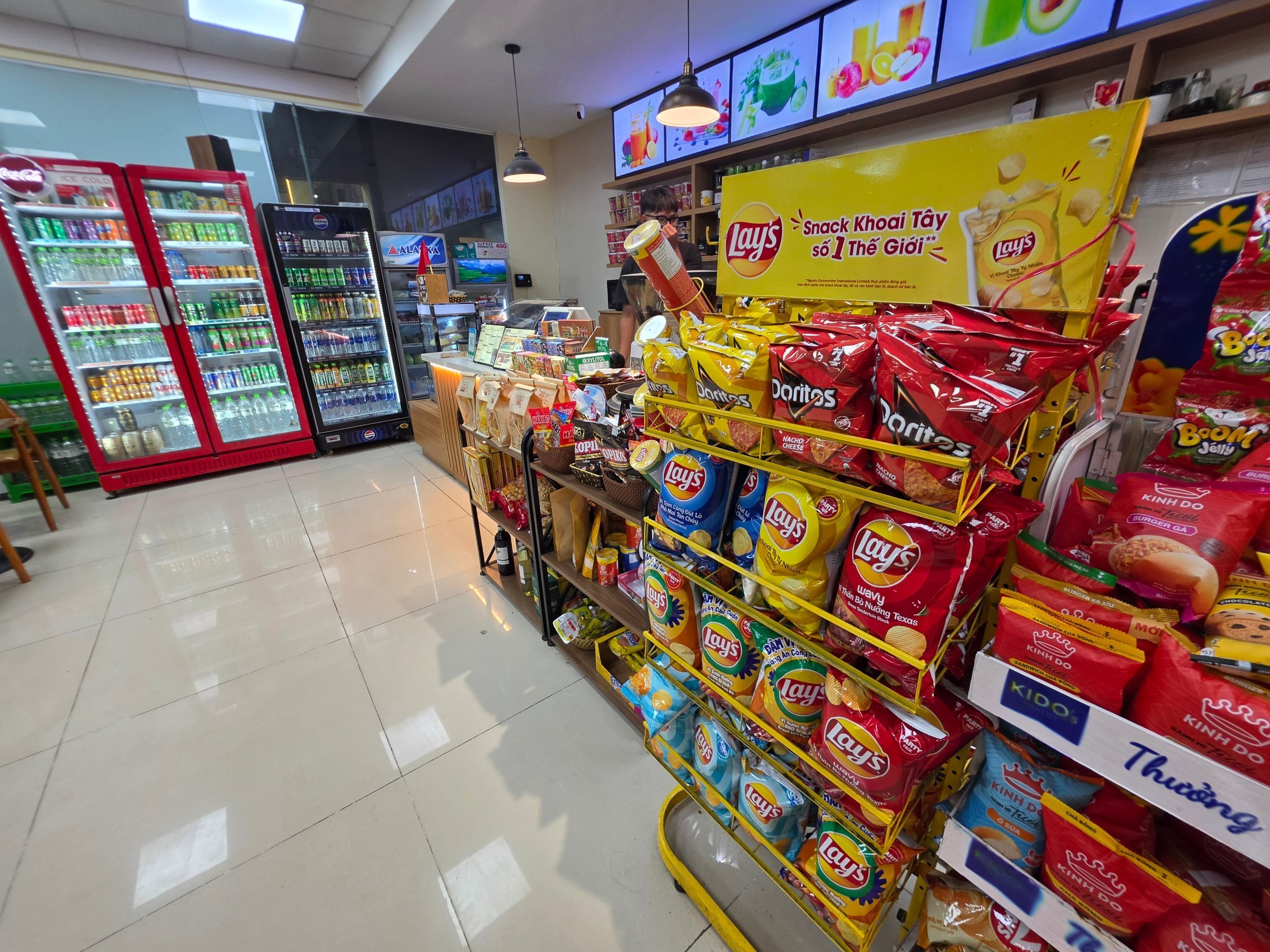
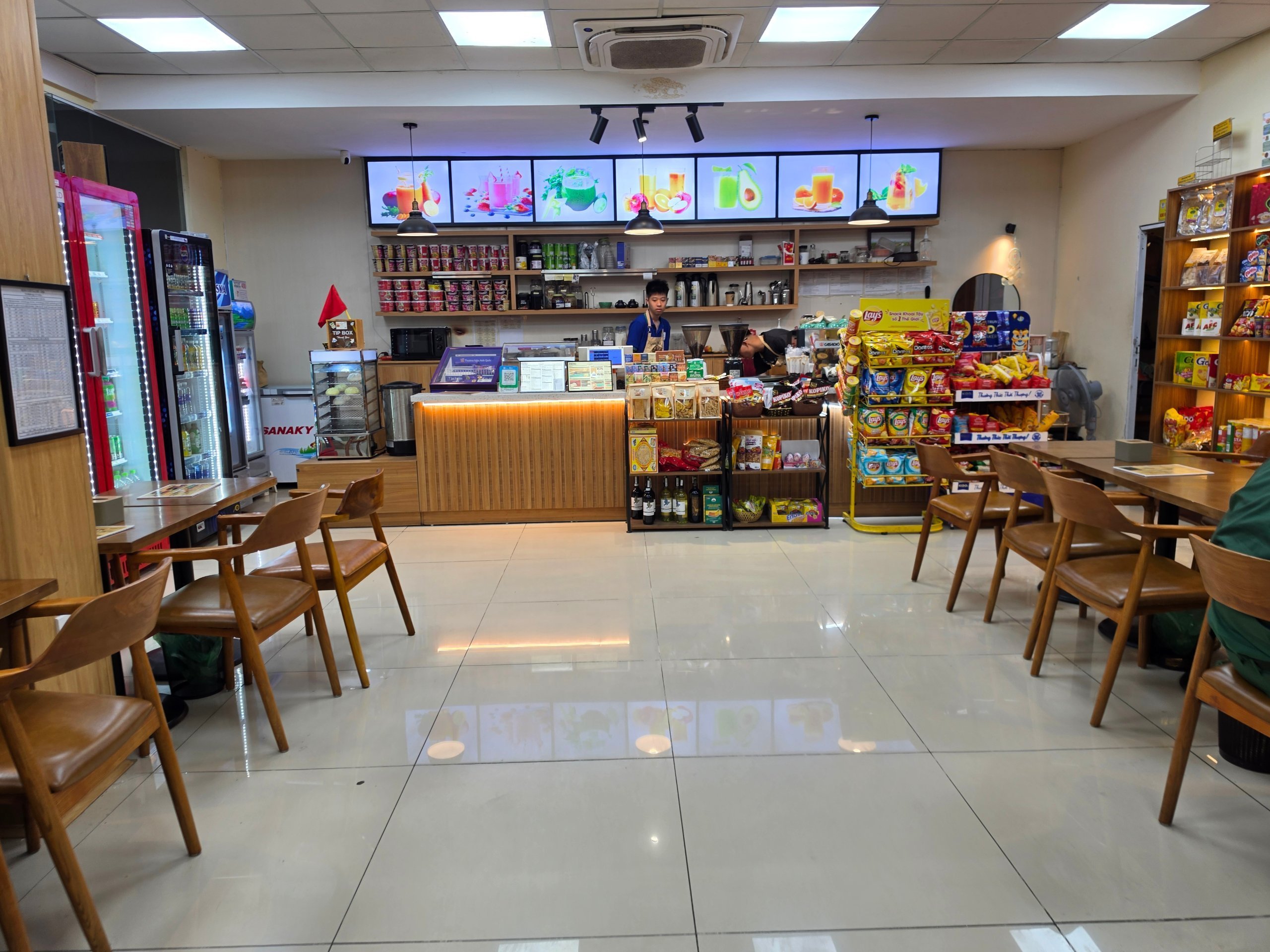
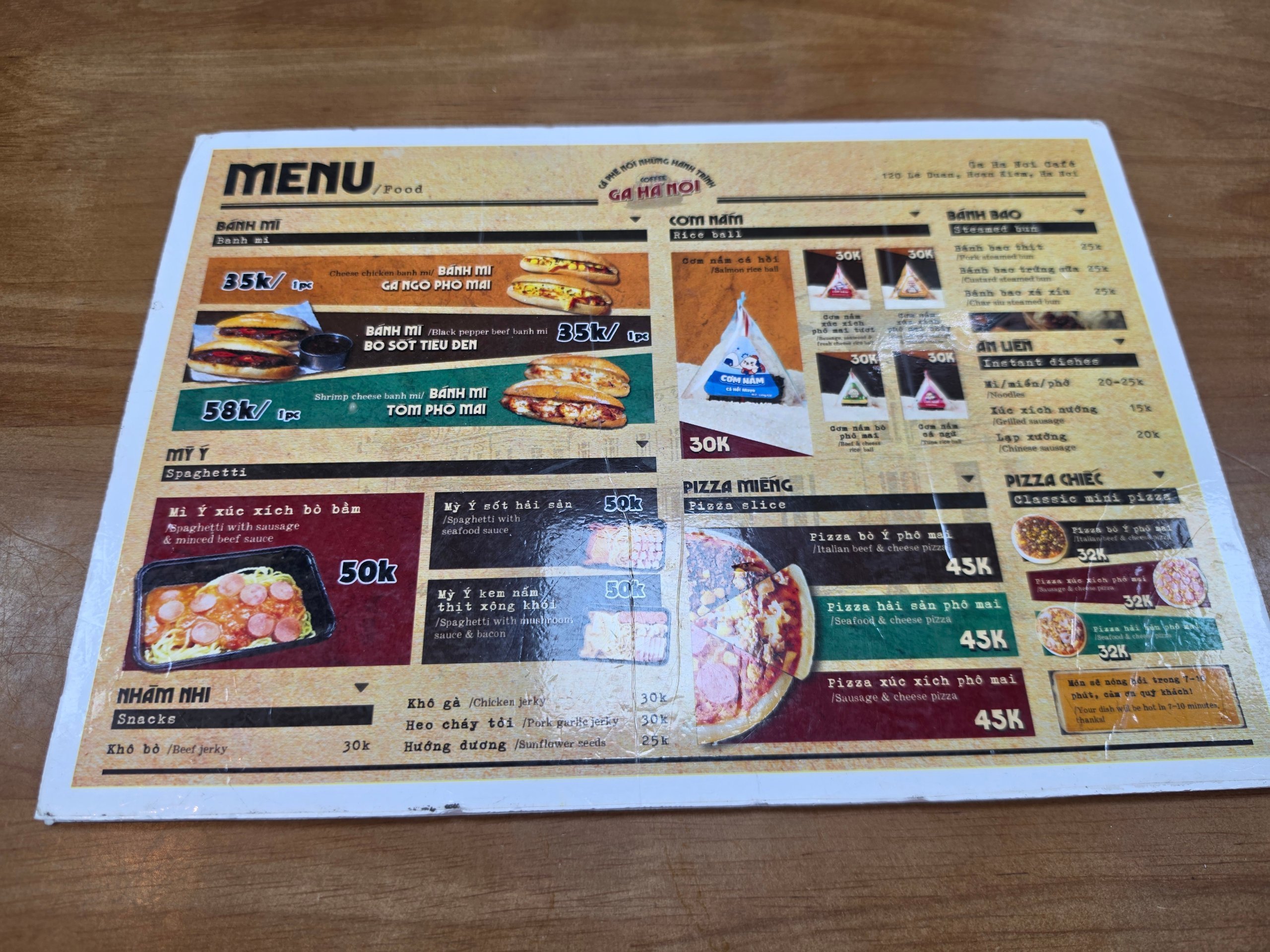
There’s a café with a small shop, but it’s quite expensive, so I’d recommend one of the usual convenience stores like Circle K instead.
However, there’s no shower here.
I’m a bit of a princess when it comes to this sort of thing, I admit, so I booked one night at the cheapest hotel near the station – specifically, MyHaus Apartment.
Through Booking, the room costs around 21 eur, but when I got there, I arranged with the receptionist that I really just wanted to use the shower and ended up paying 400 000 vnd in cash.
Boarding takes place 45 minutes before departure.
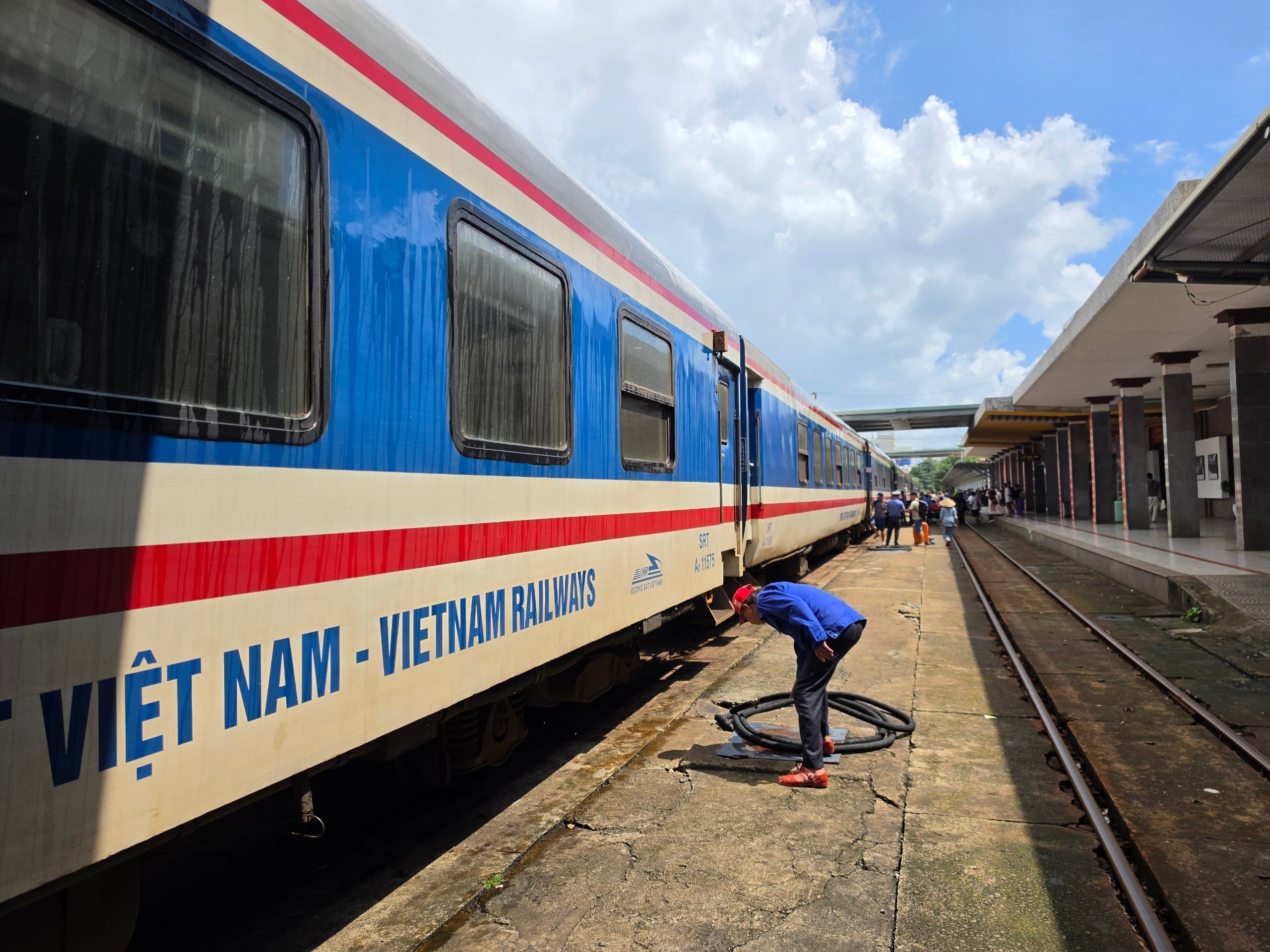
My carriage, number 11, is right at the very end of the train. From the outside, the carriages look clean and neat.
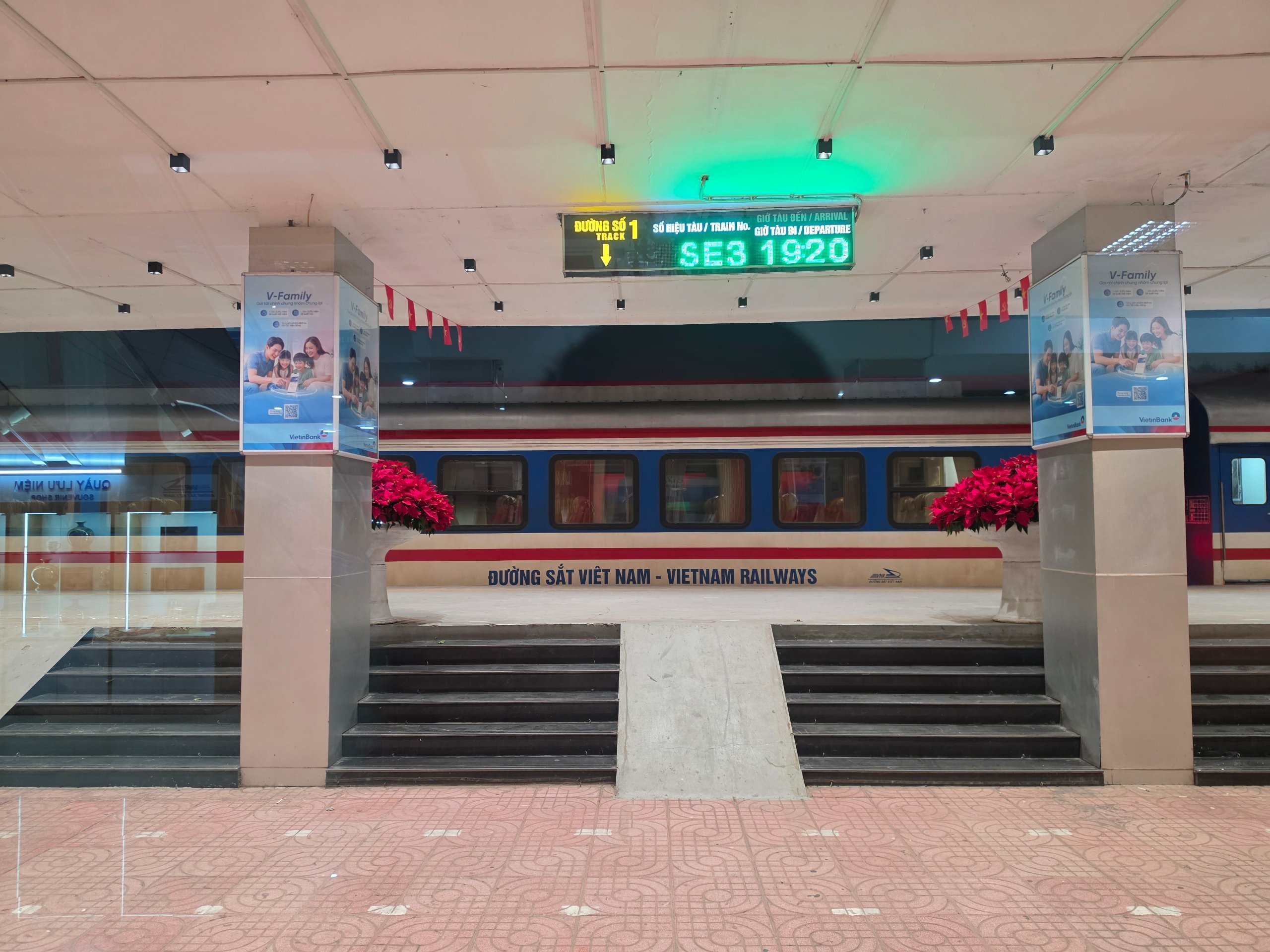
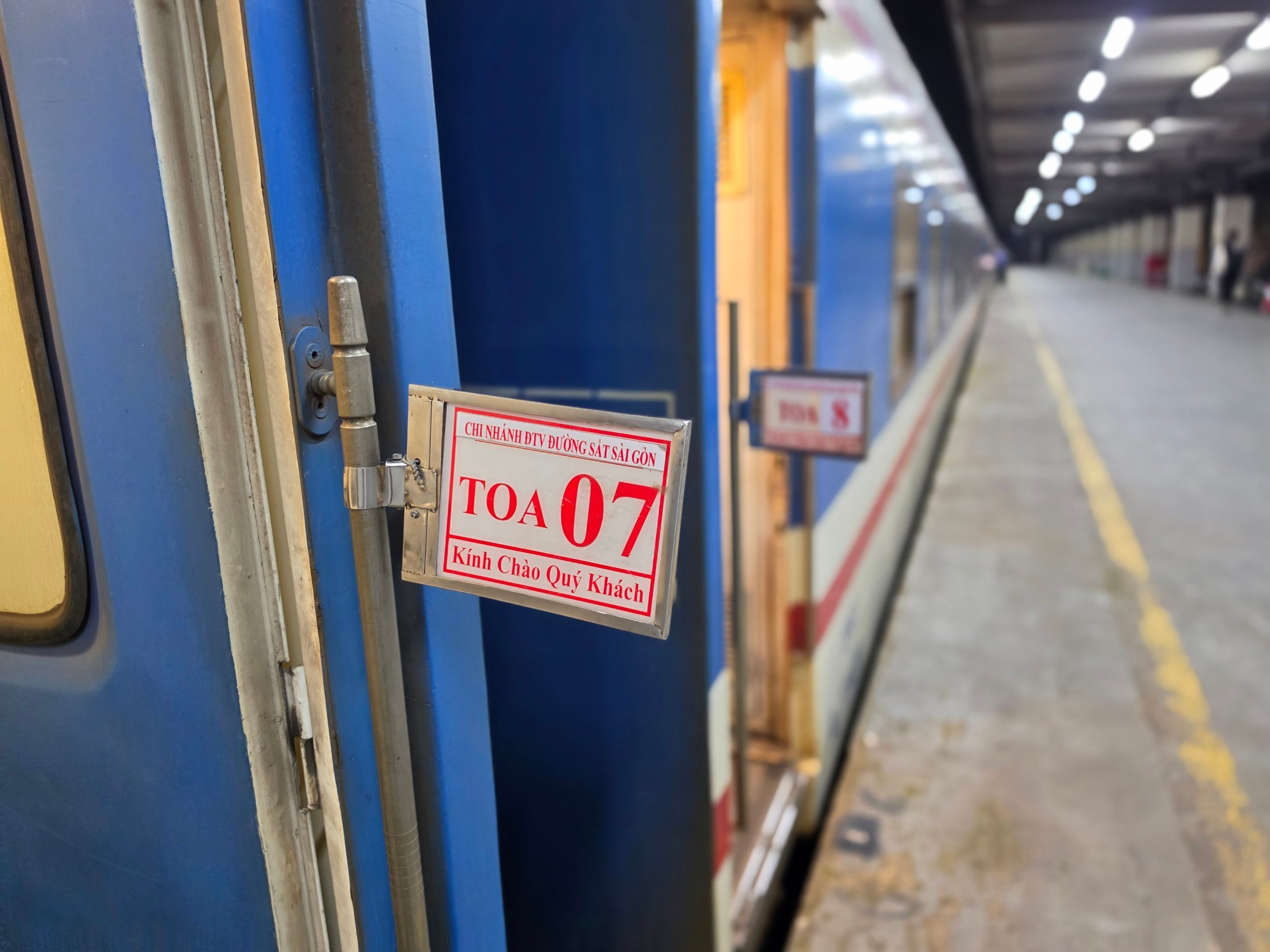
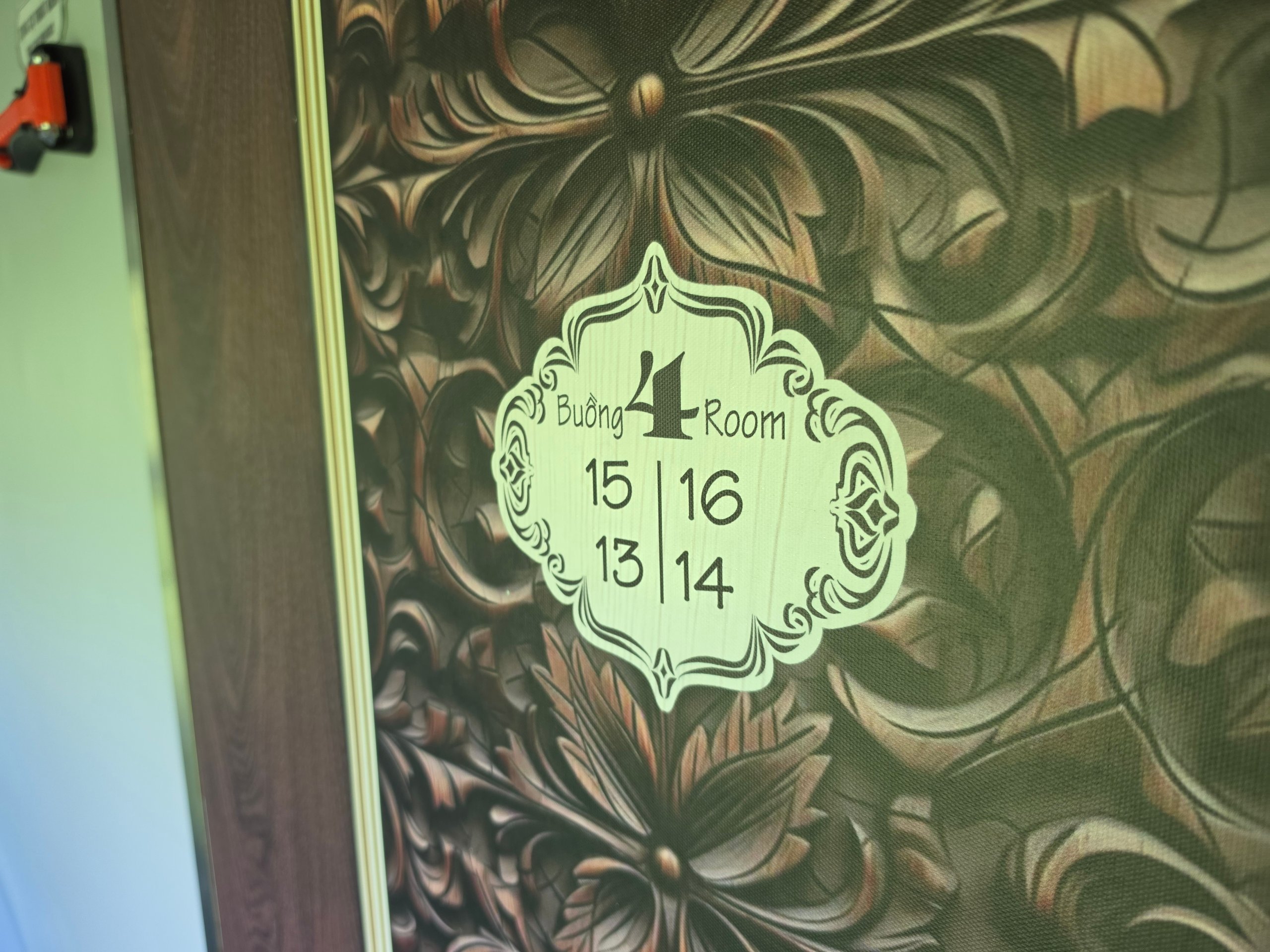
On my SE3 service (one of the Hanoi–Saigon express trains), there is no first-class carriage, only standard second-class with couchette berths or second-class seating.
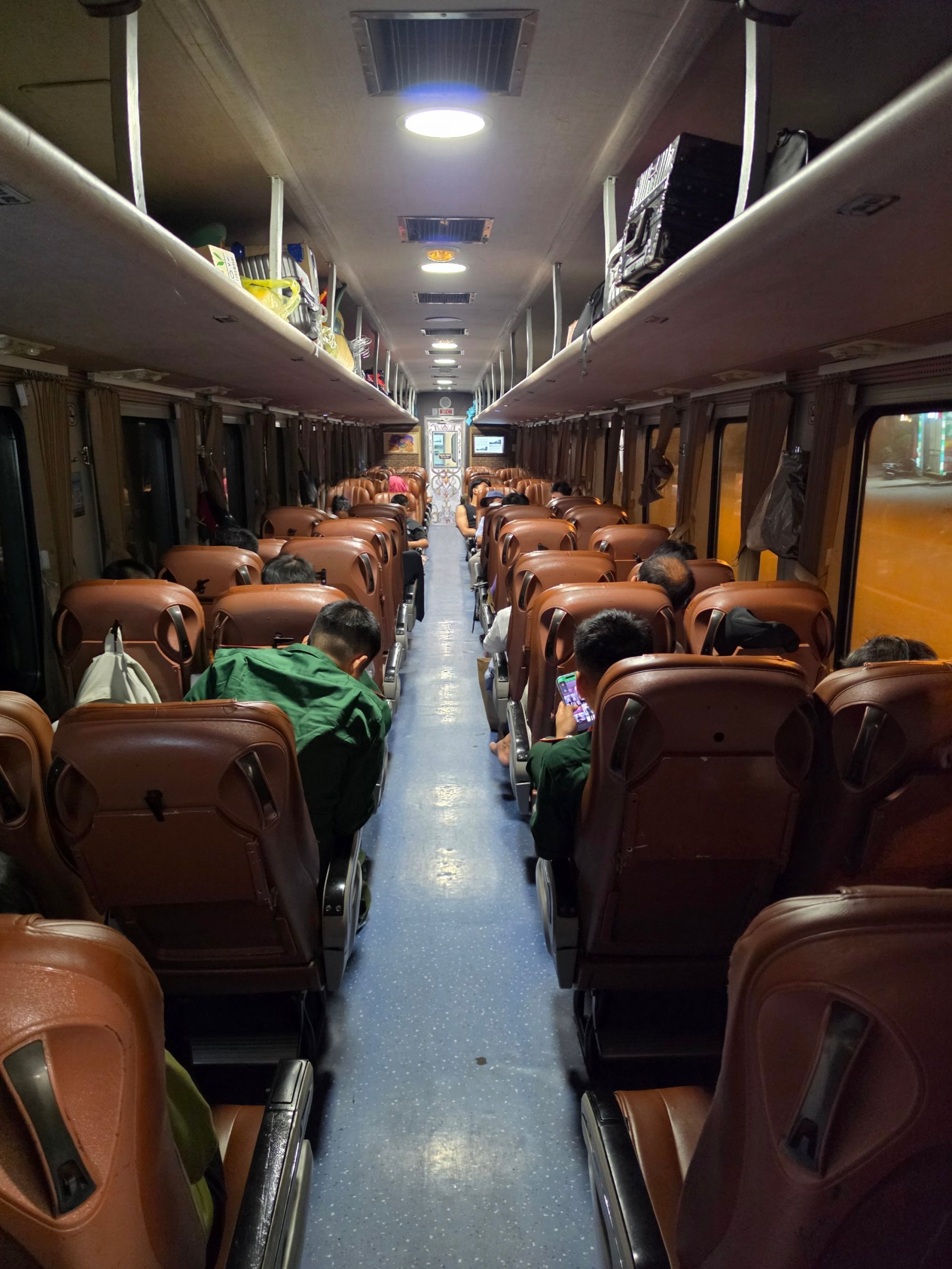
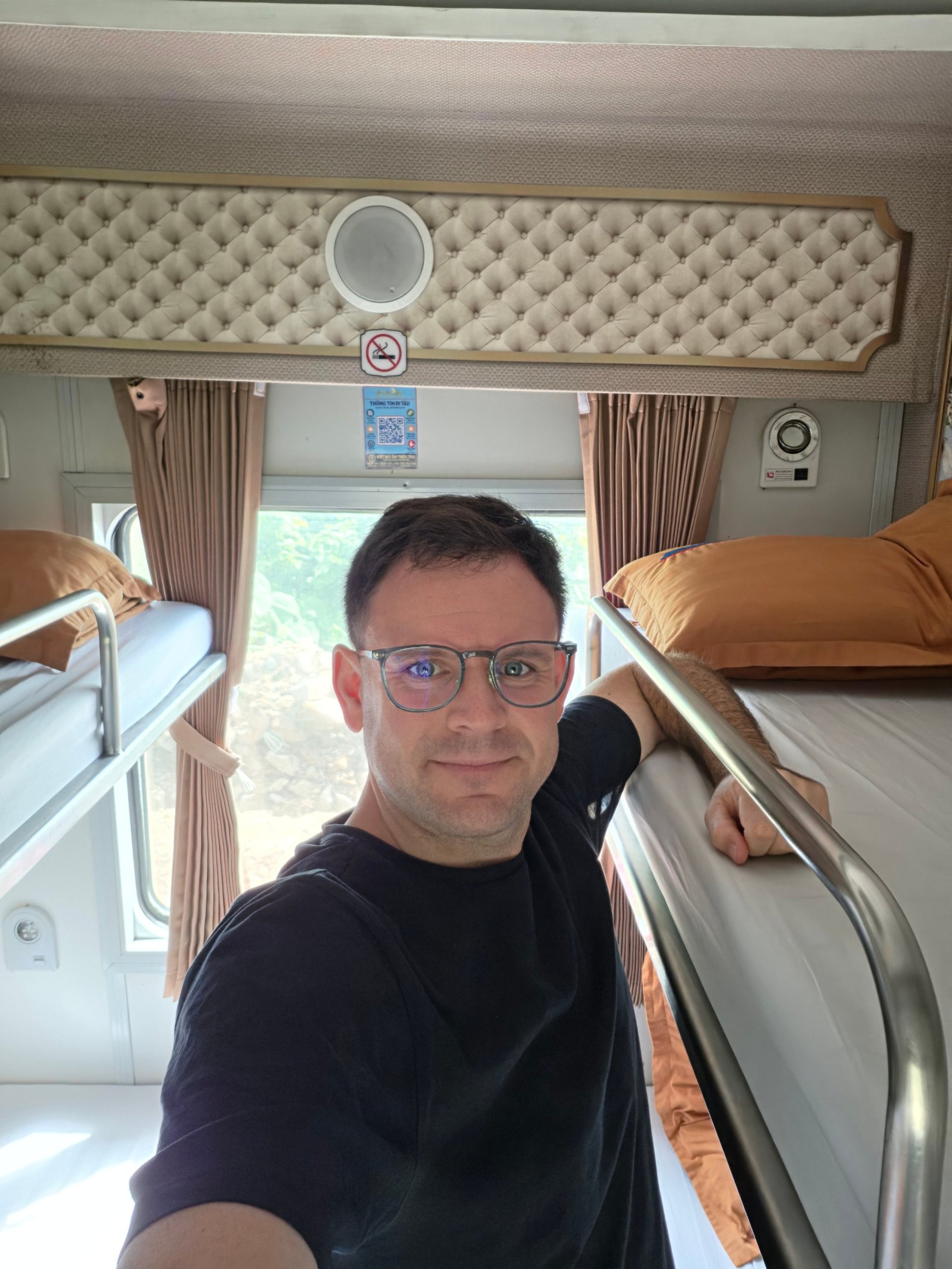
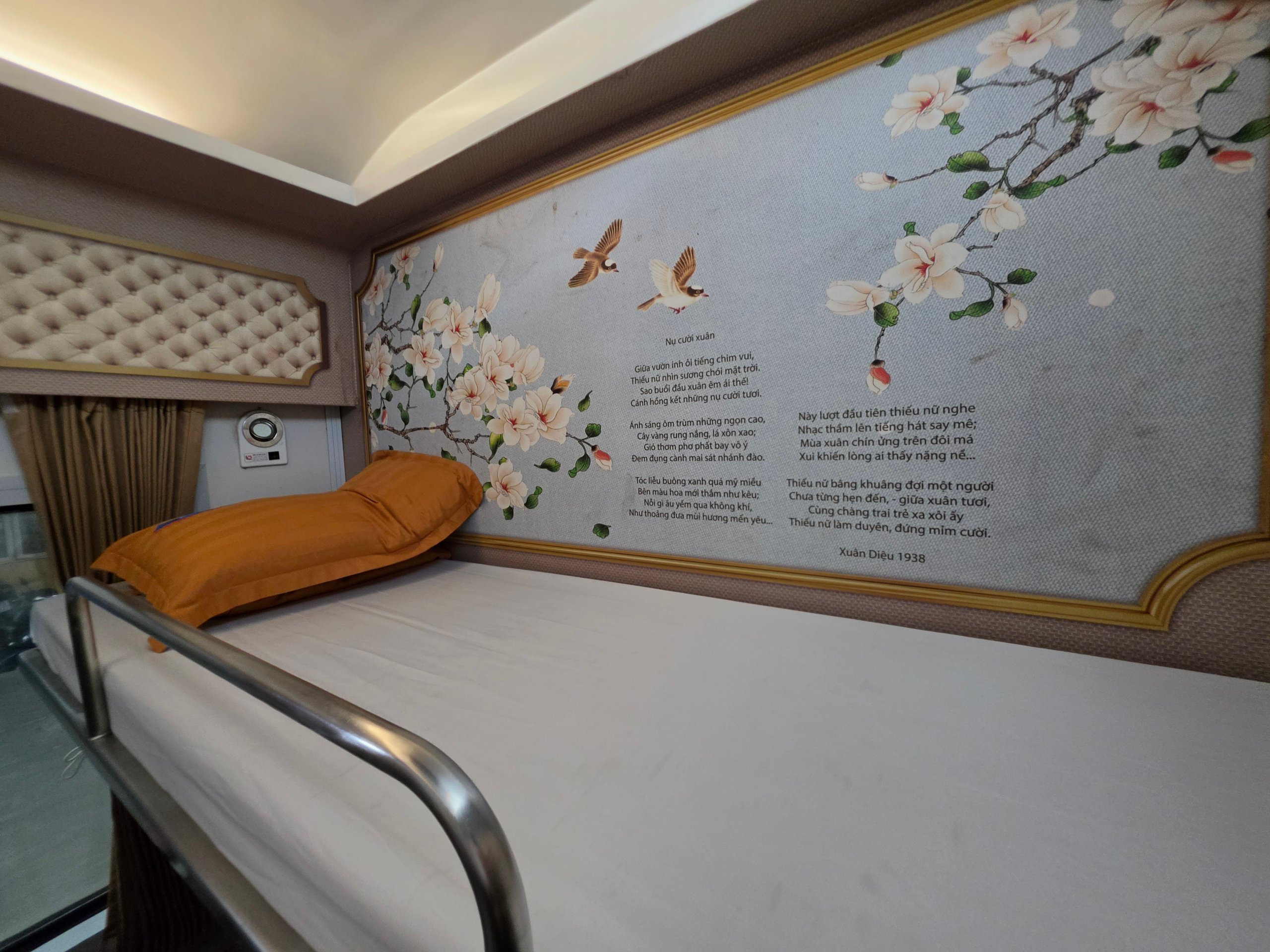
Whilst in Thailand, for example, 2nd-class berths are in a shared open carriage, here there are compartments for four. Two berths at the bottom, two at the top.
I definitely prefer the Thai version. Paradoxically, there’s actually much more privacy there.
On Thai trains, each berth is separated from the aisle by a fairly opaque curtain.
That was completely missing on my train in Vietnam. In a four-berth compartment, there’s absolutely no privacy.
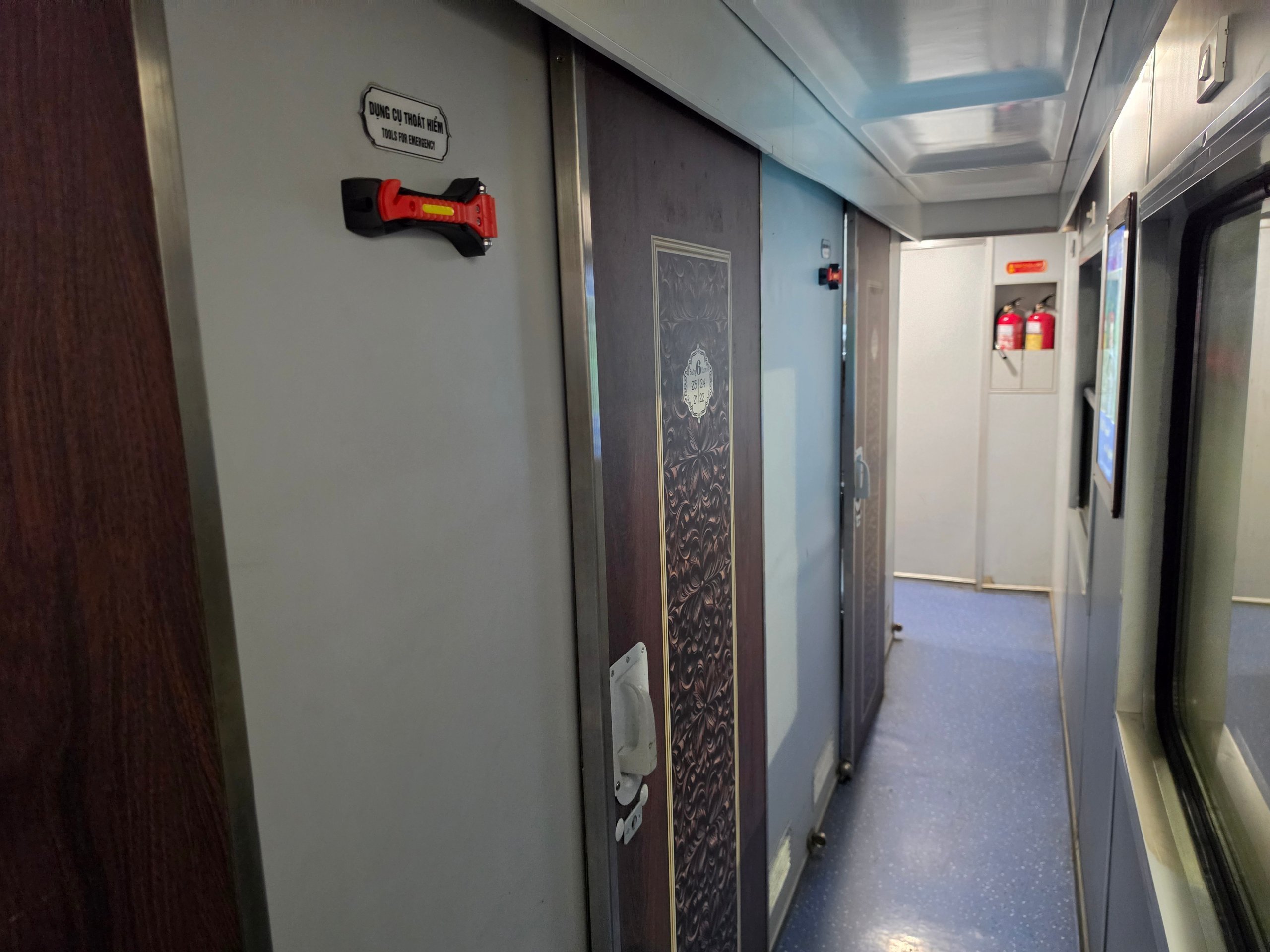
What’s more, the compartment walls and doors aren’t soundproofed at all, so I can still hear noises from the whole carriage. This completely negates any advantage of having a compartment for me.
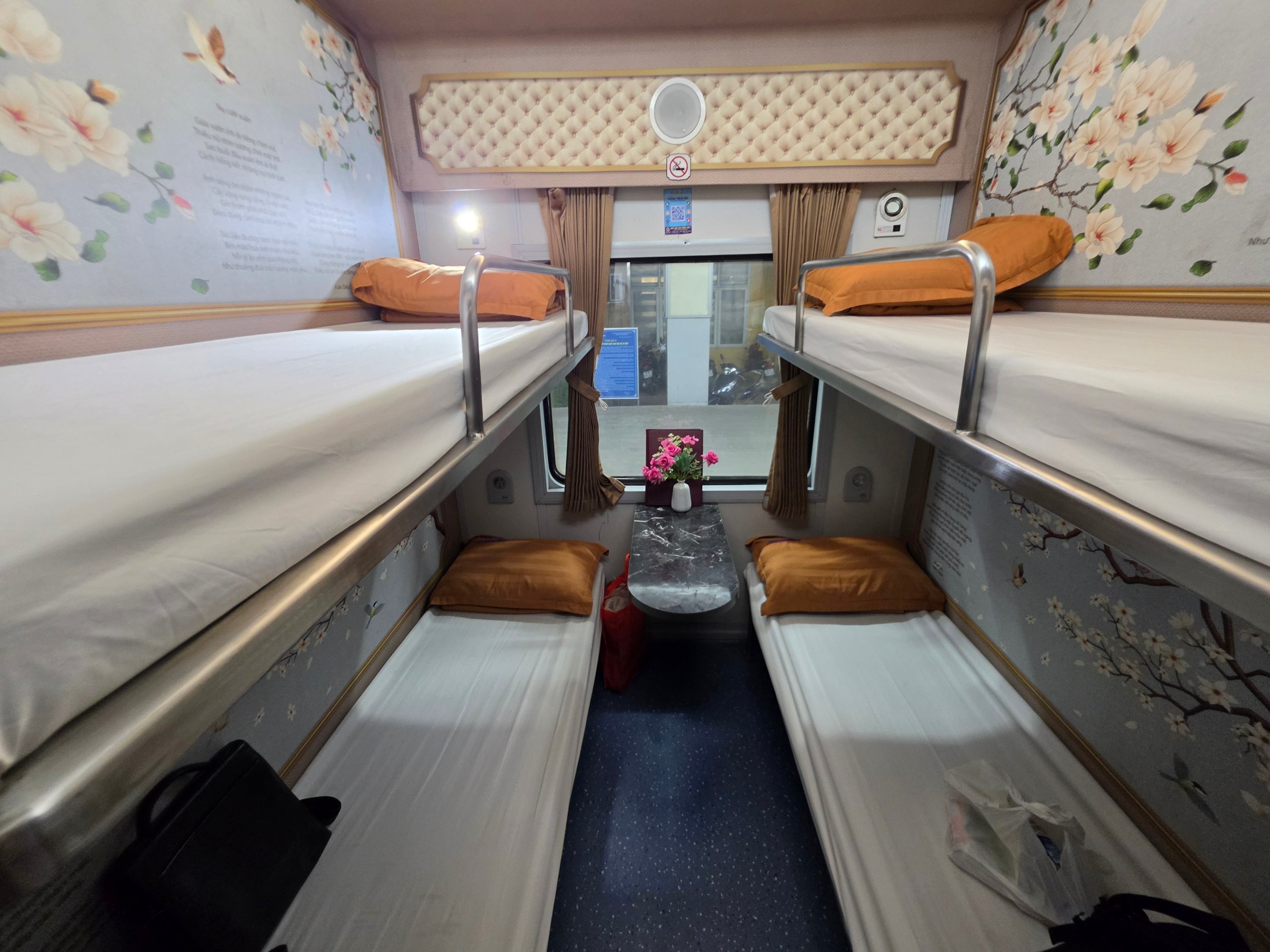
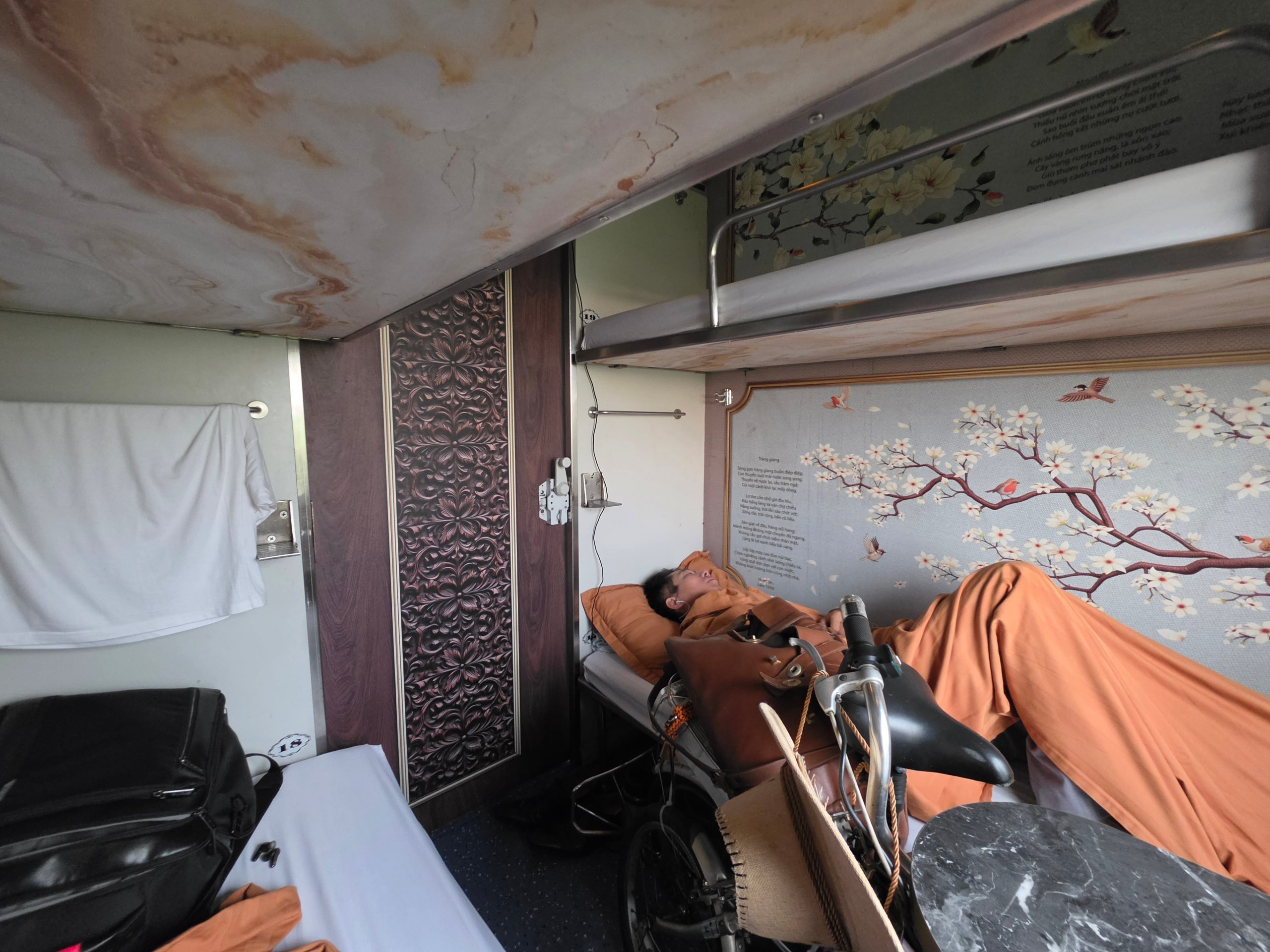
The first thing I go to check is what the toilets are like. After all, over the course of 16 hours, I’ll probably have to use them several times.
Each carriage has its own washbasin with a mirror, which is handy for things like brushing your teeth.
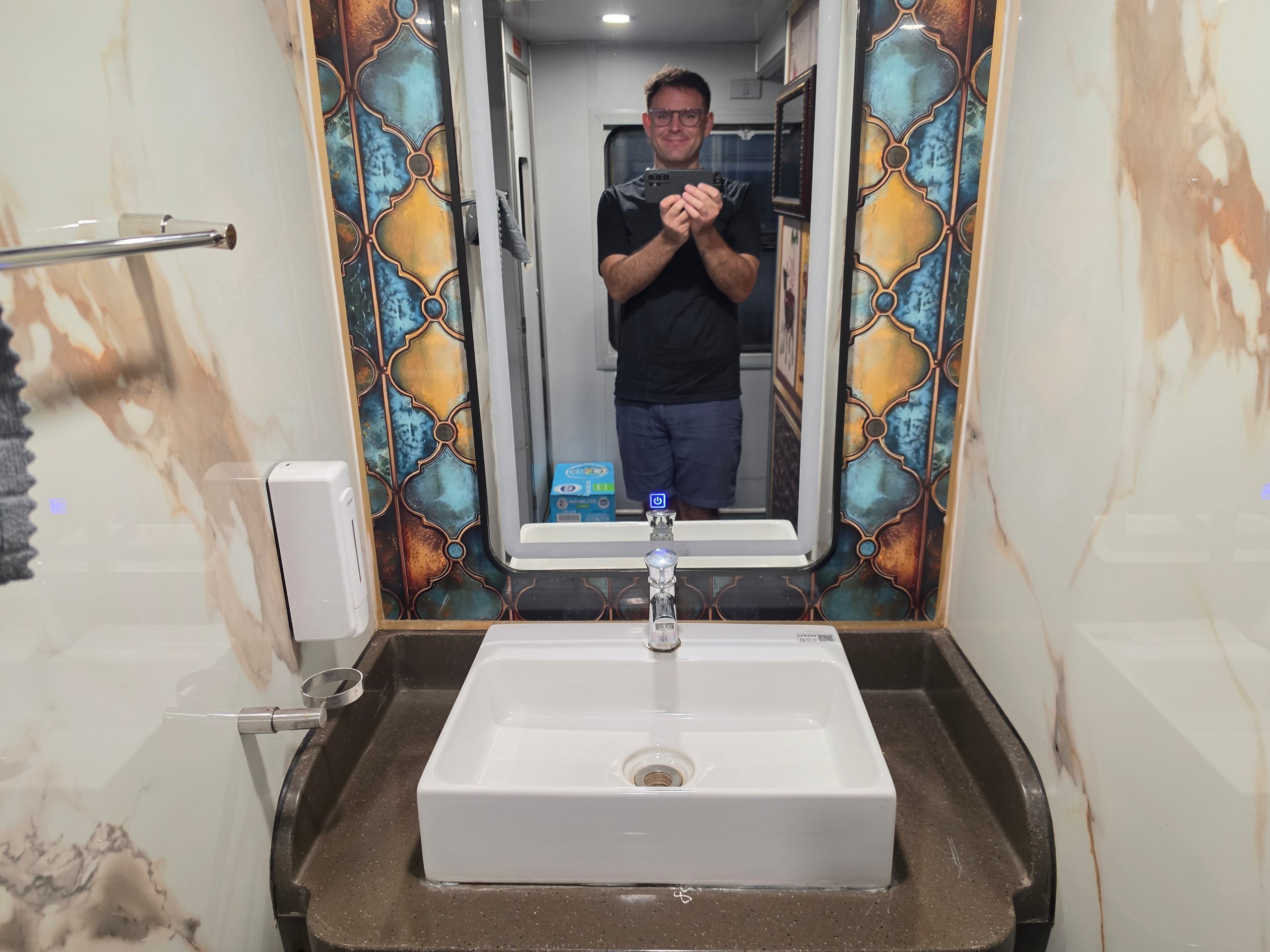
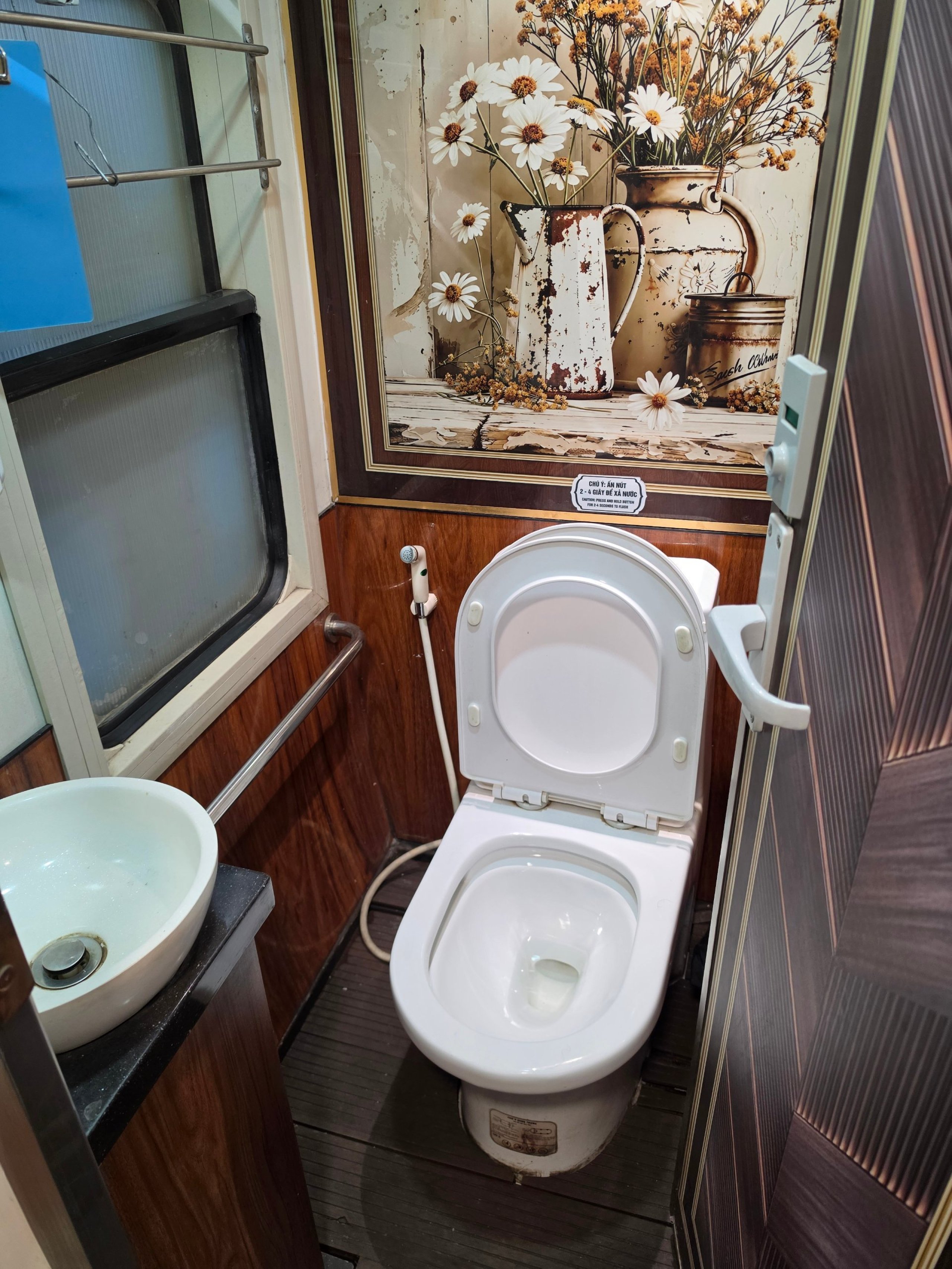
And there’s also a standard toilet. It’s quite clean at first, but as time goes on it gets in an increasingly poor state, as nobody cleans it during the journey.
What’s more, there’sreally very little space in the toilet. I can barely fit in there, even though I’m 175 cm tall and not particularly overweight.
I’ve read in various forum posts and articles that almost all Vietnamese trains have dining carriages.
Well, certainly not on mine. To be honest, I was really counting on it, and apart from some water and two apples, I didn’t buy any food.
I spoke to a local man who was travelling with me in the compartment about the dining carriages, and he insisted that he’d never seen one in Vietnam. Apparently, he travels once a month, so I’m not sure.
💬 Do you have any personal experience of travelling by train in Vietnam? Have you ever been on a traditional dining car? Let me know in the comments, thanks!
You won’t starve, though.
Several times throughout the journey, stewards walk down the aisle with food trolleys:
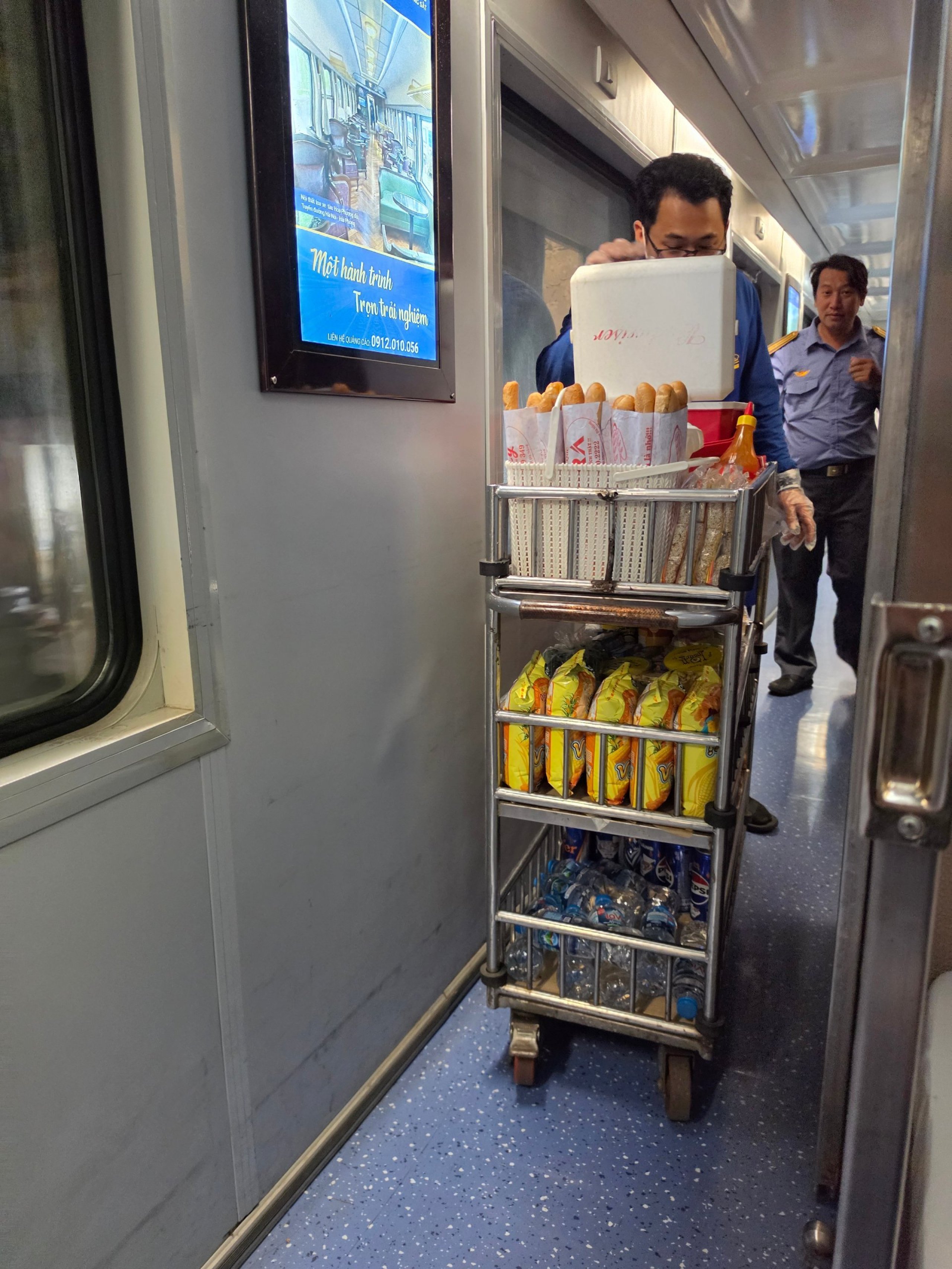
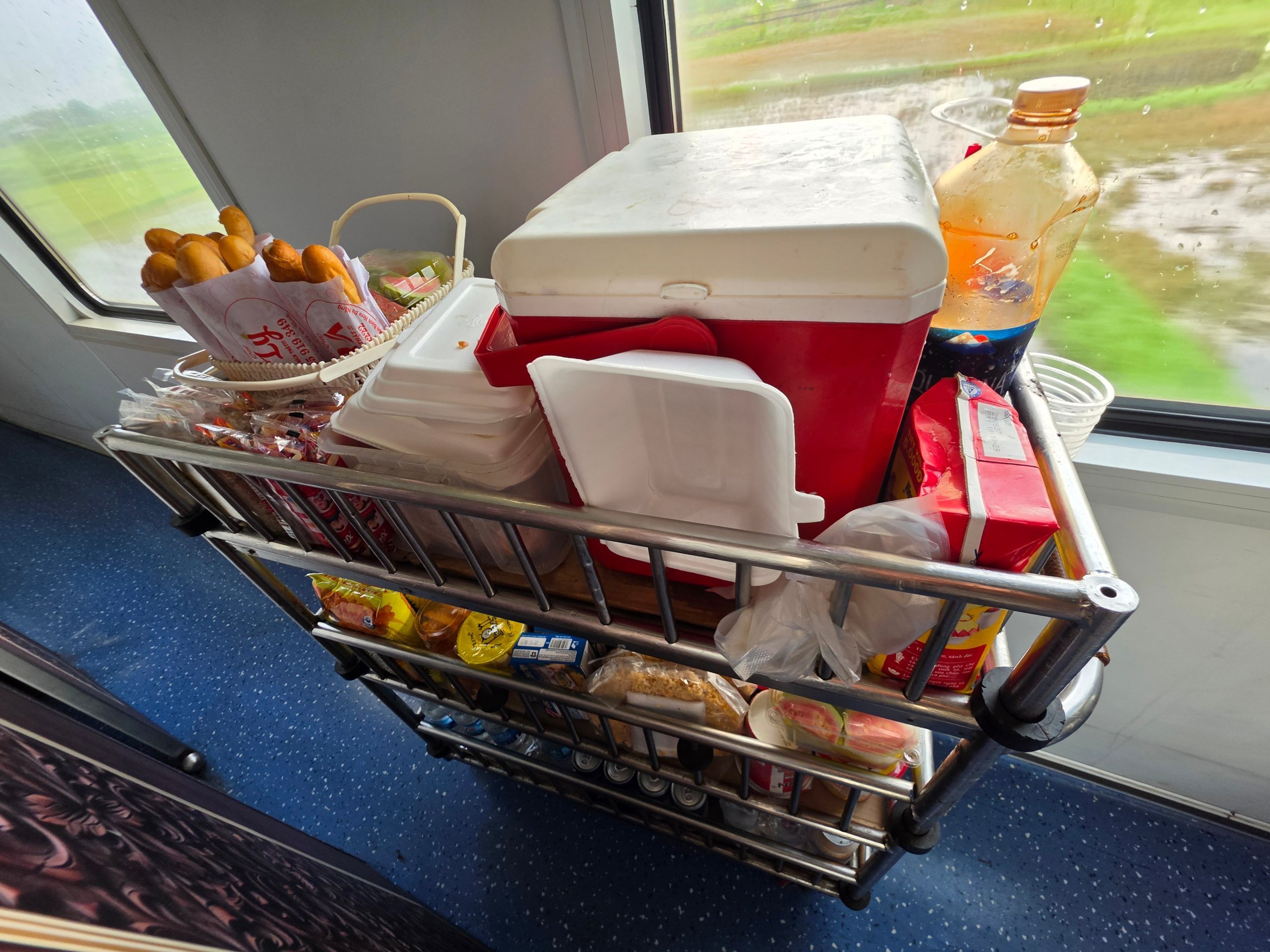
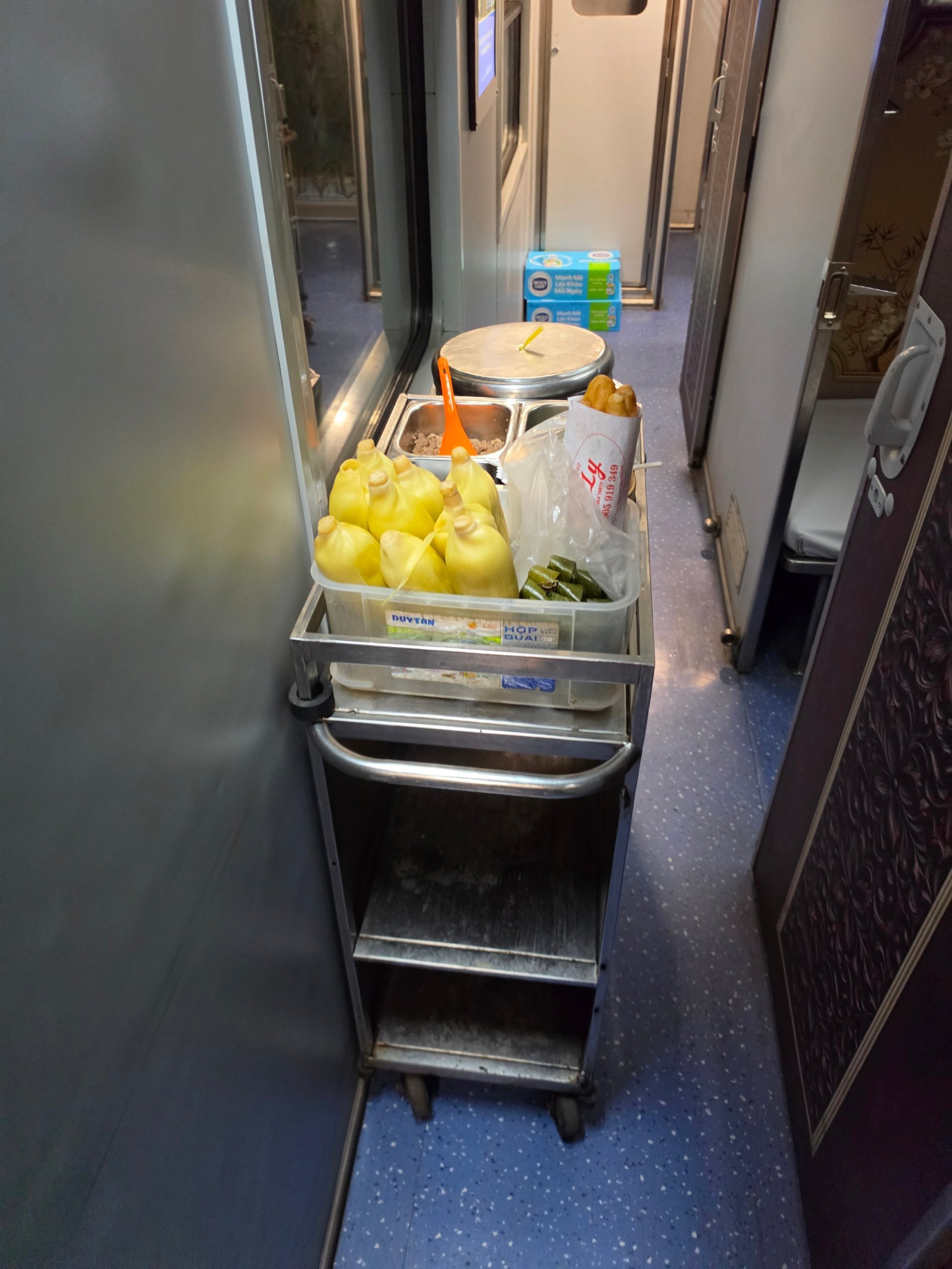
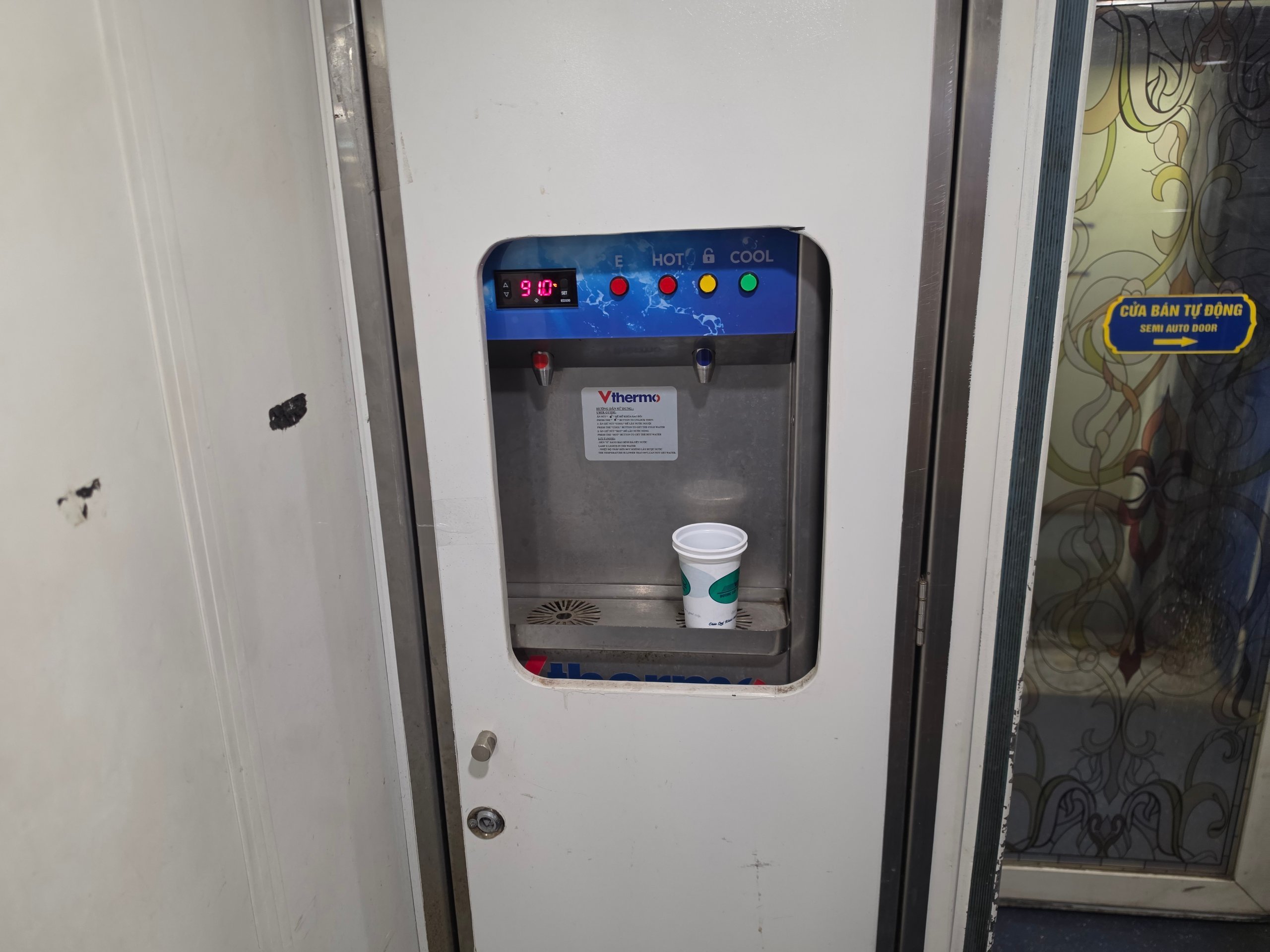
Every carriage has at least one vending machine with cold and hot drinking water.
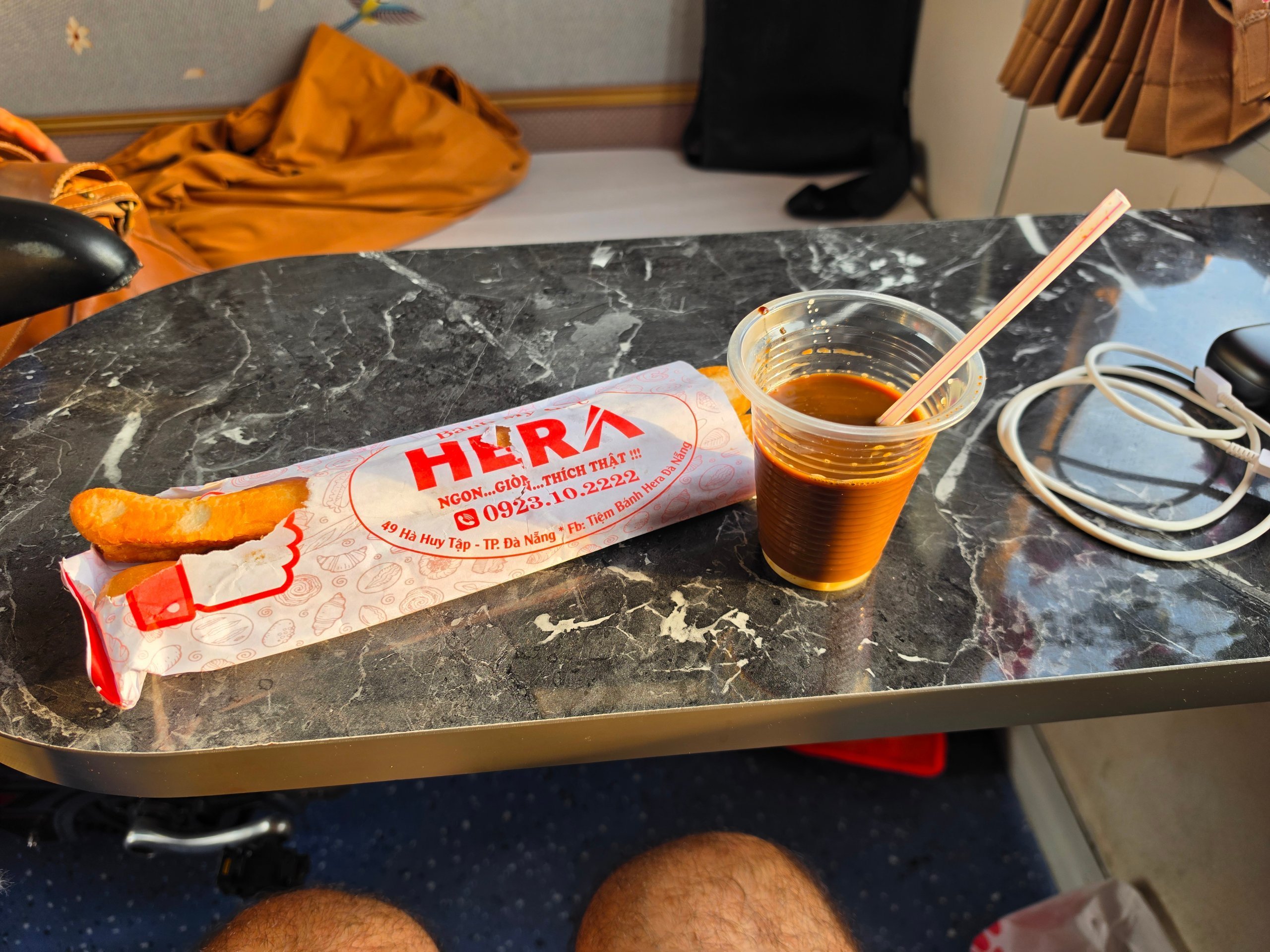
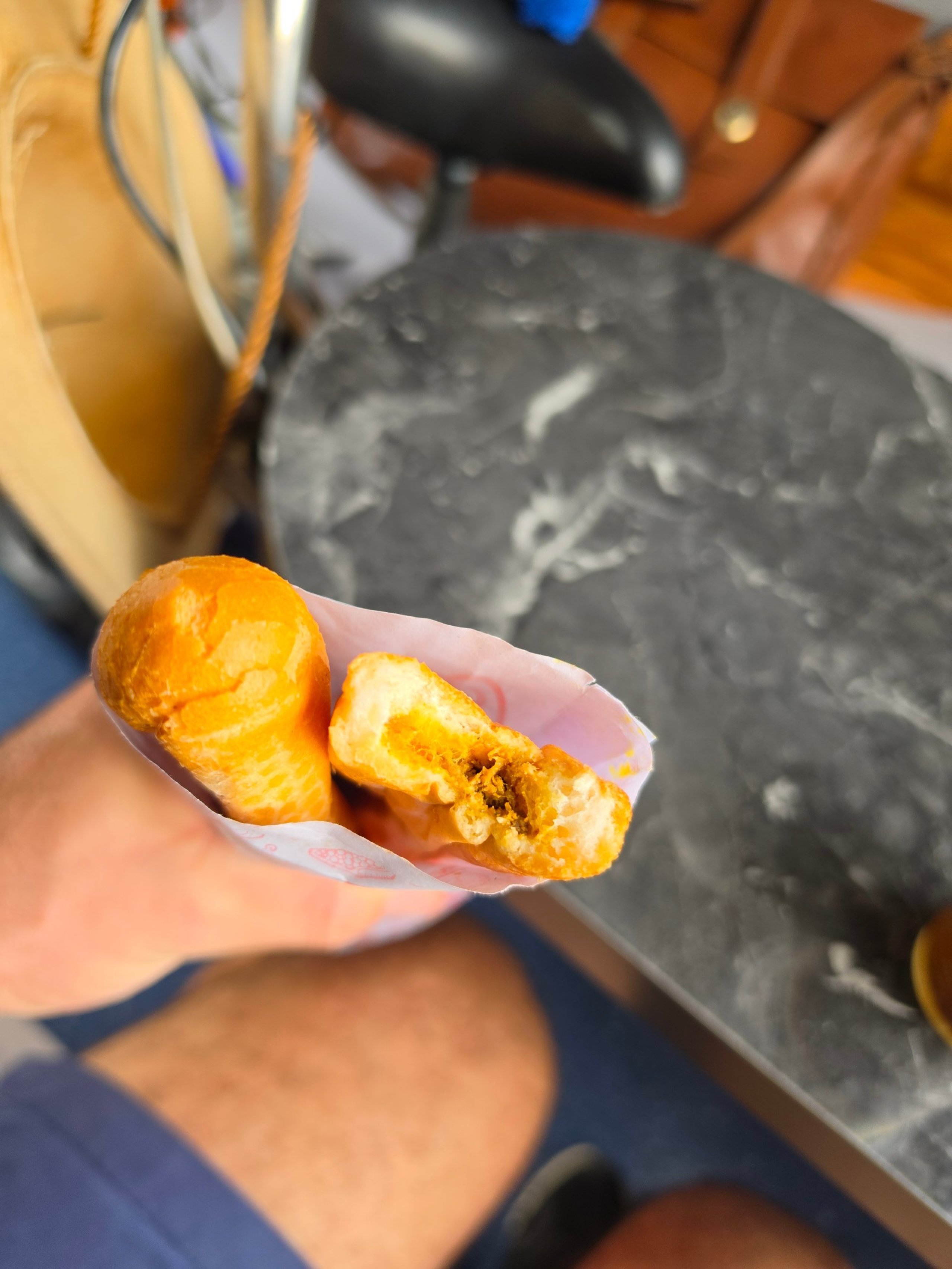
I had banh mi twice, but I won’t lie to you – it was nowhere near as good as the banh mi you get on the streets of Hanoi. Just a dry roll, occasionally filled with meat.
To go with it, I had a typical Vietnamese coffee with condensed milk in the morning, which was much more enjoyable.
I won’t lie to you, but I slept very badly.

First, the positives:
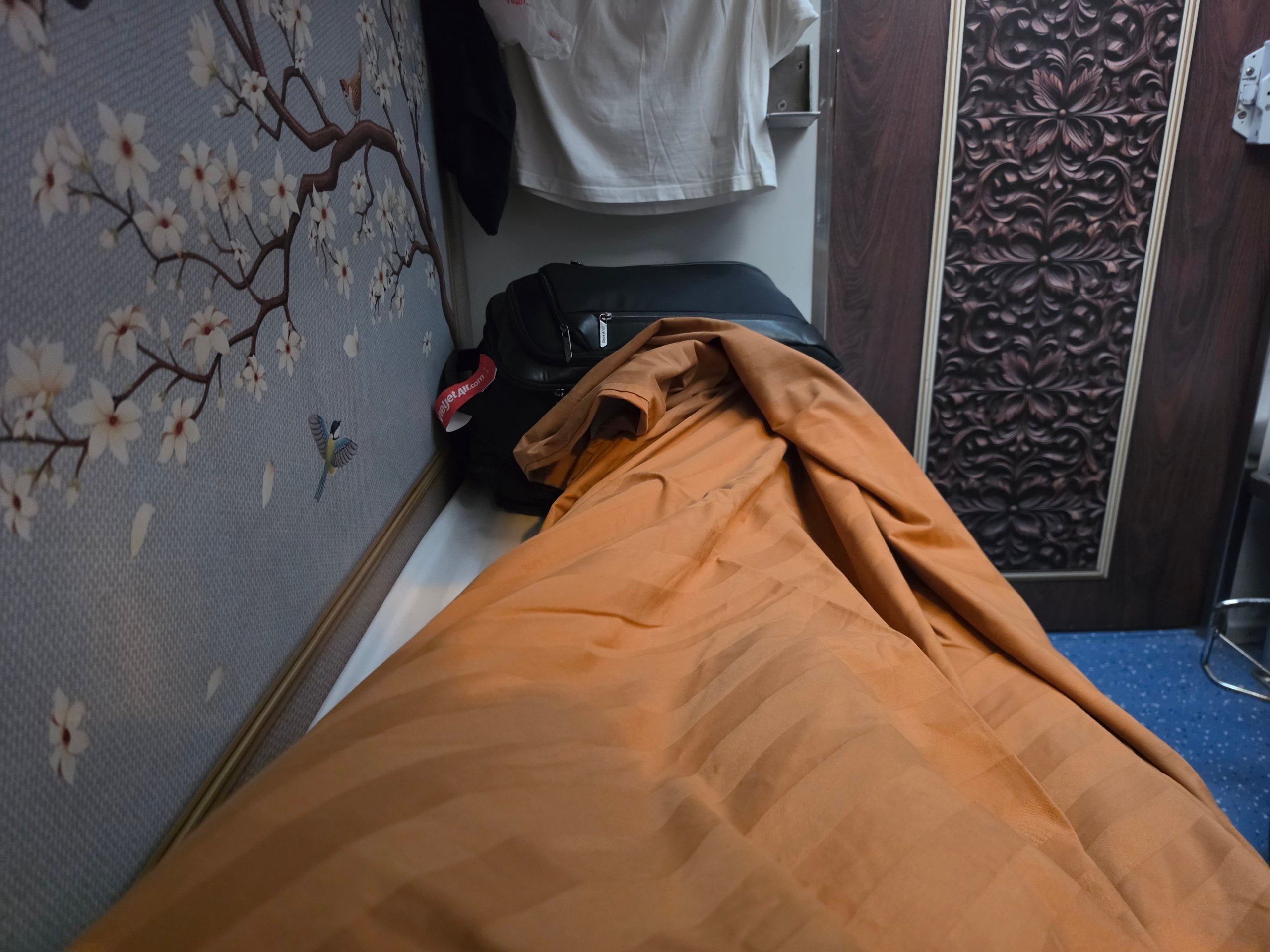
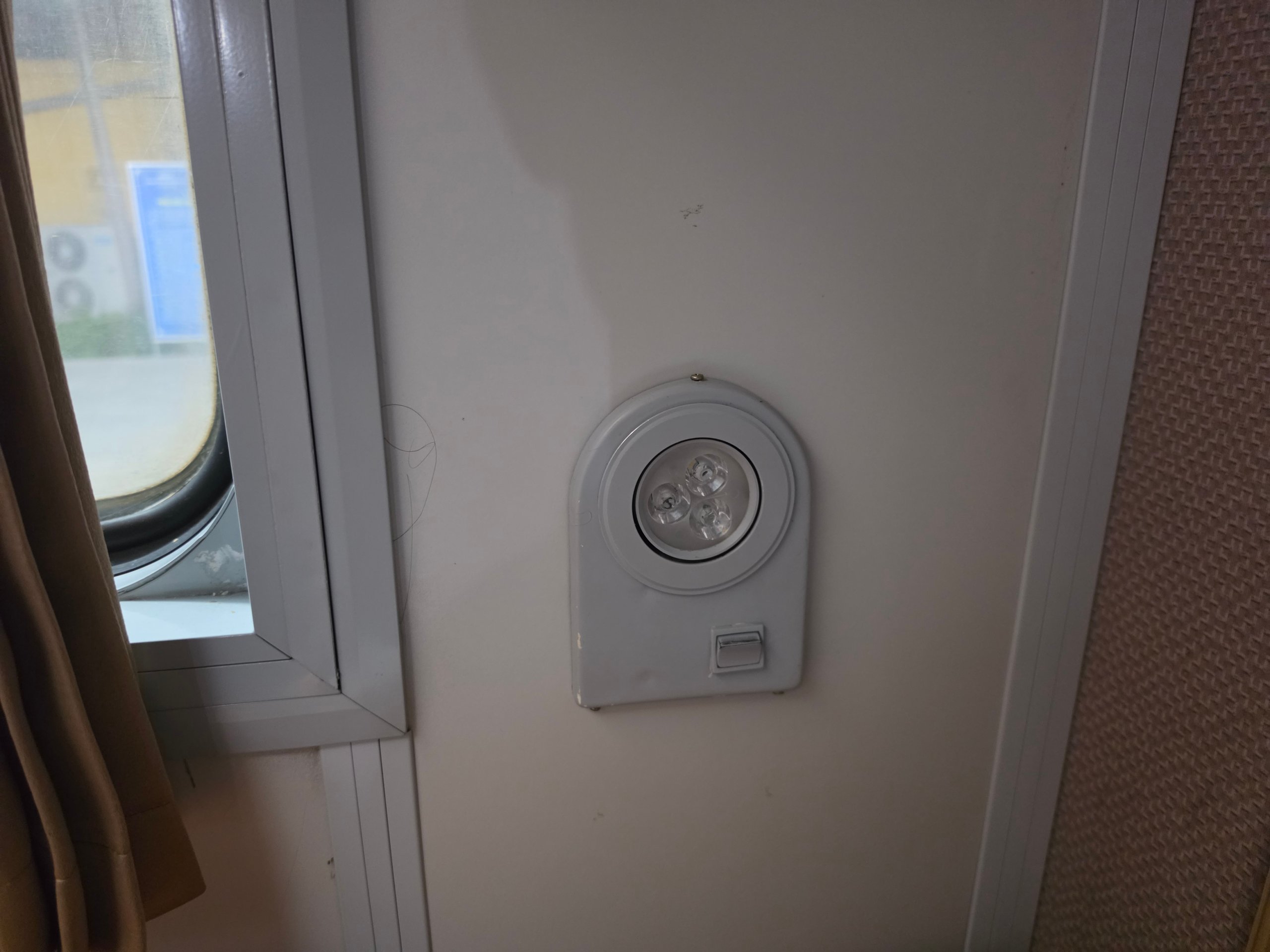
Unfortunately, however, there were far more negatives:
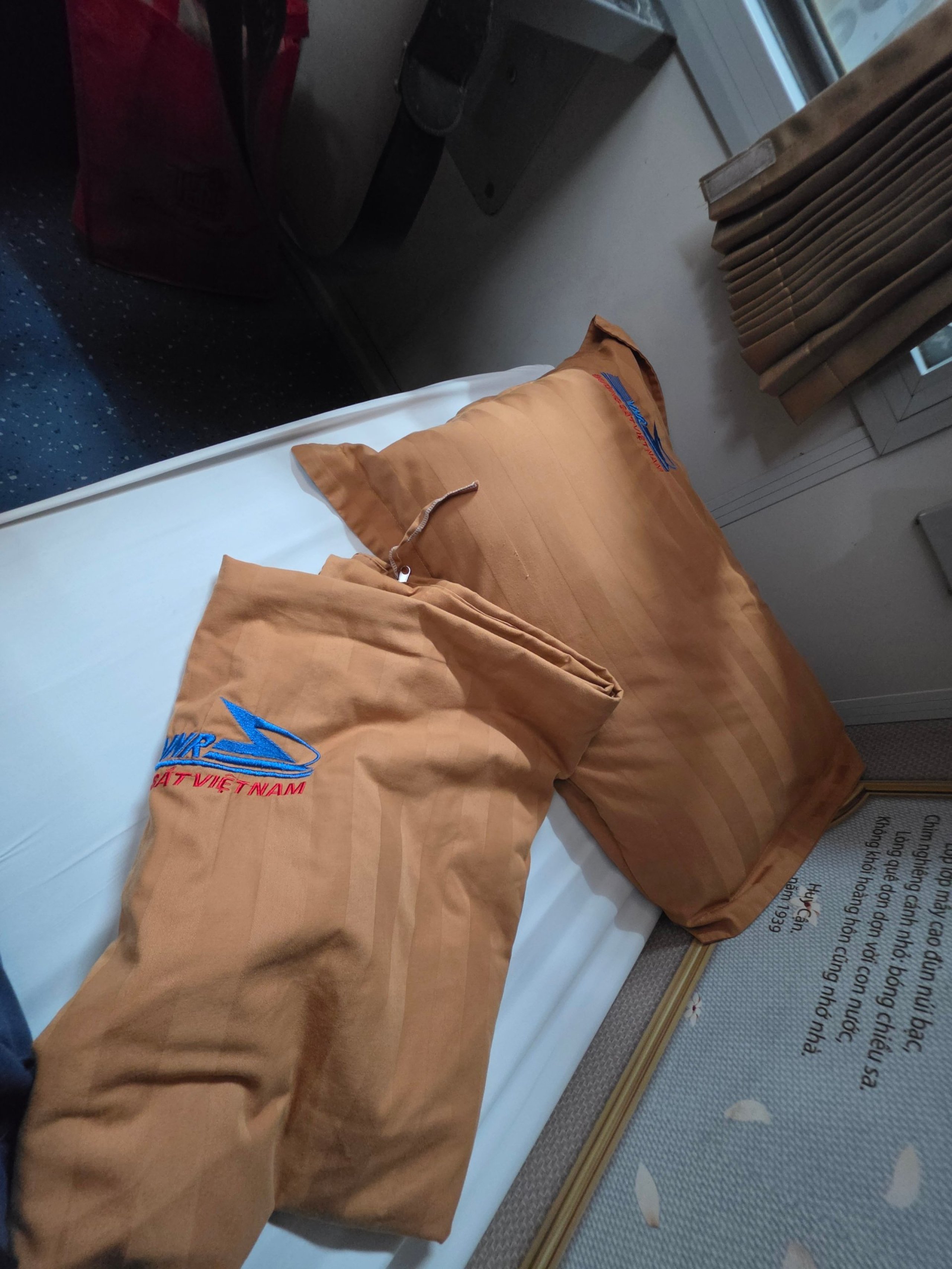
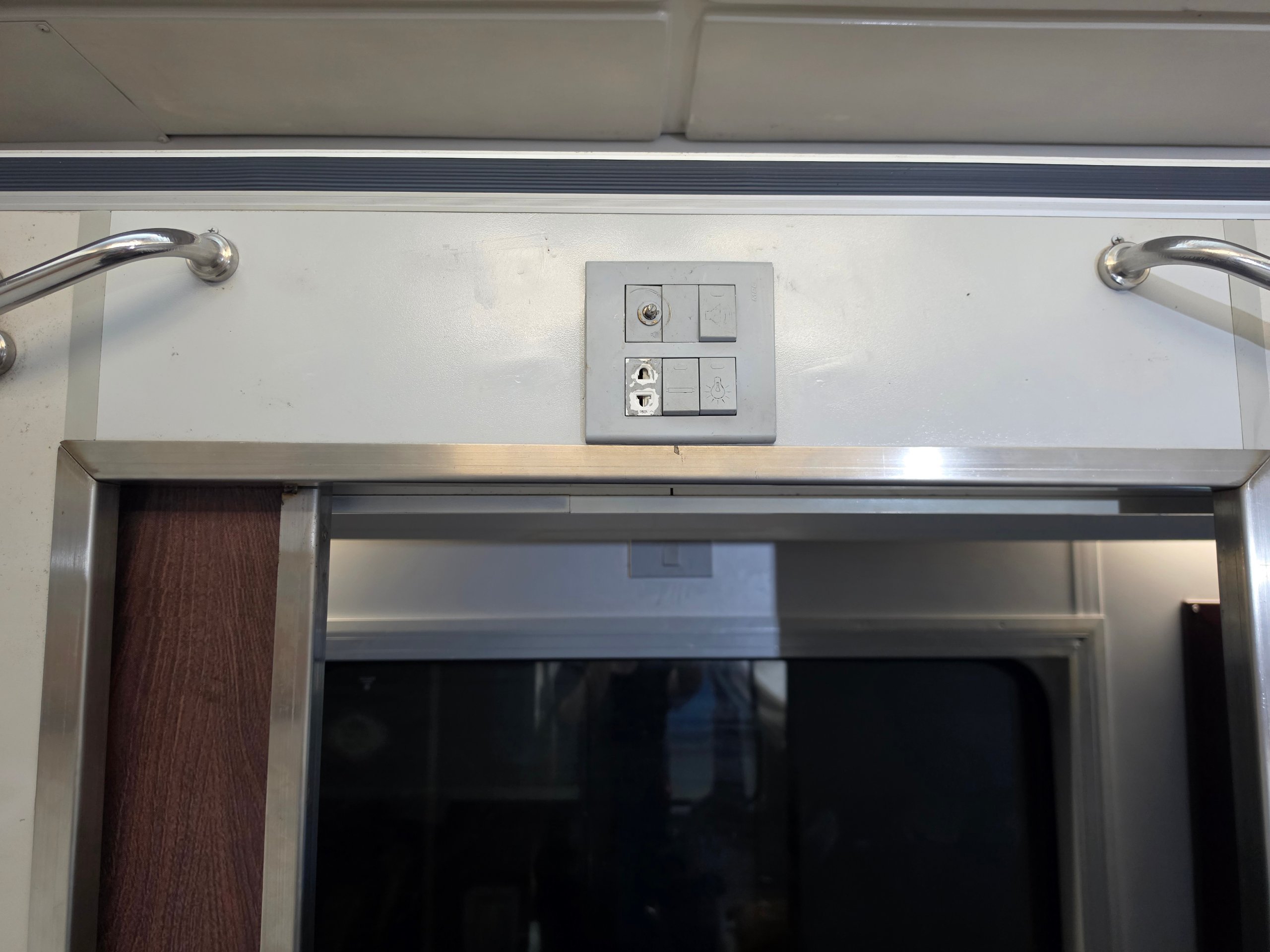
The air conditioning felt as though it was set to a much more comfortable temperature than is usually the case on trains in Thailand, for example.
The temperature in the compartment remained between 22 and 24 °C throughout the journey, but even so, I’d pack a jumper, long trousers or a sleeping bag.
I actually felt quite cold at times under the thin blanket.
All in all, I slept for about 4 hours in total during the 16-hour journey. Well, next time I’ll definitely fly and spend the night in a hotel – even a cheap one, if need be.
Whilst on sleeper trains in Thailand, and indeed across Europe, it is standard practice for beds or couchettes to be folded up into seats during the day, this is not the case on Vietnamese trains.
The berths in the compartments are fixed: they cannot be folded down into seats.
That’s why, for example, I highly recommend booking a lower berth if you’re travelling alone.
In that case, you can remain seated on ‘your’ bed even during the day and enjoy an unobstructed view from the window.
If you’re sitting on the top bunk, you’ll need to be lucky enough to have a fellow passenger who might let you sit down below during the day.
Otherwise, you’ll have to spend the whole day lying on the top bunk with a very limited view of the outside.
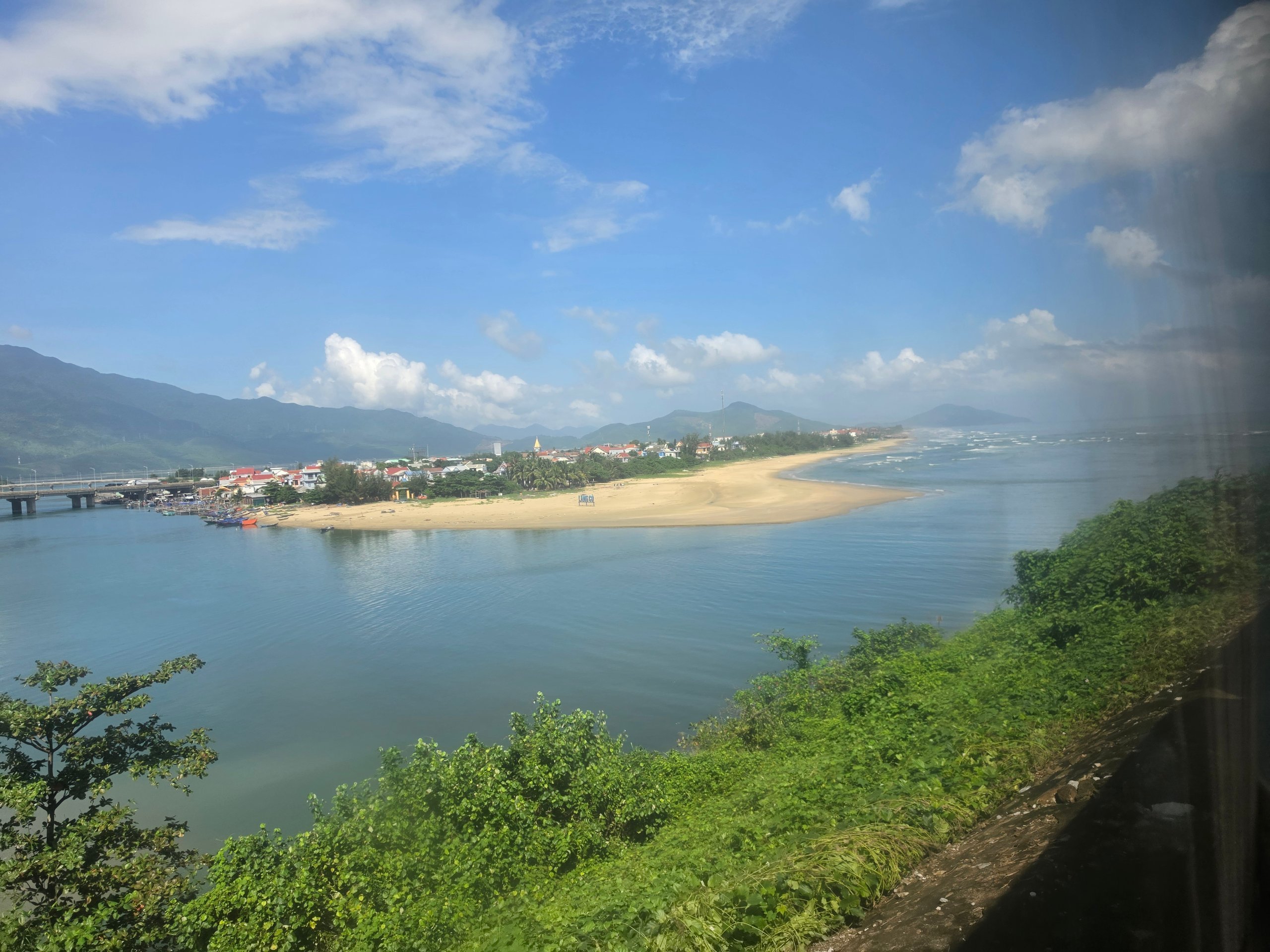
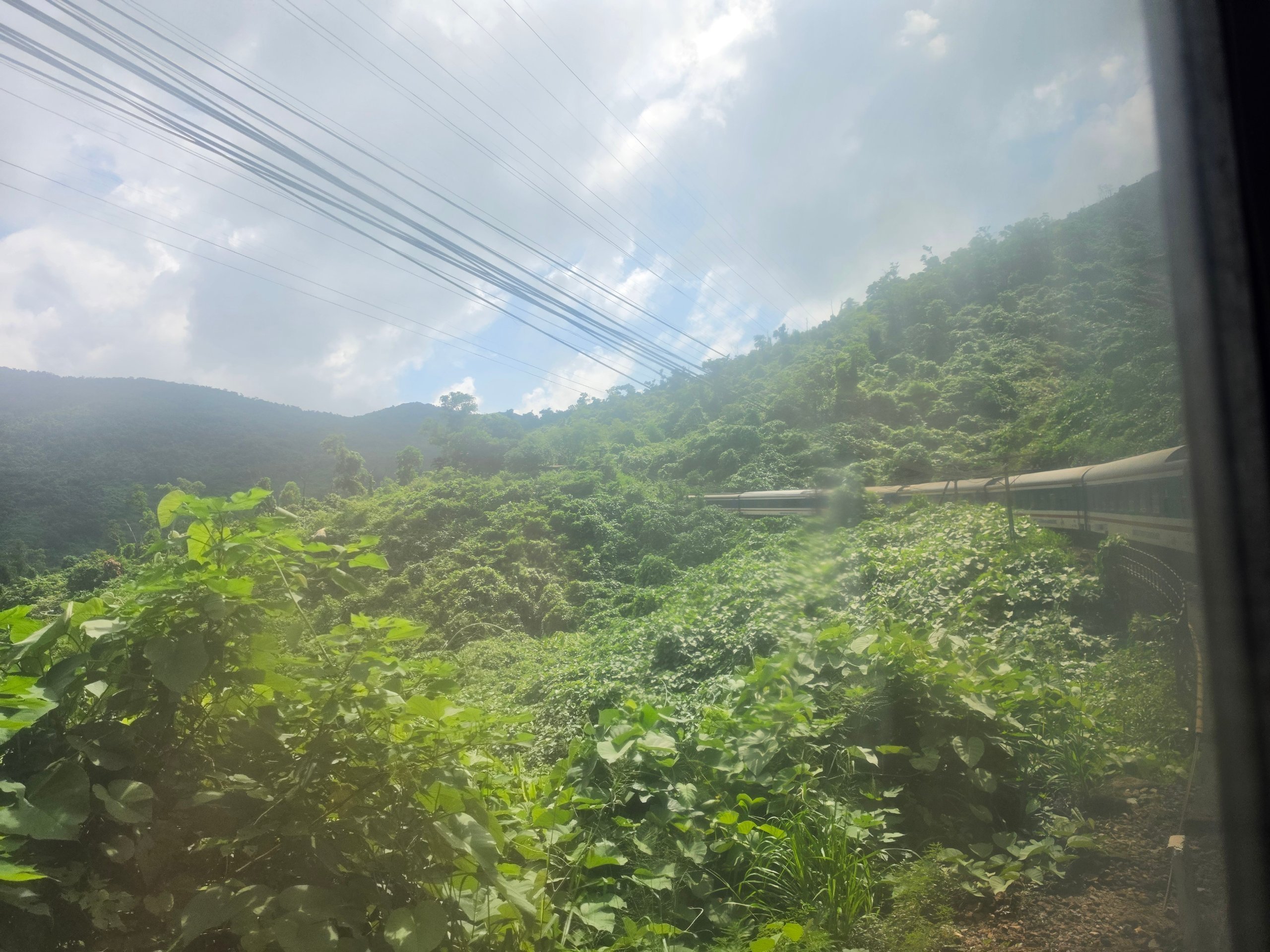
I deliberately chose a train that would travel through a relatively dull, flat stretch whilst it was still dark, and then, once it was light, through one of the most beautiful sections of the Vietnamese railway.
This section runs through the Hai Van Pass between the historic city of Hue and the resort town of Da Nang.
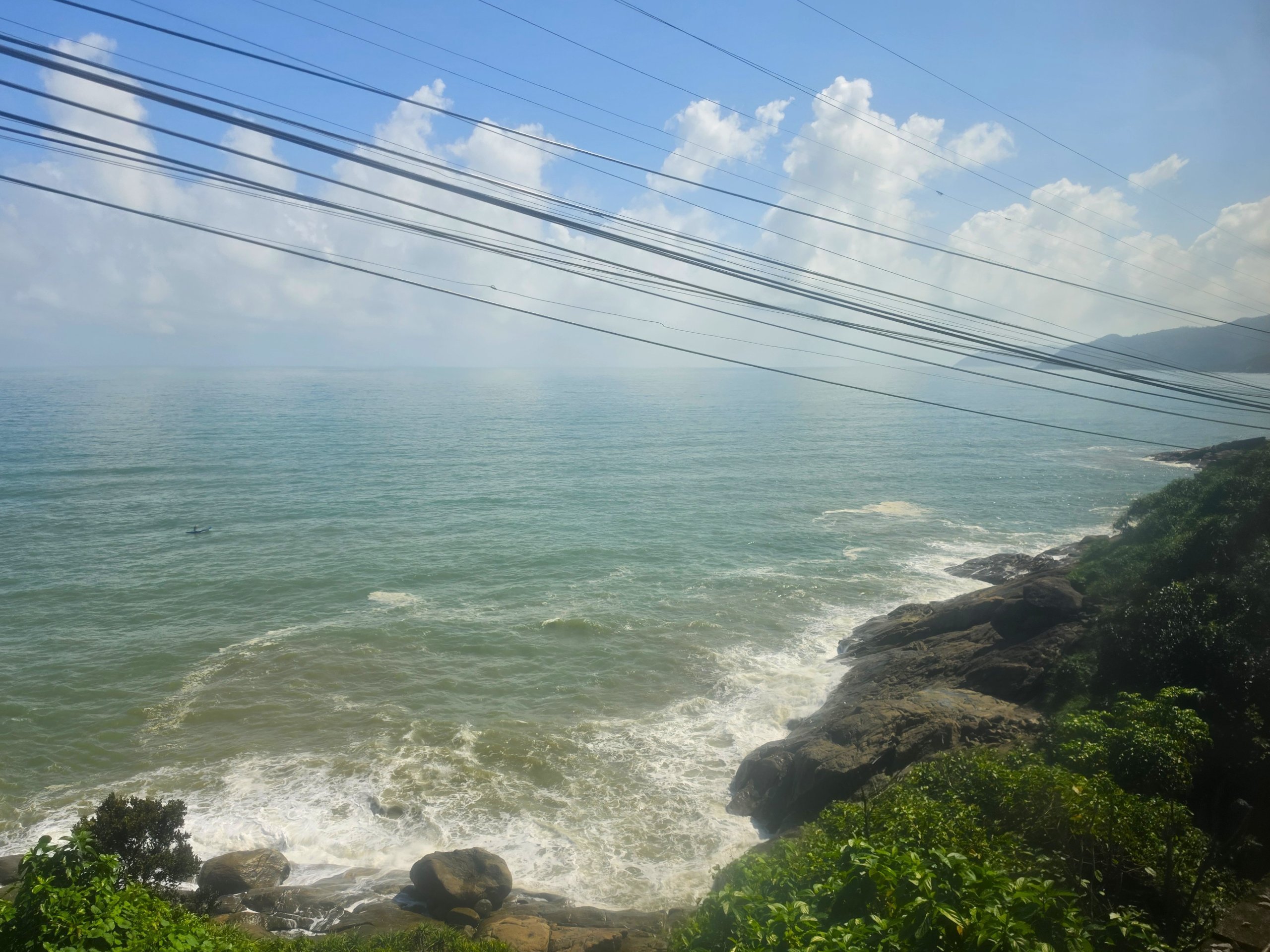
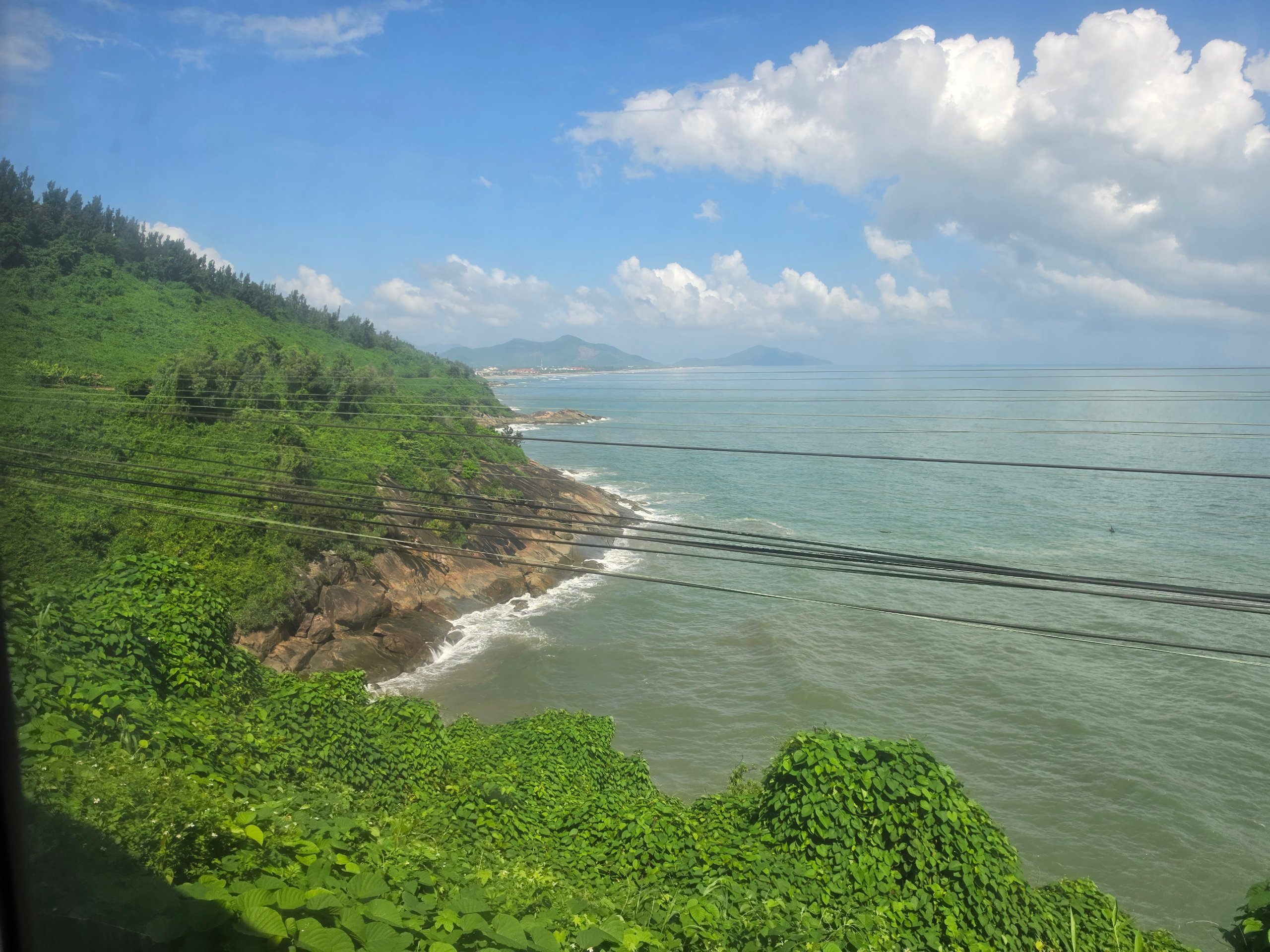
Here, the track winds quite steeply up and down along the dramatic coastline.
There are breathtaking views of the sea, the rugged coastline and the densely forested mountains.
I really enjoyed this, but it would have been quite enough just to cycle this 3-hour stretch from Hue to Da Nang or vice versa.
I’d definitely take these with me on a longer train journey.
In Vietnam, I’d go for the plane.
In the end, the night train on this route made absolutely no sense to me.
I didn’t get any sleep (and I think even travellers used to long night journeys would have a problem with this), and I didn’t save any money at all compared to flying (in fact, the train ticket was more expensive than the plane ticket).
And, in fact, it didn’t really make the most of the time spent travelling during the night either.
I didn’t arrive in Da Nang in the morning, leaving me the whole day to explore the city, but only just before midday.
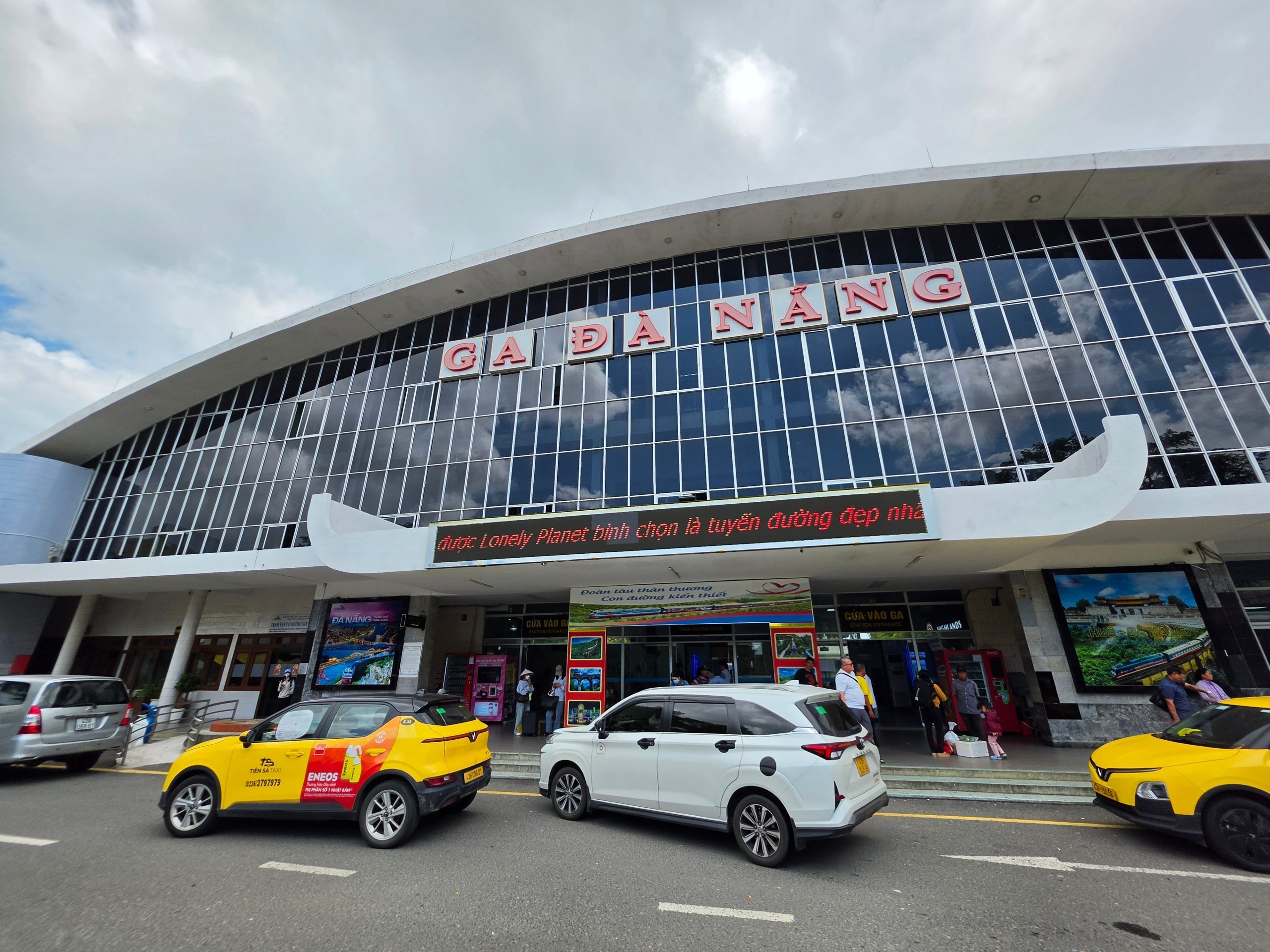
I could easily have managed that on a morning flight from Hanoi.
So, as far as I’m concerned:
If you have any questions or comments about the article...
In Vietnam, we used sleeper buses; they were comfortable and nobody wanders about on them at night – from Da Nang to Nha Trang. It was cheaper than a flight. The bus station is a bit further from the city; when I insisted that I had a ticket all the way into the city, they arranged a minibus to take us to our hotels.
I wouldn’t entirely agree that overnight sleeper buses are comfortable.
Of course, it’s a matter of opinion, but next time I’d rather take the train.
It’s a typical trick: the ticket is valid for the city centre or hotels, but the bus ends up at a station somewhere on the outskirts of town and the driver acts as if that’s the end of the line.
You have to argue with him; then it works.

In my opinion, there’s absolutely no point in taking the train on this route. Both trains and buses are useful in places you can’t reach by plane. We took the overnight train from Dong Hoi to Ninh Binh, which is a typical example of why travelling by land is the only option.
Incidentally, the conductor offered us a double VIP compartment for a fee; he wanted 300,000 VND per person, and after we refused, he offered 400,000 for both of us.

Kryštof, Kryštof, why are you doing this?? At your age, do you really need to? :-D
What do you mean, ‘at my age’? 😀 I’m a young lad… or… am I? 🤔
Oh come on...?! You’re too old for that sort of nonsense now – leave it to the younger lot... :-D