
Agadir, Morocco, for a week from Vienna
39 €



From Prague to Hanoi with one stopover in Kazakhstan. VietJet has launched its first direct route from the Czech Republic to Vietnam, and I was on board the inaugural flight.
How comfortable is this journey? What can you expect from the in-flight services? And what exactly happens during the stopover in Almaty?
Here are my impressions, practical experiences and my answer to the question of whether I’d choose VietJet again next time.
Just a bit of terminology to start with. Although the route has a stopover in Kazakhstan, it is a direct flight.
As it turned out, although this flight was direct, the stopover wasn’t exactly pleasant 😅. But more on that later in the article.
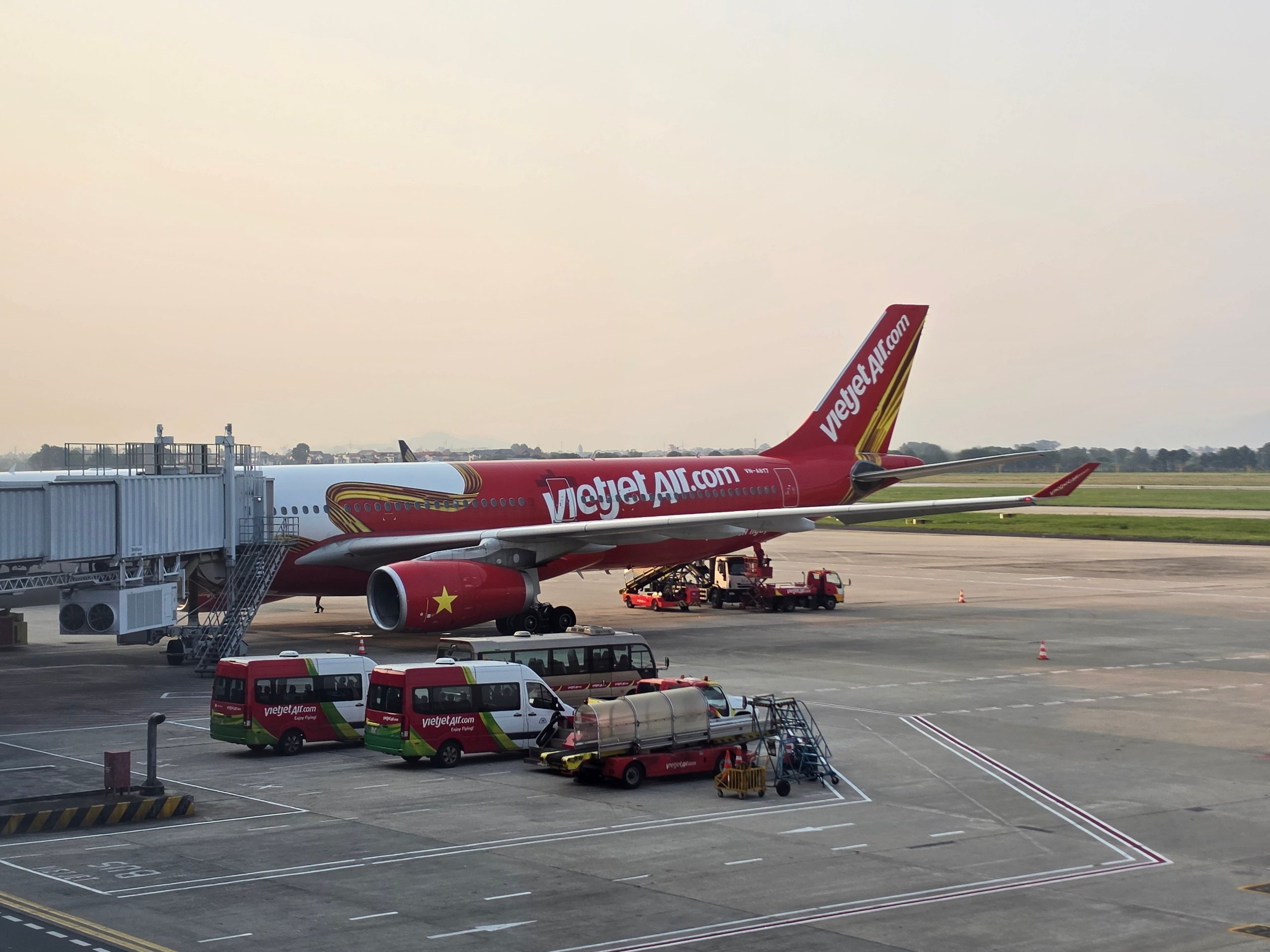
The first flight took place on 10 October 2026, and that’s the one I bought a ticket for.
VietJetAir flies from Prague to Hanoi using an Airbus A330-300, which, however, cannot safely cover this distance in a single leg. It therefore makes a stopover in Kazakhstan to refuel.
The route operates twice a week, and the winter timetable is as follows:
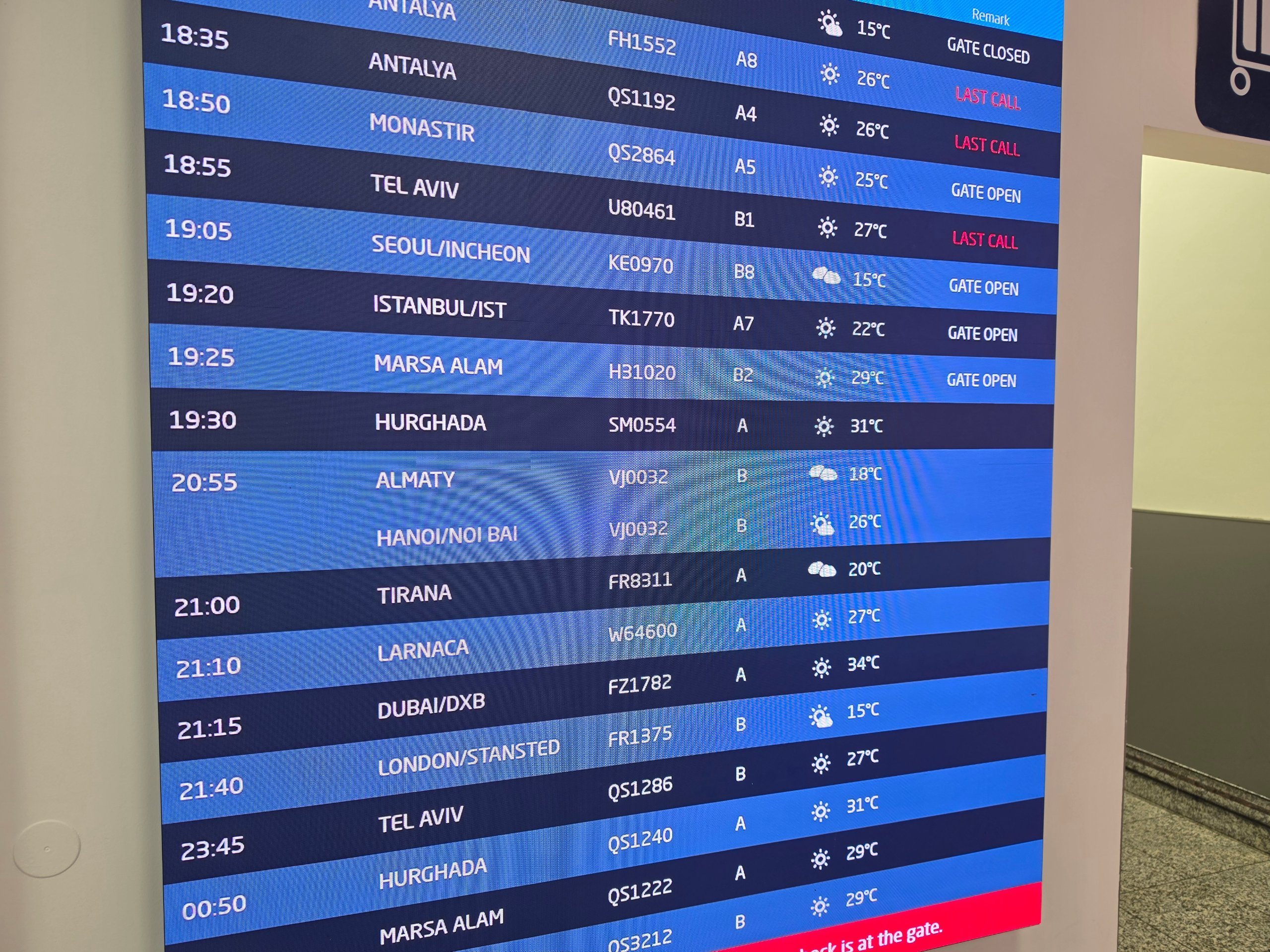
VietJetAir is a low-cost airline. On the cheapest ‘Eco’ fare, you’re only allowed one piece of hand luggage weighing up to 7 kg. No meals, no checked-in luggage, nothing.
I chose the Eco fare and bought a one-way ticket directly via the vietjetair.com website.
On my return from Asia , I want to try another low-cost carrier – Scoot from Singapore to Vienna.
I bought the ticket shortly after sales opened, and it cost me around 349 eur . That’s really a lot, because about a week later there was a special offer on return tickets for 286 eur.
However, the standard price for return tickets is usually around 15 0 eur in the Eco fare.
With VietJetAir, you can choose from four fare classes.
For the average traveller, the biggest difference is between the basic Eco fare and the Deluxe fare, which includes both luggage and a meal.
| Fare | Luggage included | Meals and seat selection |
|---|---|---|
| Eco | Hand luggage 7 kg | Both available at extra cost |
| Deluxe | Hand luggage 10 kg; hold luggage 40 kg | Hot meal and seat selection in Economy |
| SkyBoss | Hand luggage 12 kg; hold luggage 50 kg | Meals and priority seat selection |
| Business | Hand luggage 18 kg; hold luggage 60 kg | Meals and a seat in Business Class |
SkyBoss and Business also include priority check-in and lounge access, subject to the airport’s facilities.
If you want a checked-in suitcase and a meal, compare the Deluxe fare directly with the Eco fare, including any surcharges. With Deluxe, there is no flight change fee, but you will have to pay any difference in the price of the new ticket.
Deluxe still means the same economy cabin. A more expensive fare therefore does not in itself guarantee you a better seat.
For the Eco fare, VietJet’s official price list for direct and connecting European routes lists the following surcharges:
| Service | Price |
|---|---|
| Standard seat selection | 170 000 vnd |
| Front-row seat | 310 000 vnd |
| Hot seat / Extra legroom | 510 000 vnd |
| 20 kg checked-in baggage booked in advance | 1 520 000 vnd |
| 30 kg checked-in bag booked in advance | 2 240 000 vnd |
| 40 kg checked-in baggage booked in advance | 3 000 000 vnd |
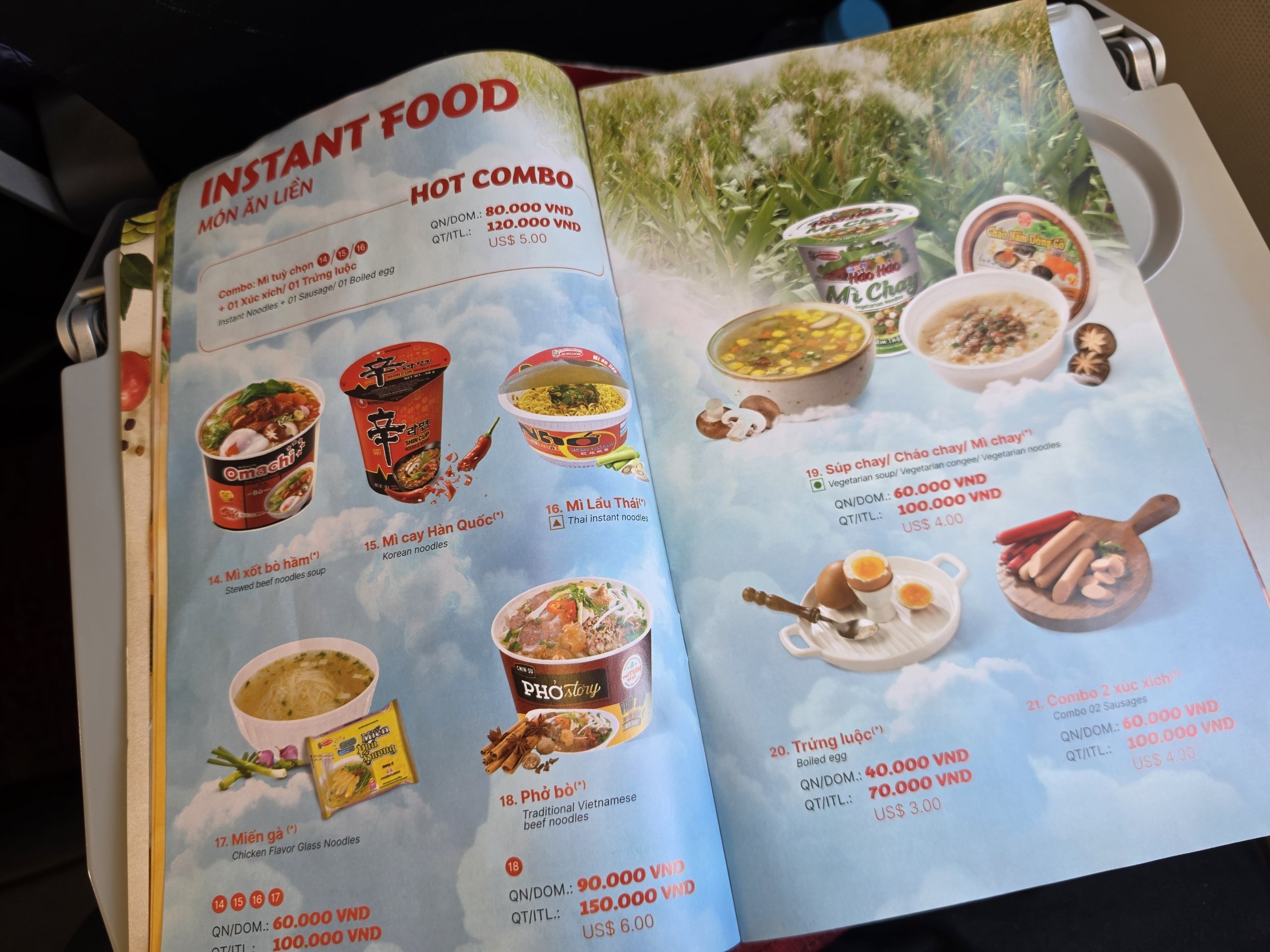
In Eco class, you even have to pay for water. The in-flight menu includes prices such as the following:
| Food or drink | Price on board |
|---|---|
| Hot meal, e.g. beef with rice | 6 usd |
| Hot meal with a drink and a snack | 9 usd |
| Instant noodles or soup | 3–4 usd |
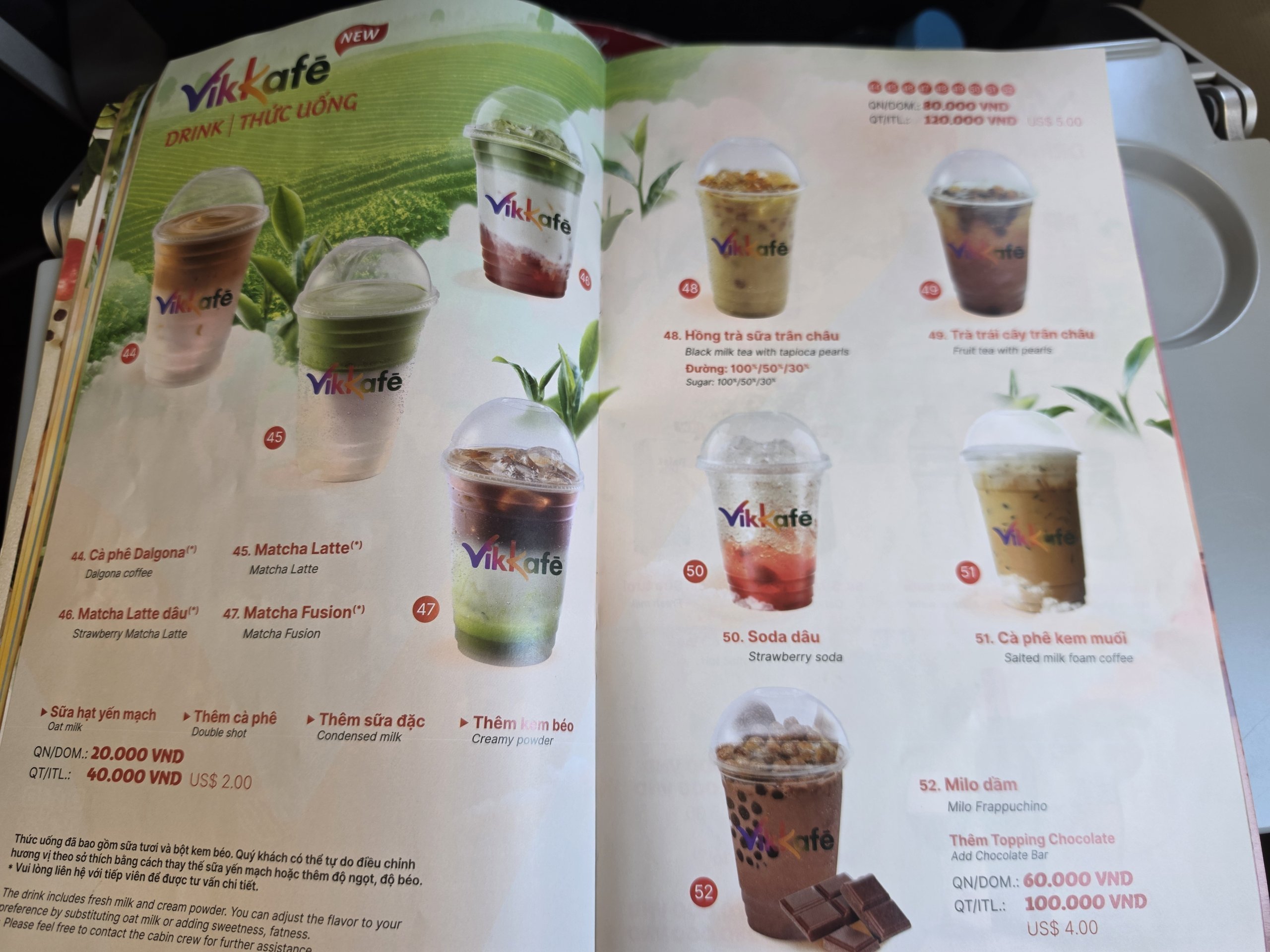
| Water, regular coffee or soft drink | 3 usd |
| Beer | 4 usd |
Pre-order items have their own price, which you will see when booking or managing your ticket. The table above shows the prices for on-board purchases.
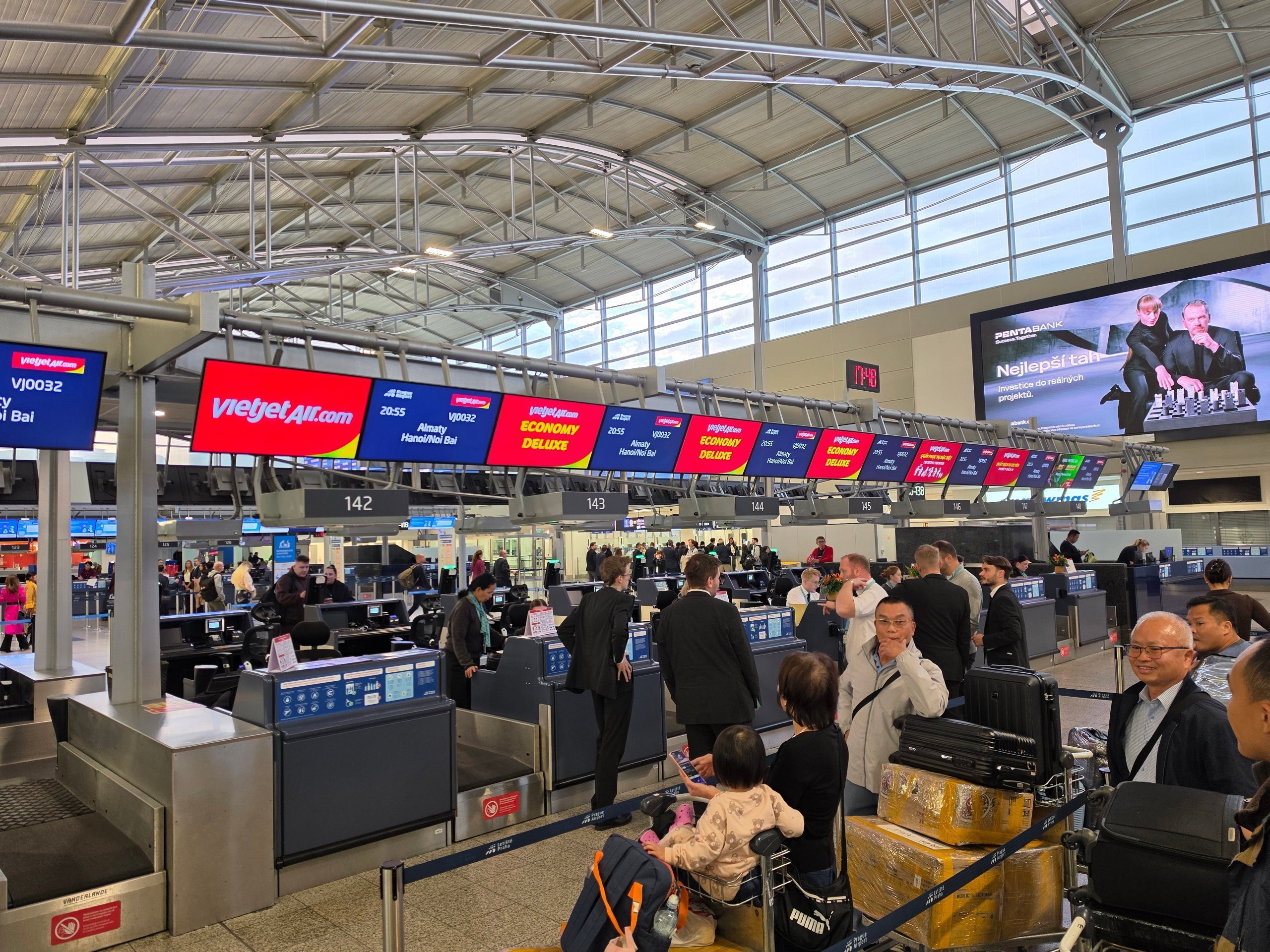
It wasn’t possible to check in online for this route, which I would personally have welcomed, as I was travelling with hand luggage only.
The airport check-in desk opens 3 hours before departure and everything went according to plan.
Just bear in mind that hand luggage is also weighed at check-in.
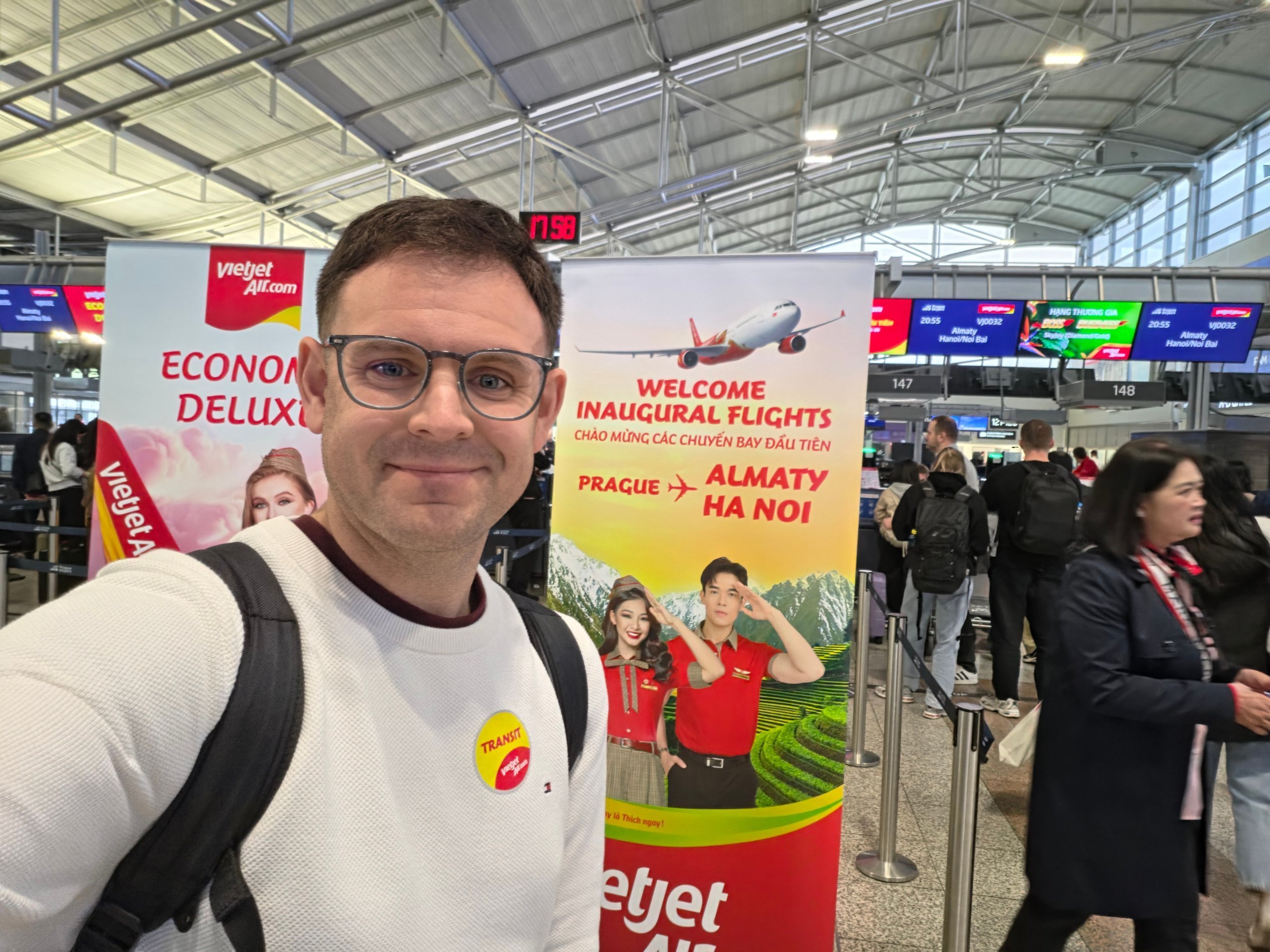
The only unusual thing is that you’ll be given a ‘Transit’ sticker, which you must attach visibly to your clothing.
This makes it easy to tell at a glance during the stopover in Kazakhstan who is continuing on to Hanoi and who is getting off in Almaty.
After checking in, I head to the lounge for dinner. Access isn’t included in the ticket price, but I’m using my Revolut plan. I write more about this in this article.
The flight from Hanoi arrives more or less on time, and the traditional water salute takes place, formed by two fire engines. This often happens at airports around the world to celebrate new routes.
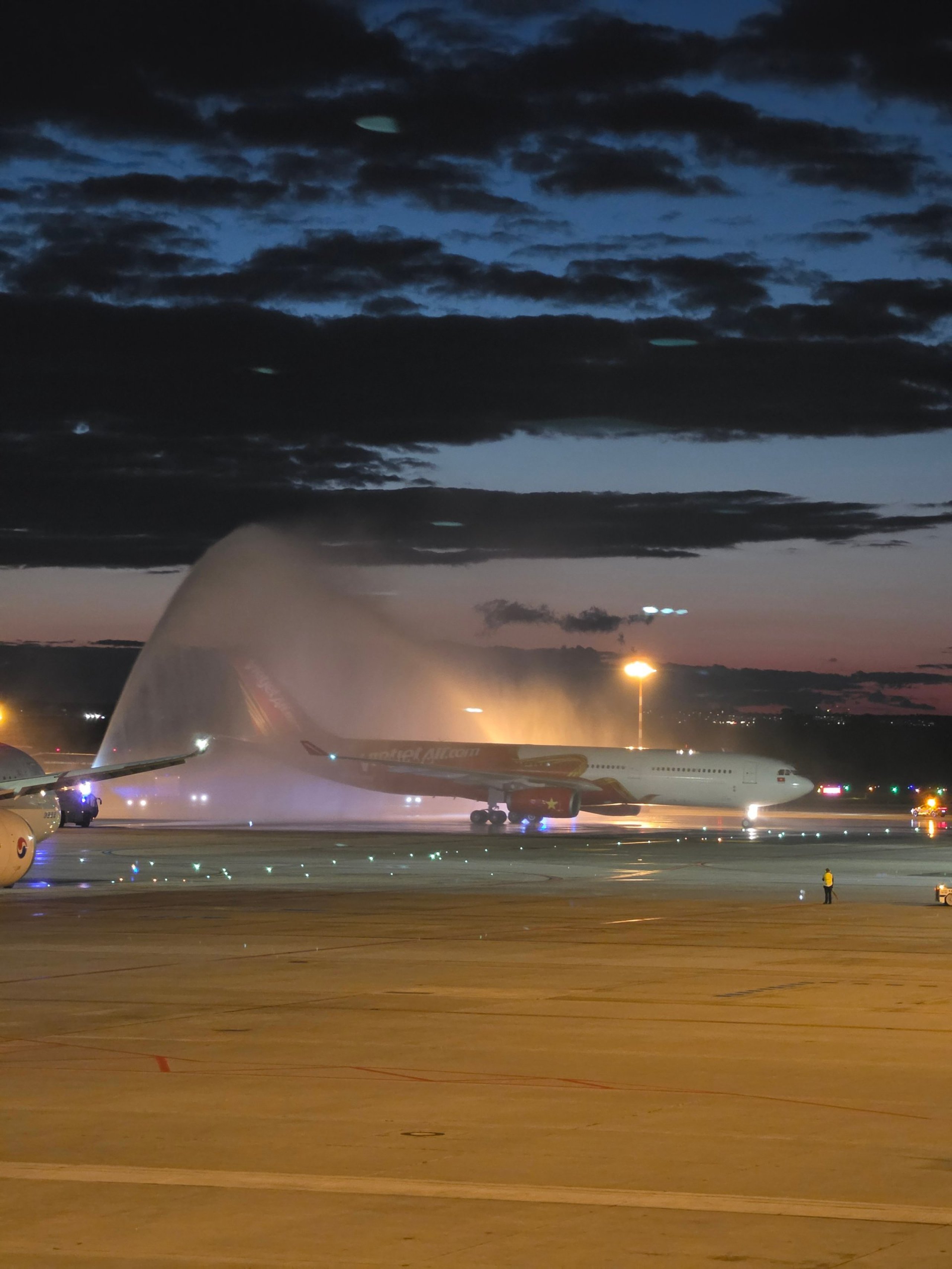
I then make my way to the gate, where a small reception is already underway, exclusively for invited journalists and influencers.
I bought my ticket with my own money, so I wait with the other passengers for about 30 minutes until the ceremonial welcome for the arriving passengers takes place.
After that, we’re allowed through security and into Gate B7.
A lovely surprise awaits us here. Refreshments for all passengers – free of charge, of course.
There are spring rolls, mini burgers, chicken wraps and water.

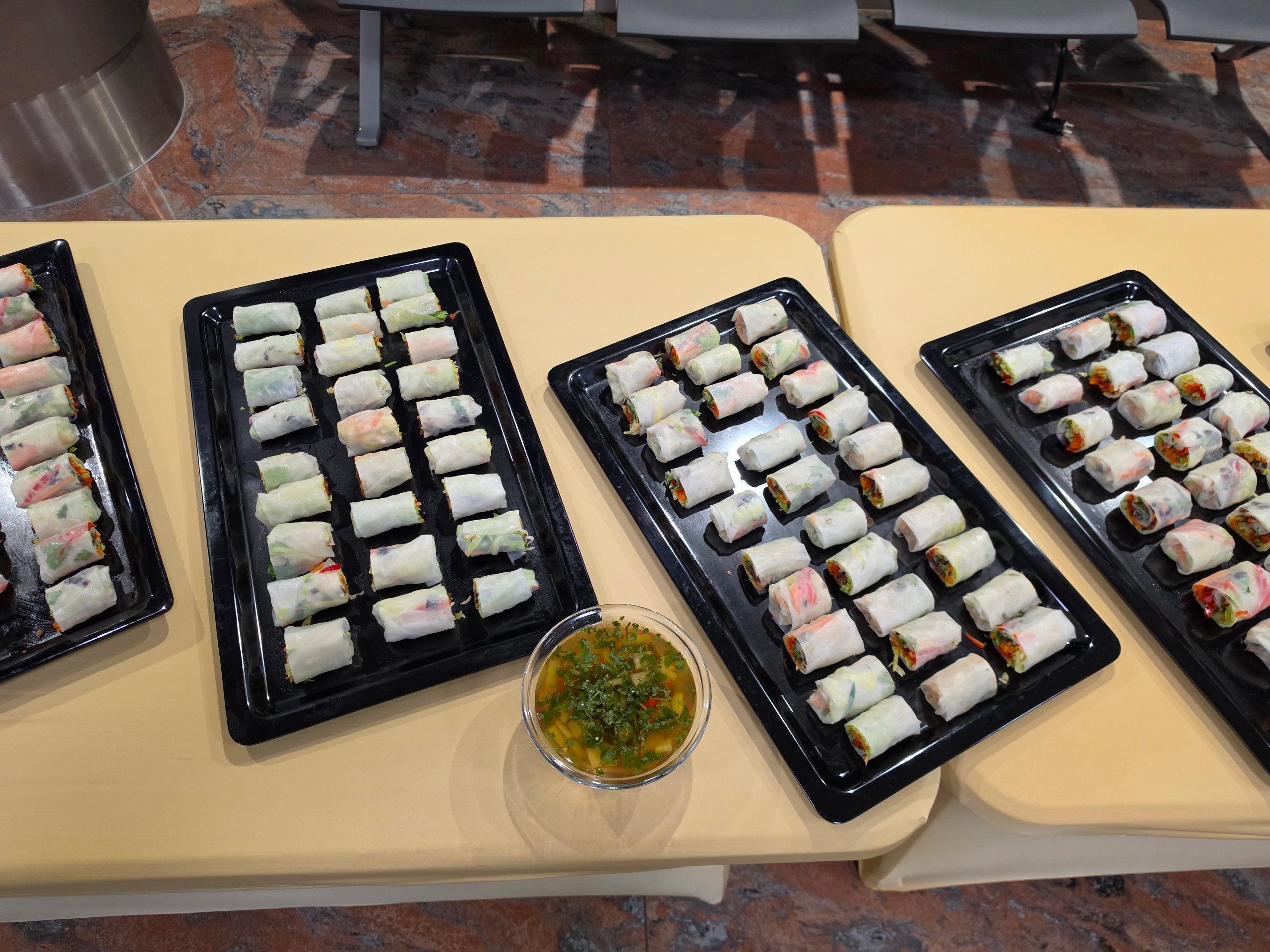
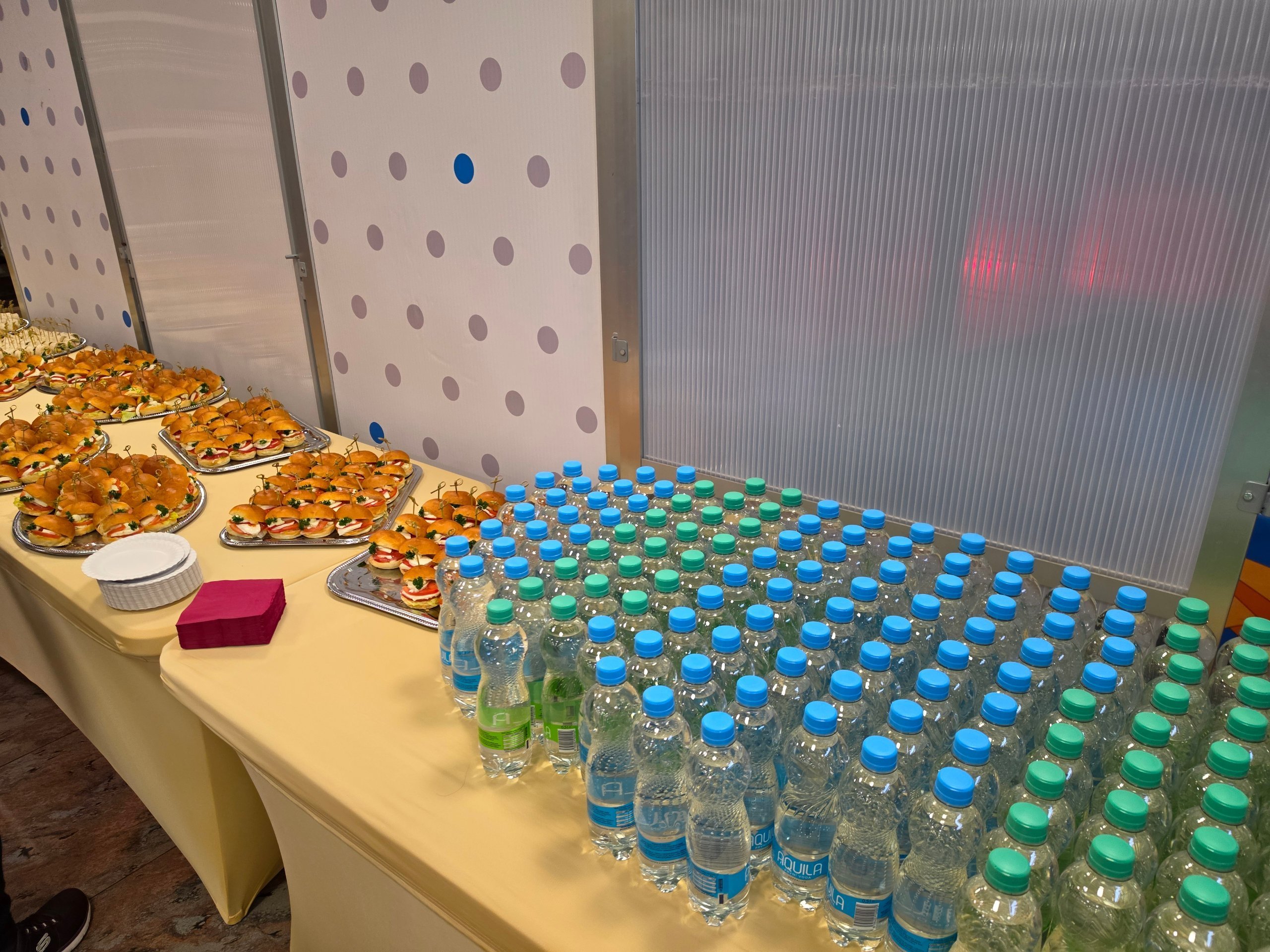
Meanwhile, a reception for invited guests is still taking place right in the gate area, where there are slightly better refreshments, dance performances and speeches – by the airport director, a representative of VietJetAir and the Vietnamese Ambassador to the Czech Republic.
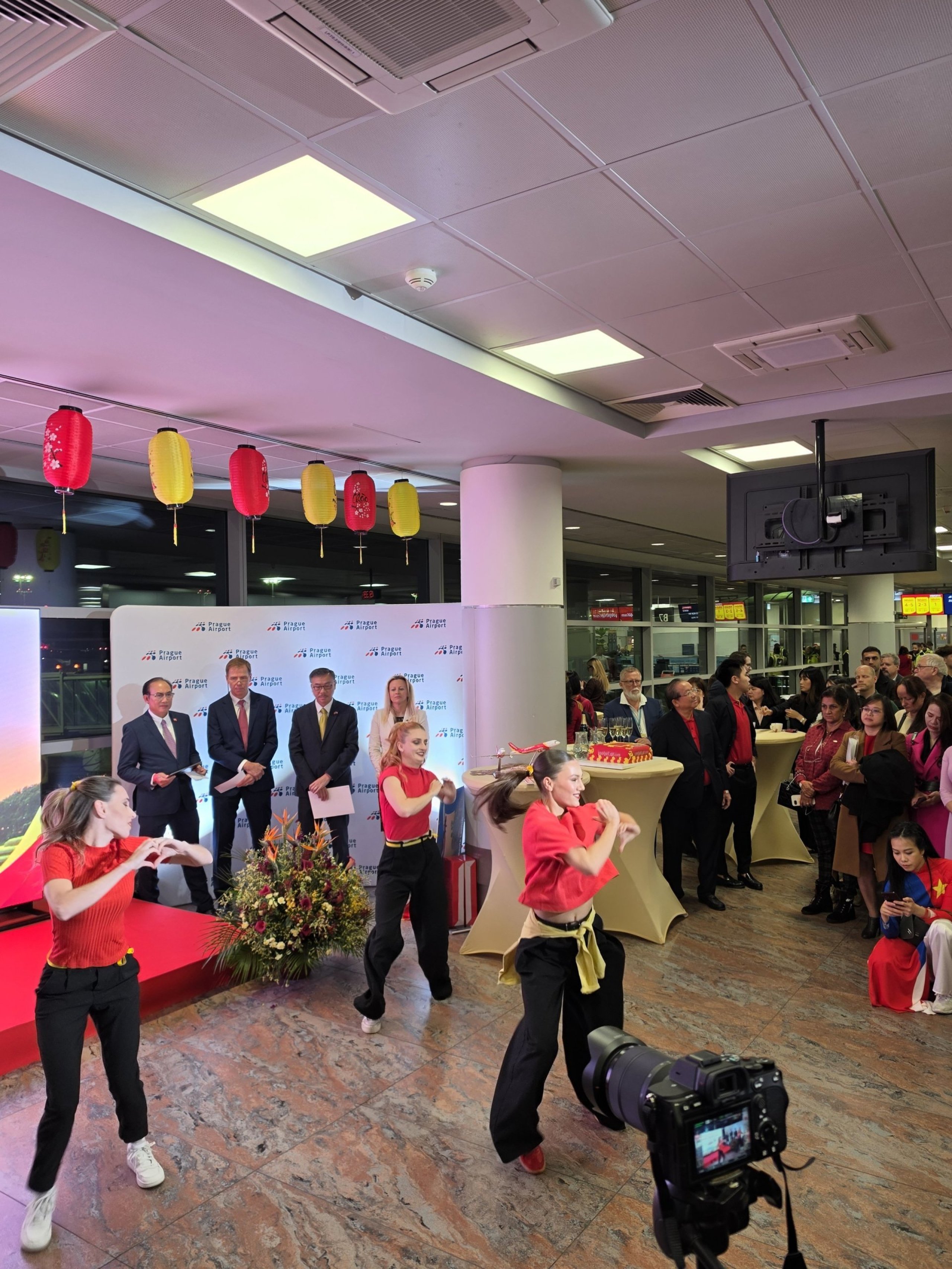
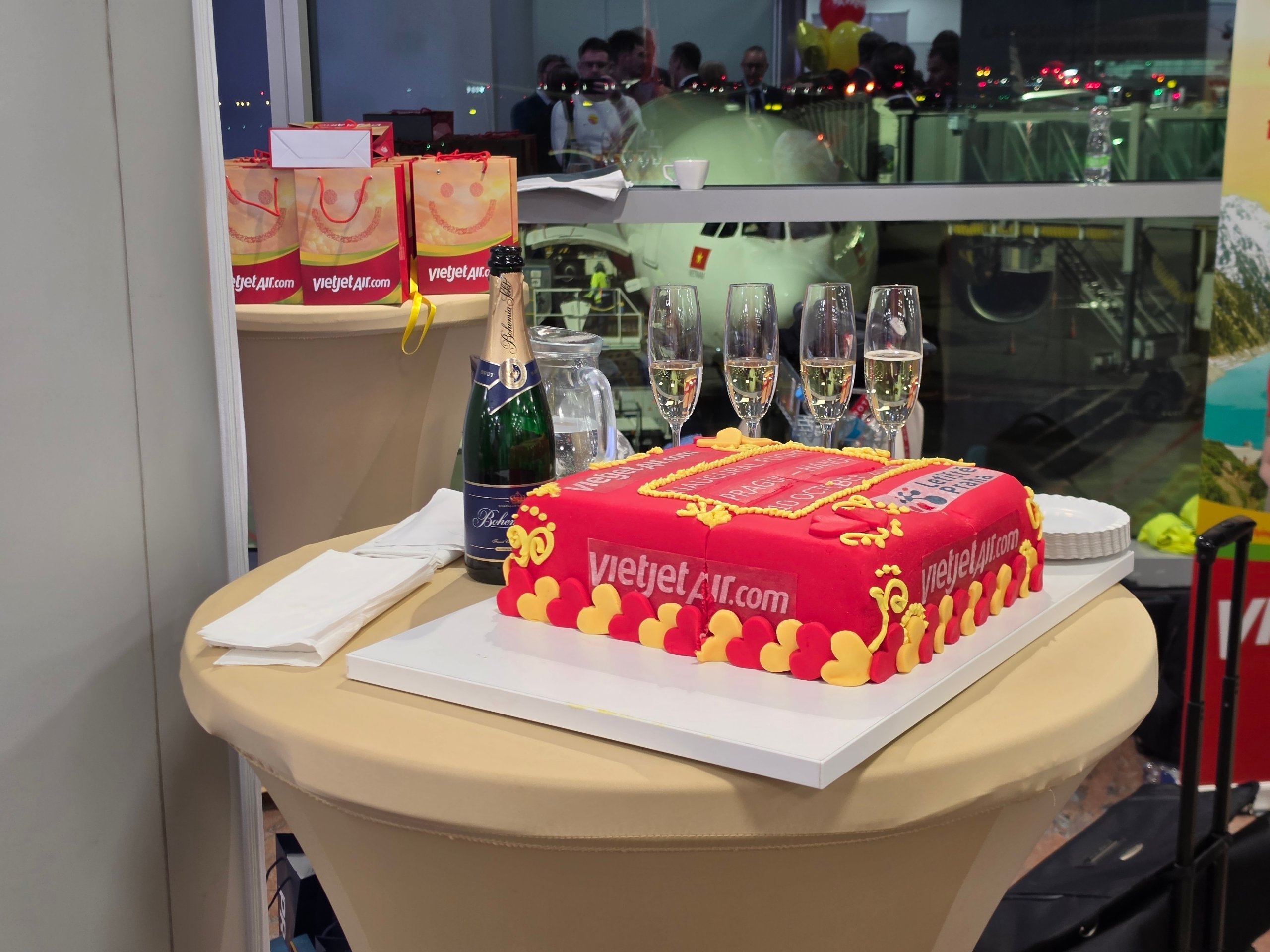
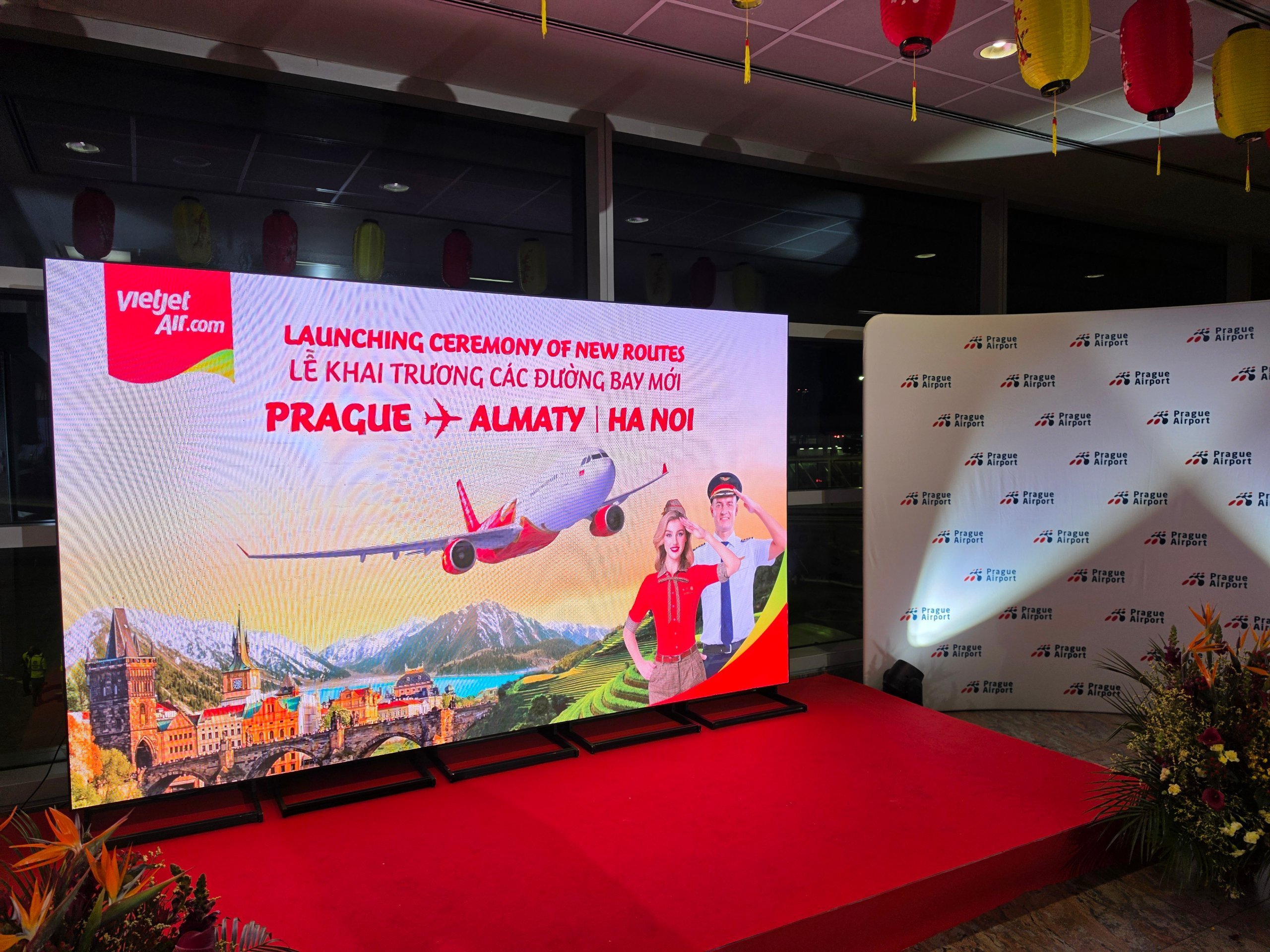
Despite all the celebrations, boarding for the flight is on time.
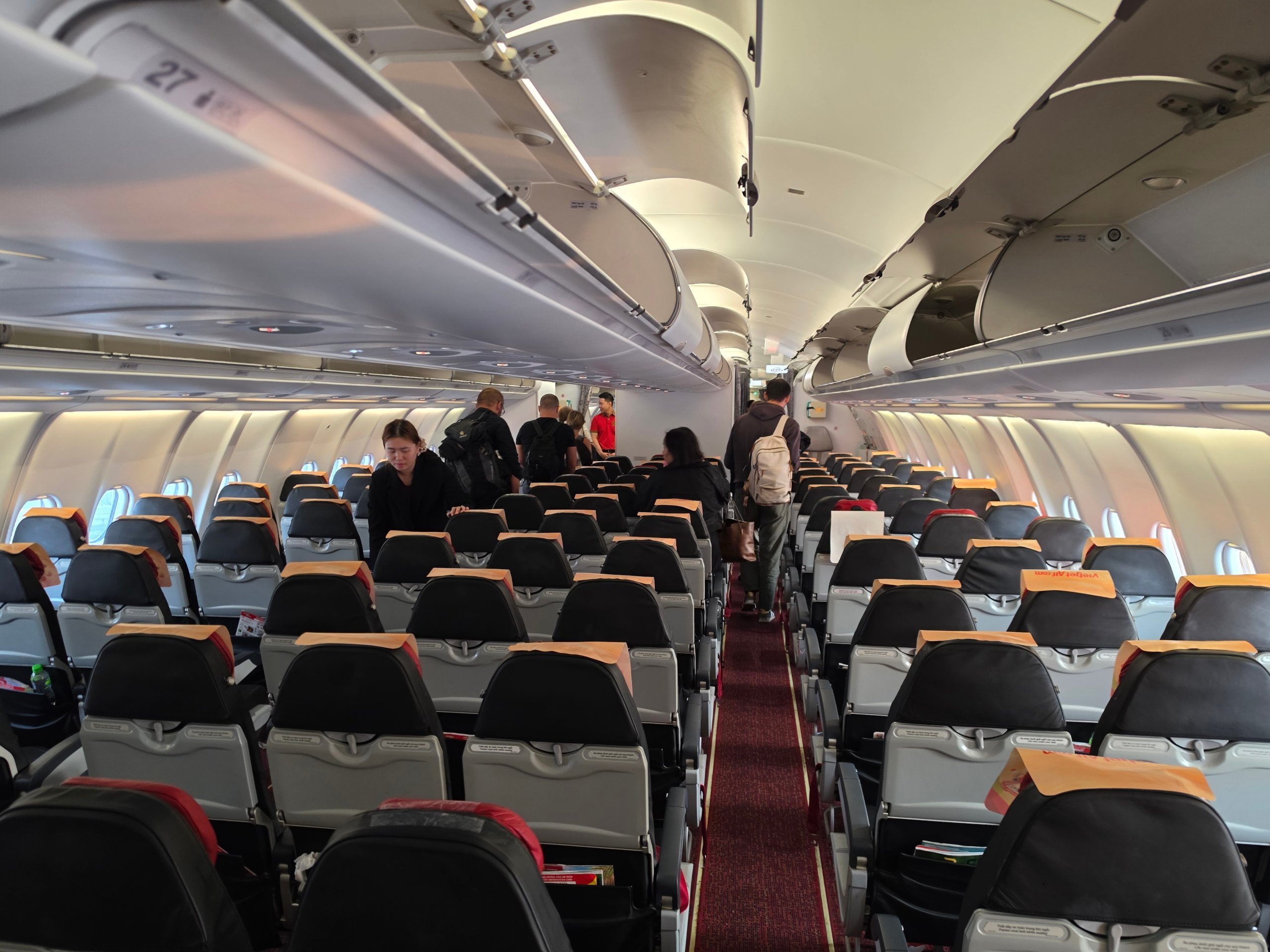
Boarding takes place directly via the boarding bridge. I’ve chosen seat 42 K, a window seat at the back.
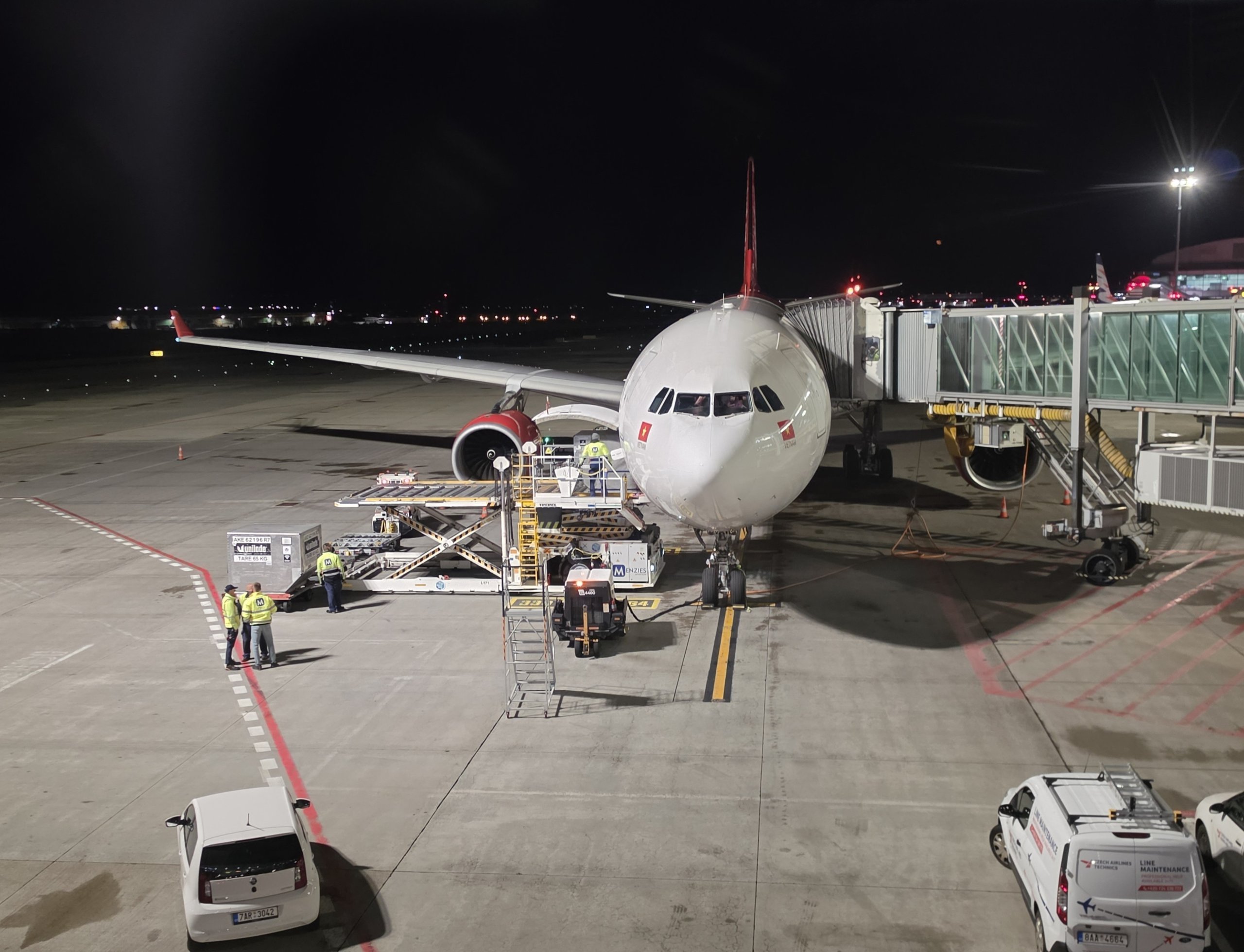
Most standard airlines operating Airbus A330 aircraft have a 2-4-2 seat configuration.
That is, 2 window seats – aisle – 4 middle seats – aisle – 2 window seats.
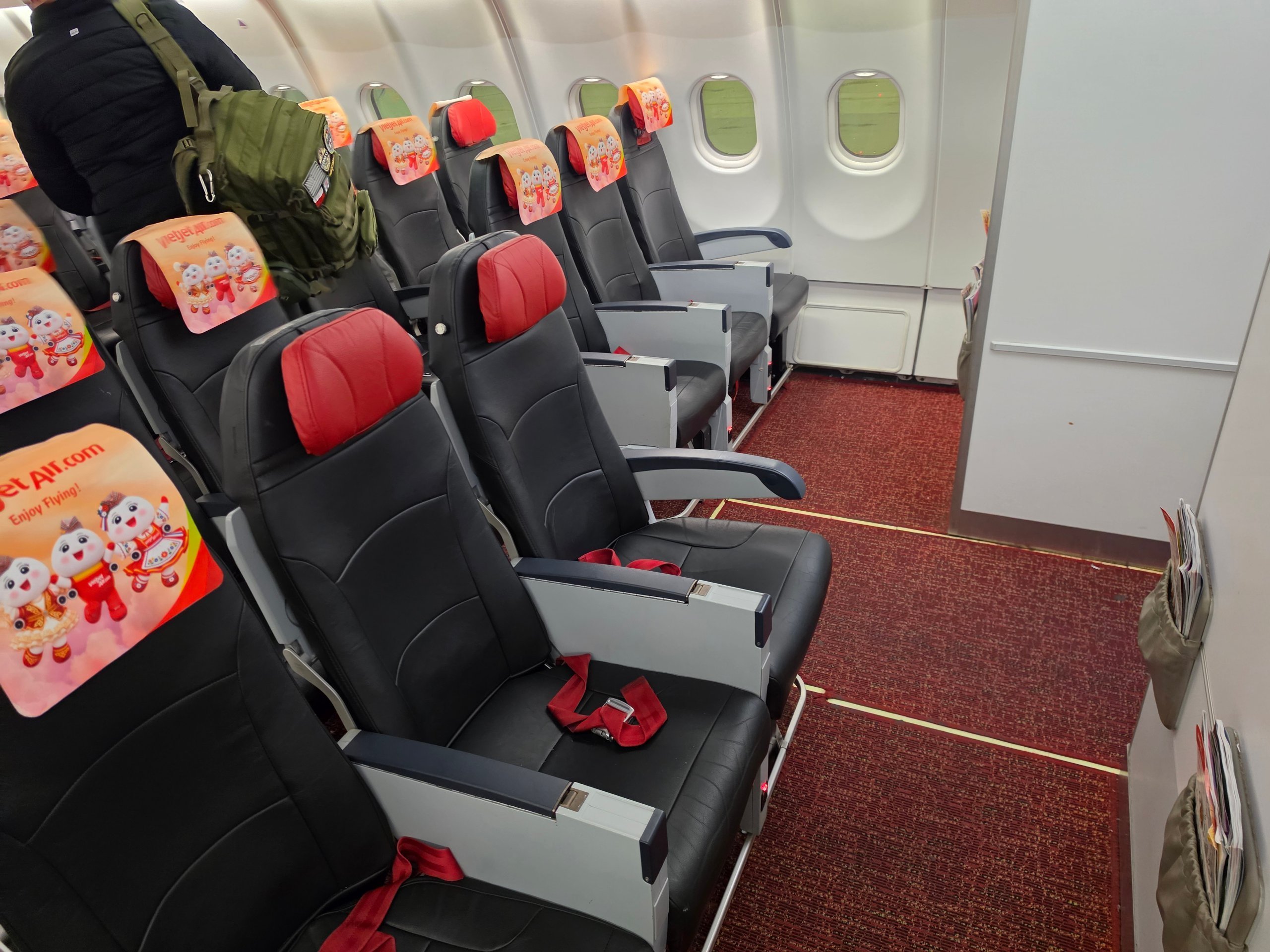
VietJetAir (as well as many other low-cost airlines) has a 3-3-3 configuration. That means one extra seat per row – and you really do notice the difference!
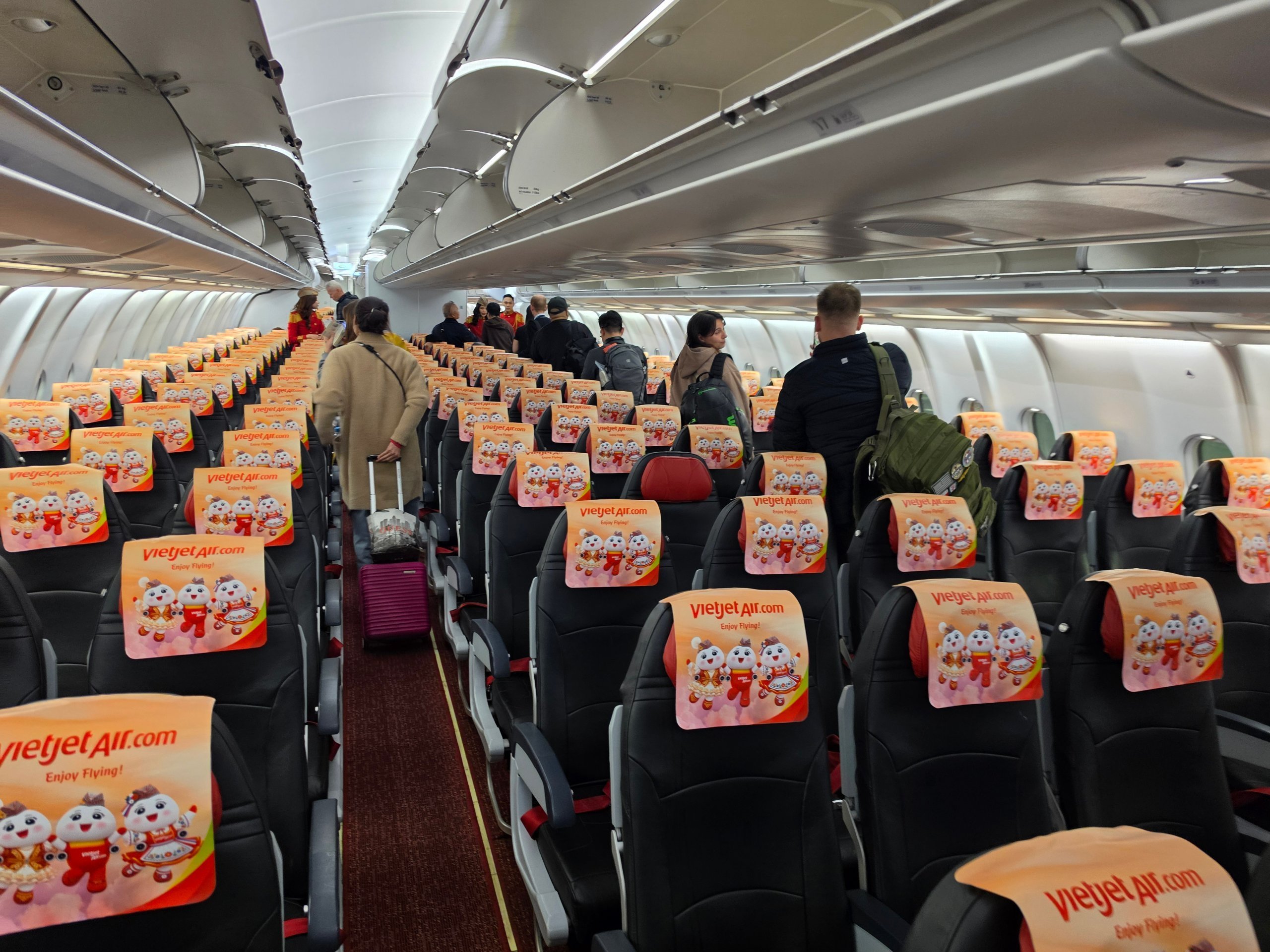
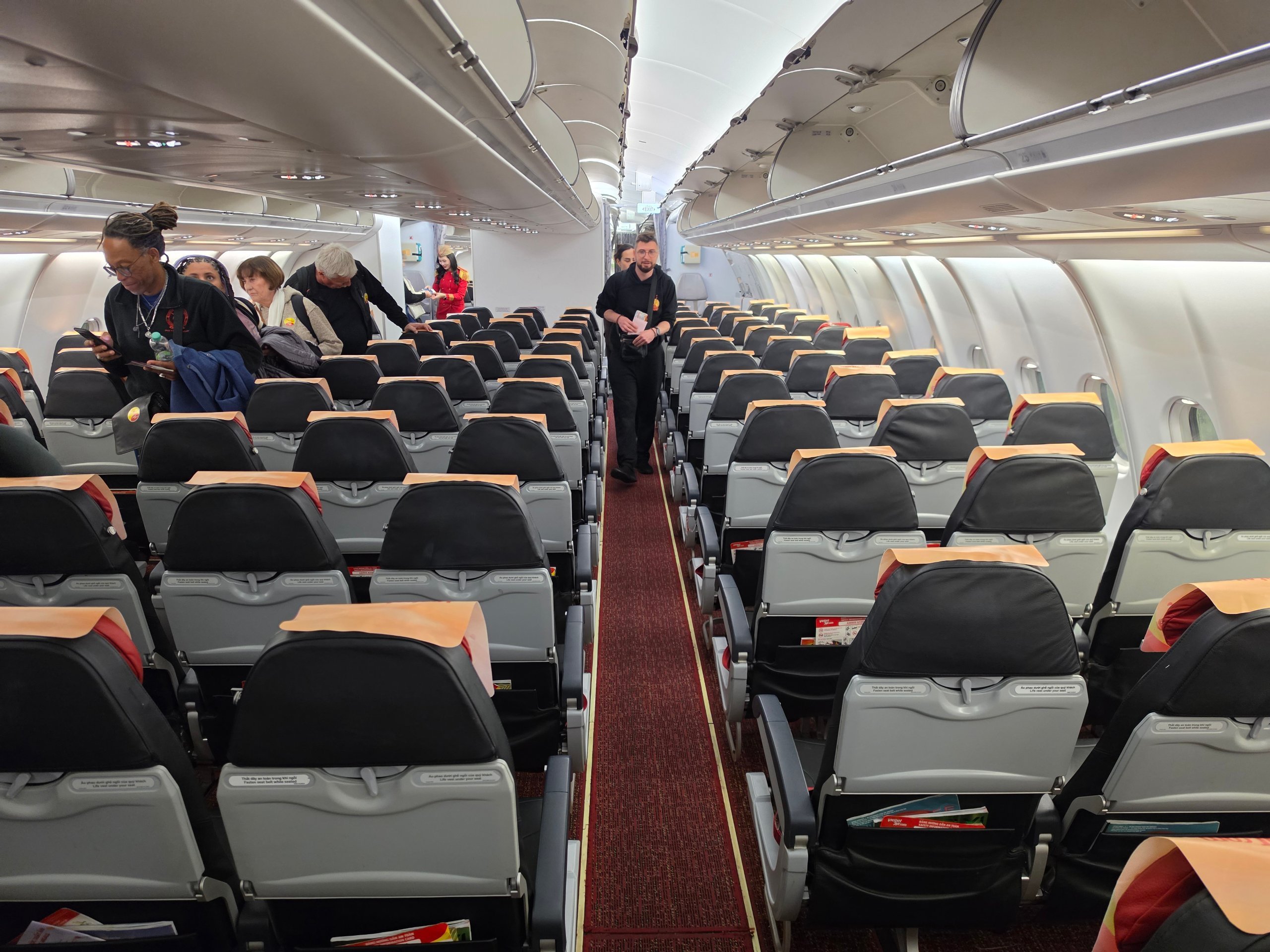
There’s really woefully little legroom here. At least that’s how it feels.
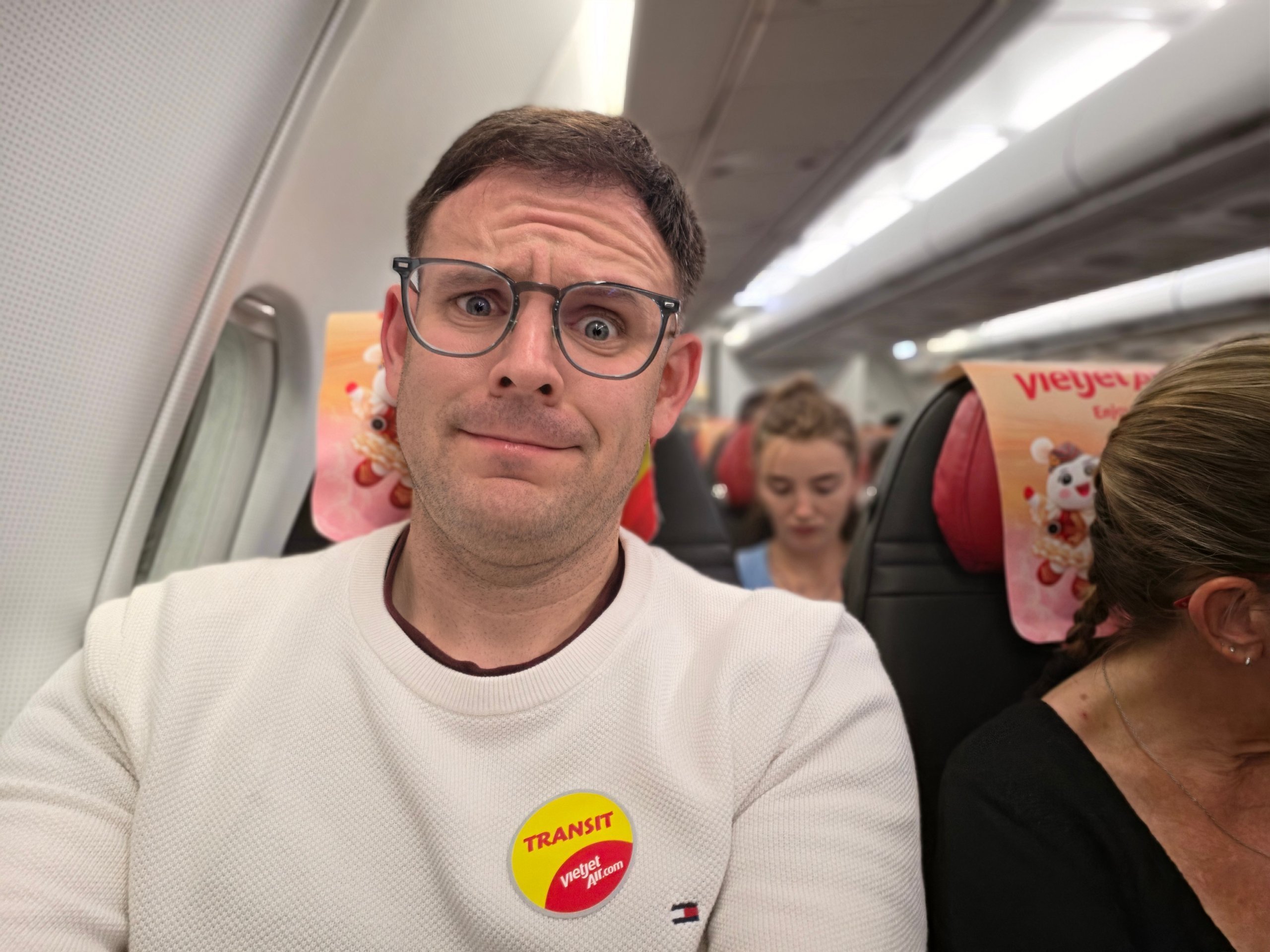
The legroom isn’t anything to write home about either (what they call ‘two-finger’ space), but I’m 175 cm tall, so for me personally it’s absolutely fine.
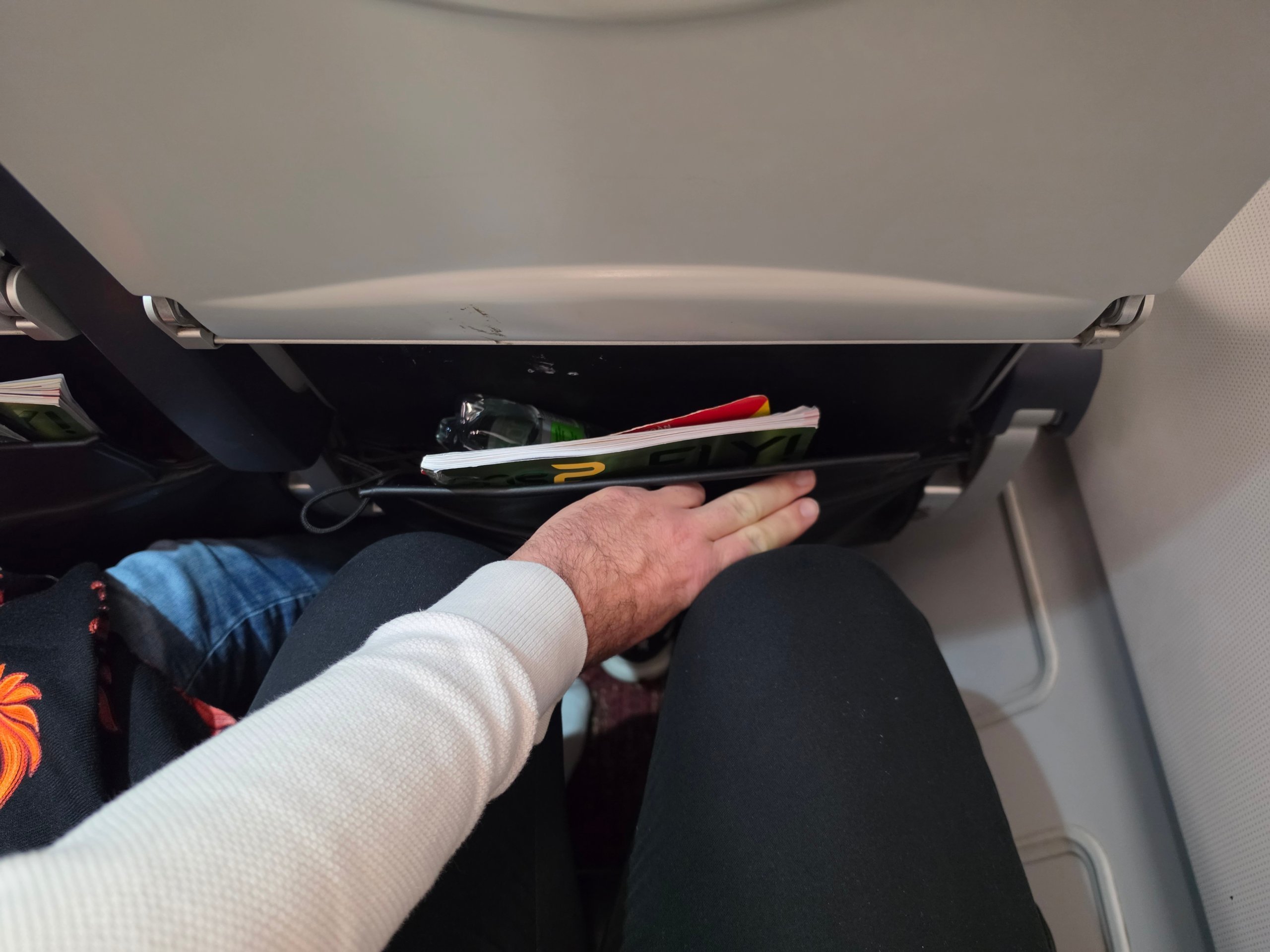
Compared to other airlines, though, it’s not that bad, at least according to the figures:
However, the cabin feels cramped, mainly due to the very narrow aisles. And even those seats that are 3–6 cm narrower really do make a difference on a 14-hour flight.
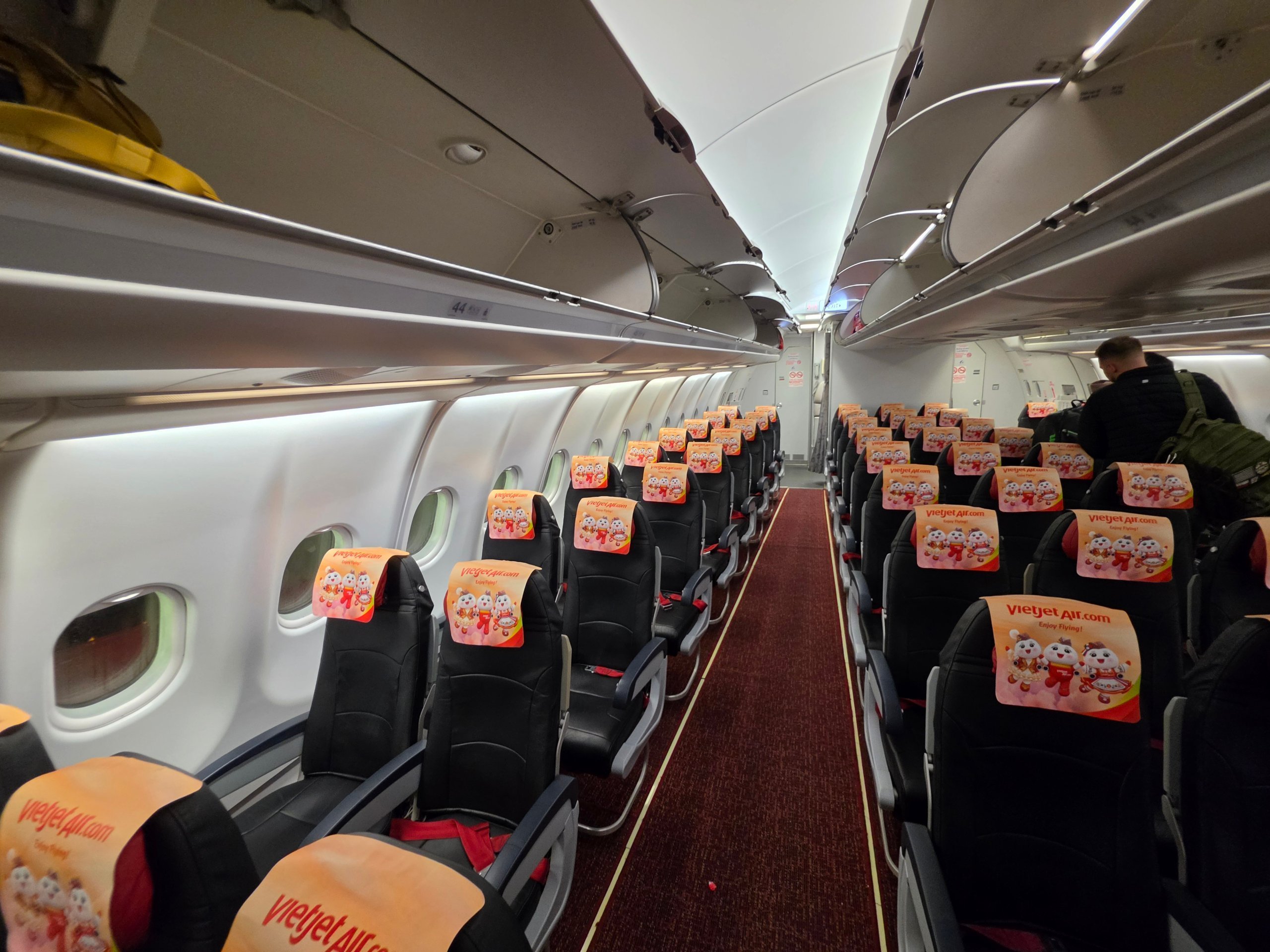
The rear of the aircraft tapers in, so between rows 44–51 the seating configuration is not 3-3-3, but only 2-3-2.
Whilst the width of the seat itself remains the same, the aisle is wider, and if you’re travelling as a couple, it’s definitely better to sit in a separate two-seater row.
Actually, quite well.
As I mentioned above, there’s exactly the same amount of legroom as on all other airlines.
The narrower seat isn’t exactly comfortable, but this is mainly noticeable to those sitting in the middle or by the aisle.
I always sit by the window, where I can lean against the wall and gain a few centimetres of extra space.
Sure, it’s not comfortable. But tiredness takes its toll, and I end up sleeping quite well on both flights (from Prague to Almaty and from Almaty to Hanoi).
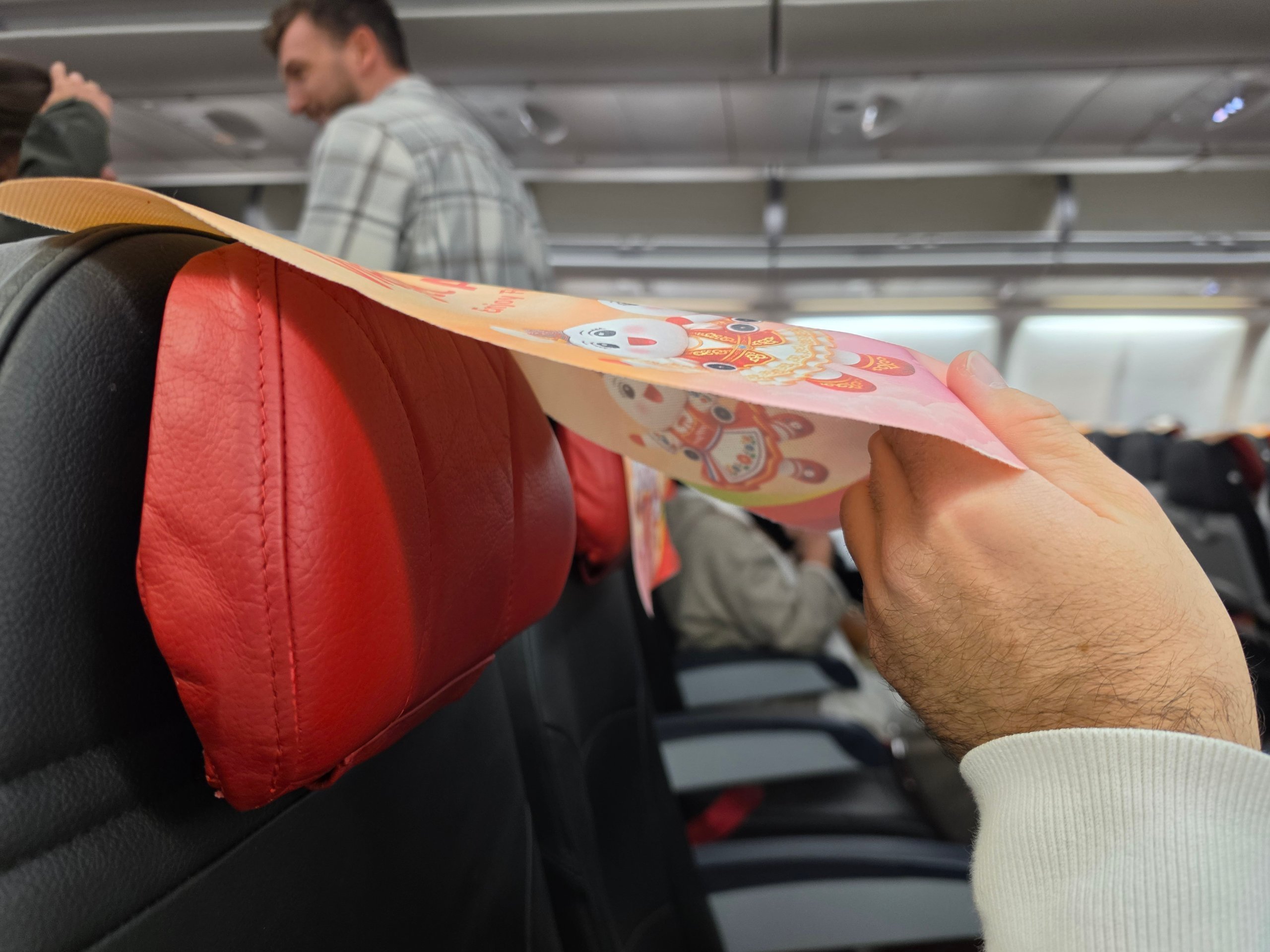
I also rate the mouldable headrest highly. It’s quite small, mind you, but it holds its shape well, so it’s quite useful.
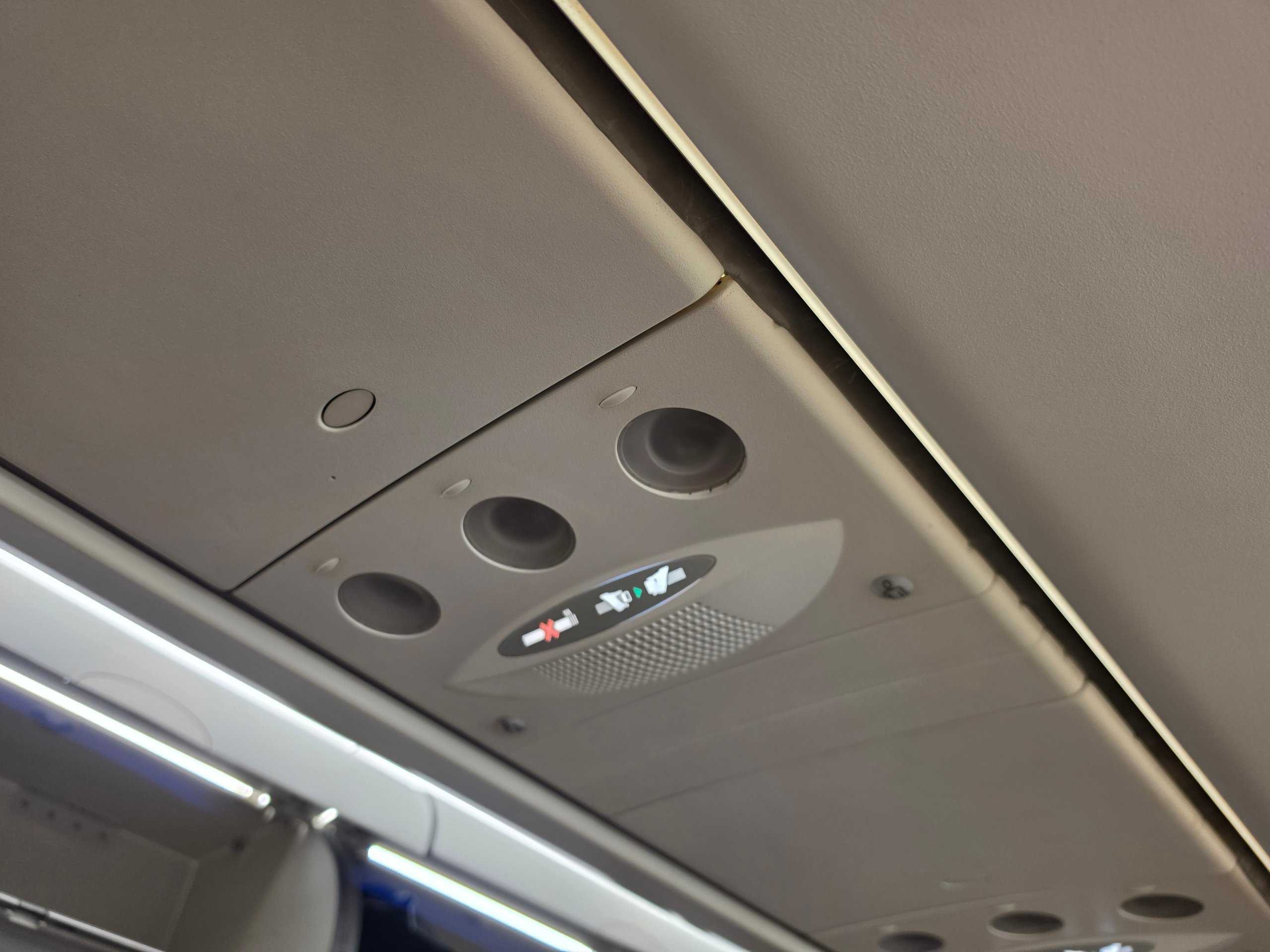
I consider the lack of any sort of charger to be a major drawback. There’s no universal socket or USB port. And you’re not allowed to use power banks during the flight, so if you’re planning to watch downloaded videos on your mobile, make sure it’s fully charged!
The second major drawback is the lack of individual air conditioning vents. However, this is quite common on long-haul aircraft and is certainly not a problem unique to VietJetAir.
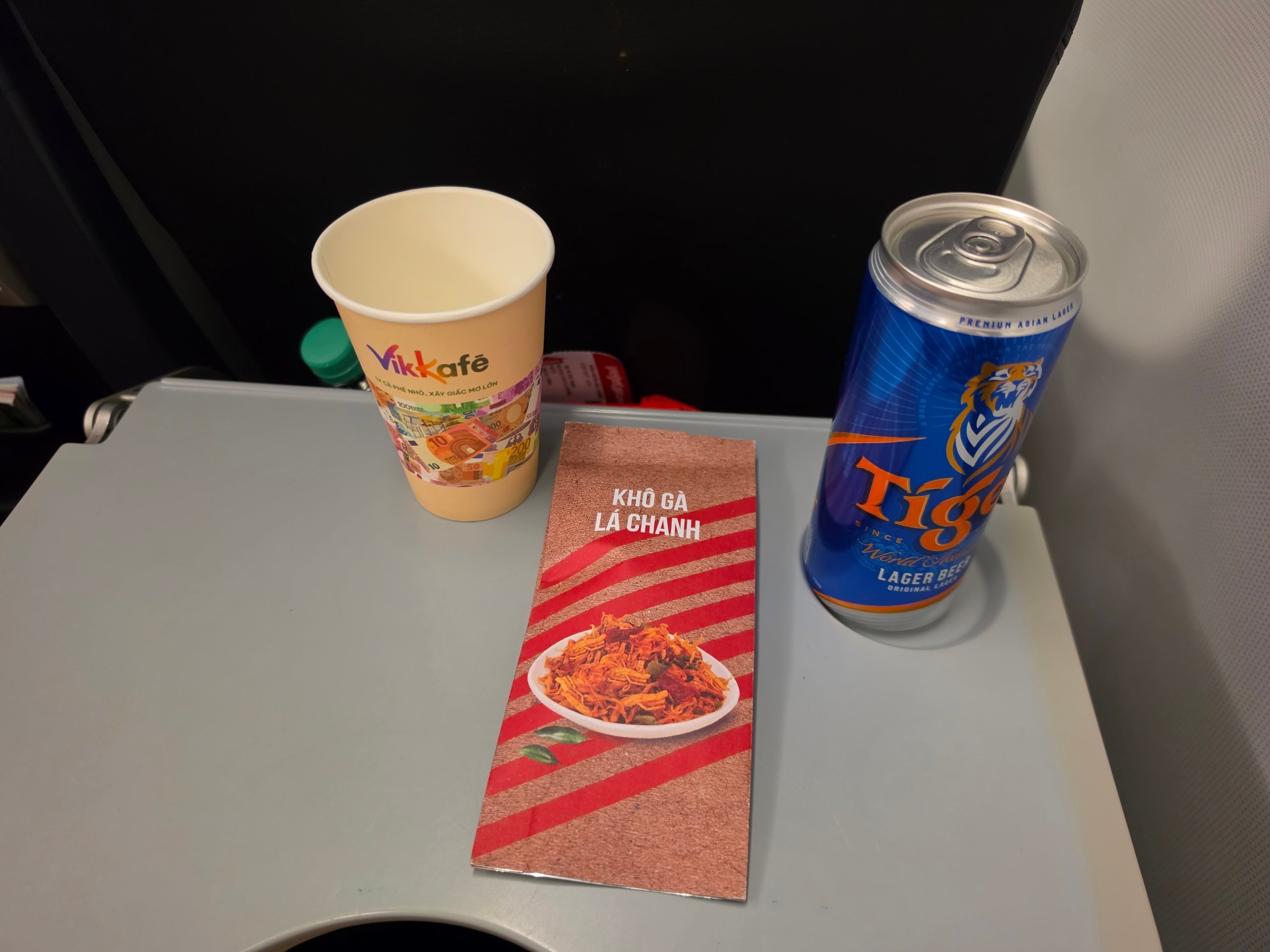
Nothing. The cheapest ‘Eco’ fare includes neither food nor drink.
I underestimated this a bit and tried to order a meal online via the booking management system just one day before departure.
But you have to order a standard hot meal at least 48 hours in advance, so all I was left with was a combo of beer and dried chicken (or crisps).
I don’t know why, though, why the only option was a combo with beer and not with a soft drink.
So I’ll place my order and hope I can buy something extra on board.
The in-flight service begins about 30 minutes after take-off. Those who ordered their meal in advance are served first.
From what I can see, the portions are really minimal.
💬 If anyone’s flying and takes their own photo of the meal, I’d be delighted if you could post it in the comments below the article.
I’m having my dried chicken with a beer. It’s ten o’clock in the evening and, combined with the pre-flight snack, that’s enough for me, so I’ll order my next meal on the flight from Almaty to Hanoi.
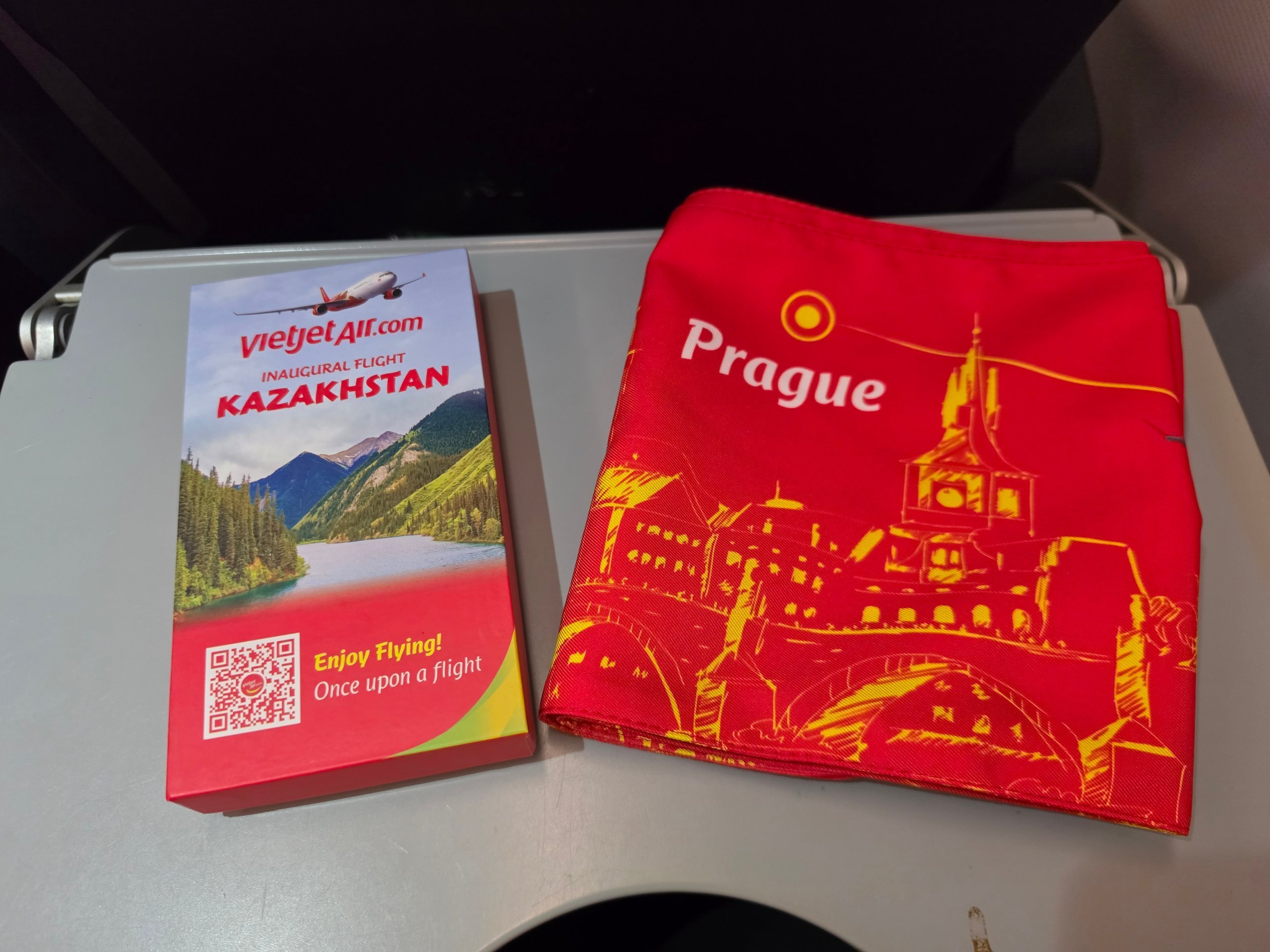
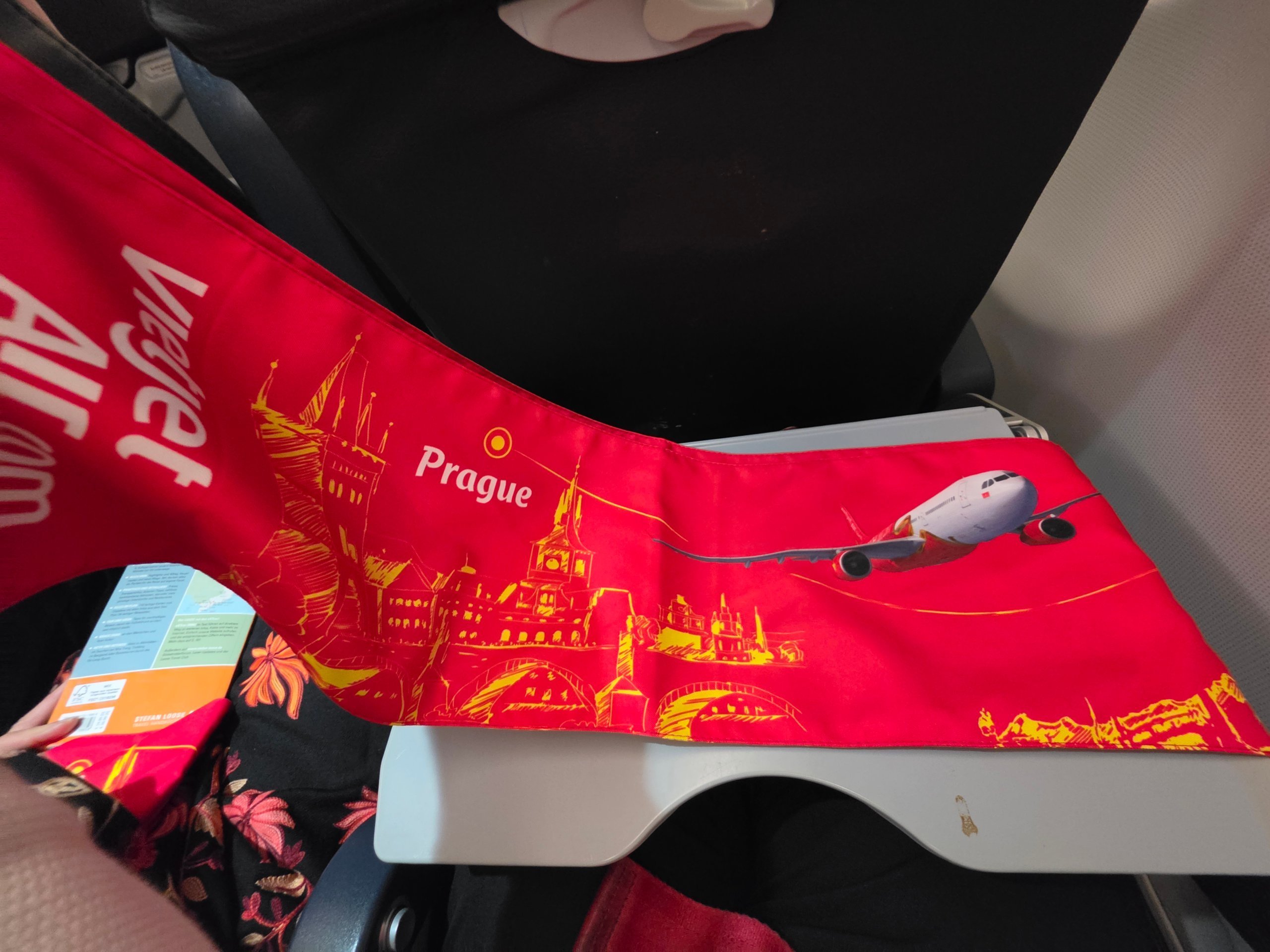
All passengers receive commemorative gifts from the crew to mark the inaugural flight: a keyring and a scarf.
VietJetAir’s seats are not fitted with screens, and VietJetAir does not offer its own in-flight entertainment service with films.
Be sure to download plenty of films and podcasts onto your mobile, tablet or laptop before you fly.
I’d planned for this in advance, but in the end, after ‘dinner’ and one video, I fell asleep and didn’t really wake up until about 30 minutes before landing.
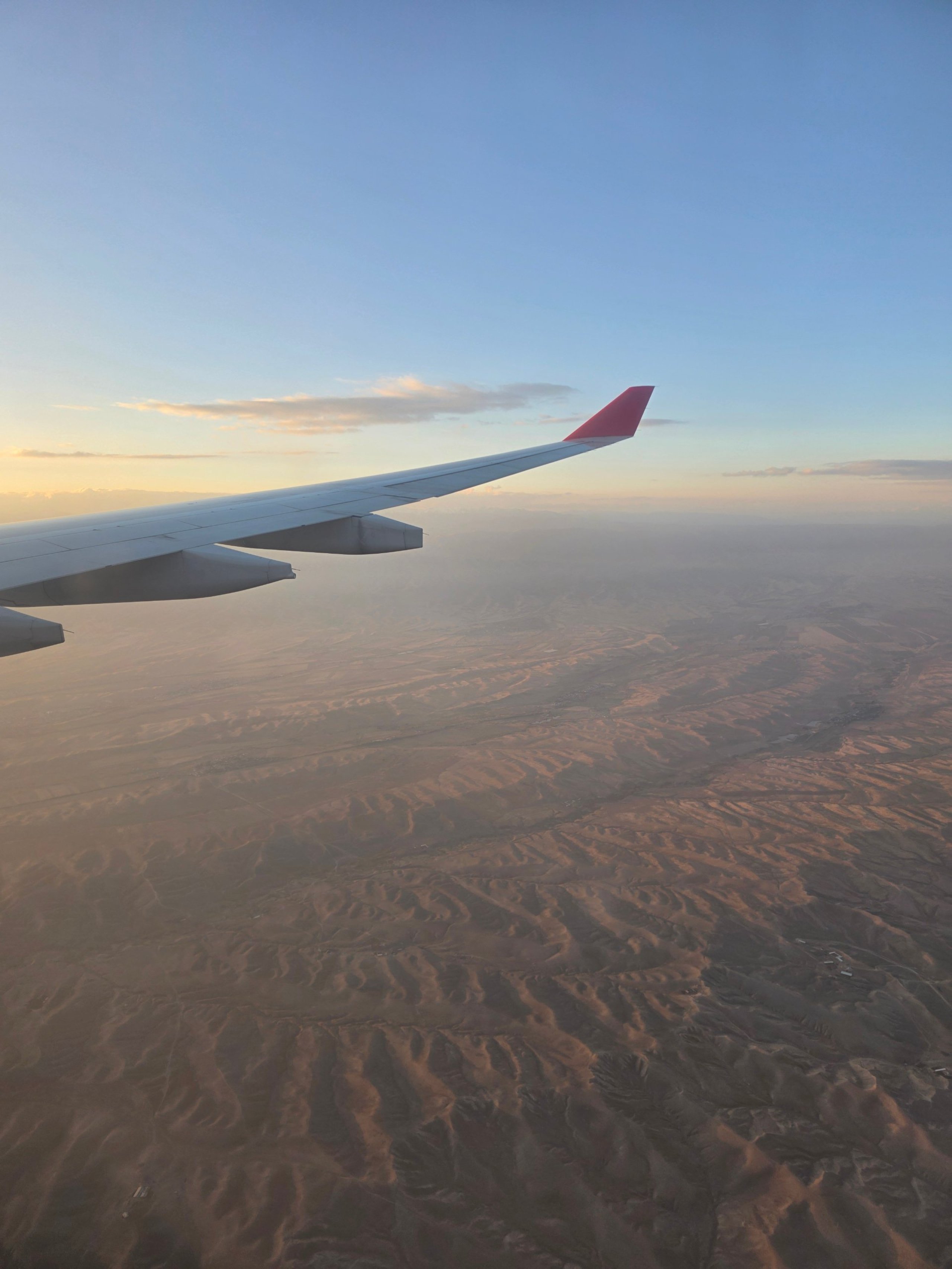
Here we’re landing over the Kazakh desert:
This was definitely the biggest disappointment of the whole flight.
A stopover is simply a stop along the way, after which you continue on the same aeroplane.
I’ve been on plenty of flights like this, and in the vast majority of cases I’ve stayed on board. Similarly, for example, David did so during a flight with SCAT from Prague to the Chinese island of Hainan.
On a couple of occasions, we had to get off the plane, but we walked through a short corridor straight to the gate, from where we boarded again.
In Almaty, things are done differently.
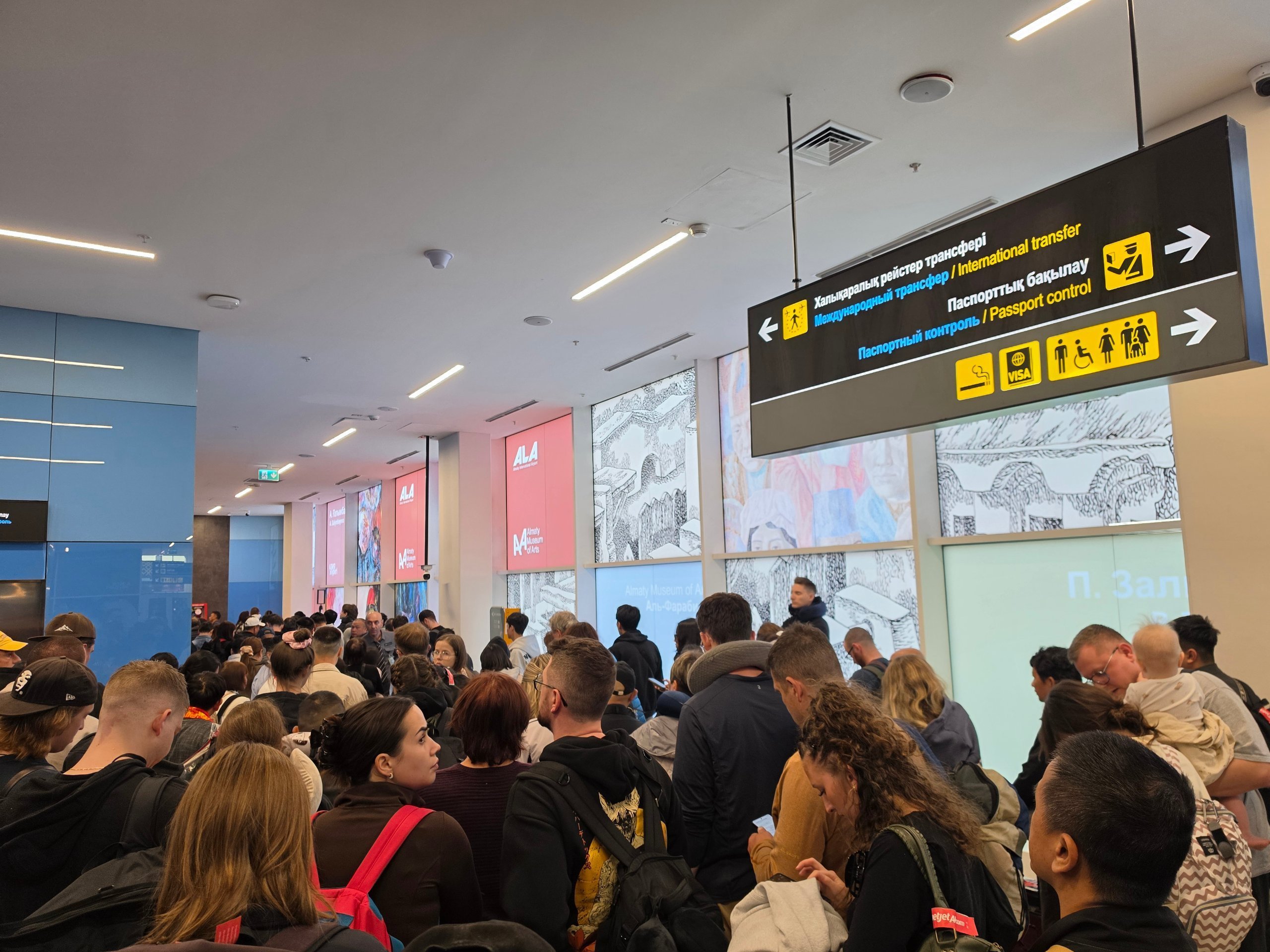
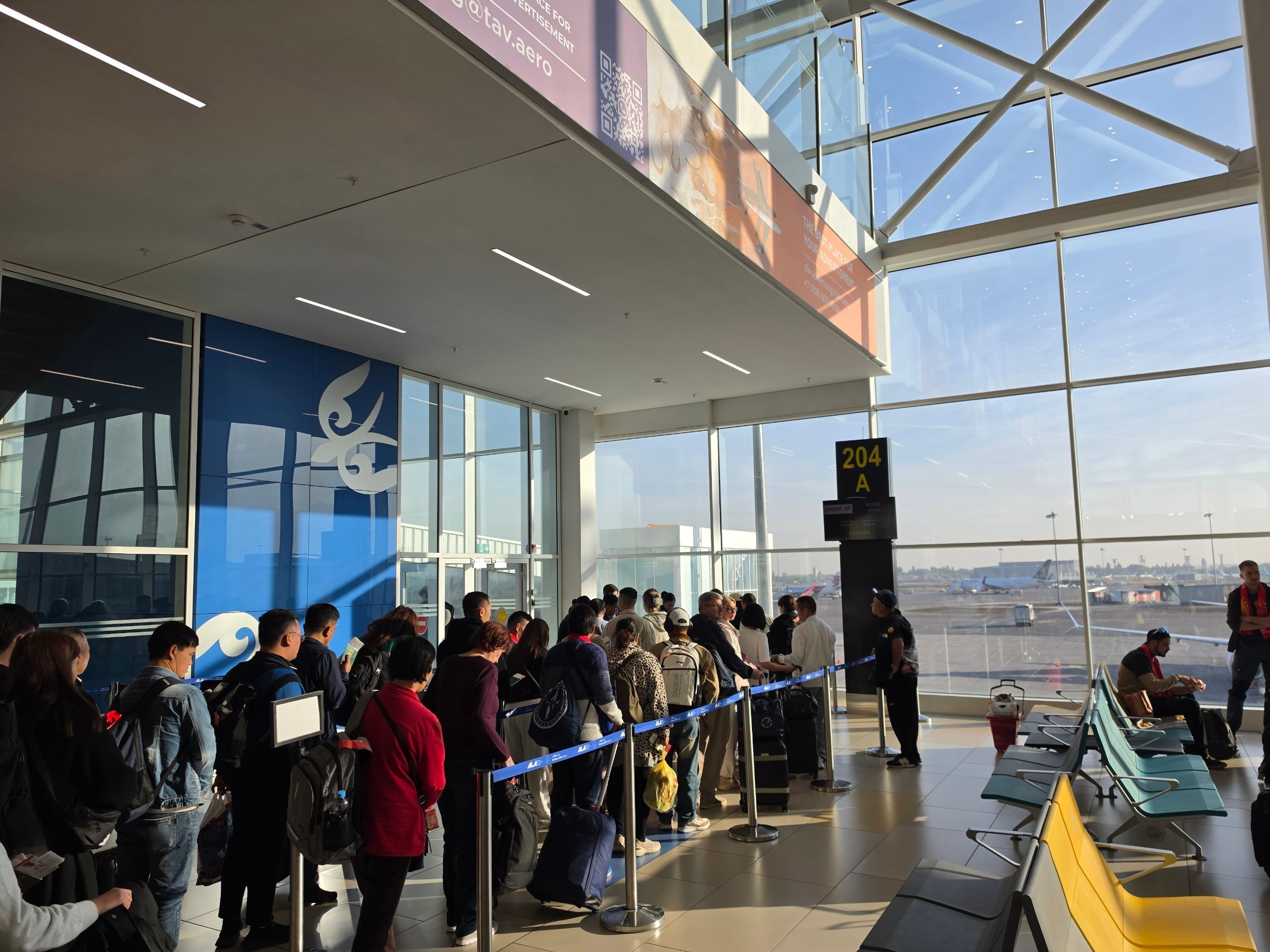
We disembark into the terminal and, following the clear signage, proceed… to completely standard transfer counters. It’s as if we were actually changing planes.
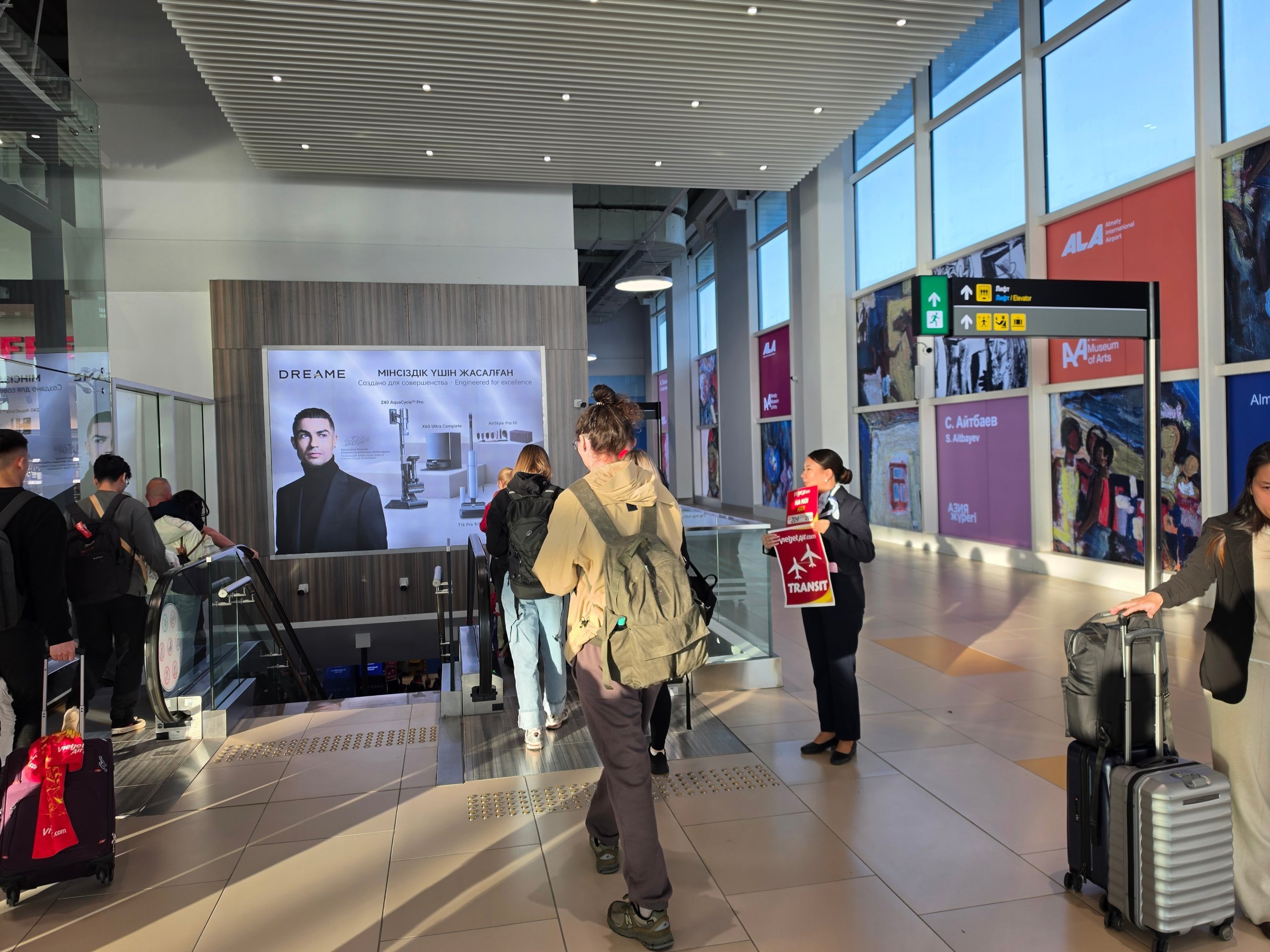
An extra-long queue forms immediately, in which I spend about 30 minutes.
First, our boarding passes are checked, and for some reason the Kazakh immigration police take photos of all the passengers’ passports. Yet, technically, we aren’t actually entering Kazakhstan at all.
This is followed by another queue for the standard security check.
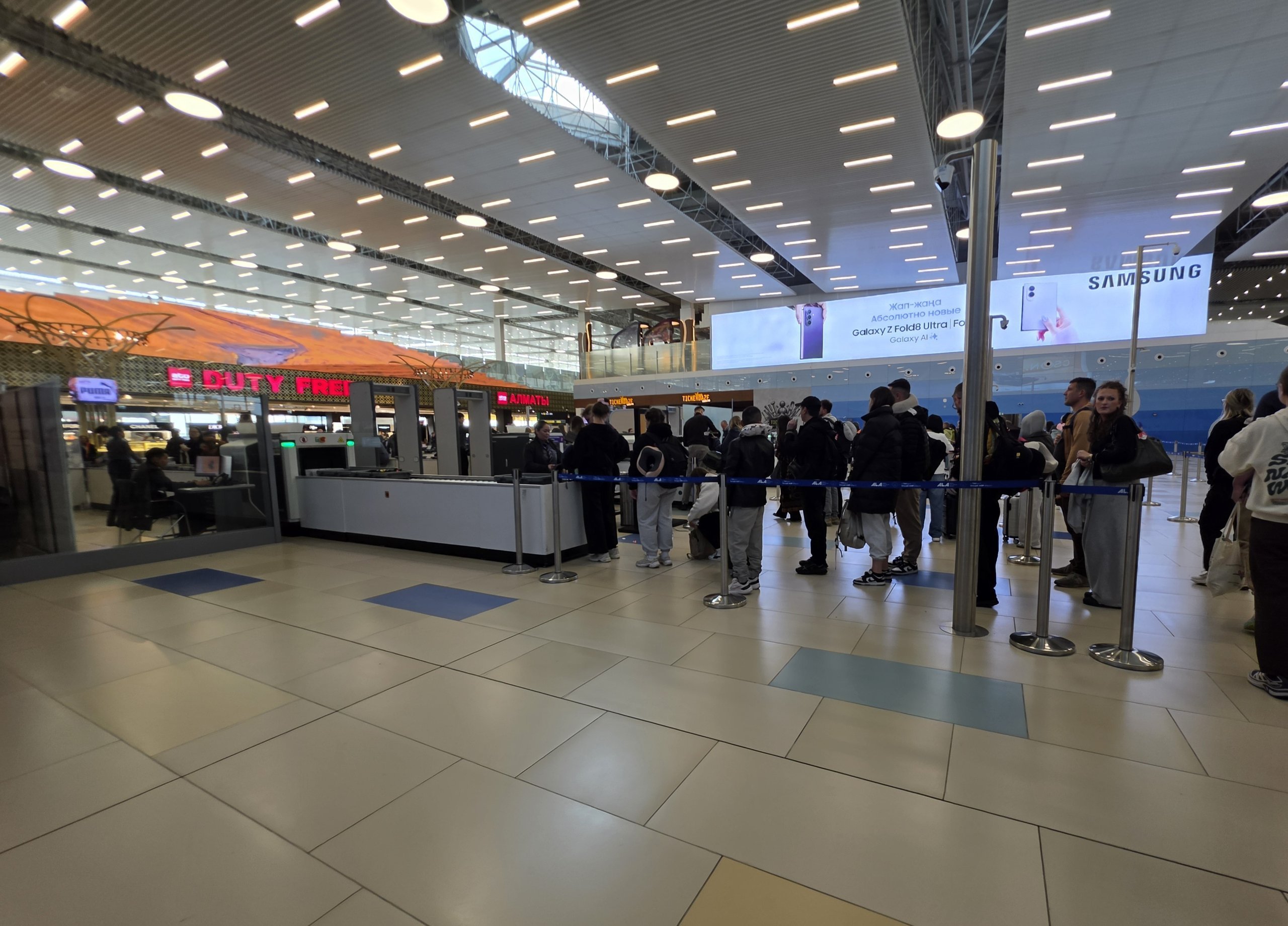
After that, I have to find the gate, which, fortunately, isn’t a problem in Almaty, as the terminal is really small.
All in all, the procedures during the stopover took about 45 minutes.
There are still a few minutes left before departure, so I’ve got time to buy some refreshments. In Almaty, there’s a really wide range of options: there’s a large duty-free shop, RELAY, KFC and cafés.
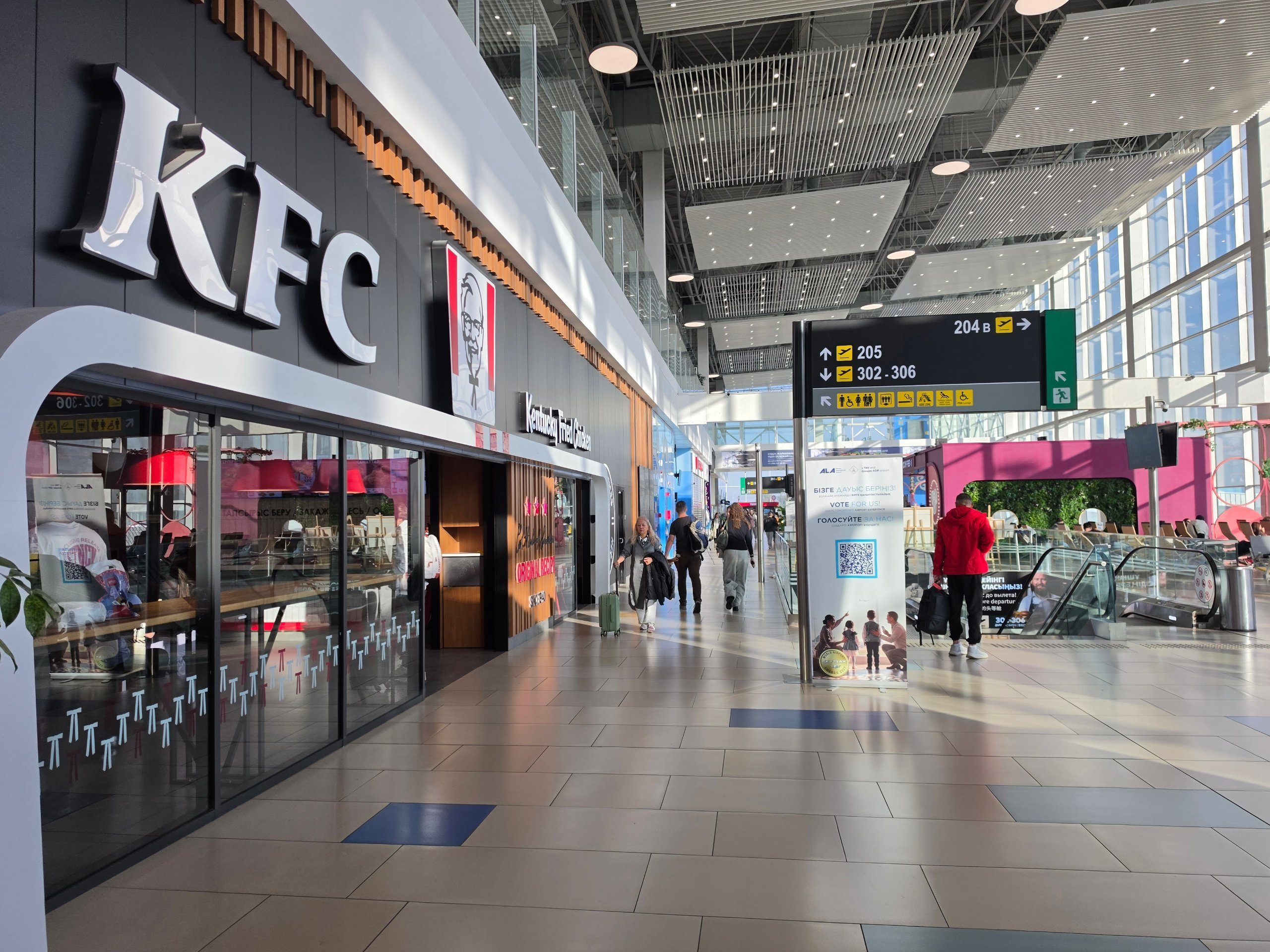
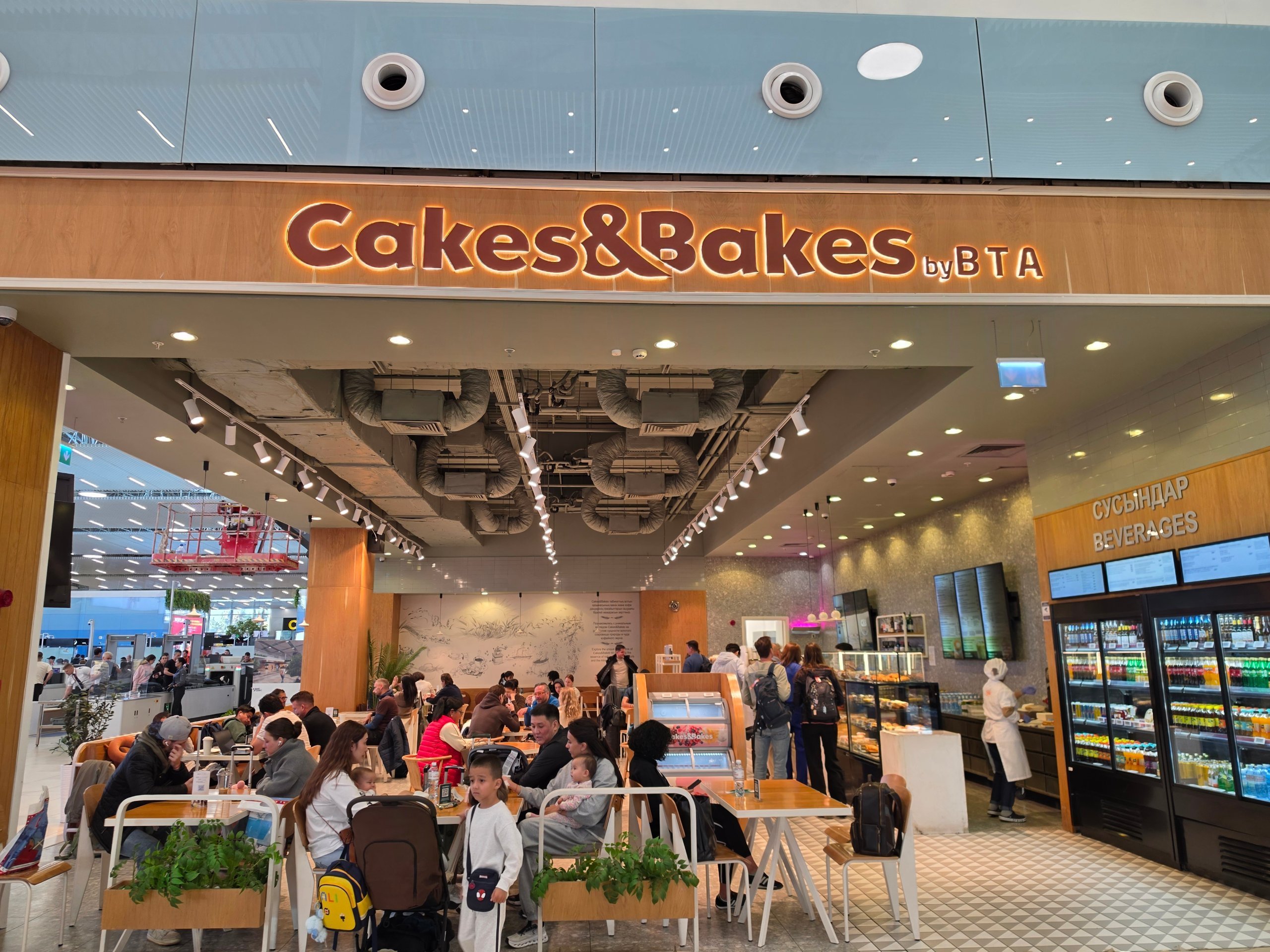
The advantage over a standard transfer is clear: the plane can’t leave without you. They simply always wait for all transit passengers.
I wouldn’t even mind if we had to get off the plane and go into the terminal – at least it would give you a chance to stretch your legs a bit. But the procedures in Almaty are really incredibly tedious.
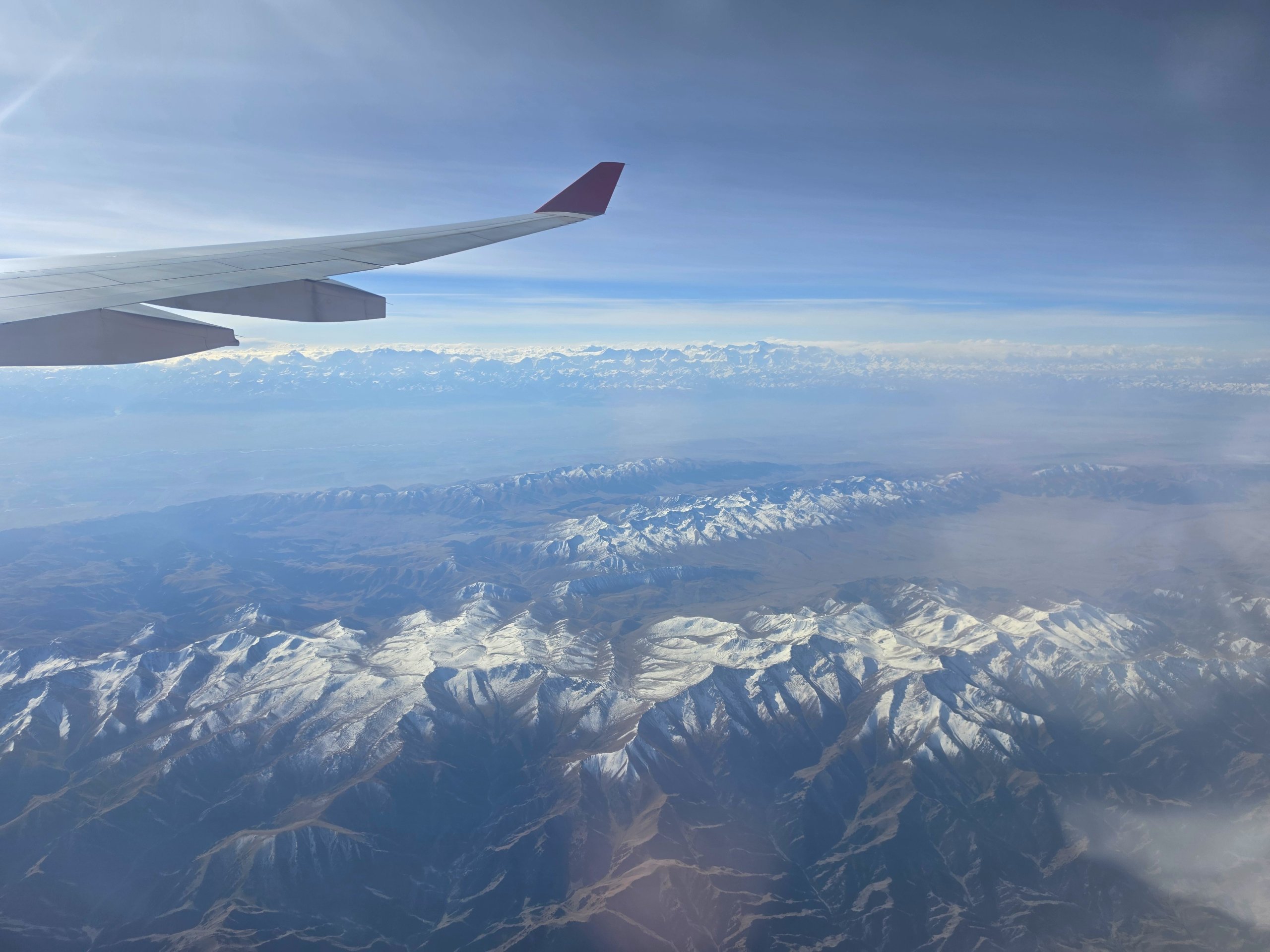
We’re taking off from Almaty to Hanoi more or less on time.
I spend a moment taking in the absolutely breathtaking views of the Tian Shan mountains. It’s really beautiful!
On this flight, everyone who ordered a meal in advance is served again.
That’s great. You’ll actually receive the meal you ordered online twice: once on the Prague–Almaty flight and again on the Almaty–Hanoi flight.
So, once again, I’m getting my dried chicken with a beer, even though I don’t fancy a beer at all. But you don’t look a gift horse in the mouth, do you?
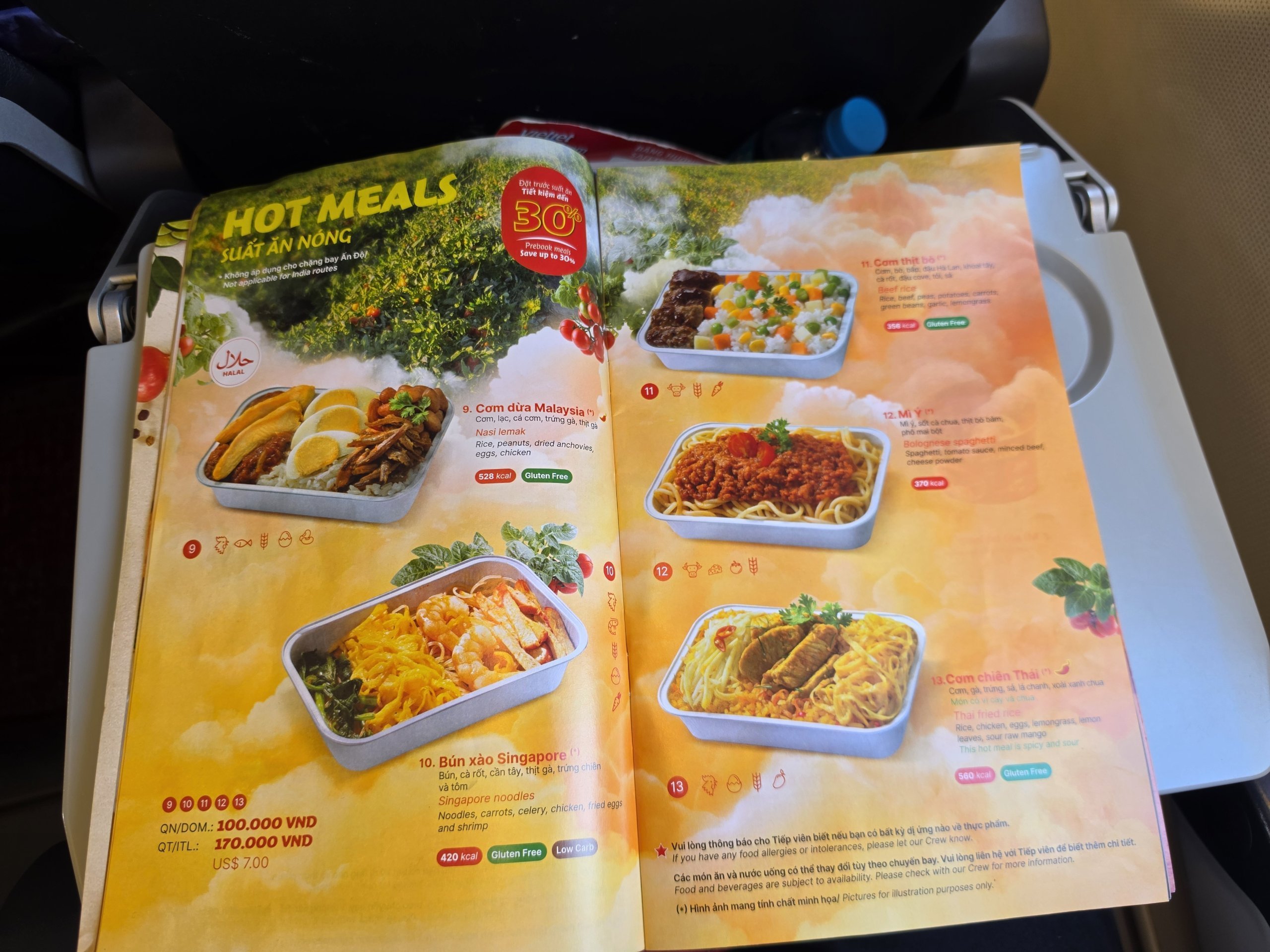
This time, though, that’s not enough for me, so I choose beef and rice from the rather extensive in-flight menu.
Unfortunately, the crew informs me that the only option available is instant noodles.
What can you do? I’ll have the instant noodles – or rather, the soup.
It’s quite a large portion, but let’s be honest, I’d prefer a standard meal.
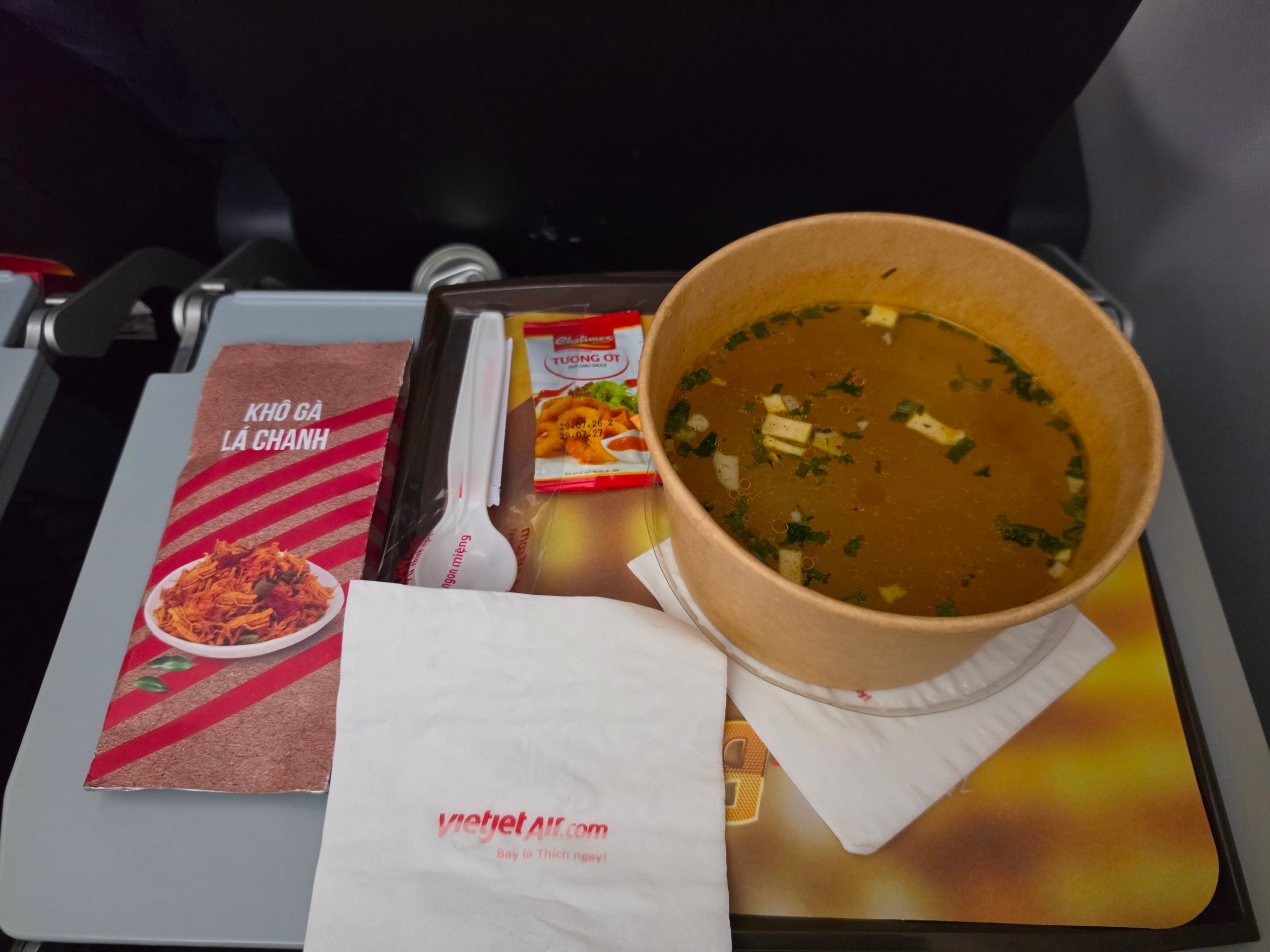
But it only costs me 4 usd, which is manageable.
Incidentally, you can only pay for your meal by credit card (debit cards don’t work) or in cash, either in Vietnamese dong or US dollars. You can’t pay in euros.
I slept through the rest of the flight again.
Here’s an example of the menu, where available.
We land in Hanoi on time.
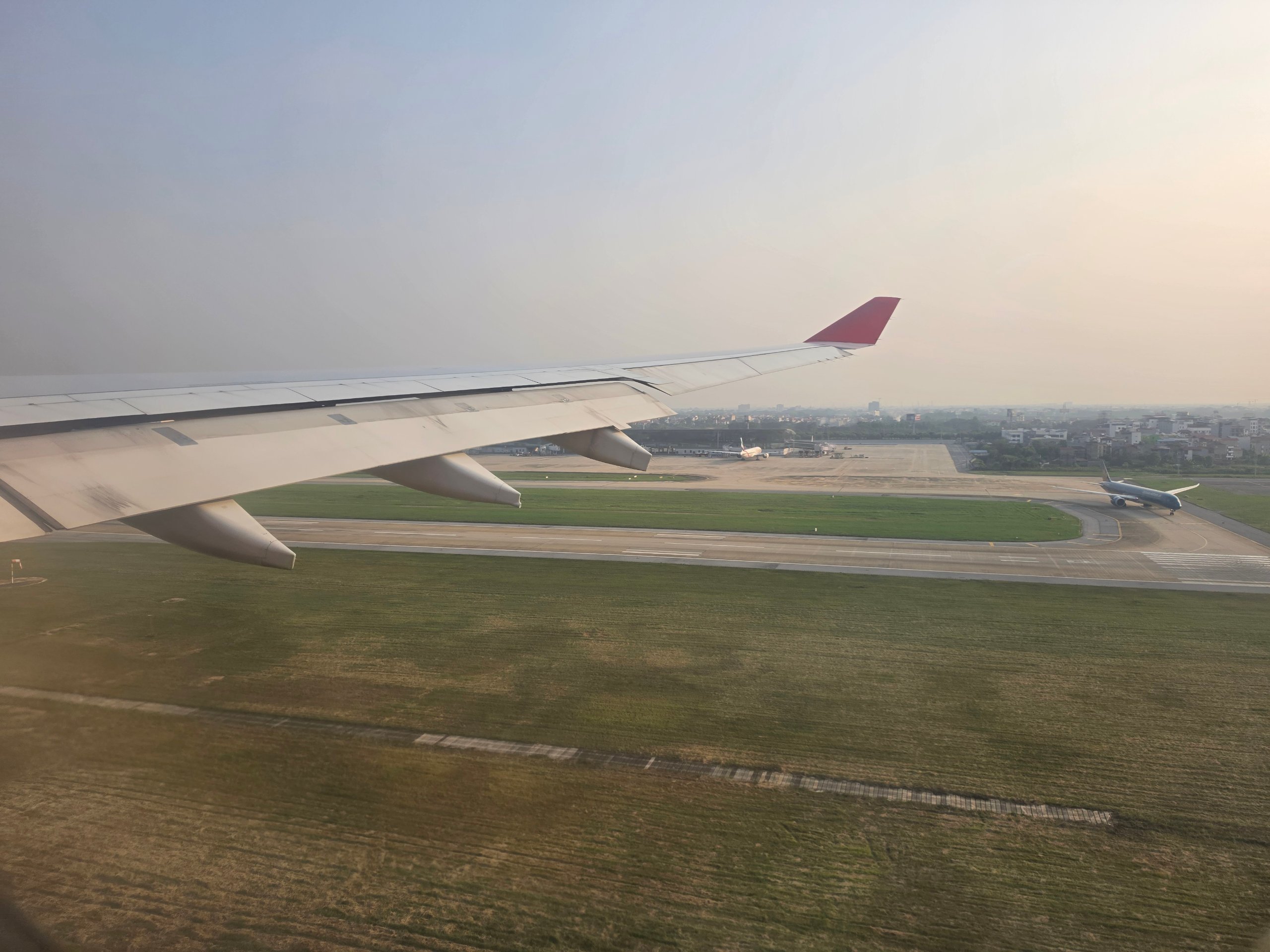
The airport is quite small, but I spend over an hour and a half queuing at passport control.
The immigration officers don’t ask me for anything apart from my passport. And from what I can see, they don’t ask the other passengers for anything either.
The passport control itself takes place without a single word being spoken.
At the airport, I withdraw my first dongs from a BIDV cash machine and take bus number 86 into the city centre. I describe all the ways to get from the airport in the article ‘Transport from Hanoi Airport to the city centre’.

On my first night, I stayed in a small Wecozy apartment right on the famous Hanoi Train Street.
And my first impressions of Hanoi were brilliant – I really like it here! But I’ll go into more detail about that in the Hanoi guide, which I’ll be updating gradually.
Not sure where to stay? Our guide, ‘Where to Stay in Hanoi’, will help you choose an area.
Choose a hotel in Hanoi by price
Based on my own experience of the Prague–Hanoi flight, I would pay particular attention to the following things before travelling:
The downside of the seats with extra legroom, however, is that the armrests cannot be raised.
Honestly? Probably not. It would depend on the price, of course.
I wouldn’t hesitate to take advantage of the deal I mentioned, where the airline was selling a limited number of return tickets for 286 eur . That’s simply a brilliant price.
At the standard prices they offer, i.e. between 615 eur and 738 eur , I’d probably prefer to fly with a stopover on Etihad Airways, Turkish Airlines or Qatar Airways.
Of course, the downside of a standard connecting flight is that you can’t be 100 per cent sure you’ll make your connecting flight (though the airline will look after you anyway).
But the stopover on this direct flight is more like a standard connecting flight – at least in terms of the inconvenience you’ll experience. This pretty much erases the differences compared to flights with a stopover.
The comfort on board is what you’d expect from a low-cost carrier. It’s not great, but for a lower price, it’s certainly manageable.
Incidentally, the flight was completely sold out, so I’m curious to see how the airline will fare.
VietJetAir has ordered 40 Airbus A330-900 aircraft, which should be able to fly the Prague–Hanoi route non-stop without any problems, so we’ll see if we ever get to see a traditional non-stop service.
That would make much more sense.
If you have any questions or comments about the article...

So, if the plane’s designed for short Vietnamese people, even someone of my modest height would have problems in our part of the world. I’m in the same boat 😁 Just one more question: why do you think that clunker wouldn’t be able to fly some routes without a stopover? I once flew with Alitalia on this old banger non-stop from Rome to Santiago de Chile, and I reckon that’s a bit further 🙂
Alitalia only had the shorter versions of the A330-200. These have a (much) greater range.
The A330-300 generally has a shorter range, and what’s more, it depends a great deal on how many seats are crammed inside, which reduces the range quite significantly.
Thanks so much for the review. We’re flying as two couples, though not until 16 March. When tickets first went on sale, we bought economy class tickets from Prague with seat selection for just under 4,000, and we chose rows 48 and 49, so hopefully we’ve made the right choice.We waited a couple of months, and last week they opened up slots for April.The return ticket on 3 April is in the ‘Deluxe’ promotion, including checked-in luggage and a meal, for 6,800☺️. I compared prices with Qatar Airways and other airlines, and a one-way ticket from Hanoi on the same dates (Saturday 3 April) at 14,000 with a stopover in Doha and their Overstop programme.On weekdays, prices can easily exceed 8,000. Well, at this price, you have to make do with less and spend the money you save on travelling around Vietnam instead ☺️ Thanks for the info about paying on board.We only have debit cards and wanted euros, so we’ll take dollars instead and get some more dong from travellers who’ve just returned😉
Well, for 6,800 Kč, it’s obviously a no-brainer. A brilliant deal – that makes it much easier to put up with :D
And rows 48 and 49 are definitely much better for couples than anything else. I’d recommend, during the stopover and actually even after arriving in Hanoi, being that unpopular person who stands in the aisle straight after the plane touches down. The sooner you’re off the plane, the quicker you’ll get through security :D

I can only understand why someone would choose to fly like this if they were completely unaware of the situation, or if they were a petite girl who’s 160 cm tall. If I ever suffer on a plane, it’s mainly because of the width of the seat. Length-wise, at 188 cm, I usually fit (provided the seat is 31” or wider). That’s why I’ve ruled out airlines like FrenchBee or VietJet. I’m curious to see how they compare with Scoot. I quite like them. Their cabins offer a choice of seat pitch, plenty of services and they have great planes. But one experience on a flight from Europe to Asia was enough for me :) Thanks for the review. If they pay me well enough, I’ll give it a go too :D
Well, yes, it’s all very well that Scoot lets you choose from a range of seat pitches, but that wasn’t a proper review or comparison. So, naturally, I went for the standard option :D

Hi, when selecting a seat with a Deluxe ticket, the section of the aircraft labelled ‘premium seats’ is shown – is there any difference between these and standard seats? Thanks :)
Hi, I can’t see that anywhere. I only see ‘Luxury’ and ‘Front’. These are exactly the same as ‘Standard’, just closer to the exit. So the only difference is that you’ll be off the plane a bit sooner.
Then there are the Emergency Row Seats; there’s significantly more legroom there, but less width (the armrest is fixed and can’t be raised).

Thanks for the report and for giving it a go on our behalf, so we don’t have to :)
I once flew in this configuration with AirAsia X from KUL to ORY on an A340-300, although I had an extra-legroom seat, the tray table in the armrest and the broad-shouldered passenger next to me turned the flight into a nightmare, and I swore I’d never do that again :) It might not be such a problem for petite Vietnamese people, but even from within their own community there are quite negative reviews (they tend to compare it with TK/EK/QR) :)

You’ve forgotten to mention the lack of a blanket – people complained about that too – and water costs 100,000 VND.