Skiing in the Italian Alps: Turin from Prague, January to March 2027
52 €



Gdańsk is the ideal city for a long weekend, but if you go on a trip to the surrounding area, you could easily spend a week there.
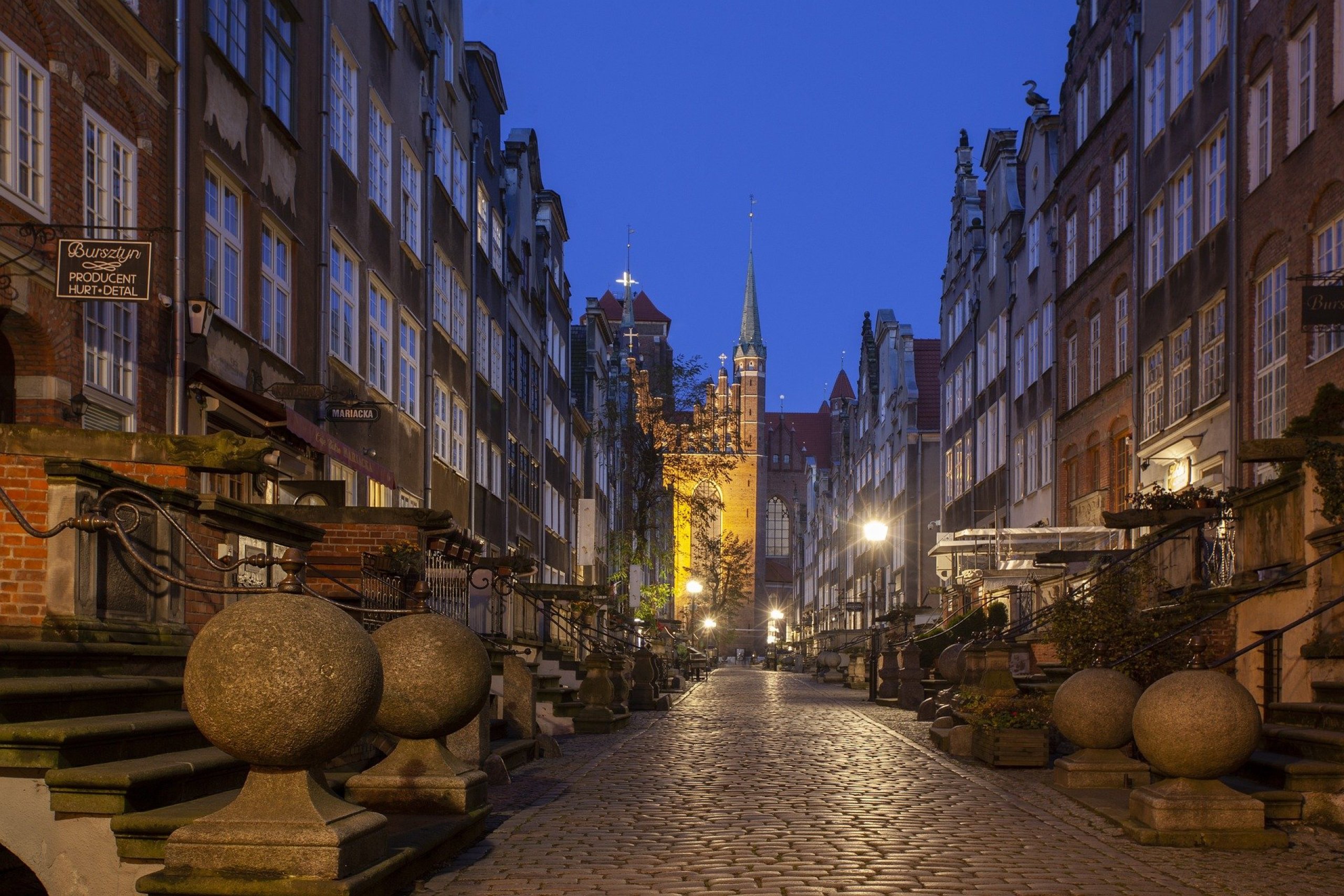
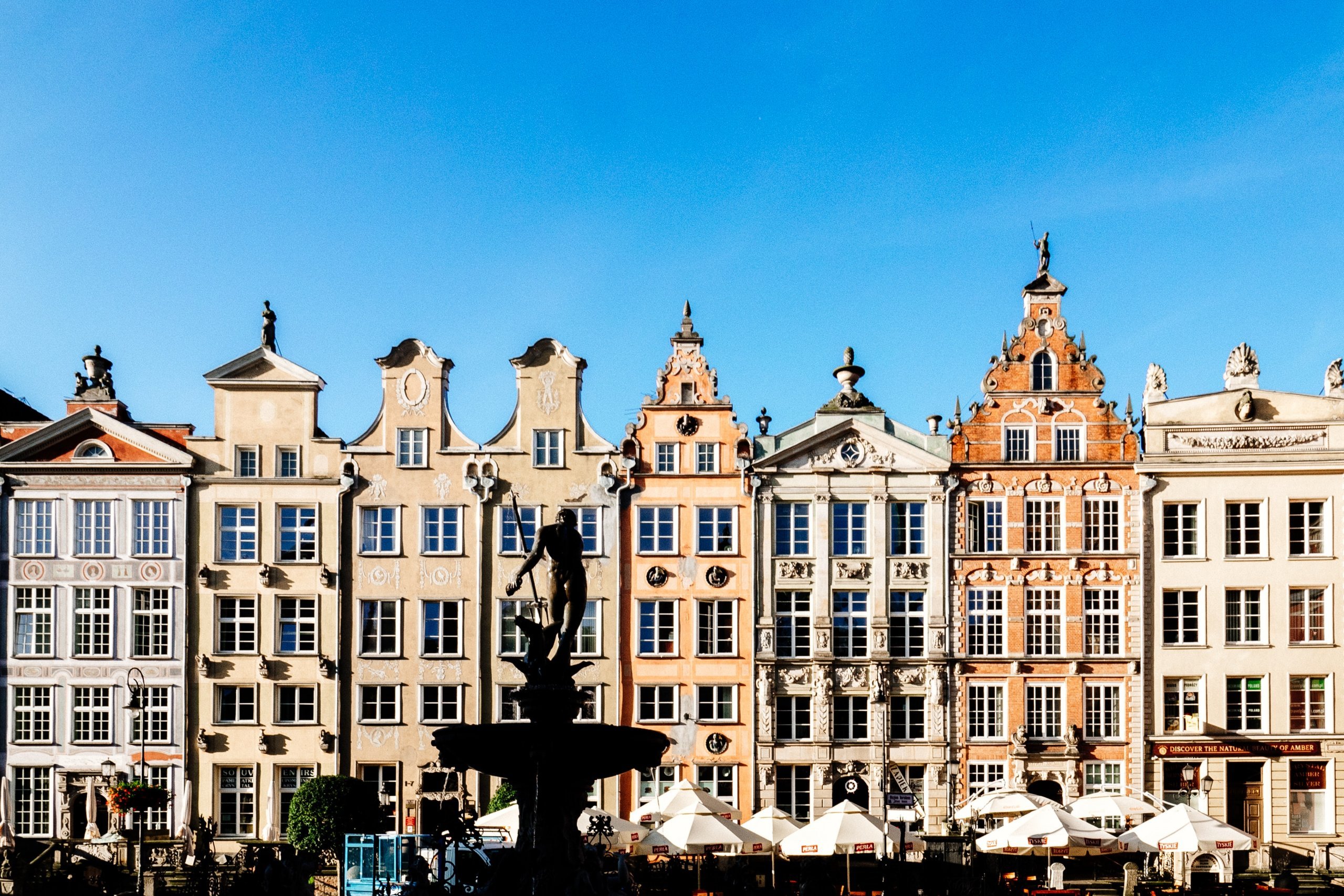
The city boasts a picturesque historic centre, which is one of the most beautiful in Europe. Although the Old Town is small, you can easily spend a whole day wandering through its narrow streets.
Medieval houses and old mills gradually give way to the picturesque little houses typical of German Hanseatic towns as you approach the banks of the Motława River. After all, Gdańsk was a German – or rather Prussian – city until the Second World War.
The monumental Gothic St Mary’s Basilica is the Old Town’s unmistakable landmark.
Here you can admire the numerous historic gates that formed part of the fortifications between the harbour and the city itself. The city centre has been very tastefully restored, and virtually all the modern buildings there pay homage to Gdańsk’s past.
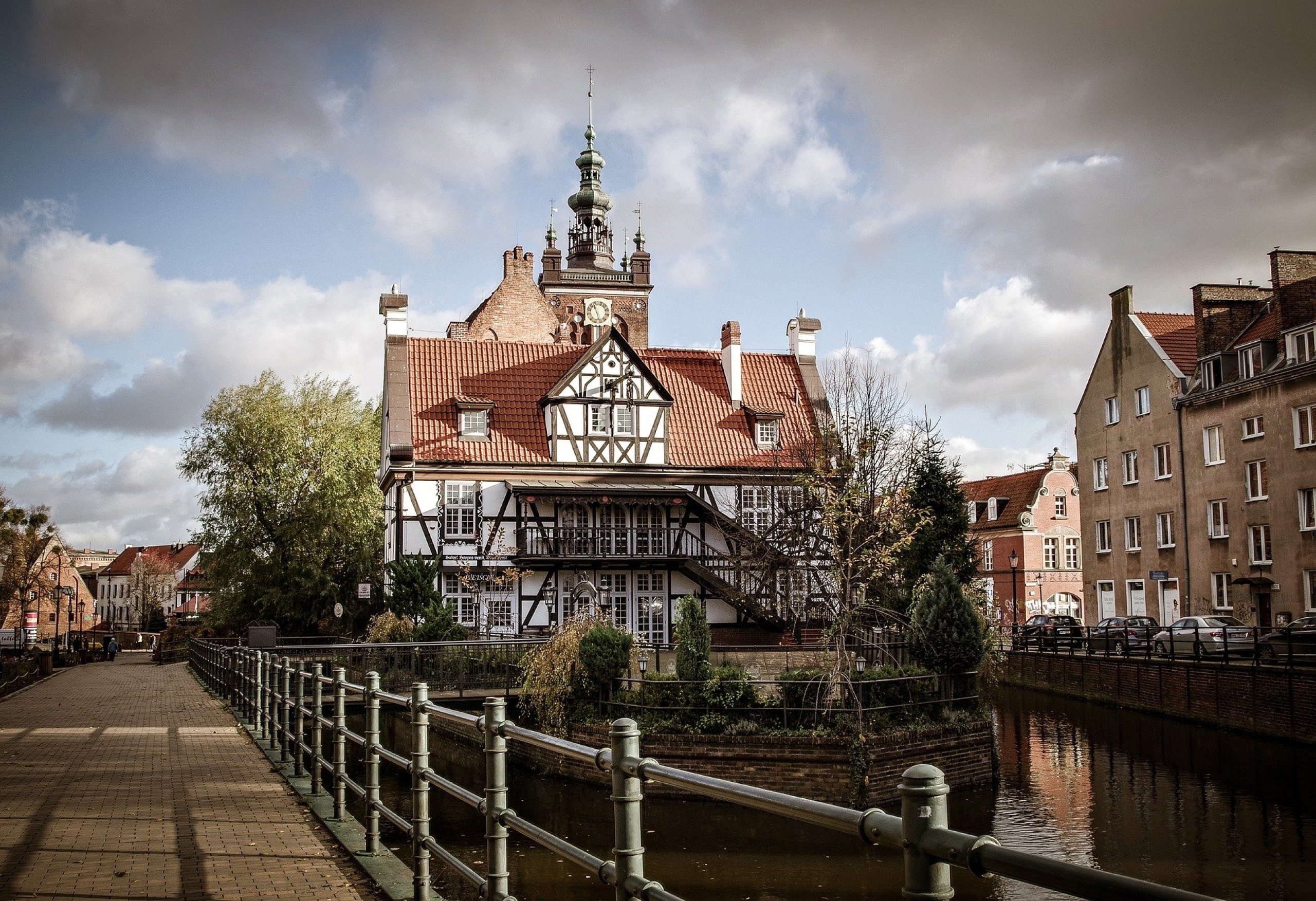
Gdańsk was founded and prospered thanks to the water, so a view of the city from a boat is more than just a tourist attraction. From the river, you’ll see the historic crane, Granary Island, the port warehouses, the shipyards and places you simply wouldn’t reach on a normal walk.
There are several different types of cruises on offer.
For a first visit, I’d choose a smaller boat, a catamaran or a replica of a traditional Polish boat called a galar.
The cruises usually last around 50 to 70 minutes and take you past the historic waterfront, the Żuraw crane, Granary Island and on towards the shipyards.
Smaller boats have several advantages over large cruise vessels:
Evening cruises at sunset, taking in the illuminated waterfront and the silhouettes of the shipyard cranes, are also popular. Historic ‘galar’ boats have a capacity of only around 12 passengers, and evening cruises last approximately 90 minutes.
Prices for the cruises are around 90 pln.
A longer – and, in my opinion, even more interesting – option is a boat trip across Gdańsk harbour to the Westerplatte peninsula. On the way, you’ll see shipyards, repair docks, harbour cranes, the Wisłoujście Fortress and the city’s modern industrial area, which you’d otherwise hardly see from the city centre.
The route is served by classic white excursion boats as well as the stylised galleons Czarna Perła and Lew.
The one-way journey takes approximately 45 minutes, whilst a return trip without disembarking takes around 90 minutes. On some services, you can disembark at Westerplatte and return on one of the subsequent boats using the same return ticket.
If you really want to visit Westerplatte, don’t return straight away on the same boat. The site is quite extensive, so allow at least 1 to 2 hours for a walk to the memorial, the ruins of the barracks and the new visitor centre.
During the high season, a return trip to Westerplatte costs approximately 100 pln for an adult. A one-way ticket costs between 75 and 80 pln, depending on the operator. Boats depart from the quayside in the city centre, most often from the area around the Green Bridge or the Fish Market.
For a short visit to Gdańsk, I’d go for the following:
During the peak summer season and at weekends, we recommend booking in advance. The operation of smaller boats and long-distance services may be subject to weather conditions.
Gdańsk played a rather significant and dark role in the early days of the Second World War, when one of the first German military attacks was directed at the city’s military transhipment centre.
At the same time, however, the city has also experienced brighter moments in its modern history, becoming the main Polish theatre of the fall of communist rule in the 1980s.
Several memorials and museums in the city commemorate both of these events; you certainly shouldn’t miss these places:
Gdańsk, and particularly the neighbouring town of Sopot, are among Poland’s most popular seaside resorts. Poland as a whole boasts truly magnificent beaches with fine white sand and beautiful natural surroundings.
Even the town beaches in Gdańsk and Sopot are separated from the houses by sand dunes and mature pine trees, so the sense of privacy is perfect.
However, it is worth bearing in mind that Gdańsk’s beaches are more for looking at than for swimming. To be precise, the water temperature for swimming – between 20 and 21 °C – only lasts during the hottest weeks at the end of July and beginning of August.
You’ll also need to be prepared for frequent fresh breezes, which make the air feel cooler. However, if you don’t need particularly hot weather for your summer holiday and don’t mind cooler water, then we can highly recommend the beaches around Gdańsk.
View hotels by the beach in Gdańsk
Gdańsk’s cosy city centre is full of all sorts of pubs, restaurants and bars. If you’ve ever been to Poland, you’ll know that in every major city – Gdańsk included – you’re guaranteed to have a brilliant meal.
Prices here are similar to or slightly lower than in the Czech Republic, but the quality of the food and the portion sizes are considerably larger.
Don’t miss out on the traditional Polish milk bars, popular eateries where you can get hot meals, cakes or light snacks. Unlike in the Czech Republic, these typical Polish ‘milk bars’ have survived to this day, and you’ll find them on every corner in Gdańsk too.
At the very northern tip of the Polish coast lies the narrow, elongated Hel Peninsula, which ranks among Poland’s most popular beach destinations. The sandy spit stretches for a total of 35 km, and you’ll find beautiful beaches with sand dunes, grassy areas and fragrant pine trees on both sides of the coast.
You can reach the Hel Peninsula from Gdańsk by cruise ship during the summer, and all year round by train – either directly (more expensive) or with a change in Gdynia or Władysławowo.
You can find detailed information in a separate mini-guide to the Hel Peninsula.
Just under 65 km south of Gdańsk, in the Pomeranian Lowlands, lies the small district town of Malbork, which is nevertheless one of the most visited places in Poland.
Its most striking feature is the largest Gothic and, indeed, the largest brick structure in the world – the monumental and superbly preserved medieval Malbork Castle. Take a day trip here from Gdańsk and be transported back to the golden age of the Teutonic Order for a day.
You can find detailed information in a separate mini-guide to Malbork.
If you have any questions or comments about the article...