Marrakech from Prague with Eurowings in December
93 €



A car isn’t automatically the best way to get around the Riviera Maya for everyone. ADO buses run reliably between Cancún, Playa del Carmen and Tulum, and there are also cheaper colectivos along the main road.
However, as soon as you want to visit the cenotes, Cobá, more remote beaches, resorts outside the cities, or continue on to Bacalar and the Yucatán, hiring a car starts to make much more sense.
We explored the area really thoroughly.
Before the trip, my biggest fears were chaotic traffic, car hire scams and parking. In the end, the actual driving was far easier than deciding which car and insurance policy to book.
In my opinion, it mainly depends on your itinerary, not the length of your stay.
| What are your plans? | Would I hire a car? |
|---|---|
| Staying at one resort for the whole trip | No |
| Cancún, Playa del Carmen and Tulum | Probably not |
| One or two organised excursions | Probably not |
| Cenotes, Cobá and places off the beaten track | Yes |
| A road trip to Bacalar or the Yucatán | Definitely yes |
| A trip with 4 to 5 people | Often yes, even financially |
If you mainly want to relax at a resort and go on a day trip to Tulum or Chichén Itzá, it’ll be easier to book an organised tour.
The car would spend most of your stay in the hotel car park.
We were travelling with my partner and wanted to visit the cenotes as well as places far from the main resorts. In that case, having a car saved us hours of waiting, changing transport and haggling with taxi drivers.
We describe other options in the chapter on Transport in the Riviera Maya.
You’ll find the widest selection of car hire companies at Cancún and Tulum airports. You can also hire a car in the city centres of Cancún, Playa del Carmen or Tulum, but the choice is usually more limited.
If you’re flying in and out of Cancún, I’d recommend hiring a car directly at the airport. There’s the most competition here, the widest choice of vehicle categories and, usually, the best prices too.
When booking, check whether the car hire company has a counter directly at the airport or whether a shuttle will take you there. ‘Cancún Airport’ does not automatically mean that you will collect your keys in the arrivals hall.
Tulum Airport is a sensible choice if you’re flying directly there, continuing by train from Bacalar, or want to start your trip in the south of the Riviera Maya.
We picked up our car at Tulum Airport. We travelled here on the Tren Maya train from Bacalar and then drove to the resort, the cenotes and on to Yucatán.
There is a smaller selection of car hire companies than in Cancún, but there are still plenty to choose from.
If you only need a car to visit the cenotes or for a trip to Cobá, be sure to compare car hire branches in Playa del Carmen, Cancún and Tulum as well.
The price per day may be higher than at the airport, but you won’t be paying for the car for the whole duration of your stay.
This option makes sense particularly if you’re spending your first or last few days solely on the beach.
After much deliberation, I opted for a rather unusual combination:
We spent our last few nights at an all-inclusive resort, where a car would have been of no use to us anyway. I also wanted to try out public transport from Cancún to the airport and save on two days’ car hire.
It worked, but I’d recommend the more convenient option of returning the car directly at Cancún Airport to most travellers.
Consider a one-way hire if:
Please specify a different drop-off location when searching. Some car hire companies include a one-way fee in the total price, whilst others charge a high surcharge, which may even exceed the total cost of the hire.
The most common and simplest option remains Cancún Airport → Cancún Airport.
Ideally, you should book a car 1 to 2 months before your trip.
For Christmas, New Year, Semana Santa, or if you require an SUV or a one-way return, I would book 2 to 3 months in advance.
In the Riviera Maya, you can find cheap cars even at the last minute. However, the problem may lie in the availability of a specific category, insurance or branch, rather than just the price.
I’d opt for a booking with free cancellation and then check the prices again about two weeks before your trip. If the price drops, you can cancel the original booking and make a new one.
At first glance, prices in Mexico seem very low. However, insurance can make a difference between the cheapest quote and the actual amount you end up paying.
As a realistic budget, I would estimate:
| Car type and insurance | Price for 7 days |
|---|---|
| A smaller car with basic cover | from 3 000 mxn |
| A small or medium-sized car with more comprehensive cover | from 8 000 mxn |
| SUV with extended cover | from 10 000 mxn |
Prices may be significantly higher at Christmas, around New Year and during Semana Santa.
When comparing prices, always check the final price, including:
An offer of a few tens of MXN a day doesn’t really tell you anything on its own.
Insurance was actually the thing I spent the longest time sorting out before my trip.
In Mexico, third-party liability insurance, known as TPL, is compulsory. However, this does not cover damage to the hire car itself.
When making a booking, there are three main things to bear in mind:
| Abbreviation or product | What it covers |
|---|---|
| TPL | damage caused to other people, cars and property |
| CDW or LDW | damage to or theft of a hire car |
| Full Protection or Zero Excess | reduction of the excess and possible extension of cover |
Unfortunately, the name ‘Full Protection’ does not mean that absolutely everything is automatically insured.
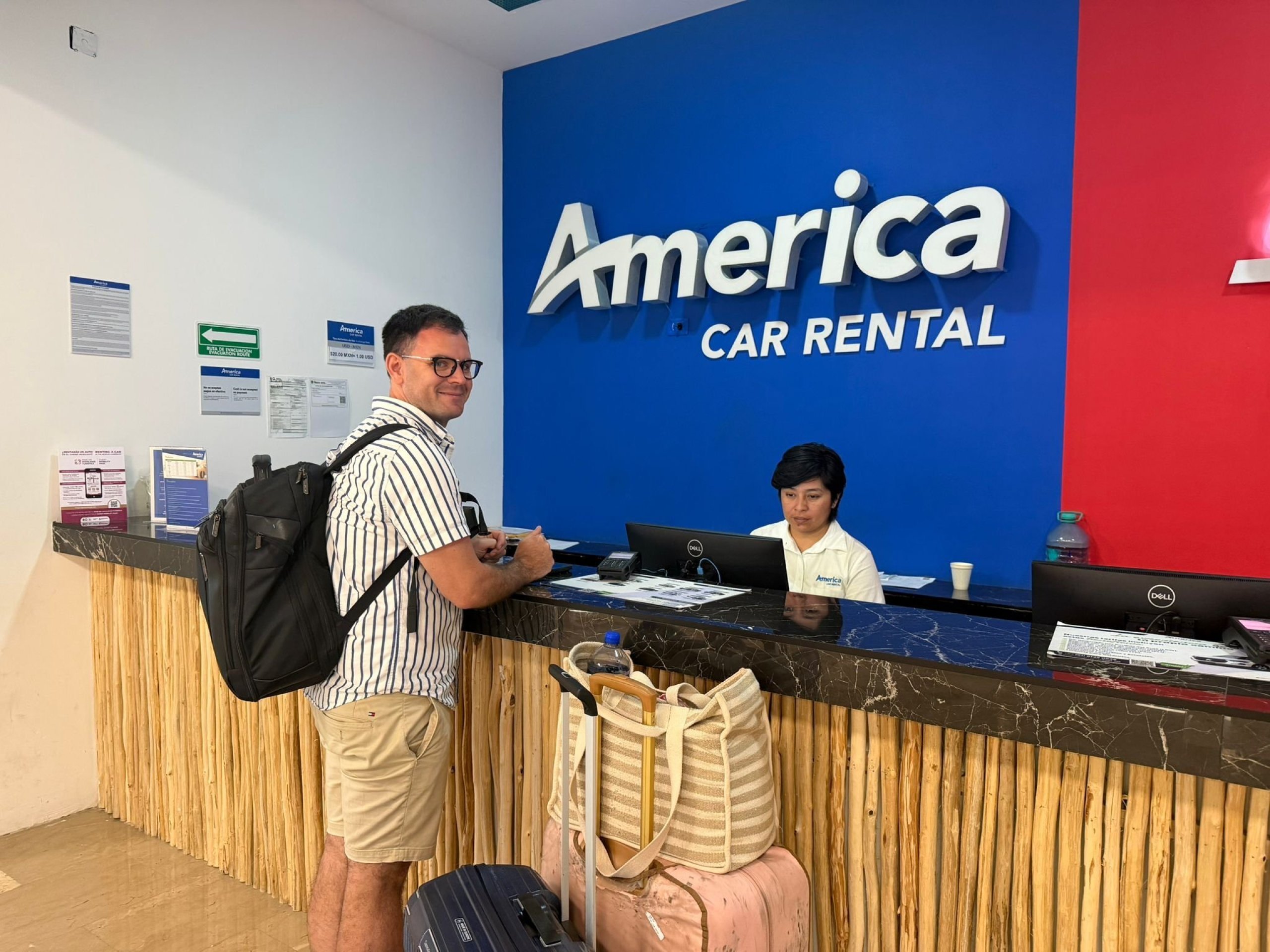
We hired a car from America Car Rental, and I paid extra directly at the rental desk for a package that appeared to offer comprehensive cover with zero excess. It was only at the counter that I realised it didn’t cover the tyres, the chassis or the windows.
Yet these are precisely the parts of the car I was most concerned about whilst driving along gravel access roads to the cenotes and over endless speed bumps.
Next time, I’d choose the more comprehensive insurance again, but I’d check the specific exclusions much more thoroughly.
External Full Protection from Booking.com does not alter your contract with the car hire company. In the event of damage, you may pay for it yourself first and then claim reimbursement from the external insurer.
We explain the full difference in the article ‘Which car hire insurance to choose’.
Please have the following ready when you collect the car:
An international driving permit is not normally required if you hold a valid driving licence written in the Latin alphabet. However, the terms and conditions of the specific car hire company always take precedence.
With most car hire companies, I would expect a credit card to be required. The fact that you can pay for the booking online using a debit card does not necessarily mean that the same card will be accepted for the security deposit.
Depending on the car and insurance, the deposit can range from 2 000 mxn to more than 15 000 mxn. It may be even higher if you decline the rental company’s insurance cover.
If more than one person will be driving, ensure they are all listed on the contract. Driving by a person not named in the contract may invalidate the insurance.
We discuss this issue in more detail in the article ‘Hiring a car without a credit card’.
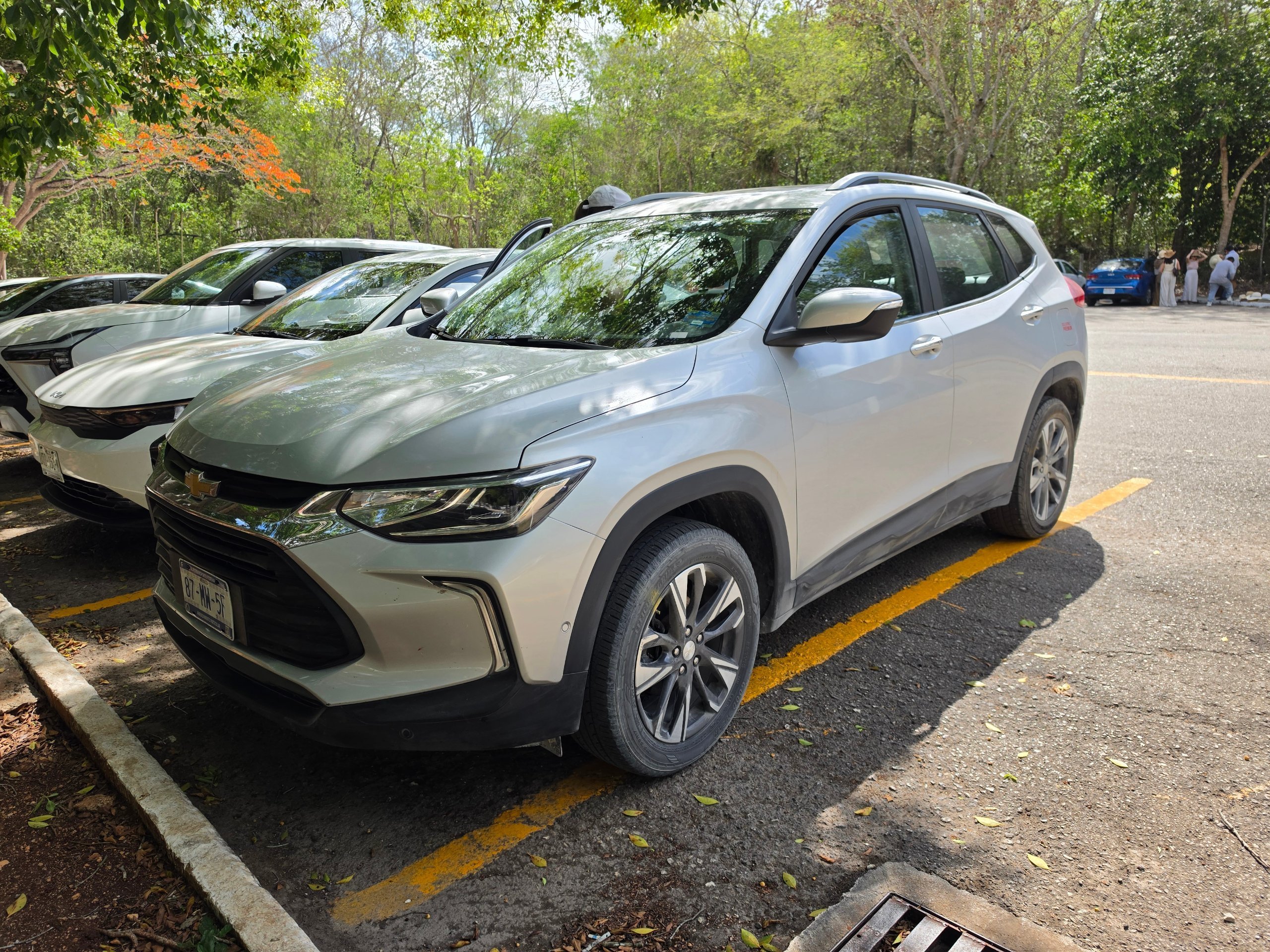
I’d originally booked a smaller car. However, the hire company didn’t have one available, so we were given an SUV at no extra cost.
In the end, I was glad we got it.
A small car would have coped with the main roads without any problems. However, the SUV was more comfortable, and the higher ground clearance came in handy on the unpaved access roads to the cenotes and when driving over the ubiquitous speed bumps.
As far as I’m concerned:
A large SUV uses more fuel and is harder to park in Playa del Carmen or Tulum. A smaller crossover is the ideal compromise.
I needn’t have worried about the traffic before the trip.
The local drivers didn’t strike me as particularly chaotic, and for the most part they stuck to the basic rules. I’ve experienced far more chaotic traffic in some parts of Europe. Greece, I’m looking at you.
The quality of the roads is fine. Nothing to write home about, but nothing to write home about.
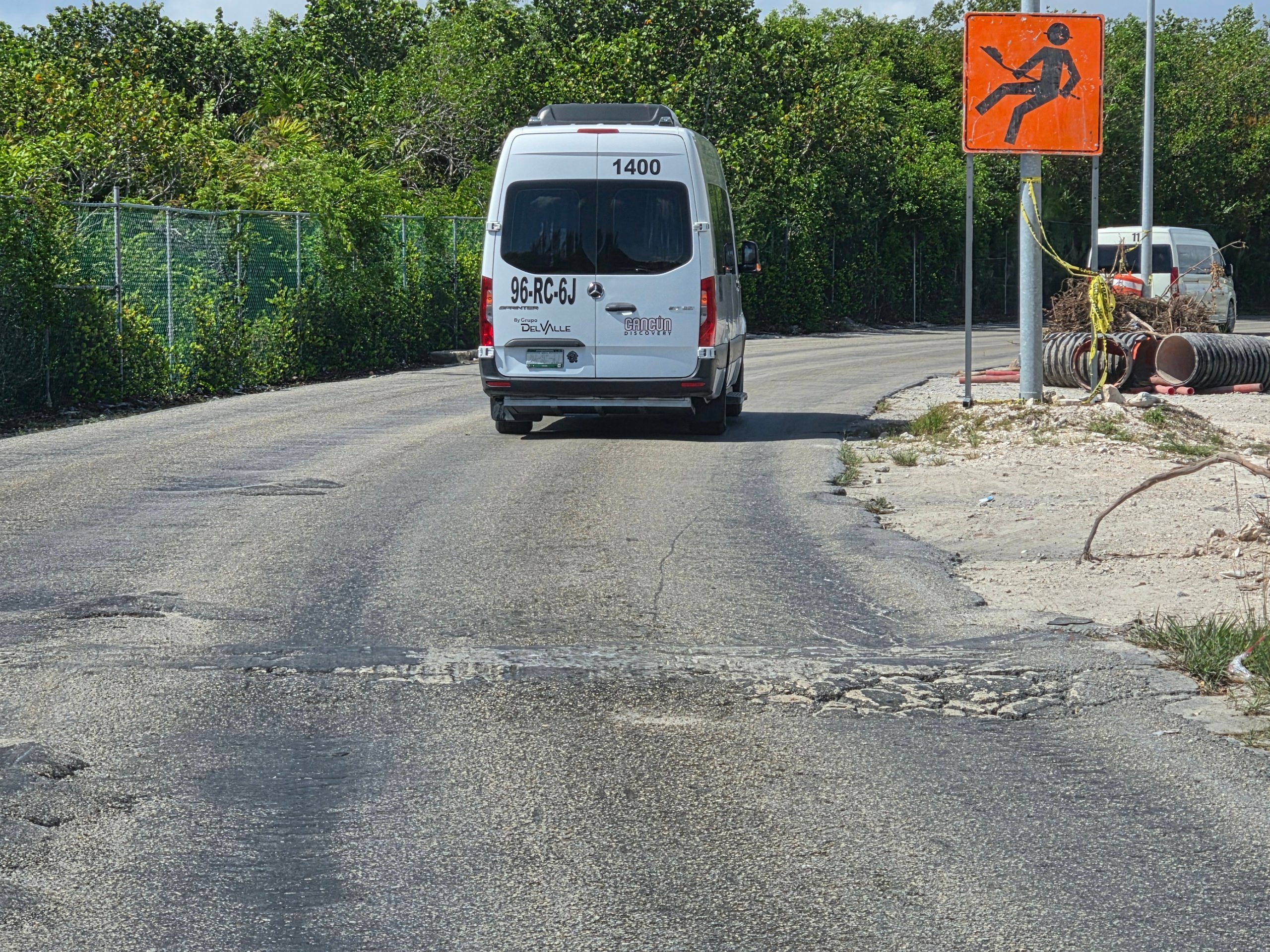
If there’s one thing I’ve taken away from Mexican roads, it’s a genuine hatred of speed bumps.
Topes are:
If a local car in front of you brakes sharply for no apparent reason, there is almost certainly another speed bump ahead.
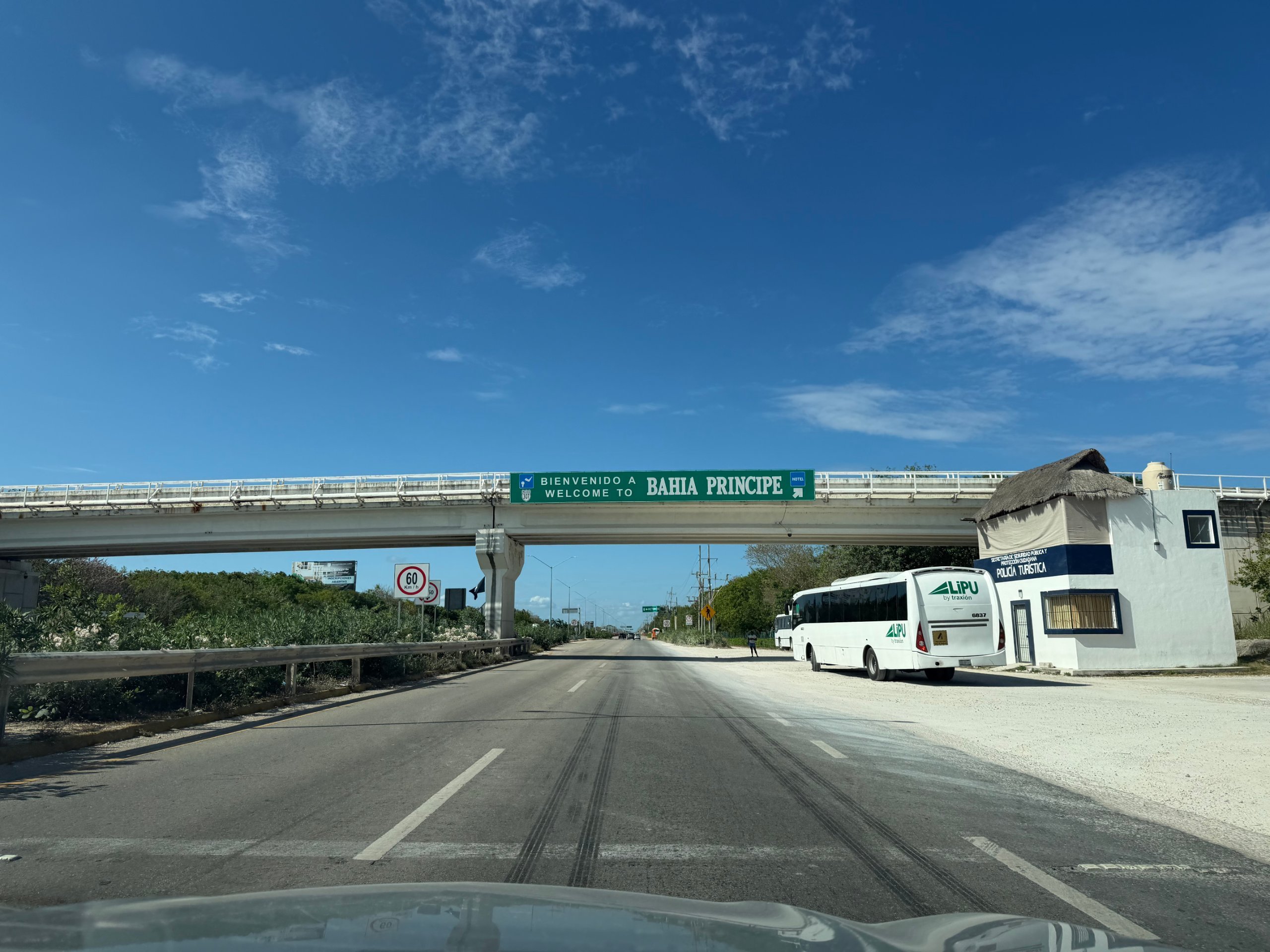
Main Road 307 connects Cancún, Playa del Carmen, Tulum, Bacalar and Chetumal.
It is toll-free and mostly in good condition.
The biggest problem is traffic congestion around Cancún, Playa del Carmen and Tulum. You should therefore allow plenty of time before heading to the airport.
Hotels and resorts on the opposite side of the road are often only accessible via a signposted crossing or a U-turn a few kilometres further on .
Gravel or bumpy tracks lead to some cenotes. A small car can manage them, though you’ll have to drive more slowly and the ride will be less comfortable.
However, do check the terms of your hire agreement. Driving off authorised roads may invalidate even otherwise very comprehensive insurance cover.
I wouldn’t plan any long journeys at night.
This is not only because of safety advice, but also due to speed bumps that are difficult to see, pedestrians, cyclists, animals and, sometimes, unlit vehicles. We tried to complete most of our longer journeys whilst it was still light.
Regular petrol costs around 24–26 mxn s per litre. In Quintana Roo, it tends to be slightly more expensive than in the Yucatán interior.
At most petrol stations, the attendant fills up the car for you. Simply state the amount or say “lleno” for a full tank.
Before filling up, check that the meter on the pump is set to zero. If paying in cash, also make sure you check which banknote you are handing to the attendant.
You can pay by card at many petrol stations, but I’d always carry some cash as well for longer journeys.
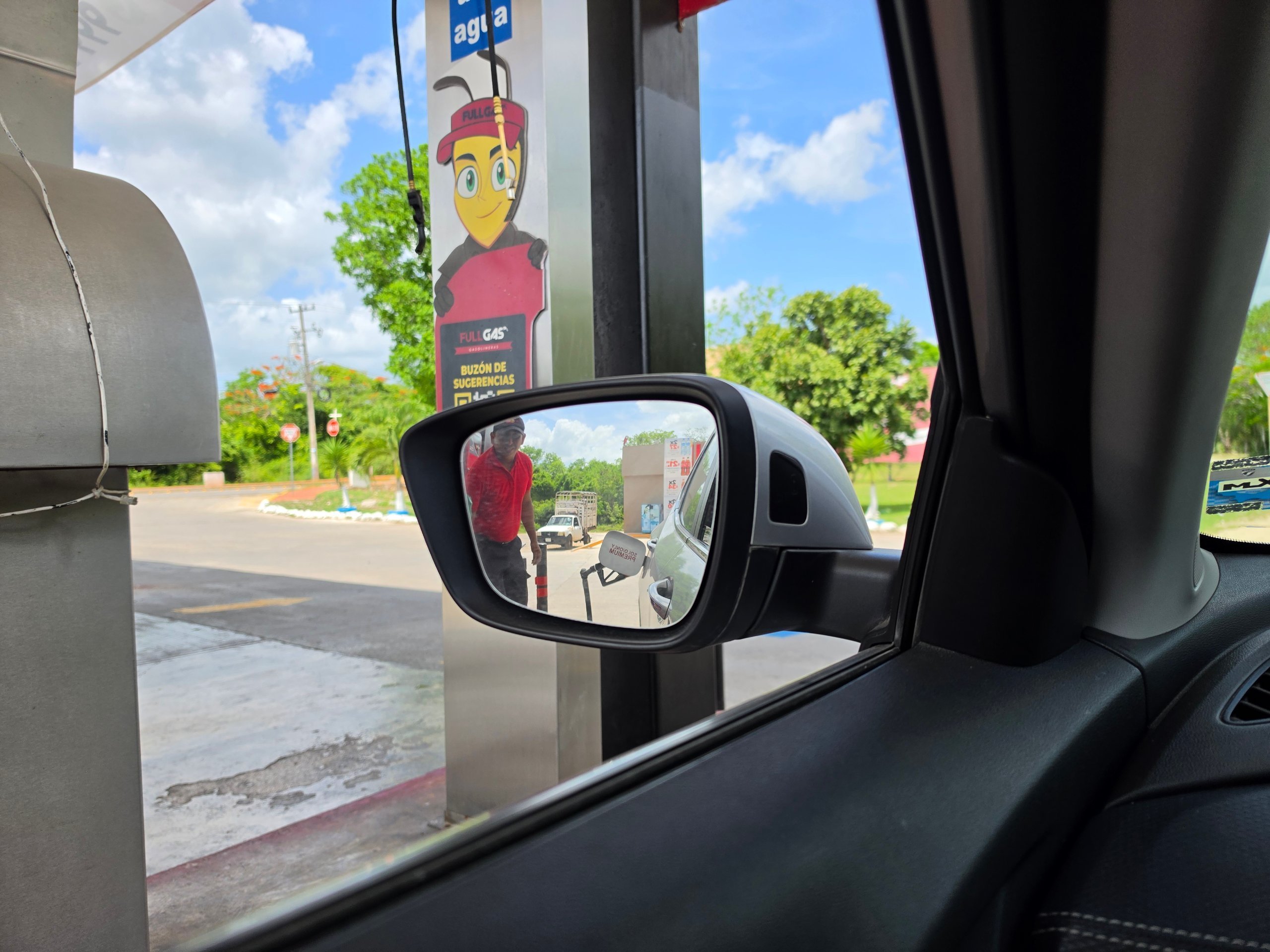
Parking is quite informal, but we usually managed to find a space without too much trouble.
| Location | How parking works |
|---|---|
| Cenotes | usually free or included in the admission fee |
| Playa del Carmen | 10 mxn per hour at parking meters, private car parks in the area 200 mxn per day |
| Tulum | near beaches and attractions, often 100 mxn up to 200 mxn |
| Cancún | at hotels depending on accommodation terms; several free car parks in the Zona Hotelera |
| Bacalar | Free on-street parking |
| Resorts | usually free for hotel guests |
In Playa del Carmen, parking meters operate daily from 10:00 to 22:00. Check the road signs, as parking is not permitted at all on some streets.
Near tourist attractions, people may direct you to a private car park even before you reach the official entrance. This may not be a scam, but you don’t have to take the first offer.
Do not leave luggage, electronic devices or documents in plain sight in your car. I would pack your suitcase before arriving at the car park, not in full view of the car park attendants.
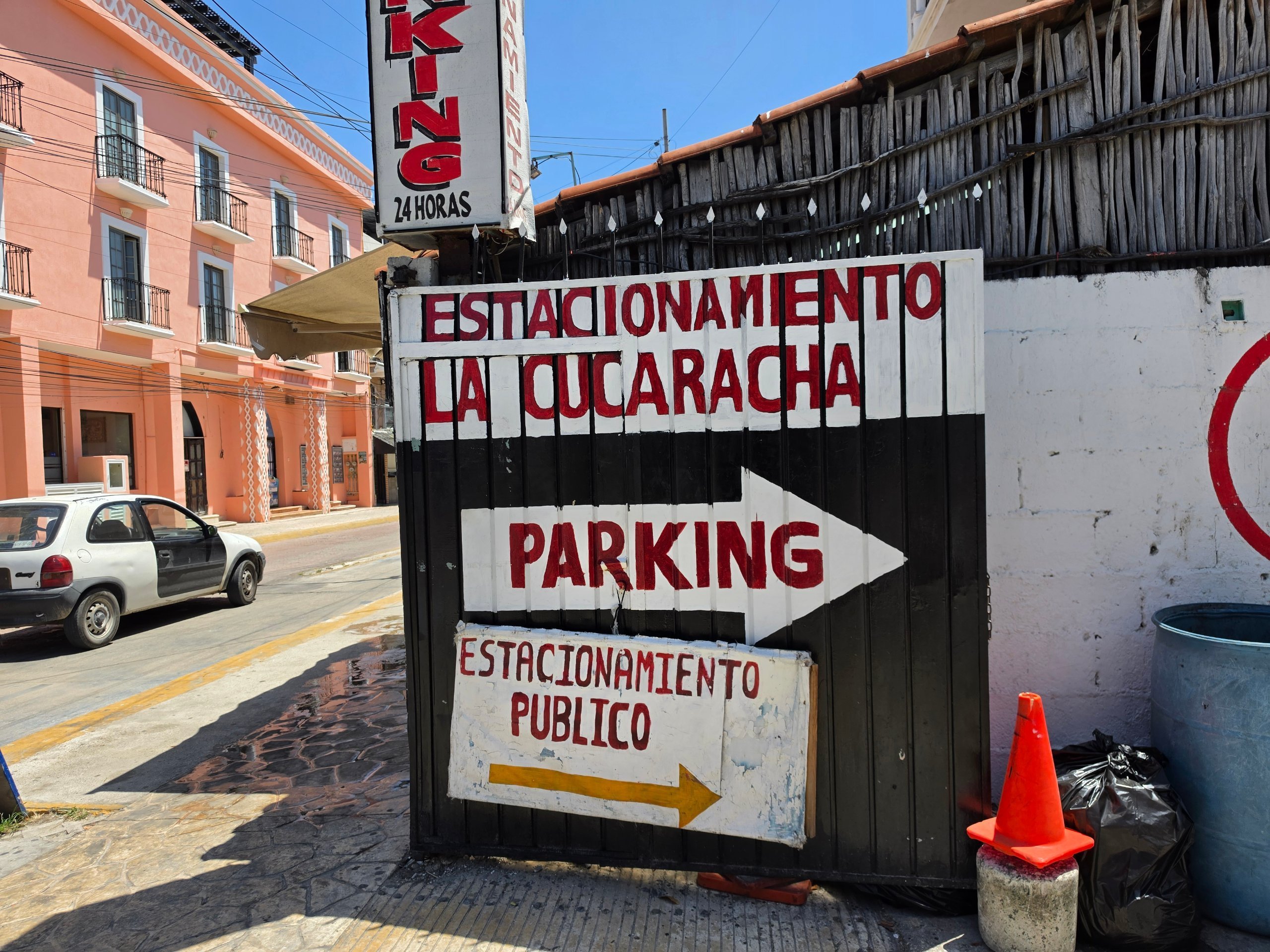
I wouldn’t take a car from the mainland to either island.
It’s easier to take the passenger ferry from Playa del Carmen to Cozumel and, if necessary, hire another car once you’re on the island.
You really don’t need a car at all on Isla Mujeres.
If you’re spending several nights on the island or at a resort, compare the cost of parking and additional days’ hire with the fee for returning the car early.
That’s precisely why we returned the car in the centre of Cancún. It would simply have been sitting there unused for the last two days.
For the same road trip, definitely yes.
However, I wouldn’t automatically hire one for the whole stay. For the resort itself, Cancún or Playa del Carmen, it’s unnecessary. For the cenotes, Cobá, Bacalar and the onward journey to Yucatán, on the other hand, it gave us a freedom that public transport simply couldn’t match.
Next time, I’d just spend less time worrying about the traffic and more time looking into the fine print of the insurance policy.
If you have any questions or comments about the article...