Long weekends in Oslo from Bucharest with Norwegian
75 €


St Paul’s Cathedral is the seat of the Anglican Bishop of London, and its 111-metre-high dome is one of the city’s main landmarks.
A paid visit is well worth it, particularly for the combination of the monumental interior, the crypt and the view from the dome. From the highest point, the Golden Gallery, you can see the centre of London from all angles.
Buy a ticket to St Paul’s Cathedral
It is clear at first glance that the architects of St Paul’s Cathedral drew inspiration from St Peter’s Basilica in the Vatican.
The cathedral’s current appearance dates from 1675 to 1710.
The Club Quarters hotel, where we stayed, enjoys an excellent location directly opposite the cathedral. It’s particularly handy if you want to explore the City, the Thames embankments and the South Bank on foot. We compare other suitable neighbourhoods in our guide ‘Where to stay in London’.
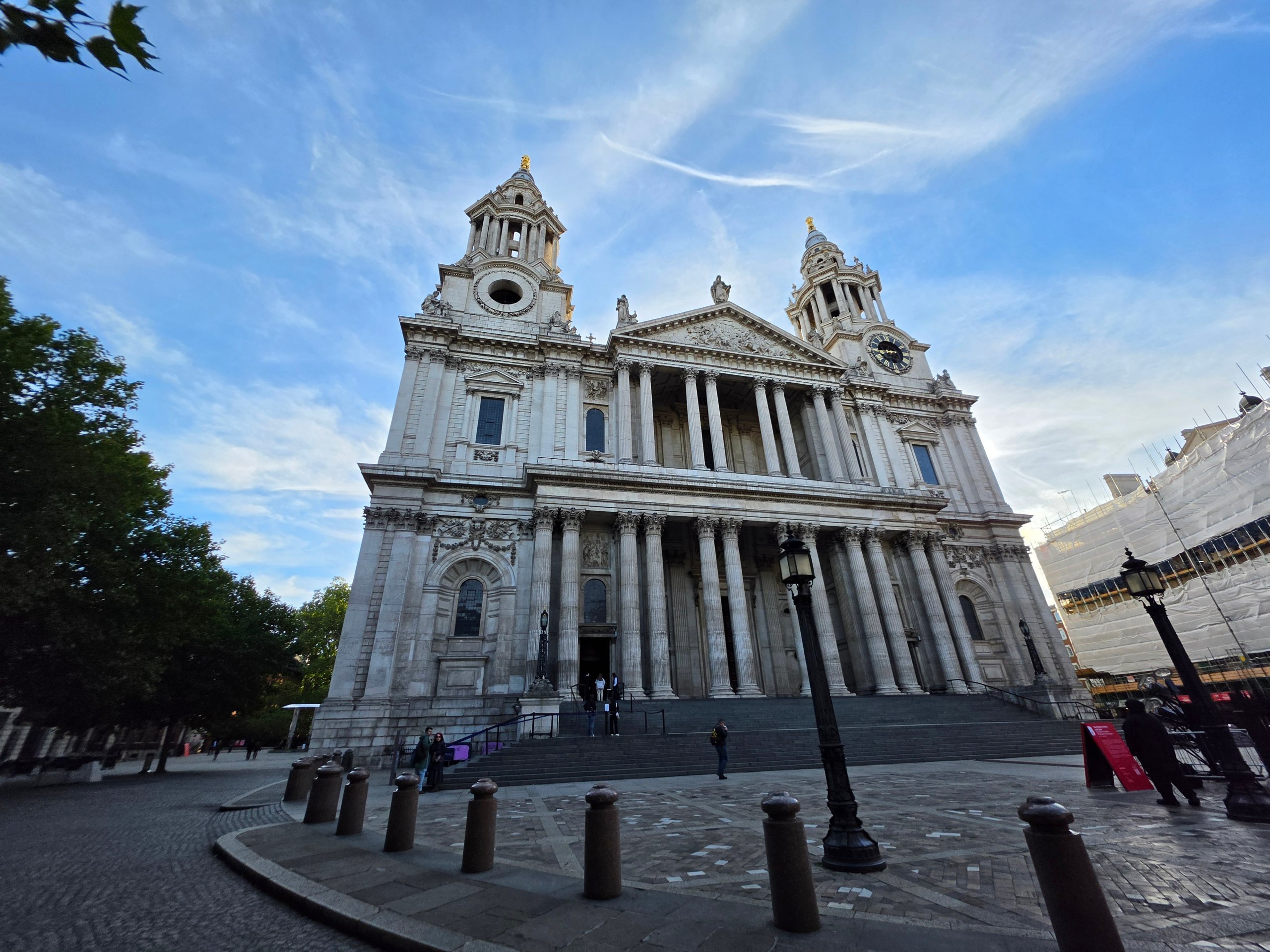
The admission fee for 27 gbp isn’t cheap. If you just want to take a photo of the cathedral from the outside, you don’t need to buy a ticket. The most picturesque approach to the cathedral is from the Tate Modern across the Millennium Bridge.
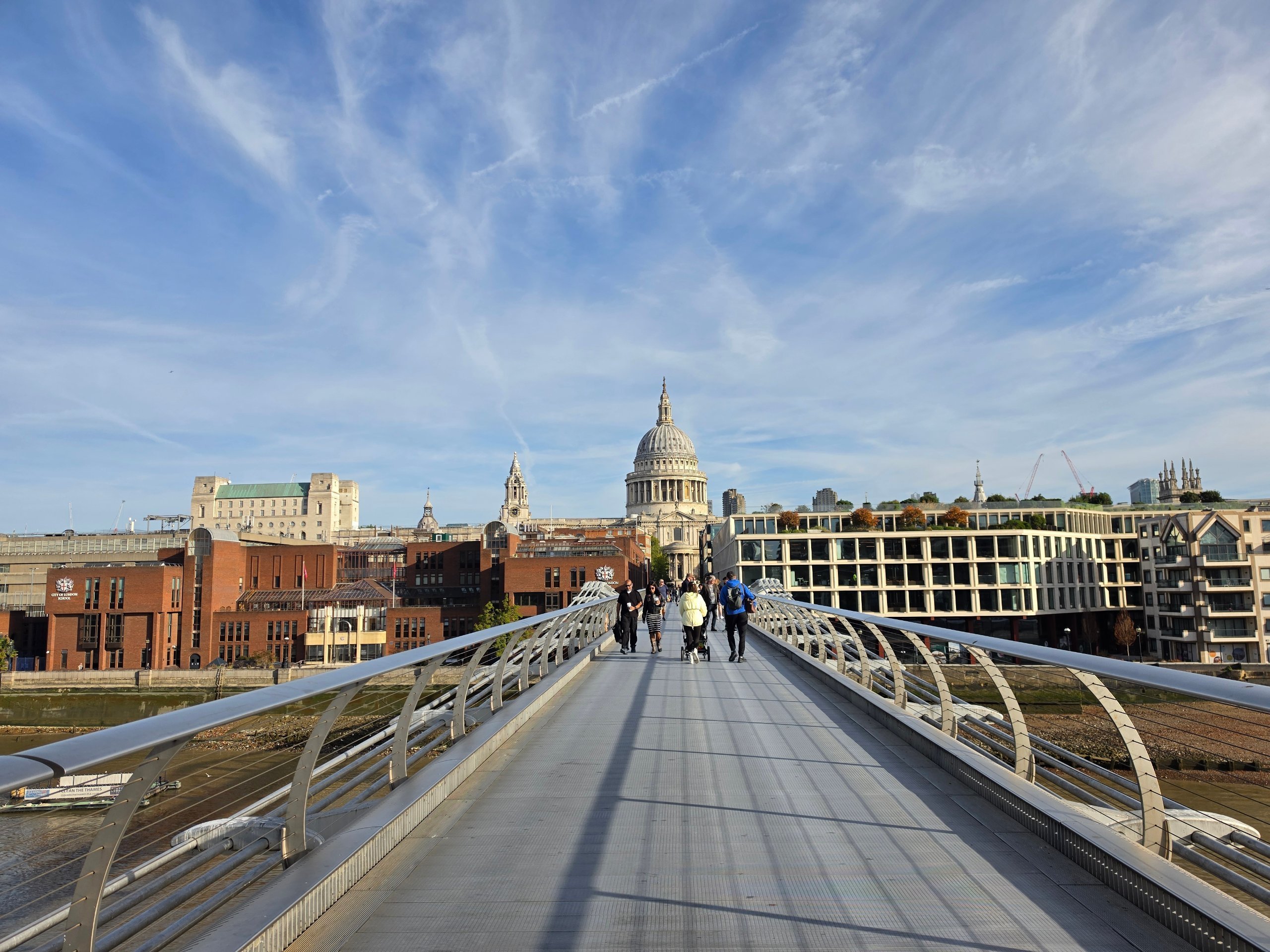
A paid visit is worth it if you want to explore the interior, the crypt and climb to the top of the dome. Allow about 45 minutes for the whole tour .
Compared to Westminster Abbey, St Paul’s Cathedral offers, above all, magnificent architecture and views.
Westminster Abbey is more interesting for visitors who are more interested in British monarchs, coronations and royal tombs.
The ticket grants access to three main areas:
The admission price also includes a multimedia guide in several languages. Short guided tours in English are sometimes held throughout the day; you can sign up for these on arrival. Places are limited.
On your way up, you will pass through three galleries:
There is no lift to the viewing platforms. The final section of the climb is narrow and consists of a spiral staircase.
The Golden Gallery offers the most stunning 360° view. You’ll see the Thames, the Tate Modern, The Shard and the modern buildings of the City of London. Access to the highest gallery may be temporarily restricted when visitor numbers are high.
A standard ticket also includes access to the dome and entry to all three galleries. There is no extra charge for the viewing platform.
The standard ticket prices, excluding voluntary donations, are:
When purchasing a ticket, you may automatically be offered a price that includes a 10 per cent voluntary contribution. Without this contribution, a standard adult ticket costs 27 gbp.
Official tickets are also sold by GetYourGuide. The provider is St Paul’s Cathedral itself, and when paying in GBP, the base price is the same as on the official website.
Buy a ticket to St Paul’s Cathedral
Tickets can also be purchased on the cathedral’s official website or at the venue.
The price includes access to the main areas of the cathedral, the crypt, the dome gallery and a multimedia guide.
Admission to church services is free. However, this is not a guided tour, and during the service you cannot walk freely through the crypt or go up to the viewing platforms.
St Paul’s Cathedral is normally open to tourists from Monday to Saturday:
On Sundays, standard guided tours do not take place and the cathedral is open primarily for church services. On exceptional occasions, special Sunday tours of the dome are organised.
As St Paul’s Cathedral continues to serve as an active church, opening hours may vary due to services and special events. Please check the current calendar before visiting.
St Paul’s Cathedral is one of the most photogenic buildings in London. The most famous photographs aren’t taken directly in front of the main entrance, but from the surrounding streets, gardens and the opposite bank of the Thames.
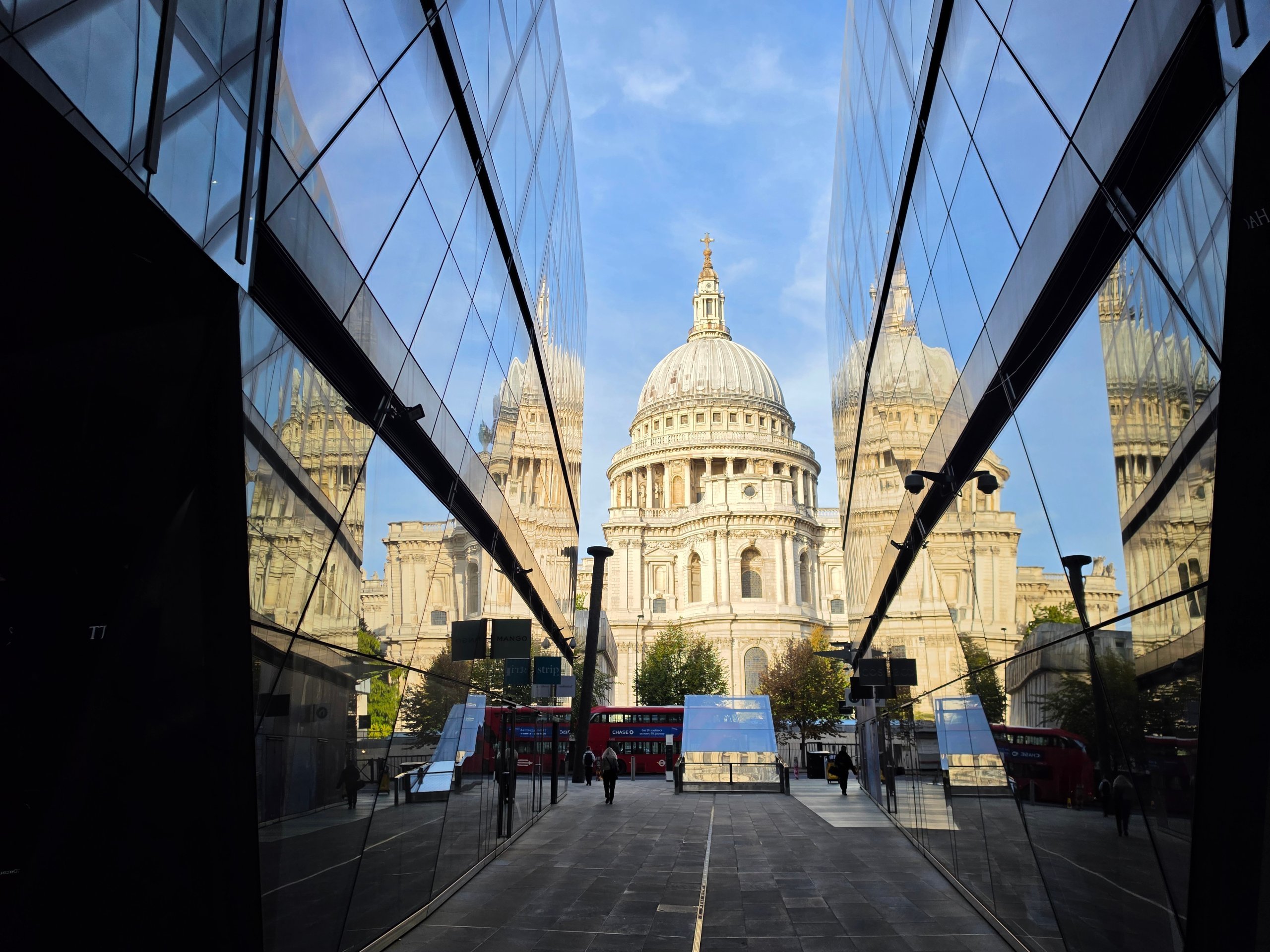
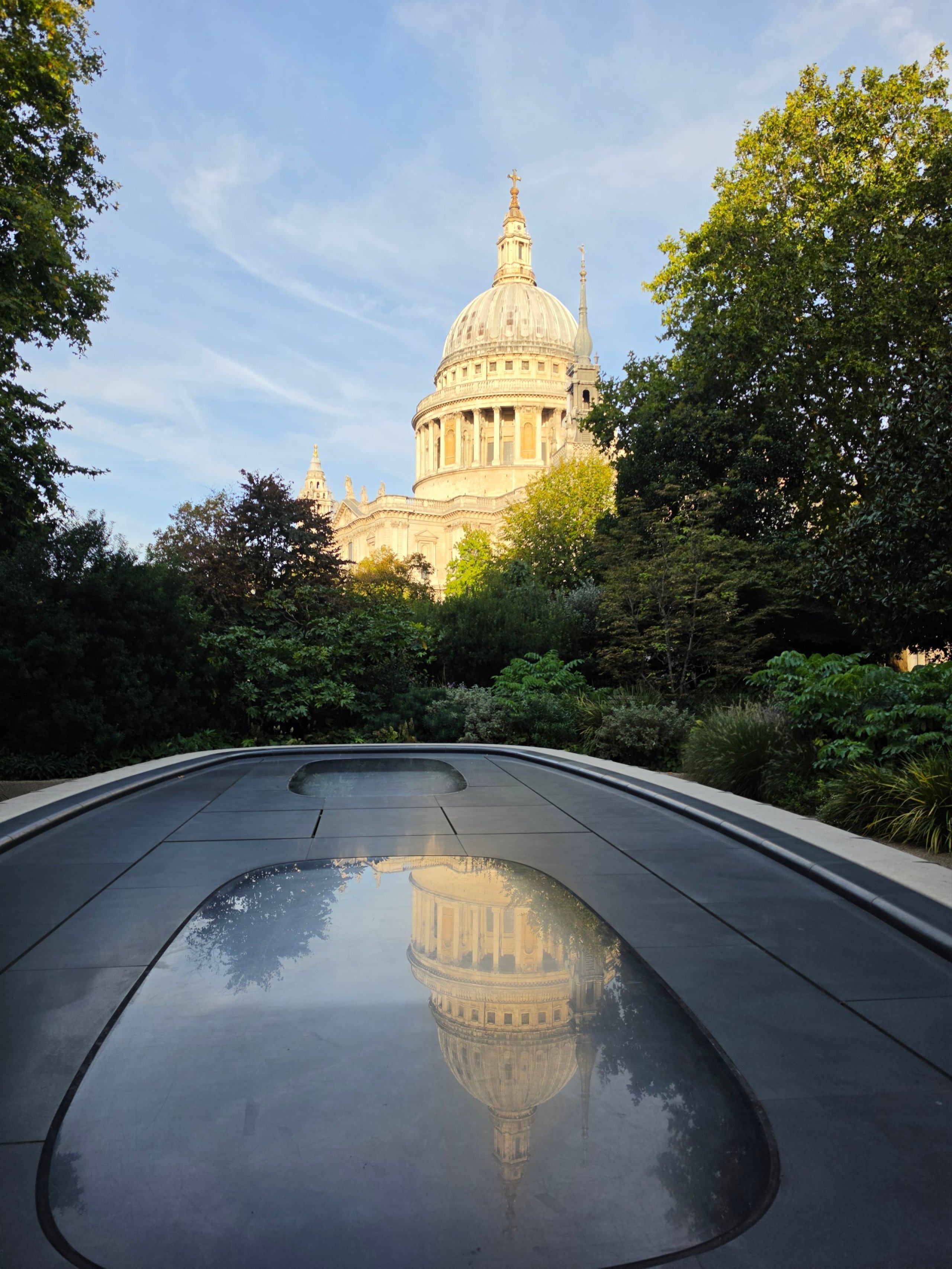
If you only have time to visit one spot, head to the Millennium Bridge. You’ll get the most original photos at One New Change and in the Reflection Garden.
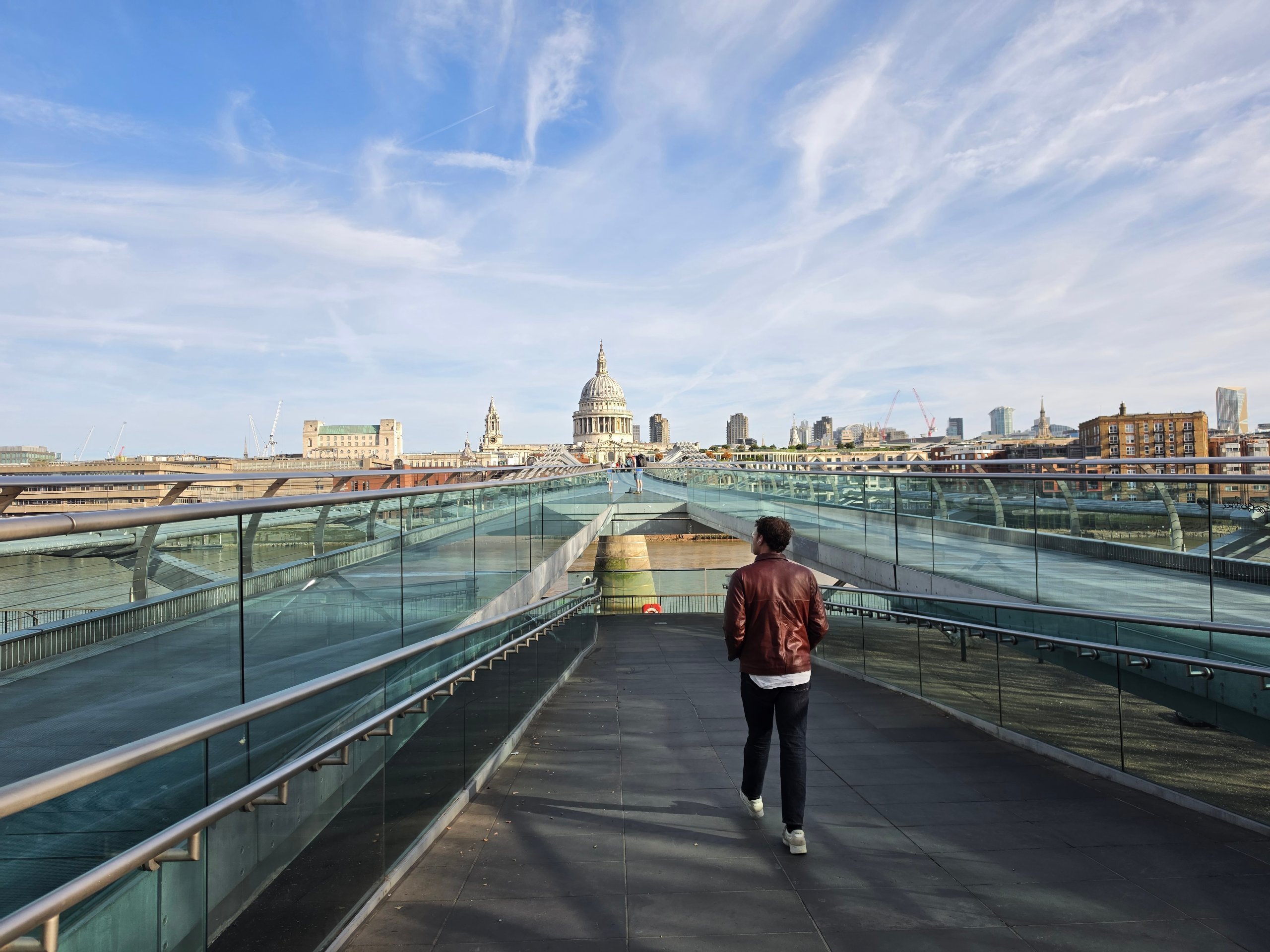
The most famous view of St Paul’s Cathedral is from the Millennium Bridge. The bridge’s structure points directly towards the dome, creating natural leading lines.
You’ll get the best shot from the southern end of the bridge, in front of the Tate Modern. If you want to avoid the crowds, come early in the morning. You can also take lovely photographs after sunset, when both the bridge and the cathedral are illuminated.
The modern shopping centre One New Change stands directly opposite the cathedral and offers two different spots for taking photos.
A small public garden at 25 Cannon Street lies directly opposite the south side of the cathedral.
In the centre is a shallow pool in which, under the right conditions, the entire dome is reflected. If the water is calm, you can take one of the most unique photographs of St Paul’s Cathedral from here.
The pond may not always be filled with water. Even without the reflection, however, the garden is a good spot for photographs of the cathedral surrounded by greenery.
From Watling Street, near the Ye Olde Watling pub, you can see the dome nestled between historic and modern buildings.
This is one of the best local spots for portrait-format photographs. You can also include the pubs’ signboards and the everyday hustle and bustle of the City of London in your shot.
St Paul’s Cathedral is situated in the City of London, between St Paul’s, City Thameslink and Blackfriars stations. The Millennium Bridge leads to it from the south bank of the Thames.
Buses stop right outside the cathedral and, from many locations, are more convenient than the Underground:
Get off at St Paul’s Cathedral or St Paul’s Churchyard.
Fares, card payments and daily limits are described in the guide to Transport in London. You can also find a map of the lines and practical tips in the article on the London Underground.
A church dedicated to St Paul has stood on Ludgate Hill since 604. The first wooden cathedral burnt down and the subsequent building was later plundered by the Vikings.
The vast medieval cathedral took several centuries to build and for a long time boasted one of the tallest church spires in Europe. However, during the English Reformation, the cathedral fell into disrepair and some of its furnishings were sold off.
In 1561, the spire was struck by lightning and destroyed. The original cathedral was then finally destroyed by the Great Fire of London in 1666.
Christopher Wren was commissioned to build the new cathedral. This monumental Baroque building, featuring Renaissance elements, was constructed between 1675 and 1710.
The highest point of the cathedral reaches a height of 111 metres. For several centuries, the dome was the most striking feature of the London skyline and remains one of the city’s main symbols to this day.
A visit to St Paul’s Cathedral is best combined with sights on both banks of the Thames:
Discover all the places to see in London.
If you have any questions or comments about the article...