
Fly to Corsica from Vienna, even during the summer holidays, with Air Corsica
198 €



The easiest way to pay for transport in London is with your own contactless payment card, mobile phone or smartwatch.
You don’t need to buy a ticket in advance or keep track of the number of journeys. Just use the same card or device all day, and the system will automatically calculate the most favourable fare and daily limit for you.
For most visitors, there are 4 basic rules:
| Situation | Best option | Why |
|---|---|---|
| Adult for 1–5 days | Personal contactless card | Cheapest |
| Adult for 6–7 days (Monday–Sunday) |
Your own contactless card | Weekly limit applies automatically |
| Exactly 7 days across 2 calendar weeks | contactless or 7 days Travelcard | The weekly limit runs from Monday to Sunday; the Travelcard can start on any day |
| Child under 11 years of age | Travels free with a paying adult | Travels free of charge |
| Child aged 11 to 15 | Oyster card with a set discount Young Visitor | Pays half the adult fare |
| Buses and trams only | Own contactless card | Cheapest |
| Foreign card with a high fee or a card not accepted by TfL | Oyster | You’ll avoid repeated bank charges and compatibility issues |
London is a vast city, and a poorly chosen hotel location can mean several extra changes every day.
When choosing accommodation in London, therefore, focus primarily on walking distance from a tube station, the Elizabeth line, the DLR or the London Overground.
A hotel just outside the city centre but right next to a station on a fast service is usually more practical than a cheaper room far from transport links.
Compare hotel prices in London
These are the three main ways to pay for transport in London.
For a standard stay, contactless is the simplest option.
It works as follows pay as you go: on every journey, you tap your card on the yellow reader and the TfL system calculates the correct fare at the end of the day.
The prices for individual journeys, as well as the daily and weekly limits, are the same as for the Oyster card.
You can use your own card to pay on the Underground, buses, trams, the DLR, the London Overground, the Elizabeth line and National Rail trains within London’s fare zones.
The card can also be used on the River Bus and the London Cable Car, although these journeys do not count towards your standard daily limit.
Watch out for a few common mistakes:
Take a spare card with you on your journey. If your main card is not accepted, do not try to use different cards at the entry and exit turnstiles during the same journey.
You can view your journey history, amounts deducted and requests for refunds of incorrectly charged fares via your TfL Contactless and Oyster account.
An Oyster card works much in the same way as a payment card. You top it up with credit, tap it against the yellow readers when travelling, and the system automatically applies individual fares and limits.
A standard Oyster card bought in London costs 10,50 gbp. This purchase fee is non-refundable, so it isn’t worth it for an adult with a working contactless card on a short visit.
You can top up your credit at stations, via the TfL Go app and at outlets marked ‘ Oyster Ticket Stop ’.
An Oyster card is worth having in the following situations:
Visitor Oyster card you must order it before your trip. It also costs 10,50 gbp plus postage, so it usually offers no advantage to an adult compared to a standard Oyster card bought on arrival. It may be worth it if you want to have the card ready in advance or if you need one for a child aged 11 to 15.
A paper one-day Travelcard is more expensive for the average visitor than the automatic daily limit when paying by card or Oyster.
For Zones 1 to 4, the cost is 16,60 gbp, whilst the limit for Zones 1 and 2 is only 8,90 gbp.
A 7-day Travelcard loaded onto a standard Oyster card may be a more attractive option. Unlike the weekly limit on the contactless, which always runs from Monday to Sunday, the Travelcard can be valid for any seven consecutive days.
ℹ️ Example: for a stay from Thursday to Wednesday, where the limit in Zones 1 and 2 is reached every day, the contactless would cost a maximum of 62,30 gbp.
A seven-day Travelcard costs 44,70 gbp and, with a new Oyster card, comes to a total of 55,20 gbp.
However, if you only make one or two journeys on any given day, a standard pay as you go may still work out cheaper.
London is divided into 9 fare zones. Most of the main attractions and neighbourhoods visited on a first trip are in zones 1 and 2. You’ll usually need higher zones for your hotel, the airport or a trip to the outskirts of the city.
Daily cap This is the maximum amount you will pay for eligible journeys in a single travel day when using the same card or Oyster card correctly.
A travel day does not start at midnight, but runs from 4.30 am to 4.29 am the following day.
The weekly limit is always calculated from Monday to Sunday. It cannot be adjusted according to your arrival date.
| Zones | Daily limit | Weekly limit Monday–Sunday |
|---|---|---|
| Zone 1 or Zones 1–2 | 8,90 gbp | 44,70 gbp |
| Zones 1–3 | 10,50 gbp | 52,50 gbp |
| Zones 1–4 | 12,80 gbp | 64,20 gbp |
| Zones 1–5 | 15,30 gbp | 76,40 gbp |
| Zones 1–6 | 16,30 gbp | 81,60 gbp |
The combined zone limit includes journeys by Underground, bus, tram, DLR, London Overground, most journeys on the Elizabeth line and most National Rail trains within the zones.
If you combine the Underground and a bus during the day, you do not pay two separate fares. The system counts individual journeys and stops at the appropriate total fare limit.
The standard limit does not include, for example, the River Bus, the London Cable Car, the Heathrow Express and Southeastern high-speed trains.
The price depends on the zones travelled through, the route and the time the card is tapped on entry.
A typical metro journey through zones 1 and 2 costs 3,50 gbp during peak hours and 2,90 gbp during off-peak hours.
Peak times apply from Monday to Friday, excluding public holidays, between 6.30 am and 9.30 am and 4.00 pm and 7.00 pm. The time at which the card is tapped upon entry determines the fare.
Journeys from the outer zone into Zone 1 are charged at off-peak rates during the afternoon peak; special rules apply to journeys through Zone 1 and to Heathrow.
In the city centre, you will usually reach the limit after around three to four journeys. If you make fewer journeys, only the total number of actual journeys will be deducted, not the entire daily limit.
Fares on buses and trams do not depend on zones.
The following applies until 31 October 2026:
From 1 November 2026, prices will increase to:
The ‘ Hopper fare ’ rule allows you to make unlimited transfers between buses and trams within 60 minutes of your first tap, without any further payment. However, you must tap your card every time you board, even if the next journey is free.
Tapping your card correctly is very important. An incomplete journey may result in the maximum fare being charged, which may not count towards your daily limit.
At interchange points, you may sometimes see pink card readers. Tap your card on these if you are travelling on a route outside Zone 1. This allows the system to recognise your actual journey and charge a lower fare.
Do not tap your card through a wallet containing other contactless cards. This ‘ card clash ’ can open the ticket barrier with a card other than the one you intended, and split a single journey between two payment methods.
Children under 11 travel free on buses and trams.
They can also travel free of charge on the Underground, the DLR, the London Overground, the Elizabeth line and selected National Rail trains when accompanied by a paying adult. One adult may accompany a maximum of four children in this way.
Children do not need their own travel card. At the ticket barriers, use the wide gate designed for pushchairs and luggage and go through together. Standard ticket barriers close quickly.
For a short visit, the most practical option is a separate Oyster or Visitor Oyster card for each child.
On arrival, ask staff at an Underground station, a London Overground station, selected Elizabeth line stations or at Visitor Centre to set up the discount Young Visitor. The child must be present when the discount is set up.
The discount is valid for up to 14 days and reduces single fares and daily limits to half the adult rate. You cannot obtain the child fare using a standard bank card.
For a one-off tourist trip, it is usually not worth applying for a photo 11–15 Zip Oyster photocard, which is primarily intended for regular travel and requires an application and an administrative fee.
Visitors aged 16 and over pay the standard adult fare unless they are eligible for one of the local photo Oyster cards or another UK discount.
For most visitors, the quickest combination is the Underground and walking.
Buses are ideal for shorter journeys whilst taking in the city sights, the DLR for travelling to East London, and a boat for a trip along the Thames. Don’t hire a car to get around London: traffic is slow, parking is expensive and there are additional charges in the city centre.
Tube are the quickest way to travel between the outlying parts of the city centre.
The direction is indicated on the platforms by the cardinal direction or the line’s terminus. Before boarding, it is therefore not enough to know just the colour of the line; you also need to know your destination and the direction.
The Elizabeth Line is a high-speed rail line running through the city centre. In reality, however, I classify it as a traditional underground line, as there are no differences between the underground and the Elizabeth Line for the average tourist.
The London Overground primarily connects the wider city centre with the outlying districts. On maps, you’ll no longer find its routes shown as a single orange line, but under the names Liberty, Lioness, Mildmay, Suffragette, Weaver and Windrush.
National Rail trains can be faster than the Underground between more distant parts of the city. Within London’s zones, a ‘ contactless ’ or an Oyster card is usually sufficient on most services, but always check validity at the specific station before travelling beyond the system’s boundaries.
The network is extensive, so we’ve covered maps, individual lines, operating hours and connections separately in our guide to the London Underground and trains.
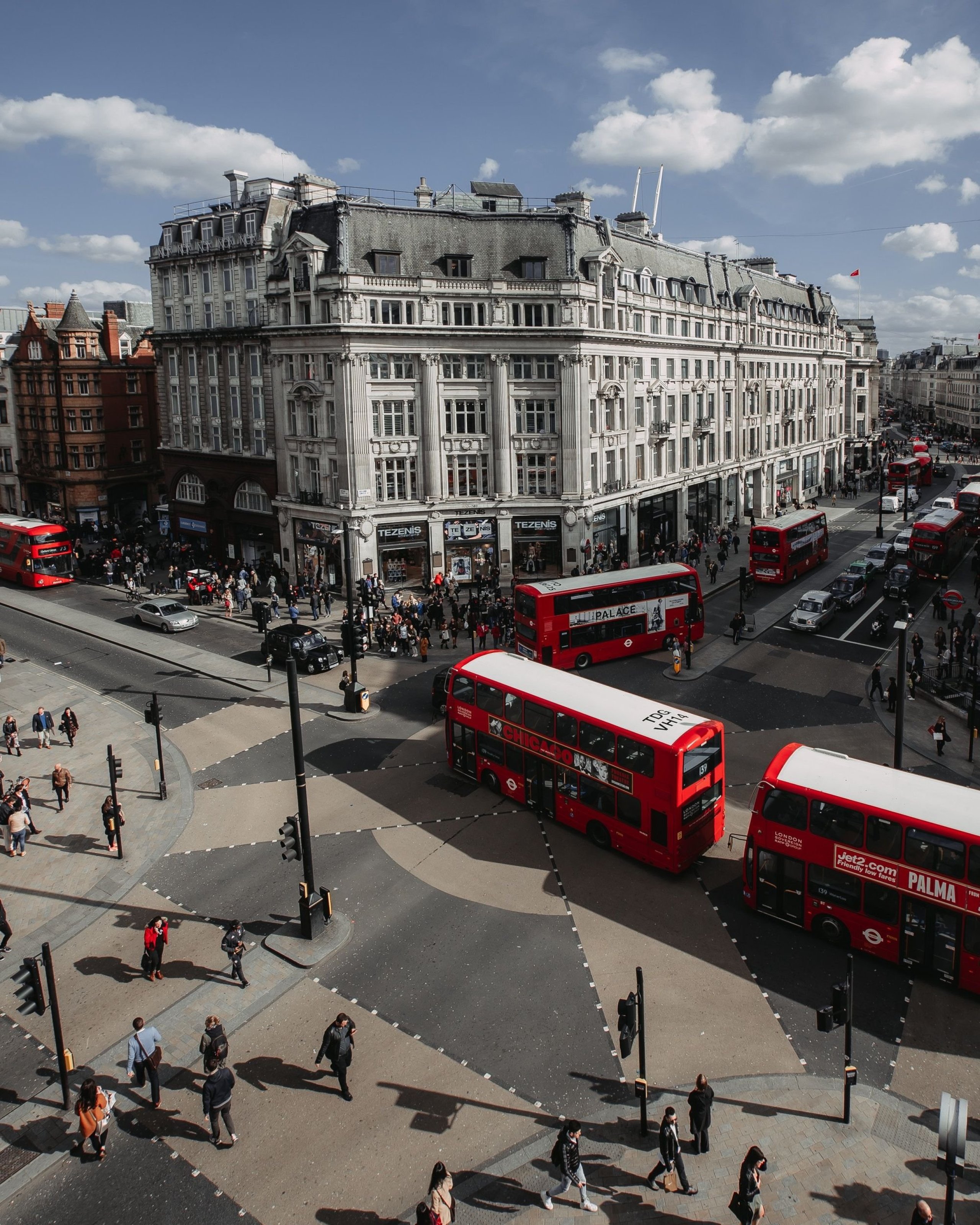
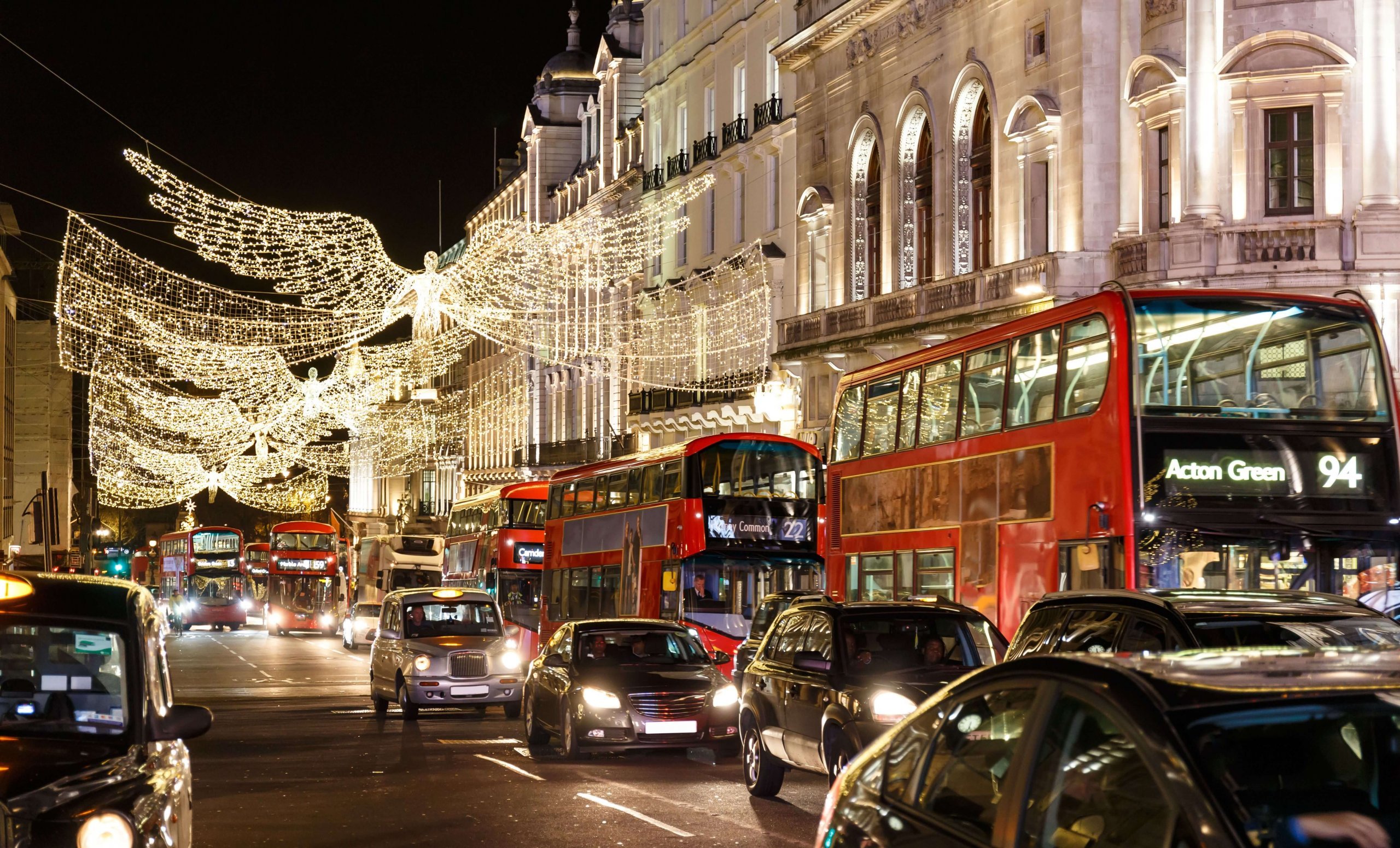
Buses are cheaper than the Underground, and you’ll get a better view of the city from the top deck of a double-decker than from underground. On longer journeys, however, they can be significantly slower due to traffic.
London buses do not accept cash. Board via the front door, tap your card just once, and do not tap it again when you get off.
Stand in plain sight at the bus stop and, to be on the safe side, wave at the approaching bus. Press the red ‘ Stop ’ button in good time before getting off.
In short: use the bus more as a sightseeing trip than as a practical means of long-distance travel. Traffic lights and stops are so frequent that it might even be quicker to walk.
The following regular routes are particularly suitable for a cheap sightseeing trip:
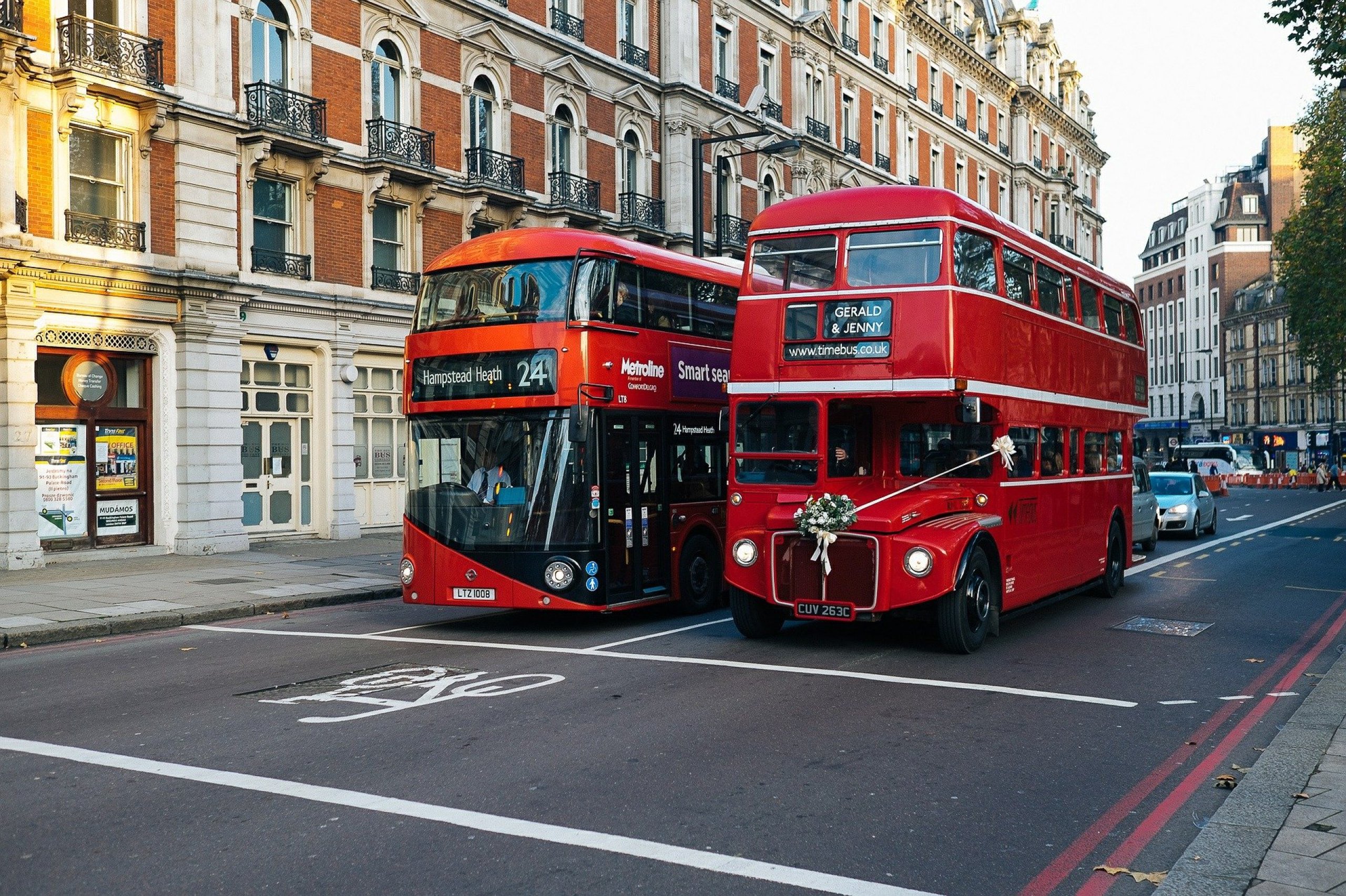
The historic Routemasters no longer run on a regular basis on routes 9 and 15.
If you’d like an open-top bus, a commentary and the option to hop on and off at the main sights, compare the paid ‘ hop-on hop-off ’ buses. They aren’t the cheapest option, but on a first visit they can serve as an alternative to a separate sightseeing tour.
Compare sightseeing buses in London
You can find bus route maps for individual neighbourhoods on the websitetfl.gov.uk/maps/bus, whilst timetables for the routes can be found on the pagetfl.gov.uk/travel-information/timetables.
Docklands Light Railway, or the DLR, is an automated, driverless railway in East London. It connects the City, Canary Wharf, the Royal Docks, London City Airport and the Greenwich area. When travelling to the Greenwich Observatory, get off at Cutty Sark station.
For tourists, the DLR is interesting simply for the ride itself. If there’s space, take a seat in the front row and you’ll see the track from the driver’s perspective. At stations without turnstiles, don’t forget to look for the separate yellow reader and tap your ticket on it when entering and exiting.
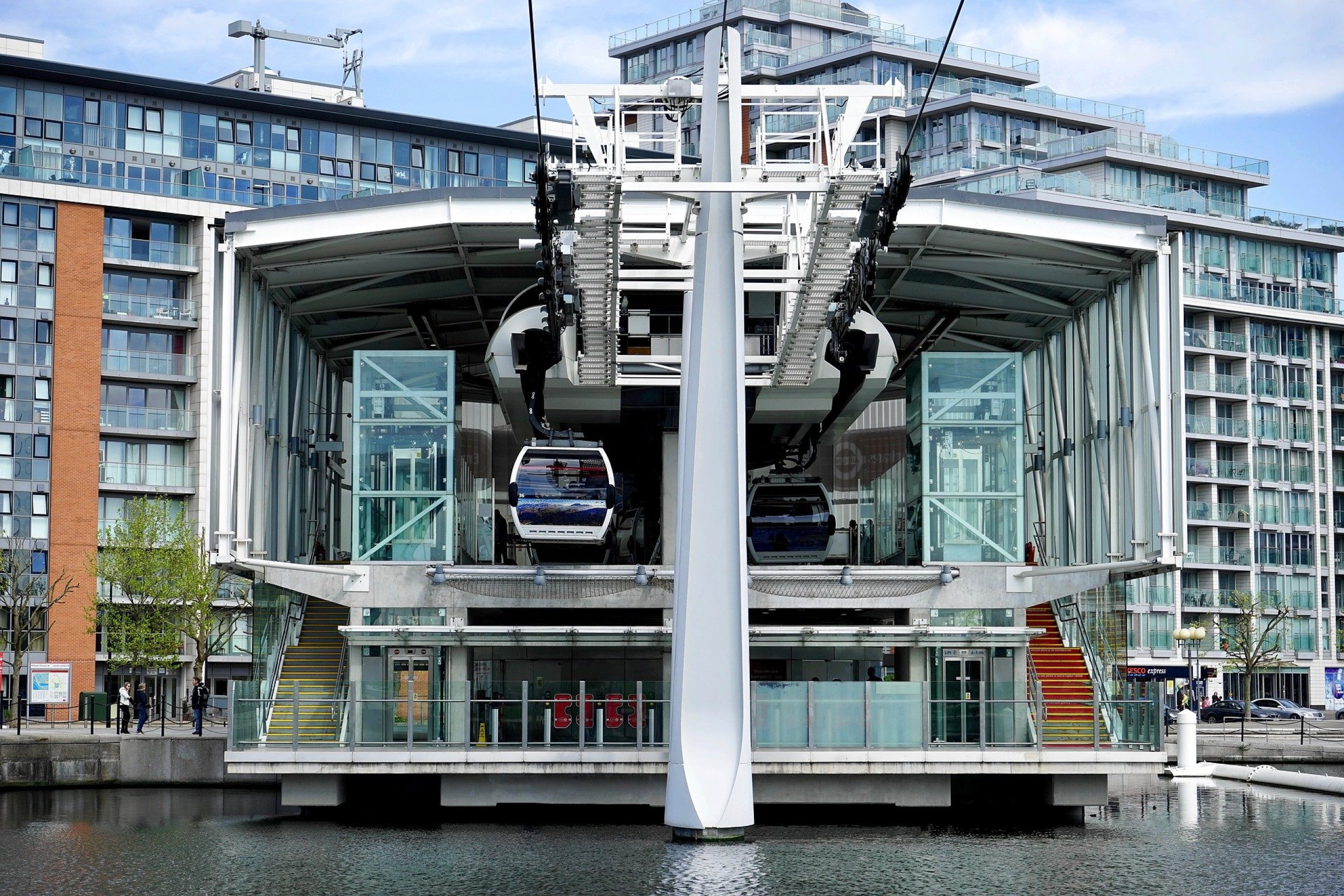
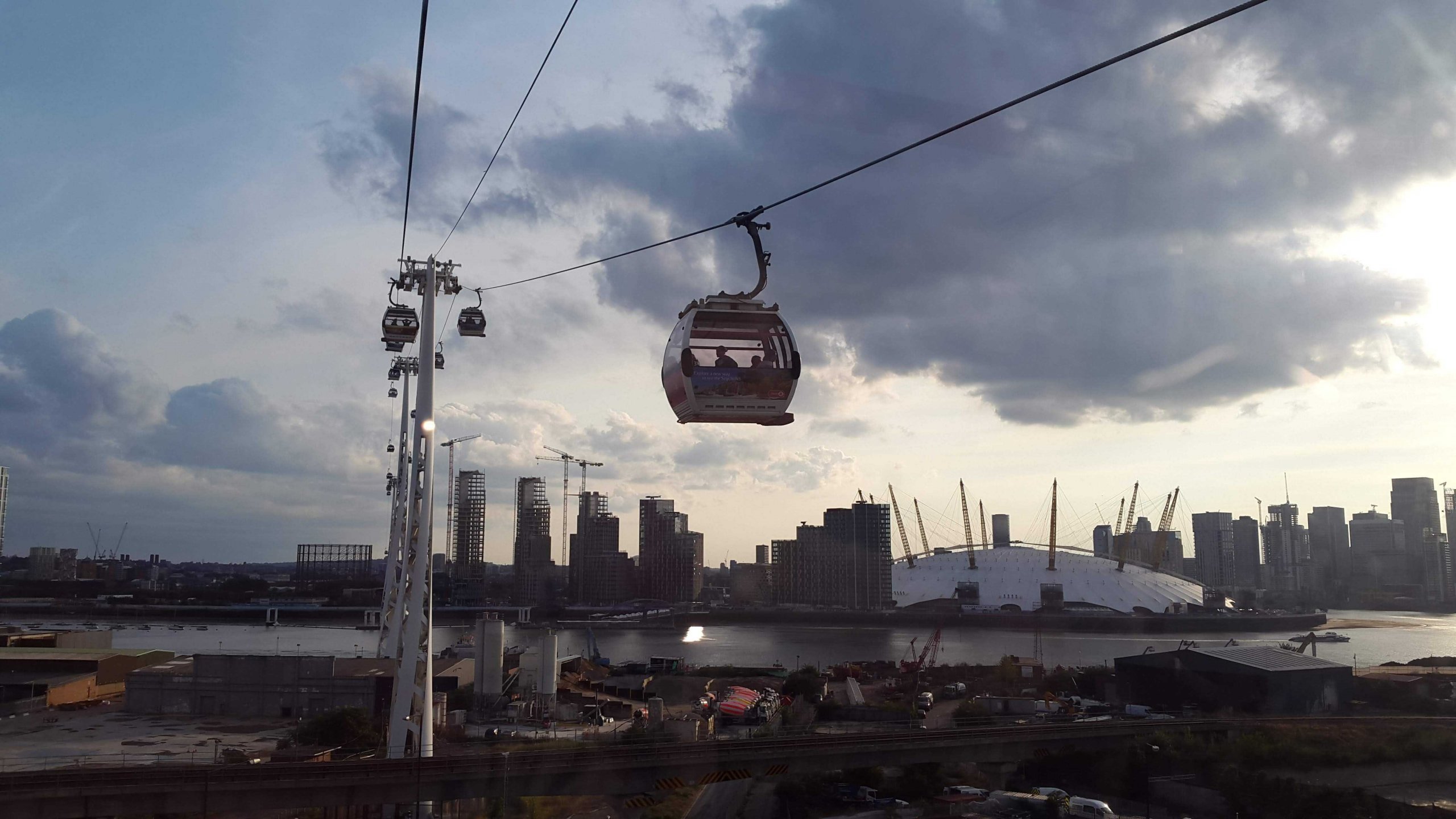
The cable car crosses the Thames between the Greenwich Peninsula, near North Greenwich station, and the Royal Docks, near DLR’s Royal Victoria station.
A single journey takes up to 10 minutes and, in good visibility, offers views of the O2, Canary Wharf and East London.
An adult pays 7 gbp for a single journey. A return ticket bought online costs 13,50 gbp.
You can also pay with your own card or an Oyster card, but the journey does not count towards your usual daily limit.
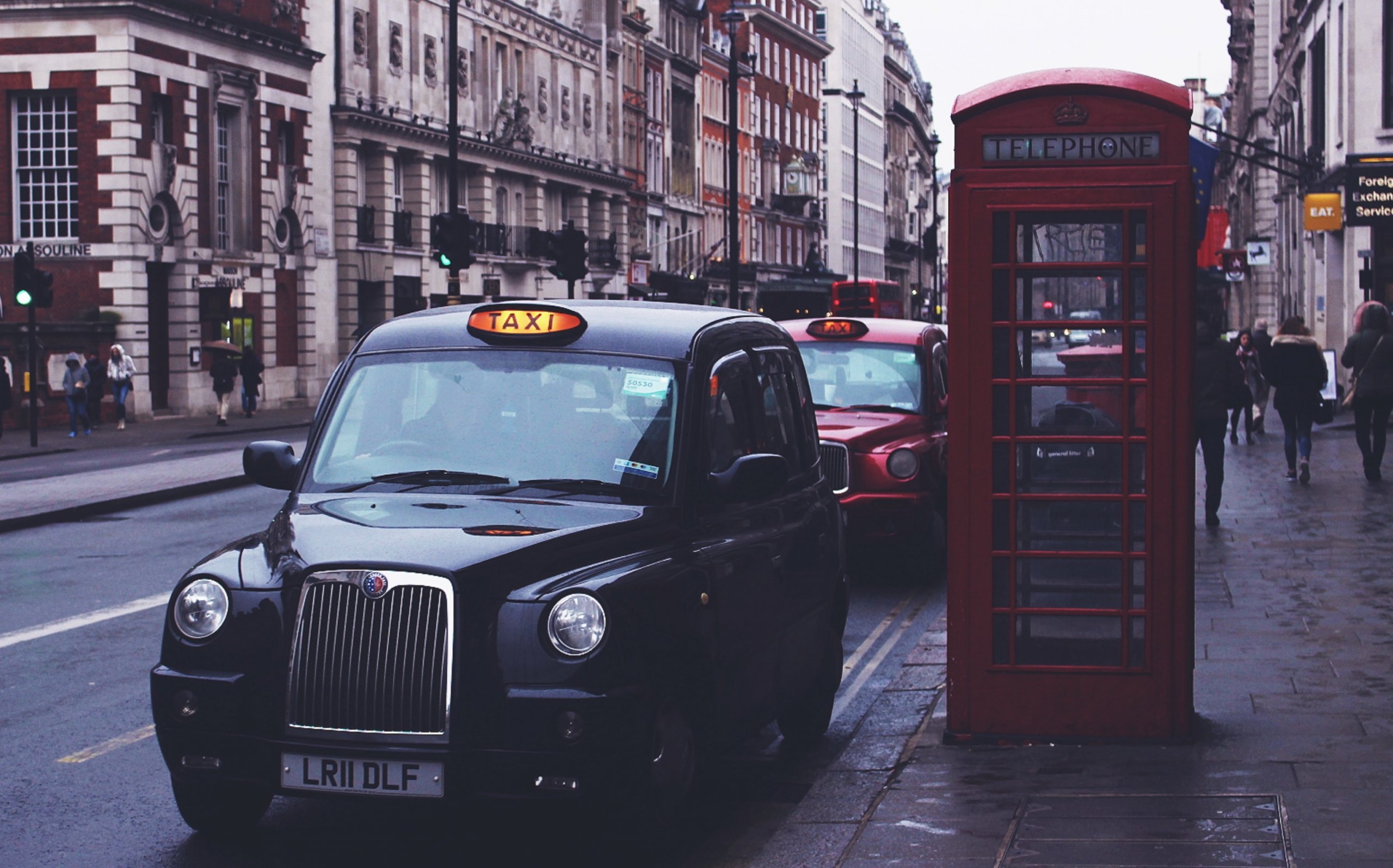
You can hail a traditional black cab, known as a ‘ black cab ’, in the street or find one at a taxi rank.
The minimum fare is 4,40 gbp and a typical journey of 1 mile costs approximately 8.40–13,20 gbp, depending on traffic and the time of day.
All black cabs accept card payments at no extra charge and are wheelchair accessible.
Uber, Bolt and FREENOW display the price before you book, but they apply dynamic pricing during periods of high demand. It is therefore not always the case that they are cheaper than a black cab. Before your journey, compare both the price and estimated arrival time across several apps.
Taxis make the most sense at night, when travelling with heavy luggage, or for a group making a single specific journey. For getting around the city centre throughout the day, public transport is usually significantly cheaper.
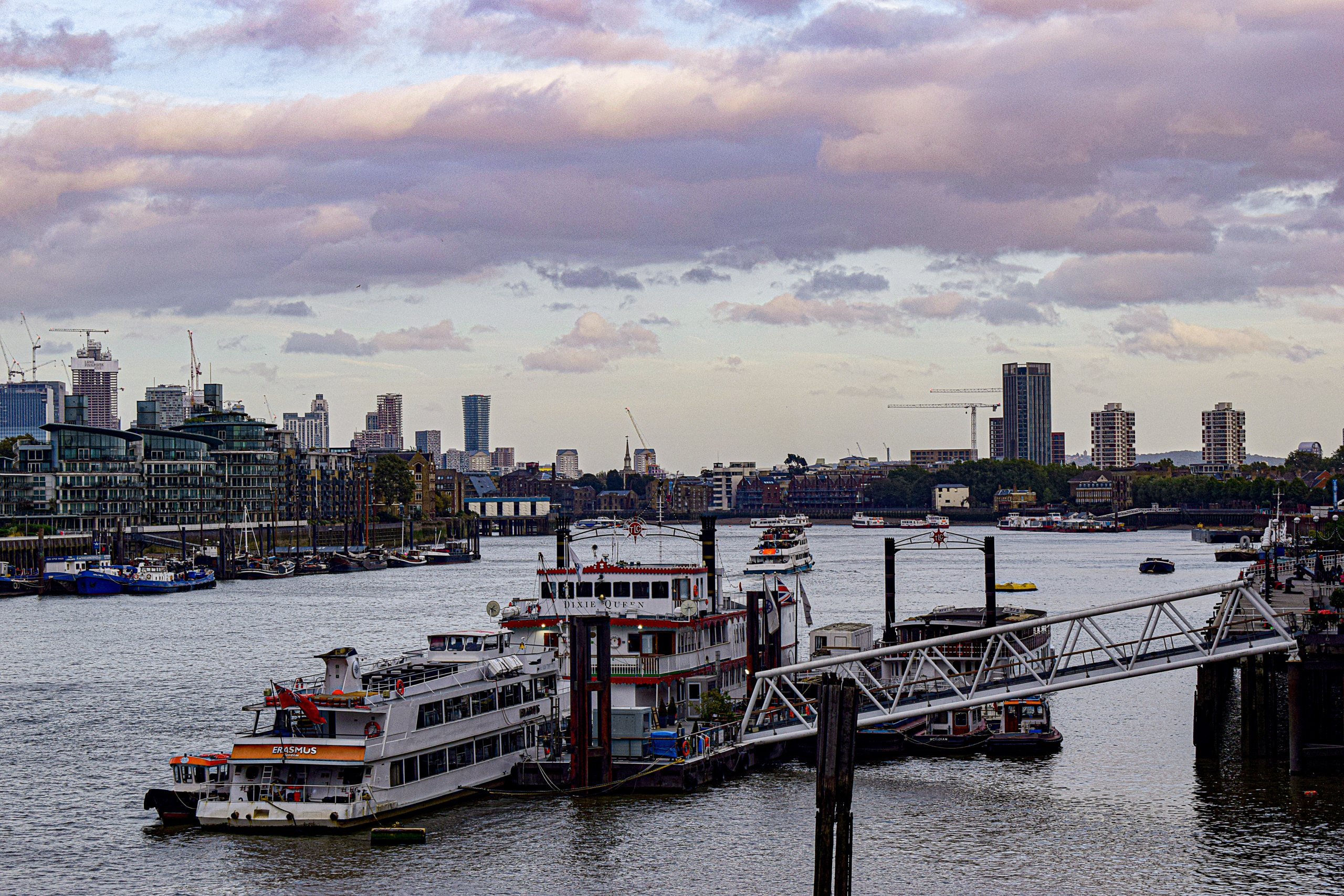
There are two different types of boat operating on the Thames. Uber Boat by Thames Clippers One is a fast regular service, also known as the River Bus.
Sightseeing cruises travel more slowly, usually feature a commentary and are designed to showcase the city.
The River Bus is ideal for travelling between Westminster, the London Eye, the Tower, Canary Wharf, Greenwich and Battersea, for example. From the water, you can see the London Eye, the Tower of London, Tower Bridge and the modern districts in the east.
You can pay for the River Bus using a contactless card or an Oyster card, but the fare does not count towards your TfL daily or weekly limit.
Each passenger needs their own means of payment. Prices are based on river zones; tickets bought online or via the app are usually cheaper than standard tickets at the jetty. One-day and family hop-on hop-off tickets are also available.
If you’re primarily looking for a guided tour of the sights, compare the classic sightseeing cruises. The Westminster–Tower Bridge and Westminster–Greenwich routes are popular; before buying, check whether it’s a single, return or all-day ticket.
London’s trams mainly operate in the Croydon area in the south of the city, with branches to Wimbledon, Beckenham Junction, Elmers End and New Addington.
You won’t need them for a standard tour of the city centre, but they may come in handy if you’re travelling to your accommodation or heading to south London.
Fares are the same as on buses. Tap your card on the reader at the stop before boarding, but do not tap it again when alighting. In Wimbledon, follow the specific instructions at the turnstiles and the tram platform.
Santander Cycles are ideal for cycling along parks and the river, but traffic in the city centre can be challenging for inexperienced cyclists. Cyclists ride on the left, and whilst a helmet isn’t compulsory, it is advisable.
You can hire a standard bike via the app or at the terminal by the bike rack. To hire an e-bike, you’ll need the Santander Cycles app. After returning the bike, always check the green indicator light to confirm it’s been locked correctly.
London is served by six major airports, each with its own fares and best transport links. You should therefore not choose a flight based solely on the price; the difference in cost and journey time can quickly wipe out any savings.
| Airport | Integration into London’s transport network | Detailed guide |
|---|---|---|
| Heathrow | Zone 6; the Piccadilly line and Elizabeth line accept contactless and Oyster The Heathrow Express is not included in the standard travel limit |
Transport from Heathrow |
| London City | Zone 3; direct DLR | Transport from London City |
| Gatwick | Outside standard zones; Thameslink, Southern and Gatwick Express trains and long-distance buses | Transport from Gatwick |
| Stansted | Outside standard zones; Stansted Express trains and long-distance coaches | Transport from Stansted |
| Luton | Outside standard zones; DART trains and long-distance coaches | Transport from Luton |
| Southend | Outside the zones; Greater Anglia trains | Transport from Southend |
For airports outside the standard zones, you cannot automatically assume the same limits and rules as in the city centre. Before you travel, check the specific airport guide, where we compare trains, buses, prices, journey times and night services.
Most metro lines run from around 5:00 until midnight; exact times vary depending on the station and the day.
An extensive network of night buses operates for the rest of the night. Some regular services run 24 hours a day; other night services can be identified by the letter N before the number.
Night Tube s run on the Central, Jubilee, Northern, Piccadilly and Victoria lines from Friday night to Saturday morning and from Saturday night to Sunday morning. Part of the Overground, known as the Windrush line, also operates all night. Standard off-peak fares and daily limits apply; journeys starting before 4.30 am count towards the previous travel day.
Service disruptions are common at weekends, so always check the status of services before setting off, particularly when travelling to the airport.
TfL Go, Citymapper and Google Maps work well for planning routes.
TfL Go also shows real-time service updates, closures, accessible routes and your Oyster journey history. When searching based on your current location, always check that the app has actually selected the nearest station.
Before you set off, download an offline map of the city centre and save your hotel’s address. You’ll need your mobile not only for navigation, but also for paying by phone at the exit turnstile and for any ticket inspections, so make sure to conserve your battery throughout the day or carry a power bank.
If you have any questions or comments about the article...

I'm arriving at Heathrow at 3.15pm, I've got tickets for the Heathrow express to Paddington.
Tower Bridge will probably be lifted from 16 to 17.
Can we make it in time to see the bridge lifted? Any ideas where to go closest to Paddington to catch it?
Thank you
Paul

Hello.
We are going to London with our family (2 adults, 2 children). Is it possible to pay on public transport for the whole family with one bank card/phone (Wise card)? My wife and children (12 and 15 years old) have their bank cards, but they are linked to their Czech accounts. And I don't want them to use their...
Thanks for the info.

Some observations from our current five-day stay in London (May/June 2026)
- The TfL app on my phone often incorrectly entered the location by a few hundred metres, so it would search for routes as much as 2 tube stations further away than the nearest one (other apps I have are fine). Overall I found it underpowered, but as basic info it was sufficient, but it was necessary to enter the exact stop and not rely on the location it determined. So I wouldn't rely on it 100%, not noticing that there are two other metro stations closer, we'll probably walk a lot... Otherwise for trains and city (Overground) just use Idos, it was totally fine.
- Stansted Express is fine if it's running though, we've had trains cancelled and delayed due to some incident and even though we had an hour to spare, the staff at Liverpool St. Station told us not to wait even if there were already some delayed trains on the board, they would run - they didn't, they cancelled and moved it in stages. The alternative route we were advised in good time was fortunately - go to Chemsford and from there take the airport bus (about an hour) or taxi (put it at about 40 minutes). The journey to Chemsford they said the same train ticket applies. I installed the local Happicabs app for that region while still on the train, there is a registration and confirmation required, I booked the ride about 10 minutes over the train arriving at the station and the car was there in 5 minutes. Or there's also taxi stands straight away, but we didn't know that in advance and also didn't want to risk being picked up by half the train that was also going to Stansted. Well we made the flight in a minute, thankfully (we were still delayed by the security checking our luggage). The last minute trip on the app was £67, it would probably have been more expensive from London.
I recommend Uber Boat, we went with luggage to our accommodation in Chelsea, bought a full day Hop on, hop off (and returned on the second payment that day back to the centre, depending on the number of zones you pass through). The boats run relatively frequently, are spacious, reliable and surprisingly fast. And it eliminates lugging luggage on the subway and sometimes long transfers. The family one came out to something like £55, I think you can buy the one in advance for even cheaper. Not every boat stops everywhere, some are quicker connections or go part of the way. You can also tap a card, but that wouldn't work for 2+2.
Buses pretty reliable, just sometimes if you signal late they don't stop.
Metro - check ahead to see if there is a strike etc. Turnstiles with a child under 11 basically the wide ones (sometimes it is open on the other side from the normal ones or is sideways in some stations), about 2 times it was necessary to go through the normal one and they close awfully fast or chop the second in line. Staff will usually advise or open the turnstile themselves if it's malfunctioning, for example.