Long weekends in Oslo from Bucharest with Norwegian
75 €


Marylebone is probably my favourite London neighbourhood. At first glance, it’s a bit like Mayfair, but it’s less upmarket and much more down-to-earth.
Instead of limousines and the most expensive boutiques, you’ll find smaller shops, cafés, restaurants and everyday city life here.
I liked Chiltern Street best. It’s quiet, beautifully kept and feels more authentic than the tourist spots right in the city centre. If you want to get to know London beyond the main attractions, I’d definitely recommend Marylebone.
Tip for more affordable accommodation: the Marylebone Inn is a simple hotel near Baker Street.
Marylebone is a residential and commercial district north of Oxford Street and west of Regent Street.
Tourists often associate it mainly with Baker Street and the Sherlock Holmes Museum, but its most charming part lies around Marylebone High Street and Chiltern Street.
It is not a single, self-contained attraction. Marylebone is a place for a stroll, a coffee, lunch and a spot of shopping. The streets are lively, but generally not as crowded as Covent Garden, Soho or the main stretch of Oxford Street.
To the north, the neighbourhood borders Regent’s Park; to the south, you can easily walk to Oxford Street; and to the south-west, you’ll find the more upmarket Mayfair.
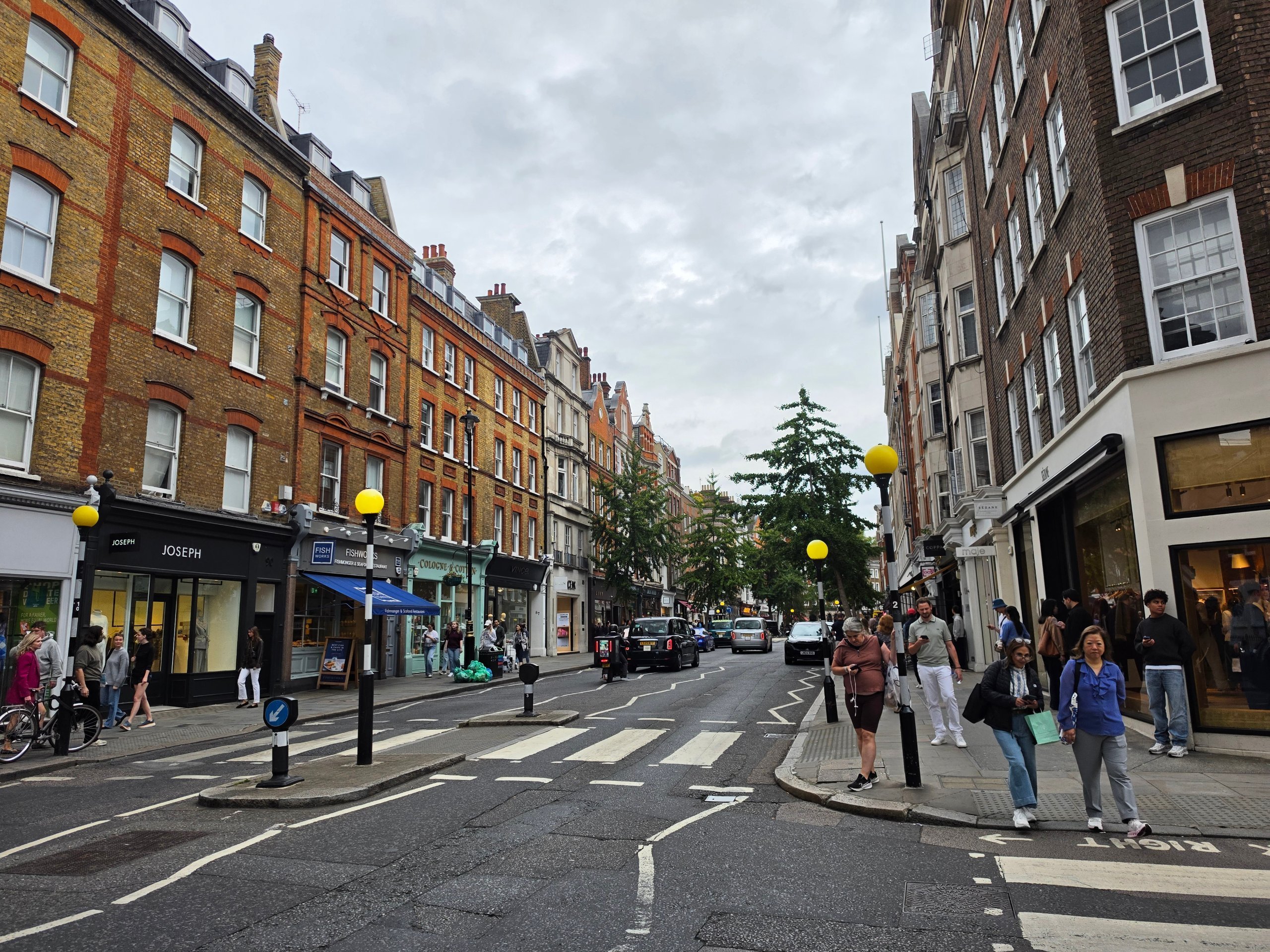
Yes, especially if you’ve already seen London’s main sights or are looking for a pleasant neighbourhood for a meal and a stroll.
Marylebone doesn’t have a single landmark that would make it a must-see for every visitor.
Its main attraction is its atmosphere.
It has an elegant feel, without being overly ostentatious, and alongside the more upmarket establishments, it also offers ordinary cafés, bakeries and small shops.
If you’re only visiting London for a day, you can give it a miss. If you’re staying for three days or more, however, I’d definitely include it in your itinerary, especially if you find the crowds in the city centre tiring.
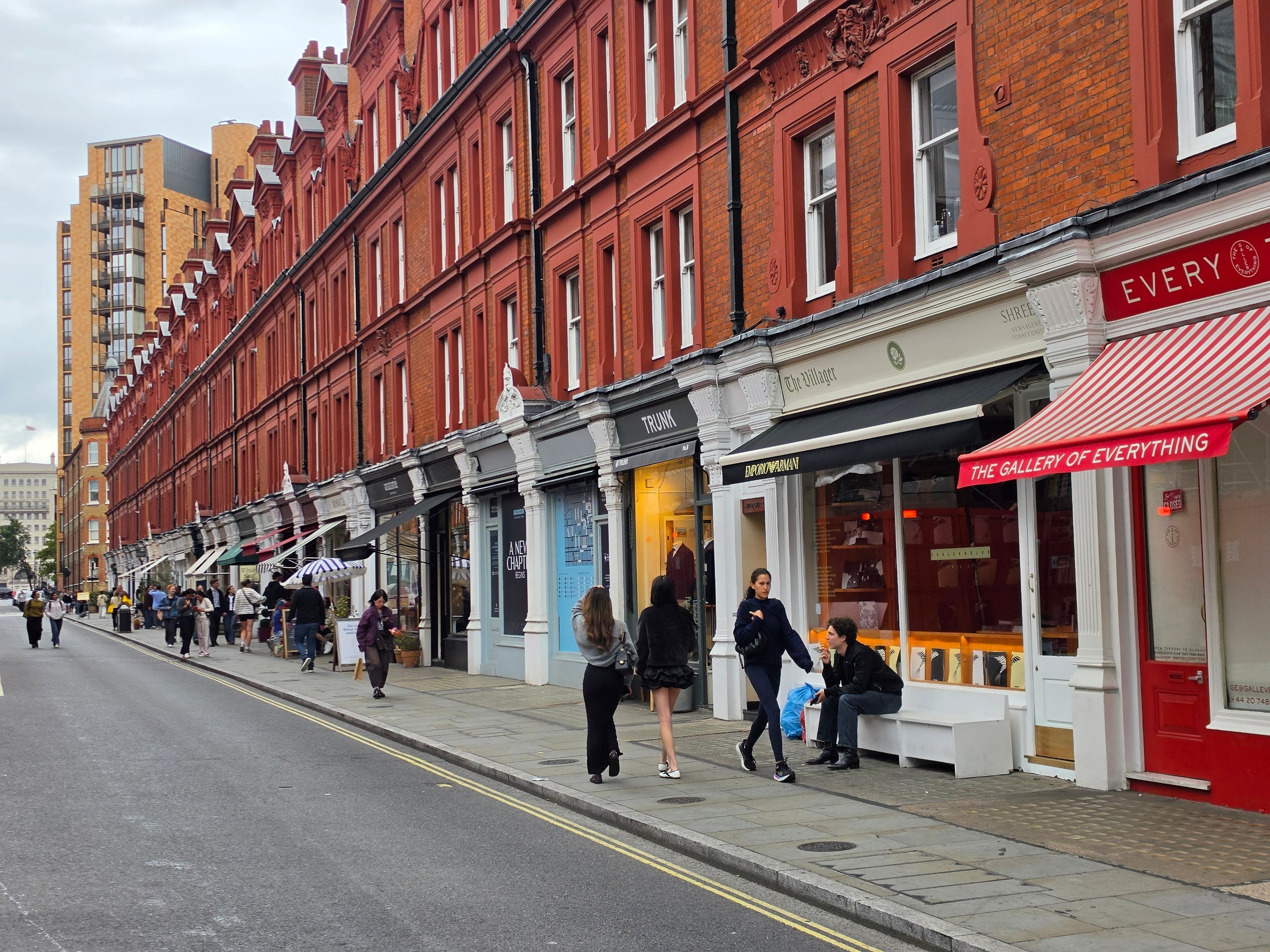
In my opinion, Chiltern Street is the prettiest street in Marylebone and one of the most pleasant streets in central London. I liked its brick houses, well-presented shop windows and peaceful atmosphere.
You’ll find small fashion and design shops, cafés and restaurants here. The street itself isn’t very long and you can walk the length of it in 10 to 15 minutes, but I recommend taking your time and exploring the surrounding side streets.
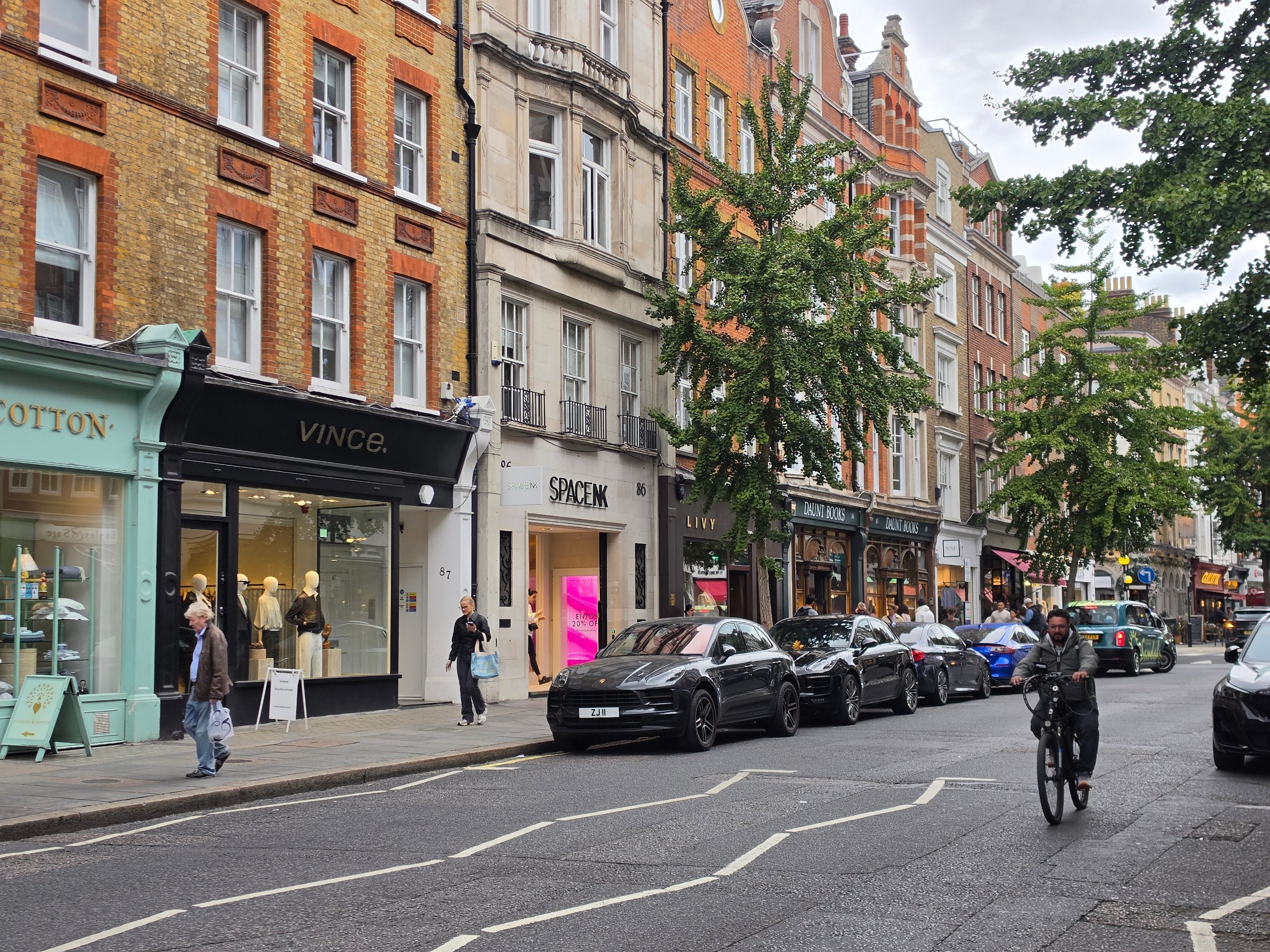
Marylebone High Street is the neighbourhood’s main street. It combines well-known brands with smaller shops, restaurants, cafés and bakeries.
The narrow and slightly curved Marylebone Lane may be even more interesting. It follows the course of the long-covered Tyburn Brook and, unlike the surrounding streets, therefore deviates from the regular grid pattern.
Daunt Books is not just a bookshop, but one of the most photogenic bookshops in London. The original Edwardian interior features long oak galleries, skylights and a striking arched window at the rear.
The bookshop specialises mainly in travel literature and organises its books by country. Entry is free, and it’s well worth a quick visit even if you don’t buy a book.
Wallace Collection is housed in the stately home of Hertford House on Manchester Square. The collection includes European paintings, furniture, porcelain, weapons and other works of art.
Admission to the permanent exhibition is free, and the museum is usually open daily from 10.00 to 17.00. Please check the Wallace Collection’s official website for any changes before your visit.
If you’re only marginally interested in art, an hour or so should be enough for your visit. Art lovers can spend considerably longer here.
Every Sunday from 10.00 to 14.00, a farmers’ market is held in the car park on Cramer Street. You’ll find bread, cheese, vegetables, meat and ready-made meals on sale here.
The market is ideal for breakfast or a light lunch and adds a more local feel to the neighbourhood.
Two small public gardens lie just behind Marylebone High Street. They aren’t a sight worth travelling across London to see, but they’re ideal for a short break whilst out for a walk.
Beyond the larger park, continue north to Regent’s Park, which is about a 10- to 15-minute walk from Marylebone High Street.
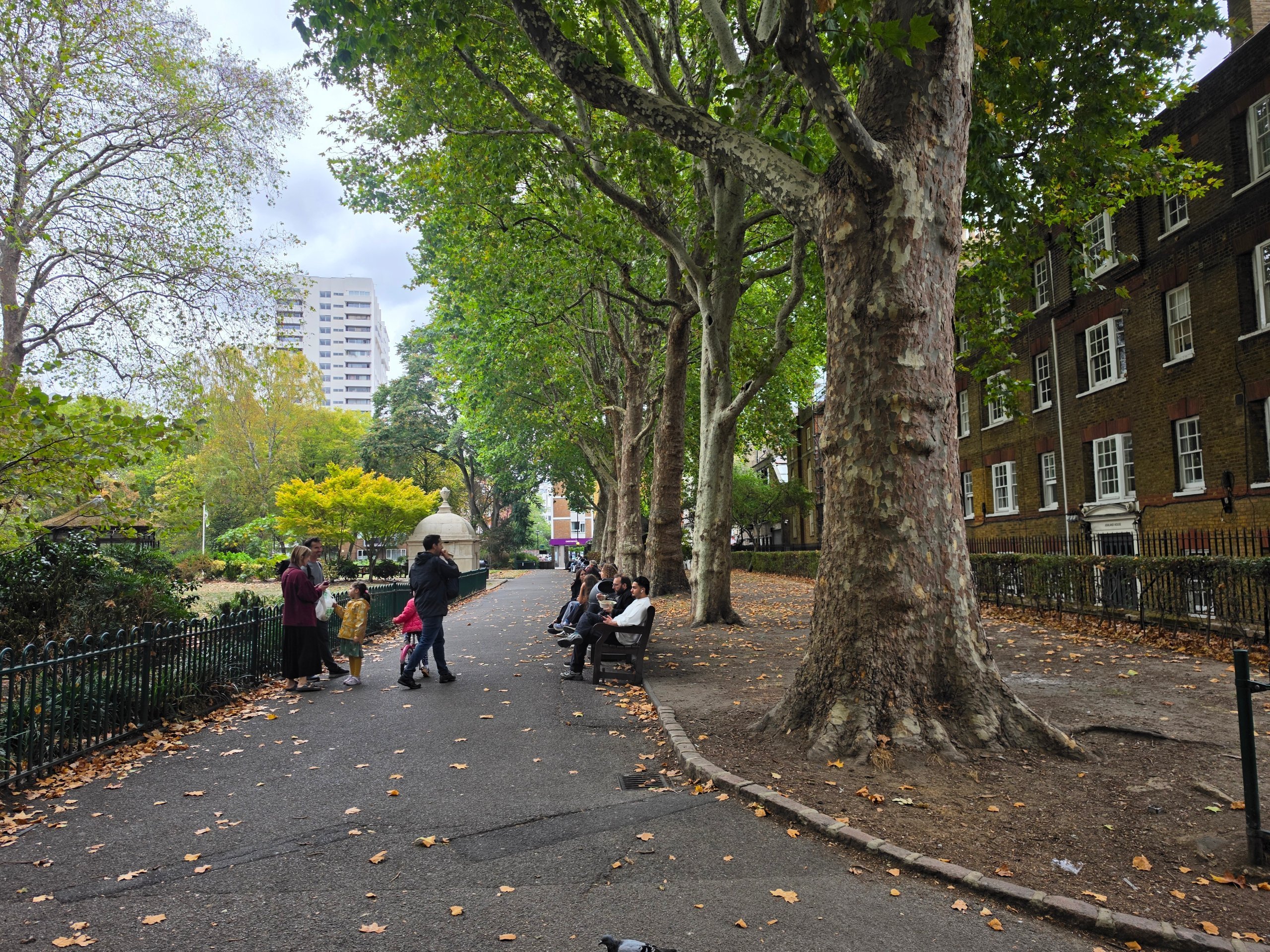
The basic route is approximately 2 km long and takes 1.5 to 2 hours without a visit to the museum.
On Sundays, adjust your route so that you pass through the farmers’ market on Cramer Street between 10.00 and 14.00.
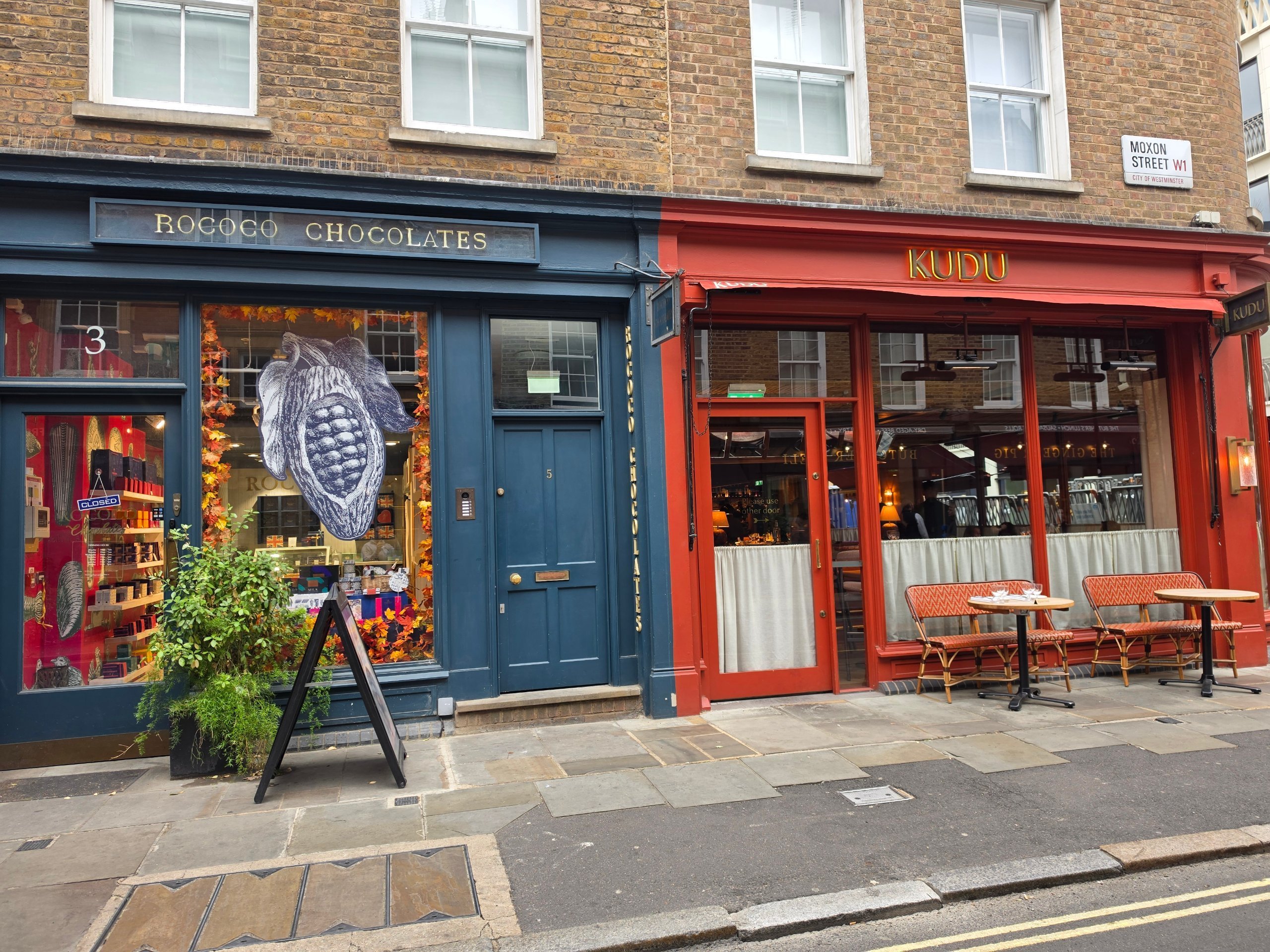
You’ll find the widest selection of venues on Marylebone High Street, Marylebone Lane, Moxon Street and the surrounding area.
Chiltern Street is quieter and more interesting, mainly because of its smaller shops and atmosphere.
I wouldn’t choose a particular restaurant based solely on its reputation. There’s a wide choice in Marylebone and the places on offer change, so it makes more sense to walk down a few streets and decide based on what’s currently available and how busy each place is.
Prices are higher than in London’s outlying neighbourhoods, but they don’t usually seem quite as exorbitant as in Mayfair.
Both neighbourhoods are well-kept, central and pleasant to walk around. For most ordinary visitors, however, I would choose Marylebone.
If you have enough time, explore both. It takes about 15 to 20 minutes to walk from Marylebone High Street to the centre of Mayfair.
Yes. In my opinion, Marylebone is one of the best areas for accommodation in central London.
It’s quieter than Soho or Covent Garden, but you can still walk to Oxford Street, Regent’s Park, Mayfair and Hyde Park.
The advantages include several Underground stations and a direct train service from Marylebone station. The downside is that prices are generally higher, particularly around Marylebone High Street.
We compare other areas and more affordable hotels in our article on where to stay in London.
For most visitors, Baker Street and Bond Street stations are the most convenient.
Marylebone station lies on the western edge of the neighbourhood. For Chiltern Street and Marylebone High Street, it is not usually more convenient than Baker Street.
Buses along Marylebone Road, Oxford Street and Portland Place are often more convenient than the Underground for short journeys through the city centre, particularly if you would otherwise have to change lines.
For details on fares and payment, see the article on transport in London.
Discover all the places to see in London.
If you have any questions or comments about the article...