Long weekends in Oslo from Bucharest with Norwegian
75 €


Covent Garden is one of those places that’s almost always packed, yet I wouldn’t have missed it on my first visit to London. We both enjoyed it there. I like lively places, and Covent Garden strikes me as one of London’s natural hubs.
The historic market itself isn’t very big. It took me about half an hour to walk through it, watch the street performers and soak up the atmosphere. However, Covent Garden is also an entire neighbourhood full of theatres, restaurants, shops and small squares.
If you want to stay right in the thick of things, one of the more affordable options is The Z Hotel Covent Garden. It’s right next to the main square, but be prepared for very small rooms and, in the cheapest categories, the possibility of a room without a window.
It’s both, which is precisely why the name can be confusing.
Covent Garden is an entire neighbourhood in central London. It includes the historic Piazza, the market, the Royal Opera House, the London Transport Museum, theatres, restaurants and shopping streets. Seven Dials and Neal’s Yard are also commonly regarded as part of the wider area.
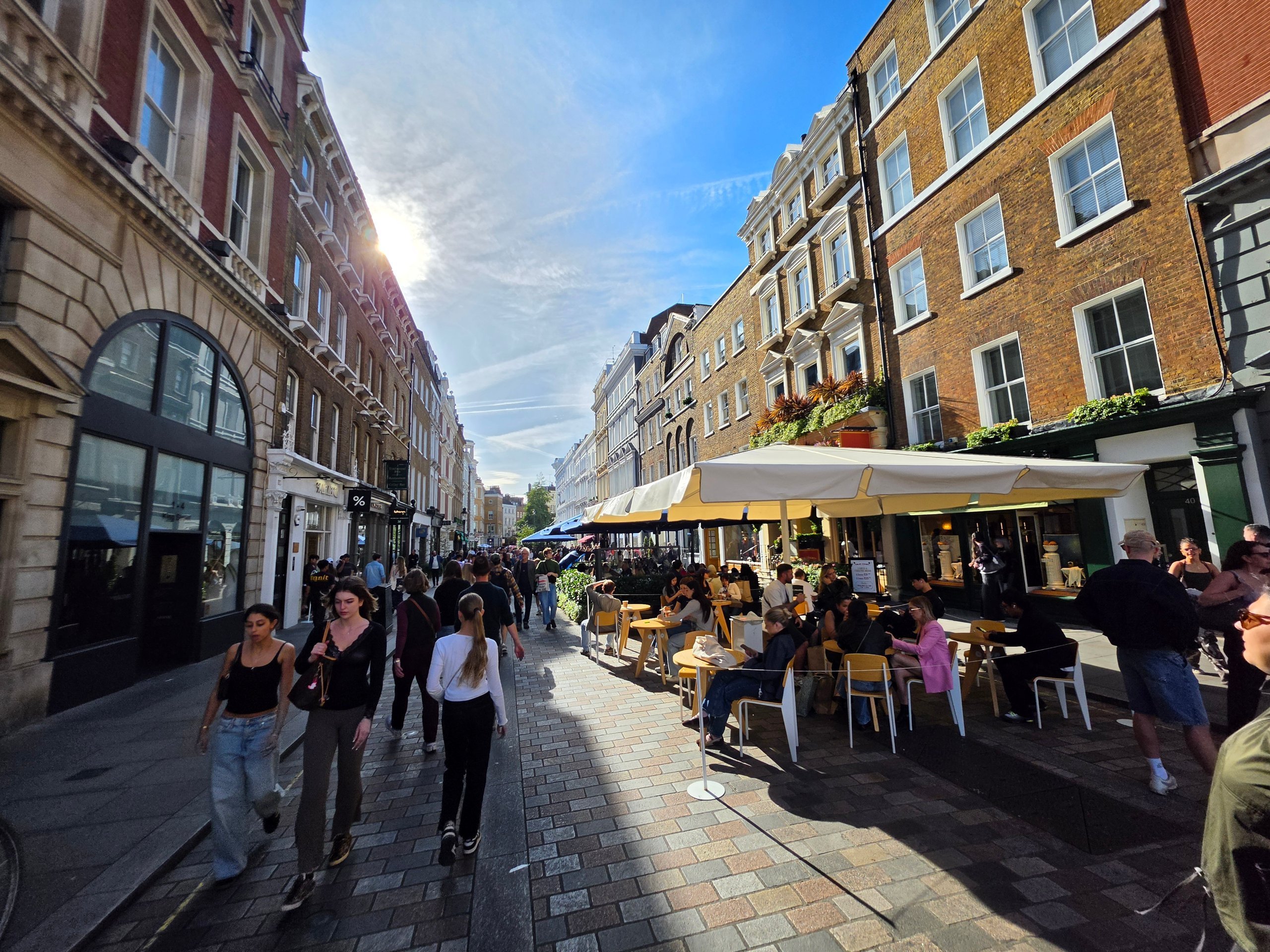
Covent Garden Market is a historic market building situated in the centre of the Piazza. Inside, you’ll find the Apple Market, shops, cafés and restaurants. Next to the main building stands the separate Jubilee Market.
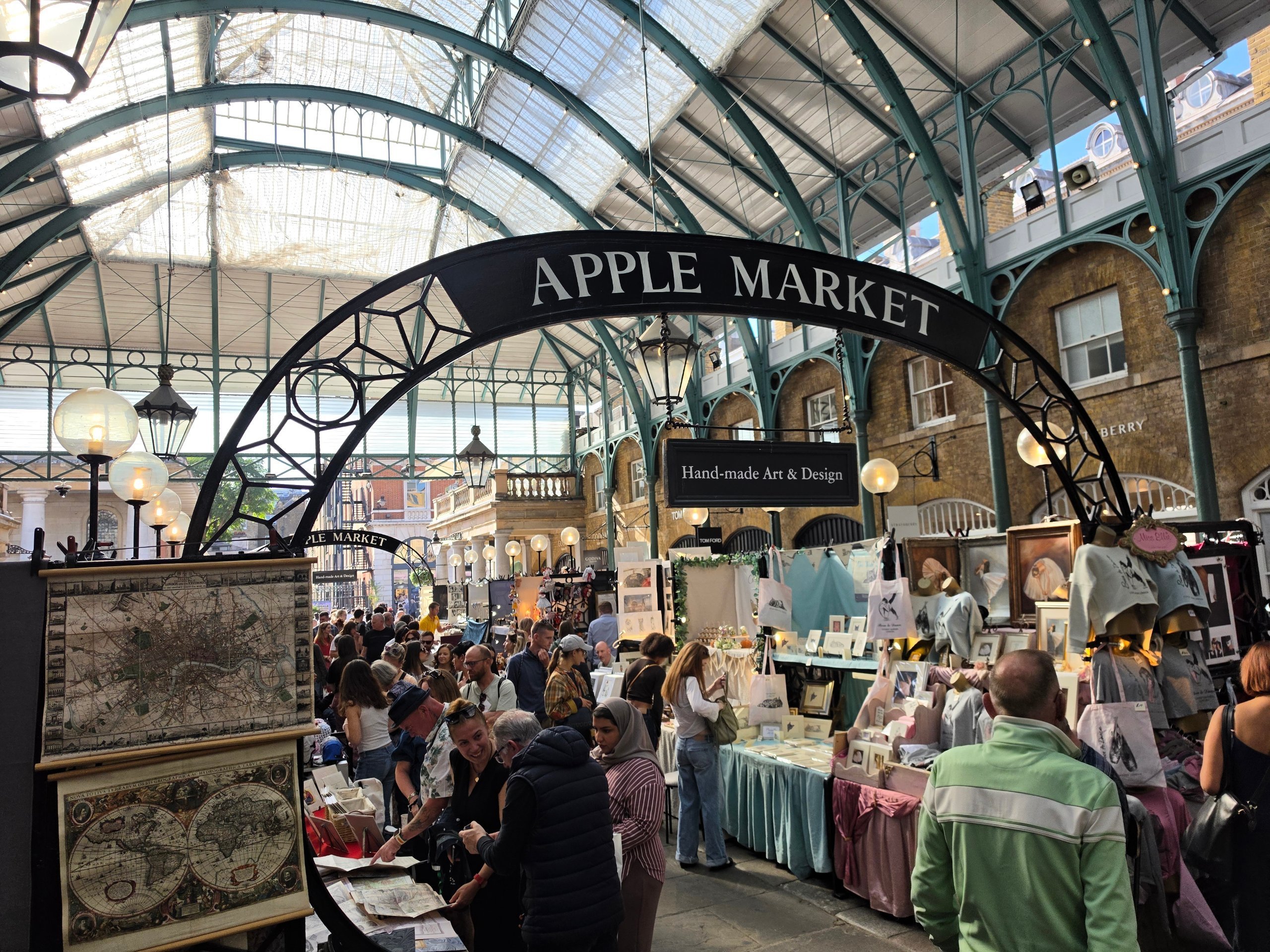
Today’s Covent Garden Market is no longer a typical food market. It is primarily a historic landmark, a shopping arcade and one of the liveliest tourist spots in London.
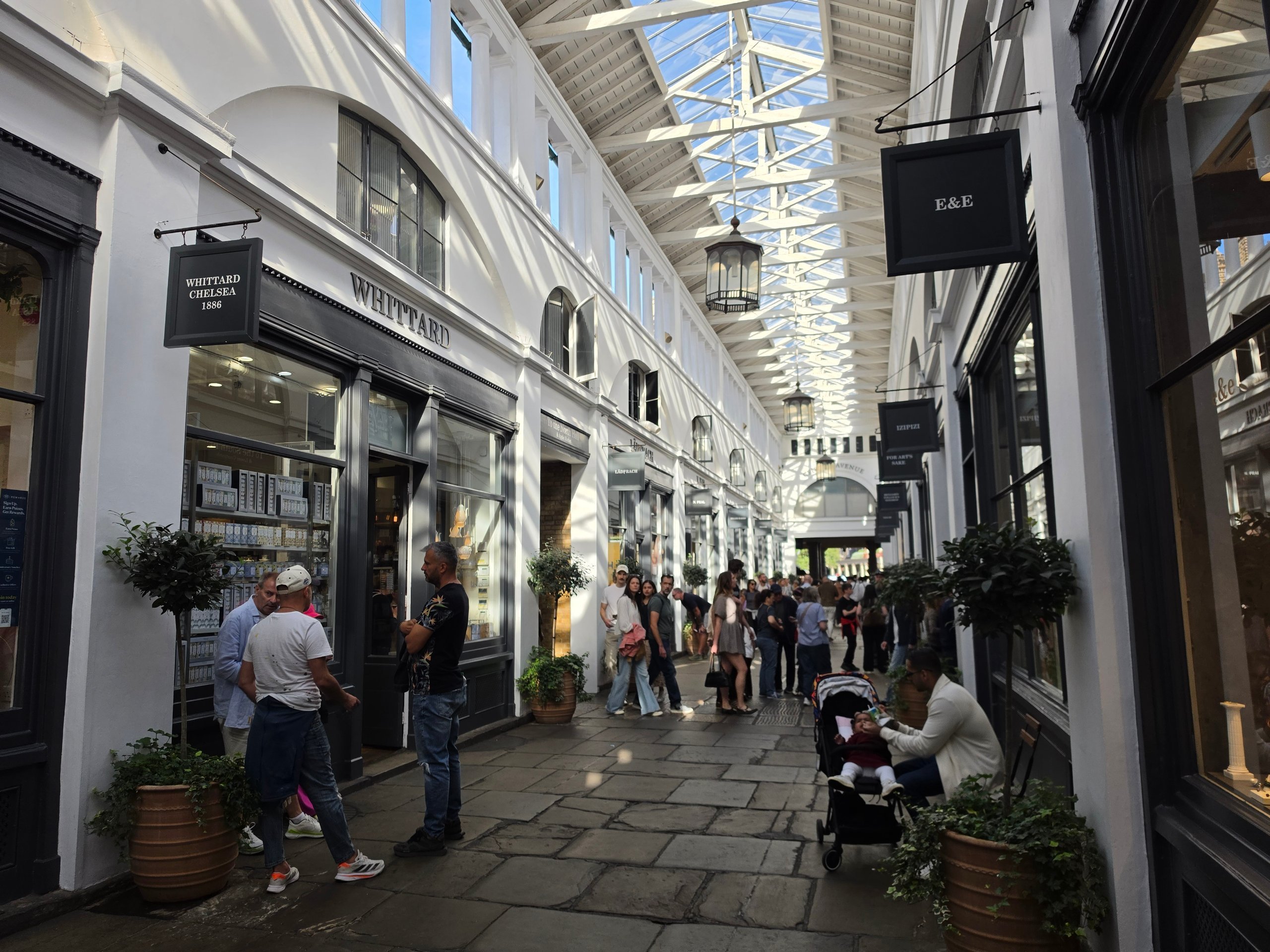
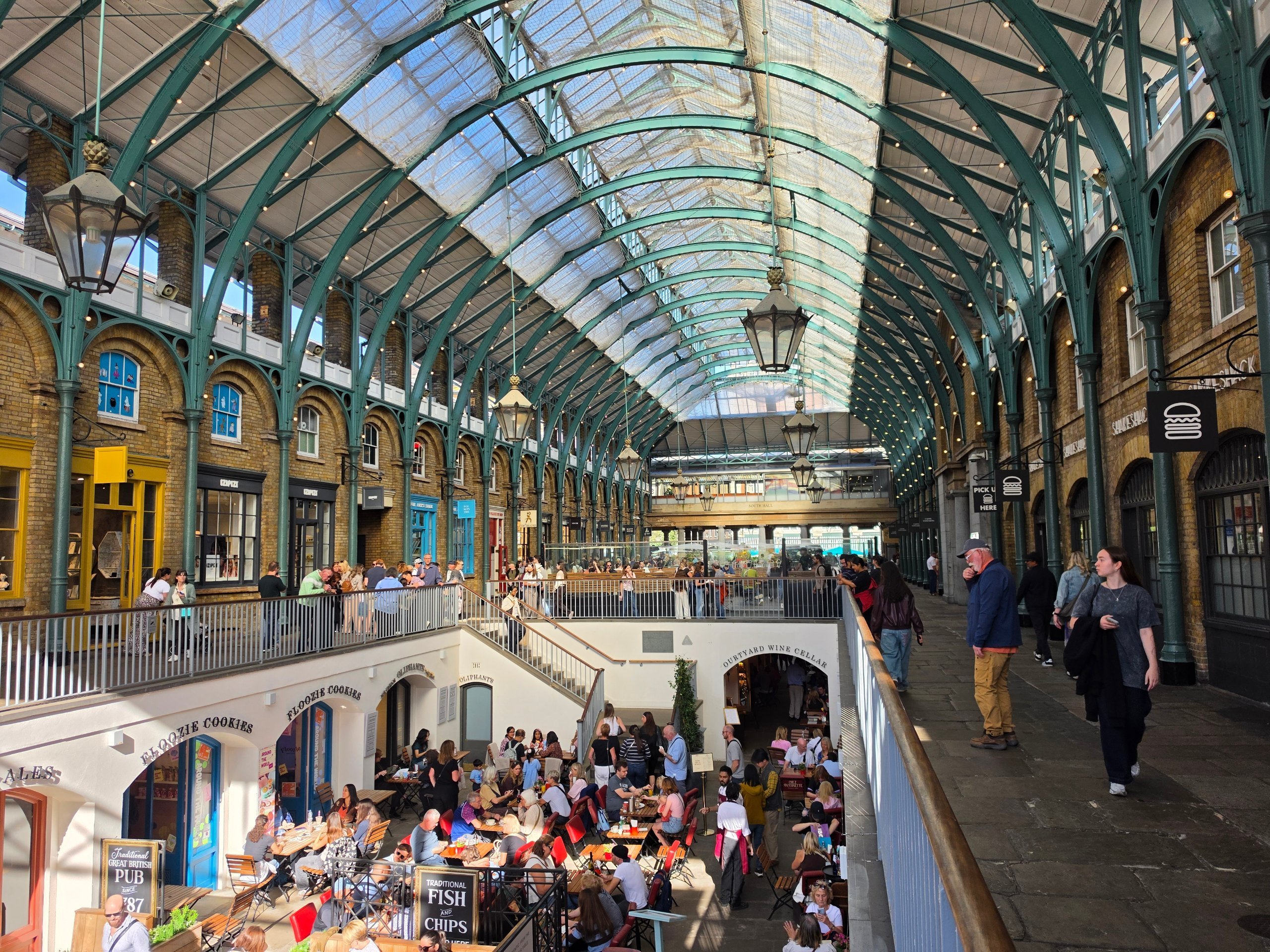
Yes, definitely on your first trip to London. However, I wouldn’t go there expecting an authentic market or one of London’s most significant landmarks. The main attraction is the atmosphere.
Within a small area, historic architecture, street theatre, music, restaurants, shops and the hustle and bustle of the West End all come together. What’s more, Covent Garden lies directly on the walking route between the British Museum, Trafalgar Square, Chinatown and the Thames.
Personally, it took me about half an hour to walk through the main market. For a longer stroll and a more relaxed sit-down, I preferred Marylebone or the elegant Mayfair.
I’d choose Covent Garden for its energy, location and evening entertainment, rather than for its tranquillity or the feel of a typical London neighbourhood.
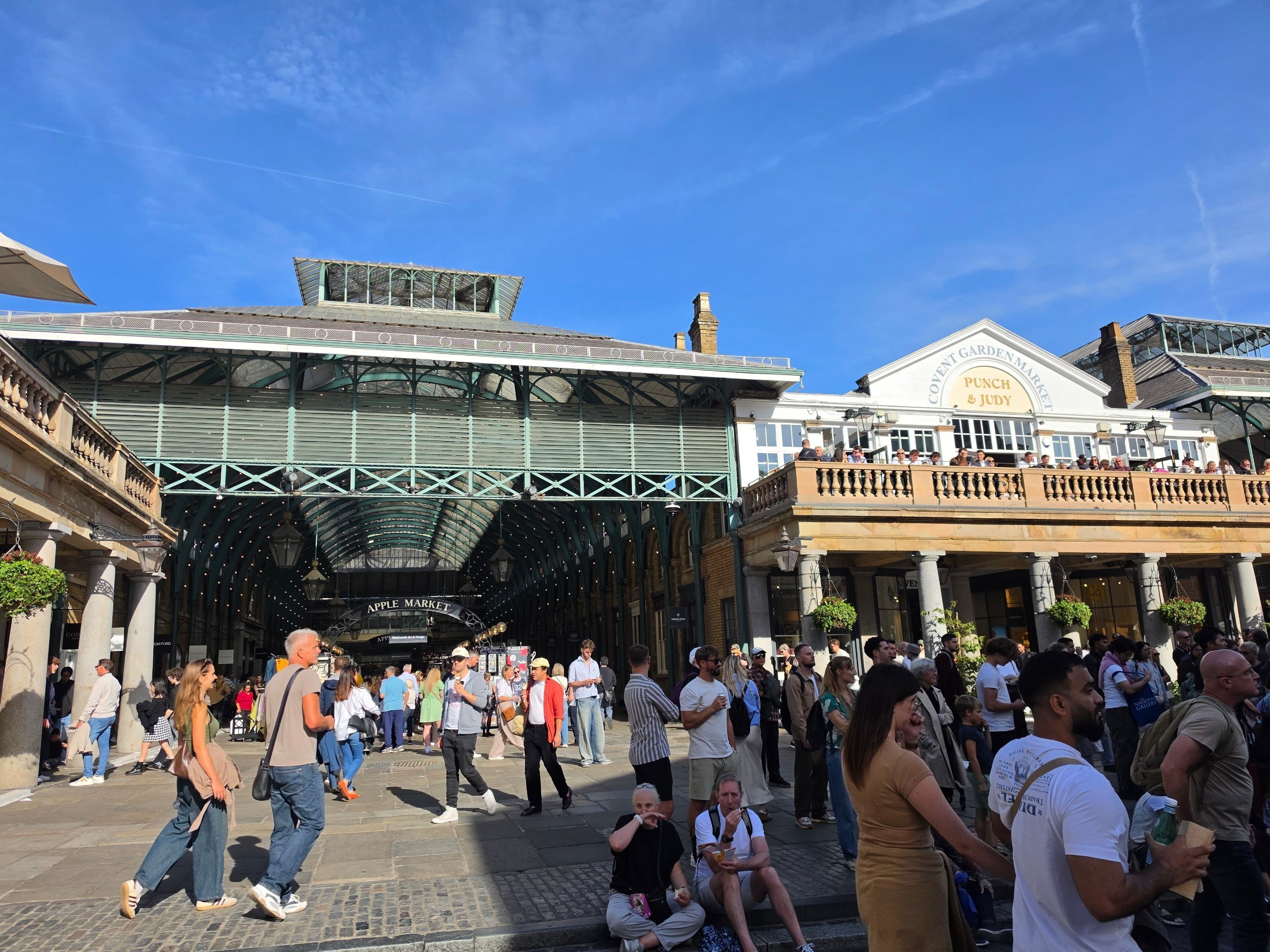
The main square, Piazza, with the Market Building, is the place most people picture when they hear the name Covent Garden.
Take a stroll through the ground floor, the underground levels and both sides of the building. The best view of the entire architectural complex is from the Piazza in front of St Paul’s Church. When taking photographs, it’s worth stepping back from the building to include the surrounding houses and the hustle and bustle of the square in your shot.
In the heart of Covent Garden, you’ll find three distinct markets:
The range of goods on offer is heavily geared towards visitors. The markets are pleasant to stroll through, but don’t expect the atmosphere of a local market where Londoners buy their everyday groceries.
Acrobats, magicians, musicians and other performers are among the main reasons why Covent Garden feels so lively. You’ll see the biggest performances on the West Piazza in front of St Paul’s Church and in the Market Building.
There isn’t a fixed public timetable for the performances. You’re most likely to see them from late morning until the evening, particularly in good weather and at weekends. If you stay for the whole performance, a voluntary donation is expected.
St Paul’s Church is often referred to as the Actors’ Church due to its long-standing connection with the London theatre scene. Surprisingly, the entrance is on the other side of the building, not directly from the Piazza.
The small garden behind the church is one of the few places in the immediate vicinity where you can take a moment’s respite from the crowds.
Don’t just stick to the market. In about 7 minutes’ walk, you’ll reach the seven streets converging around the column at Seven Dials. From there, continue on to the colourful courtyard of Neal’s Yard.
This part of the wider Covent Garden area has a more intimate feel than the Piazza. Here you’ll find smaller shops, cafés, restaurants and the Seven Dials Market food hall.
The London Transport Museum is situated right on the Piazza and is one of London’s best museums for families with children. A visit takes about 1½–2 hours, so it will significantly extend an otherwise short stop in Covent Garden.
If you want to see the highlights without walking around unnecessarily, we recommend this walking circuit:
You can cover the first five stops in about 30–45 minutes. If you extend the walk to include Seven Dials and Neal’s Yard, allow about 1½ hours, not including a visit to a restaurant or museum.
Covent Garden takes on two very different atmospheres during the day.
If you don’t mind the crowds and, like me, enjoy the hustle and bustle of the city, come in the afternoon or early evening. If you’re mainly interested in seeing the architecture and taking photos of it, come in the morning.
The Piazza and the passageways of the Market Building are public spaces and you can walk through them for free both day and night. The individual markets have their own opening hours:
Shops in the area are usually open from 10.00 to 20.00, and on Sundays mostly from 11.00 to 18.00. Restaurants and bars stay open later.
Yes, if your budget allows you to pay for a good location. For a first or short visit to London, Covent Garden is one of the most convenient bases in the city.
You can walk to Soho, Chinatown, Trafalgar Square, the British Museum, the Strand and the Thames. In the evening, you don’t need to take the Underground back from a restaurant or the theatre, and the area remains lively even after the attractions have closed.
We compare cheaper neighbourhoods and other specific hotels in the chapter ‘Where to stay in London’.
No scenes from the Harry Potter films were actually filmed inside the Market Building itself. However, in the wider Covent Garden area, you’ll find several places associated with the film series.
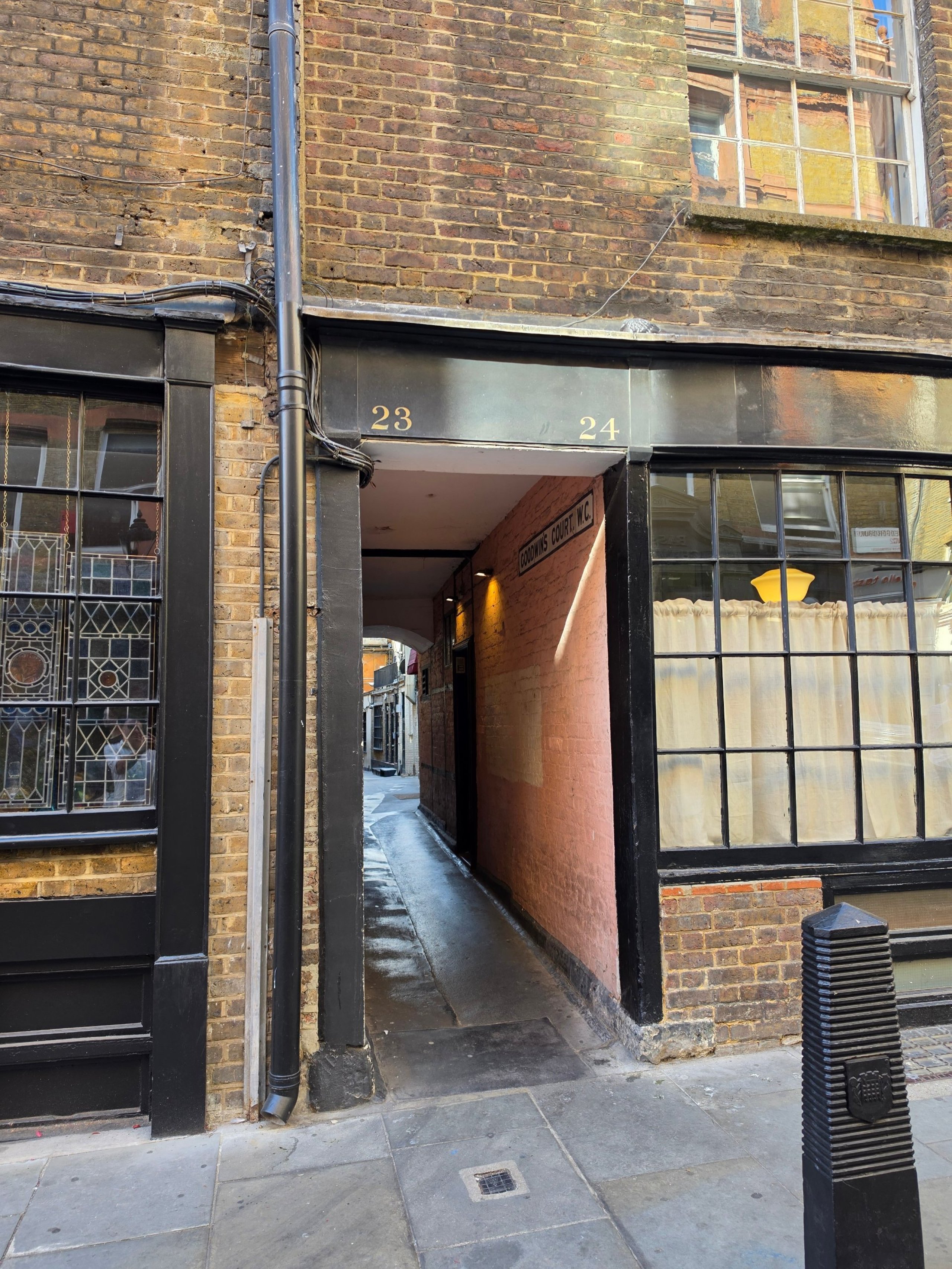
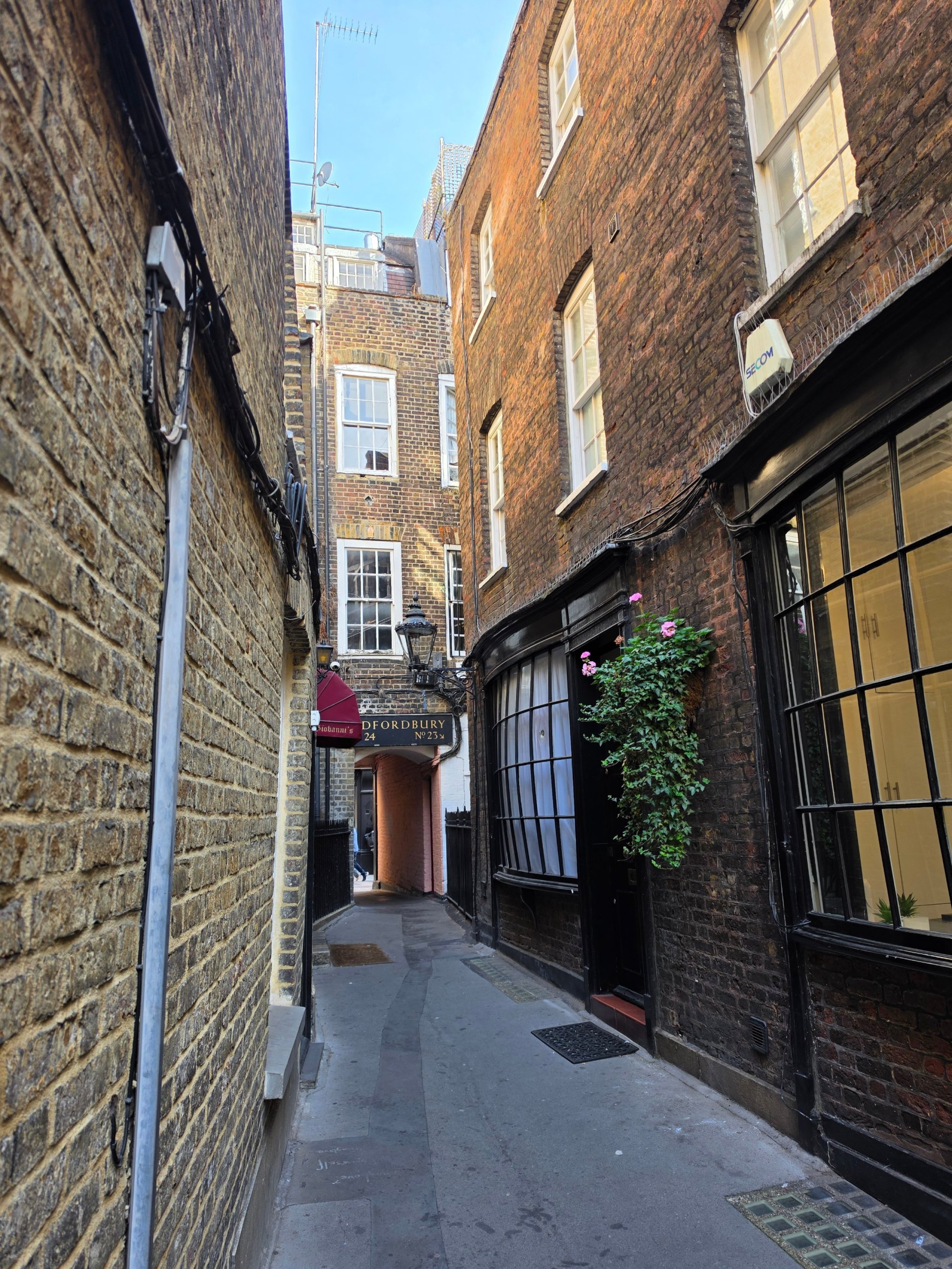
If you want to see the actual filming locations, do head to Leadenhall Market, Borough Market or the Millennium Bridge.
Covent Garden features in many other films.
The West Piazza and the area around the church are associated with the film *My Fair Lady*, whilst the Christmas film *Last Christmas* was filmed inside the Market Building.
The name derives from the medieval designation of the land as the gardens of Westminster Abbey and the convent. In the 17th century, the architect Inigo Jones created a square here inspired by Italian piazzas.
The market gradually expanded and, for several centuries, was London’s main market for fruit, vegetables and flowers. The current main market building dates from the 19th century.
Due to a lack of space and traffic congestion, the wholesale market moved to Nine Elms in 1974, where the New Covent Garden Market still operates today. The historic site was saved from extensive demolition and reopened in 1980 as a shopping and tourist centre.
Most tourists walk to Covent Garden from other parts of the city centre. There’s no point in taking the Underground for just one stop from Leicester Square station – it takes about 7 minutes to walk to the Piazza.
Nearest stations:
There are 193 steps on the staircase at Covent Garden station. Use the lift, or if it’s very busy, get off at Leicester Square instead.
Buses do not go directly to the pedestrian Piazza, but a large number of routes stop at the Strand and Aldwych. For shorter journeys through the city centre, they are often more practical than the Underground. You can use routes 9, 15, 23 and 139, for example.
You can find current fares and rules for paying by card in the section on Transport in London.
The latest programme, venues and special events are published on the official Covent Garden website.
Discover all the places to see in London.
If you have any questions or comments about the article...