Apulia at the start of the summer holidays: from Prague to Brindisi with Eurowings
101 €



Of all the islands in the Lesser Antilles, Barbados probably has the best public transport. However, it does not yet match the standards of developed countries, so hiring a car remains the best option.
Travelling by car in Barbados is the most practical form of transport, but, particularly on the west and south coasts, you’ll encounter a lack of parking spaces and heavy traffic. However, if you want to venture beyond the main beaches, we definitely recommend hiring a car.
In Barbados, they drive on the left.
Most of the major international car hire companies operate on the island, alongside several regional Caribbean ones.
How much does it cost to hire a car in Barbados? What is the quality of the roads like? What are the local traffic regulations, and how do you fill up with petrol at a petrol station? Read the detailed sectionon Car hire in Barbados.
A cheaper alternative for travelling around Barbados is the bus or fixed-route minibuses (shared taxis, known as ZRs). Public transportserves all towns and even the smallest villages, but the island’s interior in particular is relatively difficult to access, a situation complicated by the lack of a timetable and irregular services.
Find the best beachfront hotel
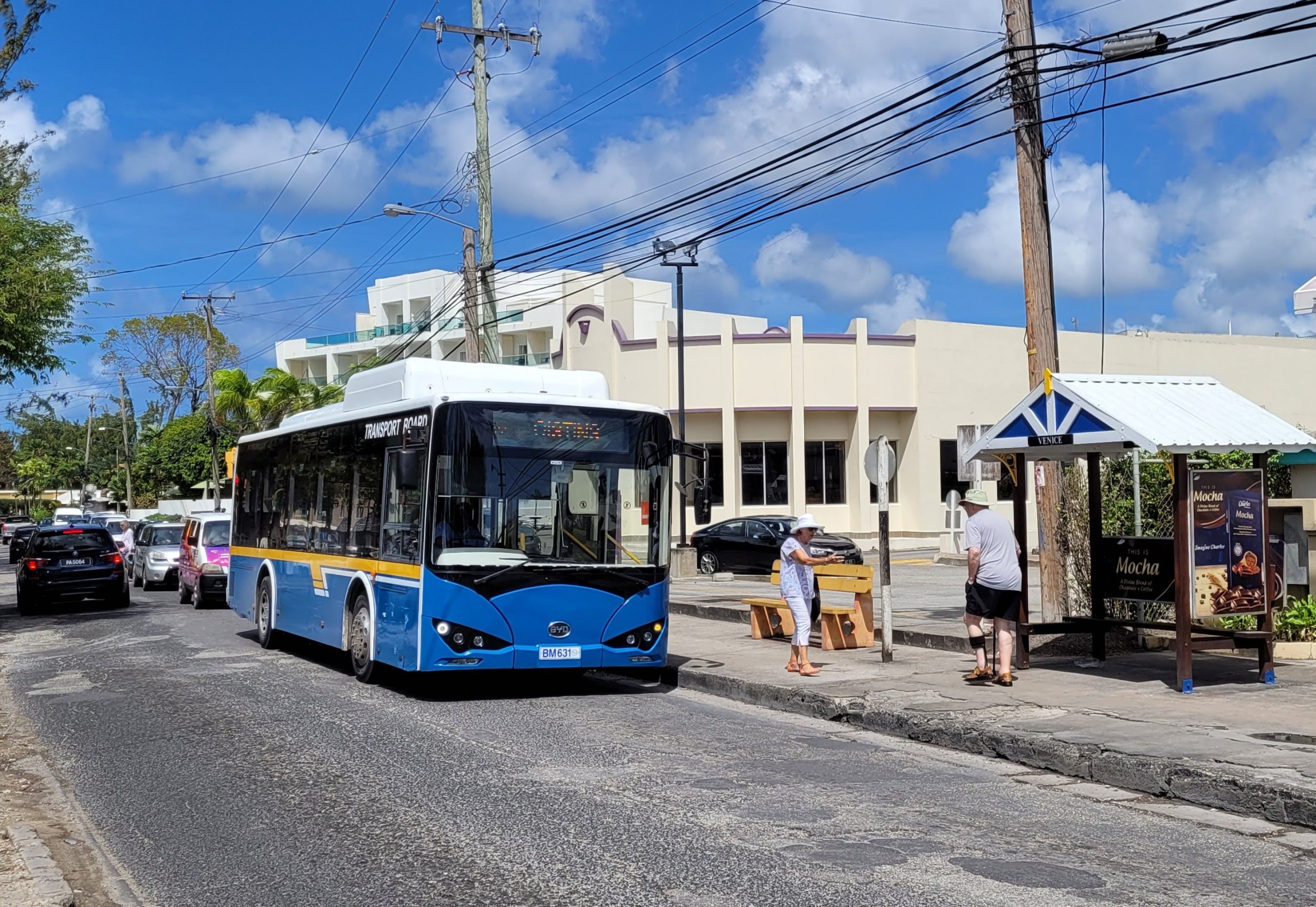
Each bus stop is marked with a sign saying ‘TO CITY’ or ‘OUT OF CITY’. You can therefore tell from the sign which direction the bus will take from that stop. The term ‘City’ refers to the capital, Bridgetown, as that is where the vast majority of routes are headed.
You won’t find any timetables or information about which routes pass through the stops. You can simply be sure that this is where you can flag down a bus or minibus.
When a bus, minibus or ZR (van) approaches the stop, simply wave your arm.
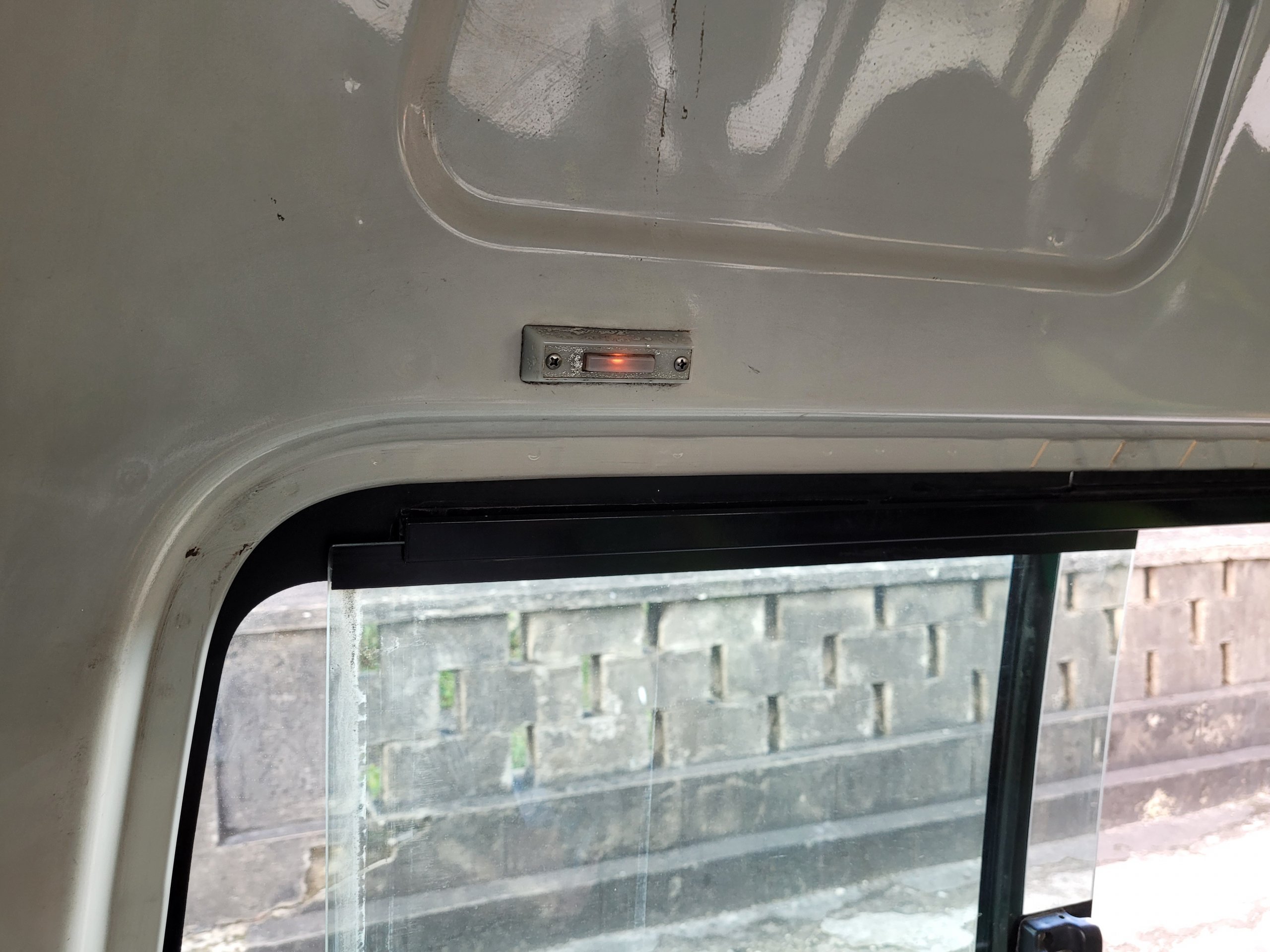
If you’re getting off, you must always press the small white button located on the side of the vehicle, by the windows or on the ceiling (on minibuses and vans), or the red ‘stop’ button on more modern buses.
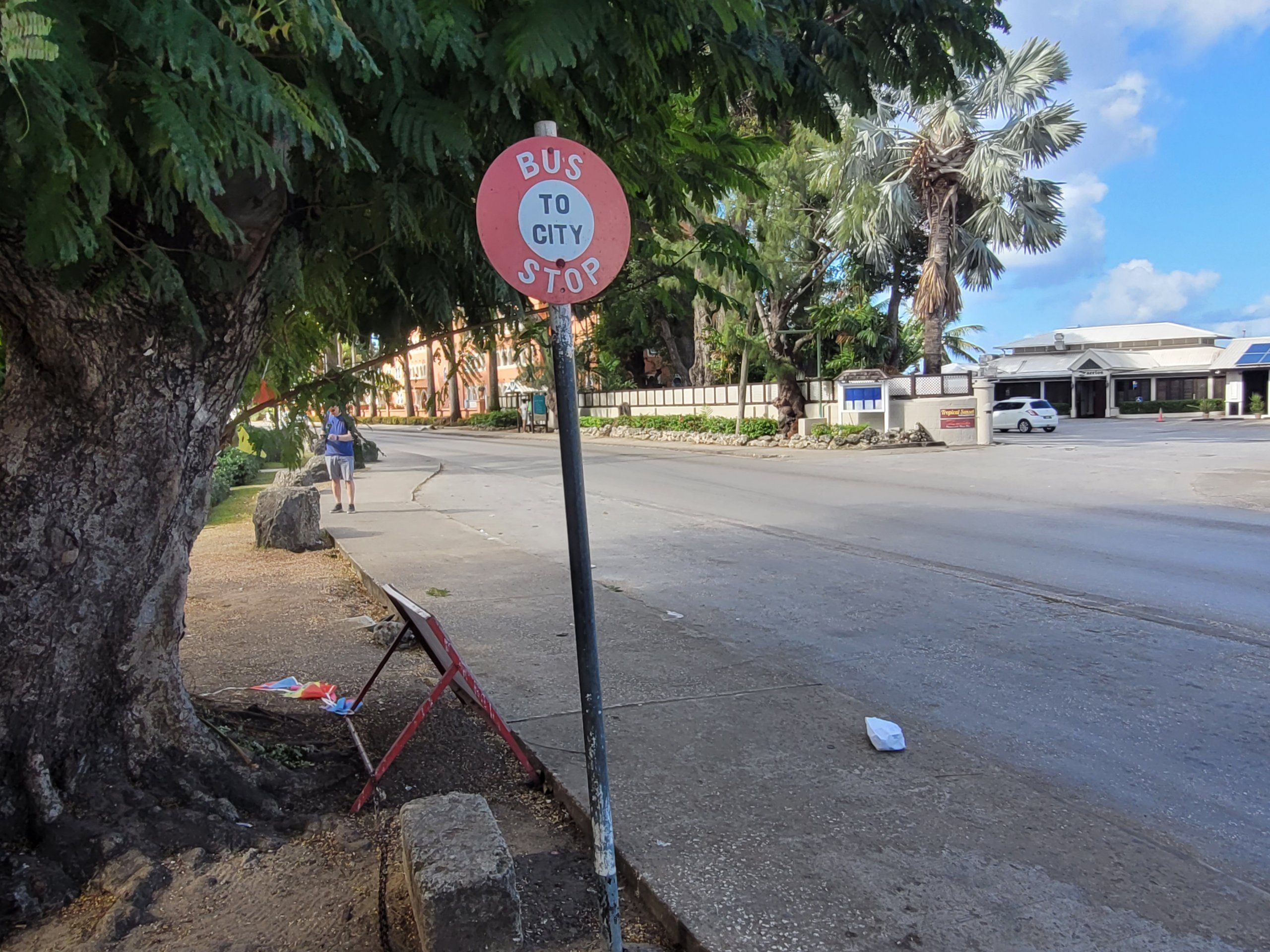
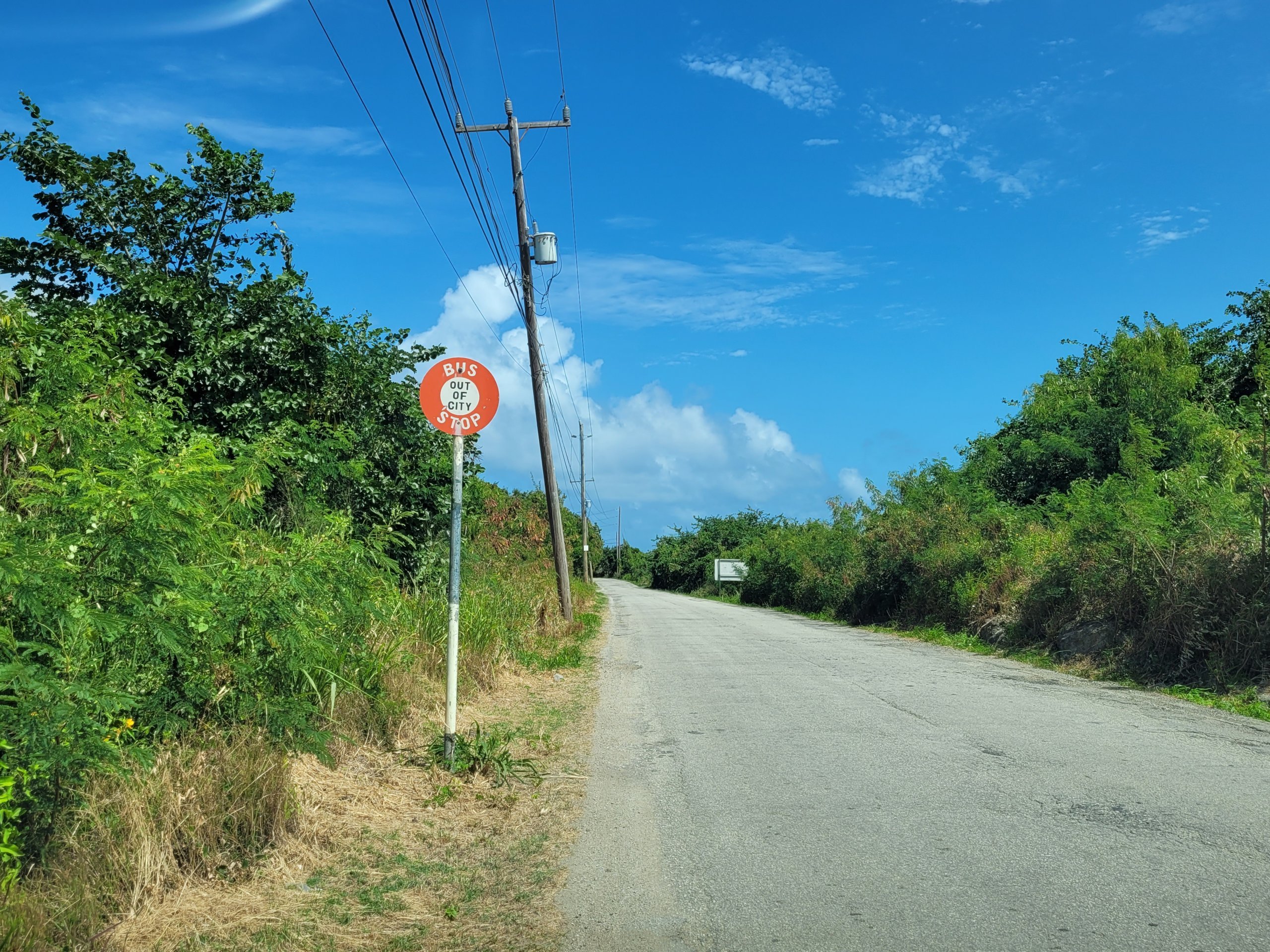
Whether you’re travelling on a modern bus, an older minibus or a van, the fare is always the same: 3,50 bbd.
It doesn’t matter whether you’re travelling one stop or from one end of the island to the other. You’ll always pay the same amount.
Paper tickets are never issued; you simply pay.
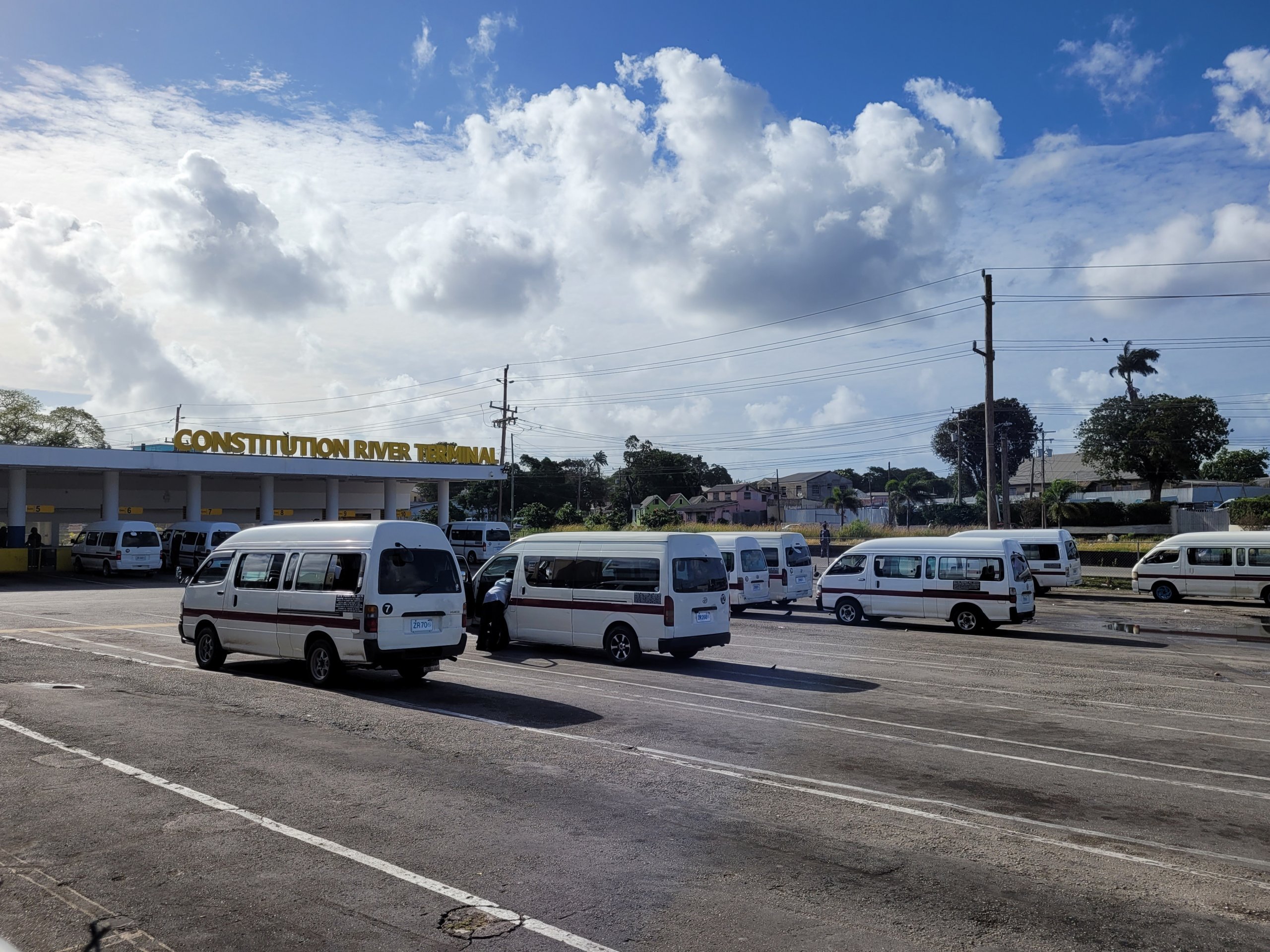
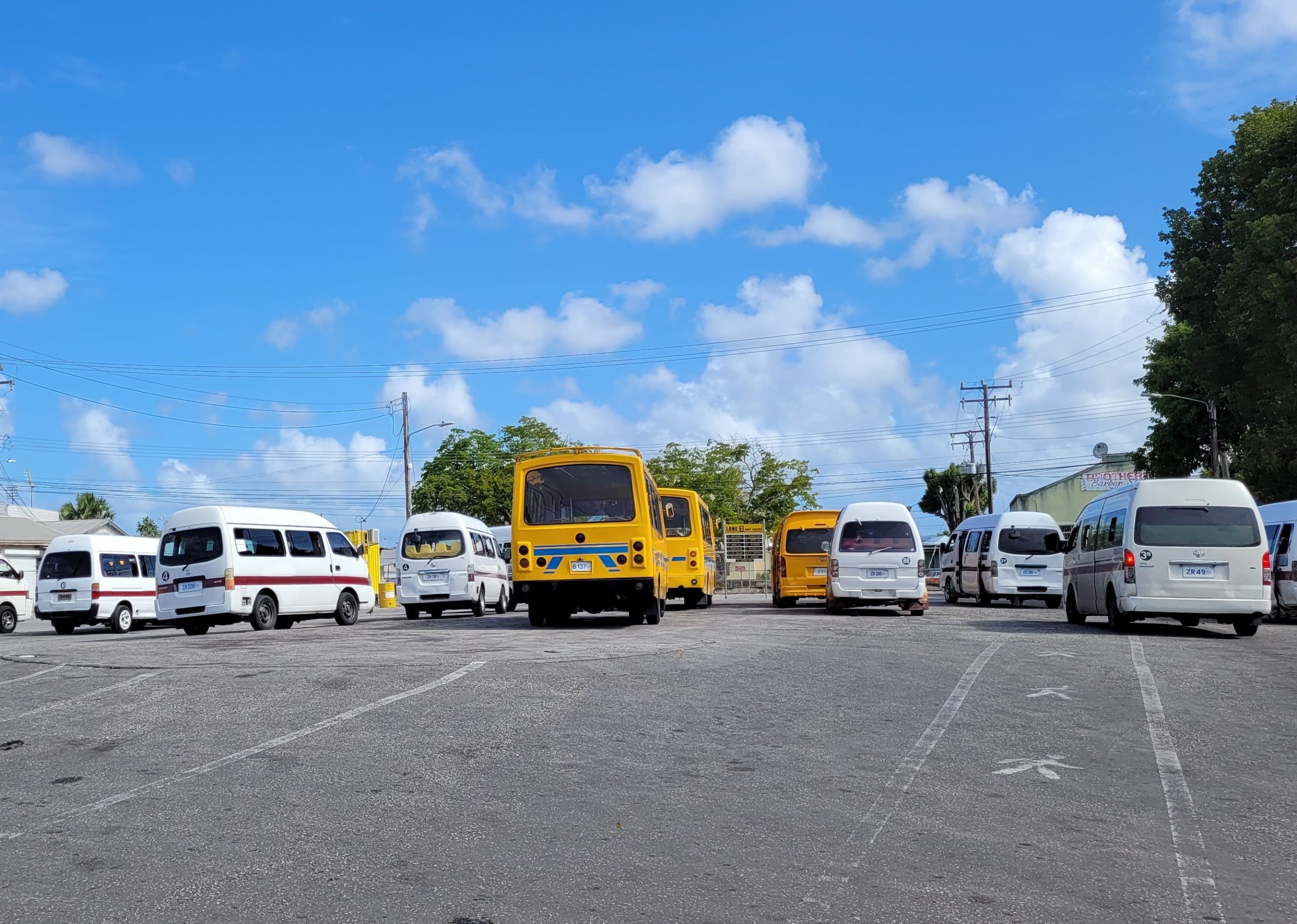
The most common form of transport consists of small white vans with a burgundy stripe, which the locals refer to simply as ‘ZR’ (Zed-r). This name comes from the special number plates fitted to all shared taxi vans: they always begin with the letters ZR.
ZRs run on a fixed route and are always marked with a route number, which you’ll find in a black circle on both the front and rear of the bonnet.
There is no timetable for these minibuses. They always leave Bridgetown as soon as they are fully occupied. In the opposite direction, from the other terminus, they always depart at the same intervals as they arrived from Bridgetown (so, on the way into town, they do not usually wait until the van is full).
The busiest shared taxi routes run along Highway 7 from Bridgetown along the south coast via Hastings, Rockley, Worthing, St Lawrence to Oistins (routes 3D and 11), with services on this route running on average once every 5 minutes during the day.
If you’re boarding partway along the route, it’s likely that a fully occupied ZR won’t stop for you at all. However, you usually only need to wait a maximum of 10–15 minutes; you’ll always be able to get a seat in one of the vans.
The fare3,50 bbd is paid either to the conductor travelling on board (usually wearing a yellow T-shirt) or directly to the bus driverupon alighting. You do not have to pay the exact amount, although this is preferred.
Shared taxis (ZRs) run from Bridgetown from two bus stations:
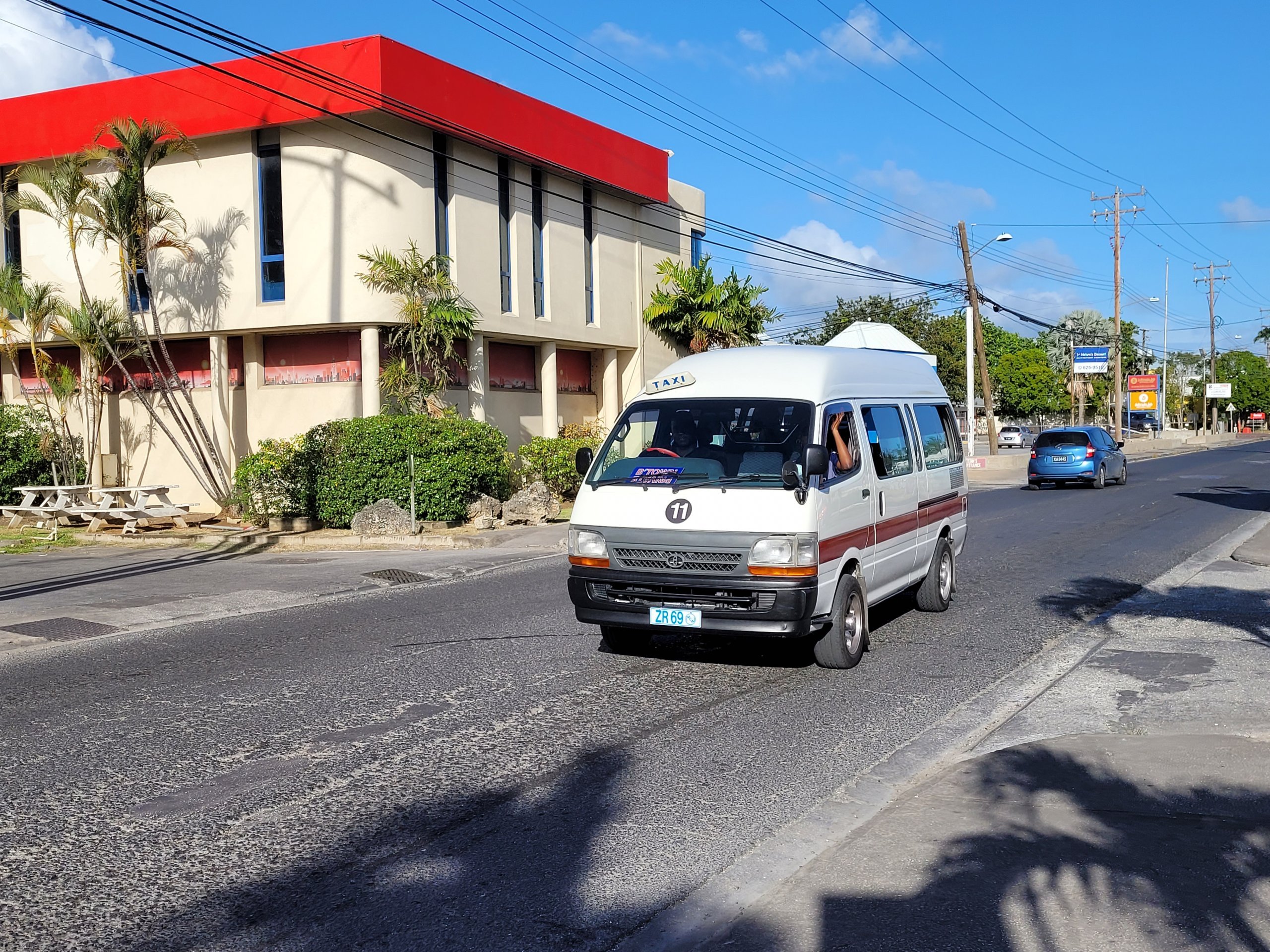
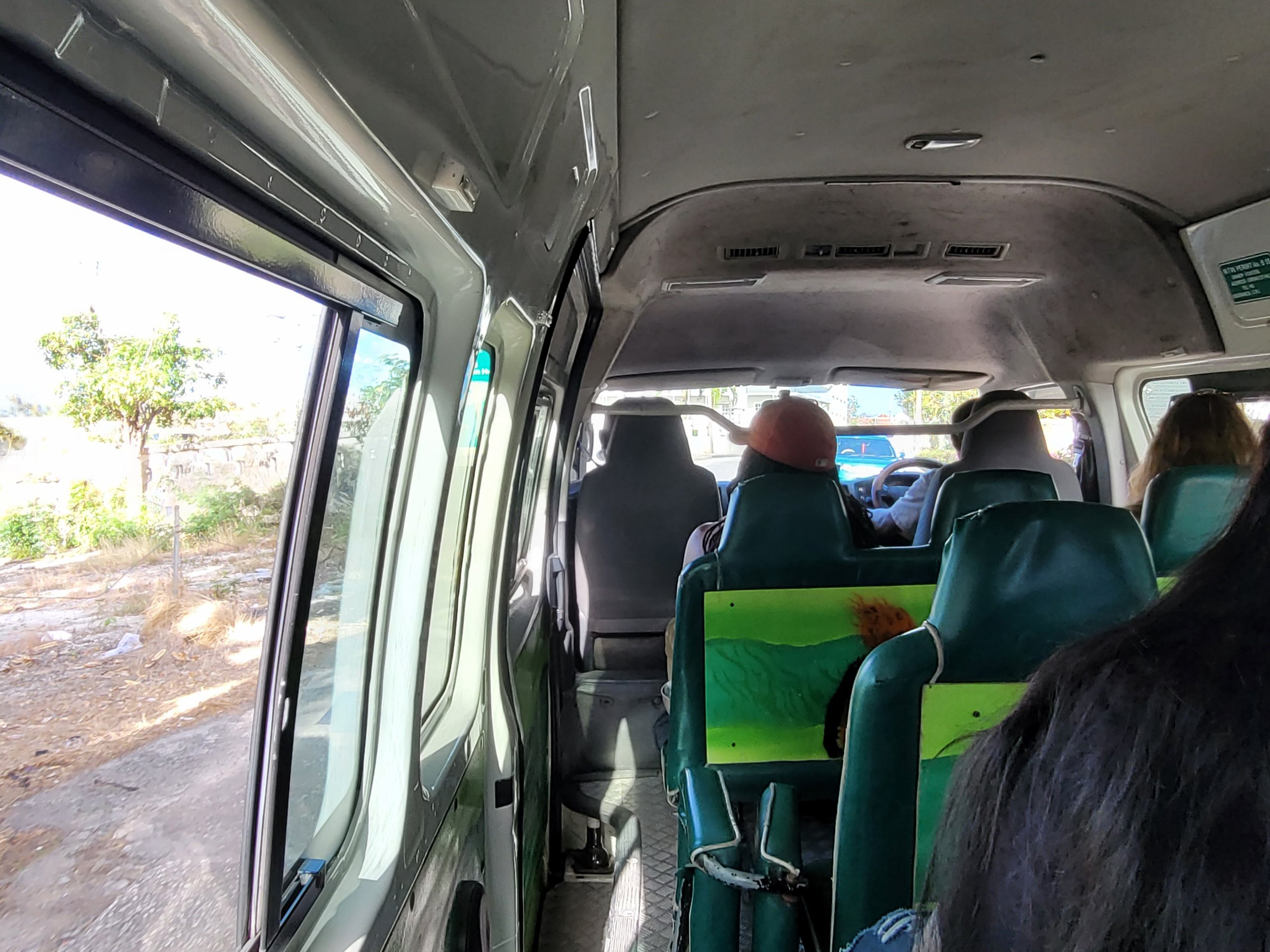
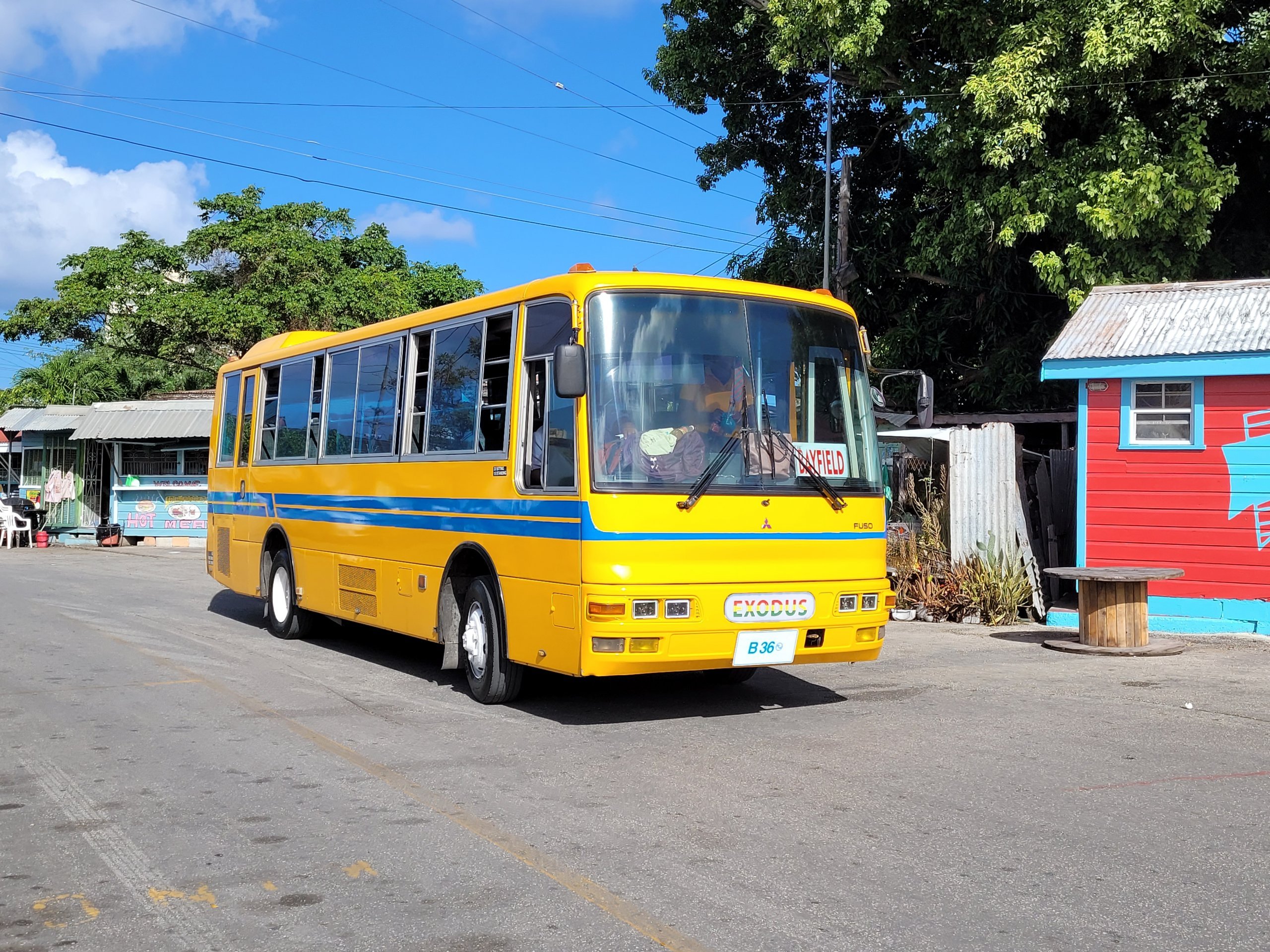
The second most common form of transport is minibuses, which reach every corner of Barbados.
They are larger than ZR vans and are more reminiscent of traditional buses. They are usually painted yellow with blue stripes and, in Bridgetown, depart from the same bus stations as shared taxis:
Although minibuses are formally assigned route numbers and follow precisely defined routes, in practice the route number is not usually clearly displayed. Instead, there is a large sign in the window showing the destination.
Like ZRs, minibuses do not have a timetable and set off as soon as they are full. However, they do not usually wait until they are completely full, as is the case with vans. On average, minibuses run on each route 1–2 times an hour, though less frequent services to the island’s interior only run a few times a day.
You won’t find the timetables in advance; you’ll need to ask at the bus station or the locals.
The fare 3,50 bbd is paid either to the conductor travelling on board (usually wearing a yellow T-shirt) or directly to the bus driverupon alighting. You do not have to pay the exact amount, although this is preferred.
Barbados also has a traditional bus service, which operates both as modern, air-conditioned buses (blue and yellow) and older, non-air-conditioned models (usually plain white or with a yellow stripe).
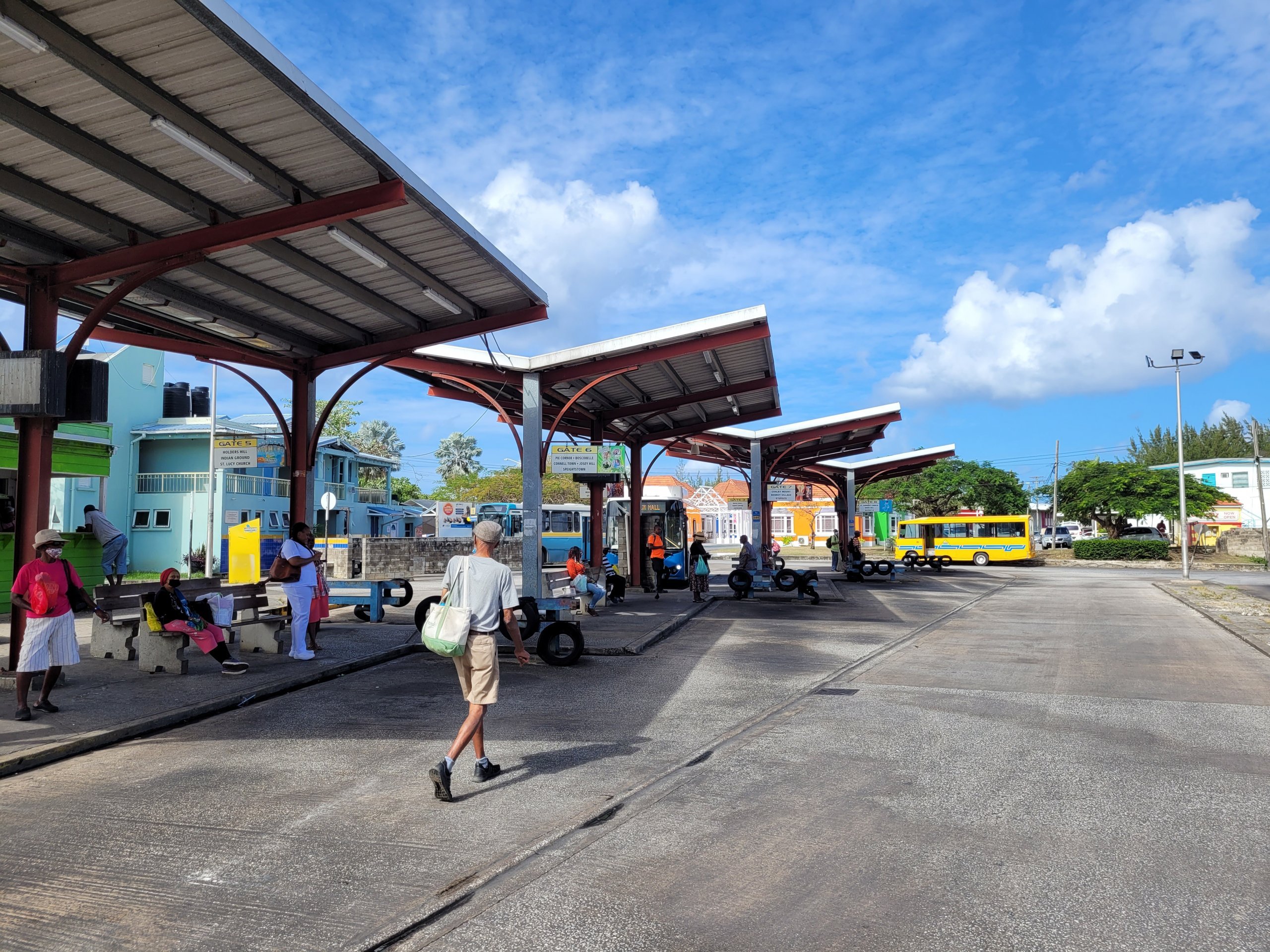
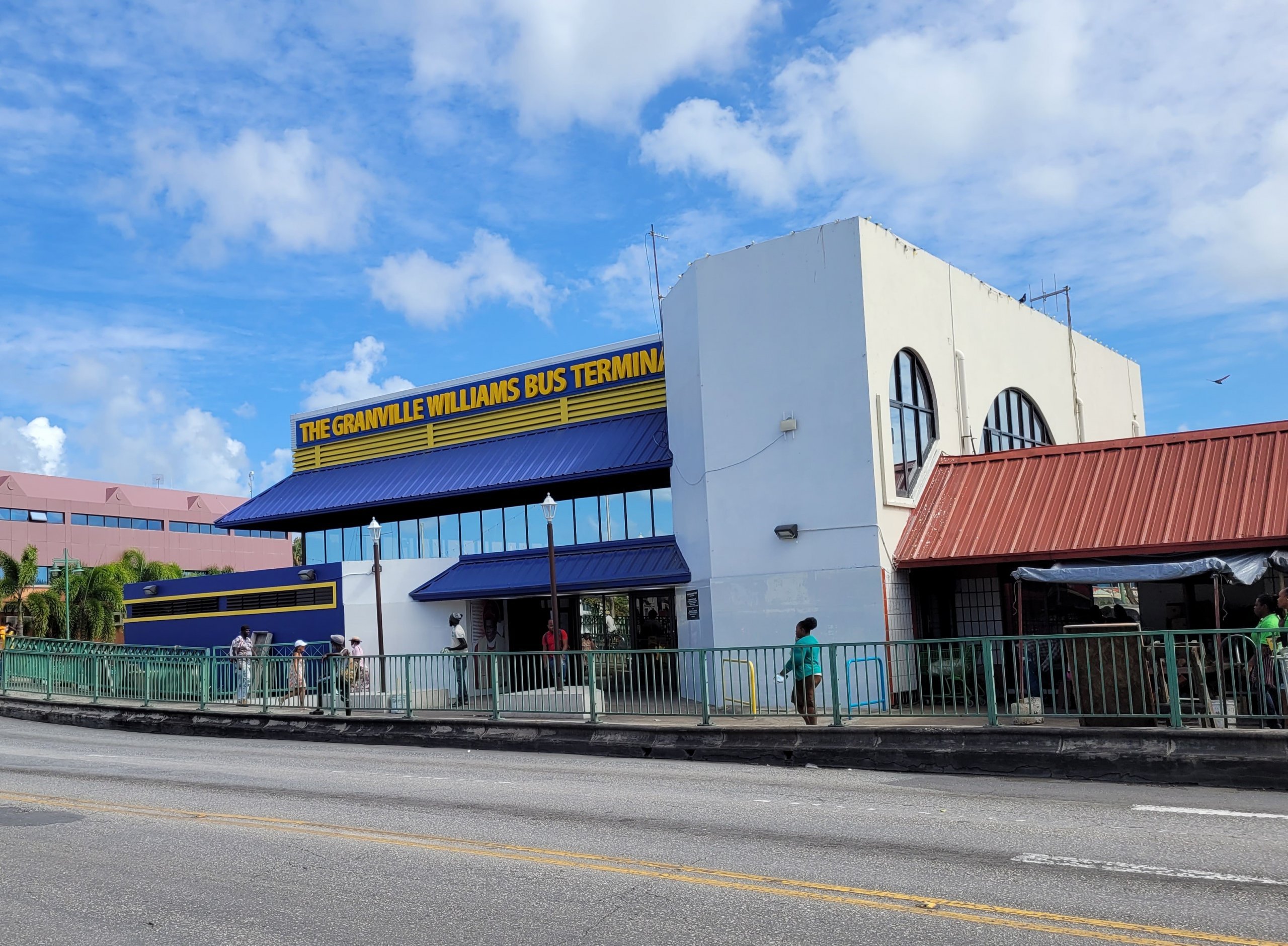
Traditional buses depart from different stations in Bridgetown to those used by minibuses or vans:
Buses are the only form of transport that has fixed departure times from the terminals. These are usually adhered to, although delays of 5 to 10 minutes are not uncommon.
Bus services do not run as frequently as minibuses or vans, but travelling by bus is significantly more comfortable and predictable precisely because of the timetable. However, times are only given for departures from the terminus. You’ll have to work out the rest yourself.
The disadvantage of buses is that you must pay the exact fare of 3,50 bbd. You pay by putting the money into the box next to the driver when you board. The driver has no way of giving you change. So if you don’t have the exact amount, you’ll either need to get change beforehand or put a higher fare into the box. Alternatively, you could opt for a minibus or shared taxi, which usually follow the same routes as the buses.
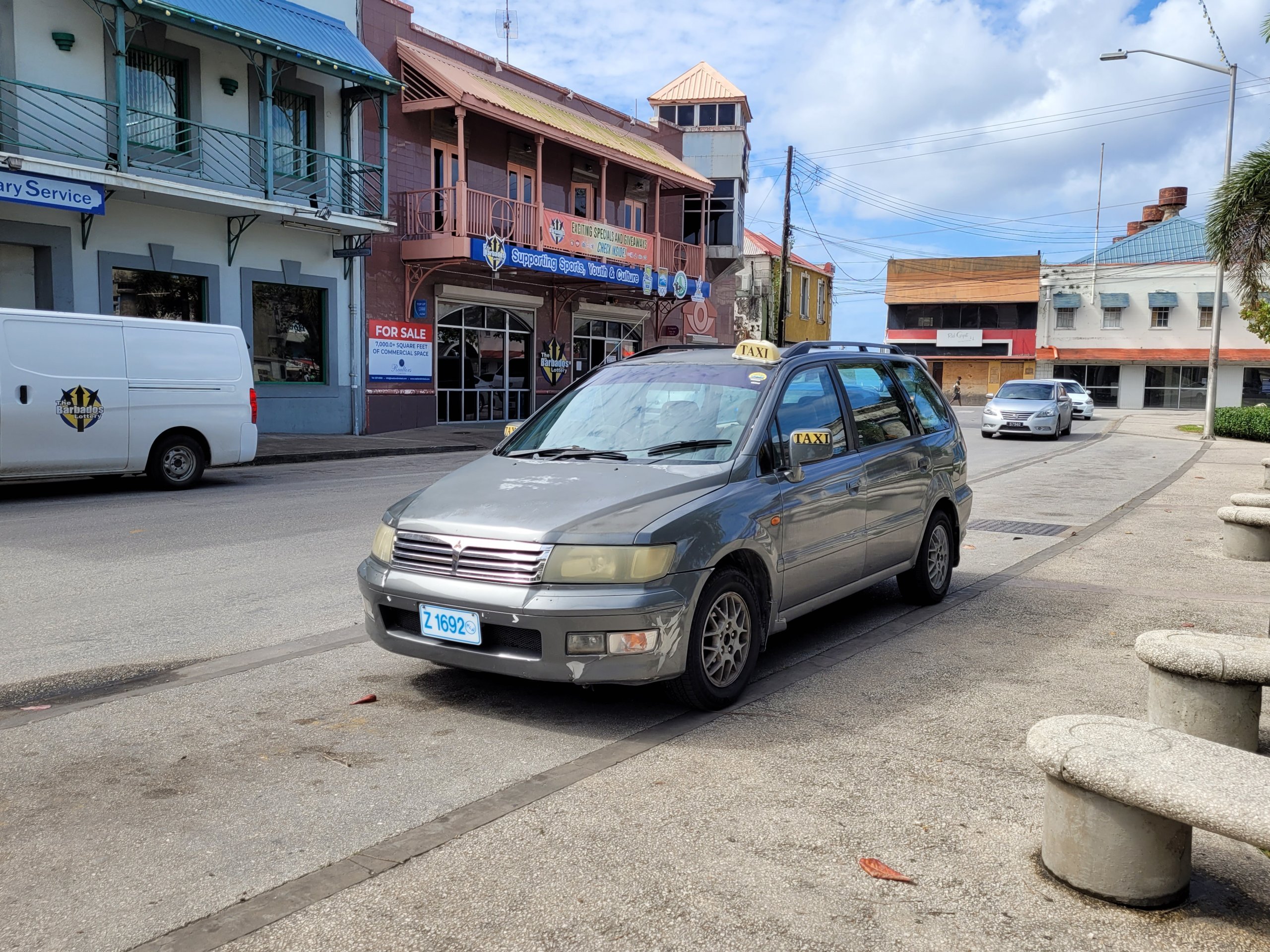
You’ll find plenty of regular taxis in Bridgetown and on the main streets along the resorts. Taxis are safe, even though they aren’t fitted with meters.
Fares are fixed by the government, and a journey of around 5 km will cost you approximately 30 bbd. The official fares can be downloaded from the government website: gisbarbados.gov.bb//new-taxi-fare. Payment is by cash only, in either Barbadian or US dollars.
If you have any questions or comments about the article...