Etihad Airways now flies from Gothenburg: cheap flights to Thailand and Singapore
515 €



Vienna is situated in the east of Austria, not far from the borders with Slovakia, the Czech Republic and Hungary.
The Austrian capital is very easily accessible by train, bus, car and plane. During the season, you can also travel from Bratislava to Vienna by boat along the Danube.
From nearby European cities, travelling by train is usually the most convenient option.
Buses often offer lower fares; travelling by car is particularly good value when travelling with a group, whilst flying is the quickest option for longer distances.
| Mode of transport | When it’s worth it | Where you’ll arrive |
|---|---|---|
| Plane | Journeys from more distant parts of Europe and the world | Vienna Airport ( VIE) |
| Train | The most convenient transport from Central Europe | Vienna Hauptbahnhof |
| Bus | Cheap transport from neighbouring countries | Erdberg, the main station or the airport |
| Car | Day trips, families and groups | Best to use the P+R car park by the underground |
| Boat | Seasonal journey from Bratislava | Schwedenplatz in the centre of Vienna |
If you’re staying overnight in Vienna, have a look at our tips on where to stay in Vienna, or compare hotel prices in Vienna straight away.
Travelling by car makes sense particularly for a day trip, when travelling with children or in a group. It’s also a popular option during the Christmas markets in Vienna.
However, do not drive into the city centre unless you have a specific reason to do so.
On-street parking is time-limited, and standard car parks are significantly more expensive than P+R park-and-ride facilities.
You need a motorway vignette when driving on Austrian motorways and expressways.
The annual fees for passenger cars are:
Please only purchase your vignette via the official website shop.asfinag.at or via the ASFINAG app.
Standard M1 category passenger cars do not require an emissions sticker to enter Vienna. Different rules apply to vans and other vehicles registered in category N.
Almost the whole of Vienna falls within a single short-term parking zone.
Parking is subject to a charge:
Different rules apply on some shopping streets. Parking here is also subject to a charge on Saturdays from 8.00 to 12.00, and the maximum parking time is 90 minutes.
Street-side parking meters are not common in Vienna. You can buy paper parking tickets, for example, at newsagents, petrol stations or Wiener Linien ticket machines.
You can pay for parking electronically via the Handyparken service.
On Saturdays, Sundays and public holidays, parking in standard short-stay zones is free. Exceptions are shopping streets on Saturday mornings and spaces reserved for residents.
Visitors are not permitted to use resident parking spaces, even at weekends. These are marked with a no-parking sign accompanied by an additional sign reserving the space for vehicles with a local parking permit.
An overview of the rules and a map of resident parking can be found on the official website of the City of Vienna.
Find hotels in Vienna with parking
The simplest solution for most tourists is the P+R park-and-ride facilities at underground, train or tram stations.
The standard rate at most official P+R car parks is:
A ticket for Vienna’s public transport is not included in the parking fee and must be purchased separately.
P+R car parks are open 24 hours a day. They have a large capacity, but can fill up during the morning on weekdays.
At most standard P+R car parks, it is not possible to reserve a specific space in advance.
You can also leave your car at a P+R for several days. If you’re parking for 6 or 7 days, it’s worth buying a weekly ticket.
| Direction of travel | Recommended P+R |
|---|---|
| Brno, Břeclav, northern Slovakia, Poland | Aderklaaer Straße, Leopoldau, Donaustadtbrücke |
| Znojmo, Gmünd, České Budějovice | Spittelau |
| Bratislava, Budapest, Győr | Erdberg, Donaustadt Bridge |
| Linz, Salzburg, Passau, Munich | Hütteldorf, Ottakring |
| Graz, Klagenfurt, Ljubljana, Zagreb | Siebenhirten, Perfektastraße, Liesing |
For your convenience, we have included a map of high-capacity P+R car parks.
There are dozens of other car parks throughout Vienna. Parking in these is usually considerably more expensive than at P+R facilities, but it may be worth it for a short visit to a specific location.
You can find prices, locations and current availability for some car parks on the parken.at website.
Vienna is served by one major international airport, Vienna International Airport (VIE), which is situated about 18 km south-east of the city centre.
The airport is one of the most important transit hubs in Central Europe. Austrian Airlines operates the widest range of routes, whilst Ryanair also offers an extensive network of low-cost European flights.
You can find information on terminals, services and transport to the city centre in our guide to Vienna Airport (VIE).
An alternative is Bratislava Airport (BTS), from where there are direct buses to Vienna. Given the smaller range of flights available, this is mainly worthwhile if you can find a significantly cheaper ticket.
Compare flight prices across several airlines. Prices on individual routes can vary significantly depending on the date, luggage allowance and departure point.
Austrian Airlines offers the most direct flights. You can book flights via the austrian.com website.
Compare flight prices to Vienna
From neighbouring countries, the most common way to travel to Vienna is by train or long-distance coach. The train is usually more convenient for getting to the city centre, whilst the coach can be cheaper and, on some routes, also runs directly to Vienna International Airport (VIE).
| Route | Best option | Why |
|---|---|---|
| Prague – Vienna | train to the city centre, bus to the airport | the train is more comfortable; buses go directly to the airport |
| Brno – Vienna | train to the city centre, bus to the airport | the train takes less time, but the bus has more direct services to the airport |
| Bratislava – Vienna | Train and bus | bus |
| Budapest – Vienna | Train and bus | prices and journey times are similar |
| Linz, Salzburg or Graz – Vienna | train | very frequent and fast direct services |
| Munich – Vienna | train | The train is more comfortable and runs more frequently |
| Krakow, Katowice, Ljubljana or Zagreb – Vienna | Compare both options | the coach may offer a more convenient direct connection |
You can compare train fares via Trainline and, for selected routes, also via RegioJet. Search for coach tickets separately on the RegioJet and FlixBus websites.
The train is usually the most comfortable way to travel to the centre of Vienna. Direct services run from most major cities in Austria and neighbouring countries.
| Route | Journey time | Lowest prices | Operators |
|---|---|---|---|
| Prague – Vienna | 4 hours | from 15 eur | RegioJet, ČD, ÖBB |
| Brno – Vienna | 1.5 hours | from 8 eur | RegioJet, ČD, ÖBB |
| Bratislava – Vienna | 1 hour | from 10 eur | ÖBB, ZSSK |
| Budapest – Vienna | 2.5 hours | from 10 eur | RegioJet, ÖBB, MÁV |
| Linz – Vienna | 1 hour | from 10 eur | ÖBB, Westbahn |
| Salzburg – Vienna | 2.5 hours | from 14 eur | ÖBB, Westbahn |
| Graz – Vienna | 2.5 hours | from 10 eur | ÖBB |
| Munich – Vienna | 4 hours | from 24 eur | Westbahn, ÖBB, DB |
The prices shown are the lowest available when booked in advance. As with airline tickets, they rise as the service fills up and may be several times higher shortly before departure.
Vienna is also a major hub for night trains. You can find current connections from major European cities on the Nightjet website.
The easiest way is to start by searching on Trainline, where you can compare most operators in one place.
For journeys from Prague, Brno or Budapest, check RegioJet as well. Its cheapest tickets may not appear on all comparison sites.
For international trains, we recommend also comparing the websites of the railway companies in both countries. The exact same train, for example, may be more expensive or cheaper on the ÖBB website than with the operator in the country you’re travelling from.
The cheapest tickets are usually tied to a specific train and cannot be changed free of charge. For long-distance journeys, we recommend purchasing a seat reservation if it is not already included in the ticket.
Before buying a ticket, check the destination station. Vienna has several stations served by long-distance trains.
Selected long-distance trains continue from Vienna Central Station directly to the airport. When searching, therefore, please enter ‘Flughafen Wien’ as your destination, not just ‘Vienna’.
Details on travelling from individual stations can be found in the section on Transport in Vienna.
Buses are usually cheaper than trains, but on longer journeys they are less comfortable and journey times may be extended by traffic on the roads.
RegioJet and FlixBus operate the largest number of services. Slovak Lines also runs services between Bratislava, Vienna Airport and the centre of Vienna.
| Route | Journey time | Lowest fares | Operators |
|---|---|---|---|
| Bratislava – Vienna | 1 hour | from 7,90 eur | Slovak Lines, FlixBus, RegioJet |
| Brno – Vienna | 2 hours | from 8 eur | FlixBus, RegioJet |
| Prague – Vienna | 4 to 4.5 hours | from 10 eur | FlixBus, RegioJet |
| Budapest – Vienna | 2.5 hours | from 12 eur | FlixBus, RegioJet |
| Munich – Vienna | 4.5 hours | from 21 eur | FlixBus |
Direct buses also run from Kraków, Katowice, Ljubljana, Maribor, Zagreb, Trieste, Venice and other European cities.
Specific routes and prices change frequently, so it’s best to compare FlixBus, which operates the most routes.
Vienna does not have a single central bus station for all long-distance services. Always check your ticket directly for the arrival point.
A particular bus may only stop at one of these stops. It is therefore not the case that all FlixBus services arrive at Erdberg.
Direct buses to the airport run from cities such as Bratislava, Brno, Prague, Budapest, Ostrava, Olomouc, Maribor and Zagreb.
When purchasing a ticket, always select ‘Vienna Airport (VIE)’ as your destination. A ticket to Vienna city centre is not automatically valid for the journey to the airport.
Compare airport connections via FlixBus, RegioJet and, when travelling from Bratislava, also via Slovak Lines.
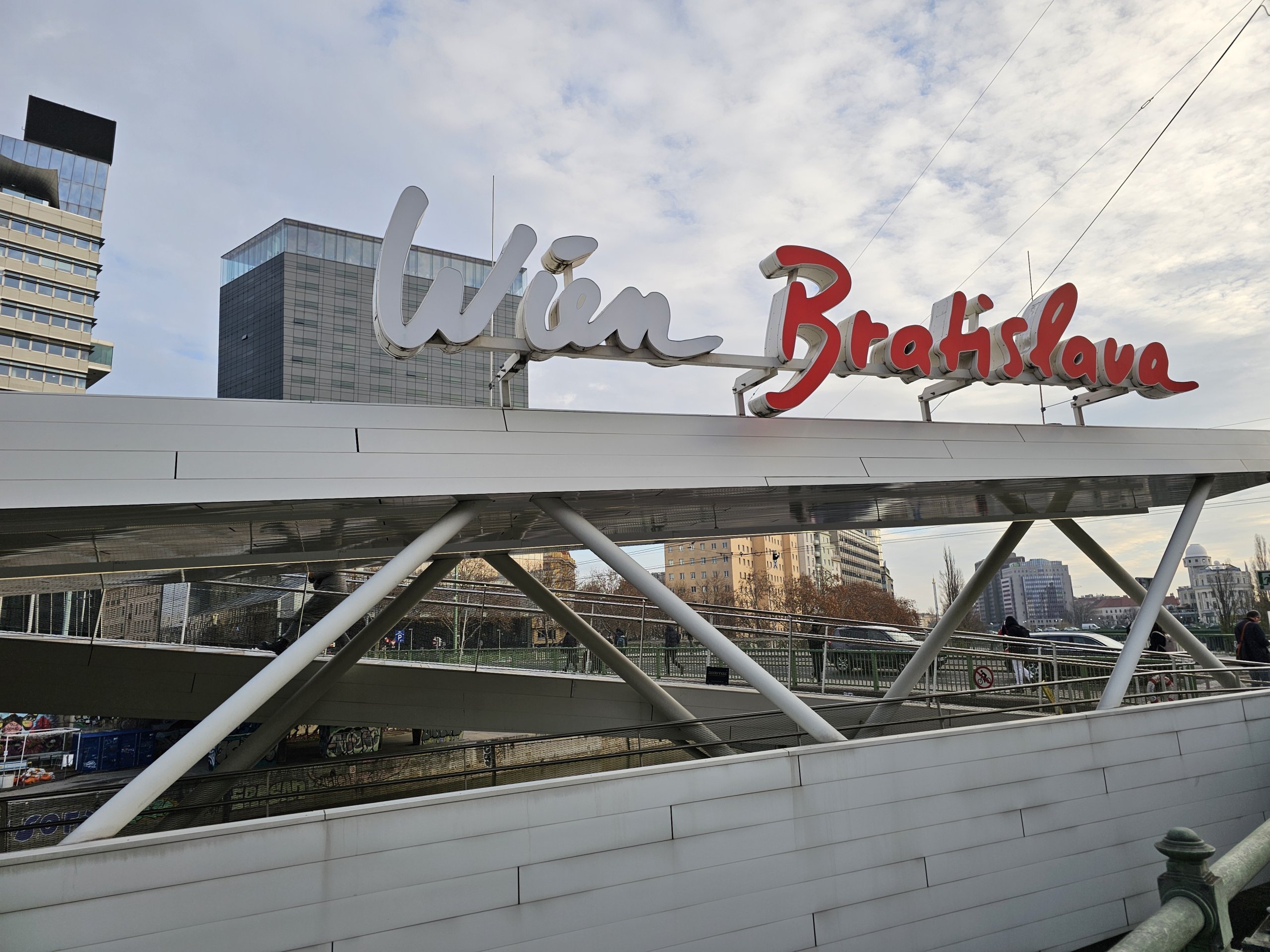
You can opt for a stylish journey along the Danube when travelling from Bratislava.
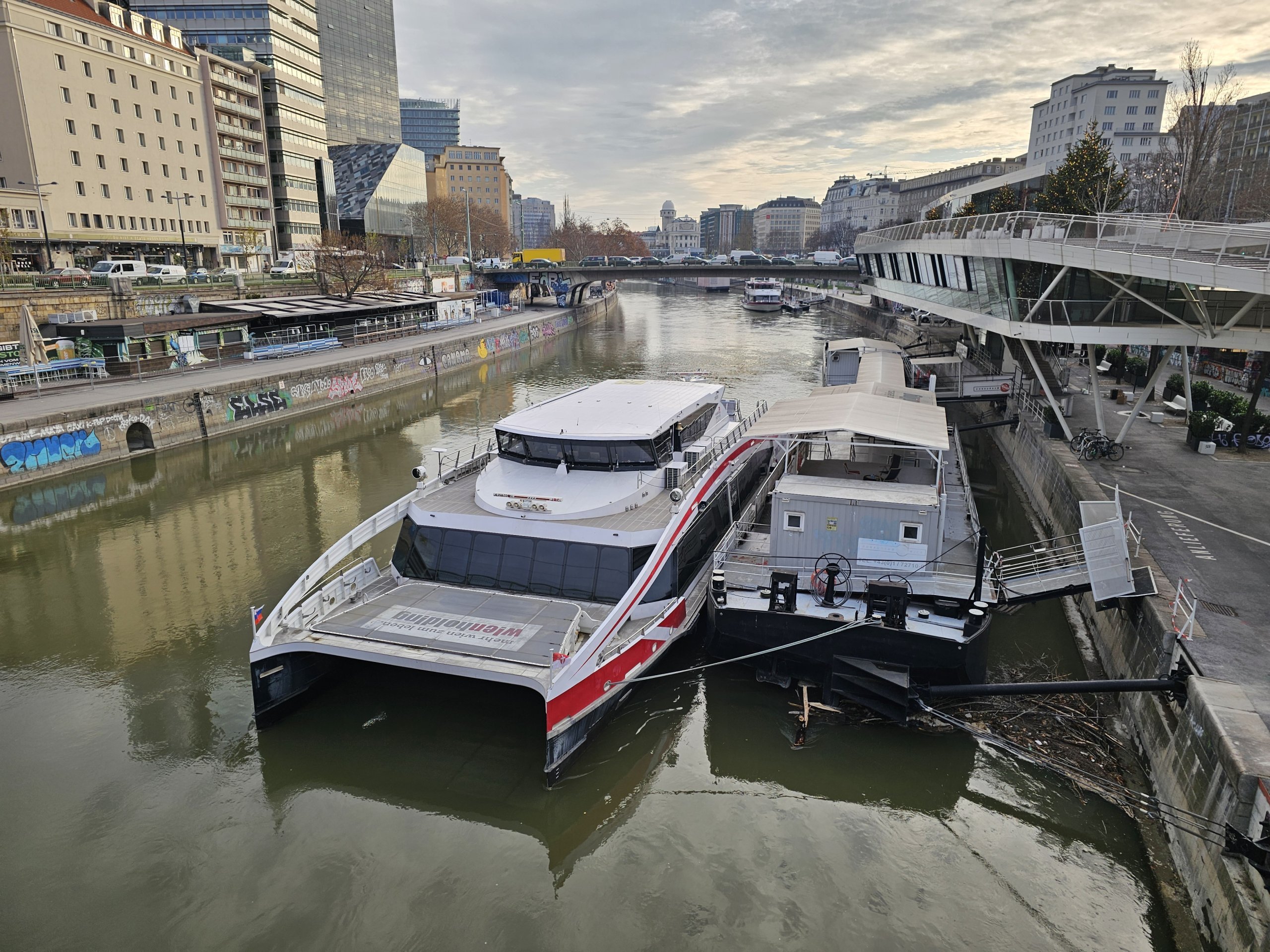
TwinCityLiner offers regular weekend cruises on a high-speed boat, which covers the journey from Bratislava to Vienna in 1.5 hours, including a stop in the town of Hainburg.
The boats sail three times a day from May to September. In March, April, October and November, there is one sailing a day from Monday to Thursday and three sailings a day from Friday to Sunday.
In Vienna, the jetty is on the Donaukanal near Schwedenplatz; in Bratislava, it is on Rázusovo nábřeží near the SNP Bridge.
A one-way ticket costs from 25 eur for a seat in the middle of the deck; the best seats on the upper deck with a view cost 52 eur. Ticket prices are higher at the weekend, when the cheapest seats are sold from 39 eur.
Online tickets, timetables and further information can be found on the twincityliner.com website.
If you have any questions or comments about the article...