
Getting around Antigua and Barbuda


Travelling around Antigua is completely different from travelling around the much less densely populated Barbuda. Whilst all the major international car hire companies and a basic bus network operate on Antigua, none of this exists on Barbuda, and you will always have to arrange transport through local private operators.
By car – the island of Antigua
We definitely recommend exploring Antigua by car. It’s the only way to reach all the beaches and avoid relying on buses, which have no fixed timetables. Virtually the entire east coast and a large part of the north coast of Antigua are accessible exclusively by car.
Car hire companies operate directly at St John’s Airport.
How much does it cost to hire a car in Antigua and Barbuda? What is the quality of the roads like? What are the local traffic regulations, and how do you fill up with petrol at a petrol station? Read the detailed section on CarHire in Antigua and Barbuda.
Taxis – the island of Antigua
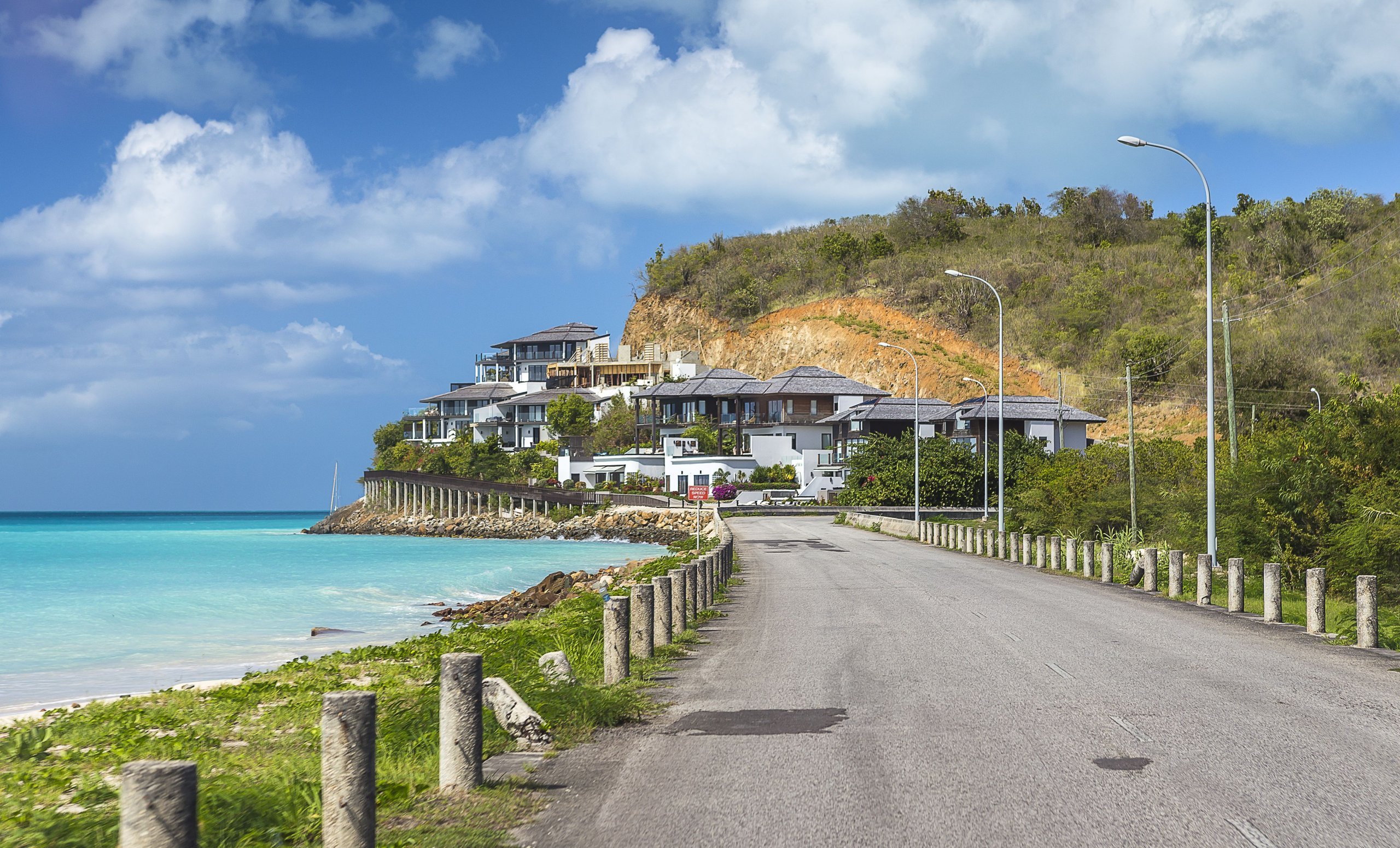
Taxis are a very common means of transport in Antigua, even outside the capital. In fact, a taxi is the only way to reach many beaches if you don’t want to or can’t hire a car.
Most taxis are larger cars or even large minibuses. All official taxis have special yellow number plates with the letters ‘TX’ in black and a number.
There are no taximeters in Antigua, but there are government-set maximum fares for journeys between specific locations. You can always pay in US dollars or East Caribbean dollars, and payment is by cash only.
Fares are calculated per car for a maximum of 4 people. The fare is therefore the same whether there are 1 or 4 passengers. Here are some examples of fares (current as of 2024):
- St. John’s – Jolly Harbour:20 USD / 54 XCD
- St. John’s – English Harbour (and surrounding beaches):25 USD / 67 XCD
- St. John’s – Long Bay: 27 USD / 72 XCD
- St John’s – Dickenson Bay:13 USD / 35 XCD
- English Harbour – Half Moon Bay:15 USD / 40 XCD
- English Harbour – Galleon Beach:7 USD / 18 XCD
- English Harbour – Jolly Harbour:25 USD / 67 XCD
Prices from the airport and the main port in St. John’s (Deep Water Harbour) are always approximately 2 to 4 usd higher.
A half-hour wait costs 5 usd / 12 xcd.
If you’re taking a taxi to the beach, it’s a good idea to agree on a specific return time with the taxi driver and negotiate a reduced waiting charge.
Buses – the island of Antigua
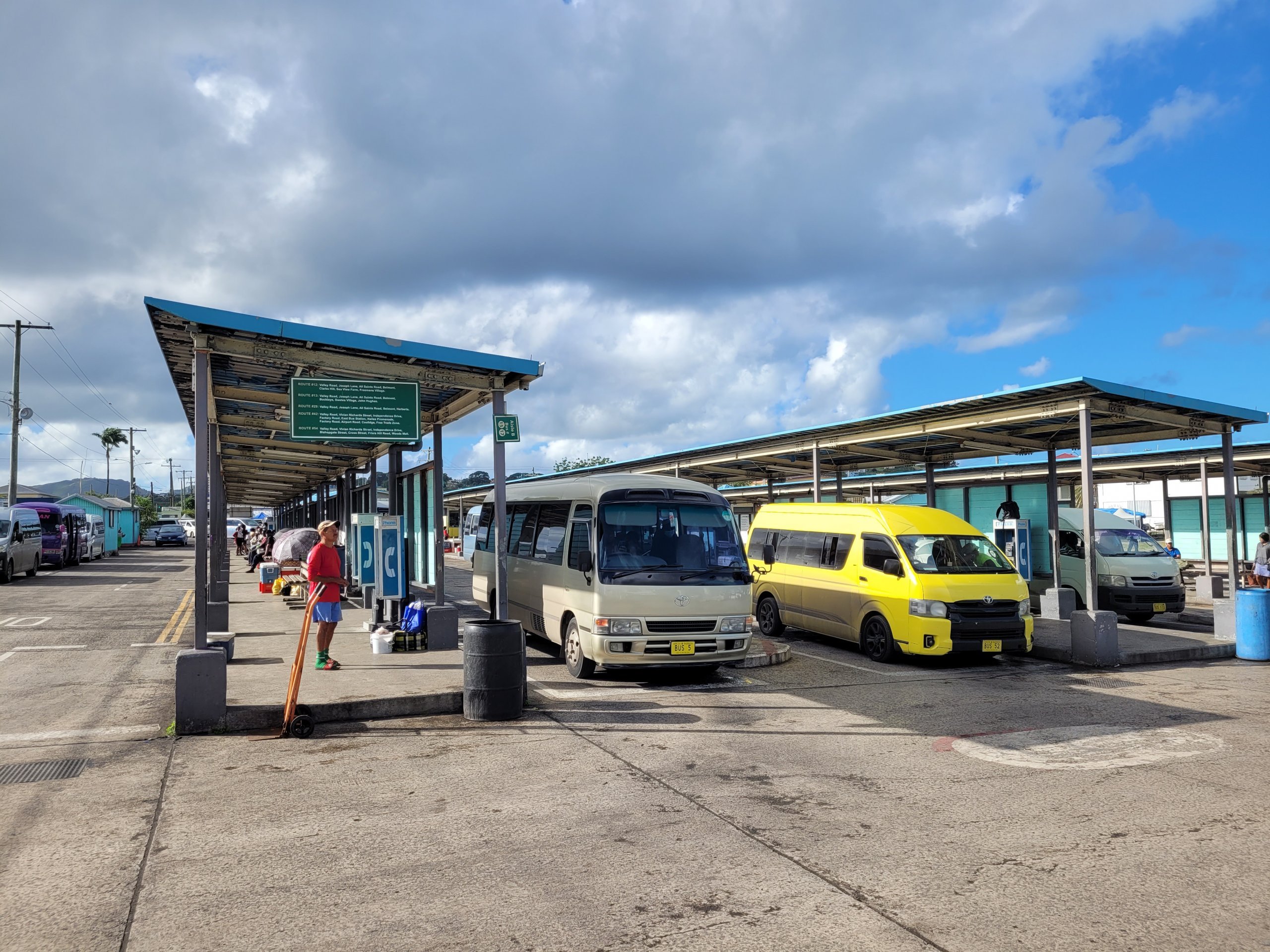
Antigua has a fairly extensive network of bus routes. To be more precise, the vast majority of services are operated by smaller vans and minibuses; you really won’t come across traditional large buses on public transport here.
Antigua – the 10 cheapest hotels on booking.com
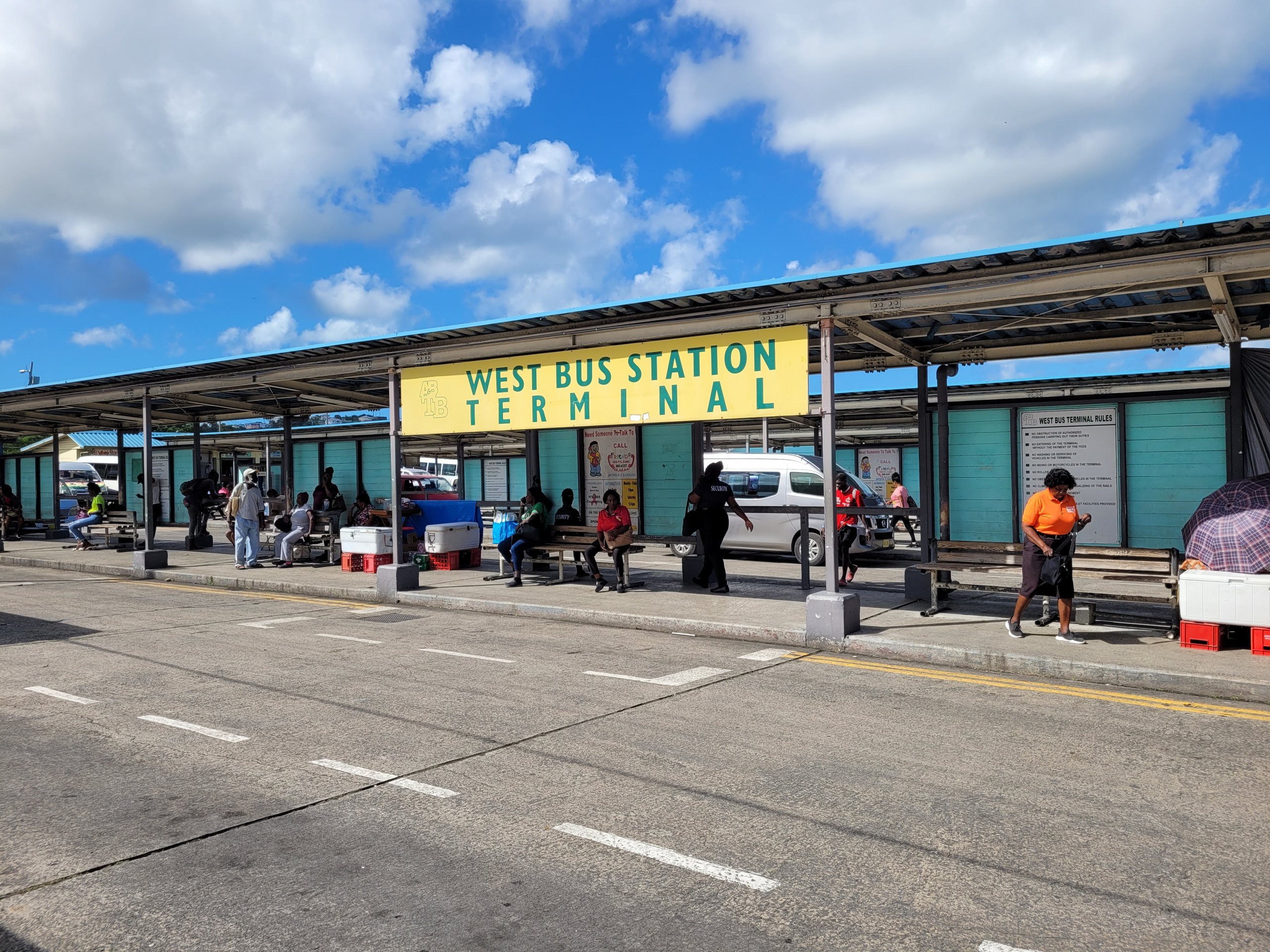
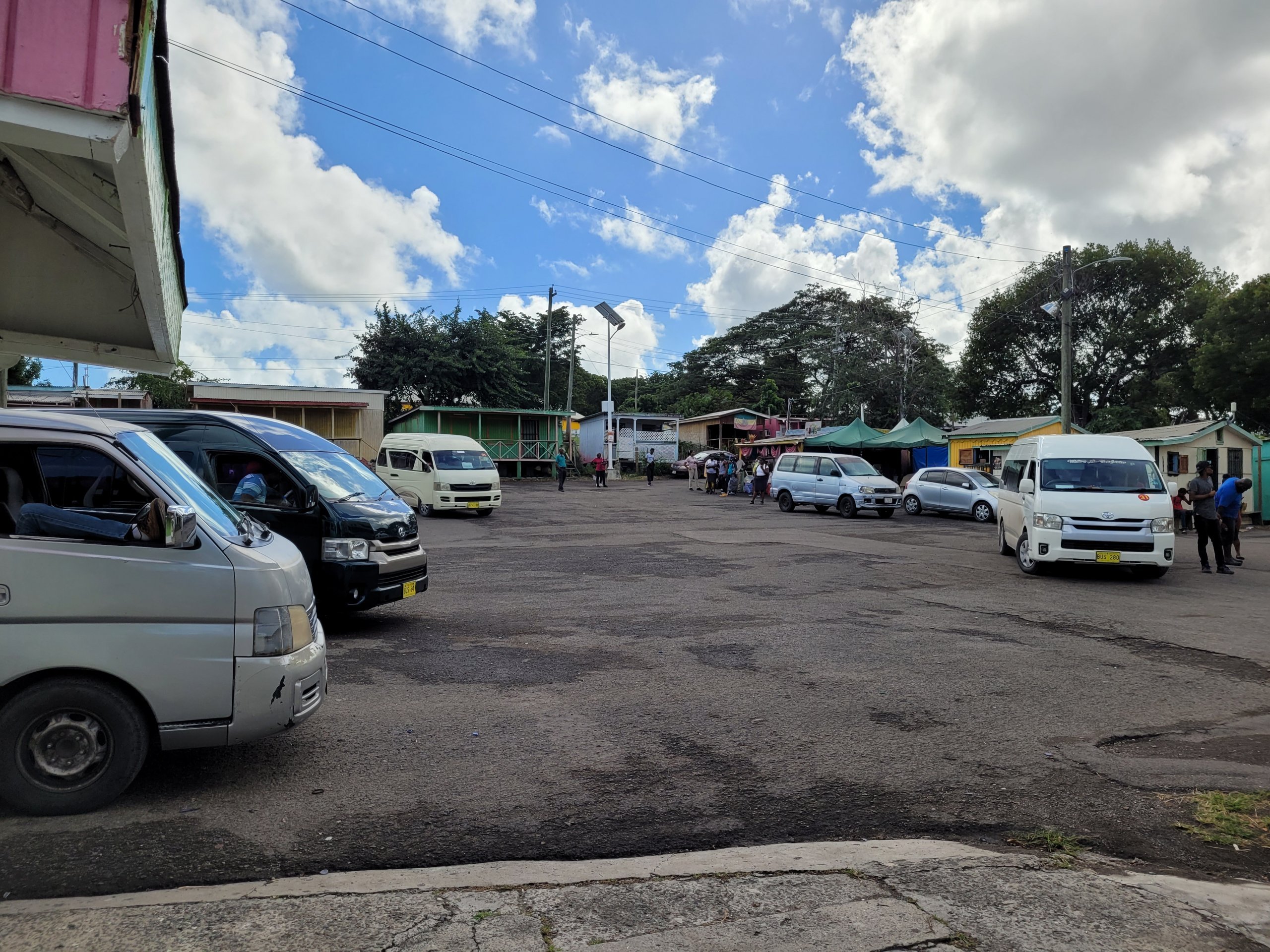
All routes depart fromSt John’s, where there are two designated bus stations:
- West Bus Station – Jolly Harbour, English Harbour, Falmouth, Nelson’s Dockyard, All Saints, Old Road, Dickenson Bay and others (generally the entire west and south coasts plus the centre of the island)
- East Bus Station – Willikies, Bethesda, Freetown, the airport (generally the north-eastern coast)
Route maps, approximate fares and other practical information can be found on the private but reliable website busstopanu.com.
How often do the buses run?
Bus routes in Antigua do not operate to a fixed timetable. They depart from St John’s as soon as the minibus is full. On busy routes, the minibus will only set off once every last seat has been taken.
On the return journey to St John’s, buses from the opposite termini run at intervals determined by how frequently they arrived from St John’s.
On the busiest routes, buses run during the day (roughly between 7.00 and 19.00) approximately every 5 to 15 minutes, whilst less frequented routes offer 1 to 2 services per hour.
The frequency decreases significantly after dark, and between approximately 19:30 and 23:00 there are only 1 or, at most, 2 services per hour.
The busiest routes are as follows:
- Route 17 from St John’s to English Harbour
- Routes 20 and 22 from St John’s to Jolly Harbour (Route 22 continues on to Old Road, whilst Route 20 terminates at Jolly Harbour)
How much do tickets cost and how do you pay?
Fares are relatively cheap and are set by the government transport authority. A special surcharge (roughly 1.75 times the daytime fare) applies for journeys at night between 22:00 and 05:00.
Examples of fares:
- St John’s – English Harbour: 3,75 xcd
- St John’s – Jolly Harbour: 2,75 xcd
- St John’s – Dickenson Bay: 2.25 XD
- St John’s – Willikies: 3,25 xcd
- St. John’s – Airport Road: 2,25 xcd
- St John’s – Darkwood Beach: 3 xcd
Fares must be paid in cash only and in East Caribbean dollars.
Fares are always paid to the bus driver. When travelling from St. John’s, the driver collects fares before the journey begins, going round to all passengers; you pay according to your destination.
Conversely, when travelling to St John’s, you pay only after alighting, at which point it is again a good idea to remind the driver where you are coming from. The driver will give change if the amount you pay is a reasonable sum.
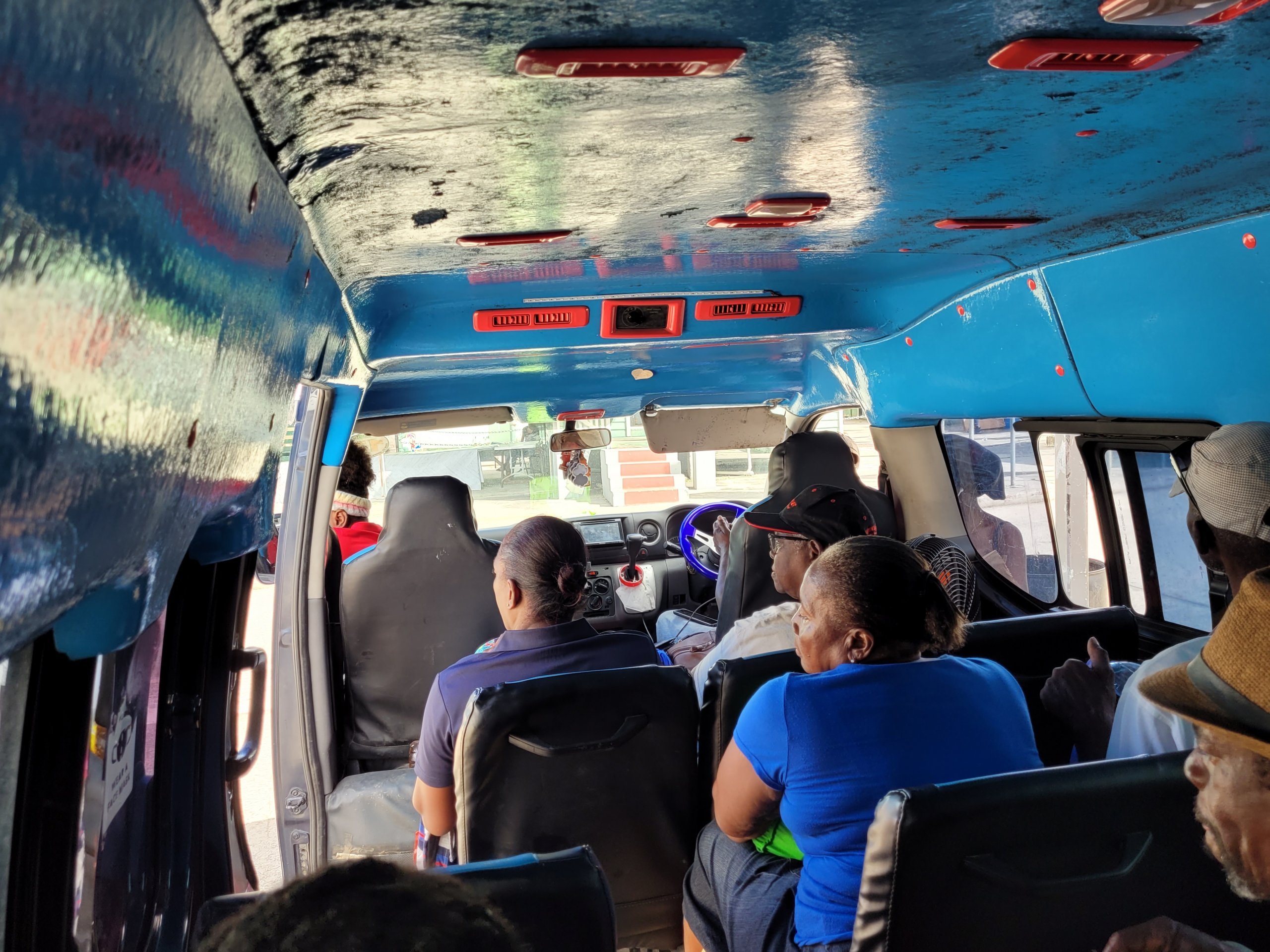
Where do the buses stop?
Buses officially stop at bus stops marked with a simple red-and-white sign bearing the words ‘ "No parking - Bus Stop" ’. Very often, however, the bus operates more like a shared taxi, following a fixed route. This means you can flag down a bus anywhere, even outside a marked stop.
If you want to get off, simply shout “Bus Stop” loudly towards the driver and he will stop at the nearest suitable spot.
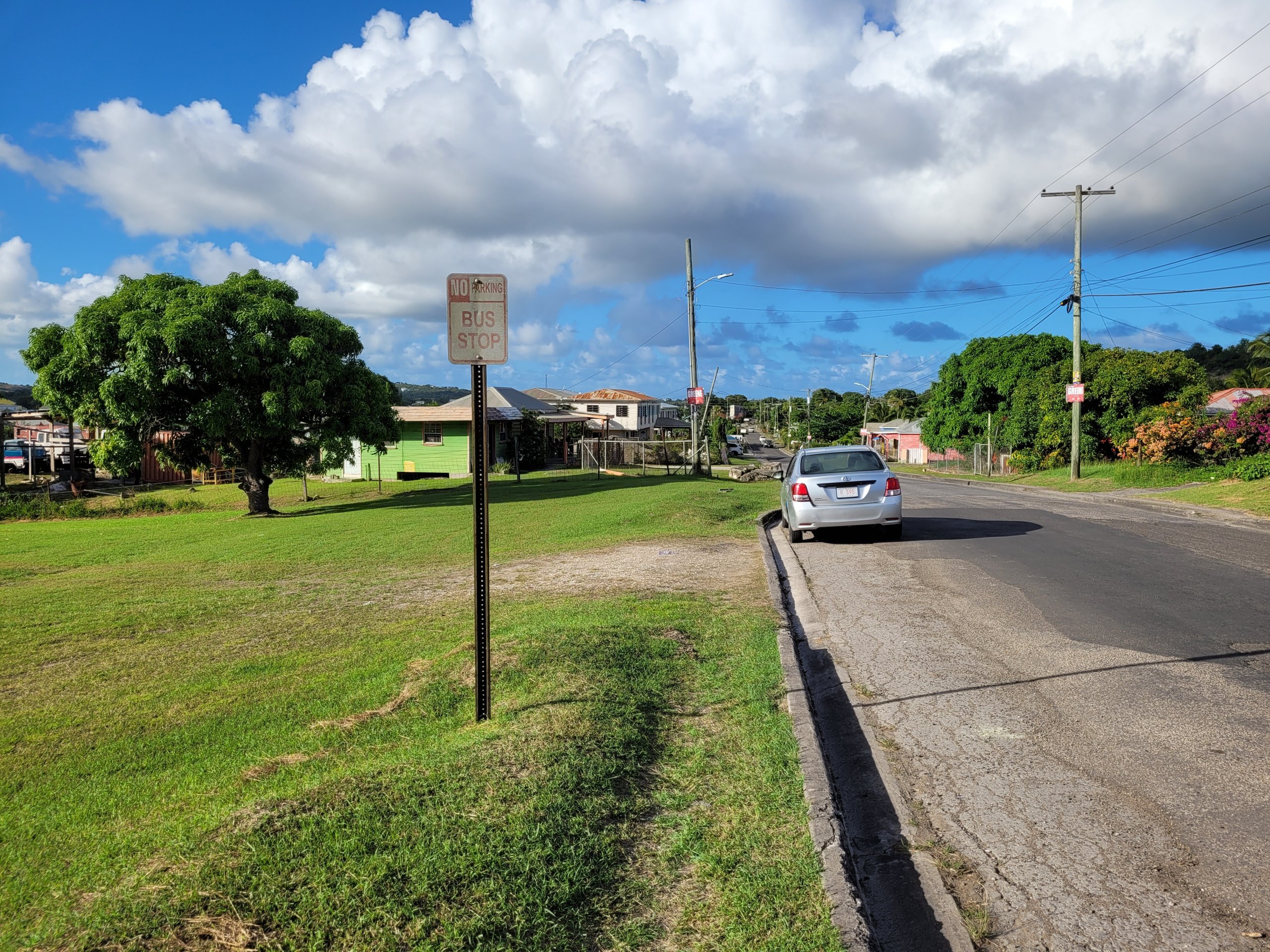
How can you recognise a public bus?
All buses are marked with the number of the route they are travelling on. The marking is easy to miss, as it is just a small round sticker with a number on the right-hand side of the windscreen.
You can easily tell a public bus apart from a private minibus or taxi even without the route number. This is because all buses have yellow number plates with the word ‘BUS’ in black and a number.
Which beaches can you reach by bus?
Are you in Antigua without a car? Stay in the capital, St John’s, and find out which beaches are easily accessible by bus.
The most easily accessible beaches are on the south-west coast, which you can reach from the West Bus Station on route 22 (running approximately 2–3 times an hour).
- Darkwood Beach, Turners Beachand Morris Bayare really just a stone’s throw from the road (within 100 metres)
A much more frequent service runs from the West Bus Station to Jolly Beach, where, in addition to bus number 22, bus number 20also runs (usually 5–6 services per hour). However, the bus stop is not right by the beach, but at the junction with the main road, so you’ll need to walk about 1 km to reach the beach.
There are also very frequent services from St John’s to English Harbour in the south, from where you can easily walk 1 km to the beautiful Pigeon Point Beach or Windward Beach. Route 17, which connects these towns, runs approximately every 10 minutes during the day.
The last beach that’s easily accessible by bus is Dickenson Bay in the north-west, which you can reach from the West Bus Station on average 2–3 times an hour on bus number 50.
Connections between Antigua and Barbuda
Antigua and Barbuda consist of two main islands. Barbuda, which is considerably smaller, is 55 km from Antigua and can be reached by air or by regular ferry services.
View available accommodation – Barbuda
Ferries to Barbuda
Public ferry services are operated by two companies. The crossing always takes around1 hour and 30 minutes. Online booking is currently only available with Barbuda Express.
Barbuda Express operatesonce a day, seven days a week. From Monday to Saturday, the ferry departs in the morning from St John’s; on Sundays, it departs at midday. The return journey from Barbuda departs on Monday mornings at 9.00 am; on other days, it departs at 3.45 pm. You can find the current timetable on the websitebarbudaexpress.com/schedule.
A one-way ticket costs 55 usd / 150 xcd, whilst a return ticket costs 100 usd / 270 xcd. Buy your ticket online via the official website.
Barbuda Express also offers an organised, guided day trip, which includes a programme of activities on Barbuda and a return ticket. The total cost is 174 usd and detailed information can be found at barbudaexpress.com/tours-charters.
Island Escape Ferry It sails three times a week, on Monday, Wednesday and Friday mornings from Antigua and in the afternoons from Barbuda. You can find the timetable and further information on the websiteislandescapeferry.com.
A one-way fare costs 50 usd / 135 xcd, whilst a return fare costs 90 usd / 240 xcd.
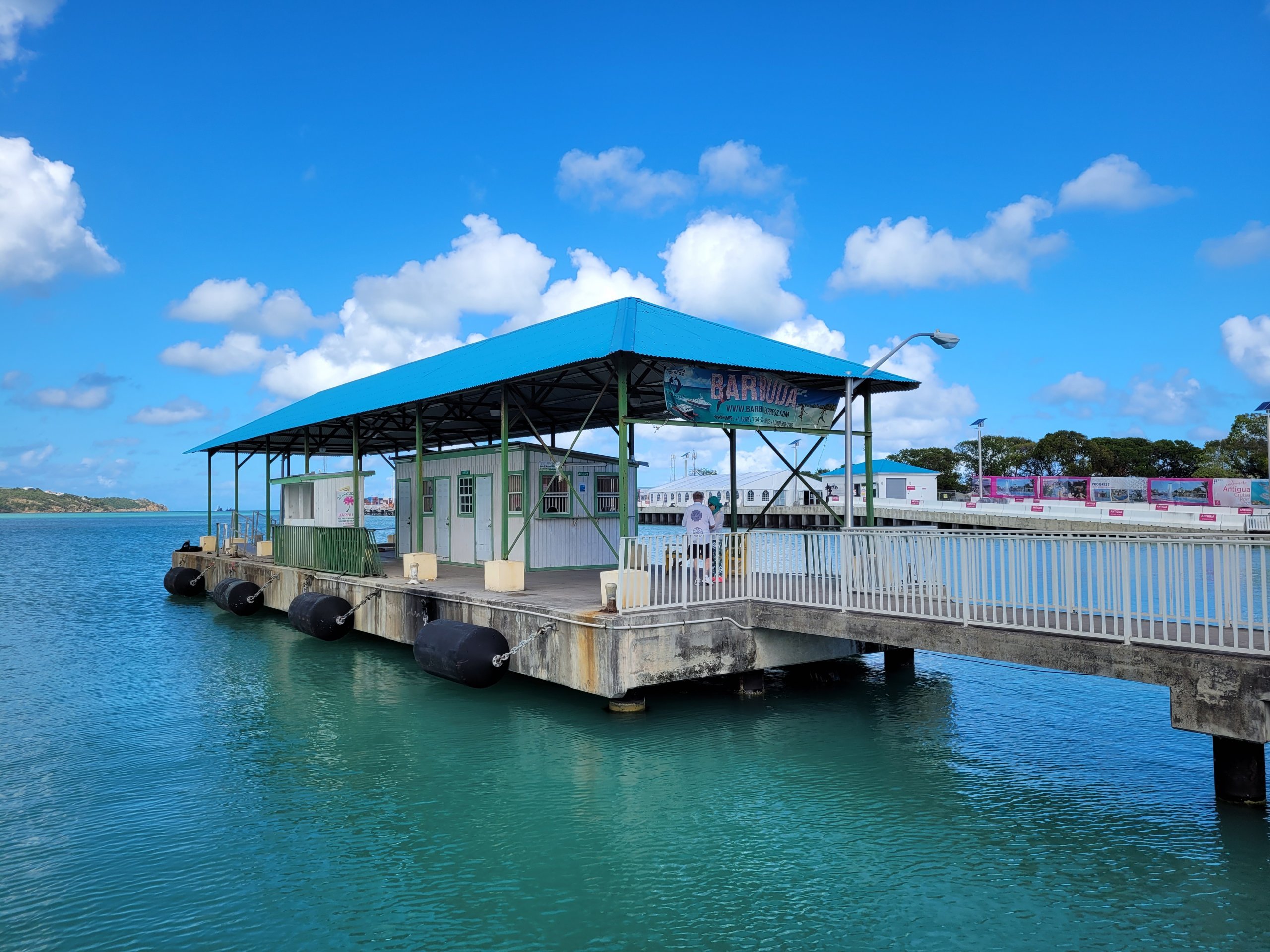
The ferry terminal on the island of Antigua is located in the main harbour in St John’s, where there is a dedicated small jetty with a ticket office. Both companies currently depart from this jetty. Island Escape Ferry used to operate from a dock in the north of Antigua, but has now moved to the main harbour.
The port on Barbuda is situated on the south coast, approximately 6 km from the only town, Codrington.
Ferries are the best way to travel if you want to visit Pink Sand Beach on Barbuda, which is situated right next to the harbour.
Flying to Barbuda
Faster and more frequent services are provided by the local airline BMN Airways, which operates small propeller-driven aircraft seating 8 people.
The timetable includes at least one flight a day in the off-season, and two to three flights a day during the main winter season.
The flight takes 20 minutes. Flights depart from the old international terminal V. C. Bird ANU. On Barbuda, the airport is situated right in the centre of the village of Codrington.
A one-way ticket costs 81 usd, whilst a return ticket is simply double that amount. Prices do not change over time and remain the same whether purchased six months or two days before departure. Nevertheless, we recommend booking well in advance (ideally at least a month) due to high demand. The planes are small and flights often sell out.
You can book tickets online via the airline’s website atbooknow.antigua-flights.com.
Transport on Barbuda
Travelling around the island of Barbuda is completely different from travelling around Antigua. There is no official public transport here, nor are there any conventional car hire companies operating on the island.
However, you can hire a car or even a bike on Barbuda, though you must always book by telephone. No one replies to emails, and the online booking forms never work.
You can find a list of contacts on the island’s tourism website,barbudaful.net/visiting. If you wish to hire a car, you’ll need to call at least 1 to 2 months in advance.
There are no official taxis on the island either. Any passing vehicle can serve as a taxi, and you can try to flag one down. Generally, however, we do not recommend travelling to Barbuda on your own without having arranged transport in advance.
Travelling by car is hassle-free. Traffic here is very light indeed, and there is practically only one paved road (with large potholes) connecting the harbour on the south coast with the town of Codrington. You can also drive to the picturesque east coast and Foot Bay Cave.
Any questions left?
If you have any questions or comments about the article...