Long weekends in Oslo from Bucharest with Norwegian
75 €


Tower Bridge is London’s most famous bridge and one of the loveliest places to take a stroll along the Thames.
You can walk across the bridge for free at any time, whilst a ticket grants access to the upper walkways with glass floors, both towers and the historic engine room.
Buy an official ticket for Tower Bridge
Many tourists mistakenly believe that London Bridge is another name for Tower Bridge, but the fact is that London Bridge is a completely different, older (though rather unremarkable) bridge closer to the city centre.
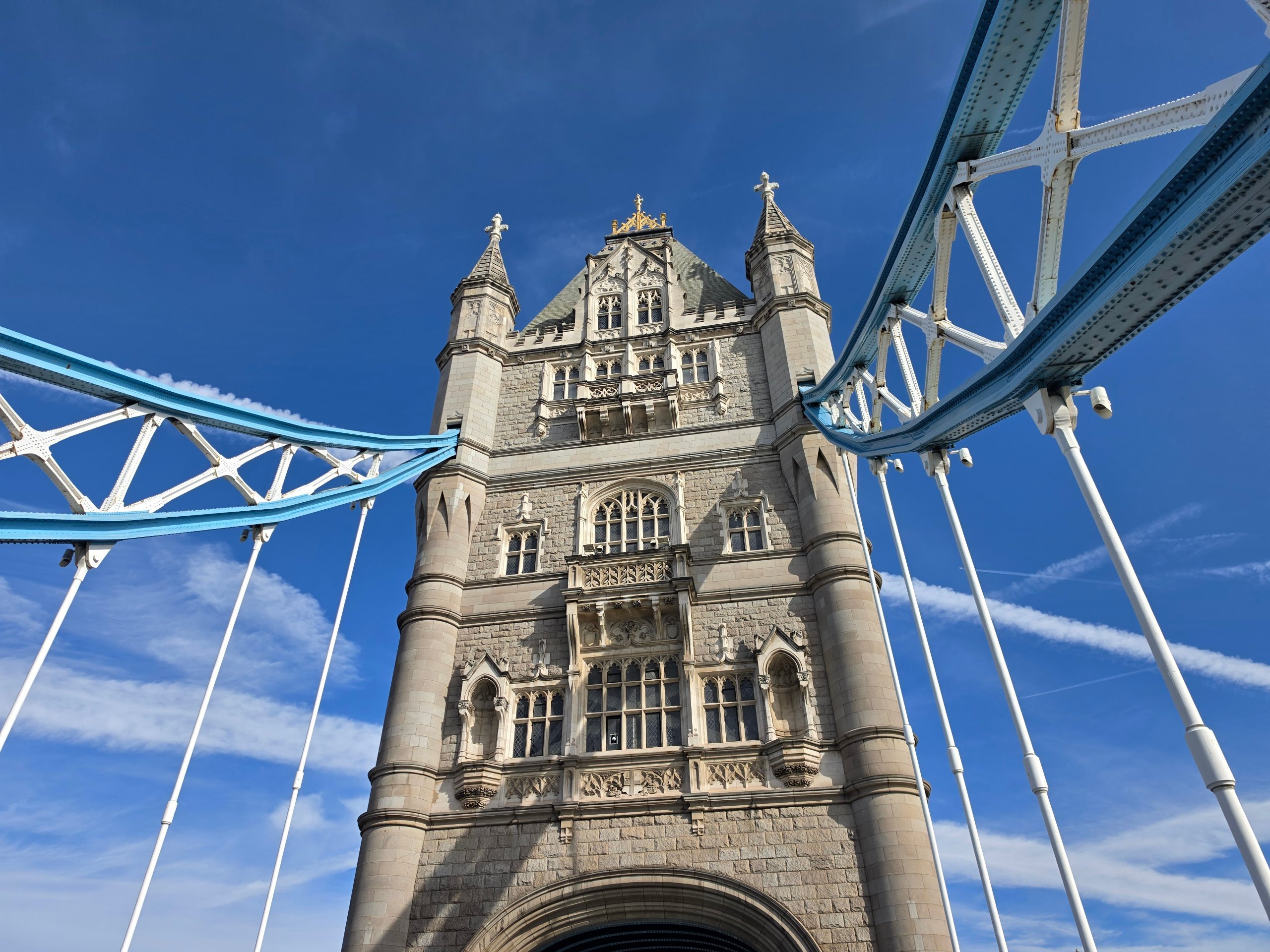
Crossing the pavement alongside the road isfree.
You’ll be able to walk between the two towers, see the structure up close and enjoy views of the Tower of London, The Shard skyscraper and the boats on the Thames.
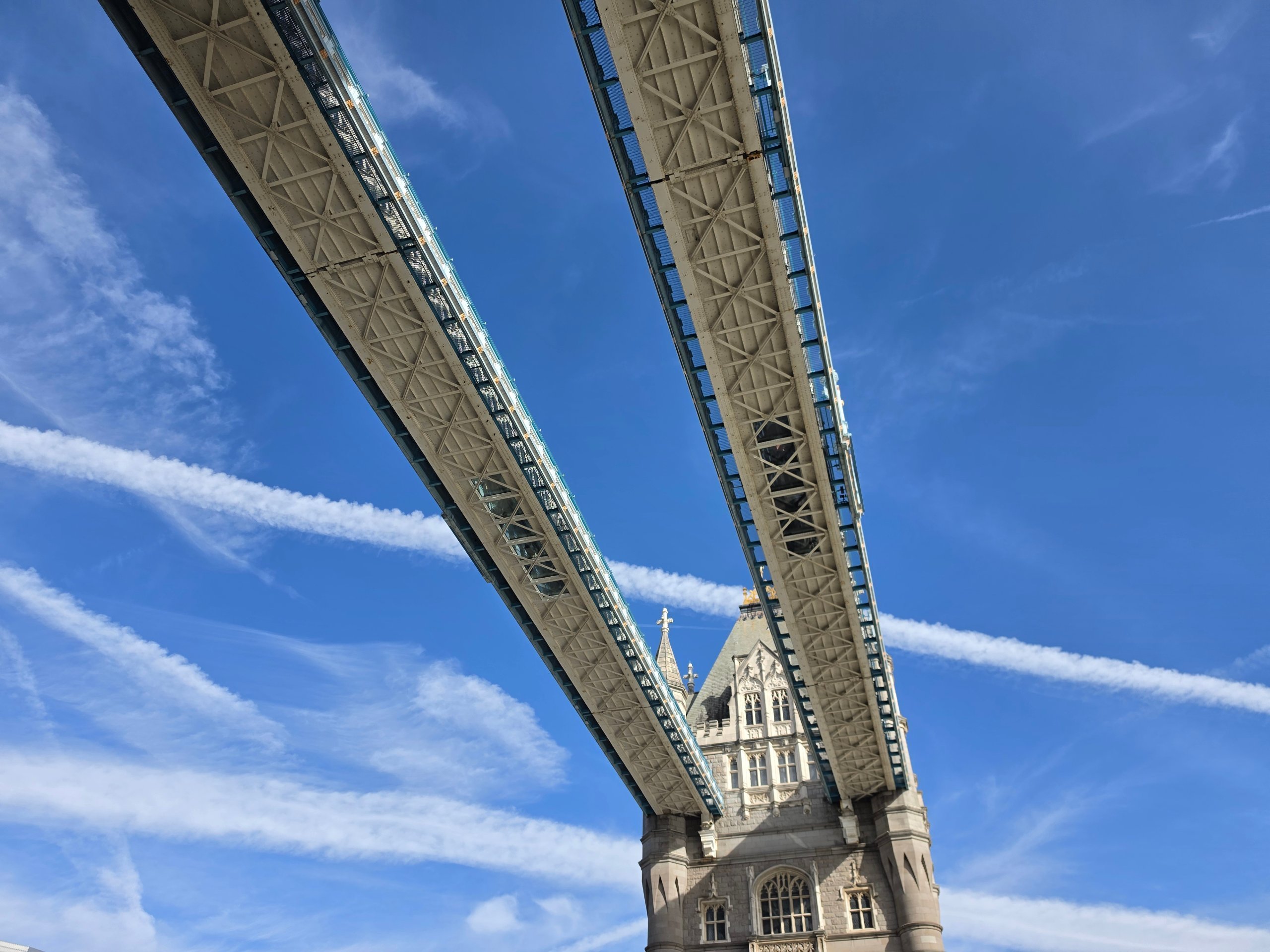
You onlyneed a ticket to access the interior of the towers, the two upper walkways and the original Victorian engine room.
The tour also includes a glass floor, through which you can watch the road, the river and any bridge lifts from a height of around 42 metres.
If you’re short on time and mainly want to take photos of the whole bridge, you don’t need to pay for a guided tour. However, if you’re interested in the structure, the view from above or the historical mechanism, it’s worth going inside.
Standard admission costs:
The ticket includes access to both towers, the upper walkways with glass floors and the historic Engine Rooms. The exhibition is open daily from 9.30 am to 6.00 pm; last admission is at 5.00 pm.
Booking a specific time slot is particularly recommended at weekends and during peak season. However, a ticket purchased in advance does not guarantee skip-the-queue entry. All visitors must pass through security checks.
The entrance to the exhibition is on the west side of the north tower. Suitcases and wheeled luggage are not permitted, and standard luggage must not exceed 45 × 35 × 20 cm.
Please check the official Tower Bridge website for the latest information and any exceptional changes.
If you only want to visit one place, choose Potters Fields Park. All of the following viewing points are free, with the exception of the upper walkways of Tower Bridge and the viewing platform at The Shard.
The park on the south-western side offers the most famous side view of the entire bridge. There’s plenty of space here for wide-angle shots, photos with people in them, and evening shots of the illuminated towers.
The light is usually at its best in the afternoon and just before sunset. During the blue hour, the illuminated bridge contrasts beautifully with the still pale blue sky.
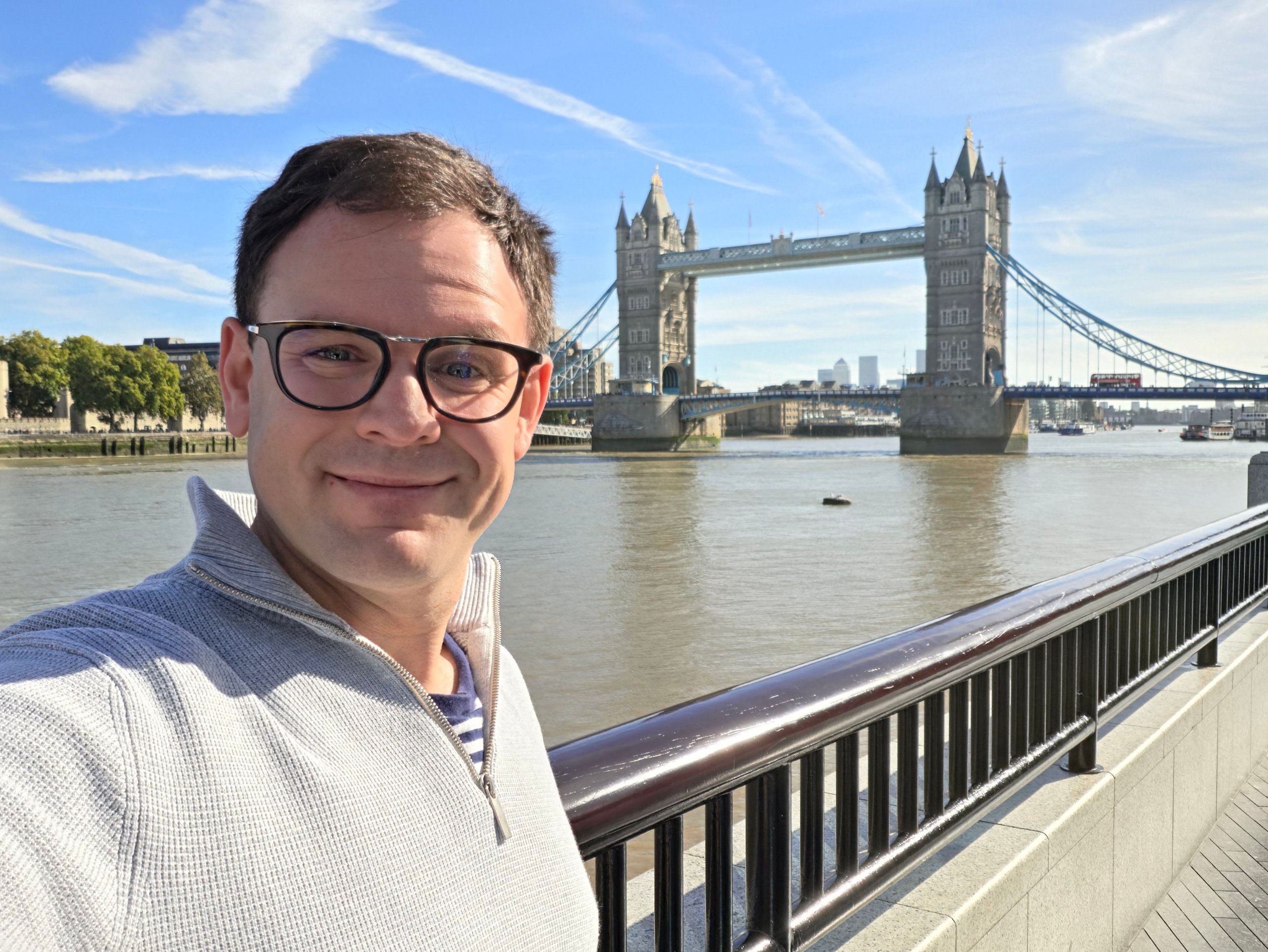
From the south-east, Tower Bridge can be photographed amongst former warehouses and brick-built houses. The shot has a completely different atmosphere to the one taken from Potter’s Fields and is typical of the historic docks in this part of London.
The light is usually best here in the morning. Continue along the quay away from the bridge, turning as you go – the composition changes almost every few metres.
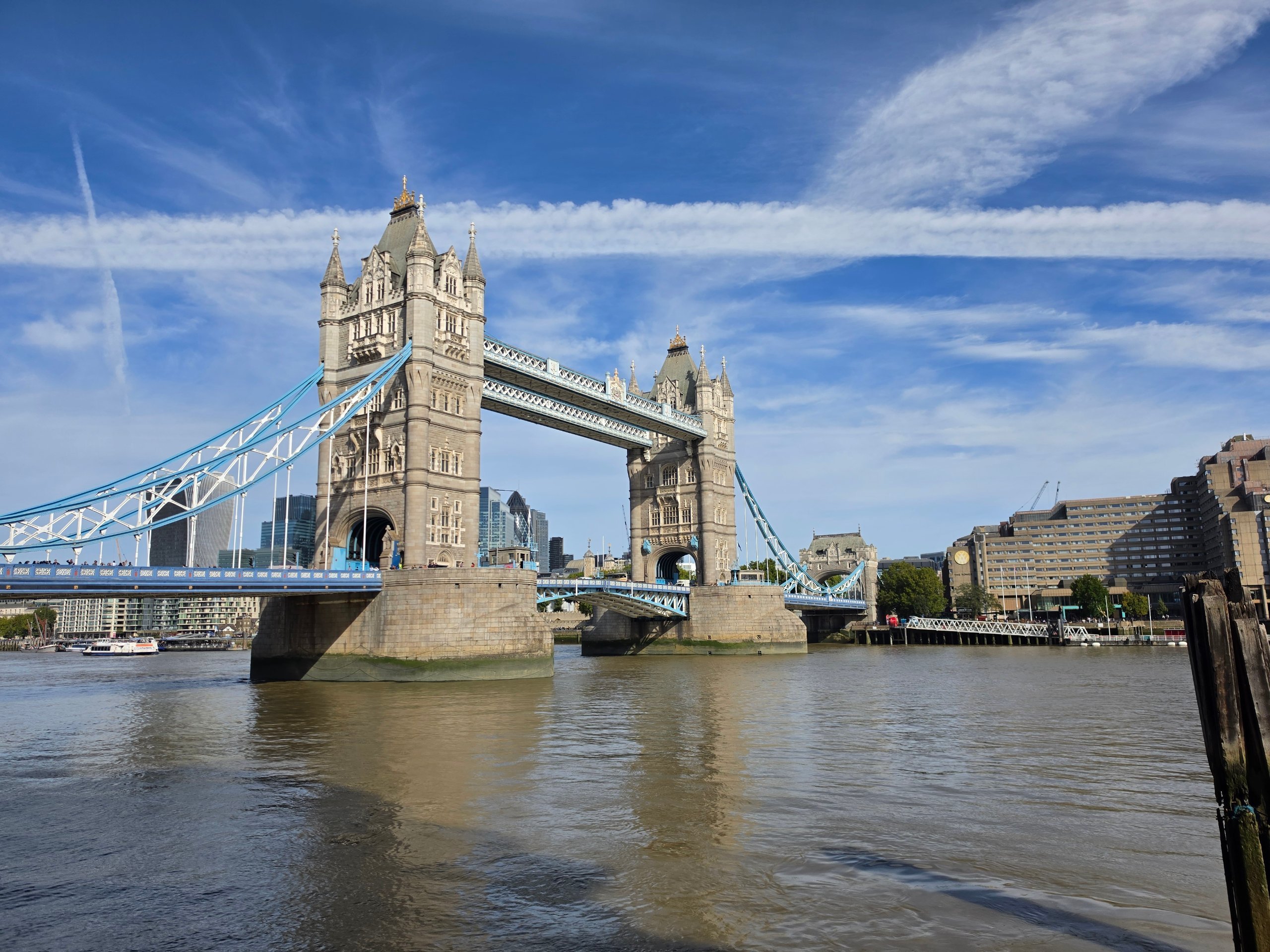
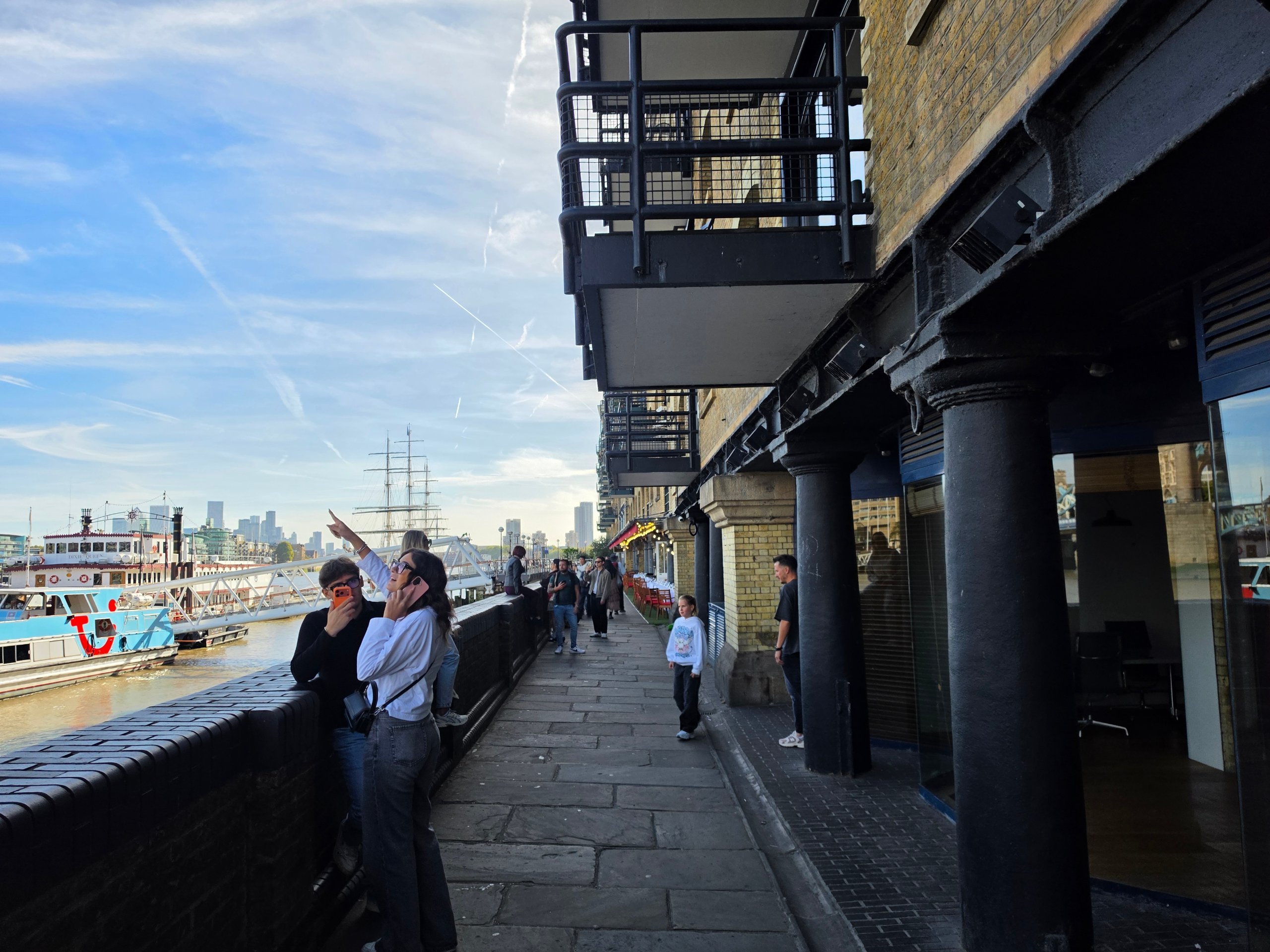
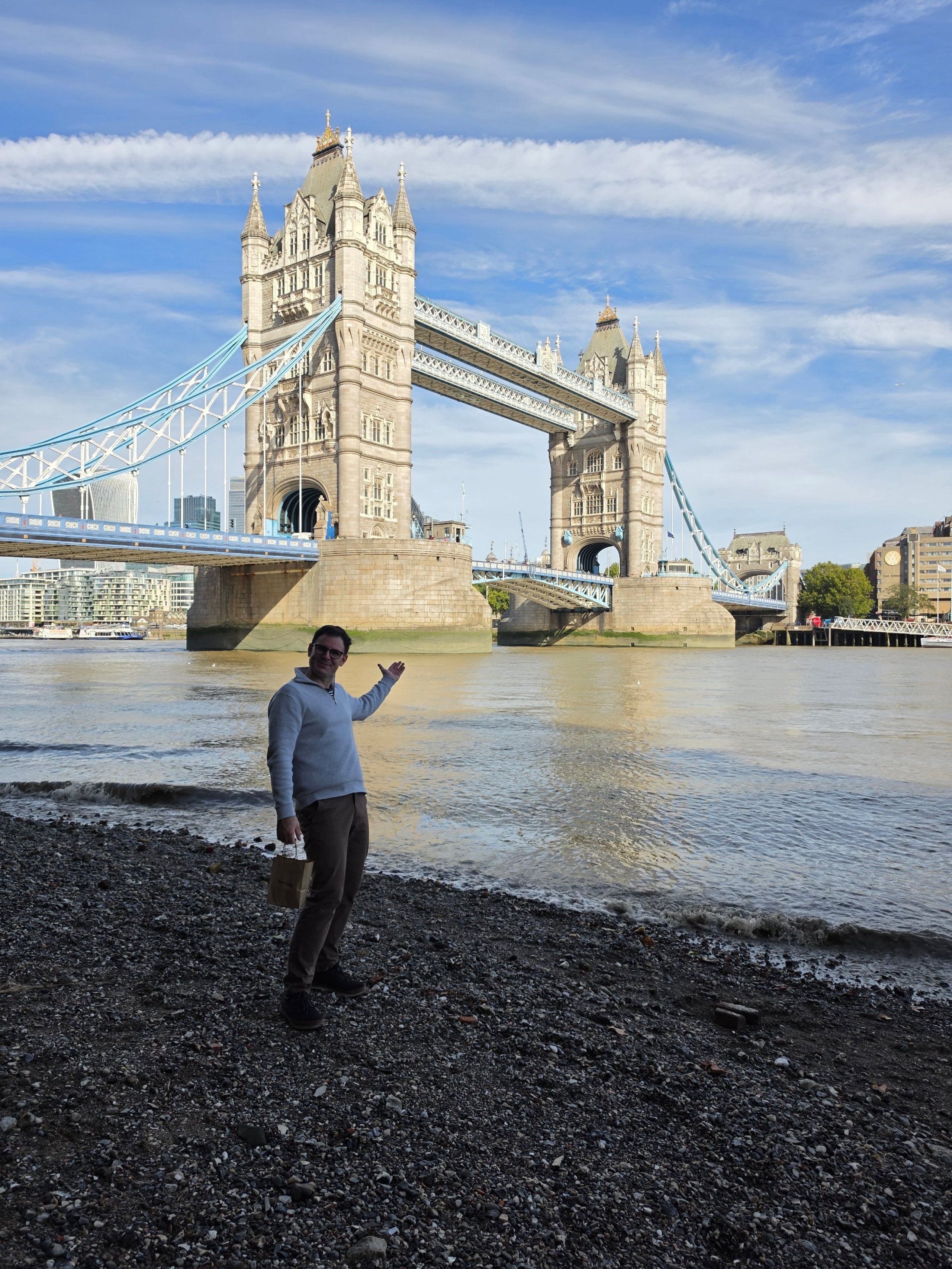
The lowest and most dramatic view is from the rocky bank of the Thames beneath the southern end of the bridge.
We describe how to get there in detail in a separate section below, as the area can be dangerous at high tide.
From the north-western side, you can photograph the entire bridge from the opposite bank. You can combine this view with a visit to the Tower of London and a stroll around Tower Pier.
From London Bridge, Tower Bridge is further away, but the river, the boats and part of the modern City will all fit into the frame. A longer lens is particularly suitable here. The spot is also lovely after dark.
Be careful not to confuse the names: Tower Bridge is the iconic bridge with two towers. London Bridge is a simple road bridge situated about 800 metres to the west.
From the viewing platform at The Shard, you can see Tower Bridge from above, along with a large section of the River Thames. There is an admission charge, and reflections in the glass may interfere with your photography.
The Sky Garden offers a view from further away, but it’s free. Entry is free, but you must book a time slot in advance.
You can enjoy an unusual view from the regular city ferry services (Uber Boat).
Some services pass directly under Tower Bridge, whilst others offer a head-on view of both towers. The boats are also a practical way to travel between Tower Bridge, Westminster and Greenwich.
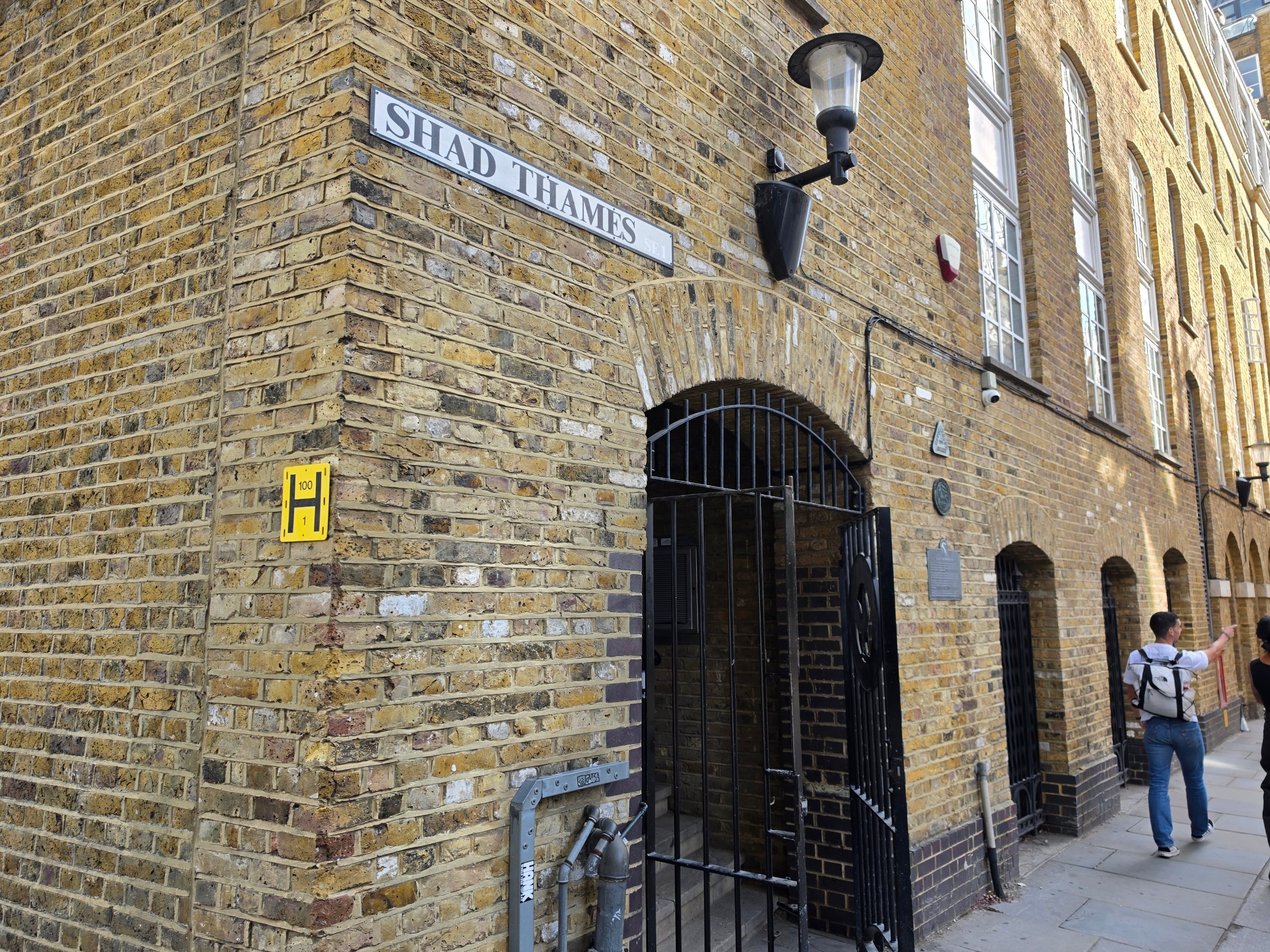
On the south-eastern side of the bridge, you’ll find the narrow Horsleydown Old Stairs. They lead from Shad Thames to the rocky bank of the Thames, which is only accessible at low tide. Look for the name of the stairs on the map, not a normal sandy beach.
From the riverbank, you can take photos of Tower Bridge at close quarters, and when the tide is low enough, you can even walk right underneath part of the structure. The surface is slippery, uneven and remains covered in mud after rain or at low tide.
The tide comes in very quickly here and can cut off the route back to the steps.
We lingered whilst taking photos and made it back about two minutes before the access point was flooded. It wasn’t just a theoretical threat – the water level was rising right before our eyes.
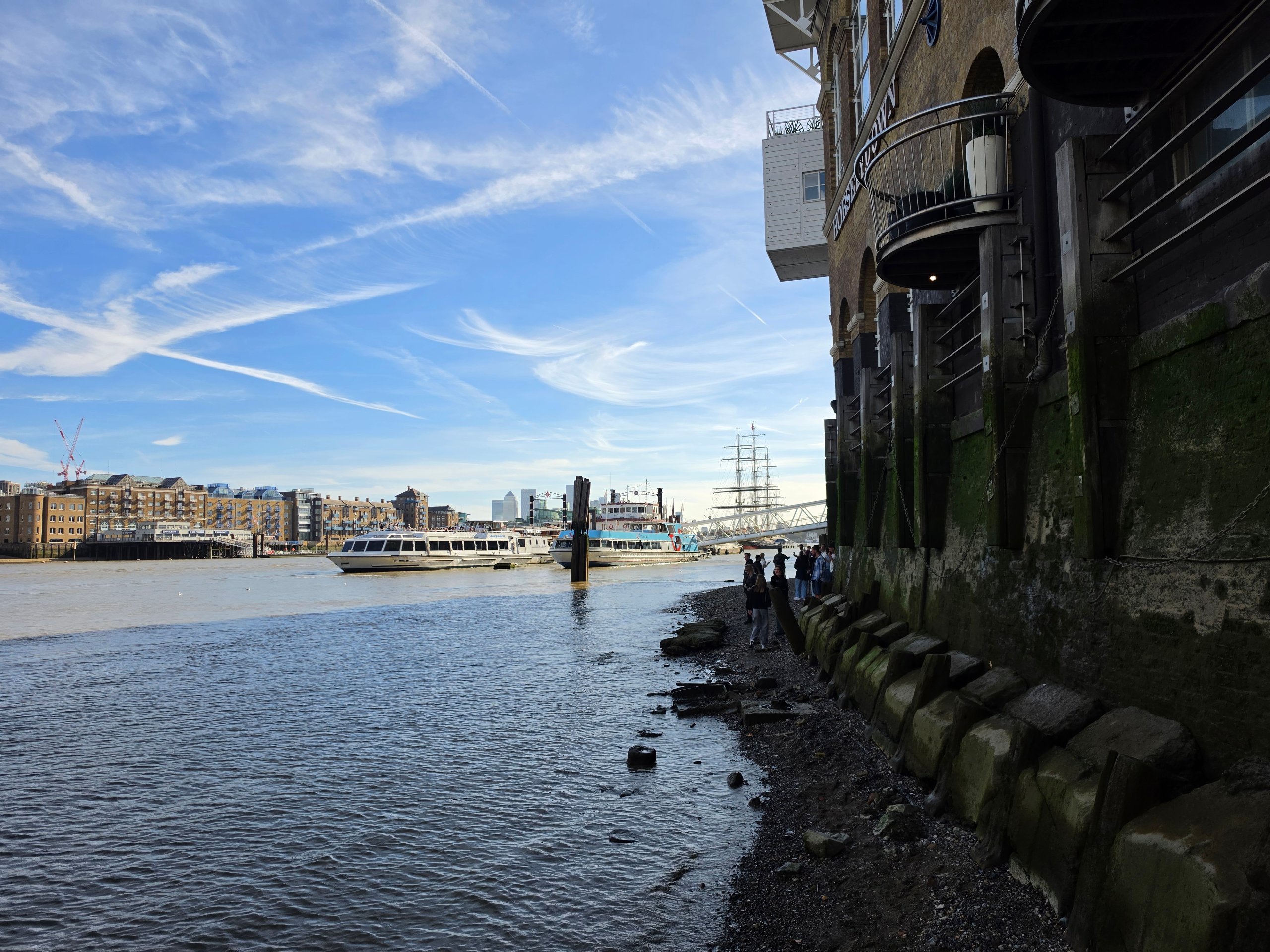
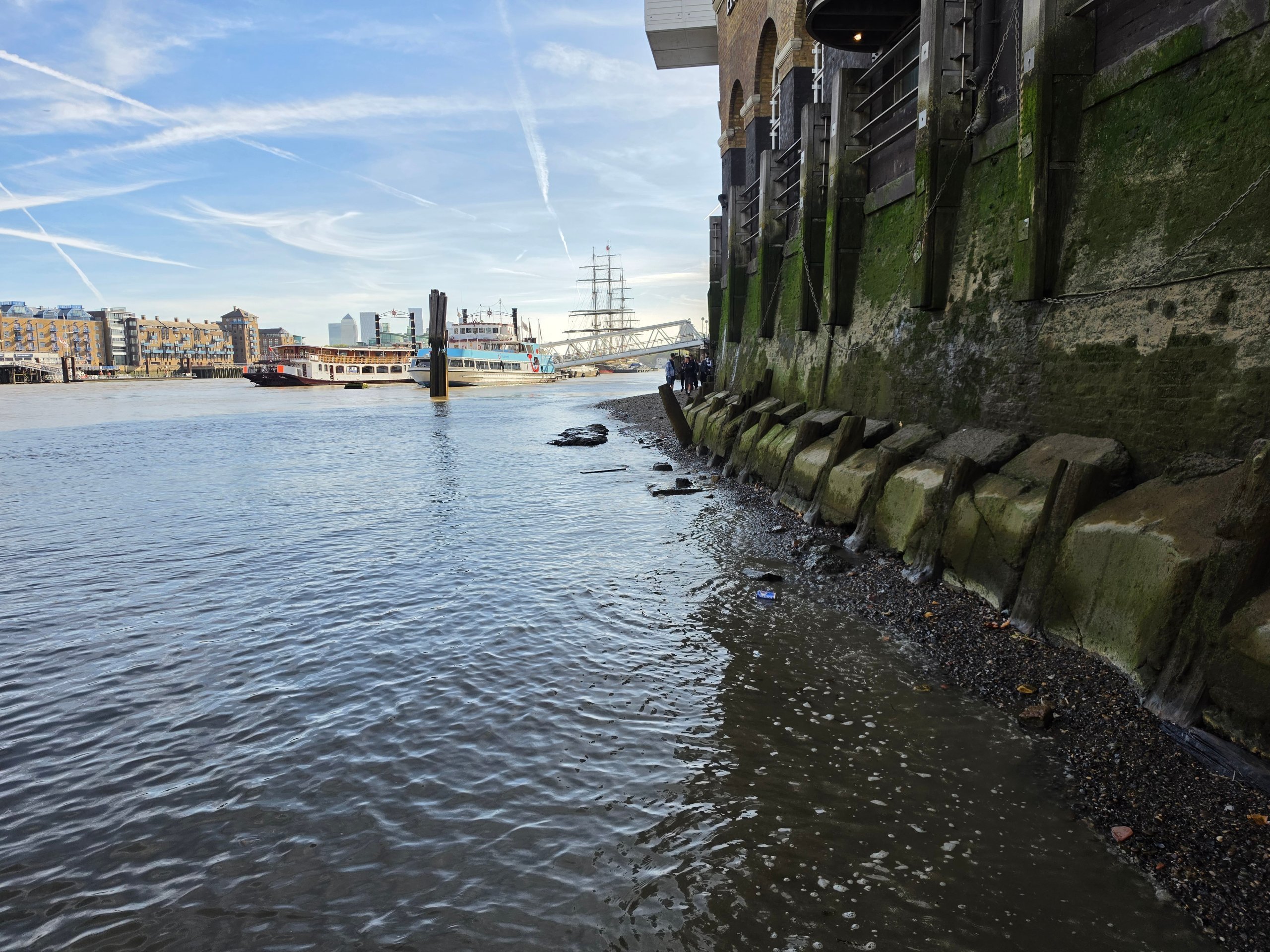
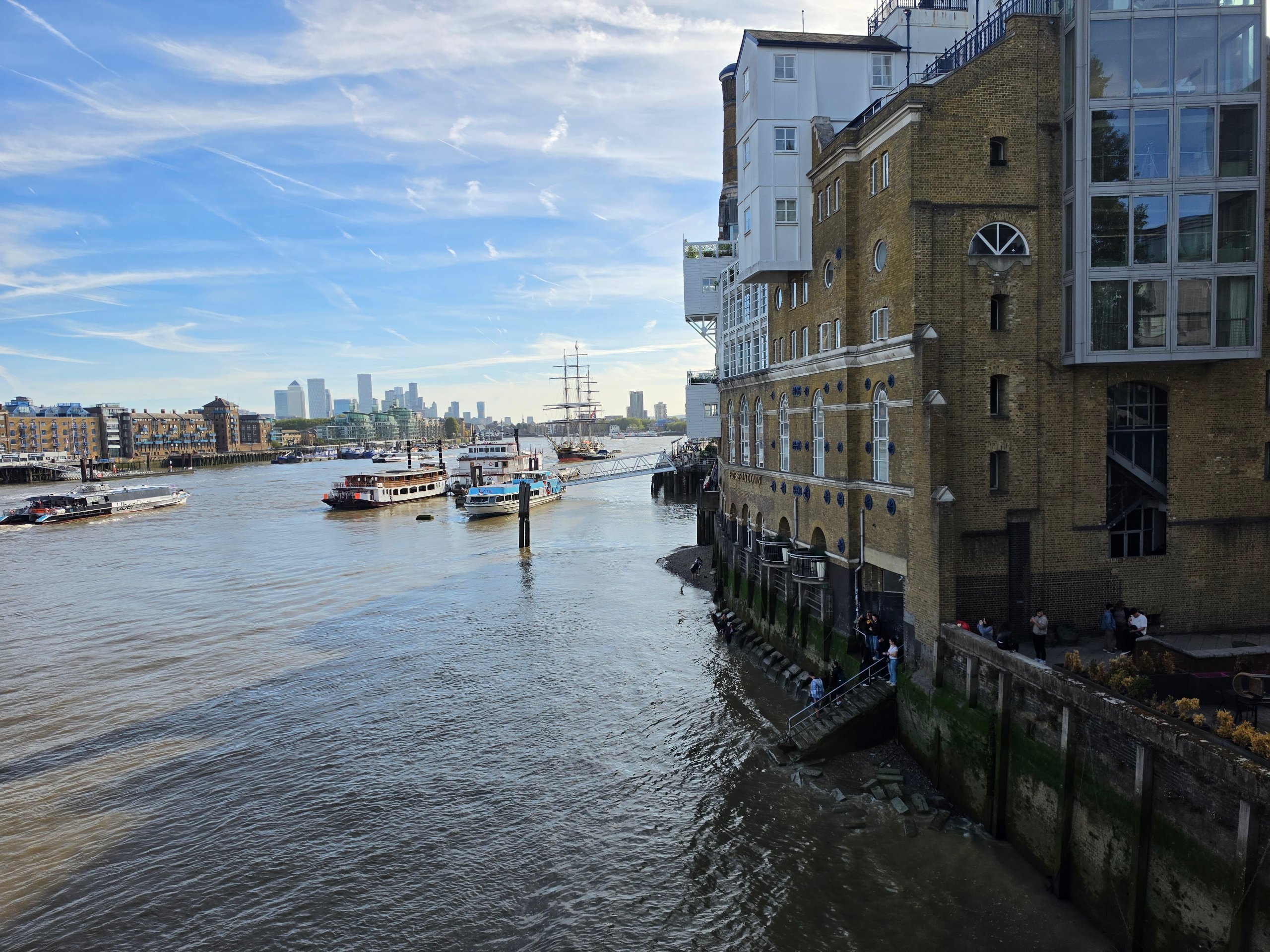
Before heading down, therefore, check the current tide times. Keep an eye on the return route at all times and leave the shore as soon as the water starts to rise. Do not go ashore after dark, in poor visibility or just before high tide.
Photography and walking are permitted, but without permission from the Port of London Authority, do not search the shore, dig or take any items you find.
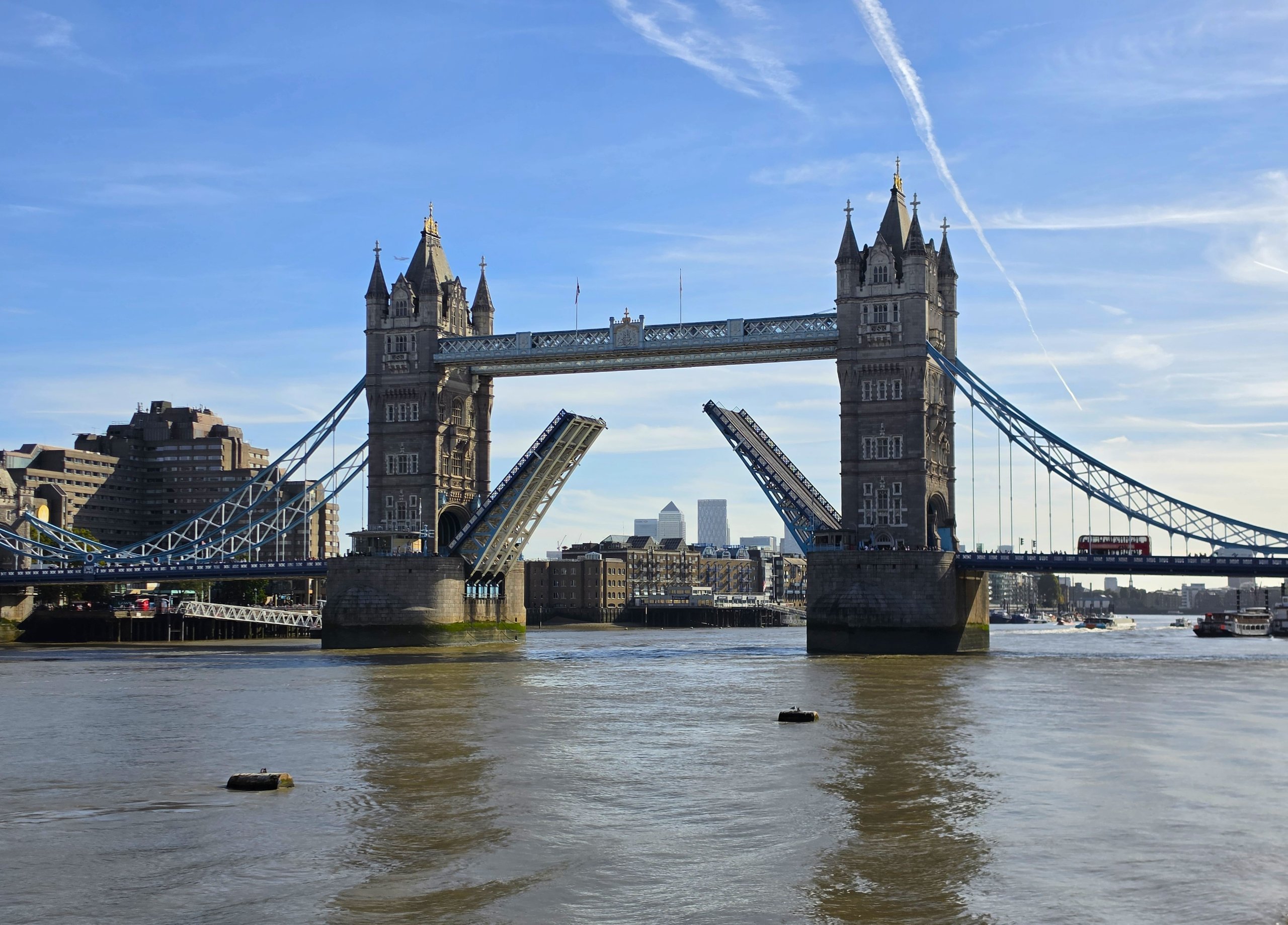
The bridge does not lift at regular intervals. It opens to allow larger ships to pass through, as notified in advance, on average around 500 times a year.
You can find the exact date, time, direction of travel and name of the vessel in the official Tower Bridge opening calendar. Times are subject to change, so please check them again on the day of your visit.
Watching the bridge being raised is free. Please arrive at least 10–15 minutes in advance.
You’ll have a good view from Potters Fields Park, from the quay at Butler’s Wharf or directly from the footpath on the bridge. When the bridge is raised, both road traffic and pedestrians on the lower level come to a halt.
We were actually lucky enough to arrive at the bridge just as it was opening.
Tower Bridge can be seen in the film *Harry Potter and the Order of the Phoenix*. It appears during the flight over the Thames, when members of the Order of the Phoenix accompany Harry to the house on Grimmauld Place.
It is not a main filming location, but the shot is easily recognisable by its two towers and the upper walkways.
Tower Bridge was built in response to the rapid development of East London. Construction, based on a design by architect Horace Jones and engineer John Wolfe Barry, took place between 1886 and 1894.
The bridge combines a suspension structure with two bascule sections. The neo-Gothic appearance of the towers was intended to complement the neighbouring Tower of London, though a steel structure lies hidden within.
The original mechanism used steam engines and hydraulics. Today, the bridge is raised using an electro-hydraulic system, but you can view the original machinery in the Engine Rooms as part of a paid tour.
The upper walkways were originally part of a public thoroughfare. However, as they involved climbing stairs, people hardly ever used them, and they were closed in 1910. Today, together with the glass floor, they are among the main highlights of the tour.
The Tower Hotel by Thistle offers the best balance of location, views and price. It stands right at the northern end of the bridge. When booking, however, be sure to choose a room specifically labelled ‘Tower Bridge View’, as cheaper rooms may face in a different direction.
Motel One London–Tower Hill tends to be more affordable. It is about a 10-minute walk from the bridge, but a direct view from the room is not guaranteed.
We cover other neighbourhoods and practical tips in our guide to where to stay in London.
Compare hotels near Tower Bridge
Buses are often more practical than the Underground in central London, and you get to see the city as you travel. Routes 42, 78 and 343 cross Tower Bridge directly. Other services stop at Tower Hill and Tooley Street.
Use our guide to London transport to plan your journey and pay by card.
Tower Pier is on the north bank, whilst London Bridge City Pier is on the south bank. Boats are more expensive than buses or the Underground, but the journey itself offers views of the bridge and the London waterfront.
A pleasant route leads from the Millennium Bridge via Borough Market and past HMS Belfast. The route is approximately 2.5 km long and takes 30–35 minutes without stopping.
Discover all the places to see in London.
If you have any questions or comments about the article...