Direct flights to Corsica from Prague on a single date in December
200 €



Hiroshima’s public transport system includes buses, trams, a single metro line and trains.
The city centre is easy to explore on foot, and if you prefer the most flexible form of transport, taxis are available on virtually every corner.
Book your hotel in Hiroshima in advance
There are several ticket options for travelling around Hiroshima.
The most convenient option is to buy a tourist pass valid for 1, 2 or 3 days. To make it good value for money, you’ll need to travel at least four times a day or use the tram and ferry to Miyajima Island.
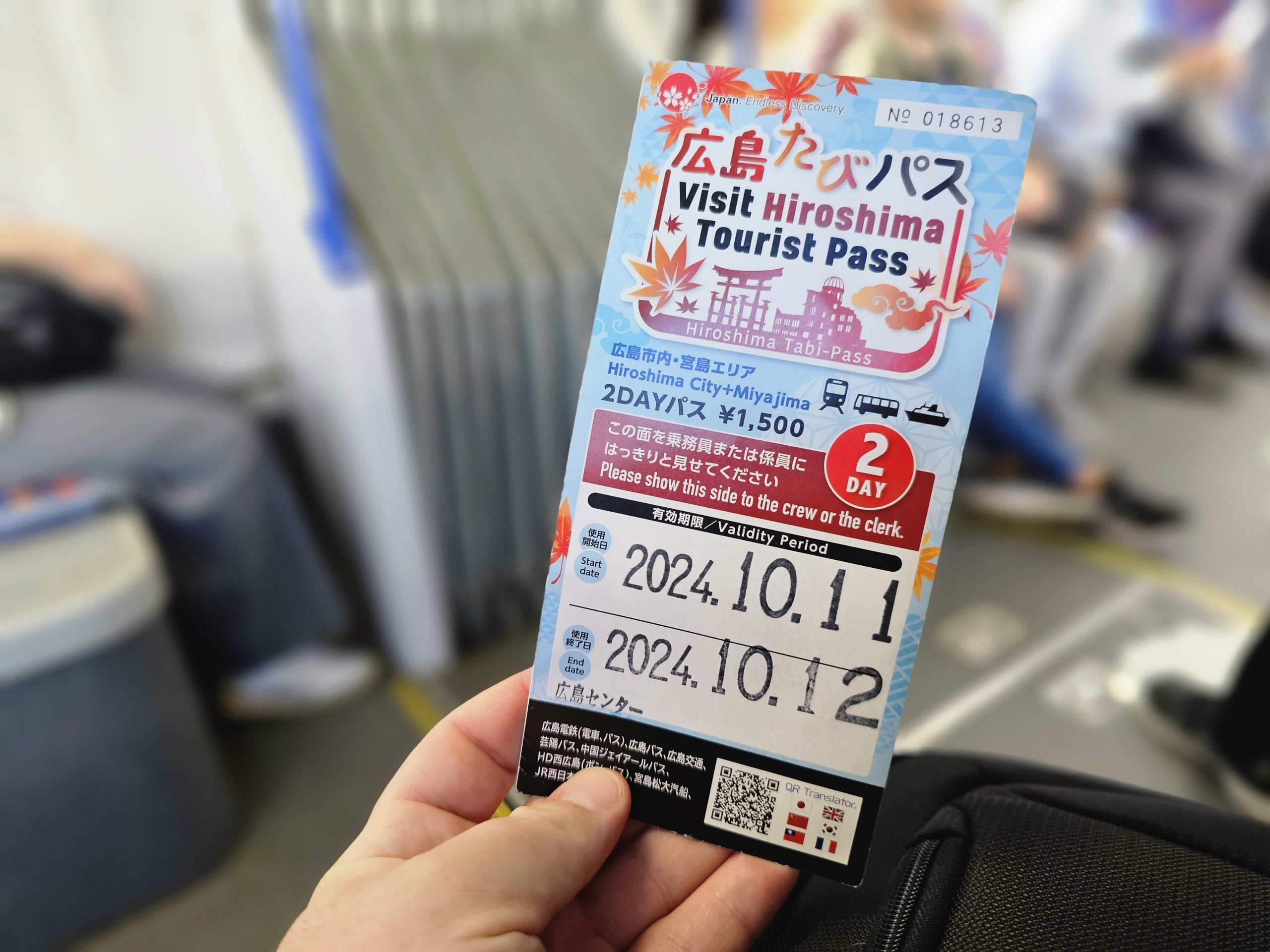
The pass is called Visit Hiroshima Tourist Pass:
Although the official websitemobiry.jp/en/ticketstates that the ticket is valid for 24, 48 or 72 hours, in reality only the dates are marked on the ticket, and it is therefore only valid until midnight on the specified calendar days.
Furthermore, upon presentation of the pass, you are entitled to small discounts at most attractions (the discount is usually between 60 jpy and 150 jpy).
You can use the pass on the following transport services:
You cannot use one-day or multi-day tickets with the following transport operators:
You can buy a paper ticket at the tourist information office, where you can pay by cash or card:
You can also buy a digital version of the ticket via the websitemaas.mobiry.jp.
You must always show your paper ticket or a screenshot on your mobile phone to the tram or bus driver when alighting, or to the ferry staff before boarding.
If you won’t be travelling very often, it isn’t worth buying the Hiroshima Tourist Pass.
Single fares are valid for one journey only, and if you change services, you will need to buy another ticket.
We provide detailed information on transport to Miyajima Island in a separate article.
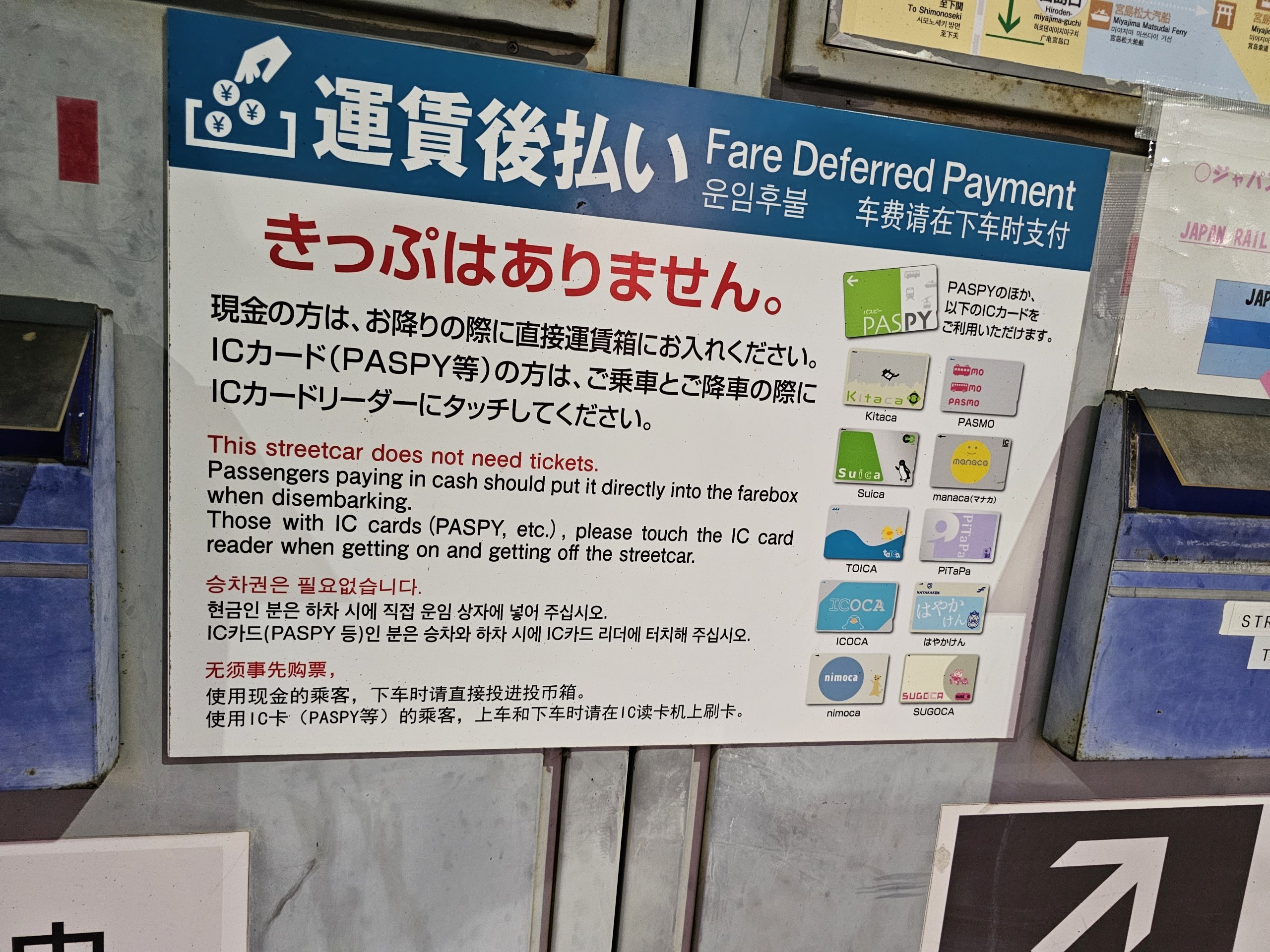
On trams and buses, you can pay for your ticket in cash into the fare box with the driver as you alight.
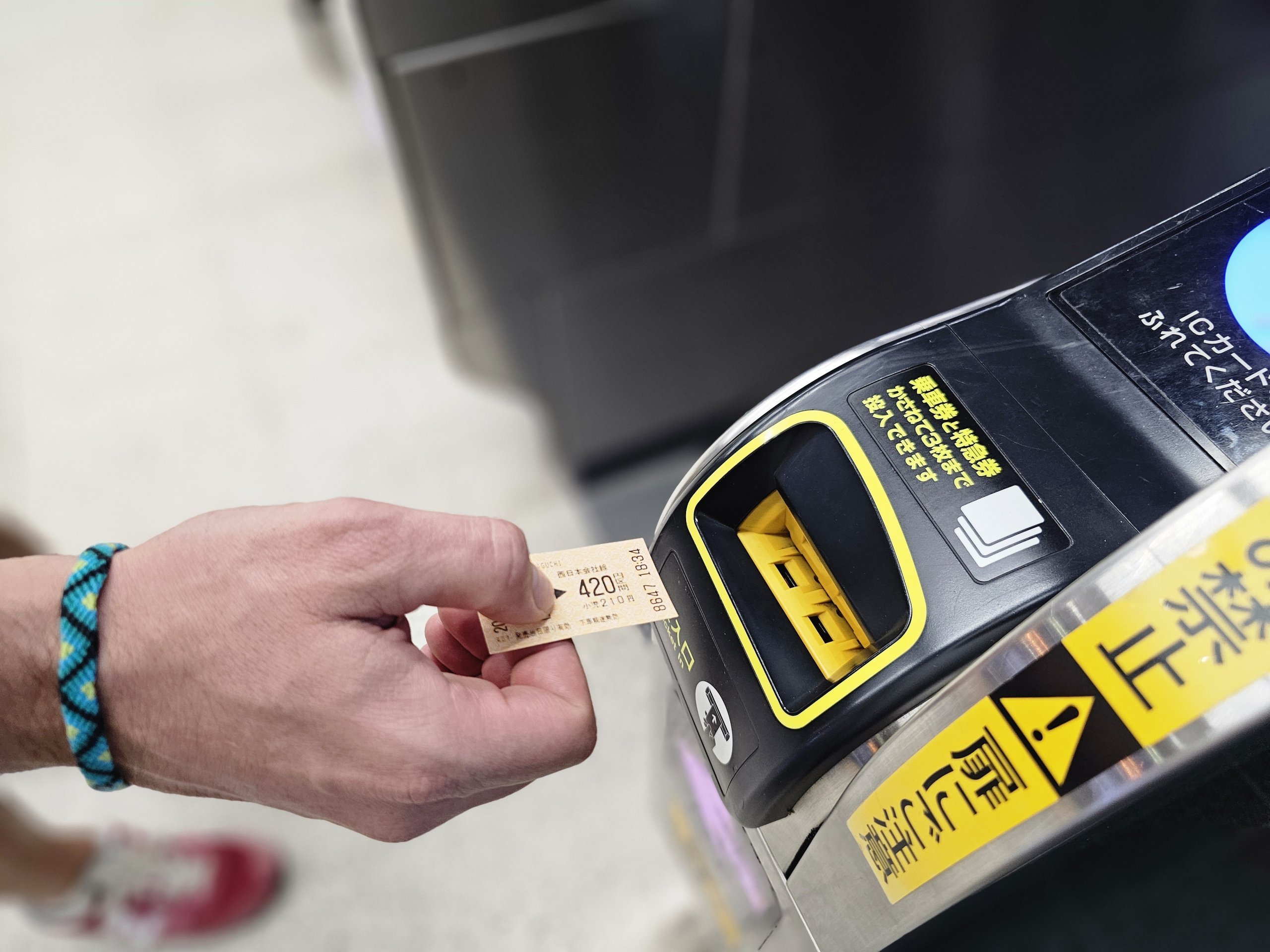
For ferries and trains, fares must be paid in cash at the ticket office or a ticket machine before boarding.
You cannot use your own contactless card to pay fares, but you can use one of the 10 Japanese transport cards:
When paying with these cards in Hiroshima, there is no discount compared to paying in cash.
In the Hiroshima area, you can buy Icoca or Pitapa transport cards.
You can buy them from vending machines at train and Astram metro stations, as well as at tourist information offices at the railway station and the Bus Centre.
These cards cost 500 jpy and can then be topped up with any amount of money, which is deducted as you travel.
Cards purchased in Hiroshima can be topped up and used throughout Japan.
The JR Pass, a very popular network ticket for JR trains in Japan, is also valid on some city lines in Hiroshima.
You can use either the JR Pass or the cheaper JR West Pass here.
The JR Pass is valid in Hiroshima for the following types of transport:
To get around Hiroshima city centre and to the ferry terminals on Miyajima, you will mainly use trams and city buses.
You can use an all-day or 2-day tourist pass on all trams and city buses; see the details above.
The tram network is much easier to navigate, as it is operated by a single company, Hiroden Streetcar, and comprises a total of seven routes. Unlike bus routes, tram routes are also shown on most tourist maps.
Bus routes are operated by several different operators, and it is very difficult to find route maps for the city. However, bus stops, including route numbers and the next departures, are shown on Google.com/maps.
Find the cheapest hotels in Hiroshima
A mix of modern trams and older trams from the 1970s run through the streets of Hiroshima.
The following tram routes are most useful for tourists:
For detailed information, visit the official website:hiroden.co.jp.
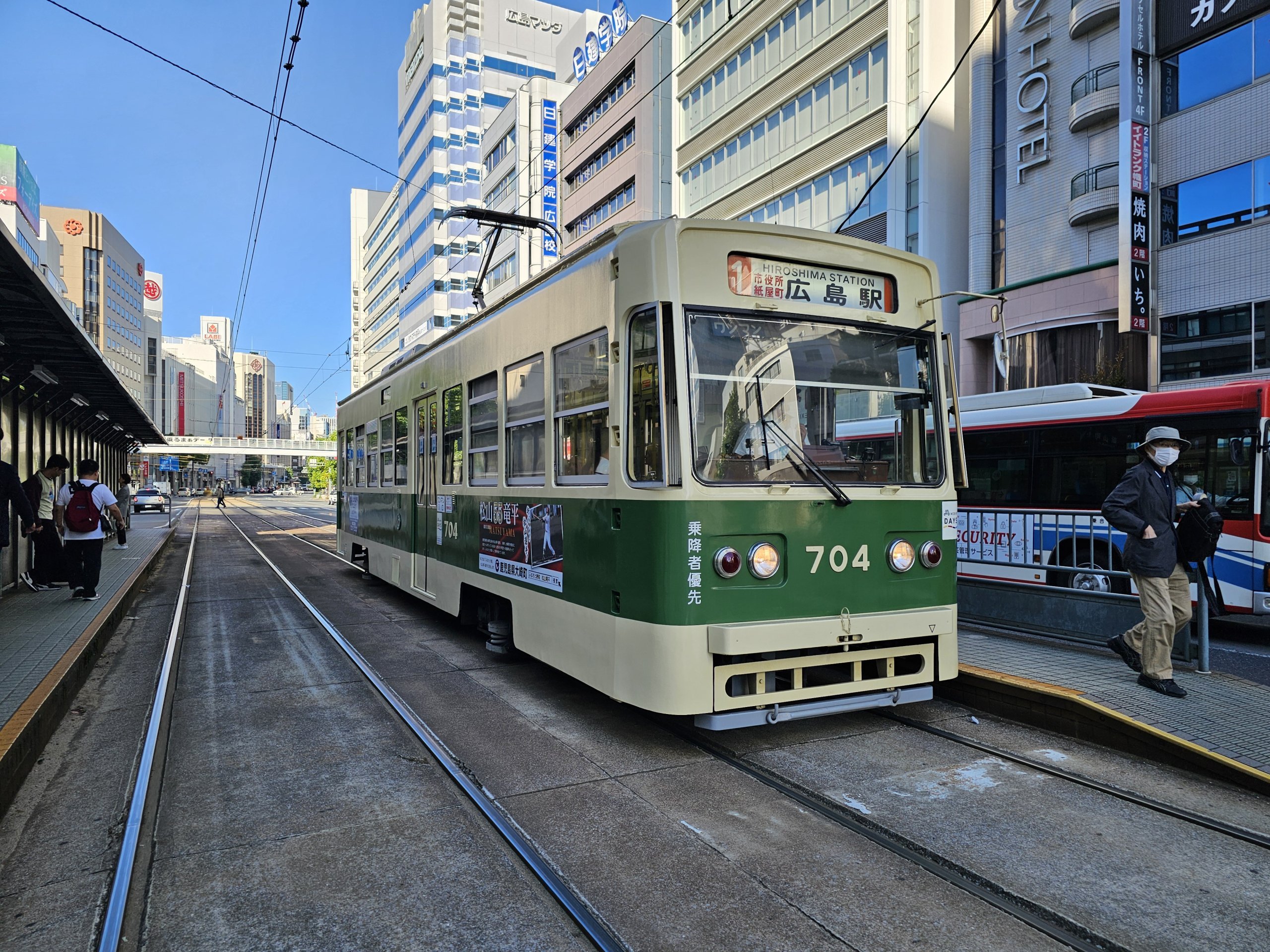
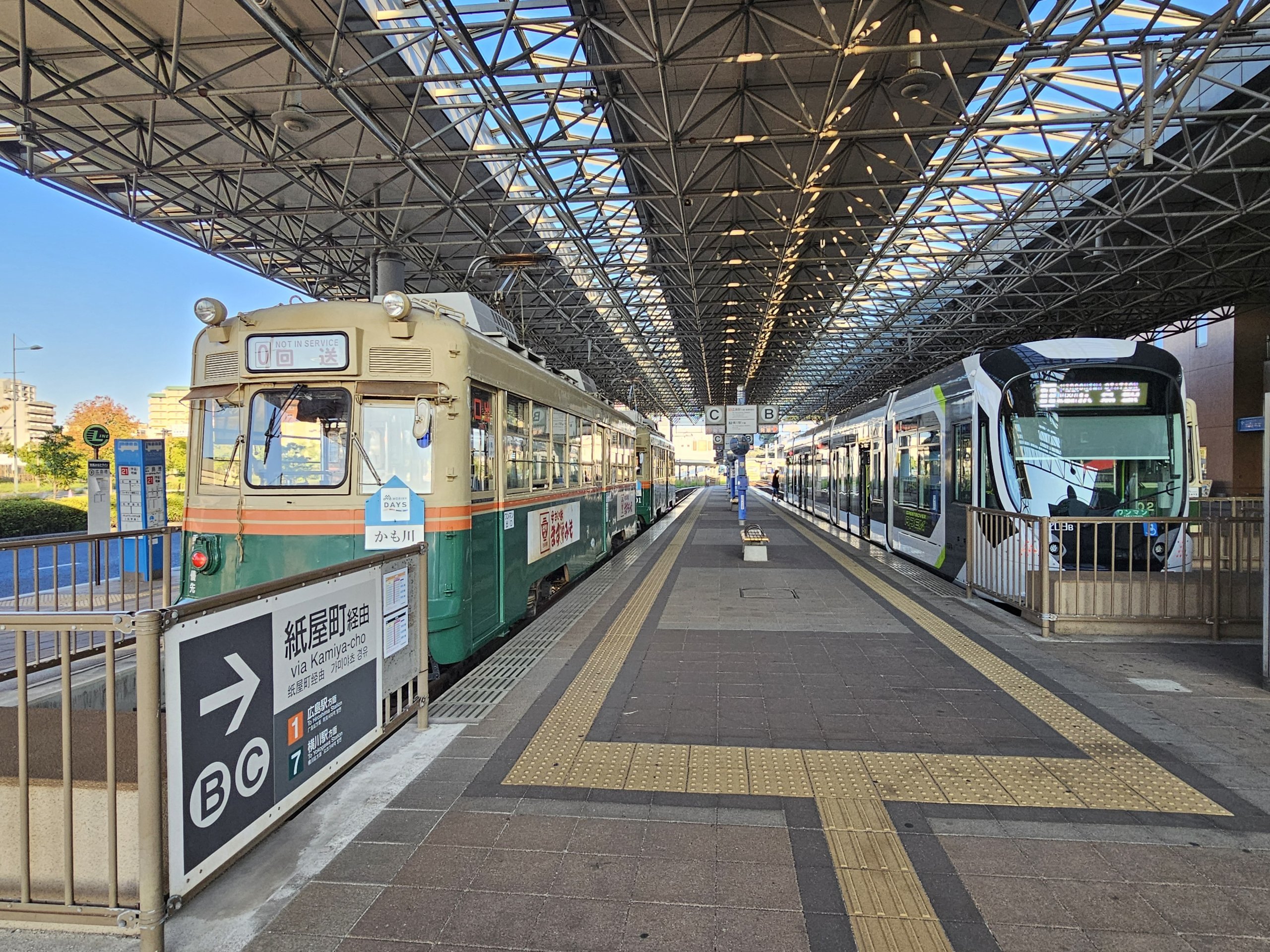
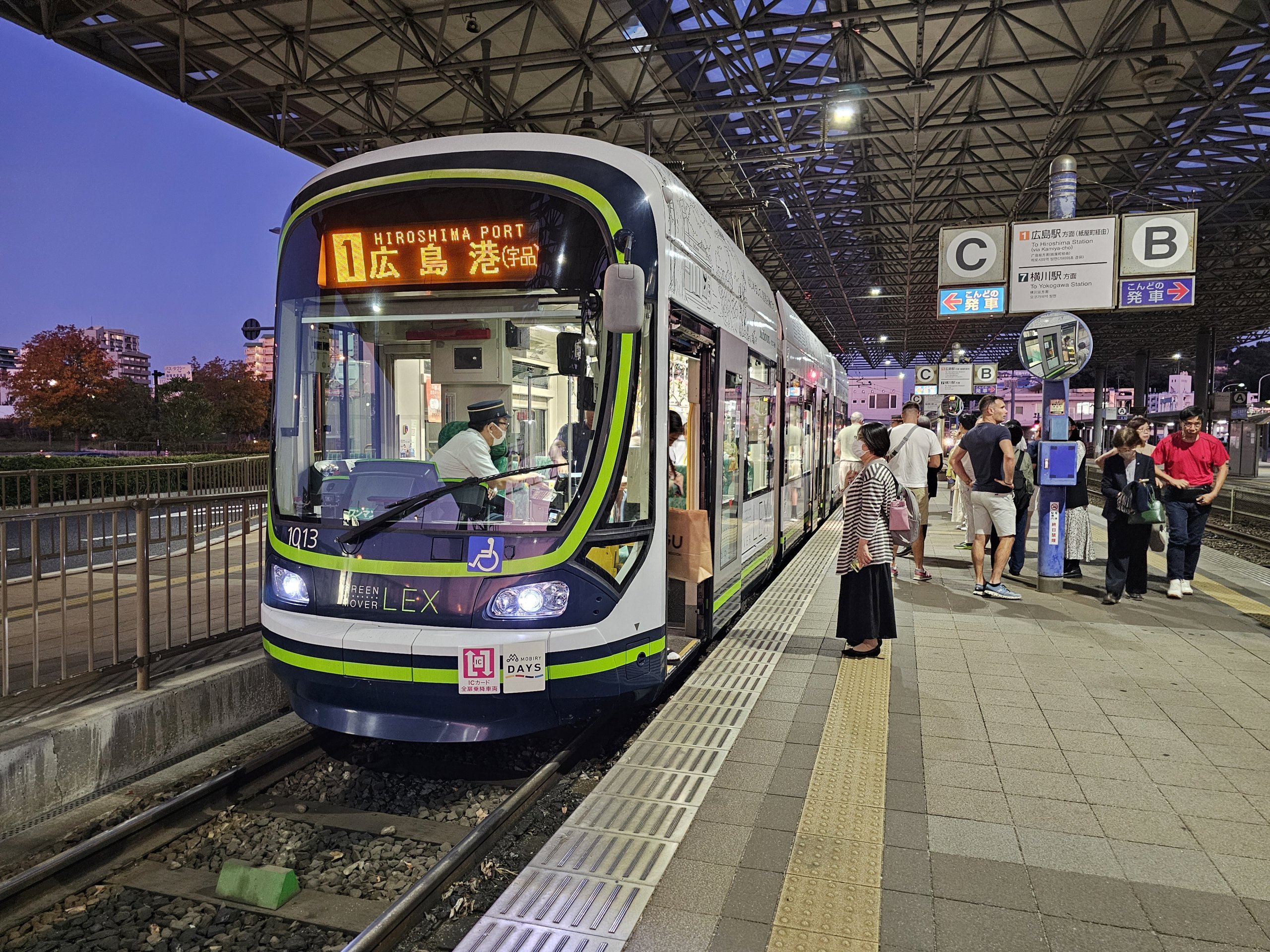
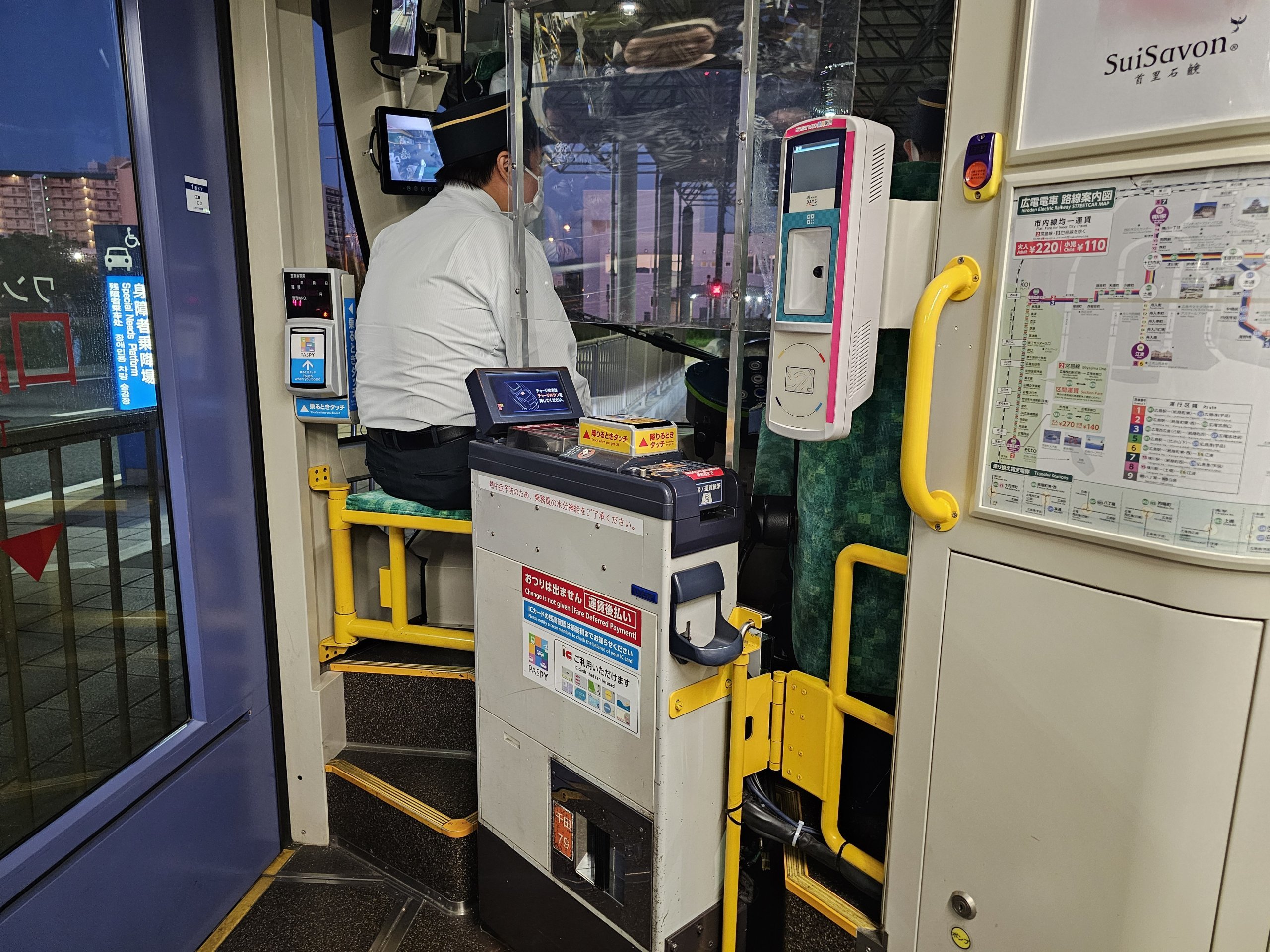
You can board the tram through any of the doors. If you are using one of the 10 Japanese transport cards, you can alight through any of the doors; simply tap your card on the reader when you alight.
If you wish to pay in cash or are using a day pass, you must alight at a door where a conductor is present.
The complex network of bus routes is operated by numerous transport companies, and their websites are usually available only in Japanese.
The main interchange points for many bus routes are at the railway station and also at the Bus Centre right in the centre of Hiroshima.
You must always board buses via the rear door. Before alighting, you must press the red button.
You alight only via the front door next to the driver, where you also pay (upon alighting).
You can pay the single fare for the ‘ 220 jpy ’ in exact cash (you can get change for a 1,000-yen note from the ticket machine) or using transport cards (see details above).
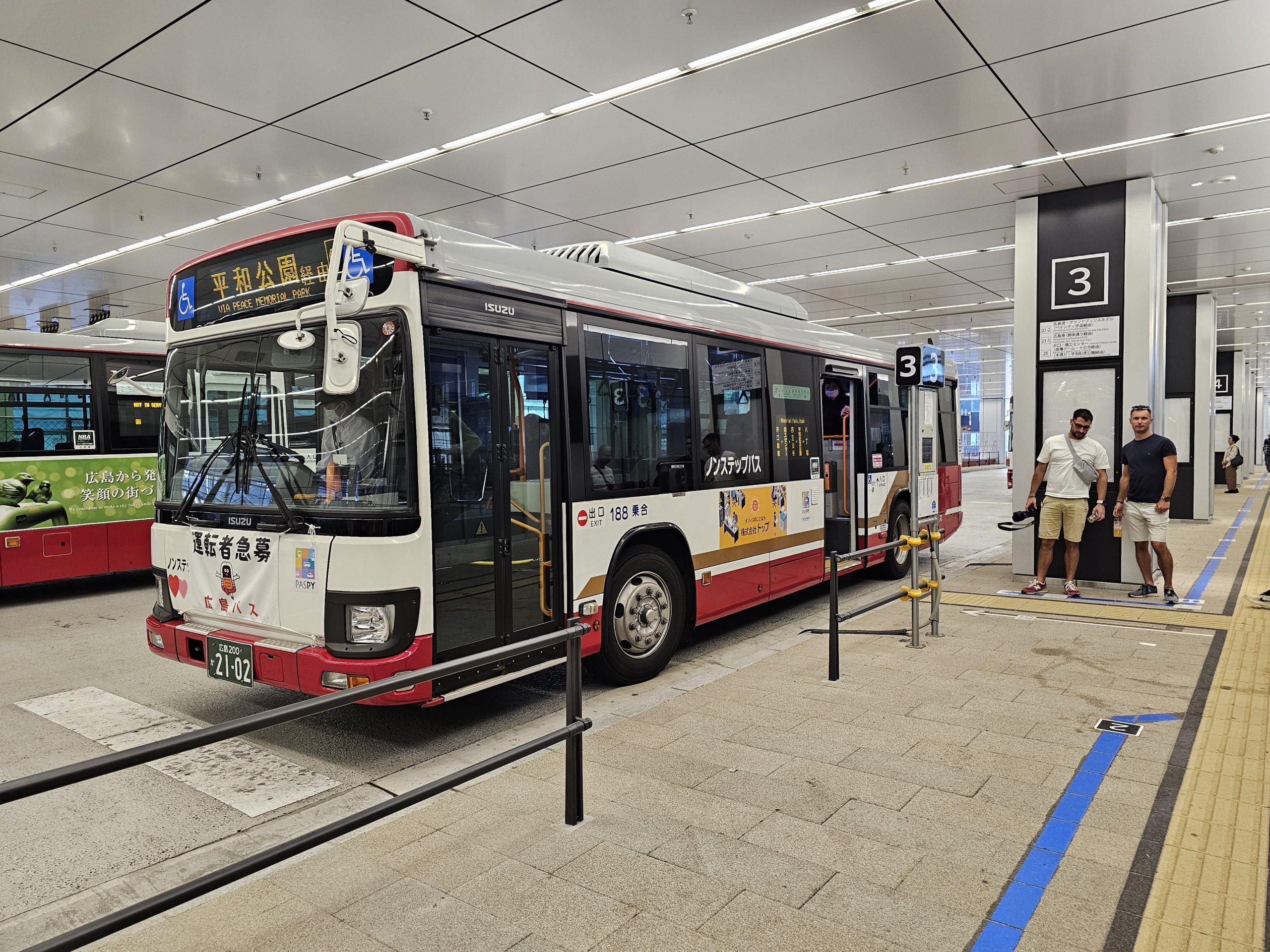
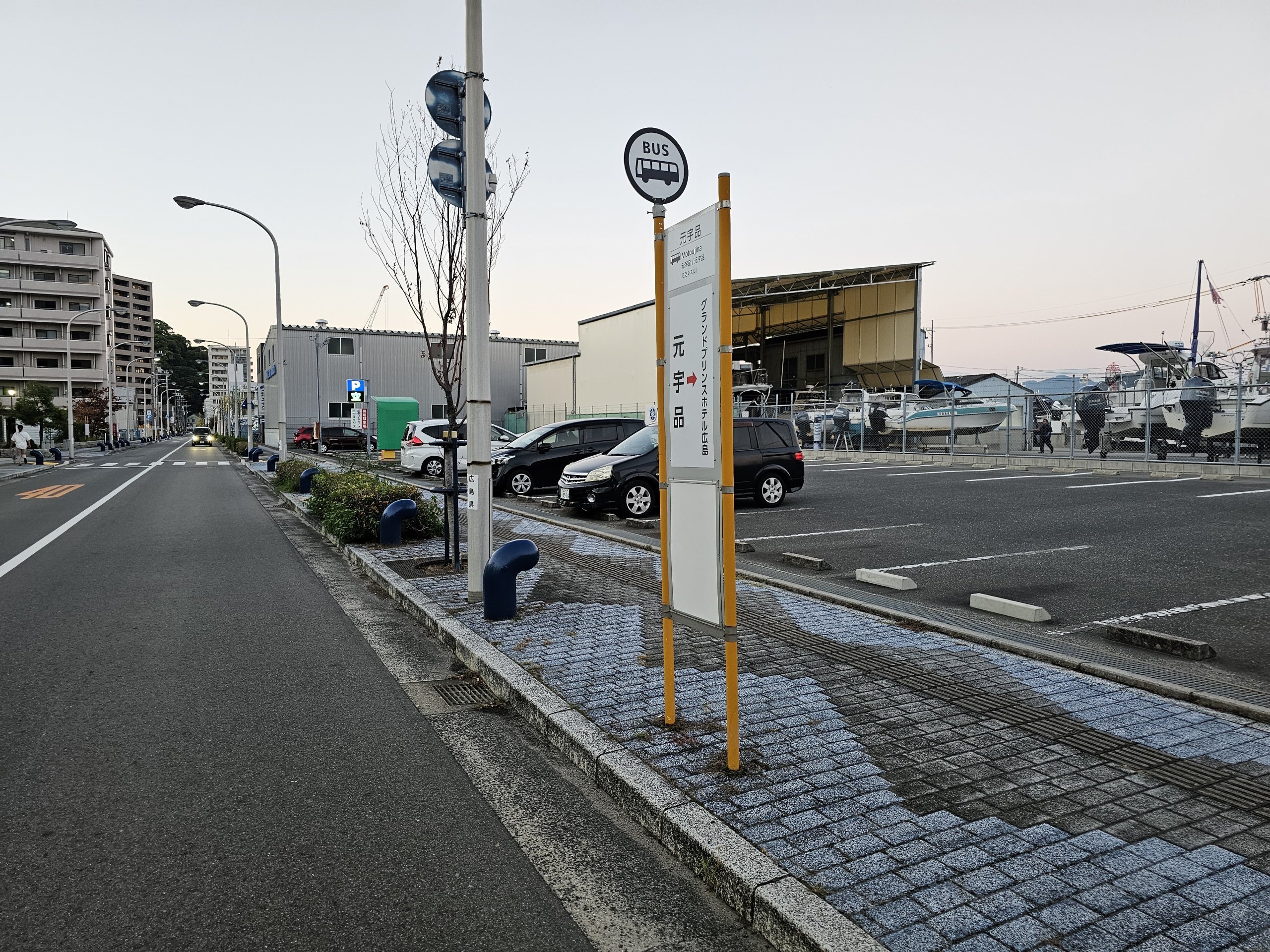
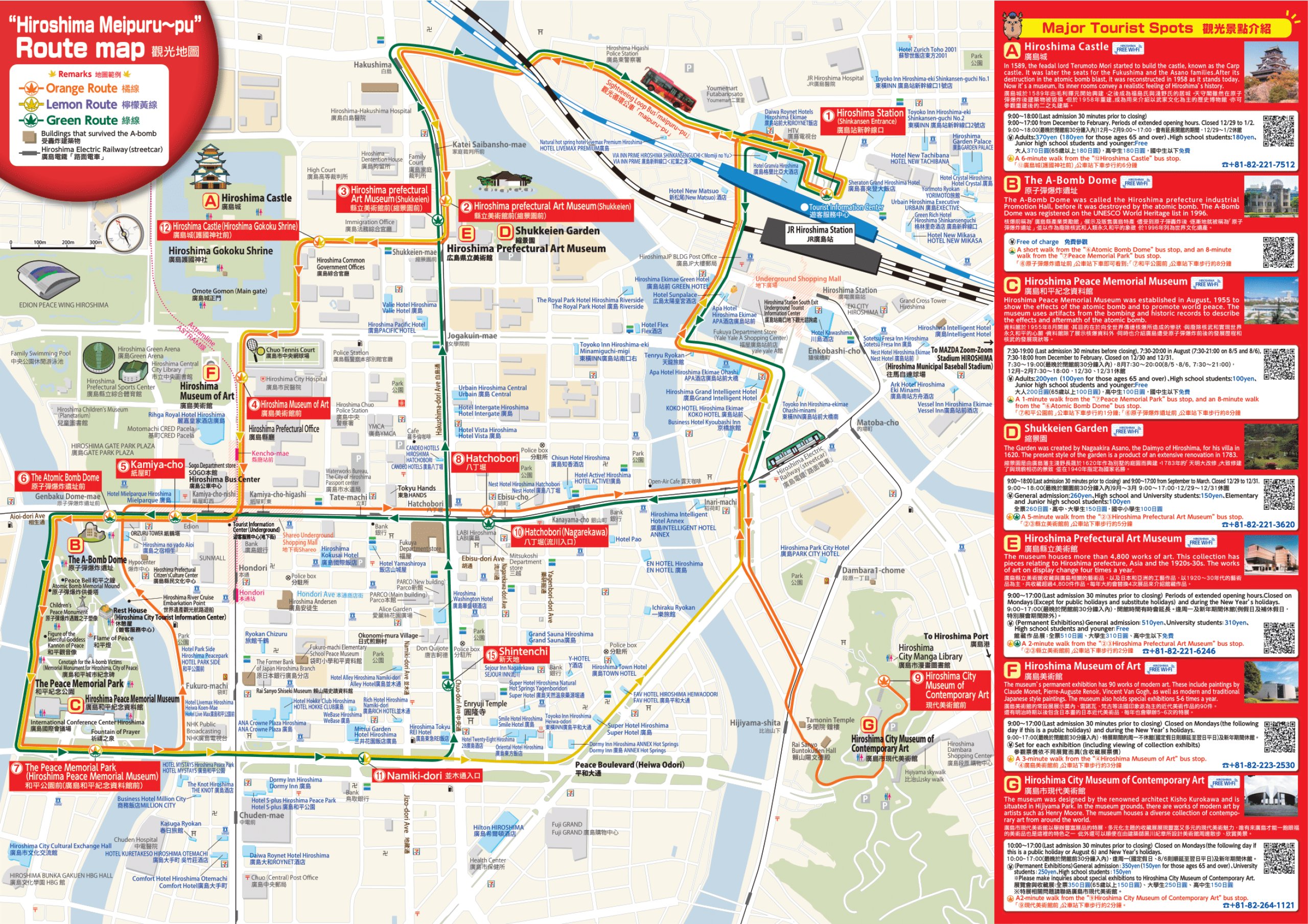
The most practical option for tourists is the special sightseeing buses operated by JR Chugoku.
The fare is the same as for regular city buses and costs 220 jpy. You can pay in cash or with transport cards (but not with your own credit card).
You can find a clear overview on the official website:chugoku-jrbus.co.jp.
The sightseeing buses operate on three routes. All routes are circular and therefore always run in the direction indicated:
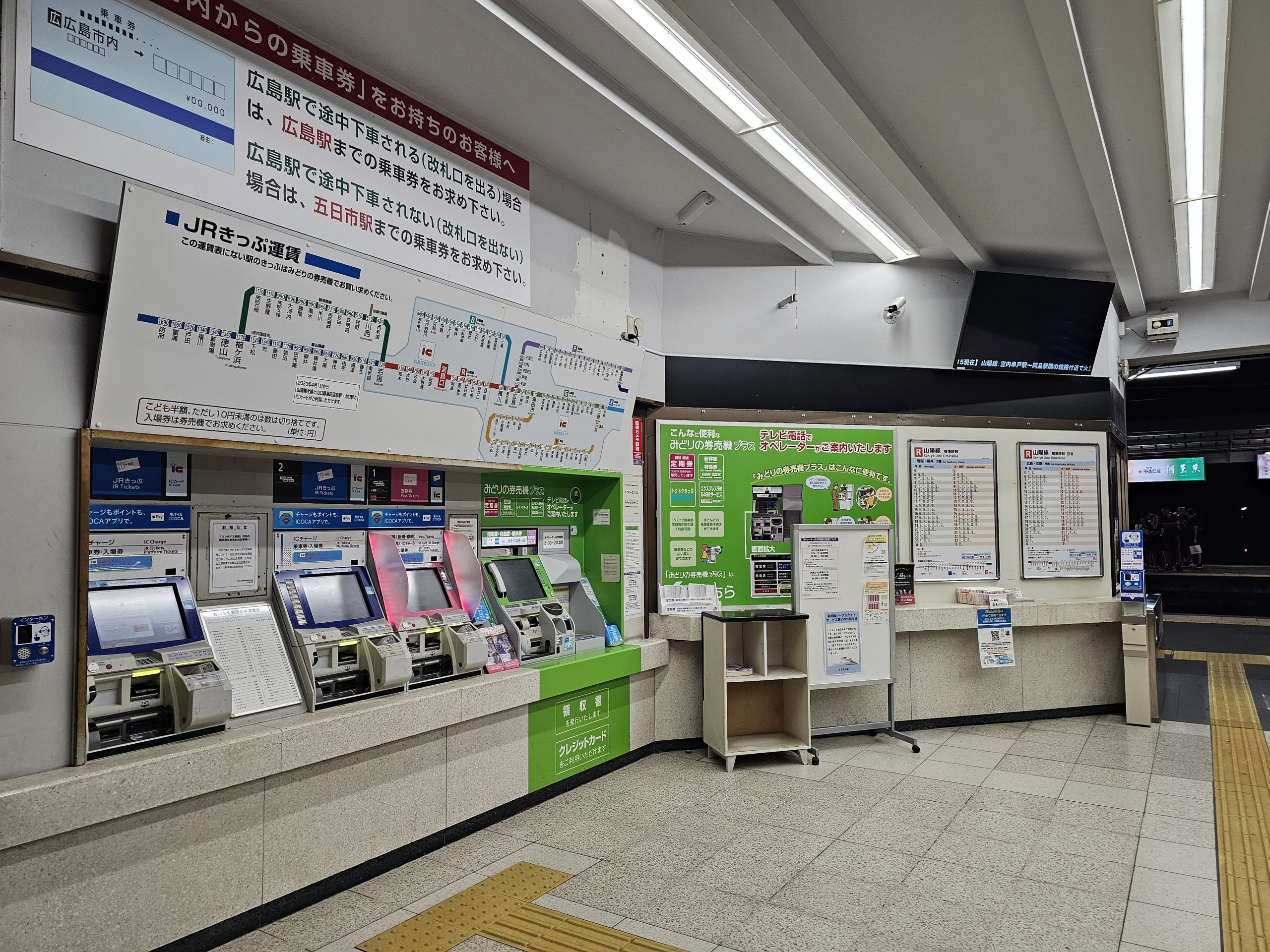
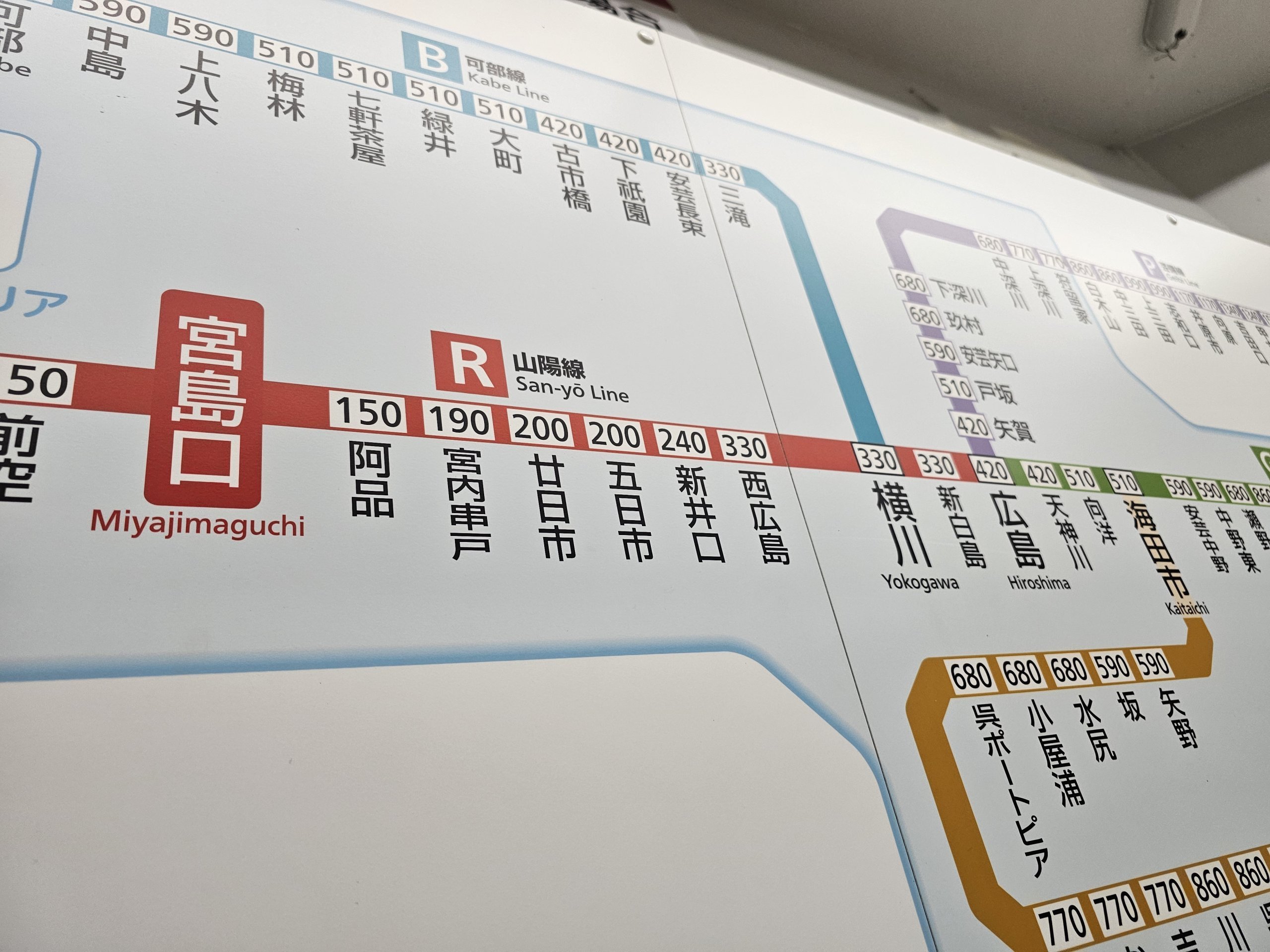
You can use JR local and suburban trains, for example, to travel to Miyajima-guchi Pier. The train is faster than Tram Line 2 from the city centre, but the all-day public transport pass is not valid on it.
However, the JR Pass or JR West Pass is valid on all trains within Hiroshima and the surrounding area.
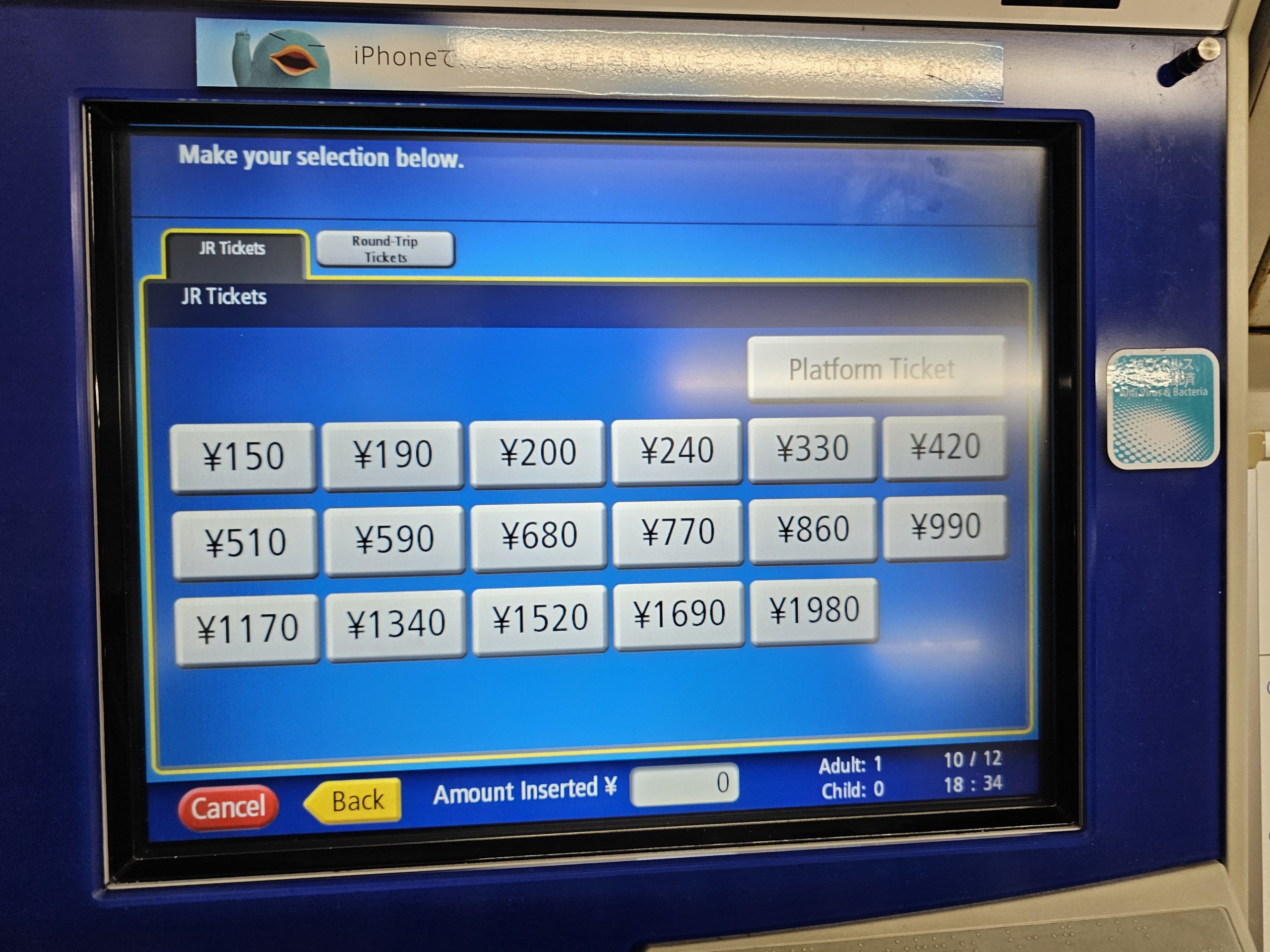
If you’re buying a single ticket, first find your destination station on the map above each ticket machine, check the fare, and then select it on the machine’s screen.
Payment is by cash only.
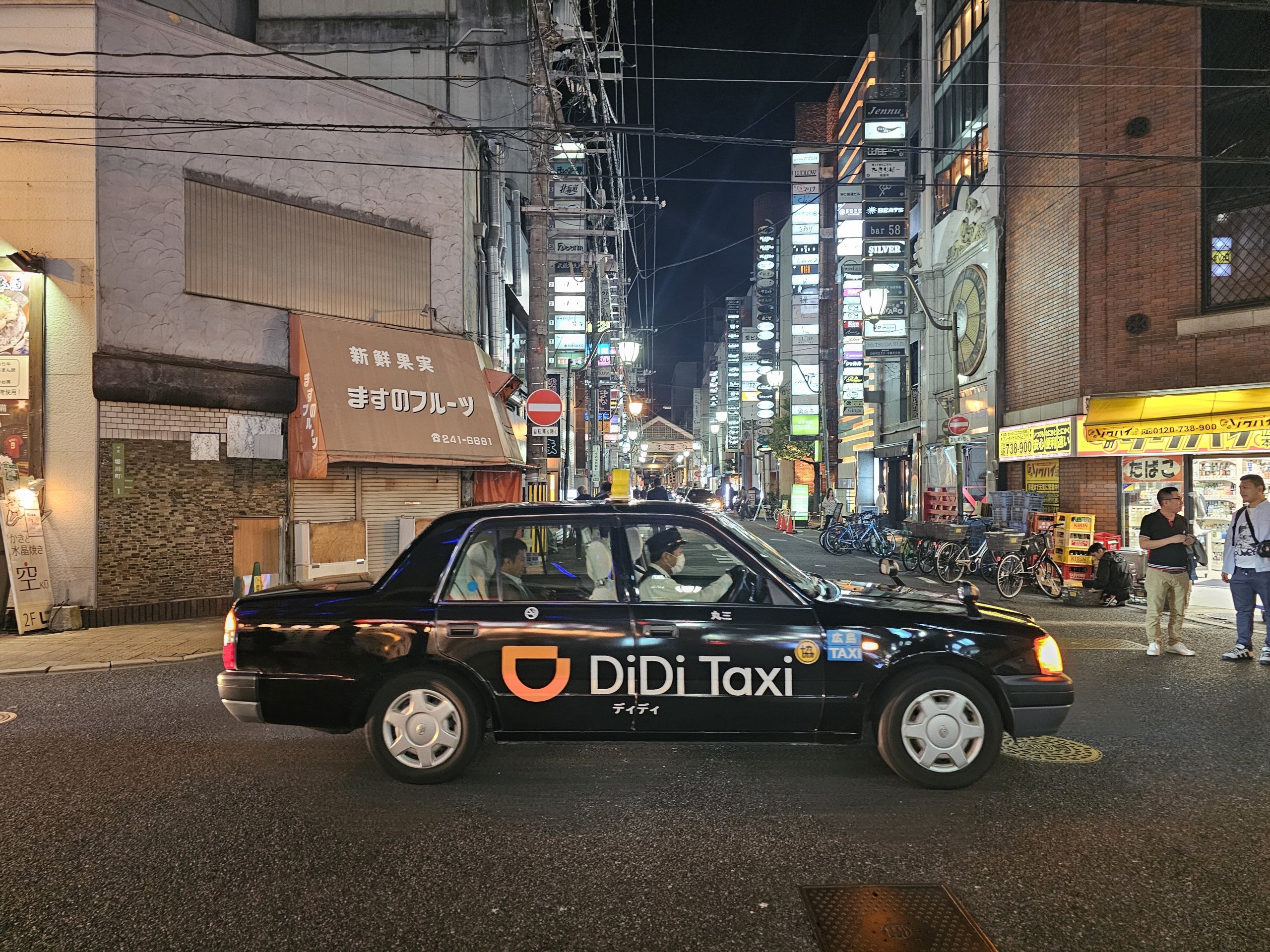
There are plenty of taxis on the streets of Hiroshima; you can hail one anywhere near the tourist attractions.
The Uber and DiDi apps also work in Hiroshima, but they can only be used to book a standard taxi.
The fare for taxis and via the Uber or DiDi apps is always the same and is calculated by the meter.
You can pay by card via the Uber and DiDi apps; this is usually possible with regular taxis as well, though some taxi drivers only accept cash.
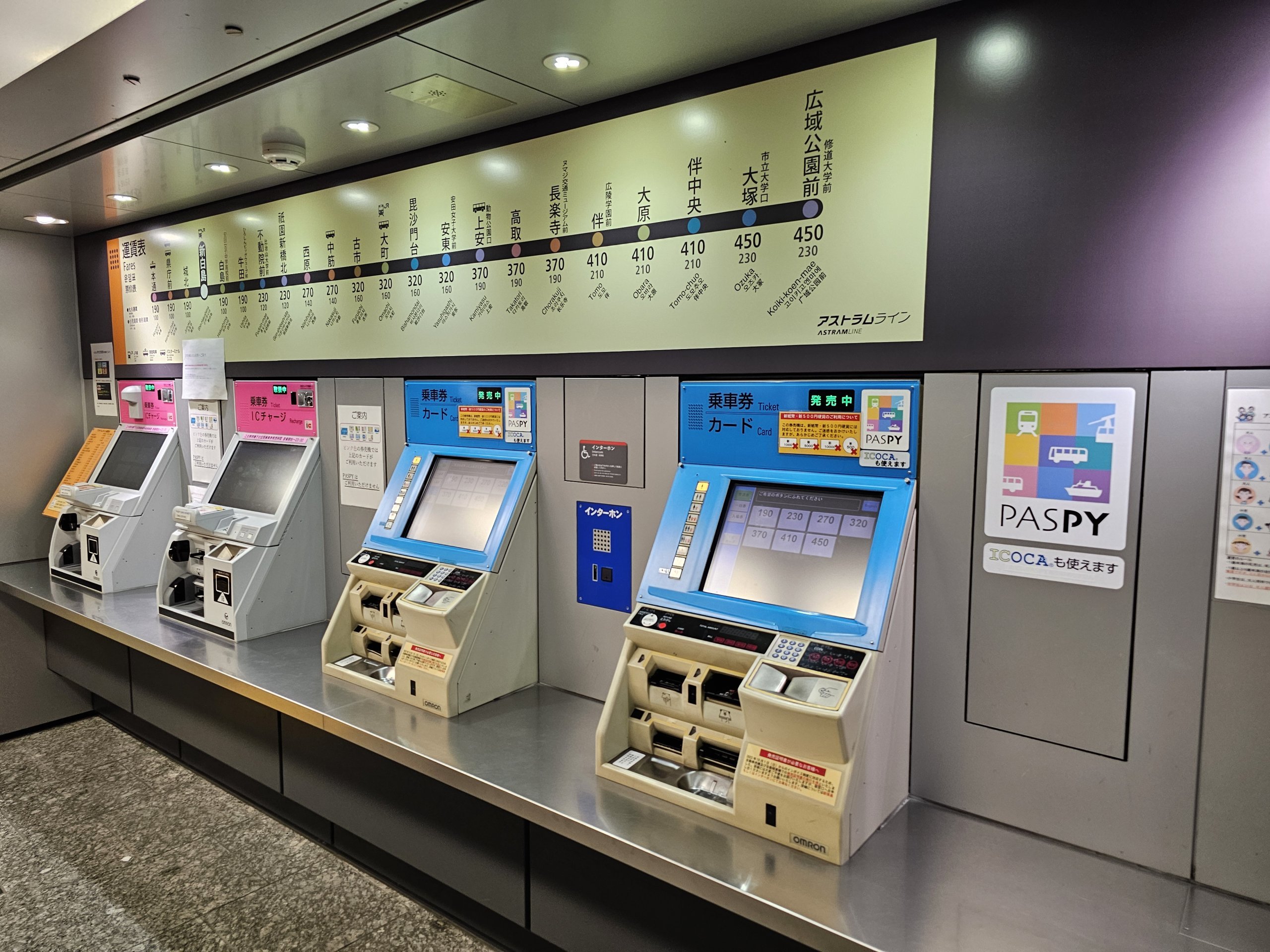
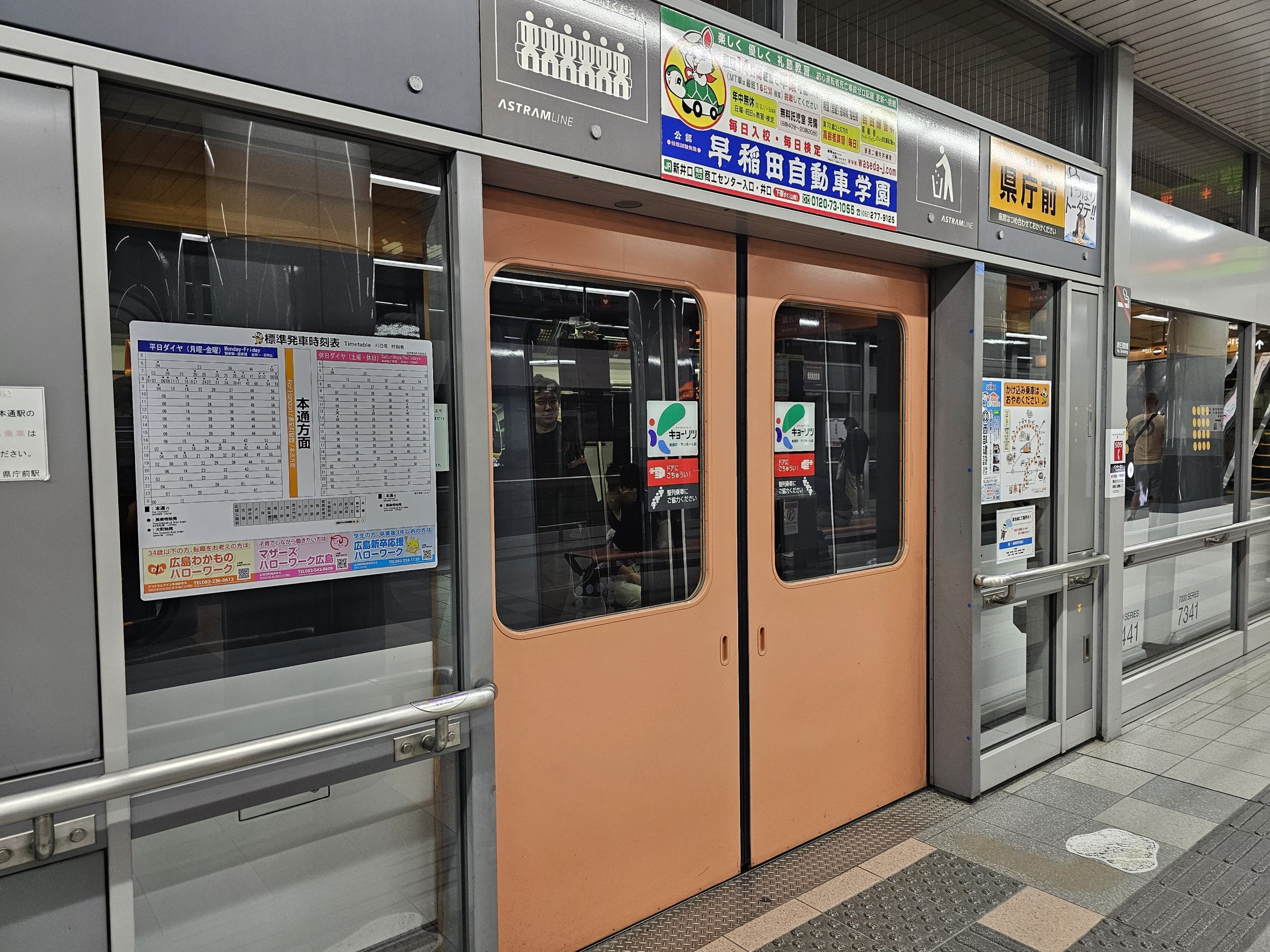
Hiroshima operates a single line of conventional underground metro known as the Astram.
From a tourist’s point of view, the metro in Hiroshima isn’t particularly useful, as it doesn’t go to any major attractions or even the main railway station.
The metro line starts in the centre of Hiroshima in the Hondori district and continues to the northern suburbs. You’ll only need to use the metro if you find cheap accommodation outside the city centre.
You can buy metro tickets from a ticket machine at every station; payment is by cash only.
The system is similar to that of local trains. Use the fare map above the machine to find your station, check the fare, then select the amount on the machine’s screen and pay.
Insert the paper ticket into the turnstile when entering the platform. The turnstile will return the ticket to you. Keep it with you for the entire journey, as you will need to insert it into the turnstile again when leaving the platform.
On the metro, you can also pay your fare using one of the 10 Japanese transport cards by tapping it against the turnstile.
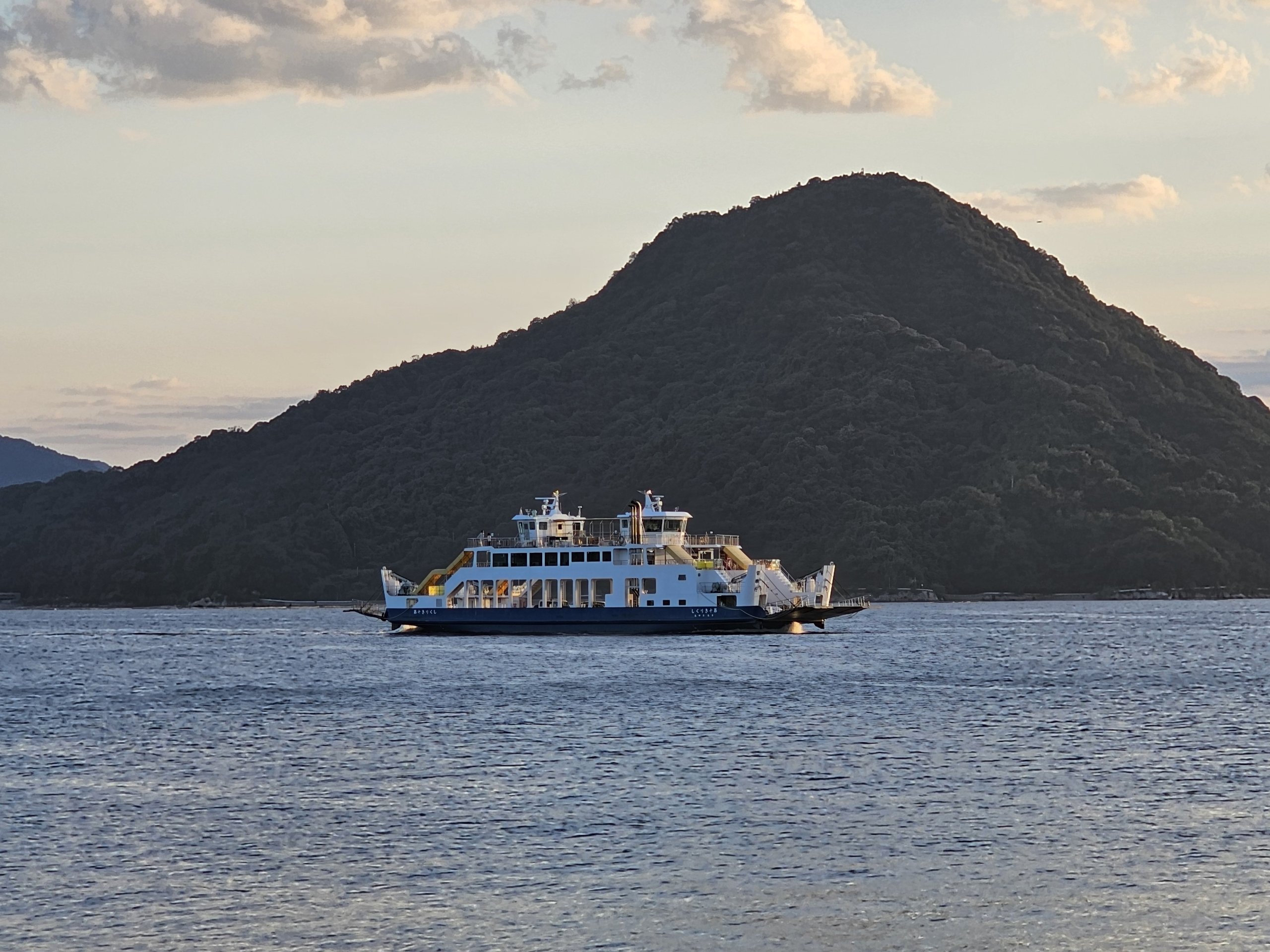
As well as Miyajima Island, which we cover in a separate article, ‘Ferries to Miyajima’, there are several other small islands in Hiroshima Bay.
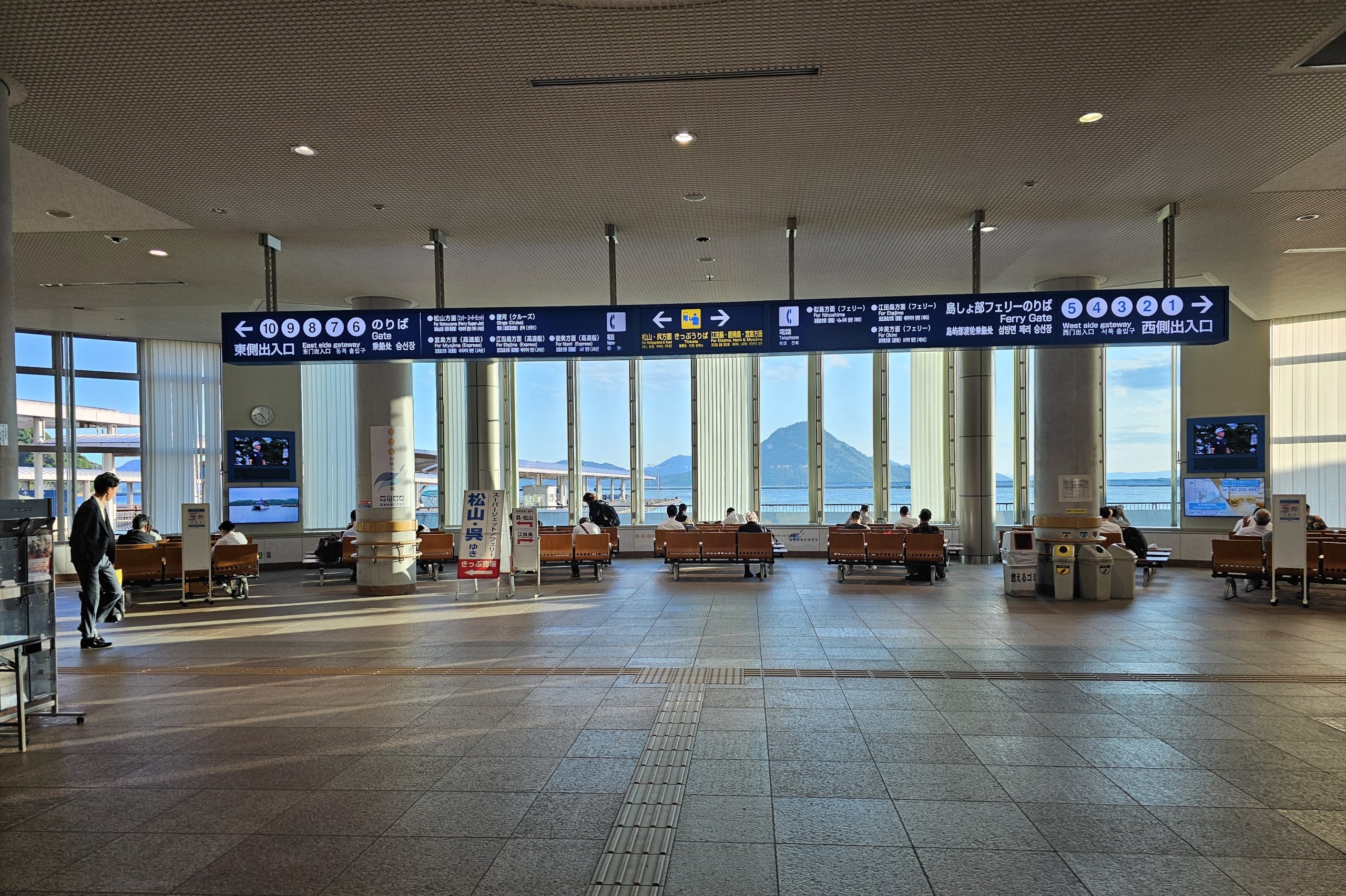
All ferries depart from the main harbour, which you can reach by tram lines 1, 5 or 7, or by bus 21.
Information on routes, with links to the websites of the specific ferry companies, can be found on the official city website:city.hiroshima.lg.jp.
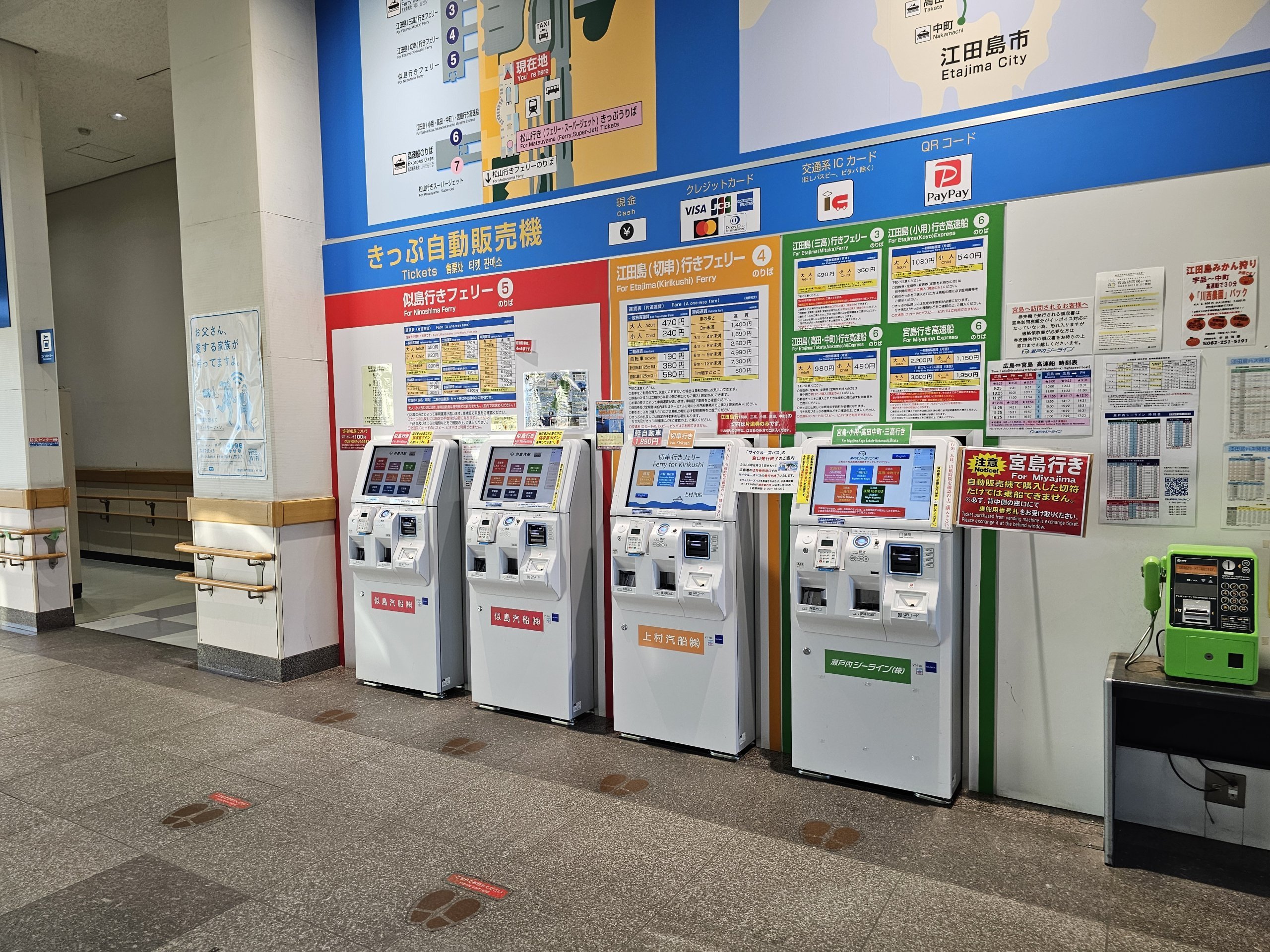
You can buy ferry tickets at the ticket office or from a ticket machine in the ferry terminal hall.
Book accommodation on Etajima Island
Example routes:
If you have any questions or comments about the article...