
Getting around Venice


In the historic centre of Venice, you’ll mainly get around on foot. Most places can’t be reached any other way. Vaporetto water buses run along the main canals and to the surrounding islands.
At first glance, the local system seems complicated, but the average visitor only needs to follow two rules.
- If you’re staying in the centre only, walk and buy no more than one single-journey ticket for the Grand Canal.
- If you’re planning at least three trips or an excursion to Murano and Burano, buy a multi-trip ticket.
You can get to Venice from Mestre on the mainland by train, bus or tram. All services terminate on the western edge of the historic centre. From there, you’ll have to continue on foot or by boat.
Compare hotel prices in Venice itself
Transport in Venice at a glance
| Where or why are you travelling? | Best choice | Price |
|---|---|---|
| Around the historic centre | On foot | Free |
| From the railway station via Rialto to St Mark’s Square | Vaporetto lines 1 or 2 | 9,50 eur |
| At least 3 journeys within 24 hours | Venice Daily Pass | 25 eur |
| Murano, Burano or Torcello | Vaporetto + time-based ticket | from 25 eur |
| From Mestre, near the railway station | Regional train | 1,50 eur |
| From other parts of Mestre | ACTV bus or tram | 1,50 eur |
| From Marco Polo Airport | Bus to Piazzale Roma or Alilaguna | 10 eur / 18 eur |
| A short gondola ride across the Grand Canal | Traghetto | 2 eur |
Is a vaporetto ticket worth it?
A single 75-minute journey on the vaporetto costs 9,50 eur. A 24-hour ticket costs 25 eur, so it’s good value from the third trip onwards.
In my opinion, it’s not worth buying a day pass just because you’re worried you won’t be able to get around Venice without the boats.
The historic centre is compact, and getting around on foot is part of the experience. If you just want to take a single trip along the Grand Canal, buy a single ticket.
I’d opt for a multi-journey ticket in the following cases:
- you’re planning a trip to Murano, Burano or Torcello
- you’re staying on Lido or Giudecca and will be taking the boat every day
- you have limited mobility or don’t want to spend the whole day walking
- you want to take several trips along the Grand Canal, including an evening cruise
On the other hand, for a standard stay right in the historic centre with just two trips, the pass isn’t worth it. Two single journeys cost 19 eur.
ACTV ticket prices
All time-based tickets are valid for the specified number of hours from the first validation. These are not calendar days and are valid until midnight.
| Ticket | Price | Valid on |
|---|---|---|
| 75 minutes – buses, trams and the People Mover | 1,50 eur | ACTV ground network outside the airport |
| 75 minutes – Rete Unica | 9,50 eur | vaporetto + buses, trams and People Mover |
| 24 hours – Venezia Daily Pass | 25 eur | vaporetto + ACTV land network + selected regional trains |
| 48 hours | 35 eur | vaporetto + ACTV land transport network |
| 72 hours | 45 eur | vaporetto + ACTV land transport network |
| 7 days / 168 hours | 65 eur | vaporetto + ACTV land transport network |
| 24 hours – Mestre Daily Pass | 5 eur | buses and trams in Mestre + selected regional trains |
The land transport network includes city buses in Mestre, trams and, with standard Venetian season tickets, the People Mover.
The water transport network covers historic Venice, the Lido, Murano, Burano, Torcello and other islands served by ACTV.
Tickets are not valid on Alilaguna boats, ATVO airport buses or special boat routes 16 and 19. Standard travel passes also do not automatically include the ACTV bus to Marco Polo Airport.
Full terms and conditions and less commonly used fares can be found in the official ACTV price list.
Please note the train service between Mestre and Venice
The fare structure here is unnecessarily confusing.
A pre-purchased 24-hour Venezia Daily Pass, available at 25 eur, is also valid on Regionale and Regionale Veloce trains between Venezia Mestre and Venezia Santa Lucia stations. This includes Porto Marghera, Carpenedo and Mestre Ospedale stations.
48-hour, 72-hour and 7-day tickets are not valid on trains. Similarly, the train journey does not count towards the daily limit that is automatically applied when you make repeated contactless payments at ACTV ticket validators.
If you wish to use a 24-hour ticket on the train as well, you must specifically purchase the ‘Venezia Daily Pass – AVM/Actv Venezia–Trenitalia’ product via the AVM app, at Venezia Unica or from a ticket machine. Do not rely solely on the automatic payment cap applied when using a payment card.
The Mestre Daily Pass works in a similar way ( 5 eur ). It is suitable for passengers staying in Mestre who do not wish to use the vaporetto. Purchase the option including the regional train via the AVM app.
Children and Rolling Venice for under-29s
Children under 6 travel free of charge on the ACTV city network.
For passengers aged 6 to 29, the Rolling Venice card offers significantly better value.
The card itself costs 6 eur and entitles you to purchase a 72-hour ticket for 27 eur. In total, you will therefore pay 33 eur instead of the usual 45 eur.
Rolling Venice is still good value even if you don’t take advantage of any other card discounts. You can buy it at Venezia Unica or at their sales points.
Is the time-based ticket valid for travel to the airport?
Not without an additional charge. When purchasing a time-based ticket, you can add an ACTV bus service from Marco Polo Airport:
- one way for 7 eur
- a return journey for 13 eur
You must purchase the supplement at the same time as your season ticket. A single ACTV bus journey from the airport costs 10 eur, a return ticket 18 eur. A combined ticket for the airport bus and a single connecting vaporetto journey costs 18 eur.
In theVenice VCEAirport guide, you’ll find a useful tip on how to save money on your journey from the airport to the city centre and avoid paying for a more expensive ticket.
Where to buy a ticket and how to pay
There are actually lots of ways to buy a ticket in Venice.
Contactless payment
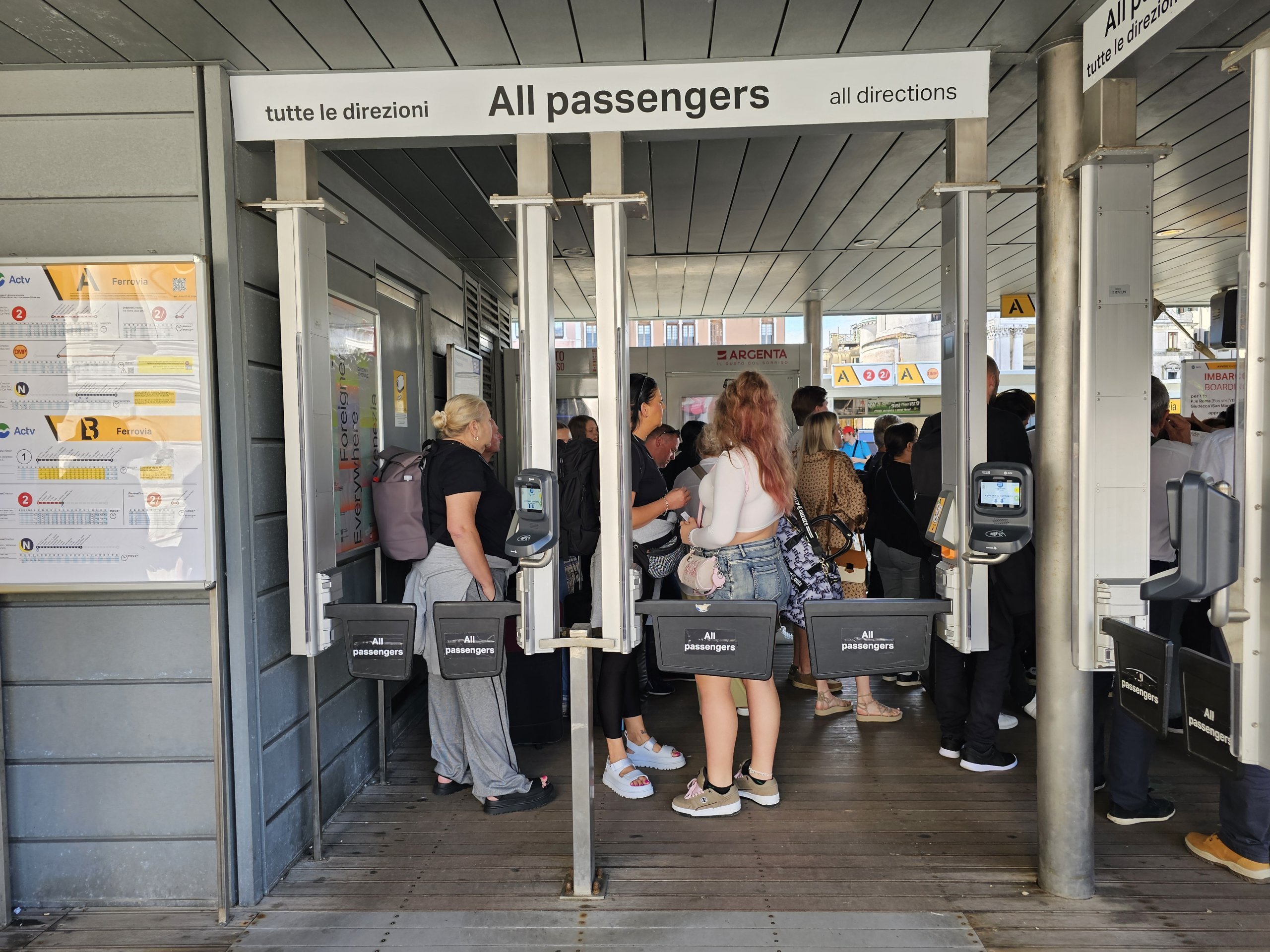
The easiest way these days is to tap your contactless payment card, mobile phone or smartwatch directly against the validator. This works on ACTV boats, buses, trams and the People Mover.
The system charges for individual journeys and automatically finds the most favourable fare. After your third vaporetto journey within 24 hours, you won’t pay more than 25 eur.
Always use the same card or device. A plastic card and its digital copy on your phone are counted as two different payment methods, and journeys are not combined across them.
When travelling by bus or tram, tap your card when boarding and alighting. On the vaporetto and the People Mover, you only need to tap your card when boarding.
One card can be used to pay for up to 5 people. All taps must be made at the same validator within 60 seconds, and the group must travel together.
Apps, ticket machines and ticket offices
You can also buy tickets in the following ways:
- via the official AVM Venezia app:AVM app for Android/AVM app for iPhone
- online at the same price via GetYourGuide
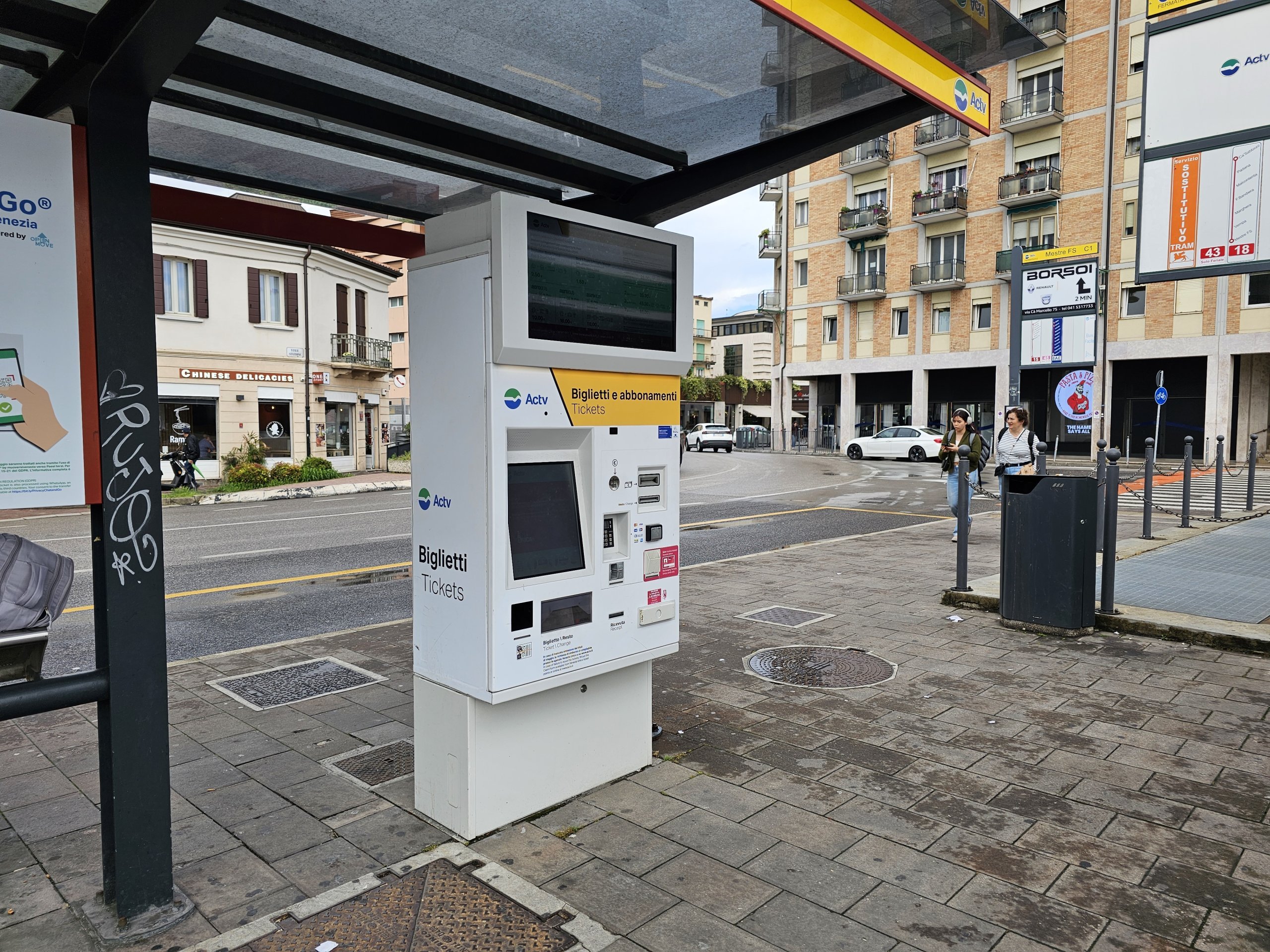
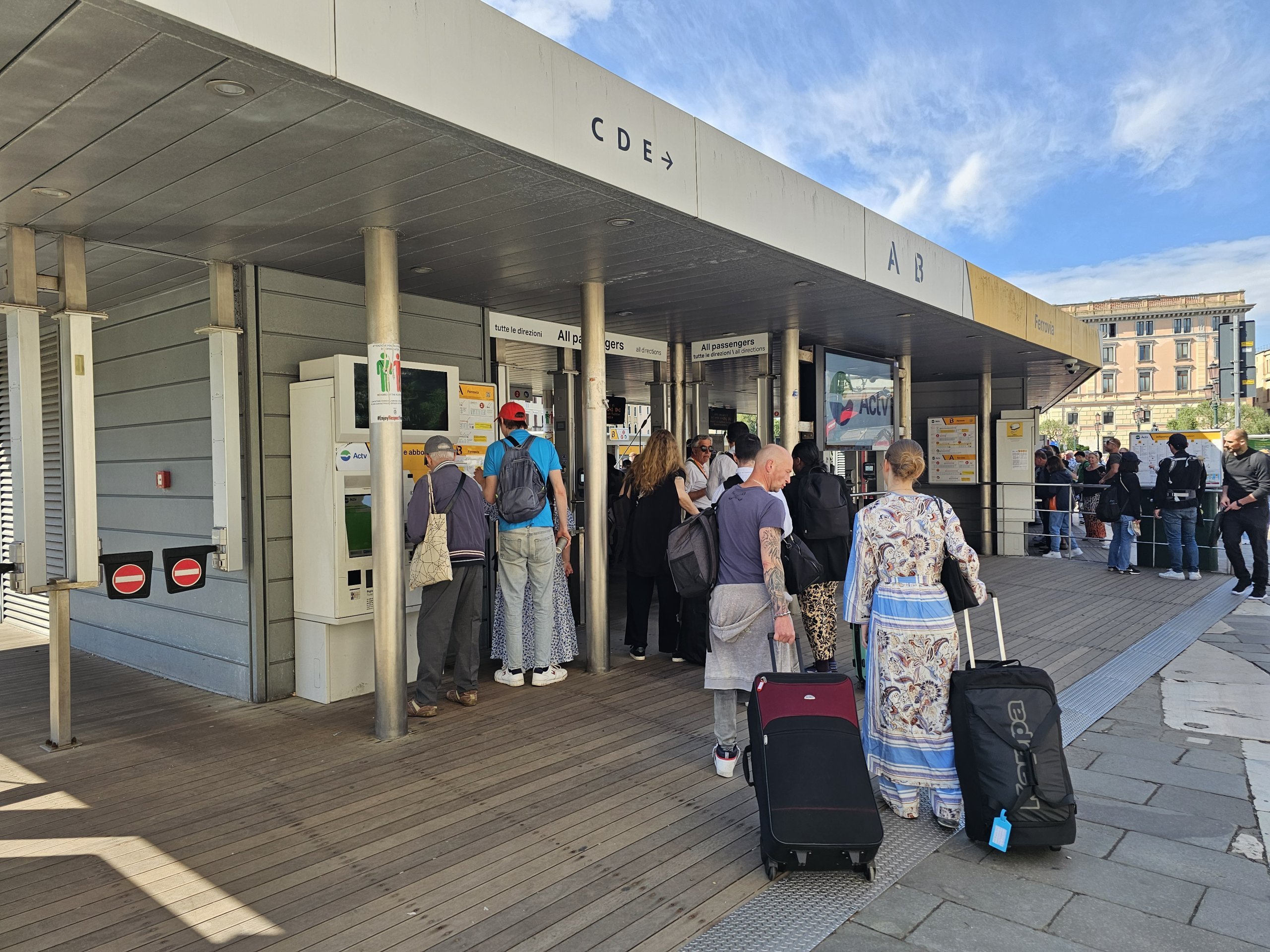
- from ticket machines at the main piers and transport terminals
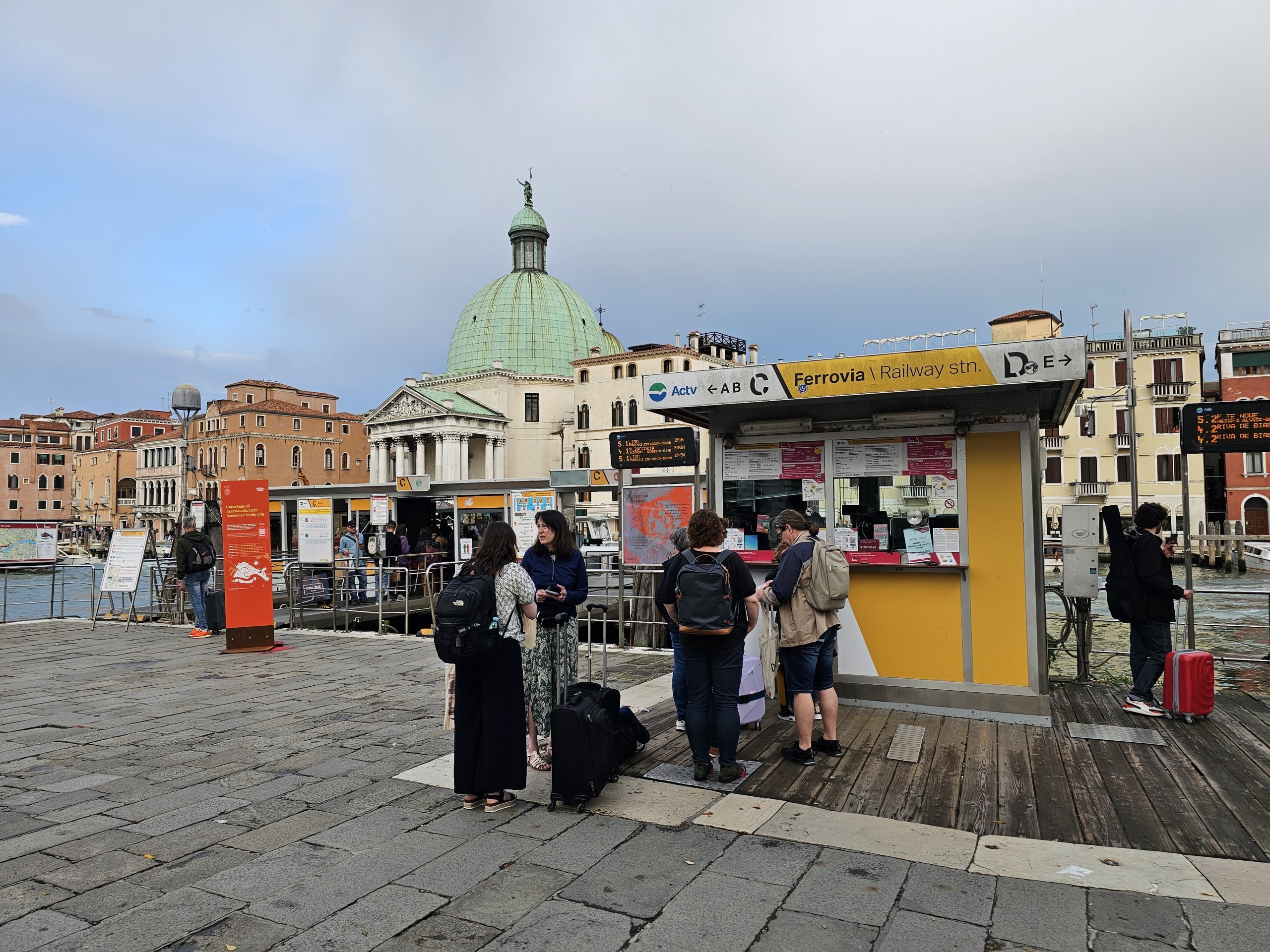
- at Venezia Unica outlets and authorised retailers
You must activate your ticket in the app at least 3 minutes before boarding. At piers with turnstiles, scan the QR code from your phone.
Can I buy a ticket on board?
Yes, on the vaporetto, but please ask the crew as soon as you board. Payment is by card only, and the ticket is issued already validated.
On buses, tickets are only sold on board at certain times and cost more.
You cannot buy a ticket on board trams or the People Mover. Therefore, only consider buying a ticket after boarding as a last resort.
How to validate your ticket
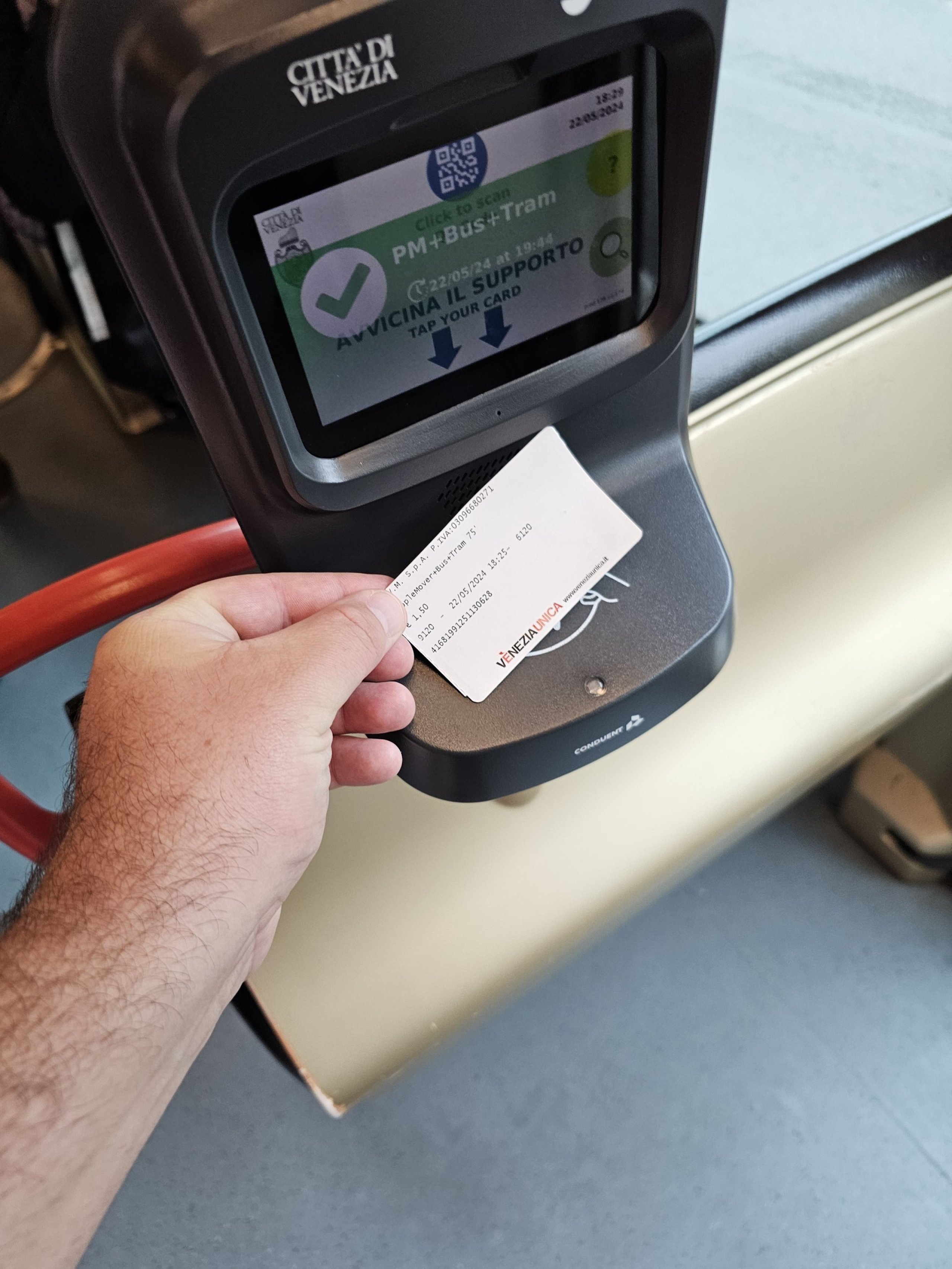
Hold your paper ticket against the validator before each journey and every time you board a bus or tram. This also applies to day and multi-day tickets.
If the validator displays an error message, take the ticket out of your wallet, keeping it away from your payment cards, and try another machine. We encountered this error message quite frequently.
Alilaguna and ATVO tickets
Alilaguna and ATVO use separate tickets, which are not valid on any ACTV boat, bus or tram services.
Alilaguna
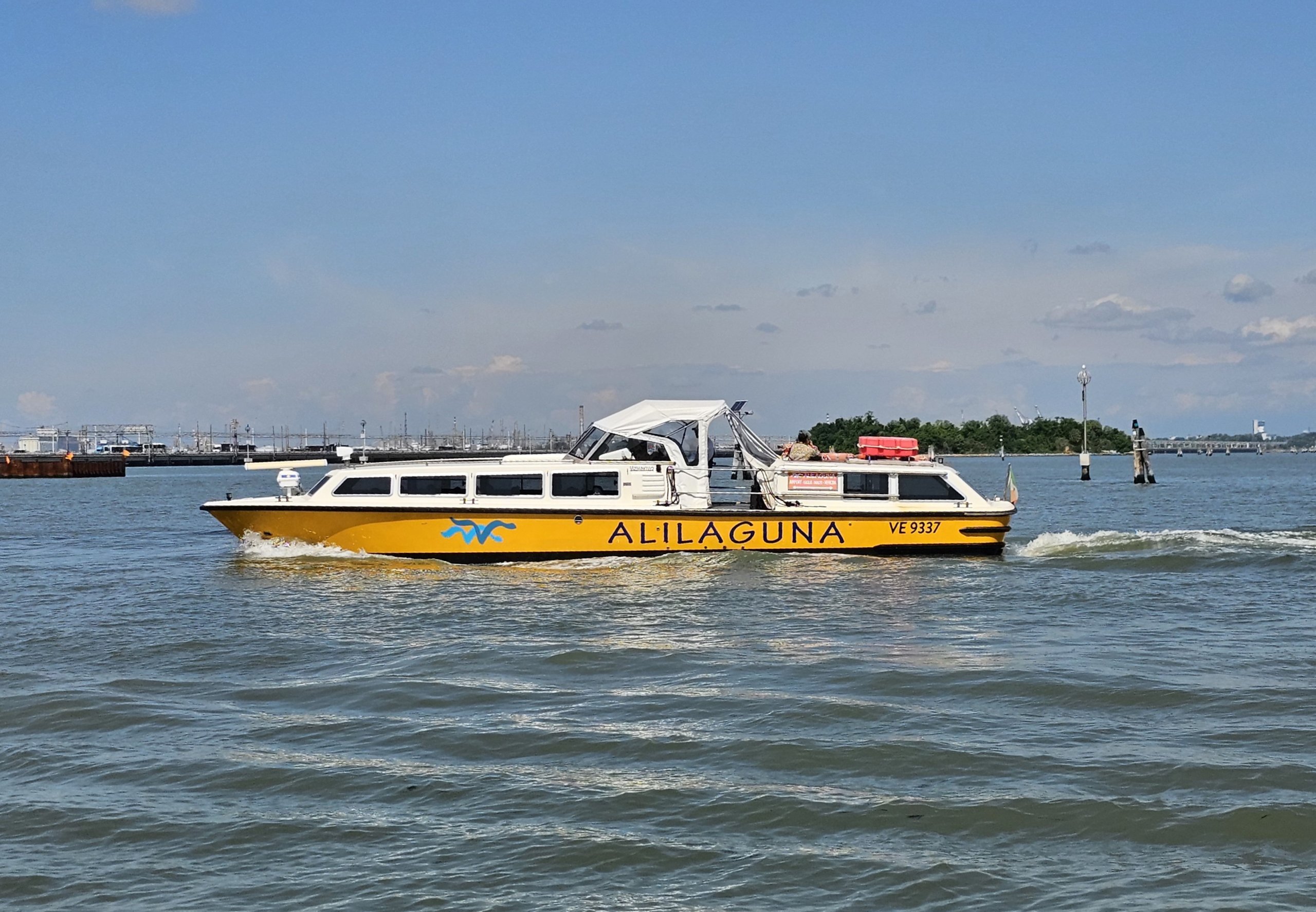
Tickets are valid exclusively on Alilaguna’s yellow boats and are not particularly good value, as the network of routes is considerably more limited than that of ACTV. All-day tickets are only available if you are travelling by boat to or from Venice Marco Polo Airport (VCE).
- 24 hours for all Alilaguna routes – 40 eur
- 48 hours for all Alilaguna routes – 60 eur
- Single fares – 10 eur to 18 eur depending on distance
You can buy tickets from the crew on board (payment can be made in cash or by card) or via the website alilaguna.it.
ATVO
ATVO buses provide regional transport from Venice to neighbouring towns. They can also be used to travel between Venice and Mestre, but the frequency and, above all, the signage are significantly worse than on ACTV buses.
Tickets are purchased from the driver.
Vaporetto: water buses in Venice
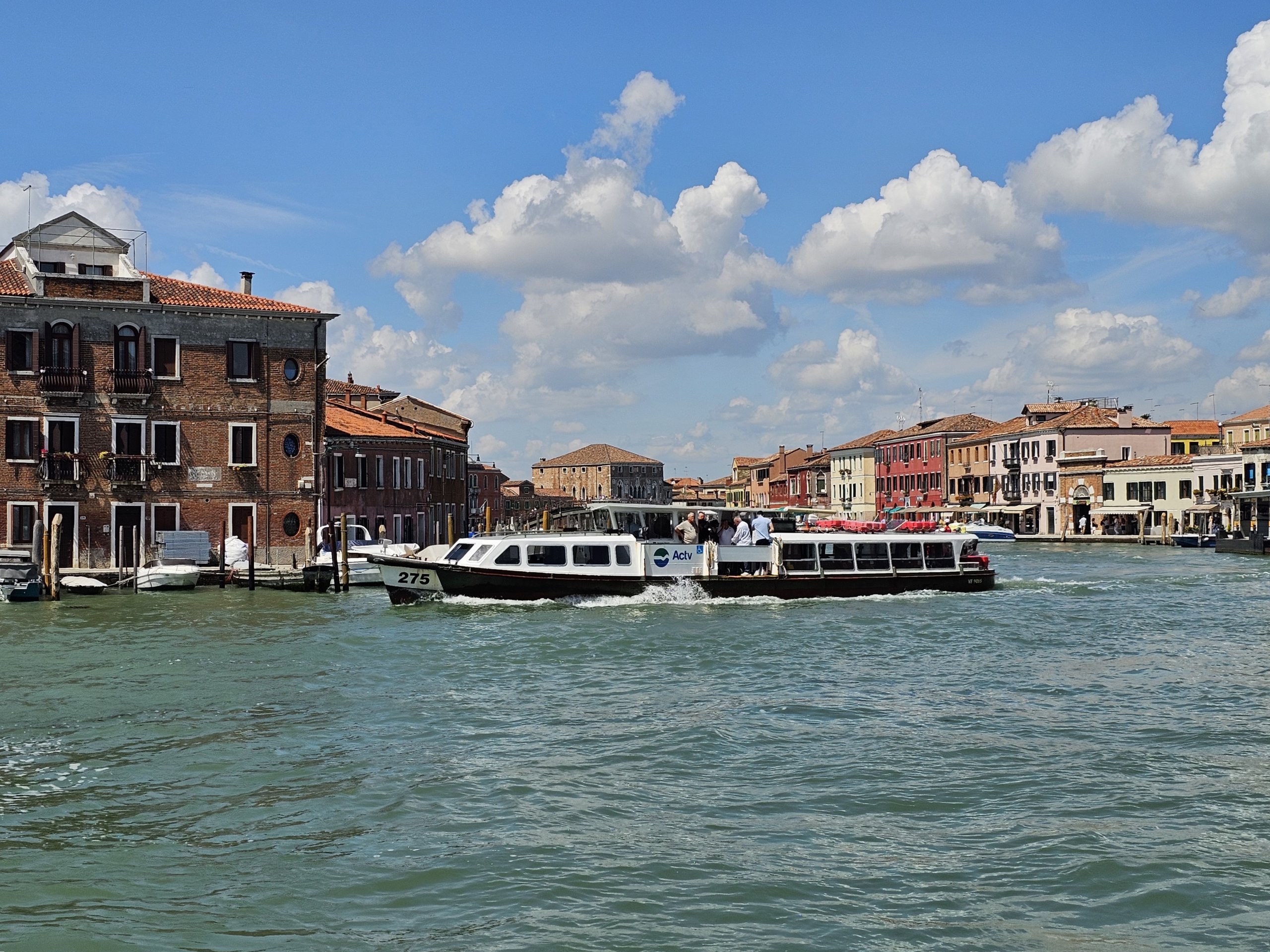
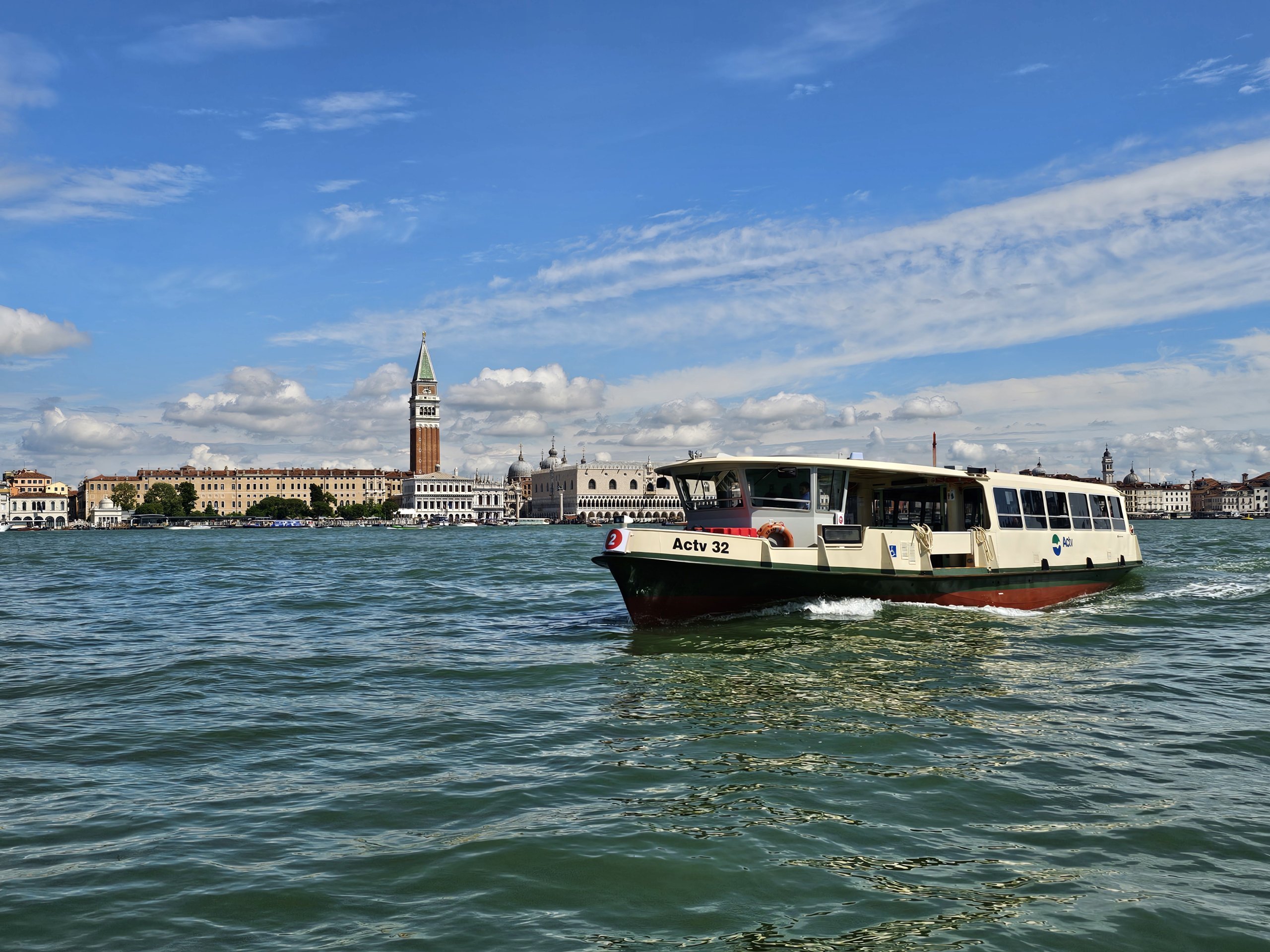
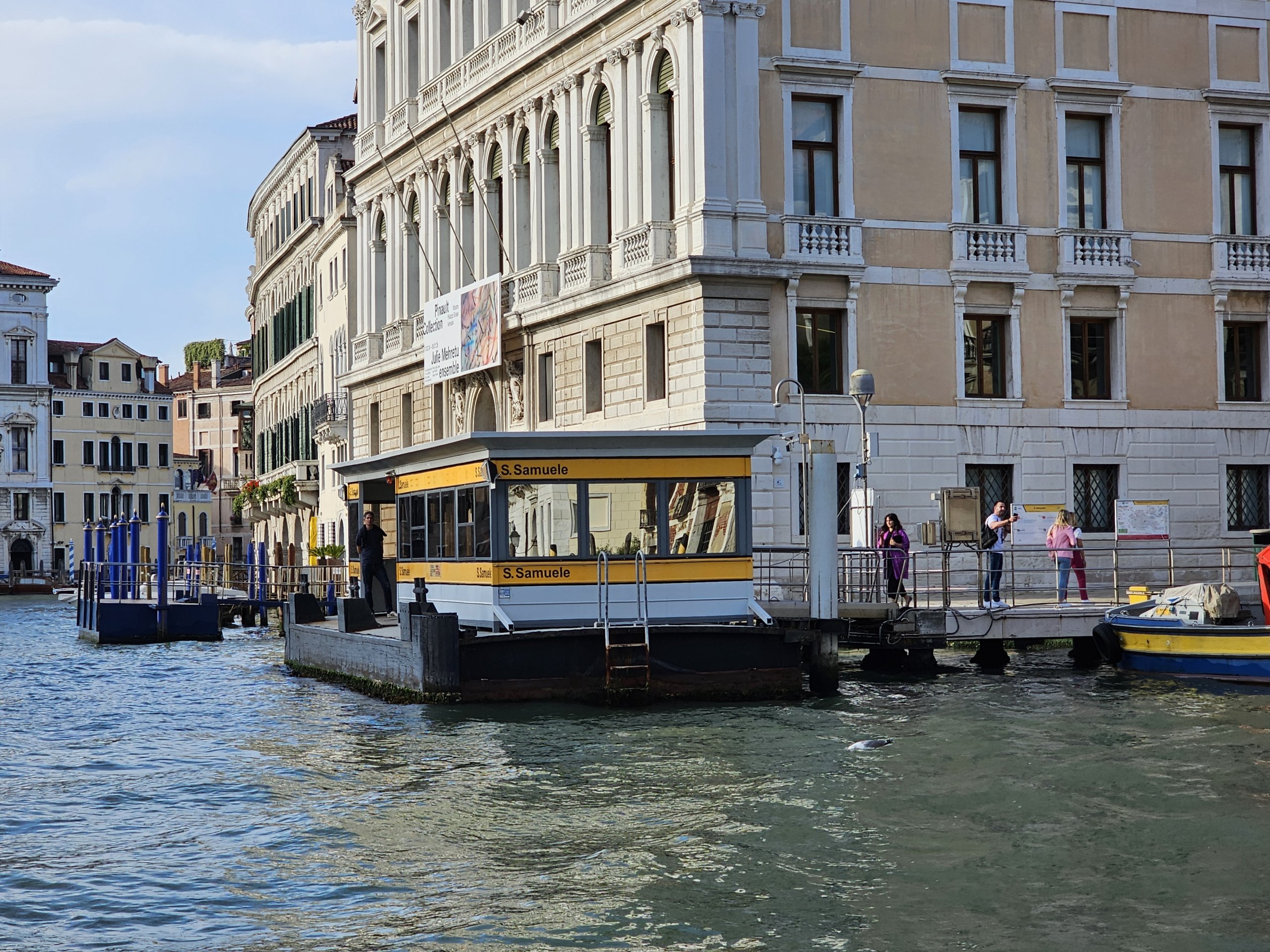
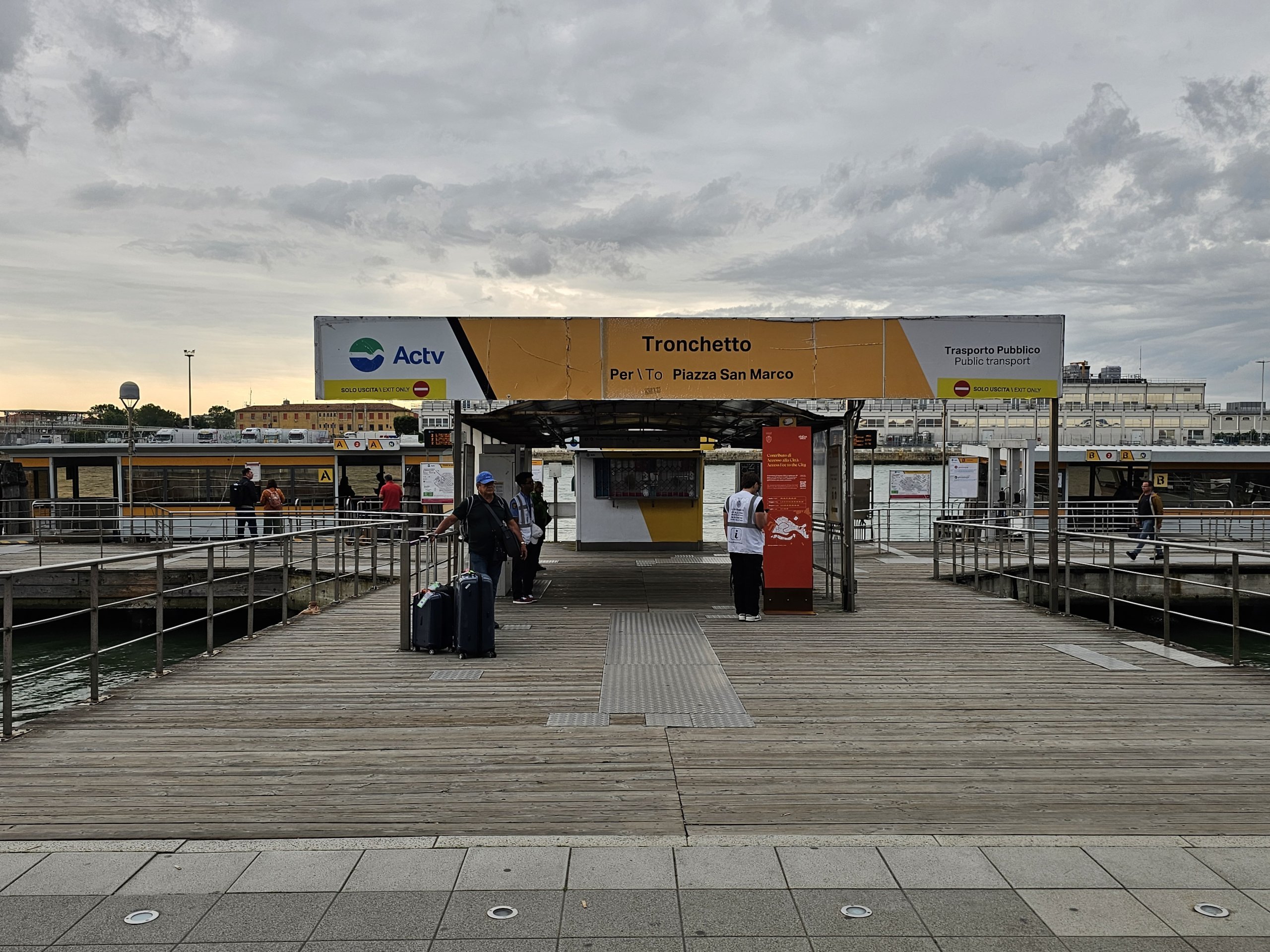
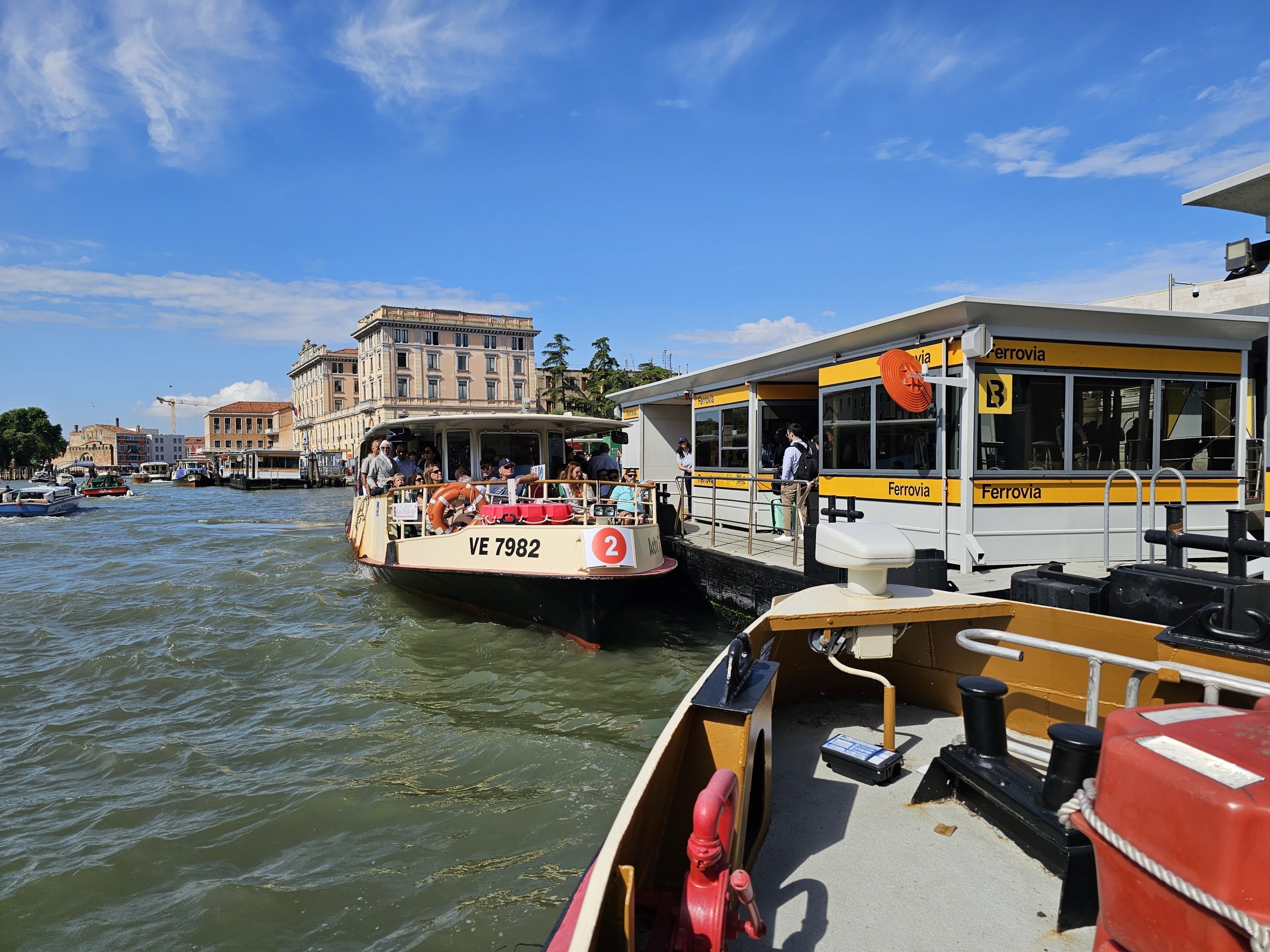
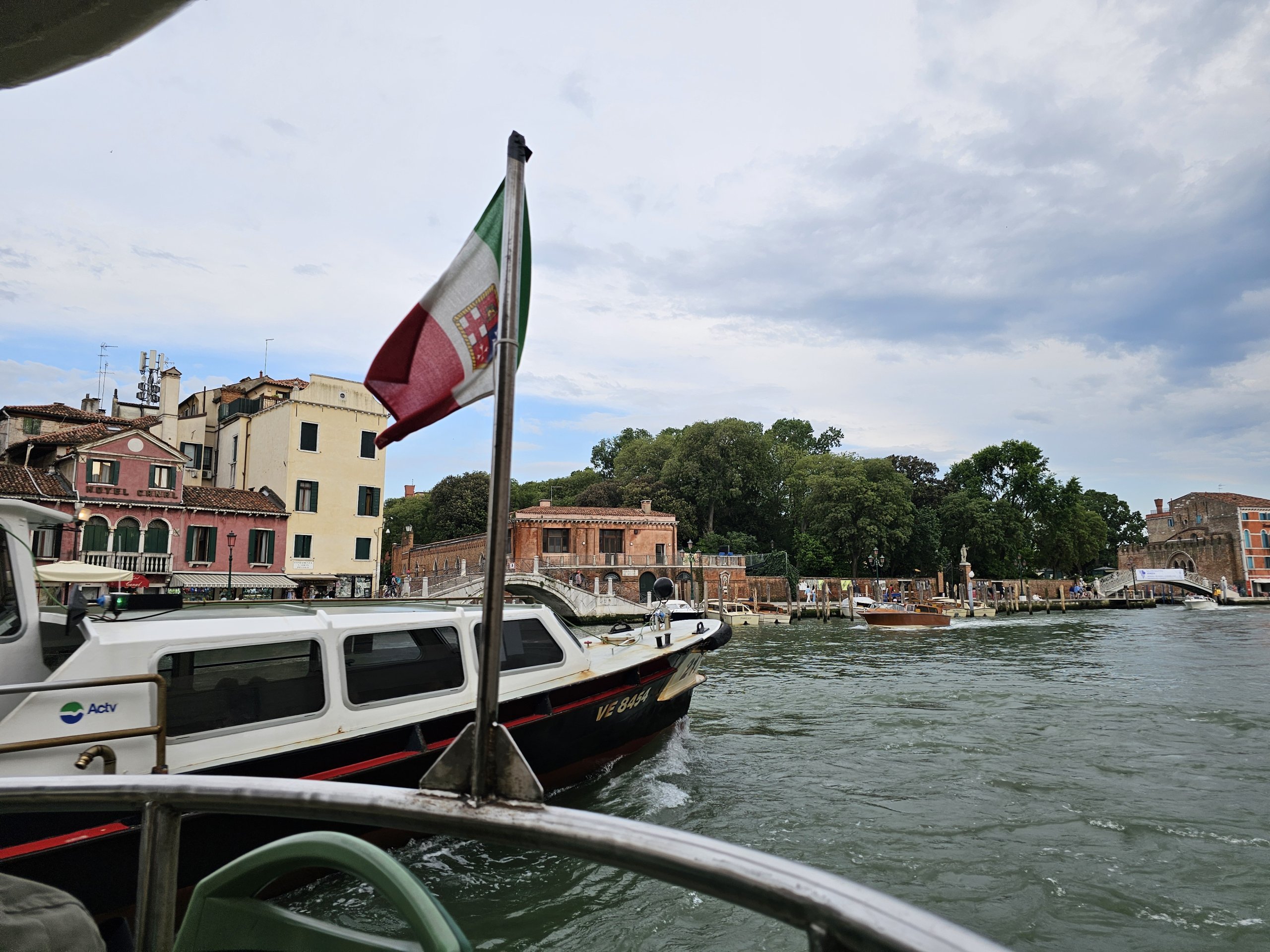
Vaporetti operate in the same way as regular public transport. The boats have route numbers, timetables and fixed stops. You can recognise the stops by the yellow stripe and the name of the stop.
Larger stops such as Ferrovia, Rialto or San Marco have several separate jetties marked with letters. Don’t just look at the route number. Always check the direction and the final stop on the display board.
ACTV
ACTV, which also operates buses and trams, has the most extensive network of boat routes.
You’ll easily recognise the piers, as they all look the same. They are covered floating stops with a yellow stripe and the name displayed.
The most useful routes for tourists
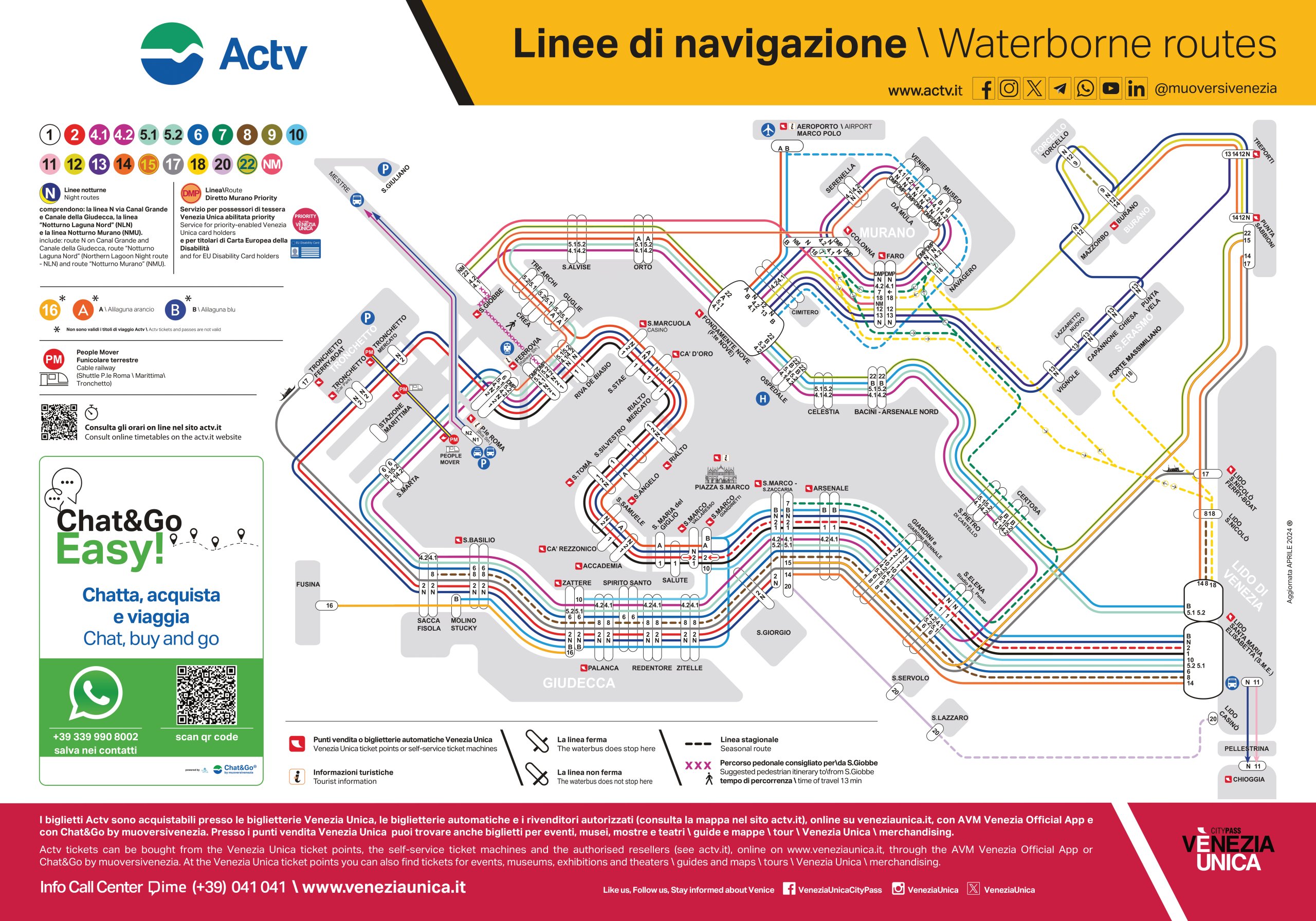
There’s no point in listing every single route. What’s more, the routes change slightly depending on the season. For a typical visit, this overview will suffice:
| Route | Main route | When to use it |
|---|---|---|
| 1 | Piazzale Roma – Ferrovia – Rialto – San Marco – Lido | A leisurely sightseeing cruise along the entire length of the Grand Canal |
| 2 | Piazzale Roma – Ferrovia – Rialto – San Marco – Giudecca – Tronchetto | A faster journey along the Grand Canal or a trip to Giudecca |
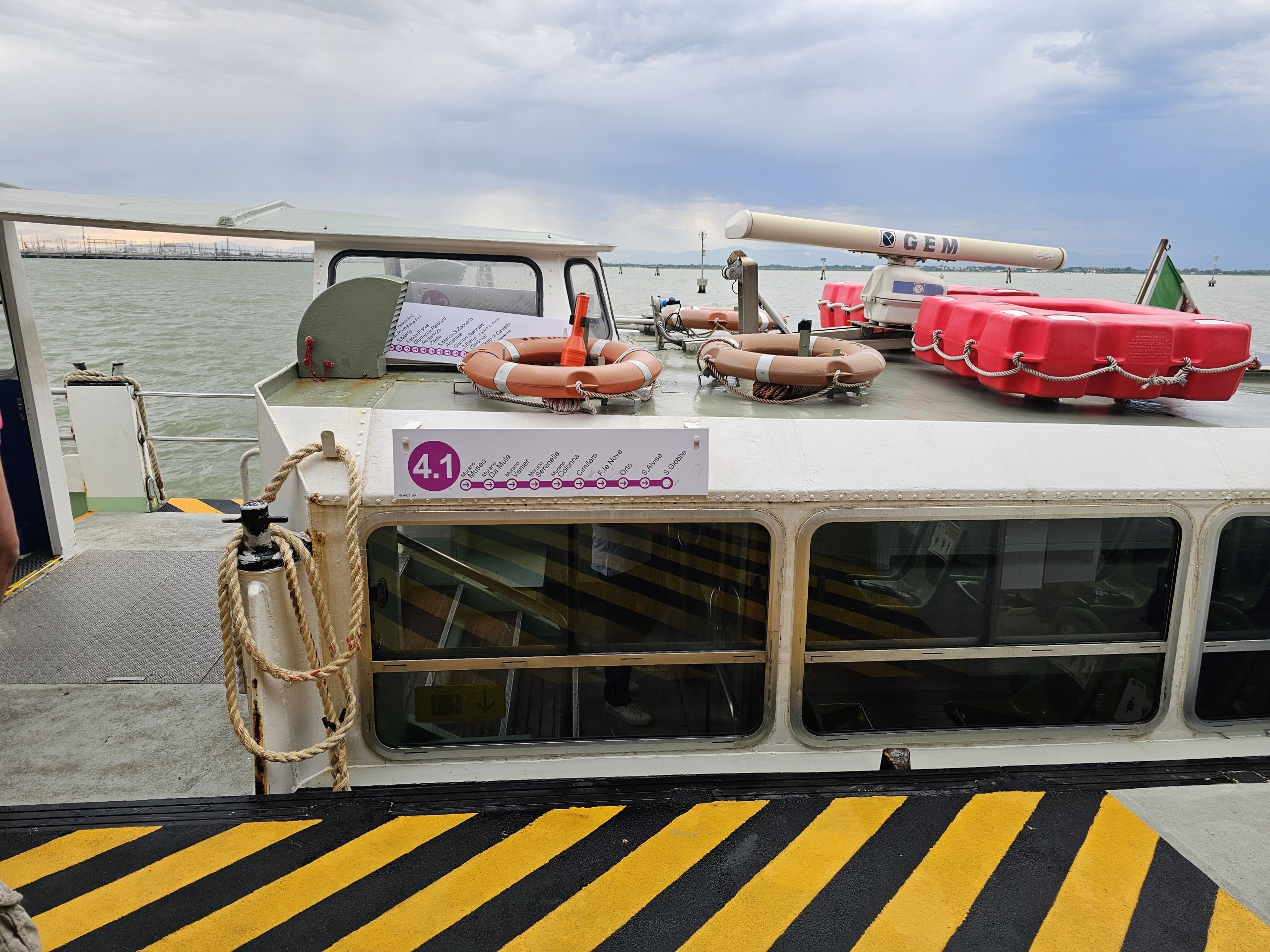
| 4.1 and 4.2 | A circuit around the city centre via Ferrovia, Piazzale Roma, San Marco, Fondamente Nove and Murano | Murano and a trip around the perimeter of the historic centre |
| 12 | Fondamente Nove – Murano – Mazzorbo – Burano – Torcello | the quickest route to Burano and Torcello |
| 14 | San Marco – Lido – Punta Sabbioni – some services to Burano | Lido, Punta Sabbioni and an alternative route to Burano |
| N | Night-time circuit via the Grand Canal, San Marco, Lido and Tronchetto | service after midnight |
The main lines run every 10 to 20 minutes during the day; line 12 to Burano usually runs every 30 minutes.
During the day (approximately 5.30 am to 11.45 pm), numbered services operate, whilst at night three ‘N’ services run along the canals. Some services only operate between approximately 7.00 am and 6.00 pm.
- Timetables: actv.avmspa.it/orari
- Map of all routes: actv.avmspa.it/map
Line 1 or 2 along the Grand Canal?
For your first sightseeing cruise, I recommend Line 1. It stops more frequently and takes about 40 minutes to travel between Ferrovia station and St Mark’s. You’ll see the palaces, the Rialto Bridge and the most beautiful part of the Grand Canal.
Line 2 is better if you need to get around more quickly. Its exact route changes throughout the day and year, so always check the direction on the notice board at the landing stage.
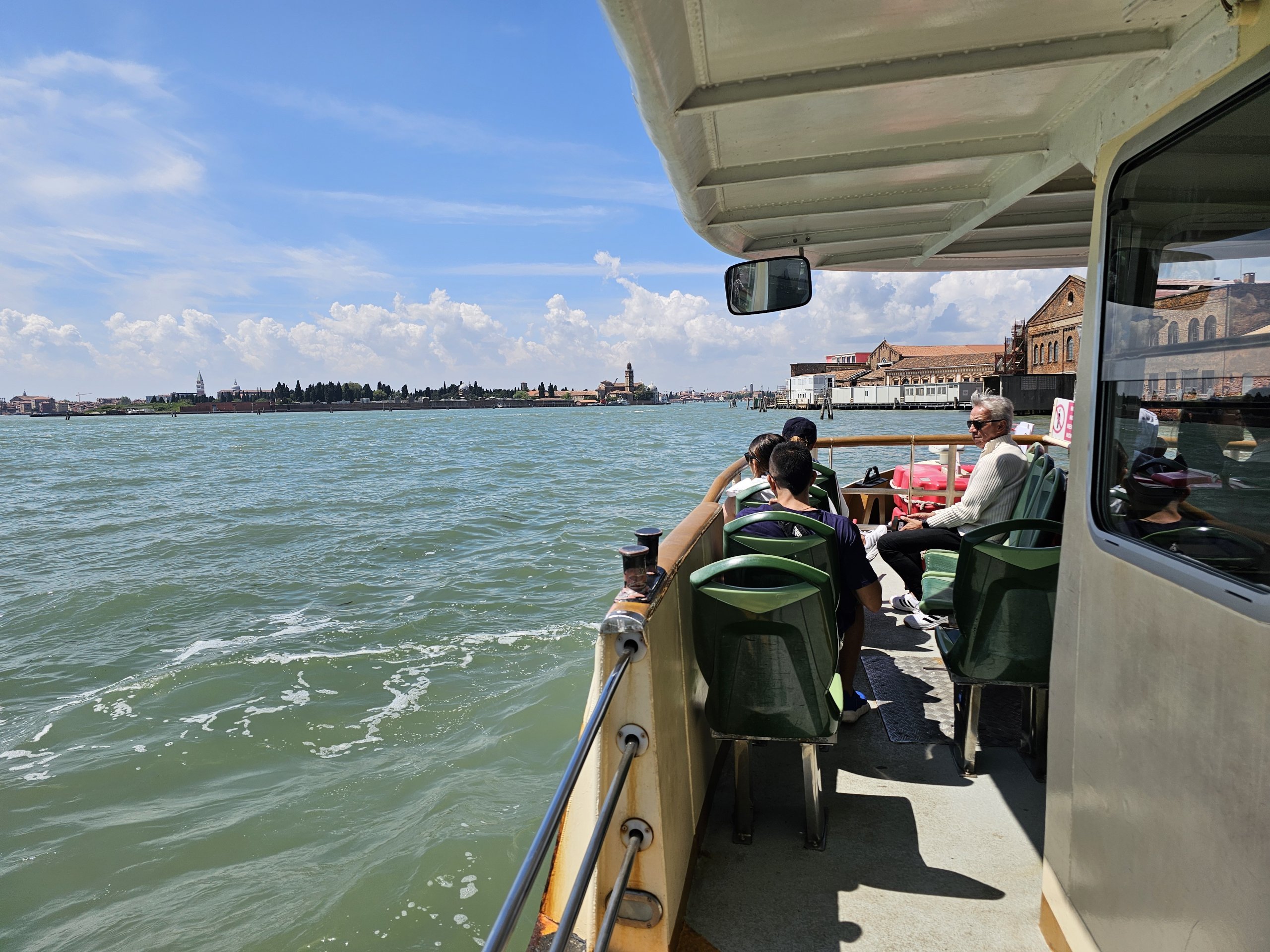
On some boats on lines 1 and 2, you’ll find a few outdoor seats at the bow or stern. These are the best spots for taking photos, but they fill up quickly. During the morning rush hour heading away from the station and in the afternoon on the return journey, the boats tend to be very full. If you just need to get between Rialto and St Mark’s, you’ll often be quicker on foot.
Tips and tricks for travellers
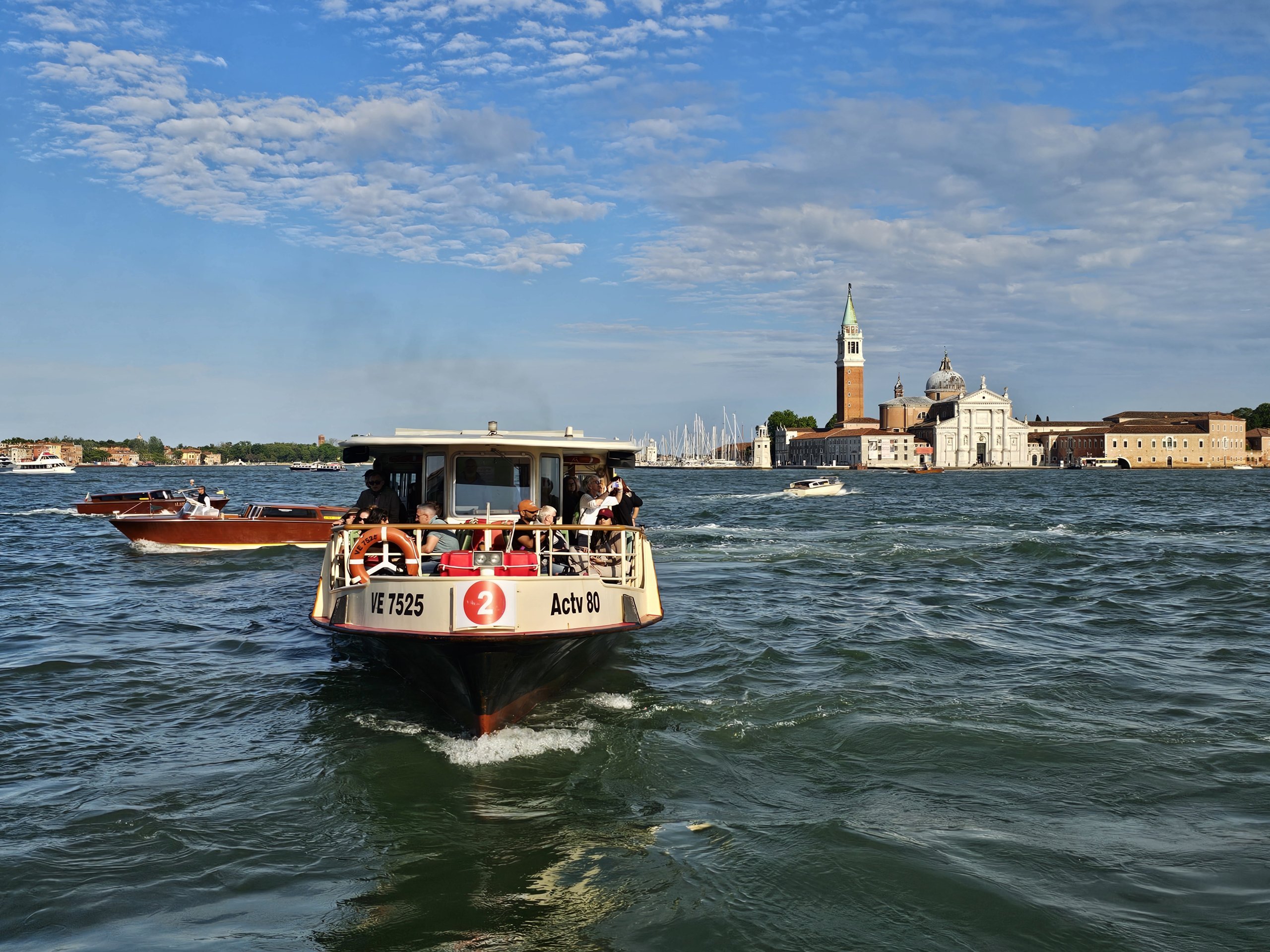
Boats on lines 1, 2 and 7 most often have a few outdoor seats at both the front and rear of the deck (sometimes there are no outdoor seats at the front, only at the rear). These spots are the most popular for enjoying the views, taking photos and filming.
There is also always an open-air area in the middle of the boat, though it is for standing only.
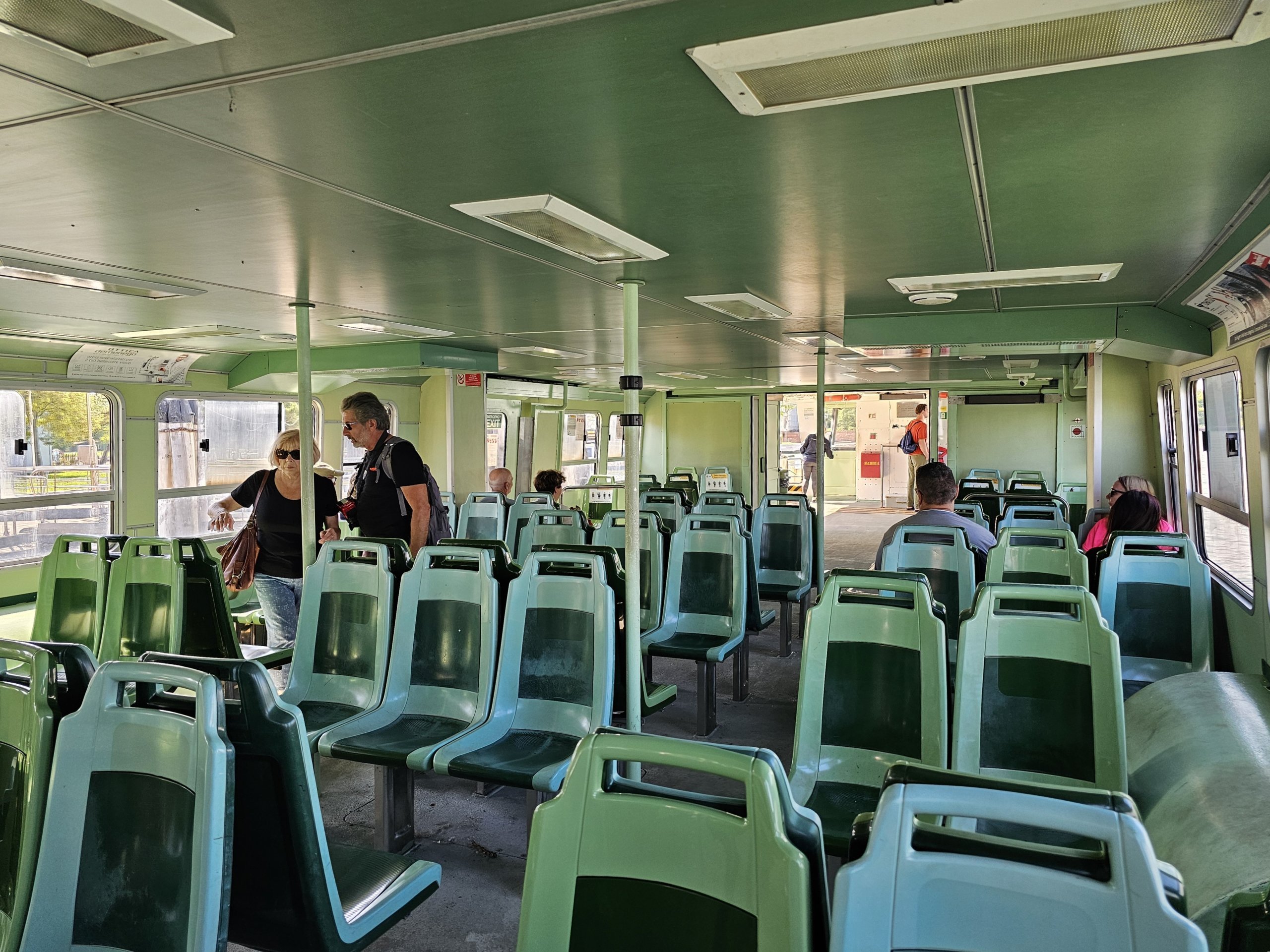
The interior of the boat, which has seats, is covered and has windows.
During the morning rush hour, on the route from the railway station and Piazzale Roma to the city centre, the boats are often very crowded and it may be more comfortable to walk. The same situation occurs in the late afternoon on the return journey.
Vaporetto with luggage
You can board the vaporetto with a standard suitcase. The ticket price covers up to three pieces of luggage, but only one may have a total of three dimensions between 120 and 150 cm. No single item may exceed 150 cm.
On a crowded boat, the captain may refuse to accept any further luggage. Please place suitcases on the floor or in the designated area, not on the seats.
Bridges can often be more of a problem than the boat itself. On the way from Piazzale Roma or the railway station to your hotel, you may have to drag your suitcase up and down stairs several times. When booking, therefore, always check the route from the nearest jetty.
Alilaguna
Special Alilaguna services, which connect Venice with the tourist boat harbour and Marco Polo Airport, operate at a special fare: 18 eur from the airport to the centre of Venice, and 10 eur to the island of Murano. AVM/ACTV day tickets are not valid on Alilaguna services.
Information on Alilaguna services can be found on the website:alilaguna.it.
Gondola ferries
As well as the vaporetto boats, you can also take a ride on a traditional gondola on three active routes across the Grand Canal.
These crossings are the cheapest way to take a ride in a traditional Venetian gondola – the fare on all routes costs just 2 eur.
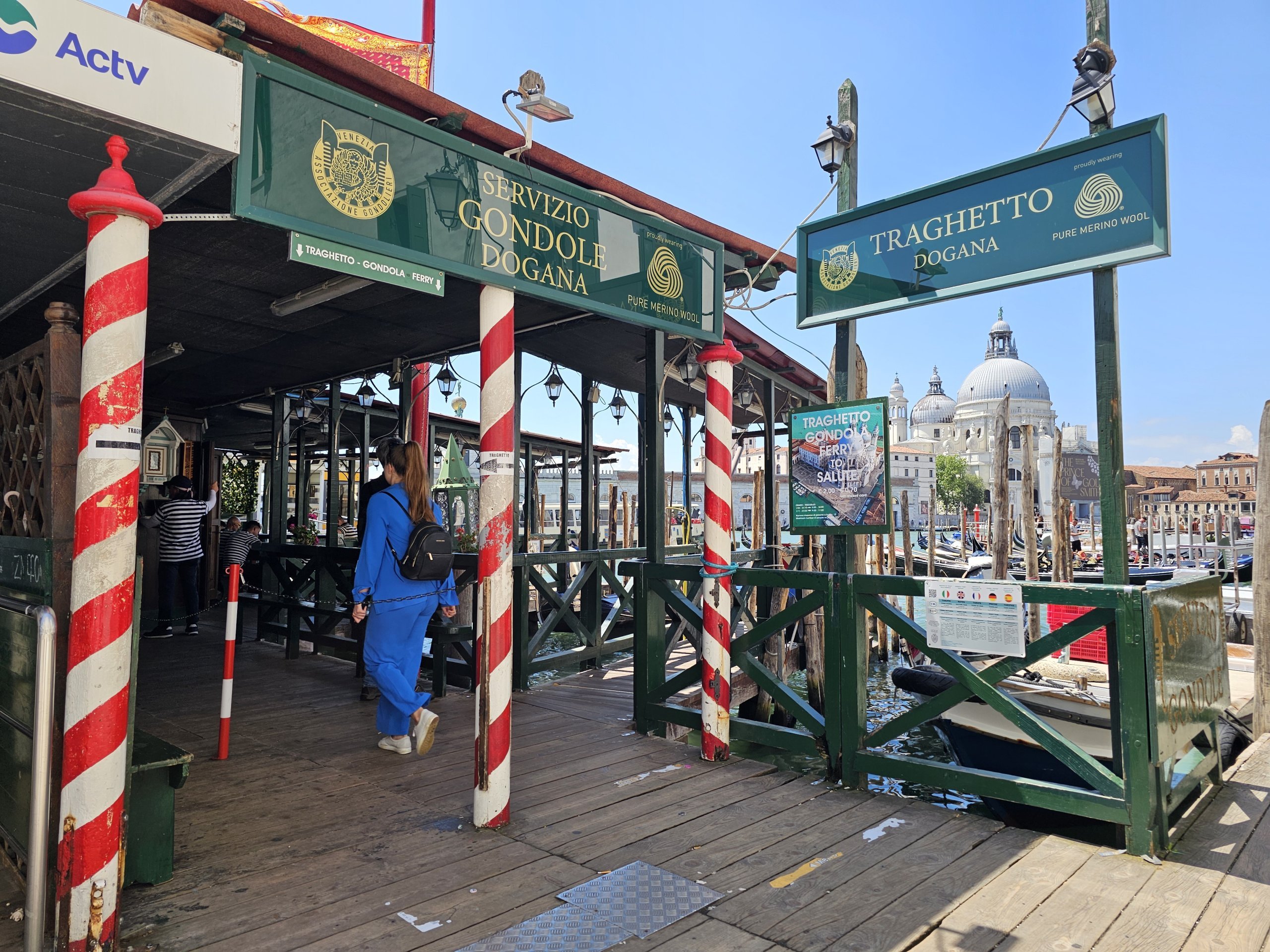
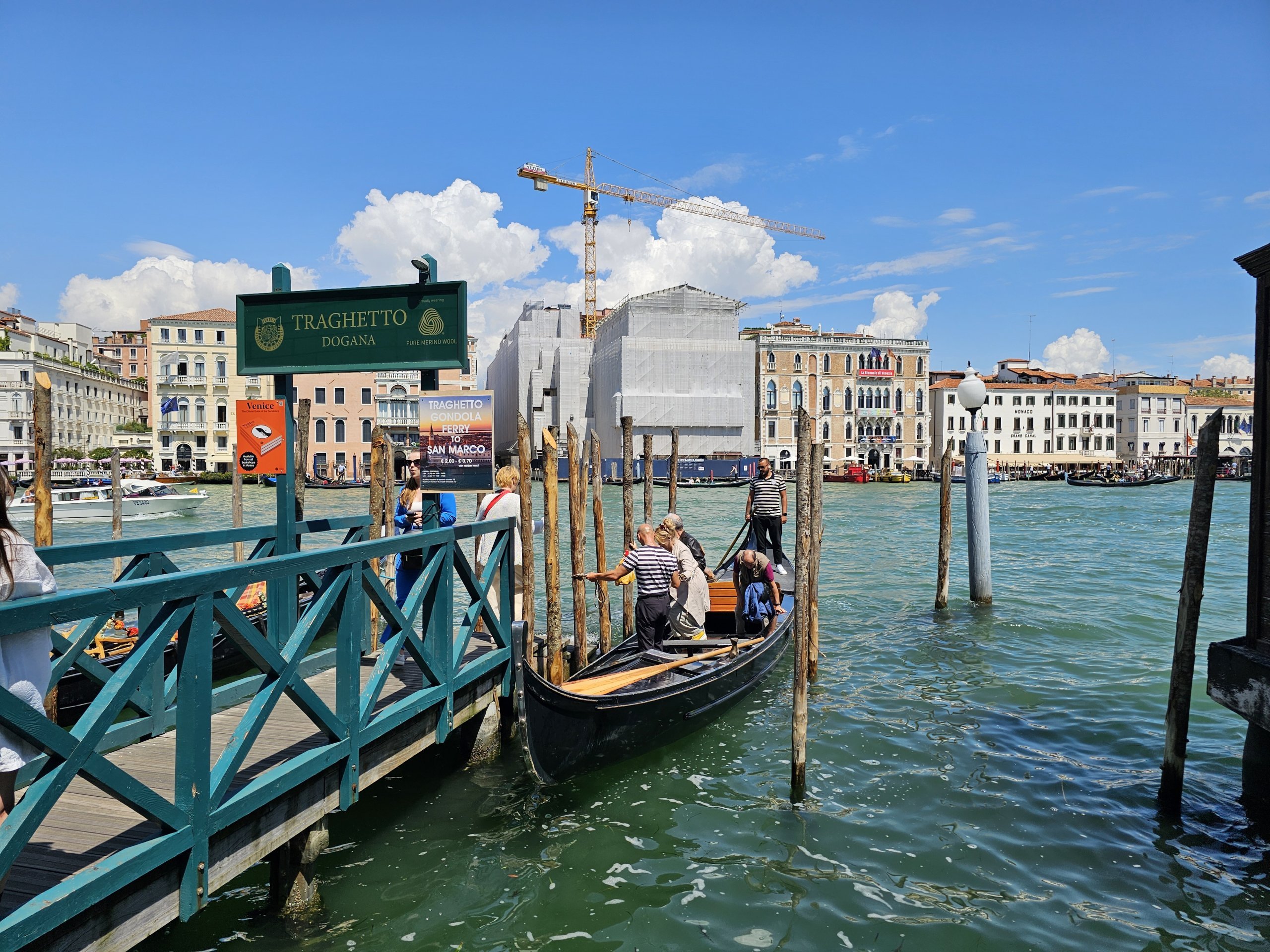
Integrated tickets are not valid on the gondolas. You must always pay the gondolier upon boarding, and only in cash. However, you do not need to have the exact amount.
- Traghetto di Punta della Dogana – connects the San Marco Vallaresso jetty with the Church of Santa Maria della Salute
- Traghetto di Santa Maria del Giglio – connects the churches of Santa Maria del Giglio and Santa Maria della Salute
- Traghetto di Santa Sofia – connects the Rialto Market and the Ca’ d’Oro Palace
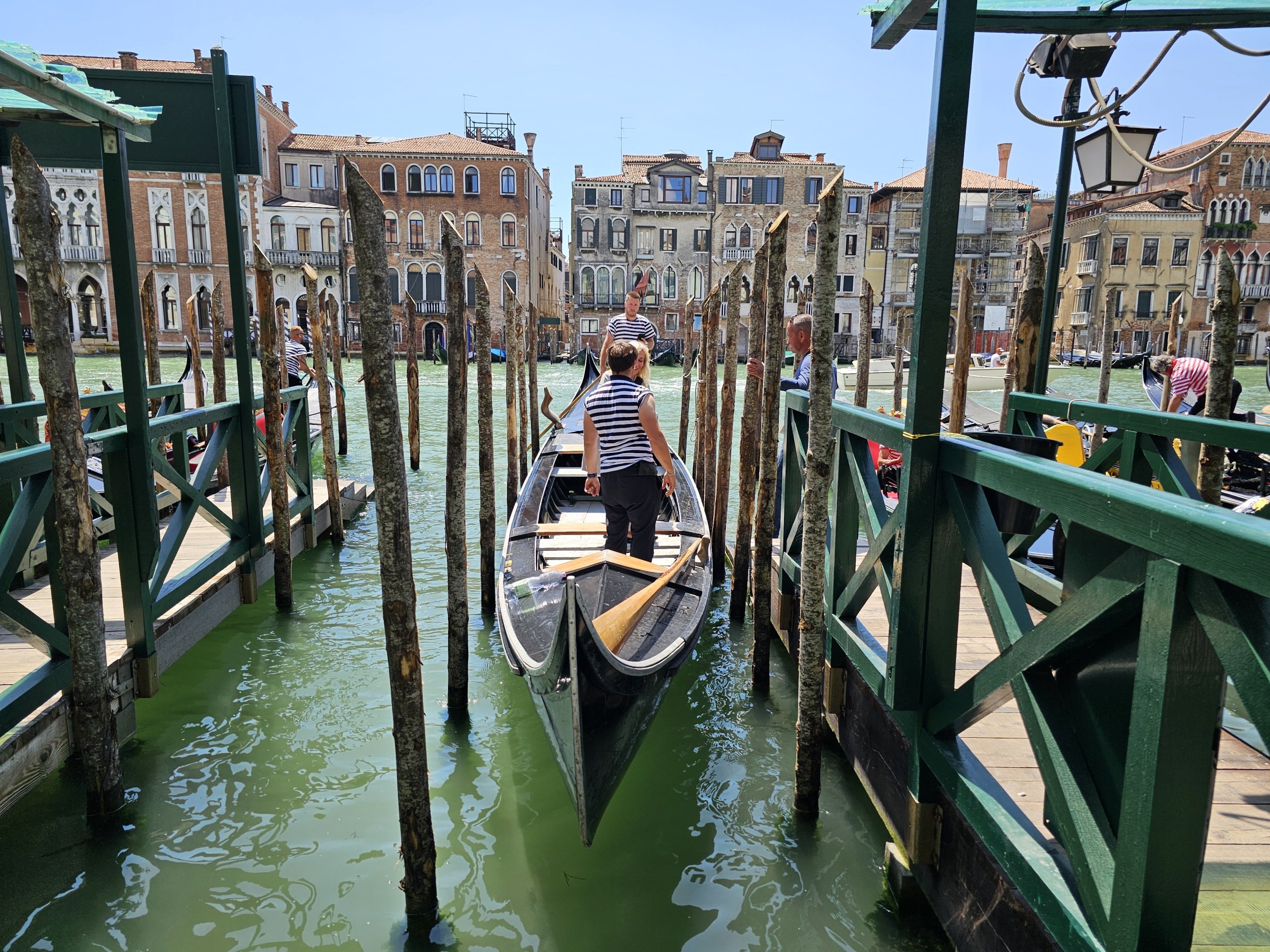
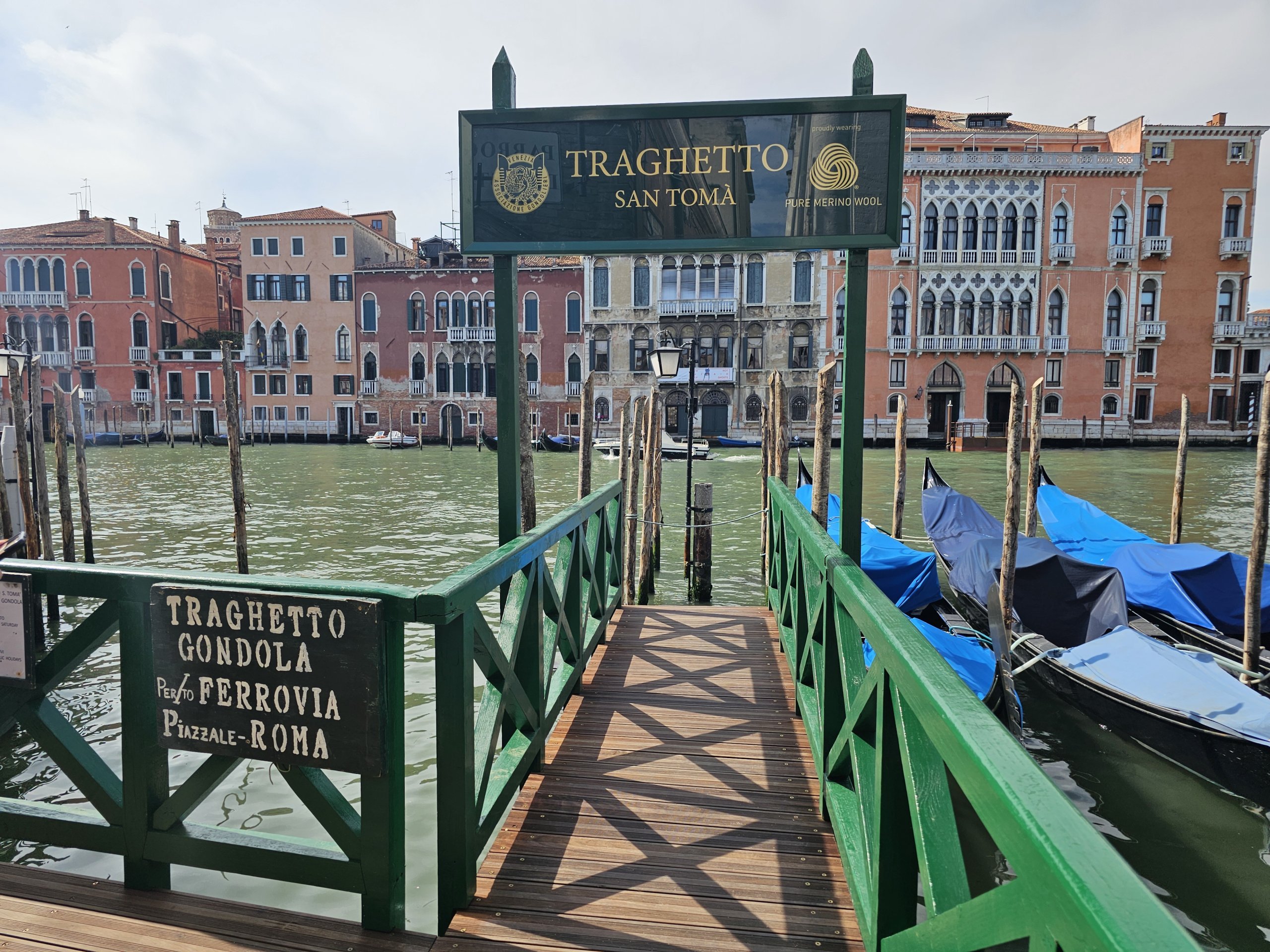
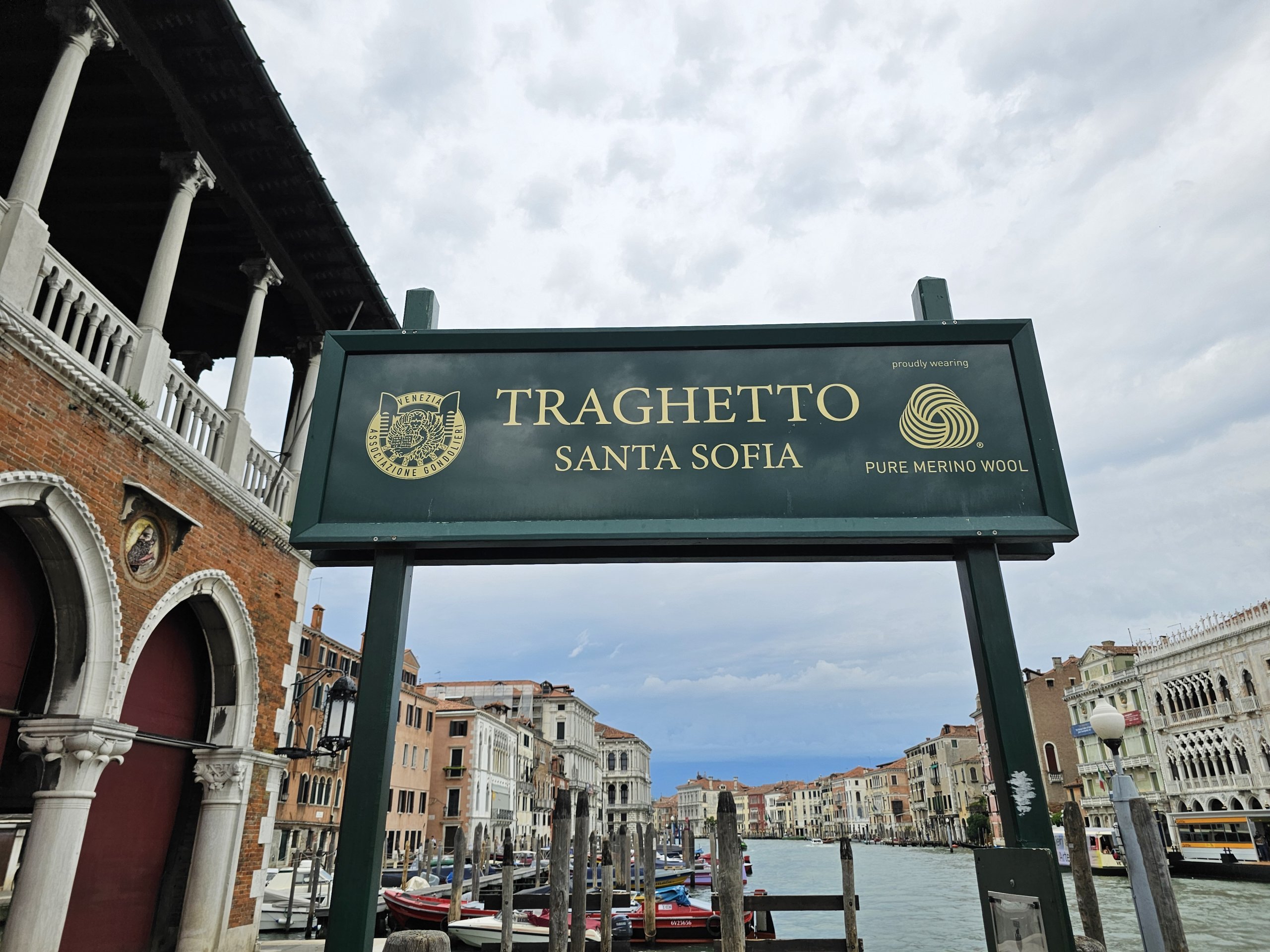
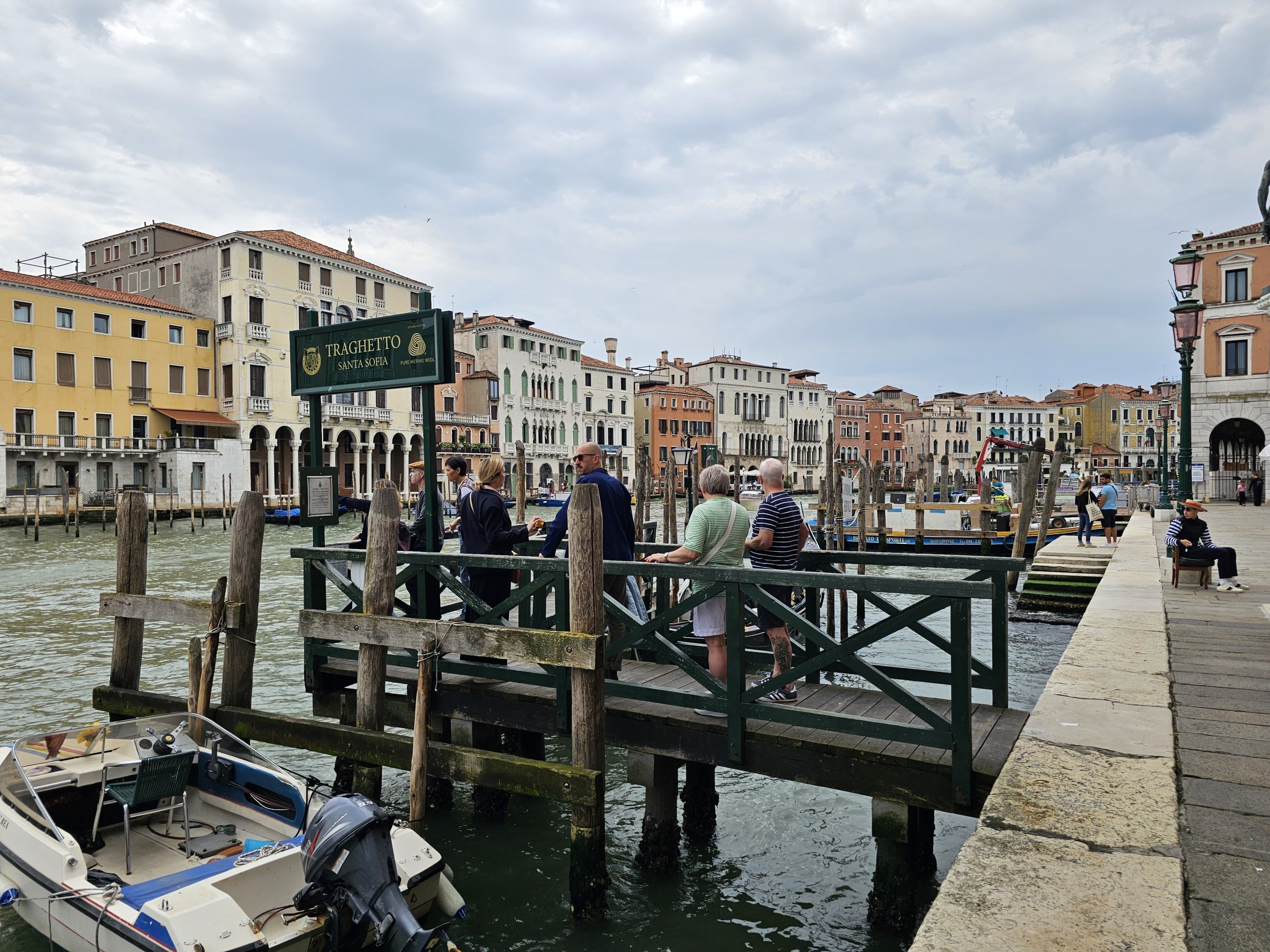
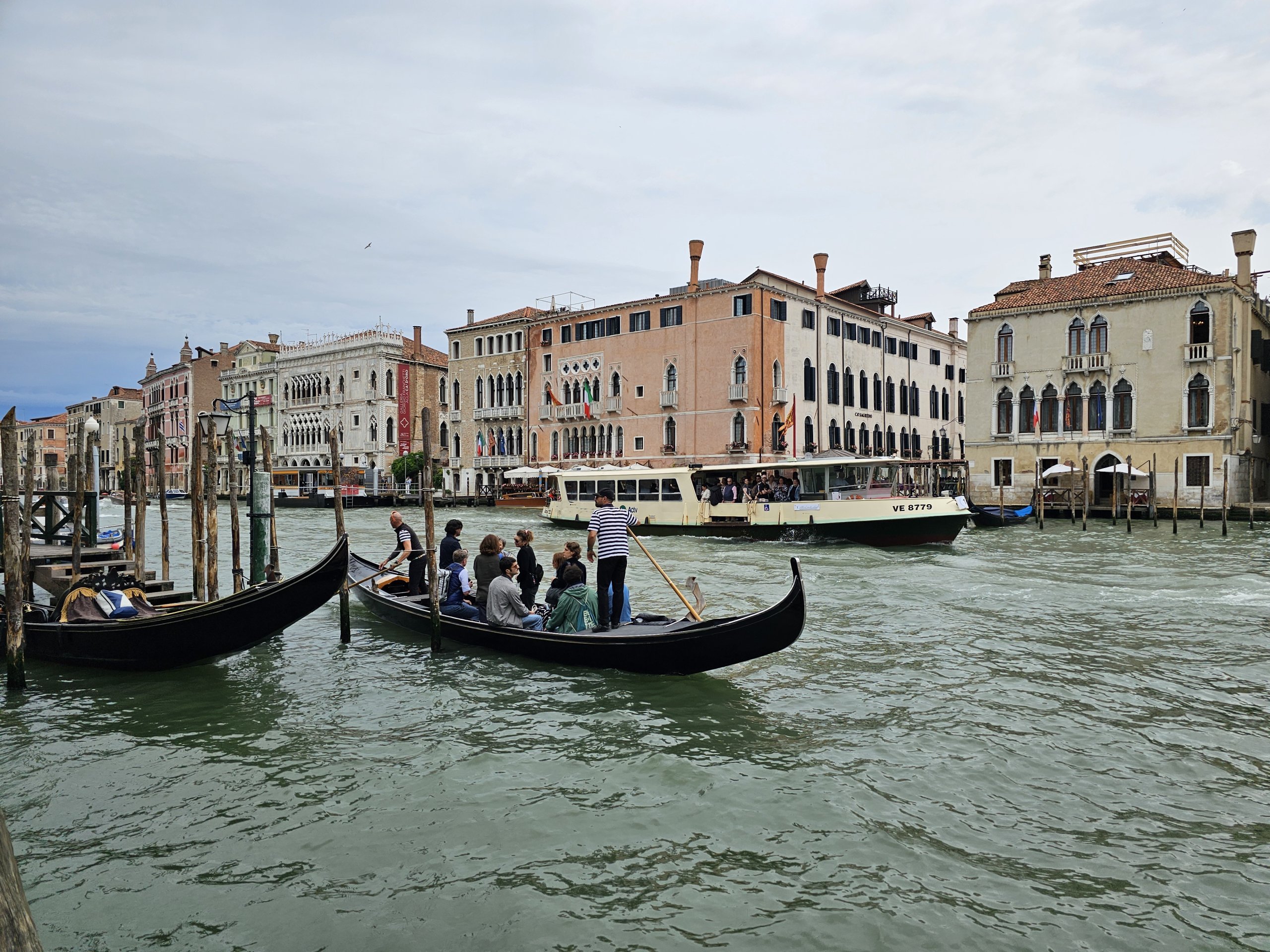
Ferries usually run from 8.30 am to 7.00 pm; on Sundays, operating hours are reduced to 9.00 am to 6.00 pm.
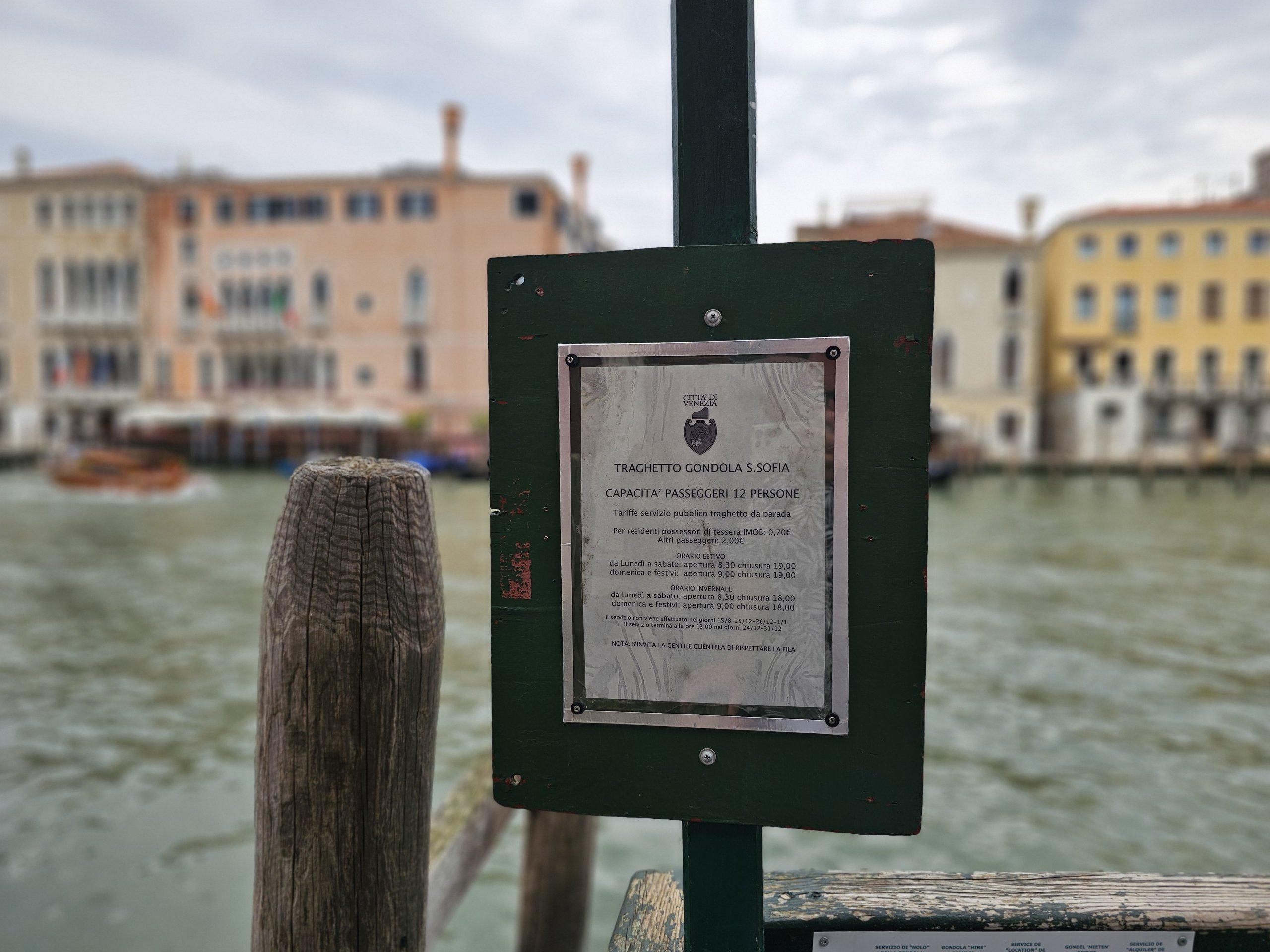
The gondola can carry 12 people and shuttles continuously between the two banks. Services therefore run at intervals of between 3 and 7 minutes.
From Mestre to Venice: train, bus or tram?
The best option depends on the exact location of your hotel. If travelling by train, board at Venezia Mestre station. From other parts of the city, a direct bus or tram is usually more convenient.
| Transport | Journey time | Price | When to choose it |
|---|---|---|---|
| Regional train | 10 minutes | 1,50 eur | if you’re staying near Mestre station |
| ACTV bus | 15 to 30 minutes | 1,50 eur | The bus stop is near the hotel and the route goes directly to Piazzale Roma |
| T1 tram | 20 to 30 minutes | 1,50 eur | you are staying in the centre of Mestre or along the route |
Train from Mestre
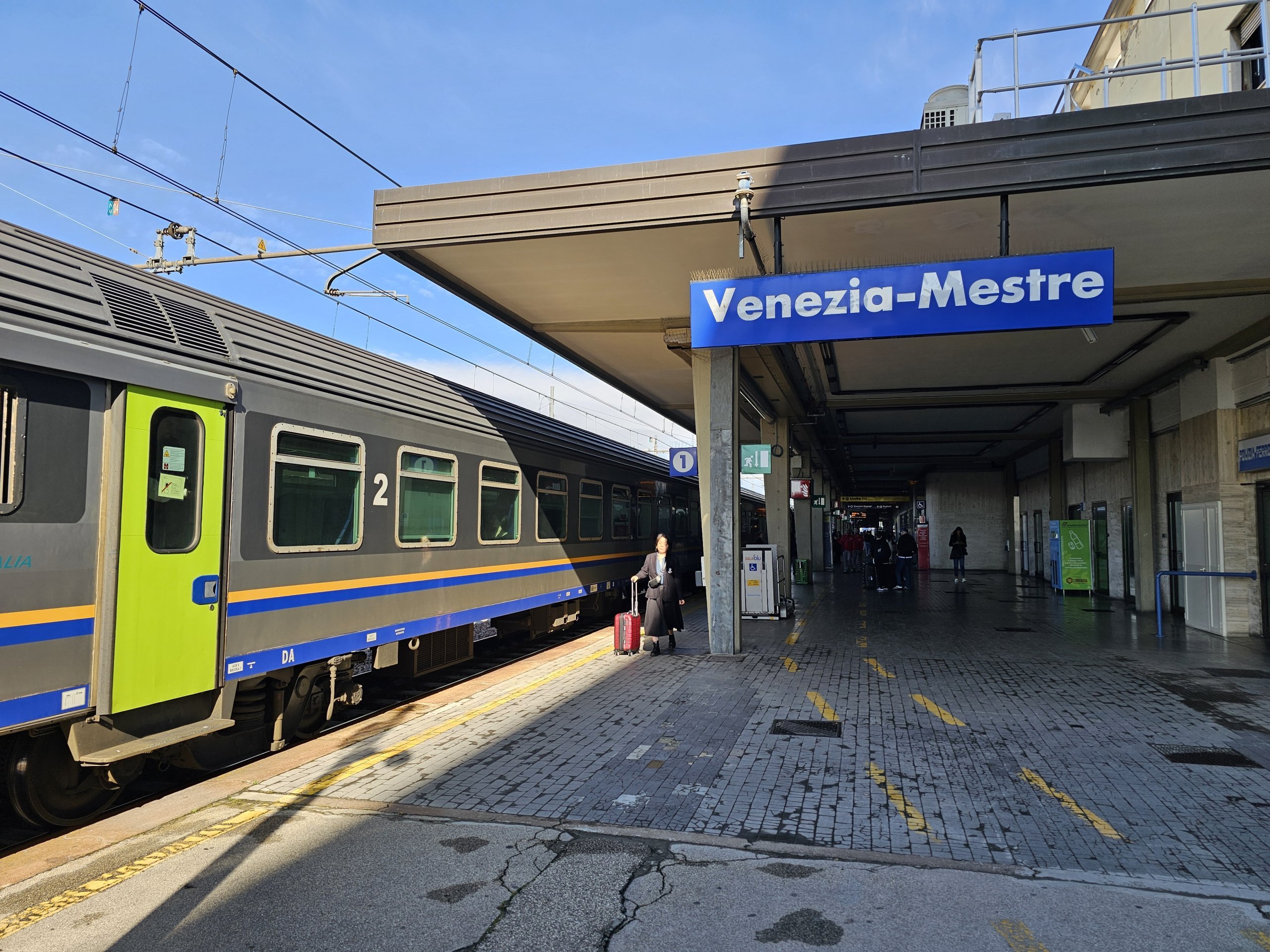
The train is the quickest and most comfortable option from the area around the station. Regional services between Venezia Mestre and Venezia Santa Lucia run several times an hour, and the journey takes about 10 minutes.
You do not need to buy a ticket in advance. You can purchase one from a ticket machine or via the Trenitalia app.
Take note of the station names. Venezia Mestre is on the mainland, whilst Venezia Santa Lucia is the terminus right in the historic centre of Venice.
Find the cheapest hotels in Mestre
The best transport options depend mainly on where you’re staying in Mestre or where you’re travelling from.
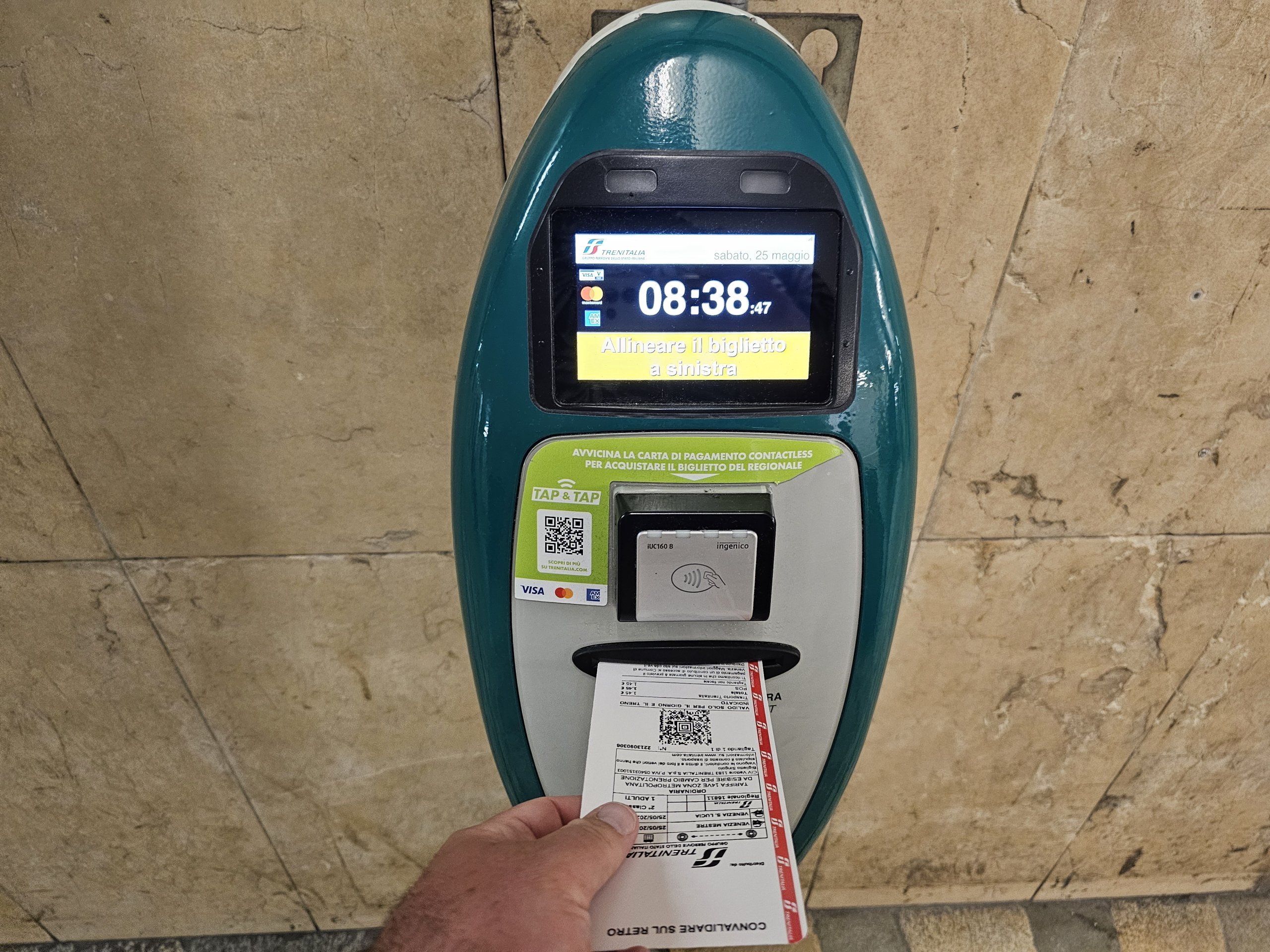
If you buy a paper ticket from a ticket machine, you must always validate it using the validator on the platform. You can also pay your fare using your own payment card by tapping it on the validator before boarding and after alighting.
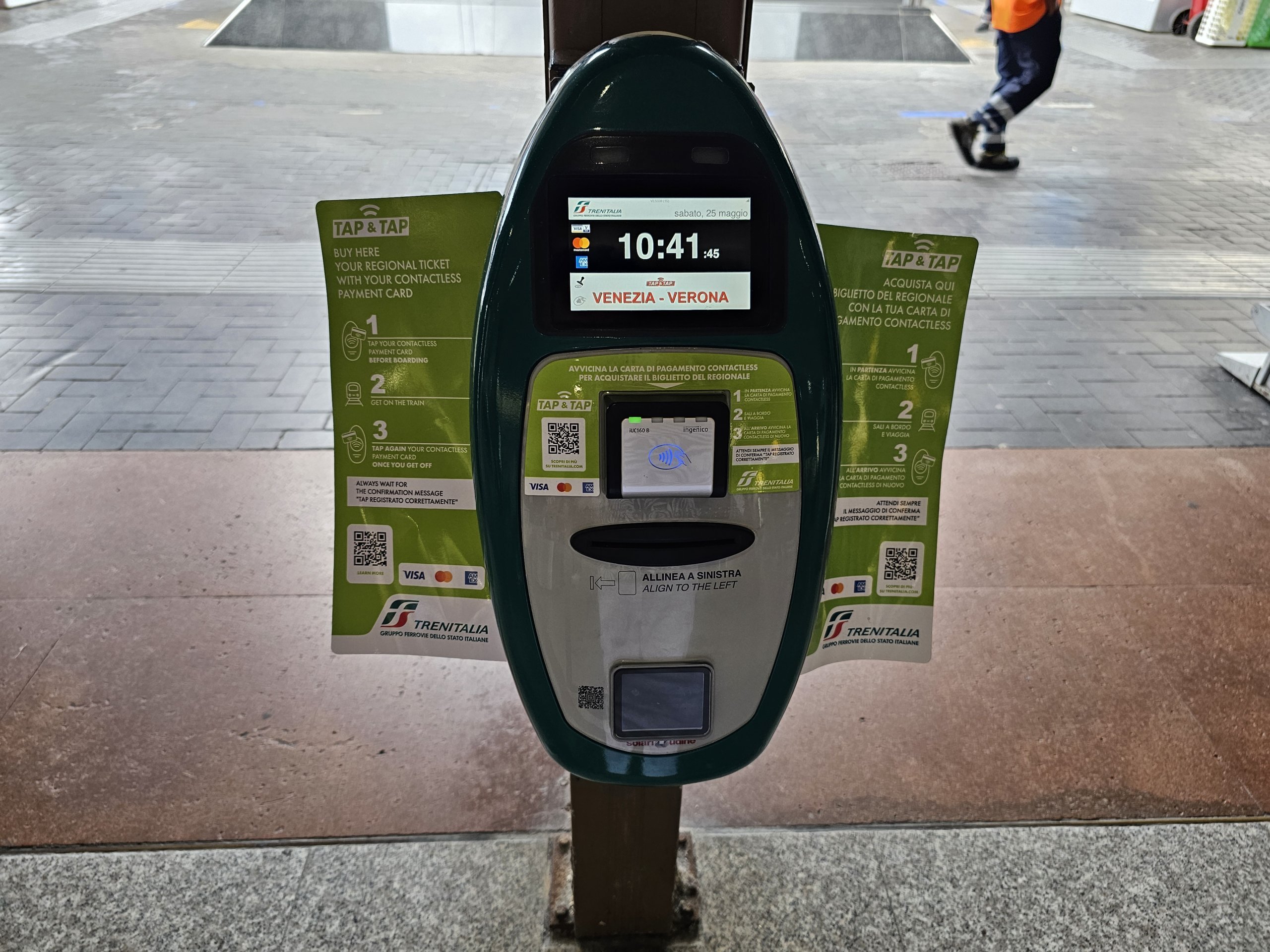
A 24-hour ticket for public transport in Venice and Mestre, purchased via ACTV/AVM, is valid on trains. However, other tickets are not valid on trains, including 48-hour, 72-hour or 168-hour tickets.
You can find detailed timetables on the trenitalia.com website.
ACTV buses and trams
If you are staying in Mestre away from the station, it is also worth using the ACTV bus routes or trams, which run from Venice to all parts of Mestre.
Another advantage of these services is that single-day or multi-day tickets (see above) are valid on all ACTV routes. A single journey costs 1,50 eur.
On the other hand, a major drawback is the extreme overcrowding, particularly in the morning on the journey to Venice (roughly from 8.00 am to 10.00 am). If you’re not travelling from the first stop, you’ll very often find that you have to wait for a second, third or even fourth bus or tram just to get a seat.
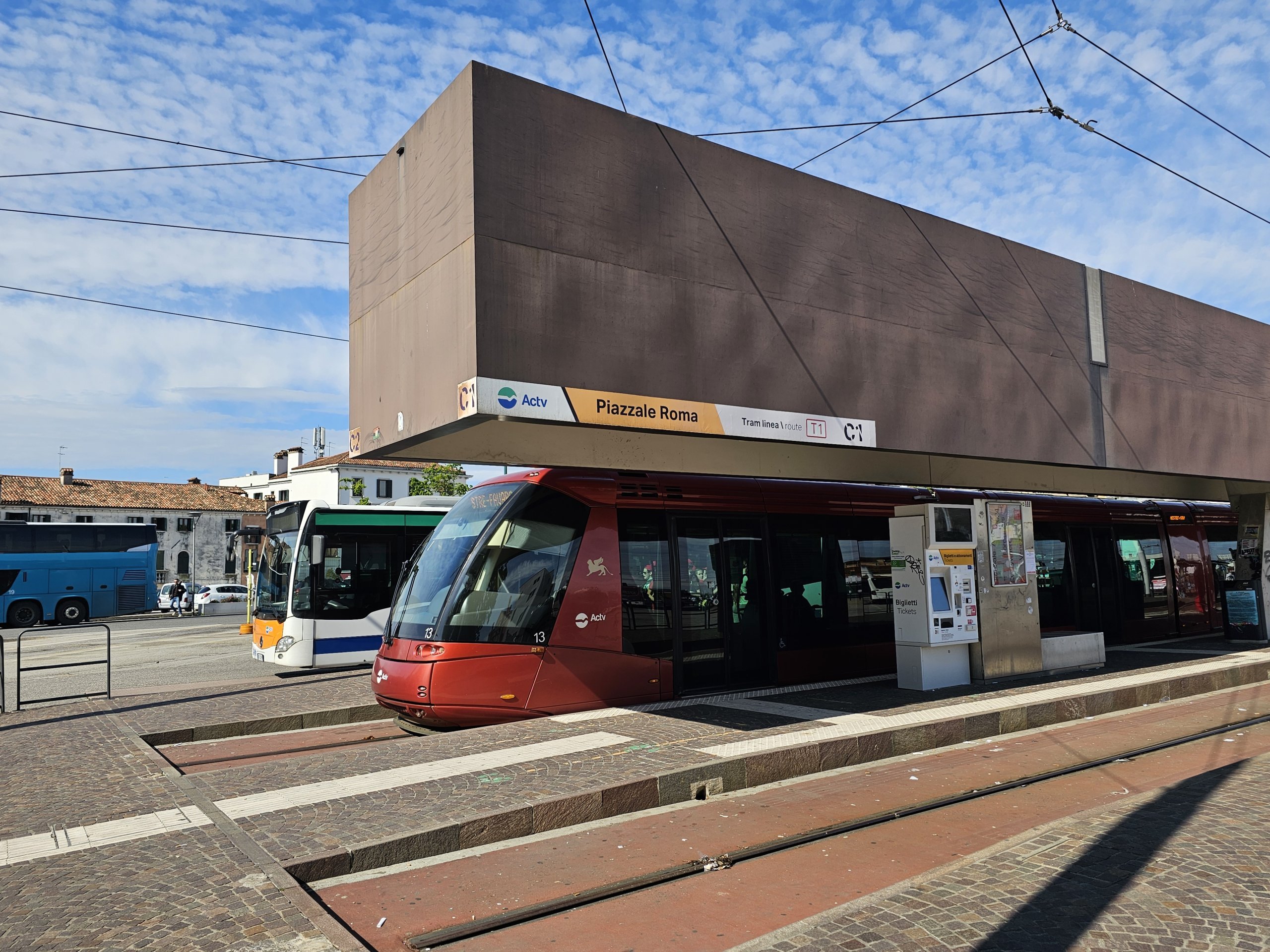
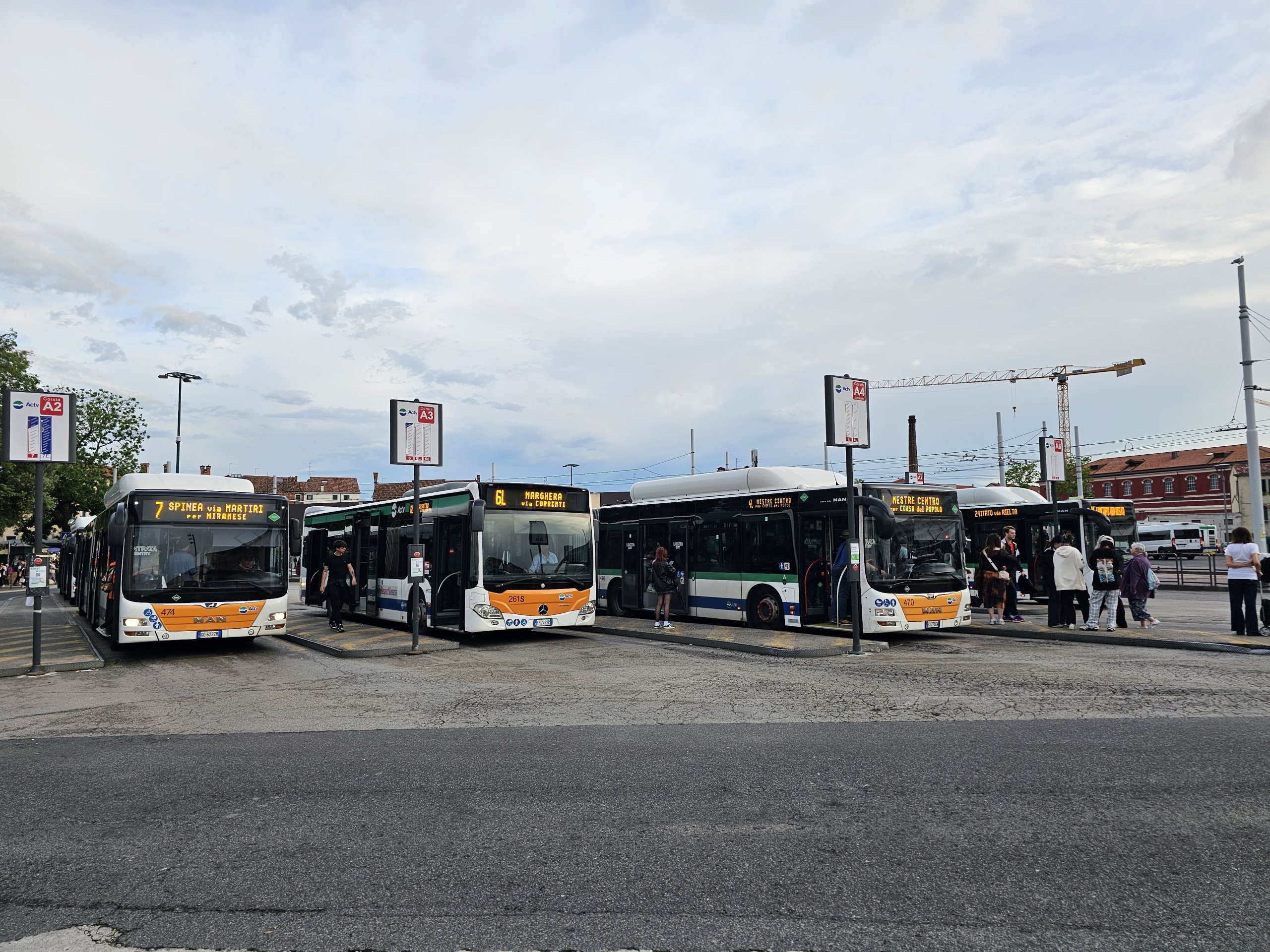
You can find a complete list of timetables on the actv.it website.
- Tram between Mestre and Venice – line T1
- Buses between Mestre and Venice – routes 2, 4, 4L, 5, 6, 6L, 7, 7E, 19, 24, 24H, 43, 56, 66, 80, 84
ACTV buses stop at Piazzale Roma at the first platforms (just before the tram stop).
ATVO buses
You can also use ATVO buses to travel from Mestre to Venice; these mainly serve more distant locations. Timetables are irregular and a single ticket costs 1,75 eur; the season tickets mentioned above are not valid on these services.
It’s worth noting that if you’re anywhere in Mestre and see an ATVO bus with ‘Venezia’ written on it, you can get on it.
You can find more information on the website:atvo.it.
Night-time transport
All-night transport from Venice to Mestre is provided by two bus routes, the N1 and N2, which run every 30 minutes at the same fares as daytime buses (1,5 eur, or by using multi-day tickets).
People Mover
You can use the automated shuttle known as thePeople Mover if you arrive in Venice by long-distance coach (such as Flixbus), a large cruise ship or by car, which you can park at the Tronchetto car park.
This train connects the artificial island of Tronchetto with Piazzale Roma, the central station served by city buses and trams from Mestre, which acts as the gateway to Venice.
People Mover It runs from 7.15 am to 10.50 pm from Monday to Saturday, and from 8.10 am to 9.50 pm on Sundays and public holidays.
- Frequency – every 10 minutes
- Journey time – 10 minutes
- Fare – 1,50 eur
You can buy a ticket from the ticket machine before entering the station. All day and multi-day tickets are also valid on the People Mover.
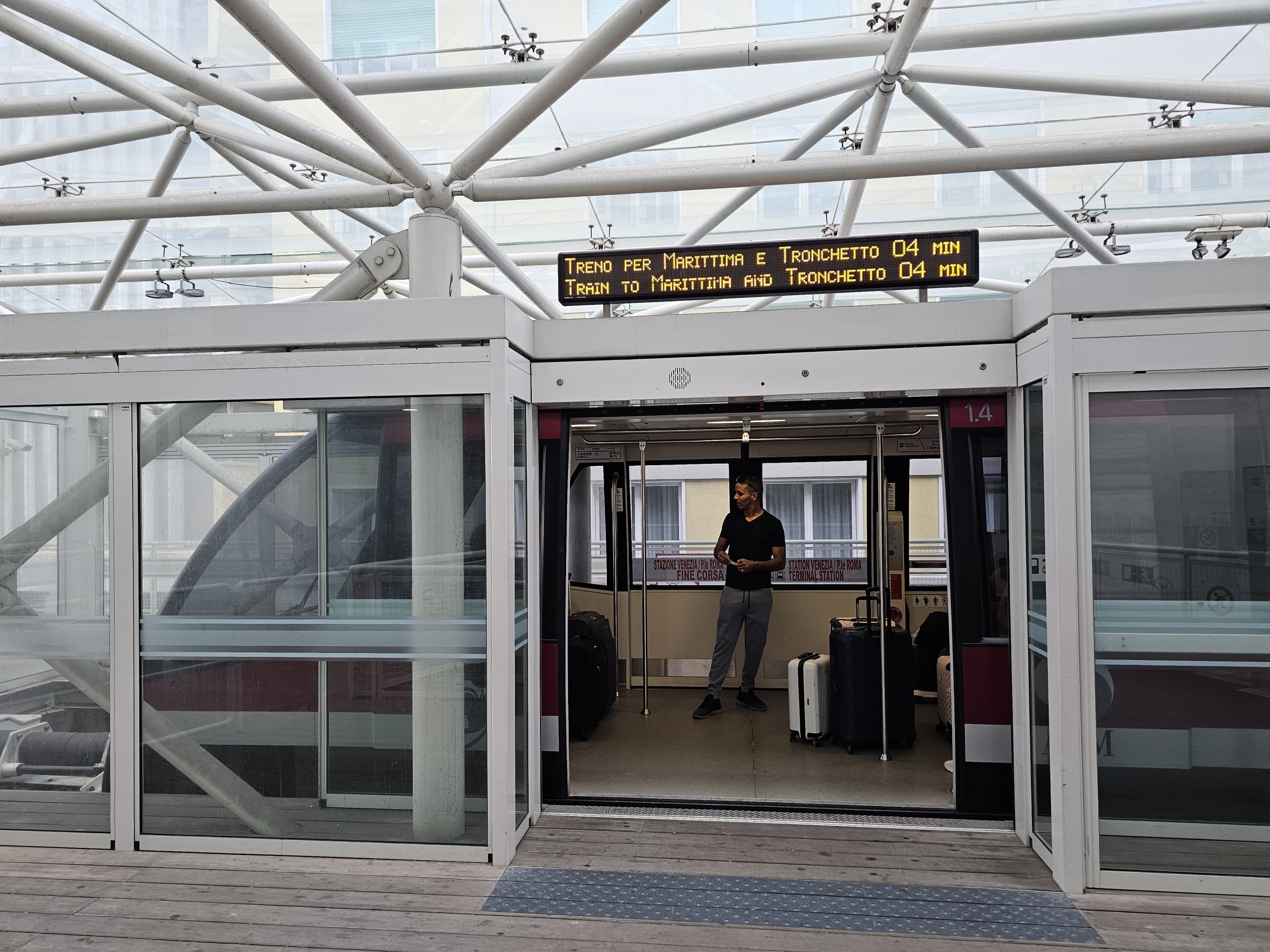
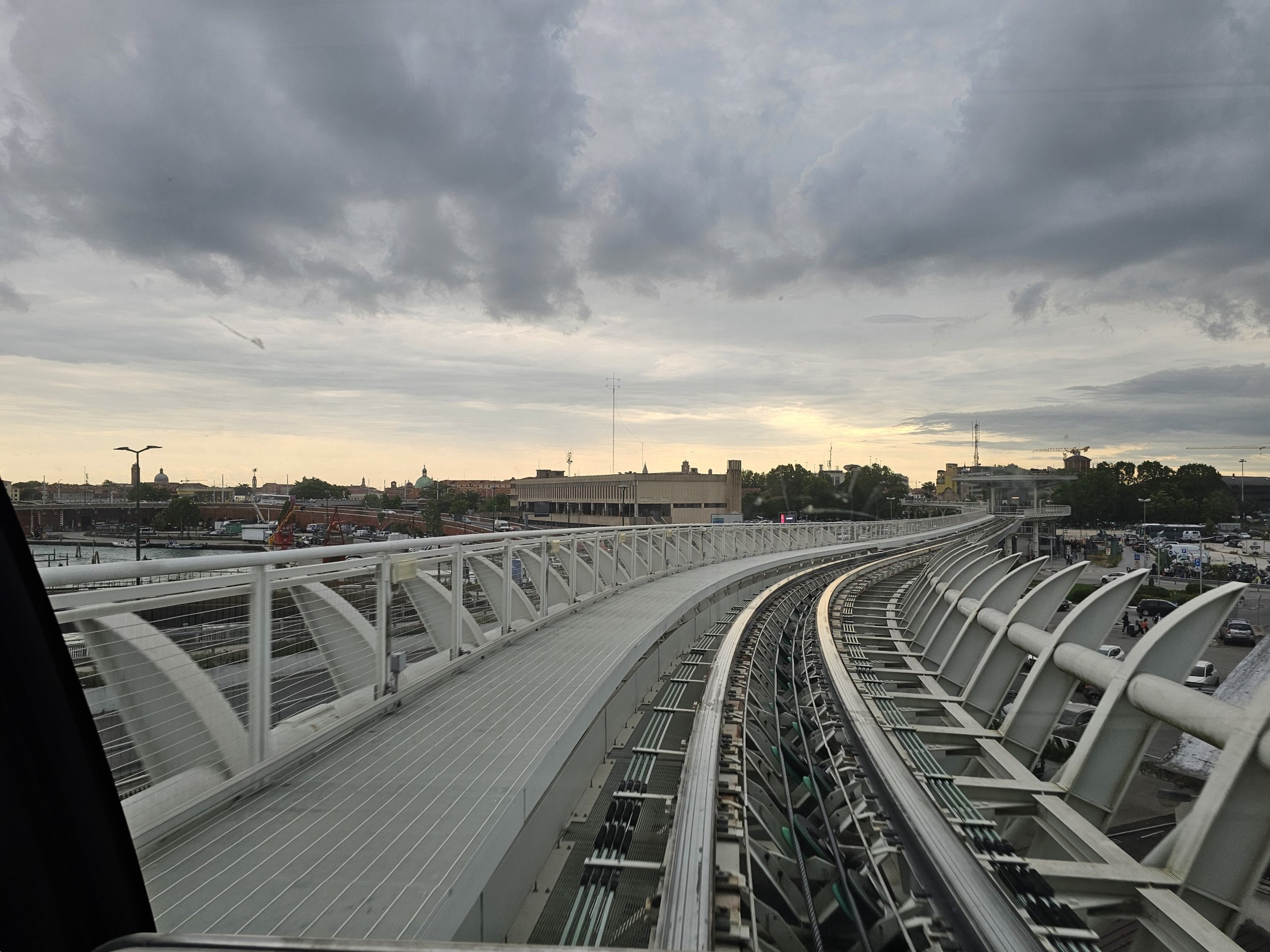
On foot
Your feet will be your main means of transport around Venice and the neighbouring islands. This is simply because the vaporetti only reach the largest canals, whilst the others are served only by footpaths.
Finding your way through the intricate network of narrow streets and canals is made easier by yellow signs pointing towards key landmarks, particularly St Mark’s Square, the Rialto Bridge and the railway station.
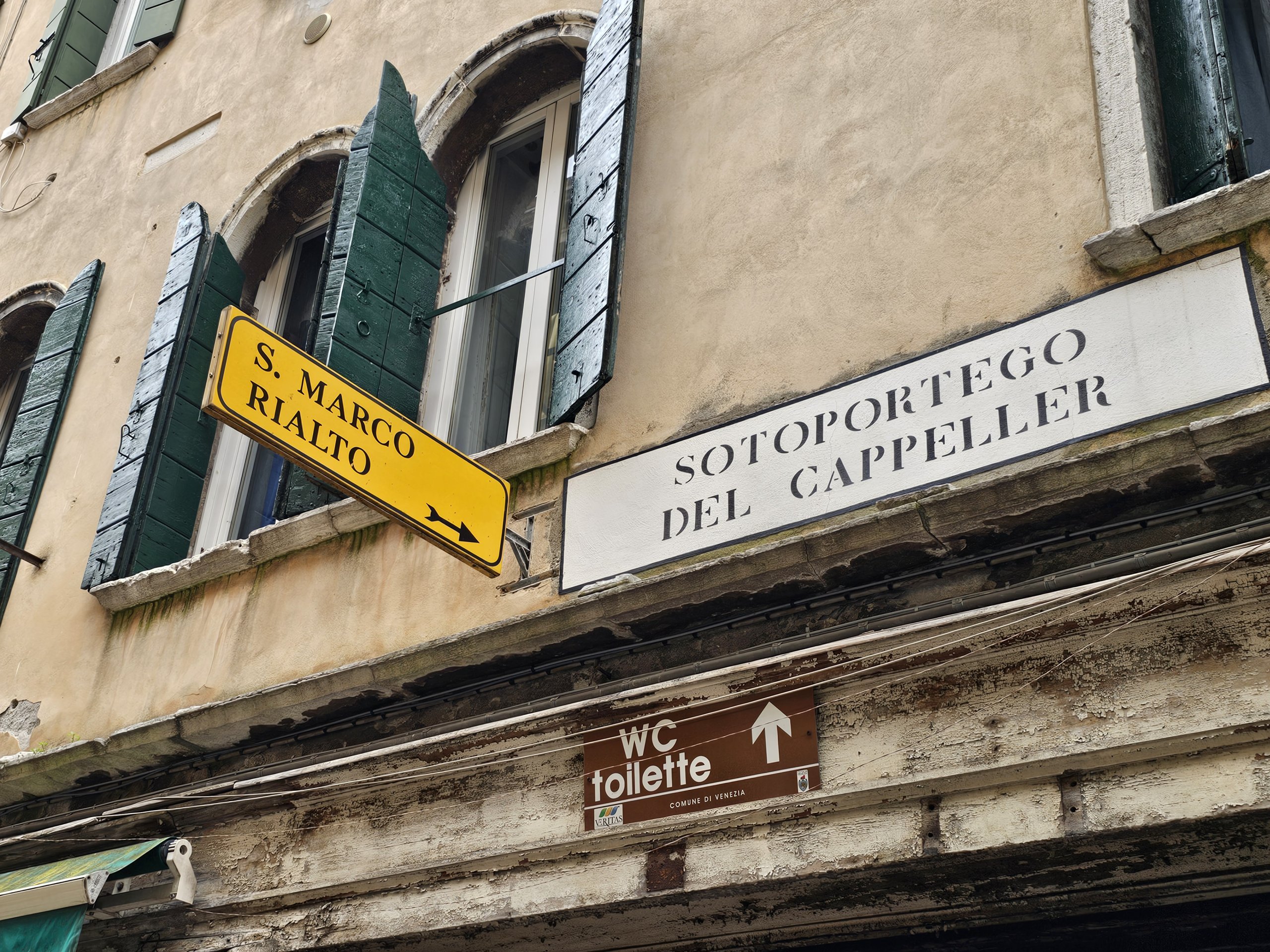
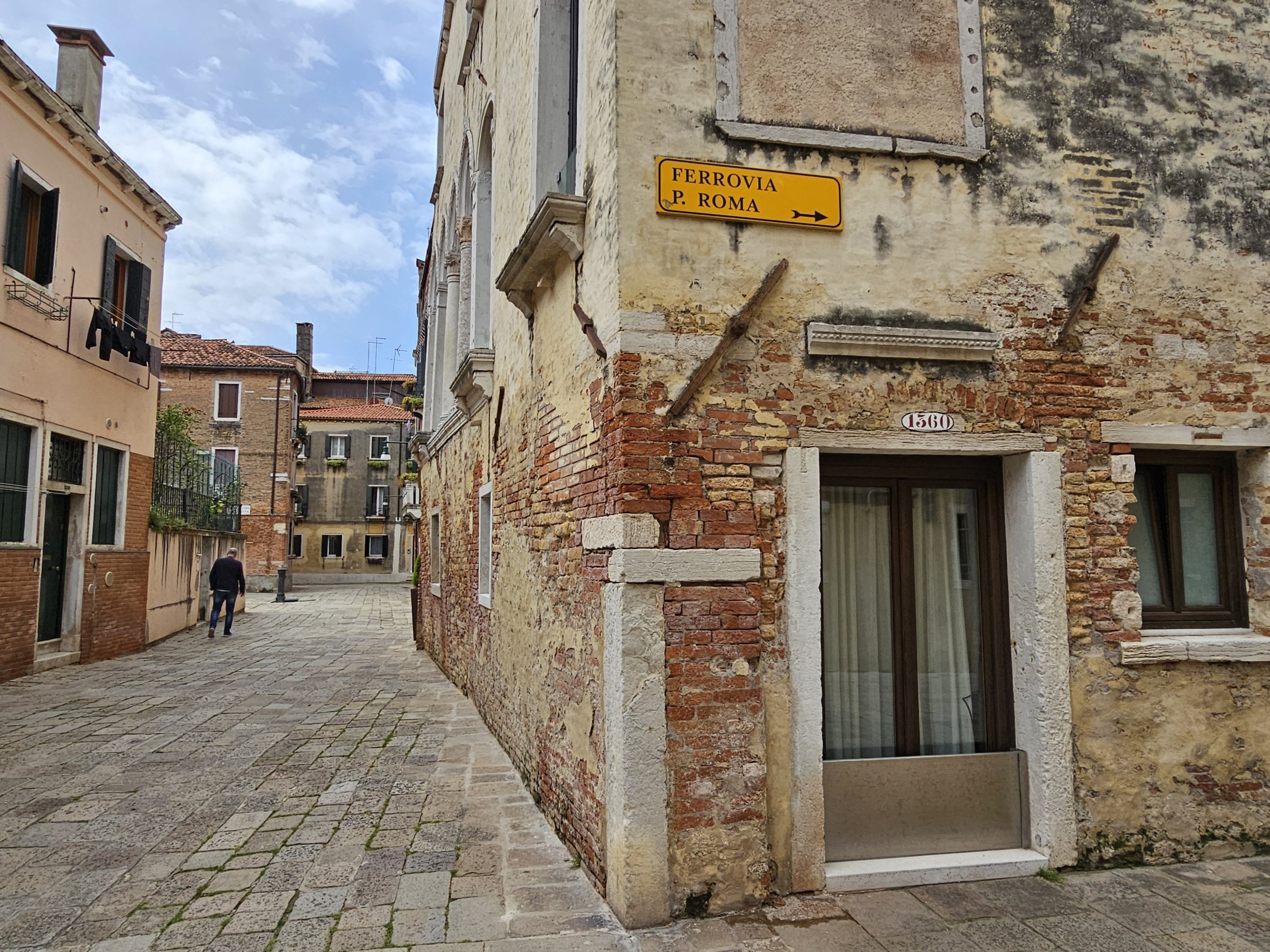
After all, Venice is very small in area, and if you have a good sense of direction and never stop, you can walk right across the whole city centre in 15 minutes.
Where to stay for transport links
The choice between historic Venice and Mestre will significantly affect your entire stay. Mestre tends to be cheaper, but every day you’ll have to make the journey to the station, spend 10 minutes on the train, and then walk from Santa Lucia.
For one or two nights, I’d personally choose historic Venice. The city is at its best early in the morning and in the evening, once the day-trippers have left. Mestre makes sense if there’s a significant price difference, if you’re travelling by car, or if you need to be close to mainland transport links.
You’ll find a detailed comparison of locations in the chapter on where to stay in Venice.
| Location | Best for | A practical hotel |
|---|---|---|
| Near Santa Lucia station | accessible by train, minimal walking with luggage | Hotel Abbazia, about 2 minutes from the station |
| Near Piazzale Roma | Arrival by bus from the airport or by car | Hotel Papadopoli Venezia within easy reach of bus services |
| Near Mestre railway station | lowest prices and a fast train to the city centre | Best Western Hotel Tritone, directly opposite the station |
Any questions left?
If you have any questions or comments about the article...

It's written here, but beware - if you take a bus from Mestre to Venice (and vice versa), don't forget to give your card on the way out! we didn't do it (on the advice of the hotel staff) and instead of 2x1,50 euro (there and back) we were charged 8,40 euro... and I didn't see a tourist on the bus who had to sign off at the exit...