Autumn in Calabria from Bratislava
30 €



Like any European capital, Milan also has a high-quality and extensive public transport network, comprising the metro, buses, trolleybuses, trams and the ‘S’ line commuter trains.
The public transport system is interconnected, so you’ll only need one ticket.
Milan is one of the few European cities with a truly extensive tram network, which is much easier for tourists to navigate than buses, for example.
All services are operated by the transport company ATM, whilst the “S” line trains are operated by Trenord.
Tickets are valid for all modes of transport operated by ATM, i.e. the metro, trams and green-and-white or orange buses and trolleybuses. They are also valid on all railway lines in Milan marked with the letter “S” and a line number, which are operated by Trenord.
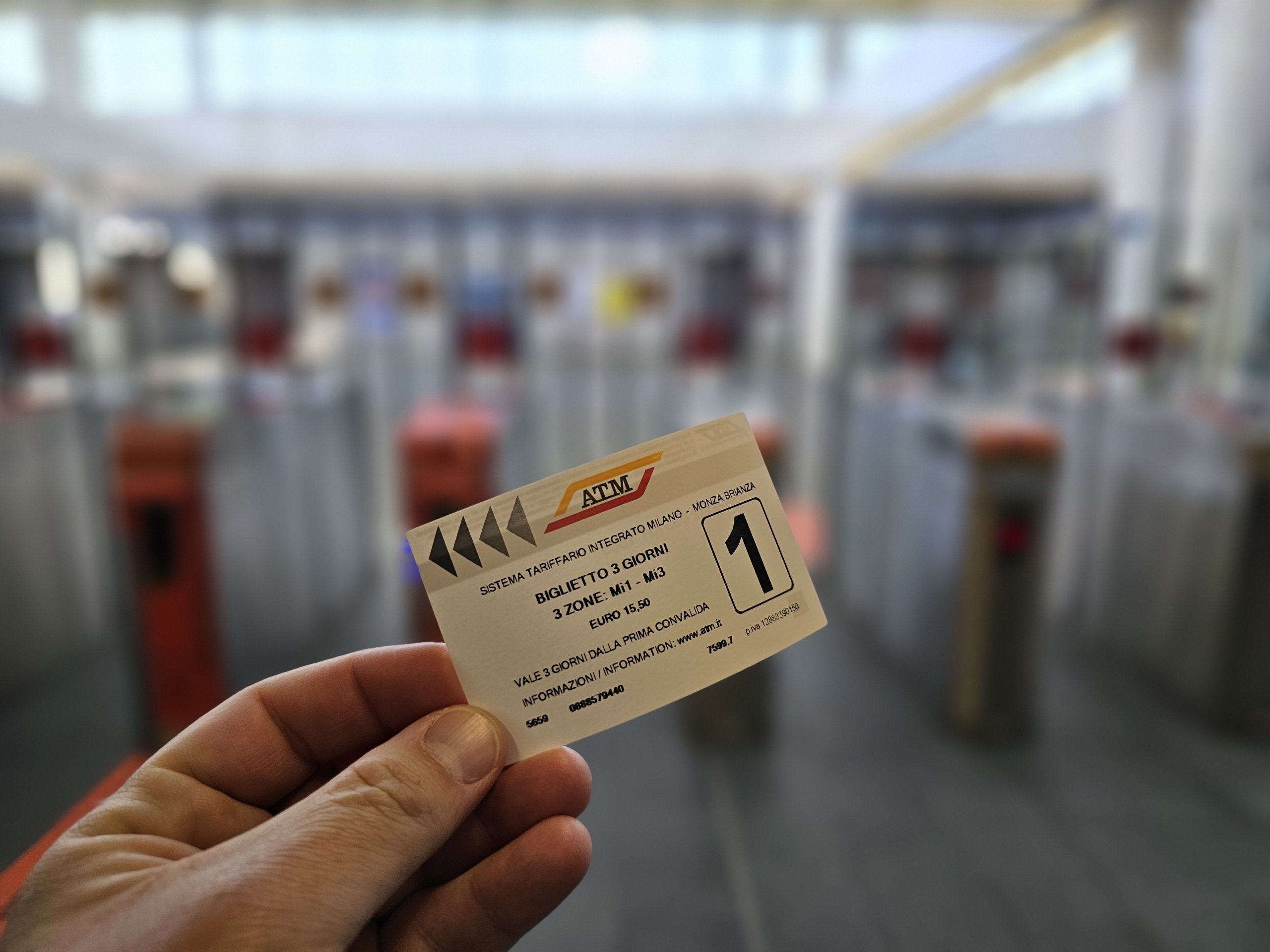
The entire city lies within a single zone, Mi1-Mi3 (which is actually three inseparable zones); only small sections of the red and green metro lines extend beyond this zone, but they do not lead to destinations of interest to tourists. We therefore list below only the ticket prices for the Milan zone.
Prices are the same for all modes of transport within Milan. We list ticket prices for zones 1–3, which cover the entire city. If you are travelling to a hotel in other zones, prices increase; please see the full price list on the website:nuovosistematariffario.atm.it.
| 90 minutes | 2,20 eur |
| 24 hours | 7,60 eur |
| 72 hours | 15,50 eur |
With all tickets, you can change between any modes of transport freely within their validity period.
In Milan, you have three options for buying tickets.
The best way to search for connections between specific stations is via the ATM mobile app (available at: Google Play / App Store); on a computer, use the official Giromilano.it website.
Tram and bus maps in .pdf format are no longer available in the latest versions. However, you can find a map of a specific route (and feel free to tick all of them to see a comprehensive overview) on the giromilano.itwebsite in the ‘Find Lines’ section.
The backbone of Milan’s rapid transport system isits five metro lines, which allow you to travel longer distances easily and comfortably, particularly from the railway station to the city centre, which is itself relatively compact and can easily be explored on foot.
As the metro is the most widely used form of public transport, we’ve compiled detailed information about it in a separate chapter: The Metro in Milan.
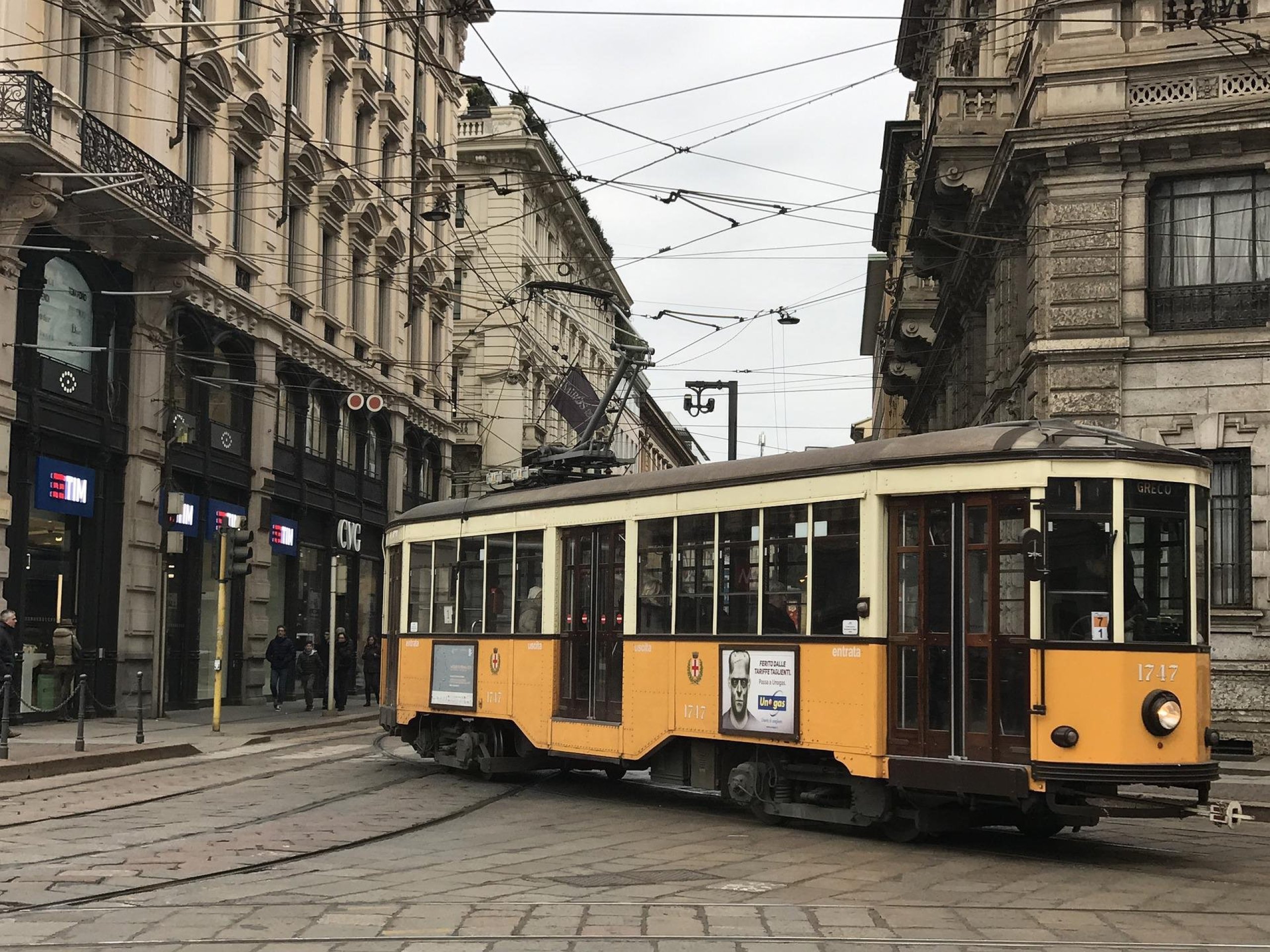
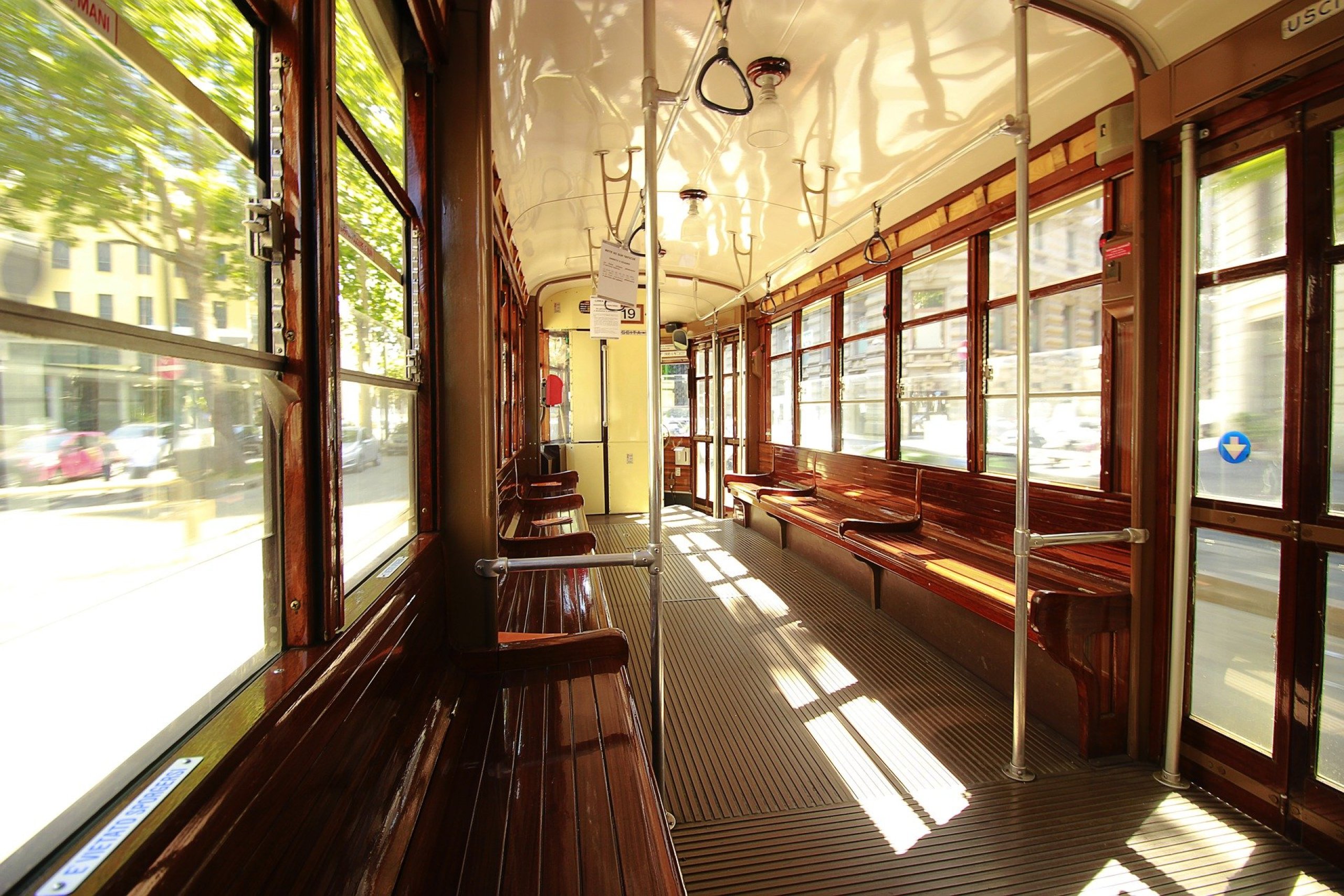
Milan’s tram network is one of the most extensive in Europe and, in terms of the number of kilometres of track, is almost on a par with, for example, the Prague network. What’s more, a ride on a Milan tram is a popular tourist experience, as many routes feature historic trams from the 1920s and 1930s running as part of regular daily service.
You’ll come across these trams on many routes across Milan; there’s no need to check in advance where they run – you simply need to wait at a stop.
However, the highest concentration of historic trams is definitely right in the historic centre of Milan. Despite being part of regular service, these old trams are in perfect condition, and travelling on them is a unique experience. As they form part of the regular network, there is no special fare for these historic trams; standard public transport tickets are valid.
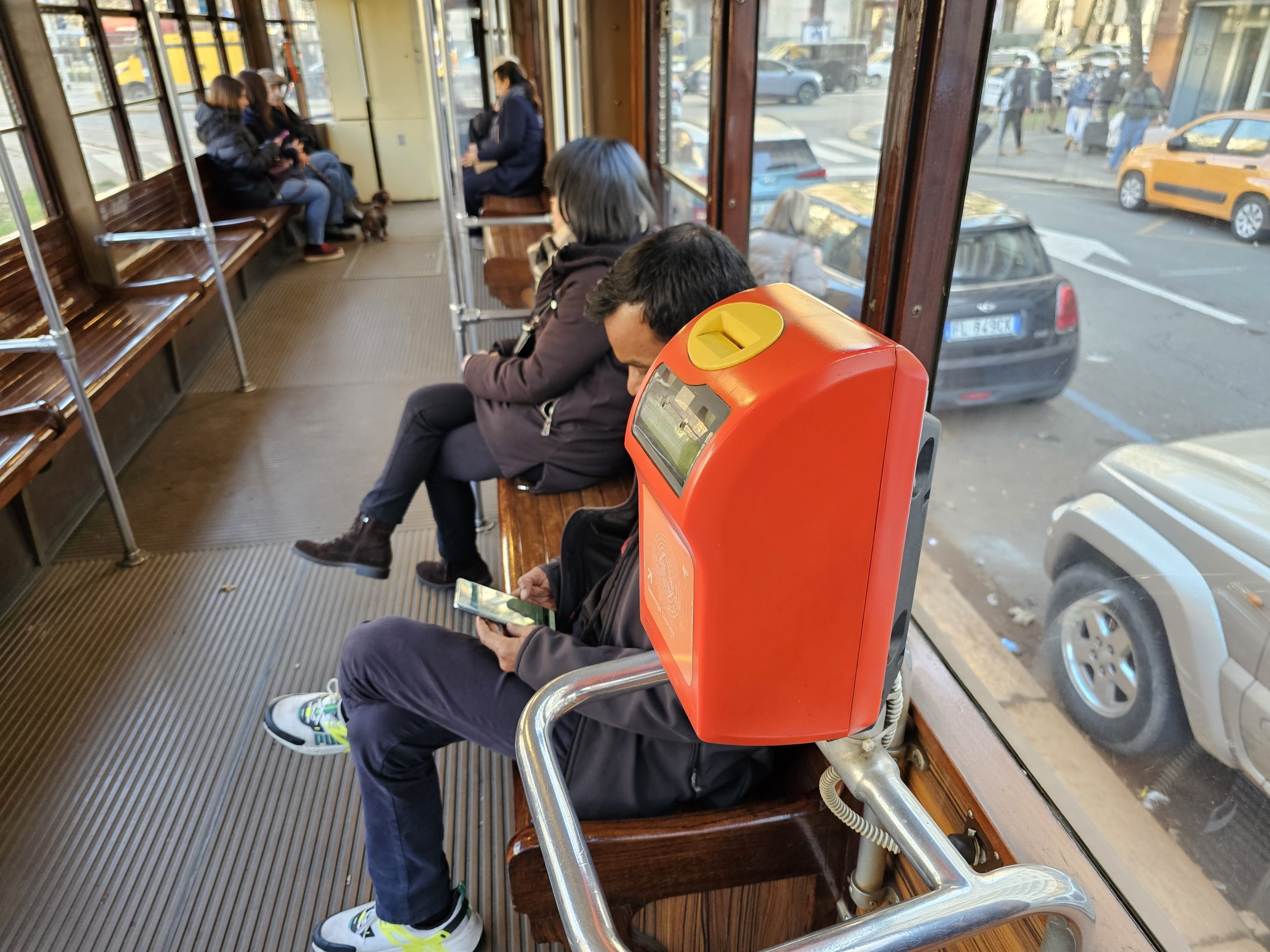
Youvalidateyour ticketon the tram by inserting it into the orange validator when you board. If you have a 24-hour or multi-day ticket, you must validate it on every journey.
Do not validate your ticket again when alighting!
You can board and alight through any of the doors.
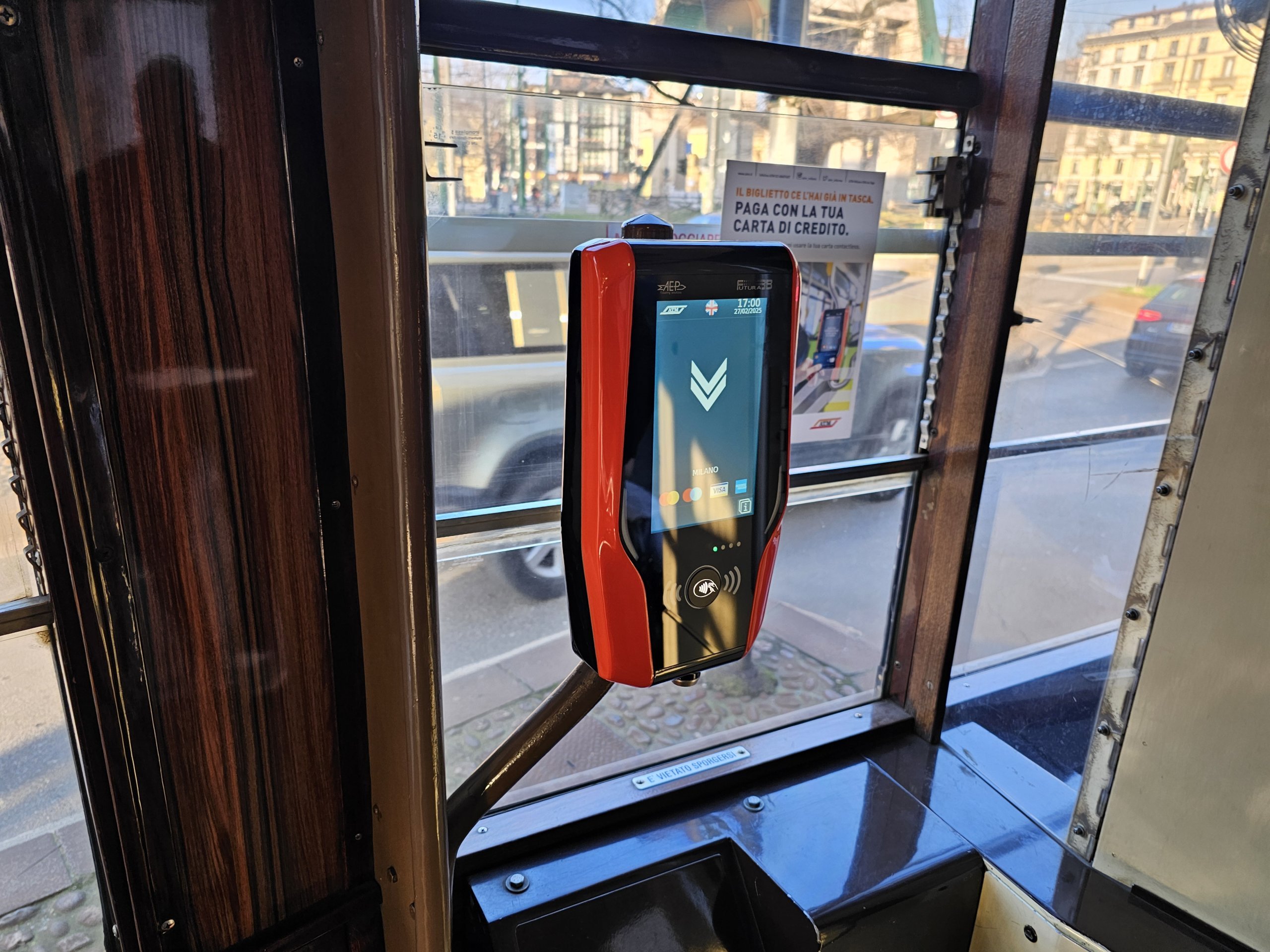
Trams have separate validators for paper tickets and for contactless card payments.
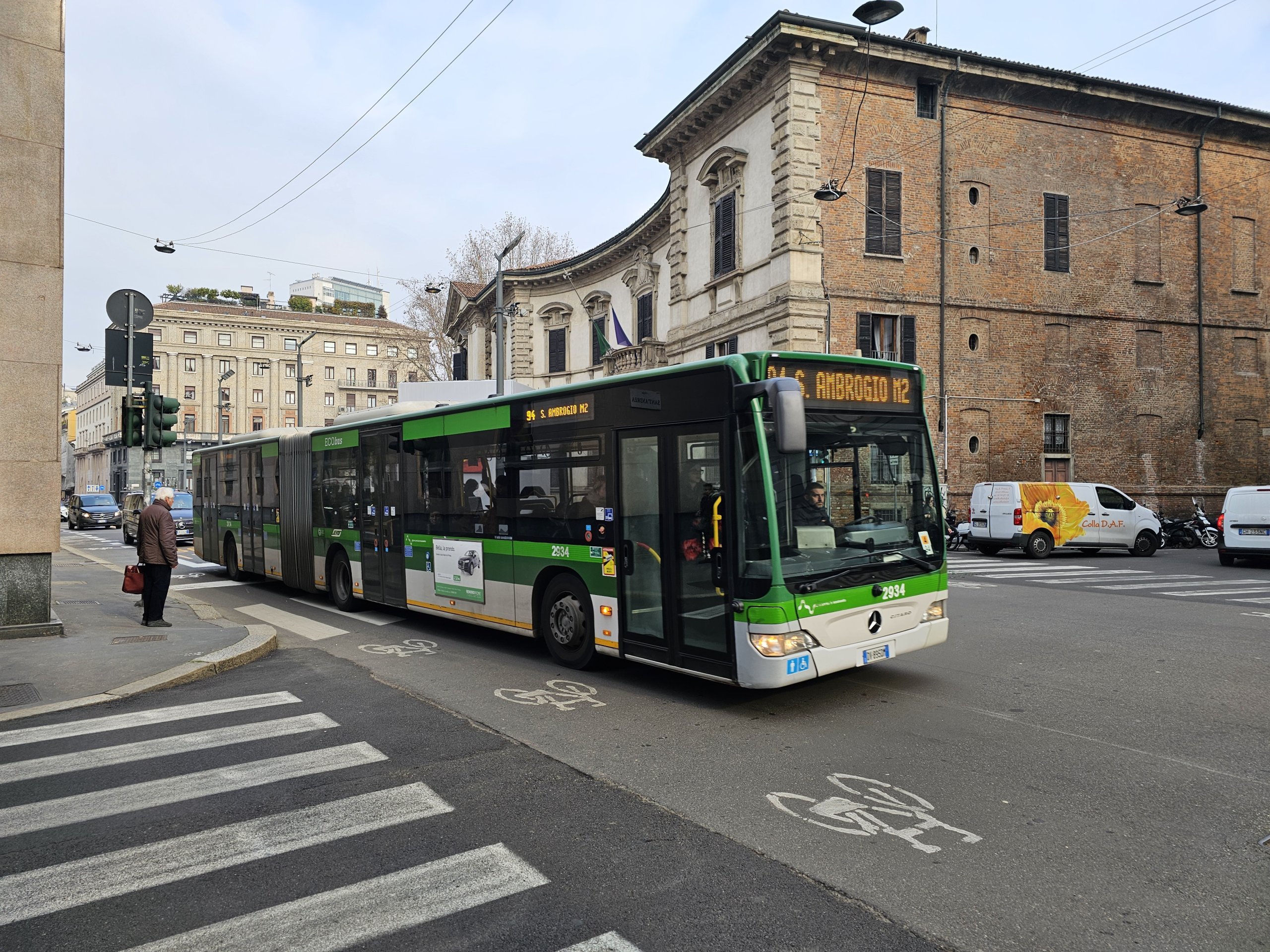
Buses are ubiquitous in the wider city centre and on the outskirts of Milan, though it can sometimes be rather tricky to work out where a particular route is actually going at the stops. You’ll therefore mainly use buses for regular commutes, for example from more distant hotels, or for occasional journeys when it seems the bus is heading in the direction you need.
Youvalidateyour ticketon the bus by inserting it into the orange validator.
If you have a 24-hour or multi-day ticket, you must validate it on every journey.
Do not validate your ticket again when alighting!
You can board and alight through any door.
Buses have separate validators for paper tickets and for contactless card payments.
Like many other European cities, Milan has a network of suburban trains designated, following the German model, by the letter ‘S’ followed by the specific line number. Although these services are mainly used for commuting from towns and villages outside Milan, within the Mi1–Mi3 urban zones you can use these trains without any worries on standard tickets.
However, you won’t find much use for these trains in the city centre itself; they are mainly useful along the diagonal route running from the north-west to the south-east in the northern part of the wider city centre, where several lines run, operating as frequently as the metro.
Lines S3 and S4 run into the city centre to Cadorna station from the northern parts of Milan; you can use these, for example, when commuting from hotels if you’ve found cheaper accommodation on the outskirts of Milan.
The metro and daytime services generally run from around 6.00 am to 0.30 am. If you’re planning to head home after midnight, you’ll need to use the night bus services, which replace the metro and several other lines, operating to cover as much of the city as possible.
Both 24-hour and 3-day tickets are valid on night services, but single-journey tickets are of a different type here. They cost 1,50 eur and are valid throughout the night for an unlimited number of changes. Somewhat unusually, you cannot buy these night tickets from public transport ticket machines, but from parking ticket machines located throughout the city – literally every few metres on every street.
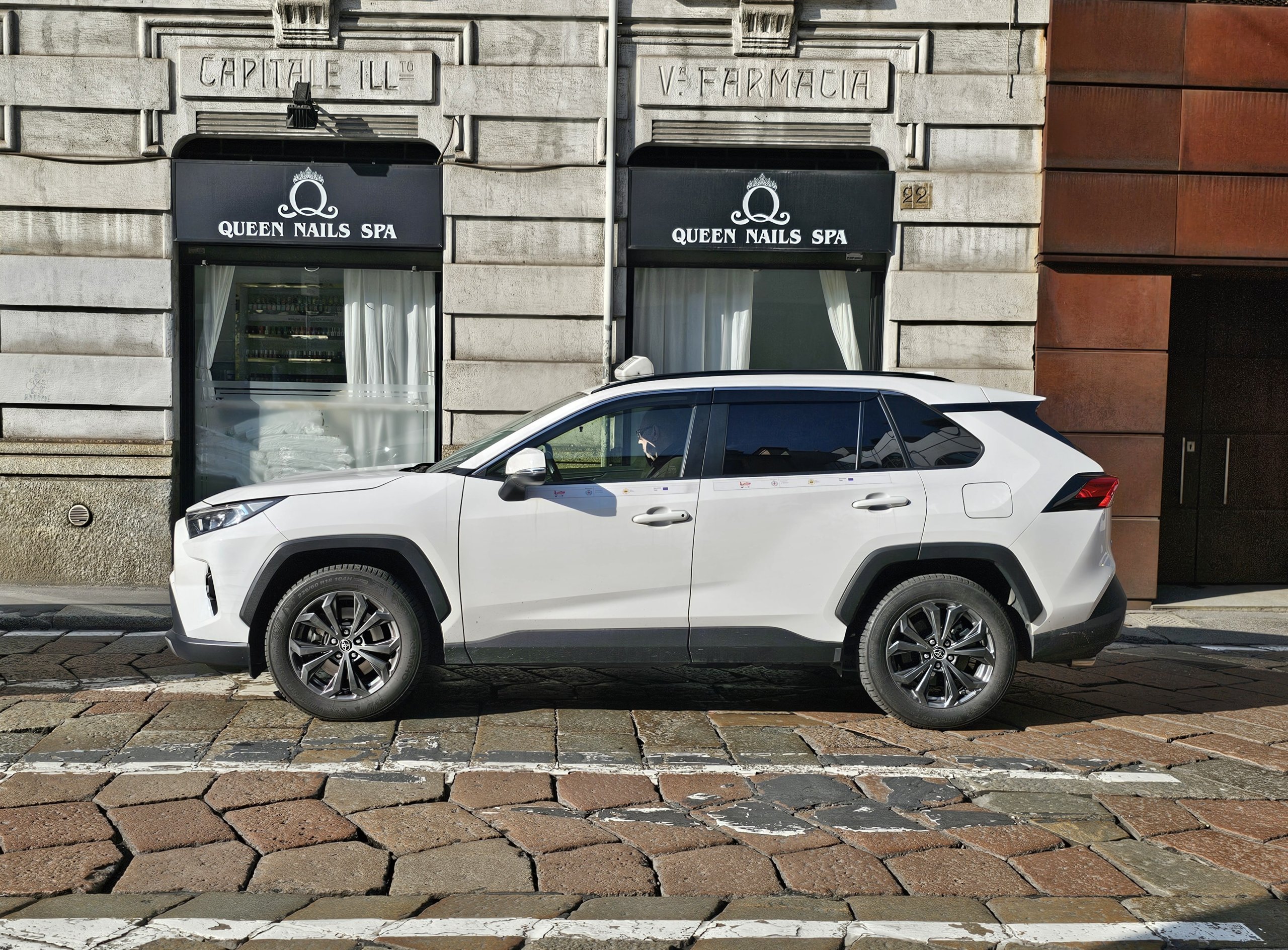
There are plenty of taxis around the city, and they’re all easily recognisable by their white colour. A taxi ride will cost you several times more than public transport, so we recommend using a taxi only for your initial journey to your hotel.
The starting fare ranges from 3,50 eur to 7 eur. You’ll find it costs the most at night and, unsurprisingly, during major public holidays. Taxi drivers charge an average of 1 eur per kilometre travelled. If you’re considering travelling from the airport to the city centre by taxi, don’t count on the prices mentioned above. The airport and its surroundings fall into a higher fare category, and a journey from Malpensa to the city centre will cost you around 95 eur.
Taxi drivers always use the meter, and you’ll hardly ever encounter any scams targeting tourists here.
A cheaper alternative to taxis is Uber. How does it work? Simply download the app onto your smartphone and enjoy a hassle-free journey. The fare from the Main Station to the city centre will cost you approximately 15 eur to 20 eur.
All three of Milan’s airports are located relatively far from the city centre. Regular public transport only serves Linate Airport, which is, however, the smallest and has no direct flights to Central Europe.
The other two major airports are situated approximately 60 km from Milan; you can find detailed transport information in our guides – simply click on the name below:
If you have any questions or comments about the article...