
Metro in Copenhagen


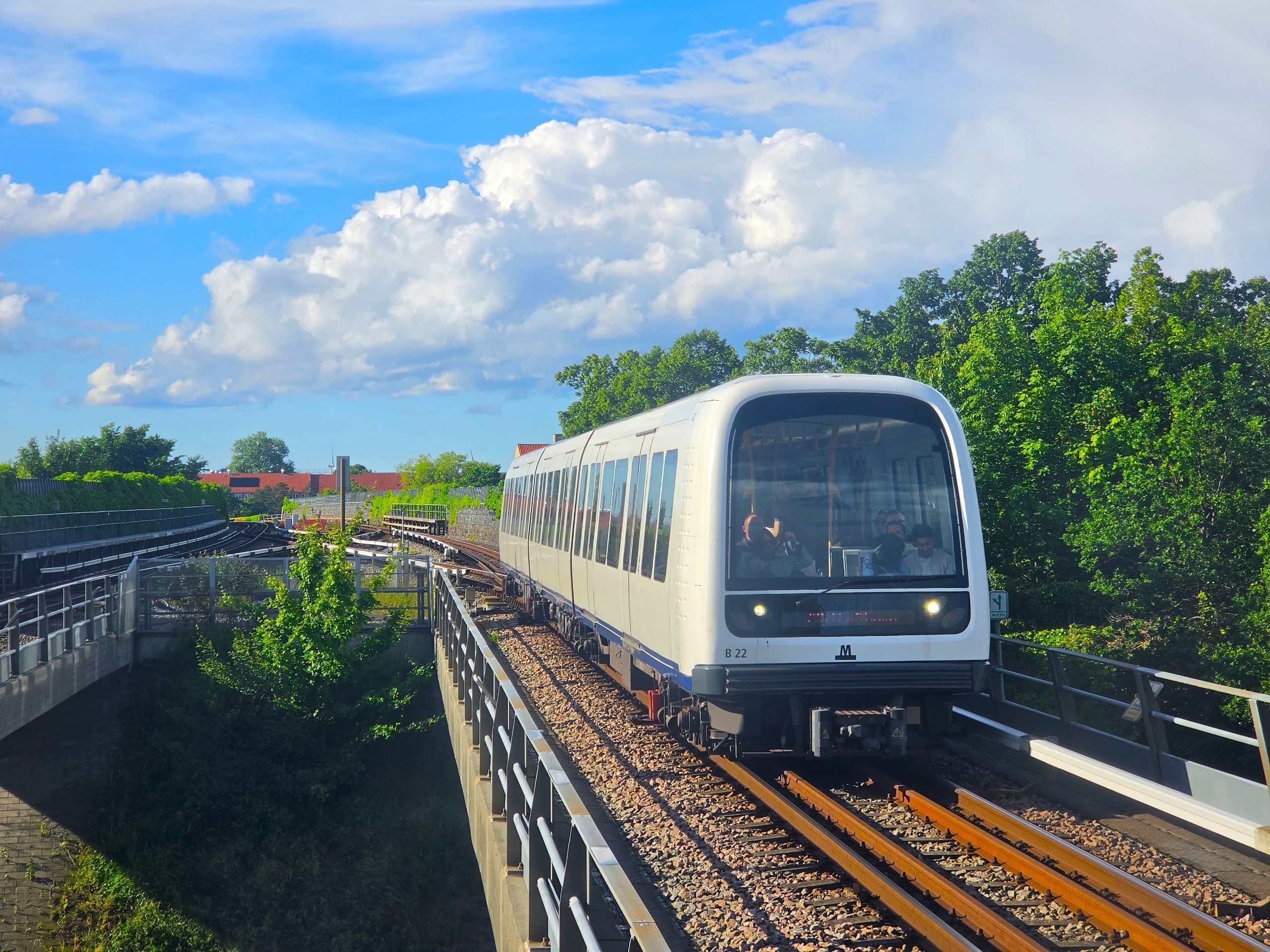
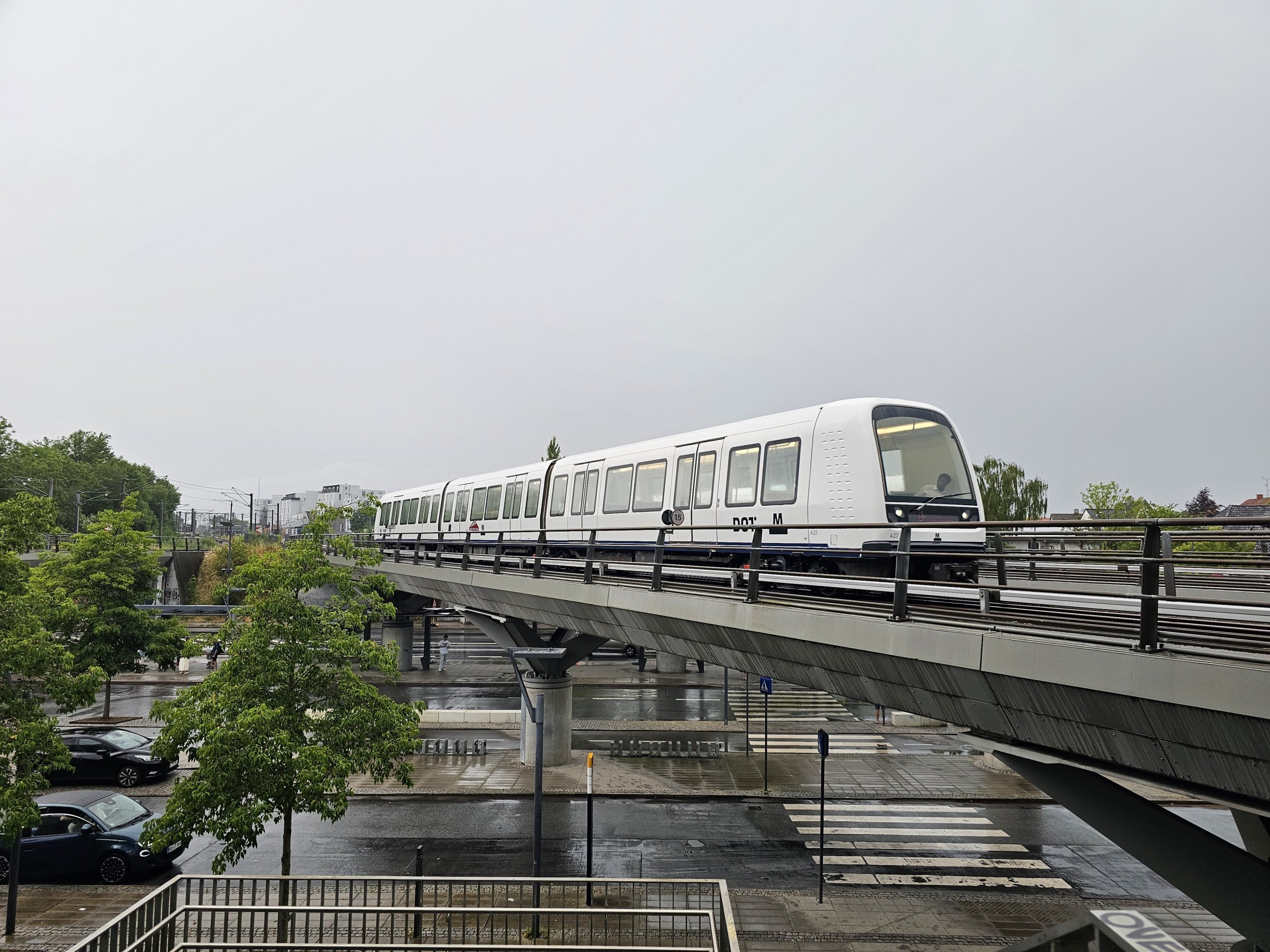
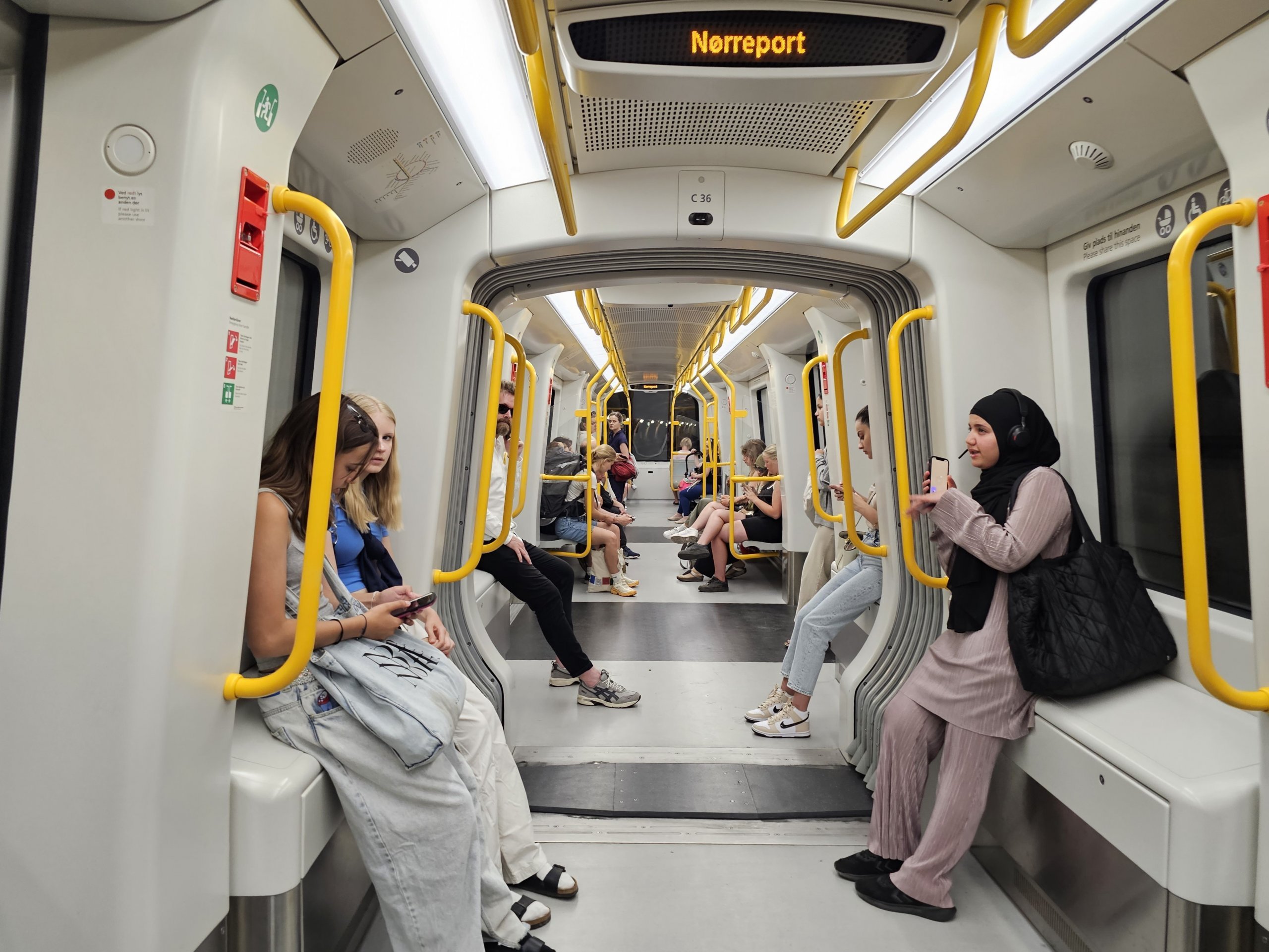
The Copenhagen Metro has only been in operation since 2002, making it modern and highly efficient. The metro trains are driverless, offering passengers panoramic views of the track from both the front and rear seats.
The metro runs underground in the city centre, whilst in the suburbs it runs above ground.
The network of four metro lines is complemented by a busy urban railway.
The Copenhagen Metro at a glance
- The metro runs 24 hours a day
- Line M2 connects the city centre with Copenhagen Airport
- Tickets are valid on the metro, buses and suburban trains
- A single ticket for travel within the city centre costs from 24 dkk
- The journey from the airport to the city centre takes approximately 15 minutes
If you’re planning a journey from the airport, please also read the detailed guide on the ‘Transport from Copenhagen Airport’ page.
Still choosing a hotel? Take a look at our tips on where to stay in Copenhagen.
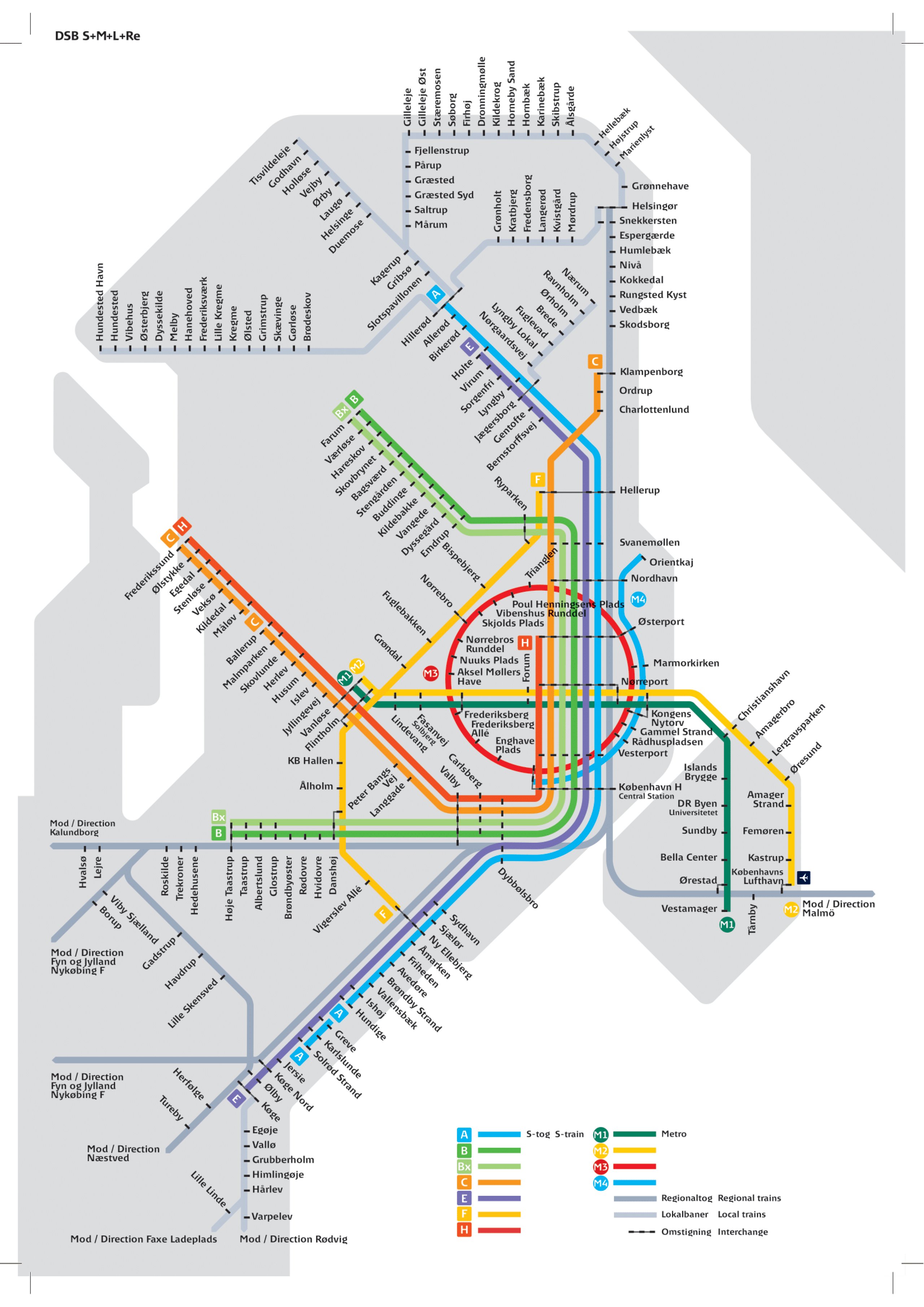
Copenhagen Metro Map
Which routes do the various metro and train lines follow? Official maps of all modes of transport, available for download as PDF files, can be found on the website:dinoffentligetransport.dk/en.
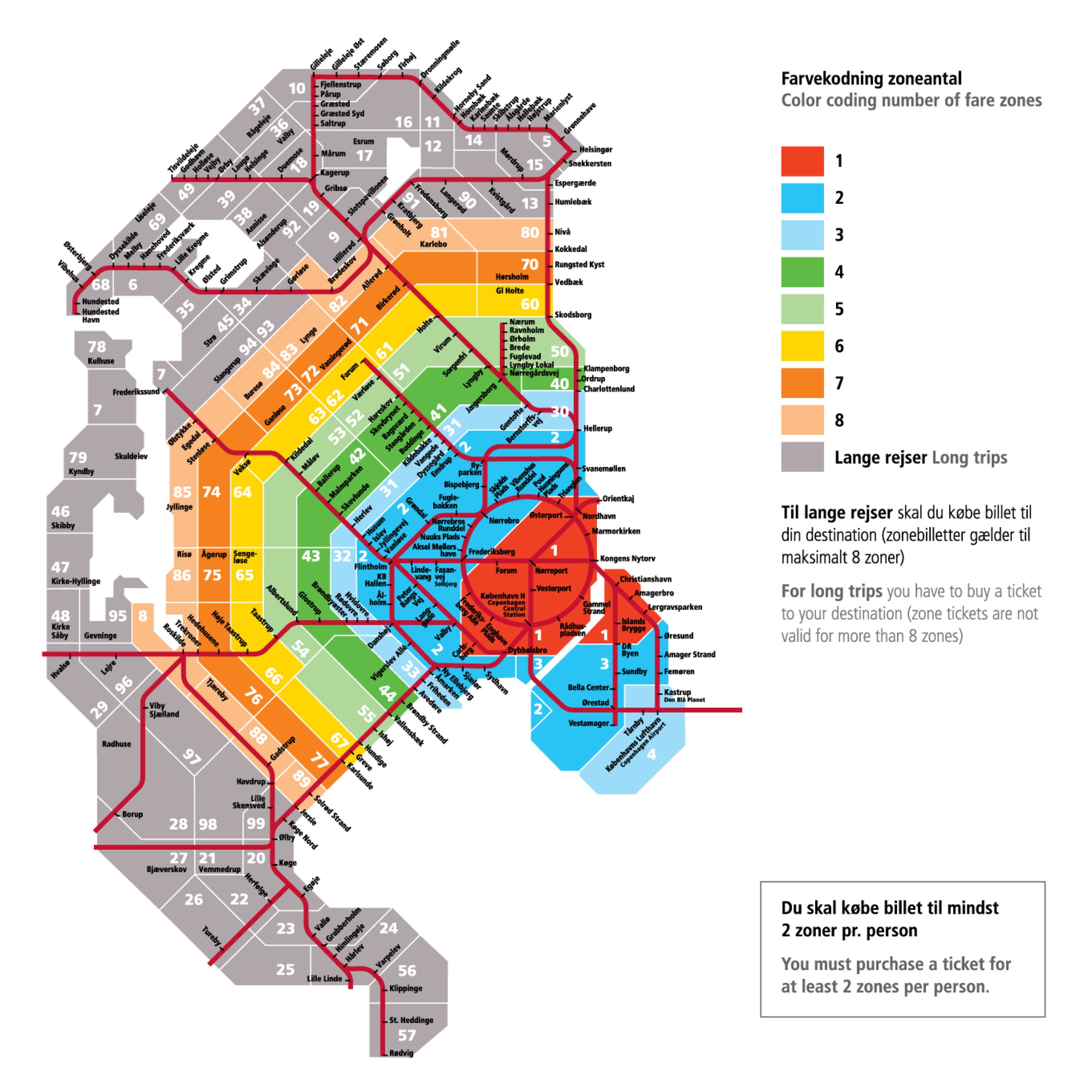
Metro fares
Both the metro and all trains are part of the public transport system, so you can use combined tickets that are also valid on buses and ferries.
Prices are determined by the number of zones travelled through. Central Copenhagen is divided into zones 1, 2 and 3, whilst the southern part of the city, including the airport, extends into zone 4.
The cheapest ticket is for two zones; day passes and multi-day passes are only available for zones 1–4.
- 24 hours (zones 1–4) – 100 dkk
- 48 hours (zones 1–4) – 160 dkk
- 72 hours (zones 1–4) – 220 dkk
- 90 minutes for 3 consecutive zones (e.g. journey to the airport) – 30 dkk
- 75 minutes for 2 consecutive zones (journey through the city centre only) – 24 dkk
Full-day and multi-day tickets are called ‘City Pass Small’.
There is also a ‘Large’ option for the wider Copenhagen area, for example when travelling to Roskilde or Helsingør.
Is it better to buy single tickets or a City Pass?
If you’re planning to walk around most of the city centre and only use the metro occasionally, I’d start with single tickets.
I’d consider the City Pass Small if you’re making repeated journeys throughout the day, for example from a hotel outside the city centre and between more distant attractions.
To give you an idea: four individual two-zone tickets cost 96 dkk, whilst five cost 120 dkk.
An all-day City Pass for 100 dkk is therefore cheaper than five such tickets. Changing lines whilst a ticket is still valid does not, of course, count as a further purchase.
City Pass or Copenhagen Card?
It’s important to distinguish between two different things here:
The City Pass Small is a travel pass.
The Copenhagen Card DISCOVER includes transport as well as entry to more than 80 sights and attractions. With the DISCOVER option, you can also use the metro and airport transfers. The HOP option does not include standard public transport.
I wouldn’t buy a Copenhagen Card just for the metro. The 24-hour DISCOVER option costs 589 dkk, whilst the City Pass Small on its own 100 dkk.
It’s worth working out whether the card is good value if you’re planning several paid visits during its validity period. It includes, for example, Rosenborg, Amalienborg and entry to Tivoli. However, it does not include rides on the attractions at Tivoli.
After purchase, you’ll need to load and activate the card in the Copenhagen Card City Guide app. The voucher from GetYourGuide itself is not a valid ticket. If you plan to use the card on your journey from the airport, please activate it before boarding.
How do I buy a ticket?
You pay the fare viathe Rejsebillet mobile app. When purchasing a ticket in the app, you select the date and exact time from which the ticket will be valid, and then you don’t need to worry about a thing.
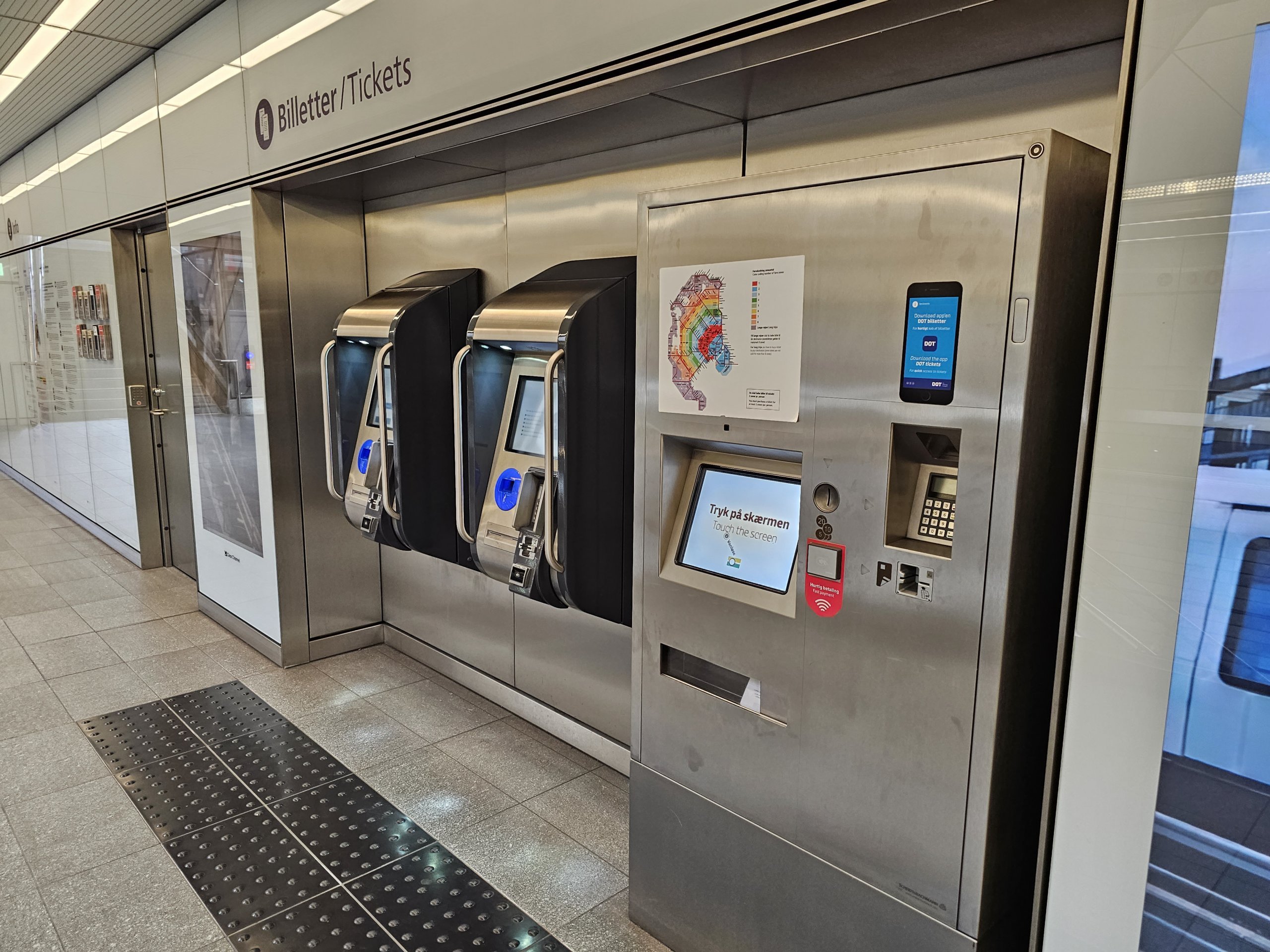
Of course, you can also opt for traditional paper tickets, which you can buy from the square silver ticket machines at every underground station. They are always located in front of the entrance to the platform.
Do contactless cards work in Copenhagen?
No.
At the moment, you can’t ‘tap’ your own bank card on the metro; you always need to buy a ticket via the mobile app or a paper ticket.
Metro lines
There are four metro lines in operation in Copenhagen. On some sections, however, two lines run together, which halves the frequency of services.
Metro routes are always identified by a colour and a number.
- M1 🟢 + M2 🟡– for much of the route, these lines run together from the Vanløse terminus in the east of the city to the historic centre (Kongens Nytorv and Christianshavn). Here, the routes split. The green M1 continues straight south to the terminus at Vestamager, whilst the yellow M2 runs along the coast to Copenhagen Airport.
- M3 🔴– a circular and very busy route connecting key locations in the city centre. The busiest section between Østerport, Kongens Nytorv and the main railway station is shared with the M4 line
- M4 🔵– a central line connecting Central Station, Kongens Nytorv and Østerport, continuing north to the modern Orientkaj district. To the south, it runs to København Syd.
As well as the metro, you can also use trains to get around the city centre and the surrounding areas.
Official metro website:intl.m.dk
Copenhagen public transport journey planner:dinoffentligetransport.dk/en
Which station should you get off at to visit the sights?
When planning a sightseeing tour, it’s more useful to know the specific stop than to memorise the entire route. You’ll find these useful for several well-known attractions:
| Where are you heading? | Underground stations | Lines |
|---|---|---|
| Nyhavn | Kongens Nytorv | M1, M2, M3, M4 |
| Rosenborg | Nørreport | M1, M2 |
| Amalienborg | Marmorkirken | M3, M4 |
| Christiansborg | Gammel Strand | M3, M4 |
| Tivoli | Rådhuspladsen or København H depending on the entrance | M3, M4 |
| Christiania | Christianshavn | M1, M2 |
From the stations, continue on foot. You’ll find details on visiting each place in the links; for further inspiration, see our guide to what to see in Copenhagen.
Train lines
Some services are labelled ‘S-tog’ and operate exclusively within the city, whilst other trains arrive from more distant destinations (Re, IC, ICL), but you can use them to travel around Copenhagen without any problems on a standard public transport ticket.
When should you use the metro and when is it better to take the train?
Many tourists automatically opt for the metro, but on some routes the trains are faster.
For example, between the main station, København H, and Østerport station, the train is usually quicker than a combination of the M2 and M4 lines.
What’s more, trains serve the wider Copenhagen area, including towns such as Helsingør, Roskilde and Hillerød.
If you’re planning a trip outside the city centre, it’s worth checking your journey on the Rejseplanen journey planner before you set off.
How does the metro work?
The Copenhagen Metro is fully automated with no staff on board. The stations are modern and very clean, as are the metro trains.
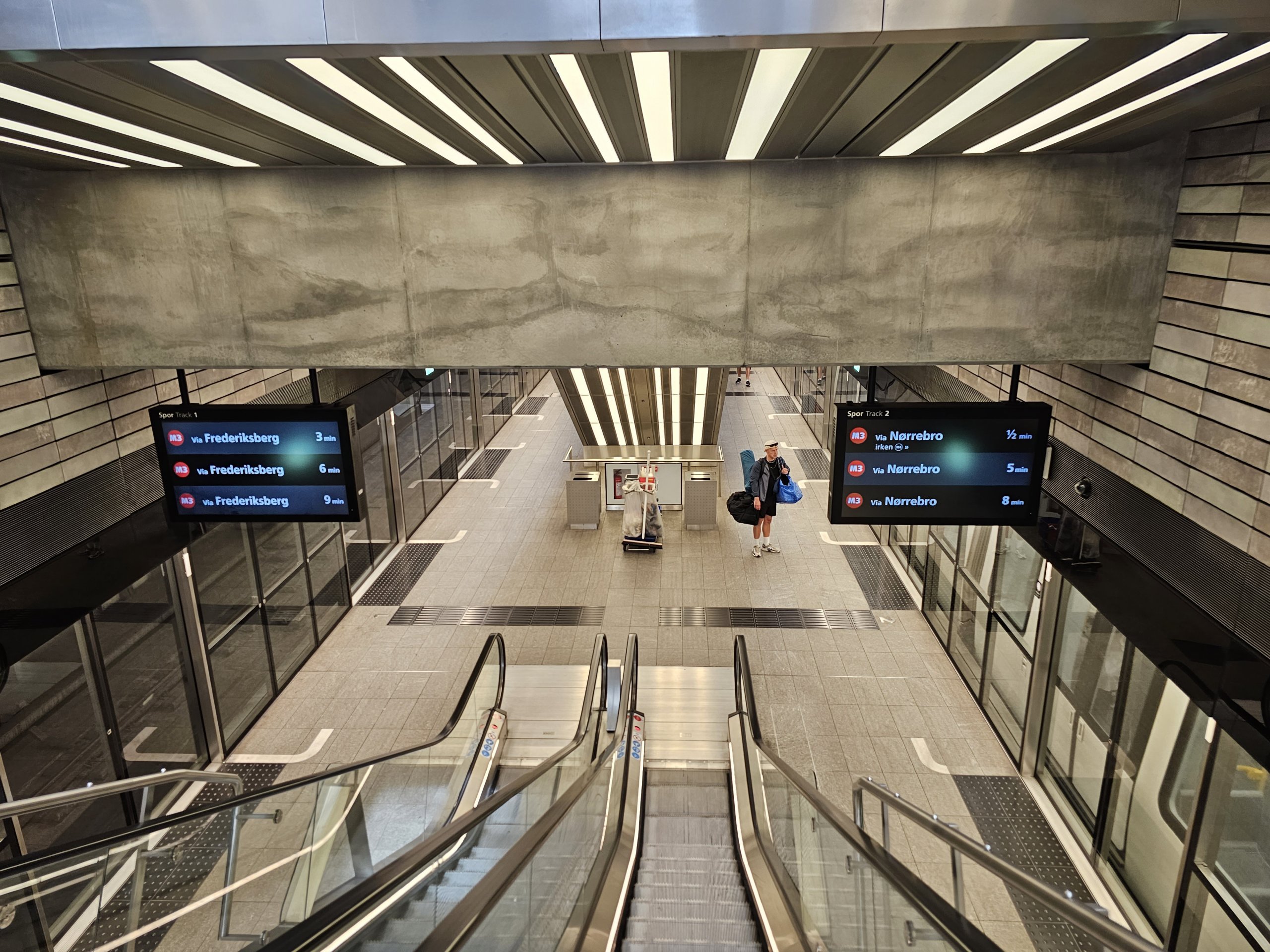
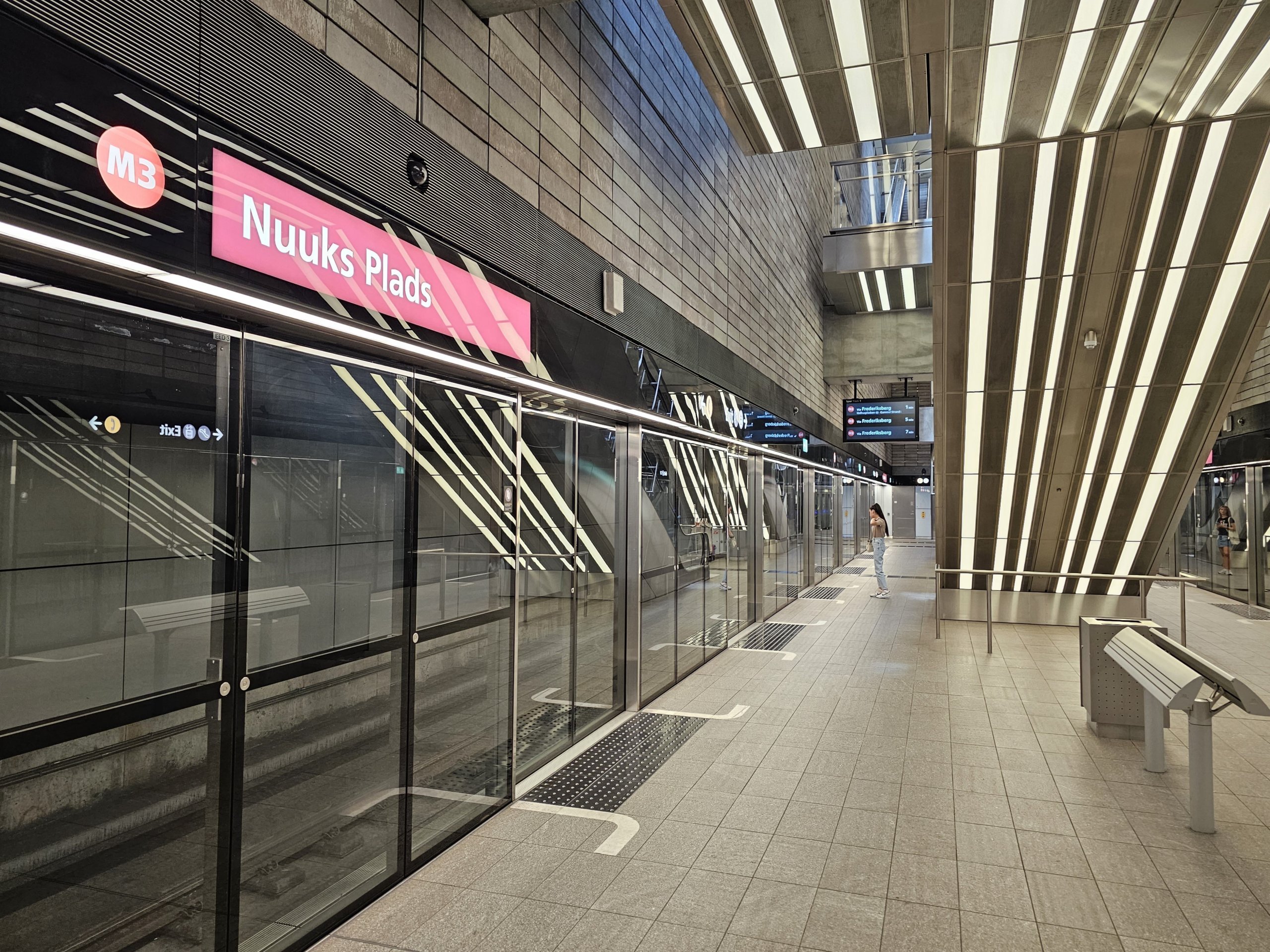
You can access the platforms without restriction; there are no turnstiles, and tickets are only checked during random spot checks by ticket inspectors.
The platform is separated from the tracks by glass walls with sliding doors, which open automatically when a metro train arrives at the station. There are no buttons to open the doors; they always open automatically.

Timetables and operating hours
All metro lines run every 2–4 minutes on weekdays, and every 4–5 minutes during off-peak hours and at weekends.
The Copenhagen Metro runs24 hours a day. Night-time intervals range from 6 to 20 minutes. The circular Red Line M4 runs in one direction only at night.
Detailed information on timetables can be found on the metro’s official website:intl.m.dk/travel-information/the-timetable.
Where can I find accommodation near the metro?
When choosing a hotel, I wouldn’t just consider the distance from the station, but also which line stops at the hotel.
For a direct connection to the airport, look for accommodation near the M2 line. For a stay in the city centre, the Kongens Nytorv area is convenient, as all four lines meet there. If you’re staying at a hotel near the main station, København H, you’ll be able to use the M3 and M4 metro lines as well as regular trains.
Based on location and transport links, I’d include these three options in your shortlist:
- Wakeup Copenhagen – Borgergade – a simple hotel with smaller rooms in the city centre, about a 5-minute walk from Kongens Nytorv. A practical choice if you want to travel from the airport without changing trains and explore some of the sights on foot
- CABINN Metro – an option to consider if you’re looking for a cheaper room outside the city centre, near Ørestad station. Expect small rooms and a journey via the M1 line. However, you can get here directly by train from the airport
- NH Collection Copenhagen – a higher standard of accommodation by the water, about 300 metres from Christianshavn station. Ideal if you’re looking for a more comfortable hotel with a direct connection to the airport via the M2 line
You can also find the location and transport links for these hotels in their own transport information sections.
- Would you like to compare other options? Continue to our accommodation tips for Copenhagen
Any questions left?
If you have any questions or comments about the article...
2 comments
They have no interest in helping you when you go to buy a metro ticket. Then you get confused and they are very keen to inform you that you have been fined. They think everyone has lived there since they were 4 years old. I won't go back.

The DOT Tickets app has been discontinued. Use the Rejsebillet app where you can, among other things, buy a City Pass Small in advance for DKK 100 /24h from the time you specify when you buy. Price April 2026. You don't care about more, you don't mark anything anywhere. In case of a check, you present the ticket in the app.
Thanks for the update!