Alicante in January from Pardubice
56 €


I got around Ronda exclusively on foot. The town centre is compact, the distances between the main sights are short, and what’s more, when you walk you’ll come across views that you’d miss from a bus.
Do bear in mind, however, the hills, cobbled streets and the steep climb back up from places situated below the historic centre.
There are city buses in Ronda, but they run relatively infrequently. From Monday to Saturday, two routes operate approximately once an hour; on Sundays and public holidays, these are replaced by a single circular service. For a standard tour of the town, walking is therefore almost always quicker.
The biggest problem isn’t the distances, but the gradients.
The area around the Puente Nuevo, the Alameda del Tajo, the bullring and the shopping street Carrera Espinel is almost flat. The route to the Arab baths, the Puente Viejo or the viewpoints further down in the El Tajo gorge leads steeply downwards – and then back up again.
Approximate walking times:
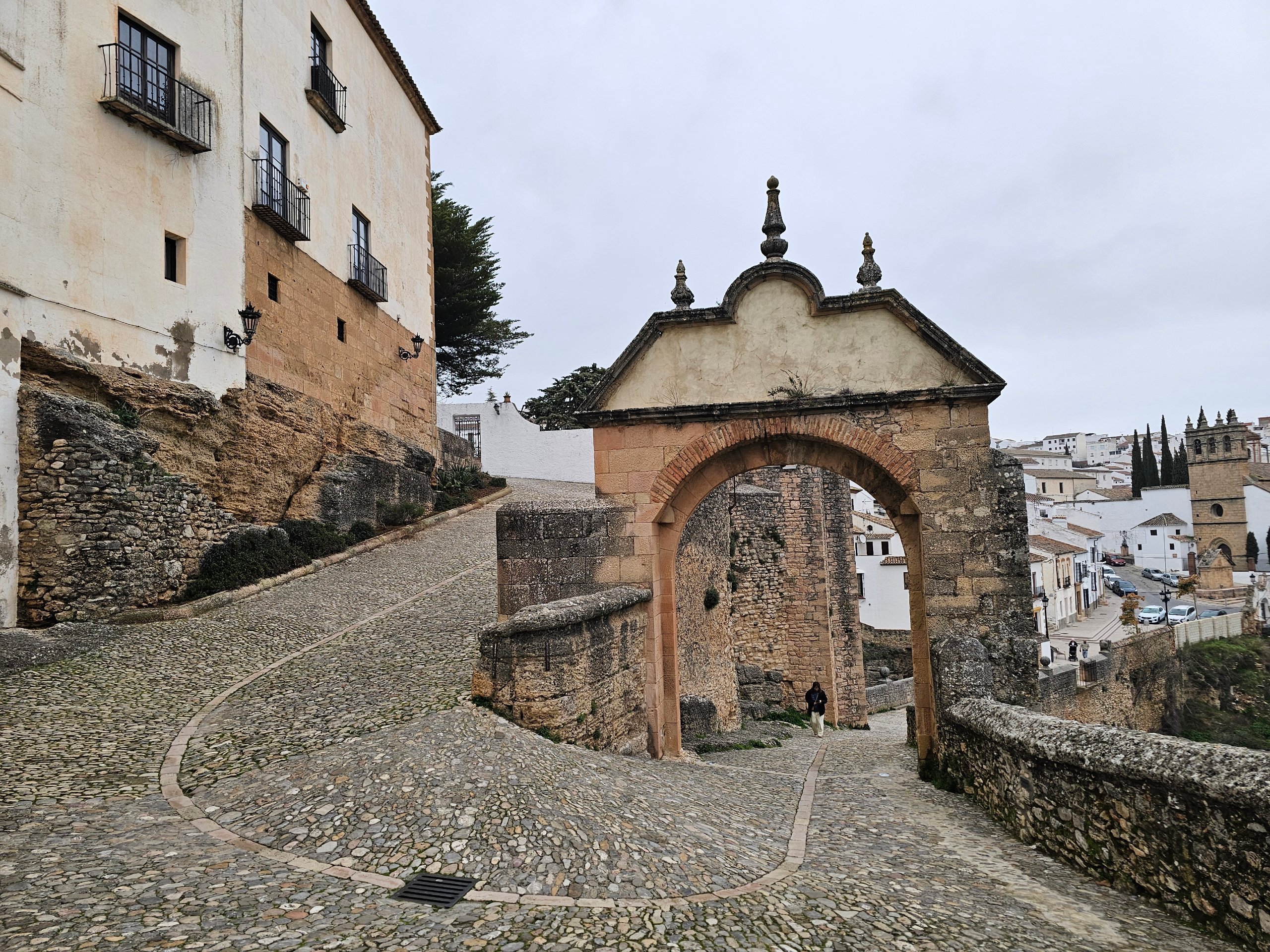
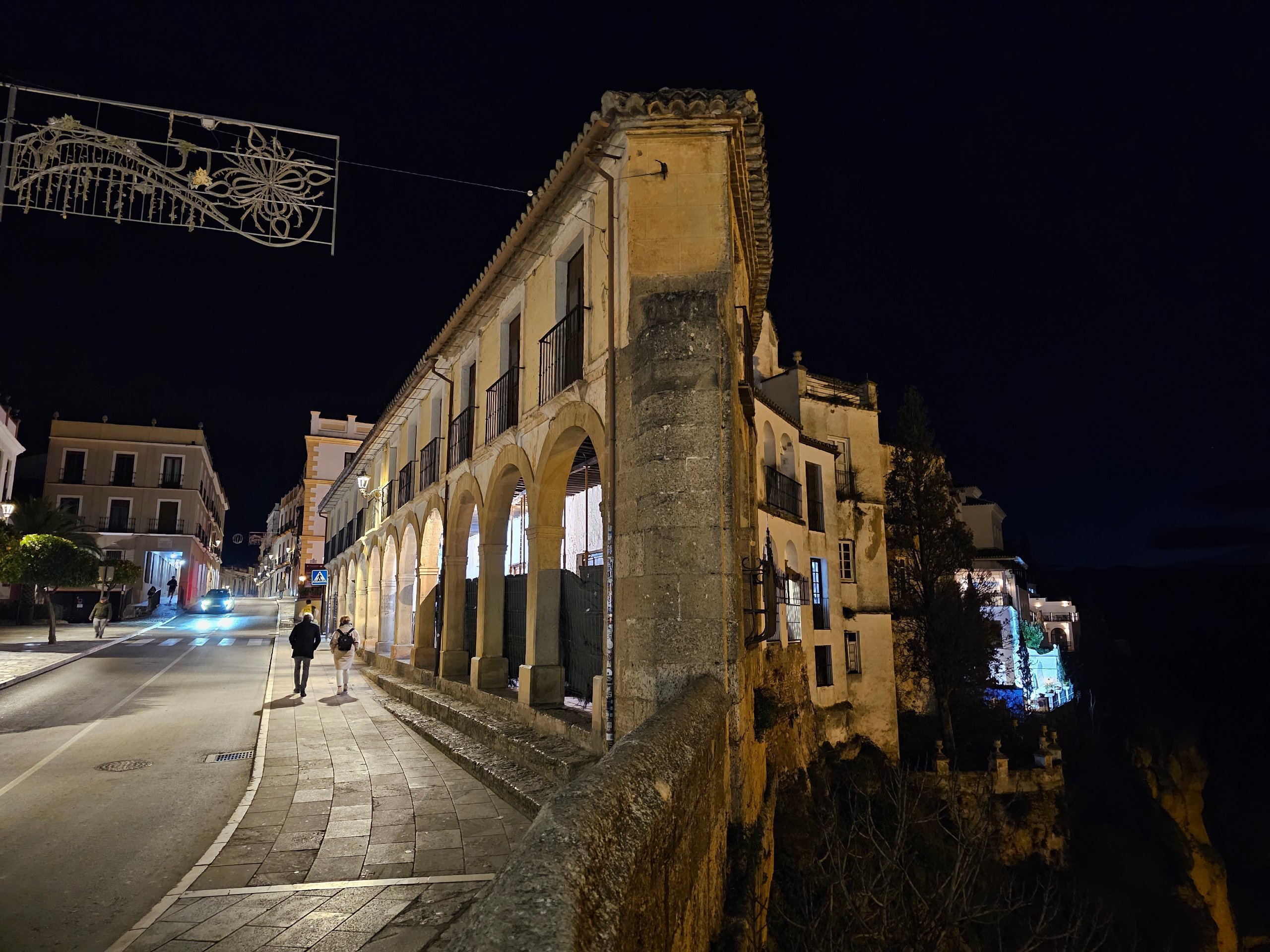
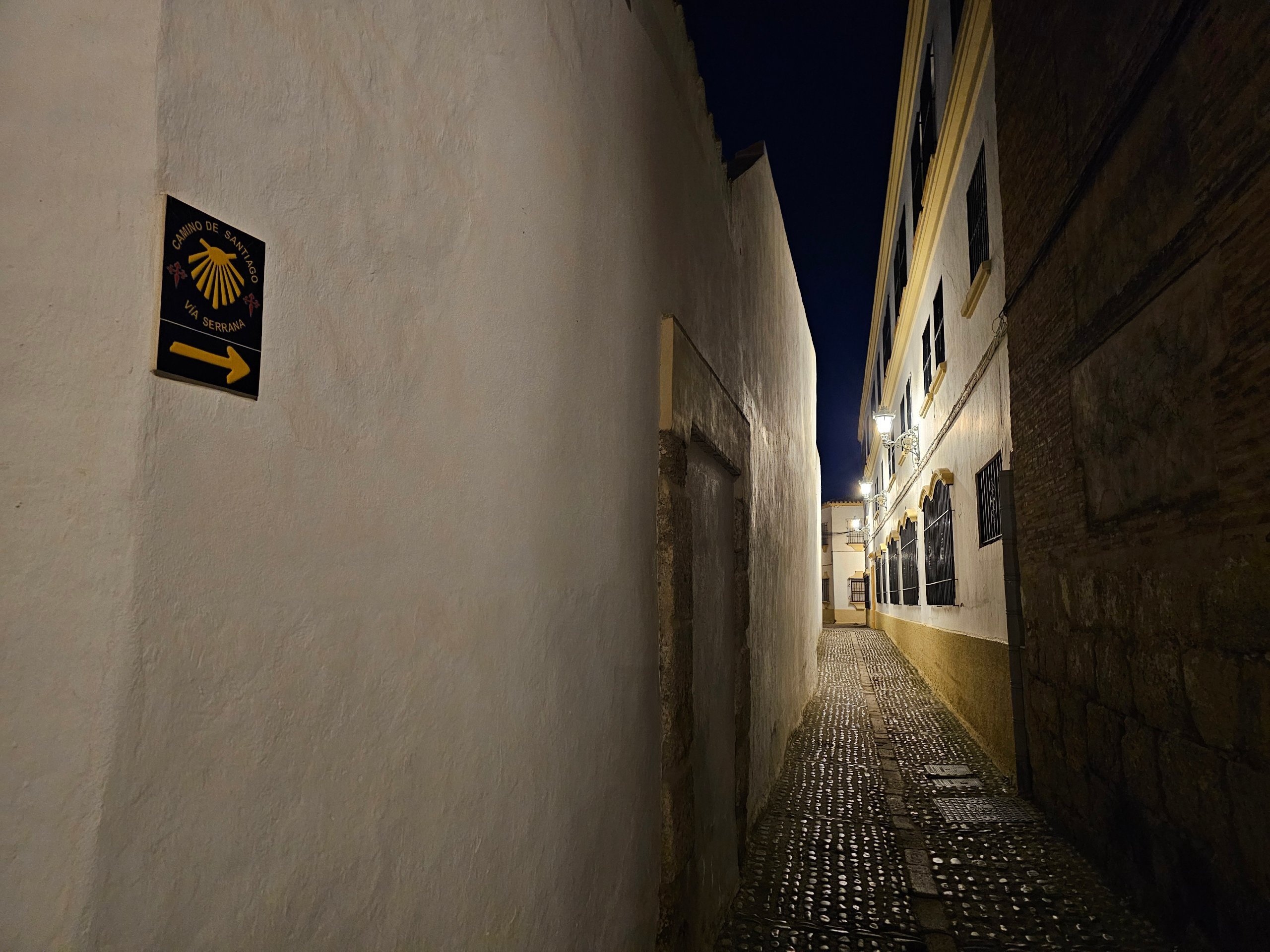
On a hot afternoon, I’d time my descent to the Arab Baths or the gorge carefully. In the very centre, however, you probably won’t need public transport at all.
Where should you stay so you don’t have to worry about transport?
A handy area is the one between the train and bus stations, Carrera Espinel, Alameda del Tajo and Plaza de España. You can reach everything you need on foot from there.
Choose a hotel in the centre of Ronda
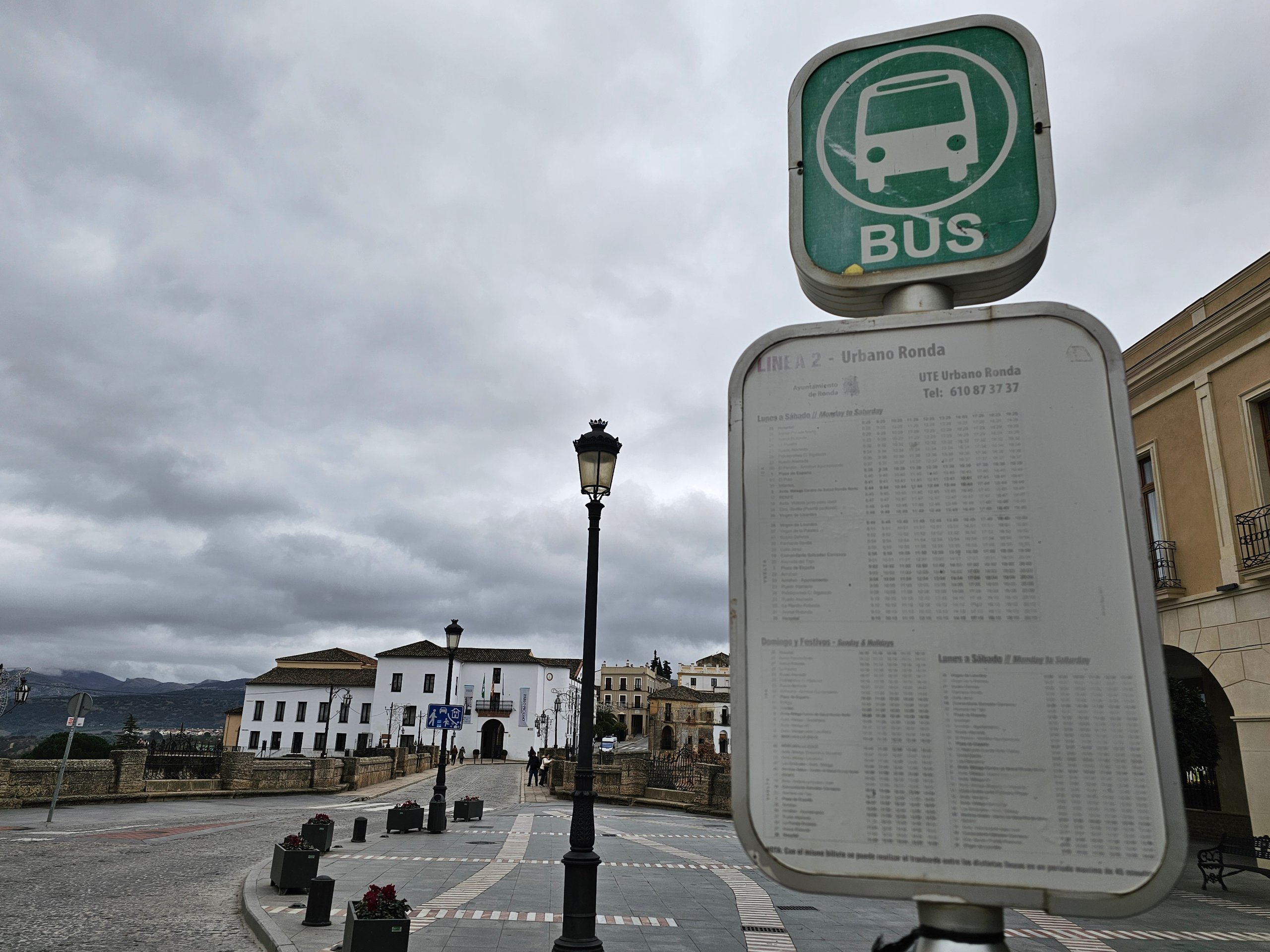
Ronda has two regular city bus routes, numbered 1 and 2. Both run only from Monday to Saturday.
This isn’t a service you can just turn up to without planning ahead and expect to wait only a few minutes – there’s usually an interval of about an hour between services, and the routes have a long break in the afternoon.
You can check the current location of the buses on the Urbano Ronda – Localizar bus page.
A standard single ticket costs 2,50 eur. Tickets are purchased from the driver upon boarding and can only be paid for in cash.
The operator does not accept banknotes larger than 5 eur, so please have coins or a smaller note ready.
You can use the same ticket to change between services within 45 minutes.
Fares and payment rules can be found inthe official Urbano Ronda fare table.
Line 1 starts at the Comandante Salvador Carrasco stop near the bus station.
It first passes through the Dehesa neighbourhood, returns to the coach station and continues via Calle Jerez, Alameda del Tajo and Plaza de España to the northern health centre, Avenida de Málaga and the hospital.
Main route:
From the hospital, the bus takes a different route via Avenida de Málaga, the Ronda Norte health centre and the railway station back to the bus station. On the return journey, it does not pass through Plaza de España or the historic centre.
Departures from the starting point are from Monday to Saturday at 8.25, 9.25, 10.25, 11.25, 12.25, 13.25, 16.25, 17.25, 6.25 pm and 7.25 pm.
For visitors, Line 1 is particularly useful if you are staying in the Dehesa or Avenida de Málaga neighbourhoods, or if you are travelling to the hospital. It is considerably quicker to walk between the bus station and the city centre.
You can find all the stops and times in the official timetable for Line 1.
Line 2 is more useful for visitors.
It forms a long circular route connecting the hospital, the Arenal and San Francisco neighbourhoods, Plaza de España, the train and coach stations, Alameda del Tajo and the historic centre.
Simplified route:
During one circuit, the bus passes through Plaza de España twice, each time in a different direction. Therefore, before boarding, please check which direction it is heading in. The entire circuit takes approximately 50 minutes.
Departures from the hospital are at 8.25, 9.25, 10.25, 11.25, 12.25, 13.25, 16.25, 17.25, 18:25 and 19:25. The service therefore runs roughly once an hour, with a three-hour break in the afternoon.
The journey from the railway station to Plaza de España takes approximately 17 minutes. If a bus is just arriving, it might be worth taking. There’s no point in waiting another 40 or 50 minutes – you can easily walk to the city centre in that time.
You can find details in the timetable for route 2.
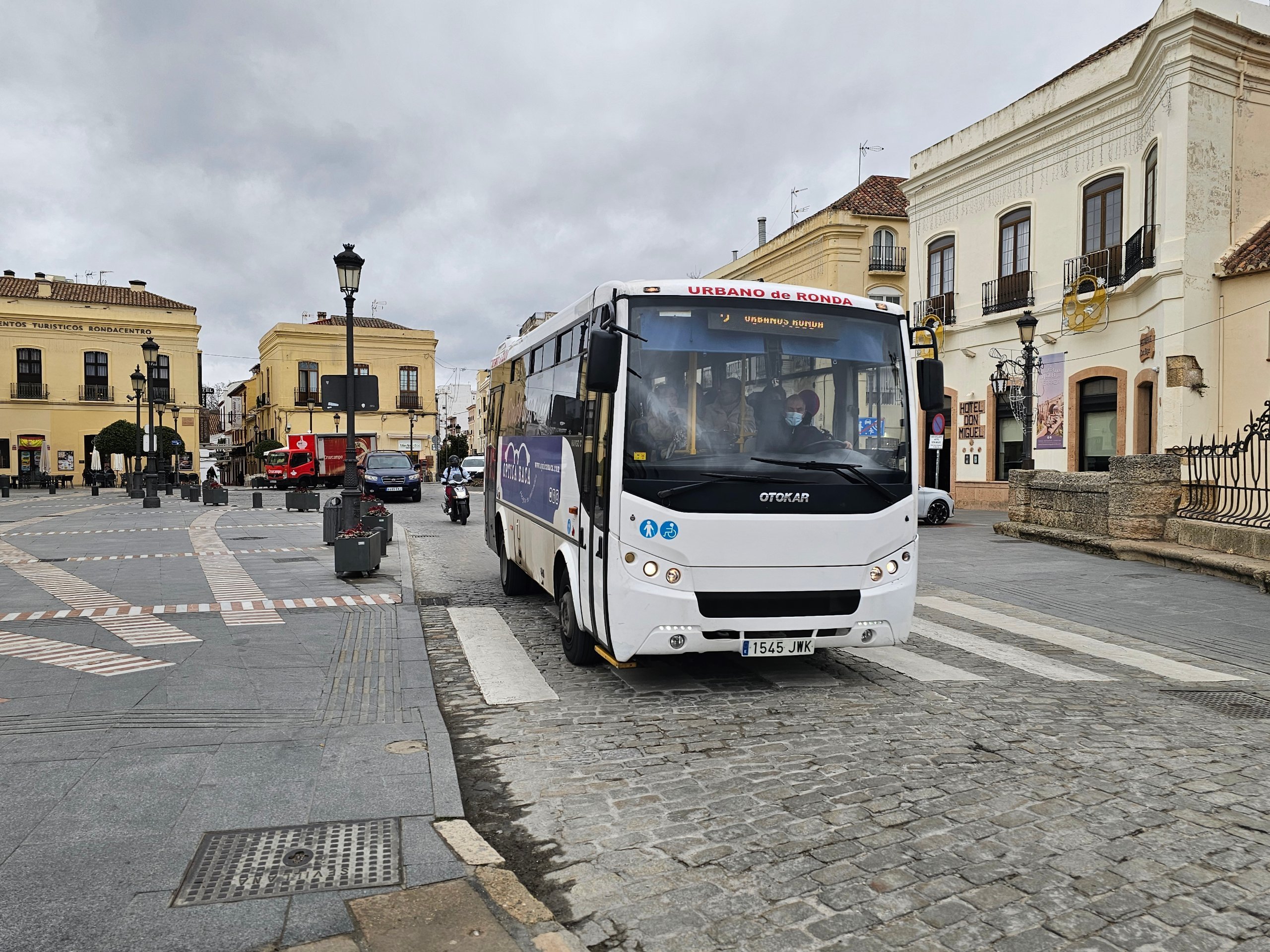
On Sundays and public holidays, routes 1 and 2 do not run. They are replaced by a single circular route connecting Dehesa, the bus station, Alameda del Tajo, Plaza de España, the historic centre, San Francisco, the hospital, Avenida de Málaga and the railway station.
It departs from the starting point at Virgen de Lourdes at 10:00, 10:45, 11:30, 12:15, 13:00, 13:45 and 14:30. Services therefore run every 45 minutes, but the service only operates in the morning and early afternoon. On Sunday evenings, you’ll need to walk or take a taxi.
The exact route is set out in the timetable for the Sunday and public holiday circular service.
I would consider taking the bus in the following situations:
However, buses do not stop at the viewing points at Puente Nuevo, which lie at the bottom of the gorge. If your mobility is significantly limited, a taxi will be a more practical option.
I saw plenty of taxis in Ronda, but I didn’t need one myself. You’ll find taxi ranks at the railway station, the coach station and in the town centre.
The main taxi rank is on Calle Juan José de Puya, just a few minutes’ walk from Plaza del Socorro and the bullring.
You can call the main rank on +34 952 874 080. Local company Ronda Taxi also offers a booking service via WhatsApp on +34 622 223 618.
I would book a car in advance for an early morning train or bus; there are fewer drivers available outside peak hours.
Taxis are also permitted to enter the restricted traffic zone around Puente Nuevo and Calle Armiñán. This is useful if you’re staying in the old town, where you may not be able to get to in a standard car. The city’s information on traffic restrictions in the centre confirms this exemption for taxis.
Standard city taxis must use a meter.
For a short journey between the train or coach station and the city centre, you can expect to pay around 5–8 eur. This is not a fixed rate – the final fare depends on the route, waiting time, time of day and the current tariff.
The city does not publish the current rate table, including the initial charge and price per kilometre, on its website. The decisive factors are the fare card displayed in the vehicle and the amount shown on the taximeter. Before a longer journey, therefore, ask the driver to confirm the price, at least as a rough guide.
According to the city’s taxi regulations, the taximeter is only started once the passenger has boarded and stated their destination. This also applies to pre-booked taxis – the driver must not charge you for the journey to the pick-up point.
One local transport operator also publishes two practical fixed-price offers:
These are the prices charged by the specific operator, Ronda Taxi, and do not represent a standard fare for all local taxis. The first option may be of interest if you wish to photograph Puente Nuevo from below but do not want to make the steep descent and ascent on foot.
You can pay in cash or by card. A local by-law requires taxis to have a working card reader and a receipt printer.
When paying in cash, the driver must be able to give change from a banknote up to the value of 50 eur. Upon request, the driver must provide you with a printed receipt. If the payment terminal malfunctions during the journey and it is necessary to drive to a cash machine, the taximeter must not run during this detour.
Yes, the UberX service is available in the city. This is not the standard Uber Taxi category. You’ll see the price before confirming your booking, and payment is made via the app.
However, Ronda is a small town and the number of drivers can vary significantly throughout the day.
I’d use Uber for everyday journeys when the app actually has a car available. For a journey to catch the first train or bus in the morning, I wouldn’t rely on immediate availability and would book a standard taxi in advance.
Bolt does not currently operate in Ronda.
For a one-day visit without much luggage, I’d walk. The bus costs €2.50, but with services running only once an hour, it’s more of a supplement for outlying neighbourhoods than a practical way of getting between the sights.
A taxi is worth it if you’re travelling with luggage, staying in the old town, catching an early morning connection, or if you don’t want to walk up from the areas below the gorge. Uber can be a good alternative, but check the app first to see if there’s a driver available in the city.
You don’t need to hire a car just to explore Ronda itself. I describe the transport links from Málaga, Seville, Córdoba and other cities in detail in the article ‘How to get to Ronda’.
If you have any questions or comments about the article...