Head for the sun in Málaga, even in the middle of winter, with direct flights from Ostrava
43 €



El Hierro is approximately 40 km long and between 20 and 35 km wide. It is also a very hilly island, so you will need to use public transport, taxis or a hire car to get around.
Many of the island’s natural attractions can only be reached comfortably by car, or via long-distance hikes. In particular, the enchanting western half of the island, which is completely devoid of civilisation, is accessible only by car or on foot, with overnight stays in the open air.
That is why hiring a car is the most common way to get around the island of El Hierro.
We have put together a detailed section on prices, traffic regulations and points of interest – read Car hire on El Hierro.
Bus services mainly serve the largest towns, and none of the routes go into the mountains or to the west coast. Nevertheless, you can still visit many tourist attractions in the eastern half of the island without a car, using only the buses.
Public transport is operated by Transhierro.
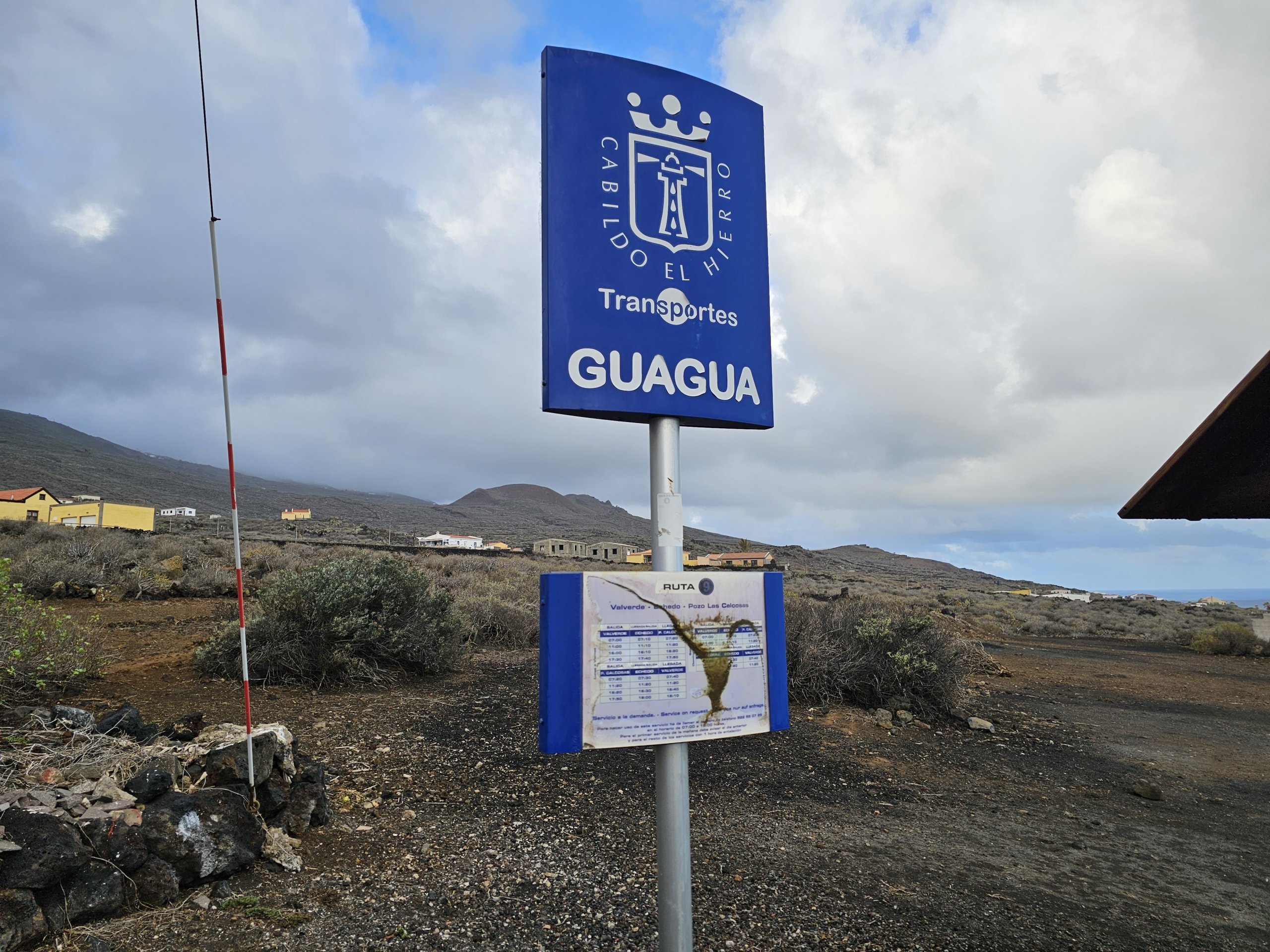
The term ‘guagua’ is used throughout the Canary Islands to mean ‘bus’. This is one reason why, for example, bus stations are referred to as ‘Estación de guaguas ’.
The official website with timetables and ticket prices can be found at this address:transhierro.com.
There are a total of 8 bus routes on the island.
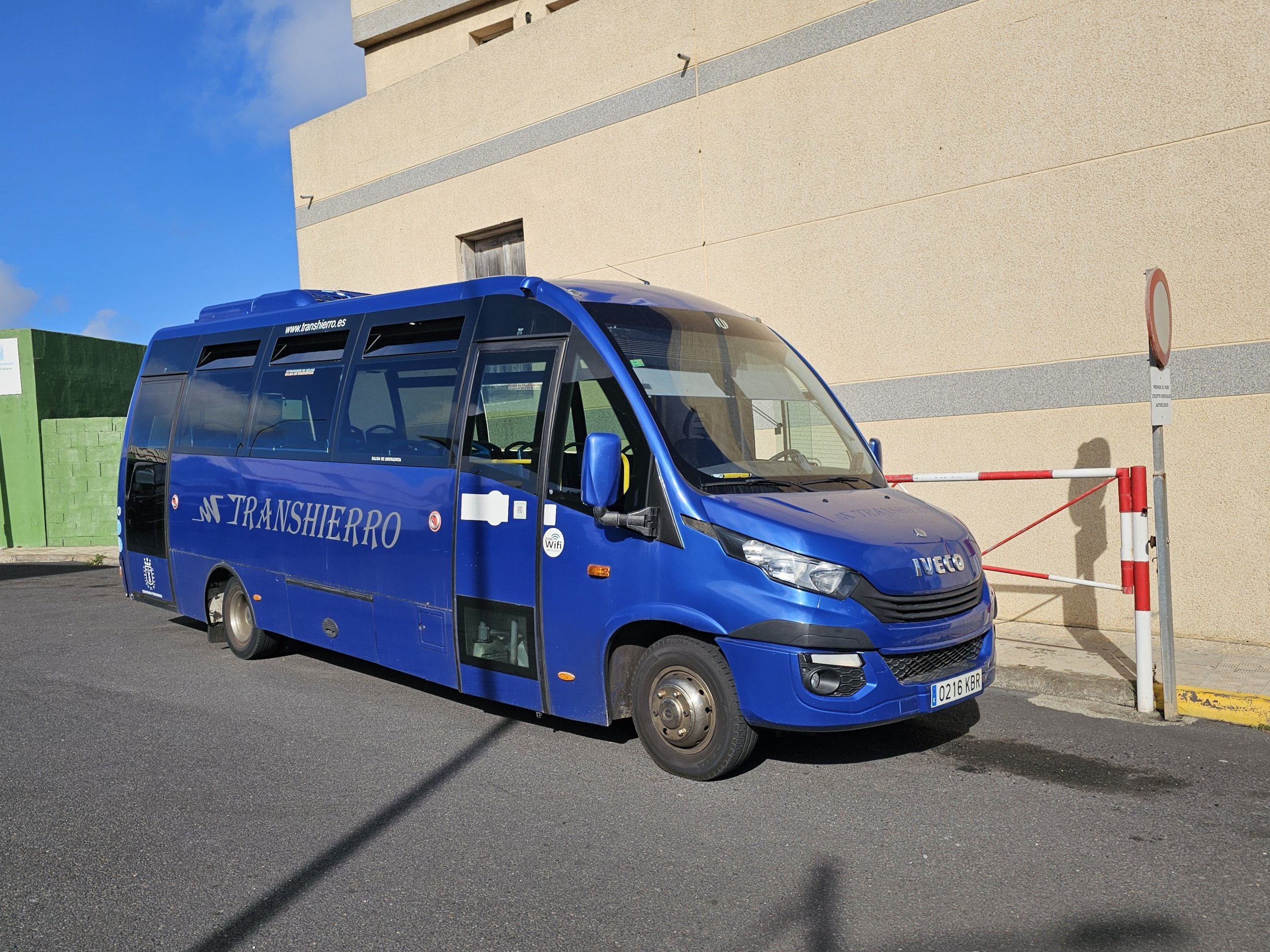
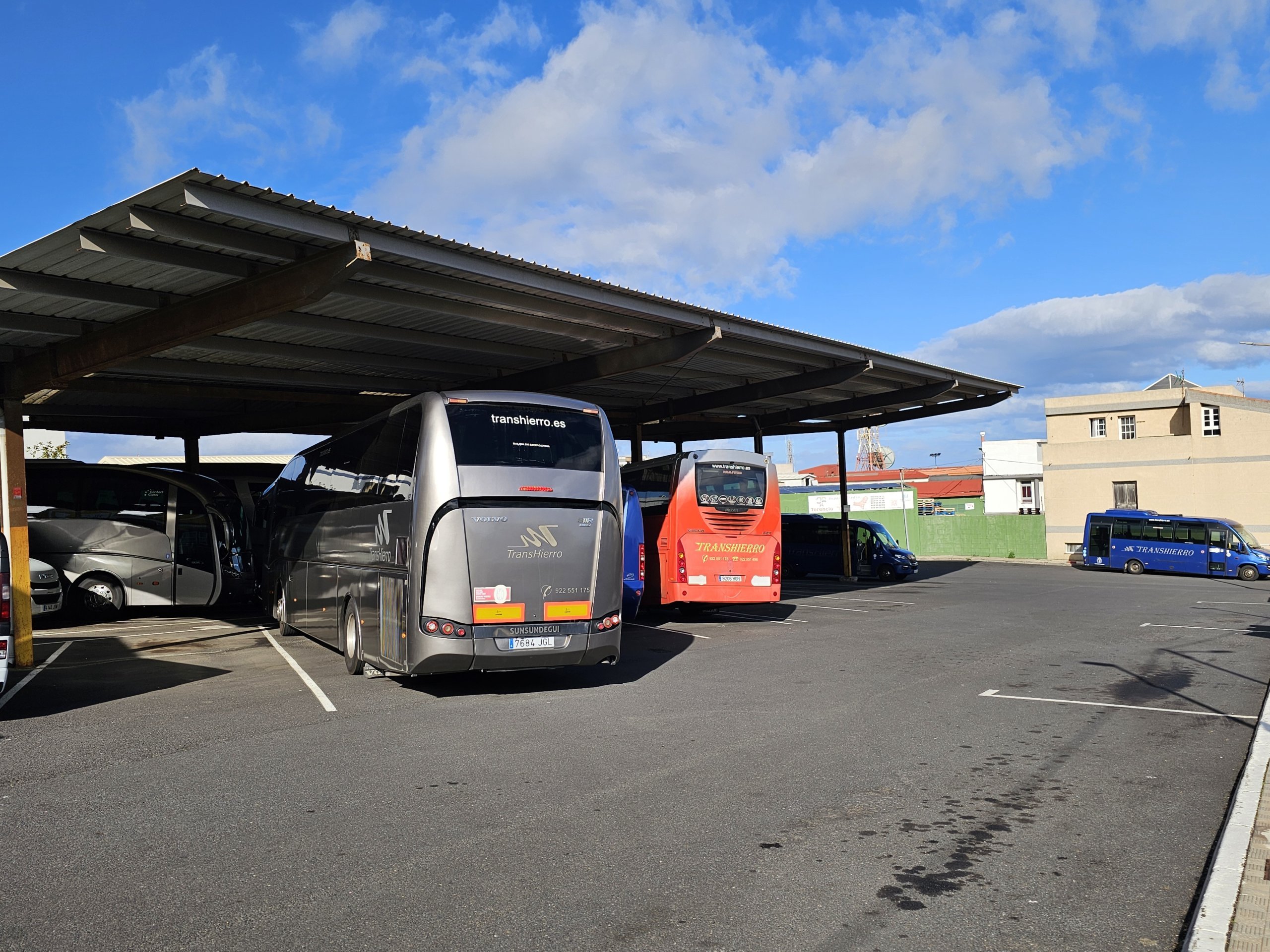
All bus stops are always clearly marked, although some are indicated only by a simple sign featuring a bus pictogram, without any further information.
Timetables at stops, as well as on the website, only ever show departure times from the first stop on the route. So if you’re waiting for a bus elsewhere, you’ll need to work out the approximate departure time yourself.
To work out an approximate journey time, you can use standard route planners such as google.com/maps or mapy.cz. Buses do not travel significantly slower than ordinary cars, so journey times are relatively accurate.
Bus stops on El Hierro are shown on both Google Maps and mapy.cz. You can also find bus routes using the Moovit app.
You can buy a ticket from the driver and pay by card or in cash.
At ticket machines in major bus stations, you can buy cards for 3 eur, onto which you can top up a multi-journey pass.
You can check the current prices in advance on the websitetranshierro.com/servicios/transporte-regular.
Fares are flat-rate, regardless of the distance travelled:
Mobile apps such as Uber and Bolt do not operate on the island of El Hierro, but traditional taxis work well here.
You’ll find taxi ranks, where taxis are actually on standby from around 7.00 am to 9.00 pm, in towns such as Valverde, Tigaday/La Frontera and La Restinga.
If you don’t see any taxis at the taxi rank in these towns, one will usually arrive within 30 minutes.
Taxis can also be booked by telephone. Telephone numbers are always displayed on signs marked ‘Taxi’.
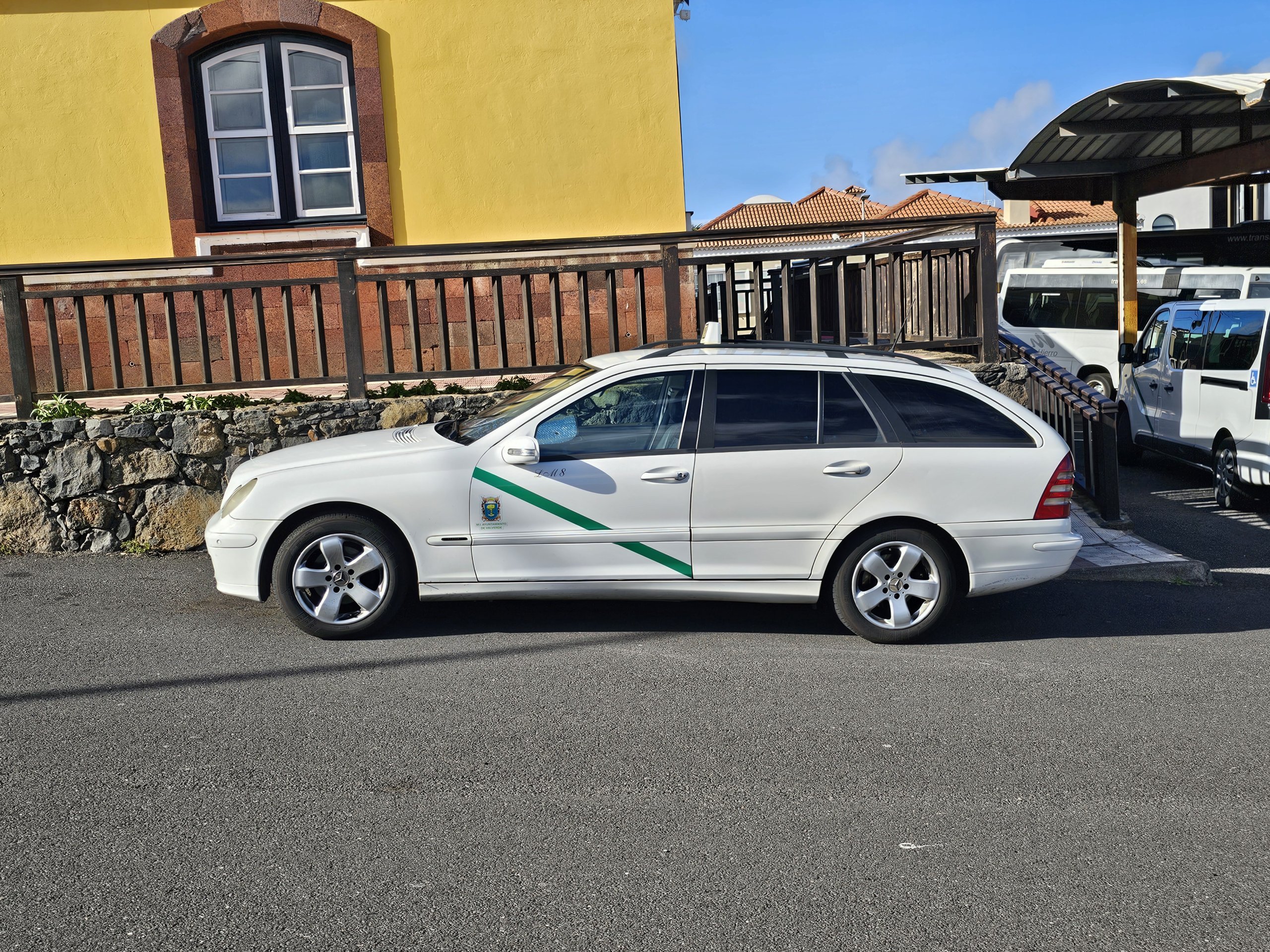
Fares are always calculated strictly according to the taximeter, and you can pay by card or in cash.
You can call a taxi between 7.00 and midnight on +34 922 520 729
Fares from Monday to Saturday, 6.00–22.00
Night-time fares and fares applicable all day on Sundays and public holidays
Official information about taxis on El Hierro can be found on this website:transhierro.com/servicios/taxis-en-el-hierro.
If you have any questions or comments about the article...