
Discover Western Cyprus. From Bratislava to Paphos, even for long weekends
44 €



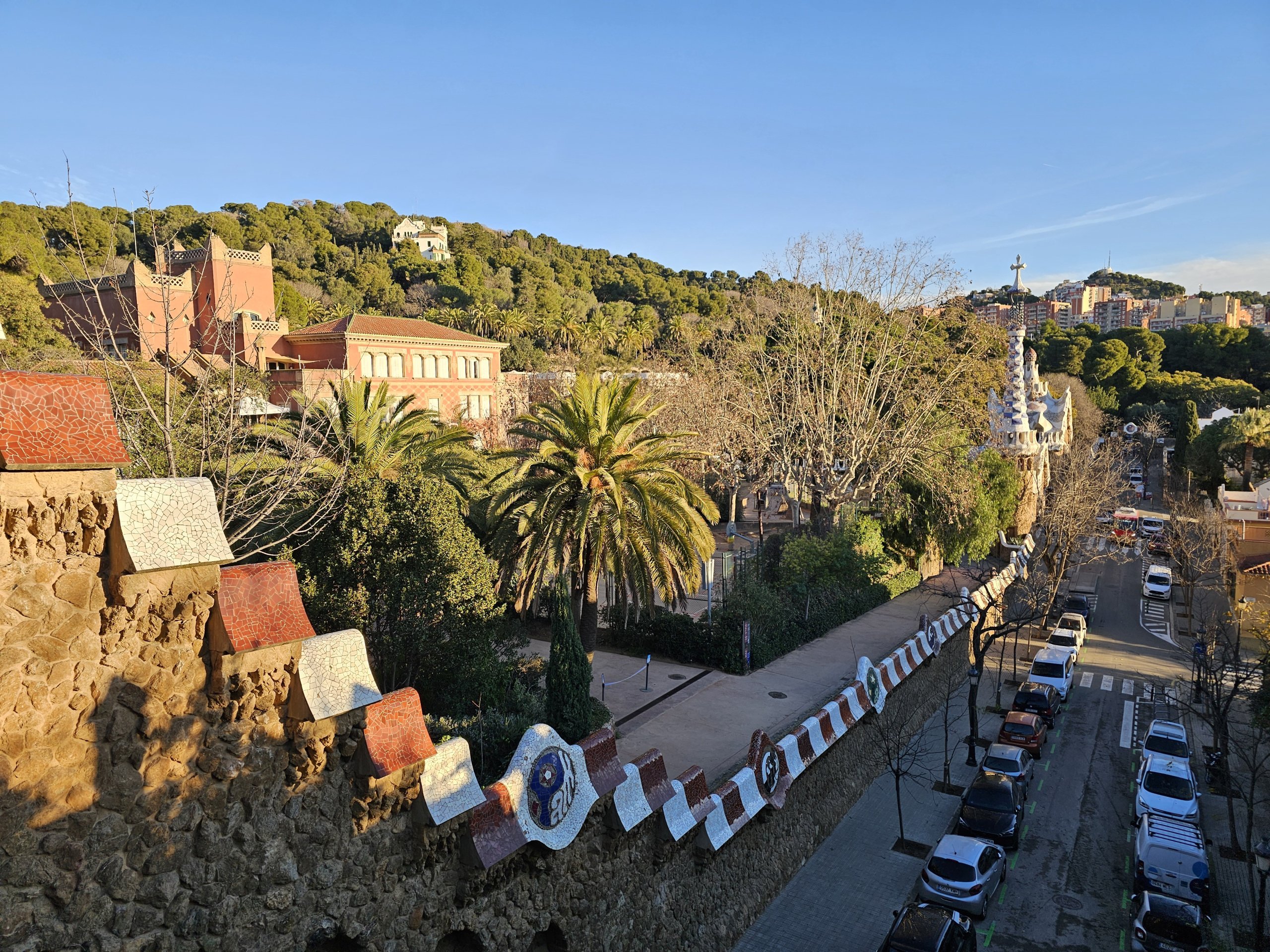
One of architect Antoni Gaudí’s most famous works is Park Güell, a vast park full of colourful mosaics, unusual structures and architectural features inspired by nature.
Thanks to its location on a steep hillside, it also offers magnificent views of Barcelona and, on a clear day, of the sea. The park has been a UNESCO World Heritage Site since 1984.
In my opinion, Park Güell is one of the places you shouldn’t miss on your first visit to Barcelona.
However, it’s worth planning your visit in advance: Gaudí’s most famous buildings are located in the ticketed section, tickets are valid for a specific time, and the walk from the metro station is quite a steep climb.
If you’re still choosing accommodation, the quiet Gràcia neighbourhood near the park is a pleasant alternative to the bustling city centre. We compare other suitable areas in our guide ‘Where to stay in Barcelona’.
Find a hotel in the Gràcia neighbourhood
Our main tip is simple: if you don’t want to walk uphill unnecessarily, take a bus or taxi to the upper entrance on Carretera del Carmel and walk down through the park towards the main entrance on Carrer d’Olot.
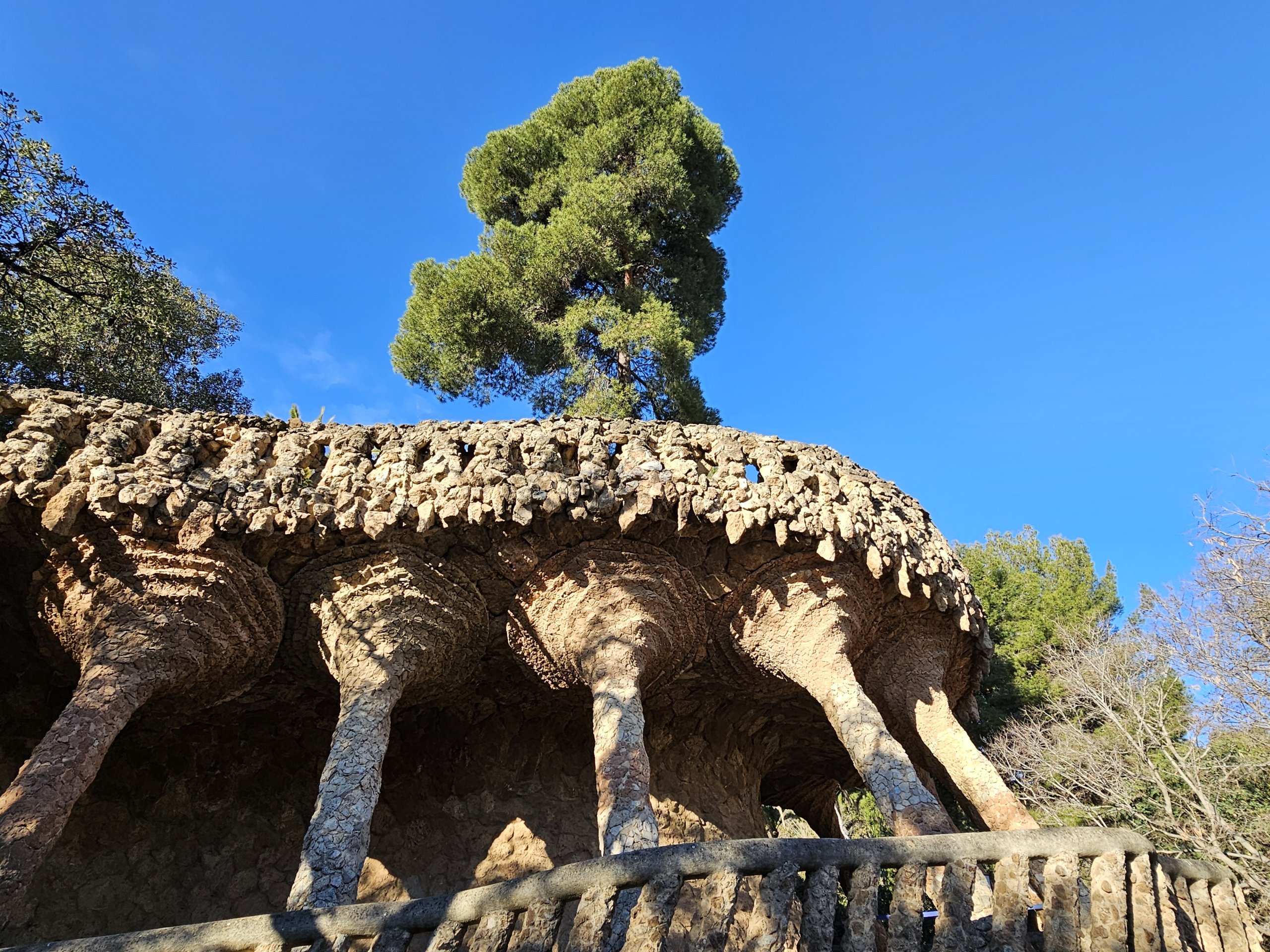
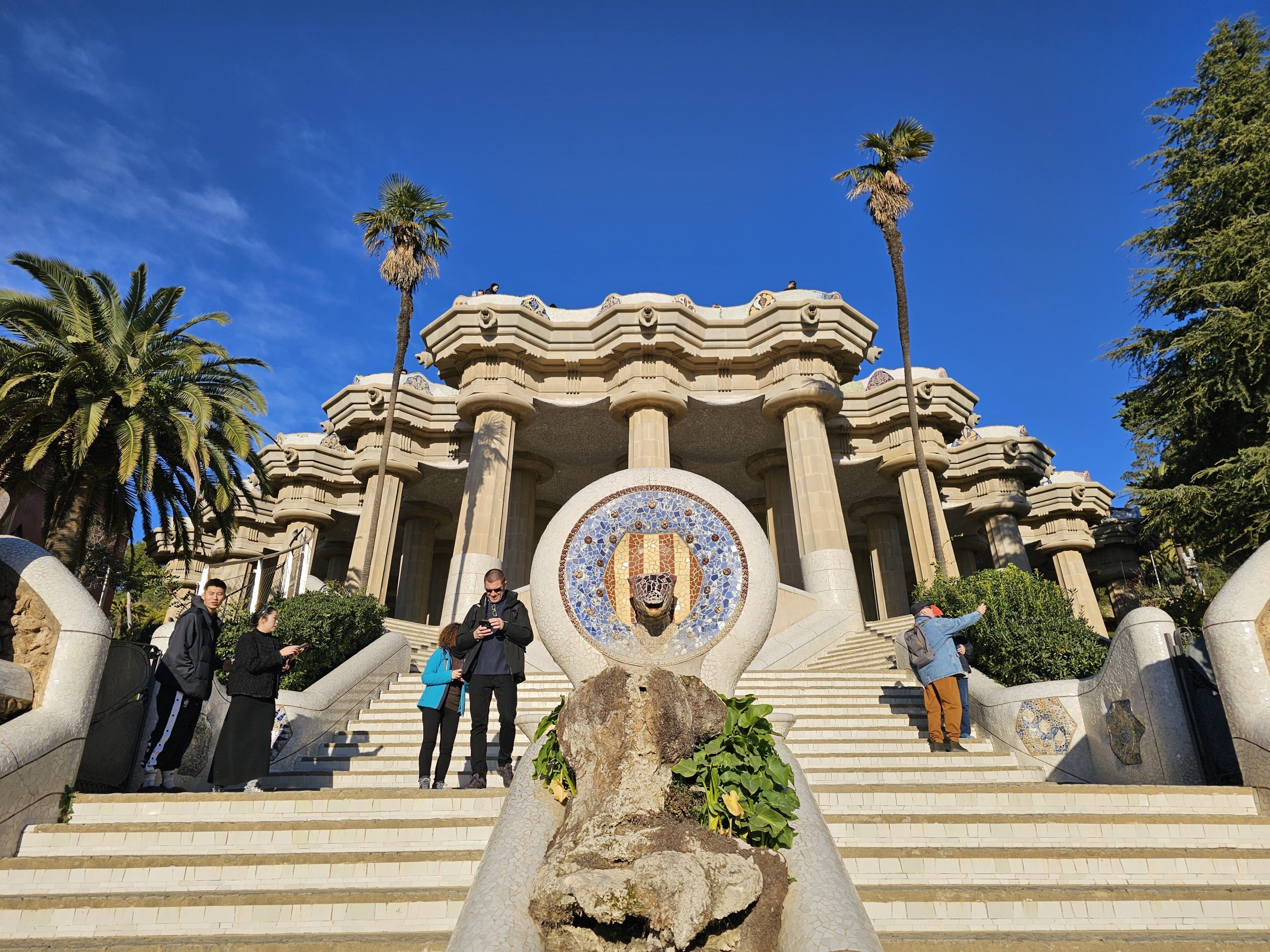
Above the staircase lies the columned Hypostyle Hall, which was intended to serve as a covered market in the original garden city. Its ceiling is adorned with colourful mosaic medallions, and above it lies the park’s most famous open space.
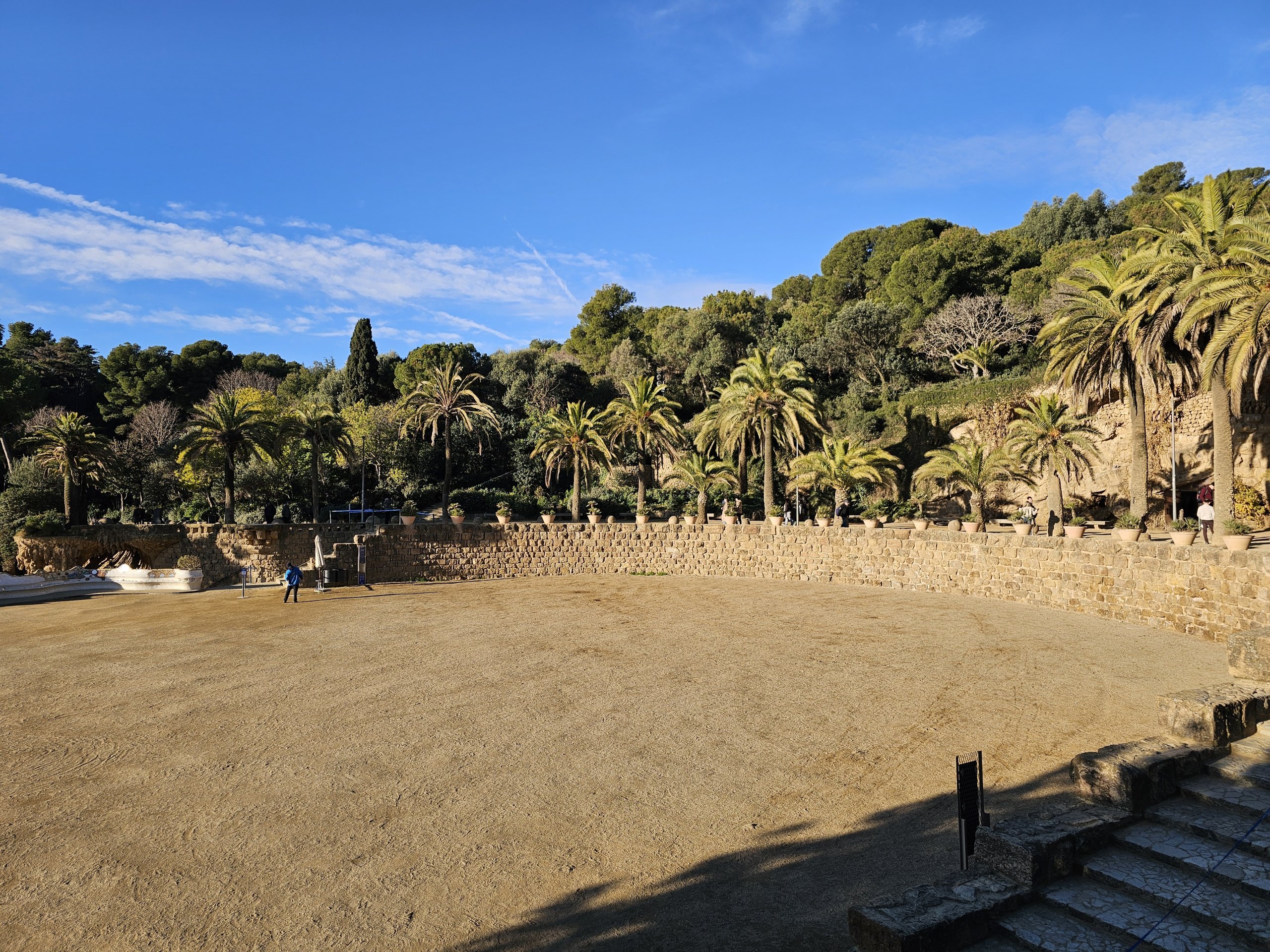
Its official name is Plaça de la Natura, though you may also come across the names ‘Greek Theatre’ or ‘Gran Plaça’. The square is lined with a long, undulating mosaic-tiled bench, and from here there is an iconic view across the entrance pavilions towards Barcelona.
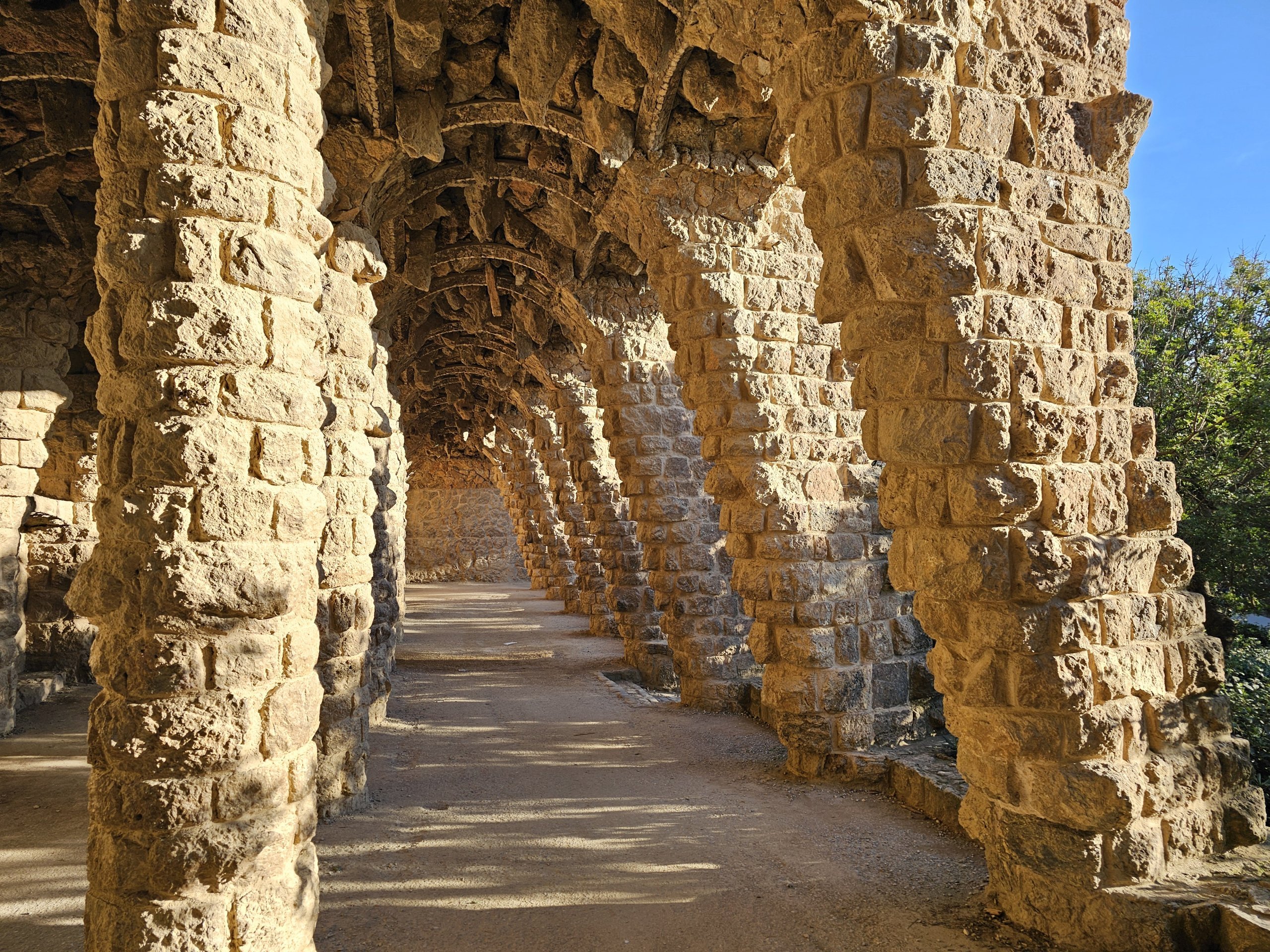
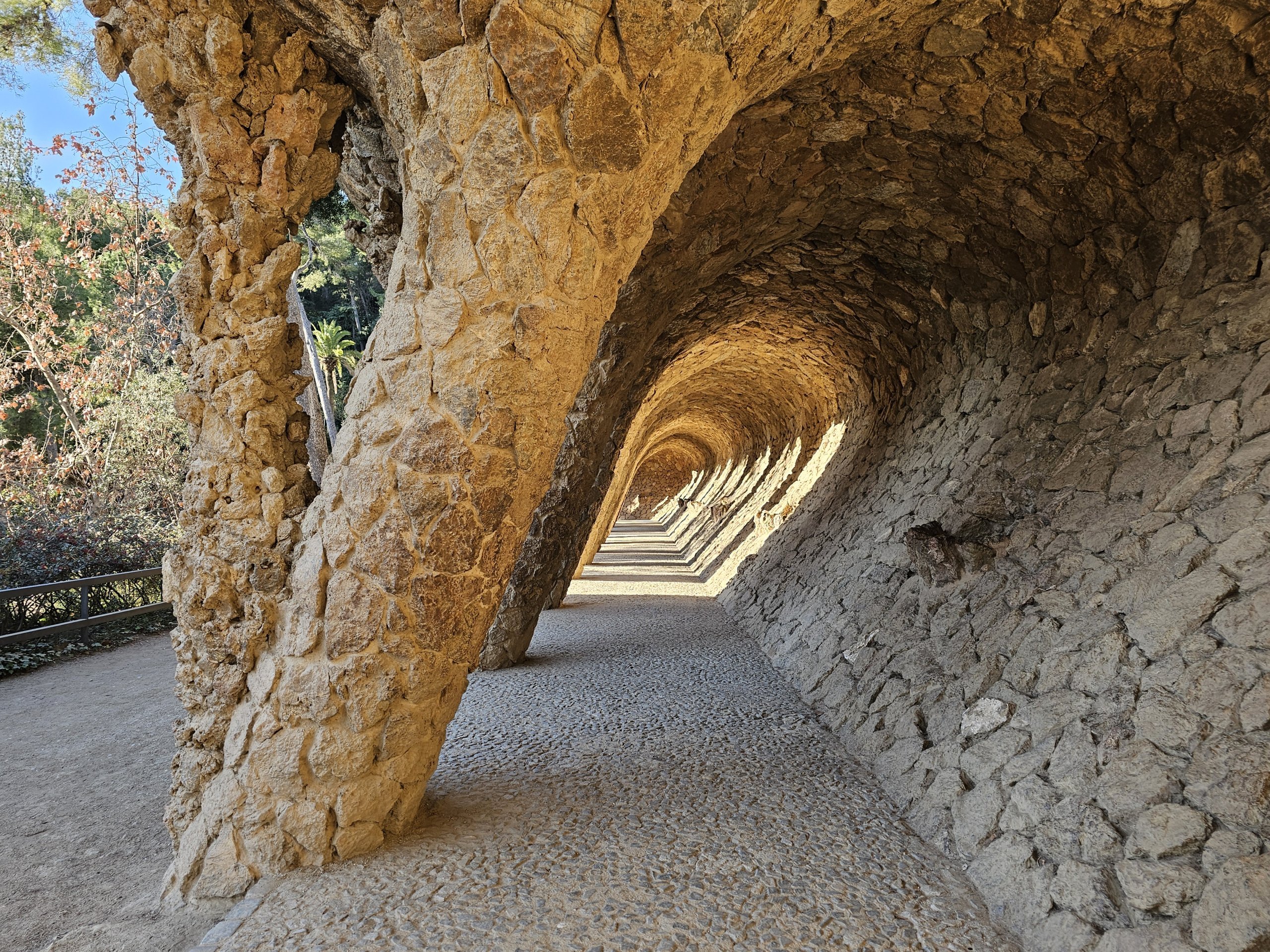
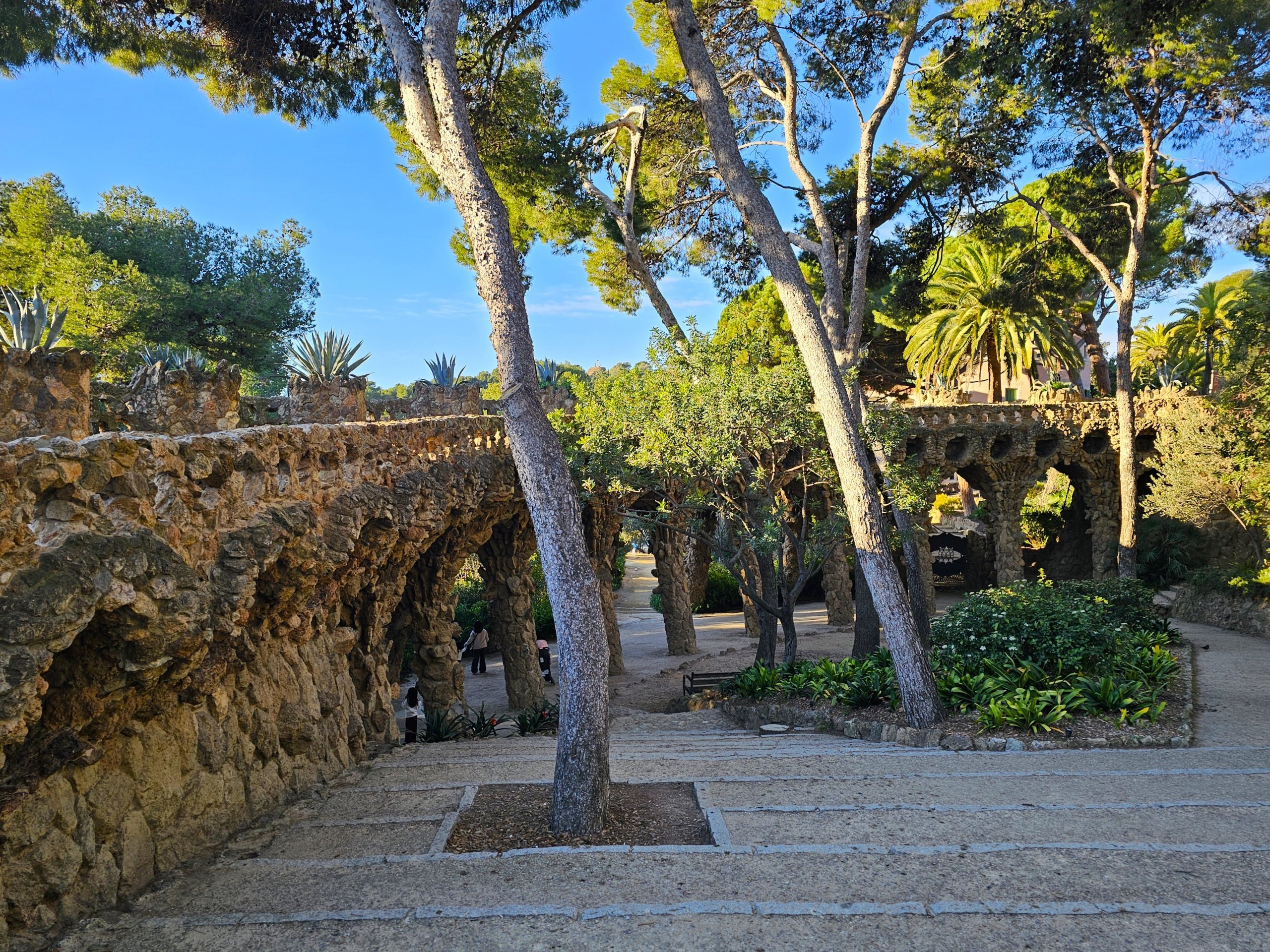
A network of paths, bridges and stone viaducts runs through the park, which Gaudí set directly into the hillside. The sloping columns resemble tree trunks or cave walls, making the structures appear as a natural part of the landscape.
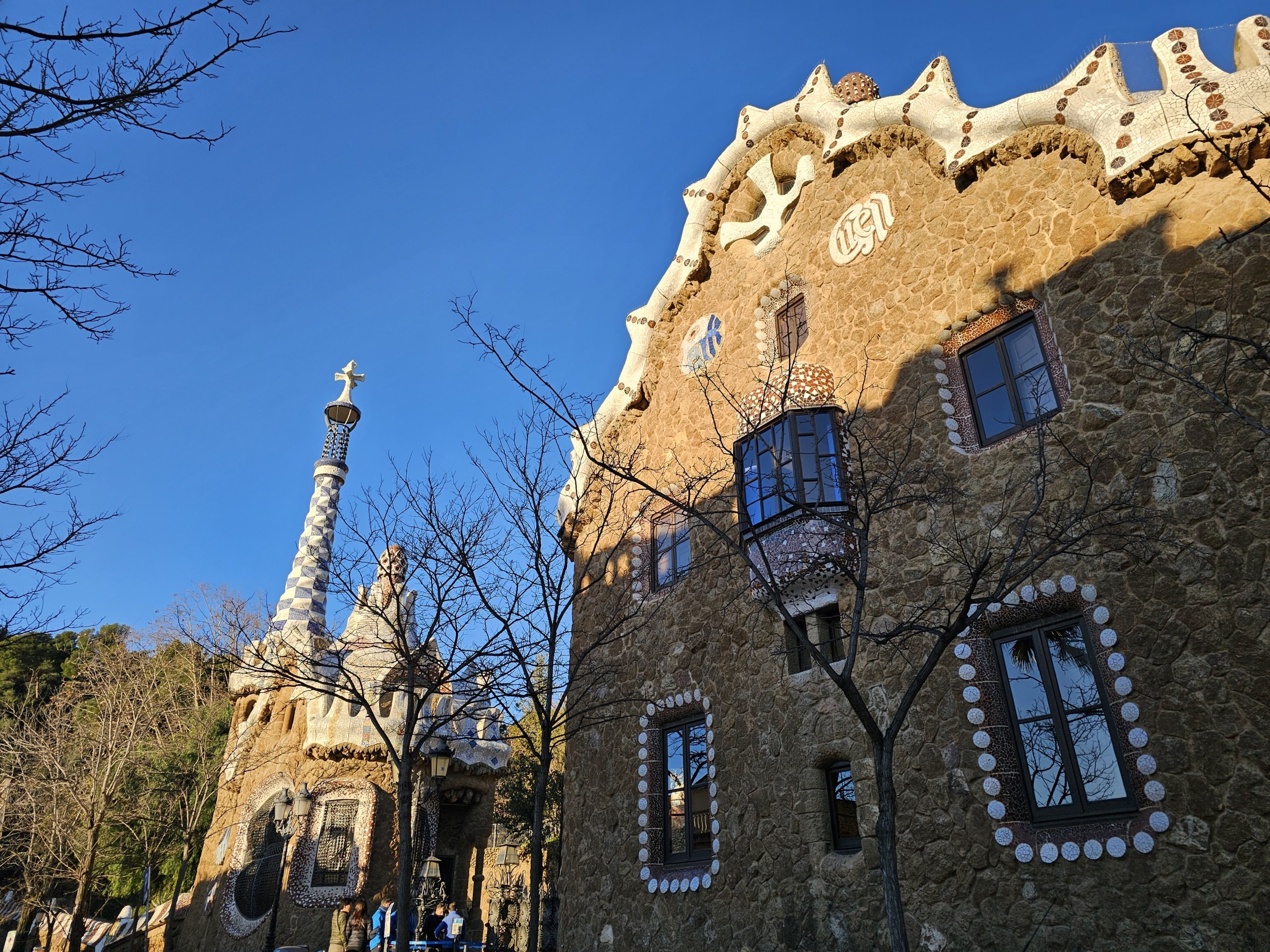
The most photogenic feature is the Portico of the Laundresses, or Pòrtic de la Bugadera, named after the female figure carved into one of the columns.
The park’s most famous symbol is the colourful salamander known as El Drac, which stands guard over the monumental staircase at the main entrance on Carrer d’Olot.
Like many other features, it is covered in trencadís – a mosaic created from irregular fragments of ceramic and glass. This is where the crowds tend to be at their thickest during the day, so it’s best to visit the salamander first thing in the morning or right at the end of your visit.
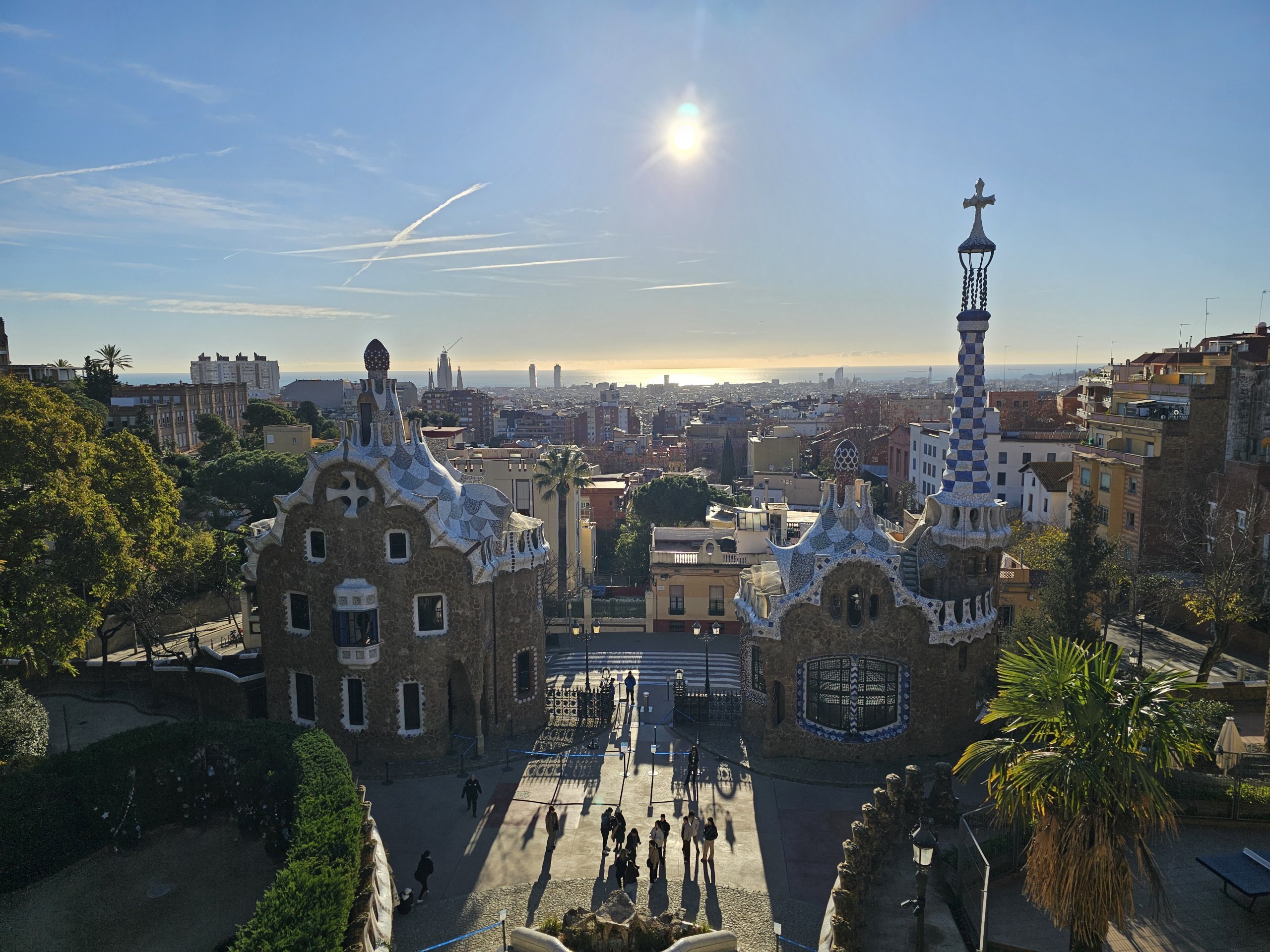
The highest point in the park is the Turó de les Tres Creus hill, with three stone crosses, at an altitude of over 182 metres above sea level.
The view from here is more expansive than from the Nature Square, and there are usually fewer people here. However, the path is steeper and the surface uneven, so we do not recommend it for people with reduced mobility or those with small children in pushchairs.
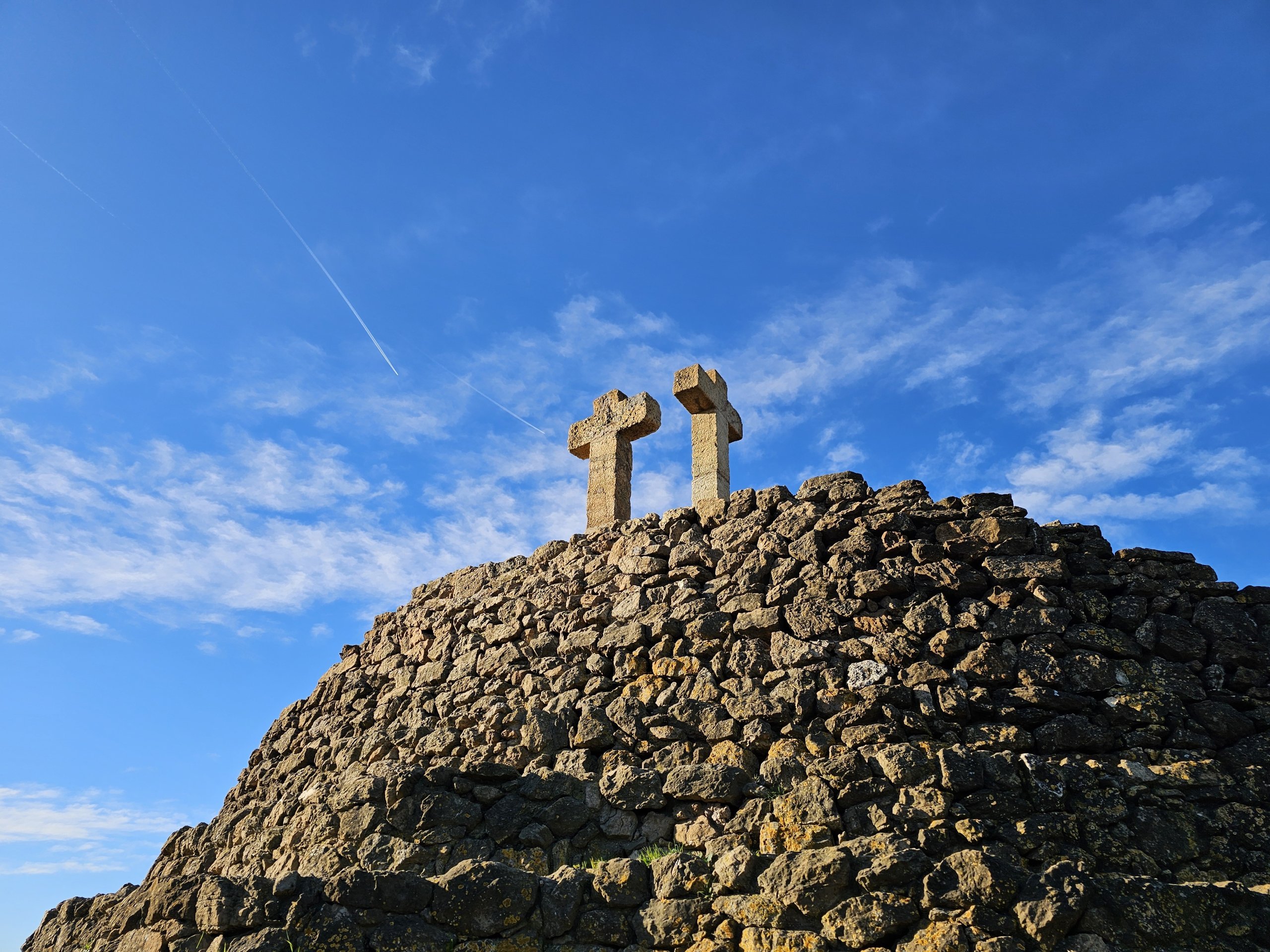
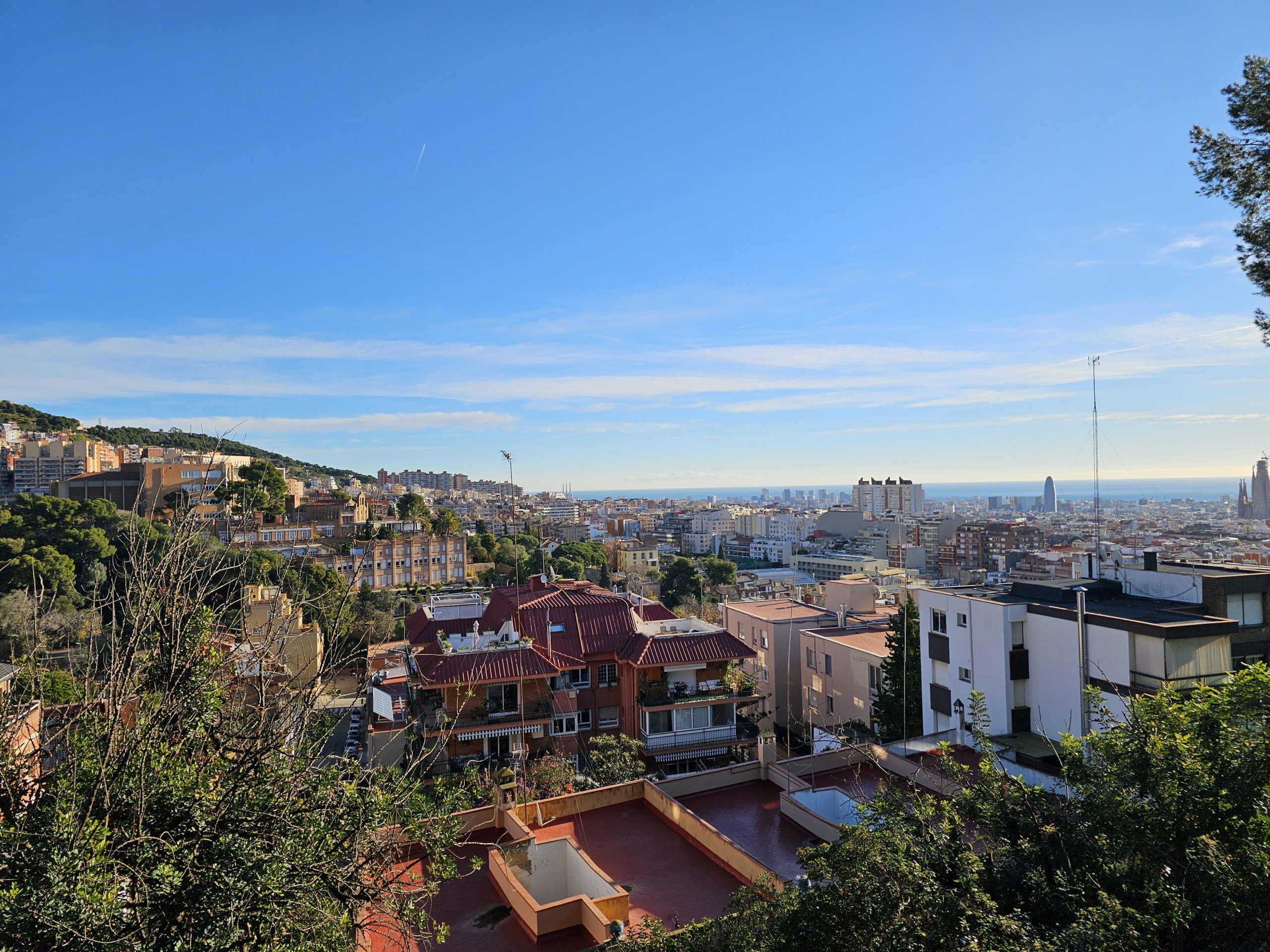
The most comfortable way to explore Park Güell is to walk from the top down. The route takes about 1½ to 2 hours and saves you a large part of the climb.
If you’re coming from Lesseps metro station, you’ll pass through the same places in reverse order, but you’ll be walking uphill for most of the way.
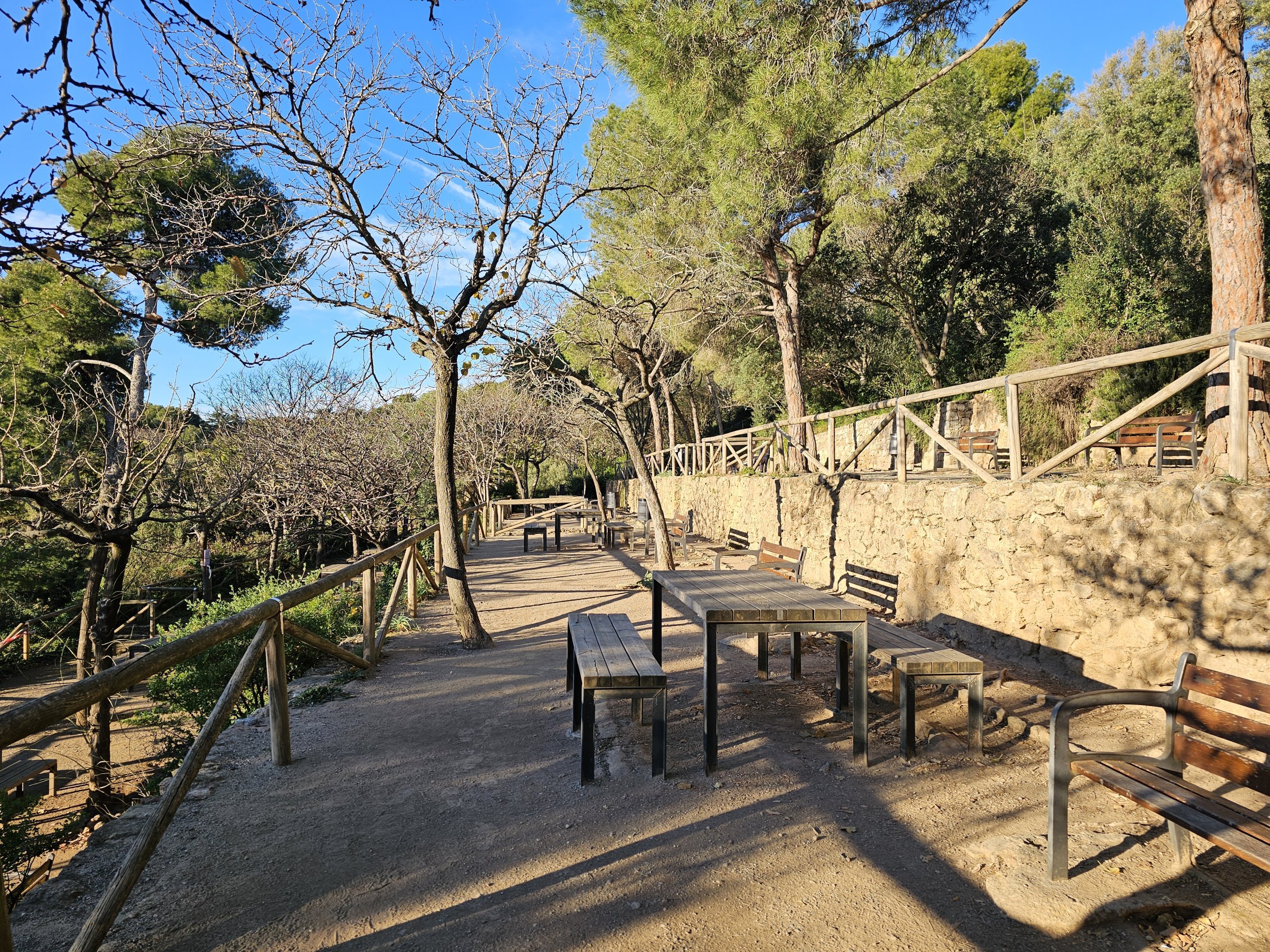
Park Güell is divided into two sections; the smaller northern section is free to enter, but you won’t find any of Gaudí’s designs there – just a relaxation area.
The larger section, known as the ‘Monumental Zone’, is accessible only with a ticket.
Tickets can only be purchased online via the official website; they are not available at the gate. To manage the huge number of tourists, tickets must be purchased for a specific date and time.
You have a further 30 minutes to enter after the time stated on your ticket. Once inside, you may stay for as long as you like until the site closes; however, once you leave, you cannot re-enter using the same ticket.
During the winter, tickets are often available as late as 10 minutes before your chosen time, but during peak season and at weekends, we recommend booking your ticket several days in advance. This is because visitor numbers are limited.
Open every day from 9.30 am. Closing times vary depending on the season. During winter, last admission is at 5.00 pm, whilst in summer it is at 7.30 pm.
Official information can be found on theparkguell.barcelona website.
If you only want a standard admission ticket, buy it on the official website. A standard ticket bought through a third-party provider is usually more expensive and offers no significant benefits.
It may be worth it to book a guided tour that includes admission. The official guided tour costs 17 eur on top of the basic admission ticket, making a total of 35 eur for an adult. Tours booked through GetYourGuide sometimes start at around 25 to 30 eur, including admission, and usually allow for free cancellation.
Always compare the final price, language and terms and conditions for the specific date before purchasing. If you don’t want a guided tour, I wouldn’t pay extra to a third party unnecessarily.
For the average tourist, the sections featuring Gaudí’s buildings are not free.
A ticket grants access to the entire 12-hectare regulated site, including the Dragon Staircase, the mosaic benches, the viaducts, the green spaces and the viewing points.
Only the surrounding woodland and recreational areas are freely accessible; however, you will not see Gaudí’s main monuments there. The times 7.00–9.30 and 20.00–22.00 are reserved for local residents with a Passi Verd registration, and tourists are not permitted to enter the paid area during these times.
Allow 1½ to 2 hours for your first visit. You can see the main structures around the Dragon Staircase and Nature Square in an hour, but you’ll be rushing to see the viaducts and the viewpoint.
Allow roughly 2 to 2.5 hours for a visit to Gaudí’s House. If you also want to explore the quieter woodland area and all the viewing points, you can easily spend 3 hours in the park.
The park is situated in the Gràcia district, away from the main tourist centre. Depending on your chosen route, the journey from the centre takes around 30 to 45 minutes.
We consider buses 24 or V19 to the Carretera del Carmel stop to be the most convenient option. From the stop, it’s just a few minutes’ walk to the upper entrance, and you can then walk through the park, mostly downhill.
Bus 24 runs from Plaça de Catalunya and along Passeig de Gràcia, amongst other places. The V19 is a good option if you’re coming from the Passeig de Sant Joan area.
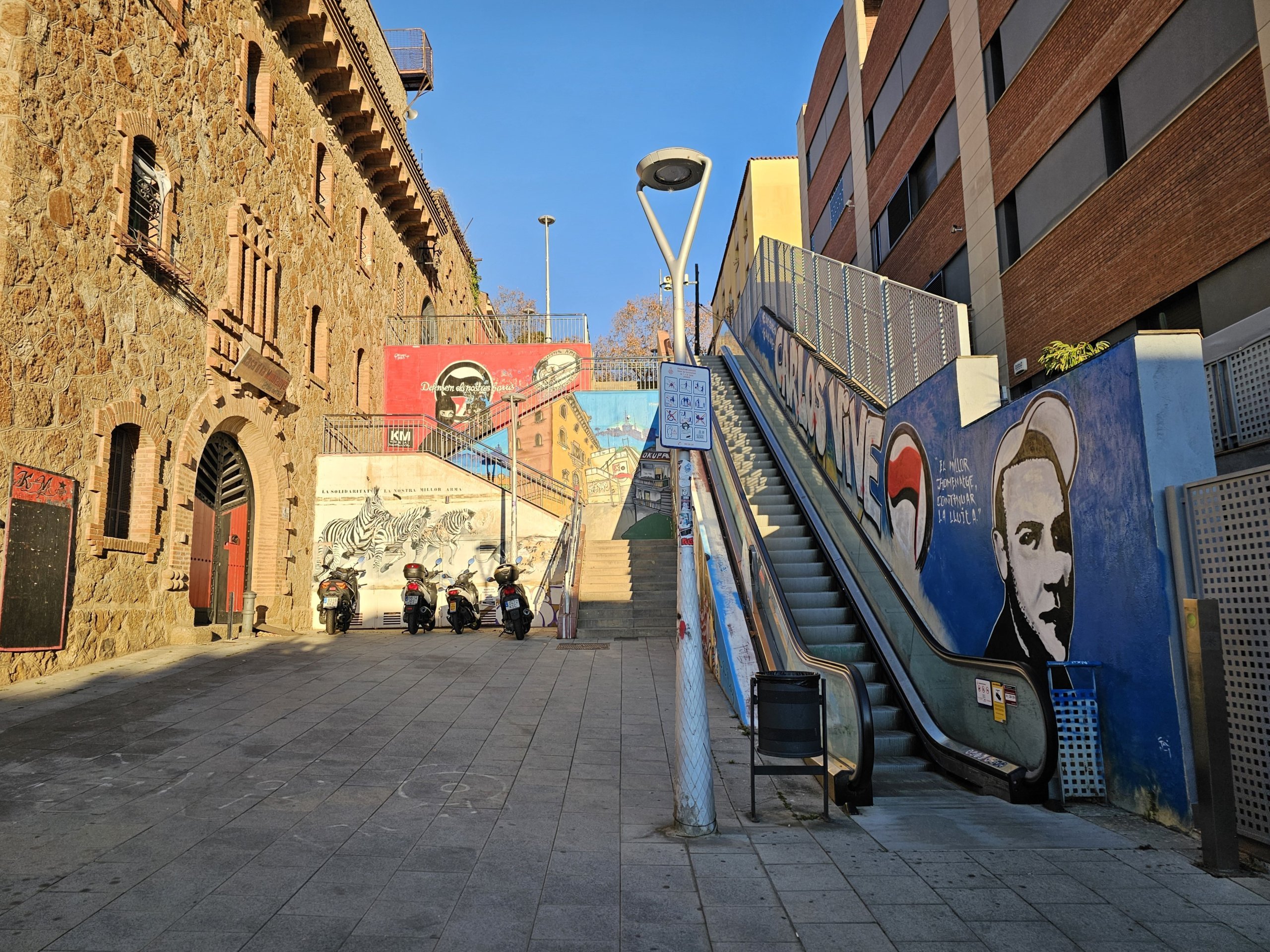
Another option is to take the H6 or D40 to the stop on Travessera de Dalt. From there, it’s about a 10-minute walk to the entrance on Avinguda del Santuari de Sant Josep de la Muntanya; outdoor escalators make part of the climb easier.
The standard fare applies to all these buses, as described in the chapter on Transport in Barcelona.
The nearest stations are Lesseps and Vallcarca on the green line L3. From both, allow for a walk of approximately 20 minutes, involving a steep climb.
From Lesseps, we recommend heading to the entrance on Avinguda del Santuari de Sant Josep de la Muntanya, where you can cover part of the climb via the escalators. Lesseps is also more convenient because, after your visit, you can continue on to the pleasant streets of the Gràcia district.
For families with young children, older people or during the summer heat, a taxi is a sensible option. Tell the driver the exact address: Carretera del Carmel 23, not just ‘Park Güell’. They will drop you off at the upper entrance, from where you can walk down through the park.
The park is situated on a steep slope and features steps or uneven surfaces in many places. It is therefore not entirely accessible.
For visitors with reduced mobility, the official website recommends entering via Carretera del Carmel or Carrer Marianao and following a special accessible route around the main architectural landmarks, which takes around 50 minutes.
If you are using a pushchair, choose the same upper entrance and stick to the main paths. Do not take a pushchair up to the Turó de les Tres Creus or onto certain sections of the viaducts.
We wouldn’t choose a hotel solely for the park itself – a visit there only takes up part of a day and the surrounding area is hilly. However, the Gràcia district is quiet, safe and full of small restaurants, and you can get to the city centre quickly by metro.
You can find more tips based on budget and location in our comparison of [the best neighbourhoods and hotels in Barcelona](/guide/spain/barcelona/accommodation).
Discover all the places to see in Barcelona.
If you have any questions or comments about the article...



It's worth buying tickets online, they're a bit cheaper than if you buy them on the spot - https://tiqets.tpm.li/YEqsN481
What's wrong with that? On the other hand, there are 18 euros left in my pocket
This year in March, tickets were still available in the morning for the same day.