Lanzarote from Bratislava in December
78 €


One of Barcelona’s key attractions is undoubtedly the vast Montjuïc hill, which stretches along the southern edge of the city, just above the port of Barcelona.
It is hard to believe that such an oasis of peace and greenery is situated so close to a bustling metropolis. The vast area offers a wealth of cultural attractions, botanical gardens and places to relax.
Rising to a height of 213 metres, the hill provides the ideal spot to relax in the shade of mature trees, enjoy magnificent views of Barcelona and the open sea, and explore many interesting buildings.
Book your hotel in advance to get a discount
We compare other suitable neighbourhoods and specific hotels in the section ‘Where to stay in Barcelona’.


You could easily spend a whole day on this hill, or at least a few hours for sure. As well as the views and walks, it offers plenty of other attractions. On your way to Montjuïc, you shouldn’t miss these places:


You can also visit several museums or even an open-air museum in the Montjuïc area:


For a first visit, I find the route from the top down works best. You’ll avoid the steepest climb and naturally pass by most of the main sights.
The walking section itself is approximately 4 to 6 km long, depending on the detours you choose. Allow 4 hours if you do not visit any museums, or 5 to 6 hours if you visit one museum.
If you only have two hours, head straight to the fortress, walk around it and return by cable car.
Conversely, for a full-day visit, I’d recommend adding just one major museum; trying to combine the MNAC, Miró, the fortress and Poble Espanyol in a single day is simply too rushed.
The hill itself is freely accessible, as are most of the parks and viewpoints, the Olympic Park, the area around the fortress, the cemetery, and the Jardí Botànic Històric and Mossèn Costa i Llobera gardens.
You’ll mainly need to pay for the cable car, entry to the fortress, the main botanical garden, Poble Espanyol and the museums. Some places offer regular free entry times:
Conditions are subject to change, and free entry dates tend to be the busiest. Therefore, always check the official website of the specific attraction before your visit.
There are several transport options. Firstly, it is important to distinguish between the three different cable car lines, which are often simply referred to as the ‘cable car’:
There are plenty of walking routes up the hill. The main walking route leads fromPlaça d’Espanyathrough the Barcelona Exhibition Centre and past Montjuïc’s most famous museums along winding paths all the way to the summit. In total, the route from the square to the top of the hill is roughly 3 km.
You can also easily reach the summit from the Poble-Sec neighbourhood or from Paral-Lel metro station.
However, perhaps the most attractive route is viathe cable car systemfrom the Paral-Lel metro station (lines L2 and L3).
From the Paral-lel metro station, you’ll first take an underground funicular, on which the standard Barcelona public transport fare applies (see the ‘Transport’ section for details), to Parc de Montjuïc station, located roughly a third of the way up the hill.
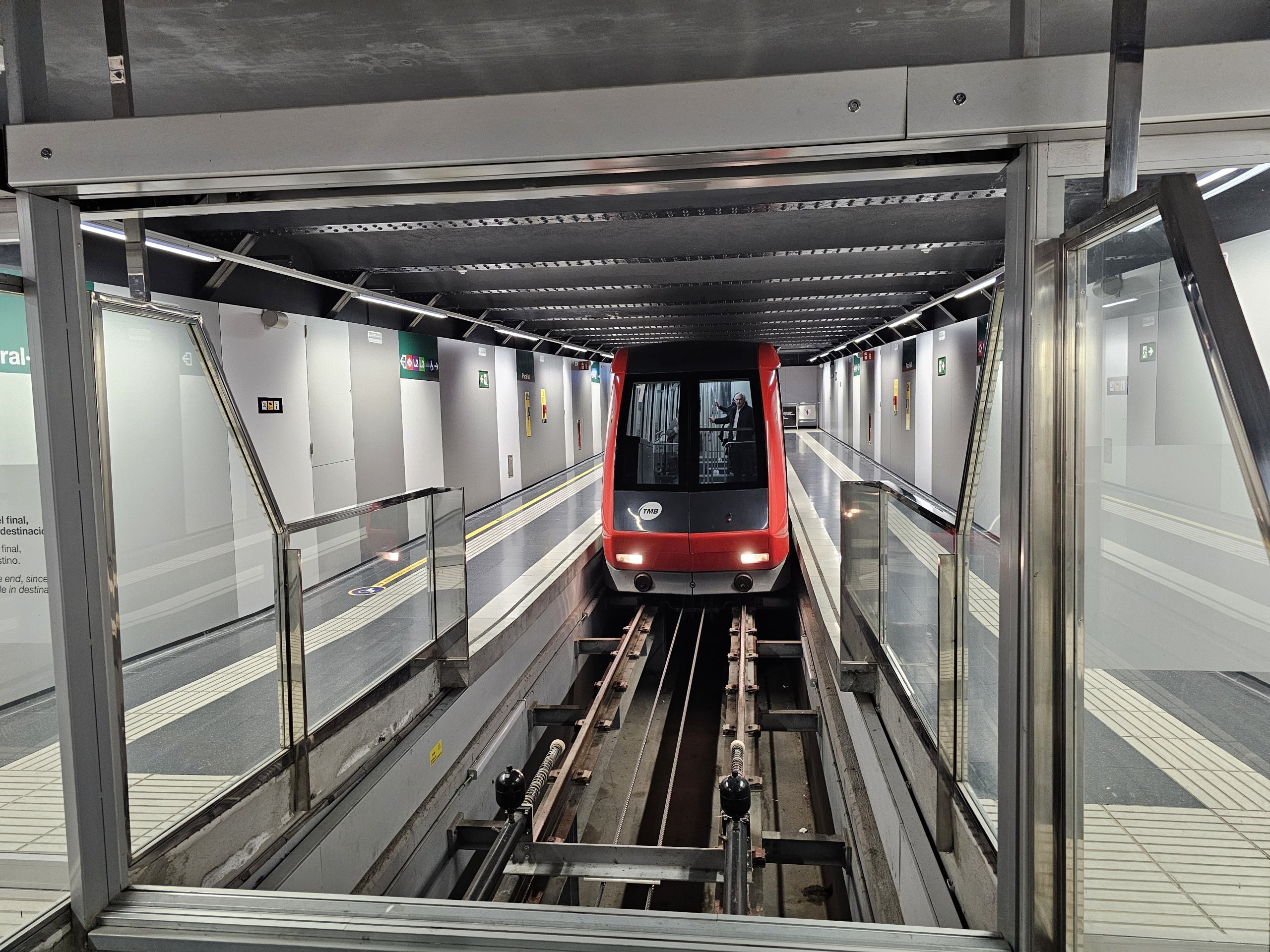

This funicular runs every 10 minutes on weekdays from 7.30 am to 10.00 pm (in summer) or until 8.00 pm (in winter). At weekends, services start at 9.00. Current and official timetables are available on the tmb.cat website.
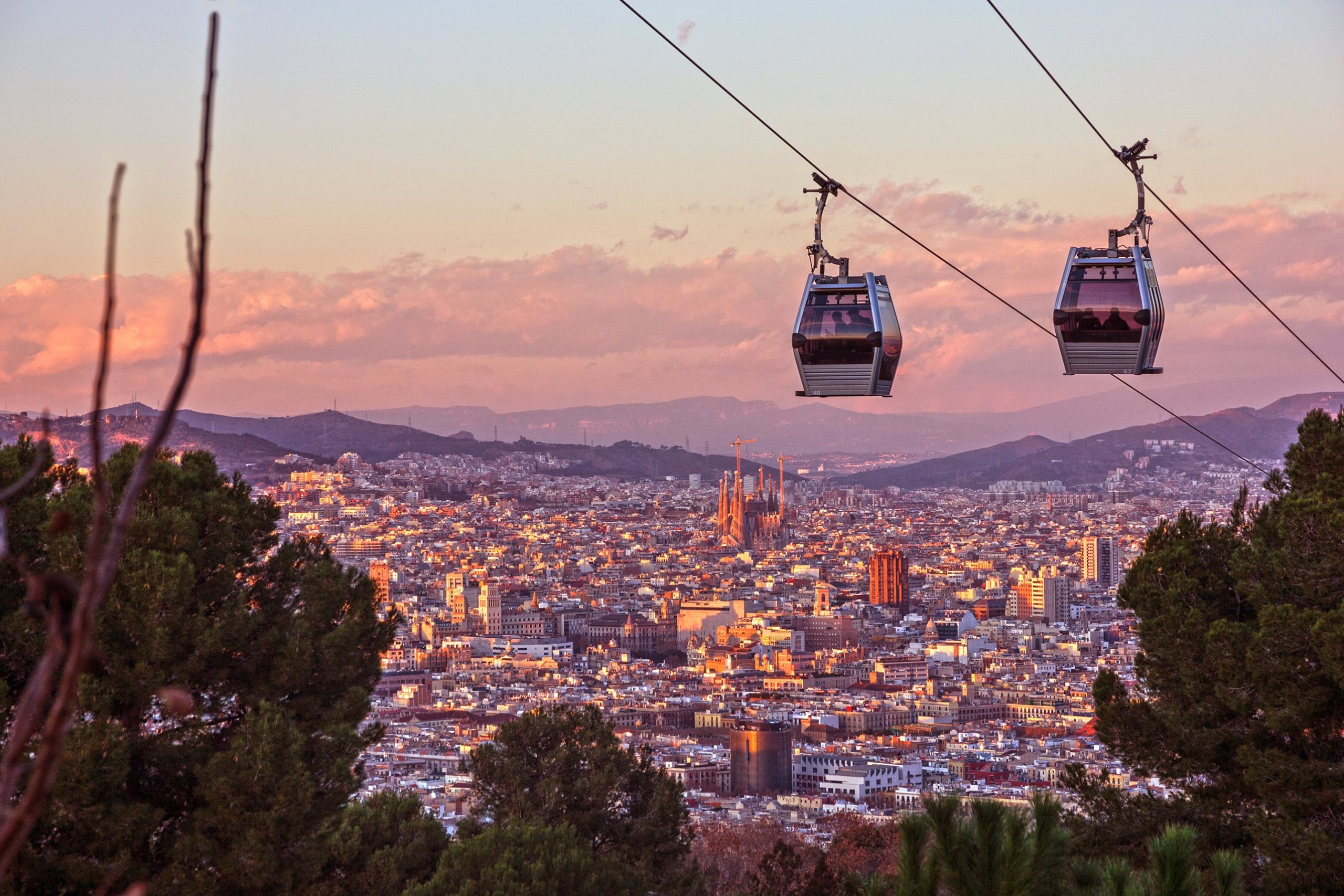
You’ll then continue to the summit on a classic cable car, which offers beautiful views in its own right. A separate price list applies here:
| One-way | Return | |
|---|---|---|
| Adults aged 12 and over | 12 eur | 19 eur 17,10 eur online |
| Children aged 4–12 | 10 eur | 13 eur 11,70 eur online |
The gondola lift operates daily from 10.00; the last ride varies depending on the season – see the official website:telefericdemontjuic.cat/teleferic-timetables-seasons
Buying tickets online directly from the official website is the cheapest option. GetYourGuide usually offers the same return ticket at a higher price, but with free cancellation up to 24 hours in advance and the option to book now and pay later. It therefore only makes sense if you want more flexible terms; compare the final price before purchasing.
The least attractive option, but comfortable and cheap, is to travel by public transport bus, on which standard fares apply all the way to the top.
FromPlaça d’Espanya, bus number 150 runs all the way to the top of Montjuïc (every 10–15 minutes). You can also change onto this bus from the underground funicular, which runs from the Paral-Lel metro station, if you’d rather not pay for the aerial cable car.
The historic Aeri de Port sightseeing funicular, which operates on its own fare system, runs from Barceloneta beach to the lower slopes of Montjuïc.
We provide detailed information on this page.
Yes, but bear in mind that the area is vast and there are significant elevation changes. The funicular, the modern gondola lift and the number 150 bus are all wheelchair-accessible, and the main paths have a paved surface.
For families, I recommend taking the bus or cable car all the way to the top and choosing shorter sections to walk. Some gardens have steps and steep paths; the Olympic Park, the area around the fortress and the main route to the Palau Nacional are the most accessible with a pushchair.
Montjuïc Hill is one of the quietest places in Barcelona and also boasts a very high concentration of tourist attractions. It can therefore be a suitable place to stay.
You can find a more detailed comparison of locations, prices and specific hotels in the article ‘Accommodation in Barcelona’.
Discover all the places to see in Barcelona.
If you have any questions or comments about the article...