Last-minute flights to Santorini from Vienna
71 €



Shopping for electronics, cosmetics, clothing or Japanese souvenirs can be cheaper for foreign visitors thanks to the tax-free scheme.
Provided you meet the conditions, you do not have to pay Japanese consumption tax, which is 10 per cent on most goods.
Furthermore, many goods – particularly cosmetics and electronics – are cheaper in Japan than they are in Europe or even the US.
However, the rules are set to change significantly from 1 November 2026. Whereas previously the tax was deducted at the point of purchase, under the new system you will first pay the full price and then apply for a tax refund when you leave Japan.
In this article, we clearly explain both systems, the minimum purchase value and the procedure at the airport.
The standard rate of Japanese consumption tax is 10 per cent.
The actual saving is slightly lower than the phrase ‘10% tax-free’ might suggest.
| Tax rate | Price including tax | Price excluding tax | Actual saving |
|---|---|---|---|
| 10 % | 11 000 jpy | 10 000 jpy | 9.09% |
In addition, some department stores and shopping centres charge a handling fee for processing tax-free purchases. The final saving may therefore be slightly lower.
On the other hand, cheaper shopping isn’t just about tax, as many goods are simply cheaper in Japan anyway.
Tax-free shopping is available to foreign tourists staying in Japan as short-term visitors.
You usually need to meet the following conditions:
Students, foreign workers or people with long-term residence in Japan are generally not eligible for tax-free shopping.
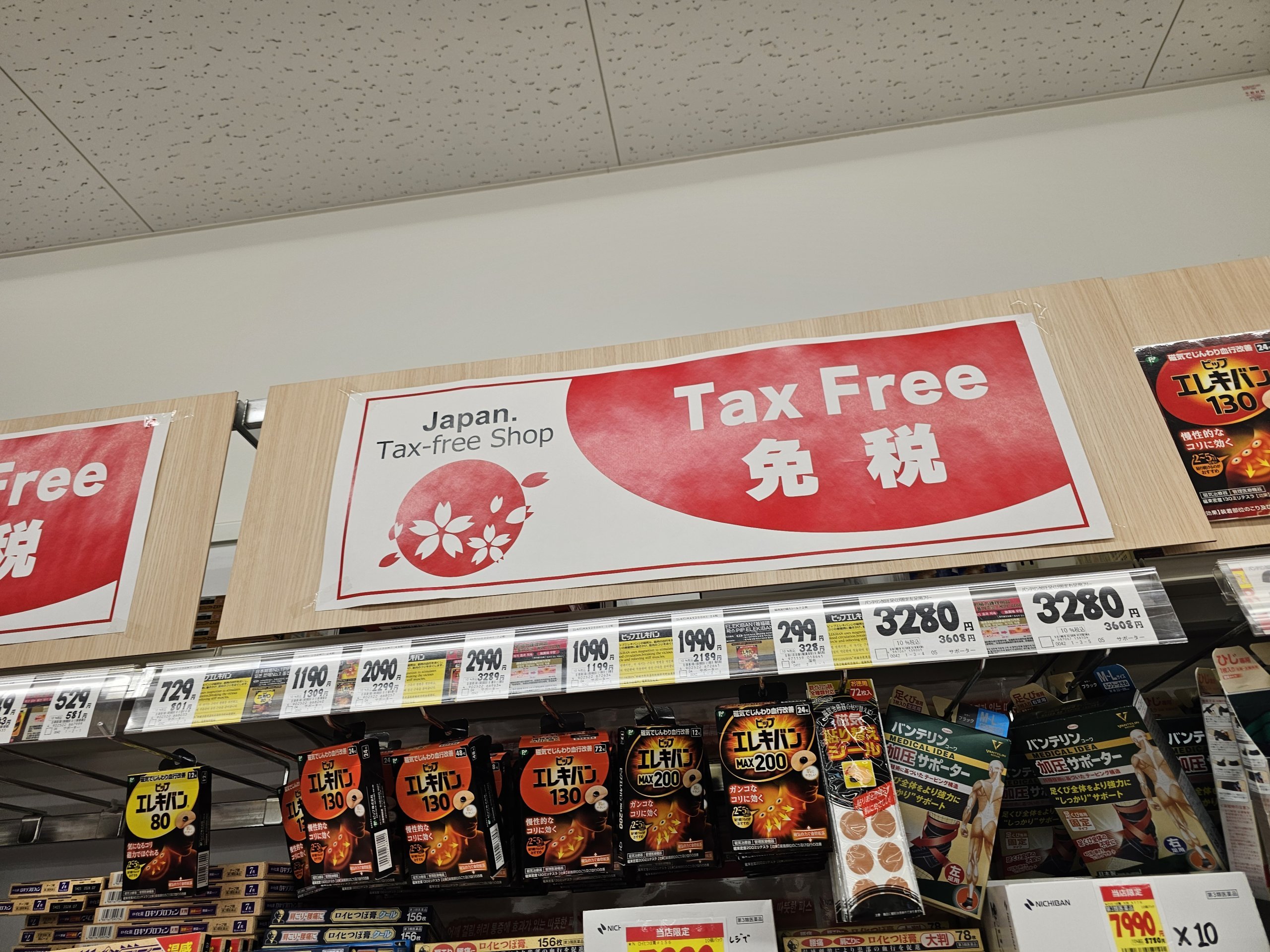
The minimum purchase amount is 5 000 jpy excluding tax, in a single shop on a single day.
Purchases from different shops do not count towards the total. For example, if you spend 3 000 jpy in one shop and 3 000 jpy in another, you will not meet the requirement.
Until 31 October 2026, there are two categories of goods:
| Category | Purchase value excluding tax | Examples |
|---|---|---|
| Standard goods | from 5 000 jpy | electronics, clothing, watches, handbags |
| Consumer goods | 5,000 to 500 000 jpy | cosmetics, food, drinks, medicines |
From 1 November 2026, the distinction between general goods and consumer goods will be abolished.
A common minimum value of 5 000 jpy (excluding tax) will apply to all products, and the upper limit of 500 000 jpy will be removed for consumer goods.
Until the end of October 2026, you’ll usually receive your tax refund directly at the point of purchase.
In some large department stores, you will first pay the full price and then visit a central tax-free counter, where you will receive your tax refund. You usually need to arrange the refund on the same day.
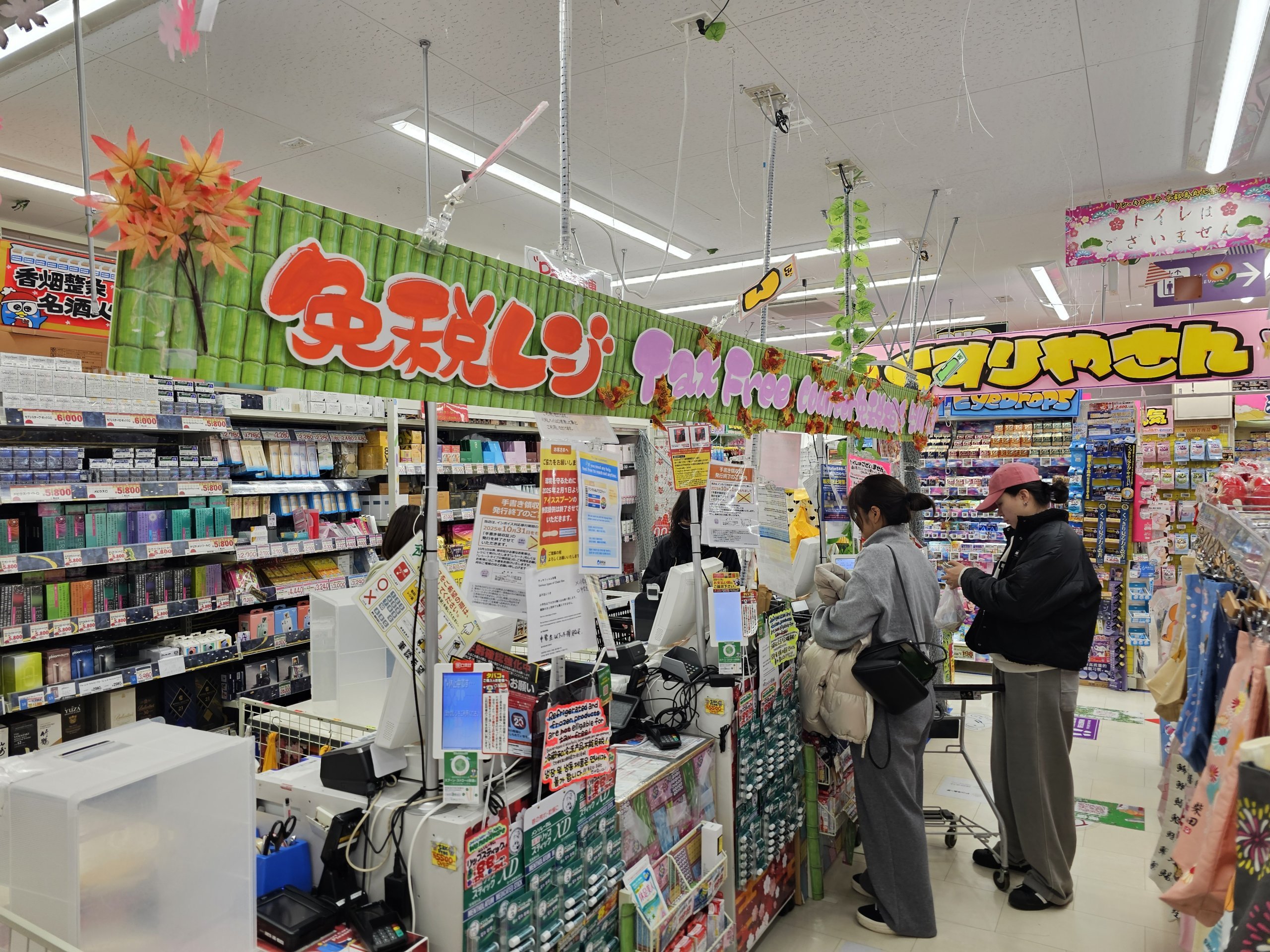
You can generally use everyday items, such as clothes or electronics, whilst you’re there. However, you must still have them with you when you leave and take them out of Japan.
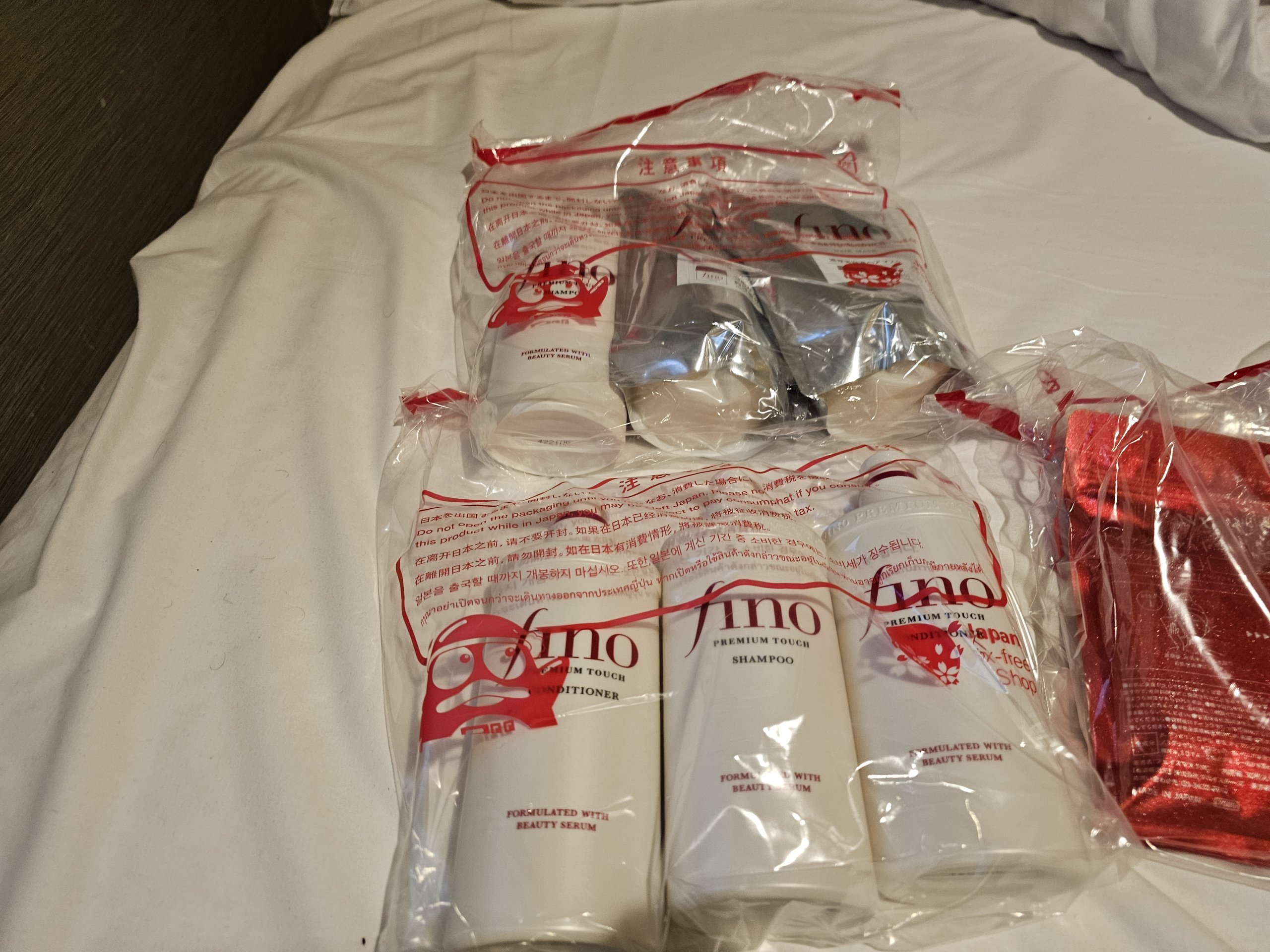
Cosmetics, food, medicines and other consumer goods are packed in sealed tax-free packaging. You should not open this packaging or use its contents whilst in Japan.
If you do not have the goods with you on departure or have used them up in Japan, customs officials may require you to pay the tax.
All goods are packed in sealed plastic bags, which you may only open after leaving Japan.
From 1 November 2026, Japan will switch to a ‘pay first, refund later’ system.
This means that you will first pay the full price, including tax, in the shop. You will only be entitled to a tax refund once Japanese customs officials have confirmed, upon your departure, that you are actually exporting the goods.
According to the Japanese tax authorities, the refund can be paid, for example, by debit or credit card, bank transfer, via an app or in cash.
The specific method will depend on individual shops and tax refund operators.
You must export the goods no later than 90 days after purchase.
It is quite possible that there will be very long queues at the Tax-Free counters at airports, as Japan is known amongst tourists as a shopping paradise, particularly for luxury goods and cosmetics.
The new system will introduce several practical simplifications:
The disadvantage will be the need to pay the full price in advance and go through customs checks on departure.
It is also not yet certain whether all shops will refund the tax just as quickly and in the same way.
Yes. To be on the safe side, you should always carry your original passport with you when making larger purchases. A photograph or a copy of your passport is usually not sufficient.
Registering with the Visit Japan Web service allows you to generate a QR code for tax-free purchases. The shop can then scan the necessary details electronically, but not all shops support this option.
Therefore, even having a QR code is no reason to leave your original passport at the hotel.
When you depart, customs may check whether you are actually taking the tax-free goods out of the country.
Your purchases are linked to your passport number, so you do not need to present the old paper forms inserted in your passport.
Practical steps:
Checks are only carried out at random, and in reality we have never actually been checked by anyone on departure.
From November 2026, the check will be more important, as the shop will not refund your tax without confirmation of the check.
Details of tax-free purchases are recorded electronically against your passport; however, we recommend that you keep all receipts until you leave Japan.
From November 2026, receipts or retailer confirmations may also be required for the refund process itself. The specific procedure may vary from shop to shop.
Tax-free shops are most common in major cities and tourist areas. You can find them, for example:
Not every shop offers tax-free shopping. Look for the ‘Japan Tax-Free Shop’ sign or ask a member of staff before making a purchase.
A 10 per cent consumption tax applies to most goods, and 8 per cent to certain foodstuffs and non-alcoholic drinks.
The actual saving on the price shown including tax is approximately 9.09% and 7.41% respectively.
You must spend at least 5 000 jpy (excluding VAT) in a single shop in one day.
No. The minimum limit is assessed separately for each shop and each day. Shopping centres with a shared tax-free counter may be an exception.
Until 31 October 2026, the tax is usually deducted in-store. From 1 November 2026, you will first pay the full price and receive a refund once your export has been confirmed by the customs authorities.
Yes. Customs officers may request a physical inspection of the goods you have purchased. If you do not have them with you, you may lose your entitlement to the exemption or refund.
Until 31 October 2026, consumer goods must be packed in sealed packaging, which you should not open whilst in Japan.
From 1 November 2026, the requirement for special packaging will be abolished.
If you have any questions or comments about the article...